From 19 to 23 May 2026, the Chelsea Flower Show once again set the tone for tomorrow's garden trends in the grounds of the Royal Hospital Chelsea in London. The event organised by the Royal Horticultural Society (RHS) unveiled an edition centred on calm and wellbeing. Far from spectacular displays, the award-winning gardens favoured enveloping atmospheres, soft planting palettes, the omnipresence of water and shelter spaces. Health, biodiversity, knowledge transfer and adaptation to climate change were the guiding themes of the 2026 edition. Discover the gardens that impressed judges and public alike this year!
Gold medal and Chelsea Garden of the Year: The CPRE Garden: On the Edge
Overall winner of the 2026 edition, The Campaign to Protect Rural England Garden: 'On the Edge', created by Sarah Eberle, highlights neglected spaces on city fringes that are nonetheless vital for biodiversity. The emerges from planting, her hand touching a pool while her willow hair extends into a dry-stone wall. Around her spreads planting inspired by the British countryside, mixing hornbeam (Carpinus betulus), blackthorn (Prunus spinosa), dogwood (Cornus sanguinea) and holly (Ilex aquifolium). A poetic garden that recalls value of ordinary spaces often threatened by urbanisation.

Gold medal and Best Small Show Garden: Addleshaw Goddard: Flourish in the City
With Addleshaw Goddard: Flourish in the City, Joe and Laura Carey celebrate hidden green oases at heart of London. Inspired by #Humanise movement and capital's status as a "National Park City", this garden combines water features, Portland stone and recycled materials to imagine a more welcoming city. Planting mixes Saxifraga × urbium (London Pride), pines, plantains and mulleins in shades of purple, pink and lemon yellow. A concentrated set of ideas to reintroduce nature into urban landscape.
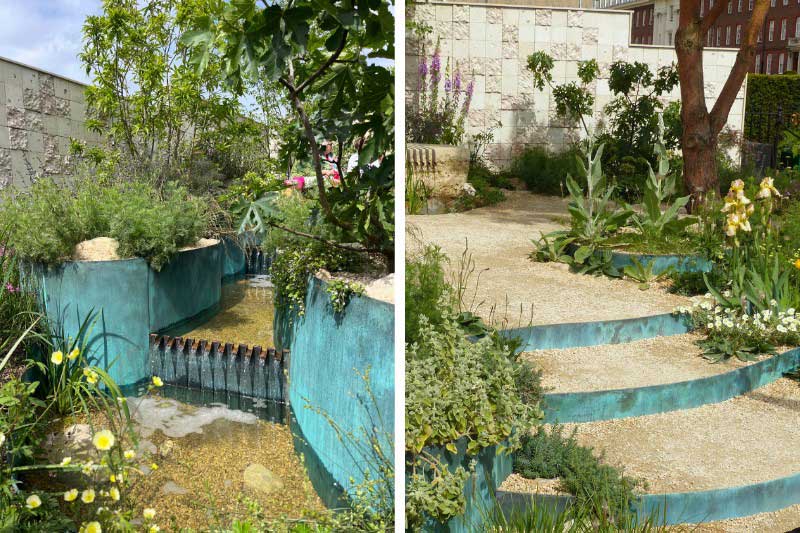
Silver medal and People's Choice Show Garden: Parkinson's UK - A Garden for Every Parkinson's Journey
Designed by Arit Anderson as place of respite for people with Parkinson's and their loved ones, Parkinson's UK - A Garden for Every Parkinson's Journey won visitors' hearts. A sculptural stream accompanies the route and provides sensory landmarks through movement and sound of water. Tulips, peonies, roses and white foxgloves (Digitalis purpurea 'Alba') mark different sequences of garden, designed around energy, rest and night.
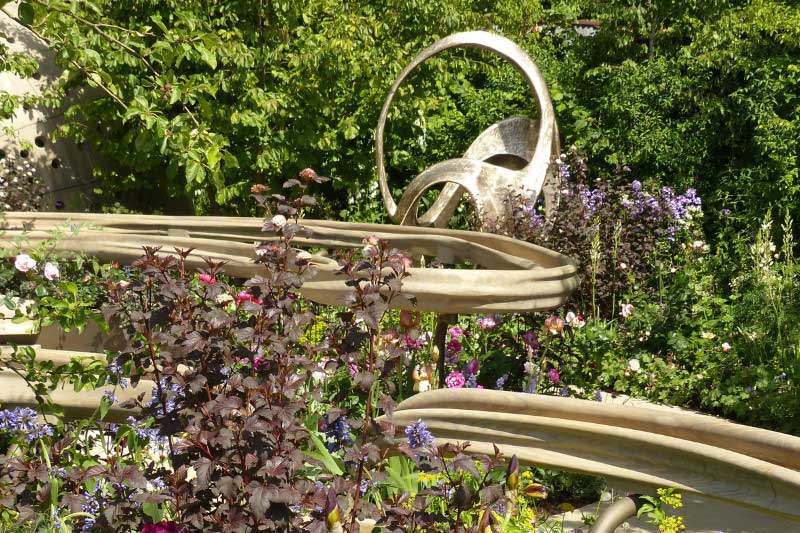
Silver medal and People's Choice Balcony Garden: Alzheimer's Society - Microbes and Minds Garden
Exploring links between gut microbiome and brain health: that is Tina Worboys' challenge with Alzheimer's Society's: Microbes and Minds Garden. Inspired by traditional English orchards, garden is organised around a central apple tree symbolising fermentation of cider vinegar. Forget-me-nots (Myosotis sylvatica), Roman chamomile (Chamaemelum nobile), cow parsley (Anthriscus sylvestris) and chives (Allium schoenoprasum) reinforce this gentle, natural atmosphere.
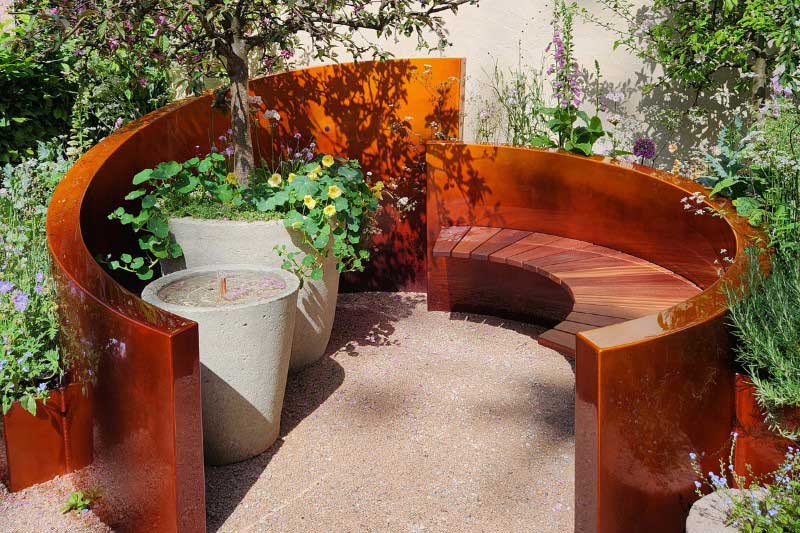
Gold medal and Best Houseplant Display: An Ode To Endurance
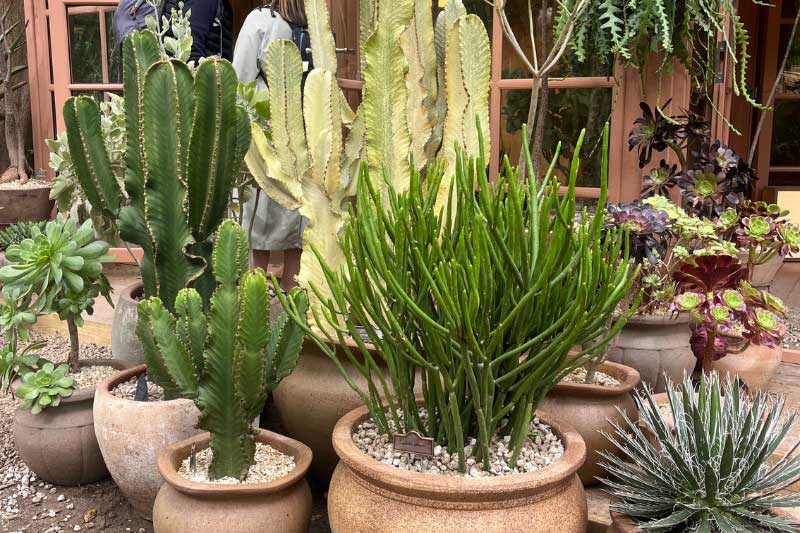
Impossible to ignore success of houseplants at Chelsea this year. With An Ode To Endurance, Natalia Drezek and Jinhyun Ahn pay tribute to species that survive in most hostile environments. Staged in discomfort of living room, Brachychiton rupestris, monkey tail cactus (Cleistocactus colademononis), Kalanchoe beharensis, Euphorbia ingens and Aeonium arboreum reveal sculptural beauty of arid-climate plants.
Our team's favourites
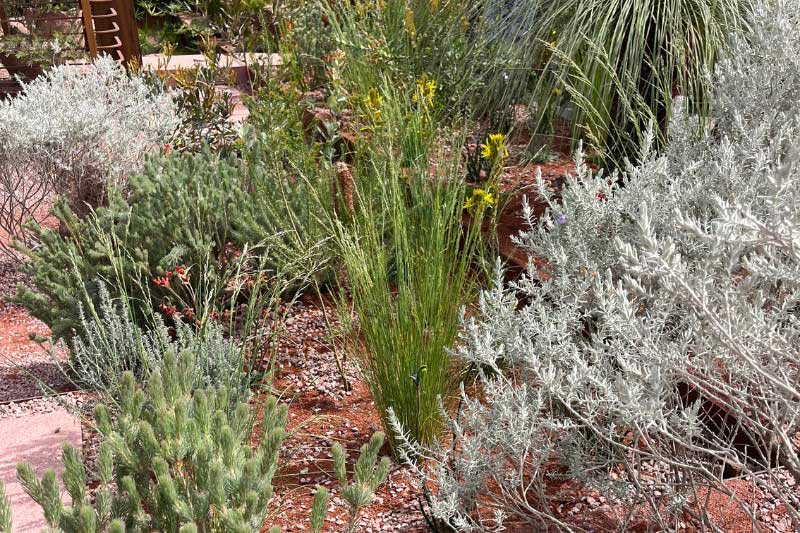
Heading to Australia with Journey Beyond the Tracks: From Adelaide to Perth, a small garden by Max Parker-Smith awarded a silver-gilt medal. Inspired by famous Indian Pacific train, it celebrates dramatic landscapes of South and Western Australia through planting of eucalypts, grevilleas, callistemons, hakeas and anigozanthos (kangaroo paws).
From 19 to 23 May 2026, the Chelsea Flower Show once again set the tone for tomorrow’s garden trends in the grounds of the Royal Hospital Chelsea in London. The event organised by the Royal Horticultural Society (RHS) unveiled an edition centred on calm and wellbeing. Far from spectacular displays, the award-winning gardens favoured enveloping […]
Every spring, Royal Horticultural Society grounds in heart of London become stage for finest horticultural innovations at Royal Horticultural Society, during the Chelsea Flower Show. Among event highlights, "Plant of the Year" prize recognises most remarkable new plants, selected for originality, garden merits and appeal to gardeners. Our team visited the show to see finalists and winners of the 2026 edition. Let’s discover the results!
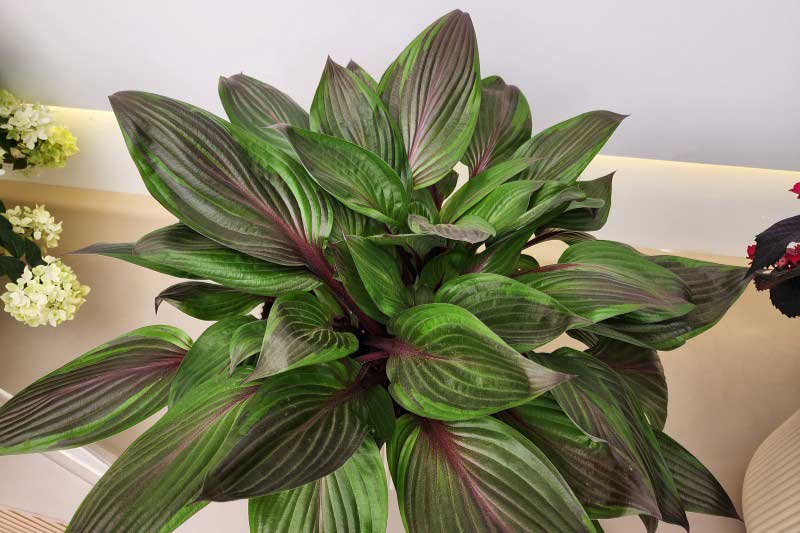
Plant of the Year 2026: Hosta 'Red Ninja'
This is a genuine little revolution in world of hostas! World's first red-variegated hosta, Hosta 'Red Ninja' was one of stars of Chelsea Flower Show 2026. Its large leaves show an intense crimson-red centre edged with dark green, a colouring unprecedented in this genus until now dominated by shades of green, blue and cream. Even more surprising, this spectacular hue does not fade after spring but persists through much of season. In late summer, delicate lavender flowers rise above foliage, adding to elegance of this compact perennial (35 cm height, about 50 cm spread) yet exceptional plant.
Another trait appreciated by judges: unlike many hostas, its colouring intensifies with a few hours of gentle sun.
Red hostas have long been breeder's dream and, for first time, a true red hosta whose colouring appears durable has been achieved. Jury was right: this is a genetic advance visible at a glance.
Our view: a bold creation likely to quickly win over collectors and enthusiasts of unusual foliage.
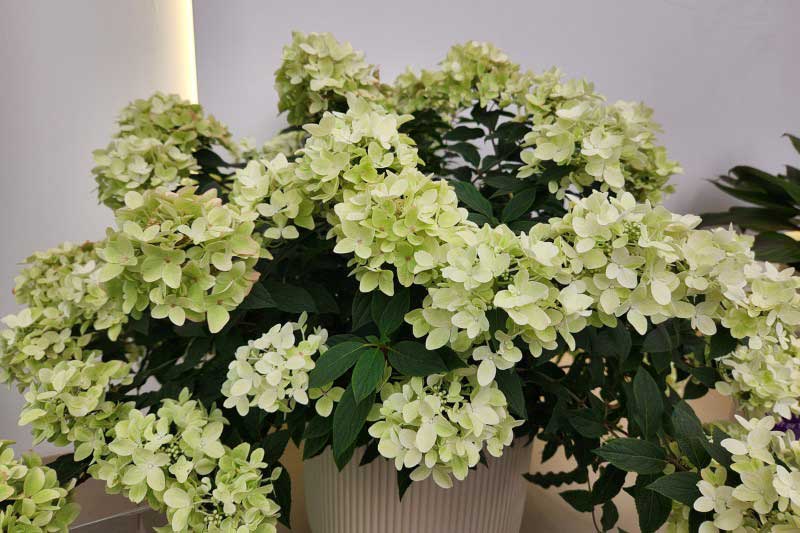
Second place: Hydrangea paniculata 'Groundbreaker Ruby'
Innovation also features in this hydrangea that breaks the mould. 'Groundbreaker Ruby' belongs to first series of Hydrangea paniculata that are truly groundcover. An unprecedented trait for panicle hydrangeas, usually upright. Its low, spreading habit forms a dense carpet about 40 cm high, covered for nearly 100 days with flowers that develop from white through pink to ruby red.
Easy to grow, undemanding in maintenance and particularly suited to small gardens, borders, banks or pot culture, it opens new uses for panicle hydrangeas. Our view: a plant set for a long-lasting career!
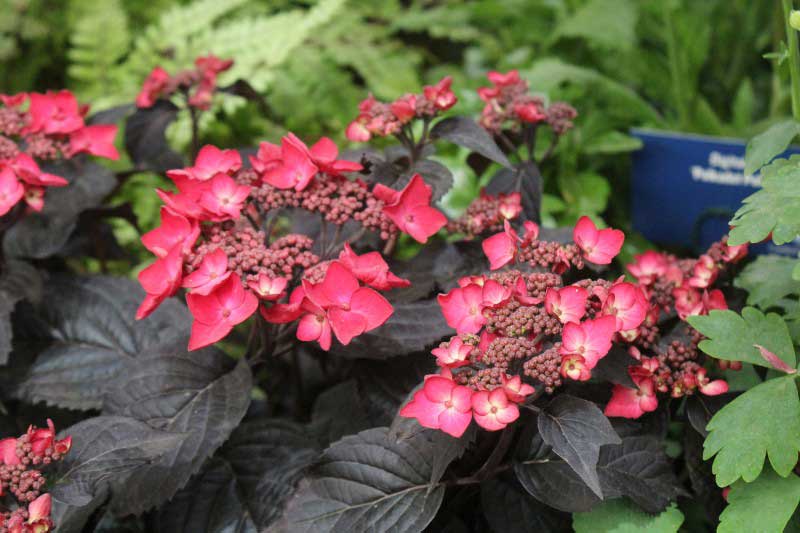
Third place: Hydrangea 'Velvet Night Red Lace'
A true drama queen of Chelsea Flower Show 2026, Hydrangea 'Velvet Night Red Lace' pairs almost velvety, near-black red foliage with lacy, bright carmine-red flowers. Result of long breeding work on more than 12,000 seedlings, 'Velvet Night Red Lace' stands out for a striking contrast rarely seen among hydrangeas. Its flat, delicately sculpted inflorescences shine against a dark, glossy foliage mass, offering a novel play of contrasts in hydrangeas.
Even out of flower, its dark foliage retains strong ornamental interest, providing presence in borders as well as in containers. A variety that perfectly illustrates current enthusiasm for coloured foliage and plants with high visual impact.
Our view: it has immediate theatrical appeal that makes stars on social media as well as in show gardens.
Team favourites
Beyond official winners, several new plants particularly caught our eye under the Grand Pavilion.
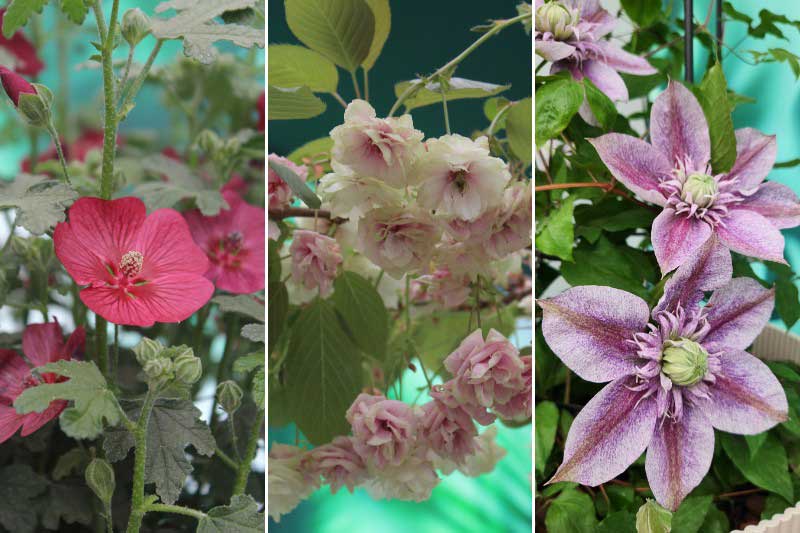
Anisodontea 'Carnival Lights Candy Apple' lit up the Grand Pavilion with its bright raspberry-red flowering, a colour still rare in anisodonteas. Its large, satiny flowers, finely veined, stand out against soft green, slightly velvety foliage. Its relaxed, bushy habit, covered in buds and blooms, promises a very long flowering season.
Prunus 'Sumaura Fugenzo' impressed with its absolutely irresistible display! We were won over by its pendulous clusters of very double flowers, with delicately crumpled petals. Initially cream with greenish tint, they develop to soft pink then deeper tones, evoking little pom-poms suspended from the branches. A variety both romantic and refined.
Clematis 'Minamo-no-Yousei' ranks among most beautiful new introductions seen this year. Its large star-shaped flowers, dusted with lavender, pink and silver, are enhanced by an untidy, almost anemone-like centre. A delicate, sophisticated bloom of great elegance. Japanese breeders continue to produce clematis of incredible finesse!
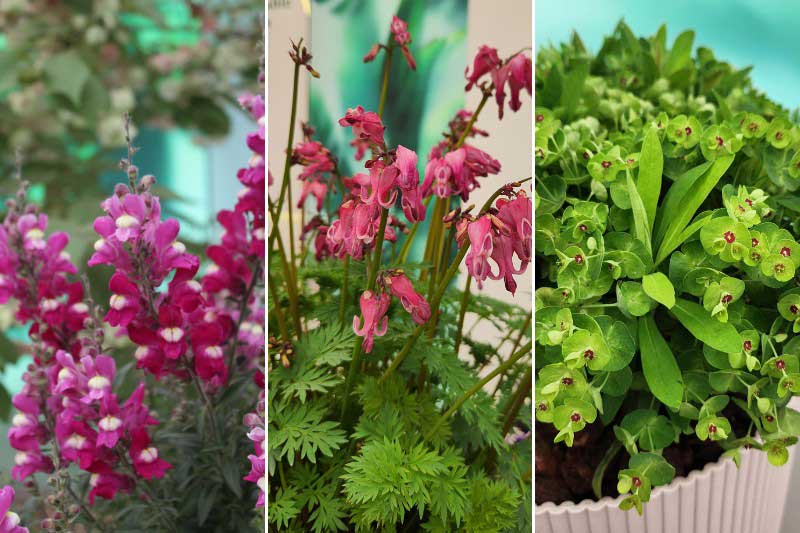
Antirrhinum 'Shiryu Kiss' reinvents snapdragon with generous flowering in a gradient of bright pinks. On the same spikes mix candy-pink, bubblegum-pink and fuchsia, all lit by a cream-white throat. A fresh, luminous variety that brings lightness to borders.
Other finalists
Among other new introductions noted by the jury were Dicentra 'Passion Hearts', clematis 'Nurse Queen', Euphorbia × martini 'Walberton's Little Treasure', Pittosporum 'Green Mound', as well as several promising roses such as 'Amirose' or 'Watford Forever'.
What the 2026 shortlist reveals
As every year, these selections reflect dynamism of international horticultural innovation and offer a good preview of plants likely to make an impact in gardens over coming seasons. According to our promesse de fleurs experts, there is some distancing from race for ever-bigger or more spectacular flowers. Breeders now seem to seek plants distinguished by foliage colour or novel habits, more versatile and interesting over extended periods. This is a trend observed for several years at Chelsea Flower Show and fits well with evolution of contemporary gardens.
Every spring, Royal Horticultural Society grounds in heart of London become stage for finest horticultural innovations at Royal Horticultural Society, during the Chelsea Flower Show. Among event highlights, “Plant of the Year” prize recognises most remarkable new plants, selected for originality, garden merits and appeal to gardeners. Our team visited the show to see finalists […]
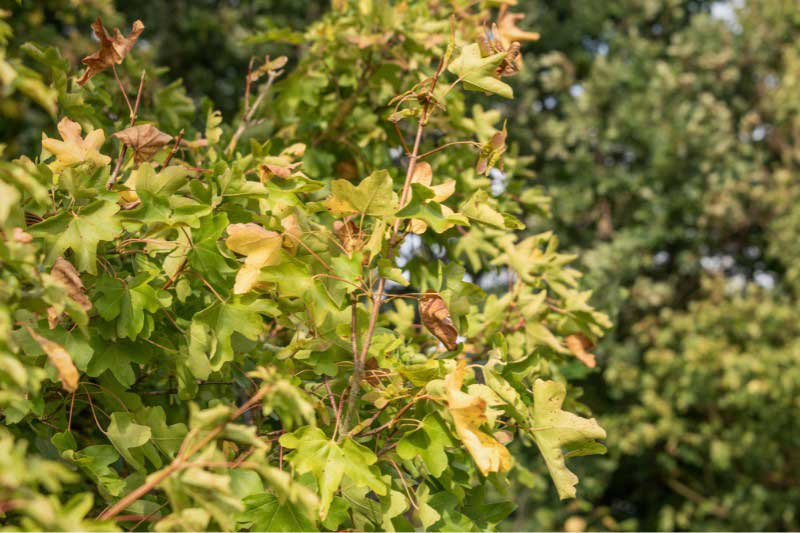
Beeches, oaks, but also hornbeams and chestnuts are already losing their leaves in summer well before autumn arrives, in August, but sometimes as early as mid‑July. This unusual phenomenon gives forests an early autumn appearance… and our gardens a prematurely autumnal look, with a carpet of dead leaves already covering the ground. Two heatwaves, a significant water deficit and parched soil have weakened these trees, causing premature leaf drop. A visible symptom of water stress and climate disruption, browning is now observed each summer with increasing frequency. Which species are most sensitive? Sun‑scorched leaves on trees, leaf yellowing in summer — does this early browning mean the tree will die? And above all, what can be done to mitigate these effects? We explain.
Why do tree leaves turn yellow in the middle of August?
August 2025 spared little vegetation. In many regions, notably Nouvelle‑Aquitaine, trees began to defoliate well ahead of time. This phenomenon is not due to an early season but to physiological stress caused by extreme climatic conditions.
In summer, foliage would normally display a deep green, fuelled by chlorophyll that captures solar energy and enables the tree to build reserves via photosynthesis. But repeated heatwaves, combined with ever drier soils, deeply disrupt this cycle.
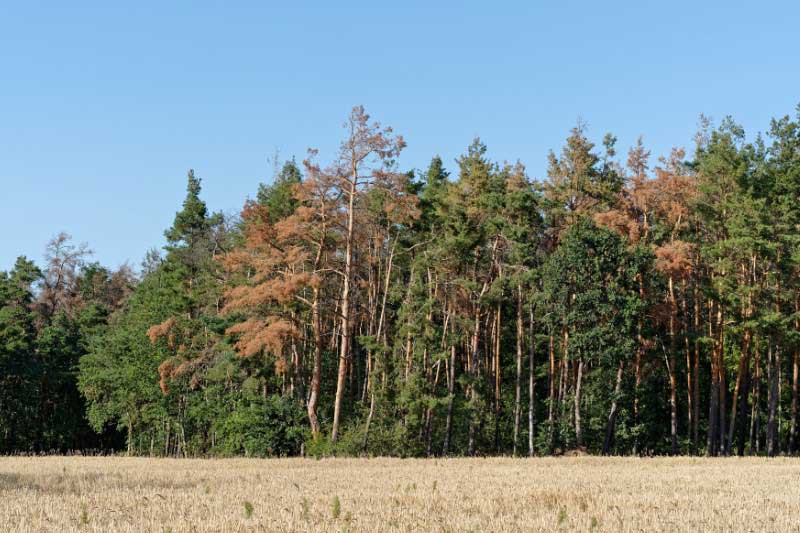
The figures are telling: over the 2021–2023 period, an estimated 8% of trees in French forests (living or standing dead for less than five years) were physiologically affected — some 186 million trees out of 2,270 million. This is not an isolated incident: IGN (National Institute of Geographic and Forest Information) also reports a 54% increase in tree mortality between 2012 and 2022.
And this is only the beginning. Projections indicate that by 2050, summer droughts will last on average two to four months, compared with two months currently, having more lasting effects on soils. If warming continues, some regions could face up to 39 additional drought days per year, and in the south soils could remain dry for seven to eight consecutive months.
In France, native species, adapted for millennia to a temperate climate, struggle to keep pace with this disruption. Some adapt partially, others show clear signs of exhaustion.
Lack of water, combined with very high temperatures, forces trees to close their stomata to limit water loss. This survival reflex halts photosynthesis and leads to a rapid loss of vigour. Leaves deprived of water and nutrients brown, dry out and fall. The phenomenon of leaves yellowing in summer is not natural: it is a defence mechanism to reduce evaporative surface area. This is known as water stress.
Certain species, such as beech, are particularly vulnerable: they suffer leaf scorch, bark lesions and even micro‑cracks that block sap rise or cause embolisms (air bubbles). All these troubles interrupt water functioning, compromise photosynthesis — and weaken the tree in the long term.
What happens after premature leaf drop?
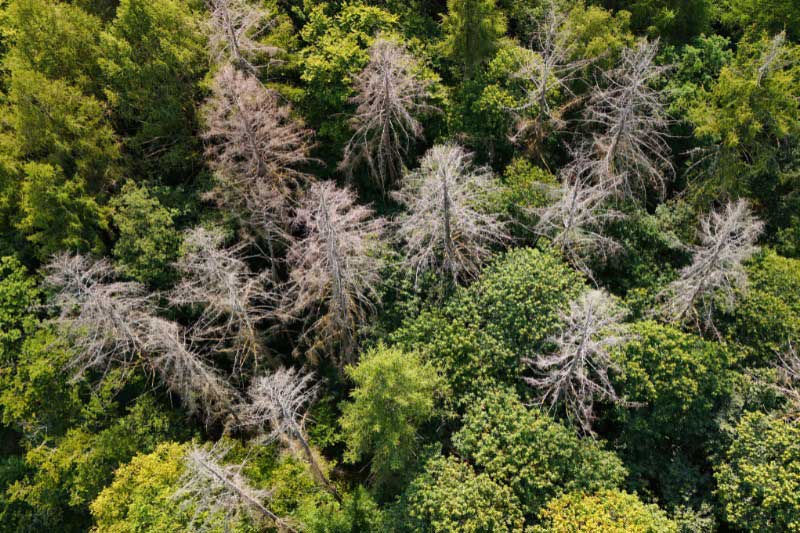
When a tree loses its leaves as early as summer, it enters a kind of early dormancy, as if self‑protecting in a critical situation. This defence mechanism reduces its water and energy needs, but has medium‑ and long‑term consequences.
1. Photosynthesis stopped = reserves not replenished
Normally, leaves remain active until autumn to produce sugars via photosynthesis. These sugars reinforce root reserves, essential to survive winter and restart in spring. Summer defoliation prevents this process. The tree therefore enters the cold season with insufficient reserves, making it more vulnerable to disease, frost or pest attacks.
2. Growth halted
Without leaves, the tree can no longer grow in height or diameter. Over several successive seasons this results in slowed development, a thinner crown and a progressive decline in vitality.
3. Risk of long‑term weakening
If the stress episode is isolated, the tree can recover, especially if well established. But if stress recurs (as increasingly happens), the tree has no time to rebuild its reserves and weakens progressively. This process can take several years before leading to total decline.
4. Delayed consequences visible in spring
A tree that lost its leaves in August may appear alive in winter but fail to leaf out in the following spring, or do so only partially. This lack of foliage then reflects internal exhaustion, often irreversible.
Does this mean the tree will die?
Not necessarily, but it is worrying. Early browning and defoliation are signs of acute stress, not an irreversible sentence. However, if these episodes repeat year after year, they can cause lasting weakening, loss of carbon reserves, reduced resistance to pests and an increased risk of mortality.
Most sensitive species
Not all species respond the same way to these extreme climatic episodes. Some are more vulnerable than others:
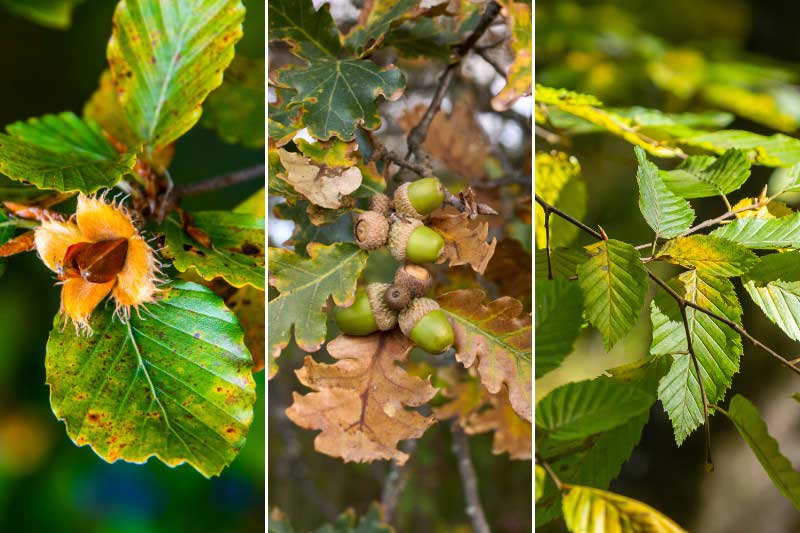
- The beech (Fagus sylvatica): one of the most affected species. Native to humid, temperate climates, it quickly suffers from lack of water and heat stress. Browning of its foliage is common in summer, even in dense forest. Leaf deficit — the proportion of missing foliage compared with normal — rose from about 15% between 1997 and 2003 to nearly 35% between 2017 and 2023. This increase illustrates a worrying trend, even if the species sometimes shows the ability to recover when conditions improve.
- Oaks (Quercus robur, Q. petraea): among them, the pedunculate oak (Quercus robur) proves more sensitive to summer water stress, while the sessile oak and downy oak display better resistance. However, repeated weakening makes them more vulnerable to pests such as jewel beetles or certain pathogenic fungi. They account for nearly 25% of France’s forest area — a significant share.
- The hornbeam (Carpinus betulus) and the chestnut (Castanea sativa): these too show weakness from the end of summer, with premature leaf drop during prolonged drought.
- Conifers such as spruce: poorly adapted to dry summers, they suffer marked weakening, often exploited by pests such as bark beetles.
This reflects a general deterioration affecting all tree categories. It is estimated that one third of oaks (sessile and pedunculate), two thirds of beeches, 60% of firs at low and mid altitudes, and 90% of spruces may no longer be able to develop in their current zones by 2050.
What can be done?
Faced with this situation, several actions can be considered:
- Plant species better adapted to conditions
In the current context, it makes sense to rethink species choices without abandoning local vegetation. Some species show better tolerance to repeated summer droughts. It is advisable to favour resilient but diverse species, and adapt plantings to local pedoclimatic conditions: soil type, aspect, water‑holding capacity, altitude…
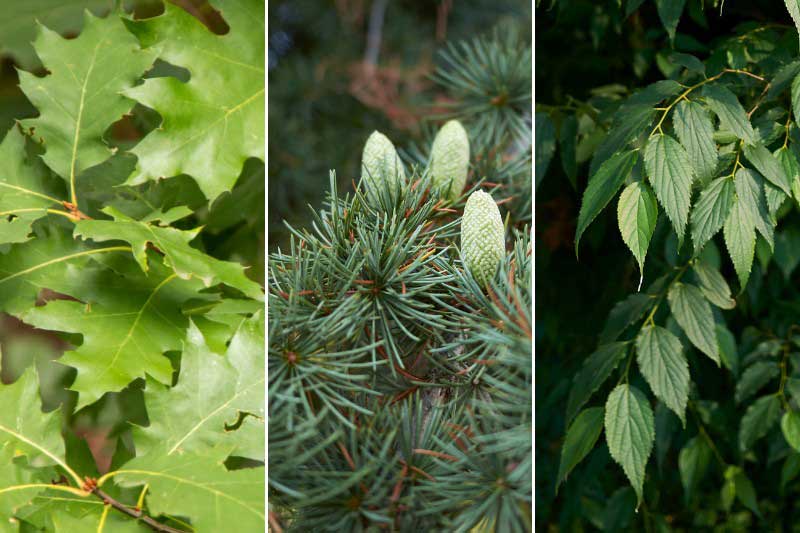
Among species better suited to dry conditions are downy oak, the Atlas cedar, and the European nettle tree, as well as Mediterranean species such as Aleppo pine or the holm oak. These species can resist heat when planted in suitable exposures and climates. Species such as Japanese pagoda tree (Styphnolobium japonicum) or the Siberian elm (Ulmus pumila) also show good adaptive capacity.
- Encourage plant biodiversity: diversifying species is an effective strategy to strengthen overall resilience. Mixed stands (species with different root systems and needs) cope better with climatic hazards.
- Preserve the soil: living soil rich in organic matter retains water better. Mulch, leave dead leaves in place and avoid soil compaction — simple but effective measures.
- Limit interventions during stress periods: avoid heavy pruning, transplanting or applications of nitrogenous fertilisers in mid‑summer. Do not rush to prune or fell a stressed tree: with time and improved conditions it can sometimes recover.
Beeches, oaks, but also hornbeams and chestnuts are already losing their leaves in summer well before autumn arrives, in August, but sometimes as early as mid‑July. This unusual phenomenon gives forests an early autumn appearance… and our gardens a prematurely autumnal look, with a carpet of dead leaves already covering the ground. Two heatwaves, a […]
Bali, the island of the Gods, is a unique place in the Indonesian archipelago. A paradisiacal vision of distant horizons, it has inspired many landscapers seeking exoticism and refinement in the garden. The Balinese garden is one of the current trends to explore for gardeners looking for paradise on earth!
By opting for plants that withstand climatic conditions of our northern-hemisphere gardens, the Balinese garden becomes an atypical inspiration to adapt at home, interesting for dedicated, sheltered areas. Let’s see how to deploy lush foliage that transports us to the ends of the earth, from water garden to enclosed garden and poolside areas.

Design codes of the Balinese garden: colours and decorative elements
Anyone who has visited Bali knows this tiny Hindu enclave within vast Indonesia gathers architectural and natural treasures that have made it an extremely popular destination in recent years.
It can be described as a concentrate of nature, impressive rice terraces, but also a pervasive mineral quality due to its volcanic character, and a spirituality combined with a unique aesthetic. Everything here is refinement, and gardens hide, behind lush greenery, stone statues, omnipresent deities receiving daily offerings. Decorative elements also come from dark stone, local basalt, and polished black pebbles. Water in ponds or fountains, wooden terraces, rattan, bamboo or exotic wood furniture, carved Indian doors are all invitations to simulate, at home, an entrance to a second imaginary garden. Lava stone and basalt can easily be replaced by slate, schist, or suitable ceramics. Large pots and basins punctuate the spaces, and where possible a canopy adds an Asian spirit. The contrast between green foliage and dark mineral is often enhanced by a brightly coloured Balinese parasol with fringes. Finally, a mobile evoking sound of local gamelan (traditional Balinese orchestra) completes the Balinese atmosphere.

The jungle garden
This garden, essentially made up of foliage, fits perfectly with Balinese garden where lush foliage takes precedence over flowering, which is present but remains secondary to plant abundance.
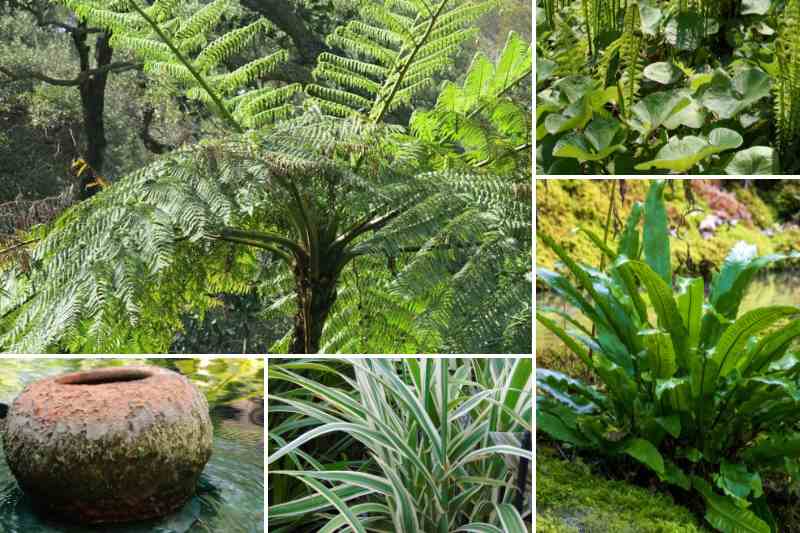
The Balinese garden integrates perfectly into an exotic or jungle garden: choose a sheltered part of the garden to transform into a Balinese green lounge, where hardy palm trees, giant ferns, Tetrapanax and other plants suited to our harsher climates will take place, planted en masse around a few perennials chosen for their XXL foliage or dissected leaves: evergreen ferns such as Asplenium scolopendrium and Matteuccia struthiopteris, Cyathea medullaris, variegated Arundo donax 'Variegata', and Petasites with large leaves. Here and there plant some Crinum asiaticum bulbs in damp soil to add delicate blooms.
Around a pool in a seaside garden
Framing a reserved garden area such as a pool is a great way to imagine being in Bali. Tropical plants from the island are too tender for our climate, so choose substitutes to recreate Balinese postcard. In our example, simplicity is expressed with evergreen plants required around pool, and splendid foliage.
Banana trees, cordylines, bamboo palm provide the structure, enhanced by Coleus in aniseed tones such as 'Copinto Caipirinha' or 'Margarita' and a black-leaved Colocasia.
Be sparing in contemporary layouts with three or four plants maximum and slightly more generous in a denser garden. Here, Balinese parasol and wooden sun lounger become must-have accessories for hot summer days.
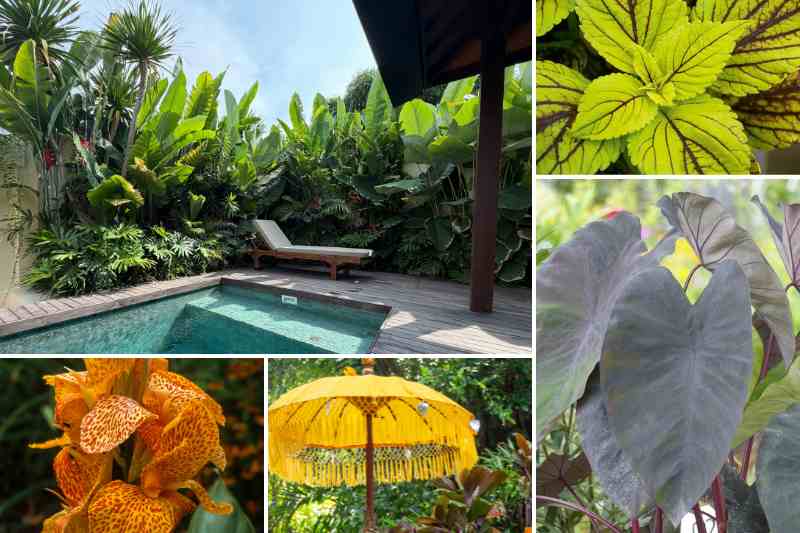
In a sheltered garden with mild climate
This is certainly the most suitable place to establish a Balinese garden, especially if you live on the Brittany and Atlantic coasts, benefiting from sufficient humidity to approach island’s humid tropical climate, or around the Mediterranean basin by adapting some plants. You can enjoy plants with beautiful foliage, a little tender but that will survive mild winters in these regions or that can be planted in large pots: Alpinia zerumbet 'Variegata', showy variegated gingers, replacing colours of local Cordylines. A queen palm (Syagrus romanzoffiana), a frangipani (Plumeria obtusa) chosen for its delicacy and intoxicating fragrance can join the scene.
In Mediterranean areas, a traveler's tree and tropical palm trees can even be considered! Also think of a beautiful exotic climber such as pink bignonia and some ismenes for an extra exotic touch.
By planting densely, you recover the jungle effect described above. Decorative elements complete scene such as an ornate door or a painted shutter, and a bamboo chime.
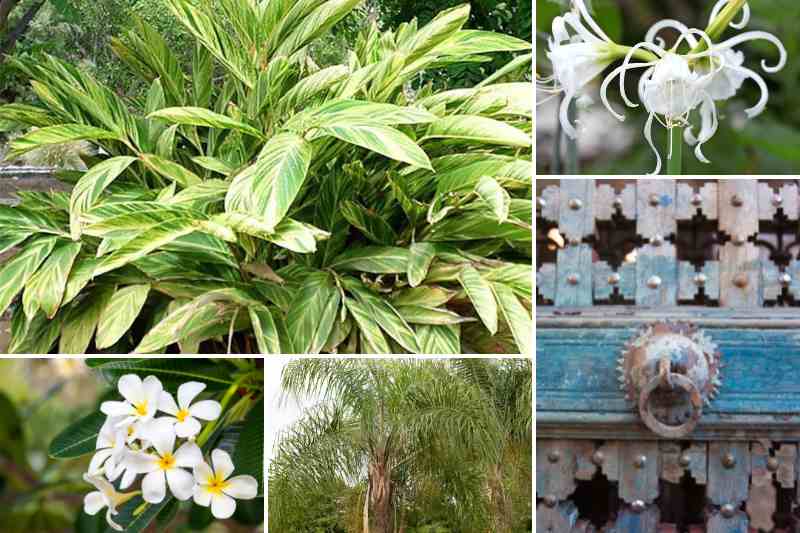
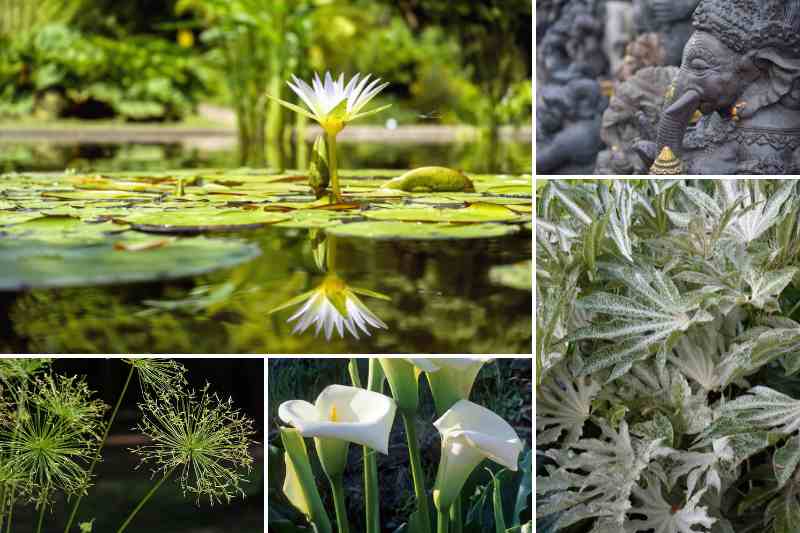
Water garden in the Balinese style
Water is omnipresent in Bali and in its finest gardens. You can easily imagine a Balinese garden centred on a water scene, whether a mini-pond or larger wet area. Plant species that like damp soil or can be partly submerged such as papyrus, lotus (Nelumbo nucifera) and water lilies are perfect. Arums, rodgersias and ligularias work well with their large foliage to infuse tropical atmosphere beyond their white or yellow blooms. For a larger area add a Gunnera, Brazilian rhubarb, impressive once established, or Astilboides tabularis. Here we like variegated foliage of Fatsia japonica 'Spider Web' near the water to add more exceptional foliage.
Decor is important here too: a single Hindu statuette, some pebbles or black paving and a rain chain are perfect!
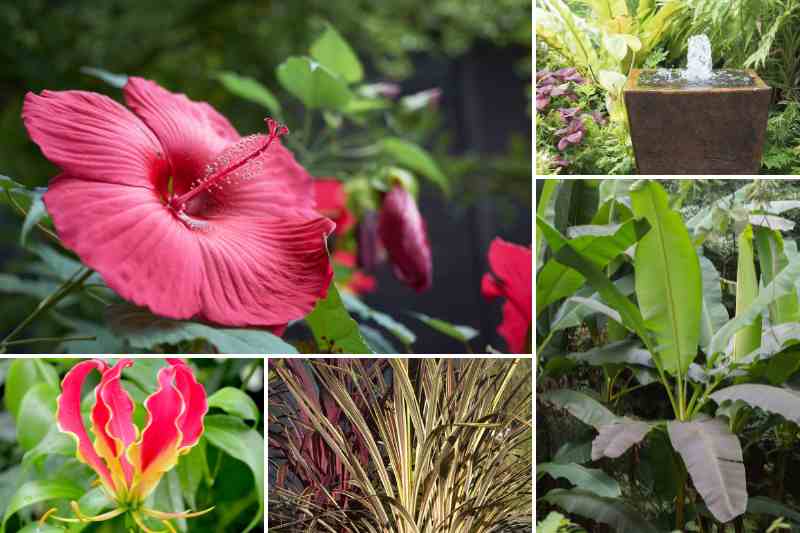
Tropical escape in a courtyard, patio or walled garden
These very sheltered spots allow installation of plants that would not survive elsewhere. Presence of walls creates microclimate beneficial to Balinese garden. Selection below suits a sunny spot, and all these plants also grow well in pots and can be overwintered if necessary.
By replacing Cordyline fruticosa found in Bali with Cordyline banksii, equally colourful but hardier, you bring maximum colour, enhanced for example by bright red or pink of a common Rose mallow that performs well in a pot when substrate is kept moist. Beside them an essential banana, Musa 'Basjoo', interesting for cold tolerance and eventual size, or large unicolour cannas that also bring exotic feel. A compact climber can also slip in, such as Gloriosa rothschildiana. Bring out a Monstera or bird of paradise from the living room for summer and install a small temporary fountain to perfect tropical ambience.
Find Find our selection of plants suited to exotic spirit on our online nursery as well as our Balinese Garden inspiration page in our 2026 trend booklet !
Do you enjoy these lush, transporting atmospheres? Discover other inspiring scenes in these articles that address the theme:
- Design a garden inspired by Madeira, the island of flowers
- A banana tree in a small garden? our tips for integrating it well
- How to create a tropical atmosphere in a small garden?
- How to create a refreshing oasis in the garden or on the terrace?
And all our tips to create at home an atmosphere of exotic or tropical gardens:

Bali, the island of the Gods, is a unique place in the Indonesian archipelago. A paradisiacal vision of distant horizons, it has inspired many landscapers seeking exoticism and refinement in the garden. The Balinese garden is one of the current trends to explore for gardeners looking for paradise on earth!By opting for plants that withstand […]
Terraces, courtyards, patios and small bohemian balconies are the new stars of summer! This very colourful "boho" trend that has invaded our interiors and wardrobes also appears in our summer green retreats. It matches the sunny cheerfulness of a season when we spend a lot of time outdoors.
Let’s take inspiration from the gypsy world to prepare bright alcoves on balconies, terraces and inner courtyards from the first fine days, with planting ideas and decorative elements. We explore this Boho Patio in three scenes easy to recreate at home!
Boho Patio codes
The bohemian atmosphere dresses itself in vivid, deep and variegated colours that answer one another, but also in associations of warm tones in the blooms: intense reds, deep violets, Indian pinks and spicy oranges, not forgetting bicoloured flowers. Bluish, golden or purplish foliage helps to reinforce this playful mood, bringing red or variegated splashes.
This mixed-up planting borrows from gypsy culture a festive, hybrid universe that laughs at convention and pairs a whole spectrum of colours, provided they are warm and bright.
This style is also based on improvisation, like manouche music, and on bold accents. This temperament appears in the garden in temporary scenes created especially for the summer months, and in the accumulation of mismatched small objects (side tables, stools, small cushions, etc.).
On the décor side, important for dining and relaxation areas, have fun with mismatched pairings: rustic furniture repainted turquoise or green, rattan chairs, fabric pouffes, Provençal floral and ethnic patterns juxtaposed with strong colours: turquoise, pink, orange and bright yellow. The advantage of this bohemian décor is that you can mix disparate objects and accessories, using what you already have at home or stored in the attic, to give them a second life: bring out granny’s lace and embroidery for the summer, macramé and trimmings, old rattan armchairs, baskets and fruit crates, airy curtains. In a joyful mix of materials, the décor is done!

On a sun-drenched terrace
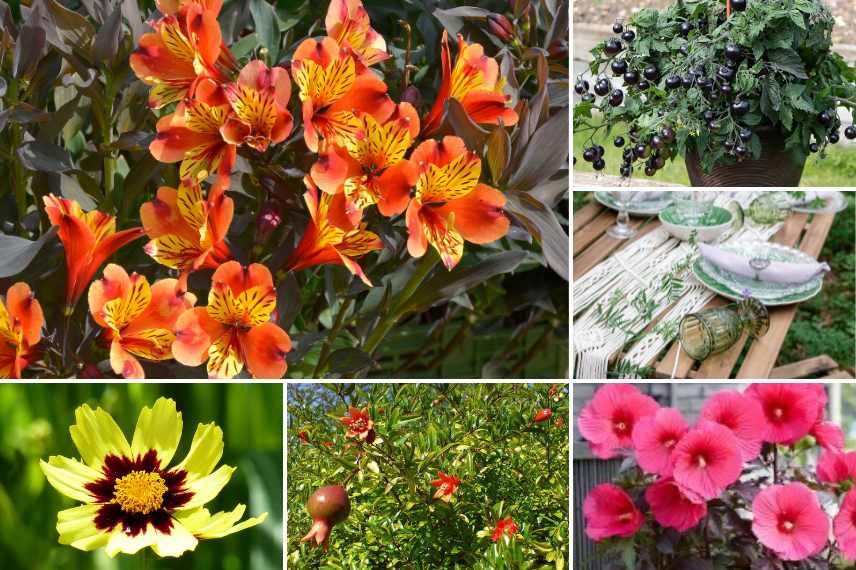
Terrace or balcony are often west- or south-facing. They can be radically transformed into an ultra-cheerful cocoon with sun-tolerant plants that do well in pots. Explore a plant colour palette ranging from saffron yellow to violet for a truly bohemian vibe.
Alstroemerias 'Indian Summer', orange and yellow contrasting against bronze foliage, will look stunning alongside Coreopsis 'Cosmic Eye', a bright yellow spotted with purple, or the pretty all-yellow 'Full Moon Madness'. Add other long-flowering plants such as a common Rose mallow 'Pink Passion' with giant flowers and dark purple foliage, and provide more foliage interest with a pomegranate that can be grown in a pot, such as Punica granatum 'Nana', whose brilliant flowers will pair beautifully with the other perennials. For snacking at aperitif time, invite, for example, the surprising cherry tomatoes 'Akoya', whose fruits turn almost black.
In a semi-shaded urban patio
Small city courtyards benefit from focusing on colour and variegated or golden foliage to lift them out of the shade. In a semi-shaded patio receiving enough light and warmth in summer, opt for sunny flowers and a few "indestructibles":
Hosta 'The King', Hakonechloa macra and an Aucuba japonica 'Crotonifolia' for their golden and variegated foliage (Aucuba will reward you with pretty red berries a little earlier) together with the bold flowers of Hibiscus syriacus 'Hibisa rosada', and the Peruvian lily 'Duc d'Anjou'.
The bohemian spirit will also be present in accessories, essential in less bright areas and in smaller spaces.
Beyond plants, bring colour without fearing the boldest mixes. Dare genre-mixing: antique rug + Italian ceramics + small disparate or oversized objects and a cosy bench, etc. Here, the evening atmosphere will be especially worked on: lanterns, paper lanterns and candles, and don’t forget a crochet throw in these patios that are often cooler at night.

Garden refuge as an improvised alcove
This bohemian trend can also be expressed in a corner of the garden used as an improvised summer retreat.
In front of a shed, garden shelter or at the foot of a fine tree from which a rattan chair is hung, set up a summer hideaway using bohemian codes. A temporary terrace, improvised with clip-together wooden decking tiles readily available from DIY stores, is easy to install. In summer it becomes a true green cocoon perfect for relaxing on a garden sofa made of a few stacked pallets or large pouffes, in a fairground style.
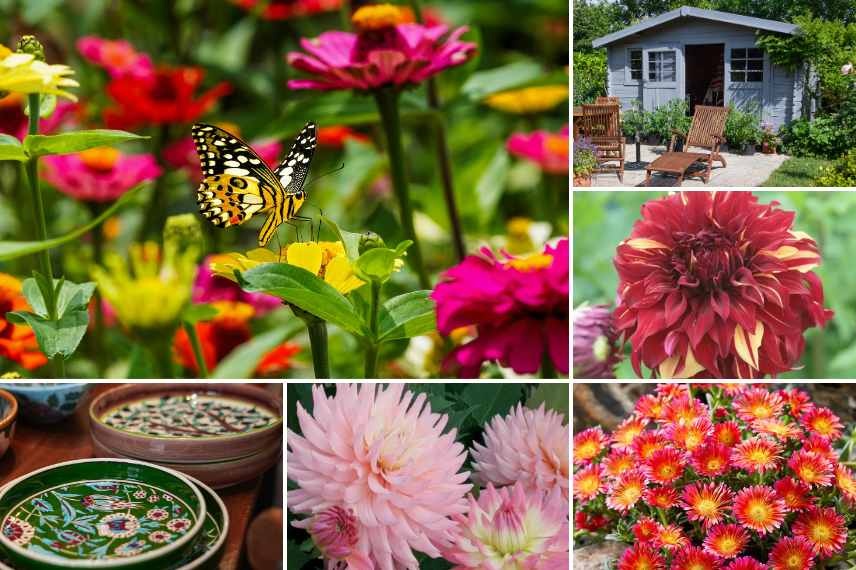
Here, a few colourful annuals join the party: multicoloured zinnias and orange calendulas (marigolds) sown in pots in spring, or beds of African marigold 'Mango Tango' around the area, as well as sun-loving perennials such as the charming Delosperma 'Ocean Sunset Orange Glow'. Count on two striking pots of dahlias with evocative names, the fiery 'Bohemian Spartacus' and the more restrained compact 'Melody Gipsy', for a long and remarkable display. Sunflowers 'Mongolian Giant' will bring pep and height, while a pot of basil 'Everleaf Emerald Tower' will be handy for salads at barbecues or sunny lunches.
Gather your most colourful pots, bring in lace, hangings, vintage crockery and cushions: job done!
Discover other plants ideal for composing this bohemian green décor on a terrace in our "Boho Patio" selection online and in our trend booklet!
Feeling the bohemian spirit? Find our advice on creating a bohemian garden, and our inspirational sequences: Catalane and Peach Raspberry.
This Boho Patio trend also draws on recycling second‑hand objects. Explore our topics to let your creativity run free: Decor idea: plants in unusual containers; How to make a planter from a pallet?; Recycling in the garden and How to use and properly integrate terracotta pots in the garden?
Terraces, courtyards, patios and small bohemian balconies are the new stars of summer! This very colourful “boho” trend that has invaded our interiors and wardrobes also appears in our summer green retreats. It matches the sunny cheerfulness of a season when we spend a lot of time outdoors. Let’s take inspiration from the gypsy world […]
Garden, rarely short of inspiration, suggests enticing colour trends each year to imagine new borders.
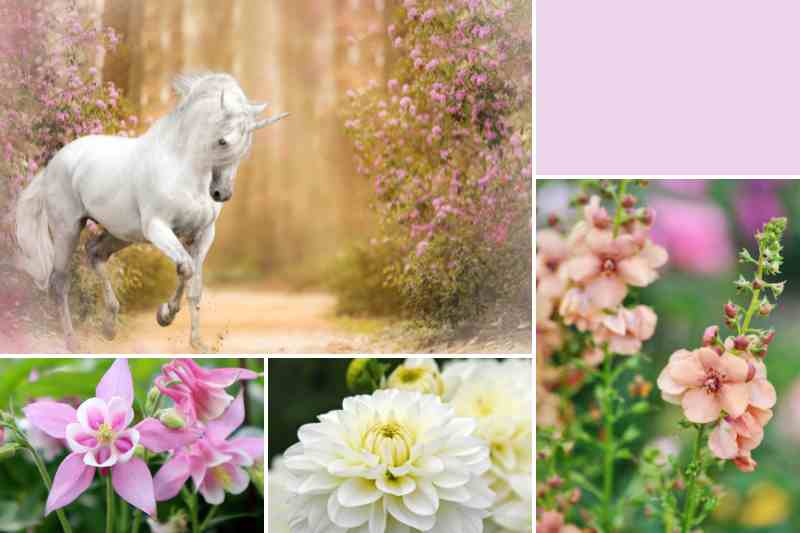
For romantics who favour softness and pastel tones in the garden, here is the Unicorn trend, a new hue devised by promesse de fleurs, blending graduated and iridescent shades from pink to straw-yellow.
What exactly is the Unicorn colour for the garden?
Inspired by the legendary white, pure animal, the "Unicorn in the garden" trend actually draws on the enchanted world of childhood, which associates pink and yellow hues, through to mauve, as if straight from a fairytale.
The garden introduces these fairy-like, very girly notes — powdered and old-rose tones, marshmallow to lavender, touched with very soft yellows — to create a decidedly romantic atmosphere. This garden universe aims to be both poetic and very feminine, approaching a "cotton candy" aesthetic but more subtle, with less acidity and more pastel nuances.
Among plants ticking all boxes of this subtle palette are many perennial plants and shrubs softly salmon, apricot and butter-fresh shaded, tones that catch the light and recall gentle spring colours.
We suggest some planting combination ideas for different garden styles and enticing borders!
In a cottage garden
This border, both rustic and sophisticated, remains very natural thanks to soothing colours from pink to apricot, with a well-measured touch of yellow. It suits a south- or west-facing position.
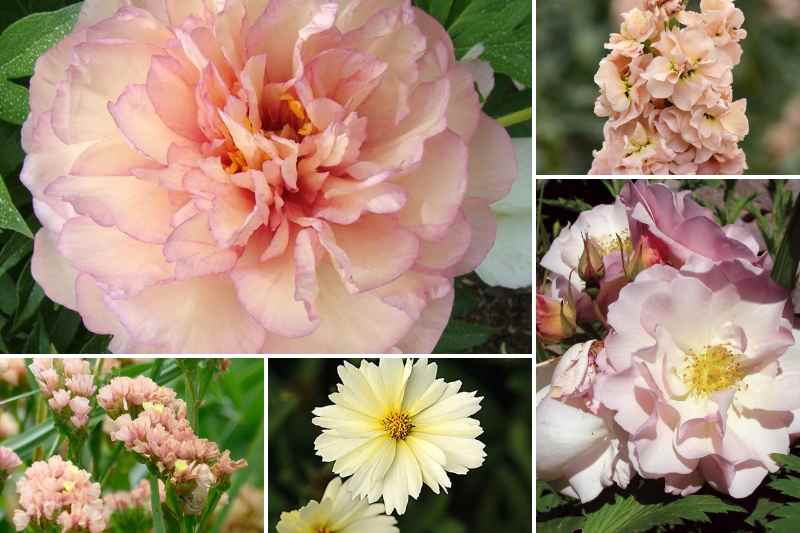
Here we showcase an intersectional peony Scrumdidleyumptious, indispensable in a country garden for its elegance. As its flowering is fleeting, we surround it with some long-flowering perennials and shrubs: an old-fashioned rose such as the heirloom 'Pénélope', statices and apricot wallflowers. A large drift of Coreopsis 'Uptick Cream' adds further softness…
Also consider adding a few Verbascum 'Jackie' or 'Southern Charm' in a blotting-paper pink that will make you swoon! Also think of adding some olive-green or greyed foliage.
In a spring border
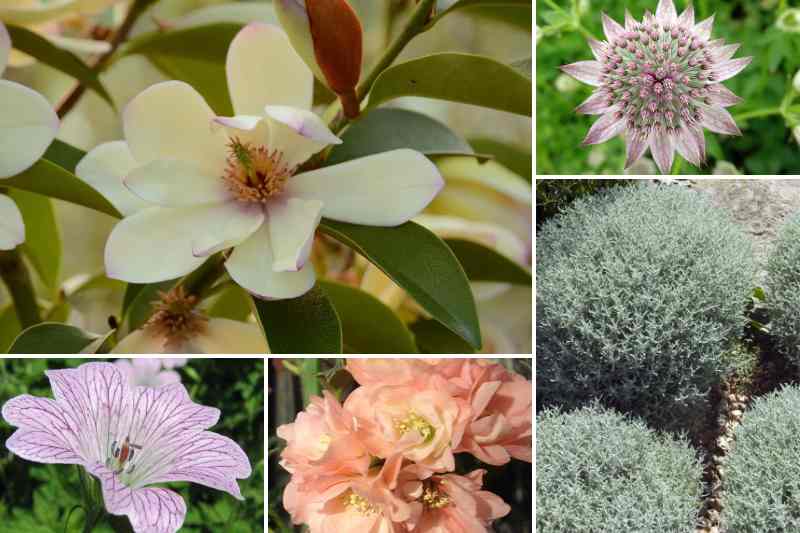
A gradient of soft colours will awaken garden in early fine days with these pastel blooms. Gather in a sunny or semi-shaded border a few favourites admired for their simplicity and grace: a Michelia 'Fairy Lime', a small magnolia with evergreen foliage and delicate cream-yellow flowers with a hint of pink, Astrantia 'Florence' for a mauve bloom a little later around June, and hardy geraniums as groundcover such as Geranium 'Katherine Adele', flowering for months from May, nicely veined with dark pink. Another charming small shrub, Japanese quince Chaenomeles 'Falconnet Charlet', will bring salmon tones in March–April alongside the Michelia. A silvery evergreen foliage, for example that of Santoline chamacyparissus if border is in full sun, is an essential complement to the soft ambience.
In a secret garden
In the intimate, often shadier setting of a secret garden, invite pale luminous yellow blooms to combine with a few pastel tones, from pearly pink to iridescent mauve.
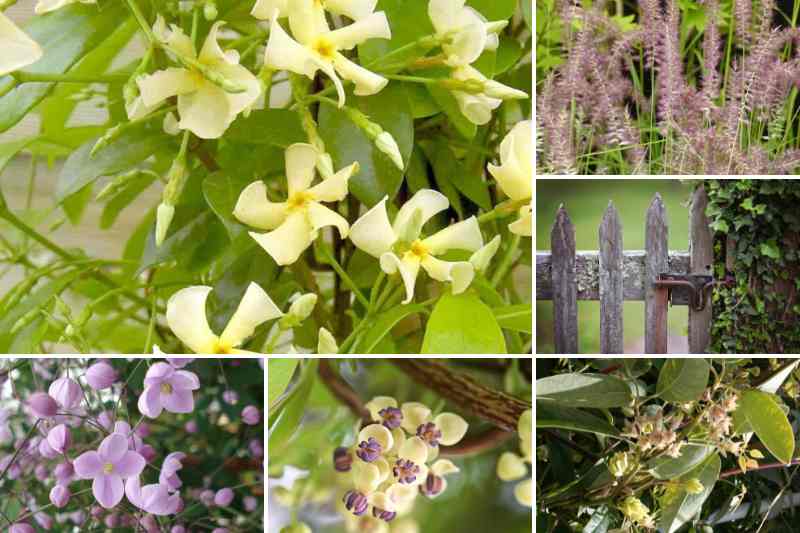
Rely on a base of climbers to screen views and some supple ornamental grasses, perfect here: Chinese fountain grass orientale 'Karley Rose', a very fragrant yellow star jasmine (Trachelospermum asiaticum), Thalictrum delavayi 'Splendide', tall and lilac-pink, and two thoroughly voluble climbers: Akebia quinata chosen in a superb bicolour form 'Cream Form', and a persistent Holboellia latifolia. To enliven the base of climbers earlier in the season, plant in autumn a few bulbs of pink or pale-blue grape hyacinths like 'Baby's Breath', some miniature daffodils and Greek anemones 'Charmer'.
In a bohemian garden
The bohemian garden that explores a wide palette of plants also fits perfectly with the Unicorn garden universe. Ultra-soft, soothing colours will be gathered in the joyful mix and abundance of the bohemian garden! It's a garden that comes alive best in summer, in a profusion of flowers and foliage.
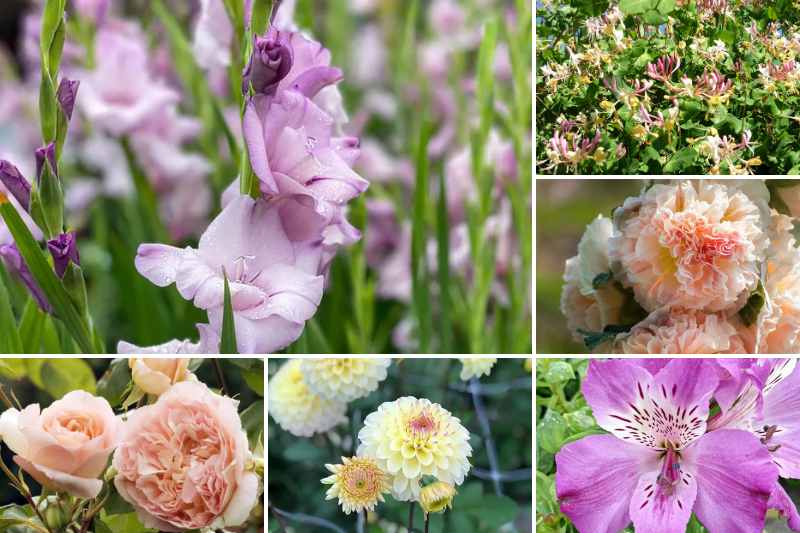
Here we've chosen sorbet tones, old-rose and vanilla-yellow to evoke the Unicorn trend. A honeysuckle skilfully blends pink and yellow, double-flowered hollyhocks 'Chater's Double' and a climbing rose 'Papi Delbard' play the apricot notes, delightful gladioli, 'Blue Tropic', and dwarf alstroemerias 'Pitchoune Lucas' reveal a desaturated mauve. In sun, add a few pom-pom dahlias 'Isa's Favorite', preceded in spring by late double tulips 'Charming Lady'. Add a base of foliage to bridge to summer, such as common sage and a dwarf abelia: charm guaranteed!
Find our selection of plants in the Unicorn spirit on our online nursery as well as our inspiration in the Trendbook 2026!
Do you love these very soft garden tones? Discover other inspirational scenes in these closely related colour universes:
- Peach Fuzz: Colour of the Year 2024
- Soft on-trend colour: how to lay out a nude garden?
- Pinkish Lemon: the new zesty garden trend
- "Coffee colour" inspiration
- and Rose and khaki inspiration for a soft, on-trend garden.
Garden, rarely short of inspiration, suggests enticing colour trends each year to imagine new borders.For romantics who favour softness and pastel tones in the garden, here is the Unicorn trend, a new hue devised by promesse de fleurs, blending graduated and iridescent shades from pink to straw-yellow. What exactly is the Unicorn colour for the […]
Discover exclusively our Garden Trends 2026 booklet identified by our experts! Green Generation, Retro Garden or Augmented Garden, we reveal five emerging trends that are reinventing garden practices and imaginations. Drawing on its monitoring, Promesse de fleurs shares a forward-looking perspective and field observations of tomorrow's garden.
Green generation
Millennials: new plant-loving tribe born on Instagram! Aged 28 to 44, often city-dwellers, they have turned houseplants into an art of living. Ficus lyrata, Calathea, Alocasia, Colocasia and Monstera – houseplants are becoming icons, iconic organic design pieces. Plants here become emotional, identity markers and graphic. This green frenzy is hyper-connected, Instagrammable, viral yet deeply emotional.
It’s called "Plant Parenting": 33% of Millennials talk to their plants, 19% give them a name, 29% consider them sentient beings.
People collect spectacular foliage (Monstera 'Thai Constellation', Caladium, Begonias 'Rex'), style interiors and share urban jungle on TikTok (#planttok) or Instagram (#urbanjungle, 8M posts).

Nostalgic Garden
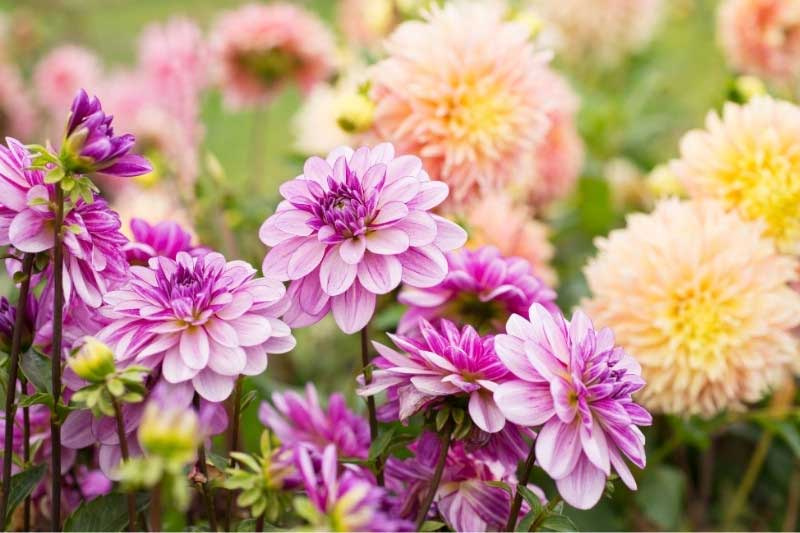
Here is a distinctly regressive, comforting gardening trend! In the face of global uncertainty and at a time when AI generates artificial worlds, the garden evokes a nostalgic vogue reflecting a deep desire for reassurance and tenderness. People sow, take cuttings, forage and arrange homemade bouquets. Retro flowers enjoy a second youth. Double ranunculus, gladioli but above all dahlias (+12% sales) and peonies (+37%) at Promesse de fleurs, which are exploding on social networks, are the star flowers of this vintage wave. The craze for seeds has sparked a revival of cut-flower varieties, straight from garden to vase! Statice, everlasting flowers, oxeye daisies, snapdragons and phlox are already part of our collection of over 1,500 varieties of flower seeds.
Nomadic Escapes
The garden becomes itinerant, mixed, adaptive, a mirror of a world on the move. 42% of recent landscaping projects draw direct inspiration from distant cultures. They combine a longing for elsewhere with climate-consciousness, are nomadic in their evocations, resilient in their choices and economical with water. Sales of hardy succulents have risen 45% in Europe since 2023, a sign that these plants from elsewhere resonate with very local concerns. Trends spotted include:
- Balinese Garden: tropical luxuriance and sacred lotus (85k posts #lotusgarden) inspired by tropical sanctuaries of Southeast Asia.
- Antipodean Garden: euphorbias, crassulas, aloes or senecios acclimatised to extremes evoke landscapes of southern Africa.
- Chaparral Garden: Dasylirion longissimum, Echinocactus grusonii, blue Mexican palm, Opuntia cacanapa 'Ellisiana'... Species from semi-desert areas of California or Mexico shape a graphic, sun-soaked and radically frugal garden.
- Sand Garden : on 20 cm of pure sand, Gypsophila 'Rosea', blue fescue, Lomandra 'White Sands', silver santolina or Salvia 'Caradonna' create carefree scenes with no watering or feeding. Inspired by Peter Korn and climate-resilient gardens, this new-generation dry garden combines lightness, robustness and modernity.

Sanctuary Garden
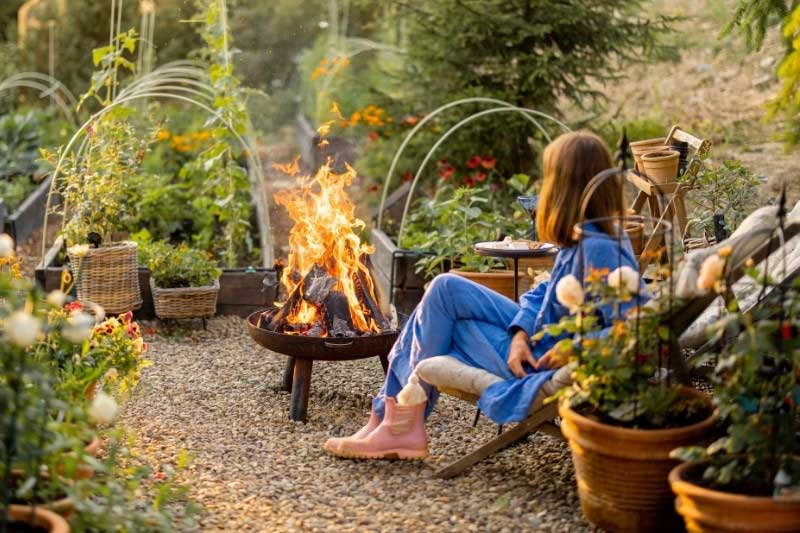
In response to hyperconnectivity, the garden becomes an emotional refuge, an open-air cocoon where people slow down, wrap themselves up and breathe. Throws, cushions, natural materials, deep seating… domestic comfort is transposed into a calming plant-filled setting.
- Japandi: fusion of Japanese minimalism and Scandinavian softness, inspiring sober, vegetal, meditative atmospheres. Japanese maple 'Bloodgood', black Ophiopogon, Pittosporum tobira 'Nana', Arisaema consanguineum, Clematis 'Pistachio' flourish within a contemplative, low-maintenance garden. (+160% searches for "Japandi garden" in 3 years).
- Chill Soft: soft design, velvety palette, flowing ornamental grasses such as Pennisetum 'Lumen Gold', Perovskia 'Prime Time', Panicum 'Hot Rod'… The garden becomes fluid, sensory and enveloping.
- Boho Patio : bohemian terraces, bright colours and gypsy spirit. Giant sunflowers, dahlias, purslanes, red popcorn maize, and black pomegranate settle in for a sunny, joyful garden for lazing and impromptu partying.
Augmented Garden
The garden is entering the era of assisted gardening: tutorials, apps, connected devices, AI…
Cordless tools are becoming mainstream, mini-greenhouses are appearing in cities, and social networks popularise gardening techniques.
Uninhibited and autonomous, the garden appeals to a new urban generation. 40% of urban households are already equipped with an intelligent device.
Our podcast Branché au jardin has accumulated 18,000 listens, and our Plantfit app has 80,000 users.

Colours 2026
Emotional hues, between mineral freshness, dark romanticism and pastel dream.
- Transformative Teal: between muted blue and aquatic green, this refined, mineral hue establishes itself as the colour of 2026. It evokes deep waters and is embodied by Eucalyptus ‘Baby Blue’, Agave americana, Senecio serpens 'Dwarf Blue', or Dasylirion glaucophyllum.
- Cloud Dancer : a vapoury, restful, almost silent white, crowned Pantone's colour of the year. A chromatic antidote to saturation, Agapanthus 'Ever White', Hydrangea 'FlowerWOW', Iris 'Glacier' and Clematis 'Guernsey Flute' soothe the eye.
- Dark Academia : dramatic romanticism with Victorian accents. Purple, garnet and misty mauve blooms and wine-coloured foliage create a dark, sophisticated atmosphere. Dianthus 'Sooty', Rose 'Charles de Mills', Poppy 'Lauren’s Grape' and Lupin 'Masterpiece' embody this poetic gloom.
- Unicorn: an iridescent pastel breath on the border of digital dream. Apricot sorbet, frosted lavender, sky blue or vanilla yellow compose a dreamlike, joyfully offbeat garden populated by Wallflower ‘Classic Apricot’, Delphinium ‘Misty Lavender’, Rose ‘Koko Loko’.

Discover exclusively our Garden Trends 2026 booklet identified by our experts! Green Generation, Retro Garden or Augmented Garden, we reveal five emerging trends that are reinventing garden practices and imaginations. Drawing on its monitoring, Promesse de fleurs shares a forward-looking perspective and field observations of tomorrow’s garden. Green generation Millennials: new plant-loving tribe born on […]
At the end of each year, it's an opportunity to reflect on the favourite plants of the editorial team, those that have marked our gardens, terraces, and interiors with their beauty, originality, or ease of cultivation. Behind each favourite, there is a gardener's story, a meeting with a plant that has found its place and transformed a patch of greenery into a true source of inspiration.
In this article, the editorial team shares its top plant picks for 2025, from characterful trees and shrubs to floriferous perennials, not forgetting the graphic houseplants and lesser-known species that deserve to be recognised. This selection is guided by a passion for gardening, a desire to share useful tips, and to help you find the plant that will make your heart race.
Ingrid: the Cercis canadensis 'Ruby Falls'
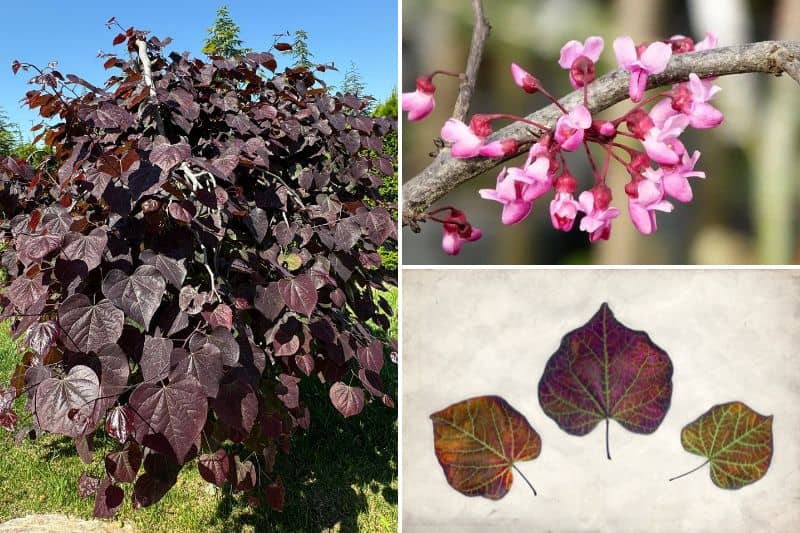
This year, my choice is the Cercis canadensis 'Ruby Falls', a dwarf weeping redbud that offers a poetic presence in my bordering terrace bed. Planted in partial shade, it boasts heart-shaped leaves of a deep purple mixed with green, which seem to cascade along its drooping branches. In spring, its violet-pink flowers emerge on the still bare wood, bringing unexpected colour before the young red leaves unfurl. In autumn, this foliage takes on bronze and copper hues before falling.
I particularly love the contrast of its purple foliage with that of the surrounding plants, especially the bright green and violet-blue flowers of a nearby Hardy geranium 'Rozanne'. Alongside them, my Greater celandine, more spontaneous, naturally brightens the base of the shrub with its light green foliage. A little further away, a Acer palmatum ‘Bloodgood’, with its reddish-brown foliage, echoes the Ruby Falls. This chromatic continuity, from the purple of the Cercis to the darker hue of the maple, gives a gentle coherence to the bed and creates a visual depth where the light catches differently depending on the seasons.
This little Canadian redbud easily finds its place in a garden, thanks to its weeping habit and compact size. Its good hardiness makes it simple to cultivate, as long as the soil retains some moisture in summer. At my place, it quickly integrated into the bed, bringing softness to this part of the garden without ever overshadowing the neighbouring perennials.
Virginie: the Begonia 'Rex Escargot'
My heart undoubtedly leans towards the Begonia 'Rex Escargot'. What makes it truly special? This variety lives up to its name: each leaf spirals and seems to form a small snail shell, hypnotic and wildly graphic. We love its artistic touch with its unique colour contrasts: a blend of greens, silver, and chocolate.
With its velvety foliage, spiralled patterns, and unprecedented colours, it marks the strong return of indoor begonias, which are increasingly appealing due to their original aesthetics and diverse foliage. Long relegated to grandmothers' balconies or forgotten greenhouses, begonias now rank among the top 5 most sought-after plants for our interiors. Right in line with the major trend of decorative begonias, this variety stands out as a vintage icon brought back to life. Easy to cultivate (as long as you respect its preference for ambient humidity and filtered light), it adapts perfectly to all our interiors.
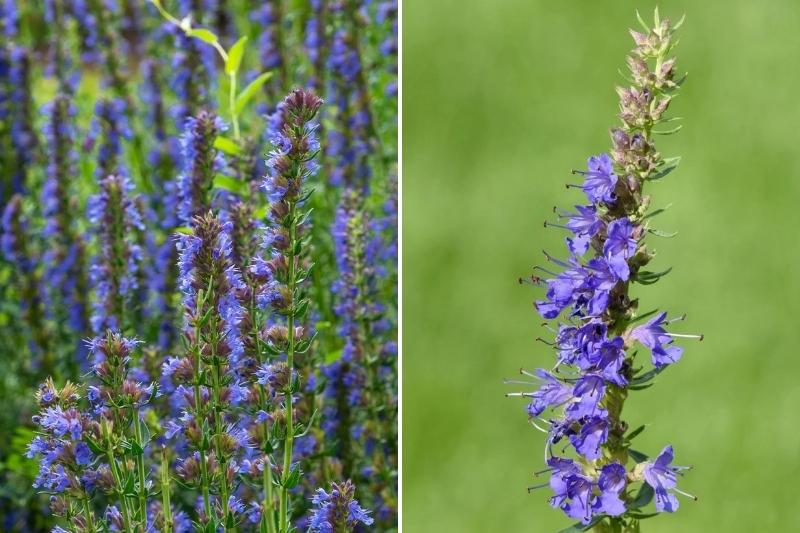
Olivier: the Hyssopus officinalis
"You, who are very sentimental, will surely appreciate this plant!" And bam! I was handed, without further ado, a clump of earth, from which only a few meagre green shoots emerged. Of course, I knew a bit about hyssop, as I have been passionate about medicinal plants since my studies. Moreover, it held a prominent place in medieval herb gardens. However, in my heavy soil, I remained… sceptical about its future. So, I decided to try it in a large container alongside my other Mediterranean plants, botanical cousins: thyme, sage, rosemary, and lavender.
Hyssopus officinalis is a dwarf undershrub (you can use that as a somewhat original insult), ideal for very sunny spots and dry or calcareous soils. And, in just one season, mine has thrived. I particularly love its flowers, a lovely violet-blue, which bloom from July to September and are highly appreciated by pollinating insects, including butterflies. Known as "sacred herb" by the ancient Greeks, this aromatic plant can reach up to 50 cm in height and has very fragrant leaves. It is cultivated for its medicinal properties (infusion for bronchial issues and digestion) and to flavour various dishes such as salads and soups. In short, if you have a spot left in your herb garden: give hyssop a try!
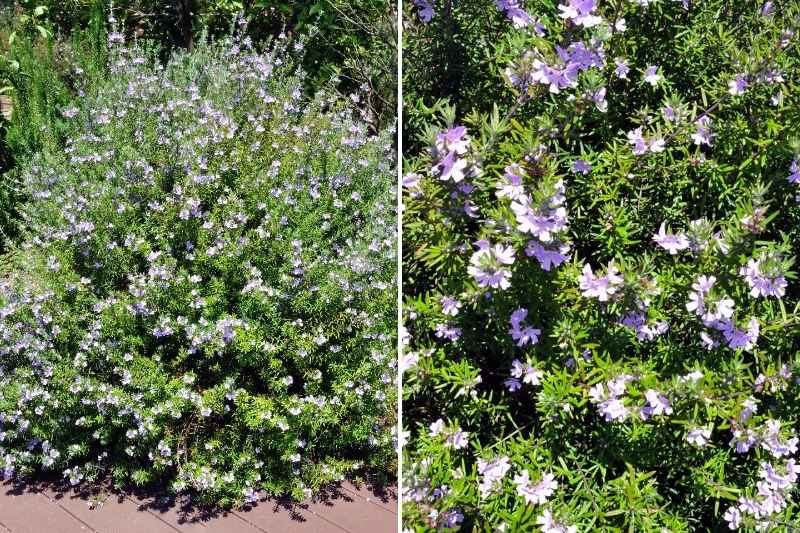
Sophie: the Westringia fruticosa
I have chosen the Westringia fruticosa, also known as Australian rosemary, as my plant pick for 2025, because it embodies the perfect companion plant, one that simplifies gardening! With its slight resemblance to rosemary, it has that familiar and sunny charm that immediately sets the tone. In my southern garden, amidst gauras, agapanthus, Leucophyllums, and lavender, it has settled in as if it has always belonged there. Its evergreen and silvery foliage captures the light, its naturally well-defined silhouette adds elegance, and its impressive resistance to heat, wind, and drought makes it a reliable choice, as I know it can thrive without any care. It tempers the exuberance of the blooms, highlights the volumes, and its light and delicate flowering brings just the right amount of freshness. What I love is its easy-going nature and its clean and bright appearance all year round.
With its 1 to 1.5 m in height and the same in spread, the Westringia fruticosa easily finds its place in the garden. Its delicate flowering extends from spring to autumn, returning in waves. It withstands light frosts down to -5 °C without flinching, sometimes even more in well-drained soil, making it perfectly suited for southern gardens, sheltered areas, and coastal climates. To thrive sustainably, it primarily requires a well-drained soil, preferably light, poor, and stony, where water never stagnates, an essential condition to preserve its longevity and natural vigour.
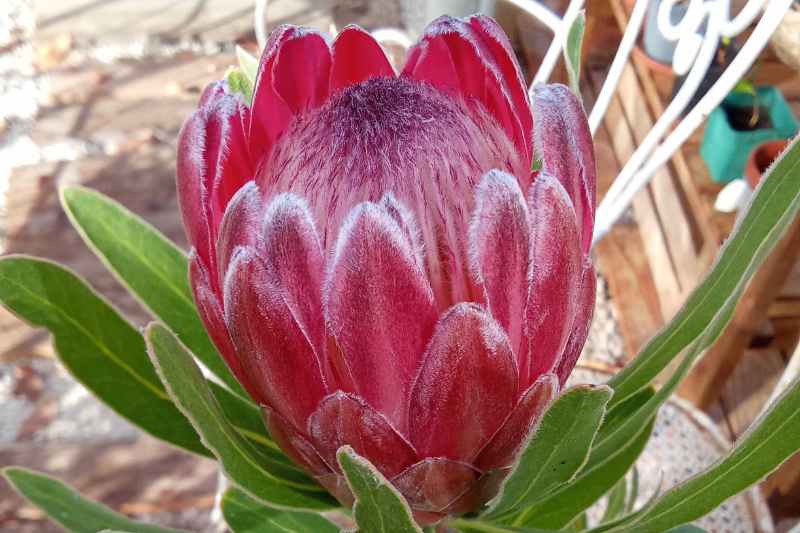
Gwenaëlle: the Protea 'Pink Ice'
Every year, when we choose our plant of the year to share with you, I always hesitate, as several plants in my garden could claim a spot on this podium. This year, there’s no hesitation… Drumroll… It’s my Protea 'Pink Ice', brought back from Madeira in 2022, that wins all the votes! The tiny plant I bought at the flower market in Funchal and lovingly planted has seen it all, and it’s the only one of the three plants to have survived. Growing it in a greenhouse and repotting it as it grew, it suffered, two years ago, from my carelessness as a gardener when, in the middle of summer, I forgot to ventilate the greenhouse. As a result, one of the two main branches completely cooked, throwing it somewhat off balance. But, with care, it continued to grow, forming new branches to my great satisfaction. What a surprise it was in September to see three buds appear, slowly but surely transforming into those sublime pink inflorescences I had been patiently waiting for in early November.
Proteas, native to South Africa, are considered delicate plants due to their very low hardiness. Of course, I protect it in winter, wrapping it up and watching it like a hawk. I also only water it with room temperature rainwater and have provided it with an acidic and light substrate. I’m not sure I’ll plant it in the garden for a few more years, in which case I’ll need to find it a particularly sheltered spot. The arrival of these large fluffy flowers is such a spectacle that I recommend it to all gardeners who love exotic plants, as this plant literally transports me elsewhere!
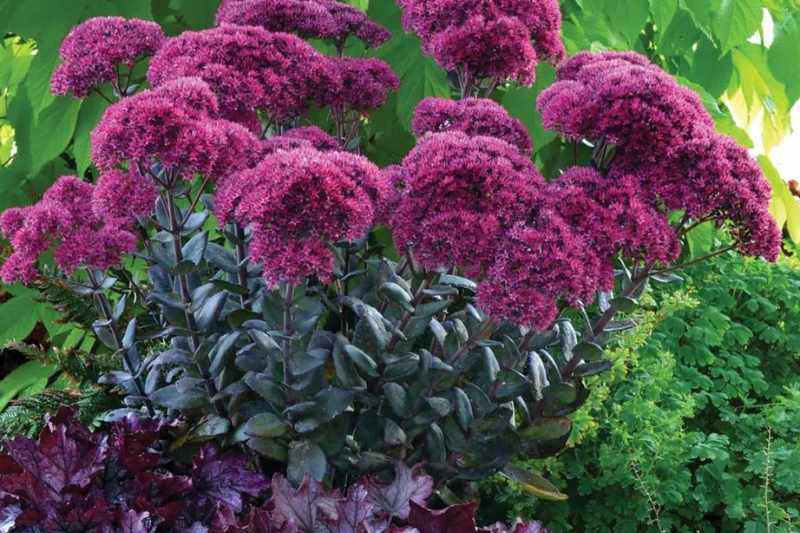
Pascale: the Sedum ‘Thunderhead’
I admit, I was long among the detractors of sedums. Perhaps because these plants always seemed a bit dull and unremarkable in the beds. And then, what’s the point of growing these succulent plants at home, in a region where drought was hardly an issue? Climate change has decided otherwise, and the heatwave has taken its toll on other plants I cherished… Not to mention the numerous cultivars of stonecrop that offer new cultivation perspectives.
The Sedum ‘Thunderhead’ is one of the pleasant surprises. This variety has literally swept away my prejudices about sedums, thanks to its presence and vigour. From spring, its robust dark stems stand proudly, bearing very fleshy bluish-green foliage. But it’s at the end of summer that the magic happens: the dense and enormous flower heads bloom in a deep purplish-red, lasting until early winter. As these flowers, perched on purple stems, are highly melliferous and nectariferous, they attract swarms of pollinators.
And in winter, this sedum continues to put on a show with its dry inflorescences. I’ve even taken a few to enhance a bouquet of dried flowers and herbs. And already, the next spring shoots are emerging from the ground.
Paired with my beloved heucheras, this stonecrop has found its place in my semi-shaded bed. But elsewhere, it could bask in the sun all summer long.
Elisabeth: the Monstera deliciosa, 25 years of cohabitation with my "philo"
Some stories last, enduring through moves, neglect, and trends. The one I’m about to tell is that of my Monstera deliciosa, my big "philo". It’s 25 years old, and it’s a green giant, a delicious monster clinging to the wall of my living room like a reminder of beautiful holidays in Spain.
Embracing its kitsch nature, it’s a bit of a grandmother’s plant, a symbol of the 70s, the spirit of bygone interiors. One might find this Monstera outdated, with its veranda plant look and postcard charm. Yet, it’s precisely this slightly old-fashioned air that makes it endearing. It signifies comfort and nostalgia.
If this houseplant had a CV, the first line would read: "Survival Expert". I forget to water it for three weeks? No problem, it will halt its growth, and that’s that. A bit of drastic pruning in anticipation of a move? It will sulk, but it will recover. It’s the ideal green plant for busy (or lazy) people; I don’t judge, I’ve lived through both.
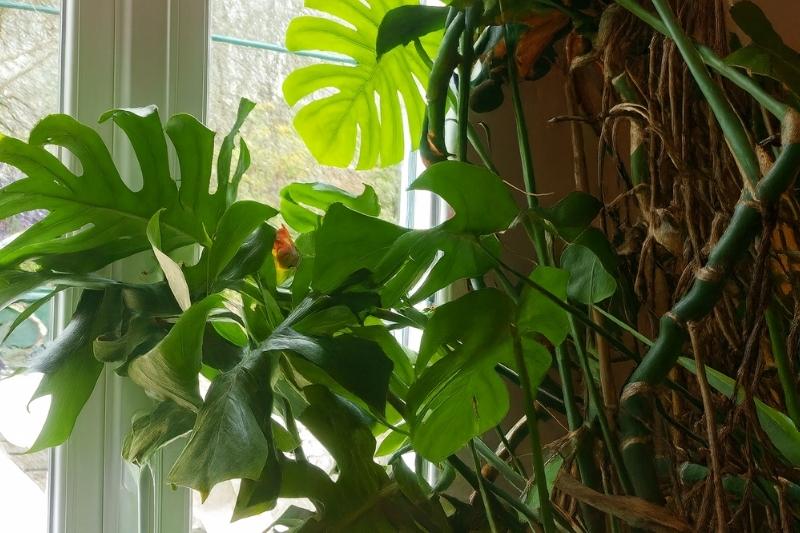
Despite its 25 springs, "philo" has never deigned to flower. Because yes, this plant is capable of flowering! And even fruiting! Apparently, its fruits are deliciously edible. It might be lacking some geranium fertiliser, or perhaps it sulks because my living room isn’t humid enough, or too warm. Unless it’s just being a diva. It’s a whimsical creature: its leaves, sometimes smooth, sometimes holey like Swiss cheese, tell the story of its moods. Its support, doubled with bamboo and securely fastened to the wall with a battalion of strings, has become an original element of my décor. Over time, the inhabitants of the house hardly notice it anymore. Visitors, however, never miss the opportunity to comment: “But it’s huge!” or “How old is this monster?” And I confess its age with barely concealed pride.
Why do I love it (and why you might adopt it too)? First, because it endures. Even cats can’t really kill it — at least not mine, despite its efforts and persistence. Secondly, because it’s terribly photogenic: its large, cut leaves and vines bring a little bit of South American jungle into the home. And it’s a true conversation starter. “Do you think it will flower one day?” “How do we give it a more classic shape?”… With it, we learn patience; I still hope it will flower.
My Monstera deliciosa is not “just a plant”. It’s a life companion, a silent witness to my troubles, joys, successes, and also my losses. It’s a rock, a stubborn presence you can count on. And that’s precisely why I love it.
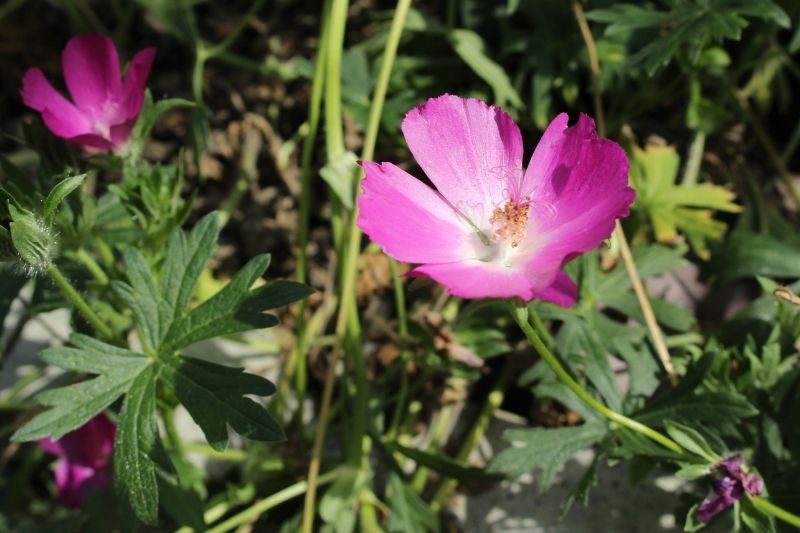
Aurélien: the Winecup or Callirhoe involucrata
If you appreciate mallows, lavateras, and other Anisodontea, then you’ll surely fall for their perennial and ground-cover cousin, the winecup (Callirhoe involucrata)!
Far less common in gardens, this Mexican species produces fine creeping stems with deeply lobed leaves, which weave between neighbouring plants without bothering them in the least. It reaches about 60 cm in diameter and 20-30 cm in height. The plant can easily be forgotten until large corollas of saturated fuchsia pink appear throughout the summer. Despite their ultra-vibrant hue, they blend effortlessly, in joyful whimsy, with blues, purples, or grey foliage: shrubby sages, immortelles, and perennial verbenas, or even yuccas will make excellent companions to create a Mediterranean atmosphere or a garden that requires no watering.
Frugal, floriferous, and quite resistant to drought once established, the winecup has many qualities and will thrive in any well-drained soil, preferably calcareous. North of the Loire, a spot in a rock garden or a sloped bed facing south will make it happy, possibly with the addition of some coarse sand or gravel to improve water drainage. In good conditions, it can be expected to withstand, despite its Central American origins, temperatures down to about -12/-15°C. A lovely addition to your borders that you won’t see everywhere!
At the end of each year, it’s an opportunity to reflect on the favourite plants of the editorial team, those that have marked our gardens, terraces, and interiors with their beauty, originality, or ease of cultivation. Behind each favourite, there is a gardener’s story, a meeting with a plant that has found its place and […]
The French jury of the 2025 Saint-Fiacre Prize has made its decision, and its Coup de Cœur goes to 400 Plants You Won't See in Your Neighbour's Garden published by Ulmer. Our friendly colleague Aurélien Davroux presents a work that responds to a growing desire among gardeners: the urge to embrace diversity to transform their garden into a unique, personal, original, and resilient space.
Let’s embrace diversity!
As a reminder, the Saint-Fiacre Prize is a literary award given by horticultural journalists. Since 1971, it has recognised "a work in French addressing themes of gardening, gardens, or the plant world".
Aurélien Davroux's book, "The 400 Plants You Won't See in Your Neighbour's Garden", is a breath of fresh air that invites gardeners to break away from landscape uniformity by exploring less common varieties. Choosing diversity also creates a stronger garden: by varying species, it becomes naturally more resilient to diseases and climate change. Drawing on his experience, this horticultural engineer offers an inspiring and practical guide, encouraging the creation of surprising and ecologically stable gardens.
Although the 400 plants may not be the most common, they are perfectly accessible through specialised nurseries, turning their potential acquisition into a delightful "treasure hunt". The book also stands out for its light and humorous tone — notably illustrated by a hilarious "treatise on neighbourology" — which, combined with the author's botanical expertise, makes this book a true gem.
A few questions to the author

From the genesis of the book to the award
Receiving the "Coup de Cœur" from the Jury at the 2025 Saint-Fiacre Prize is a recognition of the quality of this work in horticultural publishing. Aurélien Davroux shares his reaction and the origin of this bold editorial idea.
Promesse de fleurs: Were you surprised to be nominated for the Saint-Fiacre Prize, and even more so to receive the Jury's "Coup de Cœur"?
Aurélien Davroux: I knew my book had been promoted by Ulmer, but it was still a lovely surprise and an immense pleasure.
Promesse de fleurs: A work that is both useful and surprising. Where did this original idea come from?
Aurélien Davroux: During discussions between Ulmer and Promesse de Fleurs, an idea was proposed by Pascal Griot, who said: "Why not talk about plants that you can't find at your neighbour's?" (editor's note: the very essence of our online nursery). Ulmer then chose me to write it, and from there, we tried to define the plants we wanted to present and how to organise them into three main parts, then into categories. The book discusses amazing plants, but none that are impossible to find or complicated — except for a few here and there: there has to be something for everyone, even the most passionate! It is certainly the opposite of an elitist book. However, it is also good to explain why we don't see them at our neighbour's: due to conformity, convenience, or ignorance. The average gardener cannot know all the botany and horticultural varieties. But we can present them. That is the purpose of my book.
Humour at the service of botany
Promesse de fleurs: The book also stands out for its light tone. Bringing a touch of humour to a gardening book is not common. Was this an initial intention of yours?
Aurélien Davroux: Very quickly, I had the ambition to introduce a quirky tone. Ulmer actually gave me free rein. The challenge was to integrate humour without risking offending anyone or going overboard. So, I sought a guiding thread to avoid monotony. Upon reflection, I remembered the "Memento for Comic Strip Artists" that Gotlib included in his Rubriques-à-brac, which presented the different archetypes of cartoonists. It made me laugh out loud! That’s why, in all modesty, I drew inspiration from it for my Treatise on Neighbourology: a carousel of neighbour archetypes (and we are all someone's neighbour!). Drawing from my own experiences and those of my friends, I wrote this little treatise, which I placed at the beginning of the book, establishing an analogy between the neighbour and the cultivation of a plant. My second source of absurd inspiration comes from Terry Pratchett, the British author of comic fantasy, who enjoyed adding humorous footnotes.
Why is this Guide to Original Plants an Ideal Gift?
Promesse de fleurs: For the end-of-year holidays, this could make a lovely gift. What are the strengths of your book?
Aurélien Davroux: Are you looking for a plant book that stands out from the ordinary, or do you want to convince a reluctant person who doesn't like encyclopaedias? Why not my book?
Promesse de fleurs: Any new works in preparation?
Aurélien Davroux: Not at the moment, but I am thinking about it.
The 2025 Saint-Fiacre Prize
As a reminder, the prestigious *2025 Saint-Fiacre Prize for adults was awarded to the work The Words of the Art of Gardening by Marie-Hélène Benetière and Alain Le Toquin, published by Delachaux & Niestlé. This prize, which annually honours reference works, confirms the horticultural and educational value of this title. Meanwhile, The Wild Square, by Anne-Hélène Dubray and Sarah Loulendo (Éditions L'agrume), won the Saint-Fiacre Youth Prize for its playful and educational approach.
*Awarded by the French Association of Garden and Horticulture Journalists (AJJH) and supported by Valhor (French interprofessional organisation for horticulture, floristry, and landscaping).
The French jury of the 2025 Saint-Fiacre Prize has made its decision, and its Coup de Cœur goes to 400 Plants You Won’t See in Your Neighbour’s Garden published by Ulmer. Our friendly colleague Aurélien Davroux presents a work that responds to a growing desire among gardeners: the urge to embrace diversity to transform their […]
The moon, a celestial body of all fantasies, has long been the subject of controversy regarding its effects on plants. There are those who swear by lunar calendars for sowing, planting, pruning, or mowing the lawn, and those who do not believe in it at all. We know the effects of the moon on our good old planet Earth, particularly its attraction on ocean currents with the tides. It is even said to have some effects on humans, their sleep, or their moods… but does it really affect our gardens, and if so, to what extent? The most reputable magazines include a lunar calendar in their pages, so… fact or fiction, myth or reality?
I wanted to get to the bottom of it and find out once and for all if the moon truly exerts a real influence on plants. To do this, I carried out sowing and planting on very different days to draw my own conclusions. Intrigued by the results? Here they are!

What do the moon's movements in the sky tell us?
Let’s start at the beginning, namely what books or popular belief tell us about the rotation and gravitational pull of the moon, and what is scientifically proven. While the moon is subject to controversy, it remains a fact that our only satellite moves in the sky. The fundamental principle of gardening in harmony with the moon is based on its position in the sky.
However, it can be confusing to distinguish between the waxing or ascending moon and other subtleties, and it is essential to understand three distinct factors:
The phases of the moon
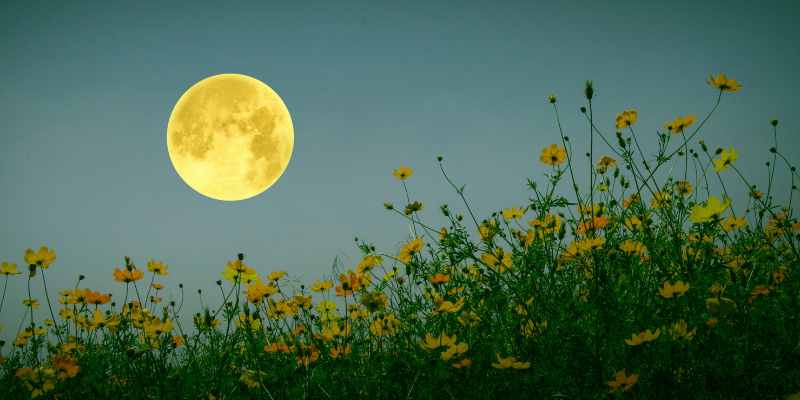
Easy to spot with the naked eye, we can identify four main phases of the Moon (actually eight if we count the intermediate crescents), marked by the four quarters of the Moon. These phases are due to the relative positions of the Moon-Earth-Sun axis, which determines the portion of the Moon illuminated by the Sun as seen from Earth: the new moon, when it is not illuminated at all by the Sun and becomes almost invisible; the first quarter, in the shape of a crescent opening to the left; the full moon, when it is completely illuminated by the Sun; and the last quarter of the moon, where it forms a crescent opening to the right, before disappearing completely to restart the lunar cycle with the new moon. This lunar cycle lasts about 29.5 days.
These phases inform what is referred to as the waxing and waning moon in "lunar" language:
- Waxing moon: the period when the illuminated part of the moon we see increases, from the new moon to the full moon;
- Waning moon: the period when the illuminated part of the moon decreases: from the full moon to the new moon.
Scientifically speaking, we can assert that these phases influence the amount of nocturnal moonlight. Some gardeners believe that this increased light during the waxing moon stimulates the growth of the aerial parts of plants, while the diminishing light is favourable for root growth. To date, however, no scientific study has proven this.
The position of the Moon relative to the Earth: perigee and apogee
The Moon orbits the Earth in an elliptical path, meaning its distance from our planet varies. When it is closest to the Earth (about 357,000 km), it is referred to as perigee, and when it is farthest away (an additional 50,000 km or so), it is called apogee.
These variations in distance could influence the gravitational force exerted by the Moon on the Earth, and thus on plants, but certainly to a minimal extent… In the case of high tides, for example, there is a clear link with the phases of the full moon or new moon, and not with perigee or apogee. Note: perigee is considered detrimental in lunar gardening.
The ascending and descending movement of the Moon on the horizon
The ascending and descending movements of the Moon are due to its inclined orbit around the Earth. This time, we refer to what is called the tropic rhythm of the moon: the height of the lunar trajectory relative to the celestial equator differs. The human eye can distinguish this over several days, observing that the moon is higher or lower on the horizon.
These phases inform what is referred to as the ascending and descending moon:
- Ascending or rising moon: the period when the position of the Moon in the sky is higher each day compared to the horizon.
- Descending moon: the period when the Moon appears to descend lower in the sky each night.
The ascending moon, associated with rising sap, is said to be favourable for sowing, harvesting, and grafting, while the stronger growth during the descending moon, associated with descending sap, is said to be favourable for roots, soil work, planting, transplanting, and pruning.
Some see a correlation with zodiac constellations.
Some even see a link here with the moon's trajectory through the twelve zodiac constellations (where, from Gemini—the highest constellation—to Scorpio, the moon is descending), and attribute to each of the four elements related to the zodiac a correlation with flower days (air), leaf days (water), fruit days (fire), and root days (earth). Each type of day is thus said to favour the growth of a specific part of plants.
Again, there is no irrefutable proof, but biodynamics refers to this in its guidelines as a planning tool.
My experience with the Moon
On my part, I admit that before starting my little experiment, I had no preconceived notions. The Moon is, to me, a fascinating celestial body, particularly for its influence on tides and the luminous power it exerts when it approaches a perfect circle. However, I had not really delved into the subject, despite years of gardening experience. To avoid any influence, I carried out sowing, planting, and propagation at times that suited me, without consulting any calendar, but diligently noting all my actions in a small notebook for future reference.
What interested me most was to find out whether it was more beneficial to plant or sow during supposedly favourable lunar phases, or not.
I therefore carried out several sowings in spring, including various annual ornamental flowers (sweet peas, daisies, balsam, and poppies) and a few vegetables (lettuce, parsley, coriander, and Swiss chard). During this same period, I planted some perennials (lobelias, hostas, epimediums…) while meticulously noting the intervention dates. I then transplanted the same plants at different times to see if it affected their ability to thrive. Finally, to complete this little lunar test, I conducted a hydrangea propagation test this summer.
In terms of sowing, I encountered issues with a few flowers at the beginning, due to either the bad weather in March or the poor quality of the seeds, as some sowings did not take at all, like an initial batch of sweet peas.
This summer, as my various trials bore fruit (finally… their flowers), I consulted an online lunar calendar to find out when I had sown or planted, and I evaluated the success rate of each of my trials. I simply checked in detail my blind tests: whether the moon was ascending or descending, waxing or waning, and what type of day it was (fruit, root, leaf, or flower).
The verdict? Well… no lunar miracle on my part… my plants thrived regardless of the lunar phase, except for one failed sowing at the beginning, regardless of whether the moon was ascending, waxing, or not. Unfortunately, none of my blind sowings and plantings coincided with a "lunar node," so I cannot comment on that. Almost a disappointment, as all this was starting to intrigue me and make me want to believe…
And its influence on the weather?
The moon has often been mentioned in popular sayings associating it with weather forecasts, which were the only possible ones for centuries, alongside observations of clouds or animal behaviour, in a time not so long ago without screens!
Here are a few French sayings that I found to be the least far-fetched. Do they hold true?
"Mow your hay: when the moon comes into the water, in three days it will be fine"
"Ringed moon, assured rain"
"When the moon has its ring, water will fall"
or "Pale moon in the evening, in the morning it will rain well".
This is another topic for discussion, which I invite you to continue here, based on your own observations of the sky…
So, are you tempted to plan your gardening tasks using a lunar calendar or not? If we must consider the weather and the whims of the moon, one might say we can no longer garden. Ultimately, everyone has their own method, as long as we enjoy gardening, right? But sharing experiences in this area is always interesting. Please feel free to share your trials and experiences with us!
I’ll leave the final word to Olivier de Serres, who claimed in the 16th century that "a man who is too lunar [consulting the moon] fills not his basket with fruits"...
The moon, a celestial body of all fantasies, has long been the subject of controversy regarding its effects on plants. There are those who swear by lunar calendars for sowing, planting, pruning, or mowing the lawn, and those who do not believe in it at all. We know the effects of the moon on our […]
Father's Day is fast approaching, and with it that age-old question: what to give a dad who loves spending time in his garden? To celebrate gardener dads properly, nothing beats a carefully chosen gift that reflects their passion for gardening. Unusual plants, practical tools, well-thought-out accessories or nature-inspired decorative items: gift ideas are plentiful for Father's Day. Here are our favourites to delight every garden-loving dad.
Give rare plants for Father's Day
For a dad passionate about botany or simply curious about new things, giving a rare plant is both an original and meaningful gesture. Some uncommon species add a touch of originality to the garden while piquing the gardener's interest.
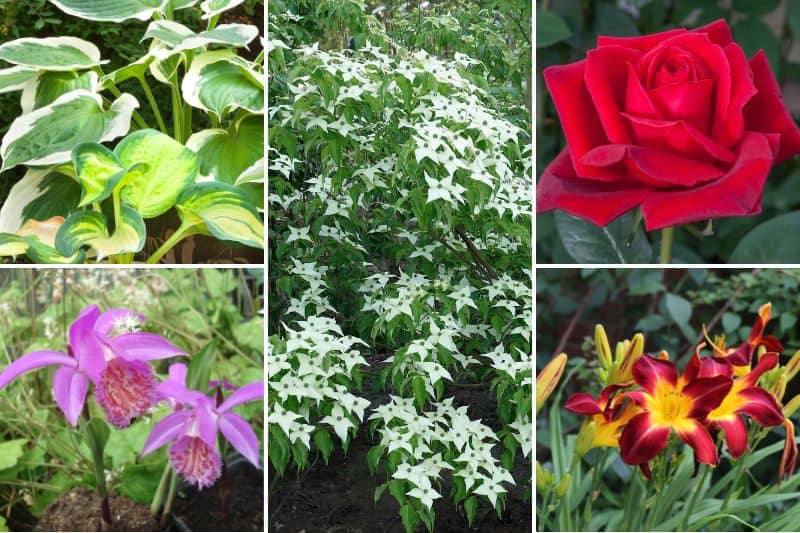
For shady gardens, consider Hosta with unusual and decorative foliage (notably Hosta 'Big Daddy' and why not 'Obi-One Kenobi' or 'Jurassic Park ®' for a cinema-loving dad?), ferns with unusual shapes (such as the original Dragon's-tail fern), or a Corydalis 'Craigton Blue' with delicate electric-blue flowers.
For sunny gardens, consider graphic Eryngium, warm-toned daylilies, or Kniphofia with blazing flower spikes. Some garden orchids tolerate sun and partial shade provided the soil stays cool and offer unusual flowering, perfect for summer borders. And don't forget roses for collector dads.
For a graphic effect, consider tree ferns, a Japanese dogwood for its striking blossom, an Aralia with divided leaves or a Japanese maple with changing colours. These plants are both attractive, long-lasting and often little-known, perfect for enriching the collection of an experienced or passionate gardener.
If your dad is more of a vegetable-garden enthusiast, consider perennial vegetables, still rare in our gardens, and dwarf fruit trees.
Choosing a plant suited to his garden is giving a living gift that grows, flowers and changes with the seasons… much more than a simple object, it's a lasting gesture.
Choose quality gardening tools as a gift
A well-chosen tool is a useful, durable gift that accompanies the gardener through the seasons. For a dad who likes to care for his plantings, a precision pruning shear, a forged spade or a Japanese hoe are safe bets. It's also the perfect opportunity to replace a worn or less ergonomic tool with a more comfortable and effective model, such as a aerating fork. Prefer tools with steel heads and wooden handles, both sturdy and pleasant to use. Today you can also find very beautiful garden tools, both aesthetic and technical, in copper or bronze.
You can also think of gardening accessories, such as a tool apron or a comfortable kneeling pad, which will make gardening easier for your dear dad. These are practical gifts designed to last and provide real comfort in the garden.

Gift an inspiring gardening book
Father's Day also coincides with the arrival of summer, and the heat that fills the garden often forces the gardener to rest. It's the ideal moment to give a gardening book to browse quietly in a shady spot, lying in a hammock or a deckchair while the garden breathes.
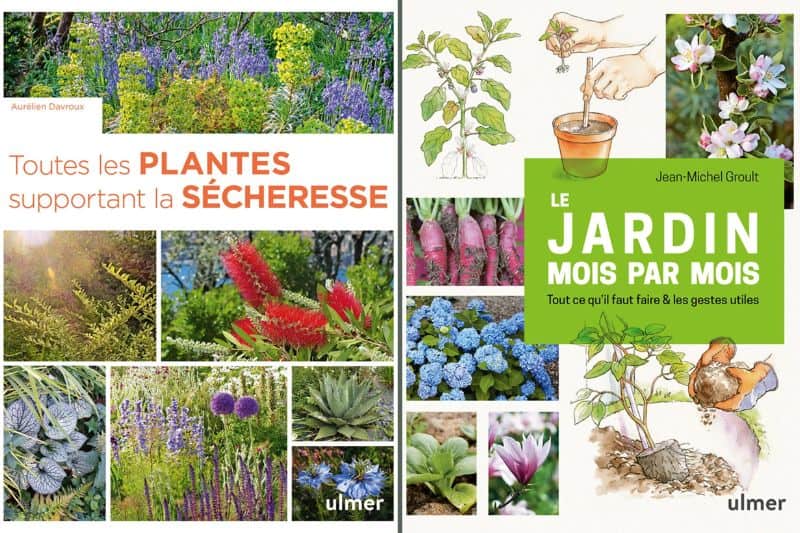
Some titles encourage reflection. For a dad keen to adapt his garden to the climate, All Plants That Tolerate Drought is a book that helps rethink the garden to make it more resilient to increasingly hot summers.
Other books offer regular guidance, such as the book The Garden Month by Month, which guides the gardener step by step with simple, practical advice, whatever the season.
These are lasting gifts that are kept, annotated and sometimes passed on. Gifting a book also gives time for oneself and inspiration.
Create a personalised garden gift box for Father's Day
A bespoke gift box is a thoughtful present, easy to create and personalise. It can revolve around a theme such as sowing pollinator-friendly flowers, vegetable-garden maintenance or plants useful to pollinators. You can tuck in a few plants, some packets of seeds, a comfortable pair of gardening gloves, a garden notebook, or even a book or a small illustrated guide. Add slate plant labels and a restorative hand cream for a thoughtful touch. It's also a lovely way to give several small useful items, neatly presented, for a gardening dad.
Gift an indoor plant
Not all dads have a garden, but that doesn't stop them having green fingers (or simply wanting to add greenery to their home). A well-chosen indoor plant can transform a corner of a room, a desk or a windowsill into a little island of nature.
Consider gifting an elegant fern, a Ficus with a graphic habit, or a Sansevieria, robust and easy to care for. For a more original effect, think of a Zamioculcas, an Asplenium nidus or a Calathea with decorative, moving foliage. Some dads will also appreciate a ready-to-place terrarium, a decorative mini greenhouse or a potted herb to keep near the kitchen. It's a simple way to bring a bit of nature indoors, even in an apartment, and to give a living, decorative and lasting gift.

Give a plantable seed card for a new dad
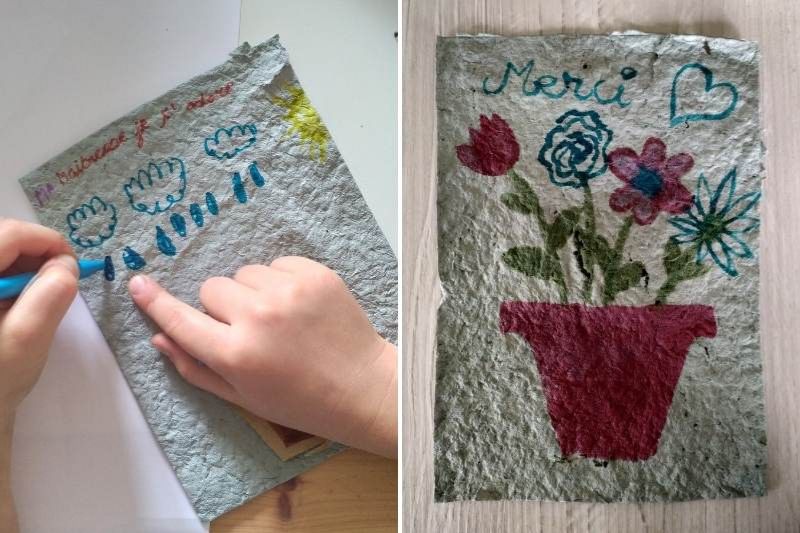
The idea is simple: make a card from paper or papier-mâché into which you mix some flower seeds or herb seeds. Decorate the card as you wish, with drawings or little messages for dad. Afterwards, the lucky recipient can cut out and plant the card in the ground or a pot. Once in place and well watered, the seeds germinate and flower, becoming a living memento of the shared moment.
It's a perfect gift idea for children who want to take part in their own way. The card can also accompany a plant or a tool. A small gesture that takes root in the heart as much as in the soil.
→ Find our detailed tutorial: "How to make a plantable card?".
And why not simply share a moment in the garden?
Sometimes the most beautiful gift you can give is time together. A morning hoeing side by side, an afternoon planting a new specimen together, sowing vegetable seeds or simply sipping a coffee on a bench while watching things grow. The garden is also a place of connection and passing on, a space where you can give your time, your presence, your memories. On Father's Day, a sincere gesture sometimes carries more weight than a perfect present.

The entire promesse de fleurs team wishes all dads a happy Father's Day!
Father’s Day is fast approaching, and with it that age-old question: what to give a dad who loves spending time in his garden? To celebrate gardener dads properly, nothing beats a carefully chosen gift that reflects their passion for gardening. Unusual plants, practical tools, well-thought-out accessories or nature-inspired decorative items: gift ideas are plentiful for […]
The Yellow Dragon disease, scientifically known as Huanglongbing (HLB), is one of the most serious current threats to citrus production worldwide. Caused by a deadly bacterium, this disease affects oranges, lemons, mandarins, and grapefruits, leading to significant economic losses and jeopardising the future of citrus orchards. Let’s explore the origins, symptoms, modes of transmission, consequences, and solutions to combat this scourge.
What is Yellow Dragon disease (HLB)?
Yellow Dragon disease (HLB), or Huanglongbing, was first identified in the early 20th century. It was described in China in 1919, where it was known as the "yellowing disease" of citrus. At that time, farmers observed symptoms of irregular leaf yellowing and tree decline, but the precise causes of the disease were not yet known. It was not until the 1940s-1950s that further research allowed for a better understanding of its bacterial origin and its transmission by vector insects. Since its emergence, the disease has spread rapidly, affecting Asia, Africa, Latin America, the United States, and even some regions of Europe. Today, it is considered one of the greatest threats to global citrus production. Associated losses are estimated to be in the billions of dollars each year.
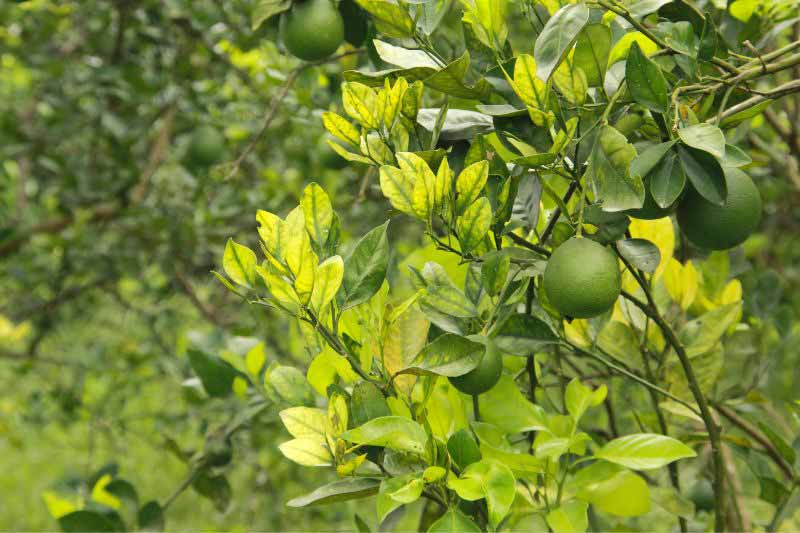
What is the pathogen of the dragon?
The Yellow Dragon disease is caused by a bacterium belonging to the genus Candidatus Liberibacter. Three main variants of this bacterium are known: asiaticus, africanus, and americanus. All attack the vascular system of citrus, blocking the circulation of nutrients and leading to tree decline.
Symptoms of Yellow Dragon disease
The first signs of the disease appear on the leaves, which exhibit irregular yellowing often confused with nutrient deficiencies. Unlike other diseases, the yellowing of leaves caused by HLB is asymmetrical, affecting part of the lamina while the other remains green. The fruits of infected trees become small, misshapen, and their taste is altered, often bitter or bland. The skin of the fruits may also show unusual colour spots.
As the disease progresses, the entire tree shows signs of decline. Leaves and fruits drop prematurely, growth slows, and if no intervention is made, the tree eventually dies. Once infected, a tree cannot be cured, making early detection and prevention essential.
In summary:
- Irregular yellowing of leaves
- Small, misshapen, and often bitter fruits.
- Irregular skin coloration.
- Premature dropping of leaves and fruits.
- Slowed growth.
- Possible death of the tree.
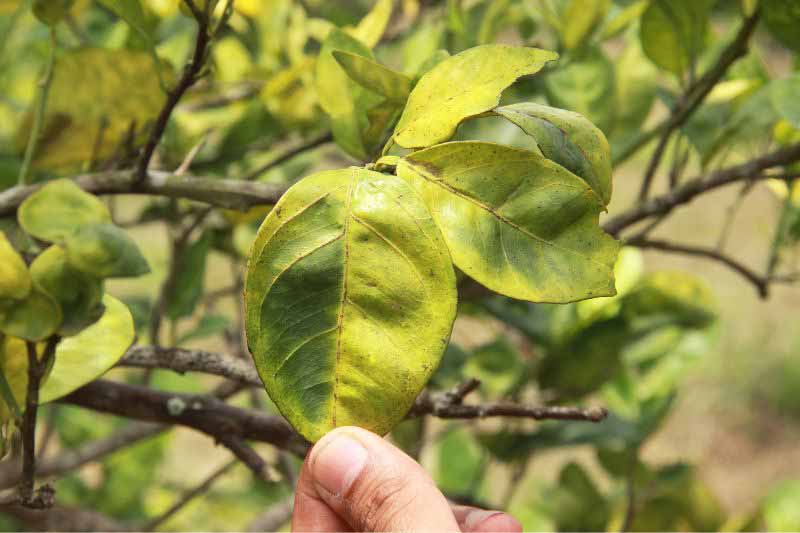
How does the disease spread?
The bacterium is transmitted by vector insects, primarily the Asian citrus psyllid (Diaphorina citri) and the African citrus psyllid (Trioza erytreae). These small insects feed on the sap and spread the bacterium from an infected tree to a healthy one. The dissemination of the disease is exacerbated by the transport of infected plants or contaminated grafts, usually from one region to another. The globalisation of agricultural trade has significantly contributed to the spread of the disease, making control even more complex. Poor agricultural practices and a lack of awareness in certain regions further worsen the situation.
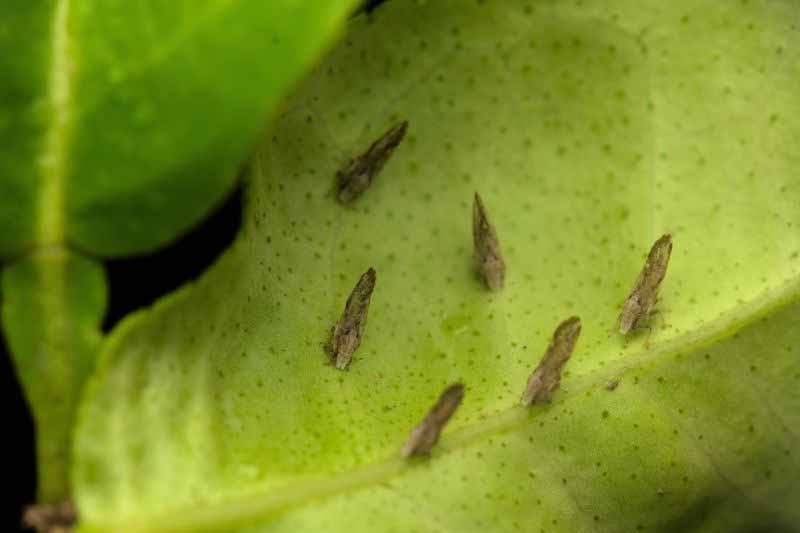
What cures the dragon disease?
Currently, there is no definitive cure for Yellow Dragon disease (HLB). HLB is an incurable disease. Once a tree is infected by the bacterium Candidatus Liberibacter, it cannot be cured. This is why prevention is key to protecting orchards.
Economic and environmental consequences
The impacts of HLB are catastrophic for producers. Yields drop dramatically, as fruits from infected trees cannot be marketed. Costs increase in attempts to control psyllid populations or replace lost trees. Yellow Dragon disease (HLB) has profound repercussions on the global economy, particularly in regions where citrus cultivation is an agricultural and commercial pillar, threatening the citrus sector.
Countries heavily dependent on citrus, such as Brazil, the United States, Mexico, and India, incur colossal losses each year. The decline in yields, combined with rising management costs (pesticides, replacement of infected trees, orchard monitoring), puts farms under pressure.
For many small farmers, these losses can be insurmountable, leading to bankruptcies and migrations to less affected crops. Beyond orchards, the repercussions are felt in the agri-food industry: the entire citrus supply chain is impacted, from processing (juices, jams, essential oils) to export. Fruit shortages drive up prices in the market, making products less accessible to consumers.
Increased use of pesticides
The fight against HLB also has concerning ecological impacts, particularly in areas where intensive practices dominate. To control psyllid vector populations, producers often turn to intensive chemical treatments. While these pesticides may temporarily reduce infestations, they pose major environmental problems.
Loss of biodiversity in orchards and indirect deforestation
Intensive monocultures of citrus, particularly vulnerable to HLB, are already ecologically fragile. The massive removal of infected trees, combined with intensive chemical management, exacerbates the loss of biodiversity in orchards, making them even more vulnerable to other diseases and pests. To compensate for losses caused by HLB, some producers clear new land to plant citrus, contributing to the destruction of natural habitats.
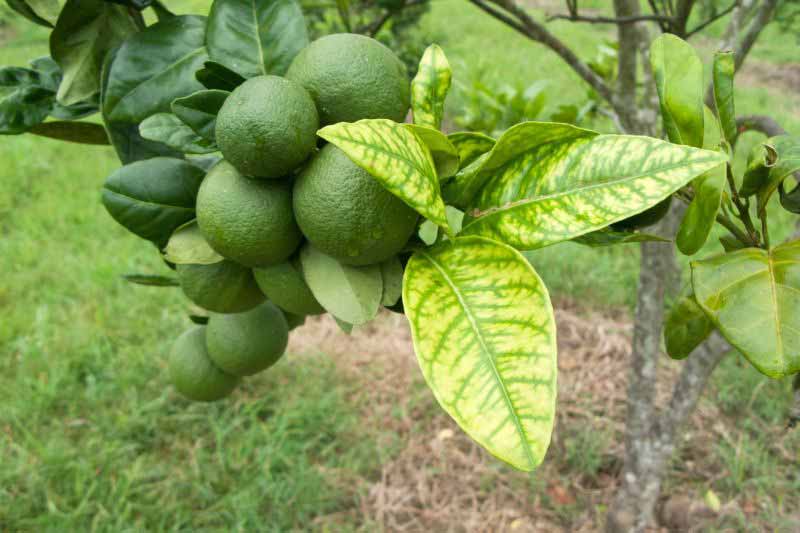
Control strategies and prevention
In the face of this threat, combating HLB relies on several axes. Prevention plays a key role. Strict phytosanitary controls aim to limit the spread of the disease through international trade of plants. Training farmers to detect early symptoms is also essential for rapid intervention.
Managing vector insects is another lever. Producers resort to insecticides to reduce psyllid populations, although this approach requires precautions to minimise its ecological impact. Alternative methods such as using traps or introducing natural predators, such as ladybirds, offer more sustainable options.
When trees are infected, their rapid removal is imperative to prevent contamination of neighbouring trees. Researchers are also actively working on selecting citrus varieties resistant to the bacterium, although this process is still ongoing.
What are the prospects?
Combating HLB, or Yellow Dragon disease, requires a comprehensive and multidimensional approach to protect global citrus production. The prospects rely on promising scientific advances, such as the creation of resistant citrus varieties through genomic editing (CRISPR), the use of bacteriophages, natural viruses, to target the bacterium Candidatus Liberibacter, and the search for vaccines to immunise trees. Initial tests of vaccines or resistant varieties show encouraging results.
To control psyllid vectors, sustainable alternatives to pesticide use are preferred, as seen, such as biological control using natural predators (ladybirds, parasitoid wasps), disrupting insect reproductive cycles with pheromones, and integrating companion crops to repel or attract these pests.
Modern technologies, including drones and artificial intelligence, also enable effective monitoring of orchards and early detection of infected trees, facilitating rapid interventions. Finally, regenerative agriculture, which enriches soils and strengthens the natural resilience of trees through practices such as adding compost or using cover crops, is a key solution to reduce the vulnerability of citrus to diseases. These combined efforts aim to limit the economic and environmental impacts of this disease while ensuring the sustainability of citrus production and the preservation of ecosystems.
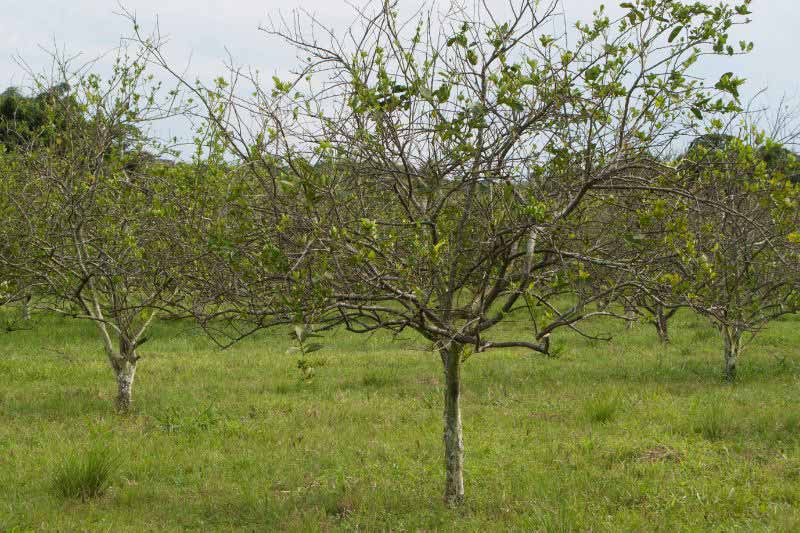
The Yellow Dragon disease, scientifically known as Huanglongbing (HLB), is one of the most serious current threats to citrus production worldwide. Caused by a deadly bacterium, this disease affects oranges, lemons, mandarins, and grapefruits, leading to significant economic losses and jeopardising the future of citrus orchards. Let’s explore the origins, symptoms, modes of transmission, consequences, […]
The Popillia japonica, commonly known as the Japanese beetle, poses an increasing threat to agriculture and gardens in Europe, particularly in France, where it may soon establish itself. This insect, native to Asia, is classified as a priority quarantine organism by the European Union due to its devastating economic and environmental impacts. Indeed, it attacks over 300 plant species, ranging from agricultural crops to ornamental plants. Let’s learn more about this potential (and yet another) threat!
How to Recognise the Japanese Beetle?
The Japanese beetle measures about 10 to 12 mm in length. Its small size can lead to confusion with other beetles found in France. However, it is distinguished by its metallic green head and thorax, its copper-brown elytra, and the five tufts of white bristles located on the sides of its abdomen, along with two more at the end of it.
Finally, the Japanese beetle is smaller than other common European beetles. Its body shape is compact and slightly rounded, with short, segmented antennae that end in club-like tips. These antennae are often retracted when it is resting but can be visible when it is moving or feeding.
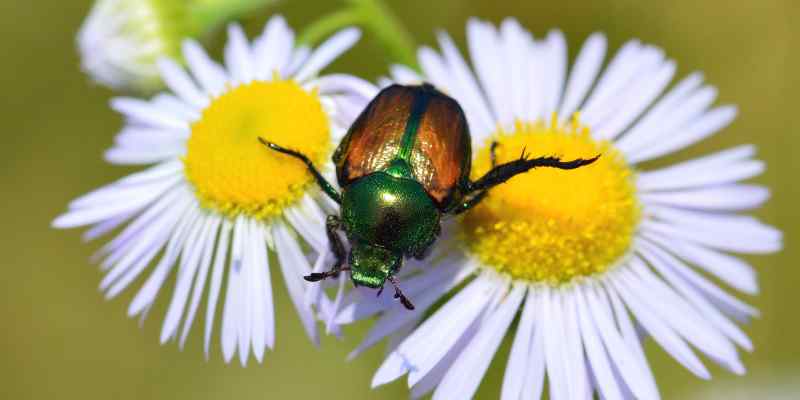
Life Cycle of the Popillia japonica
The life cycle of the Popillia japonica, or Japanese beetle, is annual and consists of four stages: egg, larva, pupa, and adult. Females lay their eggs in the soil during summer, from which the larvae emerge after about two weeks and feed on plant roots, causing damage until autumn. They then hibernate deep in the soil until spring, where they pupate and transform into adults. Adults are present in summer, feeding on leaves and flowers, before reproducing, thus completing the cycle.
What is its Impact on Plants?
This insect is polyphagous, meaning it feeds on multiple plant species (about 300 species). Adults feed on foliage, flowers, and fruits, leaving the leaves in a skeletal state after their passage. The larvae, on the other hand, cause damage by feeding on the roots of plants, particularly grasses like lawns. Among the most affected plants are grapevines, fruit trees, roses, and many other ornamental and agricultural plants.
In Italy, where the Japanese beetle has been present since 2014, vineyards are particularly vulnerable. The beetles devour grape leaves, thereby reducing the leaf area necessary for photosynthesis and thus for grape ripening. Corn and soybean crops are also severely affected by the Japanese beetle.
Roses are among the most affected ornamental plants. Japanese beetles devour the leaves and flowers, which can lead to complete defoliation. The larvae of the Japanese beetle, which feed on the roots of grasses, also pose a serious problem for lawns.
Obviously, like all invasive species, the Popillia japonica seriously threatens local biodiversity by competing with native beetles for food resources and disrupting natural ecosystems.
Estimation of Agricultural Yield Loss Costs
Precise figures regarding the economic impacts of the Japanese beetle in Europe are still being evaluated, due to the recent introduction of the insect to the continent. However, American experience provides insight into the potential extent of the damage. In the United States, direct and indirect costs (yield losses, treatments, management) related to the Japanese beetle exceed $450 million per year.
With the continued expansion of the Japanese beetle in Europe, economic impacts are expected to increase, particularly if the insect manages to establish itself in France, one of the main wine and agricultural crop-producing countries in Europe. Early prevention and control are therefore essential to minimise damage.
Additionally, there are costs associated with control measures, including expenses for installing pheromone traps, purchasing chemical or biological products, and mobilising teams to monitor and treat infested areas.
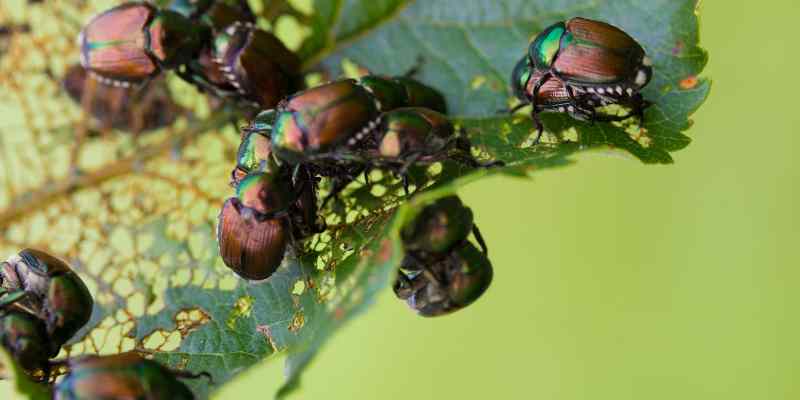
Spread of the Popillia japonica
The Japanese beetle is nicknamed "the hitchhiker" due to its ability to travel long distances by clinging to various supports, such as plants, pots, objects, and even modes of transport (trucks, trains, cars, planes). This facilitates its rapid expansion across different territories. Since its introduction in Italy in 2014 and in Switzerland in 2017, the Japanese beetle has seen its population increase, with new outbreaks detected regularly, including in Zurich and Basel in 2023 and 2024.
Coming Soon to France?
Although the Japanese beetle has not yet been detected in France, it is crucial to remain vigilant. In the event of suspected detection, it is recommended to capture the insect (if possible alive) and report it immediately to the Regional Directorate for Food, Agriculture and Forestry (DRAAF). Early reporting will allow for the implementation of appropriate control measures to prevent its establishment in the territory.
Proposed Control Measures and Awareness
In Italy, where the Popillia japonica has been present since 2014, rigorous monitoring and trapping measures have been implemented, including the use of pheromone traps to capture adults and limit their spread. Switzerland, facing the invasion since 2017, has adopted a similar strategy, intensifying monitoring in border areas and using biological control methods, such as introducing nematodes to target larvae in the soil.
The fight against the establishment of the Popillia japonica in France relies on early detection and rapid eradication of initial outbreaks. State services have set up traps equipped with mixed lures (sexual pheromones and floral attractants) along French borders and in strategic areas such as ports and airports. If the insect is detected, an infested area is then delineated and will be subject to enhanced monitoring using a combination of biological, physical, and, as a last resort, chemical methods.
However, everyone can contribute to limiting the spread of this insect by remaining vigilant when purchasing plants or during plant exchanges, as well as by regularly monitoring the plants in their garden.
The Popillia japonica, commonly known as the Japanese beetle, poses an increasing threat to agriculture and gardens in Europe, particularly in France, where it may soon establish itself. This insect, native to Asia, is classified as a priority quarantine organism by the European Union due to its devastating economic and environmental impacts. Indeed, it attacks […]
Green cities, also known as sustainable cities, represent an urban concept that widely integrates sustainability into its various aspects — ecological, economic, and social. Their main objective is to minimise environmental impact while improving the quality of life for their residents. Currently, rapid urbanisation raises critical challenges, including resource management, pollution reduction, and enhancing urban biodiversity. Green cities address these challenges through innovative solutions and sustainable development practices.

A green city... truly green
The definition of what constitutes a green city varies, but at the heart of the concept are the integration of vegetation into the urban landscape, efficient resource use, and planning that promotes sustainable lifestyles. Vegetation plays a crucial role not only in beautifying the city but also in combating pollution and creating habitats for urban wildlife. It contributes to thermal regulation, thereby reducing urban heat islands and improving residents' comfort.
In Singapore, the "Gardens by the Bay" project is an emblematic example of integrating vegetation into urban environments. This futuristic park, comprising vast greenhouses and themed gardens, features structures like the Supertrees, vertical structures that function as ecological trees. These Supertrees collect rainwater, produce solar energy, and serve as air conduits for the greenhouses, while also housing a diversity of floral and faunal species.
However, Antwerp has also implemented the "Green Singel" project, which aims to transform an old highway into a linear park encircling the city. The competition is fierce, but Angers remains at the forefront as the greenest city in France with no less than 102 m² of green space per inhabitant.

Energy: a crucial issue
Energy efficiency is another central pillar of green cities. This involves the use of advanced technologies to reduce energy consumption in buildings, street lighting, and transport networks. Eco-friendly buildings, for example, are designed to maximise natural light and insulation, thereby decreasing reliance on energy-intensive heating and cooling systems. Street lighting can be optimised with LEDs and smart systems that adjust light intensity according to actual needs.
The Council Building for Sustainable Construction in Washington, D.C., is a model of energy performance. It uses photovoltaic windows and an automated energy management system that adjusts lighting and temperature based on occupancy. This building is one of the first to achieve LEED Platinum status, demonstrating the highest standards in energy efficiency. In France, the Elithis Tower in Dijon is considered the world's first positive energy tower. It produces more energy than it consumes thanks to innovative architectural design and the use of solar technologies. In Brussels, the "Greenbizz" building offers spaces for eco-innovative businesses and is an example of sustainable construction, using eco-friendly materials and solar panels.
The transport issue
Sustainable transport is also essential for reducing greenhouse gas emissions. Green cities encourage the use of public transport, cycling, and walking as alternatives to personal vehicles. Creating efficient public transport networks and establishing secure cycling paths are key strategies to achieve this. Additionally, some cities invest in electric vehicle technology (although the "green" aspect of such vehicles can still be debated), including the installation of charging stations and integrating these vehicles into public transport fleets.
Copenhagen, Denmark, is renowned for its cycling culture. The city boasts over 390 kilometres of cycling paths, and more than 36% of the population uses bicycles to commute to work or school. Copenhagen aims to become the world's first carbon-neutral capital by 2025, partly due to its strong promotion of cycling transport. However, there's no need to look far to see great initiatives; the city of Strasbourg has also been prioritising cycling infrastructure for 40 years. Ghent, Belgium, is another example of a city that has focused on sustainable transport, particularly with its traffic plan that prioritises pedestrians, cyclists, and public transport in the city centre, limiting car access and thus reducing emissions.
More efficient waste management
Waste management is also a crucial aspect of green cities. Recycling and reuse are encouraged to reduce the amount of waste sent to landfills. Some cities implement innovative organic waste management programmes, such as community composting, which transforms kitchen and garden waste into valuable amendments for urban soils.
In San Francisco, the municipality has implemented a composting programme that has become a model for cities worldwide. The city diverts about 80% of its waste from landfills through a mandatory recycling and composting programme, aiming for zero waste by 2030. However, the city of Paris has also launched urban composting programmes where residents can drop off their organic waste. These collection points are spread throughout the city to encourage recycling and waste reduction.
Water is life!
Water, a vital resource, is managed sustainably in green cities. Collecting and using rainwater, treating and reusing wastewater for irrigation and urban green spaces are common practices. These actions contribute not only to water conservation but also to flood prevention in densely populated urban areas.
The city of Melbourne in Australia has developed a network of green roofs and rain gardens that contribute to sustainable water management. These installations help reduce rainwater runoff and lessen the burden on urban drainage systems while providing attractive green spaces for city dwellers.
A green city is ultimately the sum of its citizens
Beyond these technical elements, green cities also aim to create an environment in which the community is engaged and informed about sustainable practices. Schools and local organisations play an active role in environmental education, teaching younger generations the importance of sustainability. Community events such as eco-fairs, sustainability workshops, and tree planting programmes strengthen the bond between citizens and their environment.
In Toronto, Canada, the "Greenest City" project encourages residents to participate in urban sustainability through workshops and community initiatives. This project includes community gardens, tree planting programmes, and educational workshops on environmental sustainability, thereby reinforcing local communities' commitment to eco-friendly practices. The city of Grenoble has implemented "Agenda 21", an action plan for sustainable development that invites citizens to actively participate in ecological initiatives throughout the city, further strengthening local community engagement.
It sounds great, but... is it really feasible?
The concept of a green city is not only feasible but is also being implemented in many cities around the world. However, the transition to fully green cities comes with several challenges that can hinder or slow down this process. Here are some of the main obstacles:
High cost
Transforming an existing city into a green city requires substantial initial investments. Sustainable infrastructures, such as eco-friendly buildings, improved public transport systems, and technologies for water and waste management, are often costly to implement. Municipal budgets may be limited, and without financial support from the state or private investors, projects may stagnate.
Resistance to change
Cultural and behavioural change is essential for the success of green cities. However, gaining public buy-in and changing lifestyles can prove challenging. Residents may resist using public transport, sorting waste, or adopting other sustainable practices if they are not perceived as practical or beneficial in the short term. That's just human nature...
Governance and coordination
Effectively implementing ecological policies and programmes requires coordination between various levels of government and different sectors. A lack of collaboration or shared vision among government agencies, businesses, and citizens can hinder green city initiatives. Getting everyone on the same page has never been easy.
Existing infrastructures
In older cities, existing infrastructures may not be suited to new eco-friendly technologies. For example, integrating modern water management systems or retrofitting buildings for energy efficiency can be complex and costly in already densely built urban contexts.
Social inequalities
Green city initiatives must also take into account social and economic inequalities. There is a risk that the benefits of ecological projects primarily benefit wealthier residents, while less advantaged communities may be overlooked or face negative consequences, such as rent increases due to neighbourhood beautification.
Environmental impact of construction
Although the goal is to reduce environmental impact, the construction processes necessary to develop green infrastructures can themselves have significant negative impacts on the environment, particularly in terms of carbon emissions and natural resource consumption. It's paradoxical, but it's a fact that shouldn't be taken lightly.
Despite these challenges, the concept of a green city remains a viable and essential strategy for promoting a sustainable future. Many cities continue to overcome these obstacles through innovation, policy, education, and community participation, thus laying the groundwork for more sustainable and pleasant urban environments.
Green cities, also known as sustainable cities, represent an urban concept that widely integrates sustainability into its various aspects — ecological, economic, and social. Their main objective is to minimise environmental impact while improving the quality of life for their residents. Currently, rapid urbanisation raises critical challenges, including resource management, pollution reduction, and enhancing urban […]
Climate change is one of the greatest challenges of our time. The increase in carbon dioxide (CO2) in the atmosphere is one of the main contributors to this phenomenon. Fortunately, nature offers us a solution: carbon sinks.
Carbon sinks are natural or artificial reservoirs that absorb CO2 from the atmosphere and store it permanently. In this article, we will explore the different types of carbon sinks, how they work, and how we might use them to attempt to reverse the trend of climate change.
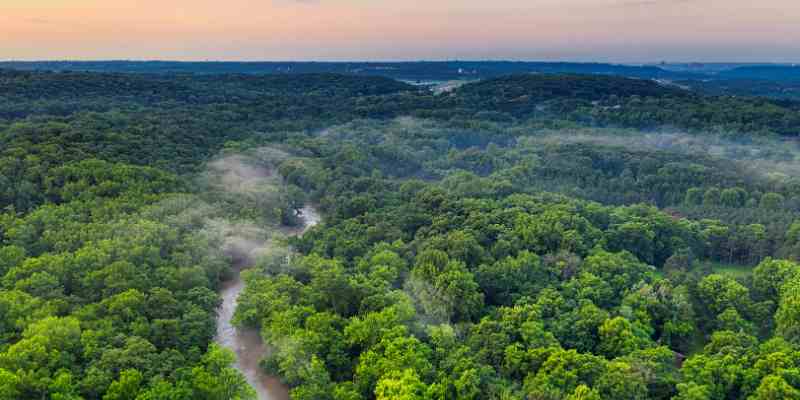
What is a carbon sink?
In simple terms, a carbon sink refers to any natural or artificial system capable of absorbing carbon dioxide (CO2) from the atmosphere and storing it for an extended period. These systems play a crucial role in regulating atmospheric CO2 levels and, by extension, in combating climate change. Forests, oceans, and soils are among the most important natural carbon sinks, capturing significant amounts of CO2 each year through the photosynthesis of plants and other biological and chemical processes.
The diversity of ecosystems plays a crucial role in enhancing carbon sinks, making their protection essential. Forests, with their variety of trees and plants, effectively capture CO2, storing carbon in their biomass and soil. Oceans, through their marine ecosystems such as mangroves and coral reefs, absorb a large amount of CO2, thus contributing to climate regulation. Varied terrestrial areas, including meadows and turf moors, also act as important carbon sinks, capturing and storing CO2 through vegetation and organic-rich soil. Protecting the diversity of these ecosystems ensures not only the health of our planet but also its ability to combat climate change through effective carbon sequestration.
Artificial carbon sinks (see below) include various technologies and practices designed to capture and store CO2 directly from the air or at the source of pollution before it reaches the atmosphere. The development and improvement of these technologies are essential for reducing the impact of human activities on the climate.
Main types of carbon sinks
Natural carbon sinks
- Forests and turf moors absorb CO2 from the atmosphere through photosynthesis, a process by which plants convert CO2 into oxygen and glucose. Trees and vegetation store this carbon in their biomass (leaves, branches, trunks) and in the soil.
- Oceans are the largest carbon sink on the planet, absorbing about 30% of the CO2 emitted by human activities. They absorb atmospheric CO2 directly from the air or indirectly through marine organisms that use carbon for photosynthesis. The CO2 is then stored in seawater in various chemical forms or in the seabed.
- Soils retain carbon through decomposed organic matter, including dead plants and microorganisms. Land management practices, such as regenerative agriculture and reforestation, can increase the amount of carbon stored in soils.
Artificial carbon sinks
- Carbon capture and storage (CCS), which involves capturing CO2 emitted by industries and power plants before it is released into the atmosphere, and then storing it underground in geological formations.
- Bioenergy with carbon capture and storage (BECCS) combines energy production from biomass with CO2 capture and storage, thereby reducing net CO2 emissions.
- Carbon mineralisation accelerates the natural transformation of CO2 into stable minerals, providing a safe and permanent storage method.
- CO2 utilisation converts captured CO2 into useful products, thereby reducing emissions while creating value.
How do carbon sinks work?
Natural carbon sinks, such as forests, oceans, and soils, absorb CO2 directly from the atmosphere. Plants, through photosynthesis, convert CO2 and water into glucose and oxygen, using solar energy. This natural process not only produces oxygen but also stores carbon in plant biomass and soil. Oceans, on their part, absorb atmospheric CO2 through physical and biological processes, with dissolved CO2 being transformed into carbonates or consumed by plankton.
In the realm of artificial carbon sinks, several technologies stand out for their innovative approach to capturing and managing carbon dioxide (CO2). Carbon Capture and Storage (CCS) perfectly illustrates this advancement. This process begins with capturing CO2 at its source, such as industrial facilities or power plants, where it is separated from other gases emitted during fossil fuel combustion. After capture, CO2 is compressed and transported, often via pipelines, to sites where it can be stored away from the atmosphere. These sites typically include deep geological formations, such as depleted oil or natural gas reservoirs or deep saline layers, where CO2 can be injected and securely trapped.
Bioenergy with Carbon Capture and Storage (BECCS) represents another promising technology. It integrates renewable energy production from biomass, such as agricultural residues or wood, with the capture of CO2 resulting from its combustion or transformation. The captured CO2 is then stored in the same manner as in the CCS process, making this approach particularly attractive for its ability not only to generate energy without emitting CO2 but also to actively remove CO2 from the atmosphere.
Regarding carbon mineralisation, this technique accelerates a natural process where CO2 reacts with certain minerals to form new stable mineral compounds, such as calcium carbonate. This natural chemical reaction is exploited and optimised to capture CO2 permanently, offering a sustainable and ecologically safe storage solution.
Finally, CO2 utilisation constitutes another strategy aimed at converting captured CO2 into useful resources such as synthetic fuels, construction materials like aggregates for concrete, or various industrial chemicals. Not only does this method help reduce CO2 emissions, but it also promotes a circular economy by creating business opportunities and reducing dependence on fossil fuels.
These artificial carbon sink technologies, alongside natural systems, form an essential component of the overall strategy to combat climate change, effectively reducing atmospheric CO2 levels and exploring new pathways for sustainable carbon management.
How to create a carbon sink?
Reforestation plays a crucial role in this process by planting trees on land where forests have been destroyed or degraded. This action is not limited to planting new trees but also includes restoring forest ecosystems, thereby significantly increasing CO2 capture through photosynthesis.
Improving agricultural practices also contributes to the creation of carbon sinks by optimising soil management. Methods such as agroforestry, no-till farming, and maintaining crop residues in fields increase the amount of organic carbon in the soil, transforming agricultural land into significant carbon reservoirs.
Moreover, industrial carbon storage types such as bioenergy with carbon capture and storage (BECCS) represent a modern approach that combines energy production from biomass with the capture and storage of CO2 produced during the combustion or conversion of this biomass.
Specifically, the reforestation project in Costa Rica has transformed degraded land into lush forests, increasing biodiversity and capturing CO2, demonstrating the positive impact of reforestation on the environment and the local economy. In France, agroforestry has successfully combined agriculture and tree cultivation on the same land, improving soil health and increasing its capacity to store carbon. The BECCS project at the Drax bioenergy plant in the UK captures CO2 emitted during energy production from biomass, demonstrating how technology can effectively reduce greenhouse gas emissions from the energy industry.
Please note: The fight against climate change through carbon sinks requires global cooperation, as decisions made affect the climate on a planetary scale. Agreements like the Paris Agreement play a key role in setting CO2 reduction targets and pushing for environmentally friendly methods. It is crucial that these efforts are fair and involve all communities, ensuring that developed countries support developing ones and that benefits are shared equitably. However, this is unfortunately not yet the case...
If there are carbon sinks, then everything is fine, right?
It is never that simple, unfortunately.
First, here are some key figures:
- Oceans: 38,000 billion tonnes of carbon stored
- Forests: 800 billion tonnes of carbon stored
- Soils: 1,500 billion tonnes of carbon stored
- Turf moors: 400 billion tonnes of carbon stored (showing that turf moors are far from being anecdotal on this subject)
It is important to note that the capacity of natural carbon sinks to absorb CO2 is not unlimited. If CO2 emissions continue to rise, carbon sinks could become saturated and no longer be able to absorb them. This could lead to an even faster increase in climate change.
It is therefore essential to reduce our CO2 emissions and protect existing natural carbon sinks.
Artificial carbon sinks are not a panacea
From a technological standpoint, one of the main challenges lies in the ability to capture CO2 efficiently and store it safely and sustainably. Current technologies, such as carbon capture and storage (CCS), require complex and costly infrastructures, as well as a large amount of energy, which can reduce their net effectiveness in terms of reducing greenhouse gas emissions.
Economically, the high cost of these technologies limits their adoption and large-scale deployment. Funding for research, development, and implementation of CO2 capture and storage solutions represents a considerable investment for governments, businesses, and organisations, often requiring financial incentives or subsidies to be viable.
Ecologically, even though the goal is to reduce CO2 emissions, there are concerns regarding the environmental impact of underground CO2 storage, particularly the risk of leaks that could affect groundwater and geostability. Moreover, the focus on technological solutions to mitigate carbon emissions could divert attention and resources from nature-based solutions and reducing dependence on fossil fuels.
Climate change is one of the greatest challenges of our time. The increase in carbon dioxide (CO2) in the atmosphere is one of the main contributors to this phenomenon. Fortunately, nature offers us a solution: carbon sinks. Carbon sinks are natural or artificial reservoirs that absorb CO2 from the atmosphere and store it permanently. In […]
Wild strawberry, this small red fruit emblematic of our undergrowth, is renowned for its delicate fragrance and exquisite flavours, often surpassing those of its cultivated cousins. Its presence is an indicator of the richness and health of the natural ecosystems in which it thrives. However, despite its past abundance, wild strawberry is now facing several threats to its survival, jeopardising this precious element of our natural heritage. What can be done to stem this disappearance? Can we take action ourselves? We explore this in our article.
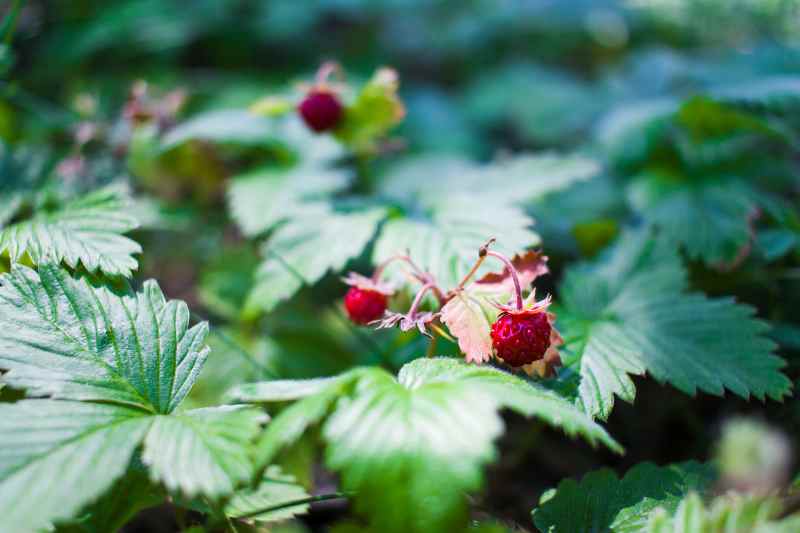
Wild strawberry in our region: a status report
The wild strawberry (Fragaria vesca) is currently classified as of minor concern according to the Red List of the IUCN (International Union for Conservation of Nature) for Europe and the European Union. This classification indicates that, at the European level, wild strawberry is not considered to be at risk of extinction or in significant decline at present. This status suggests that wild strawberry, despite environmental and anthropic pressures, maintains a stable population in its natural habitat across Europe.
However, it is important to note that the minor concern status does not mean that local populations of wild strawberries cannot be threatened in specific regions, including France and Belgium. Local threats, such as habitat destruction, pesticide use, and climate change, can have significant impacts on specific populations of wild strawberries, even if the species as a whole is not considered globally endangered.
Wild strawberry facing current challenges
Wild strawberry, Fragaria vesca by its scientific name, faces several major challenges that contribute to its gradual disappearance in certain areas of France and Belgium.
Destruction of its natural habitat
The destruction of the wild strawberry's natural habitat is primarily caused by urban development, the expansion of agricultural monocultures, and intensive pesticide use. These human activities transform forests, fields, and meadows, the preferred environments of wild strawberry, into built-up areas or agricultural land where this plant can no longer thrive. Fragmented habitats not only limit the growth of new plants but also reduce the areas available for cross-pollination, essential for genetic diversity and the resilience of the species.
Climate change
Climate change also exerts considerable pressure on wild strawberry. Temperature variations, changes in precipitation patterns, and the increase in extreme weather events disrupt the natural life cycles of wild strawberry. These altered climatic conditions can affect the phenology of the plants, meaning the timing of their flowering and fruiting, thereby impacting their ability to reproduce and disperse in their environment.
Thoughtless foraging
Finally, excessive foraging of wild strawberries for commercial or recreational purposes without adequate regulation can severely impact wild populations. While foraging may seem harmless on a small scale, when done indiscriminately, it reduces the plant's chances of reproduction by decreasing the number of fruits available for seed dispersal.
Consequences and implications
Wild strawberry plays a much more significant role in our ecosystems and culture than it may appear at first glance. Its potential disappearance would far exceed a simple gastronomic loss; it would also raise major ecological and cultural concerns that deserve our full attention.
From an ecological perspective, wild strawberry is an essential link in the food chain within its natural habitat. It provides food for a wide variety of animal species, including pollinating insects, birds, and mammals, which depend on its fruits for part of their diet. These species, in turn, play a crucial role in ecological processes such as pollination and seed dispersal, which contribute to the health and diversity of forest ecosystems. The reduction of wild strawberry populations can therefore lead to a domino effect, affecting the entire local biodiversity and disrupting the ecological balance of the habitats where they thrive.
Finally, from a cultural standpoint, wild strawberry is an integral part of the cultural heritage of many regions. It appears in literature, folklore, and gastronomy, often symbolising innocence, purity, and the sweetness of rural life. Wild strawberries are used in a variety of traditional culinary preparations, from artisanal jams to refined desserts, representing a direct link to local heritage and traditions. Their disappearance would lead to an irreplaceable loss of this cultural heritage, erasing part of the history and traditions that connect us to our environment and our past.
Wild strawberry, a symbol
The loss of wild strawberry raises a host of questions about our relationship with nature and how we manage our natural resources. As a culturally significant species close to humans, it reminds us of the importance of conserving wild species and the need to adopt sustainable practices to protect our environment. The preservation of wild strawberry and its habitat is therefore essential not only for maintaining biodiversity but also for conserving our cultural heritage and strengthening our connection to nature.
Taking action to preserve it
Habitat protection
Protecting the habitat of wild strawberry is obviously crucial for its survival. This involves creating and maintaining protected natural areas where the ecosystem can thrive without harmful human intervention. Encouraging sustainable agricultural practices is also vital. Adopting cultivation methods that respect the environment, such as agroecology or organic farming, can reduce the negative impact on the natural habitats of wild strawberry. These practices minimise pesticide use and promote biological diversity, thereby creating an environment conducive to the growth of wild strawberries and the health of ecosystems.
Raising public awareness
Raising public awareness about the importance of wild strawberry and preservation measures is another crucial step. Informing people about the ecological and cultural value of this plant can encourage more responsible behaviours, such as supporting protected areas, participating in conservation initiatives, and reducing wild foraging. Educational campaigns, fun and educational workshops, and community events can all play a role in spreading this message.
Let’s cultivate wild strawberry!
Growing wild strawberry in our gardens is a direct way to contribute to its preservation. Not only does this help maintain the genetic diversity of the species, but it also provides habitat for pollinators and other beneficial species.
This perennial plant, easy to grow, thrives in light, well-drained soil rich in organic matter. Preferring semi-shaded locations, wild strawberry requires regular but moderate watering, avoiding soil saturation. It spreads easily through its runners, allowing for rapid multiplication in the garden and providing a beautiful and useful groundcover. Additionally, it can also be grown in pots or containers. Note that there are varieties of wild strawberry, such as 'Alexandria', which is less "invasive" than the typical species, or even some hybrids, including the 'Pink Marathon' strawberry, which is a wild strawberry but repeat flowering.
Wild strawberry, this small red fruit emblematic of our undergrowth, is renowned for its delicate fragrance and exquisite flavours, often surpassing those of its cultivated cousins. Its presence is an indicator of the richness and health of the natural ecosystems in which it thrives. However, despite its past abundance, wild strawberry is now facing several […]
The Henon bamboo (Phyllostachys nigra var. henonis), a widespread and cherished species in Japan, is set to offer a rare spectacle: its first flowering in 120 years. However, this phenomenon, as magnificent as it is ephemeral, could lead to significant ecological changes.
A Chinese heritage on Japanese soil
Originating from China and introduced to Japan as early as the 9th century, the Henon bamboo has thrived, now covering nearly 1700 km² of forests. This giant bamboo, like all members of this botanical genus, follows a unique life cycle known as "semelparous": they flower only once, almost all at the same time around the world, and then die. While some bamboos live only a few years, Phyllostachys nigra var. henonis, sometimes referred to as Phyllostachys puberula, astonishes with its longevity, having a flowering cycle that spans 120 years.
To learn more about Phyllostachys, read our guide on this botanical genus.
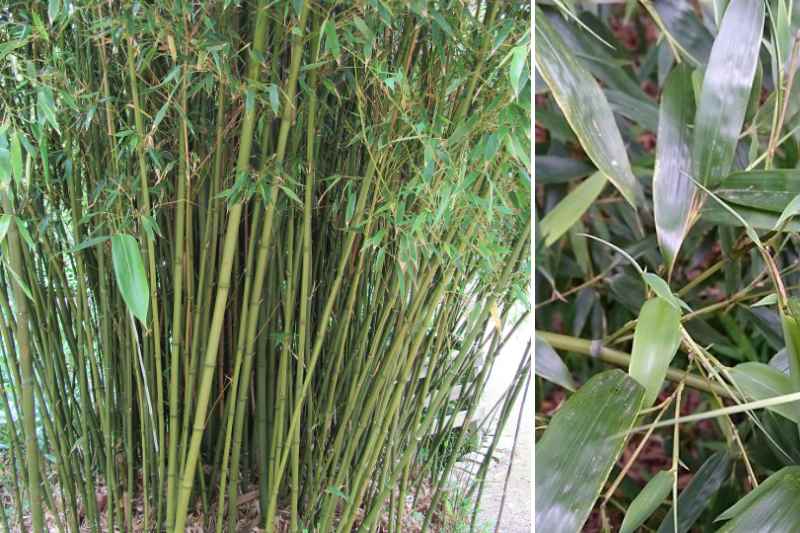
A botanical event as rare as it is mysterious
During the last major flowering of henonis in 1908, scientific knowledge was limited, leaving the mystery of its regeneration after flowering intact. Researchers from Hiroshima University, having observed early flowering as early as 2020, have delved into this mystery. Despite the production of seeds, the long-awaited regeneration has not occurred. "No viable seeds have allowed the germination of new bamboos, and the production of new shoots has ceased," explains lead researcher Toshihiro Yamada. This discovery suggests a significant challenge for the regeneration of this species.
Survival and adaptation: the Paradox of Henon Bamboo
Despite these observations, it is fascinating to note that the Henon bamboo has survived for over a thousand years in Japan. This indicates that the species must have regenerated multiple times, despite the apparent absence of new shoots after flowering. Researchers are exploring various hypotheses, including the existence of underground organs capable of promoting regrowth.

An uncertain future for bamboo forests
The imminent flowering, expected around 2028, will transform the Henon bamboo forests in Japan into meadows for several years. This transitional period will affect not only the ecosystem but also the traditional use of bamboos in Japanese crafts and cuisine. "We must prepare to manage this radical change," adds Yamada.
This rare natural phenomenon raises intriguing questions about the adaptation and survival of species. It reminds us of the complexity and interconnectedness of our ecosystems while offering a unique opportunity to observe and understand an extraordinary life cycle in the plant world.
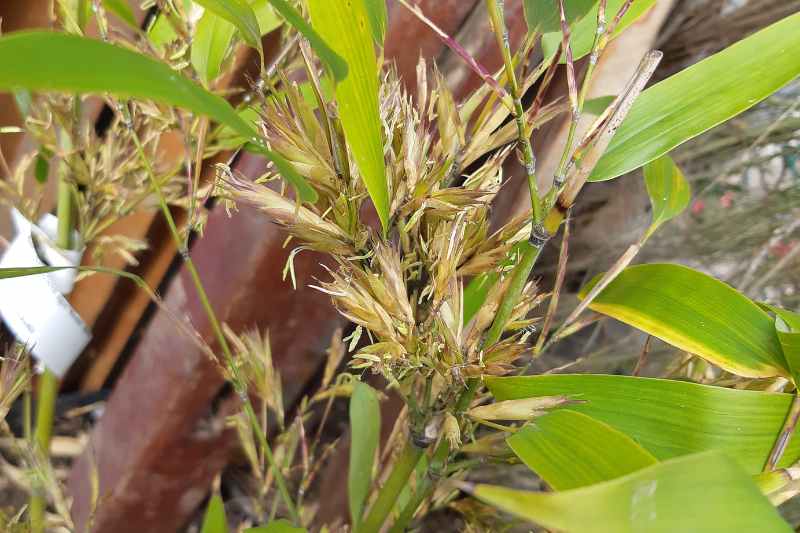
And in our gardens?
The imminent flowering of the Henon bamboo indeed raises important questions for gardeners and producers. If you are considering planting this bamboo, it is essential to take its life cycle into account. Knowing that it will die after its flowering (expected in 2028), you may need to plan for replacements or choose an entirely different species of bamboo for the longevity of your garden.
If you already have Phyllostachys nigra var. henonis in your garden, keep an eye out for signs of flowering. After this, it will be crucial to remove the dead plants to prepare the ground for new plantings. But let’s keep in mind that the flowering of the Henon bamboo is a rare and fascinating event. This may just be the opportunity to observe a unique natural phenomenon and learn more about the life cycle of plants. Remember to take photos!
The Henon bamboo (Phyllostachys nigra var. henonis), a widespread and cherished species in Japan, is set to offer a rare spectacle: its first flowering in 120 years. However, this phenomenon, as magnificent as it is ephemeral, could lead to significant ecological changes. A Chinese heritage on Japanese soil Originating from China and introduced to Japan […]
In the peaceful world of gardening, a new threat is emerging, sending shivers down the spines of agapanthus lovers across France. Indeed, the agapanthus gall midge, a small African insect that was previously harmless, is becoming a growing scourge for these majestic plants. With an increase in cases in France, the question is no longer whether, but rather when and how this pest can be stopped. What is the impact of the agapanthus gall midge on our agapanthuses? How can we identify the signs of this infestation? Are there effective control methods to protect agapanthuses across the country? The beauty of our gardens is at stake: it is time to act!
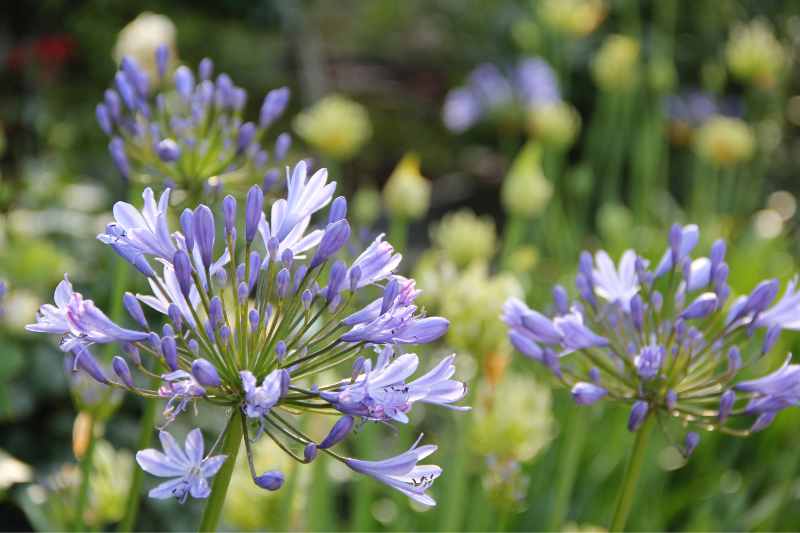
Agapanthus gall midge: what is this insect?
The agapanthus gall midge, or Enigmadiplosis agapanthi, is a particularly harmful pest for agapanthuses. This insect, which belongs to the Cecidomyiidae family, originates from South Africa, like the agapanthuses themselves, but has since migrated to other parts of the world, including Europe.
The agapanthus gall midge is a tiny midge whose larvae develop within the buds and stems of agapanthuses, causing deformities and often inhibiting flowering. The damage can be significant, potentially leading to the death of the plant in the most severe (but very rare) cases.
The insect is so minuscule that only symptoms can help us determine its presence rather than direct observation.
What are the symptoms of an infestation?
Signs of an infestation by the agapanthus gall midge may include deformed or unopened flower buds, stems that wilt or turn yellow or brown, and the presence of small white larvae or orange pupae inside the stems or buds. The larvae of the agapanthus gall midge develop within the flower buds themselves. In cases of heavy infestation, the entire flowering may be halted in agapanthus crops.
How to act?
Controlling this pest can be challenging, as there is no specifically approved control method for the agapanthus gall midge. Control methods include the removal and destruction of the infested parts of the plant. But there is no need to uproot or remove your agapanthuses! Research is ongoing to find other effective control methods against this pest. However, we remain hopeful that a natural predator will come to regulate the gall midges naturally. Fingers crossed!
What is the situation in France?
Let’s not panic just yet! In Europe, the first official observations were recorded in the UK in 2015, then in the south-west of France in 2017 and later in Brittany in 2019. Since then, the agapanthus gall midge has been steadily progressing without the situation being, for now at least, truly alarming. However, the national agapanthus conservatory on the island of Bréhat, in Côtes d'Armor, is sounding the alarm and urging gardeners to be vigilant. Be sure to check your agapanthuses at home, in your gardens, and act quickly by removing the parts of the plant suspected of being attacked by this gall midge.
In Belgium, for now, the agapanthus gall midge seems to be absent. (Note: yes, we assure you, certain agapanthuses more resistant to cold, such as Agapanthus 'Black Buddhist', can be grown in Belgium and northern France, but in well-drained soil or in pots!)
To learn more, here is the document from the French Ministry of Agriculture on the subject.
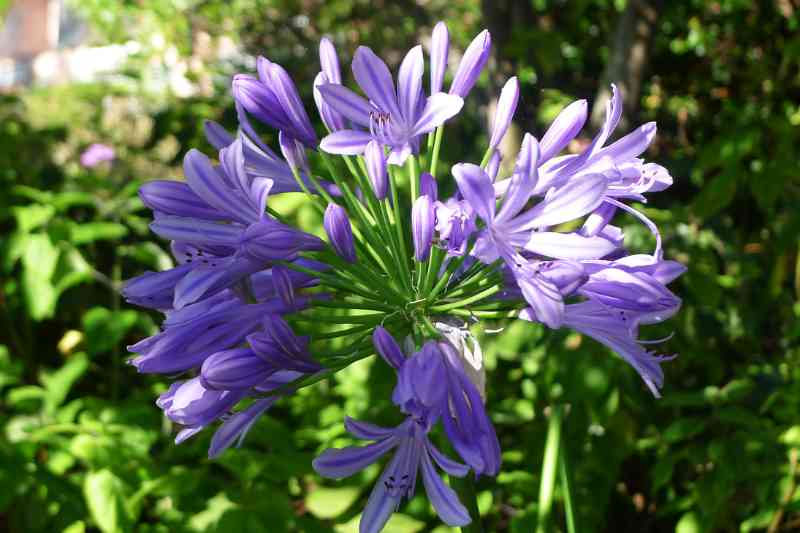
In the peaceful world of gardening, a new threat is emerging, sending shivers down the spines of agapanthus lovers across France. Indeed, the agapanthus gall midge, a small African insect that was previously harmless, is becoming a growing scourge for these majestic plants. With an increase in cases in France, the question is no longer […]
The Common hedgehog (Erinaceus europaeus) is a small omnivorous mammal that was commonly found in our countryside and gardens, even in cities. A true ally for gardeners due to its diet (a significant portion of insects, larvae, and slugs), this charming ball of spines is unfortunately in serious decline across Europe. Is the hedgehog really at risk of disappearing?
What threats does the hedgehog face?
There are many! Firstly, the decline of insects and other arthropods due to the destruction of natural habitats and the massive and abusive use of insecticides (and slug pellets!) deprives it of a large part of its food supply. Insecticides and metaldehyde slug pellets also poison hedgehogs, causing 25% of all hedgehog mortalities.
Moreover, following large-scale land consolidation, hedgerows and field margins that provided shelter have been ruthlessly removed. Small woods that once offered refuge to wildlife between fields are becoming increasingly rare. Our gardens are becoming more and more compartmentalised, preventing hedgehogs from entering or leaving. And when we talk about gardens... Most "gardens" today are unsuitable for wildlife (fortunately, this trend is reversing!). This fragmentation of habitats isolates hedgehogs. Consequently, genetic mixing is reduced, further compromising hedgehog health.
Humans, as always, regularly make hedgehog life a nightmare. If it were only the hedgehog's life... Hedgehogs are killed on our roads (over 20%), drown in our pools, are shredded by garden machinery, or suffocated by litter thrown everywhere.
However, it’s not always our fault. The hedgehog also suffers from numerous diseases and parasites, and is preyed upon by badgers, wild boars, the Eurasian Eagle-Owl, the Tawny Owl, foxes... and dogs (ah yes, that’s us too!).

What is the status of the hedgehog?
The Common Hedgehog or European Hedgehog has been fully protected in Europe since 1981, with protection further strengthened in 2007. The hedgehog is now classified as "Least Concern" on the International Union for Conservation of Nature's Red List (IUCN).
According to a British study, the hedgehog population has decreased by 30 to 75% in just twenty years depending on the regions studied. In our case, there are no precise data yet, but it is likely that these statistics are similar for France and Belgium. According to some specialists, the hedgehog could disappear by 2050.
Also read: the legal status of the hedgehog in France (N.B.: the status is practically identical for Belgium).
The hedgehog is so useful
The Common Hedgehog is what we call an "umbrella species". This means that if we protect it and its habitat, we will also protect all the associated fauna and flora: predators, parasites... If it disappears, the ecosystem of this biotope will be completely unbalanced, which will have detrimental consequences for the rest of the wildlife. Furthermore, the presence of a hedgehog indicates the good health of the surrounding biodiversity.

What can we do to help?
Create a welcoming garden for them: piles of wood, piles of leaves... for hibernation and wild, natural areas (flowering meadows, field hedges...). Eliminate all ecocides (herbicides, slug pellets, insecticides...)! Provide small boards if you have a water feature, so the hedgehog can get out of the water. Reduce, if possible, your night-time outings on roads in motor vehicles, which will also help protect amphibians at the same time. For more information, read this document from LPO on how to help and welcome hedgehogs.
If you find a sick, thin, and wobbling hedgehog at home, gently pick it up with gloves and place it in an open cardboard box, putting a hot water bottle or a bottle of hot water in an old sock next to it. Offer it some water and leave the box in a quiet, ventilated room, then contact a licensed wildlife rehabilitation centre. Otherwise, do not touch hedgehogs wandering in your garden: you will stress them unnecessarily, which could be fatal!
In Belgium: a hedgehog monitoring programme has been initiated by LRBPO, here is all the information: suiviherisson.be
In France: "mission for hedgehogs" is studying, with the help of volunteers, hedgehog populations. Feel free to participate!

The Common hedgehog (Erinaceus europaeus) is a small omnivorous mammal that was commonly found in our countryside and gardens, even in cities. A true ally for gardeners due to its diet (a significant portion of insects, larvae, and slugs), this charming ball of spines is unfortunately in serious decline across Europe. Is the hedgehog really […]
Wild birds (the entire group of wild birds) are currently facing a myriad of problems, reducing their population each year. Climate change, pesticides, reduction of their habitats (less food and nesting sites), various accidents (windows, cars, wind turbines...), natural or non-natural predation, hedge trimming in spring, and now diseases, such as avian influenza. Or rather, avian influenzas, as there are several. Let’s take stock of these avian influenzas and their consequences on wild birds!

What are avian influenzas?
Avian influenzas are sometimes referred to as Bird Plague, Avian Influenza, or, less commonly, Chicken Ebola. It is a viral disease caused by type A influenza viruses that primarily affects birds. Avian influenzas are typically classified into two main categories:
- LPAI or Low Pathogenic Avian Influenza: these cause few symptoms in farmed birds. Sometimes, certain birds, like ducks, are asymptomatic carriers;
- HPAI or Highly Pathogenic Avian Influenza: this category includes subtypes H5, H7, or H9, such as the H5N1 or H7N9 viruses. These strains can trigger severe epidemics and can sometimes be fatal.
The disease is transmitted through direct contact between birds (wild or domestic), via the droppings of sick birds, or through infected materials or elements (carcasses, eggs, clothing...). Normally low virulent for wild birds (but this is changing!), an avian influenza can decimate the entire population of birds in an industrial farm.
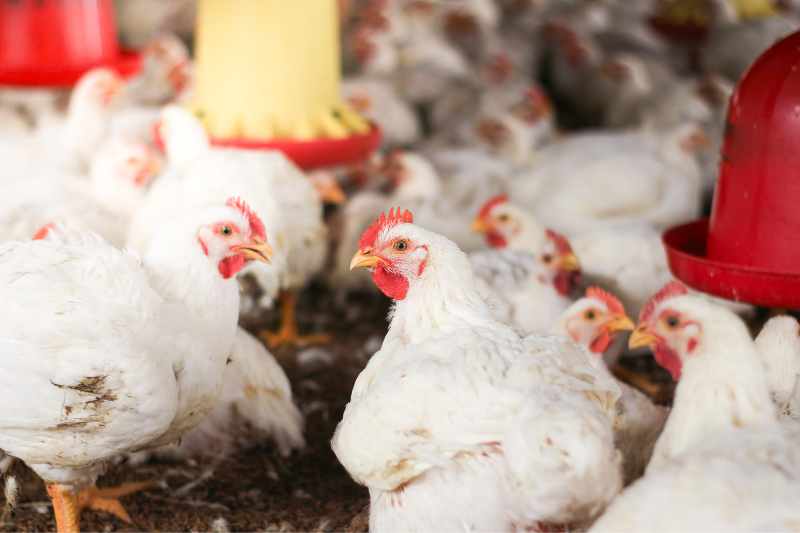
What about humans?
Avian influenza can infect some mammals including pigs, rats, mice, weasels... and even humans in the case of the H5N1 strain. Cases are still rare, but the WHO (World Health Organization) takes this very seriously, especially since this virus is potentially fatal for humans. An effective vaccine against the H5N1 virus has existed since 2005. Fortunately, for now, the H5N1 virus is not transmissible from human to human, but only in cases of prolonged contact with poultry.
However, A type viruses are genetically unstable, meaning they mutate quickly and often. A subtype of influenza A could therefore become problematic for humans one day and lead to a pandemic.
Are wild birds in peril?
According to Alain Bougrain-Dubourg, president of the French LPO (League for the Protection of Birds), 2022 was the worst year globally since the emergence of the H5N1 avian influenza in 1995. Nearly 140,000,000 farmed birds have died or had to be culled due to avian influenza. But the figures are alarming for wild birds as well: for example, 22,000 seabirds were found dead in Peru. Seabirds seem to be the most affected.
Here at home, along the French and Belgian coasts, we are witnessing worrying mortality among gulls (the family of birds that includes gulls, terns, and kittiwakes). Other species are also particularly affected: the first appearance of the virus has been noted in the Griffon Vulture and even a colony of Northern Gannets has been severely impacted by this influenza.

What are the symptoms of avian influenza?
The symptoms of avian influenza in birds are numerous: first unusual behaviour, tremors, and lack of coordination. Subsequently, one may observe swelling on the head followed by lack of energy, breathing difficulties, and diarrhoea. Finally, the infected bird eventually dies. In our chicken coops, we can already be concerned about a lack of appetite and a decrease in egg production: these are signs to watch for!
How to fight it?
Nature advocates have long promoted the reduction in size and number of industrial poultry farms. Ornithologists also advise prioritising small local farms with local breeds that are more resilient and maintaining greater genetic diversity.
Other precautionary measures include the confinement or netting of backyard birds, strengthening security during the transport of poultry, banning gatherings of poultry keepers and pigeon racing competitions, and vaccinating zoo birds and those that cannot be confined. Once birds are infected, unfortunately, the only radical solution is culling.
If you feed wild birds in your garden: avoid doing so too close to your chicken coop and regularly clean the feeding area and water points.
Do not pick up a dead bird without gloves, and prevent your dog from coming into contact with the carcass. If you discover a dead bird and it seems suspicious, contact the French Office for Biodiversity https://www.ofb.gouv.fr/ and for Belgium, SOS Environment Nature at the free number 1718.
Important note: although the confinement of poultry is one of the measures recommended by the government, bird specialists argue that we should not stigmatise free-range farms, which allow for better health (less stress in particular) of birds and therefore a much better resistance to diseases, including avian influenza.
Finally, if you wish to learn more about avian influenza and have further questions, here is the link to an FAQ on the subject on the LPO website (in French).
Wild birds (the entire group of wild birds) are currently facing a myriad of problems, reducing their population each year. Climate change, pesticides, reduction of their habitats (less food and nesting sites), various accidents (windows, cars, wind turbines…), natural or non-natural predation, hedge trimming in spring, and now diseases, such as avian influenza. Or rather, […]
With climate change, we regularly hear about hot and dry summers that cause suffering to plants, including trees (and not just them!). However, we also forget that plants need a period of rest, winter. If this winter is not cold enough, it can lead to detrimental consequences for the health of trees and bushes. Let's take stock!

Meteorological observations
One year is not like another, especially in our time. However, it is now not uncommon to encounter temperatures well above seasonal averages, whether in the south or further north. What specialists sometimes refer to as "non-winters". And this is unlikely to improve, that much is certain. Indeed, throughout history, humans have experienced exceptional years, some with particularly mild winters. The problem is that the exceptional is becoming the norm and that practically every year winters are getting less and less cold. With climate change, the same ocean winds of the past are bringing more air, and this air is warmer because the ocean water is also warmer. Furthermore, the reduction in snow-covered areas will amplify the effect by no longer performing its cooling function. In other words, the effect will accelerate in the coming years.
Also read: researchers at CNRS have developed a method to determine whether an extreme weather event is due to climate change or not.
What consequences for trees?
If temperatures are mild, sap will start to circulate again, some plants will come out of dormancy and begin to bud. This would not have such serious repercussions if a period of severe frost did not systematically follow in the weeks after. This frost will destroy the buds, flowers, and even part of the young foliage. No flowers, no fruits! And if the foliage is destroyed, the tree will exhaust itself trying to form another. Once is fine! Every year: hello damage! Note that some trees, bushes, or spring-flowering bulbs are adapted to winter cold, even late cold. For these, like the male dogwood or snowdrops: cold? Not a problem!
The tree's cycle can also be completely disrupted. Indeed, many plants need a period of cold to come out of dormancy, which is called vernalisation. This vernalisation will trigger a process of flower formation. It is the transition between the vegetative stage and the reproductive stage. However, if this cold period does not occur (or not at the right time), the tree will not produce flowers with all that this implies. For example: cherry trees need an average of just over 1000 hours at a temperature below 7°C to start flowering, while apple and pear trees need between 200 and 1400 hours.
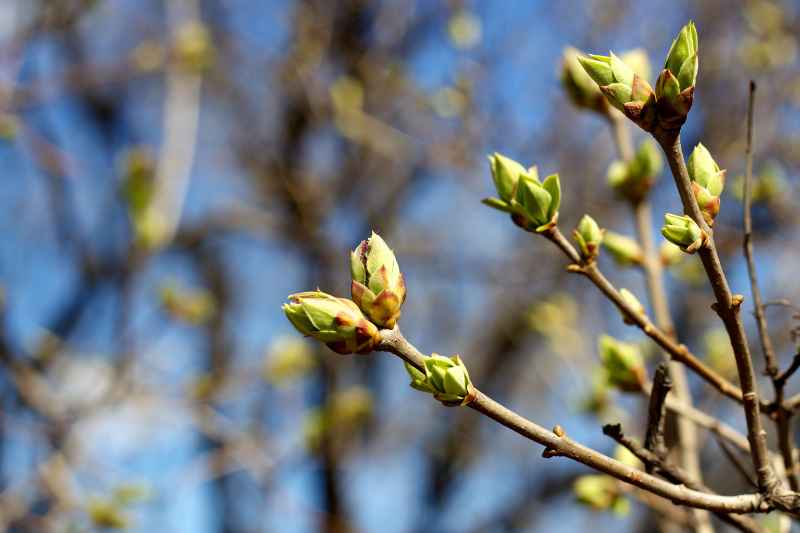
Are we heading towards a fruit shortage within 100 years?
Hard to say... But this climate warming is acting so quickly that plants cannot evolve fast enough to cope with these changes. Fruit trees and bushes are indeed at risk of no longer being able to flower or producing stunted flowers that yield misshapen or small fruits. Additionally, pollinating insects are also affected. They often emerge too early at the end of winter, at a time when trees are not yet in bloom. When we know that a large majority of insects have co-evolved with specific plant species (in other words, a particular insect species is capable of pollinating a specific plant), these trees are doomed to disappear along with the insects that depend on them. In short: the future does not look bright...
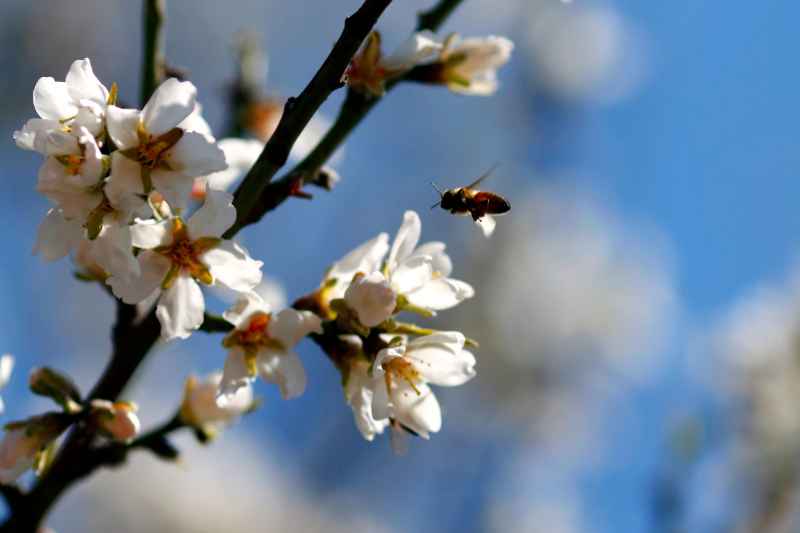
With climate change, we regularly hear about hot and dry summers that cause suffering to plants, including trees (and not just them!). However, we also forget that plants need a period of rest, winter. If this winter is not cold enough, it can lead to detrimental consequences for the health of trees and bushes. Let’s […]
This is a tiny insect that has been wreaking havoc across large areas of forests for several years... it is called the European bark beetle, known by its Latin name Ips typographus, and it is now spreading across almost all French spruce forests. Why and how does this pest challenge our forested areas, and what can we do to counter it? We explain everything.
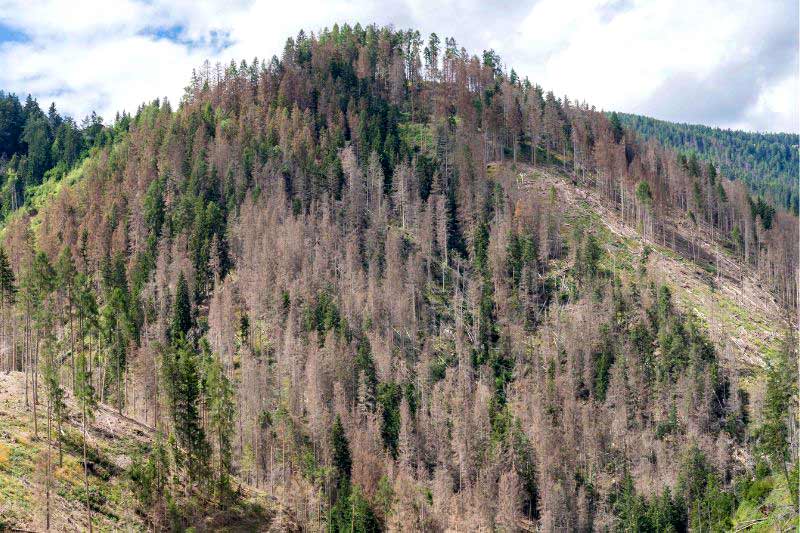
First of all, what is the bark beetle?
Bark beetles or Ips typographus are tiny wood-eating insects (they feed on wood), measuring 2 to 7 mm in length, dark brown in colour, that primarily attack conifers, especially spruces; they bore a hole through the bark of trees and reproduce inside, in the soft layer known as cambium. The females then excavate larval galleries between the bark and the wood, lay their eggs, and the larvae feed on this part beneath the bark where the sap, rich in nutrients, circulates. If a large number of larvae develop within the tree (between 60,000 and 80,000 bark beetles and larvae can be counted per infected tree), all this tissue will be devoured and the tree will eventually die. They are also vectors of viral diseases and pathogenic fungi by boring their holes into the bark.
Bark beetles are found all around the globe, and some are linked to a particular tree species, but they are primarily pests for conifer forests, to the extent that they are now considered the worst pests of these forests worldwide.
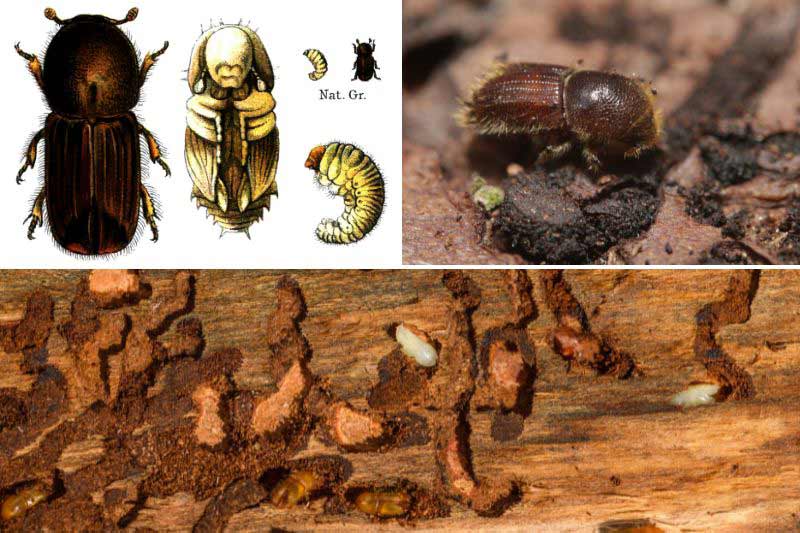
When everything is functioning normally, bark beetles actually play a useful role in forest regeneration: they target weakened trees and create gaps that encourage the growth of young plants. They then accelerate the decomposition of dead wood, thus generating forest humus. In a healthy forest, trees can defend themselves with their resin, which typically "glues" the insects that bore into their bark, naturally regulating their spread.
However, rising temperatures, sequences of hot, dry summers and mild winters, accelerate the development of these insects: their reproduction is possible when temperatures exceed 15°C, and in the specific case of the European bark beetle, these insects have increased from one to three generations per year, which intensifies the pressure on increasingly weakened trees.
The state of bark beetle damage in France and Europe
In recent years, bark beetles have become one of the greatest threats to trees in French forests; these beetles began their damage in the forests of Grand Est, Burgundy, and Franche-Comté, French regions where spruce was primarily planted after the war to produce timber. Bark beetles were native there, but due to the conjunction of several phenomena, they have become serious enemies of the forests.
On one hand, climatic phenomena of heat and drought weaken trees even at altitude, but heat simultaneously promotes the development of these insects. Adding to this are forestry management errors that have encouraged monocultures, leading to the severe outbreak of bark beetles since 2020. In the spruce forests of the centre, particularly in Puy-de-Dôme, the epidemic began in 2021. Another species of bark beetle - known as the stenographer bark beetle - also attacks maritime pines in Gironde. An outbreak in the Landes forests weakened by the summer 2022 fires is to be feared.
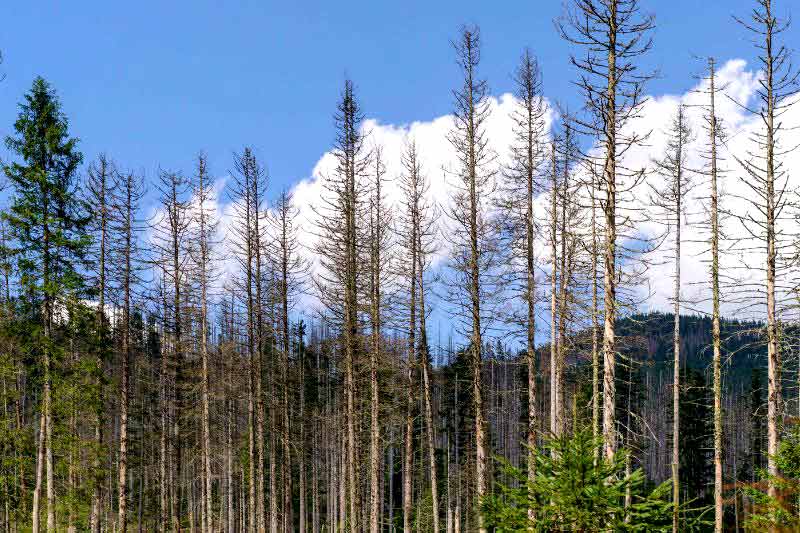
All over Europe, the same phenomena of chronic bark beetle outbreaks are observed: extreme weather events such as storms that damage trees, their deficiencies due to impoverished soils, and droughts are both detrimental to trees and favourable to these insects. The damage is significant, especially in areas managed in monoculture. And other exotic bark beetles are knocking at our doors...
What are the solutions?
It is predicted that in 50 years, bark beetle colonies could produce at least 4 generations per year, which will not help matters... Curative control involves removing attacked trees to limit their development, but it requires significant effort and comes at a considerable cost.
Trapping adults using pheromone traps is employed, but this method proves costly and would require the installation of several traps per tree to be truly effective.
Preventive control involves adapting species to sites and climate, and especially diversifying forests by promoting species mixtures, to resist bark beetles as well as other pests. The fragmentation of forests by roads and clear-cutting increases edges, and it has been observed that spruces growing on these edges exhibit heightened sensitivity to water stress and bark beetles.
In short: more diversity and less pressure on forest environments are one of the solutions to bark beetle invasions, as well as to a multitude of other issues generated by climate problems.
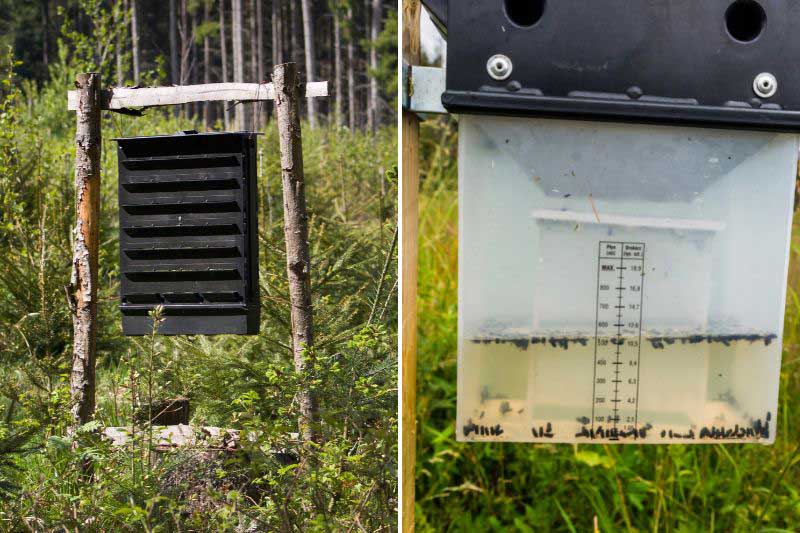
This is a tiny insect that has been wreaking havoc across large areas of forests for several years… it is called the European bark beetle, known by its Latin name Ips typographus, and it is now spreading across almost all French spruce forests. Why and how does this pest challenge our forested areas, and what can […]
The situation is deeply concerning: never has avian life been in such poor condition. According to studies revealed by the L.P.O. on 24 January 2023, the population of common birds in France continues to decline. Based on observations from 85,000 individuals collected during the "Garden Birds" citizen science operations, it is noted that:
- In winter, 49% of bird species are increasing in gardens, 20% are stable, and 11% are declining.
- In spring, the trends reverse: 41% of species are in regression, 24% are stable, and 2% are increasing.
For Allain Bougrain-Dubourg, president of the L.P.O., "even if these seemingly contradictory figures may surprise us, the birds 'from our region' are best observed in spring. The observation is clear, it is an alarming decline, and for some species, a true catastrophe. Furthermore, the bird is an indicator of the state of biodiversity. When it is in decline, the entire suite of mammals - amphibians - reptiles and all biodiversity is also fading. The loss of birds alerts us to the state of all living things."
In light of these alarming, even alarmist, figures, I wanted to discuss them with a field ornithologist to gain his insights and analysis of the situation. Claude Borrel is passionate about feathered creatures and an amateur photographer. Now retired, he has been drawn to the living world since childhood and observes wildlife almost daily. He collaborates with LPO Aude and habitat and species preservation associations for counting, monitoring migrations, and installing nest boxes. He agreed to answer a few questions.
What do you think of the latest figures revealed about the state of bird populations in France, and do you see this degradation in practice?
'To be honest, on the scale of my garden, I don't see much degradation. Year after year, I see roughly the same species, which is quite normal because garden birds are largely fed and thus come where food is available. However, when I walk in nature, the observation is different. It's simple: often we see nothing, not a single bird. No Tree Sparrows, far fewer Great Tits and Blue Tits, and no Finches either. The Common Swifts are in sharp decline, as are the Swallows, many of whose nests are no longer occupied. The Greenfinches and Meadow Pipits are also in noticeable regression.
And when my observations take me to the lagoon and marsh areas of the region, which are refuges for many bird species and an important migratory stopover, my observations vary from year to year, depending on the weather and winds. For example, this year, we observed far fewer White Storks and Cranes than in previous years, likely due to the sea winds pushing them inland, whereas usually, the north-west wind brings them in and concentrates them in these Mediterranean coastal areas. Weather conditions are changing, and the birds are affected.'
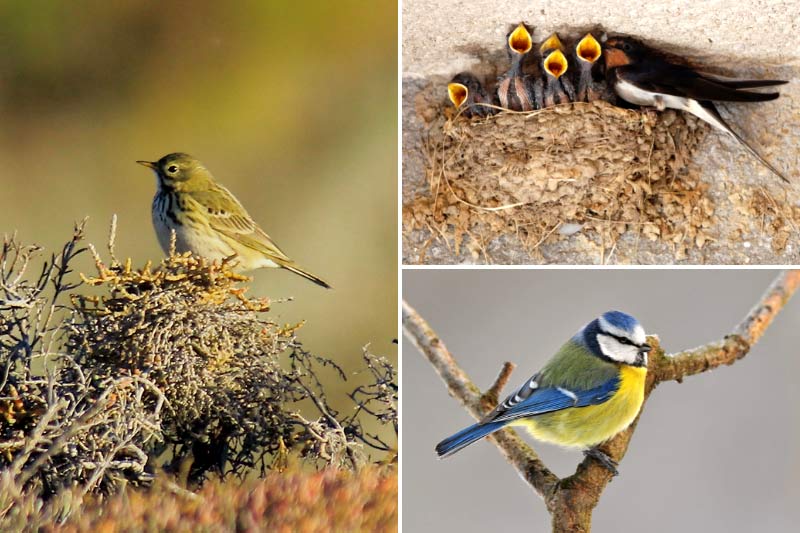
What do you think are the causes?
'It's simple, on one hand, there are no more insects, particularly due to pesticides, so birds have significantly less food. Nesting sites have also been destroyed: there are no more hedges or trees in agricultural areas. In populated areas, nests are removed, such as those of swallows or certain owls, because they cause mess, and modern buildings are not conducive to their installation. Birds also suffer from drought, and changing temperatures disrupt migrations.'
What simple measures can everyone take to help bird populations?
''To help birds, we can install nest boxes. It's important to ensure they are properly sized for the different species likely to nest there and placed correctly. For example, Tits can no longer find cavities in trees, and this helps them. It's also essential to clean and empty the nest boxes from one year to the next to encourage birds to return.
In winter, we can feed birds with sunflower seeds and fat balls with seeds. Some birds also enjoy pieces of fruit, like Tits or blackbirds. We must remember to provide them with water all year round, and place feeders and water sources out of reach of cats, which cause significant damage to bird populations. At my place, I hang them in trees or place them on vertically planted posts. To help swallows, we can create small muddy puddles in spring if the ground is too dry so they can build their nests.'
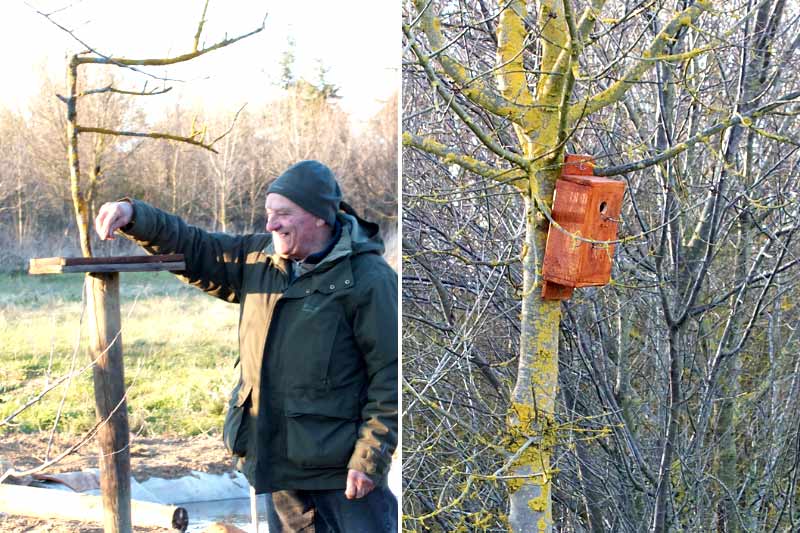
We can also plant evergreen bushes and trees and berry shrubs so they can find shelter and food. Less maintenance in gardens to encourage the insects that serve as their food is also a good solution: leaving wild grasses, dead trees, and small piles of wood. And above all, do not prune trees and hedges during nesting periods.
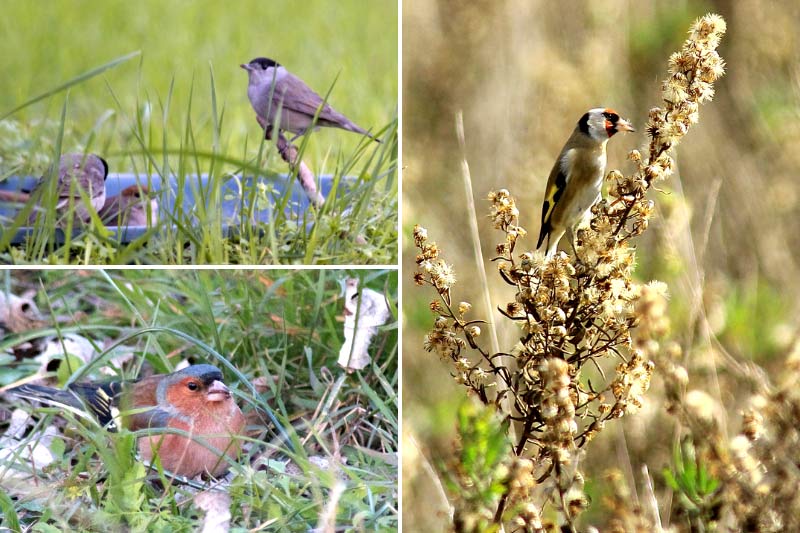
Citizen science is also a concrete way to act
To help scientists understand when and why birds visit gardens, everyone's observations are valuable.
On Saturday 28 and Sunday 29 January 2023, it is the winter edition of the national garden bird count for wintering birds, organised by the LPO and the National Museum of Natural History, with the next one taking place in spring on the last weekend of May for breeding birds. Everyone can participate:
- Choose a day for observation, either Saturday 28 or Sunday 29 January, and a one-hour time slot, preferably when birds are most active, late morning or early afternoon.
- Find a place to observe, which can be your garden or balcony, in the city or countryside. A public park can also serve as a good observation spot.
- Count and note all the birds that land in your garden for one hour and not those flying over. You will record the maximum number of individuals of each species observed during this time slot. (Do not count the same individuals multiple times if they move or make return trips). To recognise them more easily, fact sheets are available for download on the Observatory's website, along with a counting aid sheet.
- Then submit your data on the Garden Birds Observatory website: oiseauxdesjardins.fr. You will also find valuable nest box tips and feeder tips.
If you are passionate about birds and wish to collaborate more regularly, you can observe and count them whenever you like: every day, once a month, or occasionally, as the Observatory operates year-round.
The situation is deeply concerning: never has avian life been in such poor condition. According to studies revealed by the L.P.O. on 24 January 2023, the population of common birds in France continues to decline. Based on observations from 85,000 individuals collected during the “Garden Birds” citizen science operations, it is noted that: In winter, […]
Hellebores are perennials distinguished by their beautifully coloured winter flowering. Their flowers come in shades of pink, red, purple, white, and yellow, with petals surrounding a very decorative bouquet of central stamens. Their flowers are sometimes beautifully speckled with purple spots. A new range of hellebores has recently joined our catalogue: we are proud to present these varieties to you today!
To learn everything about hellebores, feel free to consult our complete guide: “Hellebores: planting and cultivating them”
1 - What are the advantages of these new varieties?
The new varieties we are presenting today are from the ViV and HGC ranges (Helleborus Gold Collection). They encompass several dozen varieties, offering a very wide choice! They are particularly notable for being produced through in vitro propagation.
In vitro propagation is a multiplication technique carried out in a laboratory that allows for the production of new young plants from a fragment of the mother plant. It is somewhat akin to micropropagation: a small section of the plant is taken, placed in a suitable medium, and it will develop into a complete young plant.
This guarantees uniform young plants: the new young plants are rigorously identical to the one from which they originated, as they are clones with the same genome. This represents a significant advantage in the case of hellebores, as when they are multiplied by sowing, the new young plants exhibit colour variations and are generally not true to the original variety. Indeed, classic varieties hybridise very easily with one another.
In vitro hellebores therefore provide an excellent solution to ensure variety conformity. Moreover, with selective breeding work, the hellebores from these ranges are generally more compact, more floriferous, and they offer more colourful and intense flowering. They are also free from viruses and diseases.
Discover the most beautiful varieties
Hellebores from the ViV range:
- Hellebore ViV Victoria: This is probably one of the most beautiful Oriental hellebores. It is a stunning variety with violet flowers, featuring five petals, contrasted by a bouquet of yellow stamens. It forms a compact clump, about 40 cm tall.
- Hellebore ViV Ariana: ‘Ariana’ is a beautiful variety with downward-facing double flowers: these consist of several rows of imbricate petals, in a purplish pink colour, speckled with small purple spots. This gives the flowers a sophisticated and elegant appearance.
- Hellebore ViV Celestina: This superb variety flowers early, as soon as September, producing simple flowers with light pink petals, beautifully speckled with purple.
- Hellebore ViV Lucrezia: ‘Lucrezia’ stands out with its very bright yellow flowers! They consist of five petals, surrounding a central collar and a heart of stamens. They bloom from January to February, bringing a touch of light in the middle of winter!
- Hellebore ViV Maeva: This is a beautiful variety with simple flowers, featuring yellow petals speckled with small purple spots. This makes its flowering intense and contrasting! With its compact size, it is well-suited for pot cultivation.
- Hellebore ViV Gianina: ‘Gianina’ is an early variety, flowering as soon as September, and offers beautiful pure white double flowers. The flowers are large, consisting of several rows of petals, and feature a bouquet of yellow stamens at the centre.
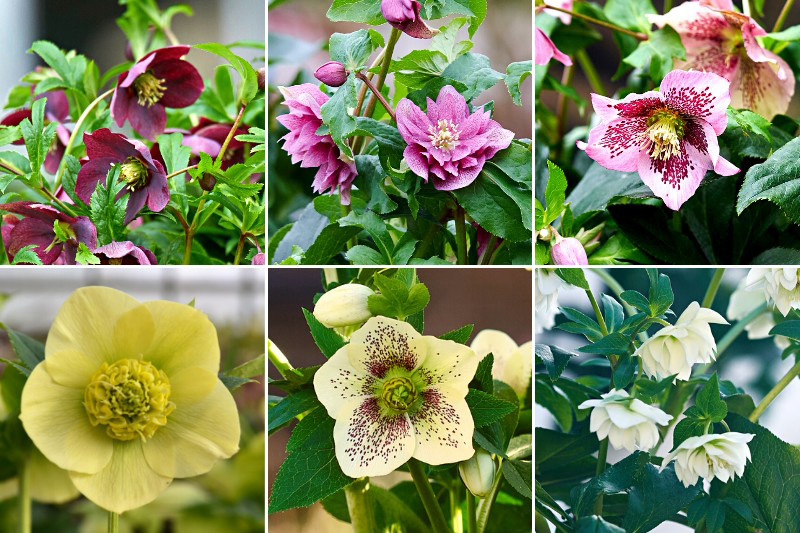
Hellebores from the HGC range:
- Hellebore lemperii Leona: This hellebore bears large flowers with dark red petals, surrounding a heart of yellow stamens, well contrasted. Its intense colour is appreciated! It is ideal in pots, to bring colour to a balcony or terrace.
- Hellebore lemperii Liara: ‘Liara’ bears large simple flowers (up to 10 cm in diameter) from December, consisting of five petals in pale pink, with a deeper pink reverse, offering beautiful colour nuances. This is a very romantic flowering!
- Hellebore lemperii Linn: This variety offers simple cream-white flowers, adorned with yellow stamens. It forms a well-compact clump and bears particularly large flowers, reaching about 15 cm in diameter.
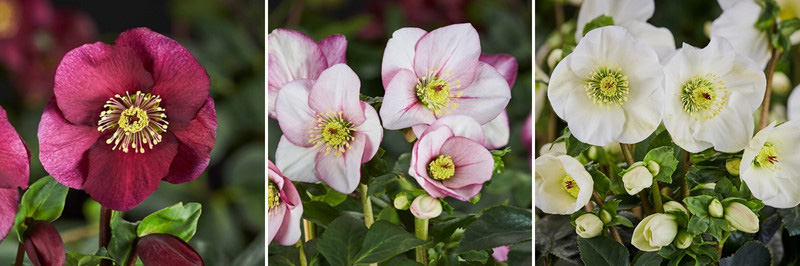
3 - How to cultivate them?
Hellebores will thrive if you plant them in shade or partial shade, in rich, cool, but well-drained soil. They have the advantage of being perfectly hardy, tolerating temperatures of around –15 to –20 °C. These new varieties, being floriferous and compact, are perfect for pot cultivation on a terrace, balcony, or windowsill, but they can also be planted in the ground. You can pair them with the decorative foliage of heucheras, the beautiful yellow flowering of Eranthis hyemalis, and the delicate white bell-shaped flowers of snowdrops. Also consider winter-flowering shrubs, such as Viburnum x bodnantense 'Dawn', Daphne odora 'Aureomarginata', and Hamamelis.
4 - To learn more
- Our complete guide: “Hellebores: planting and cultivating them”
- Find all our articles on hellebores by clicking here.
- For more options, discover our entire range of hellebores
- The ViV hellebores website and the HGC hellebores website
Hellebores are perennials distinguished by their beautifully coloured winter flowering. Their flowers come in shades of pink, red, purple, white, and yellow, with petals surrounding a very decorative bouquet of central stamens. Their flowers are sometimes beautifully speckled with purple spots. A new range of hellebores has recently joined our catalogue: we are proud to […]
Schoolyards should be places of respite for every child. However, it must be acknowledged that these spaces are predominantly made of tarmac and surrounded by concrete walls. Whether in nursery schools, primary schools, or even secondary schools, our children spend their leisure time at school far from nature, both in rural villages and large cities. Why is this the case? How can we change this situation and green the learning environments? Here’s a brief overview of schoolyards and the challenges surrounding their greening.
Why are so many schoolyards so dreary?
In France, municipalities are responsible for public primary schools located within their territory. They own the premises and are responsible for their construction, extension, and maintenance. Departments are responsible for secondary schools, which they own, while regions are responsible for high schools and specialised educational institutions. However, due to ease of maintenance and budget constraints, schools and their exteriors have been concreted, tarmacked, and stripped bare for decades. Some have not been renovated since their establishment, which can date back several decades, and even most recently renovated or newly built schoolyards do not allow nature to pass through their gates. Yet, educational practices and our lifestyles have evolved significantly in this regard.
While children and adolescents would be more than happy to play and relax on grass rather than tarmac, it seems that for maintenance staff, parents, teachers, and decision-makers, nature is seen as a nuisance and somewhat intimidating...

Why is it urgent to green schoolyards?
Nature plays a fundamental role, and time spent outdoors fosters autonomy, sociability, and creativity. In more natural and green schoolyards, in the form of gardens, what are called "oasis yards", games are more diverse, allowing for relaxation, discovery (digging holes, collecting leaves, small branches, observing insects and birds), as well as cooperation and release of energy.
On a more practical level, in the context of climate change, with heatwaves or flooding, increasing green spaces within schools would help manage rainwater better, provide shade for yards and buildings, and store more carbon. In towns and village centres, this would create thousands of precious cool islands.
What does this involve?
To start, all or part of the existing dark mineral coverings must be removed to restore permeable, living soil and vegetation. Solutions for infiltration, retention, or storage of rainwater should be considered, and Water Agencies can support this type of project.
The different spaces and their functions must be defined: natural material play areas, lawns, rest zones, nature corners, vegetable gardens or orchards, green spaces, and flowering meadows in less frequented areas. It’s about planting wisely and valuing what exists (if anything...) and all these spaces will serve as educational tools for both young and older students. Trees are allies in redesigns that promote shade. They can be fruit trees (avoiding small fruits that stain), evergreen if managers fear leaf collection, drought-resistant yet hardy, fast-growing, and planted at a large size for immediate impact.
Sun and cooling shelters can be added with green pergolas using climbers (including to shade classrooms) and awnings. It is also possible to create water points or adapted water games.
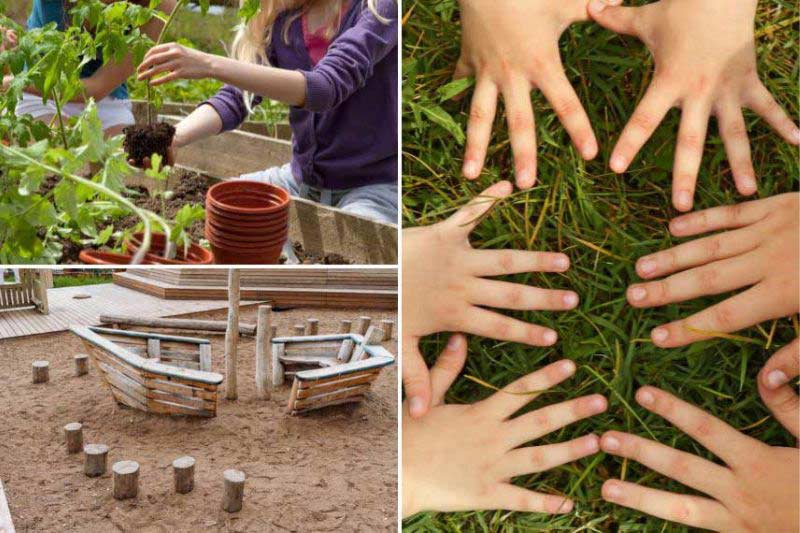
Nature is neither dirty nor dangerous
"Nature is dirty": this is a main point of opposition to the implementation of such projects. The various adults involved: parents, teaching staff and their assistants, maintenance personnel may indeed view the creation of vegetated and grassy areas in schoolyards unfavourably. One solution: explain the approach and its multiple benefits, both for the children and for the overall living environment of the community.
Usage rules and operational guidelines must be established to avoid potential issues: setting up clean zones, protecting potentially muddy areas (vegetable gardens, flower beds) with mulch, circulation paths and Japanese stepping stones, integrating buffer spaces between the outside and inside, establishing access rules during rainy weather, etc.
Installing cleaning areas (doormats and boot scrapers) is also quite feasible, as is asking families to provide boots or other easy-to-slip-on outdoor shoes, while ensuring there are spaces to store them.
"Nature is dangerous" will also be part of the arguments from detractors of returning to nature within schools: risks of falls, injuries, falling branches, allergies, stings... It is true that many nuisances can be cited, but it can be just as dangerous for children to run and fall on concrete surfaces or to play in schoolyards that overheat under UV rays during heatwaves.

It is therefore crucial to highlight the positive effects on health and to balance the risks with the numerous advantages of greening schoolyards: stress reduction, well-being, development of coordination, and increased self-confidence. All these health benefits for children are provided by the presence of nature!
Schoolyards should be places of respite for every child. However, it must be acknowledged that these spaces are predominantly made of tarmac and surrounded by concrete walls. Whether in nursery schools, primary schools, or even secondary schools, our children spend their leisure time at school far from nature, both in rural villages and large cities. […]
It is a little-known fact that climate change could lead to an expansion of global forests. Even today, the phenomenon is quite tangible all around the Arctic polar circle, in Norway or in Alaska, to the extent that some areas now have four times more trees than in the 1980s, and the gains in tree cover in these regions would exceed the losses lamented in others, such as in the Amazon. At first glance, this seems like good news... yet researchers tell us otherwise.
For the past thirty years, areas that were usually frozen and snow-covered have experienced a warmer climate, allowing forests to expand and replace the traditional low shrub layer. This vegetation was covered in snow for long months, which reflected solar radiation. However, this is no longer the case for the trees that have succeeded it. Thus, dark forest covers replace the snow and reduce reflectivity - what is known as albedo - causing the absorption rather than the reflection of some solar radiation. And of course, this solar energy is released into the atmosphere as heat...

In some arid areas of subtropical regions, the same phenomenon of forest development is observed. It is the higher concentration of CO2 in the atmosphere that is to "blame". Indeed, trees in semi-arid forests need to open their stomata less to absorb this more available CO2. They therefore simultaneously reduce their water loss through evapotranspiration, leading to new and increased vegetation growth. However, in these arid regions, this natural vegetation, combined with reforestation campaigns, can also be very problematic, as trees again absorb solar heat and shade sandy or rocky soils that are naturally very reflective. This fact is scientifically measured notably through the Fluxnet network, which studies the processes of exchanges of CO2, water vapour, and energy between terrestrial ecosystems and the atmosphere.
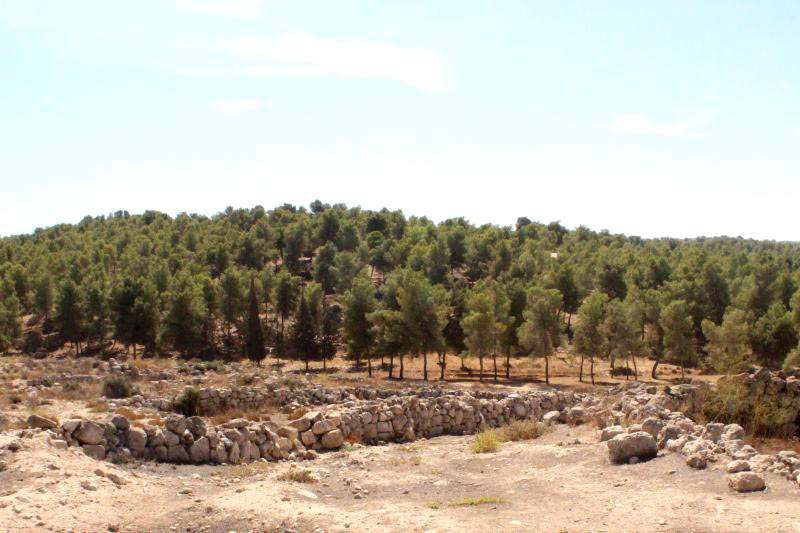
Thus, a more wooded world may not contribute to slowing climate change, as we now know that forests create conditions that, in some ways, cool the planet, but paradoxically also warm it.
In fact, if the forecasts promising a more wooded future turn out to be correct, we do not yet know how beneficial these trees could be in slowing climate change. This is because we must weigh the fact that forests also release water vapour, which promotes cloud formation, and these contribute to cooling. The canopies of forests also create surfaces that swirl air currents and help dissipate heat in the lower atmosphere. Moreover, the increase in carbon dioxide levels in the atmosphere aids tree growth. The biomass created in the form of leaves and wood can thus trap more carbon and therefore slow warming.
So, what about it, you may ask? Warming or cooling? The answer cannot be black and white, and researchers tell us that it will depend on several factors such as the altitude and latitude of the affected areas, the nature of the soils, the growth rate of the trees, the age of the forest, etc. A young forest, for example, might initially warm the atmosphere due to its albedo effect, but its impact could become more "cooling" for the atmosphere as the trees age and store more carbon.
Humanity is thus once again faced with uncertainty. How new forests will affect the climate poses a scientific but also political issue, as large-scale re-vegetation and greening projects - less complicated to implement than global decarbonisation - should in the future evaluate the potential downsides of a modified albedo... at the risk of having them turn against us and our planet!
It is a little-known fact that climate change could lead to an expansion of global forests. Even today, the phenomenon is quite tangible all around the Arctic polar circle, in Norway or in Alaska, to the extent that some areas now have four times more trees than in the 1980s, and the gains in tree […]
Heat is arriving very early this year, with a marked spell already affecting much of the country. In the garden, these unseasonably warm temperatures have consequences: soils dry out quickly, young plantings suffer, pots dehydrate and some foliage can be scorched within hours. Before damage sets in, a few simple actions will protect the most vulnerable plants and help the garden cope better with this period. Here are 10 practical tips to apply now to protect your plants from heat.
1. Create shade to protect plants and vegetable patch
Place a shade cloth during daytime over plants least tolerant of heat such as ferns, hostas, impatiens… during the hottest hours. In the vegetable patch, a simple wooden crate will effectively protect lettuce, spinach and young seedlings.
2. Be very attentive to plants in pots!
Check pots morning and evening and water moderately but frequently, once or twice a day. Gather pots in shade to protect them from heat as much as possible. Feel free to place a saucer under pots, removing it once the heatwave has passed. Finally, sprinkle a water retainer on the surface of the compost to allow longer intervals between waterings.
3. Fork over soil before watering
This breaks the hard, impermeable crust at the surface and thus allows better penetration and distribution of water into the soil.
4. Water late evening or early morning to maintain a humid atmosphere
Concentrate watering during coolest hours of the day (morning until 8am or evening from 8pm); this saves 10–20% water compared with watering in mid-afternoon and creates a humid atmosphere that foliage appreciates.
5. Fit a rose to watering cans and hose ends
Water dispersed in fine droplets will not run off the surface and will penetrate more effectively to the roots.
6. Avoid wetting foliage and concentrate water at soil level
This also prevents scorch, often called the "magnifying-glass effect", which is caused by thermal shock between cold water and hot foliage.
7. Apply mulch at the base of your plants
Mulch to a depth of 6–8 cm to keep soil cool, prevent evaporation and allow water to infiltrate down to the roots. Additionally, in case of heavy storm rain, mulch cushions the impact of falling water and greatly reduces run-off.
8. Deadhead spent flowers
So plants do not waste their resources unnecessarily. Use pruning shear to remove old flowers and, in cases of severe dehydration, cut every other flower.
9. Leave weeds in place!
Cut flower stalks to prevent weeds from setting seed, but leave foliage in place. Weeds form a vegetative cover that protects soil from sun rays and thus from evaporation.
10. Prune branches of perennial plants and dahlias to reduce evaporation
Some perennials used to abundant water grow too vigorously and, when water becomes scarce, they slump and suffer. Using a shear, trim bushy summer-flowering perennial plants (the well-known Chelsea Chop) such as asters, phlox, Lysimachia or dahlias.
Heat is arriving very early this year, with a marked spell already affecting much of the country. In the garden, these unseasonably warm temperatures have consequences: soils dry out quickly, young plantings suffer, pots dehydrate and some foliage can be scorched within hours. Before damage sets in, a few simple actions will protect the most […]
The French Observatory of Apidology is organising this year the fourth edition of the "Flowers for Bees" campaign, which runs from 20 May to 21 June 2022. Like Promesse de Fleurs, many plant professionals are committed to the preservation of bees, providing billions of flowers for these precious insects and raising awareness among the public about the issues of pollination.
For each of us must today realise that the future of humanity is linked to that of these irreplaceable pollinators.
Why are bees threatened with extinction?
They have lived on Earth for 50 million years and through our actions, in just a few decades, they are now threatened with extinction to the point that their populations are collapsing worldwide, with a mortality rate of 30 to 80% depending on the regions of the globe. We are responsible for:
- pesticides spread over crops, poisoning insects,
- the destruction of biodiversity drastically reducing their habitat and food resources,
- the transport of parasites such as Varroa, a mite from Asia responsible for the collapse of honeybee colonies,
- bee-killing predators circulating due to globalisation such as the well-known Asian hornet...
It seems as if humanity is intent on bringing together all the elements leading to their eradication. However, their disappearance will lead to ours, as our fate is linked to that of these precious hymenopterans.
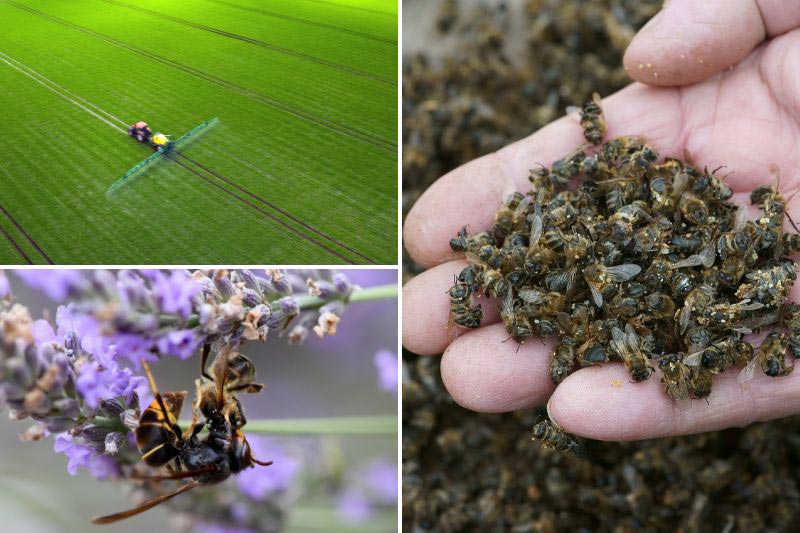
What are the consequences?
As the main pollinating insect (a bee can visit 250 flowers per hour), bees unknowingly bear the responsibility for the reproduction of 80% of plant species and the production of a third of our food. Whether wild or domestic, of 100 plant species that are part of our food resources, they pollinate more than 70 on their own... This makes one think, as we must go beyond the "simple" act of protecting an admirable species, a miracle of evolution and the most elaborate model of society among insects.
These organised societies, which have survived thanks to the adaptations they have developed and have traversed several glacial periods, work quietly to pollinate flowering plants and thus produce the fruits and vegetables we eat every day.
Simply put: without this essential function of transferring pollen from one flower to another, human life could not exist on Earth due to a lack of food resources. We are guilty and will be victims of their extinction; it is therefore doubly our duty to help them.
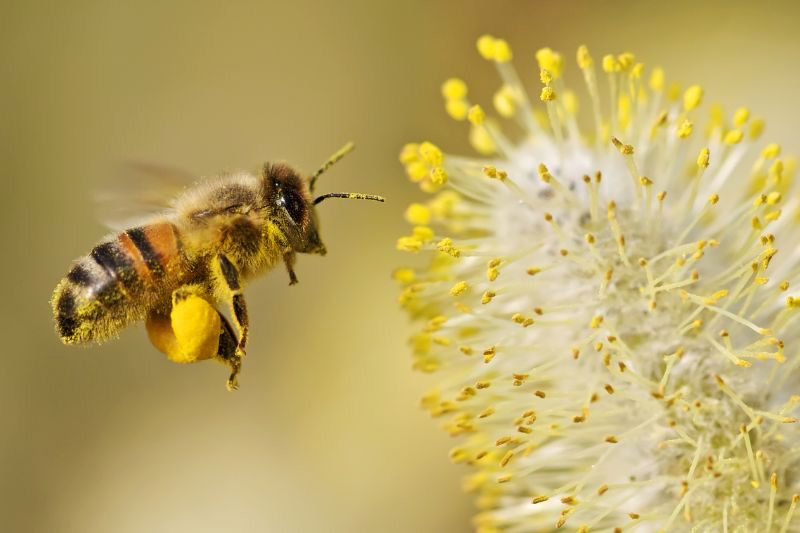
How to help bees?
In the face of the diminishing food resources for pollinators, as biodiversity spaces shrink and concrete replaces the flowers of the fields, everyone can - and must! - plant and sow melliferous plants in their garden, on their balcony or terrace.
We have plenty of choices: from melliferous hedges to surround the garden, to bushes and melliferous perennials to insert in numbers into the flower beds, to melliferous climbing plants to adorn our walls.
→ Follow the advice in our article to help you select the best melliferous plants by season
And to replace the mown lawn which will turn yellow anyway this summer, let dandelions and wild herbs grow, and you will enjoy seeing bees, butterflies, and all kinds of insects reappear. Less chore for gardeners and abundant shelter and food for wildlife, what could be better?
I also recommend flowering fallows, some of which are composed of perennial or annual, nectariferous and melliferous flowers, to attract bees and other equally precious pollinating insects!
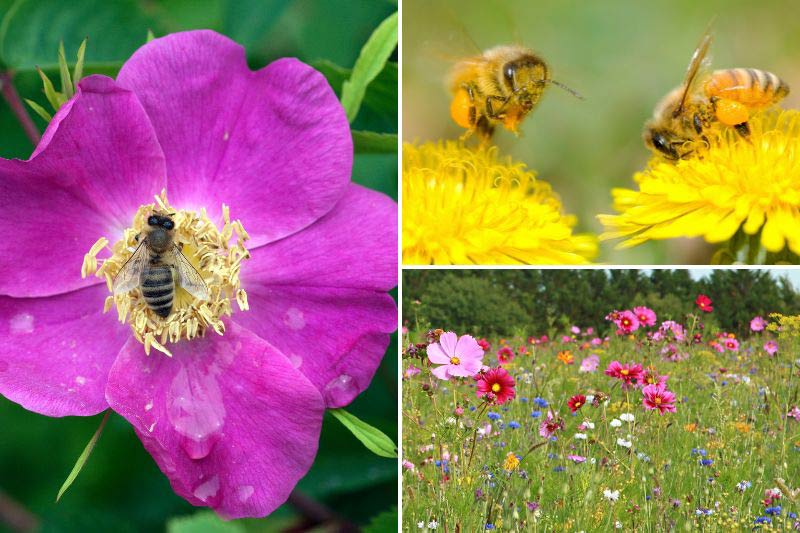
Also ban any use of pesticides in the garden as well as at home. Not only will you preserve your health, but you will also contribute to protecting bees.
Consider installing small shallow containers that you will fill with water in summer; we get thirsty, insects do too and can suffer from dehydration during dry periods.
Your garden can also become a refuge for biodiversity: plant, do not over-maintain, and install insect hotels wherever you can! This will be an opportunity to raise children's awareness of these issues that will soon concern them closely.
The French Observatory of Apidology is organising this year the fourth edition of the “Flowers for Bees” campaign, which runs from 20 May to 21 June 2022. Like Promesse de Fleurs, many plant professionals are committed to the preservation of bees, providing billions of flowers for these precious insects and raising awareness among the public […]
In summer, it's hot! The media hammer this word at us relentlessly whenever you have the misfortune to switch on the TV, radio or the internet. A word that plunges us into dread, horror, even outright panic: THE HEATWAVE!
And if we're hot and thirsty, animals are too! I'm not talking about our dogs, cats, ponies or domestic geese but about all the little wild creatures living in our gardens: birds, mammals, insects, spiders, terrestrial crustaceans, amphibians, reptiles…
Want to give them a little helping hand to get through this critical period? Here are some tips to help save them.
Birds and small mammals
Birds are easy to spot as they flit about the garden, but mammals—more discreet: squirrels, moles, shrews, hedgehogs…—are often less visible. Yet they're there. And all these creatures get hot and… thirsty in summer. It's very simple to make life easier for them. Here's how:
- Place shallow dishes of fresh water in several places around the garden (or, if necessary, on the balcony): they should be shallow and stable and contain only water, just water. Do not add sugar, salt or anything else. And do not give cow's milk or similar. Just water!
- Place these dishes in quiet, predator-safe spots: the energy spent fleeing a potential predator at this time could be fatal for birds as well as for mammals.
- Change the water at least daily, or twice a day if necessary: mainly to prevent the spread of disease.
- Avoid standing water in general: this will help prevent a mosquito invasion on your terrace or in your bedroom…
please note: bats drink very little. That's why their droppings are so dry and crumbly. Nevertheless, in very hot weather it's not uncommon to see them drink at dusk, but only from large bodies of water (a big pond at a stretch). Indeed, they drink on the wing, and it's quite difficult to aim for a small dish in those conditions.
Insects and other small creatures
Insects, spiders and even woodlice are thirsty too. Although they naturally drink far less than a sparrow or your neighbour, they still need a certain level of hydration to maintain physiological functions, notably internal pressure.
To help them, you can place a simple sponge soaked in water or, if not available, a well-watered brick which will allow them to drink without risk of drowning.
please note: all these friendly little creatures will, for once, be a little less agitated than usual. A unique opportunity to observe them closely and, why not, try to identify them.
Further measures and preparing for future heatwaves...
- Dig a small pond or create a mini water garden: as well as creating a biotope rich in biodiversity, you'll create a small wetland area in your garden that will effectively offset the temporary lack of water caused by heatwaves.
- Provide shade by planting trees and shrubs: when it's very hot, you'll notice that few animals (except some reptiles) come out. They hide in the shade and hardly move. Even ectothermic animals (cold-blooded) such as insects seem to say "enough is enough!" and stay quietly hidden in the shade. To help them, nothing beats creating multiple shady areas in the garden.
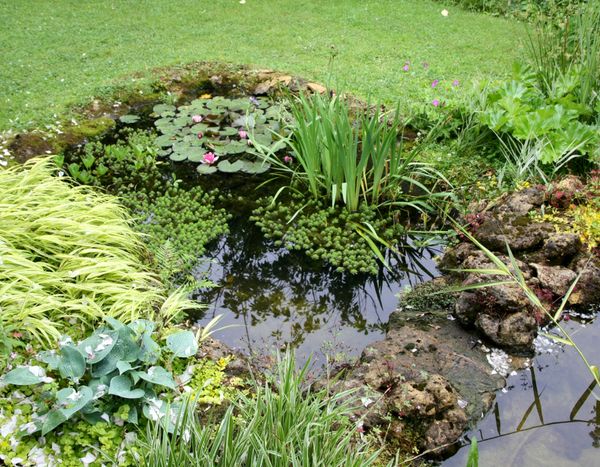
In summer, it’s hot! The media hammer this word at us relentlessly whenever you have the misfortune to switch on the TV, radio or the internet. A word that plunges us into dread, horror, even outright panic: THE HEATWAVE! And if we’re hot and thirsty, animals are too! I’m not talking about our dogs, cats, […]
Lately, it has been raining across much of France. It is raining so much that several departments are on red alert. We won't be going to the swimming pool; the swimming pool will come to us.
Faced with these floods, some curse the sky. I, however, mainly curse the land: the removal of hedges and banks, poor agricultural practices, soil sealing... This is the winning trio for creating erosion, mudslides, and especially, floods.
While we unfortunately cannot do much against these violent climatic phenomena, we can all, at the scale of our garden, contribute to better management of rainwater. Here are some examples of actions.
1) Collecting rainwater
Collecting rainwater is generally presented as a good way to water for free. It’s smarter than relying on mains water. However, this practice is also beneficial against flooding. Indeed, the collected water is stored temporarily and does not enter the already saturated drainage system during heavy rains. For this solution to be effective (constantly full tanks are of no use), this water must then be gradually released into the garden. Did you know that this process is used in some cities where tanks are integrated into the roadways?
To collect rainwater, the use of above-ground tanks is the most common solution. These 1000-litre tanks may not be very aesthetic, but you can easily disguise them with climbing plants, for example.
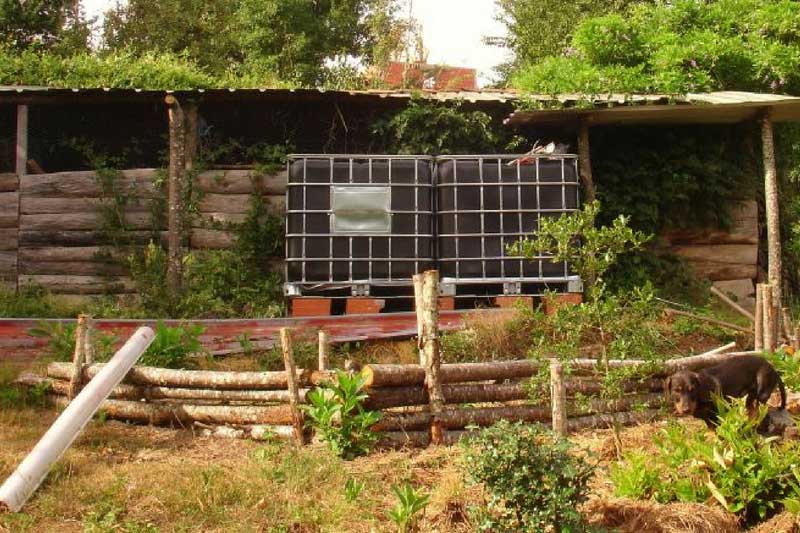
Water collection: 1000-litre tanks are practical but sometimes unsightly - Photo Flickr
An underground tank is certainly more discreet. It is also more expensive, but it has the advantage of holding much more (3000, 5000 litres...). To calculate the necessary volume, you first need to calculate the recoverable rainwater volume. This is generally done using the following calculation:
average annual precipitation volume, in litres per m²
(1 mm of rain equals 1 litre per m²)
x the roof areax a coefficient of evaporation
of 0.8 for a sloped roof and 0.6 for a flat roof
Example for Bordeaux with a flat roof of 80 m² => average annual precipitation 931 mm = (931 x 80) x 0.6 = 44688 / 1000 = 44 m3 per year
2) Renouncing asphalt in favour of a draining surface
Fortunately, asphalt is very rarely found in gardens… but it is frequently seen in courtyards and parking areas. It’s "clean" and requires no maintenance. It is also very impermeable: the soil is deprived of an infiltration surface and water runs off.
Several alternatives that allow water to penetrate exist for homeowners: gravel laid on a suitable alveolate support like Alvésostar®, a draining surface like Stardraine®, both environmentally friendly surfaces distributed by Daniel Moquet, as well as grass joint pavers. These pavers, suitable for vehicles, are either hollow or solid and are laid with spacers. The gaps are then filled with grass or any other walkable groundcover of your choice.
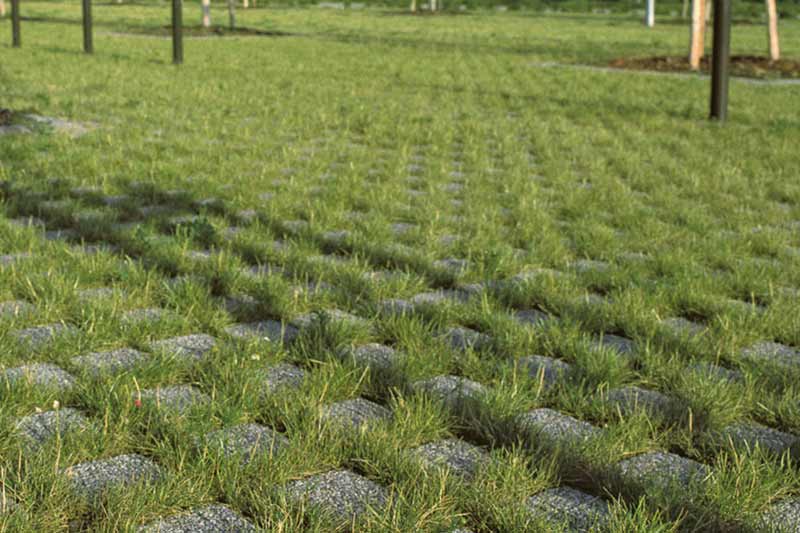
If you are looking for an even more economical solution, why not consider a soil-stone mix (40% topsoil + 60% gravel sized 20 - 40)? Once grassed over, this type of draining surface is visually pleasing and requires little maintenance.
3) Greening roofs
Green roofs are aesthetically pleasing and also ecological: in buildings, they are excellent thermal and acoustic insulators. In large cities, they also act as air conditioners. Their benefit also lies in their ability to temporarily retain water and to partially compensate for the artificialisation caused by building occupation. For homes, we recommend hiring a professional, but in the garden, it’s an easy technique to implement on a shed, chicken coop, children’s playhouse, etc. A PVC tarp or a piece of EPDM, a geotextile felt, potting soil or soil mixed with pumice, and you’re all set! All that’s left is to plant sedums or any other plant suited to your climate.
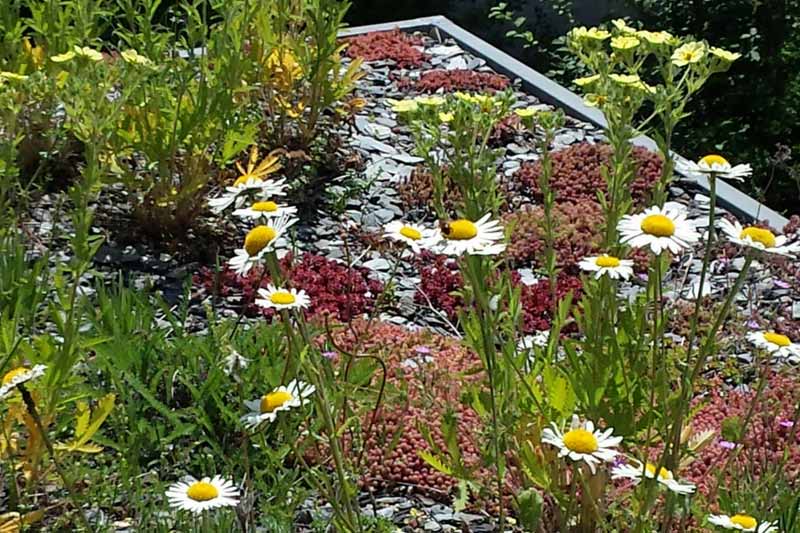 Green roof - Source: Wikipedia
4) Planting and replanting hedges, preferably on a bank
It is proven that the flattening of banks and the disappearance of hedges have amplified the damage caused by heavy rainfall.
Indeed, banks, when oriented perpendicularly to a slope, help protect against runoff and thus protect the soil from erosion. Hedges form physical barriers that slow down water, they also stabilise the soil and act as true "pumps" that promote water infiltration. To prevent flooding, but also for biodiversity, we cannot stress enough, plant hedges!
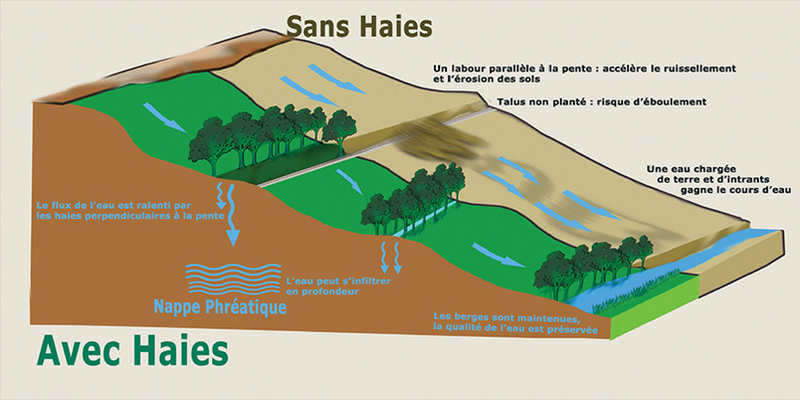 The usefulness of bocage hedges - Source: Breizh bocage Fougères
5) Collecting and taming water: ponds, swales, and infiltration gardens
If water is frightening, it is due to its force and uncontrollable nature. Channeling and containing it is part of the measures that allow us to tame it. On a large scale, roadside ditches, swales (wide, shallow, grassed or planted ditches) in eco-neighbourhoods, and retention basins play this role. You may not notice it, but they reduce the impact of torrential rains.
On a garden scale, why not dig a pond that can hold some of the rainwater? Does that seem like too big a project? Then consider a rain garden: the size of a large flowerbed, these gardens serve the same purpose as swales. They collect and absorb rainwater from the roof. Unlike a pond, the water is not meant to stagnate, but to evaporate. Instead of a tarp, a thick layer of a porous, draining material like sand or pumice is used. These infiltration gardens are planted with plants that can withstand both immersion and temporary lack of water, such as eupatoriums, lythrum, filipendula…
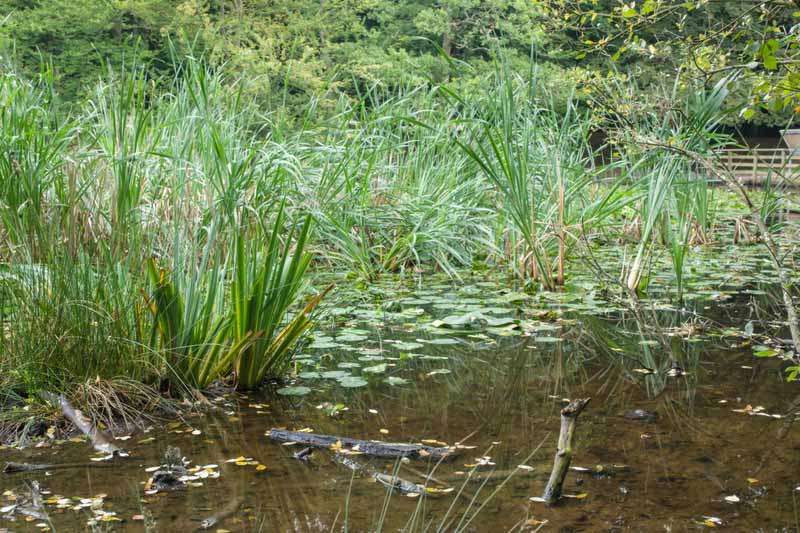 Natural pond
If you find yourself in waterlogged conditions and, moreover, live surrounded by vast asphalt parking lots or extensive monoculture fields, these measures may seem trivial to you… So, remember the legend of the hummingbird told by Pierre Rabhi:
"One day, there was a massive forest fire. All the animals, terrified and dismayed, watched helplessly as the disaster unfolded. Only the little hummingbird was busy, fetching a few drops with its beak to throw on the fire. After a while, the armadillo, annoyed by this futile activity, said to it: 'Hummingbird! Are you crazy? You won't put out the fire with those drops of water!'
And the hummingbird replied: 'I know, but I’m doing my part.'
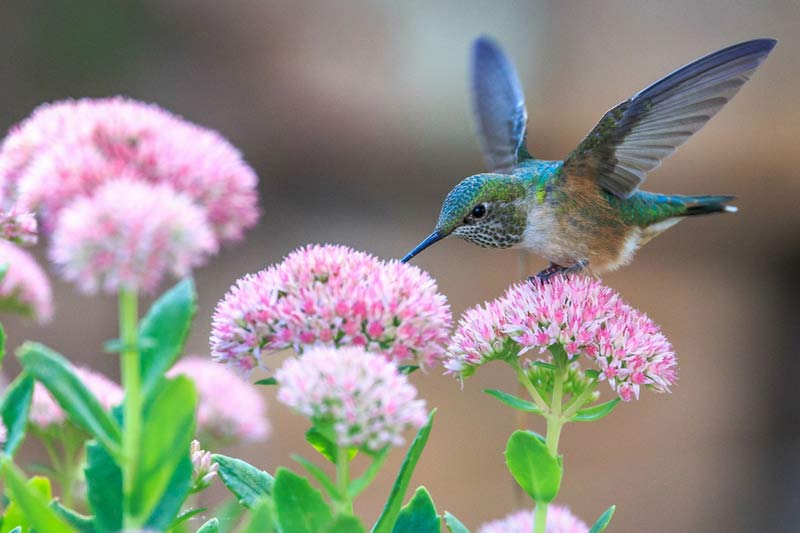
To go further:
to read on the subject: Gardens and Rain, Sustainable Management of Rainwater in Gardens and Green Spaces - Nigel Dunnett, Andy Clayden - Editions du Rouergue
Lately, it has been raining across much of France. It is raining so much that several departments are on red alert. We won’t be going to the swimming pool; the swimming pool will come to us. Faced with these floods, some curse the sky. I, however, mainly curse the land: the removal of hedges and […]
Detested by some, welcomed by others, snow certainly does not leave gardeners indifferent! Some attribute fertilising properties to it, while others see it as a source of nuisance. So is snow a boon or a real headache in the garden? Let’s try to see things a little more clearly.
Snow, a perfect protection for perennials and bulbs
When meteorologists speak of snow cover, they are not far wrong. It isn’t something you think of at first glance, but when it lies in a layer thicker than 10 cm, snow provides a high insulating value. By trapping air it acts like a duvet and regulates soil temperature. If it falls heavily on soil at 0°C it will keep that soil warm, even if outside temperatures drop to -20°C. It will therefore effectively protect perennial plants and bulbs from a Siberian cold snap!
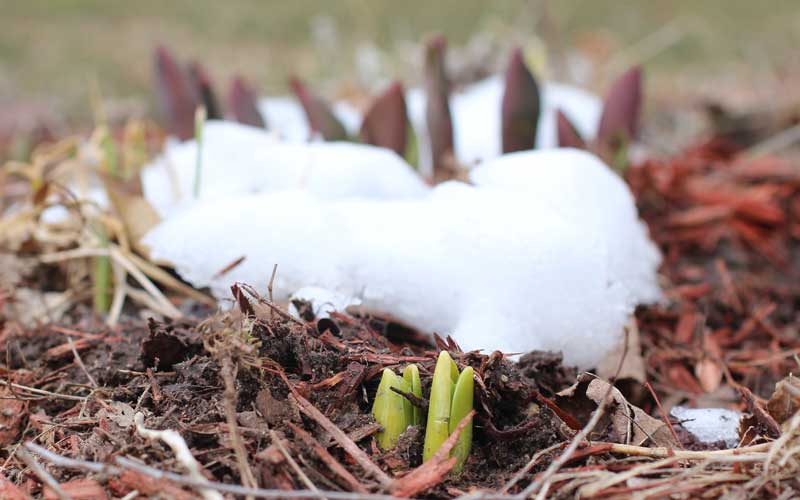
Bulbs are the first plants to benefit from light when the snow melts.
But beware, like any good insulator, it can also play the opposite role. If it falls on soil that is deeply frozen, it will keep it frozen for a long time. Likewise, wet, heavy and more compact snow will not offer the same thermal protection as dry, light snow.
But a calamity for evergreen shrubs!
If perennials are snugly warm beneath the snow, evergreen shrubs are, on the other hand, less merry! Their leafy branches offer a greater grip than those of deciduous varieties. As a result, when the snow is wet, the flakes cling to the foliage and then to the branches, and the branches break under the weight of the snow. It is not unusual to see, late in winter, cypresses or thuja split in two and broken down to the base!
Branch of a Camellia broken under the weight of the snow
On baboons, however, it’s different. The culms do not break but they bend and can, in the long run, either become uprooted or retain an arched shape. Don’t hesitate to remove the snow from your bamboos!
Snow: a natural fertiliser?
Old-timers remember the proverb "Snow in February is worth a good fertiliser", in other words, the nitrogen trapped in snowflakes would diffuse into the soil during melting and would fertilise the land abundantly. Is this a baseless popular belief or a genuine observation?
Seeing the soils green up quickly at snowmelt is not a figment of the imagination. Many gardeners equate this with snow trapping atmospheric nitrogen and releasing it during melt. They forget, however, that soil protected from the cold warms up faster and not everyone realises that snow promotes seed germination. These are the factors that chiefly contribute to the greening of soils.
Several recent studies, reported here by Isabelle Charissou for the Tela Botanica network, show that the hypothesis of snow trapping atmospheric nitrogen and releasing it back into the soil as such is not proven. By contrast, when it melts the water diffuses slowly and helps to retain more assimilable nitrogen than heavy rainfall. Snow therefore allows better water uptake into the soil and keeps it moist deep down for a long time, but it does not act, or hardly acts, as a natural fertiliser.
A real benefit for seed sowing
It is often at snowmelt that many seedlings germinate and emerge from the soil, and this is not due to nitrogen but to the combined action of cold, abrasion and moisture. As it melts, snow acts as an abrasive agent on the seeds and stratifies them. It softens and alters the outer integument of the seed (the seed coat) and frees the germ. Some seeds have embryonic dormancy, and it is the action of cold and water that will degrade the enzymes blocking this dormancy and allow germination.
Apart from the seeds of annual plants that germinate easily, all seeds of perennial plants and shrubs that receive snow germinate more readily. Don’t hesitate to sow your difficult seeds in early January and cover your sowings with snow (if it happens to fall). In March/April the first germinations will be more abundant than usual!
Detested by some, welcomed by others, snow certainly does not leave gardeners indifferent! Some attribute fertilising properties to it, while others see it as a source of nuisance. So is snow a boon or a real headache in the garden? Let’s try to see things a little more clearly. Snow, a perfect protection for perennials […]
"Ciaran, Domigos: storm over the garden" could be the title of a new novel or yet another disaster film that makes me want to dive into a good plant catalogue (guess which one!), dreaming of brighter days and new plantings! By the way, I wonder why storms and cyclones are almost always named after women? Strange... but that's not the point! Anyway, lately, France has experienced severe weather phenomena. Many gardens have faced torrential rains (flop flop flop... at least it made the children laugh!) and especially strong gusts of wind that have caused varying degrees of damage depending on the regions.

That said, relax... Take a deep breath, it will be alright! Here’s what you can do after a storm passes, as well as precautions to take in anticipation of the next one.
1) WHAT TO DO AFTER THE STORM?
First, be patient. If the wind is still blowing, it’s not yet time for your daily walk to assess the damage. It won’t get any worse!
Once all risks are cleared:
- Start by picking up the dead wood. It may be disheartening, but be positive and pragmatic: it’s natural pruning! It’s done, and you won’t have to balance on a wobbly ladder to cut those branches!
- Secure small structures like chicken coops or small plastic greenhouses (ideally, bring them in for winter).
- Close your greenhouses well, or if that’s not possible, leave them open: if the wind gets in, it needs to be able to escape!
- If you garden on a balcony or terrace, bring in hanging planters and group all pots in one place, as sheltered as possible.
And as these weather phenomena are likely to become more frequent in the future, think long-term as well:
- Do not plant large conifers (Cedar, Sequoiadendron, Pines...) near buildings. Their often fragile branches provide a significant wind catch, and it’s not uncommon for large branches to break under gusts.
- Plant a proper windbreak hedge on the side of prevailing winds: there’s nothing more effective for protecting a garden! For this, opt for a free hedge where small trees and hedge shrubs, deciduous or evergreen, coexist. Take inspiration from the hedges in your region and plant, for example, Elder, Spindle, Privet, Hazel, Amelanchier, Cornus, Viburnum...
What about you? Any damage in the garden? Perhaps you have some additional tips to protect the garden from the wind... Feel free to share them in the comments!
“Ciaran, Domigos: storm over the garden” could be the title of a new novel or yet another disaster film that makes me want to dive into a good plant catalogue (guess which one!), dreaming of brighter days and new plantings! By the way, I wonder why storms and cyclones are almost always named after women? […]
Winter is here in many regions, temperatures are steadily dropping, and birds are increasingly struggling to find food. Fat balls, seed silos, feeders… and don’t forget water; everything helps them survive during the harsh season!
 A Nuthatch enjoying sunflower seeds
In my village, a kind old man sets up a five-star restaurant every year! In my garden, I don’t go that far, but I still make sure the birds have enough to eat.
 The Five-Star Feeder: diversity and abundance on the menu!
I have a small feeder, a silo that holds a mix of seeds (sunflower, millet, wheat, oats) and I scatter a few fat balls around. One year, I made half coconuts filled with a mix of seeds and vegetable fat. I still have them; I should reuse them. I’ve also set up a way to provide water, and I change the water very regularly, especially when it freezes!
 A Blue Tit at the garden water feeder
It’s a real joy to see them flitting from branch to branch in the garden amidst a lively cacophony.
When to feed garden birds?
I start feeding when I notice there’s not much left to forage in the garden and surrounding areas, when the number of insects has drastically decreased, when frosts become more frequent, and when snow arrives, usually around the end of November. Just observe nature; it gives us the signal. Occasionally, I leave a few withered or slightly rotten apples for the blackbirds and thrushes to enjoy. Robins also like apple quarters. And I gradually stop feeding them around mid-March.
 Robin
Robin
Rules to follow
Feeding birds may seem simple, but remember that sometimes hell is paved with good intentions. Here are a few rules to follow to ensure everything goes smoothly.
DO:
- Seeds should always be stored as dry as possible, preferably in an airtight container.
- Put out food early in the morning or late in the day, but try to do it at roughly the same times every day.
- Regularly check your seeds; they should be free from any mould.
- Hygiene is essential: feeders and bird baths must remain clean, and water should be changed very regularly to prevent the spread of diseases.
- If possible, opt for organic seeds.
- Place feeders, fat balls, etc., out of reach of predators.
- Prefer multiple feeding points to just one, so that shyer birds can also feed.
- Finally, distribute small amounts of seeds several times a day rather than a large quantity once a week.
DO NOT:
- It is unnecessary to feed birds all year round.
- If you start feeding them, do not stop midway through winter.
- Avoid dry bread, rusks, dried coconut, raw rice, and pastry leftovers. These foods swell in birds' stomachs and can lead to death.
- If you make your own fat balls or cakes, use vegetable fats (preferably rapeseed-based) and not animal fats, which can cause cardiovascular diseases.
- Do not give salty foods, and do not add salt to the water in bird baths to prevent it from freezing.
- Do not give them fly larvae (just in case!), nor milk.
- Be wary of poor-quality seed mixes that may contain ragweed seeds, an invasive plant that poses serious problems.
And if you encounter a bear, kindly tell it that the seeds are not for it!
 I thought I saw a big hairy bear!
If, like me, you love birds, know that winter is also the ideal season to make birdhouses and plant hedges made up of bushes that provide both shelter and cover. It takes a bit longer than distributing seeds, but it’s also very useful!
Discover Olivier's video: Feeding birds: when, how, and why?
Also, check out our tutorials on making a hanging seed feeder for birds in winter and how to make a bird feeder from oranges.
Winter is here in many regions, temperatures are steadily dropping, and birds are increasingly struggling to find food. Fat balls, seed silos, feeders… and don’t forget water; everything helps them survive during the harsh season! A Nuthatch enjoying sunflower seeds In my village, a kind old man sets up a five-star restaurant every year! In […]