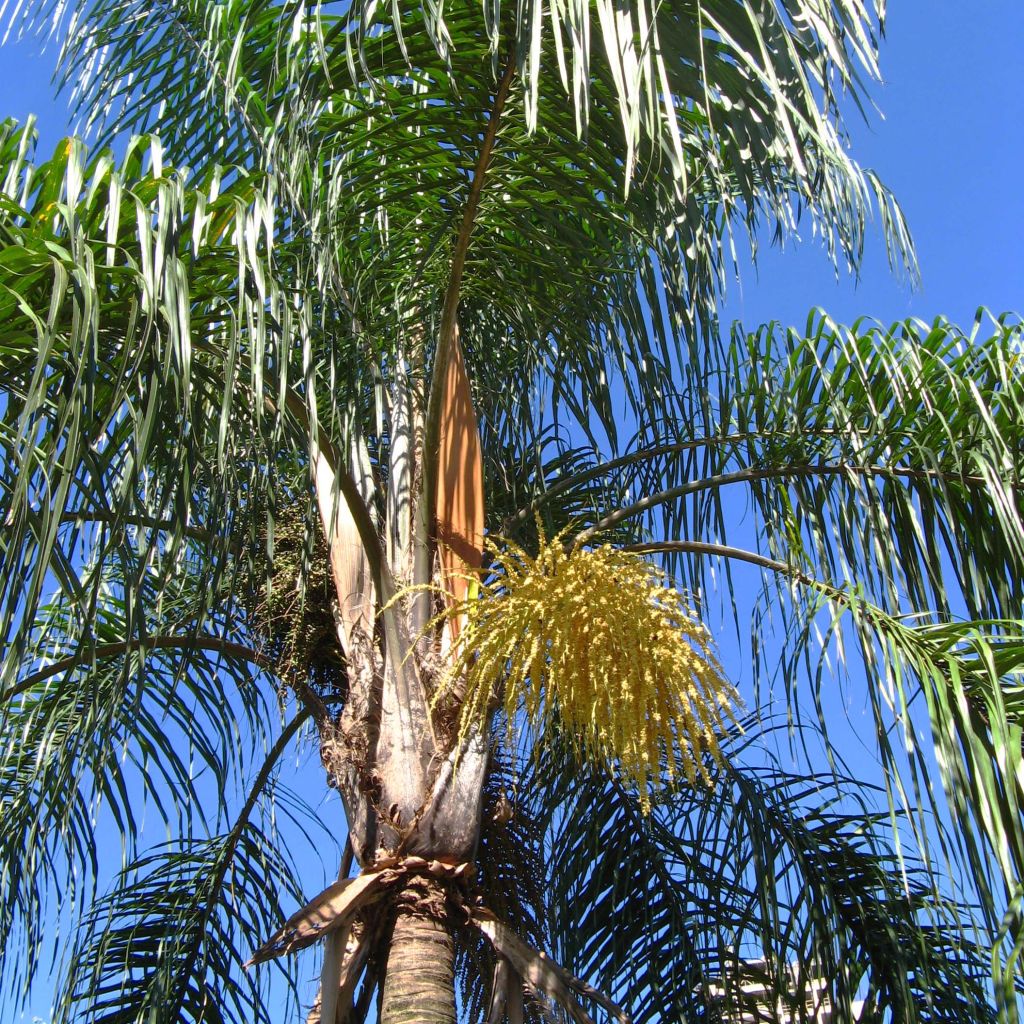
Syagrus romanzoffiana - Queen Palm
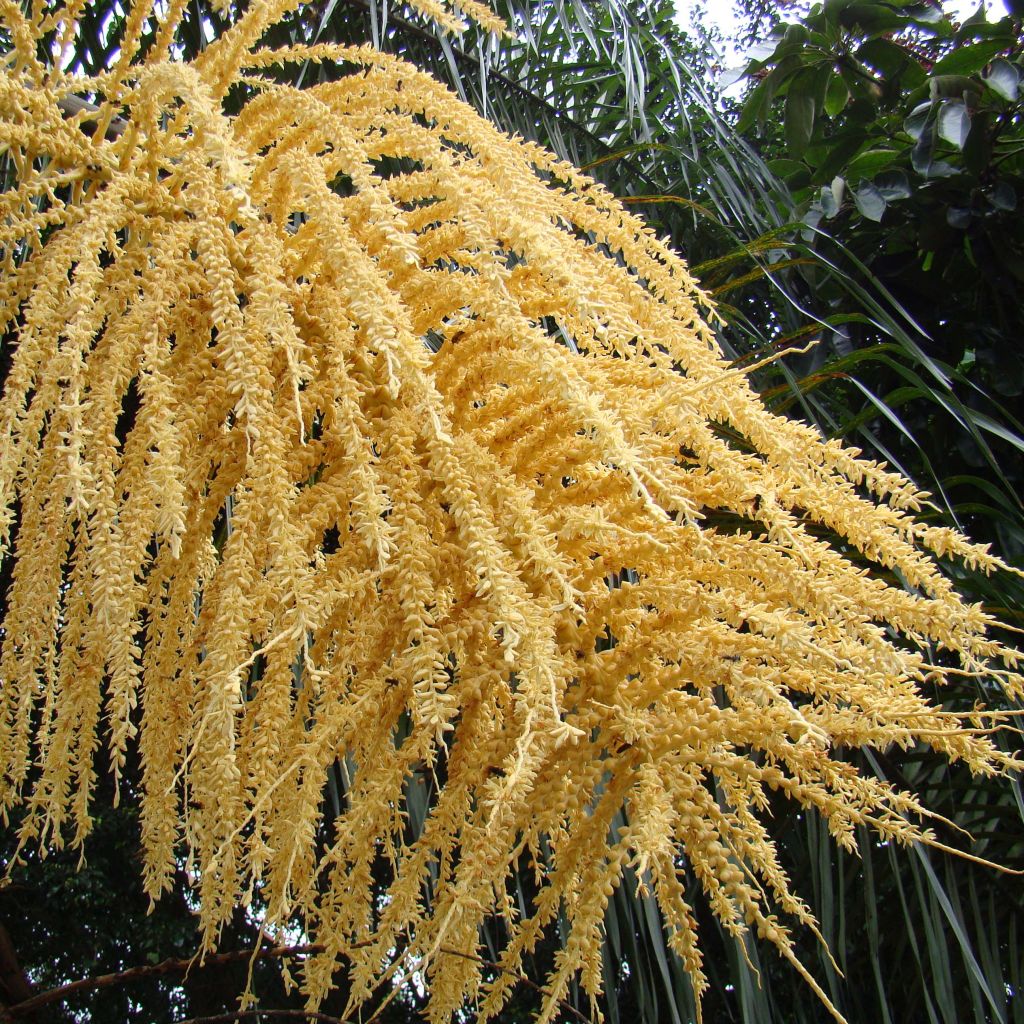
Syagrus romanzoffiana - Queen Palm
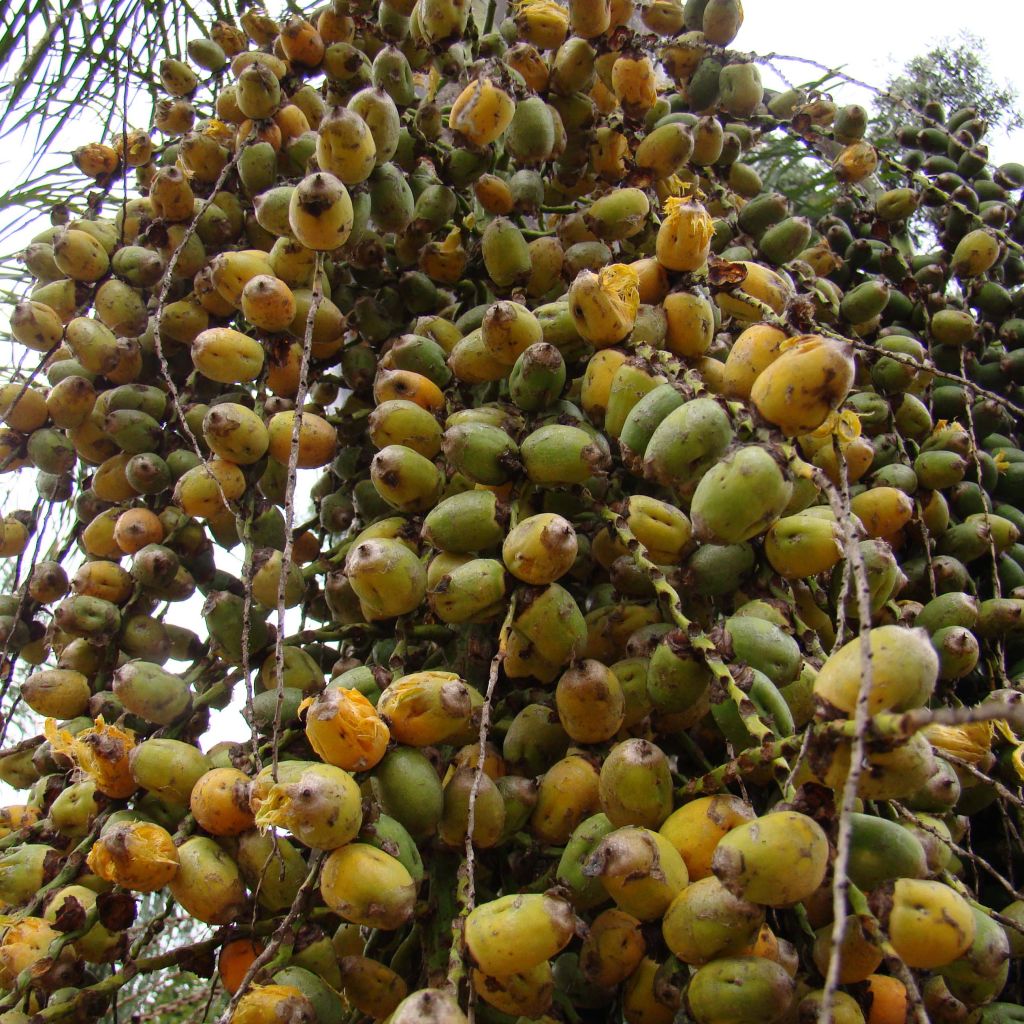
Syagrus romanzoffiana - Queen Palm
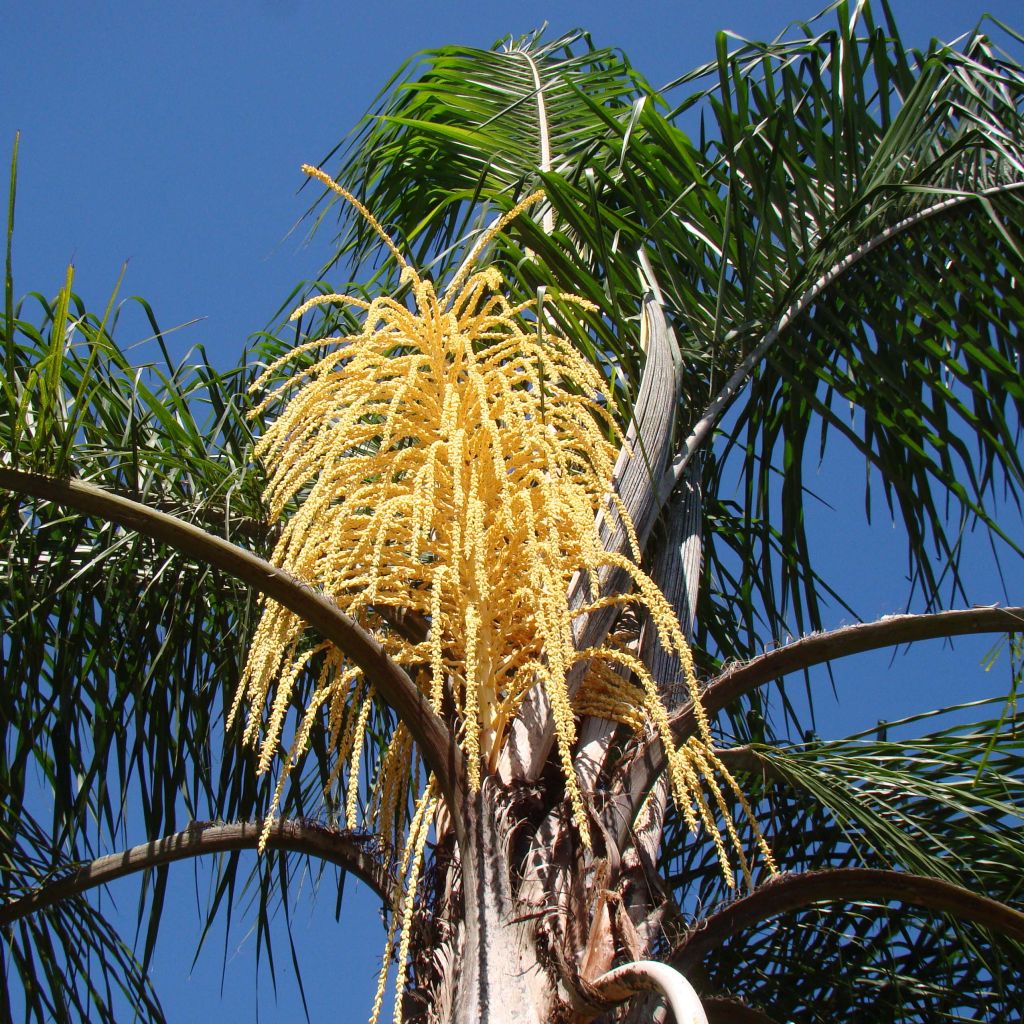
Syagrus romanzoffiana - Queen Palm
Syagrus romanzoffiana - Queen Palm
Syagrus romanzoffiana
Queen Palm, Cocos Palm
Excellent value for money
martine, 13/03/2025
Back-to-school special offer!
Get €10 off for every €50 you spend! And get up to €40 off on a single order.
How does it work?
1. Shop your favourites
Add your favourite plants to your basket. For every €50 you spend (excluding delivery charges, store credit and the plastic-free option), you’ll receive a €10 voucher.
€50 spent = €10 voucher
€100 spent = €20 voucher
€150 spent = €30 voucher
€200 spent = €40 voucher
2. Place your order
Once your basket reaches one of the spending thresholds, place your order. You can even choose your delivery date!
3. Receive your voucher
As soon as your order has been shipped, you’ll receive an email containing your personal voucher code and its value.
4. Use it on your next order
Your voucher is valid for 90 days from the date you receive it. It can be used once only, on a new order worth at least the value of the voucher, excluding delivery charges.
Please note: Vouchers can be combined with other offers, but cannot be split or refunded.
Home or relay delivery (depending on size and destination)
Important: You may be charged customs duties by your country’s customs authorities upon delivery.
Schedule delivery date
and select date in basket
This plant carries a 24 months recovery warranty
More information
We guarantee the quality of our plants for a full growing cycle, and will replace at our expense any plant that fails to recover under normal climatic and planting conditions.

Does this plant fit my garden?
Set up your Plantfit profile →
Description
Syagrus romanzoffiana, better known as the Queen Palm, is also called the Feathery Coconut Tree or the Romanzoff Coconut Tree, named after the person who discovered it in the humid subtropical regions of South America. With its tall, sturdy, and ringed trunk (stipe) and its large, feathery, and glossy fronds, it has a graceful and slender silhouette reminiscent of the coconut trees that line tropical coasts. It grows rapidly in fertile and moist soil, tolerates temperatures as low as -7°C (19.4 °F), and can withstand relatively poor soils. In summary, it needs water and warmth and thrives both on the Mediterranean coast and along the Bay of Biscay.
Syagrus romanzoffiana (synonyms Cocos romanzoffiana, Arecastrum romanzoffianum) belongs to the large family of Arecaceae. It is native to southern Brazil, Paraguay, and northeastern Argentina, and has been introduced to other regions of the world with favorable climates such as the Mediterranean or South Atlantic coast.
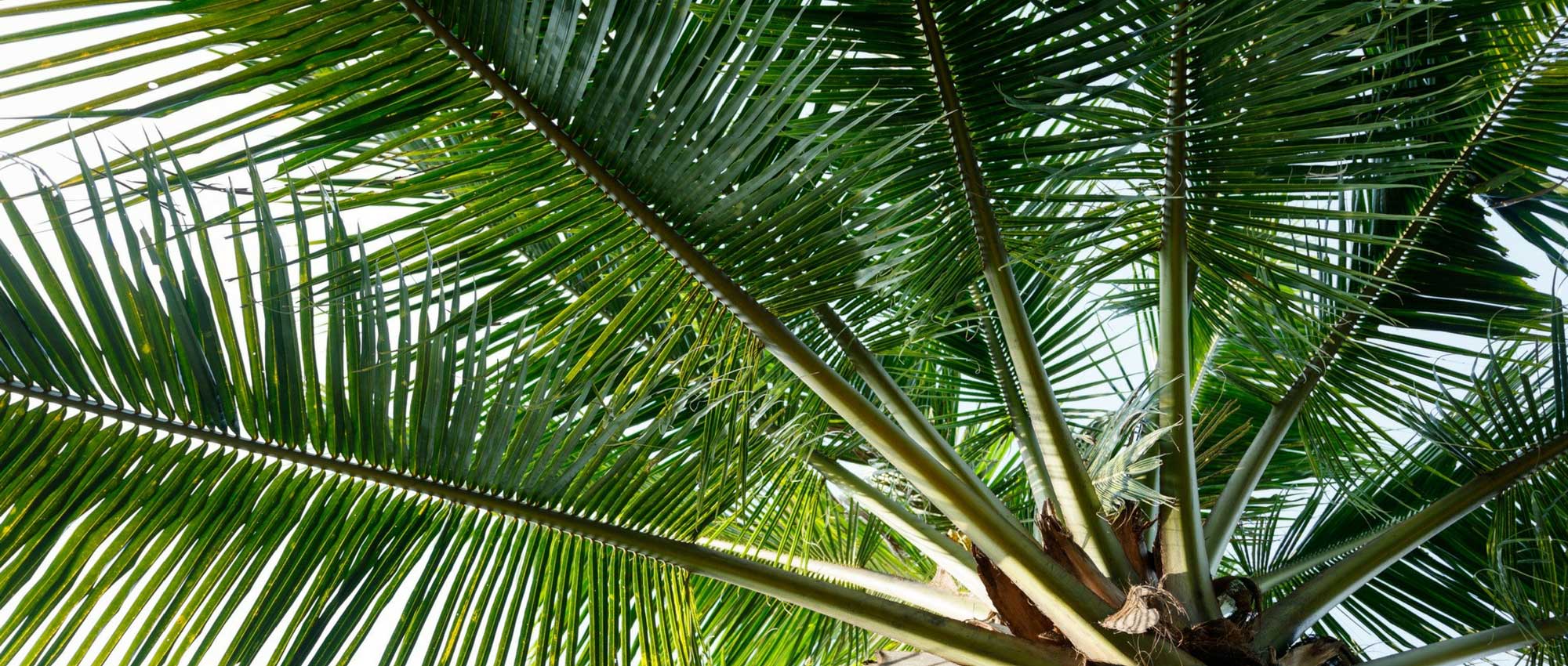
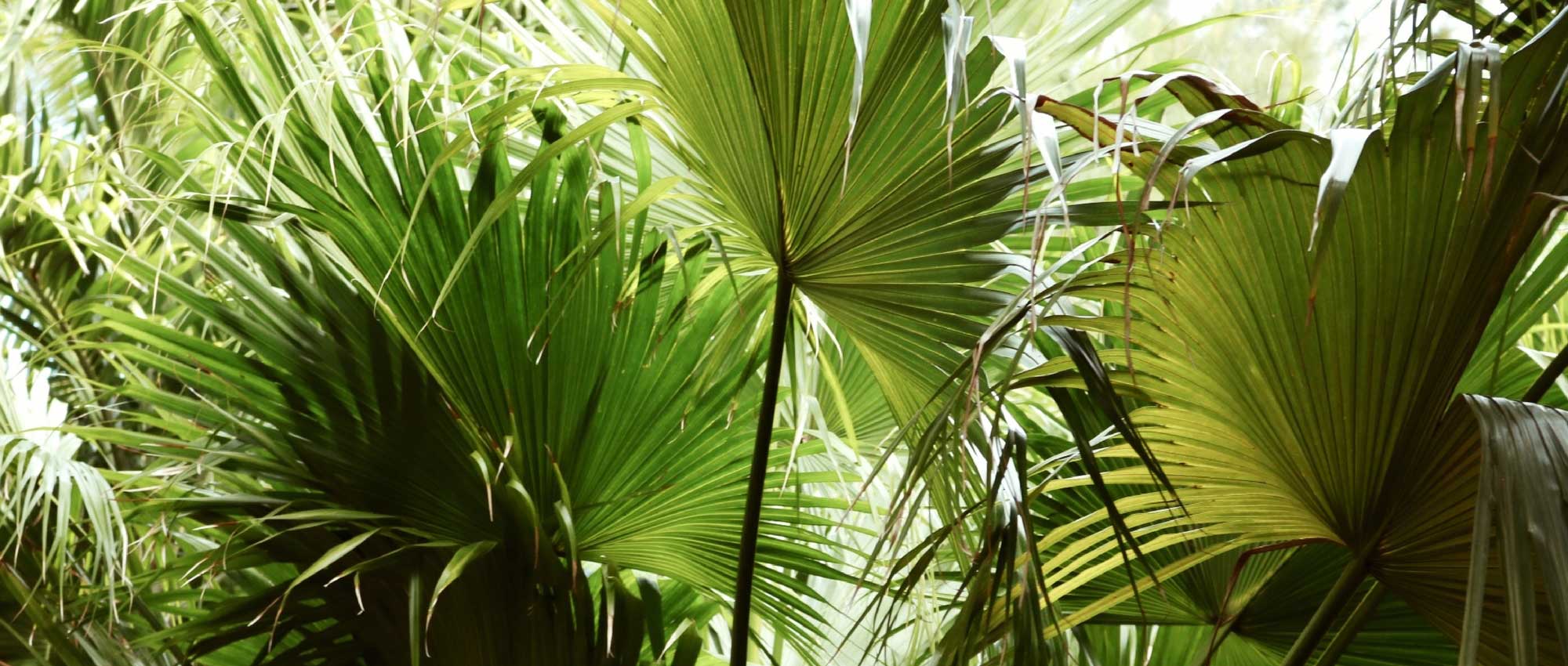
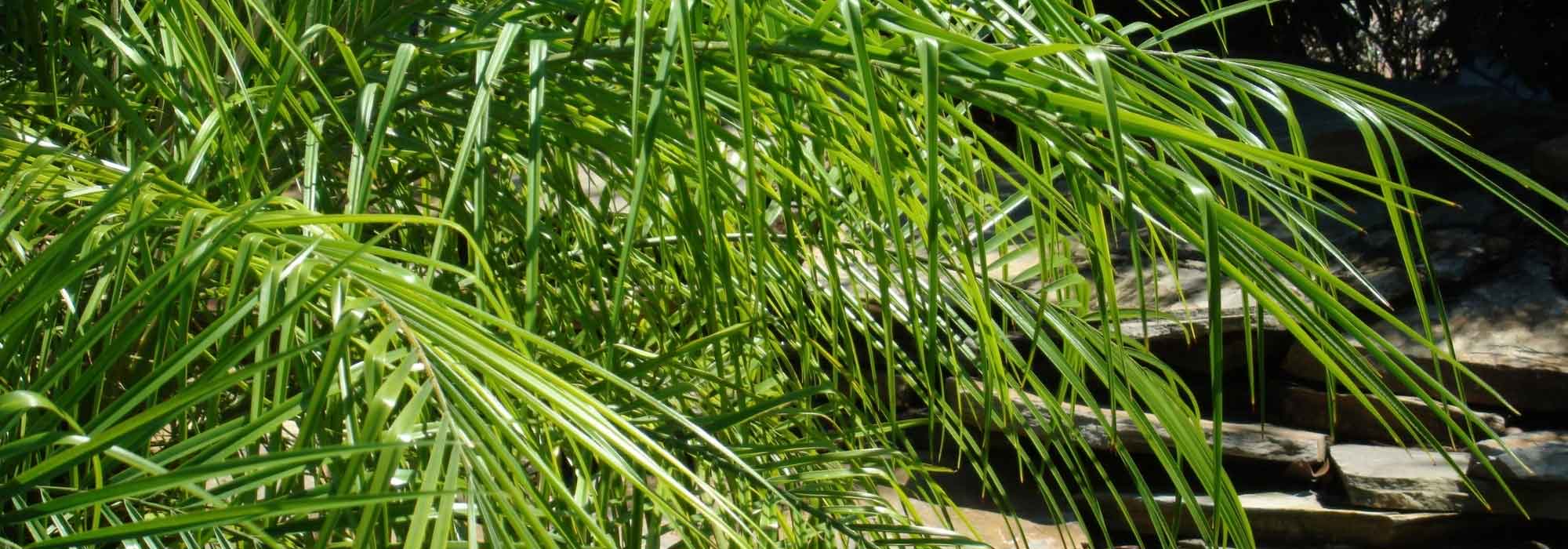
Its trunk, called the stipe, is solitary, greyish, and marked with rings, which are remnants of old petioles. Under our climate, it can reach a height of 12m with a diameter of 40cm (15.7in) when planted in the ground, but it will remain much smaller when grown in a container. At the top of the stipe, a crown composed of large palmate leaves, called fronds, 6m (19ft 8in) wide develops. Each leaf, which can reach a length of 3m (9ft 10in), is slightly pendulous and carried by a long petiole. It is composed of numerous narrow, leathery, and rigid pinnules, glossy green in colour. Flowering occurs at the end of summer, in the form of branched inflorescences that emerge between the leaves, with a different appearance depending on whether it is a male or female specimen. Male inflorescences are shorter and somewhat resemble brooms, while female inflorescences are long, pendulous, and adorned with small white-cream flowers. These flowers are followed by inedible but decorative fruits, ovoid and yellow, measuring 2 to 3cm (0.8 to 1.2in) in diameter.
The Queen Palm deserves a prominent place in a short grass meadow, but it also forms elegant rows in mild climates, including coastal areas. It requires space to fully express its beauty and grows quickly if it has an adequate supply of water and nutrients. It also tolerates container cultivation and makes a superb indoor plant for large, well-lit entrances, verandas, and temperate greenhouses. Widely cultivated on the French Riviera, it is gaining popularity among landscape professionals as well as amateur gardeners who appreciate exotic yet hardy plants, especially along the Atlantic coast of our country where it should thrive. It can sometimes be challenging to find suitable companions for it due to its strong personality. Reserve a corner by the pool and plant small evergreen shrubs like sage, Teucrium, and simple, flowering varieties at its base. Phormium, with its graphic, sleek, and colourful appearance, precise and geometric agaves, the almost metallic Astelia chathamica, Hakonechloa macra 'Aureola' turning orange in autumn, and the delicate and violet Verbena bonariensis will accompany it in a border that is both exotic and easy to maintain.
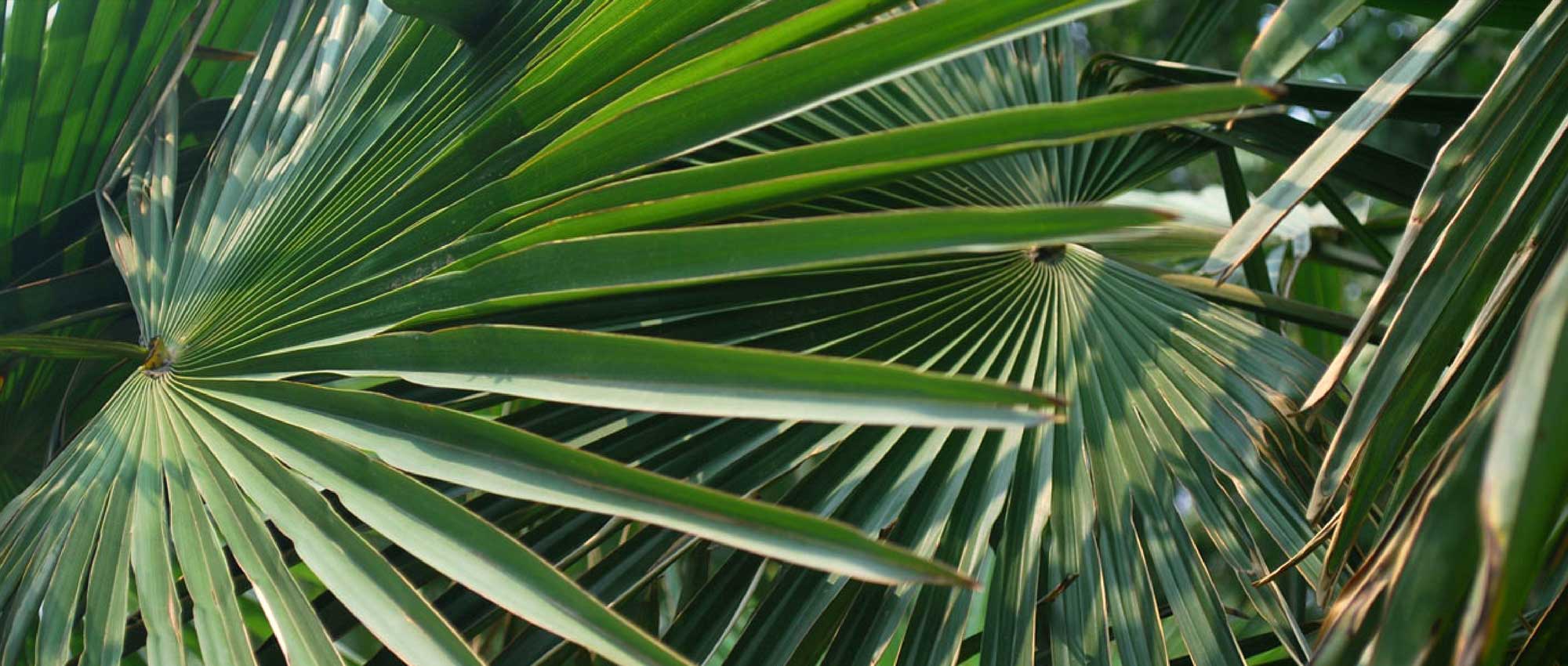
Syagrus romanzoffiana - Queen Palm in pictures
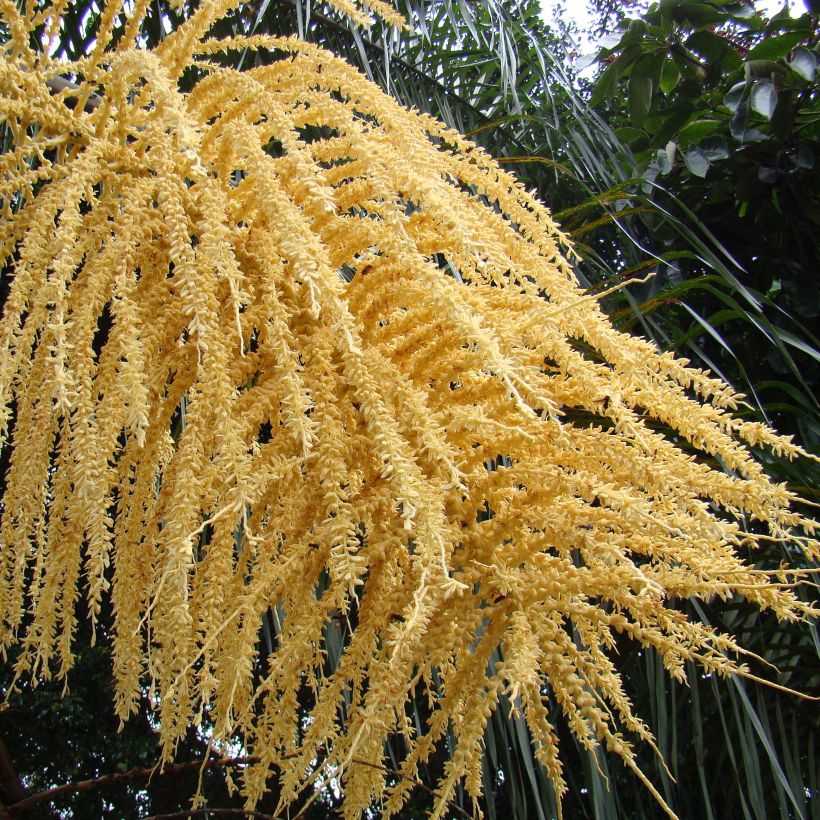
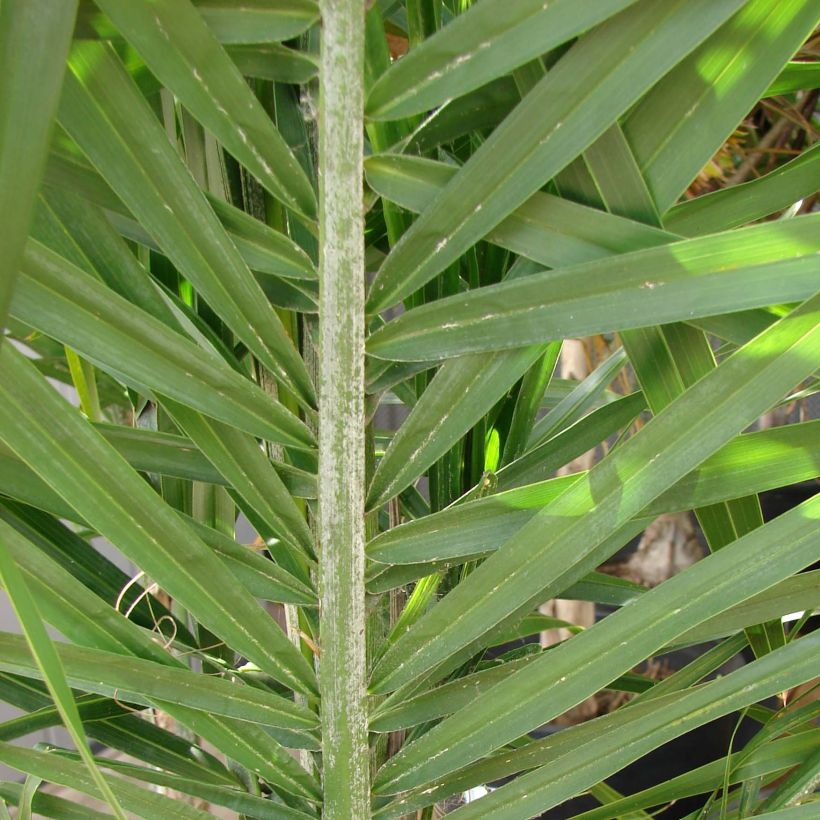
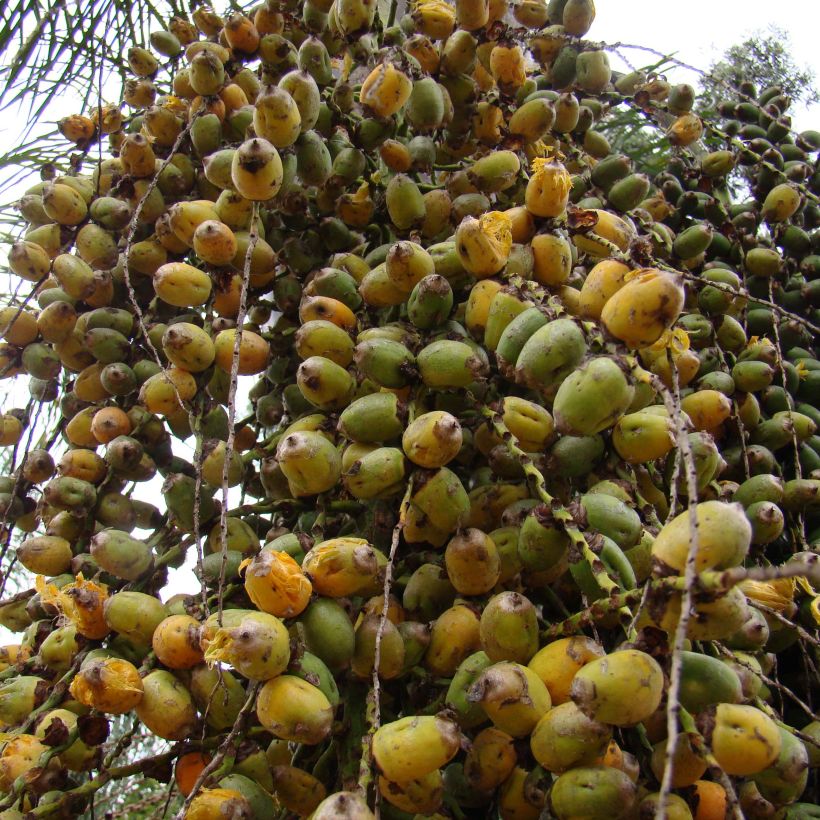
Plant habit
Flowering
Foliage
Botanical data
Syagrus
romanzoffiana
Arecaceae
Queen Palm, Cocos Palm
South America
Planting and care
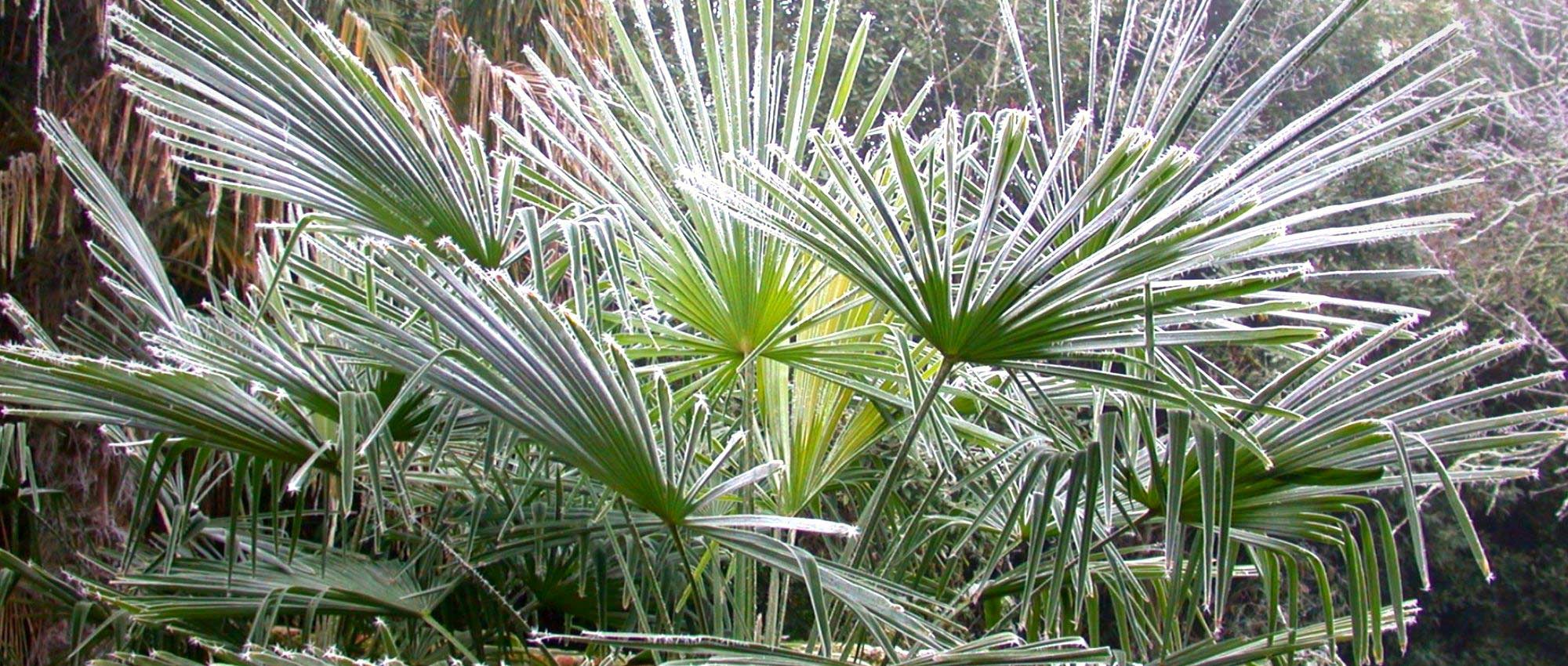
This palm tree shows quite rapid growth, particularly when regularly watered in a warm climate. It requires sun and heat, which will promote faster shoot growth. Plant the Queen Palm in the ground in mild climates, or in a very large pot to overwinter in other regions. It is capable of withstanding short frosts of around -7, or even -10°C (14 °F), but should be protected in case of severe cold, by tightly binding the crown of leaves to protect the heart of the plant. Install it in the sun, in ordinary but well-worked, well-tilled and well-drained soil, even poor but remaining moist in summer. It is indifferent to soil type, but prefers deep and light soils. It fears drought. Install it in a sunny location and protect it from cold and dry winds. Water regularly, especially if summer is dry. Easy to grow, it requires little maintenance except for pruning the oldest leaves close to the palm stem.
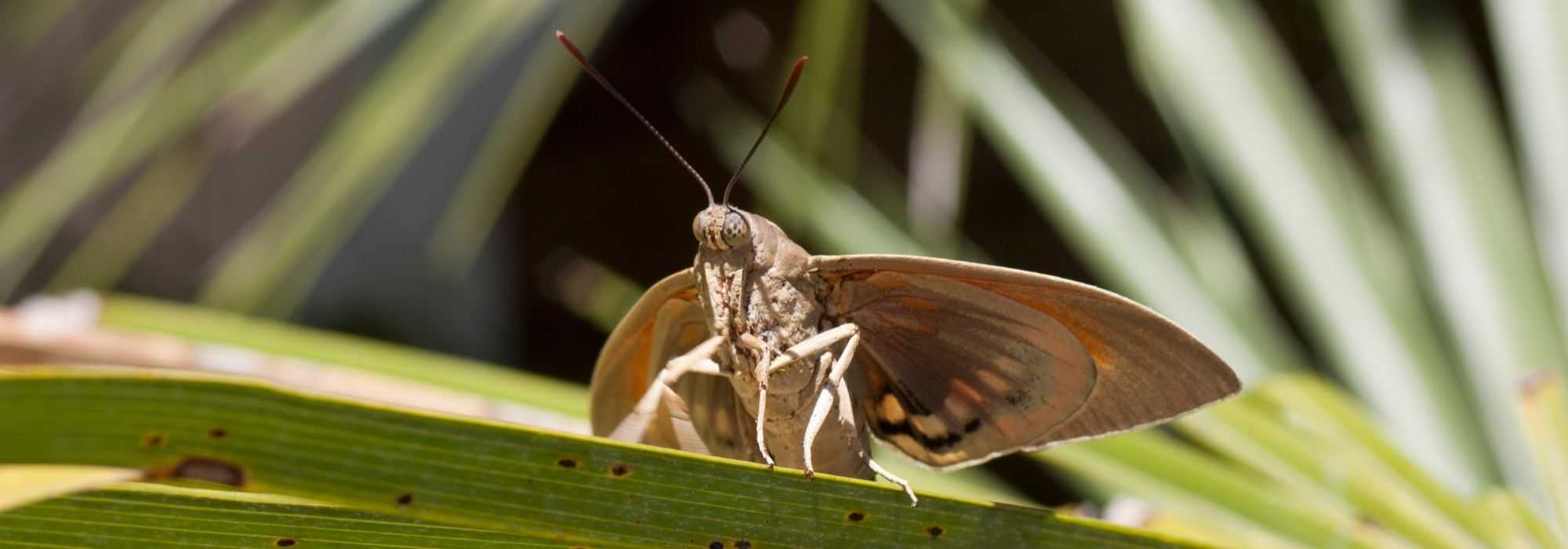
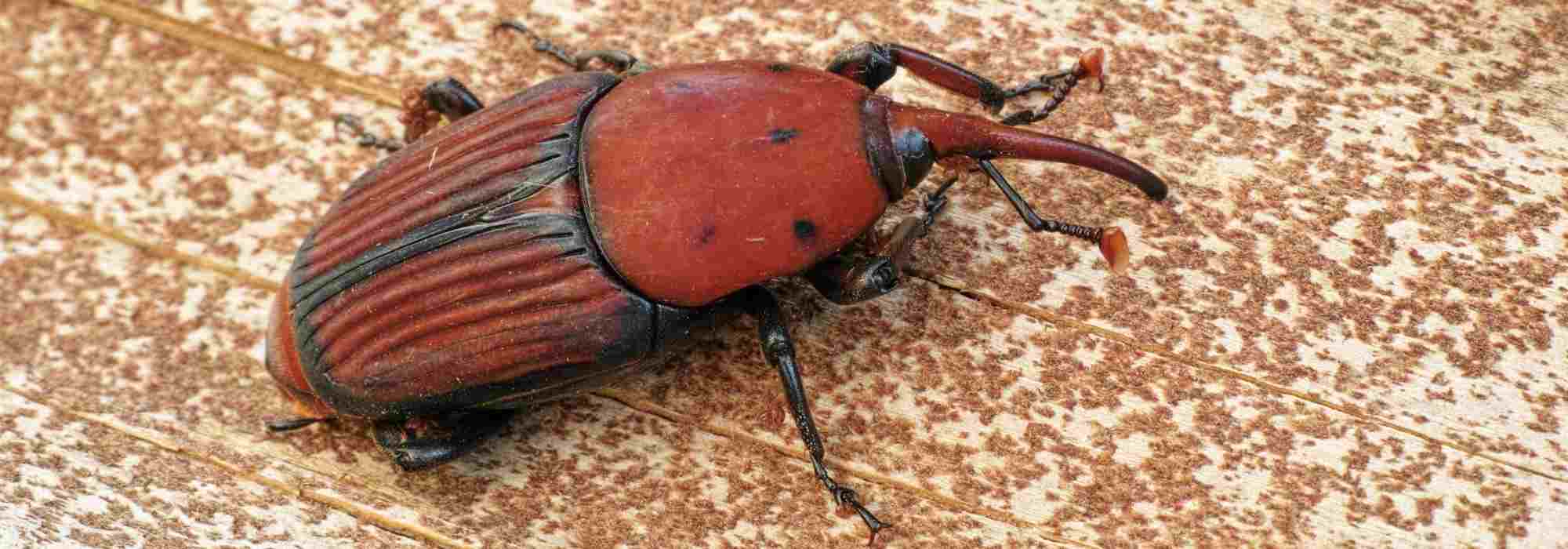
In the PACA region, where they are often planted, as well as throughout the south of France and Spain, large palm trees are victims of parasites such as the worm of the dreaded and widespread Paysandra archon, a large butterfly that thrives even in England. Specific treatments are now available as a preventive measure. The red palm weevil (Rhynchophorus ferrugineus) has been present in our territory since 2006. The symptoms are as follows: cut, dried or yellowing leaves. These pests attack numerous palm species, with a fatal outcome: the leaves irreversibly and completely dry out as soon as the heart of the stem hosts larvae.
Propagation: by sowing fresh seeds that germinate quite quickly, sometimes a few days after sowing, most often after 1 to 2 months. The young plants develop slowly during the first three years, then their growth accelerates (this is the rule for most palm trees), especially in fertile and moist soil.
Planting period
Intended location
Care
Planting & care advice
-
-
-
-
-

-
-

-
-
, onOrder confirmed
Reply from on Promesse de fleurs
Recently viewed products
Haven't found what you were looking for?
Hardiness is the lowest winter temperature a plant can endure without suffering serious damage or even dying. However, hardiness is affected by location (a sheltered area, such as a patio), protection (winter cover) and soil type (hardiness is improved by well-drained soil).
In temperate climates, pruning of spring-flowering shrubs (forsythia, spireas, etc.) should be done just after flowering.
Pruning of summer-flowering shrubs (Indian Lilac, Perovskia, etc.) can be done in winter or spring.
In cold regions as well as with frost-sensitive plants, avoid pruning too early when severe frosts may still occur.
The harvesting period indicated on our website applies to countries and regions in USDA zone 8 (France, England, Ireland, the Netherlands).
In colder areas (Scandinavia, Poland, Austria...) fruit and vegetable harvests are likely to be delayed by 3-4 weeks.
In warmer areas (Italy, Spain, Greece, etc.), harvesting will probably take place earlier, depending on weather conditions.
The sowing periods indicated on our website apply to countries and regions within USDA Zone 8 (France, UK, Ireland, Netherlands).
In colder areas (Scandinavia, Poland, Austria...), delay any outdoor sowing by 3-4 weeks, or sow under glass.
In warmer climes (Italy, Spain, Greece, etc.), bring outdoor sowing forward by a few weeks.
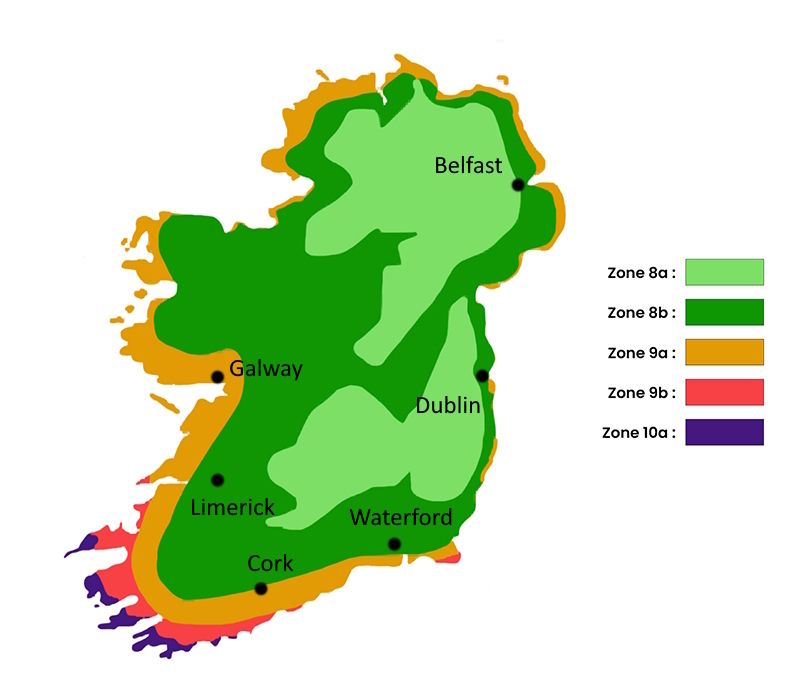
The planting period indicated on our website applies to regions in USDA Zone 9a (East Coast and Midlands: Dublin, Wexford, Waterford, Kilkenny, Portlaoise). It will vary depending on where you live:
- On the west coast and in the north-west (Galway, Limerick, Sligo, Donegal, Westport), delay planting by 1 to 2 weeks in spring and bring it forward by 1 to 2 weeks in autumn compared to the dates given, preferably choosing periods without strong winds.
- In the inland hills and plateaus (Wicklow Mountains, Macgillycuddy’s Reeks, Connemara, Killarney), it is best to plant in spring (April–May) or autumn (September–October), avoiding periods of waterlogged soil in winter and strong winds, which pose the main risk to newly planted trees in these areas.
The flowering period indicated on our website applies to regions in USDA Zone 9a, such as the East Coast and Midlands, including Dublin, Wexford, Waterford, Kilkenny and Portlaoise.
This will vary depending on where you live:
- On the west coast and in the northwest (Galway, Limerick, Sligo, Donegal and Westport), it will be delayed by one to two weeks compared to the given dates, due to stronger Atlantic winds and less spring sunshine.
- In the inland hills and plateaus (the Wicklow Mountains, the Macgillycuddy's Reeks, Connemara and Killarney), flowering will be delayed by two to three weeks. Flowering mainly occurs between May and July, with the limiting factors being less frost and more of the excessive humidity, strong winds and lack of sunshine that are characteristic of these areas.
Shipping country and language
Your country of residence may be:
Your country of residence is:
For a better user experience on our website, you can select:
Your shipping country:
-
 Austria
-
 Belgium
-
 Bosnia & Herzegovina
-
 Bulgaria
-
 Croatia
-
 Cyprus
-
 Czechia
-
 Denmark
-
 Estonia
-
 Finland
-
 France
-
 Germany
-
 Greece
-
 Hungary
-
 Iceland
-
 Ireland
-
 Italy
Italy
-
 Latvia
-
 Liechtenstein
-
 Lithuania
-
 Luxembourg
-
 Malta
Malta
-
 Netherlands
-
 Poland
-
 Portugal
-
 Romania
-
 Serbia
-
 Slovakia
-
 Slovenia
-
 Spain
Spain
-
 Sweden
-
 Switzerland
Language:
-
French
-
 English
-
Spanish
-
Italian
-
German
-
Portuguese
-
Dutch
-
Finnish
My Account
Hello
My wish lists
My cart
Log in / Register
Existing customer?
This form is protected by reCAPTCHA - the Google Privacy Policy and Terms of Service apply.
New customer?
Create an account to track your orders, access our customer service and, if you wish, make the most of our upcoming offers.