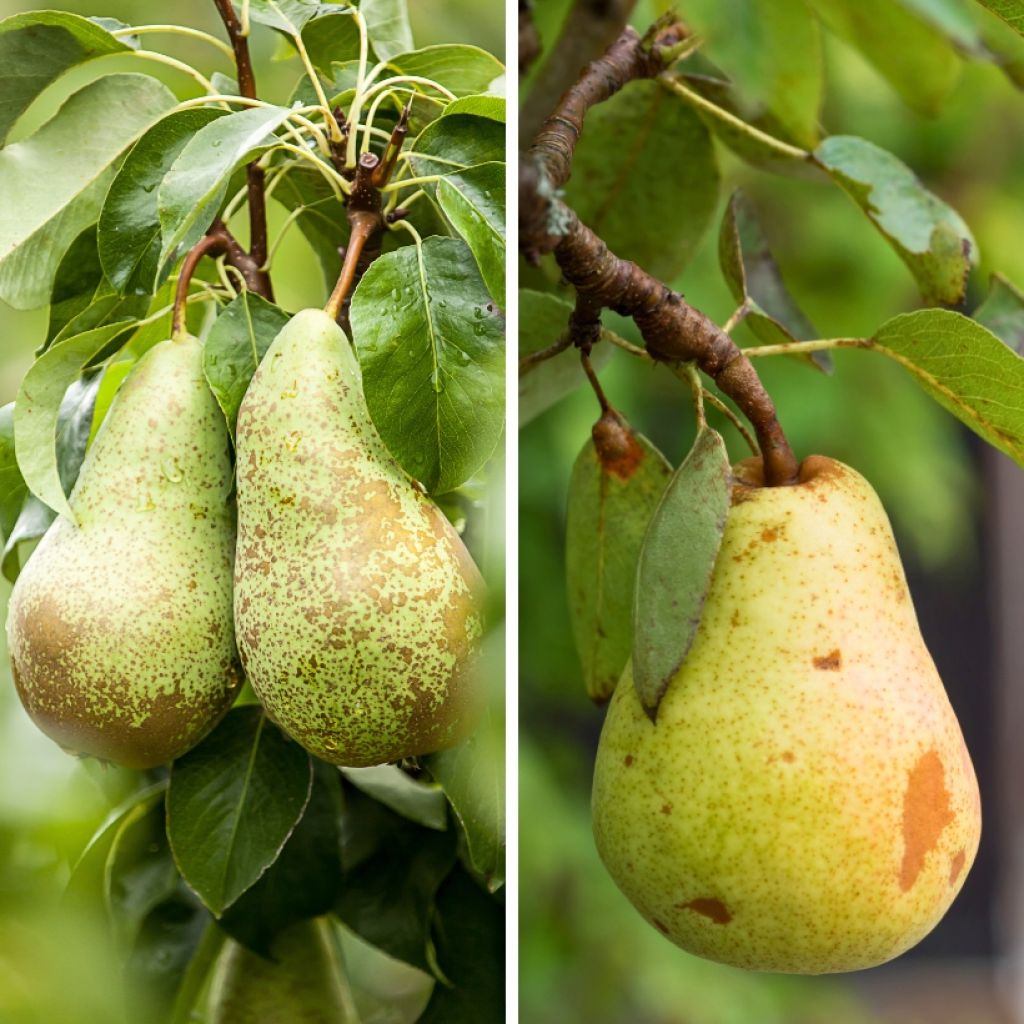
Pear tree Duo - Pyrus communis Conference and Williams
Pear tree Duo - Pyrus communis Conference and Williams
Pyrus communis Conférence, Williams
Back-to-school special offer!
Get €10 off for every €50 you spend! And get up to €40 off on a single order.
How does it work?
1. Shop your favourites
Add your favourite plants to your basket. For every €50 you spend (excluding delivery charges, store credit and the plastic-free option), you’ll receive a €10 voucher.
€50 spent = €10 voucher
€100 spent = €20 voucher
€150 spent = €30 voucher
€200 spent = €40 voucher
2. Place your order
Once your basket reaches one of the spending thresholds, place your order. You can even choose your delivery date!
3. Receive your voucher
As soon as your order has been shipped, you’ll receive an email containing your personal voucher code and its value.
4. Use it on your next order
Your voucher is valid for 90 days from the date you receive it. It can be used once only, on a new order worth at least the value of the voucher, excluding delivery charges.
Please note: Vouchers can be combined with other offers, but cannot be split or refunded.
Why not try an alternative variety in stock?
View all →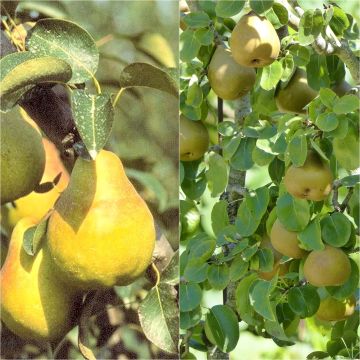
Available in 0 sizes
Available in 0 sizes
Available in 0 sizes
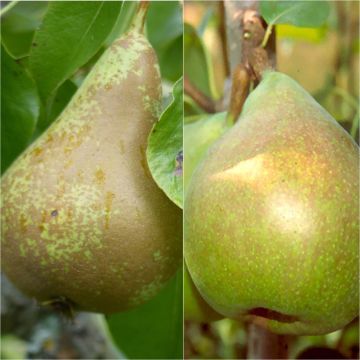
Available in 0 sizes
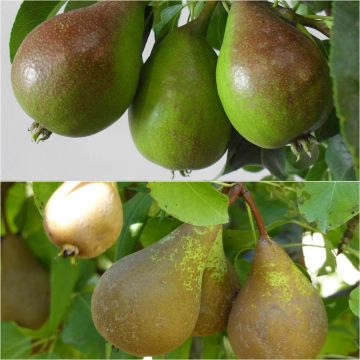
Available in 0 sizes
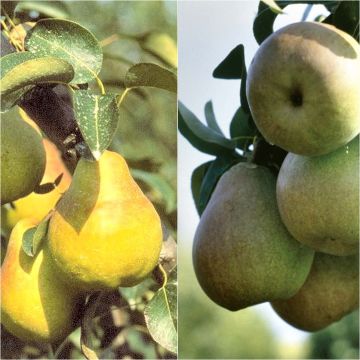
Available in 0 sizes
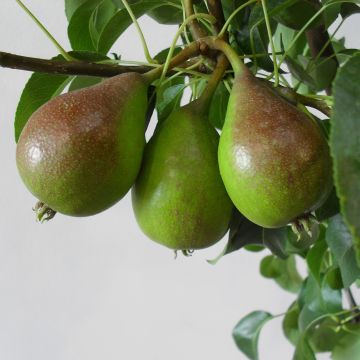
Available in 1 sizes
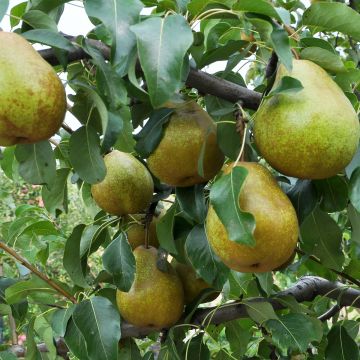
Available in 1 sizes
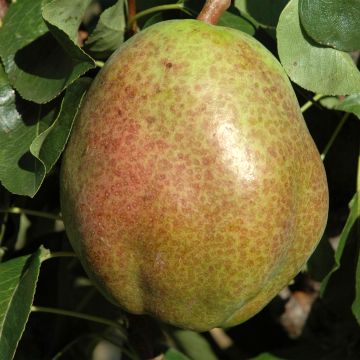
Available in 1 sizes
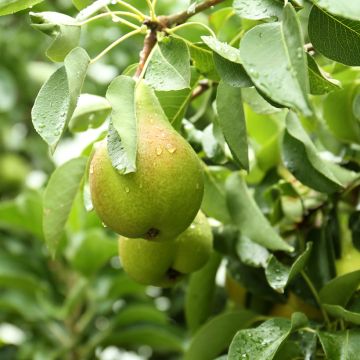
Available in 1 sizes
This plant carries a 12 months recovery warranty
More information
We guarantee the quality of our plants for a full growing cycle, and will replace at our expense any plant that fails to recover under normal climatic and planting conditions.
Description
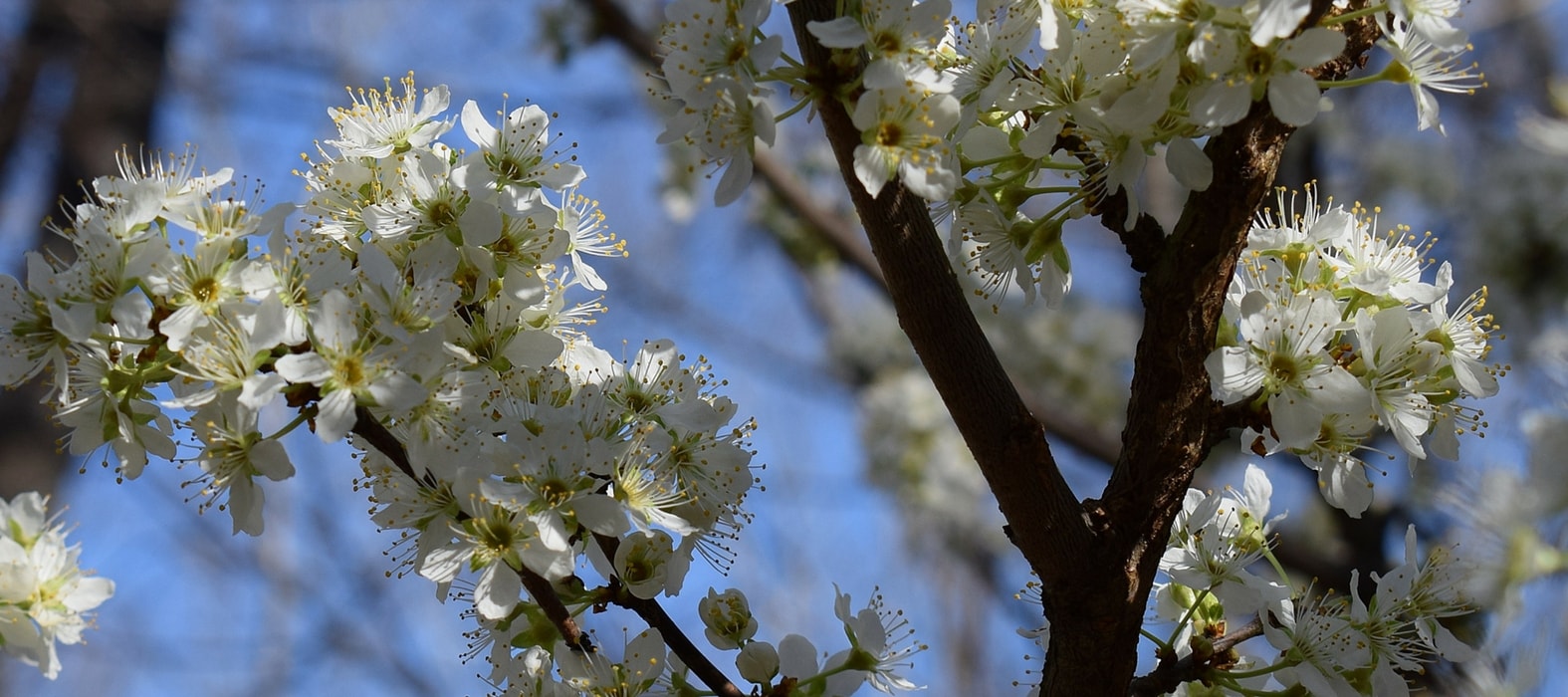
The 'Conference' and Williams' duo pear tree offers flavourful fruits harvested from mid-August until November. These two complementary varieties, grafted in a Y-shape onto the same trunk, have overlapping spring flowering periods. They mutually pollinate, ensuring an abundant and high-quality harvest. This very ornamental, "two-in-one" pear tree boasts an intense white blossom before the foliage appears. The tree also displays beautiful autumn colours. The very hardy and adaptable pear tree can be cultivated in many regions, including at higher altitudes. It can be used as a standalone specimen on a lawn, at the back of a flowerbed, within an orchard, or as part of a fruit hedge.
This tree combines two grafts:
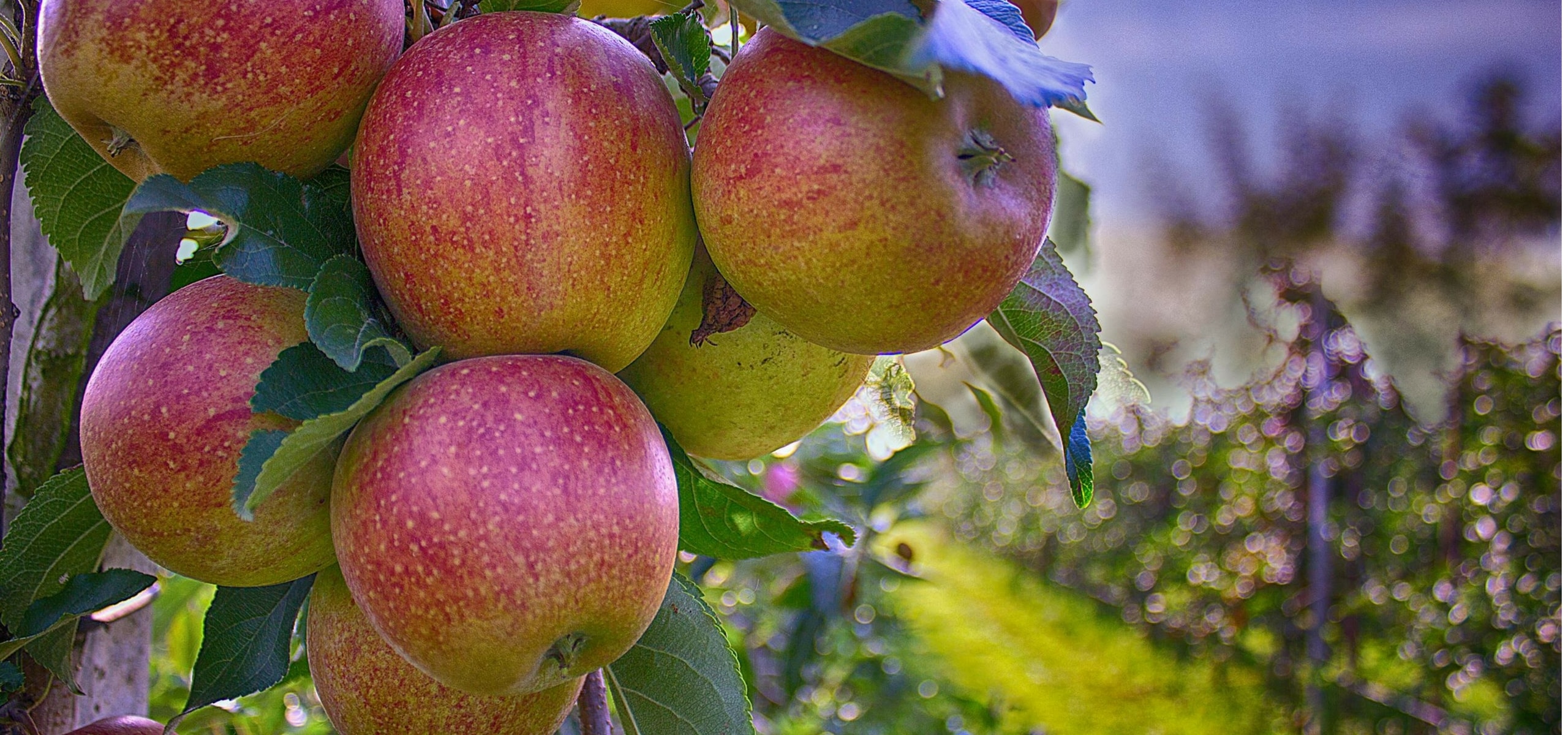
- A 'Conference' Pear graft: An old variety, highly prized in Europe. It flowers in early April, producing a multitude of small, nectar-rich, white flowers, sensitive to late frosts. The fruits are elongated, with thin, rough green skin that turns yellow-bronze when ripe. Their flesh is melting, juicy, and sweet, with a slight musky aroma. Harvested from September to October, the 'Conference' pear stores easily for several weeks in a cellar or cold room. It can be enjoyed both raw and cooked, in pastries or as an accompaniment to sweet-savoury dishes.
- A Williams' Pear graft: A slightly later-flowering variety, around mid-April, also offering generous and decorative blooms. Its fruits are rounded, with smooth, thin, light green skin, turning golden yellow when ripe. Their flesh is very melting, juicy, and fragrant, with a distinctive sweet-tart flavour. Harvest from August to September, slightly earlier than the 'Conference'. Highly prized for compotes, juices, and brandies, the 'Williams' pear is also delicious when eaten fresh.
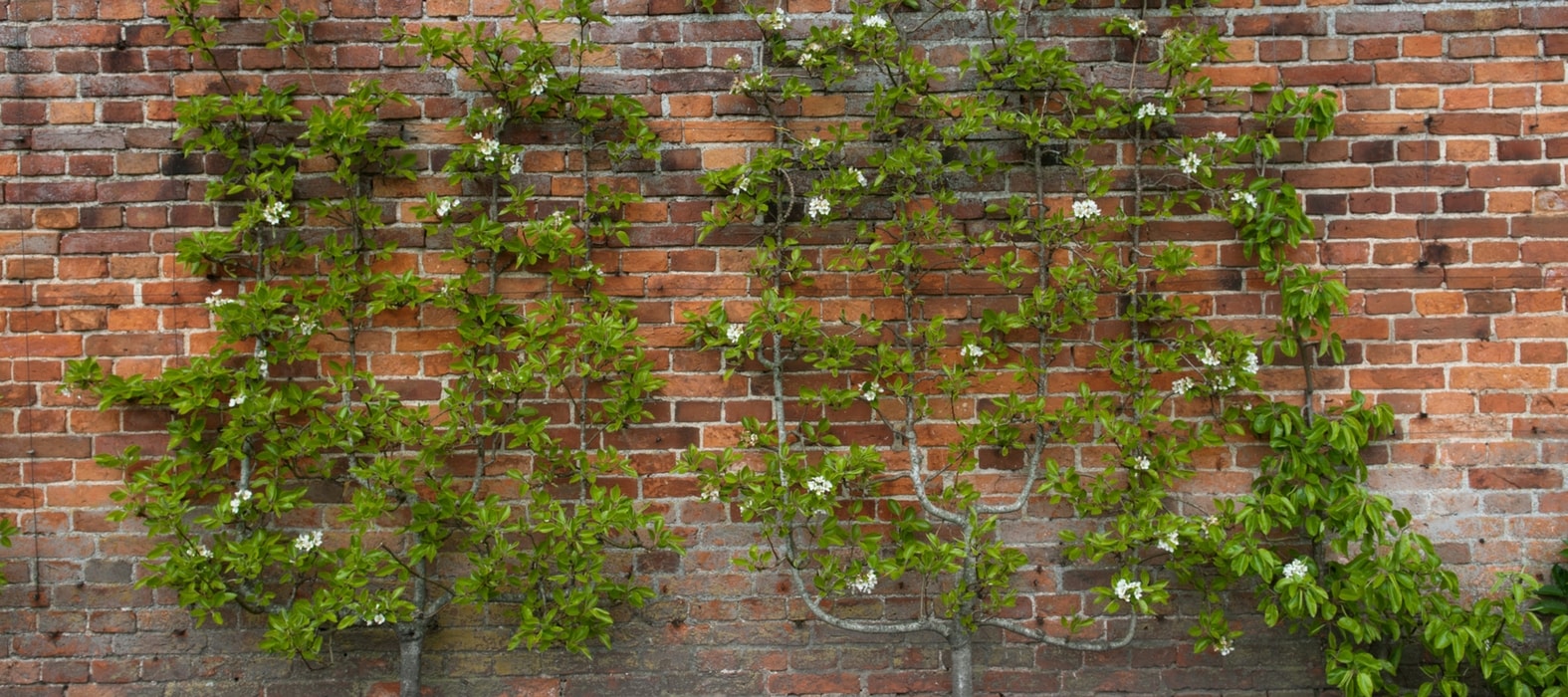
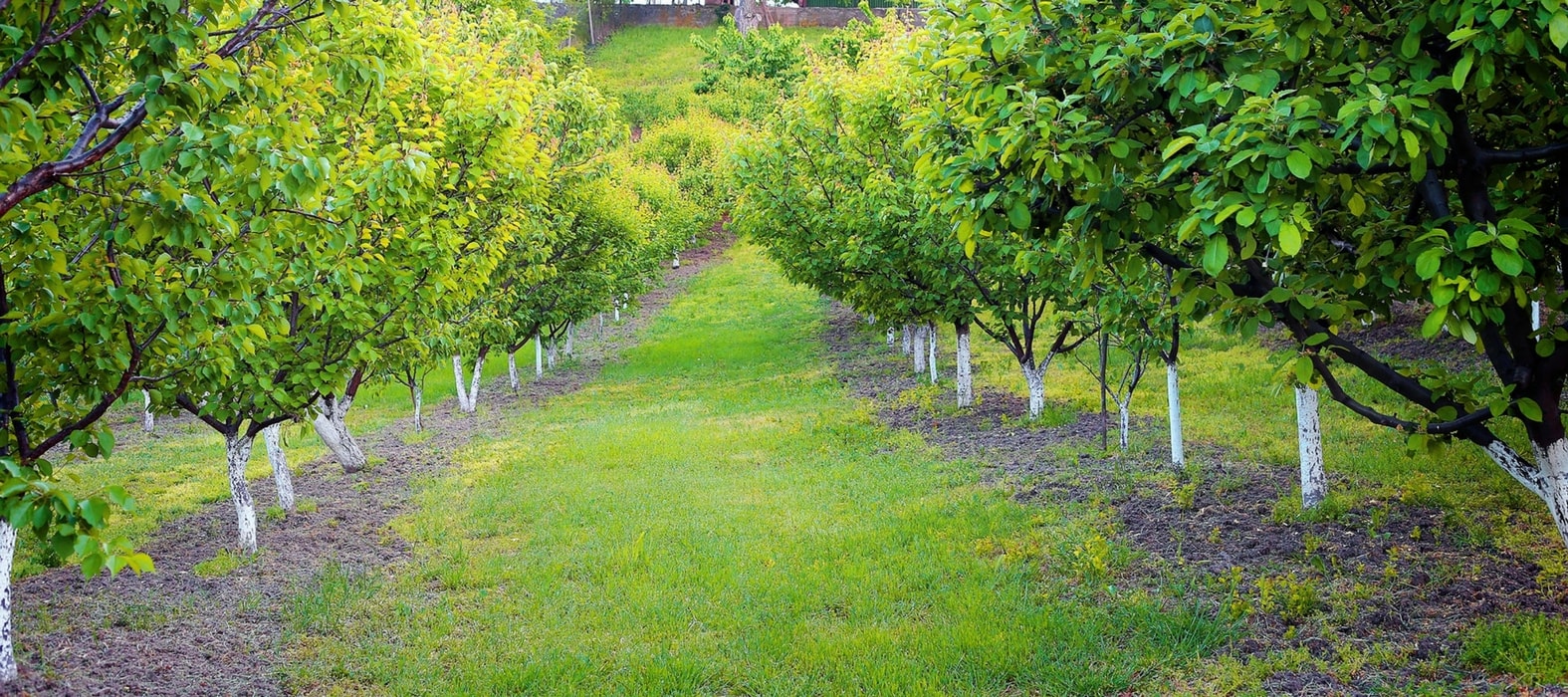
Pyrus communis (the common pear) belongs to the Rosaceae family, like the apple tree and the quince tree. Native to Europe and Western Asia, it has been cultivated since antiquity for the quality of its fruits. The 'Conference' pear was developed in England in 1894 by Thomas Francis Rivers. Its name comes from an award won at the British National Pear Conference. Valued for its disease resistance, good storage qualities, and ability to produce fruit even in cooler climates, it is now one of the most widely grown varieties in Europe. The 'Williams' pear, also known as the 'Williams' Bon Chrétien', was discovered in the 18th century in England and popularised in France by Abbé Hardenpont. Its unmistakable fragrance and ultra-melting flesh make it a must-have variety, both for fresh consumption and for processing into juices or brandy. This Y-grafted pear tree develops a slender and balanced silhouette, reaching approximately 4 to 5 metres in height at maturity. It is suitable for both free-standing forms and espalier training, ideal for optimising space in a small garden. Its deciduous, ovate, dark green, slightly glossy leaves turn beautiful golden hues in autumn. Flowering occurs in spring, between early and mid-April, with an abundance of delicately scented, white flowers. Though sensitive to late frosts, this flowering is nevertheless very abundant, ensuring good fruit set. Thanks to the presence of two varieties on the same tree, cross-pollination is optimised, promoting better yields. Hardy down to -20°C, this pear tree adapts to many climates and thrives in deep, moist, well-drained soils.
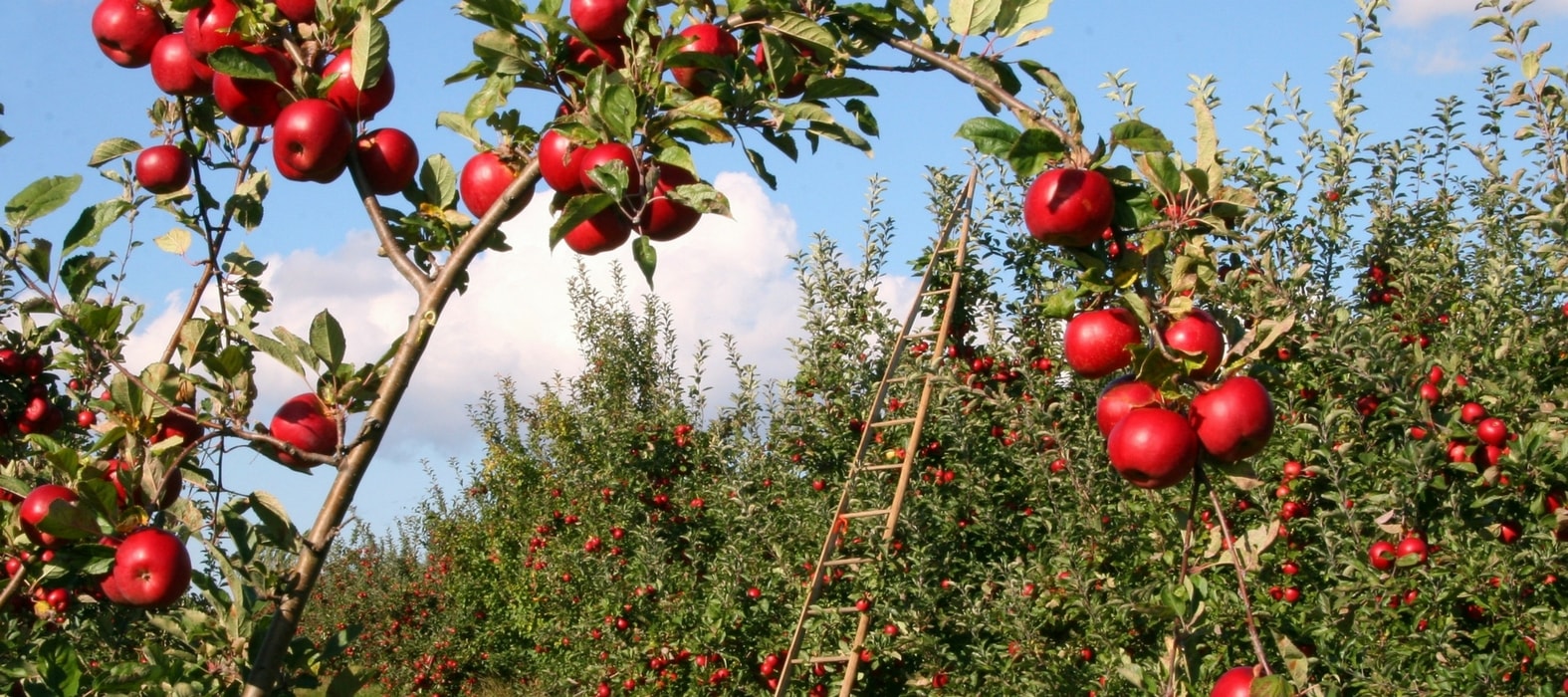
This Duo pear tree allows for an extended harvest, offering delicious fruits from late August to early November. The earlier 'Williams' pear is harvested between August and September. It is delicate and highly fragrant, perfect for eating fresh, as well as for juices, compotes, jams, or brandy. Its melting, juicy flesh makes it a staple for desserts, particularly tarts and Poires Belle-Hélène. The later 'Conference' pear reaches maturity between September and October. It is ideal for eating fresh, thanks to its fine, sweet flesh. Highly valued for its good storage qualities, it can be kept for several weeks in a cool place. When cooked, it pairs wonderfully with sweet-savoury dishes, particularly alongside cheeses (Roquefort, Bleu d'Auvergne) or meats like duck and pork. A mature pear tree (between 10 and 20 years old) can produce 30 to 50 kg of fruit per year, ensuring a bountiful harvest season after season.
Bursting with juice, the pear is a refreshing and thirst-quenching fruit. Its generous flesh provides lasting satiety. It is moderately calorific and a good source of potassium, calcium, and magnesium, while also providing a notable amount of iron. Thanks to its richness in vitamins C and E, antioxidants, and fibre, it is a healthy choice. Toning and revitalising, it contributes to the body's hydration.
Pears can be stored for a few weeks after harvest, but rarely beyond mid-November. To optimise storage, it is advisable to keep them in a cool, dry place away from light, at a temperature between 8 and 10°C. They can also be placed in an airtight cold room, where they will keep longer, between 1 and 3°C.
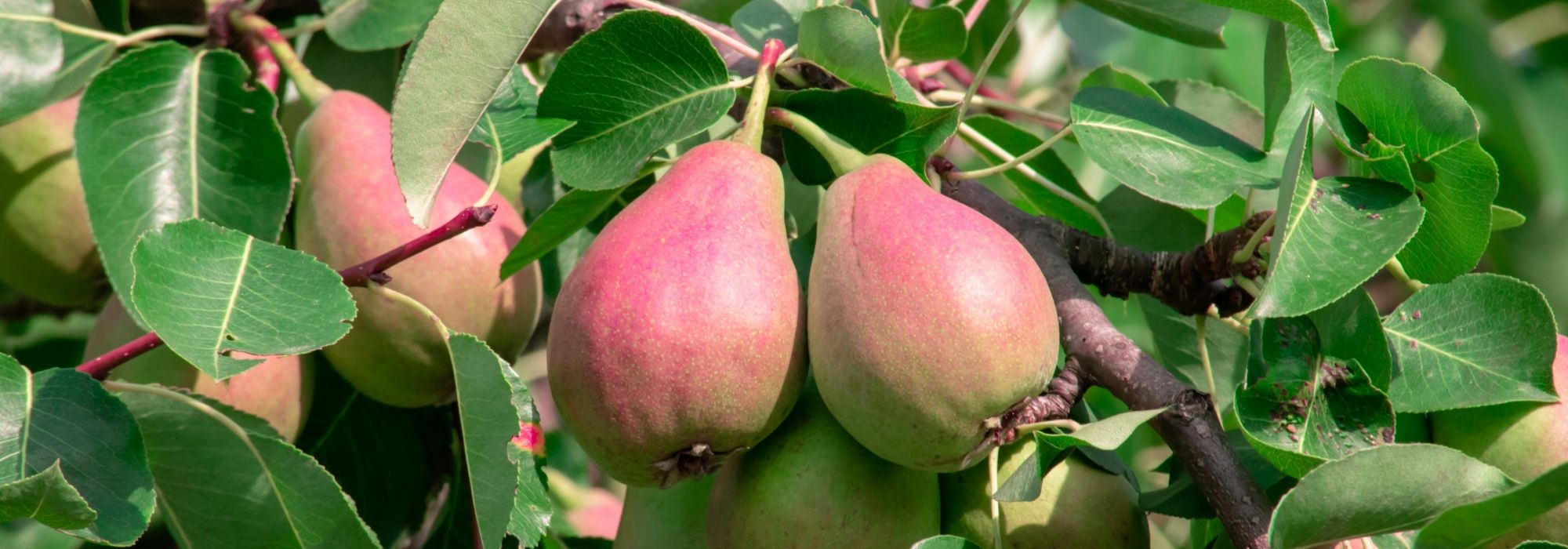
Pear tree Duo - Pyrus communis Conference and Williams in pictures
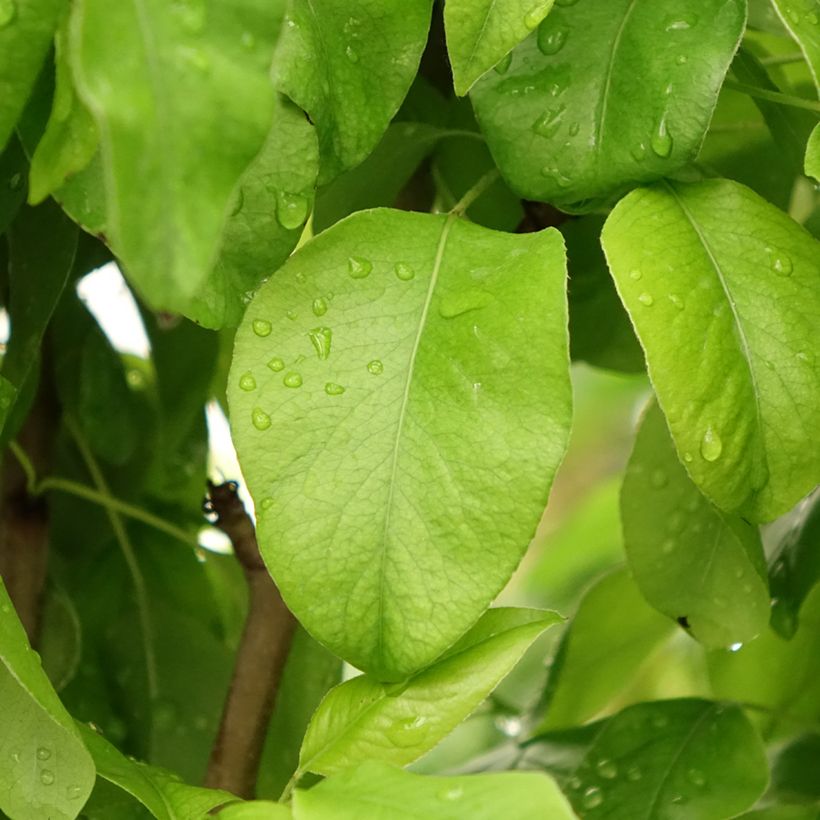
Plant habit
Fruit
Flowering
Foliage
Planting and care
Your Duo Pear Tree 'Conference' and 'Williams' should be planted in a spot sheltered from prevailing winds, especially in the north, and preferably in full sun. The pear tree thrives in moist, rich soils without waterlogging but does not appreciate overly dry or chalky soils. Pear trees, like all fruit trees, are ideally planted between October and March, avoiding frost periods. Trees supplied in containers can be planted year-round, except during extreme heat or frost.
To plant, loosen the soil deeply, remove stones and weeds. Add some gravel if needed to improve drainage. Dig a wide planting hole at least 3 times the size of the root ball. Separate the topsoil from the subsoil. Mix crushed horn and organic matter (compost, well-rotted manure, etc.) with the subsoil and place this mixture at the bottom of the hole. Position the root ball, backfill with topsoil without burying the graft union, and firm gently. Water thoroughly (around 10 litres). Staking the pear tree may be beneficial using a guy-wire system: place three stakes in a triangle 50 cm around the trunk, connecting them with pieces of wood. Protect the bark with rubber padding and secure the stakes to the trunk with wire. Alternatively, you can train it against a support (such as a U-shaped or Verrier espalier).
For maintenance, apply well-rotted compost to the surface every autumn. In winter, add a small spadeful of wood ash, rich in potash, to improve fruiting. Hoe around the base if needed. Water regularly, depending on your climate, for the first two to three years.
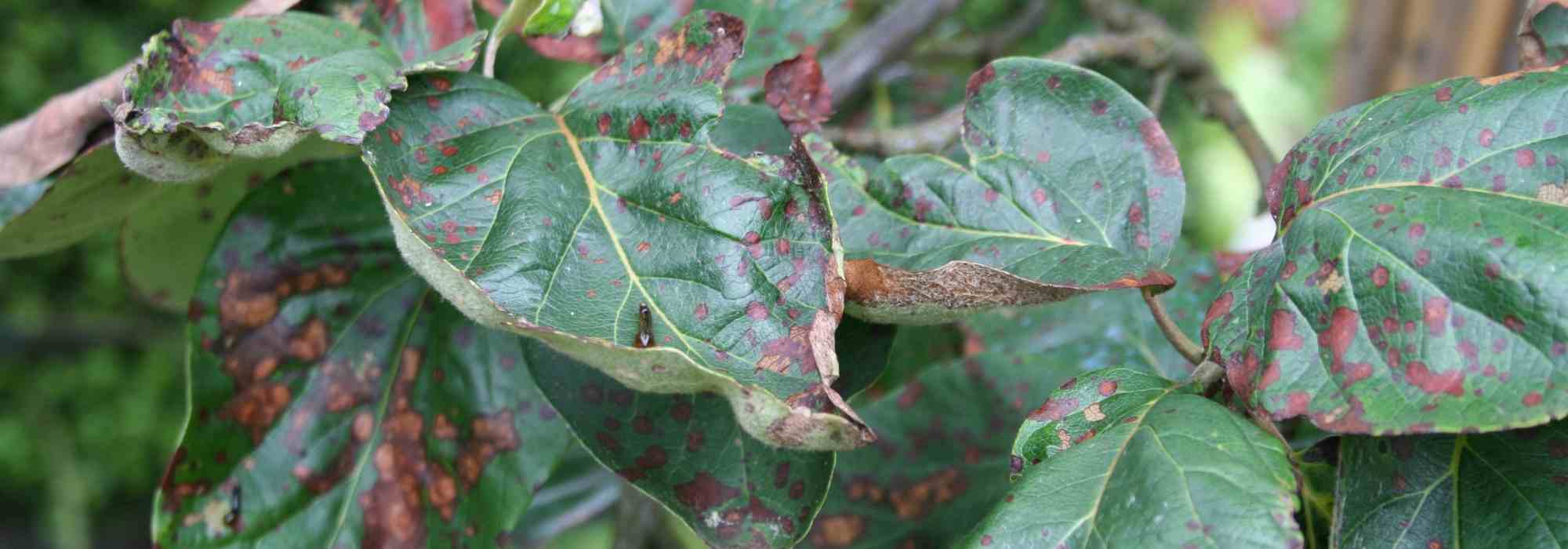
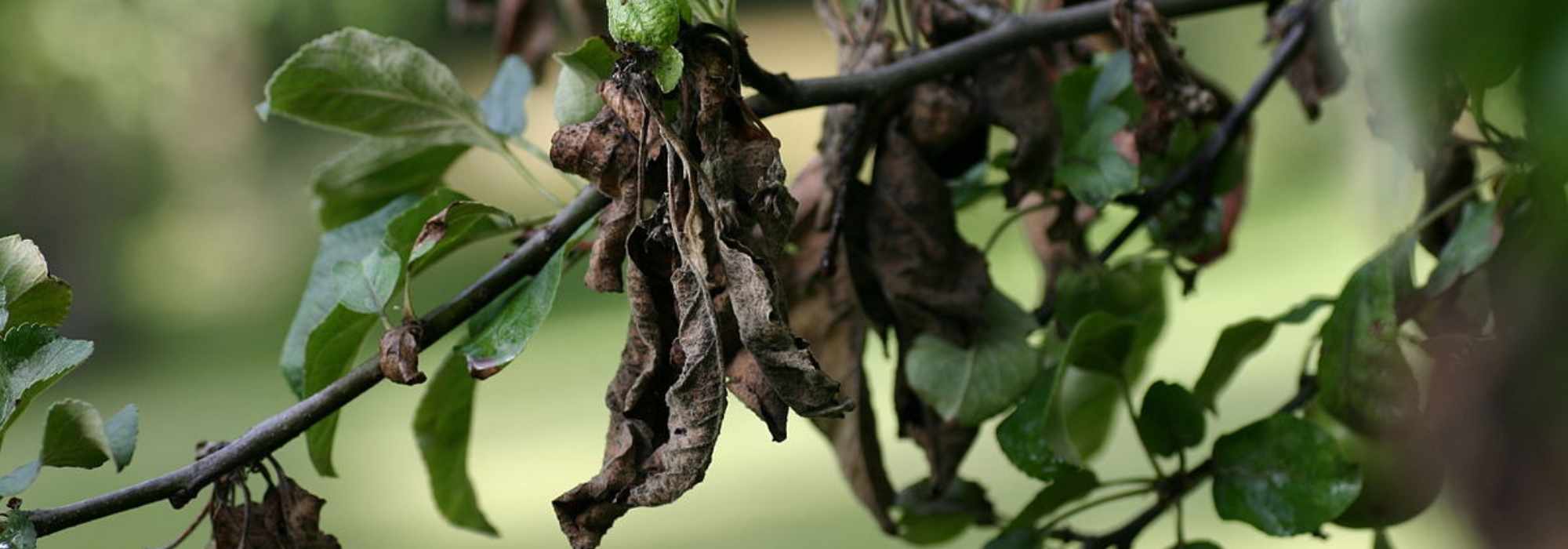
Pear trees can be susceptible to various diseases and pests. To prevent scab (brown spots on leaves), brown rot (withering of flowers and fruit rot on the tree), and powdery mildew (white fungal coating on leaves), spray Bordeaux mixture and horsetail decoction preventively. For pests like the codling moth (fruit worm), install bird and bat boxes, place corrugated cardboard bands around the trunk, and bag fruits in brown kraft paper. If aphids attack, spray a mixture of water and black soap.
Planting period
Intended location
Care
Planting & care advice
-
-
-
-
-
-
-
-
This item has not been reviewed yet - be the first to leave a review about it.
Recently viewed products
Haven't found what you were looking for?
Hardiness is the lowest winter temperature a plant can endure without suffering serious damage or even dying. However, hardiness is affected by location (a sheltered area, such as a patio), protection (winter cover) and soil type (hardiness is improved by well-drained soil).
In temperate climates, pruning of spring-flowering shrubs (forsythia, spireas, etc.) should be done just after flowering.
Pruning of summer-flowering shrubs (Indian Lilac, Perovskia, etc.) can be done in winter or spring.
In cold regions as well as with frost-sensitive plants, avoid pruning too early when severe frosts may still occur.
The harvesting period indicated on our website applies to countries and regions in USDA zone 8 (France, England, Ireland, the Netherlands).
In colder areas (Scandinavia, Poland, Austria...) fruit and vegetable harvests are likely to be delayed by 3-4 weeks.
In warmer areas (Italy, Spain, Greece, etc.), harvesting will probably take place earlier, depending on weather conditions.
The sowing periods indicated on our website apply to countries and regions within USDA Zone 8 (France, UK, Ireland, Netherlands).
In colder areas (Scandinavia, Poland, Austria...), delay any outdoor sowing by 3-4 weeks, or sow under glass.
In warmer climes (Italy, Spain, Greece, etc.), bring outdoor sowing forward by a few weeks.
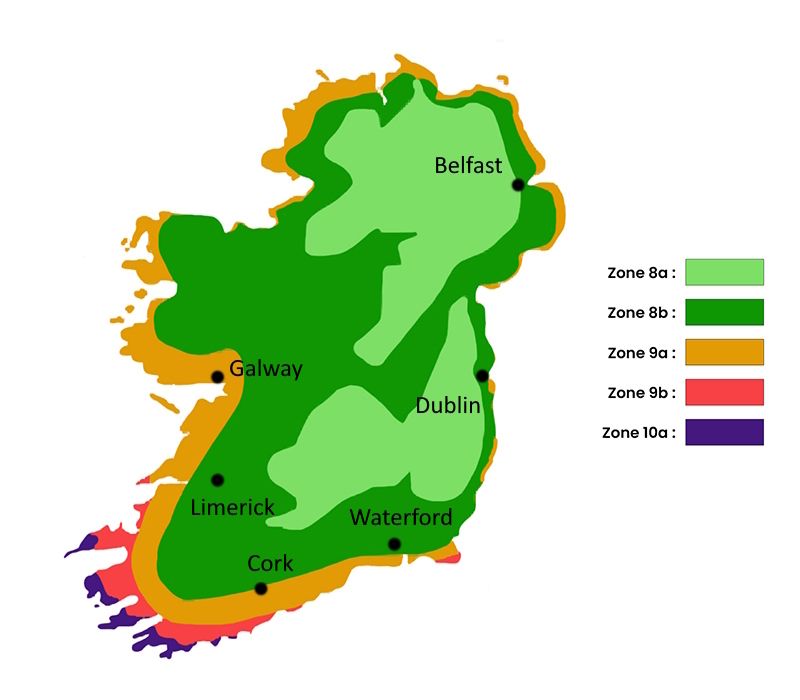
The planting period indicated on our website applies to regions in USDA Zone 9a (East Coast and Midlands: Dublin, Wexford, Waterford, Kilkenny, Portlaoise). It will vary depending on where you live:
- On the west coast and in the north-west (Galway, Limerick, Sligo, Donegal, Westport), delay planting by 1 to 2 weeks in spring and bring it forward by 1 to 2 weeks in autumn compared to the dates given, preferably choosing periods without strong winds.
- In the inland hills and plateaus (Wicklow Mountains, Macgillycuddy’s Reeks, Connemara, Killarney), it is best to plant in spring (April–May) or autumn (September–October), avoiding periods of waterlogged soil in winter and strong winds, which pose the main risk to newly planted trees in these areas.
The flowering period indicated on our website applies to regions in USDA Zone 9a, such as the East Coast and Midlands, including Dublin, Wexford, Waterford, Kilkenny and Portlaoise.
This will vary depending on where you live:
- On the west coast and in the northwest (Galway, Limerick, Sligo, Donegal and Westport), it will be delayed by one to two weeks compared to the given dates, due to stronger Atlantic winds and less spring sunshine.
- In the inland hills and plateaus (the Wicklow Mountains, the Macgillycuddy's Reeks, Connemara and Killarney), flowering will be delayed by two to three weeks. Flowering mainly occurs between May and July, with the limiting factors being less frost and more of the excessive humidity, strong winds and lack of sunshine that are characteristic of these areas.
Shipping country and language
Your country of residence may be:
Your country of residence is:
For a better user experience on our website, you can select:
Your shipping country:
-
 Austria
-
 Belgium
-
 Bosnia & Herzegovina
-
 Bulgaria
-
 Croatia
-
 Cyprus
-
 Czechia
-
 Denmark
-
 Estonia
-
 Finland
-
 France
-
 Germany
-
 Greece
-
 Hungary
-
 Iceland
-
 Ireland
-
 Italy
Italy
-
 Latvia
-
 Liechtenstein
-
 Lithuania
-
 Luxembourg
-
 Malta
Malta
-
 Netherlands
-
 Poland
-
 Portugal
-
 Romania
-
 Serbia
-
 Slovakia
-
 Slovenia
-
 Spain
Spain
-
 Sweden
-
 Switzerland
Language:
-
French
-
 English
-
Spanish
-
Italian
-
German
-
Portuguese
-
Dutch
-
Finnish
My Account
Hello
My wish lists
My cart
Log in / Register
Existing customer?
This form is protected by reCAPTCHA - the Google Privacy Policy and Terms of Service apply.
New customer?
Create an account to track your orders, access our customer service and, if you wish, make the most of our upcoming offers.