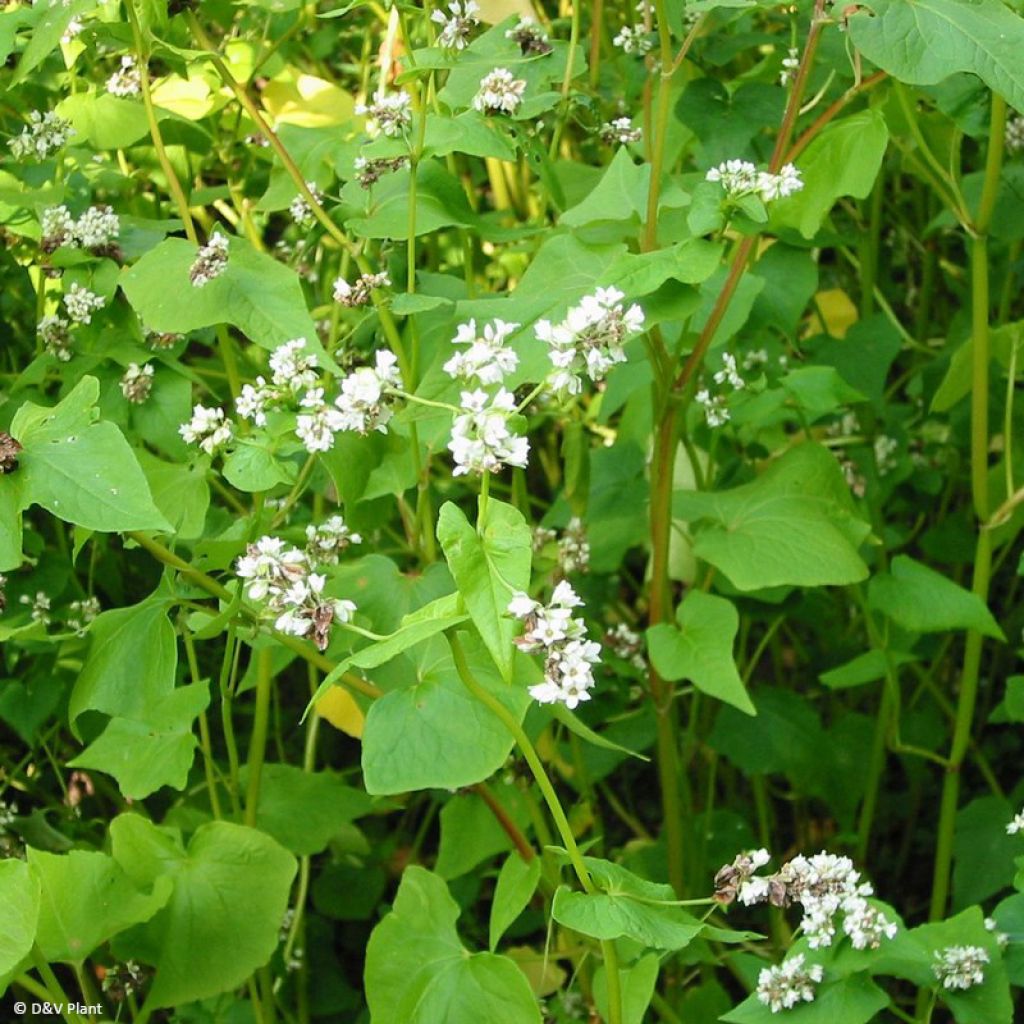
Common Buckwheat - Fagopyrum esculentum
Common Buckwheat - Fagopyrum esculentum
Fagopyrum esculentum
Common Buckwheat, Silverhull Buckwheat
Back-to-school special offer!
Get €10 off for every €50 you spend! And get up to €40 off on a single order.
How does it work?
1. Shop your favourites
Add your favourite plants to your basket. For every €50 you spend (excluding delivery charges, store credit and the plastic-free option), you’ll receive a €10 voucher.
€50 spent = €10 voucher
€100 spent = €20 voucher
€150 spent = €30 voucher
€200 spent = €40 voucher
2. Place your order
Once your basket reaches one of the spending thresholds, place your order. You can even choose your delivery date!
3. Receive your voucher
As soon as your order has been shipped, you’ll receive an email containing your personal voucher code and its value.
4. Use it on your next order
Your voucher is valid for 90 days from the date you receive it. It can be used once only, on a new order worth at least the value of the voucher, excluding delivery charges.
Please note: Vouchers can be combined with other offers, but cannot be split or refunded.
Why not try an alternative variety in stock?
View all →
Available in 3 sizes
Available in 2 sizes
Available in 3 sizes
Available in 2 sizes
Available in 2 sizes

Available in 3 sizes
Available in 1 sizes

Available in 2 sizes
Available in 3 sizes

Available in 2 sizes
This plant carries a 6 months recovery warranty
More information
We guarantee the quality of our plants for a full growing cycle, and will replace at our expense any plant that fails to recover under normal climatic and planting conditions.
Description
Common Buckwheat, in Latin Fagopyrum esculentum, is an annual flowering plant classified as a pseudocereal, grown both for its edible seeds and as a green manure. Its brown seeds, rich in nutrients and proteins, are consumed boiled like rice, while the flour is one of the main ingredients in the famous buckwheat pancakes. Used as a green manure, buckwheat improves soil structure and effectively combats the proliferation of weeds. Buckwheat is particularly well suited to poor, heavy, acidic, compact soils, as well as humid climates. It is planted in spring.
Buckwheat belongs to the family Polygonaceae and not to the wheat family (genusTriticum, family Poaceae) despite its name 'black wheat'. It is used as a green manure, especially for its weed-suppressing properties and its strong covering power. Buckwheat has upright stems that reach a height of 30 to 70 cm (12 to 28in) and have a purplish color. The leaves are heart-shaped and the small flowers, white or pale pink, are clustered tightly together. Buckwheat is sensitive to frost. It thrives in all types of soils, including poor soils.
Widely used in organically cultivated gardens, green manures like buckwheat have many advantages. They nourish and improve the soil by providing it with various nutrients and stimulating the soil's microbial life. Their roots loosen and aerate the soil. In addition, the presence of a vegetative cover protects the soil from leaching (nutrient loss in sandy soil), rain compaction (formation of a crust in loamy soil), and erosion (caused by runoff in steep terrain during heavy rainfall). This vegetative cover also helps suppress weed growth by preventing the growth of unwanted weeds. Finally, green manures are often honey plants that attract pollinators.
Green manures are sown on uncultivated plots or between rows of vegetables. They are destroyed either naturally by frost or by mowing before seed formation. Once destroyed, they can be left in place as mulch, or they can be shredded and incorporated into the top layers of the soil, or they can be collected and added to compost.
Harvesting: the seeds ripen gradually, starting from late September.
In the kitchen: Buckwheat seeds, gluten-free (like quinoa and sorghum), can be cooked in various ways to replace rice or semolina. The gluten-free flour is perfect for intolerant and allergic individuals, but it is not suitable for baking bread. To make buckwheat bread, it is necessary to mix the flour with others that contain gluten.
A gardener's tip: just like for vegetable crops, it is important, for green manures, to consider rotations: don't always sow the same ones in the same place! Buckwheat husks also make excellent mulch against slugs and snails.
Report an error about the product description
Harvest
Plant habit
Foliage
Planting and care
Sowing buckwheat is done from April to July, the plant is fully grown 100 days after sowing.
Buckwheat thrives in the sun, in all types of soil, including poor, sandy or rocky soil. It does not require any particular maintenance during cultivation, except for a little weeding if necessary. Water generously only in case of prolonged drought.
Cultivation
Care
Intended location
Planting & care advice
-

-
-
-
-
-
-
-
This item has not been reviewed yet - be the first to leave a review about it.
Recently viewed products
Haven't found what you were looking for?
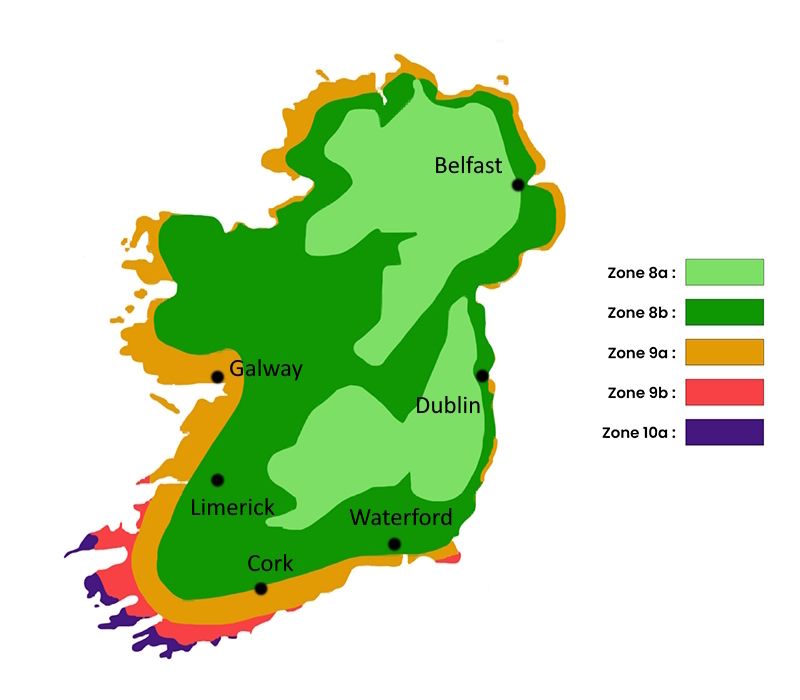
Hardiness is the lowest winter temperature a plant can endure without suffering serious damage or even dying. However, hardiness is affected by location (a sheltered area, such as a patio), protection (winter cover) and soil type (hardiness is improved by well-drained soil).
In temperate climates, pruning of spring-flowering shrubs (forsythia, spireas, etc.) should be done just after flowering.
Pruning of summer-flowering shrubs (Indian Lilac, Perovskia, etc.) can be done in winter or spring.
In cold regions as well as with frost-sensitive plants, avoid pruning too early when severe frosts may still occur.
The harvesting period indicated on our website applies to countries and regions in USDA zone 8 (France, England, Ireland, the Netherlands).
In colder areas (Scandinavia, Poland, Austria...) fruit and vegetable harvests are likely to be delayed by 3-4 weeks.
In warmer areas (Italy, Spain, Greece, etc.), harvesting will probably take place earlier, depending on weather conditions.
The sowing periods indicated on our website apply to countries and regions within USDA Zone 8 (France, UK, Ireland, Netherlands).
In colder areas (Scandinavia, Poland, Austria...), delay any outdoor sowing by 3-4 weeks, or sow under glass.
In warmer climes (Italy, Spain, Greece, etc.), bring outdoor sowing forward by a few weeks.
The planting period indicated on our website applies to regions in USDA Zone 9a (East Coast and Midlands: Dublin, Wexford, Waterford, Kilkenny, Portlaoise). It will vary depending on where you live:
- On the west coast and in the north-west (Galway, Limerick, Sligo, Donegal, Westport), delay planting by 1 to 2 weeks in spring and bring it forward by 1 to 2 weeks in autumn compared to the dates given, preferably choosing periods without strong winds.
- In the inland hills and plateaus (Wicklow Mountains, Macgillycuddy’s Reeks, Connemara, Killarney), it is best to plant in spring (April–May) or autumn (September–October), avoiding periods of waterlogged soil in winter and strong winds, which pose the main risk to newly planted trees in these areas.
The flowering period indicated on our website applies to regions in USDA Zone 9a, such as the East Coast and Midlands, including Dublin, Wexford, Waterford, Kilkenny and Portlaoise.
This will vary depending on where you live:
- On the west coast and in the northwest (Galway, Limerick, Sligo, Donegal and Westport), it will be delayed by one to two weeks compared to the given dates, due to stronger Atlantic winds and less spring sunshine.
- In the inland hills and plateaus (the Wicklow Mountains, the Macgillycuddy's Reeks, Connemara and Killarney), flowering will be delayed by two to three weeks. Flowering mainly occurs between May and July, with the limiting factors being less frost and more of the excessive humidity, strong winds and lack of sunshine that are characteristic of these areas.
Shipping country and language
Your country of residence may be:
Your country of residence is:
For a better user experience on our website, you can select:
Your shipping country:
-
 Austria
-
 Belgium
-
 Bosnia & Herzegovina
-
 Bulgaria
-
 Croatia
-
 Cyprus
-
 Czechia
-
 Denmark
-
 Estonia
-
 Finland
-
 France
-
 Germany
-
 Greece
-
 Hungary
-
 Iceland
-
 Ireland
-
 Italy
Italy
-
 Latvia
-
 Liechtenstein
-
 Lithuania
-
 Luxembourg
-
 Malta
Malta
-
 Netherlands
-
 Poland
-
 Portugal
-
 Romania
-
 Serbia
-
 Slovakia
-
 Slovenia
-
 Spain
Spain
-
 Sweden
-
 Switzerland
Language:
-
French
-
 English
-
Spanish
-
Italian
-
German
-
Portuguese
-
Dutch
-
Finnish
My Account
Hello
My wish lists
My cart
Log in / Register
Existing customer?
This form is protected by reCAPTCHA - the Google Privacy Policy and Terms of Service apply.
New customer?
Create an account to track your orders, access our customer service and, if you wish, make the most of our upcoming offers.