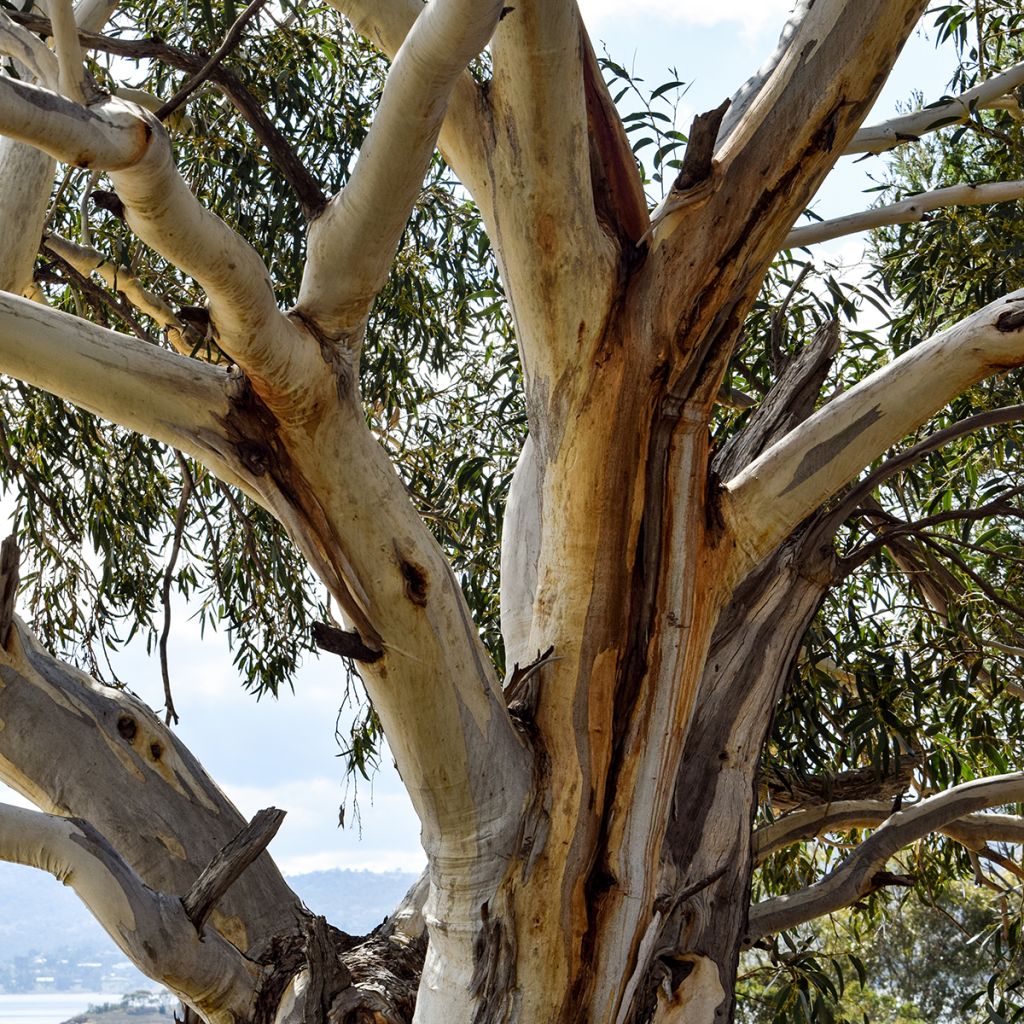
Eucalyptus pauciflora subsp. niphophila Mt Bogong
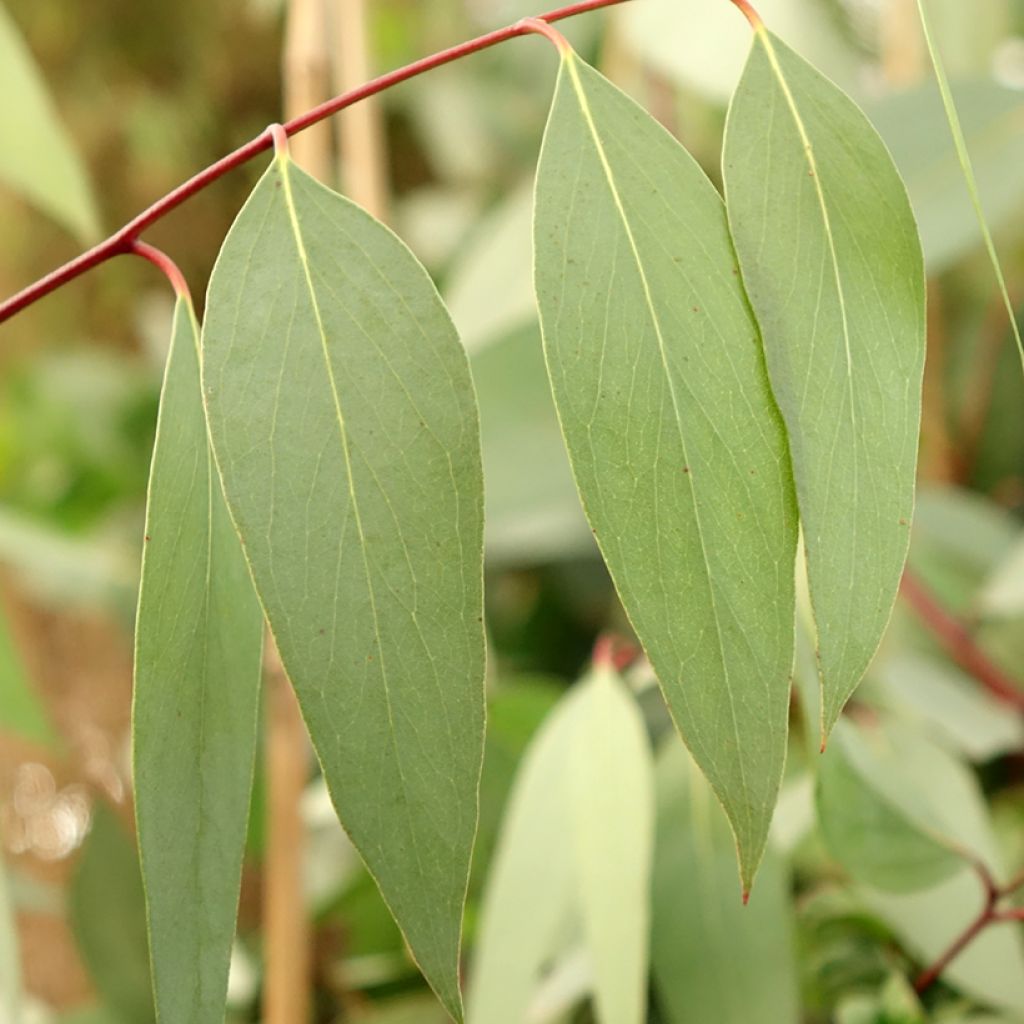
Eucalyptus pauciflora subsp. niphophila Mt Bogong
Eucalyptus pauciflora subsp. niphophila Mt Bogong
Eucalyptus pauciflora subsp. niphophila Mt Bogong
Snow Gum
Small but clearly in great shape, lovely form, I hope it won't grow too slowly; I'll come back to comment in a few years on its growth.
py, 03/04/2026
Back-to-school special offer!
Get €10 off for every €50 you spend! And get up to €40 off on a single order.
How does it work?
1. Shop your favourites
Add your favourite plants to your basket. For every €50 you spend (excluding delivery charges, store credit and the plastic-free option), you’ll receive a €10 voucher.
€50 spent = €10 voucher
€100 spent = €20 voucher
€150 spent = €30 voucher
€200 spent = €40 voucher
2. Place your order
Once your basket reaches one of the spending thresholds, place your order. You can even choose your delivery date!
3. Receive your voucher
As soon as your order has been shipped, you’ll receive an email containing your personal voucher code and its value.
4. Use it on your next order
Your voucher is valid for 90 days from the date you receive it. It can be used once only, on a new order worth at least the value of the voucher, excluding delivery charges.
Please note: Vouchers can be combined with other offers, but cannot be split or refunded.
Why not try an alternative variety in stock?
View all →
Available in 1 sizes

Available in 5 sizes
Available in 1 sizes
Available in 1 sizes
Available in 3 sizes
Available in 1 sizes

Available in 3 sizes
Available in 1 sizes
Available in 2 sizes

Available in 2 sizes
This plant carries a 24 months recovery warranty
More information
We guarantee the quality of our plants for a full growing cycle, and will replace at our expense any plant that fails to recover under normal climatic and planting conditions.

Does this plant fit my garden?
Set up your Plantfit profile →
Description
Eucalyptus pauciflora subsp. niphophila Mt Bogong is also known as the Mt Bogong Snow Gum. It most often forms a bush with several trunks or a small low-branched tree, with absolutely irresistible ornamental bark, where grey, white and cream mix. With a more compact habit than the species, it forms a relatively sparse canopy. The evergreen bluish juvenile foliage is attractive all year round. In June-July, it is adorned with pretty white pom-pom flowers. Very hardy, adapting to most well-drained soils, tolerating limestone and dryness quite well once well rooted, it can be grown virtually everywhere.
Eucalyptus pauciflora subsp. niphophila belongs to the large Myrtaceae family, like the Callistemon (Bottlebrush), the Feijoa or the Myrtle. The Eucalyptus genus includes more than 800 species, practically all native to Australia, except for a few from Southeast Asia. The Eucalyptus pauciflora is widespread in a rather large Australian geographical area, ranging from southeastern Queensland to Victoria, passing through New South Wales and up to Tasmania. There are five subspecies, with niphophila represented in high mountain ranges, such as the Snowy Mountains in New South Wales and several mountains in Victoria. Mt Bogong, which peaks at 1986 m (6516 ft), is home to a small population from which this Mt Bogong cultivar originates.
It is therefore subject to a very contrasting climate, mild to hot in summer, but cold in winter and very snowy. However, outside of its natural zone, its hardiness - one of the best among Eucalyptus - seems to be limited to -18°C under good conditions and for well-established adult plants. Younger trees can be damaged at -15°C (5 °F).
It generally forms a mallee (an Aboriginal term for a bush branching from the ground less than 10 m (33 ft) high), about 7 to 8 m (23 to 26 ft) high and 3.5 to 4 m (12 ft to 13 ft) wide. The niphophila subspecies can reach up to 10 m (33 ft) high at most. More rarely, it can also take the habit of a tree, branching quite low but with a single trunk. This Eucalyptus has a significant regeneration capacity thanks to its lignotuber. This is an underground swelling rich in starch, capable of producing numerous shoots if the aerial part of the plant is destroyed. The regrowth is thus denser than the original plant after this pruning. This characteristic, possessed by many Eucalyptus, is particularly interesting from an ornamental point of view, as it allows for severe pruning, which can make the plant branch well. The bark is very ornamental in this Eucalyptus and will be all the more attractive if it has multiple trunks. The smooth bark sometimes referred to as "python skin" comes in shades of grey, white, cream and even yellow.
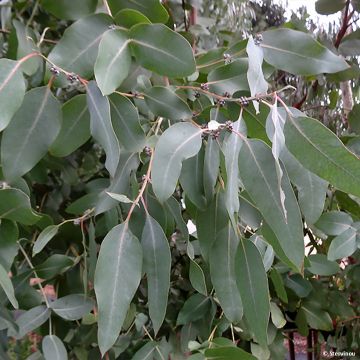
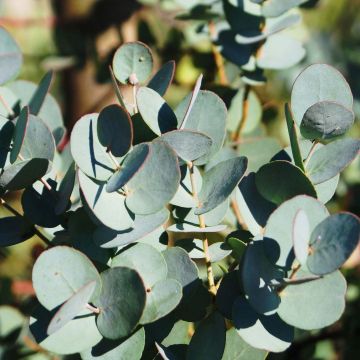
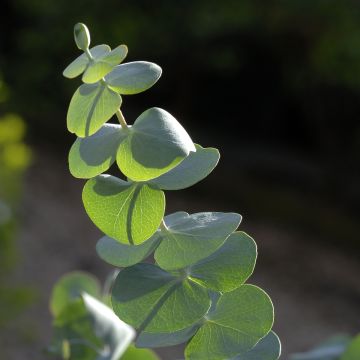
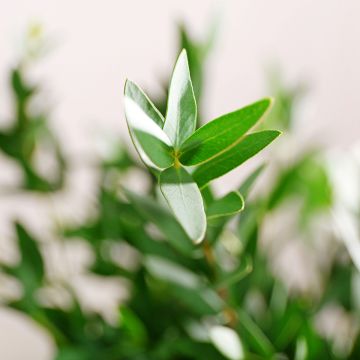
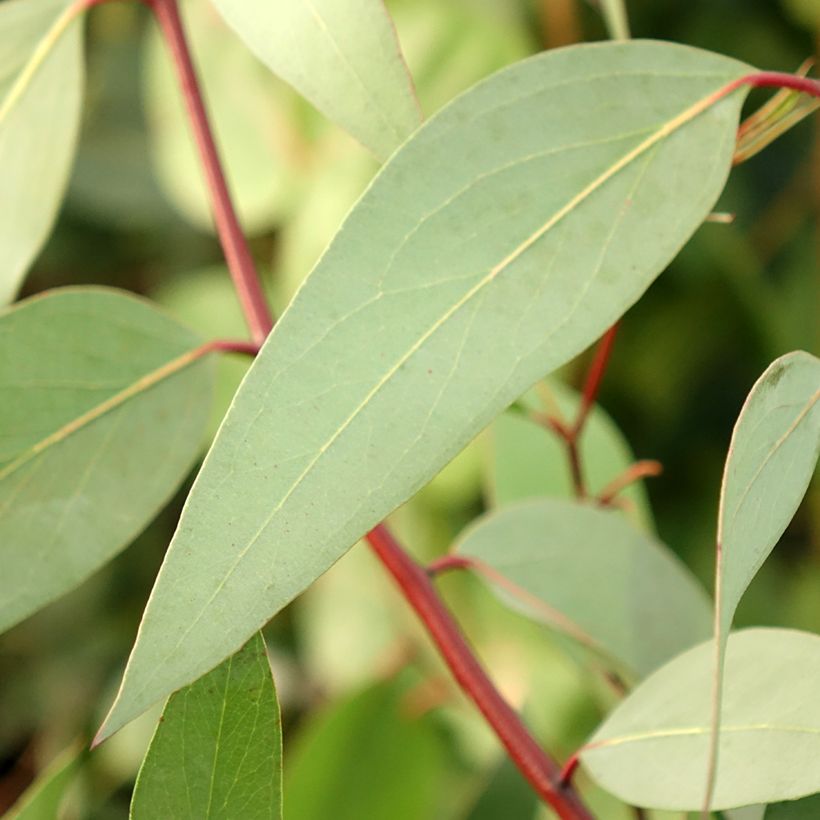
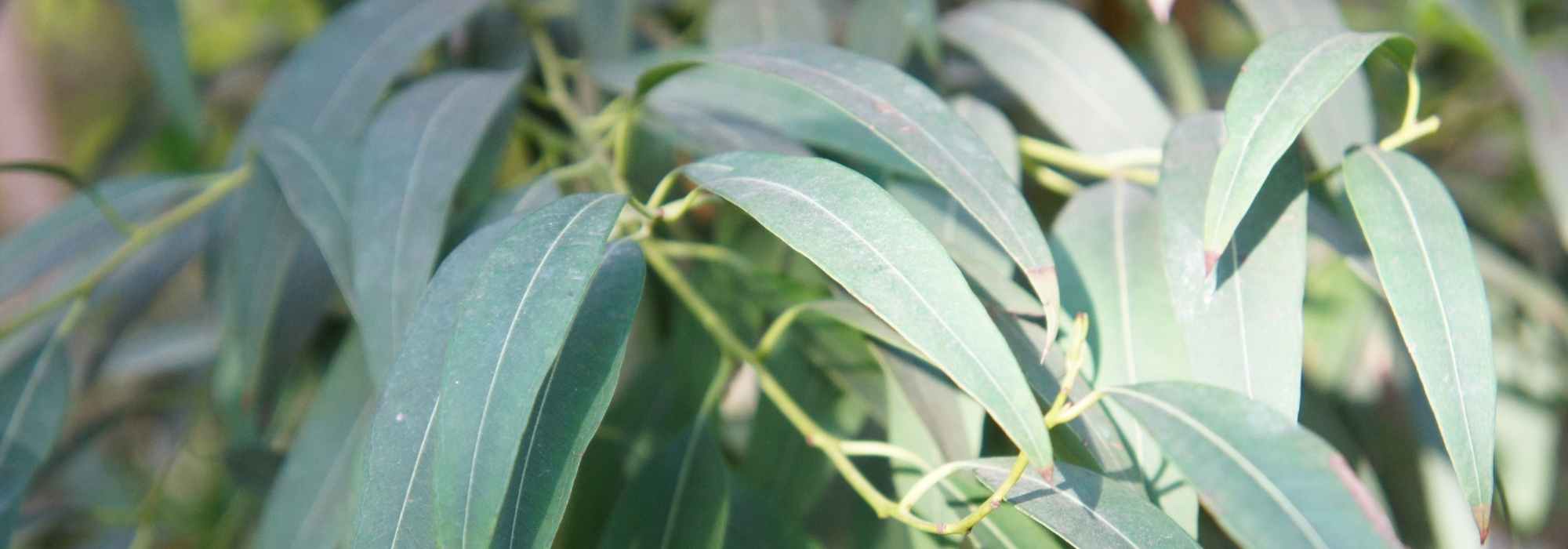
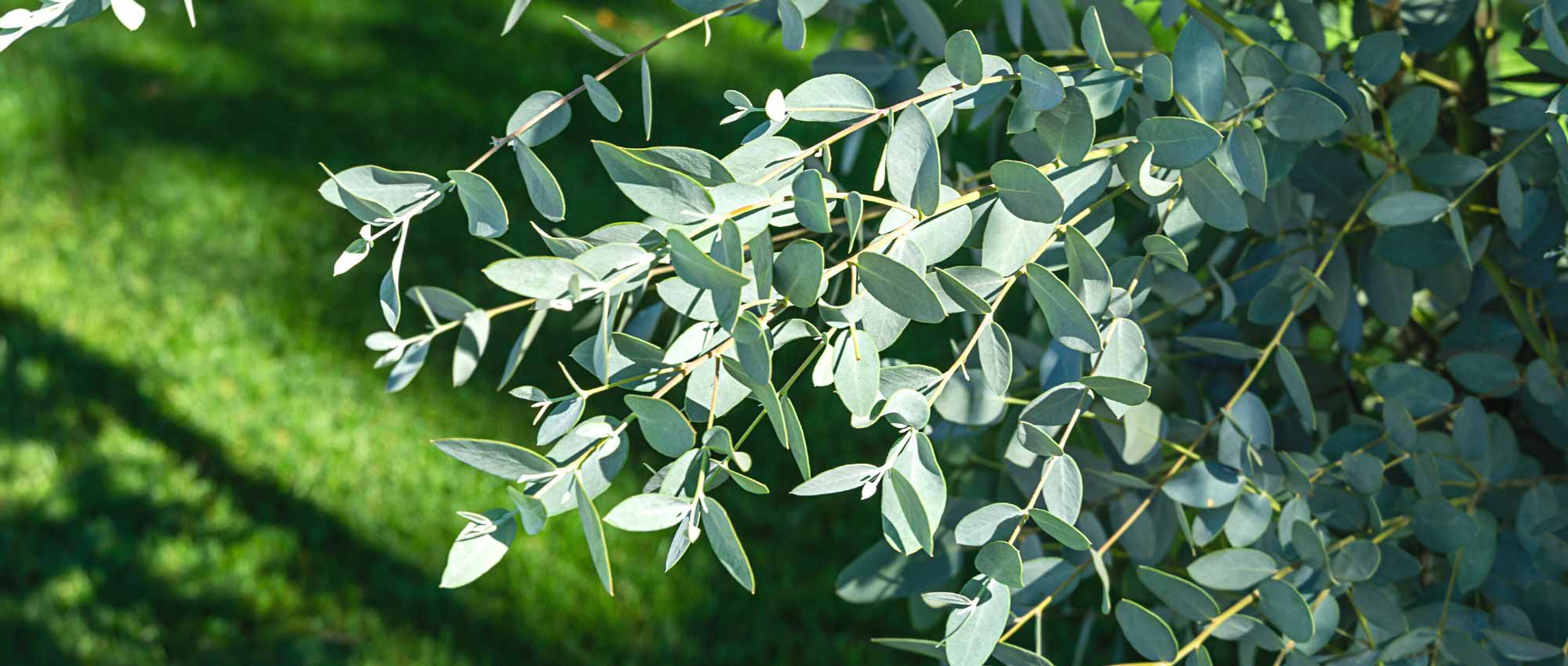
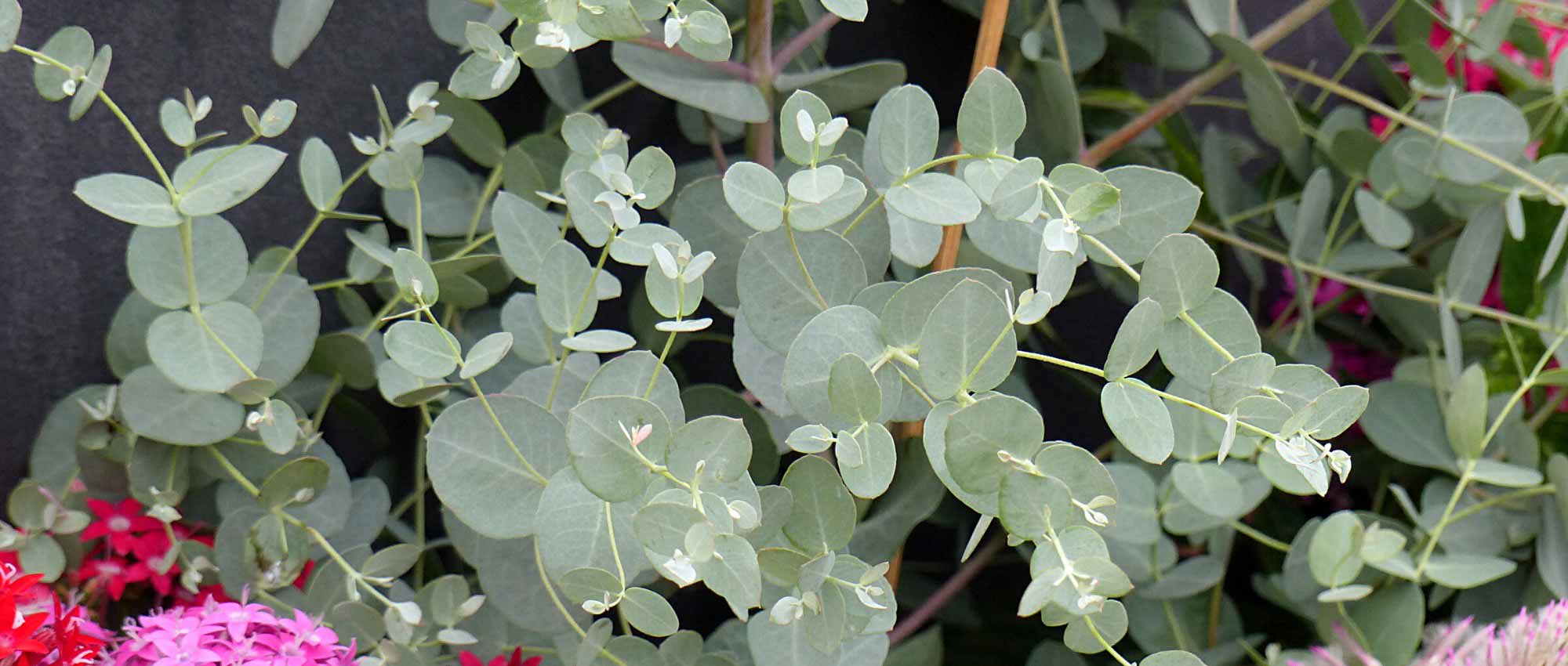
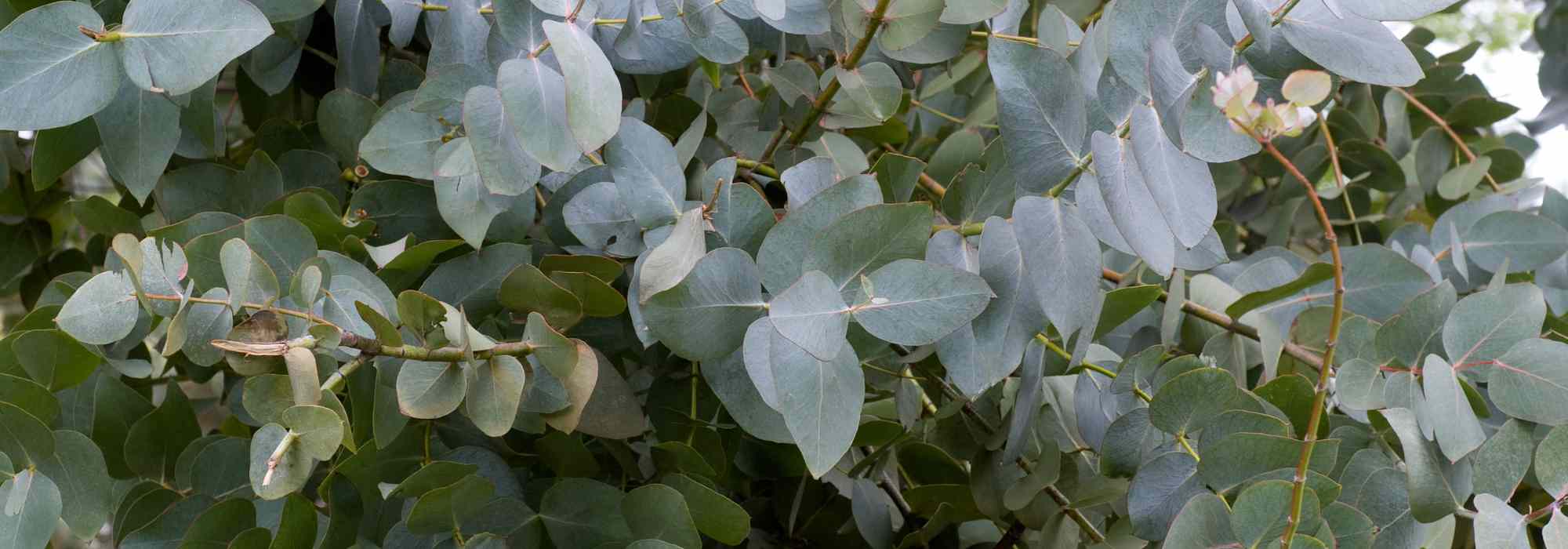
The juvenile foliage is also decorative, consisting of ovate leaves, 2.5 to 7.5 cm (1 to 3 in) long and 2 to 3.5 cm (0.8 to 1.4 in) wide, bluish-green with a matte texture. The adult foliage is more elongated, lanceolate to crescent-shaped and slightly larger, the leaves reaching 10 cm (3.9 in) long and 3 cm (1.2 in) wide. The alternate and petiolate leaves are green to blue-green in colour and moderately aromatic when crushed.
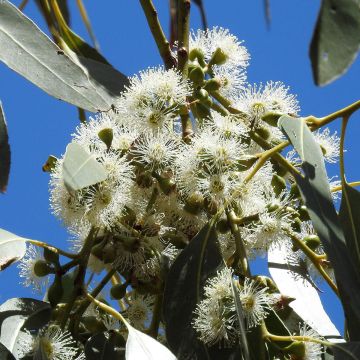
Flowering takes the usual aspect of small white pom-poms, formed of umbels comprising 9 to 15 small petal-less flowers. It is actually the bunches of stamens that we admire. Flowering takes place in June and July in our climates (from December to February in Australia which is in the southern hemisphere). In a sufficiently warm climate, it evolves into small cup-shaped fruits with no ornamental interest.
This cultivar shows great adaptability, both in terms of soil and climatic conditions. It grows in neutral to acidic soils and also tolerates limestone quite well. It likes moist soils, but can tolerate drier ones, only disliking too wet or waterlogged conditions. It is also tolerant of heat and even drought, all qualities that allow it to grow in most regions.
Eucalyptus pauciflora subsp niphophila 'Mt Bogong' is one of the most interesting of the genus, able to withstand colds down to -15°C (5°F) and beyond, provided it is planted in well-drained soil. This large bush is admired for its extremely ornamental bark. Compact and also very tolerant of pruning, it is perfect for small gardens and can be successfully planted almost everywhere provided it can enjoy the sun, as it does not like shade at all. To compose an unforgettable scene associate it in a mass with the Cyprus Strawberry Tree (Arbutus andrachne), whose beautiful orange-red bark can support the comparison with that of your little Eucalyptus. Its beautiful glossy green, evergreen leaves and its small red fruits are also very pleasing. In a colder climate, you can create the same type of contrast with a Prunus maackii Amber Beauty, Manchurian Cherry with beautiful orange bark, and very easy to grow.
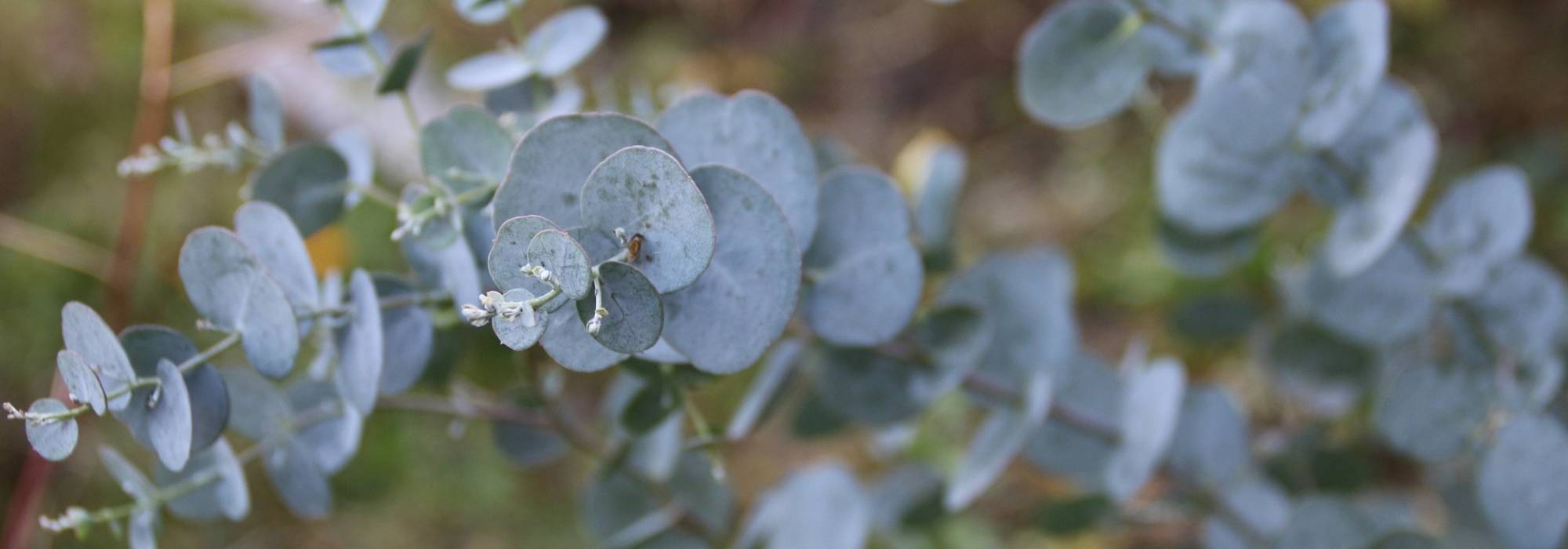
Eucalyptus pauciflora subsp. niphophila Mt Bogong in pictures
Plant habit
Flowering
Foliage
Botanical data
Eucalyptus
pauciflora subsp. niphophila
Mt Bogong
Myrtaceae
Snow Gum
Australia
Planting and care
Eucalyptus pauciflora subsp. niphophila 'Mt Bogong' is best planted at the start of autumn to benefit from the winter rainfall. Being one of the most hardy of all, down to -15°C (5 °F) or even -18°C (-0.4 °F), it only needs to be planted at the start of spring in really cold regions, so that it can establish itself well before the following winter. Install it in drained soil, moist to occasionally dry, in a sunny situation. This species grows in acidic or neutral soil, and also tolerates lime quite well.
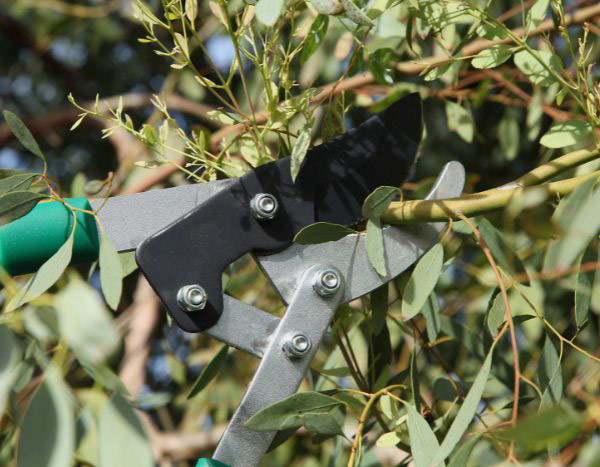
In most regions, you will be able to plant it in open ground, ensuring good drainage by adding coarse sand, pozzolana or non-limestone gravel. Water it for the first two years to facilitate its rooting. Its growth is normal for an Eucalyptus and will be faster if it is watered. This Mt Bogong cultivar is more compact than the type, so it is rarely necessary to prune, but it supports it very well.
Planting period
Intended location
Care
Planting & care advice


-
, onOrder confirmed
Reply from on Promesse de fleurs
Recently viewed products
Haven't found what you were looking for?
Hardiness is the lowest winter temperature a plant can endure without suffering serious damage or even dying. However, hardiness is affected by location (a sheltered area, such as a patio), protection (winter cover) and soil type (hardiness is improved by well-drained soil).
In temperate climates, pruning of spring-flowering shrubs (forsythia, spireas, etc.) should be done just after flowering.
Pruning of summer-flowering shrubs (Indian Lilac, Perovskia, etc.) can be done in winter or spring.
In cold regions as well as with frost-sensitive plants, avoid pruning too early when severe frosts may still occur.
The harvesting period indicated on our website applies to countries and regions in USDA zone 8 (France, England, Ireland, the Netherlands).
In colder areas (Scandinavia, Poland, Austria...) fruit and vegetable harvests are likely to be delayed by 3-4 weeks.
In warmer areas (Italy, Spain, Greece, etc.), harvesting will probably take place earlier, depending on weather conditions.
The sowing periods indicated on our website apply to countries and regions within USDA Zone 8 (France, UK, Ireland, Netherlands).
In colder areas (Scandinavia, Poland, Austria...), delay any outdoor sowing by 3-4 weeks, or sow under glass.
In warmer climes (Italy, Spain, Greece, etc.), bring outdoor sowing forward by a few weeks.
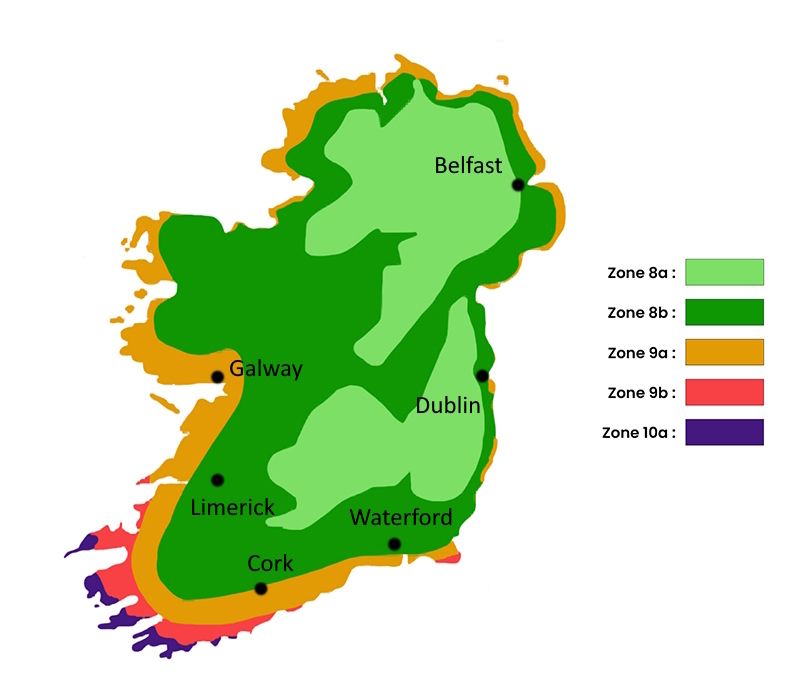
The planting period indicated on our website applies to regions in USDA Zone 9a (East Coast and Midlands: Dublin, Wexford, Waterford, Kilkenny, Portlaoise). It will vary depending on where you live:
- On the west coast and in the north-west (Galway, Limerick, Sligo, Donegal, Westport), delay planting by 1 to 2 weeks in spring and bring it forward by 1 to 2 weeks in autumn compared to the dates given, preferably choosing periods without strong winds.
- In the inland hills and plateaus (Wicklow Mountains, Macgillycuddy’s Reeks, Connemara, Killarney), it is best to plant in spring (April–May) or autumn (September–October), avoiding periods of waterlogged soil in winter and strong winds, which pose the main risk to newly planted trees in these areas.
The flowering period indicated on our website applies to regions in USDA Zone 9a, such as the East Coast and Midlands, including Dublin, Wexford, Waterford, Kilkenny and Portlaoise.
This will vary depending on where you live:
- On the west coast and in the northwest (Galway, Limerick, Sligo, Donegal and Westport), it will be delayed by one to two weeks compared to the given dates, due to stronger Atlantic winds and less spring sunshine.
- In the inland hills and plateaus (the Wicklow Mountains, the Macgillycuddy's Reeks, Connemara and Killarney), flowering will be delayed by two to three weeks. Flowering mainly occurs between May and July, with the limiting factors being less frost and more of the excessive humidity, strong winds and lack of sunshine that are characteristic of these areas.
Shipping country and language
Your country of residence may be:
Your country of residence is:
For a better user experience on our website, you can select:
Your shipping country:
-
 Austria
-
 Belgium
-
 Bosnia & Herzegovina
-
 Bulgaria
-
 Croatia
-
 Cyprus
-
 Czechia
-
 Denmark
-
 Estonia
-
 Finland
-
 France
-
 Germany
-
 Greece
-
 Hungary
-
 Iceland
-
 Ireland
-
 Italy
Italy
-
 Latvia
-
 Liechtenstein
-
 Lithuania
-
 Luxembourg
-
 Malta
Malta
-
 Netherlands
-
 Poland
-
 Portugal
-
 Romania
-
 Serbia
-
 Slovakia
-
 Slovenia
-
 Spain
Spain
-
 Sweden
-
 Switzerland
Language:
-
French
-
 English
-
Spanish
-
Italian
-
German
-
Portuguese
-
Dutch
-
Finnish
My Account
Hello
My wish lists
My cart
Log in / Register
Existing customer?
This form is protected by reCAPTCHA - the Google Privacy Policy and Terms of Service apply.
New customer?
Create an account to track your orders, access our customer service and, if you wish, make the most of our upcoming offers.