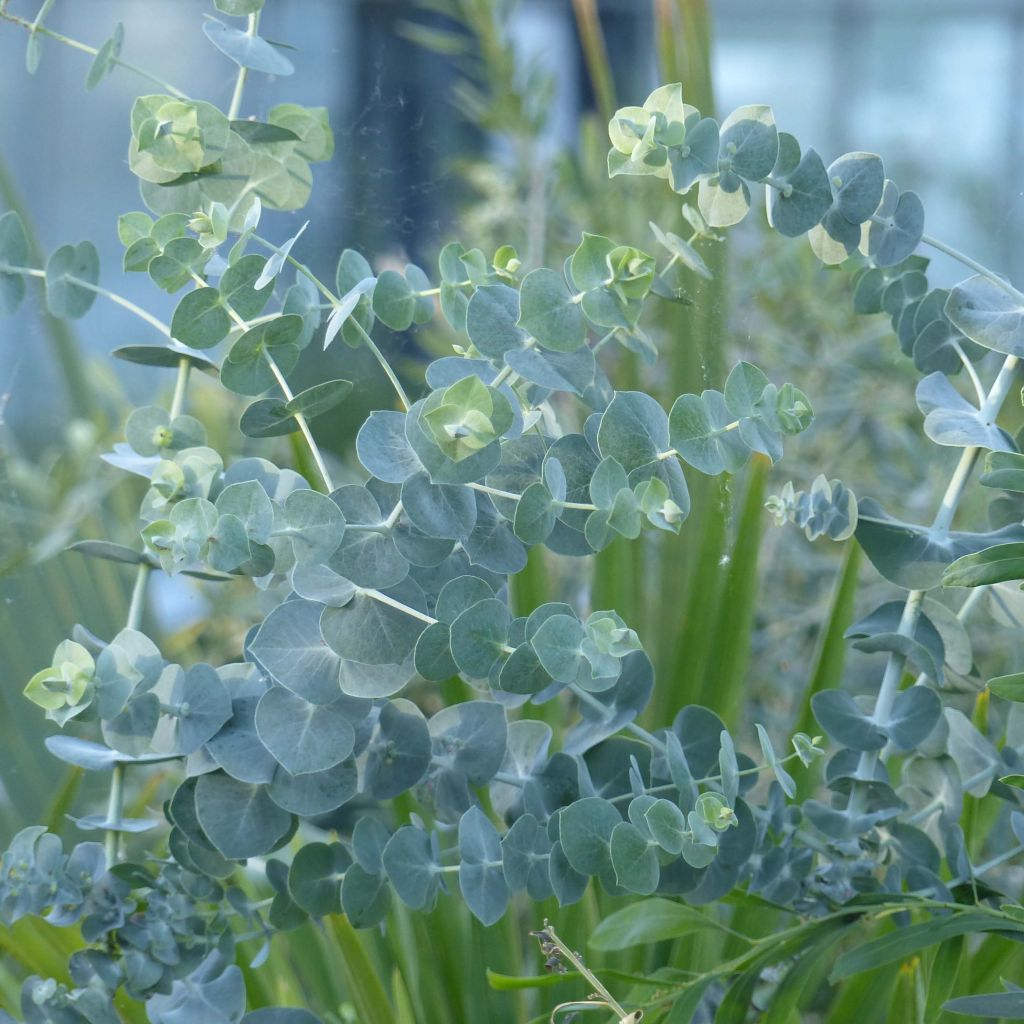
Eucalyptus pulverulenta Baby Blue (Little Boy Blue)
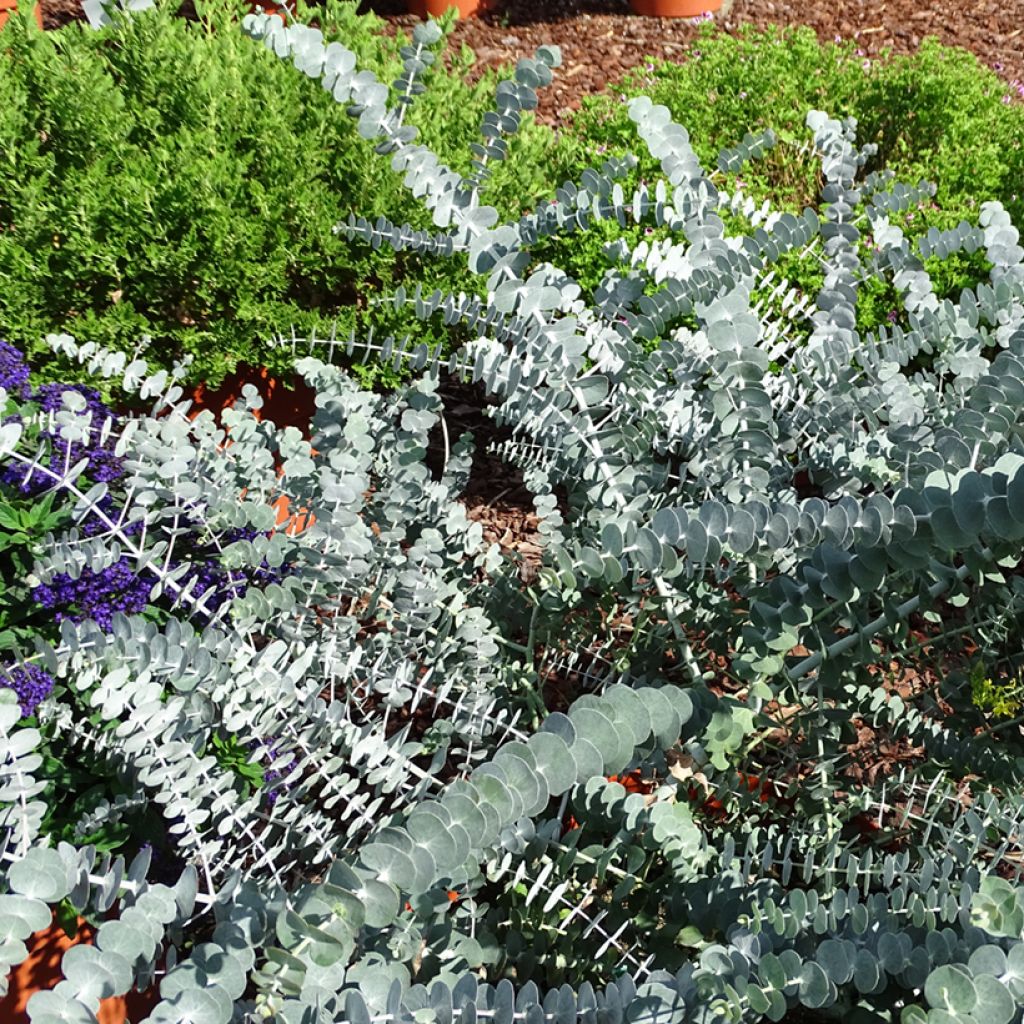
Eucalyptus pulverulenta Baby Blue (Little Boy Blue)
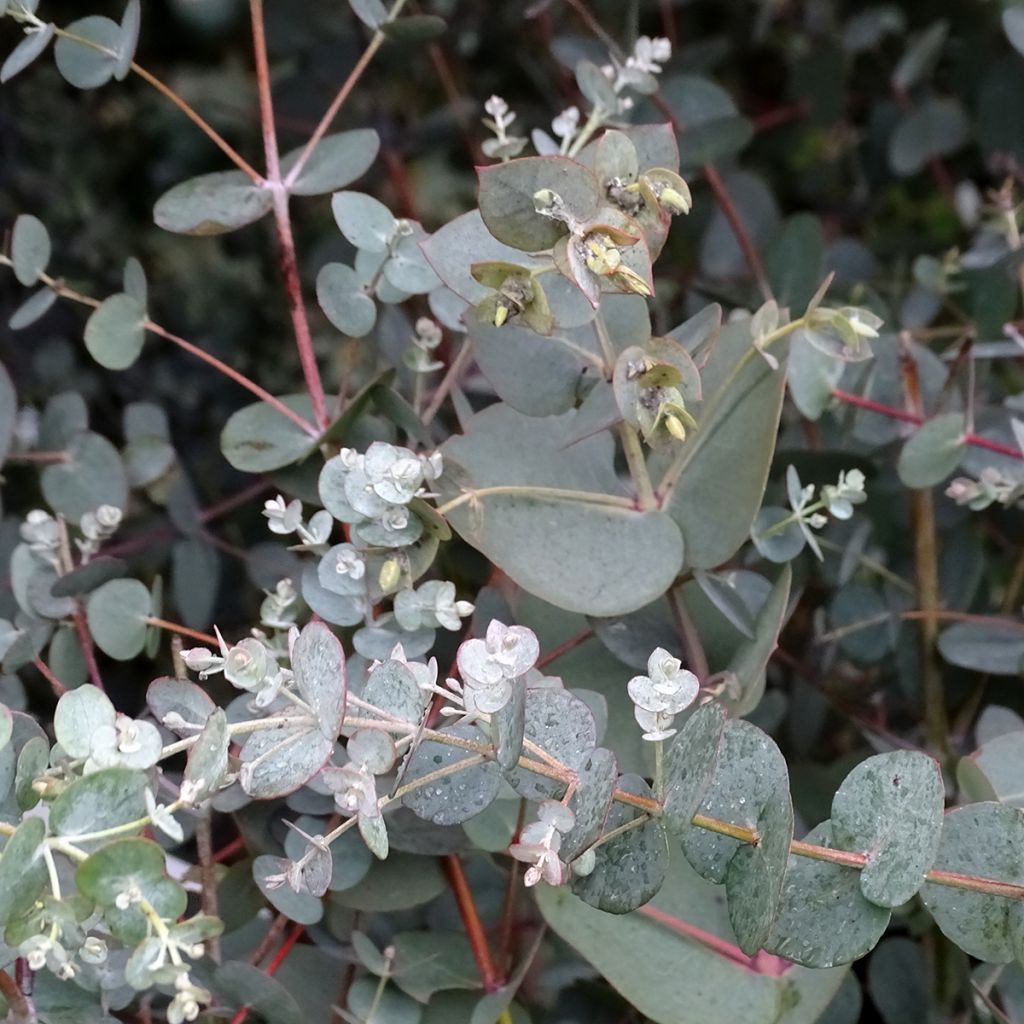
Eucalyptus pulverulenta Baby Blue (Little Boy Blue)
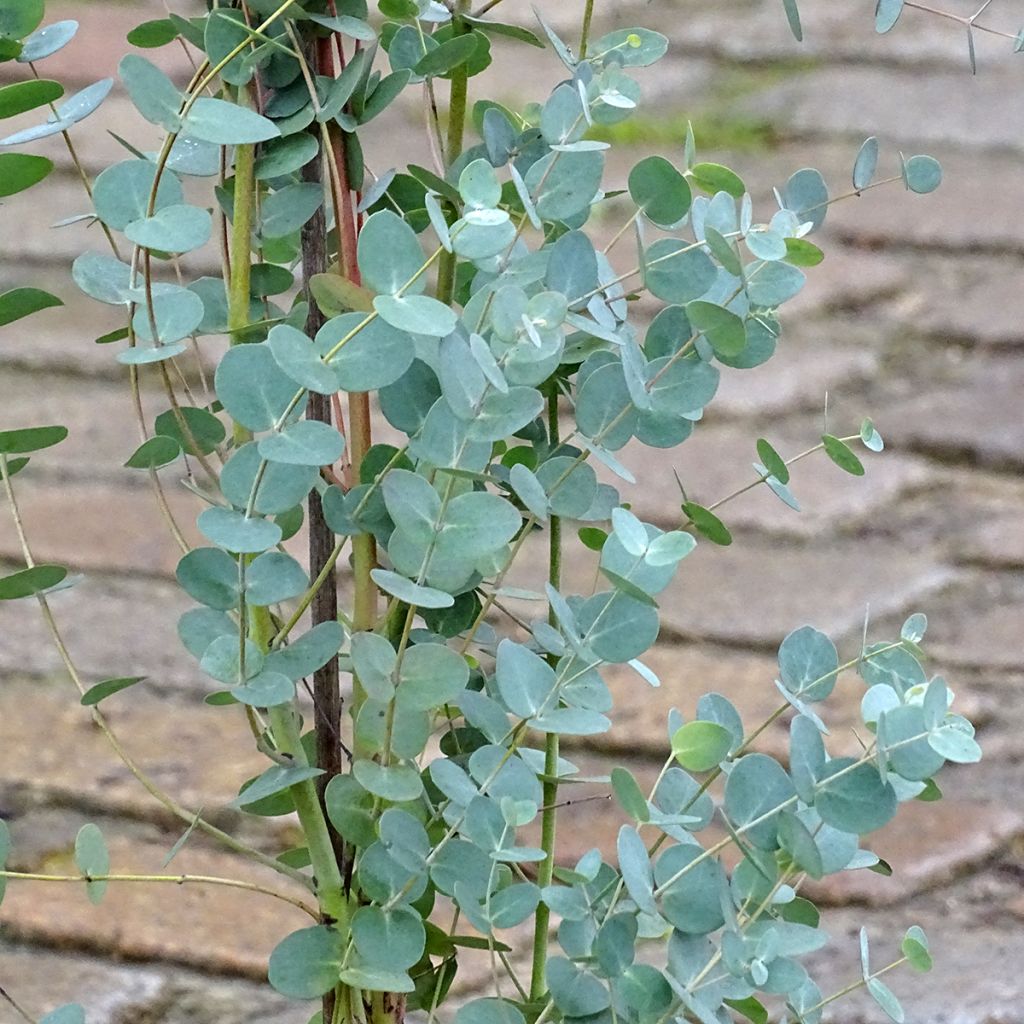
Eucalyptus pulverulenta Baby Blue (Little Boy Blue)
Eucalyptus pulverulenta Baby Blue (Little Boy Blue)
Eucalyptus pulverulenta Baby Blue (Little Boy Blue)
Eucalyptus pulverulenta Baby Blue (Little Boy Blue)
Eucalyptus pulverulenta Baby Blue (Little Boy Blue)
Eucalyptus pulverulenta Baby Blue (Little Boy Blue)
Eucalyptus pulverulenta Baby Blue
Silver-leaved Mountain Gum, Powdered Gum
Two beautiful eucalyptus trees in excellent condition, thank you to the whole team.
Nath44, 03/04/2026
Back-to-school special offer!
Get €10 off for every €50 you spend! And get up to €40 off on a single order.
How does it work?
1. Shop your favourites
Add your favourite plants to your basket. For every €50 you spend (excluding delivery charges, store credit and the plastic-free option), you’ll receive a €10 voucher.
€50 spent = €10 voucher
€100 spent = €20 voucher
€150 spent = €30 voucher
€200 spent = €40 voucher
2. Place your order
Once your basket reaches one of the spending thresholds, place your order. You can even choose your delivery date!
3. Receive your voucher
As soon as your order has been shipped, you’ll receive an email containing your personal voucher code and its value.
4. Use it on your next order
Your voucher is valid for 90 days from the date you receive it. It can be used once only, on a new order worth at least the value of the voucher, excluding delivery charges.
Please note: Vouchers can be combined with other offers, but cannot be split or refunded.
Home or relay delivery (depending on size and destination)
Important: You may be charged customs duties by your country’s customs authorities upon delivery.
Schedule delivery date
and select date in basket
This plant carries a 24 months recovery warranty
More information
We guarantee the quality of our plants for a full growing cycle, and will replace at our expense any plant that fails to recover under normal climatic and planting conditions.
Does this plant fit my garden?
Set up your Plantfit profile →
Description
Eucalyptus pulverulenta 'Baby Blue' is a dwarf form of Eucalyptus pulverulenta, also known as Silver Mountain Gum. Developed in California in the 1950s, this variety was initially selected for floristry due to the density and fragrance of its very blue foliage. Its ease of cultivation, relative hardiness, and compact habit have made it a popular choice for gardens. It also has two additional advantages: its spring flowering, which resembles cream-white pompoms nestled among its small leaves, and its beautiful bark that peels off in flakes over time. Similar to Eucalyptus gunni, it is slightly less hardy. This plant will create a little corner of paradise in our gardens and terraces. It is ideal for small spaces and adapts to all well-drained soils without excessive limestone content.
Eucalyptus pulverulenta 'Baby Blue', sometimes marketed as 'Little Boy Blue', is a small bush of the Myrtaceae family, descended from Eucalyptus pulverulenta. This beautiful species, of modest size for the genus, has a somewhat anarchic pyramidal habit and originates from two small stations, the first located in the Blue Mountains west of Sydney, and the second in the southern Tablelands. 'Baby Blue' is distinguished by its small size and denser, more regular habit. This large bush will reach 2.5 m to 3 m (8.2 ft to 9.8 ft) in height and 1.5 m to 2 m (4.9 ft to 6.6 ft) in width, depending on growing conditions and climate. Its growth rate is moderate.
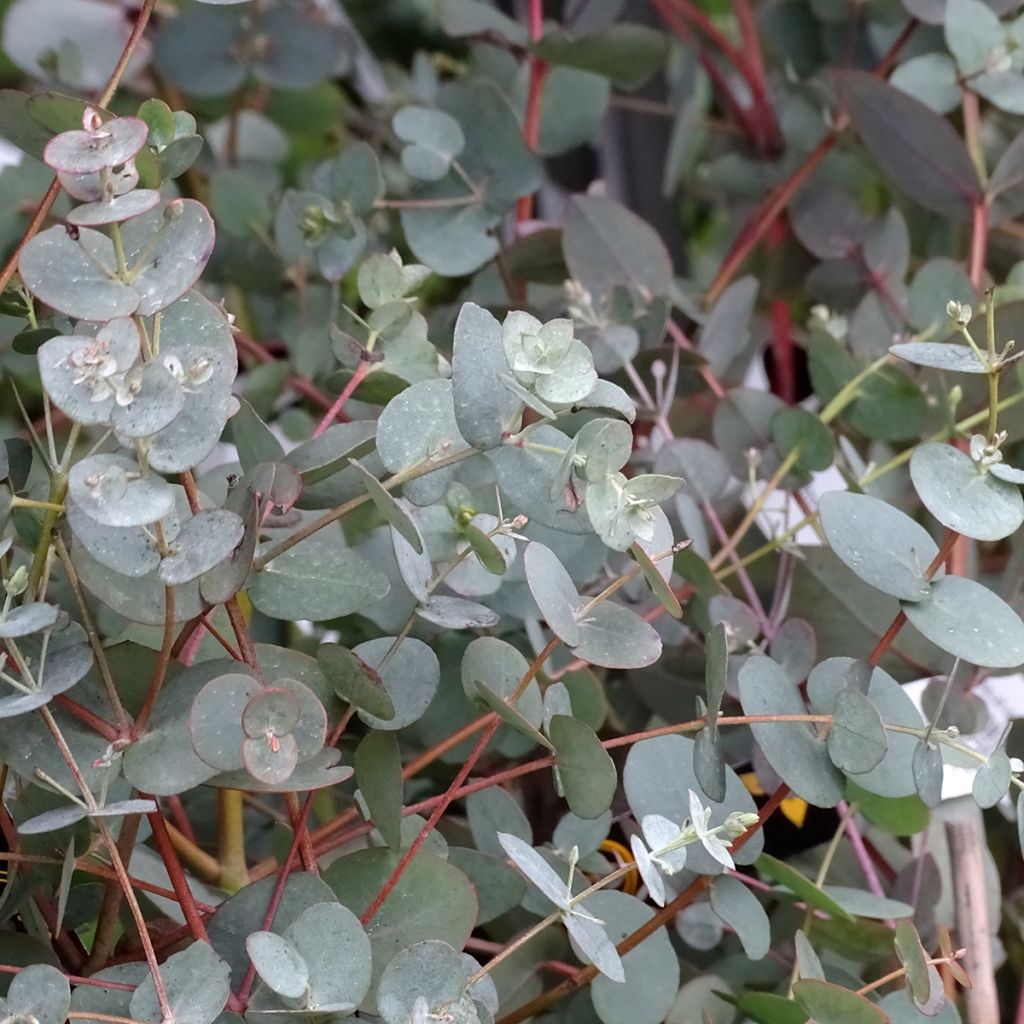
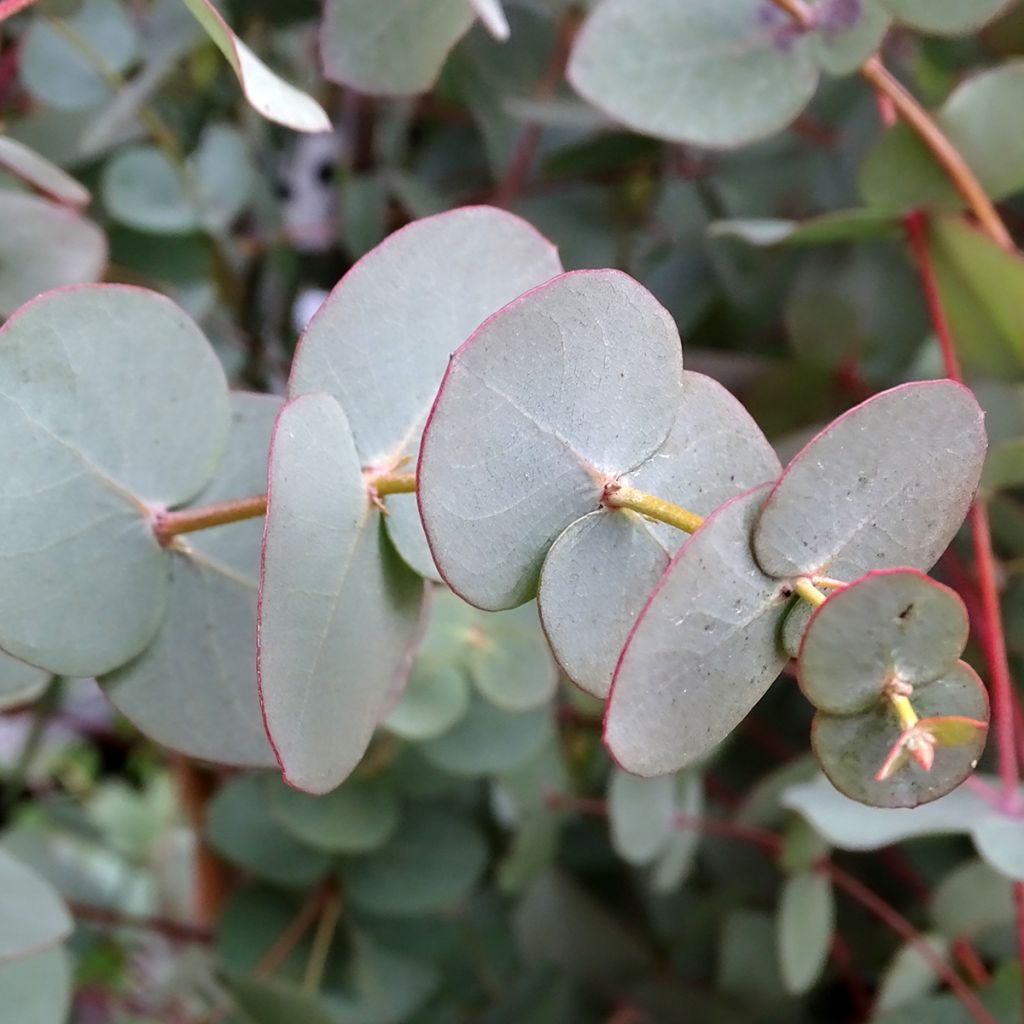
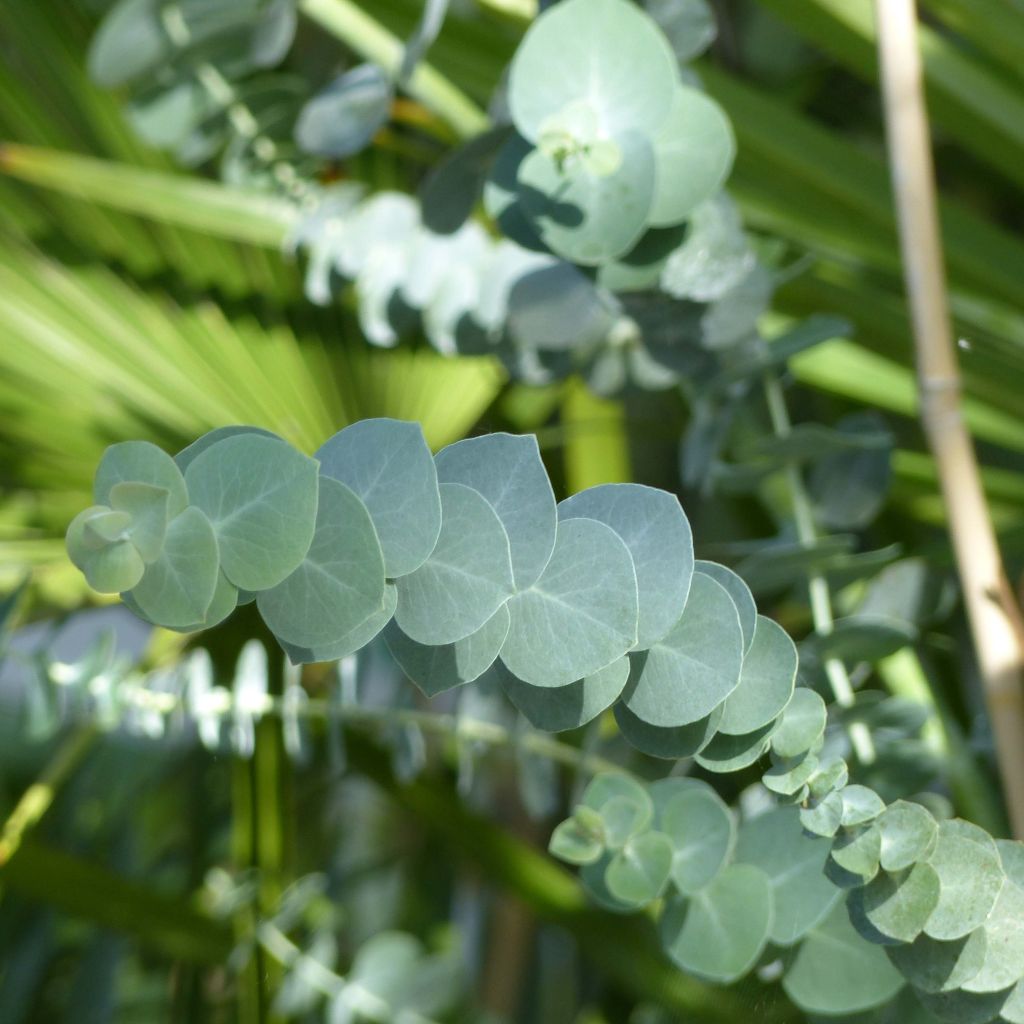
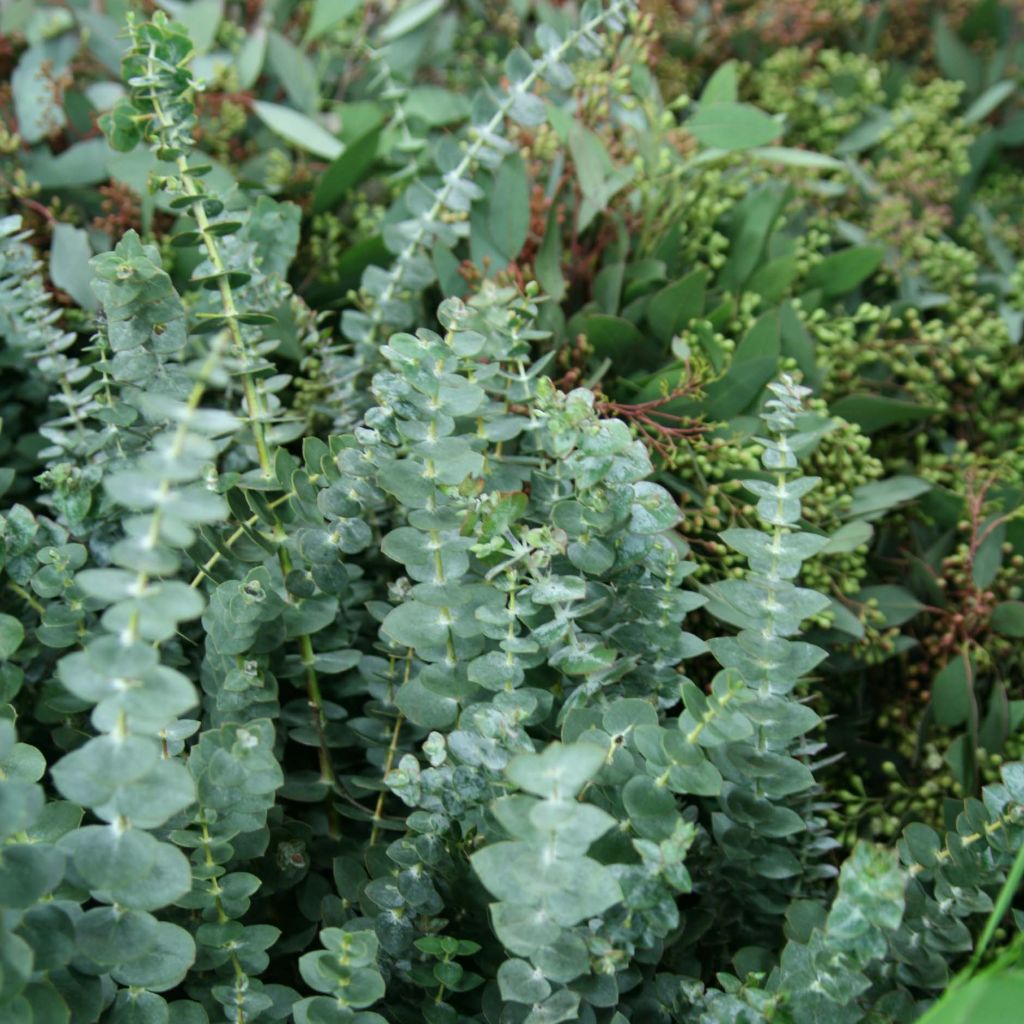
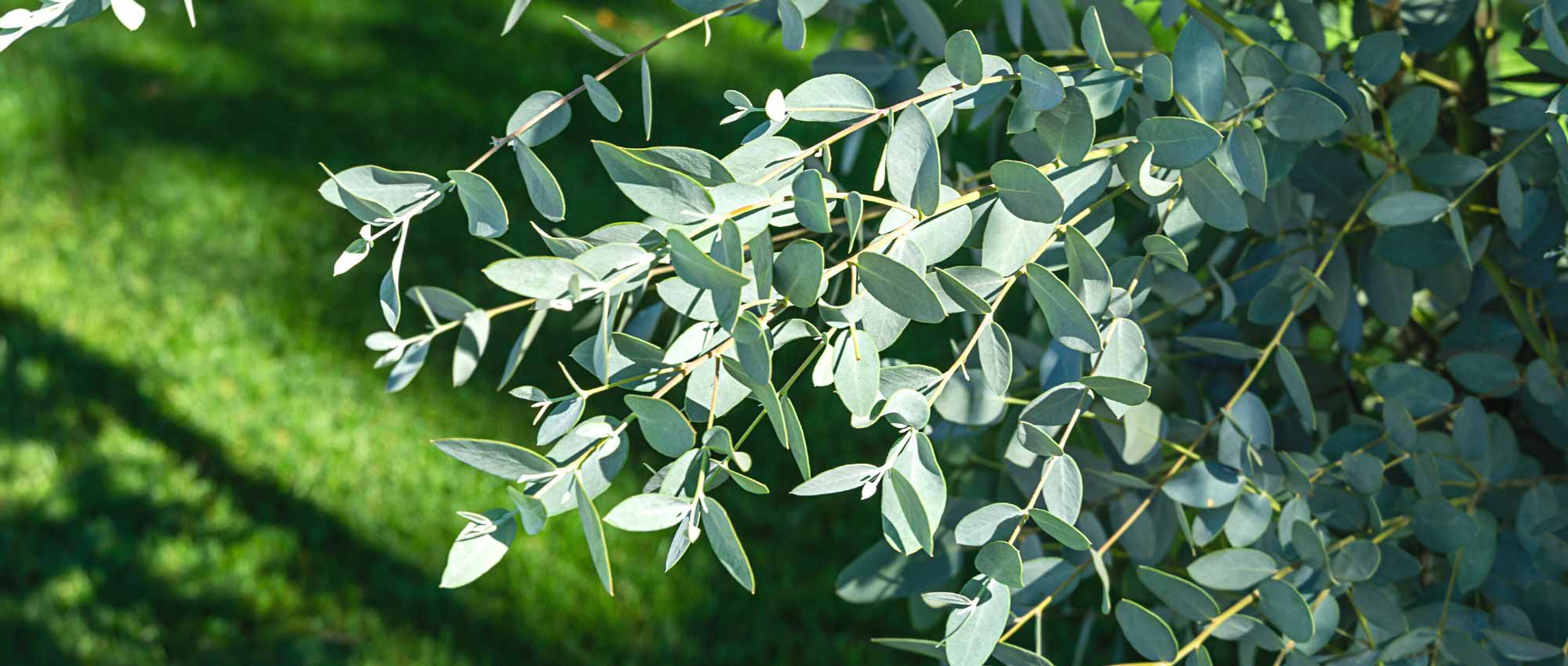
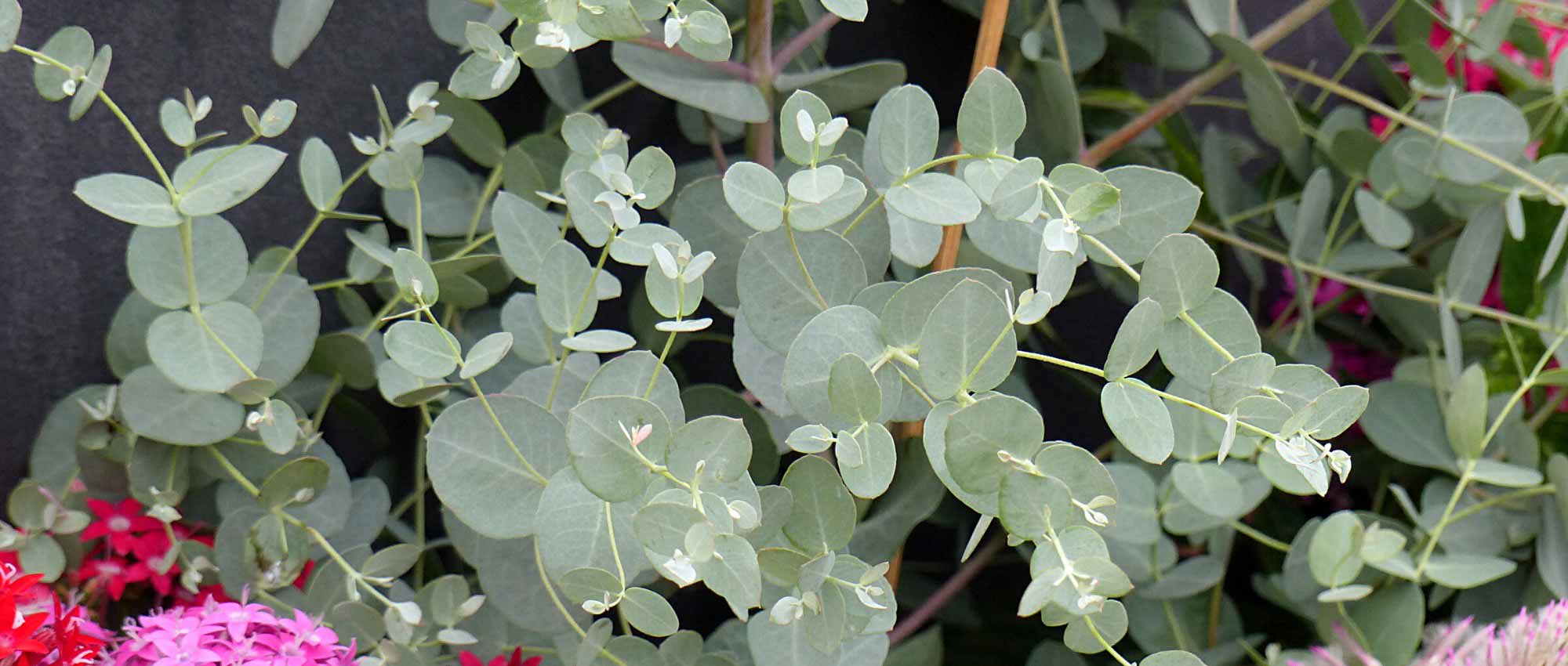
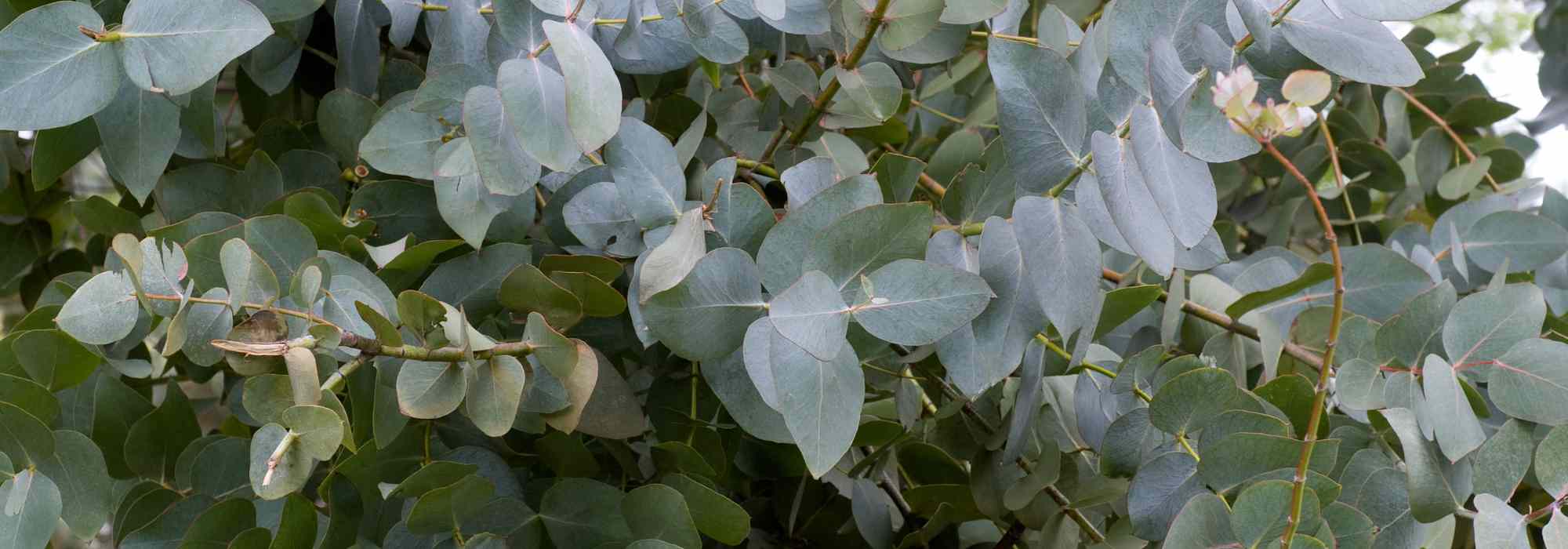
It has persistent foliage that retains its juvenile appearance throughout its life. The adult foliage, rarely observed, is lanceolate, pointed, and the same blue-silver colour. Leaves, young stems, and inflorescences are covered with a white powder that gives the entire plant a bright appearance, especially in spring. It is this white bloom that earned the species its name "pulverulenta". The green-blue-silver leaves, small in size, round, and highly aromatic when crushed, completely sheathe the stems. Flowering occurs between May and June in our climates, on plants that are 3 or 4 years old. These are actually apetalous flowers, spherical in shape, composed of numerous tightly packed cream-white stamens resembling pompoms. They bloom between the leaves, grouped in threes along the branches, and are followed by the formation of large green cone-shaped fruits, also covered in powder, which turn brown when ripe. The bark, which displays a ring pattern from a young age, peels off in large ribbons over the years. It is grey-white speckled with brown. It tolerates pruning very well, even close to the ground. It has a well-developed lignotuber (swollen reserve organ with numerous dormant buds) at the collar level, which allows it to regenerate vigorously after frost, fire, or severe pruning.
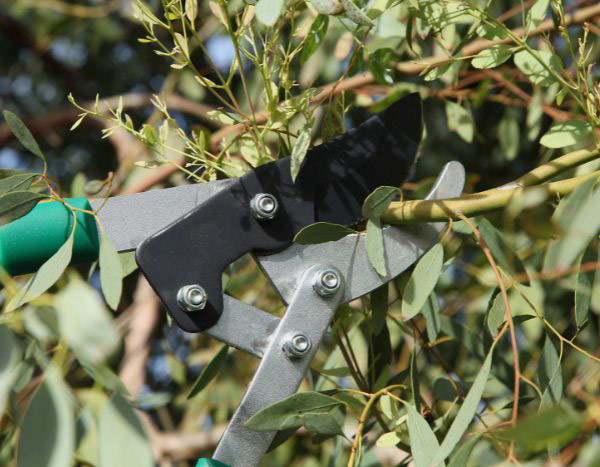
Eucalyptus pulverulenta 'Baby Blue' also tolerates semi-mountainous and semi-arid climates, but its cold resistance is limited to short, late-night frosts, around -10° C (14° F), if planted in well-drained soil that does not retain moisture. Curiously, eucalyptus trees are generally heavy water consumers, even in winter, contributing to soil drying. 'Baby Blue' thrives in scenes dominated by white or silver. It brings an exotic touch to gardens when planted as a hedge with other shrubs like Callistemons or Leptospermums, in groups, or as a standalone specimen. On balconies or terraces, it adds a touch of blue. It is easy to maintain, requiring no pruning, but it can be cut back very short to remain compact. Finally, it is an elegant plant at all stages of growth, with magnificent branches that make beautiful bouquets. The ideal climate for this small tree is coastal areas (at least 100 m (328 ft) from the shore), where cold spells are light and short-lived. Elsewhere, it is advisable to store it in a cool and bright room.
Benefits: Eucalyptus leaves, which are rich in essential oil, are used in various forms (infusion, tincture, oil, etc.) to treat respiratory ailments, rheumatism, migraines, fatigue, and as an antiseptic.
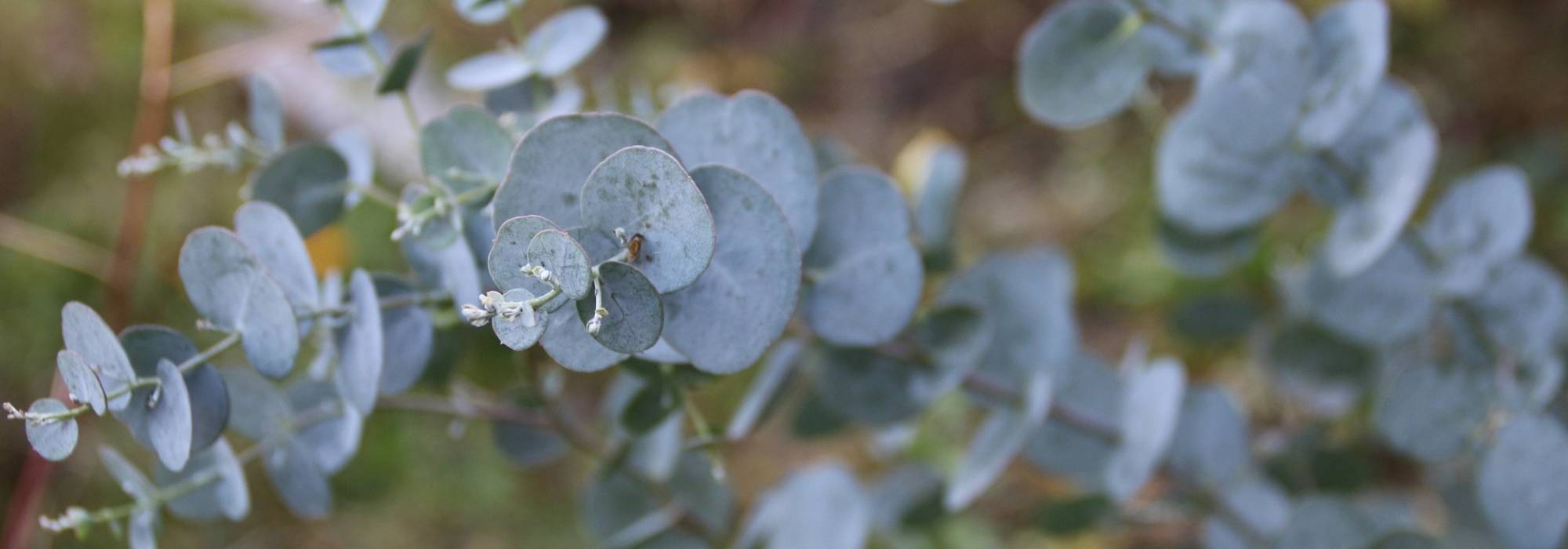
Eucalyptus pulverulenta Baby Blue (Little Boy Blue) in pictures
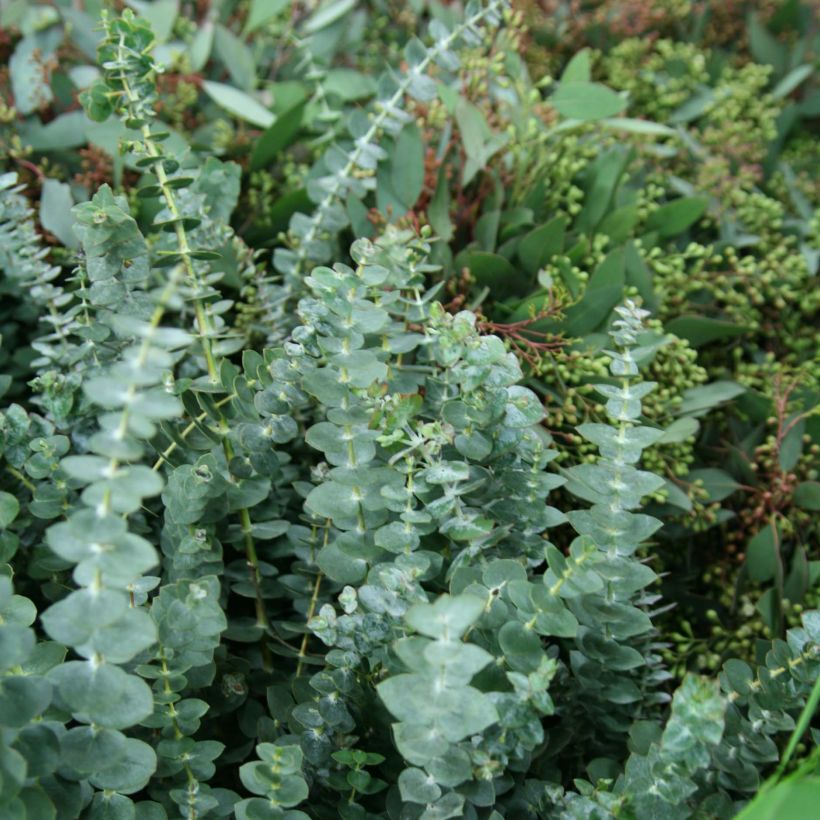
Plant habit
Flowering
Foliage
Safety measures
Botanical data
Eucalyptus
pulverulenta
Baby Blue
Myrtaceae
Silver-leaved Mountain Gum, Powdered Gum
Cultivar or hybrid
Phytophotodermatoses
Cette plante peut provoquer l'apparition de réactions cutanées indésirables en cas de contact suivi d'une exposition au soleil.
Ne la plantez pas là où de jeunes enfants peuvent évoluer. Evitez l'exposition au soleil après l'avoir manipulée. Evitez tout contact avec la peau: privilégiez l'emploi de gants pour la manipuler. En cas de contact, lavez-vous soigneusement les mains et rincez abondamment à l'eau la zone concernée. Lavez les vêtements entrés en contact. En cas de réaction cutanée, contactez votre médecin ou le centre antipoison le plus proche de chez vous. En cas d'atteinte étendue, appelez sans tarder le 15 ou le 112.Pensez à conserver l'étiquette de la plante, à la photographier ou à noter son nom, afin de faciliter le travail des professionnels de santé.
Davantage d'informations sur https://plantes-risque.info
Planting and care
Plant in early spring, in well-drained, dry, not too chalky soil, in a warm and sunny position but sheltered from strong and cold winds. In mild climates, plant it in the ground, taking care of the drainage with coarse sand, pumice or non-chalky gravel. Then let nature take its course. Growth is quite rapid and there is no need to prune. Water regularly for the first two years, then the bush can do without watering in summer once well established. Fertilisation is not recommended. In March, you can prune it back to ground level to form a beautiful, bushy shrub, about 2 m (6.6 ft) tall.
It grows well in pots, which should be large enough and filled with a light and rich substrate. Watering should be monitored. Store in a cold greenhouse, or in an unheated and bright room in winter, like a rose laurel.
Planting period
Intended location
Care
Planting & care advice


-
, onOrder confirmed
Reply from on Promesse de fleurs
Recently viewed products
Haven't found what you were looking for?
Hardiness is the lowest winter temperature a plant can endure without suffering serious damage or even dying. However, hardiness is affected by location (a sheltered area, such as a patio), protection (winter cover) and soil type (hardiness is improved by well-drained soil).
In temperate climates, pruning of spring-flowering shrubs (forsythia, spireas, etc.) should be done just after flowering.
Pruning of summer-flowering shrubs (Indian Lilac, Perovskia, etc.) can be done in winter or spring.
In cold regions as well as with frost-sensitive plants, avoid pruning too early when severe frosts may still occur.
The harvesting period indicated on our website applies to countries and regions in USDA zone 8 (France, England, Ireland, the Netherlands).
In colder areas (Scandinavia, Poland, Austria...) fruit and vegetable harvests are likely to be delayed by 3-4 weeks.
In warmer areas (Italy, Spain, Greece, etc.), harvesting will probably take place earlier, depending on weather conditions.
The sowing periods indicated on our website apply to countries and regions within USDA Zone 8 (France, UK, Ireland, Netherlands).
In colder areas (Scandinavia, Poland, Austria...), delay any outdoor sowing by 3-4 weeks, or sow under glass.
In warmer climes (Italy, Spain, Greece, etc.), bring outdoor sowing forward by a few weeks.
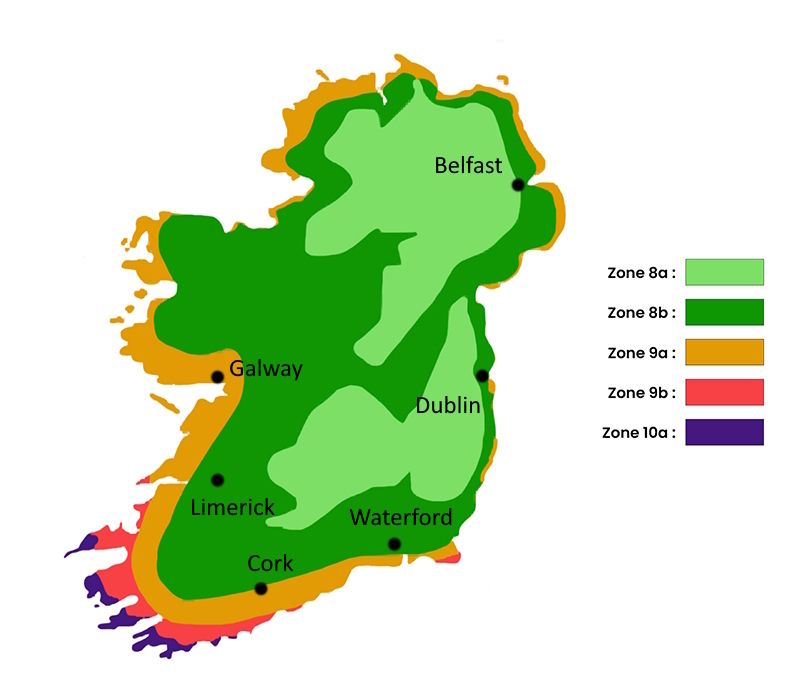
The planting period indicated on our website applies to regions in USDA Zone 9a (East Coast and Midlands: Dublin, Wexford, Waterford, Kilkenny, Portlaoise). It will vary depending on where you live:
- On the west coast and in the north-west (Galway, Limerick, Sligo, Donegal, Westport), delay planting by 1 to 2 weeks in spring and bring it forward by 1 to 2 weeks in autumn compared to the dates given, preferably choosing periods without strong winds.
- In the inland hills and plateaus (Wicklow Mountains, Macgillycuddy’s Reeks, Connemara, Killarney), it is best to plant in spring (April–May) or autumn (September–October), avoiding periods of waterlogged soil in winter and strong winds, which pose the main risk to newly planted trees in these areas.
The flowering period indicated on our website applies to regions in USDA Zone 9a, such as the East Coast and Midlands, including Dublin, Wexford, Waterford, Kilkenny and Portlaoise.
This will vary depending on where you live:
- On the west coast and in the northwest (Galway, Limerick, Sligo, Donegal and Westport), it will be delayed by one to two weeks compared to the given dates, due to stronger Atlantic winds and less spring sunshine.
- In the inland hills and plateaus (the Wicklow Mountains, the Macgillycuddy's Reeks, Connemara and Killarney), flowering will be delayed by two to three weeks. Flowering mainly occurs between May and July, with the limiting factors being less frost and more of the excessive humidity, strong winds and lack of sunshine that are characteristic of these areas.
Shipping country and language
Your country of residence may be:
Your country of residence is:
For a better user experience on our website, you can select:
Your shipping country:
-
 Austria
-
 Belgium
-
 Bosnia & Herzegovina
-
 Bulgaria
-
 Croatia
-
 Cyprus
-
 Czechia
-
 Denmark
-
 Estonia
-
 Finland
-
 France
-
 Germany
-
 Greece
-
 Hungary
-
 Iceland
-
 Ireland
-
 Italy
Italy
-
 Latvia
-
 Liechtenstein
-
 Lithuania
-
 Luxembourg
-
 Malta
Malta
-
 Netherlands
-
 Poland
-
 Portugal
-
 Romania
-
 Serbia
-
 Slovakia
-
 Slovenia
-
 Spain
Spain
-
 Sweden
-
 Switzerland
Language:
-
French
-
 English
-
Spanish
-
Italian
-
German
-
Portuguese
-
Dutch
-
Finnish
My Account
Hello
My wish lists
My cart
Log in / Register
Existing customer?
This form is protected by reCAPTCHA - the Google Privacy Policy and Terms of Service apply.
New customer?
Create an account to track your orders, access our customer service and, if you wish, make the most of our upcoming offers.