
Colocasia Imperial Gigante - Elephants Ear

Colocasia Imperial Gigante - Elephants Ear
Colocasia Imperial Gigante - Elephants Ear
Colocasia x esculenta Imperial Gigante
Taro, Elephant Ear, Cocoyam, Eddo, Dasheen
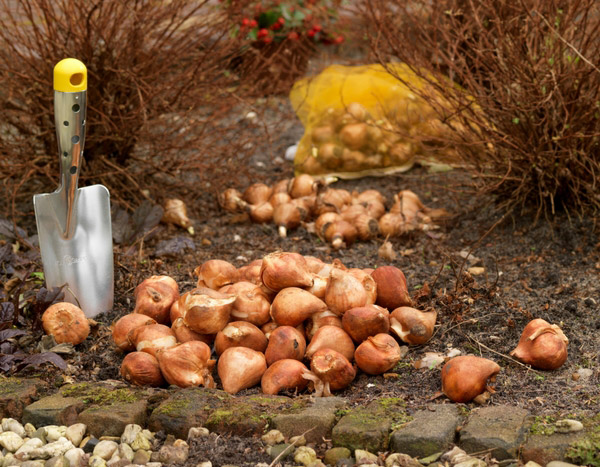
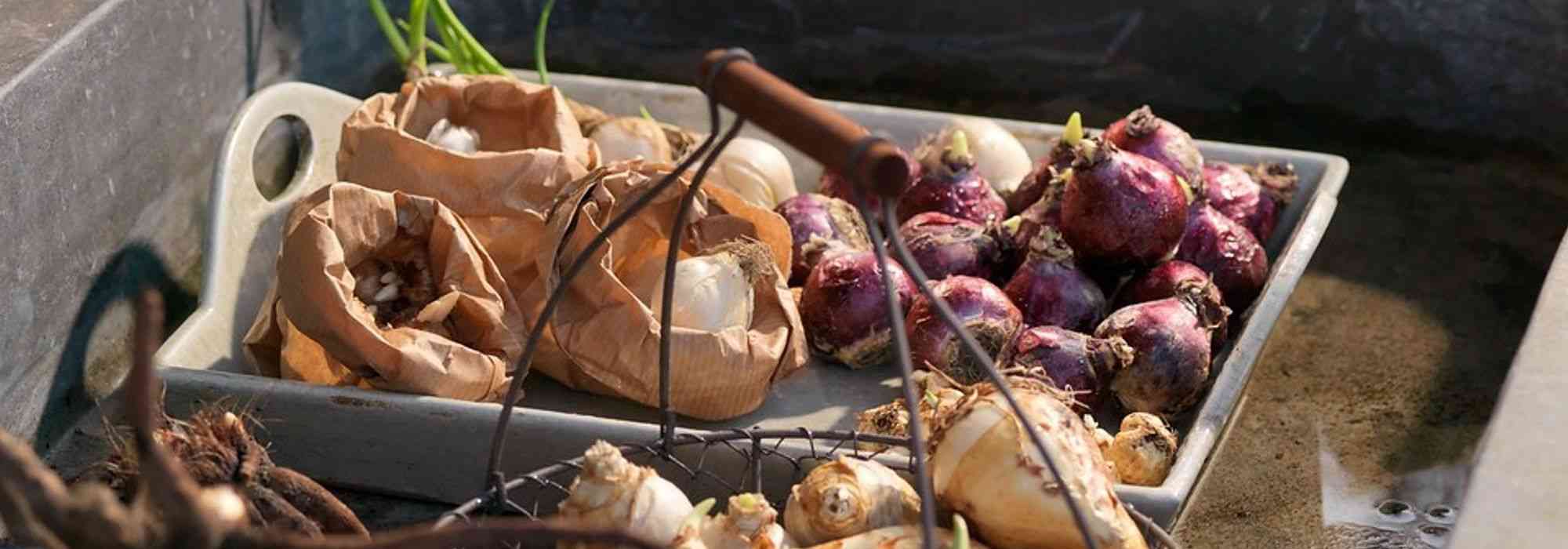
Bulb as big as two rabbit droppings! For a plant that's supposed to reach 2m tall... It won't be any time soon... Nothing is sprouting at the moment.
Veronique, 02/05/2025
Back-to-school special offer!
Get €10 off for every €50 you spend! And get up to €40 off on a single order.
How does it work?
1. Shop your favourites
Add your favourite plants to your basket. For every €50 you spend (excluding delivery charges, store credit and the plastic-free option), you’ll receive a €10 voucher.
€50 spent = €10 voucher
€100 spent = €20 voucher
€150 spent = €30 voucher
€200 spent = €40 voucher
2. Place your order
Once your basket reaches one of the spending thresholds, place your order. You can even choose your delivery date!
3. Receive your voucher
As soon as your order has been shipped, you’ll receive an email containing your personal voucher code and its value.
4. Use it on your next order
Your voucher is valid for 90 days from the date you receive it. It can be used once only, on a new order worth at least the value of the voucher, excluding delivery charges.
Please note: Vouchers can be combined with other offers, but cannot be split or refunded.
Why not try an alternative variety in stock?
View all →
Available in 1 sizes

Available in 2 sizes

Available in 2 sizes

Available in 4 sizes

Available in 1 sizes

Available in 2 sizes

Available in 2 sizes

Available in 1 sizes

Available in 2 sizes
This plant carries a 12 months recovery warranty
More information
We guarantee the quality of our plants for a full growing cycle, and will replace at our expense any plant that fails to recover under normal climatic and planting conditions.
Does this plant fit my garden?
Set up your Plantfit profile →
Description
Colocasia 'Imperial Gigante' is a recent variety of Elephant Ear, resembling a giant tropical plant. This hybrid, capable of reaching a height of over 2m (7ft) in open ground, seems to be struck by gigantism and attracts attention with the architectural design of its elongated heart-shaped, green leaves shaded with black, and a network of veins tinged with a light and vibrant green. More hardy than it seems, this perennial can withstand -8°C (17.6°F) in open ground, under a thick protective mulch. It is an absolutely superb plant near water features and essential for creating a lush and exotic setting on a terrace or patio.
Originating from India, Colocasia esculenta, also known as Edible Taro, spread long ago to the tropical regions of South America and Oceania, and later to tropical Africa. This rhizomatous perennial plant is a cousin of Arums and Ipomoeas, belonging to the araceae family. The hybrid cultivar 'Imperial Gigante', introduced in 2012 by the American specialist of the genus Brian Williams, is an imposing herbaceous perennial plant, developing from a tuberous rhizome, forming a scaly corm covered with thick skin. The adult plant often exceeds 2m (7ft) in height with an average diameter of 1.80m (6ft). It consists of magnificent foliage, darker or lighter greenish-grey, veined with acid green. The leaf can reach 90cm (35in) in length and 70cm (28in) in width, carried by a long light green petiole, sheathing at the base. The leaf surface allows water to slide off with good water-repellent properties. During its growth, the plant branches out from the base, which allows it to remain compact. If you remove an old leaf, two new ones take its place.
Colocasia 'Imperial Gigante' is an impressive plant, easy to grow in the garden as well as the house. It likes a sunny or semi-shaded exposure, and can withstand temperatures down to -8/-10°C (17.6/14°F) under thick protective mulch, which is quite an achievement for a tropical plant! It stands out as a focal point in a contemporary or exotic setting, whether planted on a terrace in a large container or on the banks of a water feature. This voracious plant gets along well with arums, banana trees, Gunnera, or arboreal ferns, whose magnificence is reminiscent of ancient forests.
True taro is consumed in Africa, China, Polynesia, and several other parts of the world. Its tubers are rich in starch, and its young leaves are consumed like spinach.

Colocasia Imperial Gigante - Elephants Ear in pictures

Flowering
Foliage
Plant habit
Safety measures
Botanical data
Colocasia
x esculenta
Imperial Gigante
Araceae
Taro, Elephant Ear, Cocoyam, Eddo, Dasheen
Cultivar or hybrid
atteintescutaneomuqueuses
Cette plante peut provoquer l'apparition de réactions cutanées indésirables, une atteinte des yeux, ou des difficultés respiratoires si elle est ingérée.
Ne la plantez pas là où de jeunes enfants peuvent évoluer. Evitez tout contact avec la peau: privilégiez l'emploi de gants pour la manipuler. En cas de contact, lavez-vous soigneusement les mains et rincez abondamment à l'eau la zone concernée. Lavez les vêtements entrés en contact. En cas de réaction cutanée, contactez votre médecin ou le centre antipoison le plus proche de chez vous. En cas d'atteinte étendue ou de difficultés respiratoires, appelez immédiatement le 15 ou le 112.Pensez à conserver l'étiquette de la plante, à la photographier ou à noter son nom, afin de faciliter le travail des professionnels de santé.
Davantage d'informations sur https://plantes-risque.info
Planting and care
Plant in a sunny location or possibly partial shade. They require moist to wet, fertile and humus-rich soil and nitrogen fertilizer. You can plant your Colocasia in large containers, with regular and abundant watering during the growing season, reduced in winter. If the atmosphere is too dry in winter, the plants may be attacked by red spider mite. Usually grown as greenhouse or conservatory plants, they are actually quite hardy perennials (down to -10°C (14°F)). You can grow them in the garden by mulching the crown well in winter. If the soil becomes waterlogged in winter the rootstock may rot, so the soil will need to be drained. Watch out for attacks from slugs and snails that enjoy feasting on young leaves.
Planting period
Intended location
Care
Planting & care advice
-

-

-
-
-
-
-

-
-
, onOrder confirmed
Reply from on Promesse de fleurs
Haven't found what you were looking for?
Hardiness is the lowest winter temperature a plant can endure without suffering serious damage or even dying. However, hardiness is affected by location (a sheltered area, such as a patio), protection (winter cover) and soil type (hardiness is improved by well-drained soil).
In temperate climates, pruning of spring-flowering shrubs (forsythia, spireas, etc.) should be done just after flowering.
Pruning of summer-flowering shrubs (Indian Lilac, Perovskia, etc.) can be done in winter or spring.
In cold regions as well as with frost-sensitive plants, avoid pruning too early when severe frosts may still occur.
The sowing periods indicated on our website apply to countries and regions within USDA Zone 8 (France, UK, Ireland, Netherlands).
In colder areas (Scandinavia, Poland, Austria...), delay any outdoor sowing by 3-4 weeks, or sow under glass.
In warmer climes (Italy, Spain, Greece, etc.), bring outdoor sowing forward by a few weeks.
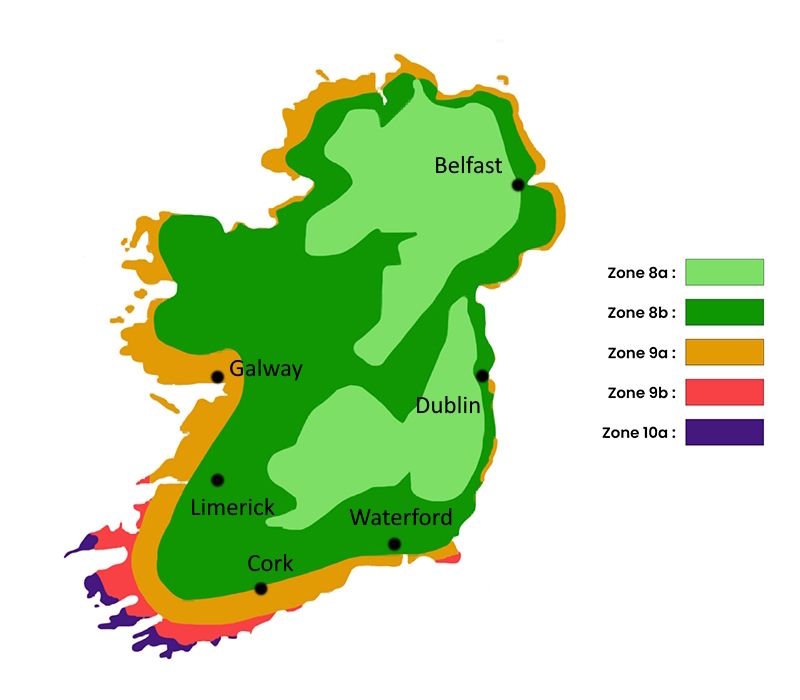
The planting period indicated on our website applies to regions in USDA Zone 9a (East Coast and Midlands: Dublin, Wexford, Waterford, Kilkenny, Portlaoise). It will vary depending on where you live:
- On the west coast and in the north-west (Galway, Limerick, Sligo, Donegal, Westport), delay planting by 1 to 2 weeks in spring and bring it forward by 1 to 2 weeks in autumn compared to the dates given, preferably choosing periods without strong winds.
- In the inland hills and plateaus (Wicklow Mountains, Macgillycuddy’s Reeks, Connemara, Killarney), it is best to plant in spring (April–May) or autumn (September–October), avoiding periods of waterlogged soil in winter and strong winds, which pose the main risk to newly planted trees in these areas.
The flowering period indicated on our website applies to regions in USDA Zone 9a, such as the East Coast and Midlands, including Dublin, Wexford, Waterford, Kilkenny and Portlaoise.
This will vary depending on where you live:
- On the west coast and in the northwest (Galway, Limerick, Sligo, Donegal and Westport), it will be delayed by one to two weeks compared to the given dates, due to stronger Atlantic winds and less spring sunshine.
- In the inland hills and plateaus (the Wicklow Mountains, the Macgillycuddy's Reeks, Connemara and Killarney), flowering will be delayed by two to three weeks. Flowering mainly occurs between May and July, with the limiting factors being less frost and more of the excessive humidity, strong winds and lack of sunshine that are characteristic of these areas.
The harvest period stated on our website applies to regions in USDA zones 8b to 9a (East, South-East and southern coast: Eastern Leinster, County Wexford and County Waterford, Cork region: Dublin, Wexford, Waterford, Kilkenny, Cork). It will vary depending on where you live:
- In the Midlands and the inland plains: the Middle Shannon Valley, Westmeath, Offaly, Longford, Cavan and Monaghan (Athlone, Mullingar, Tullamore, Longford, Cavan, Monaghan), in USDA zones 8a to 8b, the harvest will be delayed by 1 to 2 weeks compared with the dates given. Far from the moderating influence of the sea, these plains experience late frosts right up until the end of spring. The heavy, peaty soils warm slowly here, and damp patches form pockets of frost. Wait until the soil has dried out and warmed up before planting, and protect young plants with a fleece on clear nights.
- In the Atlantic West and North-West: Kerry, Clare, Galway, Connemara, Mayo, Sligo and Donegal (Killarney, Ennis, Galway, Westport, Sligo, Letterkenny), in USDA zones 8b to 10a, the harvest will be delayed by 1 to 3 weeks compared with the dates given. Summers here are cloudier, rainier and windier than in the east, which slows down ripening and encourages late blight and other fungal diseases. Kerry and Clare are at the lower end of the range, whilst Mayo and Donegal, which are cooler and more exposed, are at the upper end. However, the mild coastal winters mean that leafy vegetables and root vegetables can be harvested at dates close to those indicated, or even earlier: shelter crops from the wind with hedges and grow heat-loving plants in greenhouses or polytunnels.
- In the highlands, above 200 m: the Wicklow Mountains, Macgillycuddy’s Reeks, the Galtee and Comeragh ranges, the Twelve Bens in Connemara and the Donegal highlands, in USDA zones 7b to 8a, the harvest will be delayed by 2 to 4 weeks compared with the dates given, depending on the altitude, taking care to beat the first early frosts, which may occur as early as the start of autumn. Wind, constant damp and late frosts lasting into early summer significantly shorten the growing season. Opt for sheltered, south-facing slopes, early-maturing varieties and growing under cover.
Depending on your garden’s aspect, these variations can range from one to two weeks. A frost-prone valley floor delays the harvest, whilst a south-facing wall brings it forward.
Shipping country and language
Your country of residence may be:
Your country of residence is:
For a better user experience on our website, you can select:
Your shipping country:
-
 Austria
-
 Belgium
-
 Bosnia & Herzegovina
-
 Bulgaria
-
 Croatia
-
 Cyprus
-
 Czechia
-
 Denmark
-
 Estonia
-
 Finland
-
 France
-
 Germany
-
 Greece
-
 Hungary
-
 Iceland
-
 Ireland
-
 Italy
-
 Latvia
-
 Liechtenstein
-
 Lithuania
-
 Luxembourg
-
 Malta
-
 Netherlands
-
 Poland
-
 Portugal
-
 Romania
-
 Serbia
-
 Slovakia
-
 Slovenia
-
 Spain
-
 Sweden
-
 Switzerland
Language:
-
French
-
 English
-
Spanish
-
Italian
-
German
-
Portuguese
-
Dutch
-
Finnish
-
[pl]
My Account
Hello
My wish lists
My cart
Log in / Register
Existing customer?
This form is protected by reCAPTCHA - the Google Privacy Policy and Terms of Service apply.
New customer?
Create an account to track your orders, access our customer service and, if you wish, make the most of our upcoming offers.