Melia azedarach
Melia azedarach
Melia azedarach
Melia azedarach
Melia azedarach
Melia azedarach
Chinaberry Tree, Bead Tree, Cape Lilac, Persian Lilac
Back-to-school special offer!
Get €10 off for every €50 you spend! And get up to €40 off on a single order.
How does it work?
1. Shop your favourites
Add your favourite plants to your basket. For every €50 you spend (excluding delivery charges, store credit and the plastic-free option), you’ll receive a €10 voucher.
€50 spent = €10 voucher
€100 spent = €20 voucher
€150 spent = €30 voucher
€200 spent = €40 voucher
2. Place your order
Once your basket reaches one of the spending thresholds, place your order. You can even choose your delivery date!
3. Receive your voucher
As soon as your order has been shipped, you’ll receive an email containing your personal voucher code and its value.
4. Use it on your next order
Your voucher is valid for 90 days from the date you receive it. It can be used once only, on a new order worth at least the value of the voucher, excluding delivery charges.
Please note: Vouchers can be combined with other offers, but cannot be split or refunded.
This plant carries a 24 months recovery warranty
More information
We guarantee the quality of our plants for a full growing cycle, and will replace at our expense any plant that fails to recover under normal climatic and planting conditions.
Does this plant fit my garden?
Set up your Plantfit profile →
Description
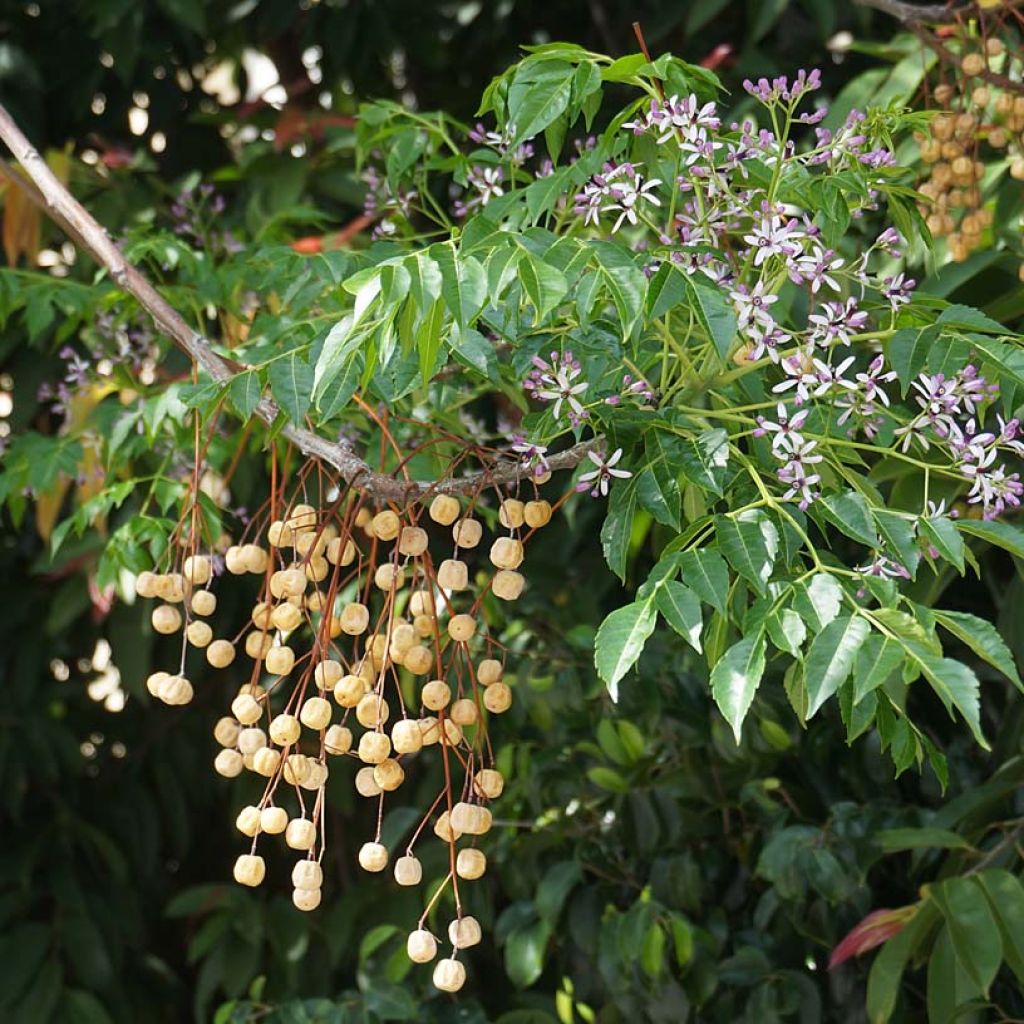
Melia azedarach has various names such as Chinaberry tree, Persian lilac, or Ceylon mahogany. Cultivated for centuries as a temple tree in Persia, Ceylon, and Malaysia, this small ornamental and useful tree has made its way through the centuries, from the arid regions of the Himalayas to the Mediterranean region. Spared by insects and diseases, it charms with its light and fragrant flowering, reminiscent of lilac, and then with its honey-coloured fruits that persist on the branches in winter. In the absence of being spectacular, it presents an undeniable advantage for gardeners: its extreme robustness, coupled with an undemanding nature. This deciduous shrub thrives in any well-drained soil and in any exposure, with only one weakness: it fears very cold winters.
The genus Melia, belonging to the Meliaceae family, has only one species, Melia azedarach, widely distributed in Asia, from Iraq to Japan, southern China to Australia, eastern Africa, and the Mediterranean basin. This species is quite polymorphic depending on its environment. It is native to the southern Himalayas (Baluchistan and Kashmir). It owes its nickname "Chinaberry tree" to the use that was made in the past of its naturally pierced fruit stones. It is also called Ceylon mahogany, as it is a close relative of other mahogany trees (Khaya, Swietenia, Dysoxylum), tropical trees highly prized in cabinet-making. The lifespan of Melia azedarach reaches 200 years and its growth is very fast, at least during the first years. It is hardy in zone 8, down to -12 to -15°C (10.4 to 5°F).
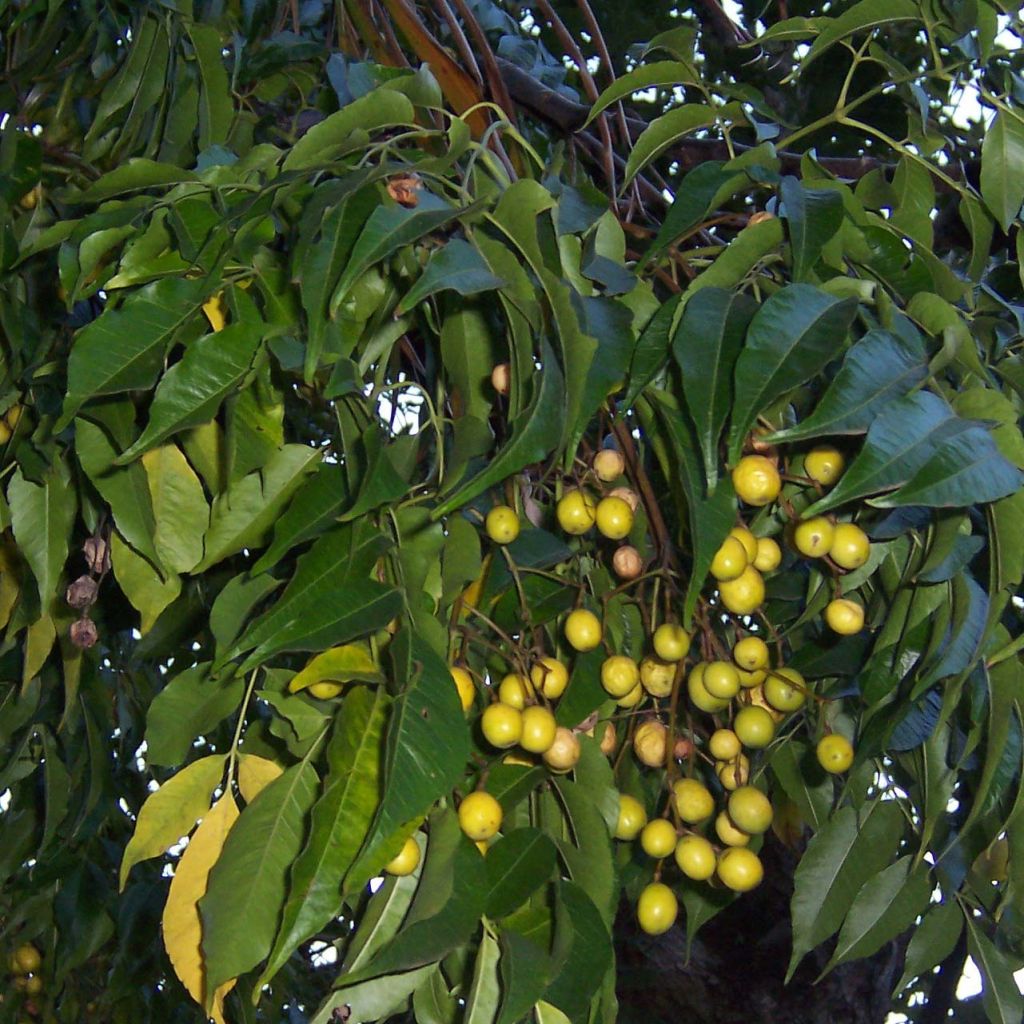
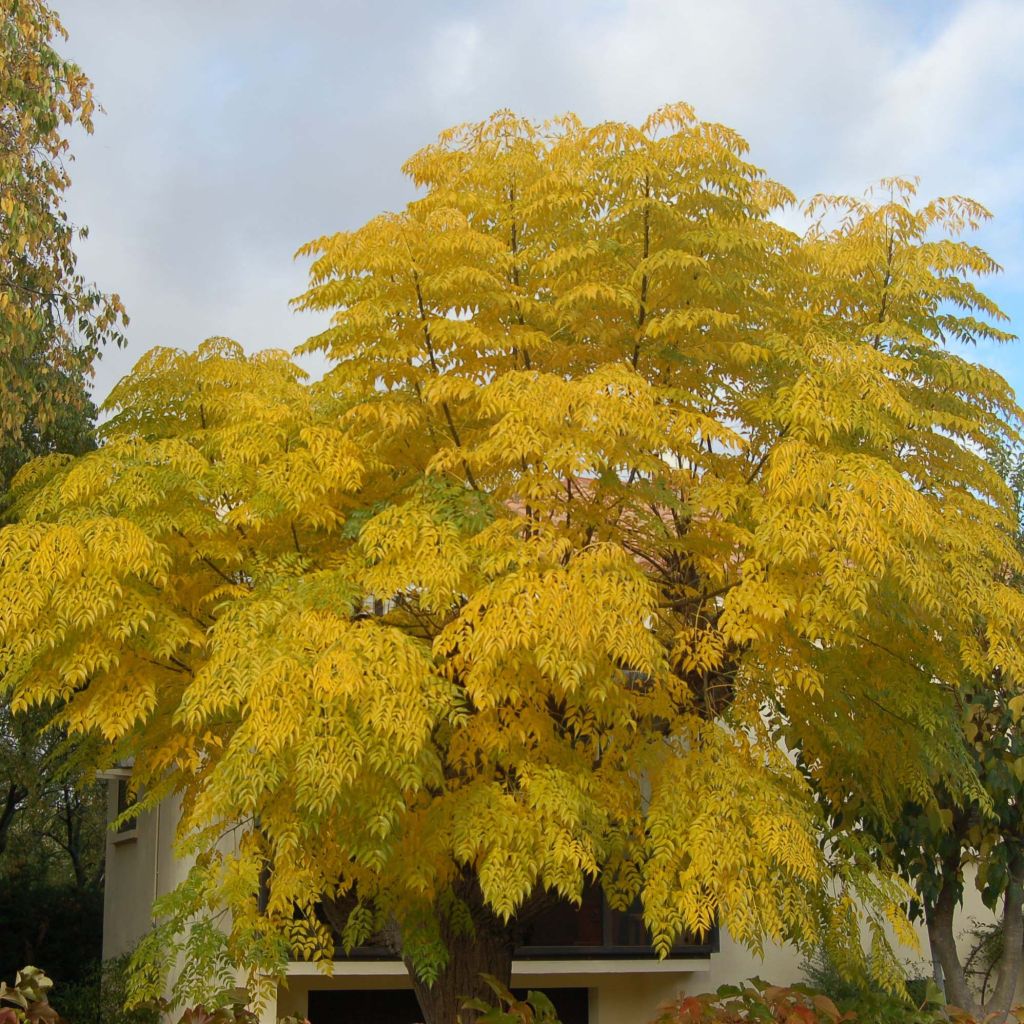
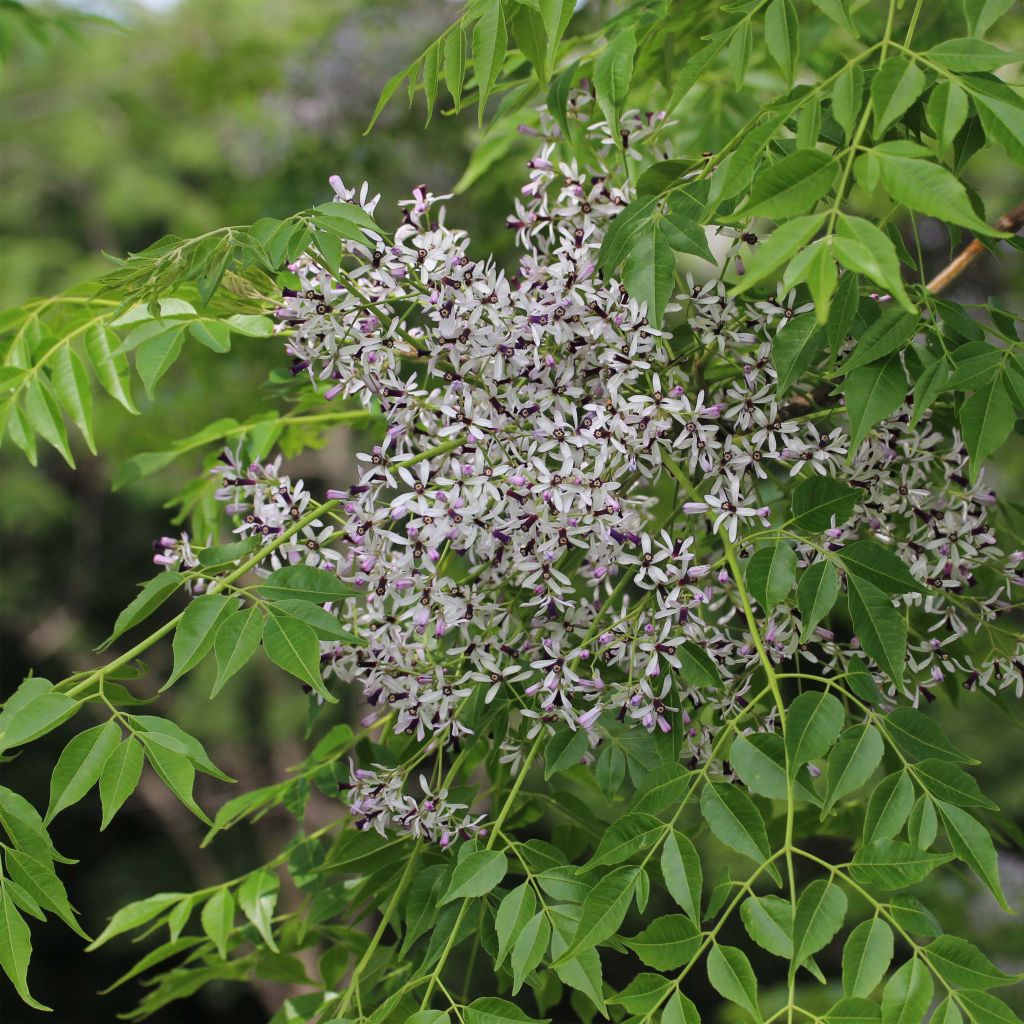
This small tree has a spreading habit with a rounded and airy crown. It reaches an average height of 9m (29ft) with a spread of 3m (10ft). Its bark is greyish-brown, smooth, and cracks longitudinally with age, revealing a wood of ochre colour, while the young branches are slightly tinged with red. Its root system is extensive and it can sucker at a distance, like the strawberry tree. Its foliage falls in autumn and reappears late in spring, at the same time as the flowering. It consists of long leaves reaching 25 to 45cm (10 to 18in) in length, divided into numerous ovate and pointed leaflets with more or less toothed edges. They are a bright green, shiny on the upper side, lighter underneath, and then turn yellow before falling in autumn. When crushed, the leaves give off an odour that can be unpleasant, due to the presence of insecticidal compounds. The flowering takes place in May-June, earlier or later depending on the climate. It appears as loose panicles measuring 20 to 25cm (8 to 10in) long, emerging from the leaf axils on the current year's branches. These fragrant clusters are formed by numerous small tubular and star-shaped flowers with 5 petals, about 1.5 to 2cm (1in) wide, and light lilac in colour. The corolla tube is a deeper violet, and the anthers are yellow. This flowering gives way to clusters of round fruits, about 1.5cm (1in) in diameter, which are initially acidic green, becoming honey-yellow when ripe. They persist on the branches long after the leaves have fallen, delighting birds and bats that disperse the seeds. The hard, oval, ribbed fruit stone is naturally pierced like a pearl. It contains 6 chambers with 6 seeds that resemble brown rice grains.
Melia azedarach is not one of those shrubs that you dream of acquiring at all costs, but it is not devoid of charm, and it is valuable for bringing a touch of luxuriance to the barren or wild areas of the garden, even in dry and poor soil. It stands out during flowering, then fades into the background until winter when its fruits attract attention. It can be planted in a border or an informal hedge with other undemanding shrubs such as the Bee Bee tree, Elaeagnus, wild roses, strawberry trees, elderberries, pyracantha, Tetraclinis, large viburnums, and many others.
Properties, uses:
In Italy, it was once cultivated to make rosary beads from its stones. The oily seeds produce oil used in soaps, waxes, lubricants, as well as a vermifuge and for treating certain liver and kidney disorders. Its foliage is used as fodder. This medicinal plant is highly appreciated in Ayurvedic medicine.
The shrub also has quality wood, ranging in colour from yellowish-pink to dark red. It is rot-resistant, with a fine grain. It is called "Ceylon mahogany" and resembles teak (Tectona grandis).
Report an error about the product description
Melia azedarach in pictures
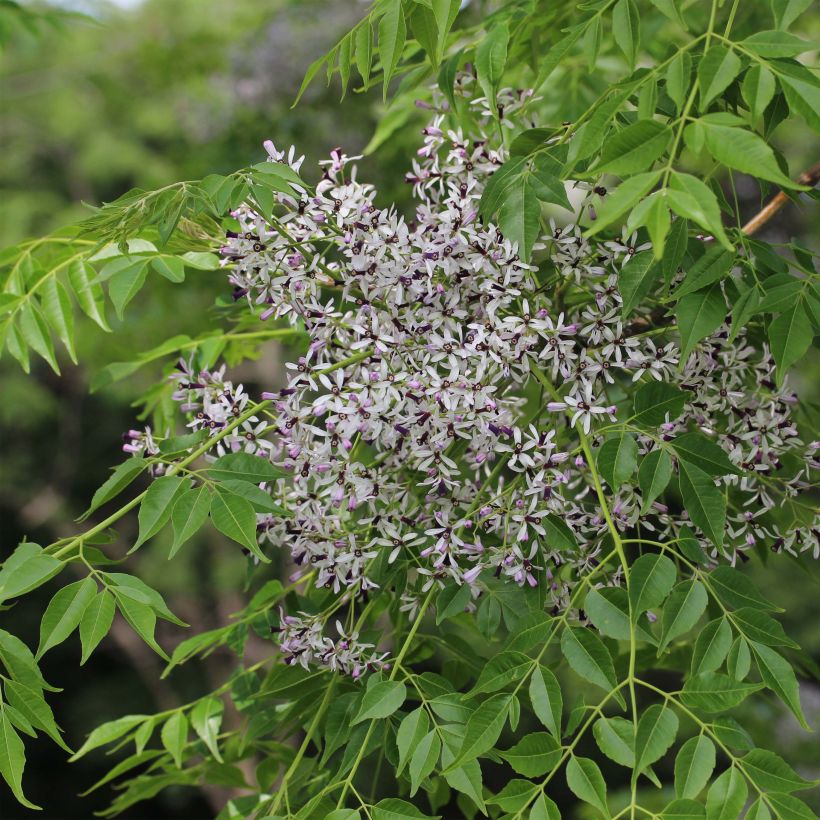
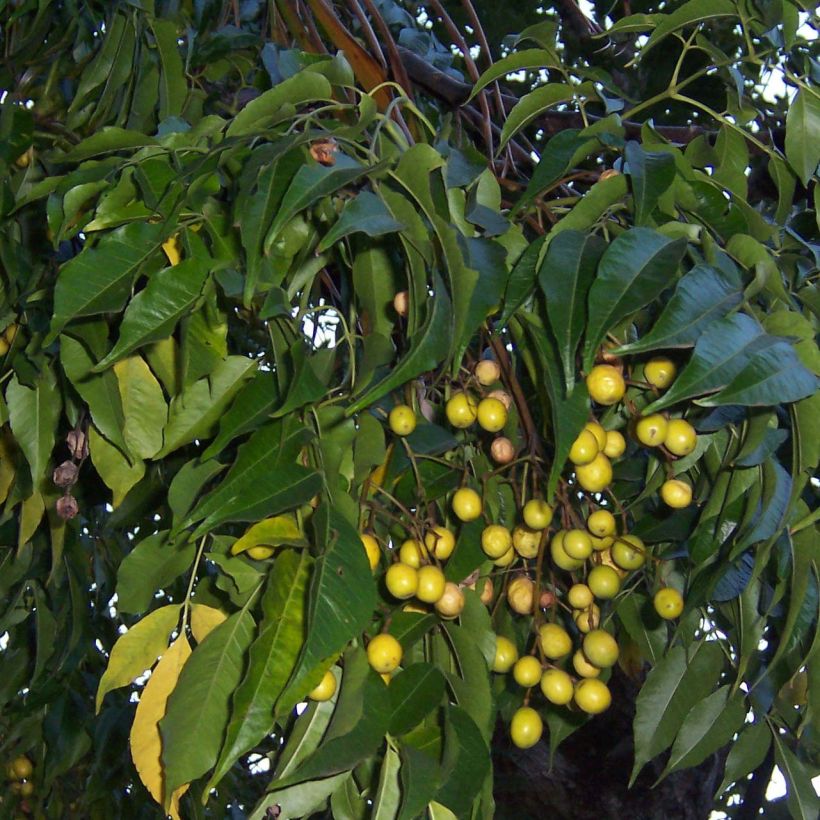
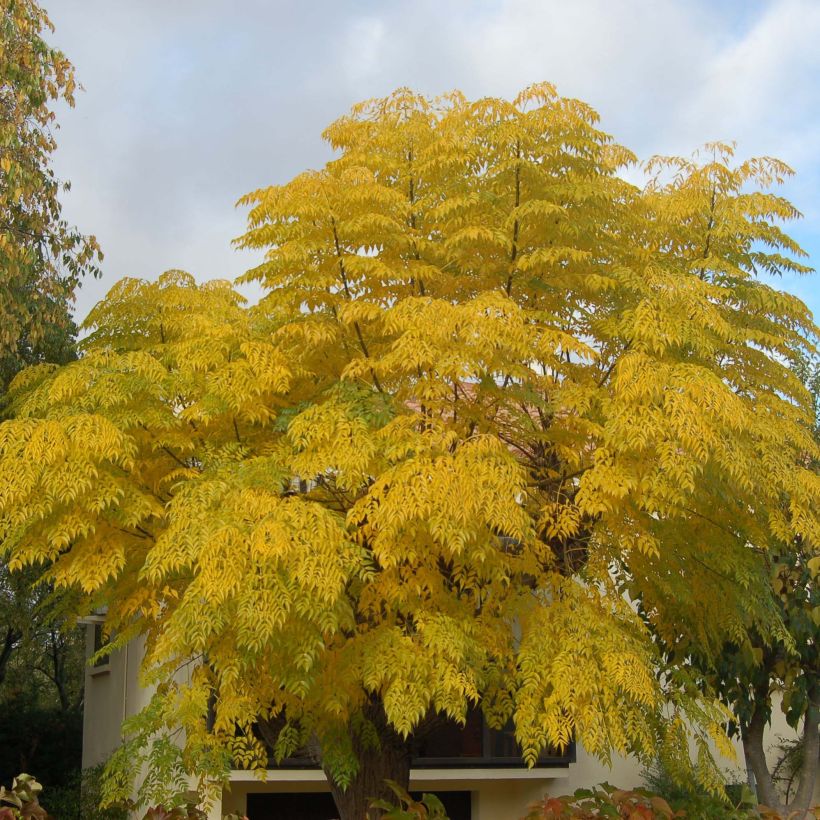
Plant habit
Flowering
Foliage
Planting and care
Plant in spring, or in autumn in mild climates. Plant it in well-prepared ordinary soil. This bush accepts all properly drained soils, slightly acidic, neutral, or slightly calcareous. It prefers deep soils, not too poor and slightly moist, but it adapts perfectly to poor, mediocre, and dry soils in summer once established. Choose a location sheltered from strong winds, as its wood is quite brittle. A broken tree lying on the ground will regrow from the stump. Monitor watering to help it establish. Watch for the appearance of suckers, which can emerge at a distance from the stump when the tree has been damaged by the wind, a severe cut at the base of the trunk, or intense cold.
Planting period
Intended location
Care
Planting & care advice
-

-
-
-

-
-
-

-

This item has not been reviewed yet - be the first to leave a review about it.
Recently viewed products
Haven't found what you were looking for?
Hardiness is the lowest winter temperature a plant can endure without suffering serious damage or even dying. However, hardiness is affected by location (a sheltered area, such as a patio), protection (winter cover) and soil type (hardiness is improved by well-drained soil).
In temperate climates, pruning of spring-flowering shrubs (forsythia, spireas, etc.) should be done just after flowering.
Pruning of summer-flowering shrubs (Indian Lilac, Perovskia, etc.) can be done in winter or spring.
In cold regions as well as with frost-sensitive plants, avoid pruning too early when severe frosts may still occur.
The harvesting period indicated on our website applies to countries and regions in USDA zone 8 (France, England, Ireland, the Netherlands).
In colder areas (Scandinavia, Poland, Austria...) fruit and vegetable harvests are likely to be delayed by 3-4 weeks.
In warmer areas (Italy, Spain, Greece, etc.), harvesting will probably take place earlier, depending on weather conditions.
The sowing periods indicated on our website apply to countries and regions within USDA Zone 8 (France, UK, Ireland, Netherlands).
In colder areas (Scandinavia, Poland, Austria...), delay any outdoor sowing by 3-4 weeks, or sow under glass.
In warmer climes (Italy, Spain, Greece, etc.), bring outdoor sowing forward by a few weeks.
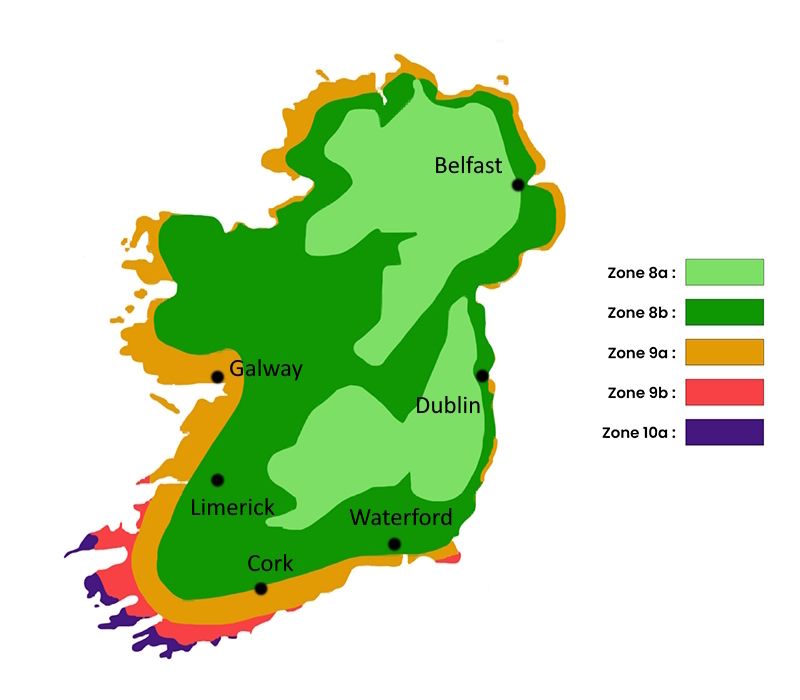
The planting period indicated on our website applies to regions in USDA Zone 9a (East Coast and Midlands: Dublin, Wexford, Waterford, Kilkenny, Portlaoise). It will vary depending on where you live:
- On the west coast and in the north-west (Galway, Limerick, Sligo, Donegal, Westport), delay planting by 1 to 2 weeks in spring and bring it forward by 1 to 2 weeks in autumn compared to the dates given, preferably choosing periods without strong winds.
- In the inland hills and plateaus (Wicklow Mountains, Macgillycuddy’s Reeks, Connemara, Killarney), it is best to plant in spring (April–May) or autumn (September–October), avoiding periods of waterlogged soil in winter and strong winds, which pose the main risk to newly planted trees in these areas.
The flowering period indicated on our website applies to regions in USDA Zone 9a, such as the East Coast and Midlands, including Dublin, Wexford, Waterford, Kilkenny and Portlaoise.
This will vary depending on where you live:
- On the west coast and in the northwest (Galway, Limerick, Sligo, Donegal and Westport), it will be delayed by one to two weeks compared to the given dates, due to stronger Atlantic winds and less spring sunshine.
- In the inland hills and plateaus (the Wicklow Mountains, the Macgillycuddy's Reeks, Connemara and Killarney), flowering will be delayed by two to three weeks. Flowering mainly occurs between May and July, with the limiting factors being less frost and more of the excessive humidity, strong winds and lack of sunshine that are characteristic of these areas.
Shipping country and language
Your country of residence may be:
Your country of residence is:
For a better user experience on our website, you can select:
Your shipping country:
-
 Austria
-
 Belgium
-
 Bosnia & Herzegovina
-
 Bulgaria
-
 Croatia
-
 Cyprus
-
 Czechia
-
 Denmark
-
 Estonia
-
 Finland
-
 France
-
 Germany
-
 Greece
-
 Hungary
-
 Iceland
-
 Ireland
-
 Italy
Italy
-
 Latvia
-
 Liechtenstein
-
 Lithuania
-
 Luxembourg
-
 Malta
Malta
-
 Netherlands
-
 Poland
-
 Portugal
-
 Romania
-
 Serbia
-
 Slovakia
-
 Slovenia
-
 Spain
Spain
-
 Sweden
-
 Switzerland
Language:
-
French
-
 English
-
Spanish
-
Italian
-
German
-
Portuguese
-
Dutch
-
Finnish
My Account
Hello
My wish lists
My cart
Log in / Register
Existing customer?
This form is protected by reCAPTCHA - the Google Privacy Policy and Terms of Service apply.
New customer?
Create an account to track your orders, access our customer service and, if you wish, make the most of our upcoming offers.