
Cuphea hyssopifolia Purple
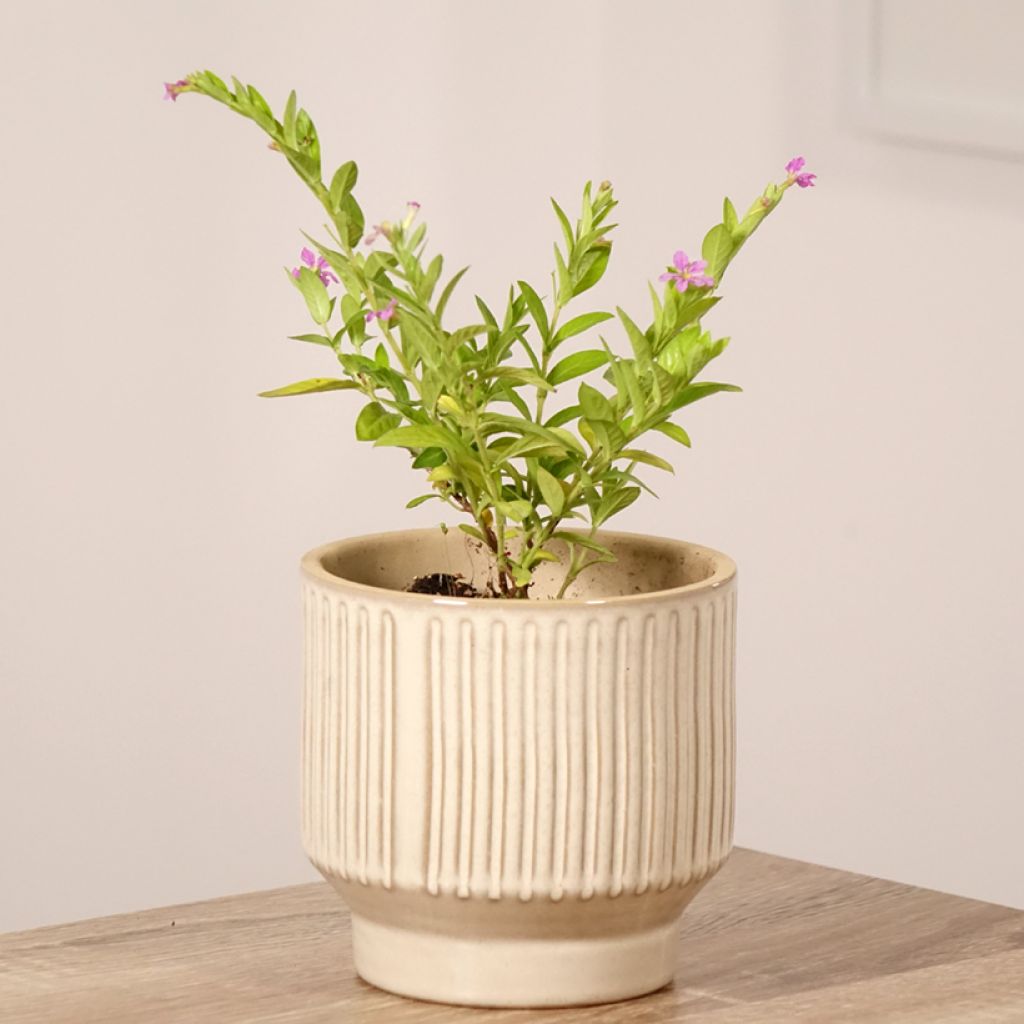
Cuphea hyssopifolia Purple
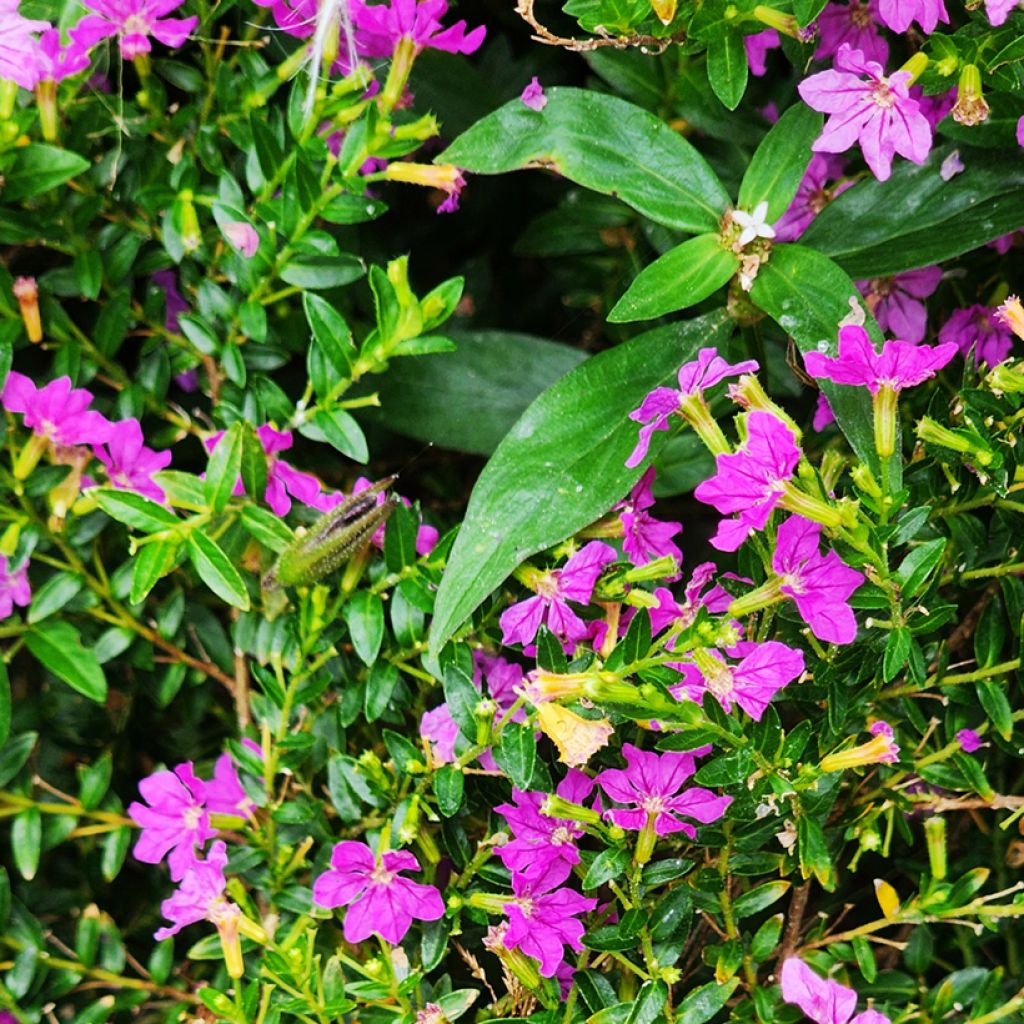
Cuphea hyssopifolia Purple
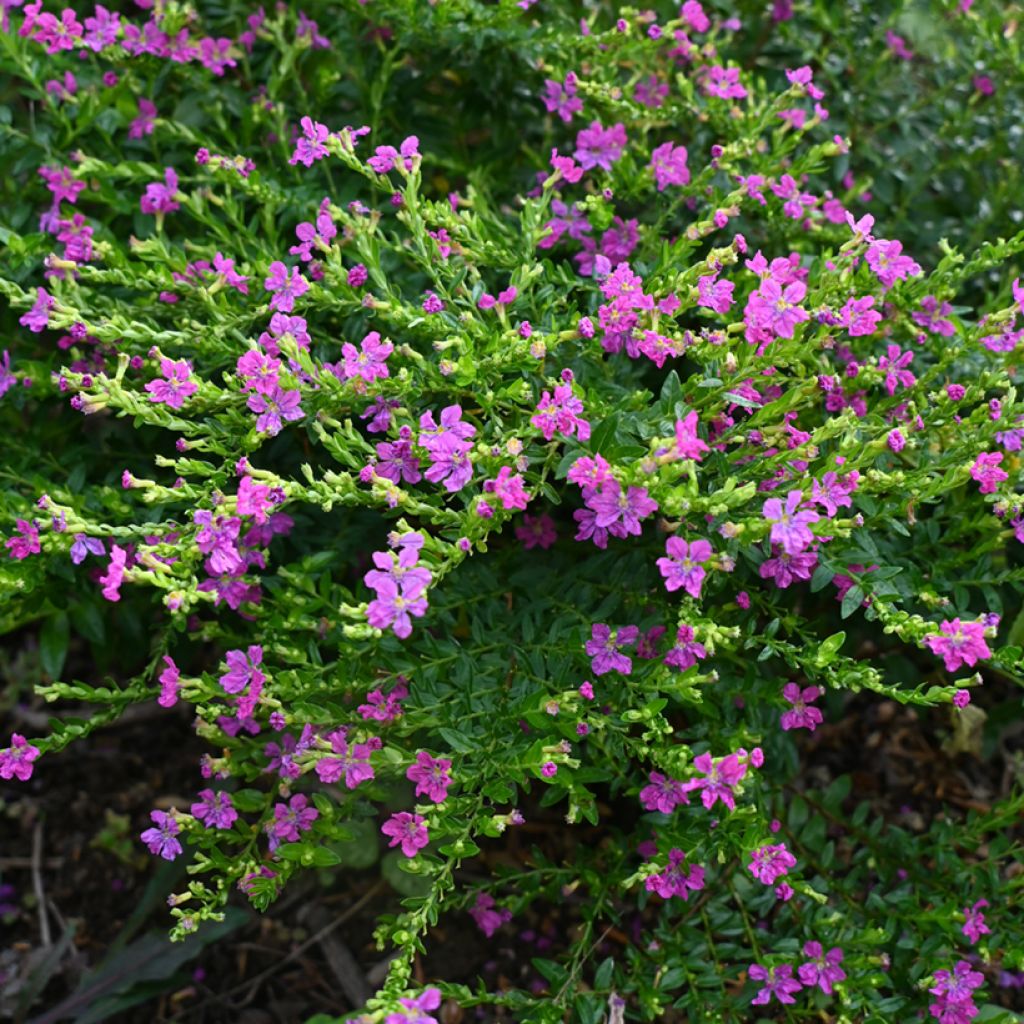
Cuphea hyssopifolia Purple
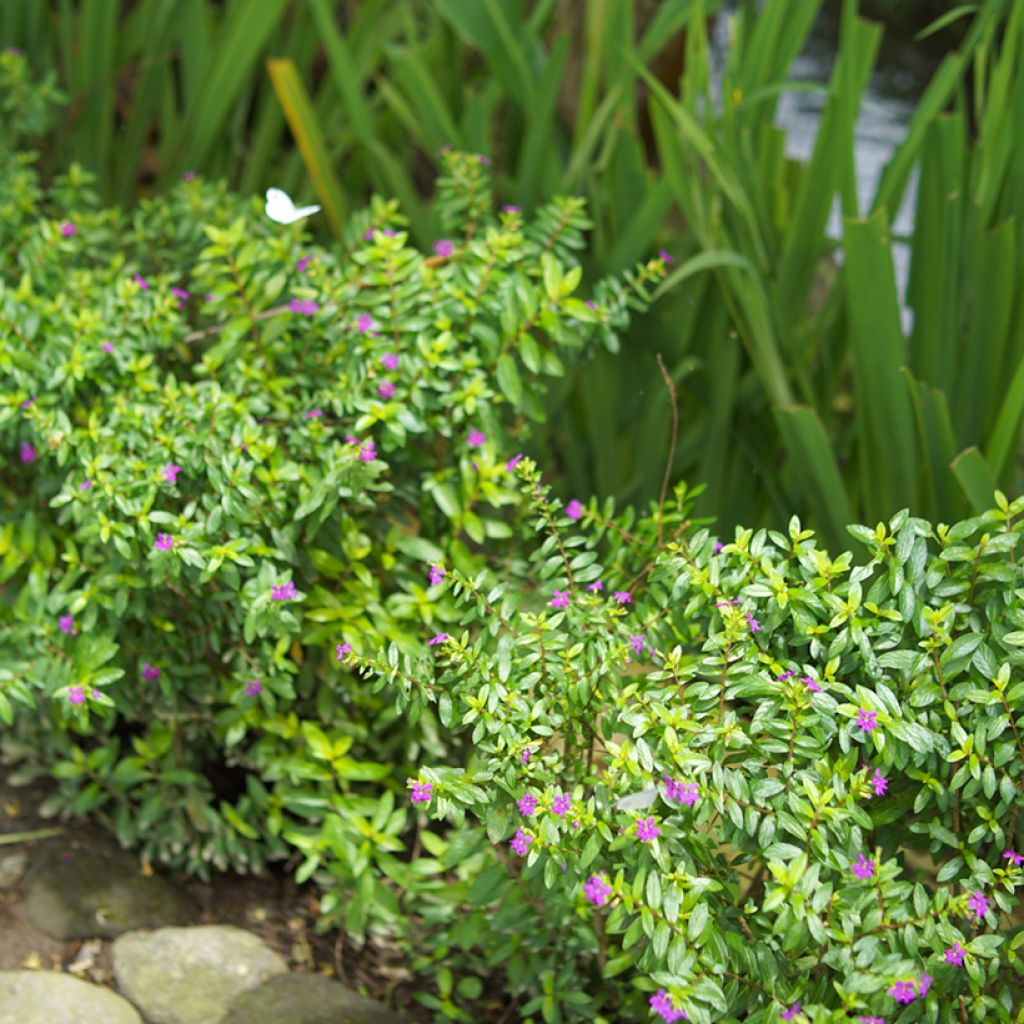
Cuphea hyssopifolia Purple
Cuphea hyssopifolia Purple

Cuphea hyssopifolia Purple
Cuphea hyssopifolia Purple
Cuphea hyssopifolia Purple
Cuphea hyssopifolia Purple
Mexican Heather, False Heather, Hawaiian Heather
A little disappointed with this order. Unlike the previous ones (ordered in spring), these have yellowed leaves. I've planted them nonetheless. Perhaps I ordered them at the wrong time!
Syl. B.B, 05/09/2025
Back-to-school special offer!
Get €10 off for every €50 you spend! And get up to €40 off on a single order.
How does it work?
1. Shop your favourites
Add your favourite plants to your basket. For every €50 you spend (excluding delivery charges, store credit and the plastic-free option), you’ll receive a €10 voucher.
€50 spent = €10 voucher
€100 spent = €20 voucher
€150 spent = €30 voucher
€200 spent = €40 voucher
2. Place your order
Once your basket reaches one of the spending thresholds, place your order. You can even choose your delivery date!
3. Receive your voucher
As soon as your order has been shipped, you’ll receive an email containing your personal voucher code and its value.
4. Use it on your next order
Your voucher is valid for 90 days from the date you receive it. It can be used once only, on a new order worth at least the value of the voucher, excluding delivery charges.
Please note: Vouchers can be combined with other offers, but cannot be split or refunded.
Why not try an alternative variety in stock?
View all →
Available in 1 sizes

Available in 1 sizes
Available in 1 sizes
Available in 1 sizes
This plant carries a 24 months recovery warranty
More information
We guarantee the quality of our plants for a full growing cycle, and will replace at our expense any plant that fails to recover under normal climatic and planting conditions.

Does this plant fit my garden?
Set up your Plantfit profile →
Description
Cuphea hyssopifolia 'Purple' is an undershrub of Mexican origin, very popular in gardens with warm climates. It forms a highly branched bushy clump, as wide as it is tall, remaining compact without requiring pruning. Its dark green evergreen foliage is adorned with small single purple-violet flowers which renew from May to autumn. Only gardens located in the mildest areas will be able to grow it in the ground. In cooler regions, it can be planted in a pot to be brought indoors to protect it from frost. Withstanding heat well, it is easy to grow in full sun provided it is regularly watered.
The genus Cuphea, which includes more than 250 species, is a member of the Lythraceae family, which includes genera of herbaceous plants in many climates (including Purple Loosestrife in Europe), and also woody plants in warm climates, like pomegranate. Cuphea hyssopifolia is an undershrub native to Mexico and Honduras, hence its common names of Mexican heather or Mexican star. It is a short-lived plant, but easily self-seeds in warm climates, and can even become invasive. It also has the particularity of easily layering when branches touch the ground.
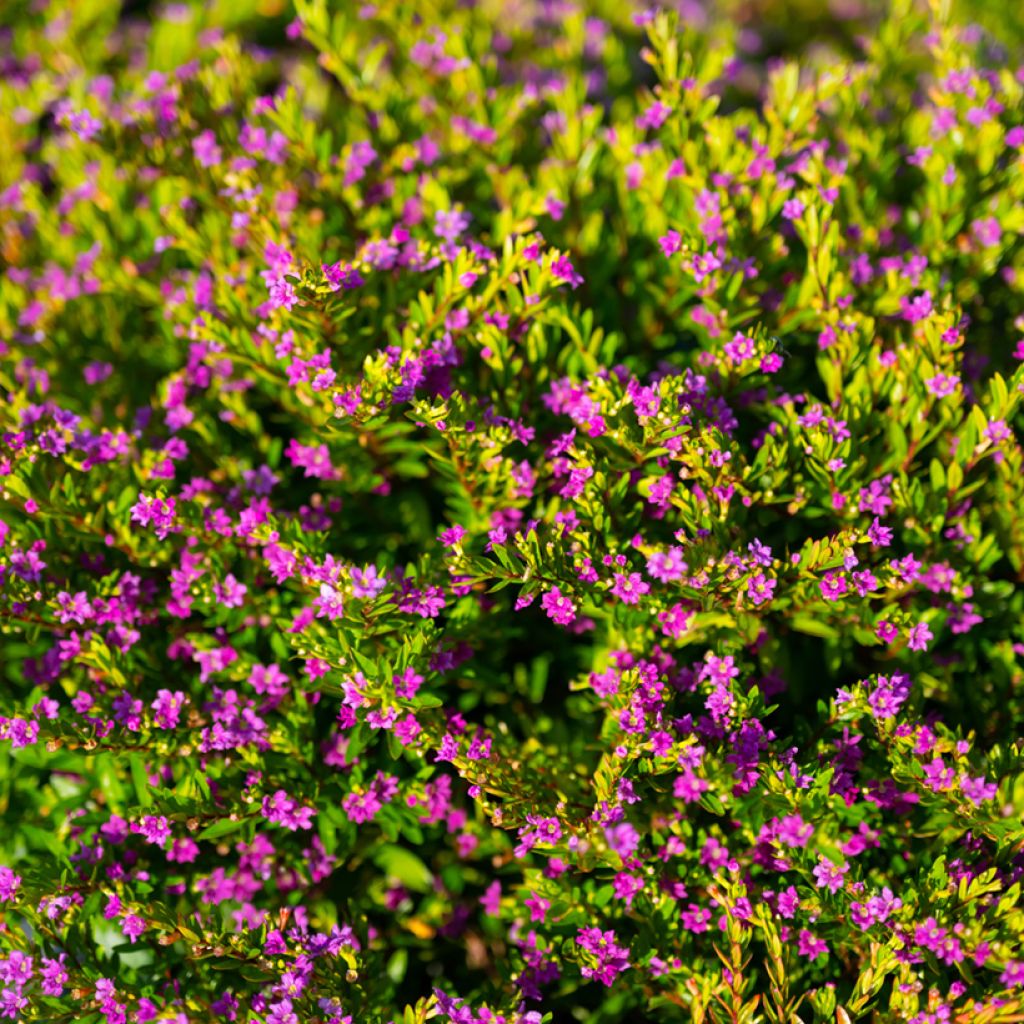
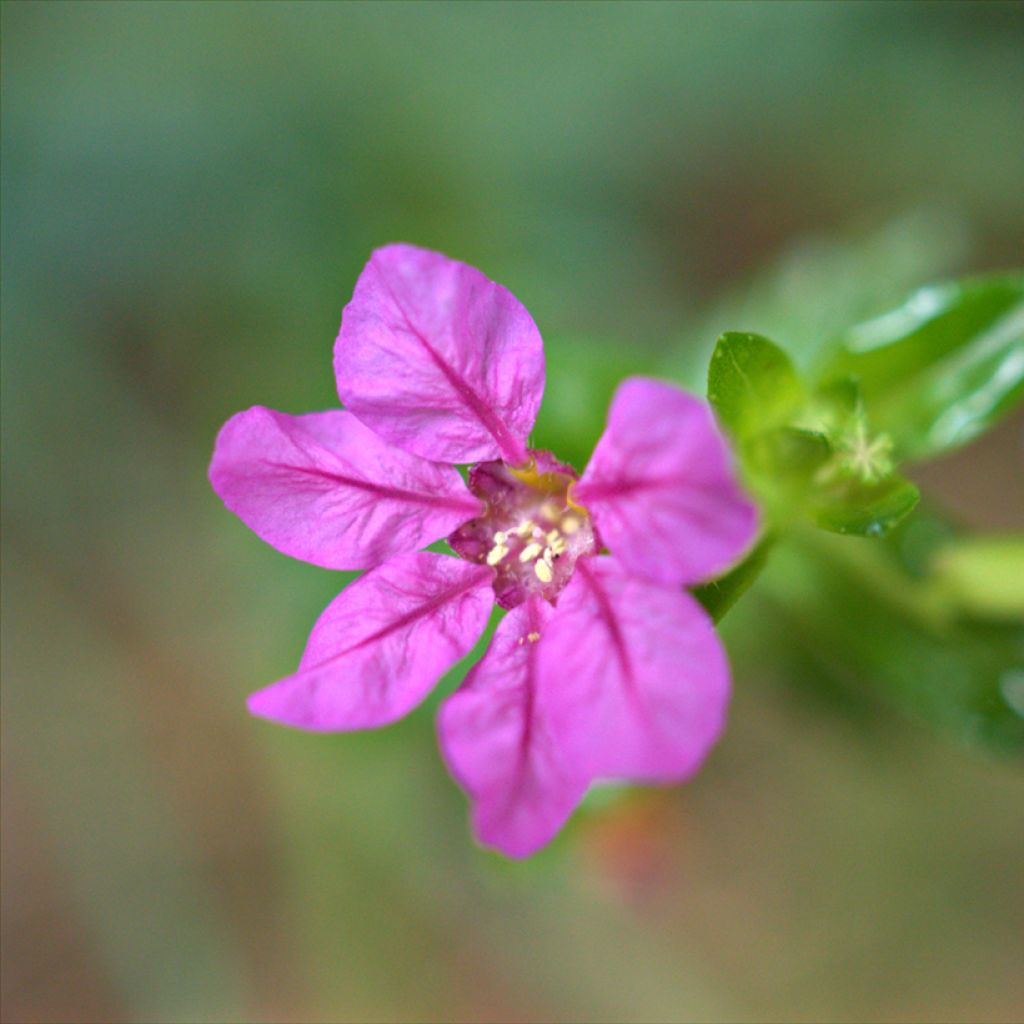
'Purple' is a horticultural variety very similar to the species, with purple-violet flowers. This undershrub forms a dense and highly branched clump, 50cm (20in) tall and as wide, or a little more, as it tends to widen over time. It bears small evergreen leaves, which are elliptical, elongated, and narrow, measuring 2 to 3cm (1in) long. The leaves are a fairly dark green colour. It has thin, erect and slightly arched branches, with lateral shoots often oriented in the same plane. The branches orient themselves in all directions, resulting in a balanced habit that does not require any pruning. From May, small single star-shaped flowers appear, about 1cm (0.4in) in diameter or more, and are well distributed in the foliage. This lovely flowering, which pleasantly contrasts with the dark and glossy mass of the foliage, extends until October. Cupheas are champions of long-lasting flowering, and this species honours that reputation. Slightly hardier than Cuphea ignea, this species can only develop in the ground in warm areas with mild winters. Resistant to light frosts of around -3 to -5°C (26.6 to 23°F). Occasionally, the foliage can be burnt during colder than normal winters. In this case, a light pruning in spring generally allows the plant to produce new shoots. It requires the best conditions to withstand winter: a sunny exposure, well-drained, non-calcareous soil, and a sheltered position against the mistral wind. Regular watering is required during the flowering period (it is a tropical plant, after all), as well as regular low-dose potassium-rich fertiliser applications (mixed with the watering water).
In cool regions, it should be planted in a pot to be sheltered in winter in a frost-free, bright room.
WIth its small dimensions, Cuphea hyssopifolia 'Purple' is an excellent border plant for gardens that can accommodate it. Plant it at the base of a clump of Strelitzia reginae, the bird of paradise, to create a strong contrast between its large leaves and flowers, and the miniature ones of the Cuphea. You can also play with shapes by planting a white-flowered Agapanthus, like Thumbelina, next to it, whose design is quite different from that of our little Cuphea. And if your climate is too cold to plant it in the garden, opt for a beautiful decorative pot. To create an exotic and blooming scene all summer long, accompany your Cuphea with Cassia floribunda, whose magnificent yellow flowers will bloom during the same period.
Report an error about the product description
Cuphea hyssopifolia Purple in pictures
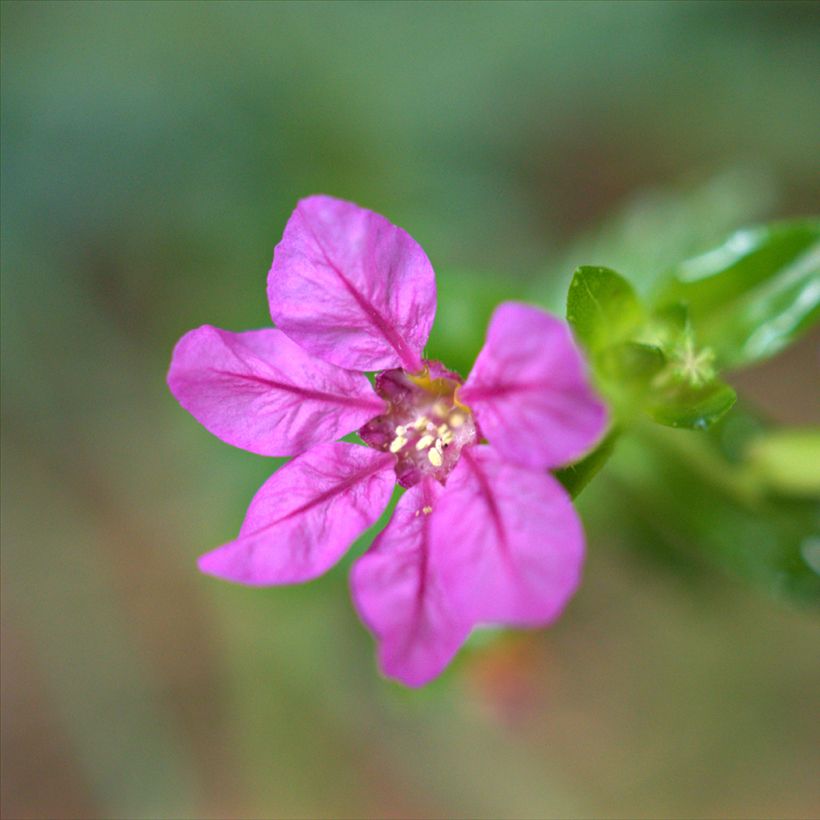
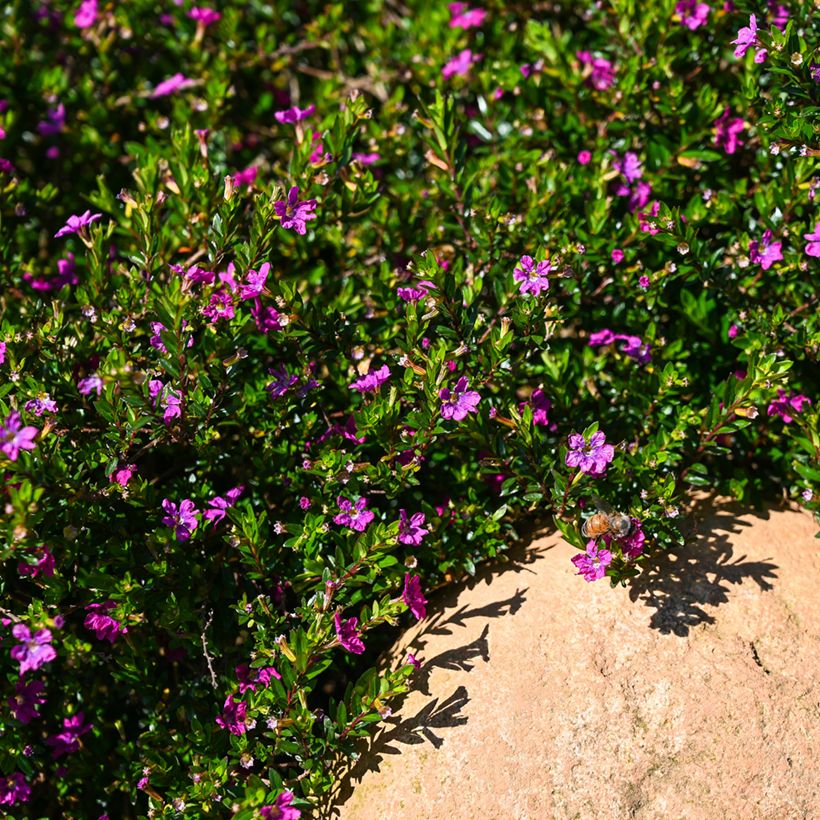
Plant habit
Flowering
Foliage
Planting and care
Cuphea hyssopifolia 'Purple' is a species of tropical origin whose cultivation in open ground is reserved for sheltered areas. Everywhere else, this undershrub will need to be brought indoors to protect it from frost in winter, or treated as an annual. In the case of planting in open ground, place in a sunny position (it tolerates heat well). It grows in neutral, or slightly acidic, soils that are moist and well-drained.
When grown in a container, it will need to be regularly watered during hot periods, making sure to let the soil dry between waterings. Add a bit of liquid fertiliser for flowering plants (with more potassium, K, than nitrogen, N) every 2 weeks to promote flowering. Bring indoors to a bright room (garage with a window, frost-free conservatory) as soon as night-time temperatures approach 5°C (23°F).
Planting period
Intended location
Care
Planting & care advice
-

-
-

-

-
-
-

-

-
, onOrder confirmed
Reply from on Promesse de fleurs
Recently viewed products
Haven't found what you were looking for?
Hardiness is the lowest winter temperature a plant can endure without suffering serious damage or even dying. However, hardiness is affected by location (a sheltered area, such as a patio), protection (winter cover) and soil type (hardiness is improved by well-drained soil).
In temperate climates, pruning of spring-flowering shrubs (forsythia, spireas, etc.) should be done just after flowering.
Pruning of summer-flowering shrubs (Indian Lilac, Perovskia, etc.) can be done in winter or spring.
In cold regions as well as with frost-sensitive plants, avoid pruning too early when severe frosts may still occur.
The harvesting period indicated on our website applies to countries and regions in USDA zone 8 (France, England, Ireland, the Netherlands).
In colder areas (Scandinavia, Poland, Austria...) fruit and vegetable harvests are likely to be delayed by 3-4 weeks.
In warmer areas (Italy, Spain, Greece, etc.), harvesting will probably take place earlier, depending on weather conditions.
The sowing periods indicated on our website apply to countries and regions within USDA Zone 8 (France, UK, Ireland, Netherlands).
In colder areas (Scandinavia, Poland, Austria...), delay any outdoor sowing by 3-4 weeks, or sow under glass.
In warmer climes (Italy, Spain, Greece, etc.), bring outdoor sowing forward by a few weeks.
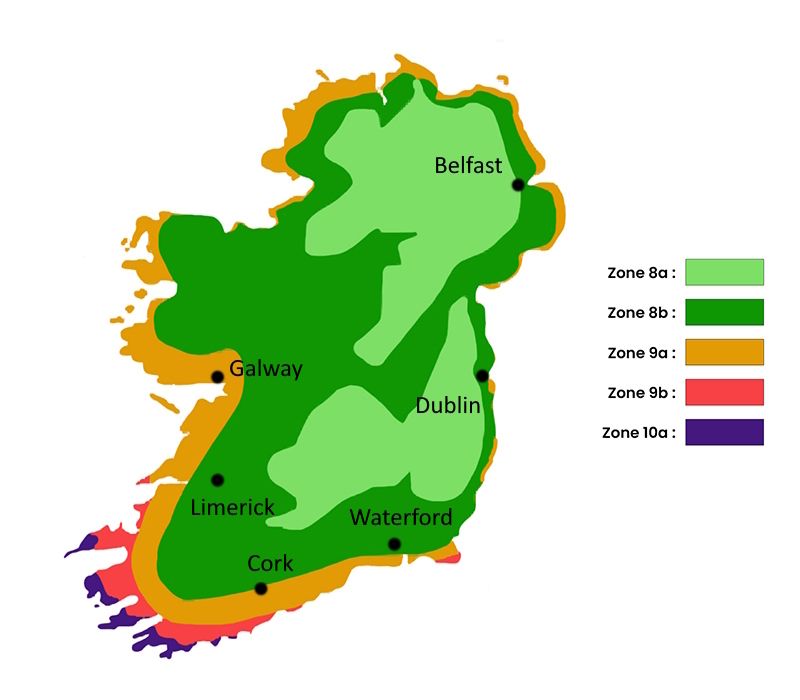
The planting period indicated on our website applies to regions in USDA Zone 9a (East Coast and Midlands: Dublin, Wexford, Waterford, Kilkenny, Portlaoise). It will vary depending on where you live:
- On the west coast and in the north-west (Galway, Limerick, Sligo, Donegal, Westport), delay planting by 1 to 2 weeks in spring and bring it forward by 1 to 2 weeks in autumn compared to the dates given, preferably choosing periods without strong winds.
- In the inland hills and plateaus (Wicklow Mountains, Macgillycuddy’s Reeks, Connemara, Killarney), it is best to plant in spring (April–May) or autumn (September–October), avoiding periods of waterlogged soil in winter and strong winds, which pose the main risk to newly planted trees in these areas.
The flowering period indicated on our website applies to regions in USDA Zone 9a, such as the East Coast and Midlands, including Dublin, Wexford, Waterford, Kilkenny and Portlaoise.
This will vary depending on where you live:
- On the west coast and in the northwest (Galway, Limerick, Sligo, Donegal and Westport), it will be delayed by one to two weeks compared to the given dates, due to stronger Atlantic winds and less spring sunshine.
- In the inland hills and plateaus (the Wicklow Mountains, the Macgillycuddy's Reeks, Connemara and Killarney), flowering will be delayed by two to three weeks. Flowering mainly occurs between May and July, with the limiting factors being less frost and more of the excessive humidity, strong winds and lack of sunshine that are characteristic of these areas.
Shipping country and language
Your country of residence may be:
Your country of residence is:
For a better user experience on our website, you can select:
Your shipping country:
-
 Austria
-
 Belgium
-
 Bosnia & Herzegovina
-
 Bulgaria
-
 Croatia
-
 Cyprus
-
 Czechia
-
 Denmark
-
 Estonia
-
 Finland
-
 France
-
 Germany
-
 Greece
-
 Hungary
-
 Iceland
-
 Ireland
-
 Italy
Italy
-
 Latvia
-
 Liechtenstein
-
 Lithuania
-
 Luxembourg
-
 Malta
Malta
-
 Netherlands
-
 Poland
-
 Portugal
-
 Romania
-
 Serbia
-
 Slovakia
-
 Slovenia
-
 Spain
Spain
-
 Sweden
-
 Switzerland
Language:
-
French
-
 English
-
Spanish
-
Italian
-
German
-
Portuguese
-
Dutch
-
Finnish
My Account
Hello
My wish lists
My cart
Log in / Register
Existing customer?
This form is protected by reCAPTCHA - the Google Privacy Policy and Terms of Service apply.
New customer?
Create an account to track your orders, access our customer service and, if you wish, make the most of our upcoming offers.