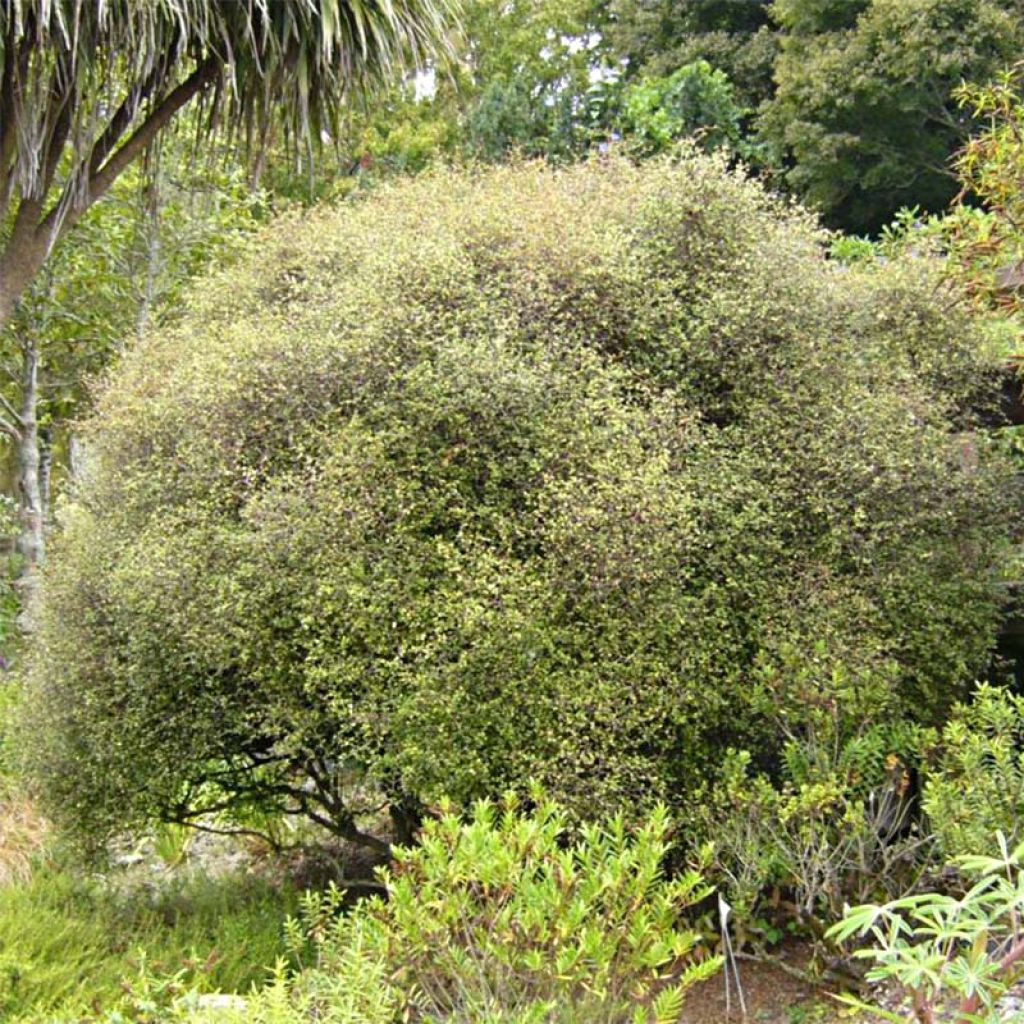
Muehlenbeckia astonii
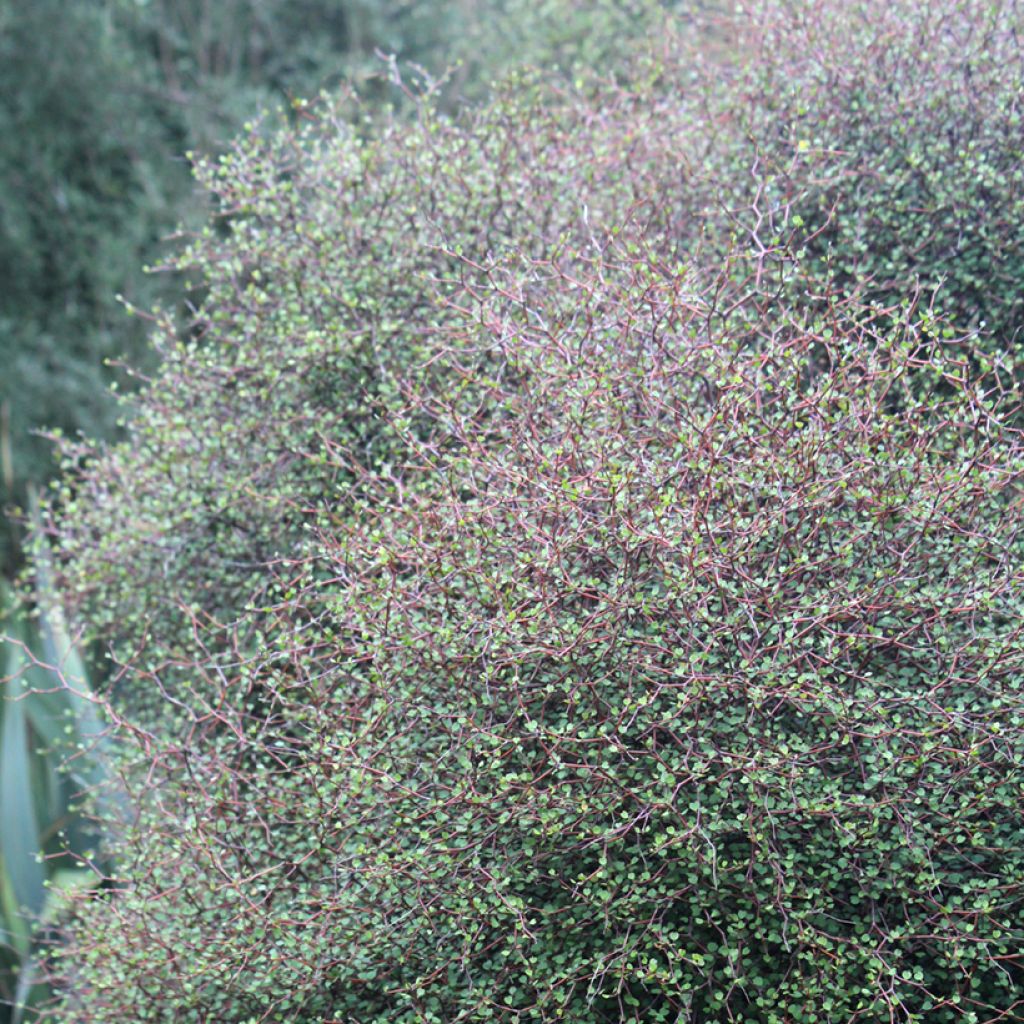
Muehlenbeckia astonii
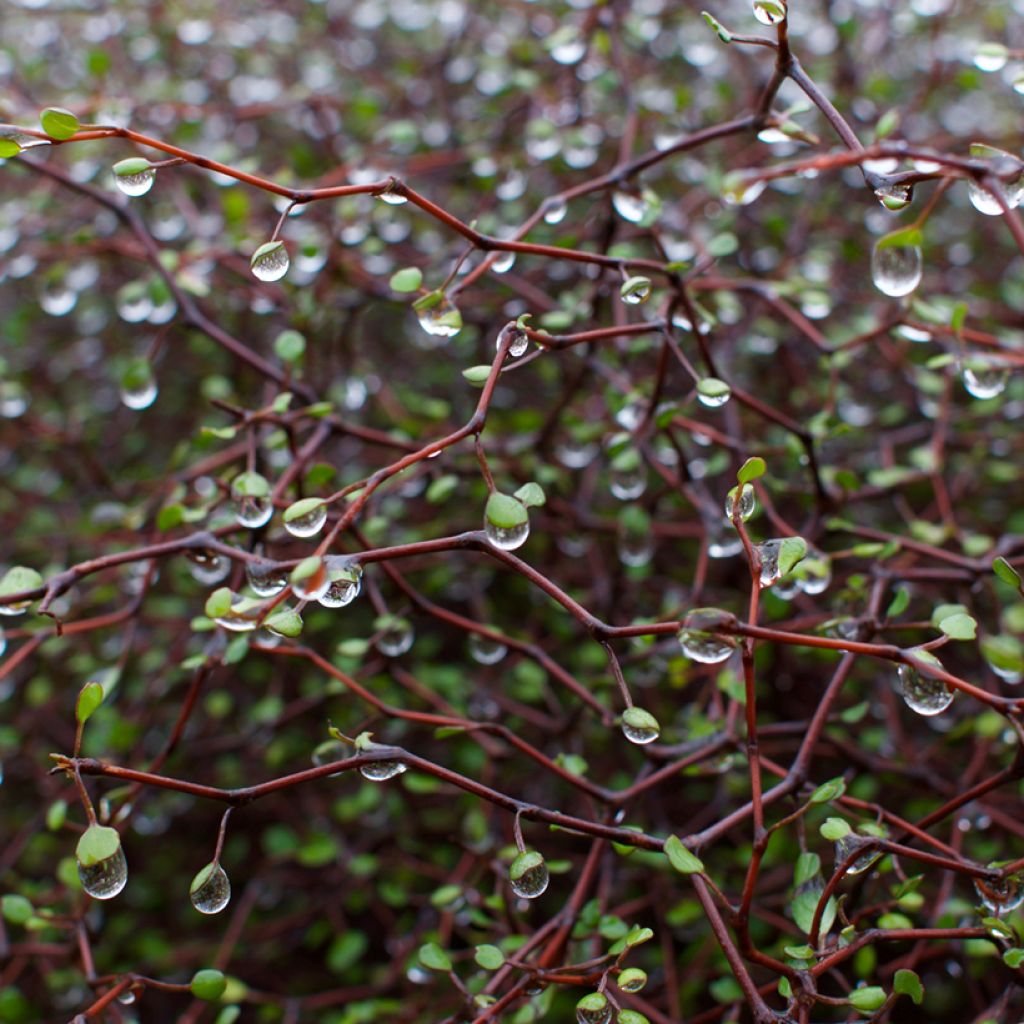
Muehlenbeckia astonii
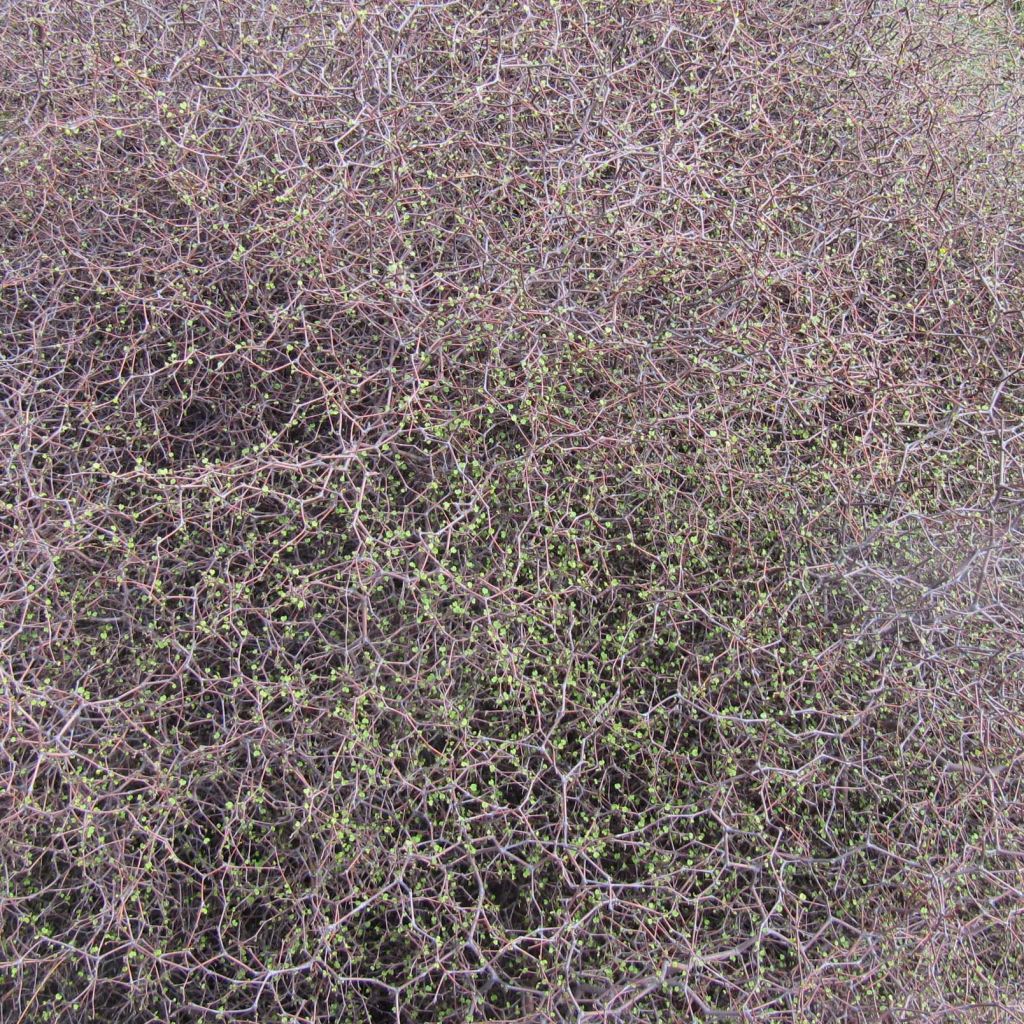
Muehlenbeckia astonii
Muehlenbeckia astonii
Muehlenbeckia astonii
Muehlenbeckia astonii
Wharariki, Wiggywig, Shrubby tororaro
Back-to-school special offer!
Get €10 off for every €50 you spend! And get up to €40 off on a single order.
How does it work?
1. Shop your favourites
Add your favourite plants to your basket. For every €50 you spend (excluding delivery charges, store credit and the plastic-free option), you’ll receive a €10 voucher.
€50 spent = €10 voucher
€100 spent = €20 voucher
€150 spent = €30 voucher
€200 spent = €40 voucher
2. Place your order
Once your basket reaches one of the spending thresholds, place your order. You can even choose your delivery date!
3. Receive your voucher
As soon as your order has been shipped, you’ll receive an email containing your personal voucher code and its value.
4. Use it on your next order
Your voucher is valid for 90 days from the date you receive it. It can be used once only, on a new order worth at least the value of the voucher, excluding delivery charges.
Please note: Vouchers can be combined with other offers, but cannot be split or refunded.
Home or relay delivery (depending on size and destination)
Important: You may be charged customs duties by your country’s customs authorities upon delivery.
Schedule delivery date,
and select date in basket
This plant carries a 24 months recovery warranty
More information
We guarantee the quality of our plants for a full growing cycle, and will replace at our expense any plant that fails to recover under normal climatic and planting conditions.
Does this plant fit my garden?
Set up your Plantfit profile →
Description
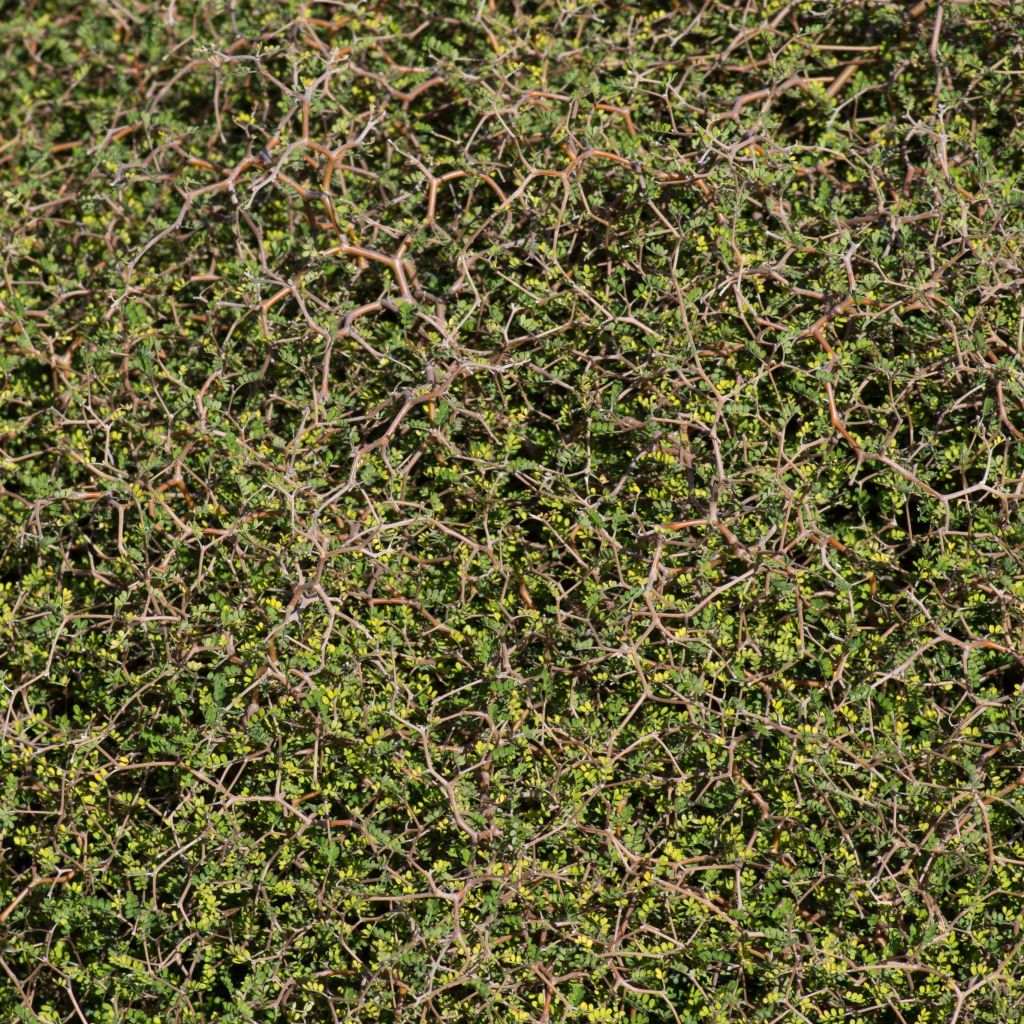
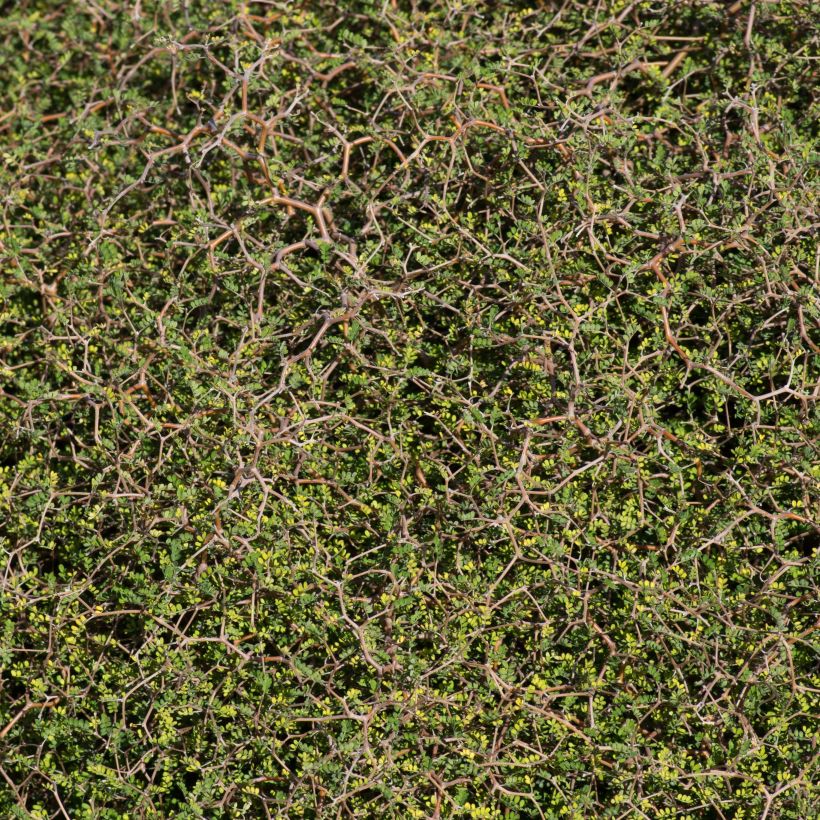
Muehlenbeckia astonii, also known as the "shrubby tororaro" and "wiggy-wig bush" in its native New Zealand, is a deciduous bush worthy of appearing on a canvas by surrealist painter Max Ernst, who often depicted twisted vegetation masses against a desolate landscape. This strange plant forms a cloudy mass of undefinable and changing colour, supported by a dense structure with a zig-zag mesh. Once defoliated in autumn and winter, the slender and differently coloured stems give the overall appearance of a giant wig with swirling tones. The plant discreetly flowers in green and white during summer. The female plants bear small edible walnuts after flowering, which may have earned this astonishing creature its name of "bush lentil". Extravagant and extremely sculptural, it is also a contrasting bush, valuable for creating surprising hedges in dry gardens and coastal areas. As it lends itself well to topiary art, it can fulfil the creative gardener's every fancy!
Muehlenbeckia astonii belongs to the Polygonaceae family, a cousin of sorrel and knotweed. This bush is endangered in its native habitats. It is endemic to small areas located at the southern tip of the North Island, the eastern coast of the South Island, and the southeast of the Banks Peninsula. It is often found on the edges of forests, especially in the beds of watercourses, on alluvial terraces, and on overhanging rock walls. In this dioecious bush, there are female plants with fertile flowers distinct from male plants.
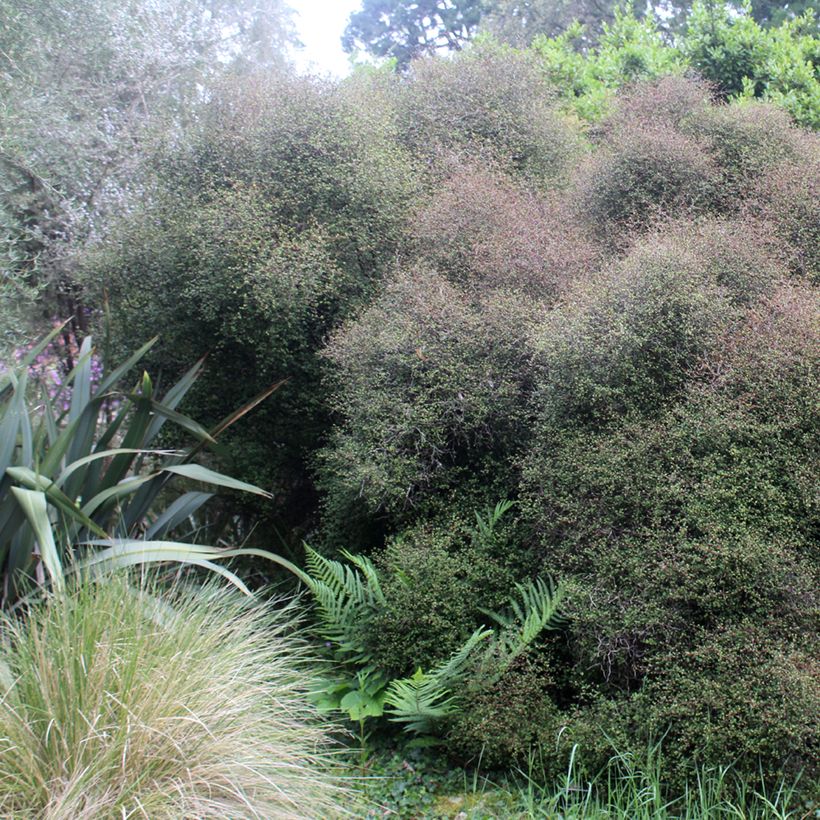
It prefers well-drained and dry soil. It is hardy down to -10 to -12°C (14 to 10.4°F), and tolerates wind and sea spray perfectly. It has a generally rounded and densely bushy habit, supported by numerous slender branches that grow in a zig-zag pattern. Its remarkable hues range from reddish-brown to reddish-orange or purplish. Its growth rate is quite fast. An adult specimen will reach an average size of 1.5m (5ft) in all directions. Depending on the climate and protection from strong winds, it can reach 2m (7ft) or more. Its deciduous foliage consists of tiny heart-shaped leaves, a few millimetres long, arranged in clusters of two or three units along the branches in an alternate pattern. They are medium green in colour. The flowering takes place in August-September in our climate. The flowers are tiny, grouped in clusters of 2 to 4 units, measuring less than 1cm (1in) in diameter. Their colour ranges from greenish to white or white-pink. The fruits on the female plants, when male plants are present, take the form of small three-angled black fruits, measuring 3 to 4mm (1in) in diameter. Their edible flesh has a flavour reminiscent of lychee.
Imagine a hedge or the back of a bed forming a genuine mist in shades of old red, burnt orange, or burgundy wine, with a somewhat uncertain bronze green in spring. If you appreciate our local wig tree, the Cotinus, you will surely be charmed by Muehlenbeckia astonii. If your climate allows, give this bush a home. Enthusiasts of sculptural plants can plant it with Sarcopoterium spinosum, a bush that forms a thorny cushion in arid lands. It will also please lovers of topiary and stylised or minimalist designs. It tolerates pruning perfectly and can also be grown in containers, shaped into regular balls or pyramids, according to each gardener's desires, creating a surprising setting that will astonish all visitors. A textural plant, the bush lentil benefits from being planted with complementary plants such as Phormium tenax 'Purpureum', tall grasses (Panicum, Miscanthus), or more modest 'herbs' with spectacular flowering such as Muhlenbergia capillaris or Stipa. In a mild or coastal climate garden, beautiful Australian shrubs such as Westringia fruticosa, Leptospermum, Grevillea, and Melaleuca are also good companions for this truly endearing plant.
Report an error about the product description
Muehlenbeckia astonii in pictures
Plant habit
Flowering
Foliage
Planting and care
Plant according to the regions. Plant in spring, after the last frost, in areas with limited hardiness. In hot and dry regions, plant in early autumn. Choose a sunny exposure in mild and humid climates, or partial shade (shade in the afternoon and evening) in hot and dry regions. It prefers sandy, gravelly, poor, well-drained soils with acidic to neutral pH. It will tolerate the presence of stones and limestone. It is an extremely robust plant that only fears severe frosts. In well-drained soil, it will withstand brief frosts of around -10 to -12 °C (14 to 10.4°F).
Muehlenbeckia astonii is a drought-resistant plant once well-established. Monitor watering during the first 2 summers. Watering will become optional or unnecessary afterwards, except in the case of abnormally prolonged drought. Like lavender and rosemary, these bushes sometimes prefer to be forgotten rather than pampered. Regular but spaced watering from spring to the end of summer, as well as adding compost in spring, allows for its cultivation in pots under good conditions.
It tolerates pruning well, even quite severe, which allows it to be shaped into a well-calibrated hedge or topiary. To maintain a dense habit, perform annual pruning in March.
Planting period
Intended location
Care
Planting & care advice
-
-
-
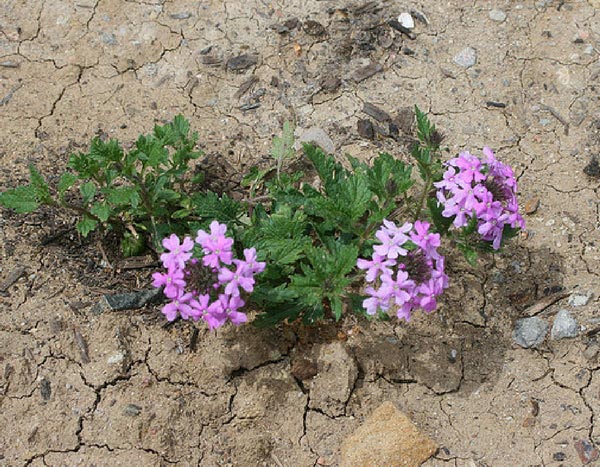
-
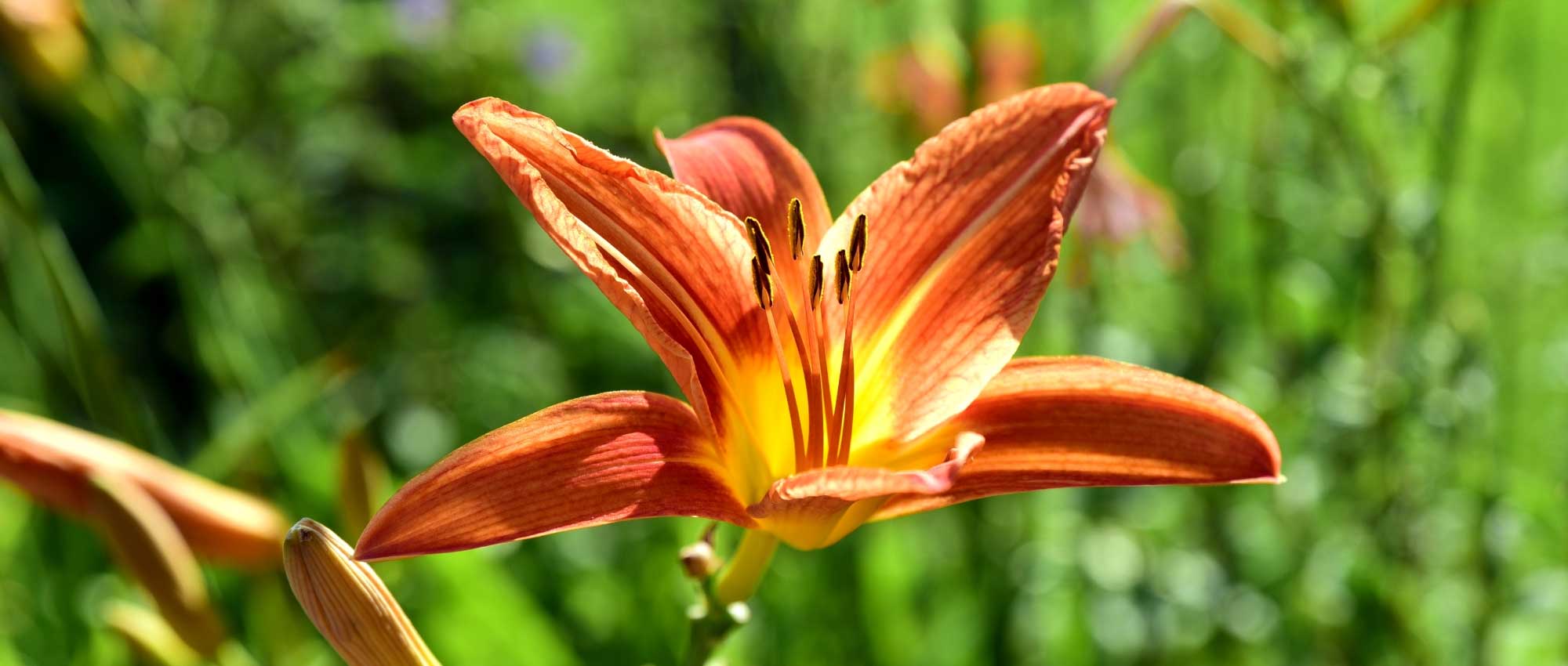
-

-

-

-

This item has not been reviewed yet - be the first to leave a review about it.
Recently viewed products
Haven't found what you were looking for?
Hardiness is the lowest winter temperature a plant can endure without suffering serious damage or even dying. However, hardiness is affected by location (a sheltered area, such as a patio), protection (winter cover) and soil type (hardiness is improved by well-drained soil).
In temperate climates, pruning of spring-flowering shrubs (forsythia, spireas, etc.) should be done just after flowering.
Pruning of summer-flowering shrubs (Indian Lilac, Perovskia, etc.) can be done in winter or spring.
In cold regions as well as with frost-sensitive plants, avoid pruning too early when severe frosts may still occur.
The harvesting period indicated on our website applies to countries and regions in USDA zone 8 (France, England, Ireland, the Netherlands).
In colder areas (Scandinavia, Poland, Austria...) fruit and vegetable harvests are likely to be delayed by 3-4 weeks.
In warmer areas (Italy, Spain, Greece, etc.), harvesting will probably take place earlier, depending on weather conditions.
The sowing periods indicated on our website apply to countries and regions within USDA Zone 8 (France, UK, Ireland, Netherlands).
In colder areas (Scandinavia, Poland, Austria...), delay any outdoor sowing by 3-4 weeks, or sow under glass.
In warmer climes (Italy, Spain, Greece, etc.), bring outdoor sowing forward by a few weeks.
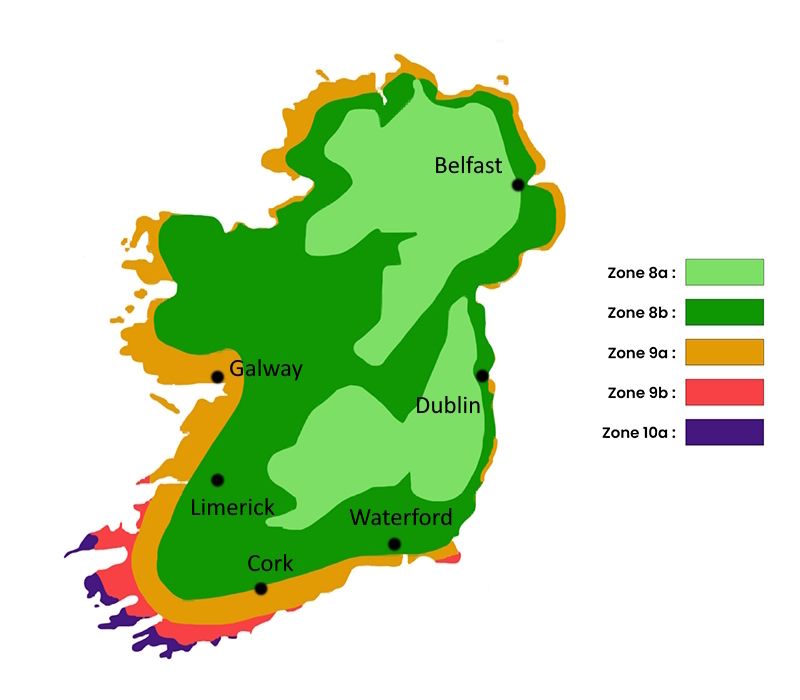
The planting period indicated on our website applies to regions in USDA Zone 9a (East Coast and Midlands: Dublin, Wexford, Waterford, Kilkenny, Portlaoise). It will vary depending on where you live:
- On the west coast and in the north-west (Galway, Limerick, Sligo, Donegal, Westport), delay planting by 1 to 2 weeks in spring and bring it forward by 1 to 2 weeks in autumn compared to the dates given, preferably choosing periods without strong winds.
- In the inland hills and plateaus (Wicklow Mountains, Macgillycuddy’s Reeks, Connemara, Killarney), it is best to plant in spring (April–May) or autumn (September–October), avoiding periods of waterlogged soil in winter and strong winds, which pose the main risk to newly planted trees in these areas.
The flowering period indicated on our website applies to regions in USDA Zone 9a, such as the East Coast and Midlands, including Dublin, Wexford, Waterford, Kilkenny and Portlaoise.
This will vary depending on where you live:
- On the west coast and in the northwest (Galway, Limerick, Sligo, Donegal and Westport), it will be delayed by one to two weeks compared to the given dates, due to stronger Atlantic winds and less spring sunshine.
- In the inland hills and plateaus (the Wicklow Mountains, the Macgillycuddy's Reeks, Connemara and Killarney), flowering will be delayed by two to three weeks. Flowering mainly occurs between May and July, with the limiting factors being less frost and more of the excessive humidity, strong winds and lack of sunshine that are characteristic of these areas.
Shipping country and language
Your country of residence may be:
Your country of residence is:
For a better user experience on our website, you can select:
Your shipping country:
-
 Austria
-
 Belgium
-
 Bosnia & Herzegovina
-
 Bulgaria
-
 Croatia
-
 Cyprus
-
 Czechia
-
 Denmark
-
 Estonia
-
 Finland
-
 France
-
 Germany
-
 Greece
-
 Hungary
-
 Iceland
-
 Ireland
-
 Italy
Italy
-
 Latvia
-
 Liechtenstein
-
 Lithuania
-
 Luxembourg
-
 Malta
Malta
-
 Netherlands
-
 Poland
-
 Portugal
-
 Romania
-
 Serbia
-
 Slovakia
-
 Slovenia
-
 Spain
Spain
-
 Sweden
-
 Switzerland
Language:
-
French
-
 English
-
Spanish
-
Italian
-
German
-
Portuguese
-
Dutch
-
Finnish
My Account
Hello
My wish lists
My cart
Log in / Register
Existing customer?
This form is protected by reCAPTCHA - the Google Privacy Policy and Terms of Service apply.
New customer?
Create an account to track your orders, access our customer service and, if you wish, make the most of our upcoming offers.