Further reading…
Making a garden resilient, stronger in the face of the repeated heatwaves our countries now suffer, is one of the challenges of the Chaparral garden, which draws on flora from extreme climates, such as those found in New Mexico or California. The multiple heatwaves of summer 2026 confirm this reality and will certainly steer us towards undemanding plants that are also hardy in our winters. Discover this new type of garden, inherently waterwise, low-maintenance and very promising.
What is a chaparral?
Chaparro is a Spanish word referring to several oak species (Quercus ilex, holm oak, but also Quercus coccifera and sometimes cork oak). The term also covers less well-known species such as Castela tortuosa, a shrub native to arid areas of Mexico and southern United States.
Chaparral is nothing more than an area of scrub and shrubs, forming a specific ecosystem in Mediterranean climates. It generally resembles a stand of holm oaks, in other words a garrigue or maquis, terms and landscapes more familiar to us. The name in Spanish denotes a biome found mainly from Mexico to California, and in Europe around the Mediterranean such as Andalusia or Sardinia. These areas are wooded, populated by shrubs and undershrubs able to withstand very hot conditions.
Plants able to grow in chaparral are often sclerophyllous (small, leathery leaves covered by a protective cuticle), sharing unique adaptations to this dry environment: deep roots, grey-green leaves that reflect light, and essential oils that limit evaporation.
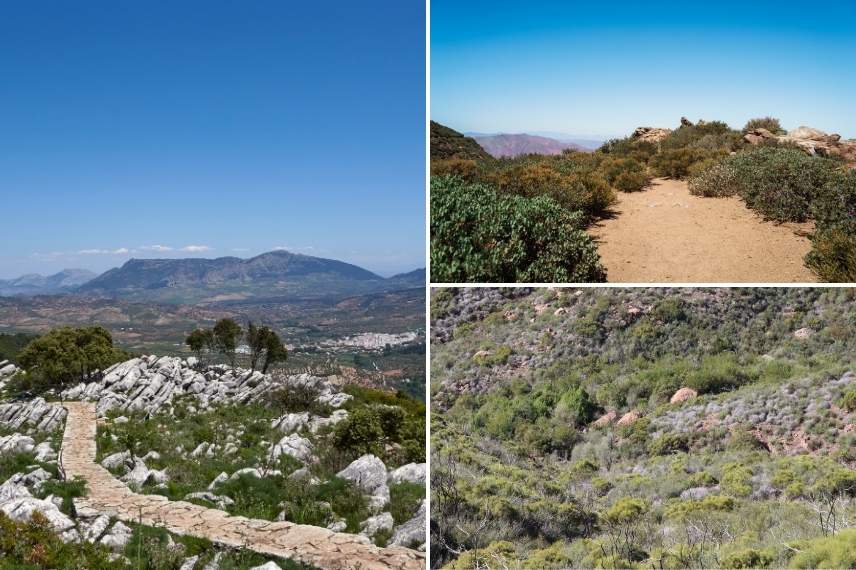
We imagined three scenes to reproduce, in spirit, this ultra-resilient type of landscape. You can create a single area of the garden that receives particularly strong summer sun, or treat the whole garden in this style, provided you live in temperate valleys or mild zones of the country.
Adapting the chaparral to a dry exotic garden
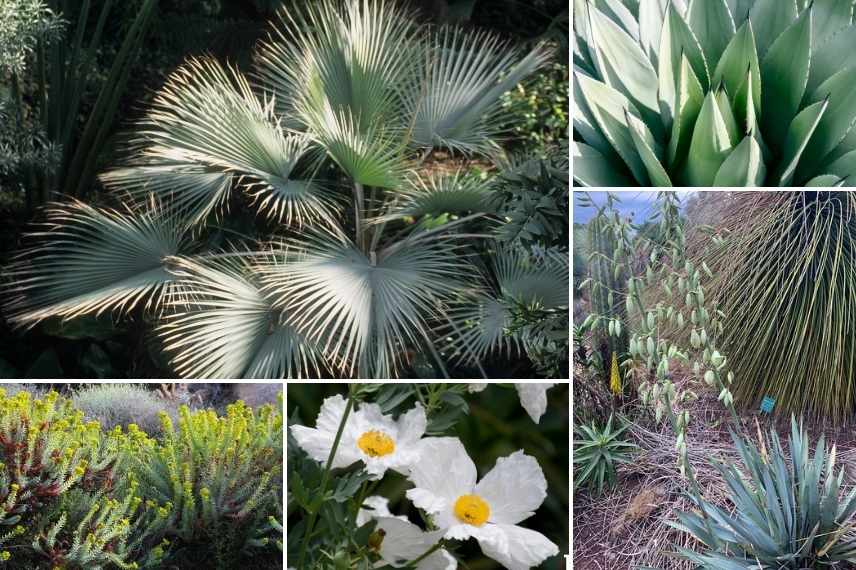
A dry garden can create a sublime scene with exceptional plants.
Here we play with a palette of blue-tinged foliage using plants surprisingly resistant to short frosts in winter, not exceeding −10°C. The tree poppy, a Californian and Mexican plant with wonderful white flowers, and the Mexican blue palm for an original backdrop, have proven able to withstand very dry summers. Once well established, Romneya poses no real hardiness issues. A Yucca pallida joins them to form that superb silvery-blue base, accompanied by an agave hardy enough such as Agave parryi or Agave montana.
A Mediterranean perennial, Euphorbia pithyusa, a Balearic spurge that stays low, and a Mexican-origin plant, Mathiasella bupleuroides 'Green Dream' with jade-green flowers, naturally fit among these plants. We bring in chartreuse and blue-green tones for a duet of colours evoking Mediterranean aridity.
NB: this blue planting can easily be part of a blue garden, located in the sunniest, driest part of the garden!
Transport yourself to Lanzarote
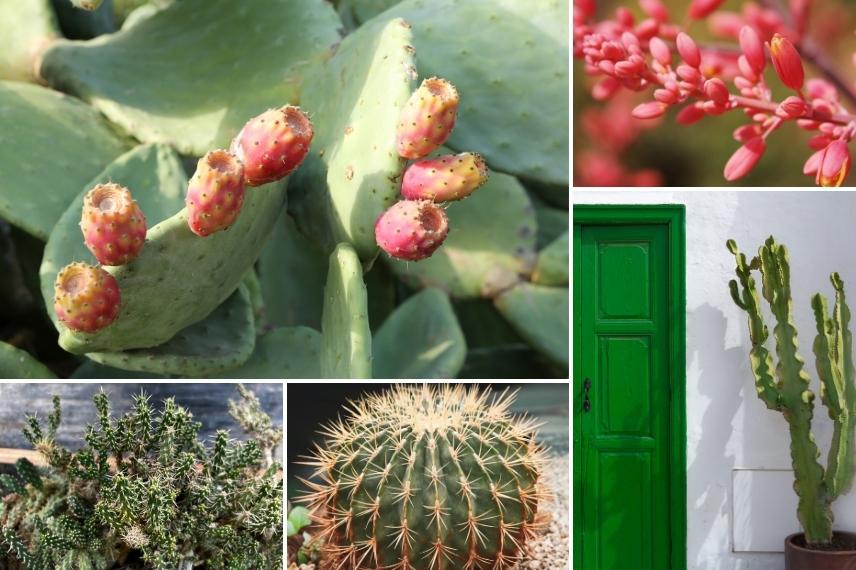
Lanzarote's cactus gardens are exceptionally photogenic. On this volcanic archipelago grow sclerophyllous plants with small leathery leaves adapted to drought, and spiny cacti. Drawing inspiration from them, while carefully selecting cacti cold-hardy enough for our winters, allows creation of a unique area within a dry garden, ready to face repeated summer heat spikes. Ensure perfect drainage, as this type of garden cannot tolerate any standing moisture in winter.
A prickly pear, well adapted to sea spray, is interesting for its slightly greater hardiness (down to around −15°C for some) and its unique habit with large spiny pads. Plant them liberally; choices include Opuntia scheeri or Opuntia engelmannii var. rastrera, among many others. In this distinctive setting, succumb to oddity of Cylindropuntia kleiniae, a cousin of opuntias, quite cold-hardy and producing a beautiful magenta summer bloom. Complement the area with a Hesperaloe parviflora and an Echinocactus grusonii, the golden barrel cactus often seen on the island.
This type of garden is intended for warm, mild regions of the country with less severe winters and dry summers.
Use pumice or black volcanic stones to simulate island soils and to ensure drainage. Finishing touch? a whitewashed house with green shutters to reproduce another characteristic of this island close to African coasts.
... or to landscape a poor, unproductive slope
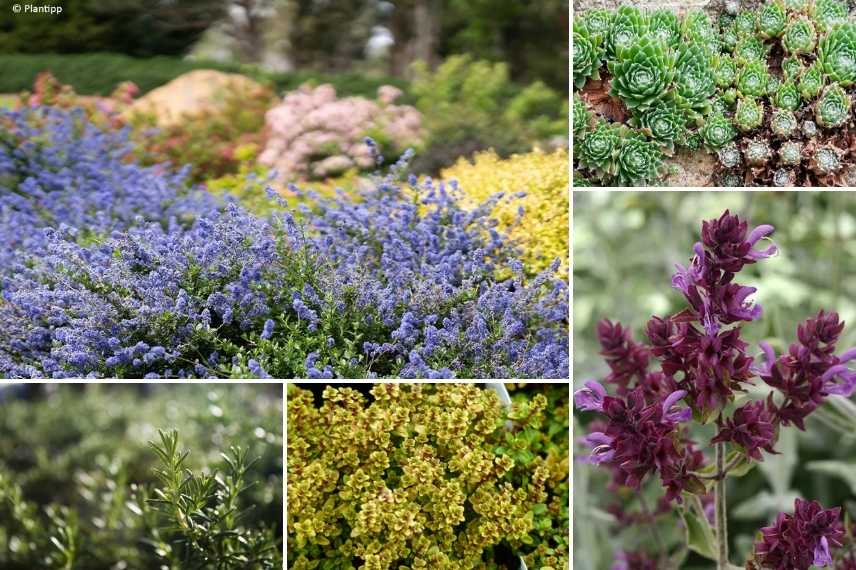
A south-facing, dry and unproductive slope can also be transformed into a resilient space by imitating the chaparral, an ecosystem adapted to extreme conditions.
To turn poor soil into a semi-desert rockery, favour low, hardy shrubs such as cistus (Cistus), a California lilac like the ceanothus ' Pacific Wave' or its groundcover form (C. thyrsiflorus 'Repens'), a prostrate rosemary and some sempervivums. These plants, with deep roots and leathery or fleshy leaves, tolerate drought and poor soils perfectly. Add a golden thyme, and some sages (such as Canary Island sage 'Lancelot'), aromatic plants that will scent the garden while attracting pollinators.
Once established, these plants require little watering and maintenance. Their dense foliage will protect soil from erosion and limit growth of weeds that are unwanted on the slope. A mineral mulch will help conserve moisture and enhance the slope's natural appearance. A few ochre or orange boulders placed here and there will also help evoke Californian or Andalusian maquis while enhancing the area.
Discover our selection of succulents and perennials on our "Dry garden" page online, and our inspiration in the trend booklet 2026!
Since Beth Chatto, the dry garden movement has increasingly been seen among landscapers and in gardening magazines and books. We cover it in detail in Designing a dry exotic garden, Laying out a gravel garden, the Californian-style garden and the garrigue garden, as well as strong trends recently seen at the Chelsea Flower Show in London, such as the antipodal garden and the sand garden.
Find all garden trends for 2026 in: What are the five major trends for 2026?
Making a garden resilient, stronger in the face of the repeated heatwaves our countries now suffer, is one of the challenges of the Chaparral garden, which draws on flora from extreme climates, such as those found in New Mexico or California. The multiple heatwaves of summer 2026 confirm this reality and will certainly steer us […]
In recent years, as our planet warms inexorably, many of us have been looking for ways to adapt our gardens gradually to a new era. The Antipodean garden is one answer for gardeners, encouraging a turn towards the remarkable potential of plants from extreme climates, such as southern plants.
Let’s see how to use certain succulent plants formerly thought suitable only for southern regions, and integrate them into different garden types, from dry rockeries to Mexican-style settings.
Origin of the Antipodean garden
Last year, one of the stands at the RHS Chelsea Flower Show surprised many: right in central London, this temporary garden staged a landscape straight out of the South African bush. The Karoo Succulent Garden, conceived by landscape designer Katie Lewis and botanist Ernst van Jaarsveld, offered a sublime scene of exceptional succulents, remarkable spiny shrubby plants, Aloes, collections of Haworthia and Gasteria amid mineral chaos… A genuine plea and reflection on the garden of the future, this Antipodean garden showcased only plants native to South Africa, resilient, capable of surviving severe droughts and adapted to the region’s grand yet arid and hostile Karoo environment.
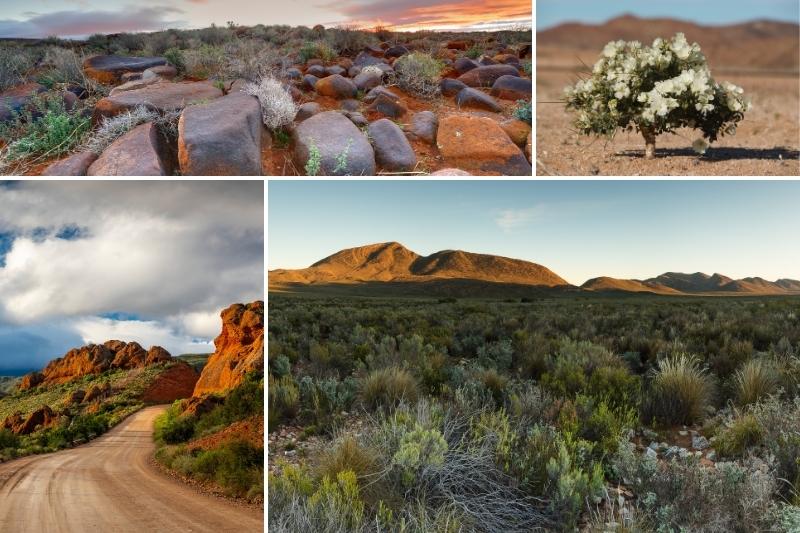
Top right, Sarcocolon crassicaule grows in the Little Karoo
On a dry rockery by the sea
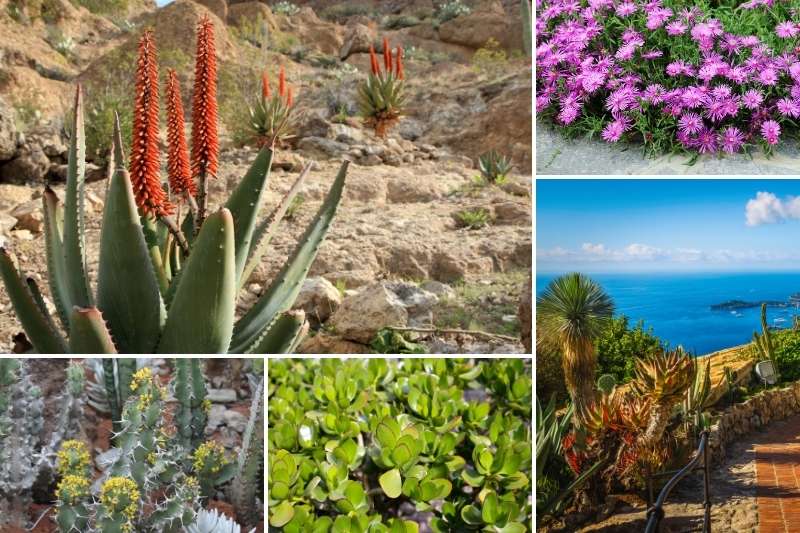
Our coasts, from the Channel to the Atlantic and of course the Mediterranean, offer an ideal climate for these plants from the Cape. Take inspiration from the sublime jardin d'Èze near Nice. Many plants from Mexico are grown there, but also South African plants such as Aloes and various types of euphorbias.
For example, you can group in very warm exposure, without them complaining, Cape-origin plants such as Aloe ferox, Delosperma cooperi and an Euphorbia caerulescens. Aloe remains very architectural even after flowering, its orange flower spikes enhancing the garden in winter and spring. The spreading Delosperma will flower mauve continuously all summer. The euphorbia brings a lovely green, succulent touch to a rockery. Add other perennials that tolerate strong light, very free-draining soil and have sufficient hardiness in this coastal context: Euryops pectinatus or Euryops evansii, Protea, trailing Plumbago, for a blue, unexpected late-summer display, etc.
In a Mediterranean garden or a dry garden without watering
The dry garden, arguably one of the gardens of the future, is precisely the type suited to these South African plants that grow locally in poor, arid soils. Inviting these Antipodean plants into our gardens in the Mediterranean or in regions with mild winters is a great way to refresh the plant palette of gardens designed without watering.
Ramified shrubs such as the Tylecodon wallichii, a superb plant related to crassulas, which eventually forms a small trunk bearing leaves clustered at the top, a South African heather, Erica arborea, or the Cape heather Phylica ericoides make perfect companions in this Mediterranean yet wild setting. A very striking aloe with a dragon-like appearance, Aloe dichotoma (quiver tree), will make a sensation once its trunk has developed. All these plants appreciate a perfectly free-draining, poor and light substrate. Better-known plants such as Sansevieria (snake plant), also native to South Africa, can be grown in pots to bring their incomparable architectural form.
Flowering of the various South African shrubs and undershrubs, southern‑hemisphere timing aside, tends to occur in winter or spring. So add a few summer-interest plants to bring colourful touches to this unusual world, such as diascias (annual or perennial) and the shrubby Cape mallow (Anisodontea capensis) which can flower until frosts and will require, unlike the other plants, a little watering while it establishes.
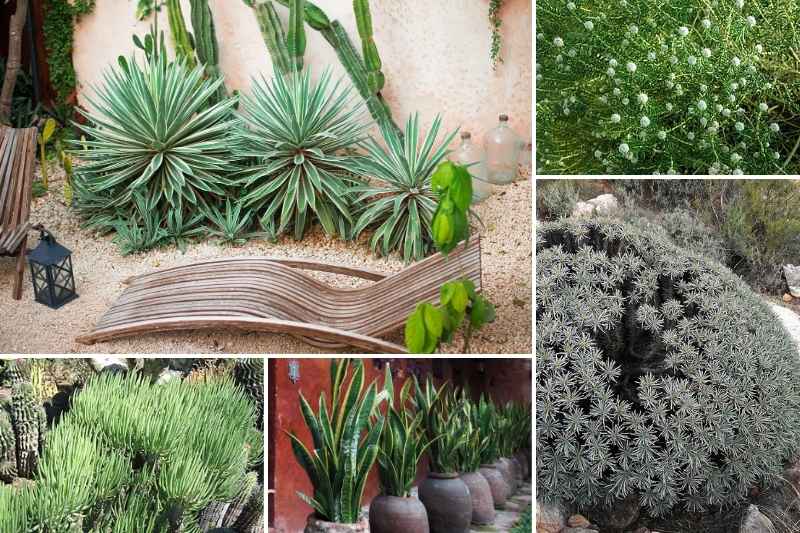
In a sheltered patio, like in Mexico, or on a sunny balcony!
Although unaffected by scorching sun, succulent plants and other South African natives lack hardiness in our hemisphere. They must therefore be potted in some regions where they might suffer, especially from winter damp.
So why not evoke a South American patio to dream of distant horizons from a sheltered, very sunny patio, courtyard or terrace? Then simply bring them indoors to a warm living room for winter months.
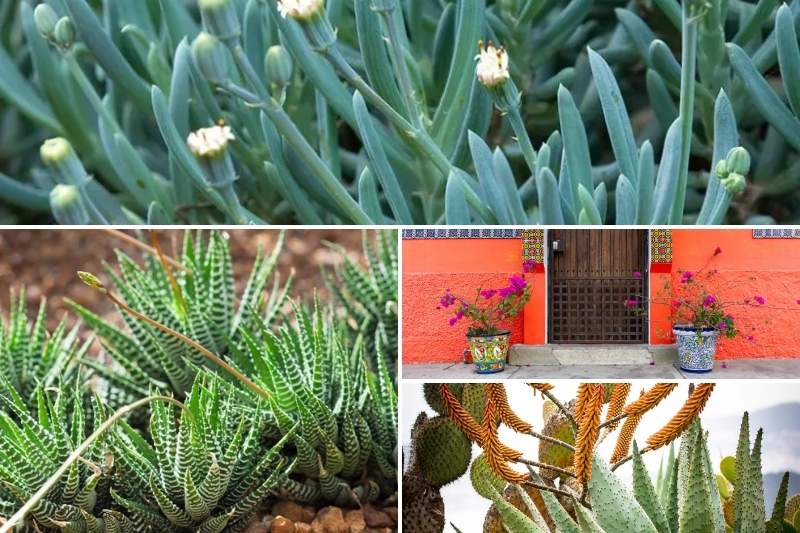
Think again of easy-care plants, provided their low watering needs and a warm exposure are respected. Here we plant in attractive glazed pots a Senecio serpens 'Blue Chalk', or 'Dwarf Blue', a Haworthia fasciata 'Big Band', also called zebra plant, delightful for its ultra-compact habit and characteristic stripes on its fleshy foliage.
Consider bright paints applied to walls or to pots, such as orange, terracotta, turquoise and green to accompany your plants in this decidedly colourful patio and reinforce the South American vibe. The plants mentioned can just as easily be placed on a small south- or west-facing balcony in town, provided you remember to overwinter them at home from late autumn to spring.
Discover our selection of succulents on our "Jardin des antipodes" page online, and our inspiration in the trendbook 2026!
Southern atmospheres are popular: we have covered this theme in several articles: Alexandra talks about her botanical trip to South Africa, our advice on planting and growing southern plants, and our inspiration sequence Exotisme austral.
To keep up with the trends for 2026, also check our topic Garden: what are the five major trends for 2026?
In recent years, as our planet warms inexorably, many of us have been looking for ways to adapt our gardens gradually to a new era. The Antipodean garden is one answer for gardeners, encouraging a turn towards the remarkable potential of plants from extreme climates, such as southern plants.Let’s see how to use certain succulent […]
We are approaching the end of the summer holidays, and many of us enjoy spending time by the Mediterranean... Holidays that are, of course, always too short! This frustrating phenomenon is something we strive to counter by giving our homes a touch of the Mediterranean! Whether it’s an antique pot, a small dry stone wall, an olive tree, a palm tree, a oleander, bougainvillea, an agave, and other "Mediterranean plants" whose mere mention brings us back to warmth and relaxation...
But what exactly is a "Mediterranean plant"? Is it a plant that grows spontaneously around the Mediterranean? A plant that thrives in a Mediterranean climate? A plant that has been produced in the Mediterranean basin? Let’s try to clarify...
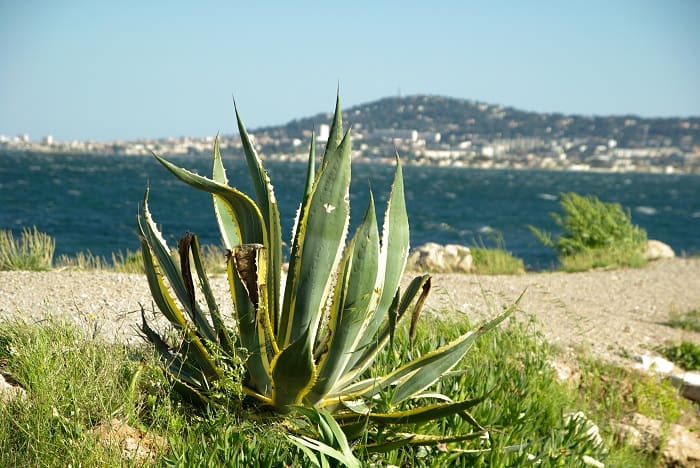
The Mediterranean climate that we cherish is primarily characterised by warm, dry summers that are very sunny, alternating with mild, wet winters. It is a temperate climate, with well-defined seasons. Rainfall is infrequent and highly concentrated, particularly in autumn. In summer, precipitation is less than soil evaporation and the consumption of living beings, leading to a water deficit for which Mediterranean plants have had to develop avoidance strategies. Finally, let’s not forget the wind, with the mistral and tramontane rivaling the famous north wind we are more accustomed to at Promesse de Fleurs!
.JPG)
This type of climate leads to two other significant phenomena for the Mediterranean natural environment: a high pressure from human activities and numerous outbreaks of fire, as sadly highlighted by current events. Lastly, the poor, well-draining soils, whether acidic or calcareous, are always low in nitrogen and potassium, often supporting only low and sparse vegetation, particularly in the garrigues. But there is a silver lining! These strong constraints generate a diversity that is all the more significant, with the number of plant species in the Mediterranean reaching 22,500, of which just over half are endemic, meaning they are only found in that specific location on the globe. This provides a first element of answer to our question, "What is a Mediterranean plant?".
Among these species of Mediterranean plants, there are many annuals that bloom and die before or after the dry summer period, bulbs that take refuge underground, and a whole range of so-called "sclerophyllous" vegetation, meaning plants with tough enough leaves to prevent rapid water loss. In particular, there are evergreen oaks, cork oaks, kermes oaks, olive trees, of course, but also oleanders and conifers like pines and cypresses. Note that they compensate for their slowed activity in summer by the persistence of their foliage in winter, which makes them particularly appreciated in gardens. Others have the opposite strategy and lose their leaves to survive during drought.

We must also mention the special cases of aromatic plants, such as lavenders, thymes, rosemaries, sages, hyssops, myrtles... which release volatile compounds, the essential oils, limiting water loss. Some cistus, like Cistus ladanifer, use the same technique, in addition to having a very deep taproot system. The velvety leaves, even downright cottony, of Stachys or Ballotta, are also a very effective barrier against water loss, which has been exploited for a long time in drought-free gardens. Brooms, on the other hand, simply have no leaves... And of course, nothing prevents plants from combining protections!

However, we have not yet discussed palms, mimosas, or even prickly pears, agaves, bougainvilleas, oranges, pittosporum, and all the others that populate our holiday memories on the Côte d'Azur! These plants, which have perfectly acclimatised to the Mediterranean zone, to the point of sometimes becoming invasive, are not native to there: we must therefore look for their origins elsewhere.
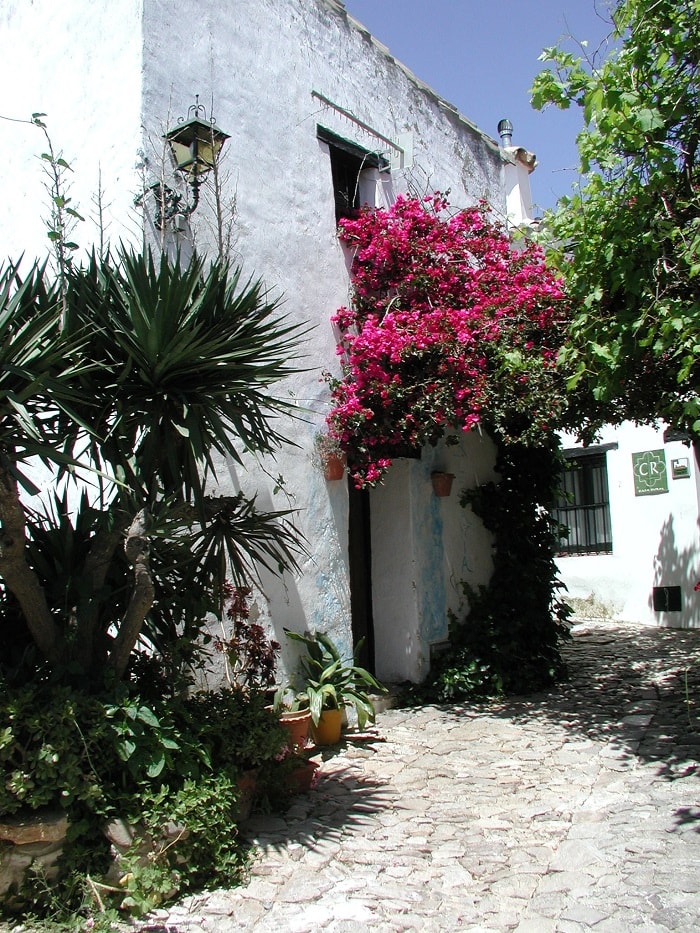
Indeed, while the Mediterranean region has given its name to its climate, it should not be inferred that the Mediterranean climate only exists around our beloved Mediterranean Sea! Similar conditions can be found in four other regions of the world:
- California
- central Chile
- South Africa
- southern Australia
Located on the western sides of continents, at latitudes between 30° and 45°, these temperate warm zones influenced by westerly winds correspond to the transition between subtropical and temperate climates in general.

From South Africa originate many Ericaceae and Proteaceae, well adapted to poor soils (the Proteaceae have a particular root system known as "proteoid" consisting of numerous short, closely spaced rootlets that are thought to improve nutrient solubility by altering the soil environment in which they grow). Highly sought after for cut flowers (Banksia, Protea) and for the production of flowering potted plants (the Cape heather, for example, which is found at All Saints), these plant genera are rarely encountered in our gardens, whether Mediterranean or not, due to their very delicate growing conditions.
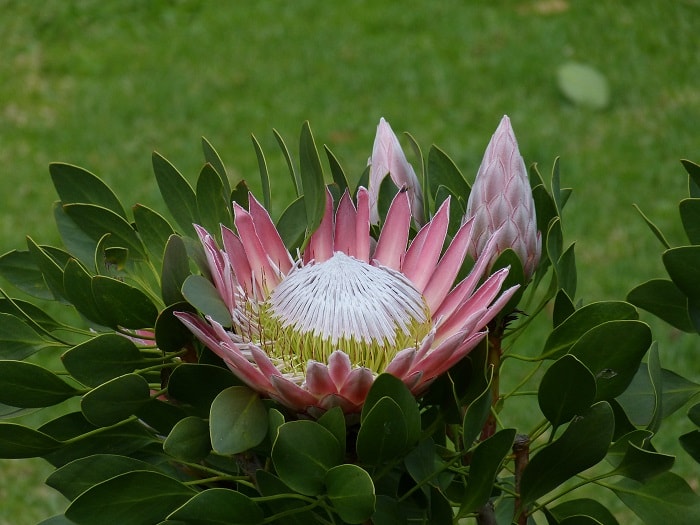
In reality, outside of collections, we cultivate very few plants in Europe that originate from the "other" Mediterranean climates. Thus, we must look even further for the origins of "Mediterranean plants" in the sense of the collective and horticultural imagination, which is ultimately what matters when creating a garden.

The mimosa (Acacia dealbata) is native to the east of Australia, an oceanic climate zone, and was introduced in France in the mid-19th century. It has remarkably naturalised since on the Côte d'Azur, just like the Pittosporum tobira, which is also cultivated for its foliage, native to the subtropical climates of Japan and Korea. Other plants commonly found in Mediterranean gardens come from desert-type climates, such as agaves, yuccas, and cacti. With the exception of 2 species out of 2,500 (!), palms are not native to the Mediterranean but to tropical and subtropical climates, just like the citrus trees that thrive in the mild Mediterranean climate but must be irrigated in summer. The spectacular bougainvilleas originate from the humid tropical forests of South America!
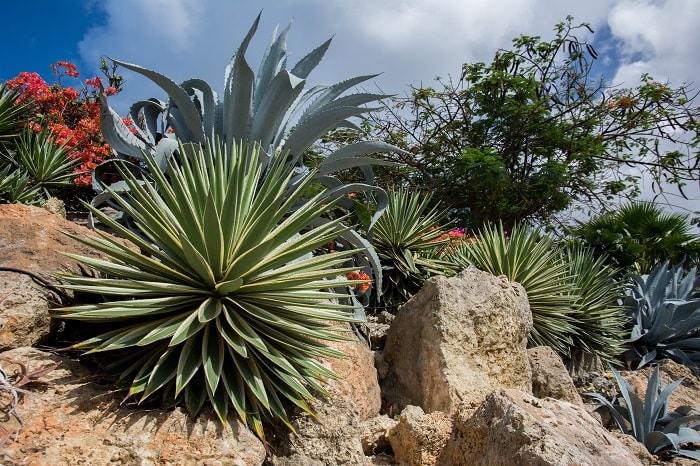
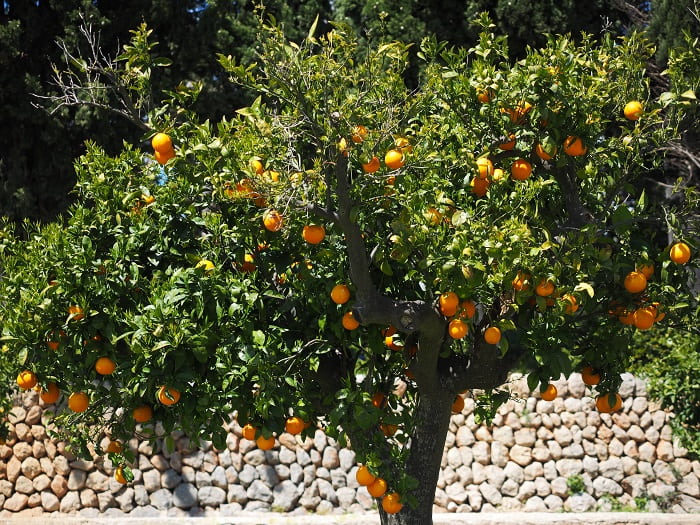
Thus, it is important to highlight the contrast between the image of the Mediterranean nature, vibrant in spring, much more subdued in summer, which corresponds to a long period of near-dormancy for the plants, and the image one might have of the Mediterranean garden, which is much more lush but is mainly composed of exotic plants that require watering in summer! In practical terms, the term "Mediterranean plant" thus means both everything and nothing, as it mixes botanical and cultural aspects! Caution is therefore advised for the gardener...
Plants that grow in the Mediterranean in nature are quite hardy (often down to -10°C to -12°C) and adapt easily in gardens throughout the rest of France, provided the soil is very well drained, even calcareous, and that a fairly sheltered spot from frost is chosen for planting; they grow easily without irrigation, which is why they are increasingly being planted. Many are so familiar to us that we easily forget their Mediterranean origins, as is the case with aromatics. Conversely, plants that grow in the Mediterranean in gardens can equally be called "Mediterranean" as the former, but they are nonetheless exotic, more frost-sensitive, and should be reserved for pot cultivation in a conservatory or on the terrace in summer where they can be regularly watered and wintered in a sheltered spot.

We are approaching the end of the summer holidays, and many of us enjoy spending time by the Mediterranean… Holidays that are, of course, always too short! This frustrating phenomenon is something we strive to counter by giving our homes a touch of the Mediterranean! Whether it’s an antique pot, a small dry stone wall, […]