
Picea abies Aurea Magnifica - Norway spruce
Picea abies Aurea Magnifica - Norway spruce
Picea abies Aurea Magnifica
Norway Spruce, European Spruce
Back-to-school special offer!
Get €10 off for every €50 you spend! And get up to €40 off on a single order.
How does it work?
1. Shop your favourites
Add your favourite plants to your basket. For every €50 you spend (excluding delivery charges, store credit and the plastic-free option), you’ll receive a €10 voucher.
€50 spent = €10 voucher
€100 spent = €20 voucher
€150 spent = €30 voucher
€200 spent = €40 voucher
2. Place your order
Once your basket reaches one of the spending thresholds, place your order. You can even choose your delivery date!
3. Receive your voucher
As soon as your order has been shipped, you’ll receive an email containing your personal voucher code and its value.
4. Use it on your next order
Your voucher is valid for 90 days from the date you receive it. It can be used once only, on a new order worth at least the value of the voucher, excluding delivery charges.
Please note: Vouchers can be combined with other offers, but cannot be split or refunded.
Why not try an alternative variety in stock?
View all →
Available in 1 sizes

Available in 1 sizes
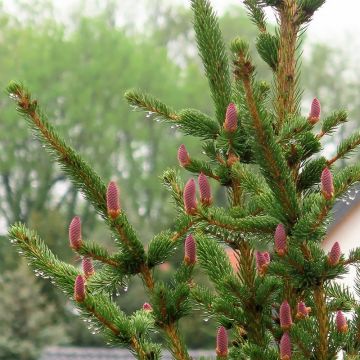
Available in 1 sizes
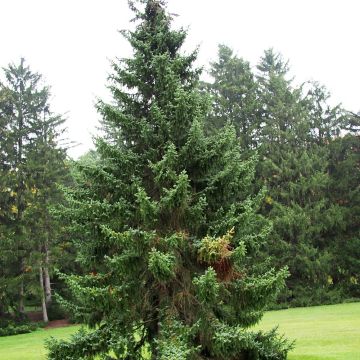
Available in 2 sizes

Available in 1 sizes
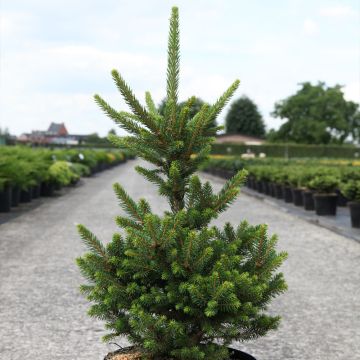
Available in 2 sizes

Available in 1 sizes
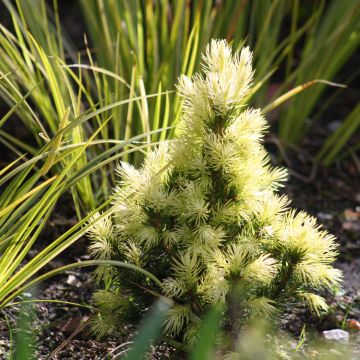
Available in 2 sizes

Available in 1 sizes

Available in 1 sizes
This plant carries a 24 months recovery warranty
More information
We guarantee the quality of our plants for a full growing cycle, and will replace at our expense any plant that fails to recover under normal climatic and planting conditions.
Does this plant fit my garden?
Set up your Plantfit profile →
Description
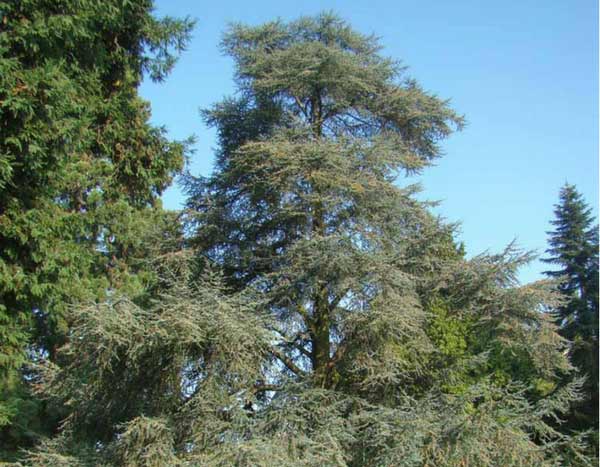
Picea abies 'Aurea Magnifica' is a cultivar of Norway Spruce with beautiful golden foliage in winter, turning slightly greener in summer. This spruce is a medium-sized conifer with a pyramidal habit and ascending branches, exuding undeniable elegance. Its luminosity will be appreciated in a park or large garden, especially when planted alongside other evergreens with dark green foliage.
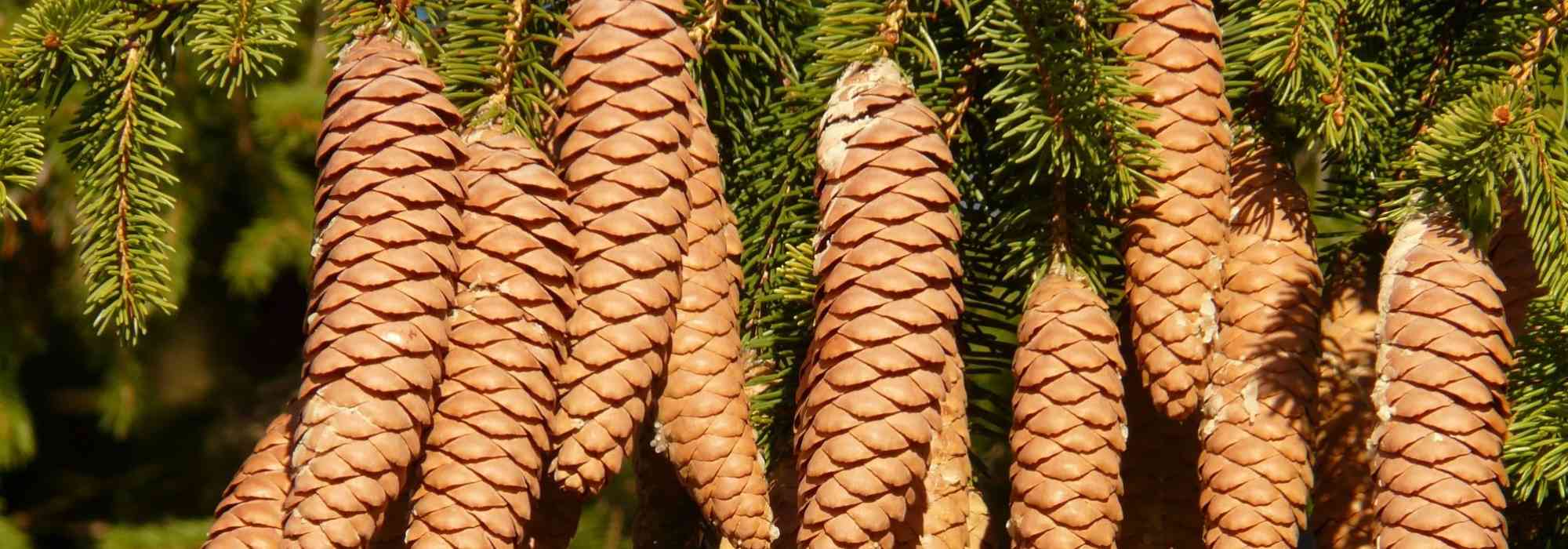
Picea 'Aurea Magnifica' is sometimes sold under the names Picea abies var. magnifica or Picea excelsa var. magnifica. This variety is a witches' broom discovered on a classic spruce by Ottolander and Hooftman Nursery in Boskoop, Netherlands, around 1900. The species, Picea abies, also known as Norway Spruce or Red Fir, is an evergreen conifer belonging to the Pinaceae family. It is native to Northern Europe, specifically Scandinavia. In its natural environment, it has a typically conical and pyramidal habit and can reach 30 m in height. This plant is traditionally used as a Christmas tree in Europe. It prefers well-drained, moist soils and is unfazed by very low temperatures. The 'Aurea Magnifica' cultivar forms a tree of around 10 m in height with a 4 m spread after 15 years. Its growth rate is about 30 cm per year initially, slowing with age. Eventually, it can reach 12 to 15 m in height and 5 m in spread at the base, depending on growing conditions. A mature specimen displays a beautiful pyramidal silhouette supported by thick branches bearing ascending shoots. The small evergreen leaves are stiff, 2 cm long, thick, and very sharp needles arranged radially around the shoots. They are golden-yellow in winter and early spring, then take on a lighter green tint in summer. The colour is more intense in spring and on young trees. The insignificant flowering appears on mature specimens, giving way to ovoid fruits called cones. The aged bark features deep, vertical, sometimes spiralled furrows, turning from grey to brown over time. The spruce's root system is shallow and running, making mature trees difficult to transplant and particularly vulnerable to wind.
Picea abies 'Aurea Magnifica' is best used as a specimen tree in a garden spacious enough to accommodate it. Its golden silhouette will stand out as a solitary feature on a lawn, or within a grove of other conifers with dark or blue foliage, such as a 'Fastigiata Robusta' yew, a Lawson's cypress 'Columnaris', or a blue spruce 'Blue Mountain'. The architectural qualities of conifers naturally lend themselves to contemporary garden design, which emphasises shapes, silhouettes, and textures. They pair well with mahonias and heathers, whose temperaments are highly complementary. The key is to play with volumes, habits, and colours.
Plant habit
Flowering
Foliage
Botanical data
Picea
abies
Aurea Magnifica
Pinaceae
Norway Spruce, European Spruce
Picea abies var. magnifica
Cultivar or hybrid
Planting and care
Plant Picea abies 'Aurea Magnifica' from September to November and from February to June in deep, well-drained, light soil that does not dry out too much in summer. Choose a sunny spot sheltered from prevailing winds. Soak the root balls thoroughly before planting. Add organic matter at planting and water generously for the first few years, as well as during prolonged dry spells. Apply a special conifer fertiliser every year in April and hoe the soil in summer. This extremely hardy conifer dislikes heavy, waterlogged soil in winter. It cannot tolerate extreme heat and does not fare well in Mediterranean summers.
Planting period
Intended location
Care
Planting & care advice
-

-
-

-

-

-

-

-

This item has not been reviewed yet - be the first to leave a review about it.
Haven't found what you were looking for?
Hardiness is the lowest winter temperature a plant can endure without suffering serious damage or even dying. However, hardiness is affected by location (a sheltered area, such as a patio), protection (winter cover) and soil type (hardiness is improved by well-drained soil).
In temperate climates, pruning of spring-flowering shrubs (forsythia, spireas, etc.) should be done just after flowering.
Pruning of summer-flowering shrubs (Indian Lilac, Perovskia, etc.) can be done in winter or spring.
In cold regions as well as with frost-sensitive plants, avoid pruning too early when severe frosts may still occur.
The sowing periods indicated on our website apply to countries and regions within USDA Zone 8 (France, UK, Ireland, Netherlands).
In colder areas (Scandinavia, Poland, Austria...), delay any outdoor sowing by 3-4 weeks, or sow under glass.
In warmer climes (Italy, Spain, Greece, etc.), bring outdoor sowing forward by a few weeks.
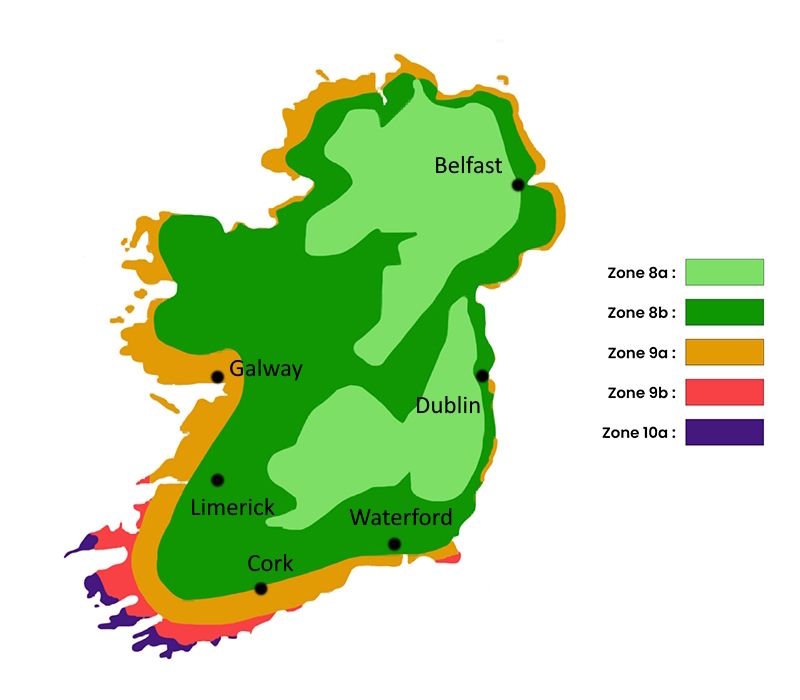
The planting period indicated on our website applies to regions in USDA Zone 9a (East Coast and Midlands: Dublin, Wexford, Waterford, Kilkenny, Portlaoise). It will vary depending on where you live:
- On the west coast and in the north-west (Galway, Limerick, Sligo, Donegal, Westport), delay planting by 1 to 2 weeks in spring and bring it forward by 1 to 2 weeks in autumn compared to the dates given, preferably choosing periods without strong winds.
- In the inland hills and plateaus (Wicklow Mountains, Macgillycuddy’s Reeks, Connemara, Killarney), it is best to plant in spring (April–May) or autumn (September–October), avoiding periods of waterlogged soil in winter and strong winds, which pose the main risk to newly planted trees in these areas.
The flowering period indicated on our website applies to regions in USDA Zone 9a, such as the East Coast and Midlands, including Dublin, Wexford, Waterford, Kilkenny and Portlaoise.
This will vary depending on where you live:
- On the west coast and in the northwest (Galway, Limerick, Sligo, Donegal and Westport), it will be delayed by one to two weeks compared to the given dates, due to stronger Atlantic winds and less spring sunshine.
- In the inland hills and plateaus (the Wicklow Mountains, the Macgillycuddy's Reeks, Connemara and Killarney), flowering will be delayed by two to three weeks. Flowering mainly occurs between May and July, with the limiting factors being less frost and more of the excessive humidity, strong winds and lack of sunshine that are characteristic of these areas.
The harvest period stated on our website applies to regions in USDA zones 8b to 9a (East, South-East and southern coast: Eastern Leinster, County Wexford and County Waterford, Cork region: Dublin, Wexford, Waterford, Kilkenny, Cork). It will vary depending on where you live:
- In the Midlands and the inland plains: the Middle Shannon Valley, Westmeath, Offaly, Longford, Cavan and Monaghan (Athlone, Mullingar, Tullamore, Longford, Cavan, Monaghan), in USDA zones 8a to 8b, the harvest will be delayed by 1 to 2 weeks compared with the dates given. Far from the moderating influence of the sea, these plains experience late frosts right up until the end of spring. The heavy, peaty soils warm slowly here, and damp patches form pockets of frost. Wait until the soil has dried out and warmed up before planting, and protect young plants with a fleece on clear nights.
- In the Atlantic West and North-West: Kerry, Clare, Galway, Connemara, Mayo, Sligo and Donegal (Killarney, Ennis, Galway, Westport, Sligo, Letterkenny), in USDA zones 8b to 10a, the harvest will be delayed by 1 to 3 weeks compared with the dates given. Summers here are cloudier, rainier and windier than in the east, which slows down ripening and encourages late blight and other fungal diseases. Kerry and Clare are at the lower end of the range, whilst Mayo and Donegal, which are cooler and more exposed, are at the upper end. However, the mild coastal winters mean that leafy vegetables and root vegetables can be harvested at dates close to those indicated, or even earlier: shelter crops from the wind with hedges and grow heat-loving plants in greenhouses or polytunnels.
- In the highlands, above 200 m: the Wicklow Mountains, Macgillycuddy’s Reeks, the Galtee and Comeragh ranges, the Twelve Bens in Connemara and the Donegal highlands, in USDA zones 7b to 8a, the harvest will be delayed by 2 to 4 weeks compared with the dates given, depending on the altitude, taking care to beat the first early frosts, which may occur as early as the start of autumn. Wind, constant damp and late frosts lasting into early summer significantly shorten the growing season. Opt for sheltered, south-facing slopes, early-maturing varieties and growing under cover.
Depending on your garden’s aspect, these variations can range from one to two weeks. A frost-prone valley floor delays the harvest, whilst a south-facing wall brings it forward.
Shipping country and language
Your country of residence may be:
Your country of residence is:
For a better user experience on our website, you can select:
Your shipping country:
-
 Austria
-
 Belgium
-
 Bosnia & Herzegovina
-
 Bulgaria
-
 Croatia
-
 Cyprus
-
 Czechia
-
 Denmark
-
 Estonia
-
 Finland
-
 France
-
 Germany
-
 Greece
-
 Hungary
-
 Iceland
-
 Ireland
-
 Italy
-
 Latvia
-
 Liechtenstein
-
 Lithuania
-
 Luxembourg
-
 Malta
-
 Netherlands
-
 Poland
-
 Portugal
-
 Romania
-
 Serbia
-
 Slovakia
-
 Slovenia
-
 Spain
-
 Sweden
-
 Switzerland
Language:
-
French
-
 English
-
Spanish
-
Italian
-
German
-
Portuguese
-
Dutch
-
Finnish
-
[pl]
My Account
Hello
My wish lists
My cart
Log in / Register
Existing customer?
This form is protected by reCAPTCHA - the Google Privacy Policy and Terms of Service apply.
New customer?
Create an account to track your orders, access our customer service and, if you wish, make the most of our upcoming offers.