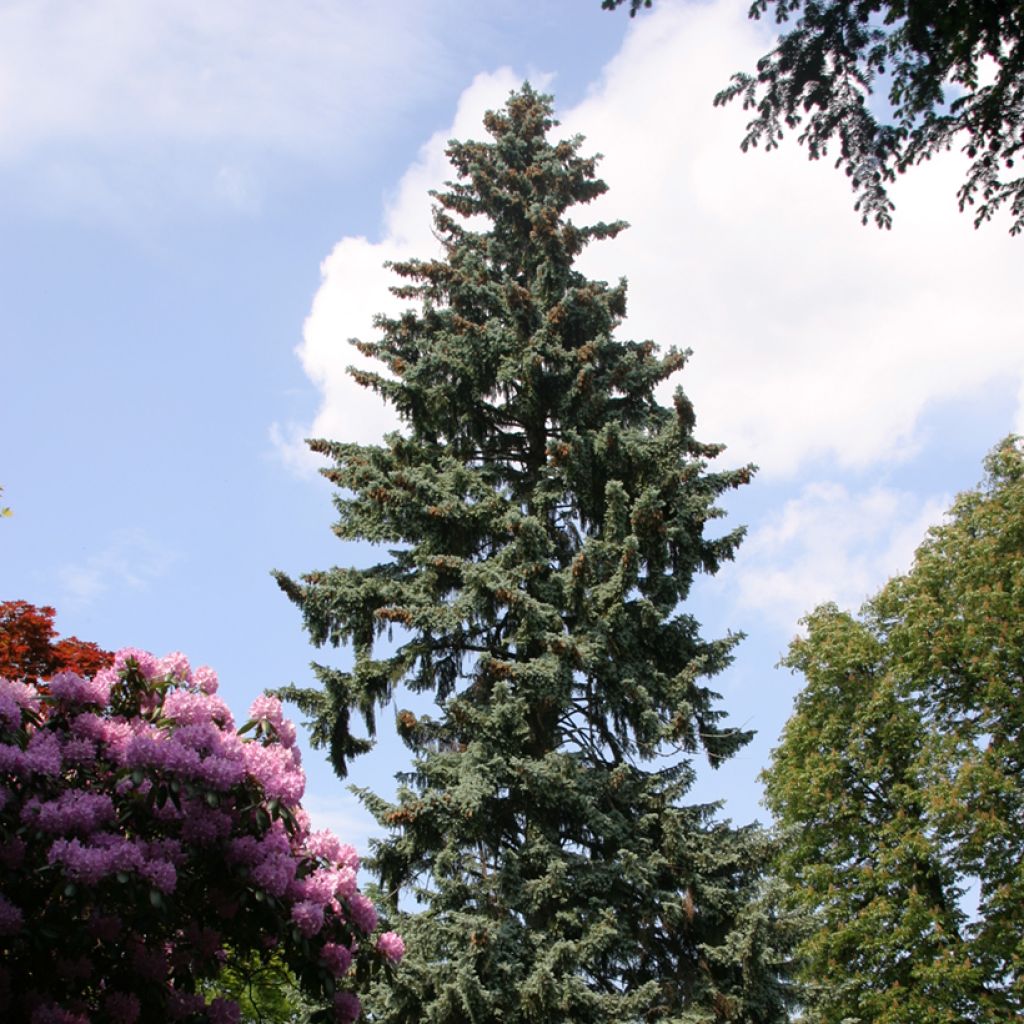
Picea pungens - Blue spruce
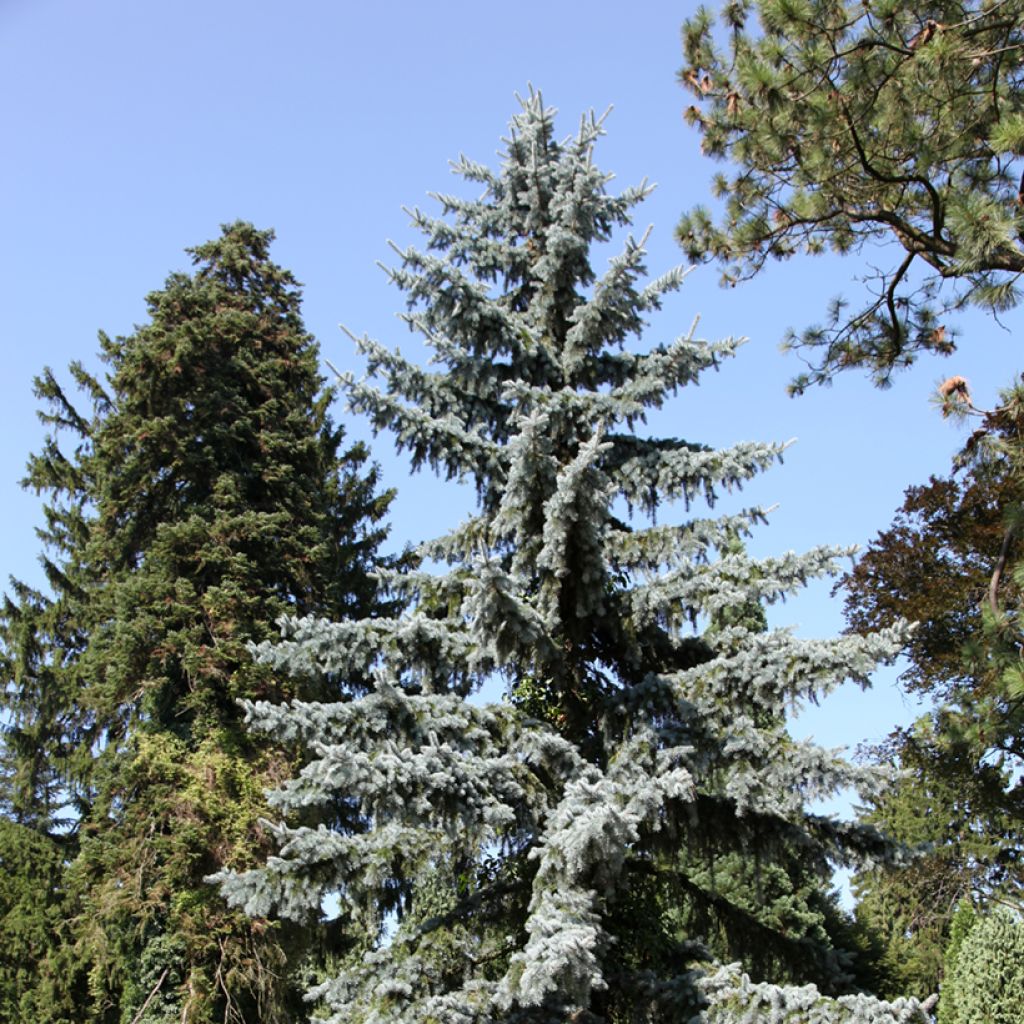
Picea pungens - Blue spruce
Picea pungens - Blue spruce
Picea pungens
Blue Spruce, Colorado Blue Spruce, Colorado Spruce, Silver Spruce
Back-to-school special offer!
Get €10 off for every €50 you spend! And get up to €40 off on a single order.
How does it work?
1. Shop your favourites
Add your favourite plants to your basket. For every €50 you spend (excluding delivery charges, store credit and the plastic-free option), you’ll receive a €10 voucher.
€50 spent = €10 voucher
€100 spent = €20 voucher
€150 spent = €30 voucher
€200 spent = €40 voucher
2. Place your order
Once your basket reaches one of the spending thresholds, place your order. You can even choose your delivery date!
3. Receive your voucher
As soon as your order has been shipped, you’ll receive an email containing your personal voucher code and its value.
4. Use it on your next order
Your voucher is valid for 90 days from the date you receive it. It can be used once only, on a new order worth at least the value of the voucher, excluding delivery charges.
Please note: Vouchers can be combined with other offers, but cannot be split or refunded.
Why not try an alternative variety in stock?
View all →
Available in 1 sizes

Available in 1 sizes
Available in 1 sizes
Available in 2 sizes

Available in 1 sizes

Available in 1 sizes
Available in 1 sizes
Available in 1 sizes
Available in 2 sizes

Available in 1 sizes
This plant carries a 24 months recovery warranty
More information
We guarantee the quality of our plants for a full growing cycle, and will replace at our expense any plant that fails to recover under normal climatic and planting conditions.
Does this plant fit my garden?
Set up your Plantfit profile →
Description
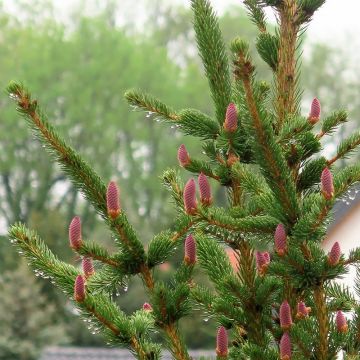
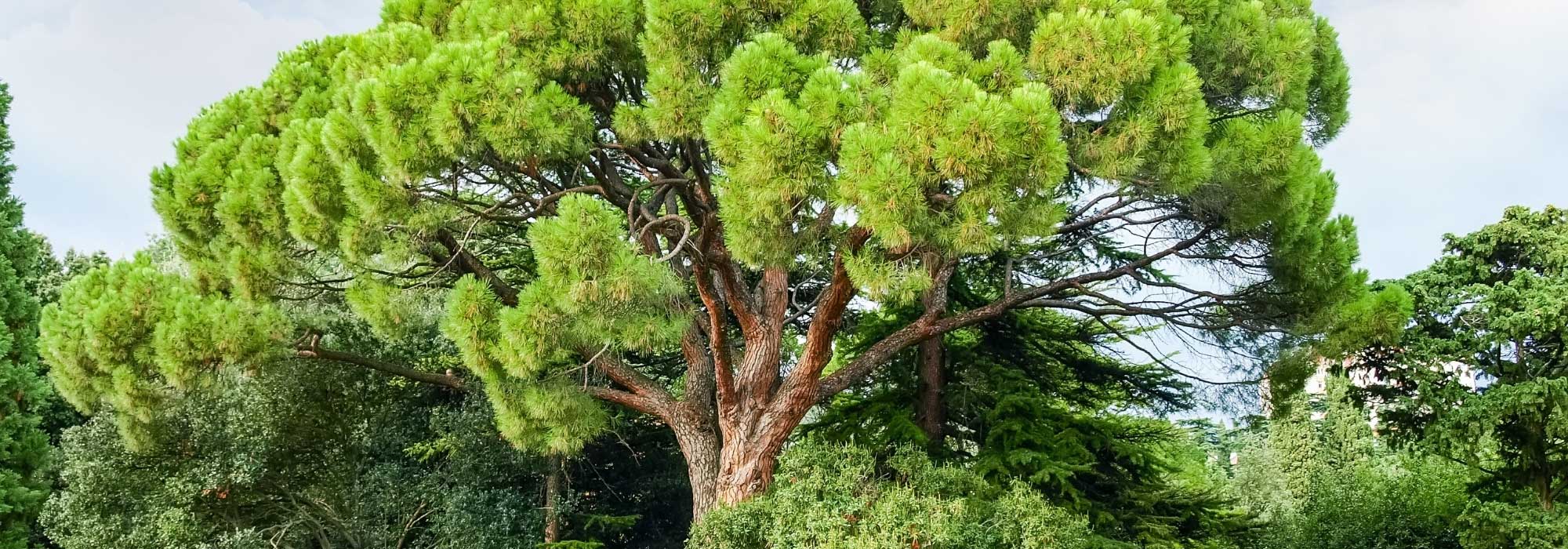
The Blue Spruce, scientifically known as Picea pungens, sometimes nicknamed the Colorado Blue Spruce, is a first-class conifer. It is prized for its beauty and its hardiness. This tree is famous for its unique silvery-blue foliage that adds a fantastic splash of colour to the landscape all year round. Its majestic appearance and unusual hue set it apart from other conifers, making it a favourite for large gardens and parks.
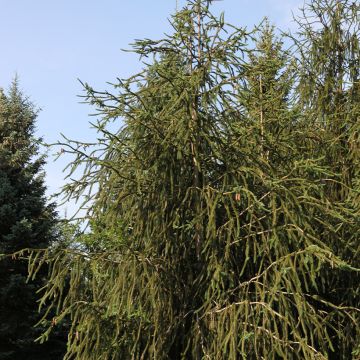
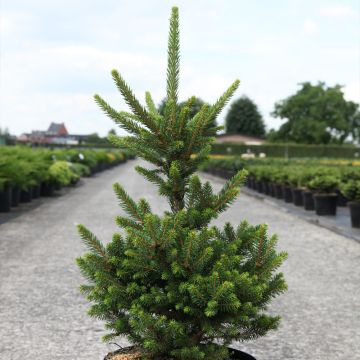
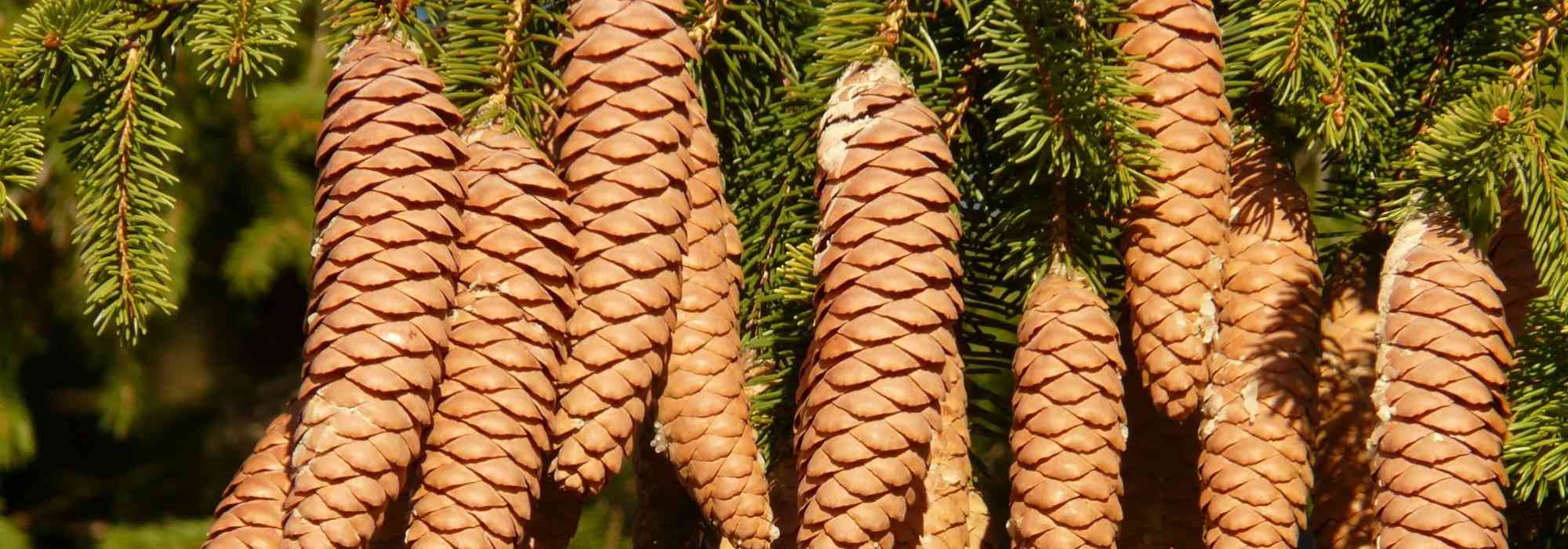
Belonging to the Pinaceae family, the Blue Spruce is native to the Rocky Mountains in the United States and reaches a height of 9 to 21 m at maturity, with a spread of 8 m, depending on growing conditions and climate. Its growth is relatively slow. It has a well-defined pyramidal habit, with a sturdy trunk supporting horizontal branches densely covered in needles. These 2 to 3 cm long needles are stiff and prickly, ranging from blue-green to a striking silvery-blue, giving the tree great appeal. The cones, which appear in autumn, transition from pale purple to dark brown, adding further visual interest. The bark of this spruce is initially smooth and grey when young. With age, it becomes rougher and cracks into irregular scales, taking on darker shades of grey to brown. The bark plates may sometimes appear slightly flaky and detach easily, giving the tree an interesting textured appearance. The Blue Spruce is naturally adapted to alpine and subalpine environments, where it thrives in rocky, well-drained soil, often at high altitudes. It prefers full sun or partial shade, in well-drained soil, not overly dry in summer, neutral to slightly acidic. Its location should be carefully considered, as it dislikes being transplanted.
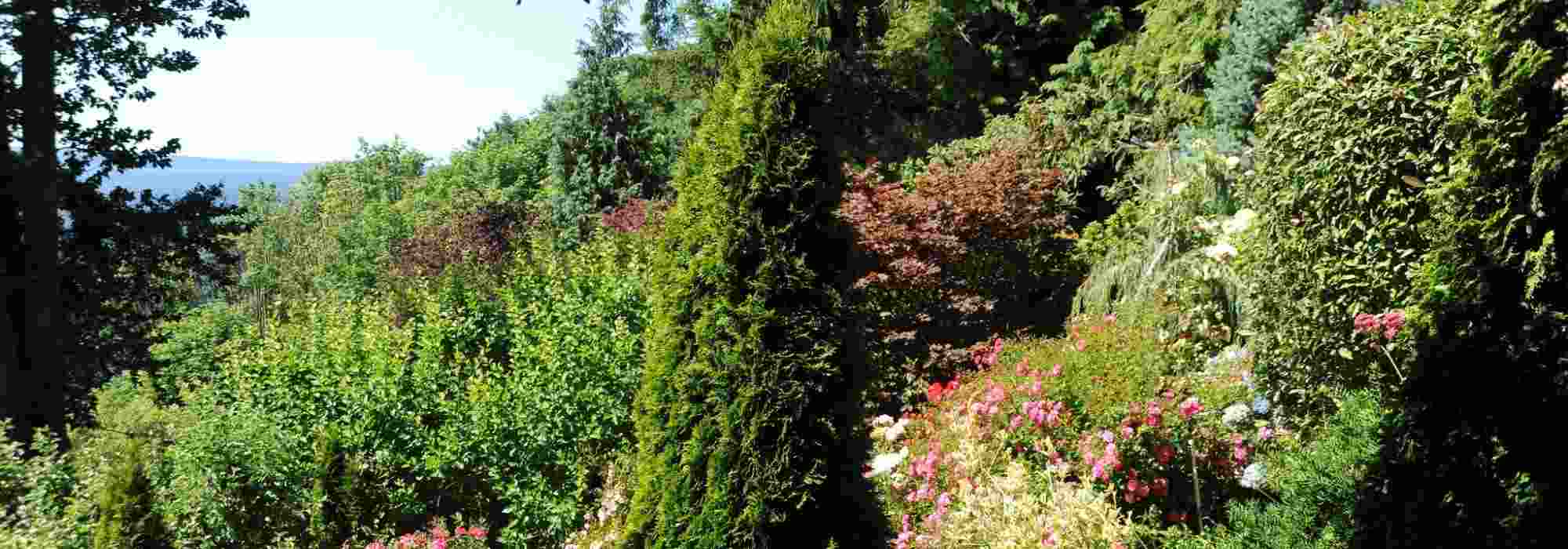
In the garden, Blue Spruce is typically used as a standalone specimen because of its grandeur. Its bluish hue pairs well with colours such as the golden yellow or vivid red of autumn foliage. It can be planted alongside a purple beech, a Nyssa sylvatica (Black Tupelo), known for its extraordinary autumn colours, or even an Acer platanoides 'Drummondii', a Norway Maple distinguished by its stunning variegated leaves. Finally, planting the Blue Spruce in rows along pathways or at the edges of large landscaped gardens will highlight its beauty.
Picea pungens - Blue spruce in pictures
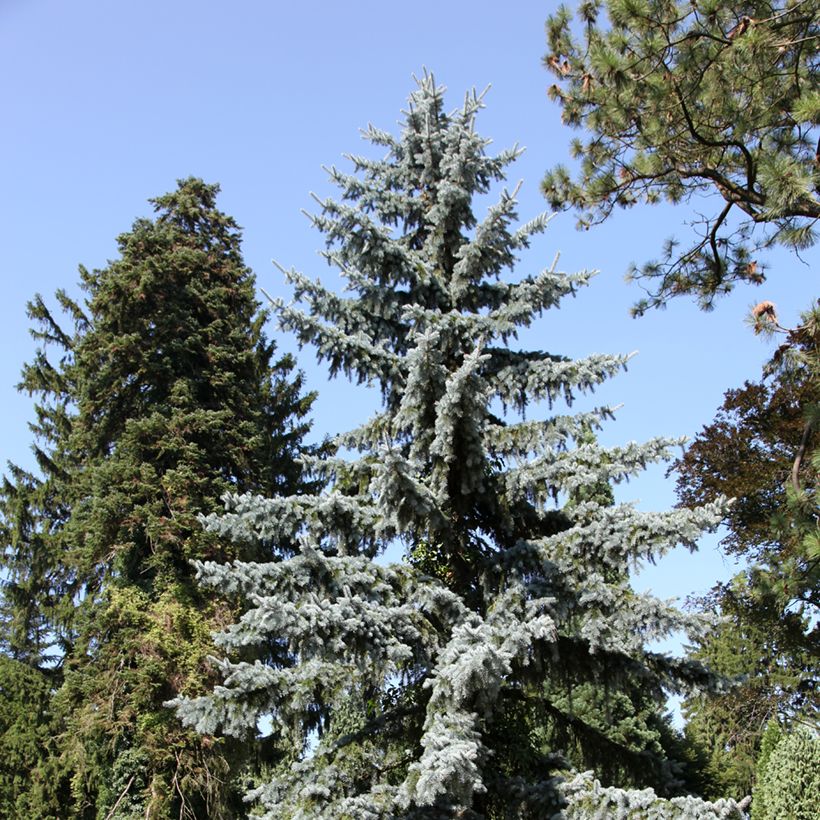
Plant habit
Flowering
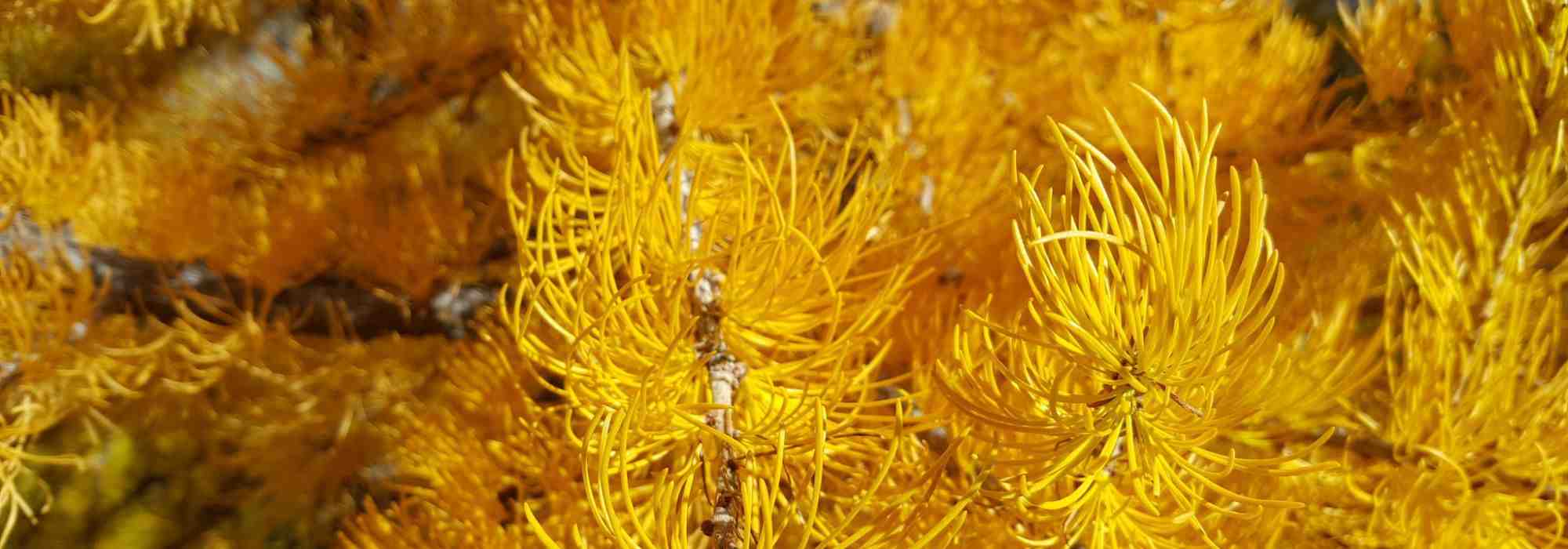
Foliage
Planting and care
Plant Picea pungens from September to November and from February to May in a fairly fertile, well-drained, light soil, slightly acidic to neutral, even quite dry in summer. This alpine conifer dislikes scorching summers and is intolerant of limestone. A sandy, loamy, humus-bearing or slightly stony soil will suit it best. Choose a sunny spot sheltered from prevailing winds. In overly damp conditions, it becomes more susceptible to root rot. Select its location carefully, as this conifer does not transplant well. Soak the root balls thoroughly before planting. Add organic matter at planting time and water generously during the first few years, as well as during prolonged dry spells. Apply a specialist conifer fertiliser every April and hoe the soil in summer. Although extremely hardy, this conifer struggles in heavy, waterlogged soils during winter.
Planting period
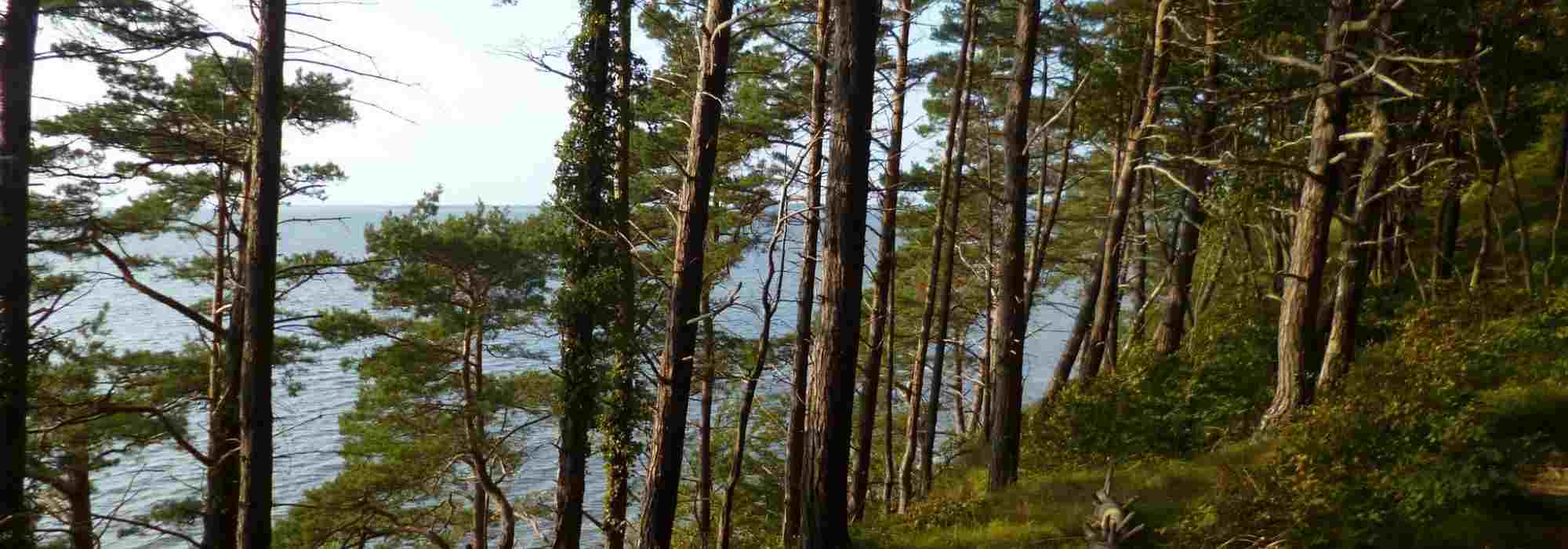
Intended location
Care
Planting & care advice
-
-
-

-
-
-
-
-
This item has not been reviewed yet - be the first to leave a review about it.
Recently viewed products
Haven't found what you were looking for?
Hardiness is the lowest winter temperature a plant can endure without suffering serious damage or even dying. However, hardiness is affected by location (a sheltered area, such as a patio), protection (winter cover) and soil type (hardiness is improved by well-drained soil).
In temperate climates, pruning of spring-flowering shrubs (forsythia, spireas, etc.) should be done just after flowering.
Pruning of summer-flowering shrubs (Indian Lilac, Perovskia, etc.) can be done in winter or spring.
In cold regions as well as with frost-sensitive plants, avoid pruning too early when severe frosts may still occur.
The harvesting period indicated on our website applies to countries and regions in USDA zone 8 (France, England, Ireland, the Netherlands).
In colder areas (Scandinavia, Poland, Austria...) fruit and vegetable harvests are likely to be delayed by 3-4 weeks.
In warmer areas (Italy, Spain, Greece, etc.), harvesting will probably take place earlier, depending on weather conditions.
The sowing periods indicated on our website apply to countries and regions within USDA Zone 8 (France, UK, Ireland, Netherlands).
In colder areas (Scandinavia, Poland, Austria...), delay any outdoor sowing by 3-4 weeks, or sow under glass.
In warmer climes (Italy, Spain, Greece, etc.), bring outdoor sowing forward by a few weeks.
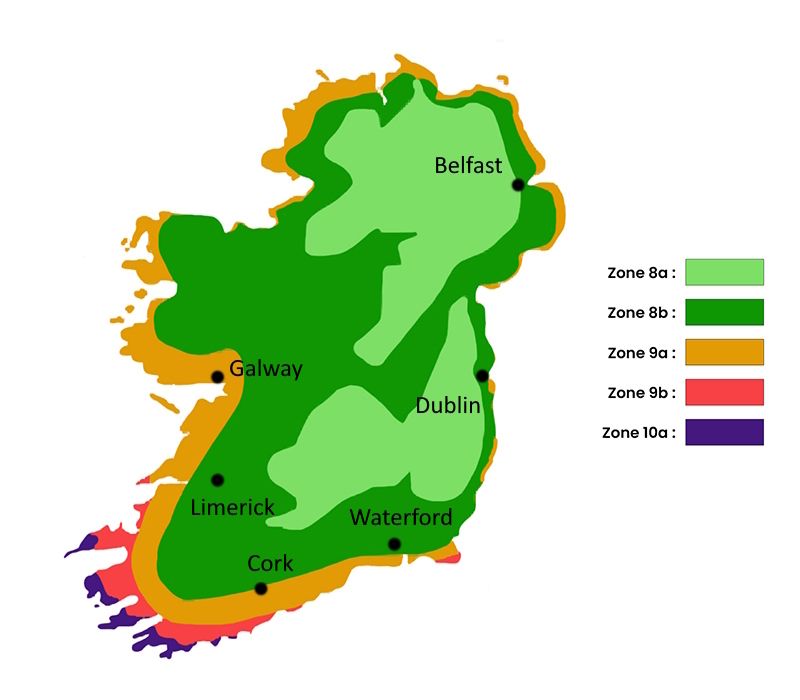
The planting period indicated on our website applies to regions in USDA Zone 9a (East Coast and Midlands: Dublin, Wexford, Waterford, Kilkenny, Portlaoise). It will vary depending on where you live:
- On the west coast and in the north-west (Galway, Limerick, Sligo, Donegal, Westport), delay planting by 1 to 2 weeks in spring and bring it forward by 1 to 2 weeks in autumn compared to the dates given, preferably choosing periods without strong winds.
- In the inland hills and plateaus (Wicklow Mountains, Macgillycuddy’s Reeks, Connemara, Killarney), it is best to plant in spring (April–May) or autumn (September–October), avoiding periods of waterlogged soil in winter and strong winds, which pose the main risk to newly planted trees in these areas.
The flowering period indicated on our website applies to regions in USDA Zone 9a, such as the East Coast and Midlands, including Dublin, Wexford, Waterford, Kilkenny and Portlaoise.
This will vary depending on where you live:
- On the west coast and in the northwest (Galway, Limerick, Sligo, Donegal and Westport), it will be delayed by one to two weeks compared to the given dates, due to stronger Atlantic winds and less spring sunshine.
- In the inland hills and plateaus (the Wicklow Mountains, the Macgillycuddy's Reeks, Connemara and Killarney), flowering will be delayed by two to three weeks. Flowering mainly occurs between May and July, with the limiting factors being less frost and more of the excessive humidity, strong winds and lack of sunshine that are characteristic of these areas.
Shipping country and language
Your country of residence may be:
Your country of residence is:
For a better user experience on our website, you can select:
Your shipping country:
-
 Austria
-
 Belgium
-
 Bosnia & Herzegovina
-
 Bulgaria
-
 Croatia
-
 Cyprus
-
 Czechia
-
 Denmark
-
 Estonia
-
 Finland
-
 France
-
 Germany
-
 Greece
-
 Hungary
-
 Iceland
-
 Ireland
-
 Italy
Italy
-
 Latvia
-
 Liechtenstein
-
 Lithuania
-
 Luxembourg
-
 Malta
Malta
-
 Netherlands
-
 Poland
-
 Portugal
-
 Romania
-
 Serbia
-
 Slovakia
-
 Slovenia
-
 Spain
Spain
-
 Sweden
-
 Switzerland
Language:
-
French
-
 English
-
Spanish
-
Italian
-
German
-
Portuguese
-
Dutch
-
Finnish
My Account
Hello
My wish lists
My cart
Log in / Register
Existing customer?
This form is protected by reCAPTCHA - the Google Privacy Policy and Terms of Service apply.
New customer?
Create an account to track your orders, access our customer service and, if you wish, make the most of our upcoming offers.