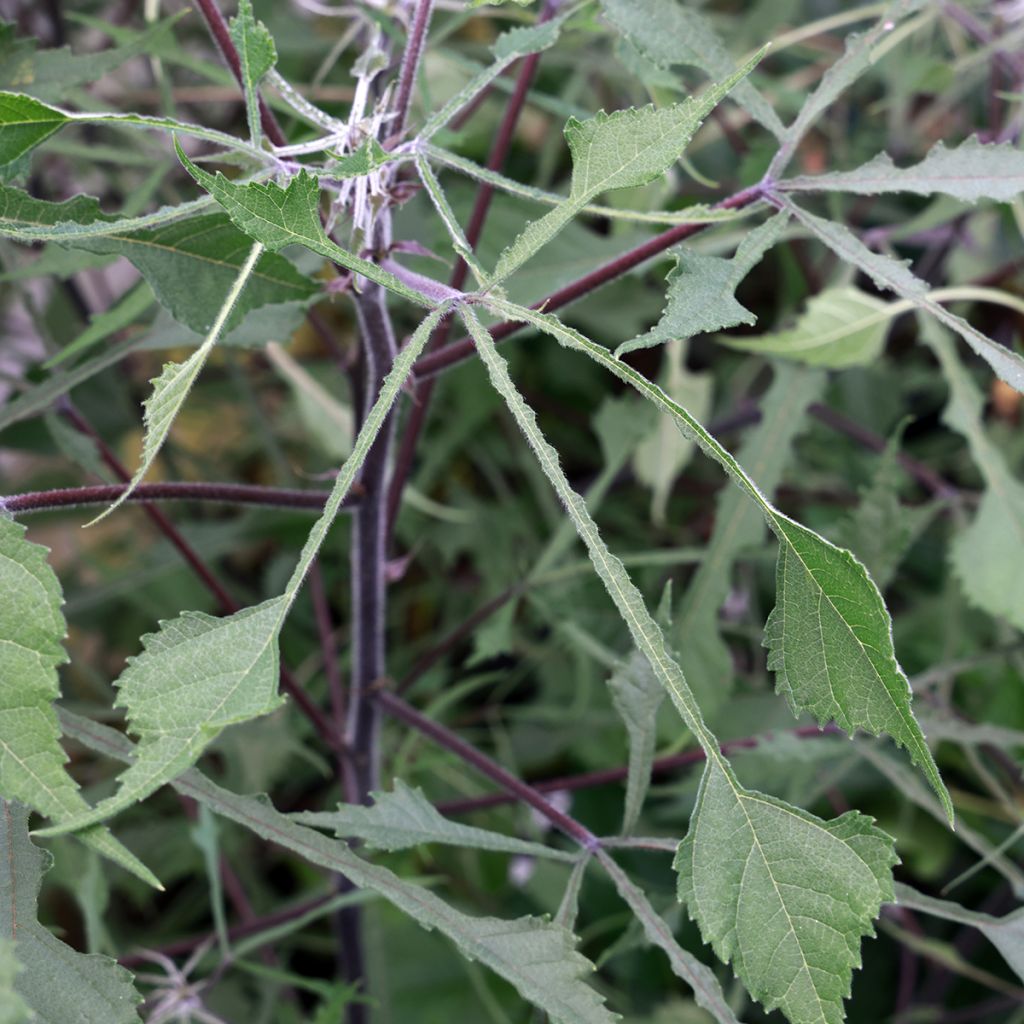
Broussonetia papyrifera Bilardii
Broussonetia papyrifera Bilardii
Broussonetia papyrifera Bilardii
Paper Mulberry
Back-to-school special offer!
Get €10 off for every €50 you spend! And get up to €40 off on a single order.
How does it work?
1. Shop your favourites
Add your favourite plants to your basket. For every €50 you spend (excluding delivery charges, store credit and the plastic-free option), you’ll receive a €10 voucher.
€50 spent = €10 voucher
€100 spent = €20 voucher
€150 spent = €30 voucher
€200 spent = €40 voucher
2. Place your order
Once your basket reaches one of the spending thresholds, place your order. You can even choose your delivery date!
3. Receive your voucher
As soon as your order has been shipped, you’ll receive an email containing your personal voucher code and its value.
4. Use it on your next order
Your voucher is valid for 90 days from the date you receive it. It can be used once only, on a new order worth at least the value of the voucher, excluding delivery charges.
Please note: Vouchers can be combined with other offers, but cannot be split or refunded.
Why not try an alternative variety in stock?
View all →
Available in 1 sizes
Available in 2 sizes
Available in 2 sizes
Available in 5 sizes
Available in 1 sizes
Available in 1 sizes
Available in 1 sizes
Available in 1 sizes
Available in 1 sizes
Available in 1 sizes
This plant carries a 24 months recovery warranty
More information
We guarantee the quality of our plants for a full growing cycle, and will replace at our expense any plant that fails to recover under normal climatic and planting conditions.
Does this plant fit my garden?
Set up your Plantfit profile →
Description
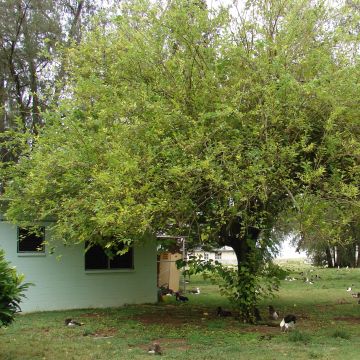
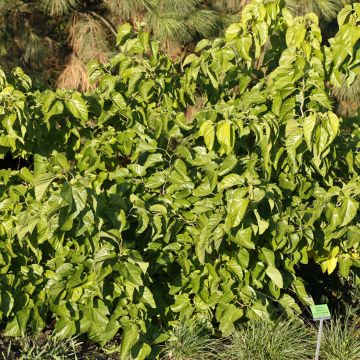
Broussonetia papyrifera ‘Bilardii’ is a form of the paper mulberry notable for its finely divided leaves and its reduced size compared to the type. In the garden, this small deciduous tree combines a light habit with great hardiness. Its foliage provides dappled shade and its graphic form works from spring to autumn. Undemanding, it establishes in most well-drained soils and tolerates very dry summers. It should be planted in regions that are not too cold.
From the Moraceae family, Broussonetia papyrifera (synonym: Morus papyrifera) is native to East Asia, from China to Korea, including Taiwan and Japan, and has spread widely elsewhere. The genus name honours the naturalist Pierre-Auguste Broussonet and the epithet papyrifera recalls the centuries-old use of its inner bark fibres for making traditional papers.
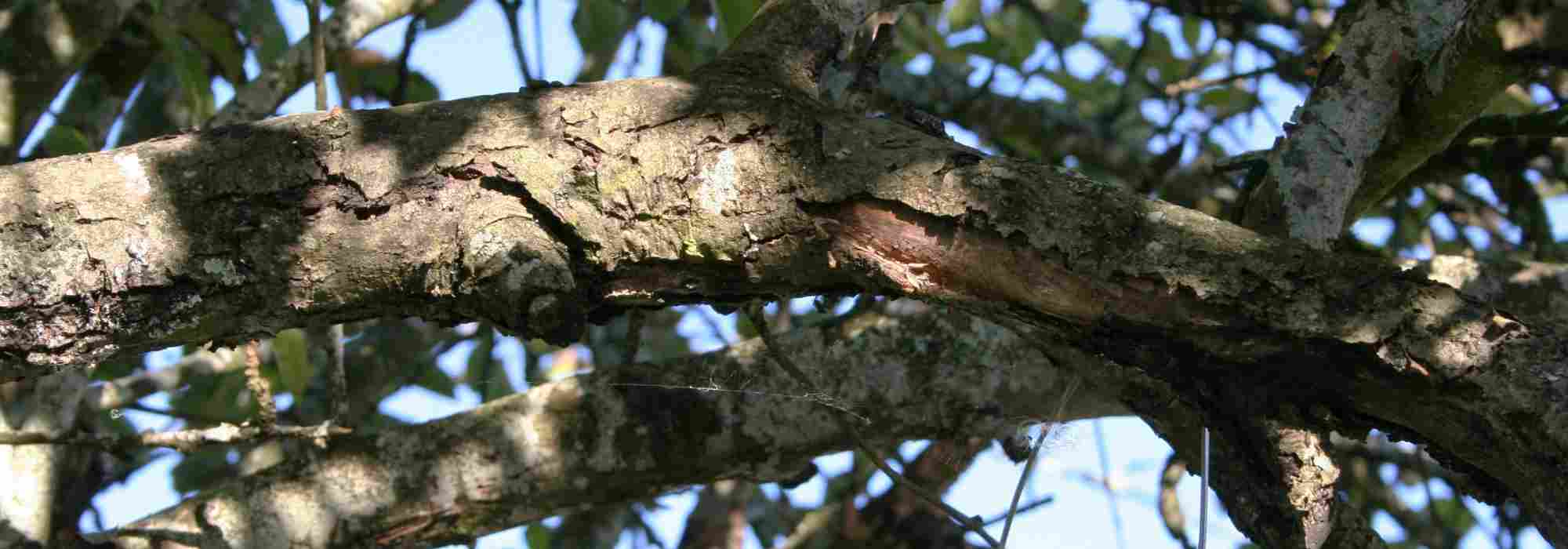
The cultivar ‘Bilardii’ — also encountered with the spelling ‘Billardii’ — is a horticultural selection. The habit of this small tree is rounded to spreading, accompanied by rapid growth in the first years; in open ground, a mature specimen reaches a height and spread of 3 to 4 m. At 10 years old, one can expect 2 to 3 m in height depending on the soil and climate. The shoots contain a white latex, visible when cut. The wood is quite brittle. The plant suckers readily and can grow into large clumps if the suckers are not removed.
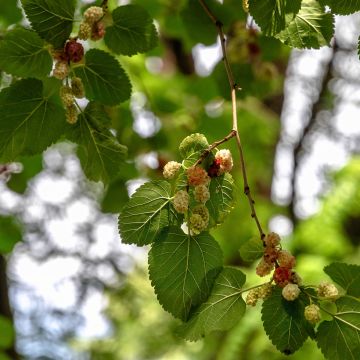
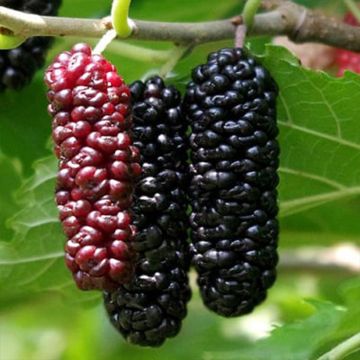
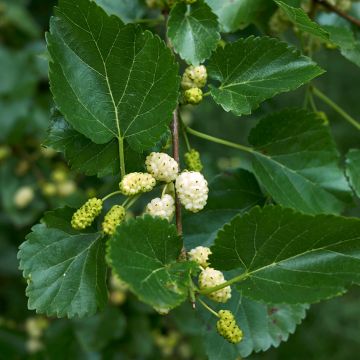
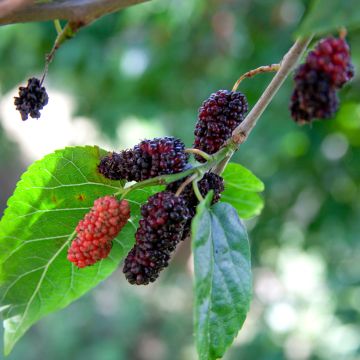
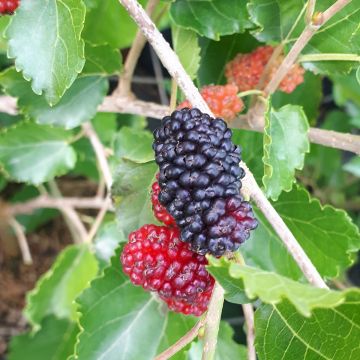
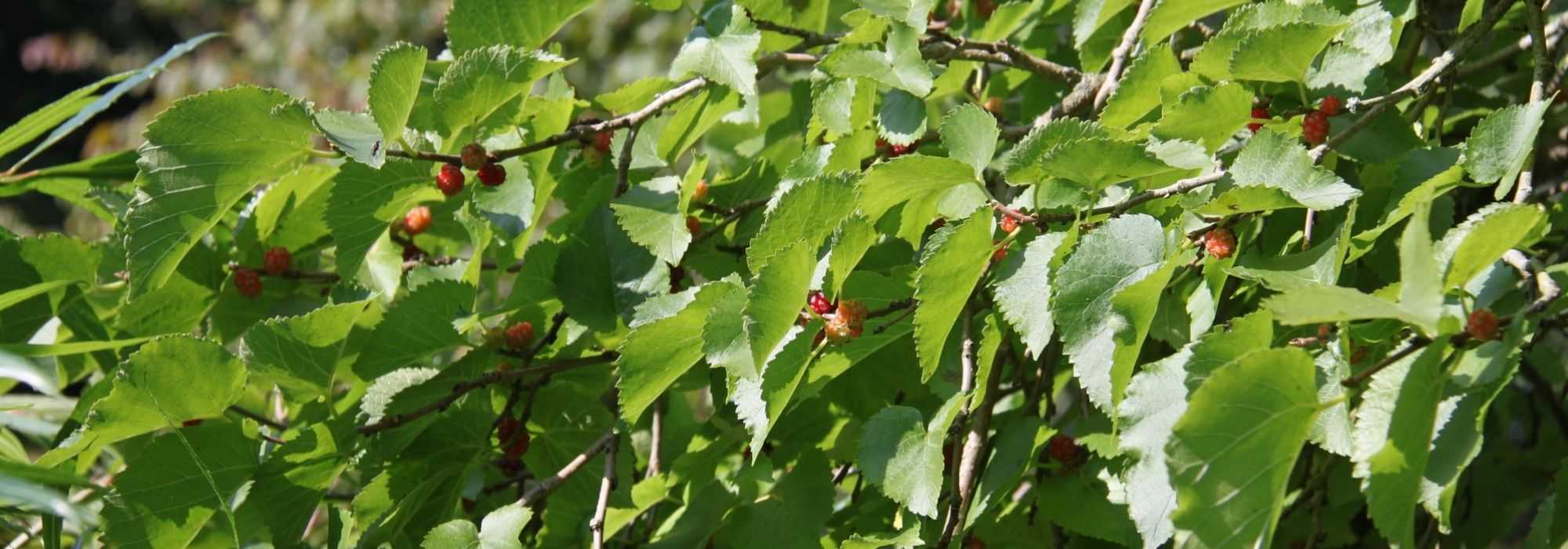
The deciduous foliage, very polymorphous in the species, becomes deeply divided in ‘Bilardii’, into 3–5 lobes that are very narrow and lanceolate, with dentate margins and an acuminate apex; the lobes are more thread-like on young shoots; the lamina is rough to the touch on the upper surface and villous beneath. The petioles are slightly winged. The leaf colour is a fairly light green turning yellow late in the season. The spring flowering occurs from April to May. There are male and female specimens. The male aments are cylindrical and the female inflorescences are globose; after pollination, female specimens bear in summer aggregate fruits, globose, orange-red, decorative and edible, but fragile. They are a treat for humans, but also for birds which help disperse the tree in favourable climates. The grey bark becomes striate with age, the young reddish-brown stems are pubescent. This variety is capable of regenerating from the stump below -12°C. Very undemanding, it tolerates the presence of limestone perfectly, as well as poor and sandy soils.
Broussonetia papyrifera ‘Bilardii’ is an elegant and original small tree, well-suited to dry, Mediterranean or mild Atlantic gardens. Use it as a standalone specimen on a lawn. At its base, plant for example Mascarene Grass. Limit pruning to a light reshaping in late winter to balance its crown and clear its trunk if you want a small parasol shape. In a large exotic border, you can pair it with Euphorbia characias, Beschorneria yuccoides, Yucca rostrata, Phlomis fruticosa and Festuca glauca ‘Elijah Blue’. An architectural plant, it can also mark a path or the garden entrance.
Broussonetia papyrifera bears many common names such as Chinese mulberry, Spanish mulberry, paper mulberry, or deer tree. Names declined in multiple languages, as numerous as the regions of the world that have welcomed this great traveller from Asia. For centuries, its inner bark (the bast, called kozo) has been beaten and sieved to make strong and durable papers — washi, hôshô or xuan — and also serves as raw material for plant-based cloths like tapa in the Pacific.
Plant habit
Flowering
Foliage
Safety measures
Botanical data
Broussonetia
papyrifera
Bilardii
Moraceae
Paper Mulberry
Broussonetia billardii, Broussonetia papyrifera ‘Billardii’, Broussonetia cordata, Morus papyrifera
Cultivar or hybrid
Phytophotodermatoses
Cette plante peut provoquer l'apparition de réactions cutanées indésirables en cas de contact suivi d'une exposition au soleil.
Ne la plantez pas là où de jeunes enfants peuvent évoluer. Evitez l'exposition au soleil après l'avoir manipulée. Evitez tout contact avec la peau: privilégiez l'emploi de gants pour la manipuler. En cas de contact, lavez-vous soigneusement les mains et rincez abondamment à l'eau la zone concernée. Lavez les vêtements entrés en contact. En cas de réaction cutanée, contactez votre médecin ou le centre antipoison le plus proche de chez vous. En cas d'atteinte étendue, appelez sans tarder le 15 ou le 112.Pensez à conserver l'étiquette de la plante, à la photographier ou à noter son nom, afin de faciliter le travail des professionnels de santé.
Davantage d'informations sur https://plantes-risque.info
atteinterespiratoire
Cette plante peut entraîner des symptômes allergiques.
Evitez de la planter si vous ou vos proches souffrez de rhinite saisonnière ("rhume des foins").
Davantage d'informations sur https://plantes-risque.info
Planting and care
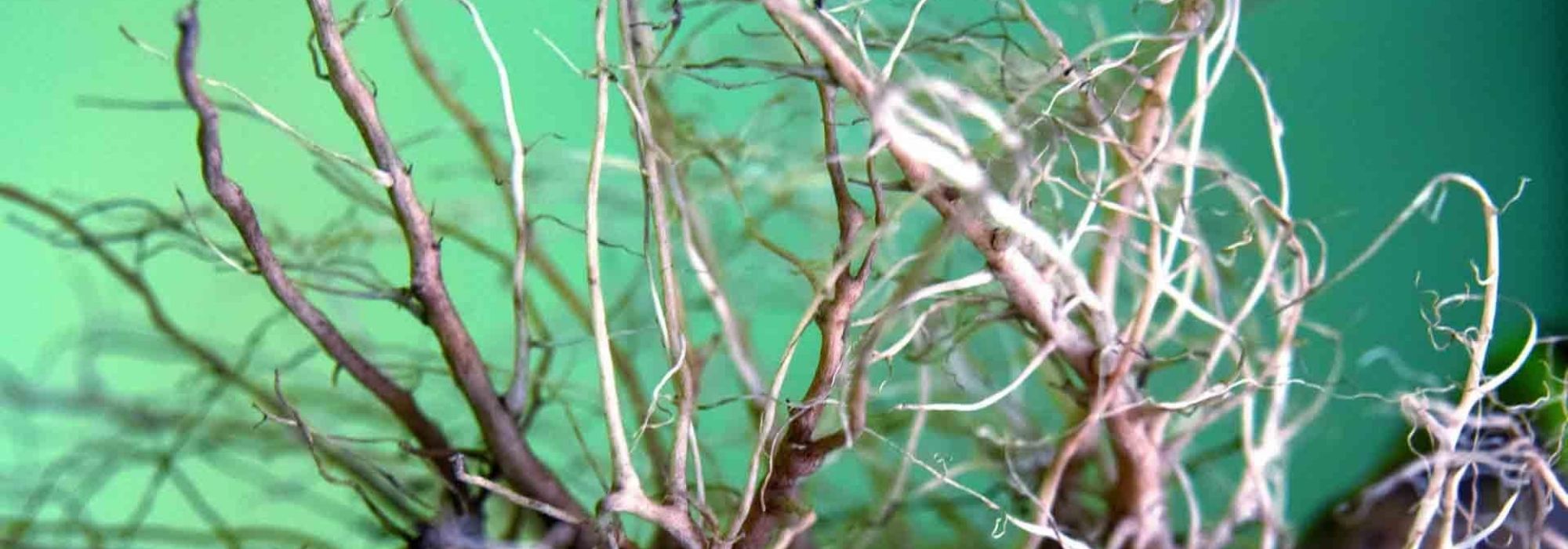
Broussonetia papyrifera 'Bilardii' is best planted in spring in areas at the limit of its hardiness or in autumn in a hot, dry climate, in ordinary, well-drained and sufficiently deep soil. While it thrives faster in fertile, moist soil, it tolerates poor, chalky or sandy soils that are dry in summer perfectly. Position it in a sunny spot for at least part of the day. Take care not to damage its fleshy and brittle roots during planting. Hardy down to -12°C, it is common for it to regrow from the slightly suckering stump in spring if it has been cut back by frost.
The wood of this mulberry is very brittle, which means you should choose a location sheltered from the wind for it, as wind could also damage the foliage.
Avoid planting it too close to buildings.
Planting period
Intended location
Care
Planting & care advice
-

-
-
-
-
-
-

-
This item has not been reviewed yet - be the first to leave a review about it.
Recently viewed products
Haven't found what you were looking for?
Hardiness is the lowest winter temperature a plant can endure without suffering serious damage or even dying. However, hardiness is affected by location (a sheltered area, such as a patio), protection (winter cover) and soil type (hardiness is improved by well-drained soil).
In temperate climates, pruning of spring-flowering shrubs (forsythia, spireas, etc.) should be done just after flowering.
Pruning of summer-flowering shrubs (Indian Lilac, Perovskia, etc.) can be done in winter or spring.
In cold regions as well as with frost-sensitive plants, avoid pruning too early when severe frosts may still occur.
The harvesting period indicated on our website applies to countries and regions in USDA zone 8 (France, England, Ireland, the Netherlands).
In colder areas (Scandinavia, Poland, Austria...) fruit and vegetable harvests are likely to be delayed by 3-4 weeks.
In warmer areas (Italy, Spain, Greece, etc.), harvesting will probably take place earlier, depending on weather conditions.
The sowing periods indicated on our website apply to countries and regions within USDA Zone 8 (France, UK, Ireland, Netherlands).
In colder areas (Scandinavia, Poland, Austria...), delay any outdoor sowing by 3-4 weeks, or sow under glass.
In warmer climes (Italy, Spain, Greece, etc.), bring outdoor sowing forward by a few weeks.
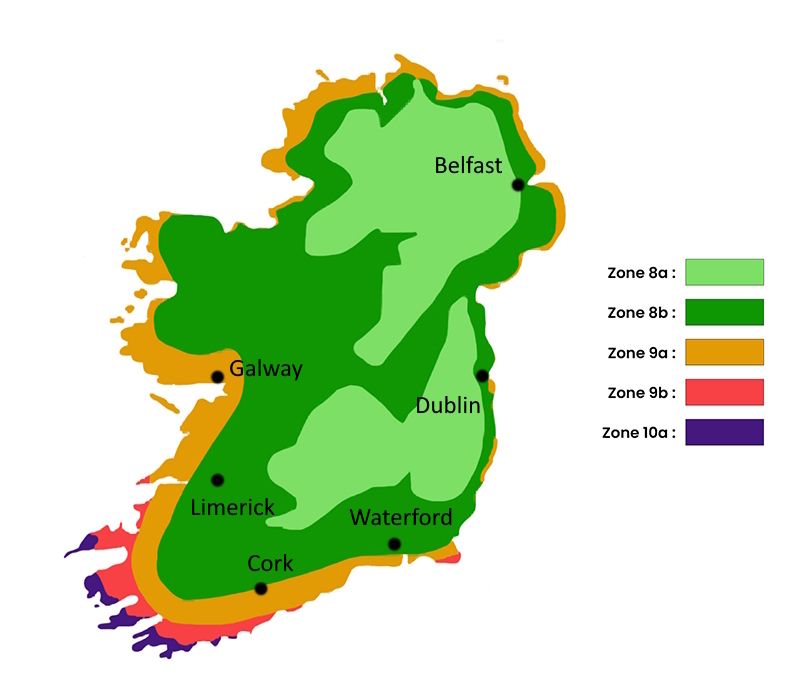
The planting period indicated on our website applies to regions in USDA Zone 9a (East Coast and Midlands: Dublin, Wexford, Waterford, Kilkenny, Portlaoise). It will vary depending on where you live:
- On the west coast and in the north-west (Galway, Limerick, Sligo, Donegal, Westport), delay planting by 1 to 2 weeks in spring and bring it forward by 1 to 2 weeks in autumn compared to the dates given, preferably choosing periods without strong winds.
- In the inland hills and plateaus (Wicklow Mountains, Macgillycuddy’s Reeks, Connemara, Killarney), it is best to plant in spring (April–May) or autumn (September–October), avoiding periods of waterlogged soil in winter and strong winds, which pose the main risk to newly planted trees in these areas.
The flowering period indicated on our website applies to regions in USDA Zone 9a, such as the East Coast and Midlands, including Dublin, Wexford, Waterford, Kilkenny and Portlaoise.
This will vary depending on where you live:
- On the west coast and in the northwest (Galway, Limerick, Sligo, Donegal and Westport), it will be delayed by one to two weeks compared to the given dates, due to stronger Atlantic winds and less spring sunshine.
- In the inland hills and plateaus (the Wicklow Mountains, the Macgillycuddy's Reeks, Connemara and Killarney), flowering will be delayed by two to three weeks. Flowering mainly occurs between May and July, with the limiting factors being less frost and more of the excessive humidity, strong winds and lack of sunshine that are characteristic of these areas.
Shipping country and language
Your country of residence may be:
Your country of residence is:
For a better user experience on our website, you can select:
Your shipping country:
-
 Austria
-
 Belgium
-
 Bosnia & Herzegovina
-
 Bulgaria
-
 Croatia
-
 Cyprus
-
 Czechia
-
 Denmark
-
 Estonia
-
 Finland
-
 France
-
 Germany
-
 Greece
-
 Hungary
-
 Iceland
-
 Ireland
-
 Italy
Italy
-
 Latvia
-
 Liechtenstein
-
 Lithuania
-
 Luxembourg
-
 Malta
Malta
-
 Netherlands
-
 Poland
-
 Portugal
-
 Romania
-
 Serbia
-
 Slovakia
-
 Slovenia
-
 Spain
Spain
-
 Sweden
-
 Switzerland
Language:
-
French
-
 English
-
Spanish
-
Italian
-
German
-
Portuguese
-
Dutch
-
Finnish
My Account
Hello
My wish lists
My cart
Log in / Register
Existing customer?
This form is protected by reCAPTCHA - the Google Privacy Policy and Terms of Service apply.
New customer?
Create an account to track your orders, access our customer service and, if you wish, make the most of our upcoming offers.