Morus alba Milanowek - White Mulberry
Morus alba Milanowek - White Mulberry
Morus alba Milanowek
White Mulberry
Back-to-school special offer!
Get €10 off for every €50 you spend! And get up to €40 off on a single order.
How does it work?
1. Shop your favourites
Add your favourite plants to your basket. For every €50 you spend (excluding delivery charges, store credit and the plastic-free option), you’ll receive a €10 voucher.
€50 spent = €10 voucher
€100 spent = €20 voucher
€150 spent = €30 voucher
€200 spent = €40 voucher
2. Place your order
Once your basket reaches one of the spending thresholds, place your order. You can even choose your delivery date!
3. Receive your voucher
As soon as your order has been shipped, you’ll receive an email containing your personal voucher code and its value.
4. Use it on your next order
Your voucher is valid for 90 days from the date you receive it. It can be used once only, on a new order worth at least the value of the voucher, excluding delivery charges.
Please note: Vouchers can be combined with other offers, but cannot be split or refunded.
Home or relay delivery (depending on size and destination)
Important: You may be charged customs duties by your country’s customs authorities upon delivery.
Schedule delivery date
and select date in basket
This plant carries a 24 months recovery warranty
More information
We guarantee the quality of our plants for a full growing cycle, and will replace at our expense any plant that fails to recover under normal climatic and planting conditions.
Does this plant fit my garden?
Set up your Plantfit profile →
Description
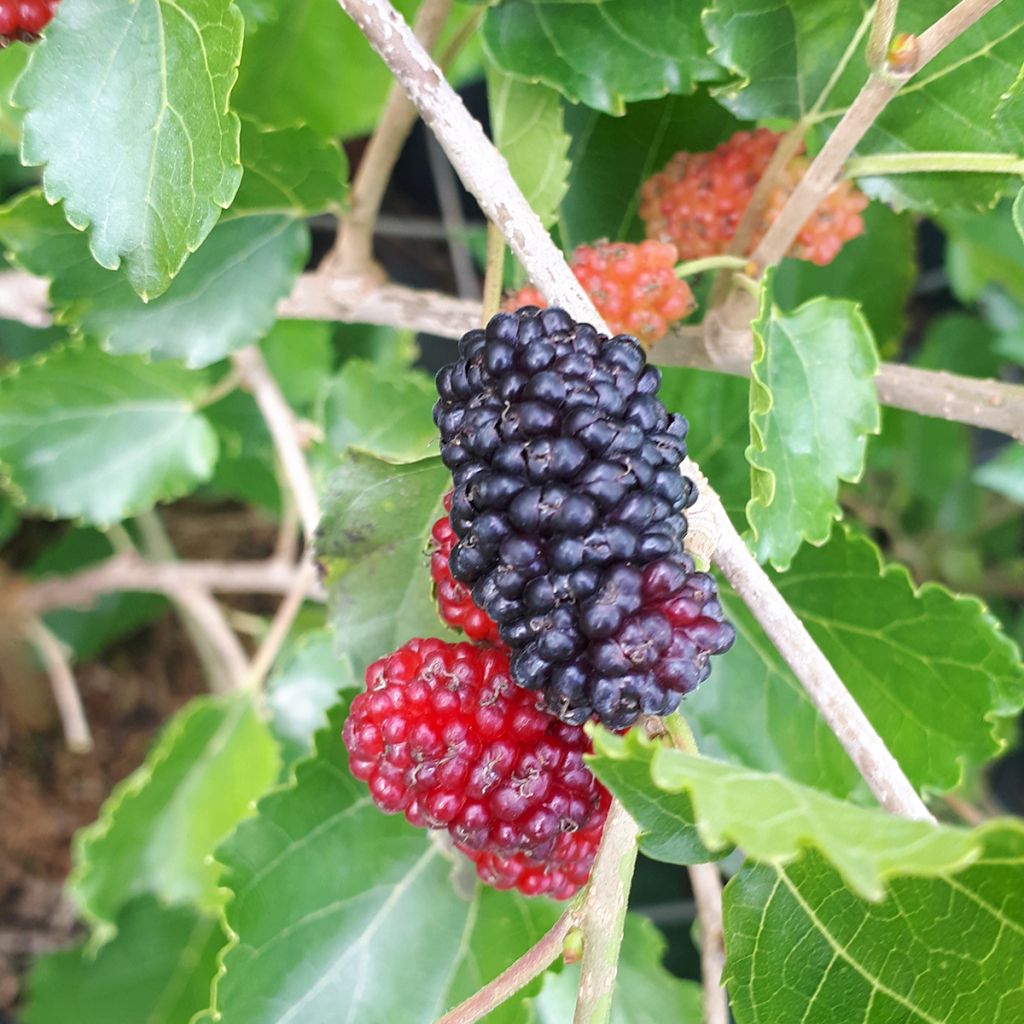
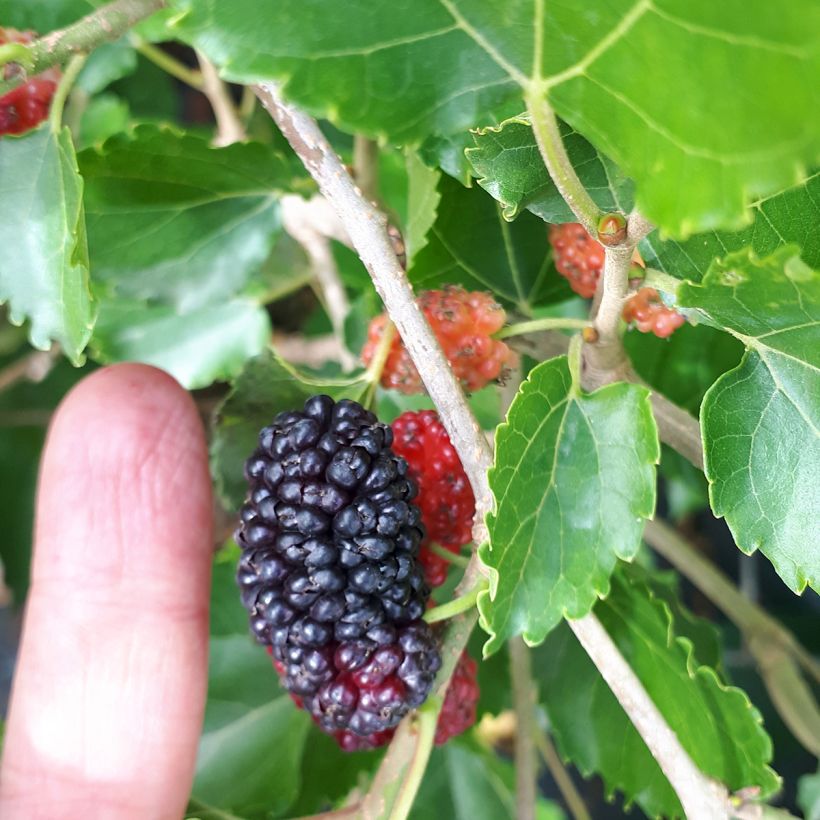
Morus alba 'Milanovek' is a selection of White Mulberry of Polish origin sought after for its cold resistance and productivity. The tree produces large, elongated, black fruits that have a sweet flavour when ripe. This variety is also known for its long fruiting period, from June to September: its branches bear fruits of different colours, giving the vegetation a real ornamental value. Like all mulberries, 'Milanovek' is an excellent shade tree. It is very hardy and also resistant to heat and drought.
The 'Milanovek' mulberry belongs to the Moraceae family. Like all trees in this botanical family, it produces latex in its tissues. Mature specimens, which retain the memory of many pollarding prunings, often have a hollow, twisted trunk that is truly picturesque.
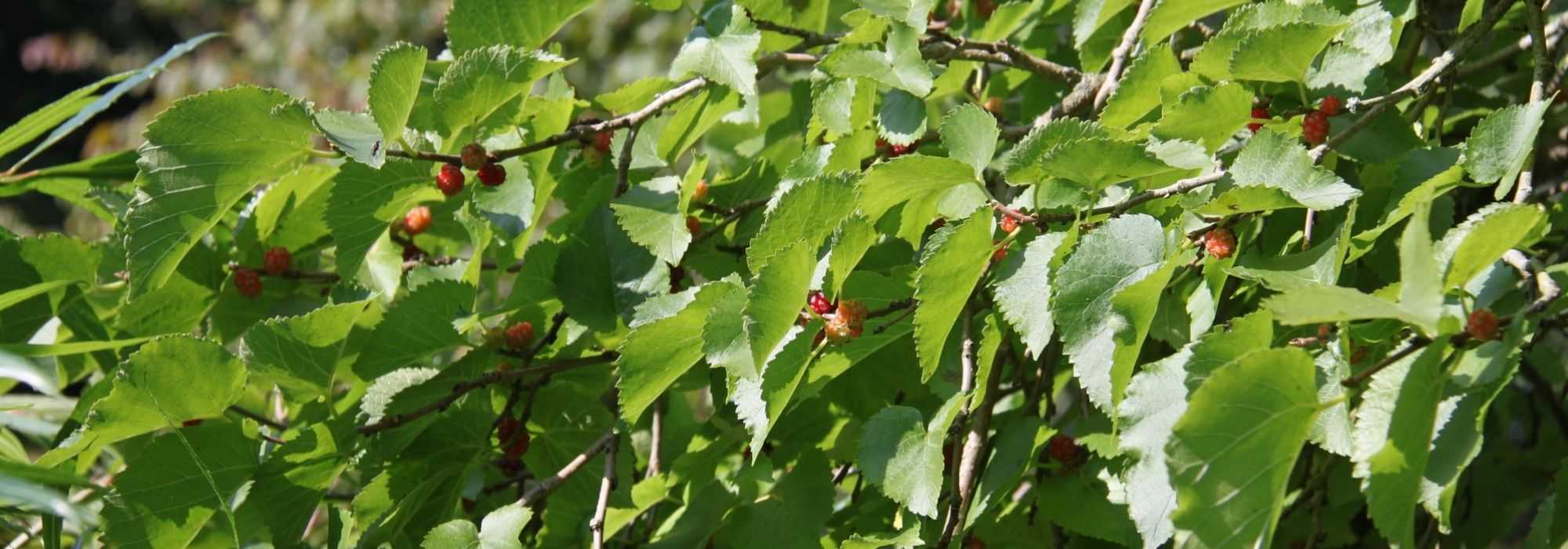
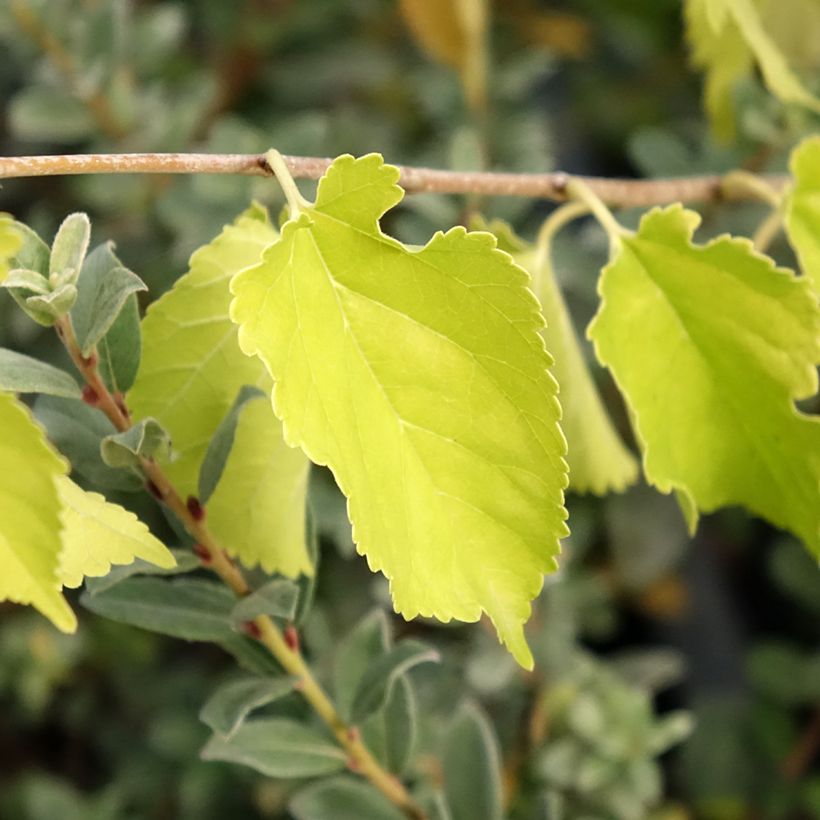
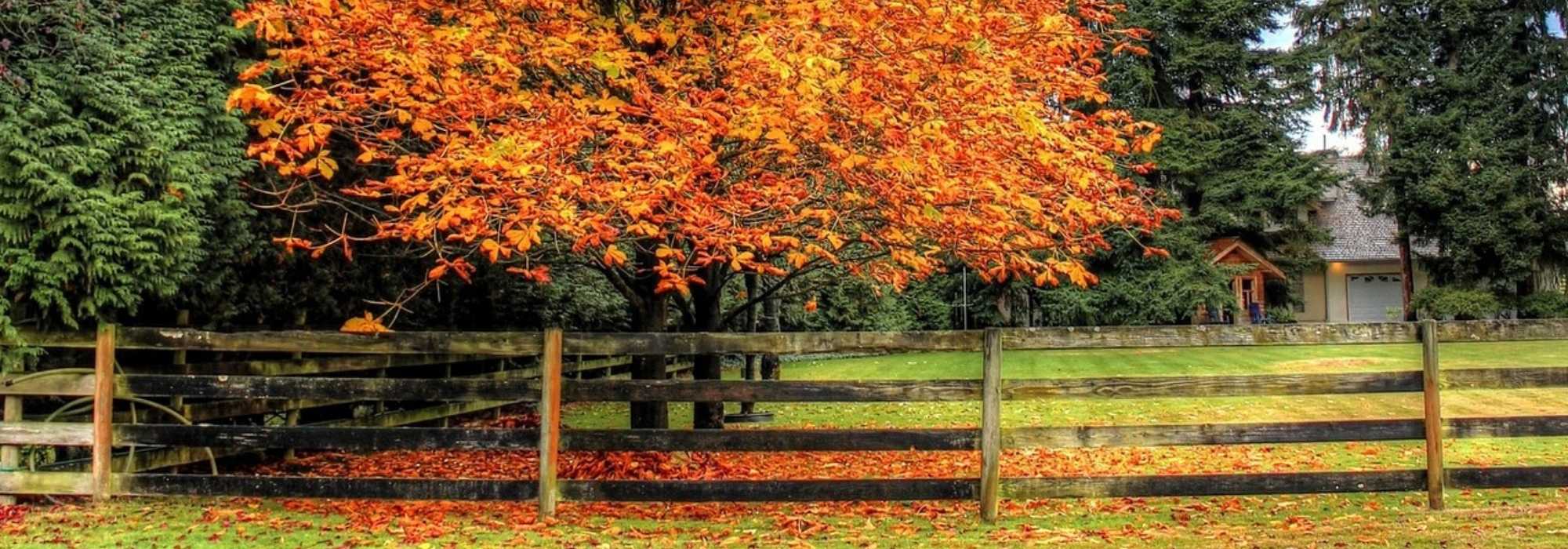
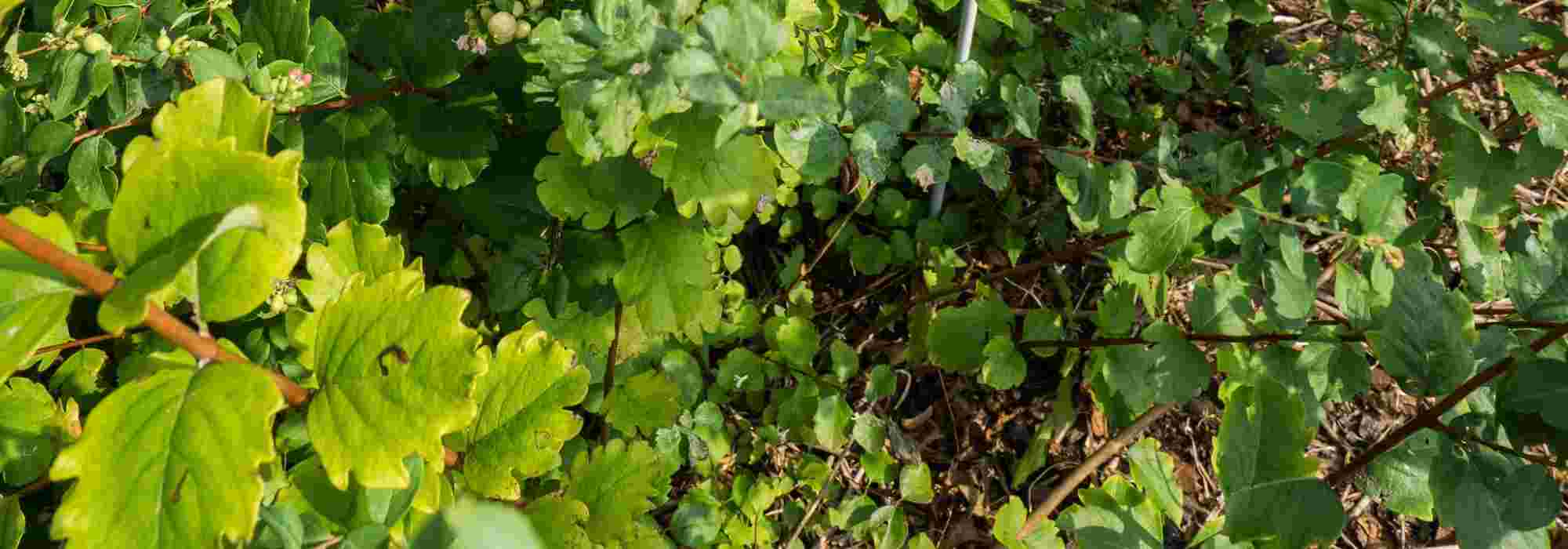
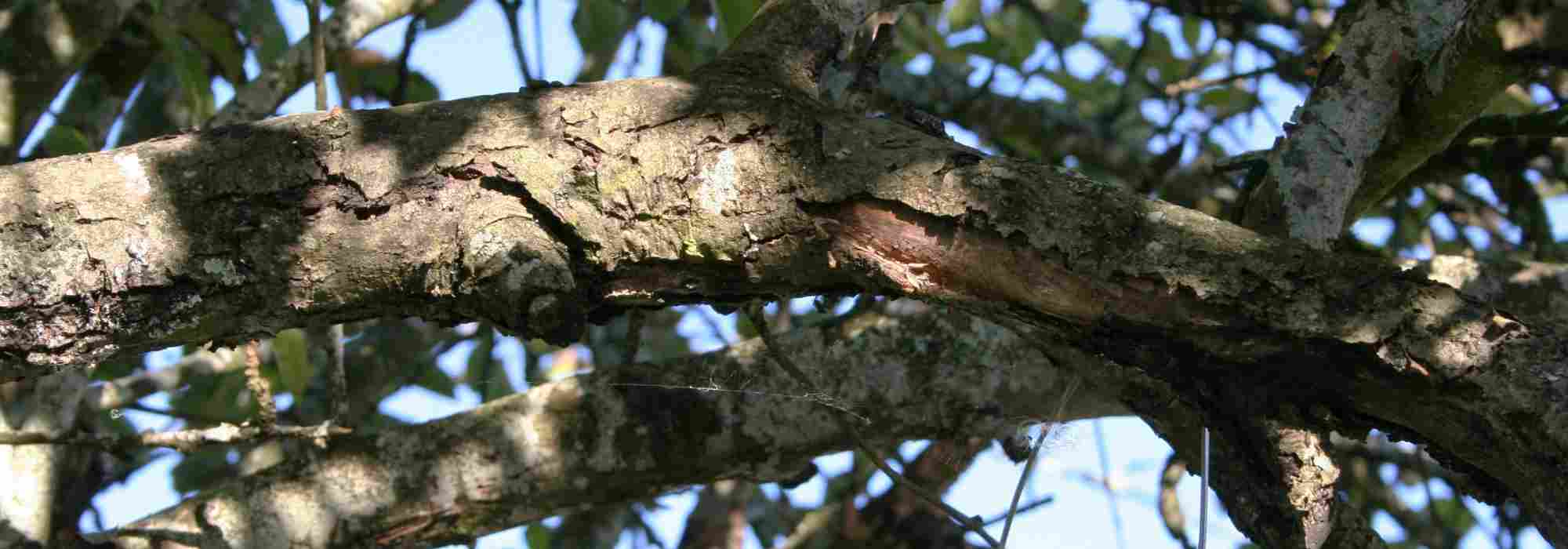
Morus 'Milanowek' is a tree with a short, thick trunk, topped by a spreading crown that can be somewhat irregular if not pruned. It is more commonly seen shaped into a rounded and compact head after pruning. Its growth is rapid during the first few years and then slows down. It can reach between 6 and 10m in all directions. Its light grey bark cracks to become thicker, and then turns grey-brown. The deciduous leaves are polymorphous, meaning their appearance can vary depending on their position on the branches. They measure 6 to 8cm in diameter, 10 to 20cm in length, and are alternate, petiolate, either simple and heart-shaped, or divided into 3 to 7 more or less deep lobes, with an irregularly toothed margin. The upper surface of the leaf is shiny and light green, turning golden yellow in autumn. The White Mulberry develops male or female flowers in different locations on the same tree in March-April. Its discreet flowering consists of male or female catkins composed of tiny green-yellow flowers. In June-July, the female flowers produce fleshy fruits, measuring up to 10cm long. Their colour changes from green to white, then to pink, red, and purple, almost black when ripe. They are edible and loved by birds. The root system of this tree, both taproot and running, does not tolerate transplanting well. Its strength means it should be planted at a respectable distance from buildings. Its lifespan can reach or even exceed 150 years.
Morus alba 'Milanowek' grows in fertile, well-worked, and well-drained soil in a sunny location. It tolerates pollution well but is not suitable for coastal areas or areas with salt spray. Uncultivated land benefits from its presence, as its leaves gradually enrich the soil each autumn. Traditionally used as a street tree, it can also be planted in a fruit hedge, for example, alongside blackthorns, mirabelle plums, medlars, viburnums, and dogwoods, much to the delight of birds. It can also be an interesting specimen planted alone in the middle of a lawn. Avoid planting it near a terrace, as its fruits can stain the ground. It can also be used to shade a chicken coop, as the fallen fruits will be eaten by the chickens. Its leaves are food for silkworms and can be used as fodder for rabbits.
The fruits of the 'Milanowek' white mulberry are consumed fresh or cooked. They are much sweeter than the fruits of the black mulberry, and they contain vitamins C, D, and E, as well as iron. They can be eaten raw, used to make jams and jellies, or used as a topping for pies. They add a touch of sweetness to summer salads and fruit salads. Their flavour pairs well with blackberries (wild blackberry or cultivated blackberry) and stone fruits such as apricots, plums, and peaches. Those who enjoy sweet and savoury combinations can use them to accompany pork, duck, or game. They also pair well with basil, mint, baking spices, arugula, cream, mascarpone, or mixed with citrus fruits.
Morus alba Milanowek - White Mulberry in pictures
Plant habit
Flowering
Foliage
Botanical data
Morus
alba
Milanowek
Moraceae
White Mulberry
Morus indica 'Milanówek'
Eastern Europe
Planting and care
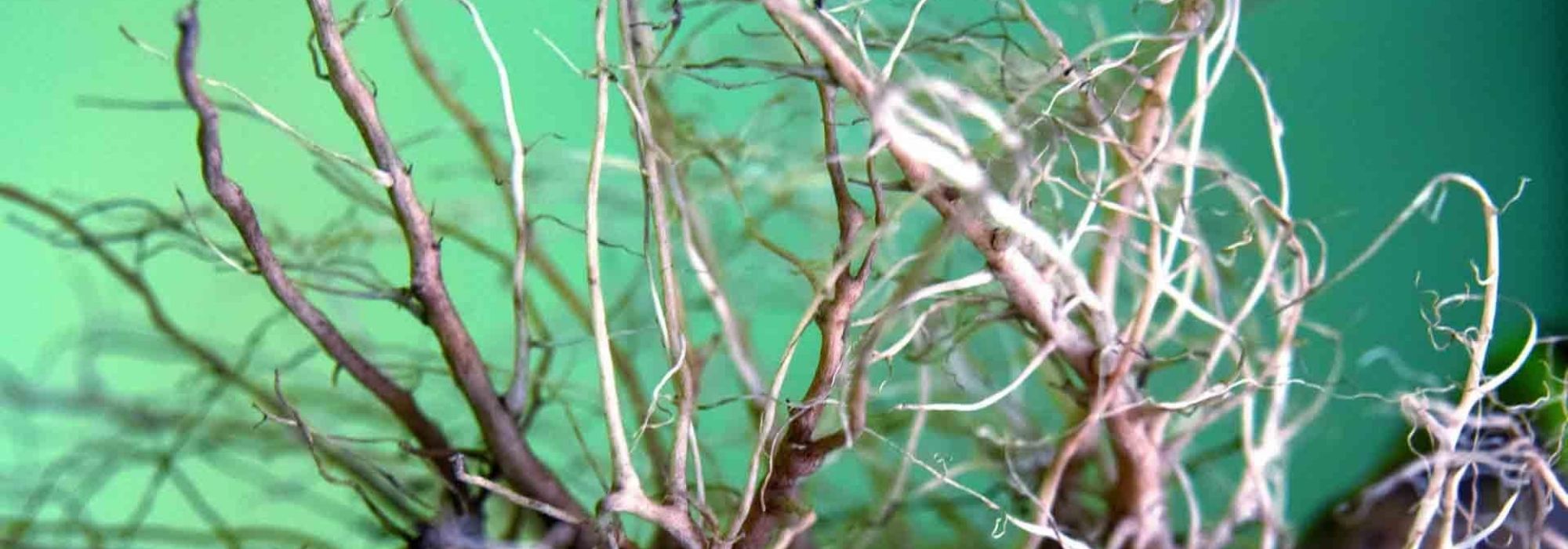
Morus alba 'Milanowek' should be planted in spring or autumn in well-drained, fertile and deep soil, not too chalky or too acidic, and in full sun. Be careful not to damage its fleshy and brittle roots during planting. It tolerates cold weather perfectly and withstands hot and dry summers once well-rooted. Prune to maintain a beautiful habit. It may be subject to rust, hemp or powdery mildew, in which case treat with copper.
Planting period
Intended location
Care
Planting & care advice
-

-
-
-
-
-
-

-
This item has not been reviewed yet - be the first to leave a review about it.
Recently viewed products
Haven't found what you were looking for?
Hardiness is the lowest winter temperature a plant can endure without suffering serious damage or even dying. However, hardiness is affected by location (a sheltered area, such as a patio), protection (winter cover) and soil type (hardiness is improved by well-drained soil).
In temperate climates, pruning of spring-flowering shrubs (forsythia, spireas, etc.) should be done just after flowering.
Pruning of summer-flowering shrubs (Indian Lilac, Perovskia, etc.) can be done in winter or spring.
In cold regions as well as with frost-sensitive plants, avoid pruning too early when severe frosts may still occur.
The harvesting period indicated on our website applies to countries and regions in USDA zone 8 (France, England, Ireland, the Netherlands).
In colder areas (Scandinavia, Poland, Austria...) fruit and vegetable harvests are likely to be delayed by 3-4 weeks.
In warmer areas (Italy, Spain, Greece, etc.), harvesting will probably take place earlier, depending on weather conditions.
The sowing periods indicated on our website apply to countries and regions within USDA Zone 8 (France, UK, Ireland, Netherlands).
In colder areas (Scandinavia, Poland, Austria...), delay any outdoor sowing by 3-4 weeks, or sow under glass.
In warmer climes (Italy, Spain, Greece, etc.), bring outdoor sowing forward by a few weeks.
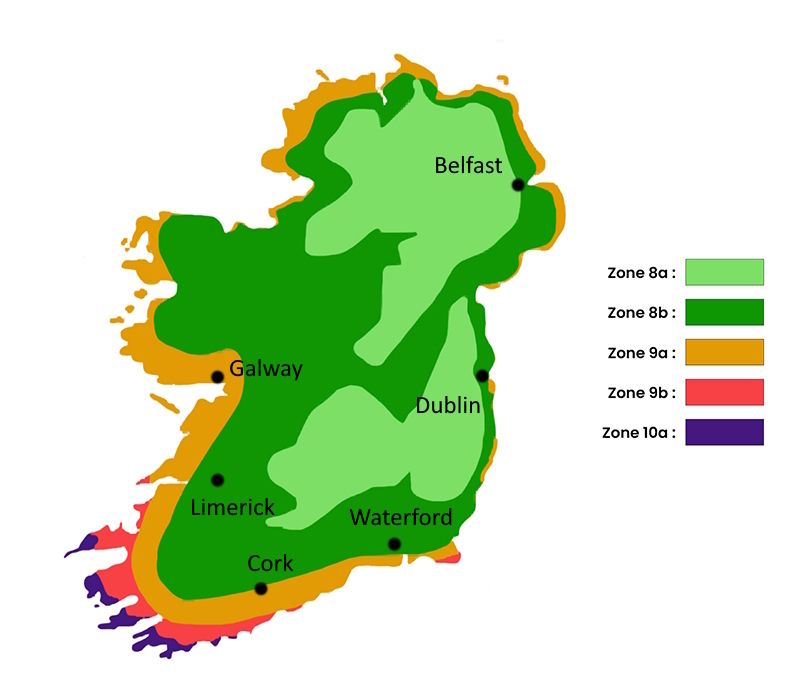
The planting period indicated on our website applies to regions in USDA Zone 9a (East Coast and Midlands: Dublin, Wexford, Waterford, Kilkenny, Portlaoise). It will vary depending on where you live:
- On the west coast and in the north-west (Galway, Limerick, Sligo, Donegal, Westport), delay planting by 1 to 2 weeks in spring and bring it forward by 1 to 2 weeks in autumn compared to the dates given, preferably choosing periods without strong winds.
- In the inland hills and plateaus (Wicklow Mountains, Macgillycuddy’s Reeks, Connemara, Killarney), it is best to plant in spring (April–May) or autumn (September–October), avoiding periods of waterlogged soil in winter and strong winds, which pose the main risk to newly planted trees in these areas.
The flowering period indicated on our website applies to regions in USDA Zone 9a, such as the East Coast and Midlands, including Dublin, Wexford, Waterford, Kilkenny and Portlaoise.
This will vary depending on where you live:
- On the west coast and in the northwest (Galway, Limerick, Sligo, Donegal and Westport), it will be delayed by one to two weeks compared to the given dates, due to stronger Atlantic winds and less spring sunshine.
- In the inland hills and plateaus (the Wicklow Mountains, the Macgillycuddy's Reeks, Connemara and Killarney), flowering will be delayed by two to three weeks. Flowering mainly occurs between May and July, with the limiting factors being less frost and more of the excessive humidity, strong winds and lack of sunshine that are characteristic of these areas.
Shipping country and language
Your country of residence may be:
Your country of residence is:
For a better user experience on our website, you can select:
Your shipping country:
-
 Austria
-
 Belgium
-
 Bosnia & Herzegovina
-
 Bulgaria
-
 Croatia
-
 Cyprus
-
 Czechia
-
 Denmark
-
 Estonia
-
 Finland
-
 France
-
 Germany
-
 Greece
-
 Hungary
-
 Iceland
-
 Ireland
-
 Italy
Italy
-
 Latvia
-
 Liechtenstein
-
 Lithuania
-
 Luxembourg
-
 Malta
Malta
-
 Netherlands
-
 Poland
-
 Portugal
-
 Romania
-
 Serbia
-
 Slovakia
-
 Slovenia
-
 Spain
Spain
-
 Sweden
-
 Switzerland
Language:
-
French
-
 English
-
Spanish
-
Italian
-
German
-
Portuguese
-
Dutch
-
Finnish
My Account
Hello
My wish lists
My cart
Log in / Register
Existing customer?
This form is protected by reCAPTCHA - the Google Privacy Policy and Terms of Service apply.
New customer?
Create an account to track your orders, access our customer service and, if you wish, make the most of our upcoming offers.