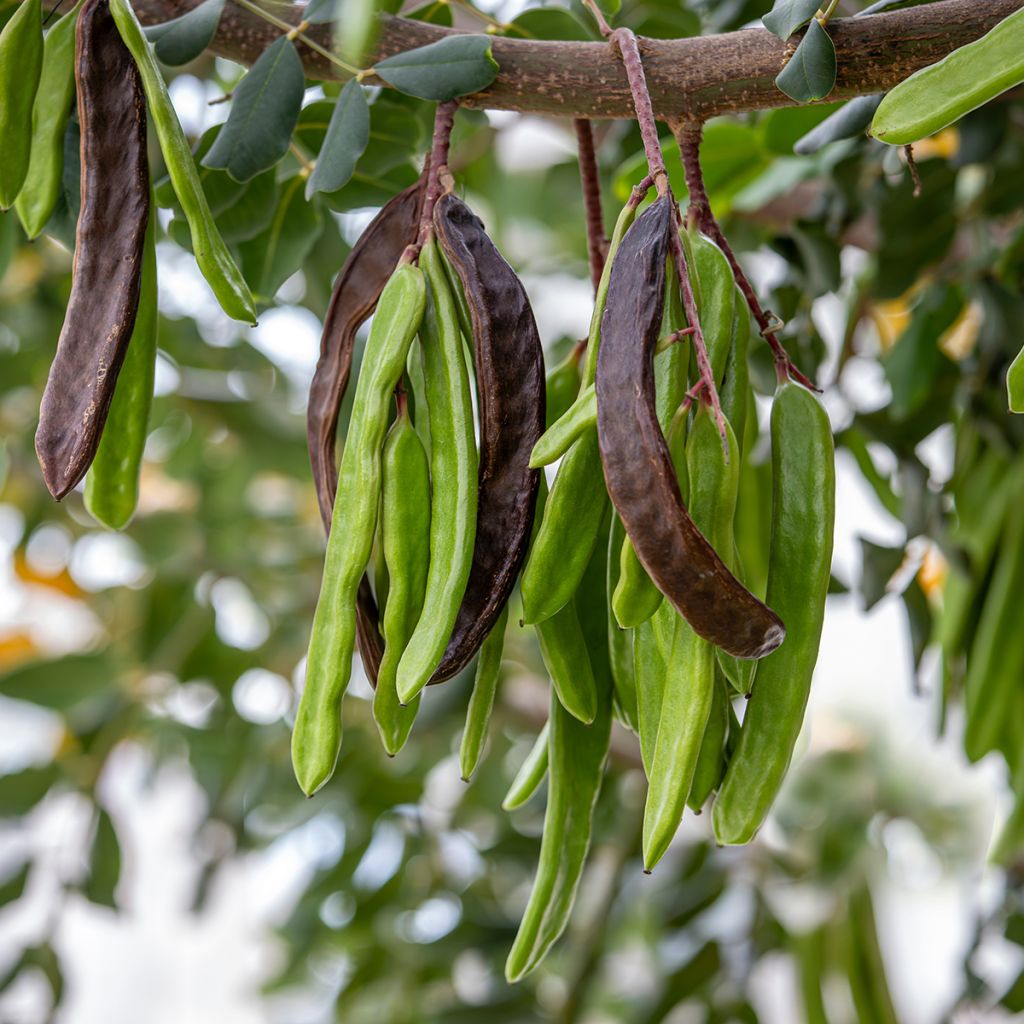
Ceratonia siliqua seeds - Carob tree
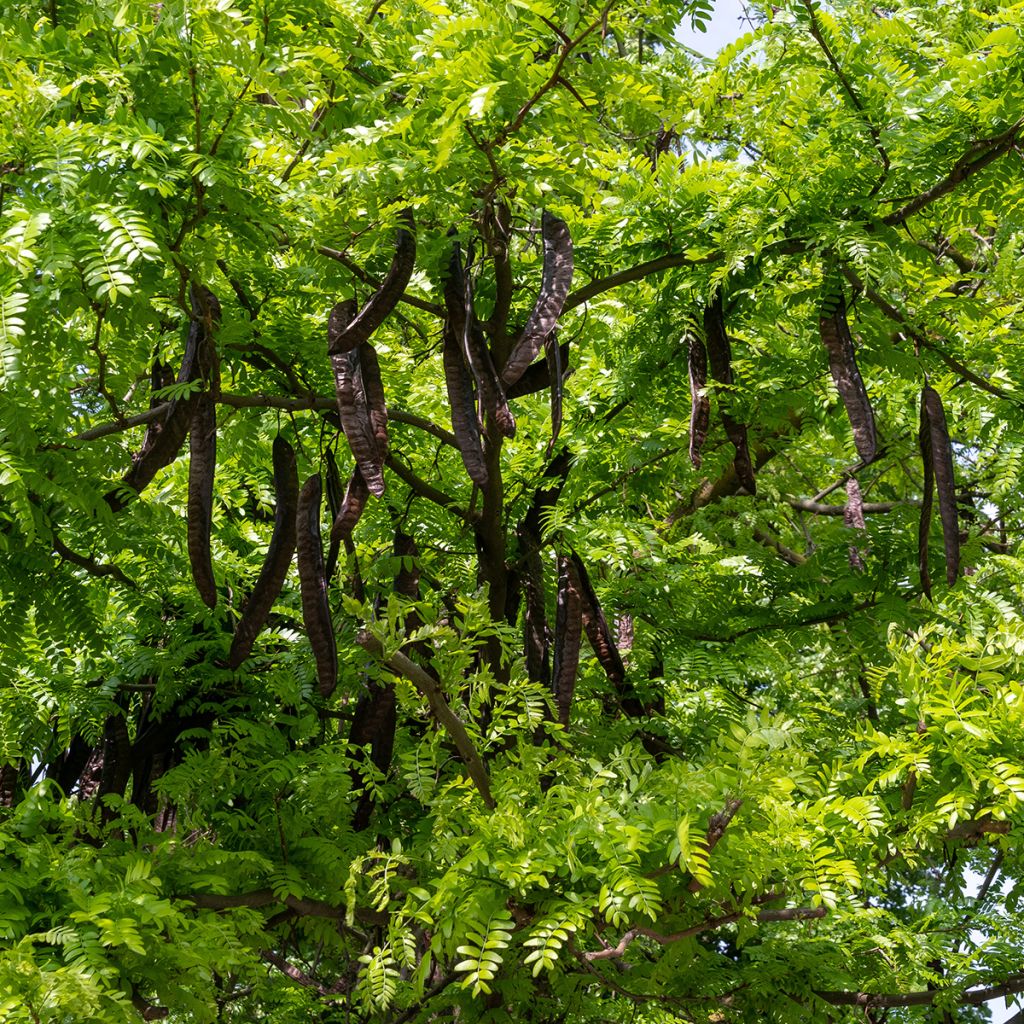
Ceratonia siliqua seeds - Carob tree
Ceratonia siliqua seeds - Carob tree
Ceratonia siliqua
Carob tree
Back-to-school special offer!
Get €10 off for every €50 you spend! And get up to €40 off on a single order.
How does it work?
1. Shop your favourites
Add your favourite plants to your basket. For every €50 you spend (excluding delivery charges, store credit and the plastic-free option), you’ll receive a €10 voucher.
€50 spent = €10 voucher
€100 spent = €20 voucher
€150 spent = €30 voucher
€200 spent = €40 voucher
2. Place your order
Once your basket reaches one of the spending thresholds, place your order. You can even choose your delivery date!
3. Receive your voucher
As soon as your order has been shipped, you’ll receive an email containing your personal voucher code and its value.
4. Use it on your next order
Your voucher is valid for 90 days from the date you receive it. It can be used once only, on a new order worth at least the value of the voucher, excluding delivery charges.
Please note: Vouchers can be combined with other offers, but cannot be split or refunded.
Why not try an alternative variety in stock?
View all →
Available in 1 sizes
Available in 1 sizes
Available in 1 sizes
Available in 1 sizes
Available in 1 sizes
Available in 1 sizes
Available in 1 sizes
Available in 1 sizes
Available in 1 sizes
Available in 1 sizes
This plant carries a 6 months recovery warranty
More information
We guarantee the quality of our plants for a full growing cycle, and will replace at our expense any plant that fails to recover under normal climatic and planting conditions.
Does this plant fit my garden?
Set up your Plantfit profile →
Description
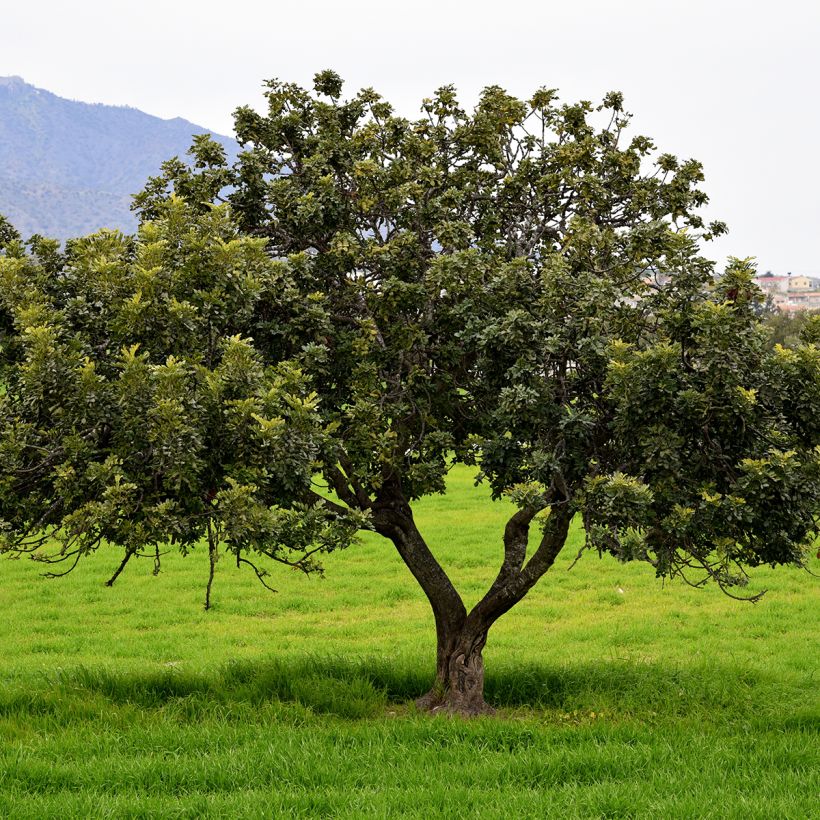
The Carob tree is an iconic plant of Mediterranean regions with a dry, hot climate. This compact, slow-growing tree rarely exceeds 12m in height and forms a very wide, rounded crown that is easily identifiable. Its massive, often twisted trunk is covered with rough brown bark. Its glossy dark green leaves are compound, odd-pinnate (with an even number of leaflets). It flowers in autumn with clusters of small flowers of no real ornamental interest. After fertilisation, they develop into long brown pods, the carobs, all parts of which are used either for animal or human food. While its frost resistance is limited, it adapts very well to poor soils and drought, thanks to its deep root system. Sowing is its natural method of propagation.
Ceratonia siliqua, known by various common names, such as St John's bread or Fig tree of Egypt, belongs to the large family of Fabaceae (or Leguminosae), rich in nearly 23,000 species, the third most important botanical family. Besides many wild plants, it includes numerous forage species (alfalfa, clover...), food species (beans, peas, lentils...) and ornamental ones (Wisterias, Albizia, Cercis or Judas trees...).
The Carob tree, which is the only species of the genus Ceratonia, originates from the eastern Mediterranean basin and has spread throughout its entire perimeter. Rarely shrubby, it most often forms a small tree of 8 to 12m high, with an equivalent or greater width. It forms a very wide, very dense rounded crown, borne by a powerful trunk, with a rugged surface covered by very rough brown bark. Slow-growing, it develops hard wood and, while it takes about fifty years to reach its adult size, it can live up to 500 years, then producing superb specimens with a venerable silhouette, typical of Mediterranean landscapes. Today it is mainly cultivated in Sicily and Spain.
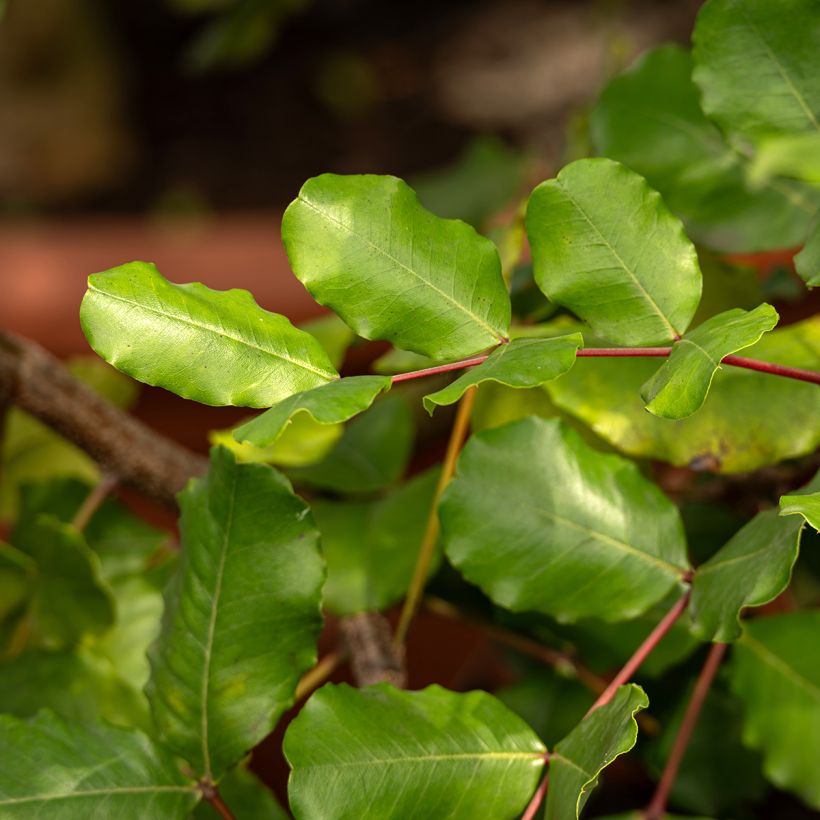
The evergreen leaves are compound, formed of 2 to 5 pairs of leathery, oval leaflets measuring 3 to 7cm long. The leaves are dark glossy green on the upper surface and reach 12 to 30cm long with a reddish rachis, of the same tone as the tips of the stems. Depending on the climatic zones, it will flower between July and November, in 15cm long clusters of small flowers devoid of petals. Reduced to a calyx, unisexual or hermaphrodite, the flowers have a colour ranging from yellow to brown, passing through red. They are not very decorative. In specimens grown from seed, which is generally the case, flowering appears after 6 to 8 years. The fruits only appear on wood at least three years old. These are large brown pods, 12 to 30cm long and 2 to 3cm wide, produced in large quantities. Cultivated orchards thus have yields of 50 to 100kg per plant. The carob consists of 90% pulp, the remaining 10% being the seeds. The pulp is recovered for animal feed, and when roasted, yields a flour used in confectionery and the food industry. The seeds provide locust bean gum, known as a natural food additive under the code E-410.
A precious tree in many southern countries, it can establish in very poor soils. Thanks to a symbiosis with specialised bacteria, its roots (common to Fabaceae) can capture and fix atmospheric nitrogen, thus compensating for the poverty of the soil. Its very powerful root system, capable of penetrating up to 20m deep, also allows it to withstand drought. Its only weakness is its hardiness, limited to about -7°C for a mature specimen, which restricts outdoor planting to the south.
The Carob tree is a botanical species that will find a place in a natural garden, where its wild appearance and adaptability will be well suited. Plant it alongside other plants of the same vein, such as Rock roses with their simple, ephemeral, yet constantly renewed flowers, whose simple charm is equal to often more fragile horticultural varieties. Pistacia lentiscus, or Mastic tree, is equally resistant to the harsh conditions of hot countries, and appealing with its fine, cut foliage and its highly decorative small red fruits.
Report an error about the product description
Ceratonia siliqua seeds - Carob tree in pictures
Flowering
Foliage
Plant habit
Botanical data
Ceratonia
siliqua
Fabaceae
Carob tree
Mediterranean
Planting and care
Sowing fresh Carob tree seeds is relatively easy, and is done in spring. However, it becomes more complicated when the seeds have dried out. In this case, they no longer absorb water, which prevents germination. The seeds must therefore be treated to allow the cotyledons to pass through the wall that has become hard.
Scarification is possible, but does not always work satisfactorily. The most effective method for dry seeds is to soak them for 1 hour in diluted sulphuric acid (careful, always pour the acid into the water and not the water into the acid, as this carries a high risk of splashing!). Then keep the seeds for 24 hours in a container filled with water. The acid treatment replicates natural conditions, as seeds are ingested by animals and attacked by the gastric juices of their stomachs before being expelled onto the soil.
If you do not have acid or this method worries you, you can also soak the seeds for 15 minutes in boiling water while stirring, then leave them to steep for 24 hours to finish softening the case.
The Carob tree forms a long, very brittle taproot, with only a few short lateral roots of less than 1cm. To avoid breaking the root when transplanting, there are 2 options:
1/ Place the seeds in pots filled with a very light mixture of peat and sand, or even pure vermiculite, so that the seedling can be easily extracted
2/ Use pressed coir pots that you can then plant directly (the pot remaining in place in the soil; the roots will pass through it without any problem)
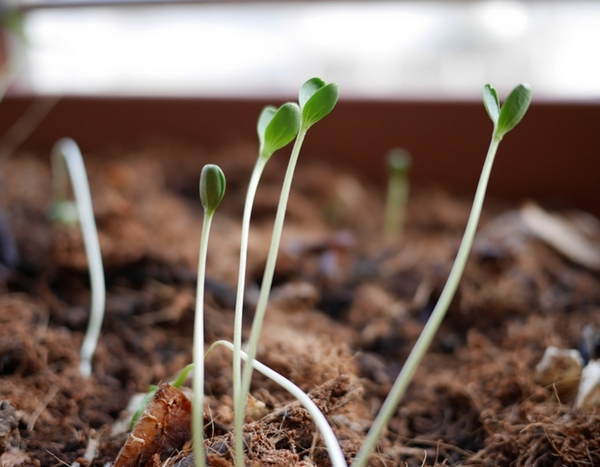
In both cases, choose pots that are deep enough, cover the seed with 2 to 4cm of substrate, and place them in the light, near a window, at a temperature of at least 20°C. Keep the substrate slightly moist, but not too much, as seedlings hate excess water.
Germination can take from 30 days to several months, and the success rate will vary between 70% and much less if the seed treatment has not been carried out correctly. Allow your Carob trees to grow to 15 to 20cm before planting them in the ground.
Sowing period
Intended location
Planting & care advice
-
-
-

-
-

-

-
-
This item has not been reviewed yet - be the first to leave a review about it.
Recently viewed products
Haven't found what you were looking for?
Hardiness is the lowest winter temperature a plant can endure without suffering serious damage or even dying. However, hardiness is affected by location (a sheltered area, such as a patio), protection (winter cover) and soil type (hardiness is improved by well-drained soil).
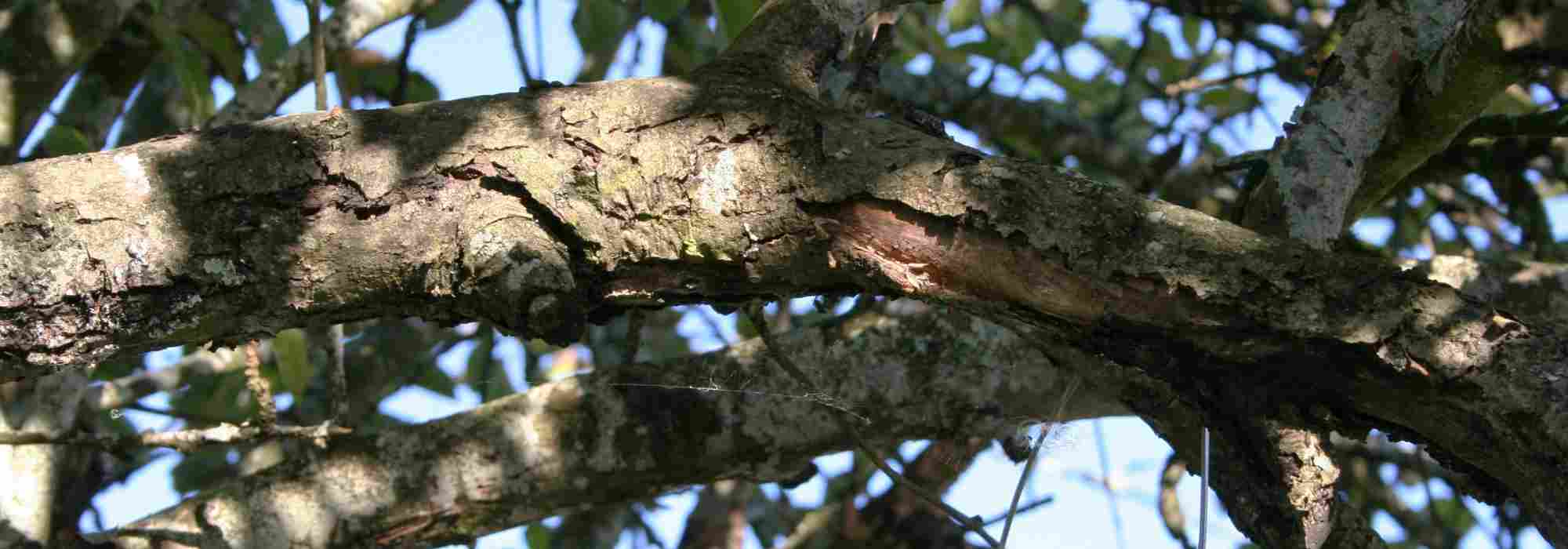
In temperate climates, pruning of spring-flowering shrubs (forsythia, spireas, etc.) should be done just after flowering.
Pruning of summer-flowering shrubs (Indian Lilac, Perovskia, etc.) can be done in winter or spring.
In cold regions as well as with frost-sensitive plants, avoid pruning too early when severe frosts may still occur.
The harvesting period indicated on our website applies to countries and regions in USDA zone 8 (France, England, Ireland, the Netherlands).
In colder areas (Scandinavia, Poland, Austria...) fruit and vegetable harvests are likely to be delayed by 3-4 weeks.
In warmer areas (Italy, Spain, Greece, etc.), harvesting will probably take place earlier, depending on weather conditions.
The sowing periods indicated on our website apply to countries and regions within USDA Zone 8 (France, UK, Ireland, Netherlands).
In colder areas (Scandinavia, Poland, Austria...), delay any outdoor sowing by 3-4 weeks, or sow under glass.
In warmer climes (Italy, Spain, Greece, etc.), bring outdoor sowing forward by a few weeks.
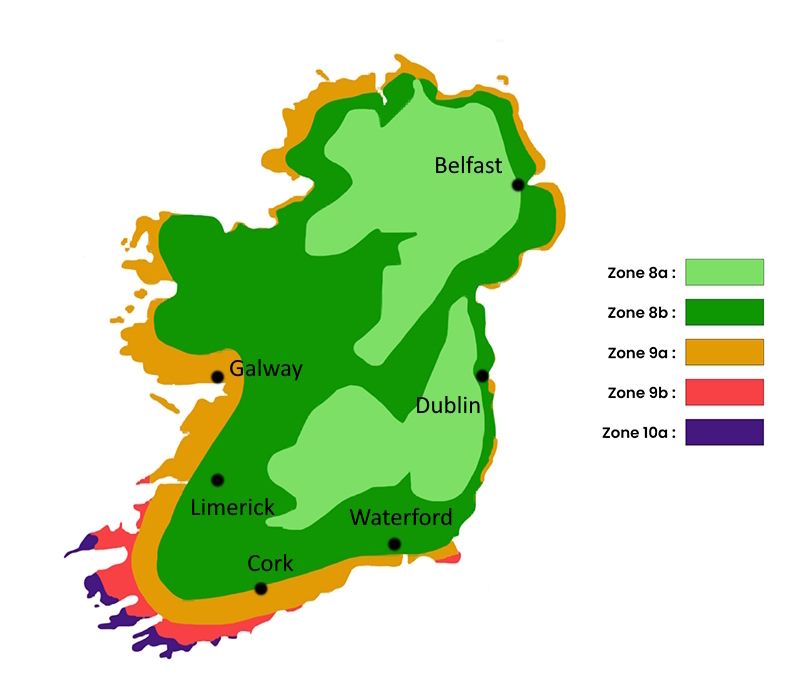
The planting period indicated on our website applies to regions in USDA Zone 9a (East Coast and Midlands: Dublin, Wexford, Waterford, Kilkenny, Portlaoise). It will vary depending on where you live:
- On the west coast and in the north-west (Galway, Limerick, Sligo, Donegal, Westport), delay planting by 1 to 2 weeks in spring and bring it forward by 1 to 2 weeks in autumn compared to the dates given, preferably choosing periods without strong winds.
- In the inland hills and plateaus (Wicklow Mountains, Macgillycuddy’s Reeks, Connemara, Killarney), it is best to plant in spring (April–May) or autumn (September–October), avoiding periods of waterlogged soil in winter and strong winds, which pose the main risk to newly planted trees in these areas.
The flowering period indicated on our website applies to regions in USDA Zone 9a, such as the East Coast and Midlands, including Dublin, Wexford, Waterford, Kilkenny and Portlaoise.
This will vary depending on where you live:
- On the west coast and in the northwest (Galway, Limerick, Sligo, Donegal and Westport), it will be delayed by one to two weeks compared to the given dates, due to stronger Atlantic winds and less spring sunshine.
- In the inland hills and plateaus (the Wicklow Mountains, the Macgillycuddy's Reeks, Connemara and Killarney), flowering will be delayed by two to three weeks. Flowering mainly occurs between May and July, with the limiting factors being less frost and more of the excessive humidity, strong winds and lack of sunshine that are characteristic of these areas.
Shipping country and language
Your country of residence may be:
Your country of residence is:
For a better user experience on our website, you can select:
Your shipping country:
-
 Austria
-
 Belgium
-
 Bosnia & Herzegovina
-
 Bulgaria
-
 Croatia
-
 Cyprus
-
 Czechia
-
 Denmark
-
 Estonia
-
 Finland
-
 France
-
 Germany
-
 Greece
-
 Hungary
-
 Iceland
-
 Ireland
-
 Italy
Italy
-
 Latvia
-
 Liechtenstein
-
 Lithuania
-
 Luxembourg
-
 Malta
Malta
-
 Netherlands
-
 Poland
-
 Portugal
-
 Romania
-
 Serbia
-
 Slovakia
-
 Slovenia
-
 Spain
Spain
-
 Sweden
-
 Switzerland
Language:
-
French
-
 English
-
Spanish
-
Italian
-
German
-
Portuguese
-
Dutch
-
Finnish
My Account
Hello
My wish lists
My cart
Log in / Register
Existing customer?
This form is protected by reCAPTCHA - the Google Privacy Policy and Terms of Service apply.
New customer?
Create an account to track your orders, access our customer service and, if you wish, make the most of our upcoming offers.