Flowers in the vegetable garden? When people mention companion planting, they instinctively think "leeks that prefer strawberries", but less often of flowers. And that's a pity, because they really deserve a prime place.
Why plant flowers in the vegetable garden?
It's quite simple and comes down to three points:
- flowers are useful because they boost harvests by attracting pollinators, essential actors in fruit set. They also shelter and feed valuable beneficial insects and repel some pests, which is fundamental when you garden organically,
- they are decorative, helping the vegetable garden look attractive,
- they graciously fill vases with charming summer cut flower arrangements.
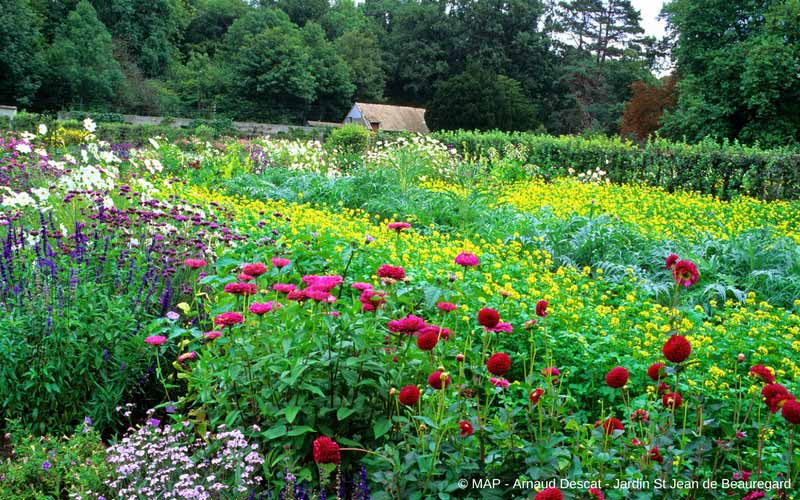
The vegetable garden of Saint Jean de Beauregard, very floriferous
Which plants to use to add flowers to the vegetable garden?
All annuals are suitable, but in case you lack ideas, here is a selection of plants, tried and tested, which, sown under cover from now or planted in May, will be at their best all summer.
1) French marigold (Tagetes): classic and effective
In our garden, as in many, French marigolds are planted between tomato rows for their nematicidal virtues, but that's not all. I prefer dwarf varieties that form a neat, ball-shaped habit, which makes them easy to tuck in between vegetables.
♥ I love: the mandarin scent of Tagetes signata or T. tenuifolia — absolutely incredible…
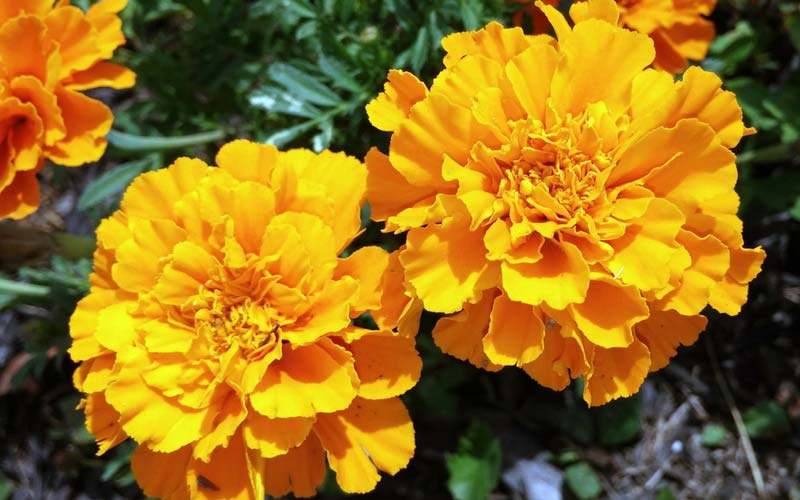
French marigold or Tagetes
2) The nasturtium: aphid trap and colourful touch in salads
Everything about nasturtium is charming: its round leaves, bright colours, and the fact it is edible (a guaranteed hit in salads). Aphids adore it too. It is regularly attacked but always bounces back: a valiant trap plant as part of a diversion strategy!
♥ I love: it self-seeds freely without ever becoming invasive — perfect for lazy gardeners.
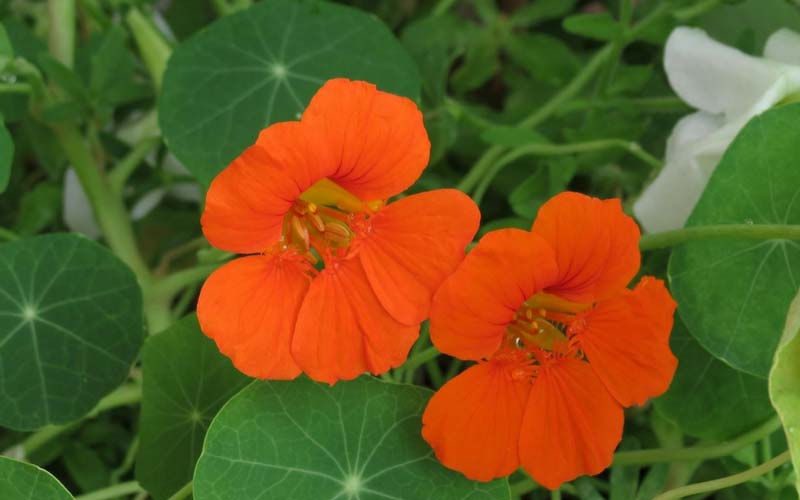
Nasturtium, a pretty and useful plant for attracting aphids
3) The cosmos: free-flowering and easy to grow
With cosmos you have plenty of choice in both size and colour. Tall varieties suit borders and beds, while dwarf types (such as the Sonata series) are perfect on plot edges.
♥ I love: at season's end, resist the big tidy-up and you'll enjoy the sight of goldfinches pecking at the last seeds.
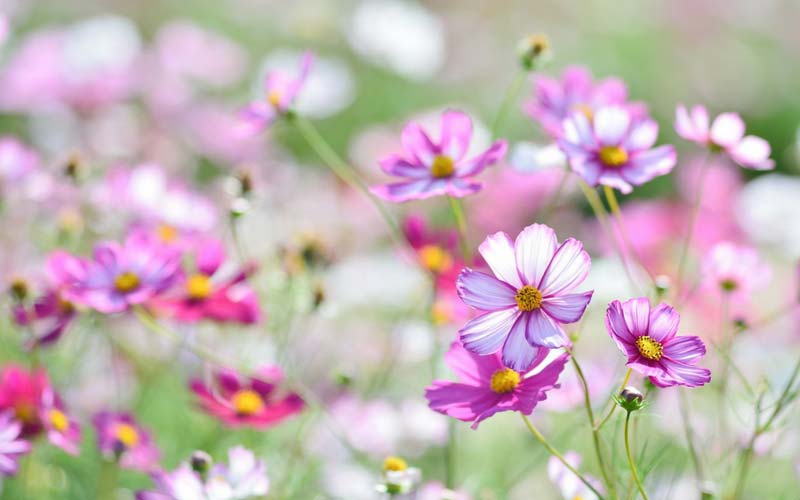
Cosmos flowers last a long time and are also wonderful in country-style bouquets
4) The zinnia: robust and colourful
I buy them in mixes because their warm colours and the geometry of their flowers never cease to amaze me. Their style, a little hardy, matches their behaviour: ultra-easy to grow and very resilient.
♥ I love: they make superb bouquets.
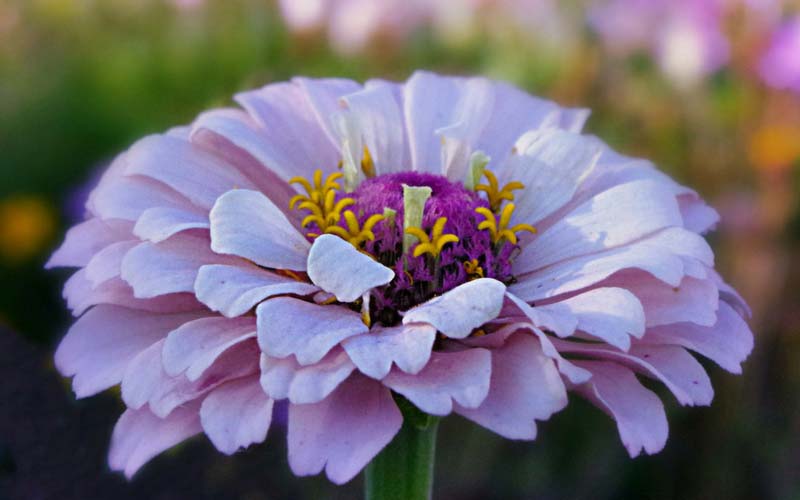
Zinnia, a robust and colourful flower
5) The sunflower: XS or XXL, take your pick!
A childhood favourite! When our children were small, I grew dwarf, sturdy varieties that looked like little elves in autumn (just remove a few seeds to make eyes, nose and mouth). The children have grown and so have the sunflowers: we now try competition varieties ('Mamuth', 'Mongolian Giant', 'Russian Giant') and each year aim to beat our record (3.2 metres) with plenty of compost, watering and stout stakes. Needless to say, they are not grown in the middle of the vegetables — that would be unfair competition — but on a dedicated plot.
♥ I love: leave the heads in place, it will be an open bar for the birds!
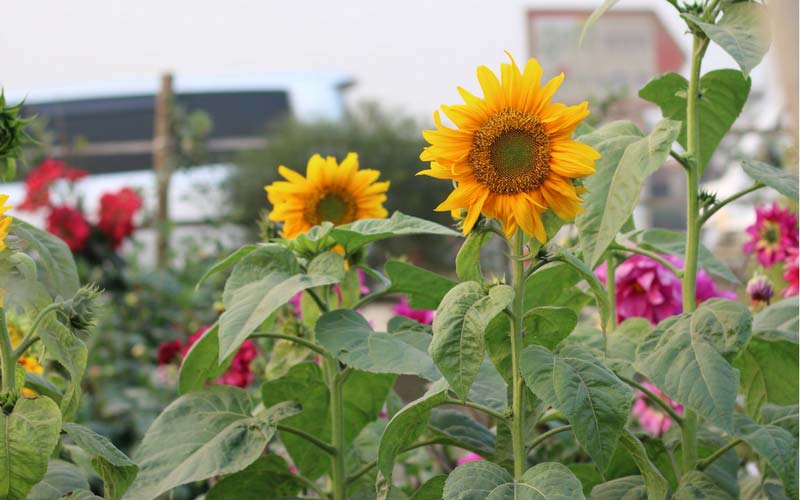
Sunflower: sunny, joyful and much loved by birds
6) The lupin, more or less perennial, but a good companion
I generally avoid perennials in the vegetable garden because with rotations everything moves quickly and they soon get in the way. One exception is lupin, which I find magnificent and which belongs to the legume family (these plants fix atmospheric nitrogen into the soil), making it an excellent companion plant. Beware: although often considered short-lived, it can persist if the soil suits it. In the vegetable garden, it's best to choose an annual variety.
♥ I love: its flowers, grouped in upright spikes, are appreciated by bumblebees and bees — it's fascinating to watch how they handle the pollen.
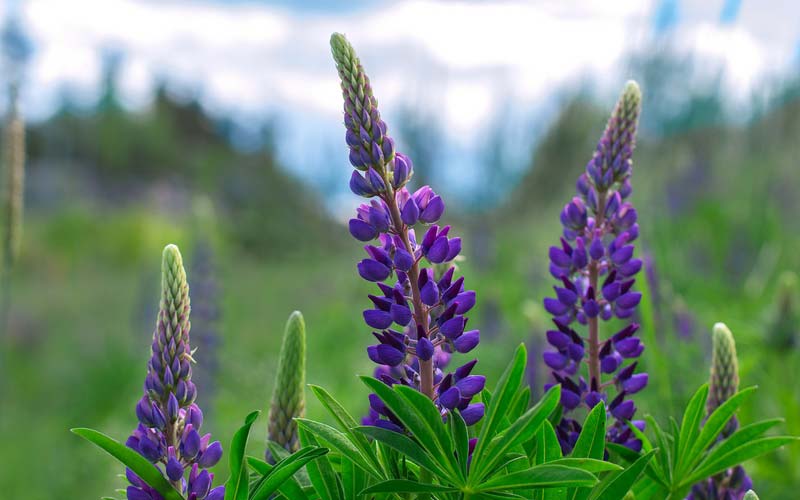
Lupin and its pretty flower spikes
7) borage: countless qualities, but…
Borage is a vigorous plant, renowned for being very melliferous. It produces gorgeous star-shaped blue flowers that are both decorative and edible. It is even said to keep slugs at bay (not obvious here — my slugs may be especially voracious). If borage is last on this list, it's because we're currently on slightly cool terms. It has undeniable qualities but also a "small flaw" in our garden: it self-seeds profusely and can become almost invasive.
My advice: don't miss out, but plant it a safe distance from cultivation areas or sharpen your hoe!
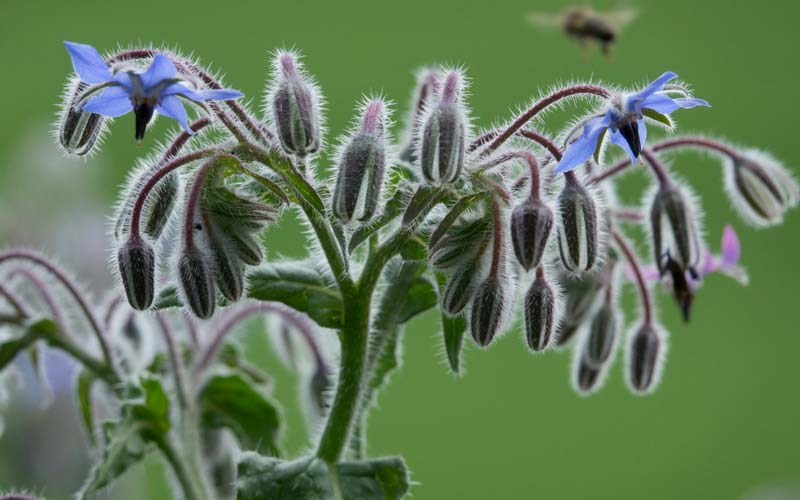
Borage (Borago officinalis): a plant with many virtues
→ Discover White Borage in a video by Olivier :
































Comments