Sustainable, self-sufficient vegetable garden, where vegetables need almost no maintenance and regrow after harvest… Too easy? Idyllic? Yet it’s possible, at least partly… thanks to perennial vegetables, or perennials. Well known to permaculture practitioners, they are still uncommon in conventional vegetable gardens, which is a shame because, in the end, they have only advantages!
Discover perennial vegetables also in our podcast:
What is a perennial vegetable?
Like all perennial plants, perennial vegetables have a life cycle that lasts several years. Although not immortal, they are perennial plants grown in the garden and harvested without needing to be renewed. Besides this advantage, these vegetables often offer strong, authentic flavours… which has not escaped many top chefs, some of whom even grow them in their own kitchen gardens.
In the category of vegetable plants that settle for many years, artichoke, asparagus, rhubarb and strawberries are well known. I won’t linger on these to focus instead on somewhat lesser-known vegetable and condiment plants that have the advantage of being hardy. Here are some essential perennial vegetables!
1) Ramsons (Allium ursinum)
It is found or cultivated in woodland where it naturalises easily. It bears large narrow leaves and produces, from April to June, a charming display of white umbels. Used as a condiment and medicinally, everything is edible: the bulb, the flower buds and the leaves. Harvest: January to October.
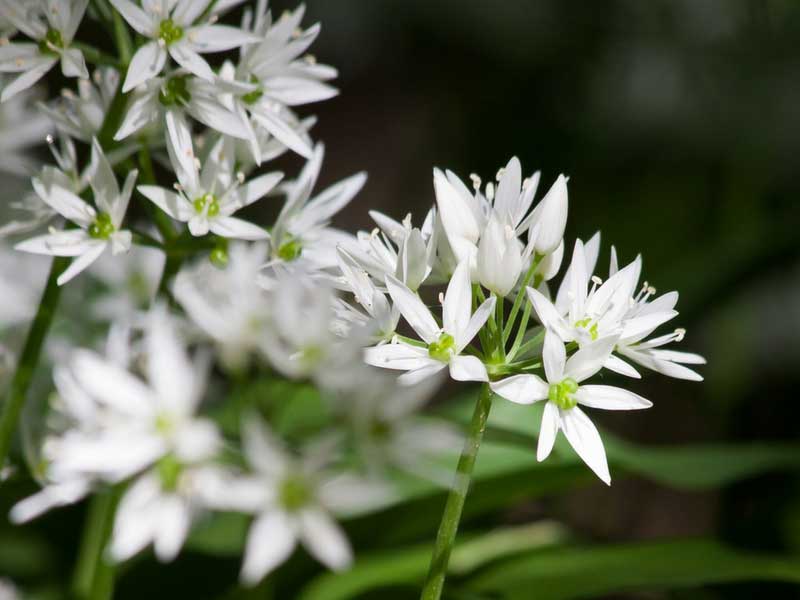
Ramsons
2) Rocambole garlic (Allium scorodoprasum)
This species, very ornamental, has the particularity of producing aerial bulbils at the top of its flowering stems. Its leaves are also edible, like chives. Harvest: June–July.
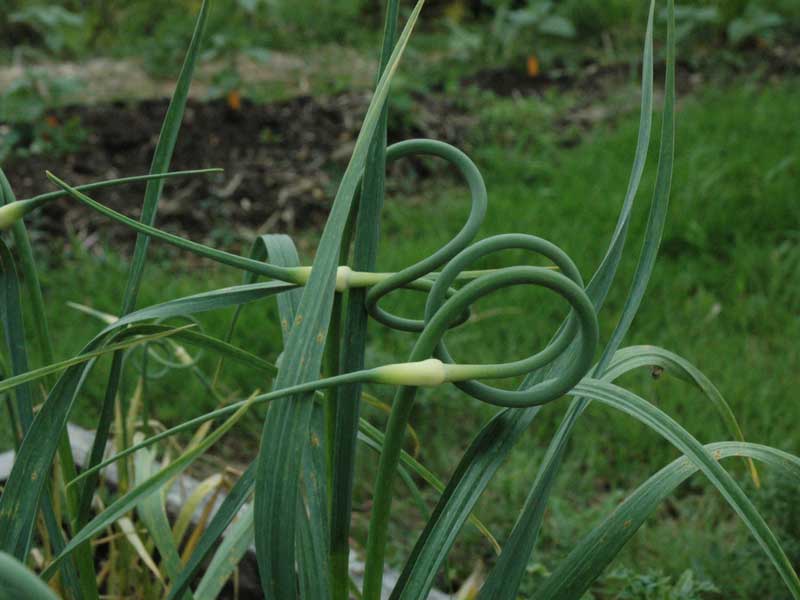
Rocambole garlic
3) Cardoon or wild artichoke (Cyrara cardunculus)
An ancient vegetable, very close to the artichoke. Although its flowers are edible, it is mainly grown for its cardoons. Tall in stature, it displays a magnificent blue-grey colour, very decorative in the vegetable garden. For those who dread anything prickly, there are spineless varieties. Harvest: August–September.
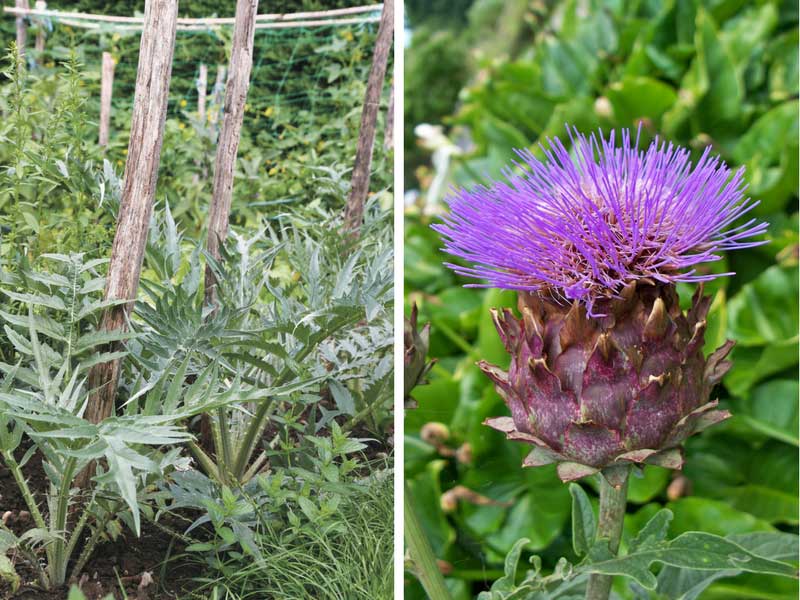
Cardoon: foliage and flower
→ Read also: Grow cardoon: a vegetable with tasty midribs.
4) Good King Henry (Chenopodium bonus-henricus)
Sometimes called wild spinach or goosefoot. It is cultivated for its leaves, which can be eaten like spinach: raw in salads or cooked. Harvest: March–May and September–November.
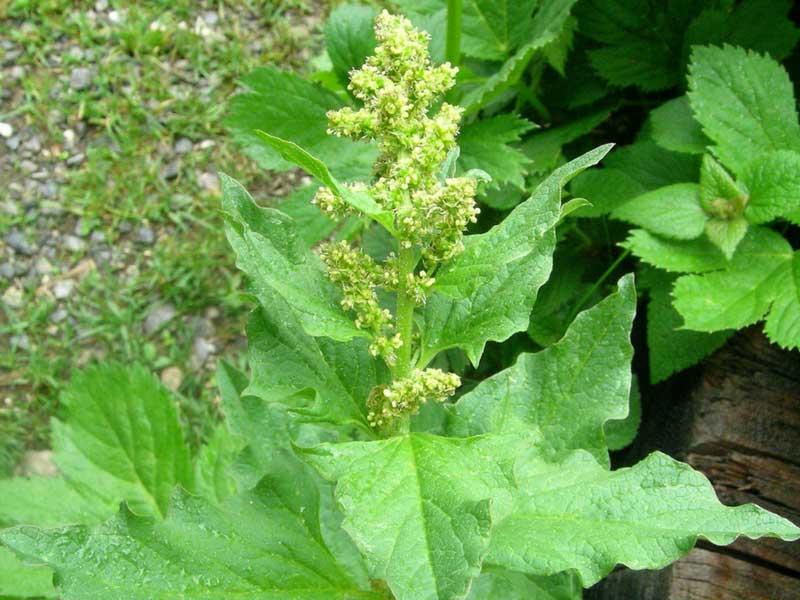
Good King Henry
Discover everything to know about Good King Henry and watch our video in which Olivier brings this forgotten vegetable back into fashion!
5) Daubenton’s perpetual cabbage (Brassica oleacerae)
Here is a perennial vegetable enjoying a fine comeback: once grown for fodder to feed livestock, it now appears on menus at top restaurants. It is a cabbage that does not form a head and from which young shoots are harvested; their flavour is close to broccoli. Harvest: September–May.
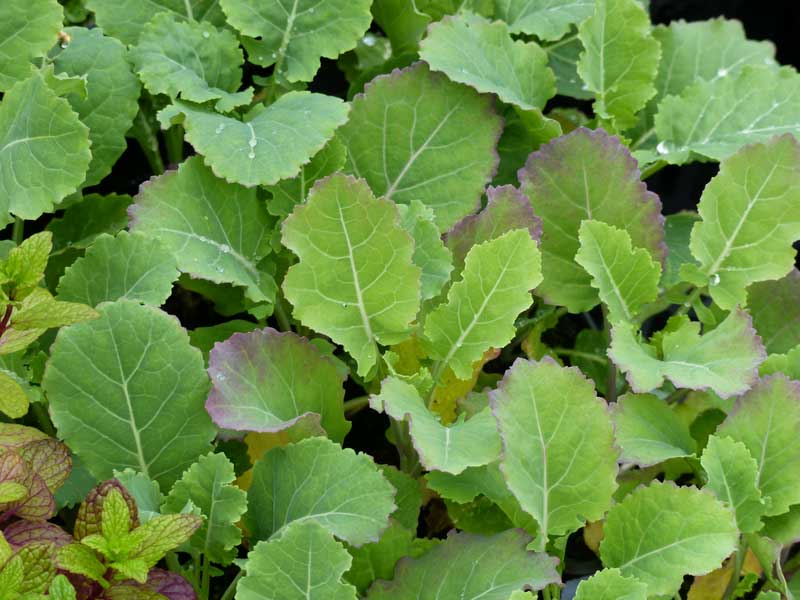
Daubenton’s perpetual cabbage
6) Tuberous wisteria or groundnut (Apios americana)
A twining climber with mauve flowers, very ornamental. It is a perennial herb much used in permaculture and forest gardens. To eat it, wait until winter and dig up the tubers, which cook like potatoes and are more nutritious. In warm climates it also produces edible pods. Harvest: November–March.
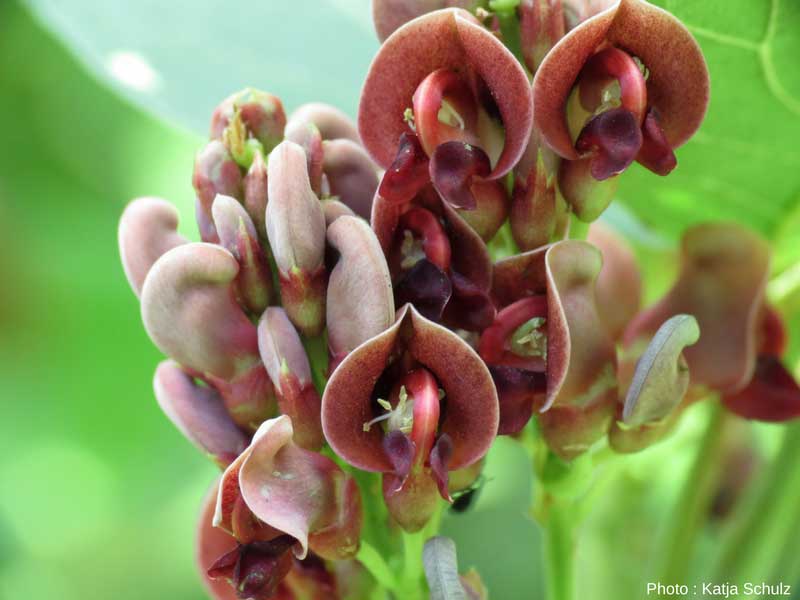
Tuberous wisteria or "groundnut"
7) Lovage or perennial celery (Levisticum officinale)
Also known as mountain parsley or Maggi herb, this vegetable is mainly used for its aroma as a condiment. Its leaves and seeds flavour soups and marinades. Harvest: May–November.
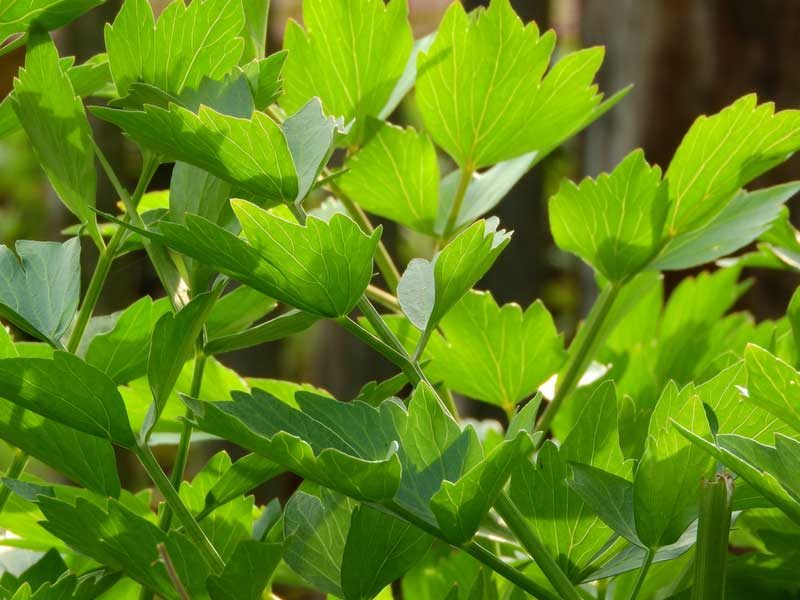
Lovage or perennial celery, also called mountain parsley
8) Rocambole onion (Allium cepa proliferum)
As with rocambole garlic, do not look underground: it is at the top of its flowering stem that this old-fashioned, slightly extravagant vegetable sets its little bulbs. Its leaves are also eaten like chives. Harvest: July–September.
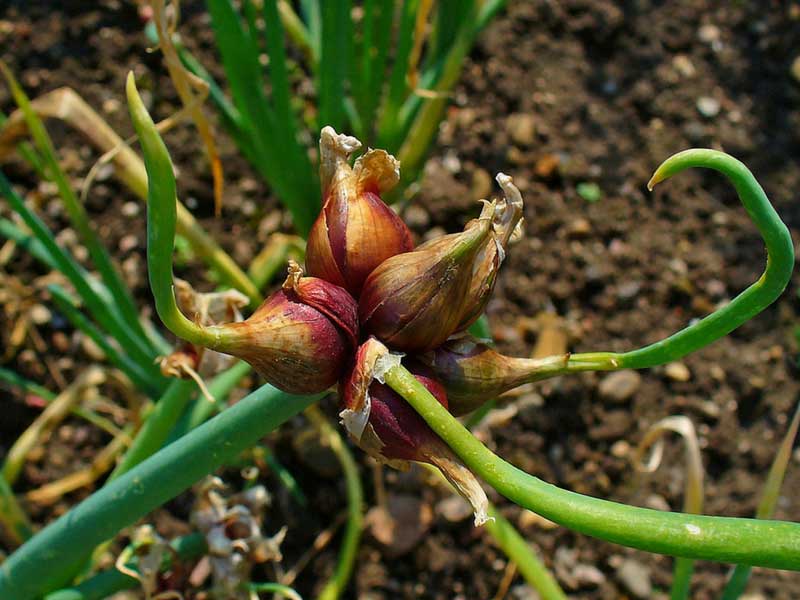
Rocambole onion
9) Sorrel or spinach-sorrel (Rumex acetosa, R. arifolus, R. sanguineus, R. purpurea)
Sorrel offers leaves from spring with a mild or tangy flavour, rather similar to spinach. It can be grown in the garden or on a balcony in a large pot. An easy plant to grow, it can be harvested over a long period but should be taken progressively as it does not keep well. Harvest: April–November.
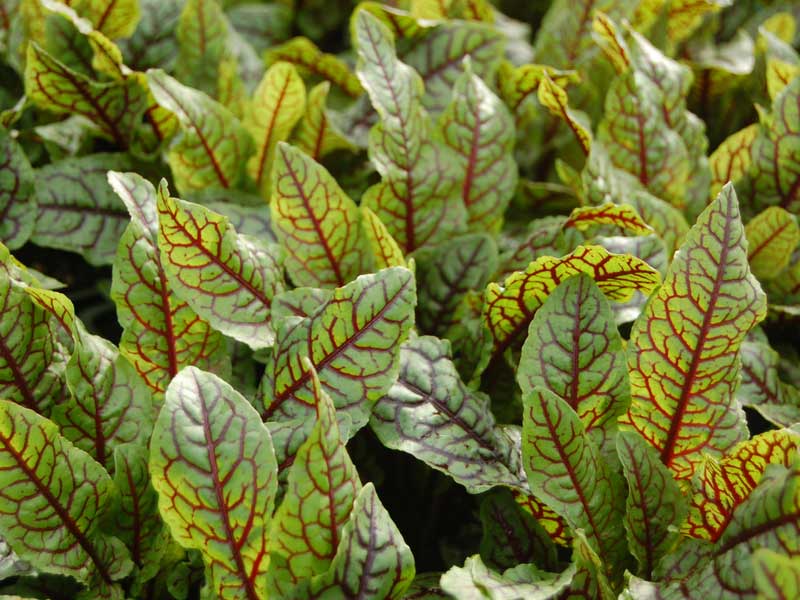
Bloody sorrel - Rumex sanguineus
10) Perennial leek (Allium ampeloprasum)
This perennial leek produces only small-diameter stems, finger-sized, which are very flavoursome. Cut 2 cm above soil level and the leaves regrow continuously, from September to May. Compact, this leek fits easily between strawberry plants. Harvest: September–May.
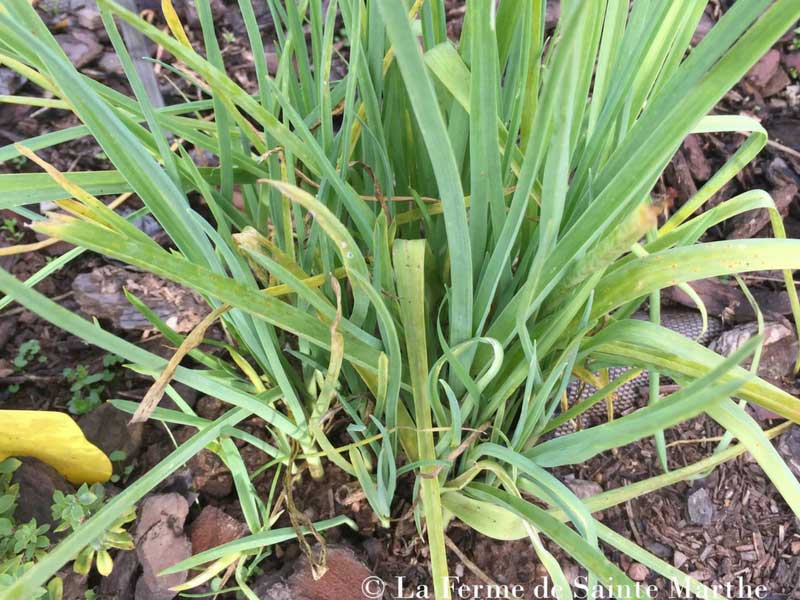
Perennial leek
So, ready to give perennial vegetables the place they deserve in the vegetable garden? Or perhaps they are already there… Tell us your story!
- Discover our wide range of perennial vegetables
and a few books dedicated to them :

































Comments