Further reading…
Making a garden resilient, stronger in the face of the repeated heatwaves our countries now suffer, is one of the challenges of the Chaparral garden, which draws on flora from extreme climates, such as those found in New Mexico or California. The multiple heatwaves of summer 2026 confirm this reality and will certainly steer us towards undemanding plants that are also hardy in our winters. Discover this new type of garden, inherently waterwise, low-maintenance and very promising.
What is a chaparral?
Chaparro is a Spanish word referring to several oak species (Quercus ilex, holm oak, but also Quercus coccifera and sometimes cork oak). The term also covers less well-known species such as Castela tortuosa, a shrub native to arid areas of Mexico and southern United States.
Chaparral is nothing more than an area of scrub and shrubs, forming a specific ecosystem in Mediterranean climates. It generally resembles a stand of holm oaks, in other words a garrigue or maquis, terms and landscapes more familiar to us. The name in Spanish denotes a biome found mainly from Mexico to California, and in Europe around the Mediterranean such as Andalusia or Sardinia. These areas are wooded, populated by shrubs and undershrubs able to withstand very hot conditions.
Plants able to grow in chaparral are often sclerophyllous (small, leathery leaves covered by a protective cuticle), sharing unique adaptations to this dry environment: deep roots, grey-green leaves that reflect light, and essential oils that limit evaporation.
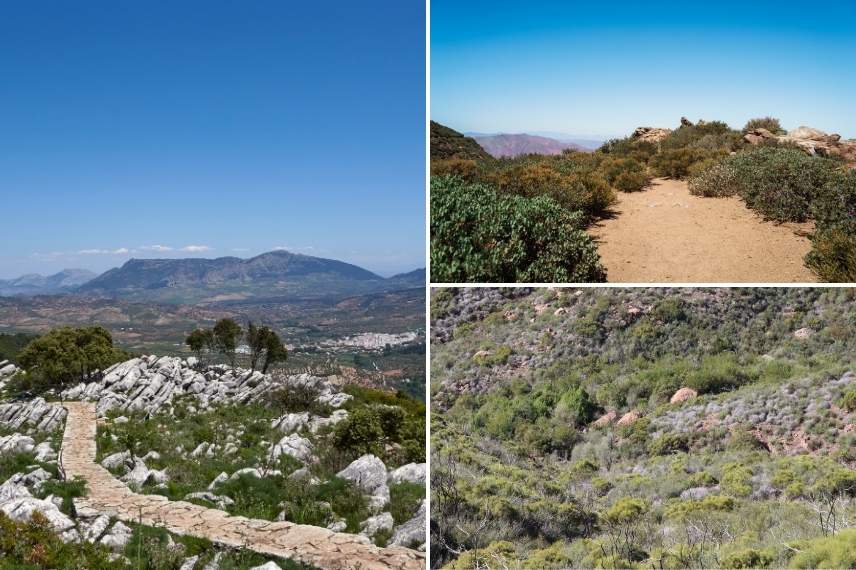
We imagined three scenes to reproduce, in spirit, this ultra-resilient type of landscape. You can create a single area of the garden that receives particularly strong summer sun, or treat the whole garden in this style, provided you live in temperate valleys or mild zones of the country.
Adapting the chaparral to a dry exotic garden
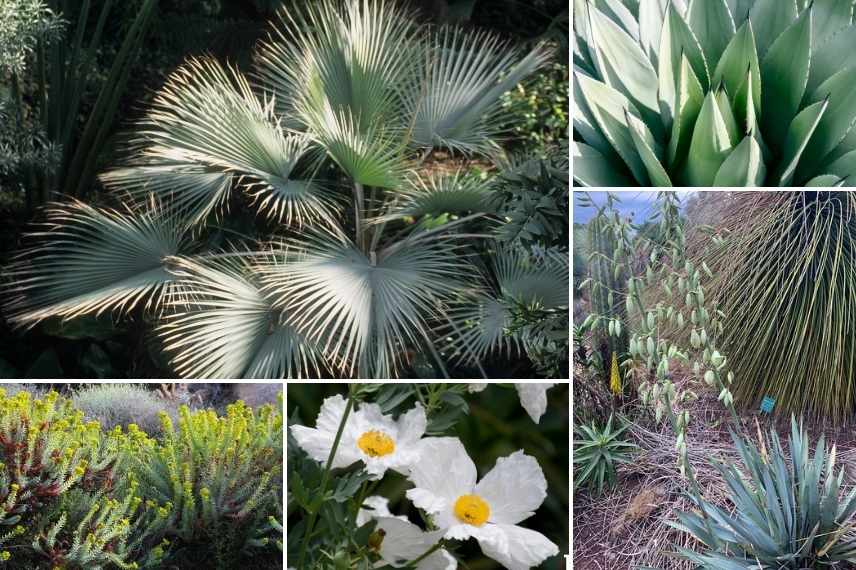
A dry garden can create a sublime scene with exceptional plants.
Here we play with a palette of blue-tinged foliage using plants surprisingly resistant to short frosts in winter, not exceeding −10°C. The tree poppy, a Californian and Mexican plant with wonderful white flowers, and the Mexican blue palm for an original backdrop, have proven able to withstand very dry summers. Once well established, Romneya poses no real hardiness issues. A Yucca pallida joins them to form that superb silvery-blue base, accompanied by an agave hardy enough such as Agave parryi or Agave montana.
A Mediterranean perennial, Euphorbia pithyusa, a Balearic spurge that stays low, and a Mexican-origin plant, Mathiasella bupleuroides 'Green Dream' with jade-green flowers, naturally fit among these plants. We bring in chartreuse and blue-green tones for a duet of colours evoking Mediterranean aridity.
NB: this blue planting can easily be part of a blue garden, located in the sunniest, driest part of the garden!
Transport yourself to Lanzarote
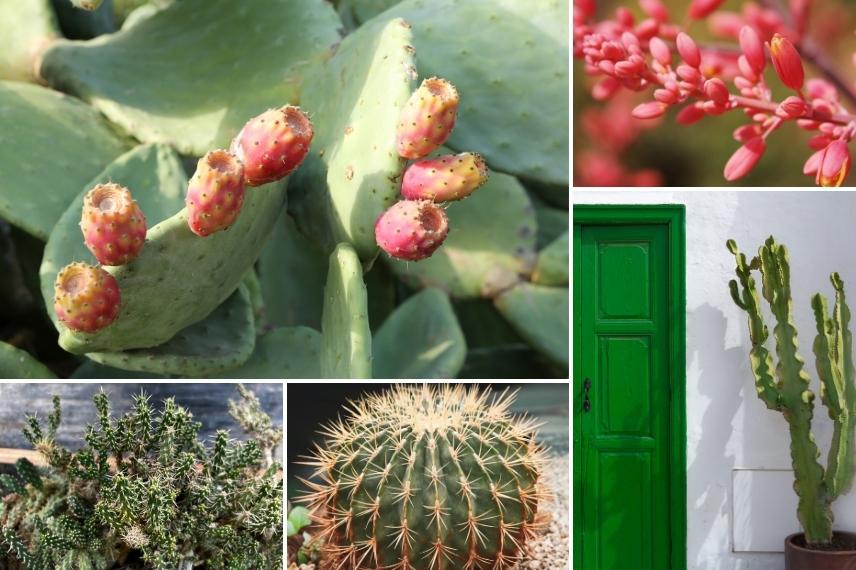
Lanzarote's cactus gardens are exceptionally photogenic. On this volcanic archipelago grow sclerophyllous plants with small leathery leaves adapted to drought, and spiny cacti. Drawing inspiration from them, while carefully selecting cacti cold-hardy enough for our winters, allows creation of a unique area within a dry garden, ready to face repeated summer heat spikes. Ensure perfect drainage, as this type of garden cannot tolerate any standing moisture in winter.
A prickly pear, well adapted to sea spray, is interesting for its slightly greater hardiness (down to around −15°C for some) and its unique habit with large spiny pads. Plant them liberally; choices include Opuntia scheeri or Opuntia engelmannii var. rastrera, among many others. In this distinctive setting, succumb to oddity of Cylindropuntia kleiniae, a cousin of opuntias, quite cold-hardy and producing a beautiful magenta summer bloom. Complement the area with a Hesperaloe parviflora and an Echinocactus grusonii, the golden barrel cactus often seen on the island.
This type of garden is intended for warm, mild regions of the country with less severe winters and dry summers.
Use pumice or black volcanic stones to simulate island soils and to ensure drainage. Finishing touch? a whitewashed house with green shutters to reproduce another characteristic of this island close to African coasts.
... or to landscape a poor, unproductive slope
A south-facing, dry and unproductive slope can also be transformed into a resilient space by imitating the chaparral, an ecosystem adapted to extreme conditions.
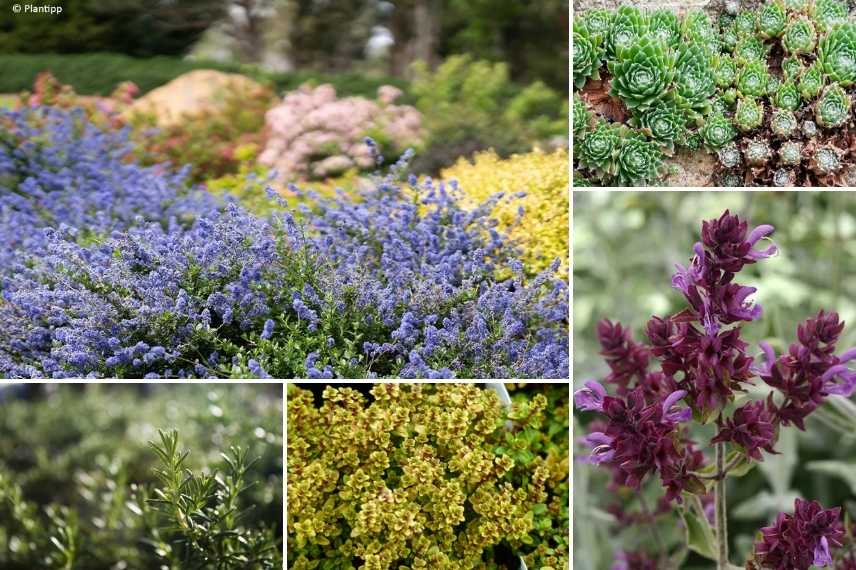
To turn poor soil into a semi-desert rockery, favour low, hardy shrubs such as cistus (Cistus), a California lilac like the ceanothus ' Pacific Wave' or its groundcover form (C. thyrsiflorus 'Repens'), a prostrate rosemary and some sempervivums. These plants, with deep roots and leathery or fleshy leaves, tolerate drought and poor soils perfectly. Add a golden thyme, and some sages (such as Canary Island sage 'Lancelot'), aromatic plants that will scent the garden while attracting pollinators.
Once established, these plants require little watering and maintenance. Their dense foliage will protect soil from erosion and limit growth of weeds that are unwanted on the slope. A mineral mulch will help conserve moisture and enhance the slope's natural appearance. A few ochre or orange boulders placed here and there will also help evoke Californian or Andalusian maquis while enhancing the area.
Discover our selection of succulents and perennials on our "Dry garden" page online, and our inspiration in the trend booklet 2026!
Since Beth Chatto, the dry garden movement has increasingly been seen among landscapers and in gardening magazines and books. We cover it in detail in Designing a dry exotic garden, Laying out a gravel garden, the Californian-style garden and the garrigue garden, as well as strong trends recently seen at the Chelsea Flower Show in London, such as the antipodal garden and the sand garden.
Find all garden trends for 2026 in: What are the five major trends for 2026?
Making a garden resilient, stronger in the face of the repeated heatwaves our countries now suffer, is one of the challenges of the Chaparral garden, which draws on flora from extreme climates, such as those found in New Mexico or California. The multiple heatwaves of summer 2026 confirm this reality and will certainly steer us […]
Had enough of that crystal-clear water that reveals pond bottom? Find the ballet of your fish in healthy water painfully lacking in dramatic suspense? This guide is for you. Here is the foolproof method to sabotage your aquatic ecosystem, encourage filamentous algae proliferation and turn your garden into a disaster zone even dragonflies will carefully avoid.
Location: choose worst possible spot
To ruin your pond from the start, location is crucial. Insist on a spot exposed to full sun from morning till night, with no shade whatsoever. Excessive heat will reduce oxygen levels and turn pond into a boiling pea soup where only algae will thrive. To perfect the disaster, place pond directly under a weeping willow or an old resinous tree. Massive build-up of fallen leaves and acidic needles will create a layer of toxic sediment at the bottom, ideal for acidifying water and clogging pump in record time.
Also make sure to dig perfectly vertical, smooth banks, with no depth shelves. That guarantees marginal plants will never take root and any creature falling in will stay trapped on the bottom.
Filtration: be minimalist (or completely absent)
Filtration is often considered the lungs of a pond; so atrophy it as much as possible. Opt for a grossly undersized filter, rated for a volume half of yours, to ensure water remains perpetually loaded with suspended particles. To save a few pennies on electricity, feel free to switch the system off every night. This fatal gesture will annihilate beneficial bacteria colonies that need a constant oxygen flow to convert ammonia into nitrates. Finally, if you must clean filter sponges, use chlorinated tap water rather than pond water, to be sure of obliterating every trace of biological life in the filter.
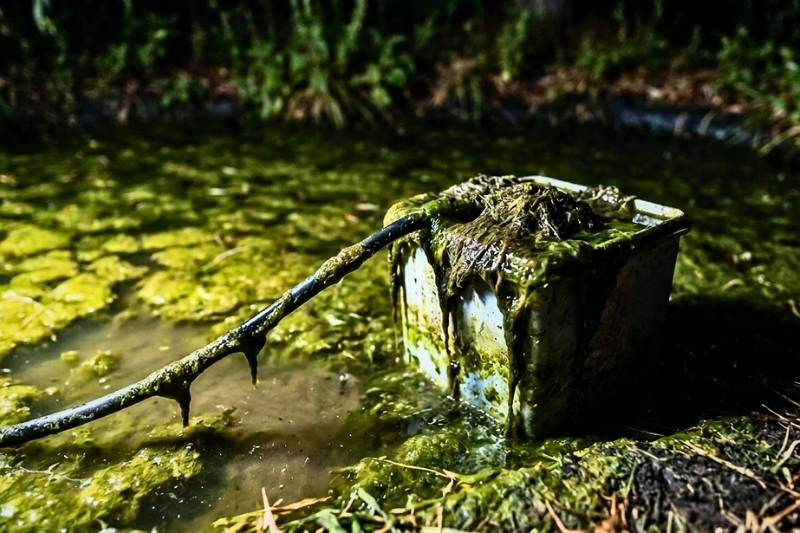
For fauna and flora: aim for chaos!
An overstocked pond is a doomed pond, so do not hesitate: introduce twenty Koi carp where wisdom would suggest only two. These magnificent fish are genuine waste factories that will saturate water with organic matter faster than you can say “eutrophication”. On feeding, be generous and overfeed them several times a day, even if food floats uneaten. These decaying pellets are perfect fertiliser for feeding algae. As for oxygenating plants, ignore them completely, since they might have the audacity to purify water and compete with your beloved green algae.
To perfect this chaos, do not hesitate to add invasive exotic species to your pond (EEE – species classified as invasive). These newcomers will choke your pond in fifteen days while eradicating local biodiversity for a complete ecological disaster.
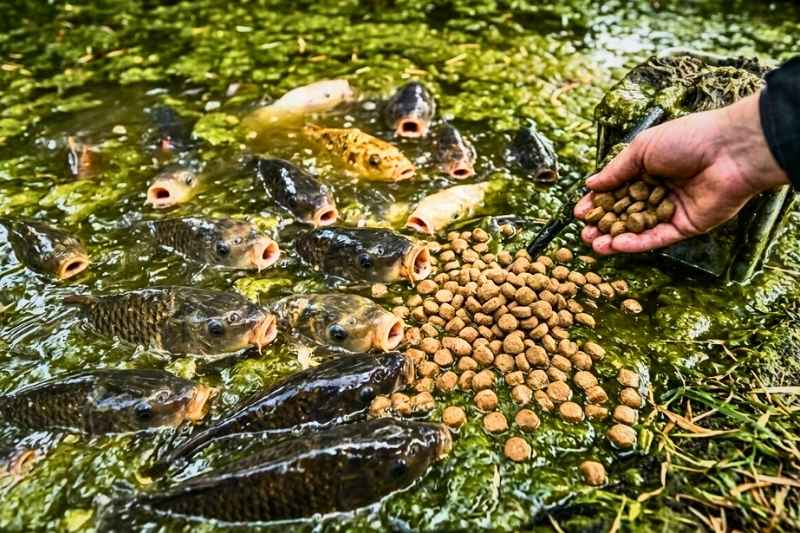
Maintenance: procrastinate with passion
Secret of a failed pond lies in total ignorance of water's chemical parameters. Never use a test kit: pH, GH (water hardness) or nitrites are abstract concepts to you? Good. When water level falls in summer, top up abruptly with icy, chlorine-rich tap water, ideally in mid-afternoon to provoke a memorable thermal shock for your charges. Let muck accumulate at pond bottom for years without ever using a vacuum or natural products. This black sludge, seat of anaerobic fermentations, will eventually release foul-smelling gases that give your garden that much-sought-after marsh aroma.
Winter: art of the finishing blow
When frost sets in, let pond surface seal airtight under a thick layer of ice without ever installing an anti-freeze dome or an aerator. This method is radical: it prevents gas exchanges, trapping decomposition gases beneath the surface while depriving what little life remained of oxygen. And if you see fish struggling under the ice, do not resist temptation to give heavy blows to the frozen surface. The shock waves thus created are extremely effective at bursting fish swim bladders.
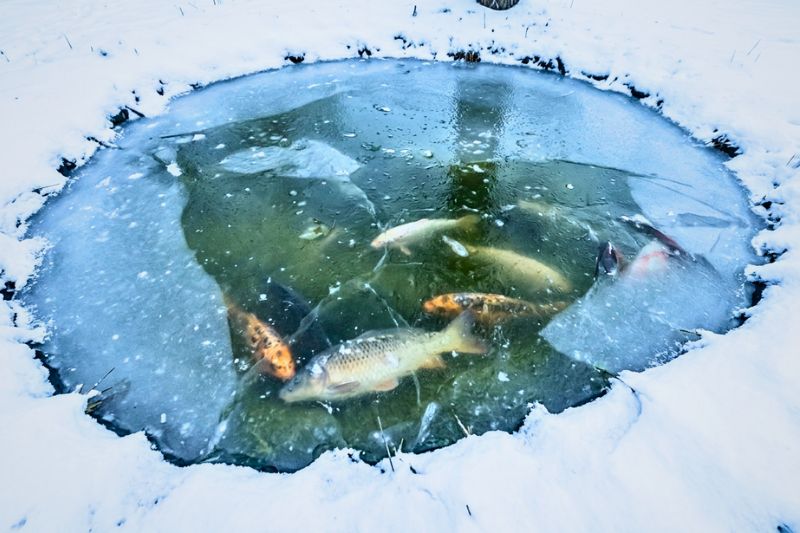
Real advice for serious readers
If you read this article in horror, you have grasped the essential! For a successful pond, simply do the exact opposite of everything just mentioned! A good location, robust filtration, sensible stocking of fish and regular maintenance will turn your pond, pool or water garden into an inexhaustible source of joy and a major boon for biodiversity.
For more genuine advice, read these articles and fact sheets:
- Creating my garden pond by Virginie Douce
- Create a natural pond
- Maintaining a garden pond through the seasons
- Find all our aquatic and marginal plants on our site.
- And all our books on pond and water garden design
Had enough of that crystal-clear water that reveals pond bottom? Find the ballet of your fish in healthy water painfully lacking in dramatic suspense? This guide is for you. Here is the foolproof method to sabotage your aquatic ecosystem, encourage filamentous algae proliferation and turn your garden into a disaster zone even dragonflies will carefully […]
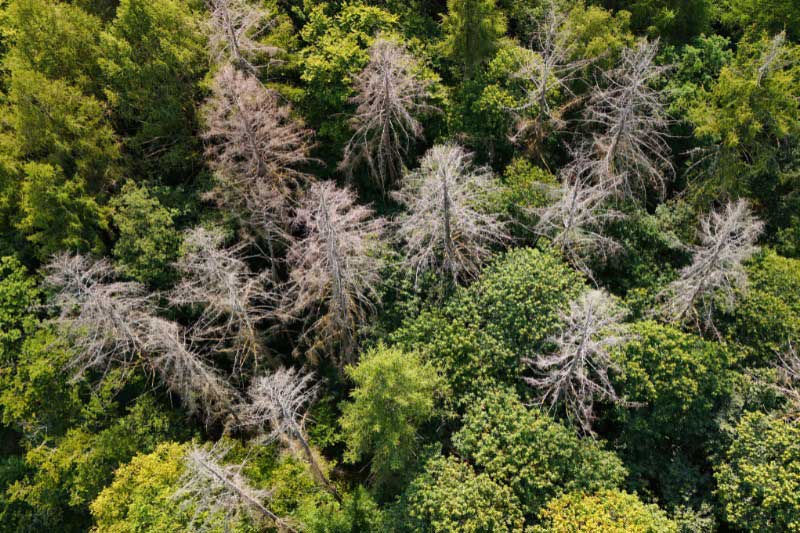
Beeches, oaks, but also hornbeams and chestnuts are already losing their leaves in summer well before autumn arrives, in August, but sometimes as early as mid‑July. This unusual phenomenon gives forests an early autumn appearance… and our gardens a prematurely autumnal look, with a carpet of dead leaves already covering the ground. Two heatwaves, a significant water deficit and parched soil have weakened these trees, causing premature leaf drop. A visible symptom of water stress and climate disruption, browning is now observed each summer with increasing frequency. Which species are most sensitive? Sun‑scorched leaves on trees, leaf yellowing in summer — does this early browning mean the tree will die? And above all, what can be done to mitigate these effects? We explain.
Why do tree leaves turn yellow in the middle of August?
August 2025 spared little vegetation. In many regions, notably Nouvelle‑Aquitaine, trees began to defoliate well ahead of time. This phenomenon is not due to an early season but to physiological stress caused by extreme climatic conditions.
In summer, foliage would normally display a deep green, fuelled by chlorophyll that captures solar energy and enables the tree to build reserves via photosynthesis. But repeated heatwaves, combined with ever drier soils, deeply disrupt this cycle.
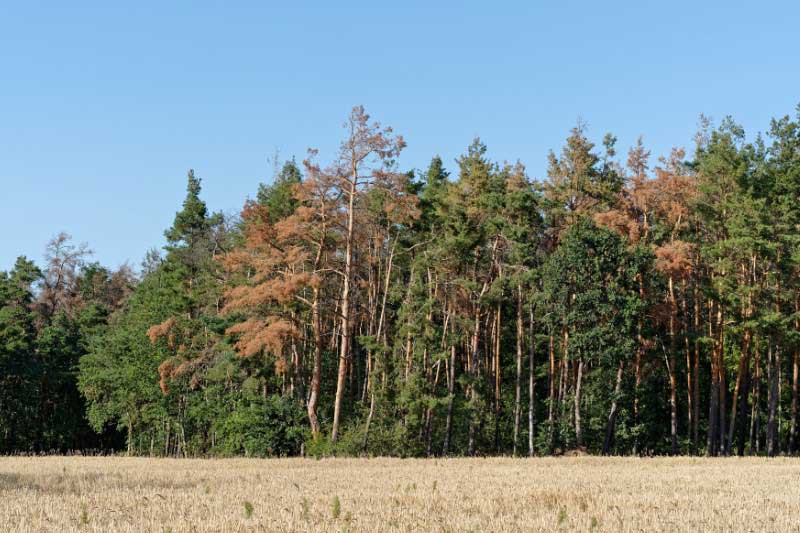
The figures are telling: over the 2021–2023 period, an estimated 8% of trees in French forests (living or standing dead for less than five years) were physiologically affected — some 186 million trees out of 2,270 million. This is not an isolated incident: IGN (National Institute of Geographic and Forest Information) also reports a 54% increase in tree mortality between 2012 and 2022.
And this is only the beginning. Projections indicate that by 2050, summer droughts will last on average two to four months, compared with two months currently, having more lasting effects on soils. If warming continues, some regions could face up to 39 additional drought days per year, and in the south soils could remain dry for seven to eight consecutive months.
In France, native species, adapted for millennia to a temperate climate, struggle to keep pace with this disruption. Some adapt partially, others show clear signs of exhaustion.
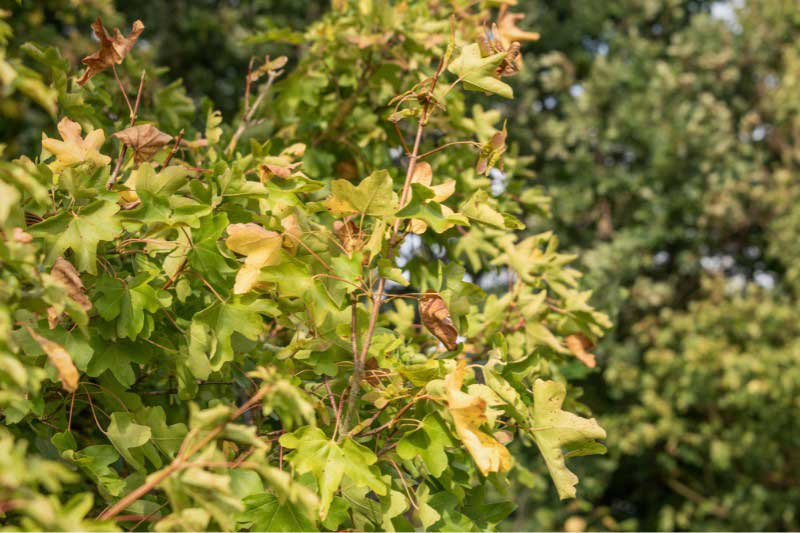
Lack of water, combined with very high temperatures, forces trees to close their stomata to limit water loss. This survival reflex halts photosynthesis and leads to a rapid loss of vigour. Leaves deprived of water and nutrients brown, dry out and fall. The phenomenon of leaves yellowing in summer is not natural: it is a defence mechanism to reduce evaporative surface area. This is known as water stress.
Certain species, such as beech, are particularly vulnerable: they suffer leaf scorch, bark lesions and even micro‑cracks that block sap rise or cause embolisms (air bubbles). All these troubles interrupt water functioning, compromise photosynthesis — and weaken the tree in the long term.
What happens after premature leaf drop?
When a tree loses its leaves as early as summer, it enters a kind of early dormancy, as if self‑protecting in a critical situation. This defence mechanism reduces its water and energy needs, but has medium‑ and long‑term consequences.
1. Photosynthesis stopped = reserves not replenished
Normally, leaves remain active until autumn to produce sugars via photosynthesis. These sugars reinforce root reserves, essential to survive winter and restart in spring. Summer defoliation prevents this process. The tree therefore enters the cold season with insufficient reserves, making it more vulnerable to disease, frost or pest attacks.
2. Growth halted
Without leaves, the tree can no longer grow in height or diameter. Over several successive seasons this results in slowed development, a thinner crown and a progressive decline in vitality.
3. Risk of long‑term weakening
If the stress episode is isolated, the tree can recover, especially if well established. But if stress recurs (as increasingly happens), the tree has no time to rebuild its reserves and weakens progressively. This process can take several years before leading to total decline.
4. Delayed consequences visible in spring
A tree that lost its leaves in August may appear alive in winter but fail to leaf out in the following spring, or do so only partially. This lack of foliage then reflects internal exhaustion, often irreversible.
Does this mean the tree will die?
Not necessarily, but it is worrying. Early browning and defoliation are signs of acute stress, not an irreversible sentence. However, if these episodes repeat year after year, they can cause lasting weakening, loss of carbon reserves, reduced resistance to pests and an increased risk of mortality.
Most sensitive species
Not all species respond the same way to these extreme climatic episodes. Some are more vulnerable than others:
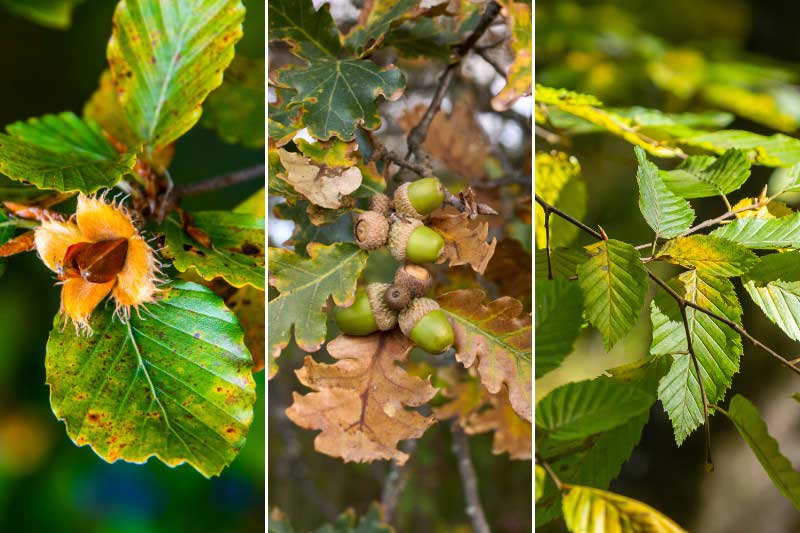
- The beech (Fagus sylvatica): one of the most affected species. Native to humid, temperate climates, it quickly suffers from lack of water and heat stress. Browning of its foliage is common in summer, even in dense forest. Leaf deficit — the proportion of missing foliage compared with normal — rose from about 15% between 1997 and 2003 to nearly 35% between 2017 and 2023. This increase illustrates a worrying trend, even if the species sometimes shows the ability to recover when conditions improve.
- Oaks (Quercus robur, Q. petraea): among them, the pedunculate oak (Quercus robur) proves more sensitive to summer water stress, while the sessile oak and downy oak display better resistance. However, repeated weakening makes them more vulnerable to pests such as jewel beetles or certain pathogenic fungi. They account for nearly 25% of France’s forest area — a significant share.
- The hornbeam (Carpinus betulus) and the chestnut (Castanea sativa): these too show weakness from the end of summer, with premature leaf drop during prolonged drought.
- Conifers such as spruce: poorly adapted to dry summers, they suffer marked weakening, often exploited by pests such as bark beetles.
This reflects a general deterioration affecting all tree categories. It is estimated that one third of oaks (sessile and pedunculate), two thirds of beeches, 60% of firs at low and mid altitudes, and 90% of spruces may no longer be able to develop in their current zones by 2050.
What can be done?
Faced with this situation, several actions can be considered:
- Plant species better adapted to conditions
In the current context, it makes sense to rethink species choices without abandoning local vegetation. Some species show better tolerance to repeated summer droughts. It is advisable to favour resilient but diverse species, and adapt plantings to local pedoclimatic conditions: soil type, aspect, water‑holding capacity, altitude…
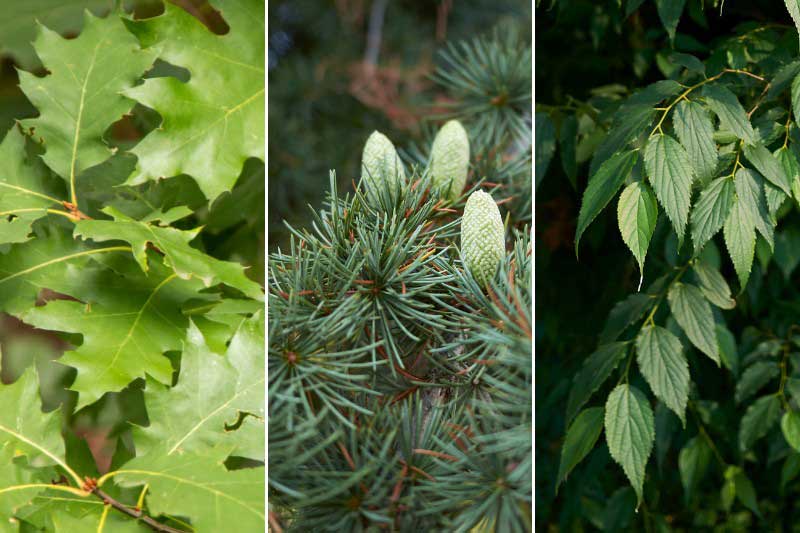
Among species better suited to dry conditions are downy oak, the Atlas cedar, and the European nettle tree, as well as Mediterranean species such as Aleppo pine or the holm oak. These species can resist heat when planted in suitable exposures and climates. Species such as Japanese pagoda tree (Styphnolobium japonicum) or the Siberian elm (Ulmus pumila) also show good adaptive capacity.
- Encourage plant biodiversity: diversifying species is an effective strategy to strengthen overall resilience. Mixed stands (species with different root systems and needs) cope better with climatic hazards.
- Preserve the soil: living soil rich in organic matter retains water better. Mulch, leave dead leaves in place and avoid soil compaction — simple but effective measures.
- Limit interventions during stress periods: avoid heavy pruning, transplanting or applications of nitrogenous fertilisers in mid‑summer. Do not rush to prune or fell a stressed tree: with time and improved conditions it can sometimes recover.
Beeches, oaks, but also hornbeams and chestnuts are already losing their leaves in summer well before autumn arrives, in August, but sometimes as early as mid‑July. This unusual phenomenon gives forests an early autumn appearance… and our gardens a prematurely autumnal look, with a carpet of dead leaves already covering the ground. Two heatwaves, a […]
Terraces, courtyards, patios and small bohemian balconies are the new stars of summer! This very colourful "boho" trend that has invaded our interiors and wardrobes also appears in our summer green retreats. It matches the sunny cheerfulness of a season when we spend a lot of time outdoors.
Let’s take inspiration from the gypsy world to prepare bright alcoves on balconies, terraces and inner courtyards from the first fine days, with planting ideas and decorative elements. We explore this Boho Patio in three scenes easy to recreate at home!
Boho Patio codes
The bohemian atmosphere dresses itself in vivid, deep and variegated colours that answer one another, but also in associations of warm tones in the blooms: intense reds, deep violets, Indian pinks and spicy oranges, not forgetting bicoloured flowers. Bluish, golden or purplish foliage helps to reinforce this playful mood, bringing red or variegated splashes.
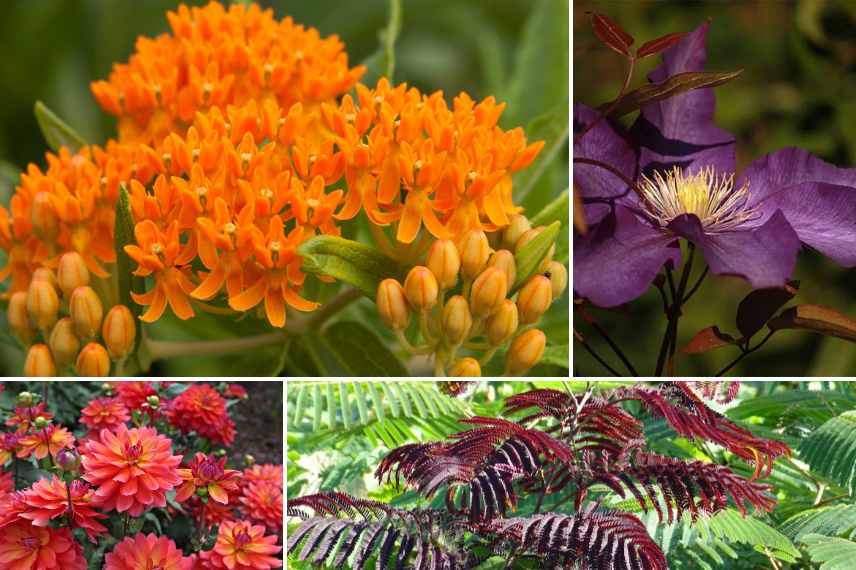
This mixed-up planting borrows from gypsy culture a festive, hybrid universe that laughs at convention and pairs a whole spectrum of colours, provided they are warm and bright.
This style is also based on improvisation, like manouche music, and on bold accents. This temperament appears in the garden in temporary scenes created especially for the summer months, and in the accumulation of mismatched small objects (side tables, stools, small cushions, etc.).
On the décor side, important for dining and relaxation areas, have fun with mismatched pairings: rustic furniture repainted turquoise or green, rattan chairs, fabric pouffes, Provençal floral and ethnic patterns juxtaposed with strong colours: turquoise, pink, orange and bright yellow. The advantage of this bohemian décor is that you can mix disparate objects and accessories, using what you already have at home or stored in the attic, to give them a second life: bring out granny’s lace and embroidery for the summer, macramé and trimmings, old rattan armchairs, baskets and fruit crates, airy curtains. In a joyful mix of materials, the décor is done!

On a sun-drenched terrace
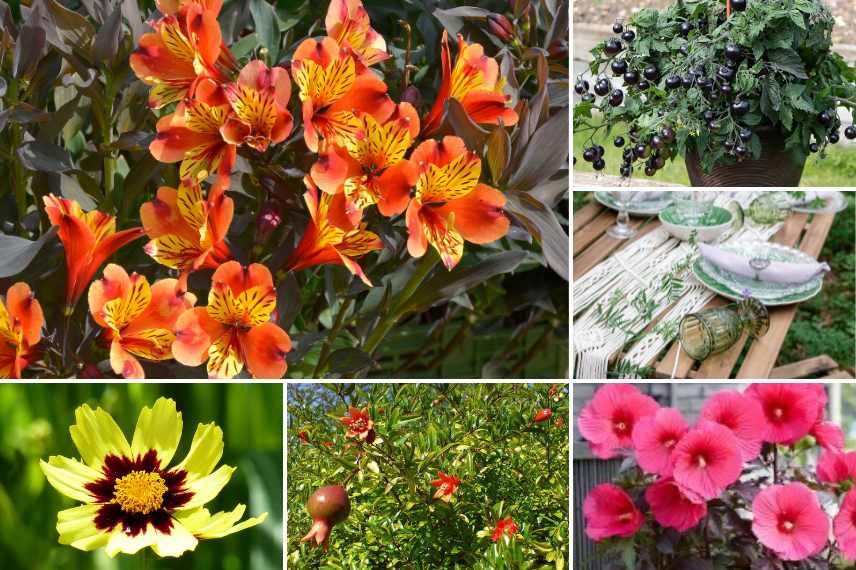
Terrace or balcony are often west- or south-facing. They can be radically transformed into an ultra-cheerful cocoon with sun-tolerant plants that do well in pots. Explore a plant colour palette ranging from saffron yellow to violet for a truly bohemian vibe.
Alstroemerias 'Indian Summer', orange and yellow contrasting against bronze foliage, will look stunning alongside Coreopsis 'Cosmic Eye', a bright yellow spotted with purple, or the pretty all-yellow 'Full Moon Madness'. Add other long-flowering plants such as a common Rose mallow 'Pink Passion' with giant flowers and dark purple foliage, and provide more foliage interest with a pomegranate that can be grown in a pot, such as Punica granatum 'Nana', whose brilliant flowers will pair beautifully with the other perennials. For snacking at aperitif time, invite, for example, the surprising cherry tomatoes 'Akoya', whose fruits turn almost black.
In a semi-shaded urban patio
Small city courtyards benefit from focusing on colour and variegated or golden foliage to lift them out of the shade. In a semi-shaded patio receiving enough light and warmth in summer, opt for sunny flowers and a few "indestructibles":
Hosta 'The King', Hakonechloa macra and an Aucuba japonica 'Crotonifolia' for their golden and variegated foliage (Aucuba will reward you with pretty red berries a little earlier) together with the bold flowers of Hibiscus syriacus 'Hibisa rosada', and the Peruvian lily 'Duc d'Anjou'.
The bohemian spirit will also be present in accessories, essential in less bright areas and in smaller spaces.
Beyond plants, bring colour without fearing the boldest mixes. Dare genre-mixing: antique rug + Italian ceramics + small disparate or oversized objects and a cosy bench, etc. Here, the evening atmosphere will be especially worked on: lanterns, paper lanterns and candles, and don’t forget a crochet throw in these patios that are often cooler at night.

Garden refuge as an improvised alcove
This bohemian trend can also be expressed in a corner of the garden used as an improvised summer retreat.
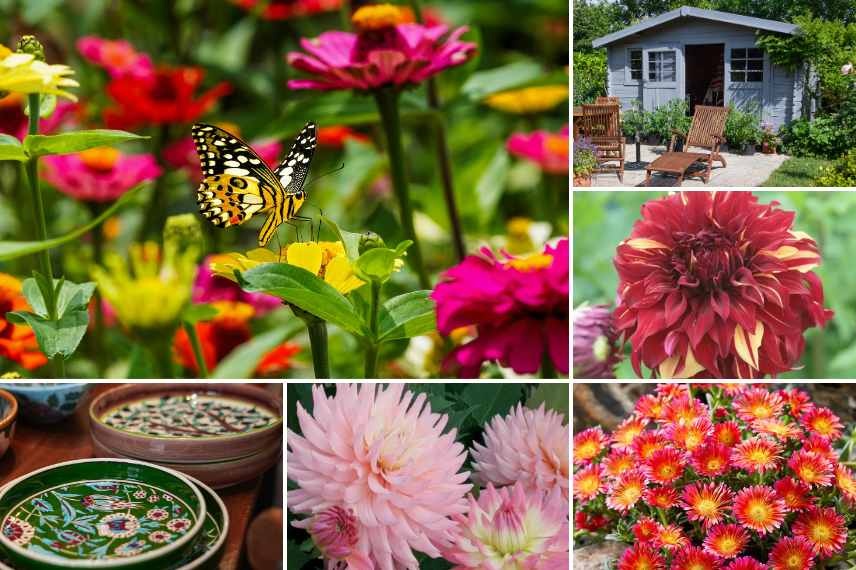
In front of a shed, garden shelter or at the foot of a fine tree from which a rattan chair is hung, set up a summer hideaway using bohemian codes. A temporary terrace, improvised with clip-together wooden decking tiles readily available from DIY stores, is easy to install. In summer it becomes a true green cocoon perfect for relaxing on a garden sofa made of a few stacked pallets or large pouffes, in a fairground style.
Here, a few colourful annuals join the party: multicoloured zinnias and orange calendulas (marigolds) sown in pots in spring, or beds of African marigold 'Mango Tango' around the area, as well as sun-loving perennials such as the charming Delosperma 'Ocean Sunset Orange Glow'. Count on two striking pots of dahlias with evocative names, the fiery 'Bohemian Spartacus' and the more restrained compact 'Melody Gipsy', for a long and remarkable display. Sunflowers 'Mongolian Giant' will bring pep and height, while a pot of basil 'Everleaf Emerald Tower' will be handy for salads at barbecues or sunny lunches.
Gather your most colourful pots, bring in lace, hangings, vintage crockery and cushions: job done!
Discover other plants ideal for composing this bohemian green décor on a terrace in our "Boho Patio" selection online and in our trend booklet!
Feeling the bohemian spirit? Find our advice on creating a bohemian garden, and our inspirational sequences: Catalane and Peach Raspberry.
This Boho Patio trend also draws on recycling second‑hand objects. Explore our topics to let your creativity run free: Decor idea: plants in unusual containers; How to make a planter from a pallet?; Recycling in the garden and How to use and properly integrate terracotta pots in the garden?
Terraces, courtyards, patios and small bohemian balconies are the new stars of summer! This very colourful “boho” trend that has invaded our interiors and wardrobes also appears in our summer green retreats. It matches the sunny cheerfulness of a season when we spend a lot of time outdoors. Let’s take inspiration from the gypsy world […]
Here’s a distinctive trend emerging in outdoor spaces, and not only among landscapers fond of conceptual gardens or in coastal areas! While a sand garden is particularly suited to coastal gardens, it proves to be an undemanding, on-trend garden, halfway between a gravel garden and a dry garden, perfectly in tune with current climate upheavals.
We invite you to discover it in three scenes that demonstrate its aesthetic appeal and sunny atmosphere!
Sand garden: a landscaping trend between frugality and aesthetics
Far from the image of the traditional Japanese zen garden with raked gravel or pale sand, the sand garden imposes itself as a new version of the garden. It retains a sense of serenity but transposes it into a warmer register, where maintenance and watering are reduced to an absolute minimum. It answers a need created by climate change: how to introduce more Mediterranean plants into northern regions? Even if rising temperatures allow it, the problem of waterlogged winter soils, often fatal to these plants, remains. The sand garden is one solution, providing effective drainage.
It is a functional garden, still experimental globally, which showcases plants that ripple in the wind, like a reminder of a sea that is not always present. It also emphasises contrasting materials and textures, often using Corten steel as a support, woven willow in tontines or sculptures, large stones or retaining walls.
Undemanding plants grow in a substrate made up of a thick layer of sand. They therefore need to draw water from deep down to survive. For this reason we choose the most drought-tolerant plants and xerophilous plants, those whose taproot systems mean they will withstand heatwave summers.
We also seek to enhance the golden aspect of the sand using a palette of warm tones available to us, both in plants and materials. Plants will generally be low-growing, mat-forming or supple, also incorporating some greyed foliage to reinforce the impression of warmth.
A holiday feel
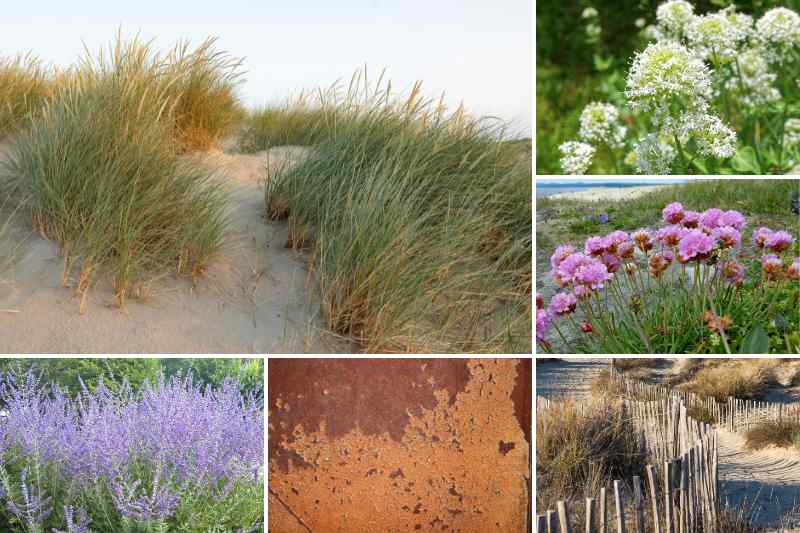
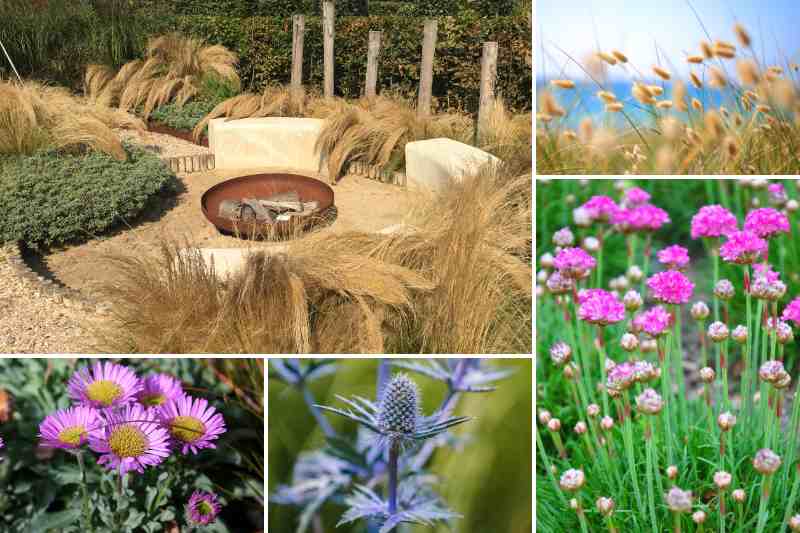
Coastal gardens, and especially those located right on the coastline, are difficult to plant because of the omnipresence of sand on site. They are perfectly suited to the constraints of a sand garden. In a beach-return spirit, the focus is fully on the sand-and-beach duo, taking inspiration from the dune ecosystem.
Essential plants: valerian, Lagurus ovatus and oyat (Ammophila arenaria), Armeria maritima 'Vesuvius' (sea thrift), sandwort, Erigeron glaucus 'Sea Breeze' or Erigeron karvinskanius, sand carnations, Perovskia, blue fescue, sea holly (Eryngium maritimum), milk thistle, etc.
To bring back vegetal blond tones, use wooden slats as decking, mini sand fences, and pair with coppery accents such as a brazier, useful for summer evenings.
Our tip: take care not to multiply beach clichés. Restrict decoration to sand alone, without superfluous additions of pebbles, shells or other seaside trimmings to avoid caricature. Plants create the scene, not the other way round!
Contemporary sand garden
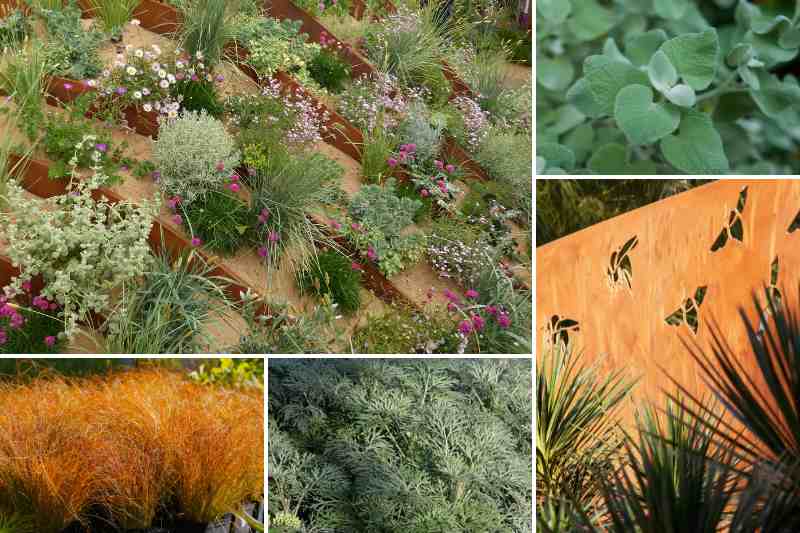
At the opposite end from the dune garden that naturally links to its environment, the idea of undemanding plants and sand also evokes minimalism and the mineral feel of modernist gardens. The sobriety of the sand, combined with an appropriate plant palette, allows creation of a sand garden that suggests a coast not necessarily nearby, in perfect harmony with contemporary architecture.
Here, colour is conceived in monochrome, or in white/black, white/mauve or purple and green duos, to name a few pertinent combinations. Plants are chosen for their prostrate habit, their original textures or the shapes of their inflorescences. Greyed tones for foliage are also favoured to blend well with often anthracite outdoor furniture. Corten steel, used for boards or attractive windbreaks, stands out as a material that enhances the sand’s sheen, as does brick, which can serve as a path.
Essential plants: silver santolina, Artemisia 'Powis Castle', Ballota pseudodictamnus, medium to tall grasses such as coppery Carex (Carex testacea), the movement of Hordeum jubatum, graphic silhouettes (Cordylines, Yuccas) on flat ground, and low to medium plants as on a shaped sand mound (sea thrift, creeping gypsophila, wild thyme, etc.).
South African atmosphere
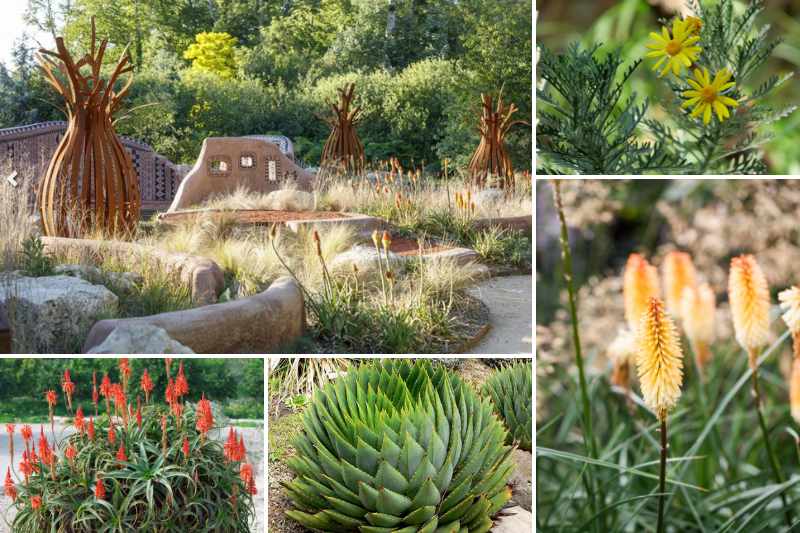
One attractive idea with the sand garden is to travel to an arid, heat-baked world. You can plant stunning perennials and ultra-resilient grasses and lean towards a Californian vibe, or, as here, a South African feel.
Let’s take inspiration from Léon Kluge’s work, the world-renowned South African landscaper, at Domaine de Chaumont-sur-Loire in France: few plants for a spectacular effect in this full-sun garden. The scene draws from the African bush, where red sand and oversized stylised baobab sculptures mainly make up the decor, with waves of Stipa tenuifolia and torch lilies. At home, imagine tall red-willow tontines or large woven willow spheres to add volume and blend into this atmosphere.
Key plants: succulents and light grasses (Aloes, Euphorbia myrsinites, Stipas, Sesleria argentea, Lomandra longifolia), and perennials with sunny yellow to orange blooms (Kniphofias, Euryops pectinatus, bulbines, Leonotis leonurus, gazanias…). Plants native to South Africa, Patagonia or Tasmania are favoured, some tolerating down to -8°C in sheltered conditions.
The naturalistic garden and the English garden also draw on this avant-garde technique, and we could just as well have developed scenes in these two worlds, which lend themselves to experimentation currently being carried out notably across the Channel.
Find our selection of plants suited to the Sand Garden spirit on our online nursery as well as on our inspiration page in the 2026 Trend Book !
Do you enjoy these distinctive atmospheres? Discover other inspiring scenes in related worlds:
Here’s a distinctive trend emerging in outdoor spaces, and not only among landscapers fond of conceptual gardens or in coastal areas! While a sand garden is particularly suited to coastal gardens, it proves to be an undemanding, on-trend garden, halfway between a gravel garden and a dry garden, perfectly in tune with current climate upheavals.We […]
The Popillia japonica, commonly known as the Japanese beetle, poses an increasing threat to agriculture and gardens in Europe, particularly in France, where it may soon establish itself. This insect, native to Asia, is classified as a priority quarantine organism by the European Union due to its devastating economic and environmental impacts. Indeed, it attacks over 300 plant species, ranging from agricultural crops to ornamental plants. Let’s learn more about this potential (and yet another) threat!
How to Recognise the Japanese Beetle?
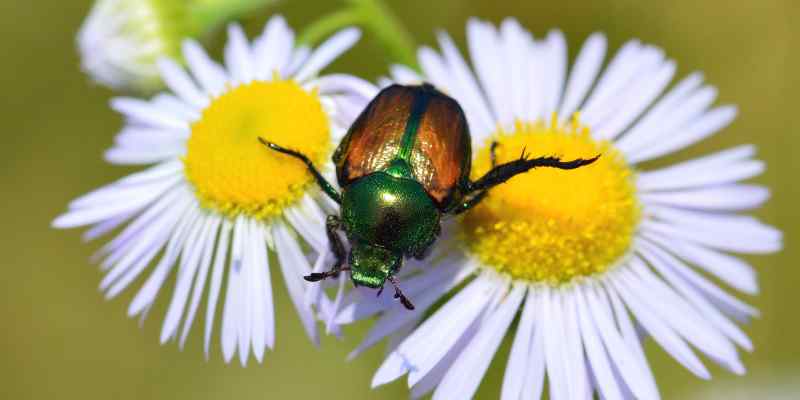
The Japanese beetle measures about 10 to 12 mm in length. Its small size can lead to confusion with other beetles found in France. However, it is distinguished by its metallic green head and thorax, its copper-brown elytra, and the five tufts of white bristles located on the sides of its abdomen, along with two more at the end of it.
Finally, the Japanese beetle is smaller than other common European beetles. Its body shape is compact and slightly rounded, with short, segmented antennae that end in club-like tips. These antennae are often retracted when it is resting but can be visible when it is moving or feeding.
Life Cycle of the Popillia japonica
The life cycle of the Popillia japonica, or Japanese beetle, is annual and consists of four stages: egg, larva, pupa, and adult. Females lay their eggs in the soil during summer, from which the larvae emerge after about two weeks and feed on plant roots, causing damage until autumn. They then hibernate deep in the soil until spring, where they pupate and transform into adults. Adults are present in summer, feeding on leaves and flowers, before reproducing, thus completing the cycle.
What is its Impact on Plants?
This insect is polyphagous, meaning it feeds on multiple plant species (about 300 species). Adults feed on foliage, flowers, and fruits, leaving the leaves in a skeletal state after their passage. The larvae, on the other hand, cause damage by feeding on the roots of plants, particularly grasses like lawns. Among the most affected plants are grapevines, fruit trees, roses, and many other ornamental and agricultural plants.
In Italy, where the Japanese beetle has been present since 2014, vineyards are particularly vulnerable. The beetles devour grape leaves, thereby reducing the leaf area necessary for photosynthesis and thus for grape ripening. Corn and soybean crops are also severely affected by the Japanese beetle.
Roses are among the most affected ornamental plants. Japanese beetles devour the leaves and flowers, which can lead to complete defoliation. The larvae of the Japanese beetle, which feed on the roots of grasses, also pose a serious problem for lawns.
Obviously, like all invasive species, the Popillia japonica seriously threatens local biodiversity by competing with native beetles for food resources and disrupting natural ecosystems.
Estimation of Agricultural Yield Loss Costs
Precise figures regarding the economic impacts of the Japanese beetle in Europe are still being evaluated, due to the recent introduction of the insect to the continent. However, American experience provides insight into the potential extent of the damage. In the United States, direct and indirect costs (yield losses, treatments, management) related to the Japanese beetle exceed $450 million per year.
With the continued expansion of the Japanese beetle in Europe, economic impacts are expected to increase, particularly if the insect manages to establish itself in France, one of the main wine and agricultural crop-producing countries in Europe. Early prevention and control are therefore essential to minimise damage.
Additionally, there are costs associated with control measures, including expenses for installing pheromone traps, purchasing chemical or biological products, and mobilising teams to monitor and treat infested areas.
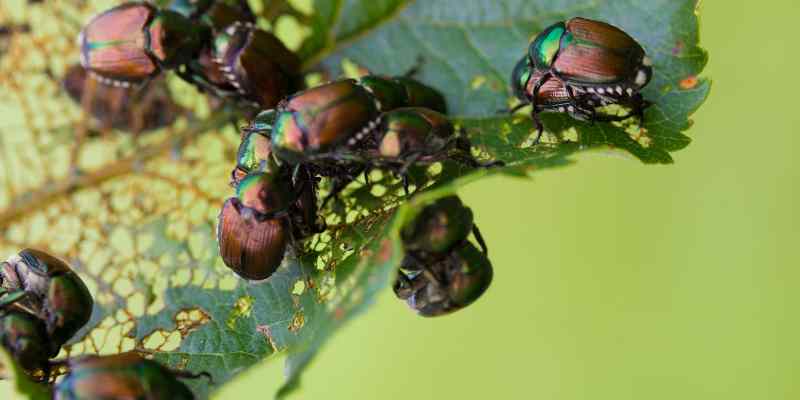
Spread of the Popillia japonica
The Japanese beetle is nicknamed "the hitchhiker" due to its ability to travel long distances by clinging to various supports, such as plants, pots, objects, and even modes of transport (trucks, trains, cars, planes). This facilitates its rapid expansion across different territories. Since its introduction in Italy in 2014 and in Switzerland in 2017, the Japanese beetle has seen its population increase, with new outbreaks detected regularly, including in Zurich and Basel in 2023 and 2024.
Coming Soon to France?
Although the Japanese beetle has not yet been detected in France, it is crucial to remain vigilant. In the event of suspected detection, it is recommended to capture the insect (if possible alive) and report it immediately to the Regional Directorate for Food, Agriculture and Forestry (DRAAF). Early reporting will allow for the implementation of appropriate control measures to prevent its establishment in the territory.
Proposed Control Measures and Awareness
In Italy, where the Popillia japonica has been present since 2014, rigorous monitoring and trapping measures have been implemented, including the use of pheromone traps to capture adults and limit their spread. Switzerland, facing the invasion since 2017, has adopted a similar strategy, intensifying monitoring in border areas and using biological control methods, such as introducing nematodes to target larvae in the soil.
The fight against the establishment of the Popillia japonica in France relies on early detection and rapid eradication of initial outbreaks. State services have set up traps equipped with mixed lures (sexual pheromones and floral attractants) along French borders and in strategic areas such as ports and airports. If the insect is detected, an infested area is then delineated and will be subject to enhanced monitoring using a combination of biological, physical, and, as a last resort, chemical methods.
However, everyone can contribute to limiting the spread of this insect by remaining vigilant when purchasing plants or during plant exchanges, as well as by regularly monitoring the plants in their garden.
The Popillia japonica, commonly known as the Japanese beetle, poses an increasing threat to agriculture and gardens in Europe, particularly in France, where it may soon establish itself. This insect, native to Asia, is classified as a priority quarantine organism by the European Union due to its devastating economic and environmental impacts. Indeed, it attacks […]
When discussing reforestation or the planting of new trees, the images that come to mind are often those of young shoots, symbols of hope and renewal for our environment. However, while planting new trees is essential for many ecological reasons, it cannot replace the value and ecological functions of old trees. These green giants, often forgotten or neglected in favour of their younger successors, possess irreplaceable attributes that deserve special attention.
Old trees are true ecological pillars in their ecosystems. Their imposing size, the result of decades or even centuries of growth, allows them to play a crucial role in absorbing carbon dioxide, far exceeding that of young trees. Their complex structure provides a rich and diverse habitat for many animal and plant species, thus contributing to robust and resilient biodiversity.
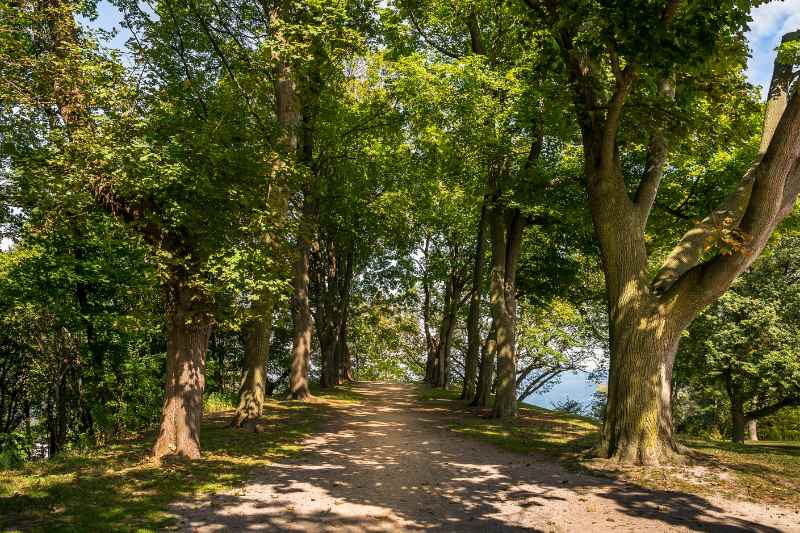
The ecological benefits of old trees
Carbon storage capacity
Old trees are champions in the fight against climate change due to their remarkable ability to store carbon. Over their long lives, they accumulate a significant amount of carbon in their wood, which reduces the amount of carbon dioxide, a greenhouse gas, in the atmosphere. An old tree can contain hundreds of kilograms of carbon, stored not only in its trunk but also in its branches and roots. This carbon sequestration capacity is much higher in old trees than in young ones, as they have greater standing crop and more stabilised growth.
For example: a large pedunculate oak 20 m tall and around a hundred years old can store over 1 tonne of carbon in its structure, which is equivalent to absorbing about 3.67 tonnes of carbon dioxide from the atmosphere. A young tree (let's say, 10 years old) of the same species can store about 9.5 kg of carbon per year. If we consider a small wood composed of 100 individuals of these young trees, the total would be 950 kg of carbon stored annually, nearly the same as a single old oak.
Biodiversity associated with old trees
In addition to their role in carbon storage, old trees are ecosystems in their own right. Their size and structural complexity provide varied habitats for many species. Cavities in aging trunks and branches can serve as nests for birds and refuges for small mammals and insects. Their broad canopies provide shade and an essential micro-habitat for different varieties of plants, mosses, and ferns. This diversity of habitats contributes to greater species diversity, making old trees true pillars of local biodiversity.
Role in microclimatic regulation
Old trees also influence the microclimate of their environment. Their broad canopy helps to moderate local temperatures, providing shade and reducing the urban heat island effect. This shade lowers the temperature of the ground and surrounding air, which can be particularly beneficial in urban areas where concrete and asphalt absorb and re-emit the sun's heat. Additionally, the transpiration of old trees adds moisture to the air, which can improve air quality and contribute to a more pleasant and healthier environment.
Aesthetic and cultural importance of ancient trees
Landscape and heritage value
Ancient trees play a crucial role in the landscape, bringing majestic beauty that is often the result of decades or centuries of growth. Their size, the shape of their canopy, and textured bark attract the eye and serve as focal points in various landscaping designs, offering character and continuity. These trees are at the heart of natural heritage conservation efforts, as they represent a living link to the past and are valued for their contribution to the identity and beauty of a region.
Trees as witnesses to local and global history
Ancient trees are also witnesses to history. Each of these trees can tell stories of the past, having survived major historical events or having witnessed significant changes in their immediate environment. For example, specific trees can be identified as sites where historical events took place, serving as landmarks for local communities and historians. They can also represent historical or cultural symbols, linked to legends, poems, or cultural practices.
Beyond their role as silent witnesses to human history, these trees often hold spiritual or religious significance, embedded in local practices and beliefs. They are sometimes regarded as sacred or as protectors by communities, reinforcing their role in the cultural fabric of society.
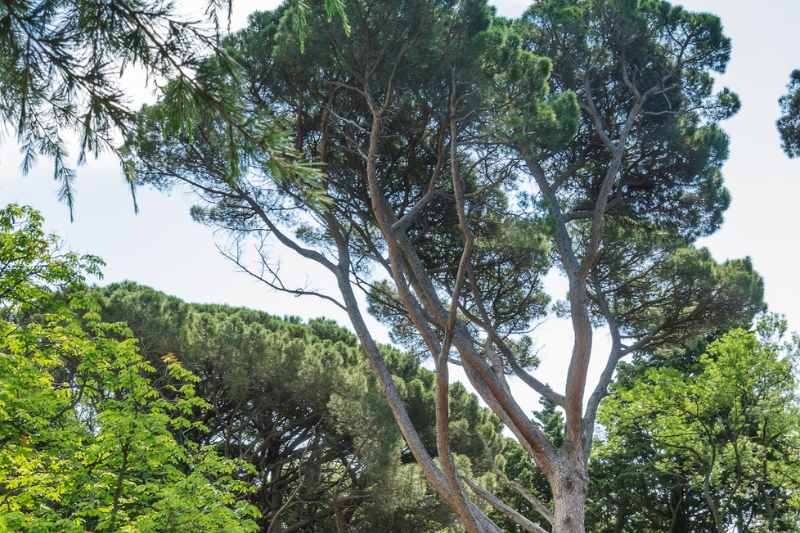
The challenges associated with the growth of young trees
Unlike annual plants or bushes, trees typically require several decades to fully develop their root structure, trunk, and canopy. During this growth period, they do not yet have the capacity to provide the same ecological services as mature trees, such as significant carbon sequestration, support for high biodiversity, and effective microclimate regulation. This long delay before they become fully "functional" in the ecosystem can be seen as a long-term investment, but one that does not immediately compensate for the loss of old trees.
Young trees also face relatively low survival rates, particularly in urban or disturbed environments. Challenges include competition for resources such as light, water, and nutrients, especially if space is limited or if the soil is of poor quality. Young trees are more vulnerable to environmental stresses such as droughts, floods, extreme temperatures, and diseases. Furthermore, they can be damaged by human activities, such as construction and pollution. In other words, it is not always a given, and it is therefore better to keep older trees.
Conservation strategies for old trees
Effective conservation of old trees requires appropriate care and sustainable management policies that value their ecological and cultural importance in urban and rural environments. These strategies include regular inspections, careful pruning, structural support, and adjustments in irrigation and soil quality, as well as integration into urban planning, legal protection, public awareness, and adequate funding for conservation programmes. These joint efforts are essential to preserve these trees, which are crucial elements of our natural heritage and vital contributors to biodiversity and environmental well-being.
When discussing reforestation or the planting of new trees, the images that come to mind are often those of young shoots, symbols of hope and renewal for our environment. However, while planting new trees is essential for many ecological reasons, it cannot replace the value and ecological functions of old trees. These green giants, often […]
Climate change is one of the greatest challenges of our time. The increase in carbon dioxide (CO2) in the atmosphere is one of the main contributors to this phenomenon. Fortunately, nature offers us a solution: carbon sinks.
Carbon sinks are natural or artificial reservoirs that absorb CO2 from the atmosphere and store it permanently. In this article, we will explore the different types of carbon sinks, how they work, and how we might use them to attempt to reverse the trend of climate change.
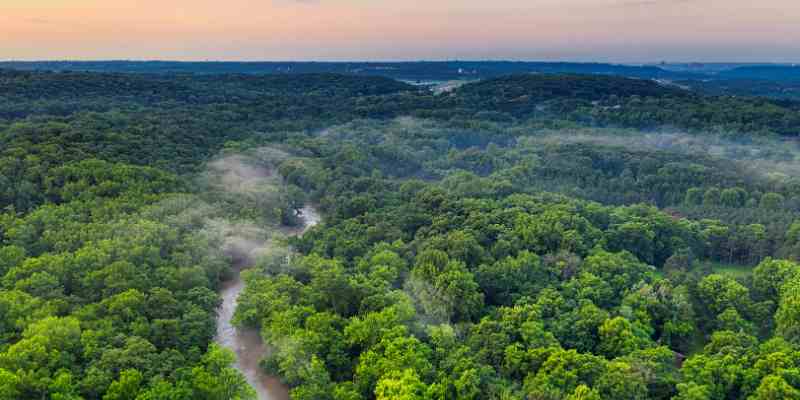
What is a carbon sink?
In simple terms, a carbon sink refers to any natural or artificial system capable of absorbing carbon dioxide (CO2) from the atmosphere and storing it for an extended period. These systems play a crucial role in regulating atmospheric CO2 levels and, by extension, in combating climate change. Forests, oceans, and soils are among the most important natural carbon sinks, capturing significant amounts of CO2 each year through the photosynthesis of plants and other biological and chemical processes.
The diversity of ecosystems plays a crucial role in enhancing carbon sinks, making their protection essential. Forests, with their variety of trees and plants, effectively capture CO2, storing carbon in their biomass and soil. Oceans, through their marine ecosystems such as mangroves and coral reefs, absorb a large amount of CO2, thus contributing to climate regulation. Varied terrestrial areas, including meadows and turf moors, also act as important carbon sinks, capturing and storing CO2 through vegetation and organic-rich soil. Protecting the diversity of these ecosystems ensures not only the health of our planet but also its ability to combat climate change through effective carbon sequestration.
Artificial carbon sinks (see below) include various technologies and practices designed to capture and store CO2 directly from the air or at the source of pollution before it reaches the atmosphere. The development and improvement of these technologies are essential for reducing the impact of human activities on the climate.
Main types of carbon sinks
Natural carbon sinks
- Forests and turf moors absorb CO2 from the atmosphere through photosynthesis, a process by which plants convert CO2 into oxygen and glucose. Trees and vegetation store this carbon in their biomass (leaves, branches, trunks) and in the soil.
- Oceans are the largest carbon sink on the planet, absorbing about 30% of the CO2 emitted by human activities. They absorb atmospheric CO2 directly from the air or indirectly through marine organisms that use carbon for photosynthesis. The CO2 is then stored in seawater in various chemical forms or in the seabed.
- Soils retain carbon through decomposed organic matter, including dead plants and microorganisms. Land management practices, such as regenerative agriculture and reforestation, can increase the amount of carbon stored in soils.
Artificial carbon sinks
- Carbon capture and storage (CCS), which involves capturing CO2 emitted by industries and power plants before it is released into the atmosphere, and then storing it underground in geological formations.
- Bioenergy with carbon capture and storage (BECCS) combines energy production from biomass with CO2 capture and storage, thereby reducing net CO2 emissions.
- Carbon mineralisation accelerates the natural transformation of CO2 into stable minerals, providing a safe and permanent storage method.
- CO2 utilisation converts captured CO2 into useful products, thereby reducing emissions while creating value.
How do carbon sinks work?
Natural carbon sinks, such as forests, oceans, and soils, absorb CO2 directly from the atmosphere. Plants, through photosynthesis, convert CO2 and water into glucose and oxygen, using solar energy. This natural process not only produces oxygen but also stores carbon in plant biomass and soil. Oceans, on their part, absorb atmospheric CO2 through physical and biological processes, with dissolved CO2 being transformed into carbonates or consumed by plankton.
In the realm of artificial carbon sinks, several technologies stand out for their innovative approach to capturing and managing carbon dioxide (CO2). Carbon Capture and Storage (CCS) perfectly illustrates this advancement. This process begins with capturing CO2 at its source, such as industrial facilities or power plants, where it is separated from other gases emitted during fossil fuel combustion. After capture, CO2 is compressed and transported, often via pipelines, to sites where it can be stored away from the atmosphere. These sites typically include deep geological formations, such as depleted oil or natural gas reservoirs or deep saline layers, where CO2 can be injected and securely trapped.
Bioenergy with Carbon Capture and Storage (BECCS) represents another promising technology. It integrates renewable energy production from biomass, such as agricultural residues or wood, with the capture of CO2 resulting from its combustion or transformation. The captured CO2 is then stored in the same manner as in the CCS process, making this approach particularly attractive for its ability not only to generate energy without emitting CO2 but also to actively remove CO2 from the atmosphere.
Regarding carbon mineralisation, this technique accelerates a natural process where CO2 reacts with certain minerals to form new stable mineral compounds, such as calcium carbonate. This natural chemical reaction is exploited and optimised to capture CO2 permanently, offering a sustainable and ecologically safe storage solution.
Finally, CO2 utilisation constitutes another strategy aimed at converting captured CO2 into useful resources such as synthetic fuels, construction materials like aggregates for concrete, or various industrial chemicals. Not only does this method help reduce CO2 emissions, but it also promotes a circular economy by creating business opportunities and reducing dependence on fossil fuels.
These artificial carbon sink technologies, alongside natural systems, form an essential component of the overall strategy to combat climate change, effectively reducing atmospheric CO2 levels and exploring new pathways for sustainable carbon management.
How to create a carbon sink?
Reforestation plays a crucial role in this process by planting trees on land where forests have been destroyed or degraded. This action is not limited to planting new trees but also includes restoring forest ecosystems, thereby significantly increasing CO2 capture through photosynthesis.
Improving agricultural practices also contributes to the creation of carbon sinks by optimising soil management. Methods such as agroforestry, no-till farming, and maintaining crop residues in fields increase the amount of organic carbon in the soil, transforming agricultural land into significant carbon reservoirs.
Moreover, industrial carbon storage types such as bioenergy with carbon capture and storage (BECCS) represent a modern approach that combines energy production from biomass with the capture and storage of CO2 produced during the combustion or conversion of this biomass.
Specifically, the reforestation project in Costa Rica has transformed degraded land into lush forests, increasing biodiversity and capturing CO2, demonstrating the positive impact of reforestation on the environment and the local economy. In France, agroforestry has successfully combined agriculture and tree cultivation on the same land, improving soil health and increasing its capacity to store carbon. The BECCS project at the Drax bioenergy plant in the UK captures CO2 emitted during energy production from biomass, demonstrating how technology can effectively reduce greenhouse gas emissions from the energy industry.
Please note: The fight against climate change through carbon sinks requires global cooperation, as decisions made affect the climate on a planetary scale. Agreements like the Paris Agreement play a key role in setting CO2 reduction targets and pushing for environmentally friendly methods. It is crucial that these efforts are fair and involve all communities, ensuring that developed countries support developing ones and that benefits are shared equitably. However, this is unfortunately not yet the case...
If there are carbon sinks, then everything is fine, right?
It is never that simple, unfortunately.
First, here are some key figures:
- Oceans: 38,000 billion tonnes of carbon stored
- Forests: 800 billion tonnes of carbon stored
- Soils: 1,500 billion tonnes of carbon stored
- Turf moors: 400 billion tonnes of carbon stored (showing that turf moors are far from being anecdotal on this subject)
It is important to note that the capacity of natural carbon sinks to absorb CO2 is not unlimited. If CO2 emissions continue to rise, carbon sinks could become saturated and no longer be able to absorb them. This could lead to an even faster increase in climate change.
It is therefore essential to reduce our CO2 emissions and protect existing natural carbon sinks.
Artificial carbon sinks are not a panacea
From a technological standpoint, one of the main challenges lies in the ability to capture CO2 efficiently and store it safely and sustainably. Current technologies, such as carbon capture and storage (CCS), require complex and costly infrastructures, as well as a large amount of energy, which can reduce their net effectiveness in terms of reducing greenhouse gas emissions.
Economically, the high cost of these technologies limits their adoption and large-scale deployment. Funding for research, development, and implementation of CO2 capture and storage solutions represents a considerable investment for governments, businesses, and organisations, often requiring financial incentives or subsidies to be viable.
Ecologically, even though the goal is to reduce CO2 emissions, there are concerns regarding the environmental impact of underground CO2 storage, particularly the risk of leaks that could affect groundwater and geostability. Moreover, the focus on technological solutions to mitigate carbon emissions could divert attention and resources from nature-based solutions and reducing dependence on fossil fuels.
Climate change is one of the greatest challenges of our time. The increase in carbon dioxide (CO2) in the atmosphere is one of the main contributors to this phenomenon. Fortunately, nature offers us a solution: carbon sinks. Carbon sinks are natural or artificial reservoirs that absorb CO2 from the atmosphere and store it permanently. In […]
If you buy potting soil commercially, there is a very high probability that it contains peat. Indeed, it is almost systematically integrated into substrates for its physical qualities, in terms of lightness and water retention. However, the widespread use of peat has a significant environmental impact! This involves the destruction of wetlands that are ecologically important. Fortunately, there are solutions to preserve them. Let’s take a look at the advantages of peat in the garden, the consequences of its use, and discover how to preserve this resource!
1- What is peat and where does it come from?
Peat is a fossil organic material that results from a slow accumulation of organic matter in an acidic, water-saturated environment that is very low in oxygen. These conditions prevent microorganisms, bacteria, and fungi from decomposing the organic matter, which therefore accumulates gradually. These particular environments are known as peat bogs.
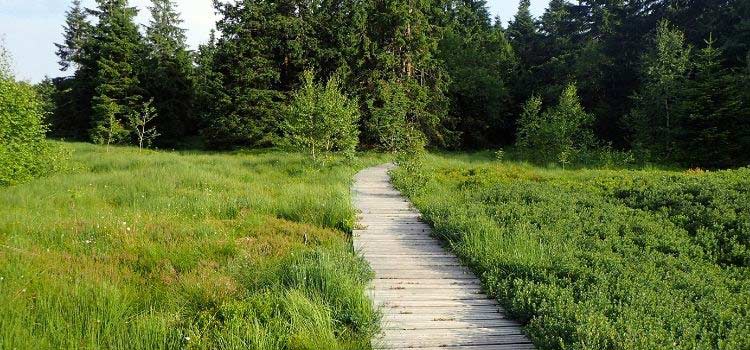
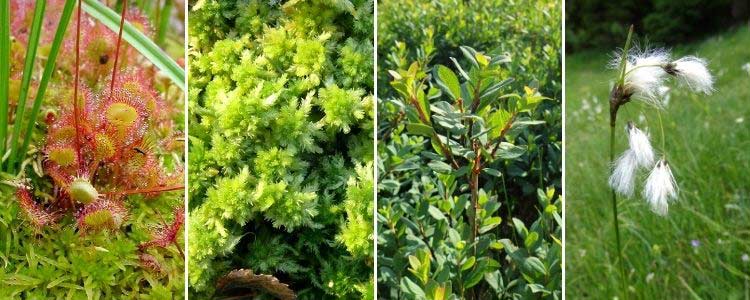
As the organic matter is not decomposed, these environments are very low in mineral elements, leading to the development of specific fauna and flora. Many carnivorous plants (such as sundews and Sarracenia) can be found in peat bogs: they capture insects to supplement their nutritional needs, as they cannot draw nutrients from the soil, which is too poor.
Peat can take between 1,000 and 7,000 years to form. Therefore, it is not renewable on a human timescale. Ultimately, after a million years, the organic matter constituting peat bogs transforms into coal.
There are different types of peat:
- Blonde peat: it comes from sphagnum moss. It is relatively young (between 3,000 and 4,000 years) and fibrous. This is the layer that is found closest to the surface in a peat bog. It has an excellent water retention capacity, as sphagnum absorbs water. It is the most commonly used peat in horticulture and gardening.
- Brown peat: it originates from woody plants (trees, bushes), sedges, reeds, and Ericaceae. It is older (about 5,000 years) and found deeper down. It can also be used in the garden, although its use is less frequent.
- There is also black peat, which is older (up to 12,000 years). It is mainly used for wastewater treatment.
Thus, the darker the peat, the older it is.
2 - The advantages of peat in the garden
Peat has many qualities that plants need, to the point that it is difficult to replace. It is no coincidence that its presence has become almost systematic in marketed potting soils.
Peat acts like a sponge: it stores water and mineral elements, preventing the substrate from drying out too quickly. It has an excellent water retention capacity. Peat is therefore ideal for potted plants: as it stores water, watering can be spaced out or occasionally forgotten without the plants suffering too much. It is a particularly light and airy material that does not compact: thus, it is ideal for good root development. Indeed, in pots, the substrate can quickly tend to compact and suffocate the roots. Peat also has the advantage of providing a stable substrate that does not decompose or deteriorate.
Peat is particularly useful for substrates intended for repotting indoor plants, flowering plants for the terrace, etc. It is also widely used for growing carnivorous plants, as it perfectly matches their natural environment.
Dehydrated peat pellets are also available, used particularly for sowing. They swell as soon as they are rehydrated. Peat is also used to make biodegradable compressed peat pots.
3 - What problems are posed by the use of peat?
As peat bogs are very particular environments (acidic, saturated with moisture, low in oxygen), over time, a specific flora and fauna develop that cannot be found elsewhere. Many rare and protected species live in peat bogs and cannot adapt to other environments. These are mainly plants of wet and acidic soils. Sphagnum is very characteristic of peat bogs: it is a type of moss that absorbs water and tends to acidify the environment. It is the basis for the formation of peat bogs. In these wetlands, one can also find carnivorous plants, as well as Ericaceae, Cyperaceae, cotton grass, and reeds... Similarly, some plants (royal fern, molinia, Carex...) form tussocks: these plants grow on their old roots and dead leaves because these cannot decompose, thus forming clumps or micro-mounds.
In addition to their great biological diversity, peat bogs act as a true sponge... not only at the substrate or potting soil level, but the same happens on a regional scale. They limit the risk of flooding and also release water during dry periods. They play a crucial role in the hydrological balance of certain regions. Moreover, peat bogs store a significant amount of carbon (as they can be composed of 50% carbon), thus limiting global warming. They help regulate the climate on a global scale and also create cool microclimates. Peat bogs also have the advantage of filtering water: they purify it by removing various pollutants, thus acting as a natural purification station! The waters they release into the environment are therefore particularly pure.
Peat forms at a very slow rate of about 1 mm per year, or even less, which means it is not renewable on a human timescale. It takes thousands of years to form!
The importance of peat bogs is not "only" environmental; they also have a genuine historical interest. As peat forms very slowly and the material does not decompose, objects as well as plant or animal remains remain intact, allowing for a faithful tracing of a region's history. They are true archaeological archives! Human mummies in perfect condition, dating back thousands of years, have been found in peat bogs. Similarly, pollen grains are very well preserved in peat, allowing for the reconstruction of the vegetation and climate of a region thousands of years ago.
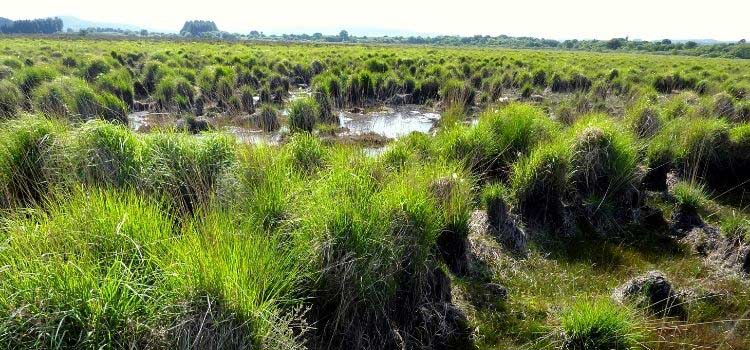
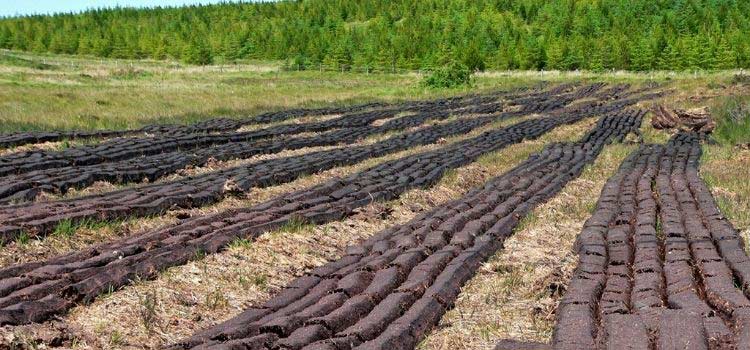
The exploitation of peat bogs is a true ecological disaster. They are drained and dried to extract peat. Generally, the soil then becomes dry and poor, and the typical plants of peat bogs will not be able to return.
The destruction of peat bogs is unfortunately not new. In the past, they were often considered useless and unexploitable environments, so they were drained to create agricultural land.
The figures are staggering: in France, half of the peat bogs have disappeared over the last 50 years. Fortunately, those that remain are now protected, which does not prevent the exploitation of peat bogs in other countries. Nearly 70% of the peat used in France for horticulture comes from the Baltic States (Estonia, Latvia, Lithuania) or Ireland. Thus, the problem remains the same, as it is the peat bogs of these countries that are now threatened.
4 - Our tips and best practices to preserve this resource
Fortunately, there are alternatives to peat, with some materials having the advantage of being light and airy while retaining water and nutrients: these include coconut fibres, composted bark, wood fibres, and pine bark... Similarly, vermiculite is ideal for lightening the substrate. There are also patented substitutes that are real alternatives, such as Turbofibre® (conifer bark fibre, replacing blonde peat) or Hortifibre® (wood fibre).
If you are growing acidophilous plants, we recommend using composted pine needles or bark.
Leaf compost is also a good alternative to peat, which has the added advantage of being rich in mineral elements and microorganisms. You can make your own potting soil by mixing well-decomposed compost, garden soil, and coarse sand.
Today, there are more and more peat-free potting soils on the market, often composed of coconut fibres, bark, wood fibres... They are quite effective. For example, check out Père François Or Brun universal potting soil. or Ecolabel universal potting soil.
However, be wary of the "Organic" certification, which does not guarantee the absence of peat; on the contrary! Indeed, peat, by definition, is a natural and organic material, so it can very well be included in the composition of "organic" potting soils. Read labels carefully and analyse the composition before purchasing. Prefer Ecolabel certification, which certifies peat-free potting soil.
If you continue to use potting soils with peat, do so sparingly. Limit your use by reserving it for indoor plants and the most sensitive plants, grown in small pots with low water and mineral reserves, or those that cannot tolerate drought. For less fragile outdoor plants in large containers, you can create your own substrate composed of compost, garden soil, and coarse sand.
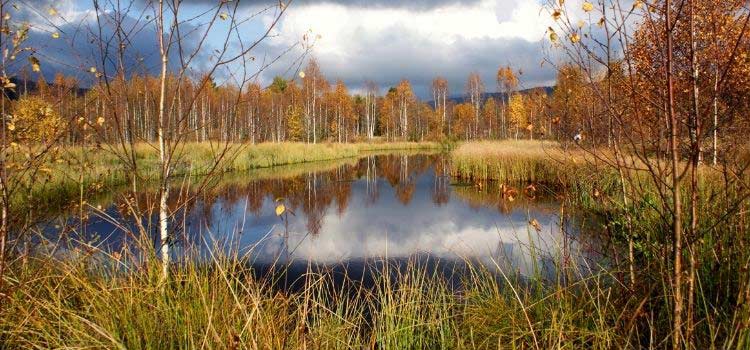
If you buy potting soil commercially, there is a very high probability that it contains peat. Indeed, it is almost systematically integrated into substrates for its physical qualities, in terms of lightness and water retention. However, the widespread use of peat has a significant environmental impact! This involves the destruction of wetlands that are ecologically […]
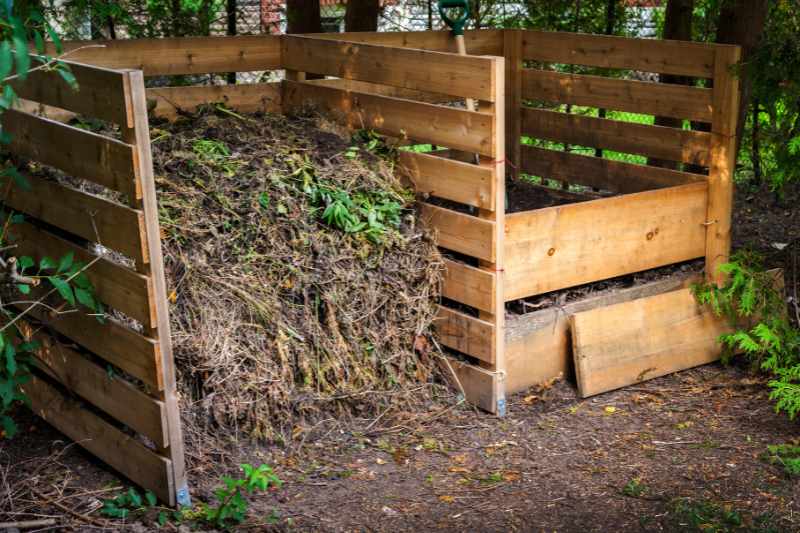
Welcome to the wonderful world of composting, where your ambition to turn vegetable peelings into black gold could end in a fascinating fiasco! Forget the classic advice and tried-and-true practices; here, we will explore, with a touch of irony, how not to succeed in producing compost by following our six (bad) lessons.
A friendly warning: this guide is obviously meant to make you smile and playfully highlight what not to do. For truly successful compost, you will need to do exactly the opposite of what is advised here. Consider this an anti-tutorial, where each piece of advice is an opportunity to learn what to avoid.
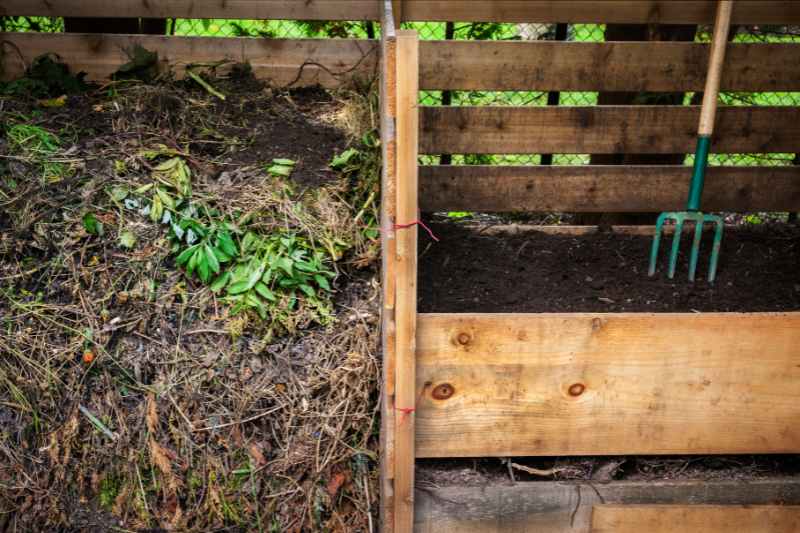
Lesson 1: Choose the wrong location!
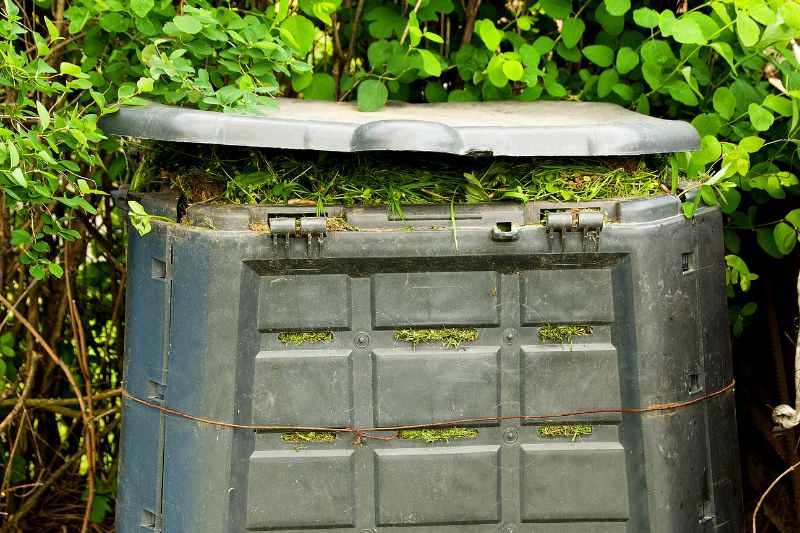
To kick off your adventure in "composting" failure, the choice of location is crucial. Find the darkest, most secluded corner of your garden, where neither you nor a single ray of sunshine dares to venture. If you need a headlamp in broad daylight (and a compass!) to find it, you’re on the right track. Remember, microorganisms love a challenge, and what could be more stimulating than working in a cave-like environment? By placing your composter in a constantly damp spot and out of the sun, you ensure an ideal environment for mould proliferation and slow, smelly decomposition.
Indeed, a location that receives partial sunlight is ideal. Too much sun can dry out your compost, while excessive shade can keep it too wet and cold. And remember to place your composter at a reasonable distance from your house. Close enough for easy access, but far enough to avoid any nuisance (like odours, for example).
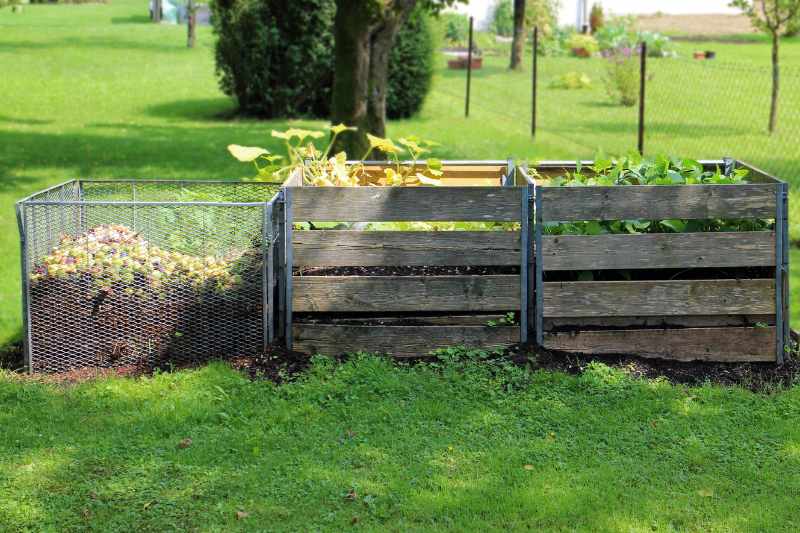
Lesson 2: Mix all waste indiscriminately!
For spectacularly ineffective composting, nothing beats joyfully ignoring the balance between green (nitrogen-rich) and brown (carbon-rich) waste. Toss in your vegetable peelings, grass clippings, and excess leaves, and why not, a few newspapers to pretend you know what you’re doing. Remember, the goal is to create the perfect imbalance: too many "greens," and you’ll have a smelly paste; too many "browns," and your compost will never decompose. It’s the delicate art of unbalancing your compost.
Moreover, if your goal is to throw a wild party in your garden, then generously add meat scraps, cheese, and why not, some bones to your compost. Not only will this promote the most exquisite odours, but you’ll also become the best friend of the rats and ants in the neighbourhood (not to mention foxes or even raccoons!). A true paradise for urban and rural wildlife enthusiasts!

Lesson 3: Do not aerate your compost pile!
To ensure catastrophically compact composting, adopt the secret technique of maximum stacking. Just throw your waste into the composter with the enthusiasm of a child building a sandcastle. Pack, press, compress, until the compost resembles more a modern sculpture than a pile of organic waste. The more material, the better. Forget those old ideas about the importance of air in composting.
The compost aerator? What a superfluous invention! For truly fruitless composting, avoid this tool at all costs. The aerator is designed to introduce air, promote decomposition, and speed up the composting process. By avoiding this tool, you guarantee a perfect environment for mould growth and the creation of a compact, suffocated mass, where even the most daring microorganisms would not venture.
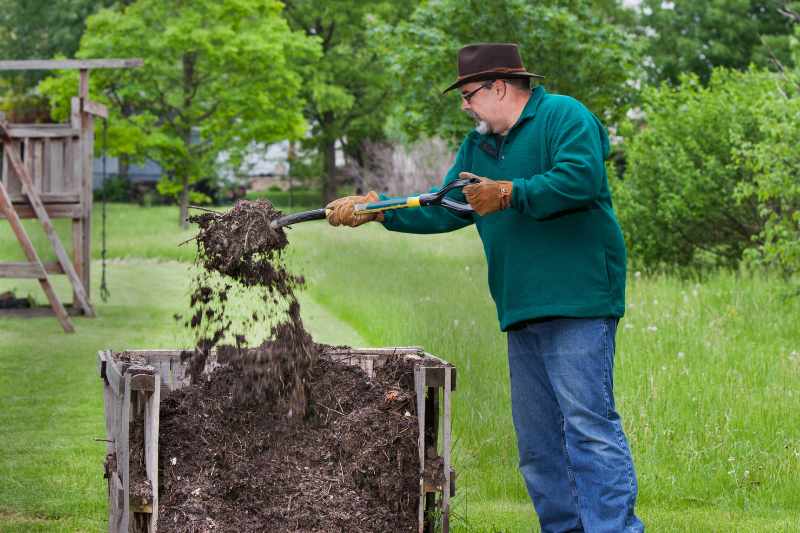
Lesson 4: Intensive watering is the key to success!
You may have heard that compost should be as moist as a wrung-out sponge, but where’s the fun in that? To truly fail in your composting adventure, adopt the motto "the wetter, the better". Turn every watering session into a true deluge. Don’t be afraid to flood your compost pile until it overflows with water. After all, why settle for moderately moist compost when you can have your own swamp in the garden? Not only will you attract a diverse wildlife (mainly mosquitoes and other aquatic insects), but you might also start a new trend in gardening.
Lesson 5: Inspect your compost as little as possible!
To truly excel in the art of failed composting, adopt the policy of blissful ignorance. Let nature take its course without any intervention from you. After all, why bother checking the moisture, aeration, or even the temperature of your compost? That requires far too much effort. Convince yourself that microorganisms and insects know what they’re doing and don’t need your help (though generally, that’s true, but not in this specific case).
One of the unexpected joys of a neglected compost is the surprise of discovering wild plants or even forgotten vegetables that have taken root. These unexpected visitors may result from seeds from fruits or vegetables tossed into the compost. While this is not the goal of well-maintained compost, there is something magical about seeing nature reclaim its rights and transform neglect into abundance.
Lesson 6: Trust rodents and pests!
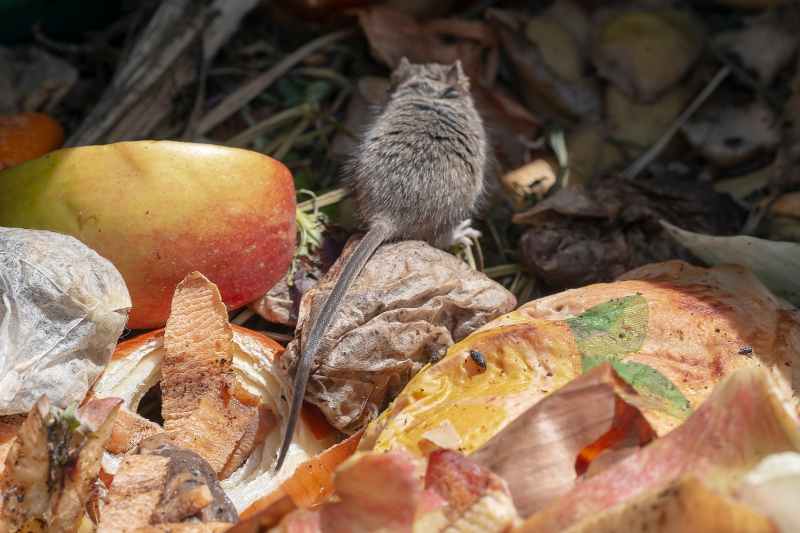
Don’t forget to invite special guests: rodents. Leave out pieces of cheese or bread to attract rats and mice and watch in admiration as they dig, move, and redistribute your organic waste. Isn’t it wonderful to see nature in action, even if it’s in the form of little creatures nibbling everything in their path?
Then, don’t forget the insects! Why settle for compost worms and the usual small fauna of a compost pile (rose beetle larvae, woodlice, springtails, millipedes...) when you can have an army of flies, gnats, and mosquitoes? These little insects bring a touch of life and movement to your compost pile. Their presence is an undeniable sign that your compost is very much alive… but perhaps a bit too welcoming.
To prevent a proliferation of flies and mosquitoes on the surface of your compost, consider adding a layer of dry materials over the fruit and vegetable scraps.
In conclusion...
After this humorous journey through the ways to fail at composting, it’s time to return to reality. Starting in 2024, composting organic waste will become mandatory in France, in accordance with legislation aimed at reducing the environmental impact of waste. This measure aims to encourage recycling and the valorisation of organic materials.
If you truly want to succeed in your composting, do exactly the opposite of everything we have suggested. Look for a good balance between green and brown waste, avoid throwing in meat and cheese scraps, aerate your compost regularly, keep it moist but not soggy, monitor it to prevent any pest invasions, and above all, don’t forget it in a corner of your garden. A well-maintained compost is a treasure for any gardener: it enriches the soil, reduces waste, and promotes healthy and sustainable growth of your plants.
Finally, we invite you to share your own composting stories and experiences. Have you ever made a hilarious mistake or encountered an unexpected challenge while composting? Has your compost ever attracted surprising visitors? Share your adventures and misadventures with us. Every story is an opportunity to learn, laugh, and remember that, in gardening as in life, mistakes are often our best teachers.
Welcome to the wonderful world of composting, where your ambition to turn vegetable peelings into black gold could end in a fascinating fiasco! Forget the classic advice and tried-and-true practices; here, we will explore, with a touch of irony, how not to succeed in producing compost by following our six (bad) lessons. A friendly warning: […]
In a world where climate change is an unavoidable reality, the search for sustainable solutions is more crucial than ever. Every action counts, including in our gardens. Among the many ways to attenuate the effects of climate change, tree planting plays a key role. Among them, a champion from Asia stands out: Paulownia, a tree with exceptional carbon capture properties.
What is Paulownia?
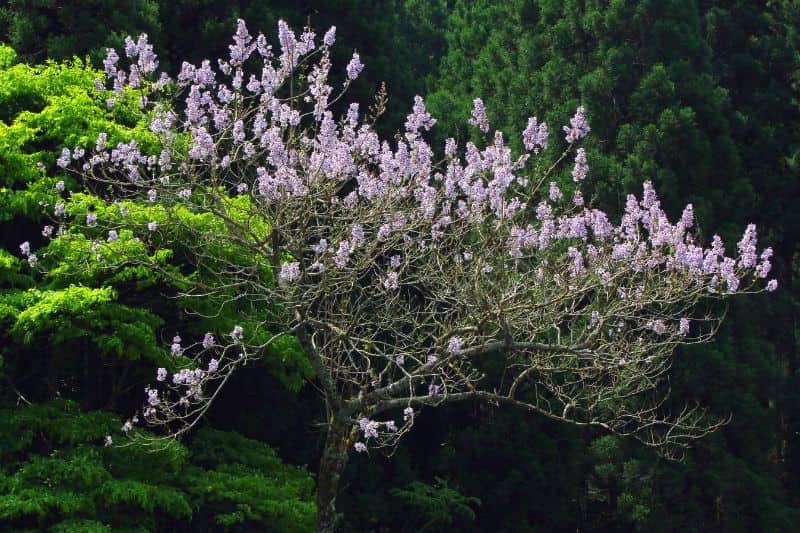
Paulownia is a deciduous tree distinguished by its large heart-shaped leaves and clusters of purple flowers. It can reach an impressive height of 10 to 25 metres in its natural habitat, making it a majestic addition to any landscape or large garden. Here in France, it will typically reach between 8 to 12 metres tall depending on the growing conditions.
It is native to Asia, particularly China and Japan, where it is known as "the emperor tree". Paulownia has been introduced to other parts of the world, including Europe and North America, where it has adapted well to various climatic conditions.
This tree is traditionally used for its wood, which is both lightweight and strong. Additionally, its ability to grow quickly makes it a popular choice for reforestation and ecological gardening projects. It is also used in traditional Asian medicine.
Note: the genus Paulownia includes six different species. However, the two most commonly cultivated species are Paulownia tomentosa and Paulownia fortunei.
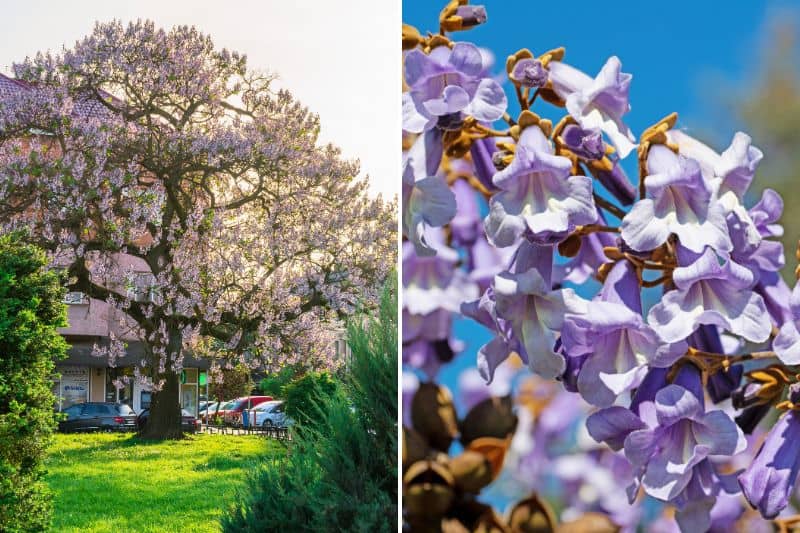
The carbon capture properties of Paulownia
Paulownia is often referred to as the "carbon capture champion", and for good reason. According to scientific studies, this tree can sequester an impressive amount of carbon dioxide (CO2) from the atmosphere. In fact, an adult Paulownia can absorb up to 48 kilograms of CO2 per year, which is about 10 times more than most other trees commonly used in reforestation projects.
This exceptional capability is partly due to its rapid growth. Paulownia can reach maturity in 10 years, meaning it starts to have a positive impact on the environment much more quickly than other trees.
When compared to other trees like oak or pine, which are typically used in reforestation projects, Paulownia stands out significantly. For example, an oak can take up to 30 years to reach maturity and captures on average only 4 to 5 kilograms of CO2 per year. Pine, although faster growing than oak, captures on average 10 to 20 kg of CO2 per year, but it still does not reach the levels of Paulownia.
Finally, Paulownia is also noted for its ability to regenerate from its stump after cutting, an asset that can promote rapid new growth and continuous carbon capture. However, this capability varies greatly depending on soil conditions, climate, and forestry management practices.
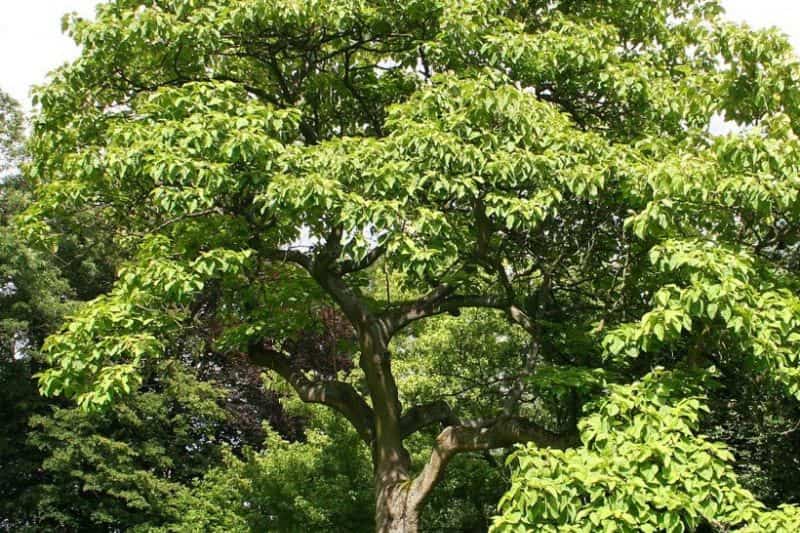
Additional benefits of Paulownia
In winter, its large, nutrient-rich leaves decompose quickly and enrich the soil. This is an additional asset for mulching, composting, and permaculture.
Resilient, Paulownia is a robust tree that easily adapts to a wide range of climatic conditions and soil types. It is also resistant to diseases and pests, making it a sustainable choice for any garden or reforestation project.
Further reading
To learn more about this tree, read our sheet on Paulownia, Imperial Tree: planting, growing, and care.
In a world where climate change is an unavoidable reality, the search for sustainable solutions is more crucial than ever. Every action counts, including in our gardens. Among the many ways to attenuate the effects of climate change, tree planting plays a key role. Among them, a champion from Asia stands out: Paulownia, a tree […]
Far from being inert, soil is home to a vast number of organisms, most of which are invisible to the naked eye. It is estimated that a single handful of soil contains between 10 and 100 million living beings. However, the pesticides sprayed on plants to combat pests and harmful insects have a significant impact on these organisms. Although it is known that they have consequences for biodiversity and human health, between 55,000 and 70,000 tonnes of synthetic pesticides are still used each year in France.
Pesticides encompass all plant protection products used to protect plants and combat harmful organisms to crops: insecticides (against insects), fungicides (against fungi), acaricides (against mites), herbicides (against "weeds"). They are most often sprayed on plants, and some of them reach the soil directly. Those that settle on the foliage can be leached away with watering or rain, or end up in the soil when the leaves fall and decompose. Pesticides can also coat seeds. Finally, some pesticides are integrated directly into the soil in granule form. However, they contaminate the soil and have a long-term impact.
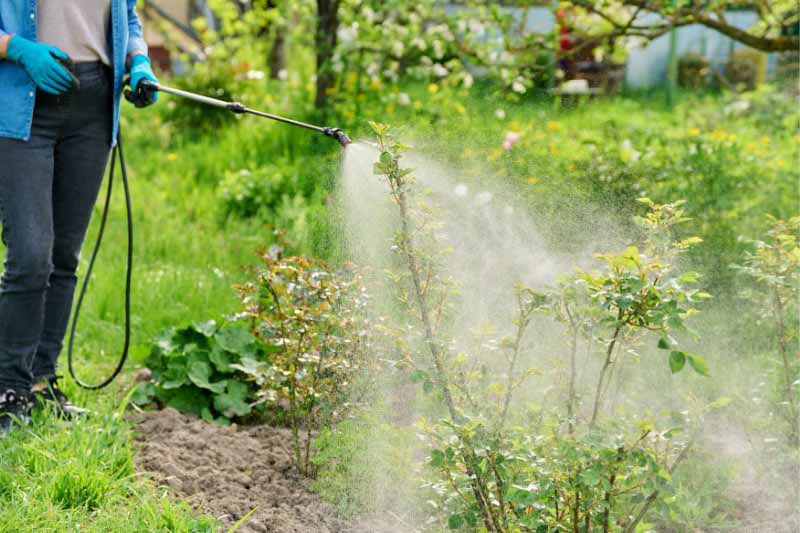
Soil fauna plays a key role in soil fertility and plant health
The soil contains many organisms: the most visible among them are earthworms and insects. Earthworms play a crucial role in the structure and fertility of the soil. They aerate it by burrowing tunnels, which facilitates plant rooting, allows their roots to breathe better, combats erosion, and improves water infiltration. Additionally, they decompose organic matter, transforming it into essential nutrients for plants. Generally, there are between 50 and 400 earthworms per m². Soil insects also help aerate the soil and increase its porosity. A decrease in their population can lead to soil compaction, making plant cultivation more difficult.
Many living organisms are invisible to the naked eye: these include microorganisms such as bacteria, fungi, and nematodes… They represent 75 to 90% of the standing crop of the soil. They enable the mineralisation of organic matter: this makes mineral elements (nitrogen, phosphorus, sulphur, potassium, magnesium…) assimilable for plants. They produce organic molecules that enhance soil cohesion. Some bacteria allow for the storage of atmospheric nitrogen. These organisms play a key role in ensuring soil fertility. They facilitate the degradation of organic matter… They also aerate the soil, allowing for better water infiltration. All these organisms help keep plants healthy.
By consuming plant debris (dead leaves, roots, etc.), insects and soil microorganisms decompose organic matter, which literally helps create soil, particularly humus. The more alive the soil is, the more fertile and nourishing it will be for plants. Without them, organic matter would accumulate. These organisms that feed on organic matter are called detritivores. This includes particularly worms, mites, and springtails…
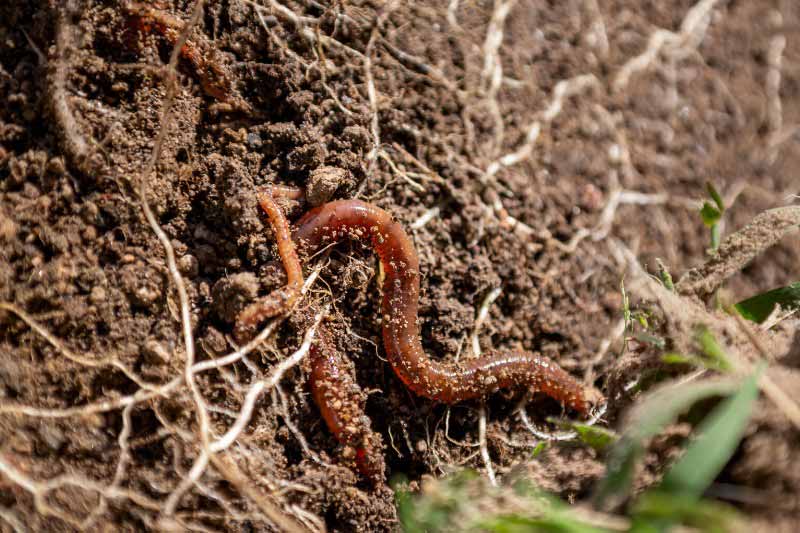
The impact of pesticides on soil life
Soil microorganisms, such as bacteria and fungi, are the first to be affected by pesticides. These small creatures play an essential role in the decomposition of organic matter, nitrogen fixation, and soil formation. When pesticides are applied, they can disrupt the delicate balance of these organisms, thereby reducing their number and diversity.
As for earthworms, it is insecticides and fungicides that have the most impact on them. They are responsible for the decline in earthworm populations.
Many pesticides, even those intended to target specific pests, can negatively impact non-target insects. Many insects spend the early part of their lives underground, in the form of eggs or larvae (notably dipterans, such as flies, hoverflies, and gnats…) and are therefore directly affected when soils are contaminated.
Moreover, the presence of different pesticides in the soil creates a cocktail effect: the combined effect of the active substances in these products can either cancel each other out or, conversely, be exacerbated, with a multiplied impact. Thus, the presence of several molecules together creates unpredictable effects.
Pesticides contaminate the food chain, as many animals feed on insects and earthworms, including birds, but also small mammals like hedgehogs, etc.
In France, almost all soils are contaminated by pesticide residues (mainly fungicides and herbicides). A study by INRAE covering 47 French sites studied between 2019 and 2021 showed that 98% of them contain at least one substance. In total, 67 different molecules were found, with glyphosate being among the most frequently detected. These molecules harm soil organisms in more than 70% of the 2,800 experiments conducted. Glyphosate-based herbicides, for example, are harmful to bacteria and mycorrhizae, reduce earthworm reproduction, and force springtails to surface, making them vulnerable to predators.
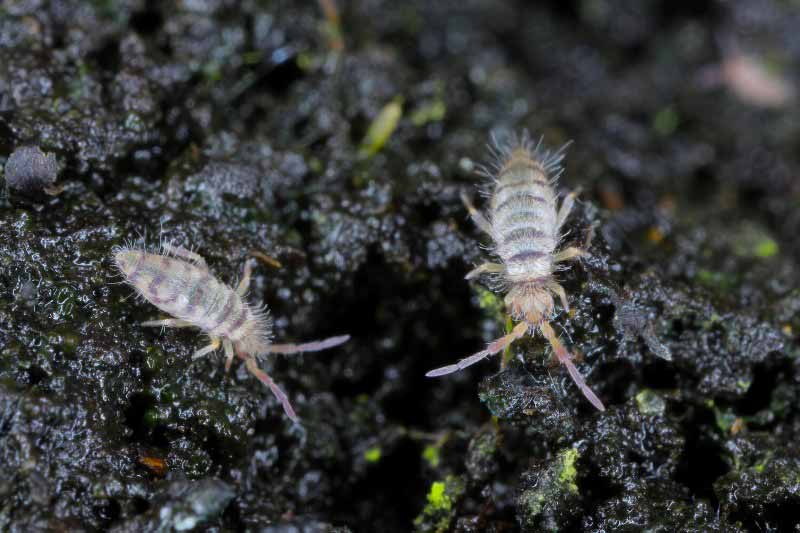
How to maintain a living soil?
To maintain a living soil, you will have understood, it is important to avoid using pesticides. Instead, turn to more ecological alternatives: beneficial insects, pheromone traps to capture certain harmful insects and prevent them from reproducing, mulching or manual weeding against adventive plants… Encourage significant biodiversity in your garden by installing insect hotels, nesting boxes, hedgehog shelters, etc. We also advise adding organic matter to nourish these insects and microorganisms, and avoiding turning the soil (simply aerate it with a broadfork). Similarly, it is important to mulch to avoid leaving the soil bare: this protects it from direct sunlight and rain (erosion).
Far from being inert, soil is home to a vast number of organisms, most of which are invisible to the naked eye. It is estimated that a single handful of soil contains between 10 and 100 million living beings. However, the pesticides sprayed on plants to combat pests and harmful insects have a significant impact […]
Ah, gardening! This sweet art of patience, precision, and skill. But wait a minute, who said everyone wanted a garden worthy of a decor magazine? If you've always dreamed of transforming your green space into a wild jungle or an arid desert, then you're in the right place. Yes, you read that right, we're going to teach you how to fail at planting shrubs!
From poor species selection to random watering, you'll discover how to ensure your shrubs won't survive beyond their first season, and perhaps not even beyond the first week! So, without further ado, here's your ultimate guide to failing at shrub planting in 5 unforgettable lessons.
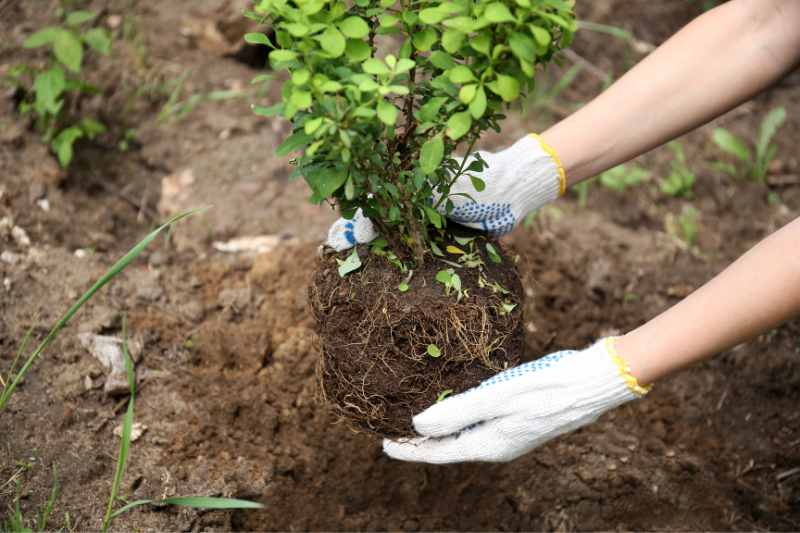
Lesson 1: plant anything!
You might think that any shrub will do, but think again! If you really want to fail at your planting, you need to choose the least suitable species or varieties for your garden. Moderately hardy exotic species (or not at all, for that matter!) are often ill-suited to the local climate, ensuring a resounding failure.
But soil is important too! Choose shrubs that hate your type of soil. If your soil is acidic, go for shrubs that prefer alkaline soil, and vice versa. The result? Shrubs struggling to survive and ultimately perishing in no time.
To ensure you plant without success, try our Plantfit app.
If you really want your garden to resemble an uncontrollable jungle, opt for fast-growing shrubs. Not only will they smother other plants, but they will quickly become unmanageable. A double failure! In the same vein, choose species that will grow far too large for your small garden.
Finally, the last tip for truly failing at your choice of shrubs is simple: don't ask anyone for advice. Ignore nursery staff, gardening advice articles, and even that uncle who always had a green thumb. After all, failure is a solitary path.
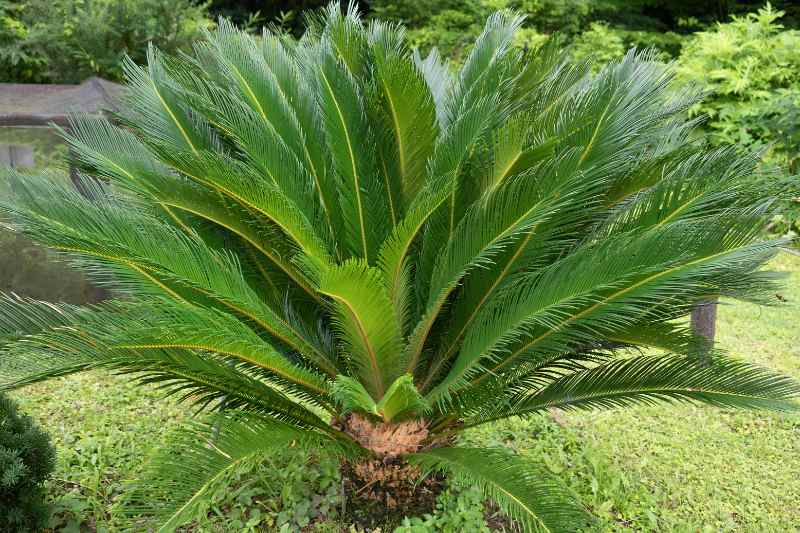
Lesson 2: Plant anytime!
Who needs to wait for spring or autumn to plant shrubs? Not you! Gather your courage and go out and plant in the middle of winter. The frozen ground will add an extra challenge to your shrubs' growth, which is perfect for guaranteed failure. But if the freezing cold doesn't appeal to you, why not choose the extreme opposite? Plant your shrubs in the height of summer, under a blazing sun. High temperatures and lack of water will ensure your plants suffer from water stress, leading them straight to disaster.
Is a storm forecast for tomorrow? Perfect, it's the ideal time to plant! Excess water combined with poor soil preparation (see Lesson 3) will turn your garden into a swamp.
Finally, why plan when you can do everything at the last minute? Buy your shrubs on the same day and plant them without a second thought. Or better yet, wait weeks before finally planting your bare-root shrubs carelessly stored at the back of a garage. Lack of preparation is always a great recipe for disaster.
Autumn or spring? To choose the best time, you can refer to these two advice sheets: What to plant in spring? & What to plant in autumn? as well as The best planting times.

Lesson 3: plant any old way!
If you've followed the first two lessons, you already know that haste is your best friend. So, don't waste time preparing the soil. Dig a hole in a hurry, toss in your shrub and hope for the worst!
Forget about soil drainage! Poor drainage guarantees your shrubs will have "wet feet", especially in winter, which is excellent for encouraging diseases and root rot.
Also ignore the soil pH: acidic, alkaline, neutral... all that is for gardeners who want to succeed. If you disregard your soil's pH, you'll have every chance of choosing totally unsuitable shrubs, which is perfect for a memorable failure.
Chemistry classes may be a distant memory. To learn more about the subject, read: Soil pH: what is it?
Your soil is poor, compact, low in humus...? Don't try to fix the situation by adding organic matter, manure, compost, or dried blood... Your shrubs will struggle to obtain the nutrients they need, making them weak and sick. Well done!
Take a quick look at Soil fertility: rich or poor, how to tell?
Have you managed to choose the wrong shrubs, ignore the planting calendar, and neglect soil preparation? Bravo! But don't rest on your laurels, as there are still ways to sabotage your gardening project. One of the most effective is to plant the roots upside down. Yes, you read that right! Take your shrub and plant it headfirst into the soil. Guaranteed results. (Note: don't laugh, we've had this exact case with a customer who had bare-root roses...).
To add an extra layer of failure, use the wrong tools to plant your shrubs. A small spoon or a beach shovel will do just fine. The more unsuitable, the better!
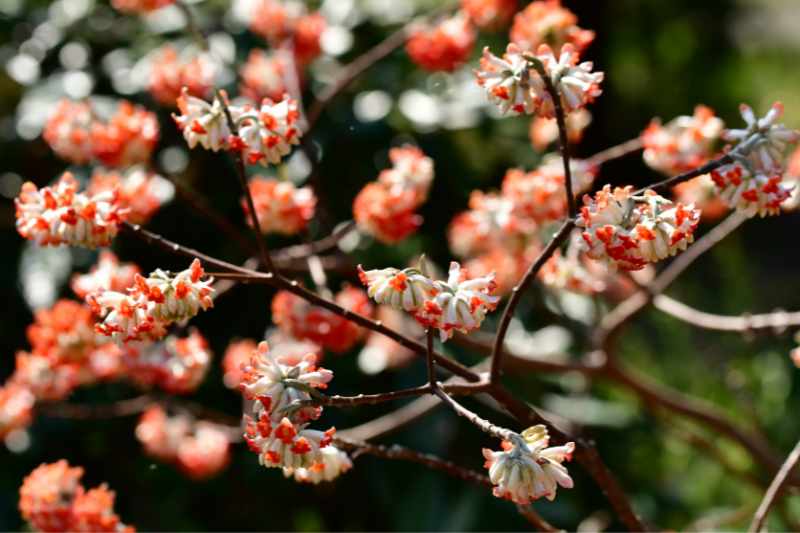
Lesson 4: forget about watering!
You've already done a great job sabotaging the previous steps of planting your shrubs. But why stop there? Watering is another golden opportunity to guarantee the failure of your gardening project.
One day, turn your garden into a swamp, and the next, let it become an arid desert. Your shrubs won't know what to expect and will suffer from water stress. Or simply forget to water your young shrubs for several days, even weeks. When you remember, it will probably be too late, and you can add this failure to your list of gardening mishaps.
Oh yes, and forget about the watering can or a suitable irrigation system; a high-pressure hose is much more fun!
Watering isn't that simple. Jean-Christophe tells you everything about the art of watering in his article: Watering the garden: How to do it?
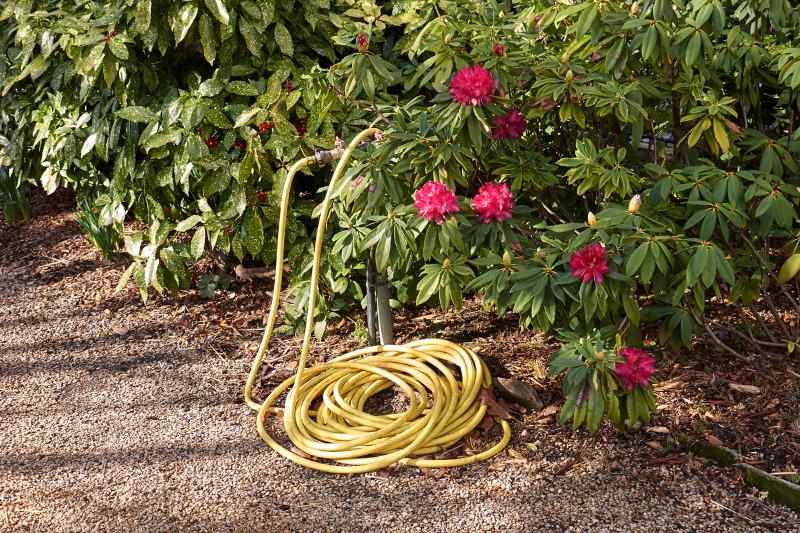
Lesson 5: ignore maintenance!
Congratulations, you've almost succeeded in completely failing at planting your shrubs! But don't celebrate too soon. There's one last step to seal the fate of your garden: thoroughly ignore the maintenance of your plants. Even if most shrubs, if well chosen, will grow without much care, never tending to them, pruning them, pampering them, or even looking at them will always add a little extra to the overall failure of your garden. After all, maintenance is for the weak, and you are a hardcore gardener.
Lastly, if someone asks you why your shrubs aren't growing properly (what business is it of theirs!), deny all responsibility. Stay in total denial! Blame the weather, the birds, the nursery staff who sold you the plants, or even the moon. After all, it's not your fault if nothing grows in your garden...
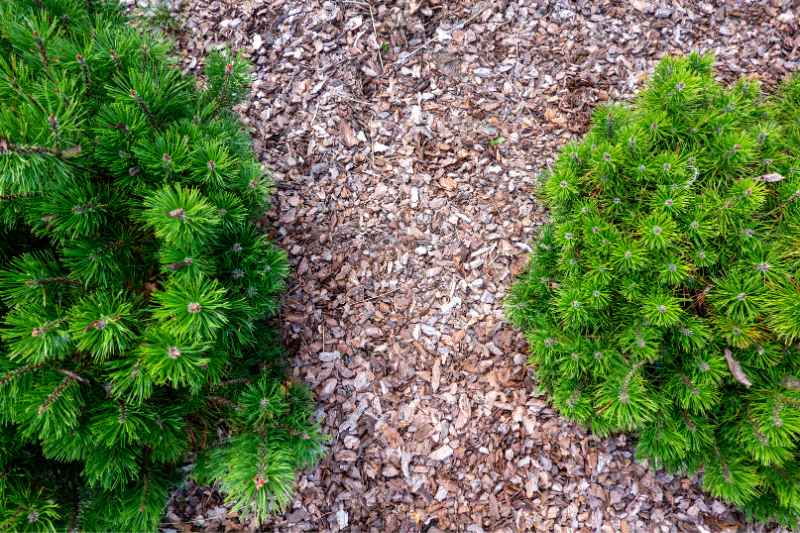
Ah, gardening! This sweet art of patience, precision, and skill. But wait a minute, who said everyone wanted a garden worthy of a decor magazine? If you’ve always dreamed of transforming your green space into a wild jungle or an arid desert, then you’re in the right place. Yes, you read that right, we’re going […]
Have you always dreamed of having the worst vegetable garden in the neighbourhood? Of seeing your neighbours frown as they pass by your "masterpiece" and wonder if you're practising a new form of abstract art rather than gardening? Look no further, you’re in the right place! In a world where everyone wants to give you advice on how to succeed, we’re going to teach you… how to completely fail at your vegetable garden. Yes, you read that right: get ready to cultivate despair and weeds with flair. If you follow our "tips", we guarantee a vegetable garden that will be the talk of the town… but not necessarily for good reasons! The bold choice to want a disastrous vegetable garden.
Lesson #1: location, location, location!
The ideal is to find the most unsuitable spot possible to grow your vegetable garden. Constant shade is a good start, but some vegetables might still manage to grow (spinach, lettuce, chard, cabbage, or even peas). That said, growing in full sun is also a great idea for burning your future harvests.
A very heavy, spongy, or even marshy soil will also be the best way to never harvest any vegetables. Or better yet: no soil at all! A concreted area covered with a very thin layer of substrate, a particularly stony spot in the garden, or the site of a buried "dump" that the previous owner diligently polluted daily (I’ve personally experienced this in my own garden).
How to choose the right location for your vegetable garden?: Leïla shares her good advice.
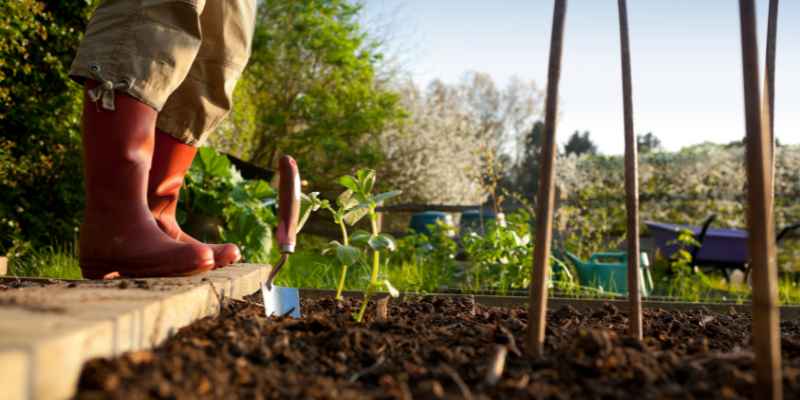
Lesson #2: irregular watering for... perplexing results
Water is a crucial factor for failing your vegetable garden. You know, the desert syndrome or, conversely, the swimming pool: in short, watering too much or not at all. You will test the inability of vegetable plants to withstand prolonged drought or, conversely, train your seedlings to learn synchronised swimming. I assure you right away: in both cases, the result will be guaranteed, it will be a wonderful failure!
Find real good advice on watering in our advice sheet: How to water your vegetable garden properly?
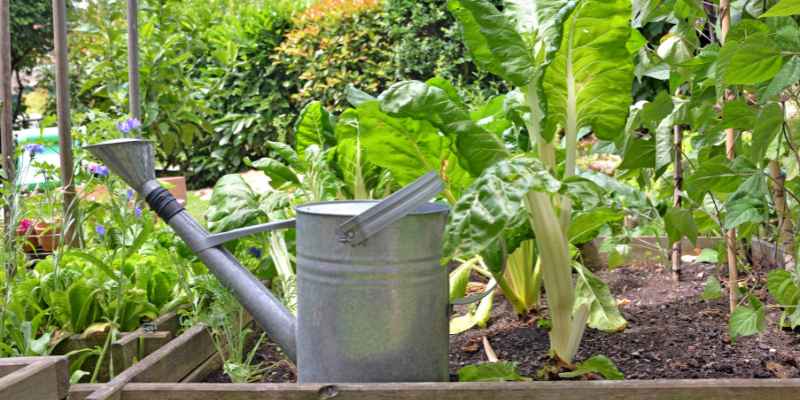
Lesson #3: the "friends" of the vegetable garden – invite all the "pests"!
All the little critters in the garden need to eat. This is the only sentence you can take literally in this article. Based on this premise, why not invite them all into your vegetable garden? Organise an open and unlimited buffet for slugs, snails, and other pests.
Don’t protect your crops with anti-fly nets! Let the slugs wander freely between your rows (by the way, suffering plants inevitably attract "slimy" ones, so think of the previous lessons)! Do rodents (rabbits, voles...) or large mammals (deer, wild boar...) roam your vegetable garden as if it were a tourist spot? It will stretch their legs and noses. Do birds see your freshly mulched beds as an amusement park? Well, they need to have some fun too.
Your vegetable garden should not become a high-security prison where no one enters, and no one leaves! But do consider protecting your most fragile crops and maintaining a natural balance in the garden overall so that pests are naturally regulated by their predators.
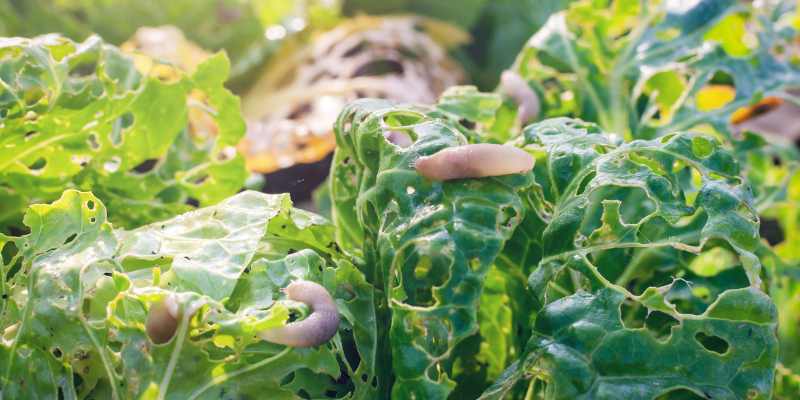
Lesson #4: suitable tools? Why bothering?
No, really... We’re not going to spend money on good, suitable, and sturdy tools. Long live recycling! This old fork will serve well as a makeshift dibber, or this broom-squeegee can nicely replace a rake (PS: okay, fine, sometimes recycling works well too, but be careful not to overdo it!). To ensure you are ineffective, do a shoddy job, waste your time, or even injure yourself, the ideal is to never have tools intended for the vegetable garden. Guaranteed results!
Lost in the tools section of your garden centre? Follow the list of essential tools for the vegetable garden.
And don’t forget that Promesse de Fleurs also sells very good, sturdy, and perfectly suitable gardening tools. Keep that in mind!

Lesson #5: experiment with catastrophic associations
Beneficial associations or not, crop rotation, companion planting, maintaining soil life... But what are these modern nonsense! Do what you want, when you want, and where you want! Ignore the many recommendations from professional gardeners and market gardeners by not following a sowing calendar, mixing any vegetables together, or always planting the same thing in the same spot. To fail your vegetable garden, trust your instincts above all and don’t listen to the experts!
Want to know more about all these topics (and with real good advice!), here are some essential advice sheets:
Have you always dreamed of having the worst vegetable garden in the neighbourhood? Of seeing your neighbours frown as they pass by your “masterpiece” and wonder if you’re practising a new form of abstract art rather than gardening? Look no further, you’re in the right place! In a world where everyone wants to give you […]
It is not yet autumn, yet our trees and bushes are shedding their leaves day by day. What is this strange phenomenon? In reality, the shedding of leaves during periods of severe drought is a natural protective mechanism for the tree or bush. While it may seem dramatic, the tree or bush will recover well once water returns. However, if periods of severe drought continue to follow one another, the future does not look bright for our trees in the long or medium term. Let’s explore what happens to our woody plants when they shed their foliage in summer.

What is actually happening?
Trees and bushes perform photosynthesis like all plants (although there are very rare exceptions). The leaves capture the CO2 in the air through stomata that allow gas exchange. With the help of water and light energy, this carbon dioxide is converted into sugars (C6H12O6). The oxygen released is a "waste" product of this chemical reaction. Nutrients and water can move through the plant via vessels, from the roots to the leaves. If it is too dry, air bubbles form in these vessels, preventing the upward movement of water: this is known as cavitation. The leaf dries out and then falls.
At the same time, the leaves also release some water vapour to cool the air around them. In short, they transpire: up to 75 litres of water for an adult birch, 300 litres for a poplar, and up to 1000 litres for a century-old oak.
To avoid losing too much water, trees must therefore slow down photosynthesis and/or stop this process of evapotranspiration. To achieve this, trees and shrubs will shed part or all of their foliage. The stomata will close to stop gas exchange and the loss of water. The leaves will no longer receive nourishment. If the closure of the stomata lasts several days, the leaves die and fall. Photosynthesis is therefore significantly slowed down, and growth is halted. The tree or bush enters dormancy. This phenomenon is not exclusive to deciduous trees; conifers and other evergreen plants are also affected.
Additionally, excessive sunlight can also scorch the leaf, causing it to dry out and fall prematurely. This further reduces the leaf mass of the tree.
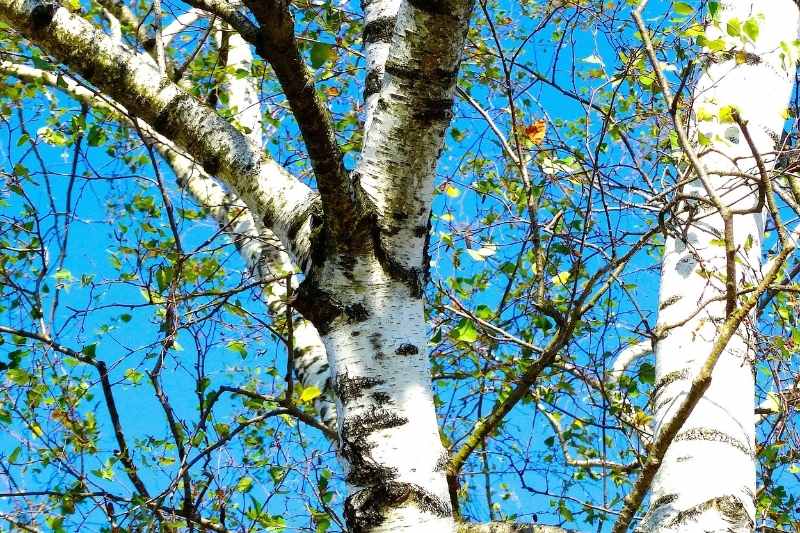
Is it serious?
Yes and no. It is a natural reaction of the tree to a temporary drought episode, and if the rain returns, everything will return to normal. However, intense drought episodes, once rare in our regions, are becoming the norm in summer. Trees and bushes are therefore likely to experience this year after year. Consequently, trees suffering from this water stress are likely to be weakened, making them more susceptible to pest attacks, diseases, and climatic or weather-related hazards. This could ultimately lead to the death of entire populations of trees.
Summer is normally the time when the tree stores reserves before entering its winter dormancy. However, if trees and bushes enter dormancy too early, they will not have managed to create sufficient reserves to prepare for the following year. All of this could lead to delayed growth or even aborted flowering for these trees the following spring.
Moreover, this slowdown in photosynthesis leads to a significant reduction in oxygen production, as well as a decrease in thermal regulation due to the transpiration of trees. In other words, humans will also be impacted.
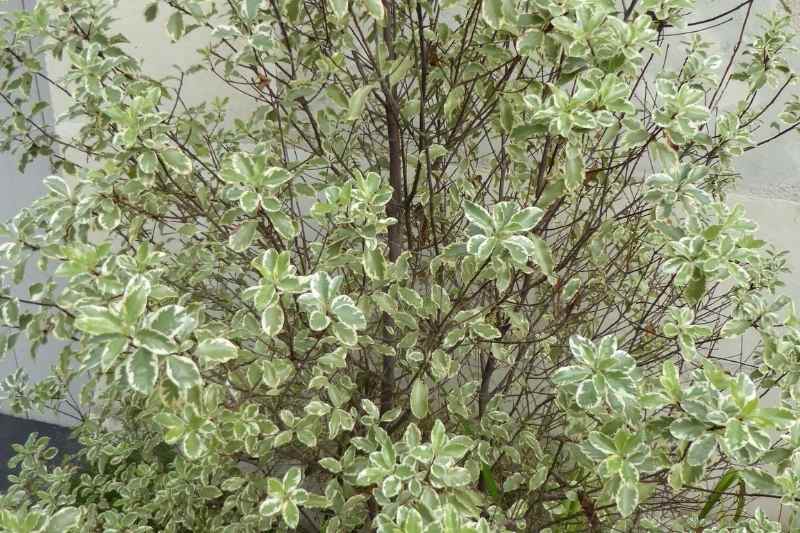
And for the future? What to do?
It is difficult to predict what the future holds, particularly regarding the climate. Some trees, such as beech, birch, oak, and ash, suffer more than others, while others seem to cope much better, such as holly, for example. However, it is important to remember that all flora (and fauna!) is affected at various scales by climate change. Some trees will therefore "move" northward, towards a climate that suits them better, while other species, more "southern" and adapted to this situation, will appear in our forests, fields, and gardens.
In any case, we will need to change our planting habits and abandon plants that require too much water in favour of trees or bushes that are drought-resistant.
To help you choose your future plantings, we have created a free application that allows you to choose plants suited to your climate, soil...: Plantfit. Additionally, our friend and colleague, Aurélien Davroux, has published a very good book with Ulmer editions, titled: All the Plants That Tolerate Drought. Feel free to browse it when you get the chance!
It is not yet autumn, yet our trees and bushes are shedding their leaves day by day. What is this strange phenomenon? In reality, the shedding of leaves during periods of severe drought is a natural protective mechanism for the tree or bush. While it may seem dramatic, the tree or bush will recover well […]
With climate change, dry spells are becoming longer and earlier. Roses are not spared and sometimes suffer from this lack of water over an extended period, which can gradually lead to their decline if timely intervention is not made. It is therefore important to manage watering well and implement certain techniques to protect roses. Discover how to recognise a thirsty rose and how to save it!
1 - What are the symptoms of water stress?
Not all plants react the same way to drought. Certain physiological reactions indicate that the plant is suffering from a lack of water. It is important to know how to recognise when a rose is thirsty, so you can respond quickly:
- Leaves wilt, droop towards the ground, and begin to yellow. They dry out then detach and fall. If nothing is done, the branches will gradually become bare.
- Young shoots also wilt. They may turn brown and stop growing.
- Flowers and flower buds will also dry out and turn brown. The flowers and the tops of the stems become soft and droop towards the ground.
- If nothing is done, the rose will gradually dry out, starting from the tips of the shoots: no longer supplied with water, they become brown and brittle.
Lack of water can sometimes be confused with chlorosis: the foliage yellows, but between the veins, whereas in the case of drought, the foliage yellows uniformly. Similarly, the rose may be affected by root rot (a fungal disease), in which case it will dry out suddenly. However, it is clear that if your region is experiencing a heatwave or a dry spell, and other plants are showing signs of water stress, your rose is also suffering from this drought.
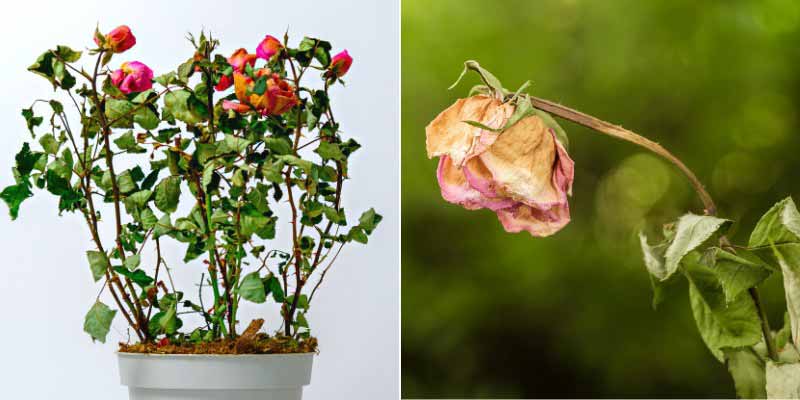
2 - Anticipating risk situations
Some situations make your rose more susceptible to drought. Here are a few of these risk situations:
- Heatwave: a prolonged period of intense heat can quickly dry out the soil and deprive your rose of the water it needs to survive.
- Container cultivation: potted roses are also at risk as the substrate dries out much more quickly than for roses in the ground.
- Recent planting: roses that have been recently planted have a less developed root system, making them more vulnerable to drought. It is therefore important to be vigilant and water regularly during the first year.
The best approach is to anticipate dry spells, by monitoring the weather and watering the garden accordingly. If you plan to be away, ask a neighbour to water your plants, or set up automatic watering or oyas. Also, consider adding a layer of mulch around your plants, and shade the roses that are in full sun if possible. If your rose is in a pot, repotting it into a larger plastic pot rather than a terracotta one will help it withstand drought better.
Be aware that some roses are particularly well-suited to heat and drought. This is the case, for example, with the Banks rose, 'Old Blush' rose, chinensis 'Mutabilis' rose, as well as rugosa roses (Rosa rugosa).
3 - How to save a rose bush suffering from drought?
Now that you have identified the problem, let's move on to the solutions. To protect your rose from heat and drought, here are some measures you can take:
- Water generously: Obviously, the most important thing is to water as soon as you realise your rose is thirsty! During periods of intense heat, increase the frequency of watering. We recommend watering early in the morning or late in the evening to minimise evaporation. Direct the stream at the base of the plant, avoiding wetting the foliage. Indeed, water droplets on the leaves create a "magnifying glass" effect, which can burn the plant by amplifying solar radiation. Additionally, this promotes fungal diseases.
Better to water generously than to water several times superficially. This way, the water penetrates deeper into the soil, encouraging the plant to develop deep roots, whereas with superficial watering, the water remains near the surface, and the soil dries out more quickly.
- Mulch: Mulching is an excellent way to retain soil moisture. Apply a good layer of organic mulch (at least 6 cm thick) around your roses. You can use, for example, dead leaves, straw, wood chips, bark, or RCW (ramial chipped wood). Mulching also limits water runoff in case of heavy rains or if the ground is sloped.
- Prune: Light pruning can help your rose manage drought better. Remove scorched stems and dry or damaged leaves. This will allow the plant to conserve its energy.
- Remove faded flowers: Indeed, flowering, followed by fruit formation (hips), requires a lot of energy from the rose. Removing them allows it to focus on survival. For fully bloomed flowers that are not yet faded, in case of severe water stress, you can remove every other one. It is indeed better to sacrifice part of the flowering to preserve the rose! This will help it recover.
- Shade: Prolonged exposure to sunlight during a heatwave can be particularly damaging to roses. You can protect them by installing shade cloths. The idea is to shelter them from direct sunlight at least during the hottest hours of the afternoon. If your roses are grown in pots or containers, simply move them to the shade.
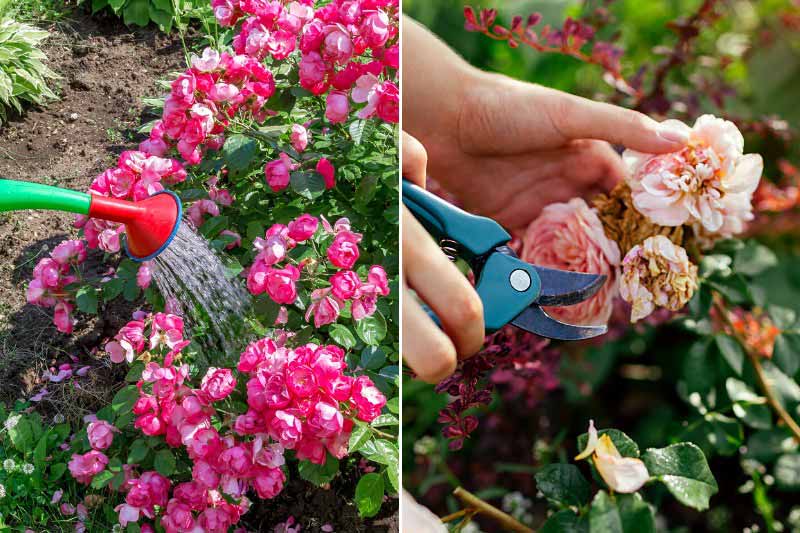
Further reading
- Feel free to check out our articles: "Heatwave: 10 tips to protect your plants" and "Watering a garden during a heatwave"
- Our advice sheet: "Watering plants during or after a drought"
- "How to save garden plants after a drought?"
With climate change, dry spells are becoming longer and earlier. Roses are not spared and sometimes suffer from this lack of water over an extended period, which can gradually lead to their decline if timely intervention is not made. It is therefore important to manage watering well and implement certain techniques to protect roses. Discover […]
In an increasingly environmentally conscious world, efforts are being made to develop more sustainable agricultural systems. One of the ways we seek to achieve this goal is through permaculture - a holistic approach to agriculture that aims to work with nature rather than against it. Among the many questions that arise, one often comes up: what are the best trees to use in these systems? Among them, the Paulownia - a robust and fast-growing tree native to Asia - is of particular interest. Its resilience, ability to improve soil quality, and rapid growth indeed make Paulownia a promising candidate to become "the tree of the future" for permaculturists. But is this really the case? We will find out.
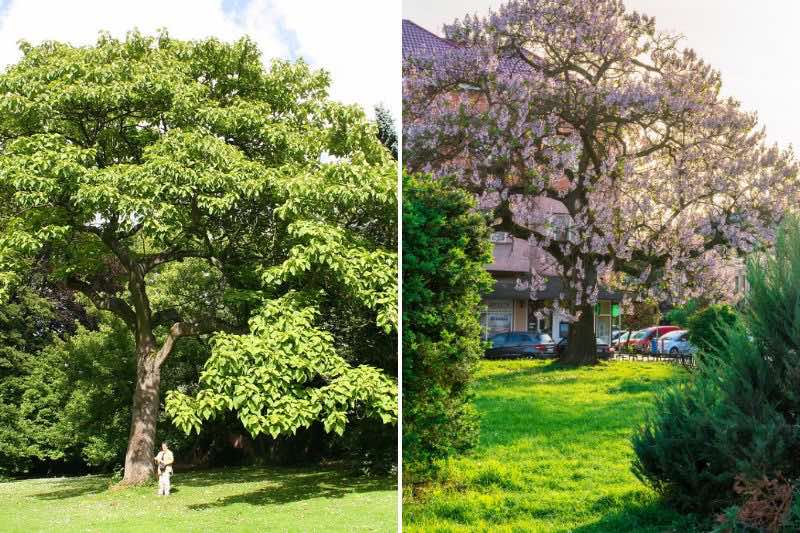
What is this tree?
The Paulownia tomentosa, often referred to as "the emperor tree", is a tree species native to Asia, known for its rapid growth and spectacular fragrant flowers. This giant, which can reach heights of 15 to 25 metres, not only has undeniable aesthetic appeal but also significant ecological value. Its ability to fix nitrogen in the soil, resist diseases and pests, and thrive in various soil and climate conditions has made it a popular choice for many reforestation and permaculture projects. Furthermore, Paulownia wood is lightweight, strong, and of high quality, making it a valuable resource for the timber industry. Therefore, Paulownia is increasingly recognised as a tree with immense potential to contribute to a more sustainable future.
Nota bene: there are 6 species in the genus Paulownia, but the most commonly cultivated are Paulownia tomentosa and Paulownia fortunei. The latter is distinguished from the Emperor Tree by its earlier flowering, but retains the same qualities.
Paulownia has many advantages
In the context of permaculture, Paulownia presents several notable advantages that make it interesting for sustainable agriculture projects:
- Rapid growth: Paulownia is one of the fastest-growing trees in the world. In just a few years, it can reach several metres in height, which is particularly interesting for reforestation and permaculture projects that seek to establish a forest cover quickly.
- Soil improvement: Paulownia has the ability to fix nitrogen, an essential element for plant growth, in the soil. This ability contributes to the improvement of soil quality and fertility, which is crucial in a permaculture system. The nutrient-rich leaves decompose quickly in the soil or compost, which is an additional asset.
- Resistance: These are robust trees that can withstand a wide range of climatic conditions and soil qualities. They are also resistant to diseases and pest attacks.
- High wood yield: Paulownia wood is lightweight, strong, and of high quality. It can be used for a variety of products, including furniture, musical instruments, and construction wood. It is also a species that can be used for biomass production due to its rapid growth.
- Carbon storage: Thanks to its rapid growth, Paulownia is capable of sequestering a large amount of CO2, making it an important asset in the fight against climate change.
- Shade tree and support for climbing plants: Paulownia quickly becomes an excellent shade tree, but its straight and sturdy stems can also serve as support for climbing plants. It is worth noting that the Emperor Tree is also excellent in a windbreak hedge.
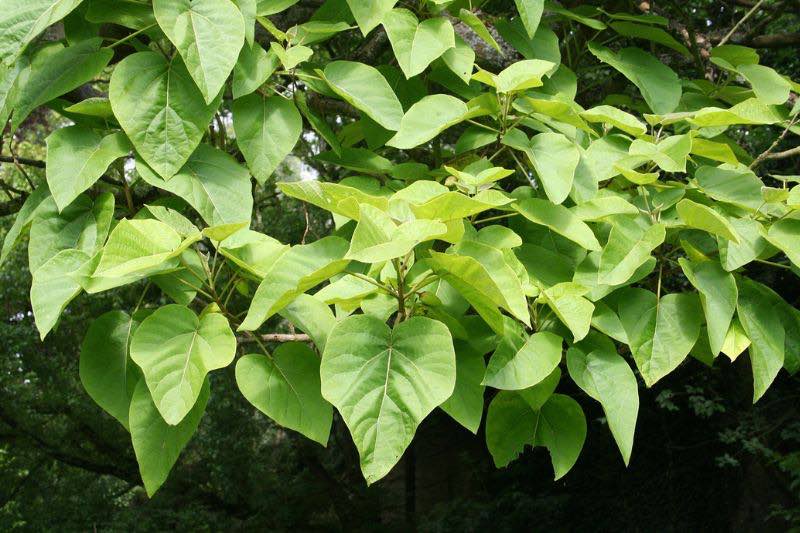
A concrete example of using Paulownia in permaculture
The use of Paulownia as a "windbreak" is one of the most common examples in permaculture. Due to its rapid growth, it can provide a protective barrier against strong winds for more delicate plants or livestock. Its dense foliage can help reduce soil erosion caused by wind while retaining more moisture in the soil, which is beneficial for other plants in the system.
Moreover, Paulownia produces a large amount of biomass in a short period, which can be useful for producing mulch or compost. Its leaves are nutrient-rich and can help improve soil quality when they fall and decompose.
Can Paulownia impact local biodiversity?
Paulownia is an exotic and pioneering species. Beware of its potentially invasive character!
Paulownia is indeed a fast-growing species, which can make it competitive with local species. If its spread is not controlled, it may eventually dominate a landscape, reducing the diversity of native tree species.
Furthermore, although Paulownia can provide habitat for certain species of insects, birds, or small mammals, it is not always suitable for local wildlife. Most insects, for example, have co-evolved with specific plant species. If Paulownia replaces these trees, these animals will lose their natural habitat.
That said, it is also possible that Paulownia may have beneficial effects on local biodiversity. Its flowers attract and nourish many pollinators, and its nutrient-rich leaves can improve soil fertility when they fall and decompose.
However, it is important to keep in mind that, in general, the introduction of non-native species should be done with caution, as they can have unforeseen and potentially negative impacts on local ecosystems. It is preferable to plant native species whenever possible, as they are often in harmony with local flora and fauna.
The particular case of pioneer trees
Paulownia tomentosa and Paulownia fortunei are not the only trees that multiply some of the advantages mentioned earlier. This is the case for many so-called pioneer trees, such as Aspen, birches, Pinus pinaster, Goat willow, or Black locust. Pioneer trees are tree species that are among the first to colonise disturbed or degraded lands. They play a crucial role in restoring ecosystems, as they help stabilise the soil, improve its fertility, and prepare the ground for the arrival of other plant species. Pioneer trees are generally characterised by rapid growth, a great ability to spread by seeds, and a capacity to tolerate difficult environmental conditions, such as poor soil or extreme temperature and humidity conditions.
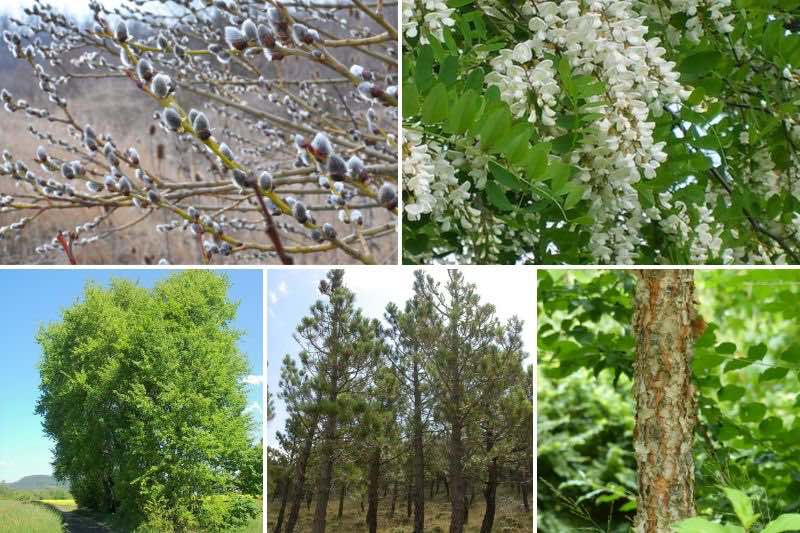
In an increasingly environmentally conscious world, efforts are being made to develop more sustainable agricultural systems. One of the ways we seek to achieve this goal is through permaculture – a holistic approach to agriculture that aims to work with nature rather than against it. Among the many questions that arise, one often comes up: […]
The Common hedgehog (Erinaceus europaeus) is a small omnivorous mammal that was commonly found in our countryside and gardens, even in cities. A true ally for gardeners due to its diet (a significant portion of insects, larvae, and slugs), this charming ball of spines is unfortunately in serious decline across Europe. Is the hedgehog really at risk of disappearing?
What threats does the hedgehog face?
There are many! Firstly, the decline of insects and other arthropods due to the destruction of natural habitats and the massive and abusive use of insecticides (and slug pellets!) deprives it of a large part of its food supply. Insecticides and metaldehyde slug pellets also poison hedgehogs, causing 25% of all hedgehog mortalities.
Moreover, following large-scale land consolidation, hedgerows and field margins that provided shelter have been ruthlessly removed. Small woods that once offered refuge to wildlife between fields are becoming increasingly rare. Our gardens are becoming more and more compartmentalised, preventing hedgehogs from entering or leaving. And when we talk about gardens... Most "gardens" today are unsuitable for wildlife (fortunately, this trend is reversing!). This fragmentation of habitats isolates hedgehogs. Consequently, genetic mixing is reduced, further compromising hedgehog health.
Humans, as always, regularly make hedgehog life a nightmare. If it were only the hedgehog's life... Hedgehogs are killed on our roads (over 20%), drown in our pools, are shredded by garden machinery, or suffocated by litter thrown everywhere.
However, it’s not always our fault. The hedgehog also suffers from numerous diseases and parasites, and is preyed upon by badgers, wild boars, the Eurasian Eagle-Owl, the Tawny Owl, foxes... and dogs (ah yes, that’s us too!).

What is the status of the hedgehog?
The Common Hedgehog or European Hedgehog has been fully protected in Europe since 1981, with protection further strengthened in 2007. The hedgehog is now classified as "Least Concern" on the International Union for Conservation of Nature's Red List (IUCN).
According to a British study, the hedgehog population has decreased by 30 to 75% in just twenty years depending on the regions studied. In our case, there are no precise data yet, but it is likely that these statistics are similar for France and Belgium. According to some specialists, the hedgehog could disappear by 2050.
Also read: the legal status of the hedgehog in France (N.B.: the status is practically identical for Belgium).
The hedgehog is so useful
The Common Hedgehog is what we call an "umbrella species". This means that if we protect it and its habitat, we will also protect all the associated fauna and flora: predators, parasites... If it disappears, the ecosystem of this biotope will be completely unbalanced, which will have detrimental consequences for the rest of the wildlife. Furthermore, the presence of a hedgehog indicates the good health of the surrounding biodiversity.

What can we do to help?
Create a welcoming garden for them: piles of wood, piles of leaves... for hibernation and wild, natural areas (flowering meadows, field hedges...). Eliminate all ecocides (herbicides, slug pellets, insecticides...)! Provide small boards if you have a water feature, so the hedgehog can get out of the water. Reduce, if possible, your night-time outings on roads in motor vehicles, which will also help protect amphibians at the same time. For more information, read this document from LPO on how to help and welcome hedgehogs.
If you find a sick, thin, and wobbling hedgehog at home, gently pick it up with gloves and place it in an open cardboard box, putting a hot water bottle or a bottle of hot water in an old sock next to it. Offer it some water and leave the box in a quiet, ventilated room, then contact a licensed wildlife rehabilitation centre. Otherwise, do not touch hedgehogs wandering in your garden: you will stress them unnecessarily, which could be fatal!
In Belgium: a hedgehog monitoring programme has been initiated by LRBPO, here is all the information: suiviherisson.be
In France: "mission for hedgehogs" is studying, with the help of volunteers, hedgehog populations. Feel free to participate!

The Common hedgehog (Erinaceus europaeus) is a small omnivorous mammal that was commonly found in our countryside and gardens, even in cities. A true ally for gardeners due to its diet (a significant portion of insects, larvae, and slugs), this charming ball of spines is unfortunately in serious decline across Europe. Is the hedgehog really […]
Wild birds (the entire group of wild birds) are currently facing a myriad of problems, reducing their population each year. Climate change, pesticides, reduction of their habitats (less food and nesting sites), various accidents (windows, cars, wind turbines...), natural or non-natural predation, hedge trimming in spring, and now diseases, such as avian influenza. Or rather, avian influenzas, as there are several. Let’s take stock of these avian influenzas and their consequences on wild birds!

What are avian influenzas?
Avian influenzas are sometimes referred to as Bird Plague, Avian Influenza, or, less commonly, Chicken Ebola. It is a viral disease caused by type A influenza viruses that primarily affects birds. Avian influenzas are typically classified into two main categories:
- LPAI or Low Pathogenic Avian Influenza: these cause few symptoms in farmed birds. Sometimes, certain birds, like ducks, are asymptomatic carriers;
- HPAI or Highly Pathogenic Avian Influenza: this category includes subtypes H5, H7, or H9, such as the H5N1 or H7N9 viruses. These strains can trigger severe epidemics and can sometimes be fatal.
The disease is transmitted through direct contact between birds (wild or domestic), via the droppings of sick birds, or through infected materials or elements (carcasses, eggs, clothing...). Normally low virulent for wild birds (but this is changing!), an avian influenza can decimate the entire population of birds in an industrial farm.
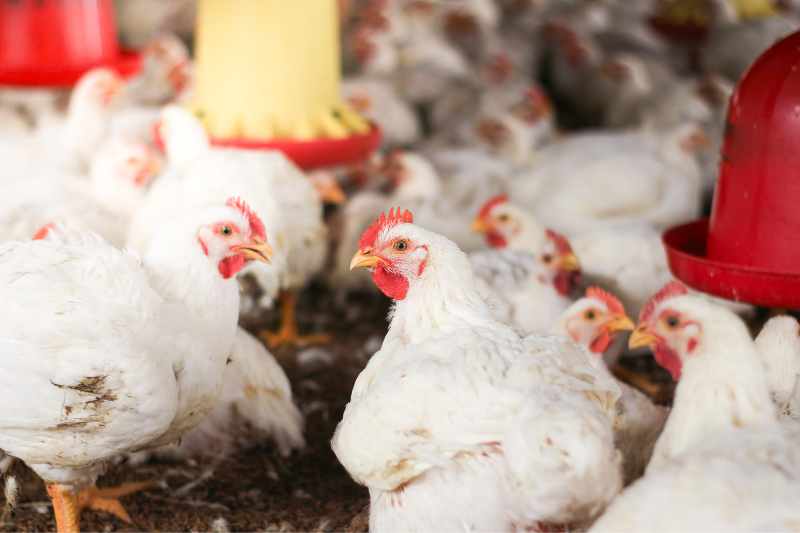
What about humans?
Avian influenza can infect some mammals including pigs, rats, mice, weasels... and even humans in the case of the H5N1 strain. Cases are still rare, but the WHO (World Health Organization) takes this very seriously, especially since this virus is potentially fatal for humans. An effective vaccine against the H5N1 virus has existed since 2005. Fortunately, for now, the H5N1 virus is not transmissible from human to human, but only in cases of prolonged contact with poultry.
However, A type viruses are genetically unstable, meaning they mutate quickly and often. A subtype of influenza A could therefore become problematic for humans one day and lead to a pandemic.
Are wild birds in peril?
According to Alain Bougrain-Dubourg, president of the French LPO (League for the Protection of Birds), 2022 was the worst year globally since the emergence of the H5N1 avian influenza in 1995. Nearly 140,000,000 farmed birds have died or had to be culled due to avian influenza. But the figures are alarming for wild birds as well: for example, 22,000 seabirds were found dead in Peru. Seabirds seem to be the most affected.
Here at home, along the French and Belgian coasts, we are witnessing worrying mortality among gulls (the family of birds that includes gulls, terns, and kittiwakes). Other species are also particularly affected: the first appearance of the virus has been noted in the Griffon Vulture and even a colony of Northern Gannets has been severely impacted by this influenza.

What are the symptoms of avian influenza?
The symptoms of avian influenza in birds are numerous: first unusual behaviour, tremors, and lack of coordination. Subsequently, one may observe swelling on the head followed by lack of energy, breathing difficulties, and diarrhoea. Finally, the infected bird eventually dies. In our chicken coops, we can already be concerned about a lack of appetite and a decrease in egg production: these are signs to watch for!
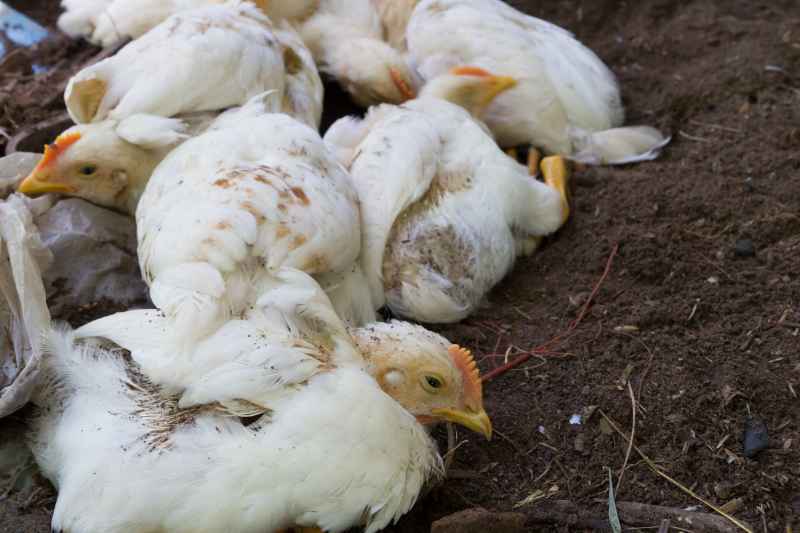
How to fight it?
Nature advocates have long promoted the reduction in size and number of industrial poultry farms. Ornithologists also advise prioritising small local farms with local breeds that are more resilient and maintaining greater genetic diversity.
Other precautionary measures include the confinement or netting of backyard birds, strengthening security during the transport of poultry, banning gatherings of poultry keepers and pigeon racing competitions, and vaccinating zoo birds and those that cannot be confined. Once birds are infected, unfortunately, the only radical solution is culling.
If you feed wild birds in your garden: avoid doing so too close to your chicken coop and regularly clean the feeding area and water points.
Do not pick up a dead bird without gloves, and prevent your dog from coming into contact with the carcass. If you discover a dead bird and it seems suspicious, contact the French Office for Biodiversity https://www.ofb.gouv.fr/ and for Belgium, SOS Environment Nature at the free number 1718.
Important note: although the confinement of poultry is one of the measures recommended by the government, bird specialists argue that we should not stigmatise free-range farms, which allow for better health (less stress in particular) of birds and therefore a much better resistance to diseases, including avian influenza.
Finally, if you wish to learn more about avian influenza and have further questions, here is the link to an FAQ on the subject on the LPO website (in French).
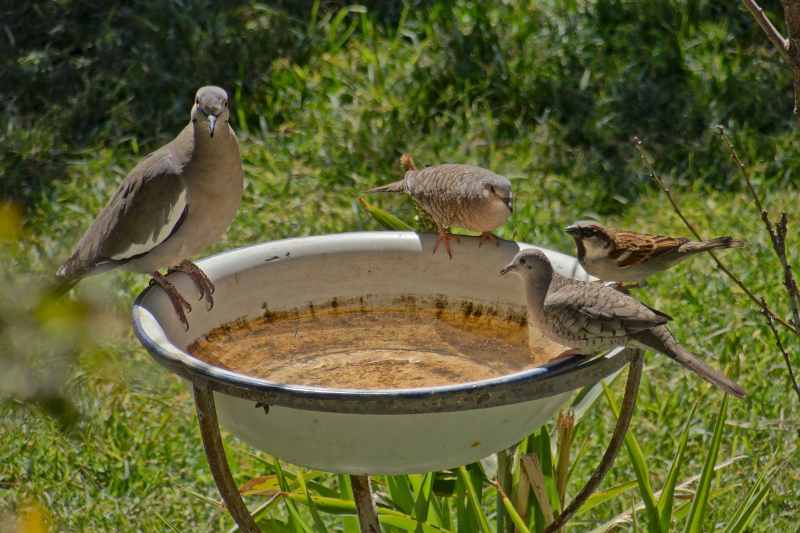
Wild birds (the entire group of wild birds) are currently facing a myriad of problems, reducing their population each year. Climate change, pesticides, reduction of their habitats (less food and nesting sites), various accidents (windows, cars, wind turbines…), natural or non-natural predation, hedge trimming in spring, and now diseases, such as avian influenza. Or rather, […]
So simple, so refreshing, so endearing, daffodils or narcissi (they are the same) symbolise the return of spring! Depending on the variety, flowering occurs from late February for the earliest to mid-May for the latest. They illuminate borders, beds, rockeries, and window boxes with their natural charm, offering a myriad of often single flowers and sometimes double ones. But what a pleasure it is to gather full bunches of daffodils to create fresh, spring bouquets that will fill the home with their often sweet fragrance. Under good conditions, these freshly cut daffodils last up to 15 days in a vase. Follow my tips and bring spring into your home!
1. Choose fragrant daffodils
All varieties of daffodils, from the simplest to the most sophisticated, are well-suited for bouquet making. You can choose from the most prolific and reliable varieties with sturdy stems that hold well in a vase. Consider 'Cassata', a graceful light yellow daffodil, known as orchid-like flowered, which is interesting for bouquets, the Narcissus 'Dick Wilden', a reliable choice with its large bright yellow double flowers, or the Narcissus 'Dutch Master', timeless, the true large-flowered golden yellow daffodil! The Narcissus ‘Flower Record’ is another must-have daffodil variety with its large white flowers and bright yellow crown edged in orange. Treat yourself to bunches of daffodils from the end of winter with the Narcissus 'February Gold' which is one of the first to bloom in the garden, sometimes as early as February and lasting until May or even June with the Narcissus ‘Sherborn’. And don’t miss out on their distinctive fragrance by choosing fragrant daffodils, such as the poet's daffodil ('Actaea', 'Recurvus', narcissus poeticus 'Albus Plenus Odoratus'), intensely fragrant.
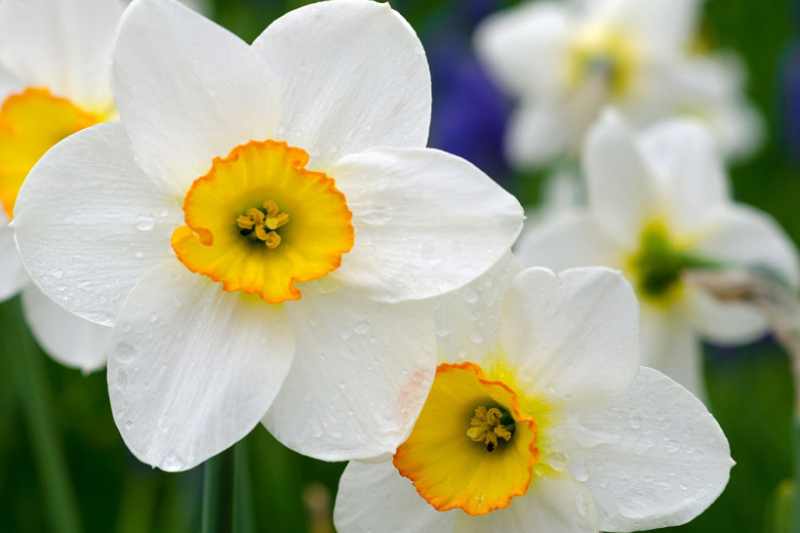
2. Select healthy, budded flowers!
Pick your daffodils when the bud is coloured (wait until the flower's colour is fully visible) and just starting to open. Picked this way at the onset of their blooming, they last about ten days in a vase. Choose healthy flowers with intact stems. No need to use pruning shears; just gently cut the stems by hand or with a small knife to detach them from the bulb.
- Remove the lower leaves from each stem so they do not touch the water in the vase
- Quickly place the cut flowers in fresh water to preserve them
- Place your bouquet in a clean vase filled with water
- Avoid placing the vase in direct sunlight, but in a relatively cool spot
- Change the water regularly
3. Let them be solitary!
Daffodil stems contain sap that quickly wilts other flowers in a vase, particularly tulips. They are not good companions… We advise you not to mix them with other cut flowers, or you will have to change the water daily to better preserve your bouquet. The solution: soak the ends of the daffodil stems in hot water for 1 to 2 minutes to cauterise them before placing them in their vase. This way, you can enjoy your mixed flower bouquet for longer!

4. Choose the right vase
When choosing a vase, let your imagination run wild! A multitude of containers is available to showcase their vibrant and refreshing colours. Personally, I like to place daffodils in a clear glass vase, allowing me to enjoy the graphic display of their green stems. This could be, for example, a repurposed jar as a clever and pretty vase, simple yet effective, or a water carafe that creates a simple, natural, and poetic arrangement. Ceramic pots, especially blue Delft porcelain, will highlight the sunny yellow of their flowers. Placed in a zinc bucket or an enamel jug, they will embody a recycled or vintage spirit.

5. Mix them wisely
So, since other flowers do not tolerate their presence, what can you pair them with in a bouquet? Think of branches, such as twisted willows or catkins, those of decorative wood dogwoods, or spring-flowering shrubs like forsythias, lilacs, or Japanese quinces. Decorative foliage like that of eucalyptus or stems of ferns will look stunning with daffodil flowers.

So simple, so refreshing, so endearing, daffodils or narcissi (they are the same) symbolise the return of spring! Depending on the variety, flowering occurs from late February for the earliest to mid-May for the latest. They illuminate borders, beds, rockeries, and window boxes with their natural charm, offering a myriad of often single flowers and sometimes double ones. But […]
With climate change, we regularly hear about hot and dry summers that cause suffering to plants, including trees (and not just them!). However, we also forget that plants need a period of rest, winter. If this winter is not cold enough, it can lead to detrimental consequences for the health of trees and bushes. Let's take stock!
Meteorological observations
One year is not like another, especially in our time. However, it is now not uncommon to encounter temperatures well above seasonal averages, whether in the south or further north. What specialists sometimes refer to as "non-winters". And this is unlikely to improve, that much is certain. Indeed, throughout history, humans have experienced exceptional years, some with particularly mild winters. The problem is that the exceptional is becoming the norm and that practically every year winters are getting less and less cold. With climate change, the same ocean winds of the past are bringing more air, and this air is warmer because the ocean water is also warmer. Furthermore, the reduction in snow-covered areas will amplify the effect by no longer performing its cooling function. In other words, the effect will accelerate in the coming years.
Also read: researchers at CNRS have developed a method to determine whether an extreme weather event is due to climate change or not.
What consequences for trees?
If temperatures are mild, sap will start to circulate again, some plants will come out of dormancy and begin to bud. This would not have such serious repercussions if a period of severe frost did not systematically follow in the weeks after. This frost will destroy the buds, flowers, and even part of the young foliage. No flowers, no fruits! And if the foliage is destroyed, the tree will exhaust itself trying to form another. Once is fine! Every year: hello damage! Note that some trees, bushes, or spring-flowering bulbs are adapted to winter cold, even late cold. For these, like the male dogwood or snowdrops: cold? Not a problem!
The tree's cycle can also be completely disrupted. Indeed, many plants need a period of cold to come out of dormancy, which is called vernalisation. This vernalisation will trigger a process of flower formation. It is the transition between the vegetative stage and the reproductive stage. However, if this cold period does not occur (or not at the right time), the tree will not produce flowers with all that this implies. For example: cherry trees need an average of just over 1000 hours at a temperature below 7°C to start flowering, while apple and pear trees need between 200 and 1400 hours.
Are we heading towards a fruit shortage within 100 years?
Hard to say... But this climate warming is acting so quickly that plants cannot evolve fast enough to cope with these changes. Fruit trees and bushes are indeed at risk of no longer being able to flower or producing stunted flowers that yield misshapen or small fruits. Additionally, pollinating insects are also affected. They often emerge too early at the end of winter, at a time when trees are not yet in bloom. When we know that a large majority of insects have co-evolved with specific plant species (in other words, a particular insect species is capable of pollinating a specific plant), these trees are doomed to disappear along with the insects that depend on them. In short: the future does not look bright...
With climate change, we regularly hear about hot and dry summers that cause suffering to plants, including trees (and not just them!). However, we also forget that plants need a period of rest, winter. If this winter is not cold enough, it can lead to detrimental consequences for the health of trees and bushes. Let’s […]
Some gardeners avoid using pine needles above all else for fear that it will overly acidify their soil. Others, however, keep them as mulch or even mix them with the planting soil to lower the pH for certain acidophilous plants. This is indeed a common piece of advice found in books and on websites, sometimes even from specialists. But do pine needles or other conifers (cedars, firs, larches...) really influence soil pH? Is it, on the contrary, a bad idea to use pine needles as mulch? Let's clarify!
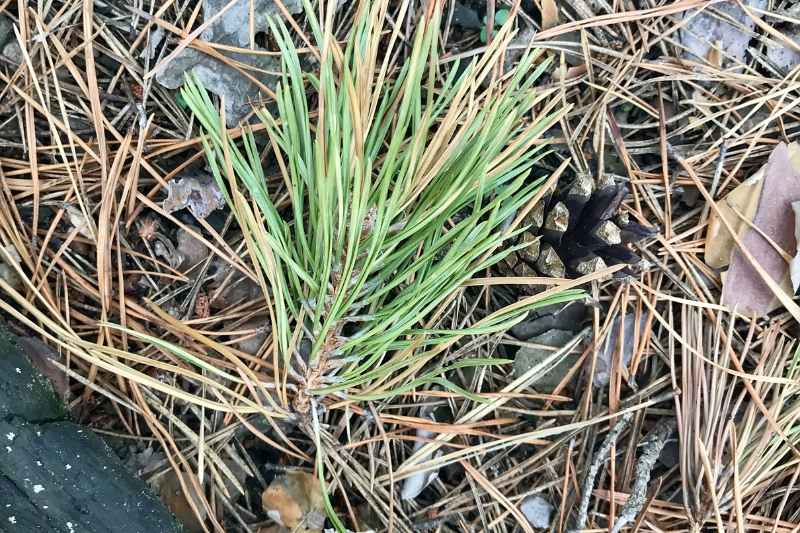
The Alleged Acidity of Pine Needles
In reality, it is the green needles, still on the tree, that are the most acidic. The brown and dry needles that fall to the ground are much less so: the pH (potential hydrogen) is around 6.5, which is close to neutrality (which is at 7). The optimal pH for most plants is between 6.0 and 7.0. With such low acidity, it is easy to understand that pine needles will have very little impact as mulch at the base of acidophilous plants like heather soil plants (Rhododendrons, azaleas, heathers, kalmias, Andromedas...). Moreover, if you analyse the pH of the soil under a pine and the pH under a deciduous tree in the same soil (for example, in the same garden), you will find that the pH will be the same within a few tenths. You can find here the summary of the conclusions from Norwegian researchers on this subject.
Did you know?: Contrary to what we learned in our chemistry classes, where a solution was acidic below pH 7, neutral at 7, and basic above 7, this notion is shifted for soils. Thus, a soil is considered alkaline at a pH of 6.6. Some plants can grow at quite low pH levels (4.5), but very few can survive in soil with a pH of 8. Fortunately, such soils are very rare.
Some people argue that nothing grows under conifers and that this is indeed a consequence of soil acidification. On one hand, this is not entirely true, as some plants thrive well under pines. On the other hand, it is not this alleged acidity that is the problem, but rather the sometimes dense shade under certain conifers, and the numerous roots that absorb rainwater and nutrients to the detriment of other plants.
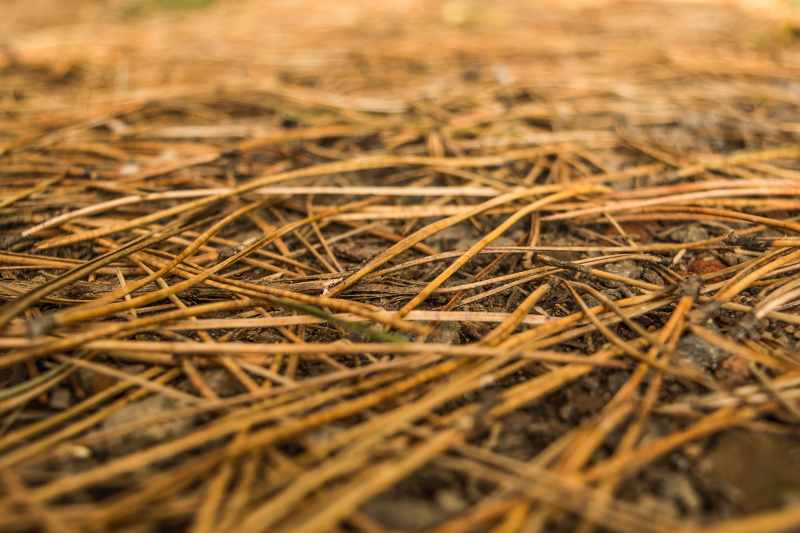
Soil pH is Not Easily Modified
The pH of a soil is stable, as it is primarily determined by the parent rock. The soil microflora and some chemical agents act as a buffer to maintain the pH. Therefore, if you wish to modify the acidity or alkalinity of a soil, you will need to use massive doses of sulphur to acidify or, conversely, lime to raise the pH. We do not recommend this for obvious economic and ecological reasons. Moreover, as soon as the application of these products stops, the soil pH will return to its usual level.
The pH thus depends on the subsoil (parent rock), the soil microflora, and, in part, the climate and rainfall of the area. There is also a time factor: a soil will naturally acidify gradually over the decades.
What to Do Then?
If you are used to mulching with pine needles at the base of your acidophilous plants, you can continue, as it does them no harm either. Pine needles make a good carbon mulch, although they are low in potassium. Due to their carbon content, pine needles will also find their place in compost to regulate the carbon/nitrogen (C/N) balance. Furthermore, the tannin contained in pine needles or other conifers has no real inhibitory effect on plant growth. The acidification caused by this mulching is only extremely slight and temporary, but it constitutes a good mulch that decomposes slowly to gradually form humus.
To grow heather soil plants in neutral to alkaline soil, you will need to dig a pit, remove the soil, and replace it with a very acidic substrate: true heather soil or so-called heather soil (be careful, however, as this substrate is poor and does not retain water!).
To learn more about using heather soil, read Heather Soil: How to Use It Well in the Garden?
Otherwise, you can opt for plants that are only suited to your soil, which will save you work and many inconveniences. To plant without making mistakes, you can use our PlantFit application.
A pine needle mulch does not acidify the soil deeply and over the long term.
It's easier than you think to fail at sowing your vegetable or flower seeds; even the best among us are caught off guard each year. Follow our tips, and soon you'll be able to boast about successfully failing your sowing!
Lesson No. 1: to fail at sowing, sow anytime!
Sowing experts will tell you: if there is a sowing calendar for each variety of vegetable and ornamental plants, it's for a reason! Indeed, each seed has an appropriate sowing period that spans several weeks. Seed purists take into account the right temperature and humidity levels of the air and substrate, as well as an optimal duration of sunlight. But if you don't want to bother with all these quirky parameters or waste time inspecting each seed packet, jotting down notes on your calendar to avoid missing the boat... you might as well follow your whims or trust your instincts. So, sow your seeds at any time: during a heatwave, when it's freezing, or even out of season. That way, you'll be sure to fail at your sowing.
- Make an early sowing indoors in a heated environment! You'll have the chance to see your young plantlets stretch their stems excessively due to a lack of light. As a good Samaritan, you'll have to embark on a rescue operation, but don't expect a miracle. Moreover, by sowing very early, you'll end up with a multitude of pots and containers in the house that you won't be able to plant in the garden because it's still too cold outside. Don't pay attention to your climate zone! If sowing directly in the ground, be prepared for the likelihood that you will never see any shoots emerge.
- Make a late sowing: this will impact production or flowering. For example, if you don't like peas, sow them in summer. It won't yield anything, and you'll have a good excuse not to eat them. Or, sow tomatoes in July, and you can be sure you won't harvest any before the cold returns in autumn. Finally, some salads should be sown early in spring, as they will bolt to flower and seed as soon as it gets warm.
You understand, ignoring the sowing calendar is almost guaranteed failure!

Lesson No. 2: to fail at sowing, sow anyhow!
There are several techniques that those who succeed at sowing will recommend: broadcasting, sowing in rows, in clusters... while respecting a certain depth according to the size of the seeds (this is indicated on the seed packets). Each of these methods is better suited to the type of seeds: in clusters in pots for larger seeds, spaced in rows in a seed tray... But if you have a rebellious spirit, just sow a seed here, another there, or empty your packet entirely, leaving it to chance; that will be good enough. Here are some tips to ensure you fail at your sowing:
- For temperamental seeds with unpredictable germination, sow only one seed per pot instead of 2 to 5 seeds to save money. "Less is more"; if the seed doesn't germinate, so be it.
- For small seeds, the most sadistic will put a thick layer of compost on top. The young plantlets will never see the light and will die before reaching the surface. For example, sow carrot seeds in a lovely trench of 30 cm; their roots grow deep after all!
- If you're competitive by nature, sow thickly! You'll enjoy watching your plantlets compete for light and nutrients. These young plants will either shoot up on spindly stems (this is called "bolting") or, conversely, stagnate. They will die if you don't intervene with thinning, which will be complicated due to the number of plantlets. Do you know the saying: "He who sows thickly, reaps sparingly"?
- Forget to soak certain seeds (parsley, sweet peas, cobaea...) overnight in room temperature water; after all, they don't know how to swim!
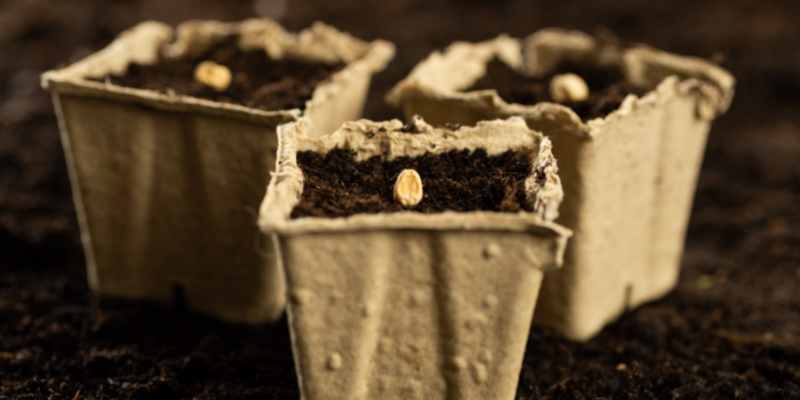
Lesson No. 3: to fail at sowing, ignore the temperature!
Gardening manuals tell us that a minimum temperature, depending on the type of seed, is necessary to start the germination phase. Radishes and salads germinate well between 5 and 10°C, while tomatoes, aubergines, and peppers need an ideal temperature of 20°C to germinate. In summary, if it's too cold, nothing will happen. At best, the seed will take longer to germinate. But often, it will rot in that cold, damp soil. So no bottom heat: no germination. To fail spectacularly at your sowing:
- Sow your sun-loving vegetables in an unheated greenhouse in February,
- Sowing needs warmth, so sow and place your seed tray directly on the radiator. Guaranteed overheating!
- It's a beautiful day and the sun is shining; place your sowings outside in full sun without any acclimatisation period. You'll get to admire some lovely sunburn on your plantlets.
- Don't open the frames! No need to ventilate; your sowings might catch a chill.
- It's spring... go for it! Sow directly in the ground, especially if you have heavy, clay soil that warms up slowly in spring.
- Here's a gift: transplant your vegetable plants before the Ice Saints; there's a good chance they'll be fried by the frost.

Lesson No. 4: to fail at sowing, either let them dry out or drown them!
This is probably where the difficulty of sowing lies, especially indoors: managing moisture. Young plantlets have very specific water needs: not too much, but enough for their survival. Watering pros soak the bottoms of their trays and pots in a basin of water or use a spray bottle. In the garden, they water with a fine spray using a watering can. To ensure they meet their demise without further ado:
- Forget your sowings in a corner; the substrate will dry out quickly, the seeds won't germinate, and if some dare to poke through a cotyledon, they will be finished off later;
- Or, give them the mephitic atmosphere of a putrid swamp; it will be a breeding ground for fungal diseases like damping off.
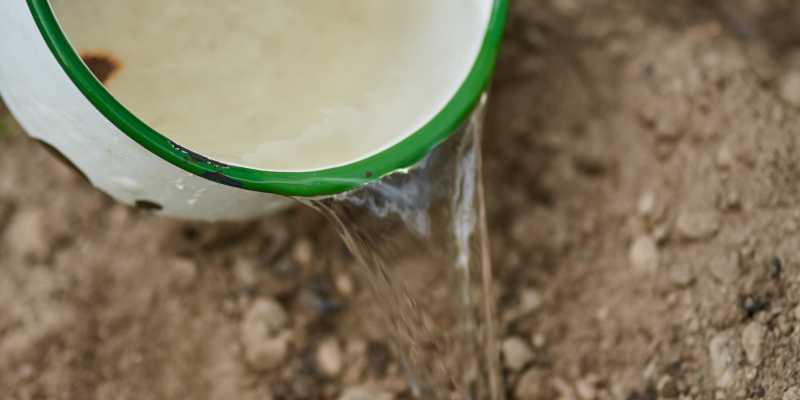
Lesson No. 5: to fail at sowing, use the wrong substrate!
The most suitable substrate for good germination and excellent growth of young plantlets should be fine and very well-drained. It must allow gases and water to pass through easily. The "special sowing and cutting compost" is obviously the best solution. In the ground, for the finest seeds (salads, carrots...), meticulous gardeners do not hesitate to create a seedbed with finely crumbled soil, compost, or well-matured compost. To fail at your sowing indoors:
- Nothing beats using an old bag of dry or mouldy compost;
- Or taking heavy garden soil full of stones, poorly drained and teeming with pests.
That way, you can be sure of a result close to nothing.
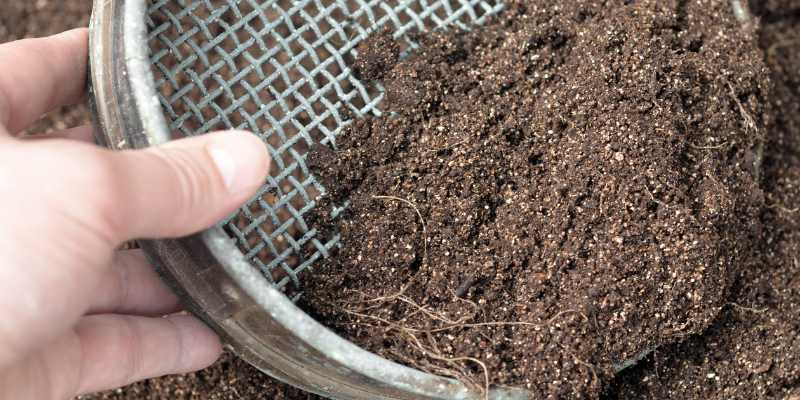
Lesson No. 6: to fail at sowing, sow in the dark!
Remember? We learn in school, from a young age, that a plant needs light to perform photosynthesis. If you weren't paying enough attention, try this experiment:
- Sow in a dark room; the plantlets will seek out the light and grow... grow... grow... on spindly stems that will quickly break. Sowing will bolt, and this phenomenon is exacerbated indoors due to the heat. You can also observe this when seeds have been sown too thickly.
- No more space at home to store your young sowings? Set them up in the cellar or the darkest room in your house! Besides getting them out of the way, you'll soon forget about them, and the darkness will prevent you from seeing them die.
As a bonus: don't label anything!
Don't forget to note nothing, to label nothing, to avoid any inconveniences later on. This isn't really a method to fail at sowing, but it's nonetheless a fantastic way to mix everything up. Nothing looks more like a young tomato plant than another young tomato plant, but of a different variety.
- Sow freely and forget the labels: you'll have a good laugh later.
- Annotate with ink that washes away at the slightest drop of water! After all, you can surely recognise your young plantlets: no need to fuss.
And if you ever want to succeed at your sowing, read our article: Gardening for beginners: succeed with your first sowing in 7 easy steps
It’s easier than you think to fail at sowing your vegetable or flower seeds; even the best among us are caught off guard each year. Follow our tips, and soon you’ll be able to boast about successfully failing your sowing! Lesson No. 1: to fail at sowing, sow anytime! Sowing experts will tell you: if […]
The situation is deeply concerning: never has avian life been in such poor condition. According to studies revealed by the L.P.O. on 24 January 2023, the population of common birds in France continues to decline. Based on observations from 85,000 individuals collected during the "Garden Birds" citizen science operations, it is noted that:
- In winter, 49% of bird species are increasing in gardens, 20% are stable, and 11% are declining.
- In spring, the trends reverse: 41% of species are in regression, 24% are stable, and 2% are increasing.
For Allain Bougrain-Dubourg, president of the L.P.O., "even if these seemingly contradictory figures may surprise us, the birds 'from our region' are best observed in spring. The observation is clear, it is an alarming decline, and for some species, a true catastrophe. Furthermore, the bird is an indicator of the state of biodiversity. When it is in decline, the entire suite of mammals - amphibians - reptiles and all biodiversity is also fading. The loss of birds alerts us to the state of all living things."
In light of these alarming, even alarmist, figures, I wanted to discuss them with a field ornithologist to gain his insights and analysis of the situation. Claude Borrel is passionate about feathered creatures and an amateur photographer. Now retired, he has been drawn to the living world since childhood and observes wildlife almost daily. He collaborates with LPO Aude and habitat and species preservation associations for counting, monitoring migrations, and installing nest boxes. He agreed to answer a few questions.
What do you think of the latest figures revealed about the state of bird populations in France, and do you see this degradation in practice?
'To be honest, on the scale of my garden, I don't see much degradation. Year after year, I see roughly the same species, which is quite normal because garden birds are largely fed and thus come where food is available. However, when I walk in nature, the observation is different. It's simple: often we see nothing, not a single bird. No Tree Sparrows, far fewer Great Tits and Blue Tits, and no Finches either. The Common Swifts are in sharp decline, as are the Swallows, many of whose nests are no longer occupied. The Greenfinches and Meadow Pipits are also in noticeable regression.
And when my observations take me to the lagoon and marsh areas of the region, which are refuges for many bird species and an important migratory stopover, my observations vary from year to year, depending on the weather and winds. For example, this year, we observed far fewer White Storks and Cranes than in previous years, likely due to the sea winds pushing them inland, whereas usually, the north-west wind brings them in and concentrates them in these Mediterranean coastal areas. Weather conditions are changing, and the birds are affected.'
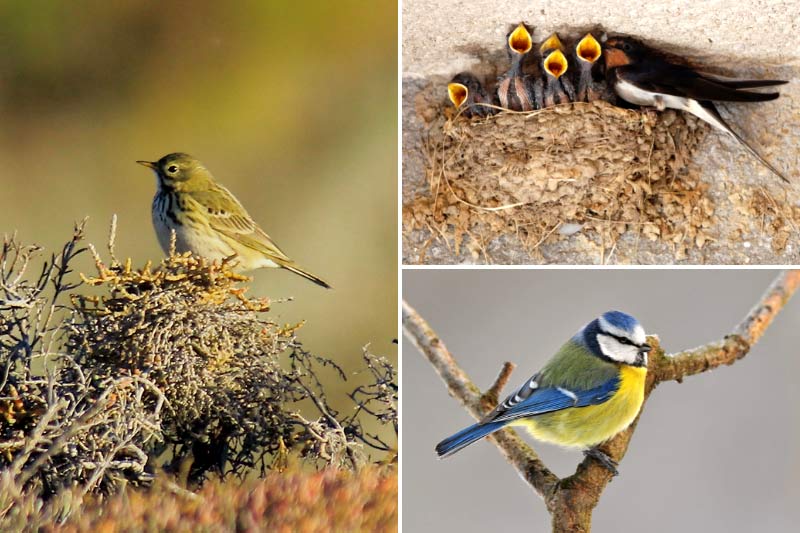
What do you think are the causes?
'It's simple, on one hand, there are no more insects, particularly due to pesticides, so birds have significantly less food. Nesting sites have also been destroyed: there are no more hedges or trees in agricultural areas. In populated areas, nests are removed, such as those of swallows or certain owls, because they cause mess, and modern buildings are not conducive to their installation. Birds also suffer from drought, and changing temperatures disrupt migrations.'
What simple measures can everyone take to help bird populations?
''To help birds, we can install nest boxes. It's important to ensure they are properly sized for the different species likely to nest there and placed correctly. For example, Tits can no longer find cavities in trees, and this helps them. It's also essential to clean and empty the nest boxes from one year to the next to encourage birds to return.
In winter, we can feed birds with sunflower seeds and fat balls with seeds. Some birds also enjoy pieces of fruit, like Tits or blackbirds. We must remember to provide them with water all year round, and place feeders and water sources out of reach of cats, which cause significant damage to bird populations. At my place, I hang them in trees or place them on vertically planted posts. To help swallows, we can create small muddy puddles in spring if the ground is too dry so they can build their nests.'
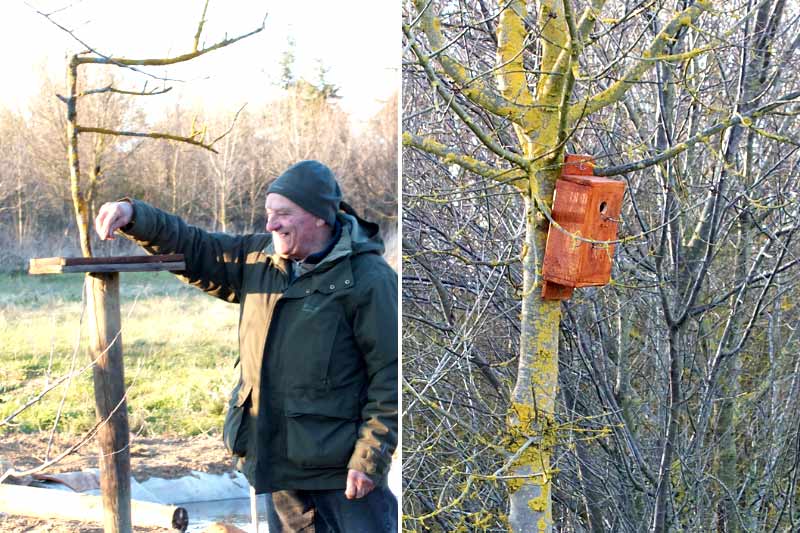
We can also plant evergreen bushes and trees and berry shrubs so they can find shelter and food. Less maintenance in gardens to encourage the insects that serve as their food is also a good solution: leaving wild grasses, dead trees, and small piles of wood. And above all, do not prune trees and hedges during nesting periods.
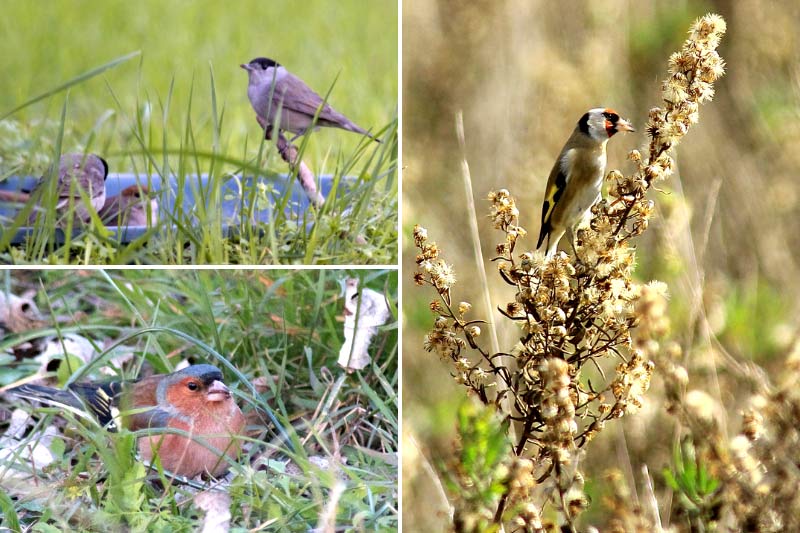
Citizen science is also a concrete way to act
To help scientists understand when and why birds visit gardens, everyone's observations are valuable.
On Saturday 28 and Sunday 29 January 2023, it is the winter edition of the national garden bird count for wintering birds, organised by the LPO and the National Museum of Natural History, with the next one taking place in spring on the last weekend of May for breeding birds. Everyone can participate:
- Choose a day for observation, either Saturday 28 or Sunday 29 January, and a one-hour time slot, preferably when birds are most active, late morning or early afternoon.
- Find a place to observe, which can be your garden or balcony, in the city or countryside. A public park can also serve as a good observation spot.
- Count and note all the birds that land in your garden for one hour and not those flying over. You will record the maximum number of individuals of each species observed during this time slot. (Do not count the same individuals multiple times if they move or make return trips). To recognise them more easily, fact sheets are available for download on the Observatory's website, along with a counting aid sheet.
- Then submit your data on the Garden Birds Observatory website: oiseauxdesjardins.fr. You will also find valuable nest box tips and feeder tips.
If you are passionate about birds and wish to collaborate more regularly, you can observe and count them whenever you like: every day, once a month, or occasionally, as the Observatory operates year-round.
The situation is deeply concerning: never has avian life been in such poor condition. According to studies revealed by the L.P.O. on 24 January 2023, the population of common birds in France continues to decline. Based on observations from 85,000 individuals collected during the “Garden Birds” citizen science operations, it is noted that: In winter, […]
Monospecific hedges, such as those made of thuja, are often dull and not very beneficial to biodiversity. Nowadays, we prefer free, natural, and wild hedges. In this case, a variety of diverse shrubs will be planted: deciduous or evergreen, flowering shrubs, berry-producing shrubs, those with unique foliage or colourful bark... This way, they will be as beautiful as they are useful throughout the season. That was my vision for the long hedge bordering my garden. And then... I decided to plant dogwoods. Lots of dogwoods!
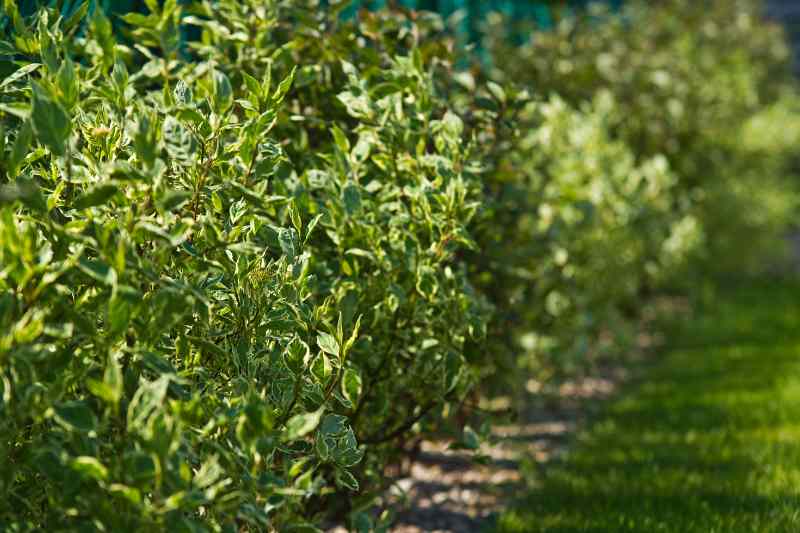
At first, it started gently
There was nothing in my garden, so I needed plants: trees, shrubs, perennials, bulbs. I first went to the local garden centre. As I wandered through the aisles, I finally entered the realm of shrubs. Organised alphabetically, I quickly came across the colourful dogwoods. I picked one, a Cornus alba 'Aurea' (I still remember it!), then a second of a different variety, a Cornus alba 'Sibirica', followed by yellow-stemmed dogwoods, Cornus sericea 'Flaviramea', then another, another, and yet another. In the end, I had two carts filled solely with these dogwoods. So much so that a lady approached me and asked a lot of questions about the store. I stammered that I wasn't part of the team and was quite unable to answer her. In reality, she thought I was an employee restocking the shelves...
Lots of dogwoods...
The area to plant was a straight hedge of about thirty metres. It welcomed:
- some white dogwoods: Cornus alba 'Aurea', Cornus alba 'Sibirica', Cornus alba 'Bâton rouge', Cornus alba 'Elegantissima'
- some silky dogwoods: Cornus sericea 'Flaviramea' and Cornus sericea 'Cardinal'
- some blood dogwoods: Cornus sanguinea species type, Cornus sanguinea 'Anny's Winter Orange' and Cornus sanguinea 'Winter Beauty'
- and even two or three male dogwoods
Thus, I created a free hedge, beautiful in winter thanks to the colourful stems, lovely in spring due to the early flowering of the male dogwood, and stunning in autumn with the various foliage that takes on magnificent hues. The flowers nourish pollinators, and the fruits feed the birds (and the gardener in the case of the male dogwood). All these plants are deciduous, but it didn't matter; I was quite pleased with the result.
But not just that...
Later on, I succumbed to other shrubs, I must admit. I planted or allowed a good number of native species to grow, such as black elder, guelder rose, hazel, European spindle... And adopted other more "exotic" shrubs like a Callicarpa 'Profusion', a blood currant, cotoneasters, and a weigela. Over the years, the dogwood hedge has transformed into a simple free hedge. However, I do plan to repeat the experience in another area of the garden, but this time pushing the envelope further: a true dogwood hedge. An alignment of decorative-stemmed dogwoods, preferably of the same variety.
My tips
If you wish to create this type of hedge at home, I have a couple of things to share.
Firstly, create large patches of colour, especially in winter. By this, I mean only plant large groups of dogwoods with the same stem colour (or even foliage), as this will look more attractive in winter. You could even try an entire line made up solely of shrubs with the same stem colour: for example, a series of Cornus alba with red stems.
In my case, the hedge adjacent to the neighbouring plot had to be straight, but nothing prevents you from creating a hedge in a curve, crescent shape or making it undulate within a large lawn.
Last tip, avoid dogwoods that sucker too much, like the blood dogwood and some of its cultivars. Choose more "well-behaved" dogwoods, otherwise they will tend to stray from the alignment.
Also read
If you want to know everything about decorative-stemmed dogwoods, read these various articles and advice sheets:
- The most beautiful varieties of decorative-stemmed dogwoods: the 12 most beautiful
- How to pair decorative-stemmed dogwoods? Virginie shares her good advice.
Monospecific hedges, such as those made of thuja, are often dull and not very beneficial to biodiversity. Nowadays, we prefer free, natural, and wild hedges. In this case, a variety of diverse shrubs will be planted: deciduous or evergreen, flowering shrubs, berry-producing shrubs, those with unique foliage or colourful bark… This way, they will be […]
Anxiety, sadness, or anger... many of us feel these emotions in response to the climate crisis. What is happening to the planet deeply affects some of us, leading to feelings of helplessness and a loss of meaning. This "malady of the century," also known as solastalgia, highlights the link between mental health and environmental health: our "mother earth" is not well, and neither are we. And gardeners, due to the bond that ties them to nature, often experience this malaise known as eco-anxiety in an exacerbated way.
What is eco-anxiety and how can we overcome it? Here are some avenues for reflection and attempts at answers.
Eco-anxiety or solastalgia: what are we talking about?
Since we apparently suffer from a malaise, the first thing to do is to define and describe it correctly:
- Eco-anxiety, a concept that emerged in the 1990s, refers to the range of emotions related to a sense of fatalism regarding the degradation of the planet's state, from pollution to climate change. These emotions primarily include fear, sadness, anger, and frustration caused by the inaction or inadequacy of actions taken for the climate by governments and populations. Eco-anxiety is therefore related to what may happen, to the fear of the future for our children, for humanity, and for nature. It is a kind of pre-traumatic stress that is not recognised as a disease. However, it is described by professional psychiatric associations as a chronic fear of environmental disasters.
- Solastalgia - literally "loss of comfort" - is a concept defined in 2007. It is a form of psychological distress inducing nostalgia in response to environmental changes, the destruction of ecosystems and biodiversity, and by extension, climate change. It is linked to a mourning for what has already been lost and causes sadness, intense worry for the future, and sometimes feelings of guilt and anger towards collective inertia. People suffering from solastalgia often experience a sense of disconnection and loneliness compared to those around them who do not share the same concerns or environmental sensitivity.
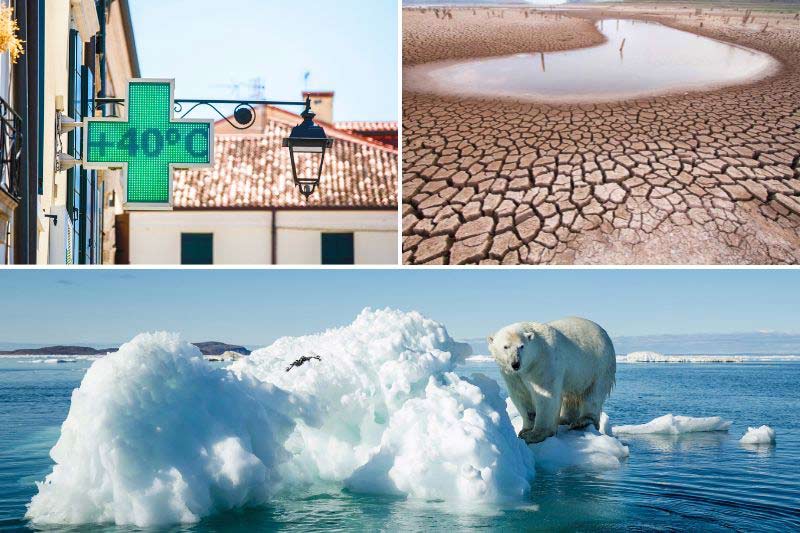
It is normal to be worried in a world that is struggling
Gardeners are a "public" particularly affected by these issues, because through our gardening practice - which is often more than a hobby, but a true passion - we see the direct effects on our little piece of nature and paradise, to which we devote so much time and care. Gardens ravaged by hailstorms, plants wilting under the heatwave, dwindling water reserves for careful cultivation, uncontrollable pest insects... gardening increasingly resembles a kind of battle, and many gardeners simply feel like giving up in the face of so much effort rendered futile.
So what can we do, doctor?
In this situation, it is impossible to put things into perspective as we might with the minor ailments of daily life! Yes, the situation is very real and dramatic, and our so-called "small daily gestures" seem utterly trivial in the face of the situation and the inaction of the world around us.
Nevertheless, taking action and turning towards solutions are more positive and constructive attitudes than lamenting the fate of our planet and the bleak future that awaits us. Every gesture to reduce carbon impact, save water, and promote biodiversity is of real importance, and these eco-solutions have numerous co-benefits: they are good for health, they allow for savings, they enable a more pleasant way of living, and they reconnect people.
Anger can also be beneficial, more dynamic than anxiety and withdrawal: it drives us to rebel and act, to set an example around us through collective or individual action. Why not get involved in an environmental, biodiversity, or bird protection association? Learning how these ecosystems function, knowing the fauna and flora of your region and those that are endangered, and taking action to protect them allows you to engage in meaningful causes and feel useful. In short, instead of being eco-anxious, let us be eco-furious and continue to fight our small and large battles, in our gardens and beyond!

Anxiety, sadness, or anger… many of us feel these emotions in response to the climate crisis. What is happening to the planet deeply affects some of us, leading to feelings of helplessness and a loss of meaning. This “malady of the century,” also known as solastalgia, highlights the link between mental health and environmental health: […]
In the good old days, rural life was marked by sayings concerning crops. Almost every saint on the calendar had one of these sayings associated with it, prescribing an activity for a given plant. The oral tradition is thus rich with these adages cherished by gardeners, marking the seasons with temporal references: "on Saint Catherine's Day, all wood takes root," "you plant potatoes when the lilac is in bloom," or "the first of the Ice Saints often leaves its mark.".
We thus knew until now when to sow, prune, plant, or harvest thanks to these markers. But nowadays, no one knows which saint to turn to, as the disrupted climate cycle no longer really corresponds to the sayings of our ancestors and their seasonal markers.
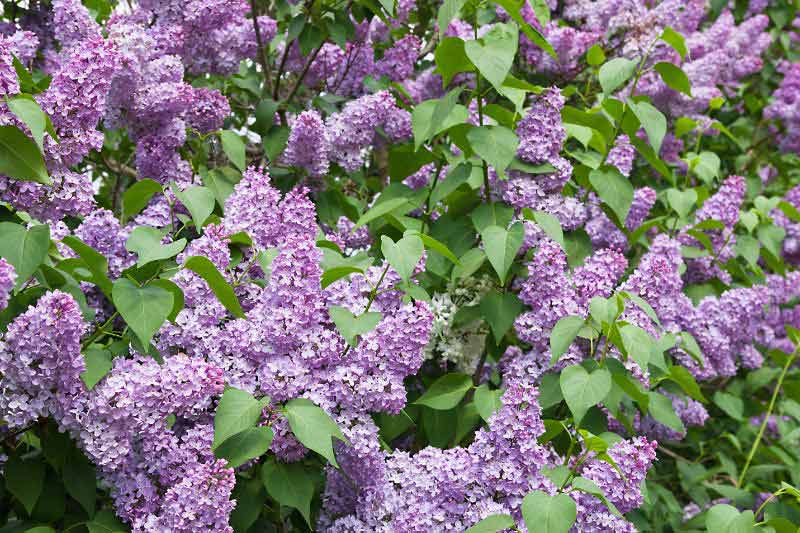
Disrupted seasonal markers
Indeed, in France, over a century, the average temperature has increased by 0.7 °C, and the IPCC (Intergovernmental Panel on Climate Change) predicts a rise in global temperatures between 1.4 and 5.8 °C by 2100. It is unnecessary to consult specialists to observe this warming, see the consequences on our gardens, and notice a desynchronisation with traditional seasonal markers.
So, do not be surprised to see your apple or cherry tree offering a second flowering at the end of August; the fact that they are "off-season" (that's the jargon term) is a sign of this disruption to which living things do not know how to adapt, as it is so abrupt. It seems that one of the only expressions still in use in this matter is, indeed, "there are no more seasons." Amidst this disorder, our traditional sayings that punctuate the meteorological year remain a reference, a collective memory, but it must be acknowledged that we will now have to adapt them to the situation of a disrupted world.
Visible disruptions in the garden
On the scale of our Hexagon and Belgium, phenology has revealed for several years that winters are becoming milder, without sparing us from frosts, even late ones. Dry spells are set to multiply, leading to soil drying and a scarcity of fresh water.
Thus, regarding the vegetation of gardens and the nature that still surrounds us a bit, we notice:
- earlier bud bursts (the moment when leaf or flower buds open). Scientists consider that for every 1 °C increase, buds appear 5 days earlier
- an earlier ripeness of fruits
- desynchronisation between flowering preventing the cross-pollination of these fruit trees
- insufficient dormancy break and a lack of frost hardiness in plants
- inhibition of general plant development
- an increase in pests, which remain in the garden year after year and develop more rapidly with a longer breeding period due to rising temperatures
- an increase in fungal diseases
The differences in seasonal rhythms affect not only plants but also insects, birds, and all the garden fauna that feed on plants, sometimes affecting an entire food chain.
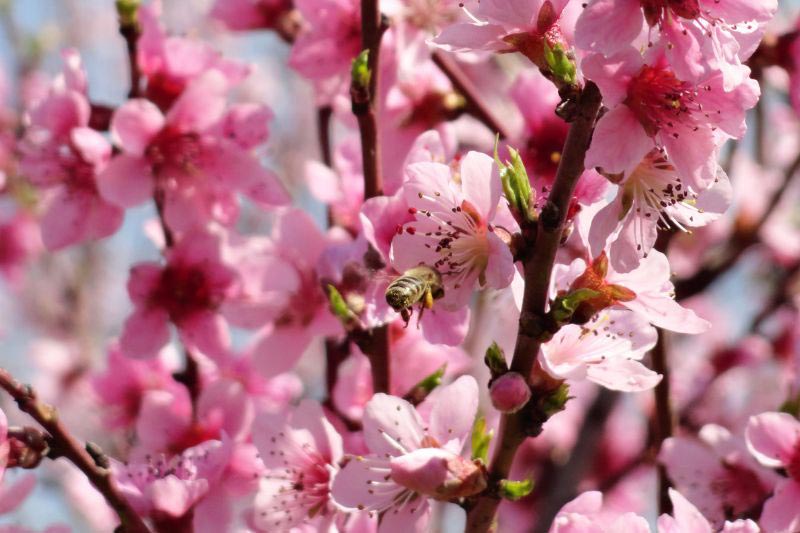
Phenology as a resilience tool
In light of this observation, if we still wish to have pleasant gardens to live in as well as regular and abundant harvests, we must take into account all current impacts, but also those anticipated. If ancestral seasonal markers are no longer very reliable, phenology, or the observation of periodic events in the lives of plants and animals (such as the appearance of leaves, flowering, the departure of migratory birds, etc.), can truly help us understand the influence of warming on our patch of land.
Get out your gardening notebooks and record your observations throughout the seasons! It is highly likely that these will be valuable for the years to come. Small shifts in sowing periods or dates of flowering, appearance of diseases or pests, for example, are worth noting to remember in subsequent years. This is resilience: adapting our gardening practices and habits to gently (or not!) adjust and avoid repeating mistakes that can discourage even the most passionate gardeners.

If you take up the challenge of these fascinating observations, you can participate in a citizen science programme on the French website of the Observatory of Seasons - created by a research group from the CNRS - to help the scientific community collect data on the seasonal rhythms of flora and fauna to understand the impact of climate change on ecosystems.
In the good old days, rural life was marked by sayings concerning crops. Almost every saint on the calendar had one of these sayings associated with it, prescribing an activity for a given plant. The oral tradition is thus rich with these adages cherished by gardeners, marking the seasons with temporal references: “on Saint Catherine’s […]
Summer droughts, once sporadic, are now commonplace in France and Belgium (and in much of the rest of the world). There is considerable concern about the survival of our plants in gardens as well as in nature. However, it is quickly forgotten that pollination, which ensures the longevity of plants through sexual reproduction and enables fruit and vegetable production, is directly impacted by high temperatures and lack of water. What are the actual detrimental effects of severe droughts on pollination experienced in recent years? Scientific research is currently underway to uncover this.
Pollination via insects: a win-win contract
As the saying goes: "nature is well made!" A pollinating insect (bees, bumblebees, wasps, hoverflies and other dipterans, butterflies, certain beetles...) visits a flower. It finds nectar and pollen that will nourish it or feed its offspring, while the pollen attached to the insect moves from one flower to another as it forages. The pollen from one flower then meets the pistil of another flower of the same species and, bingo!, the flower is fertilised: the production of fruits or seeds can then begin. In short, everyone benefits! Both the insect and the plant.
As a reminder, pollinating insects have co-evolved with flowering plants. This means that plants have evolved to attract and facilitate visits from pollinating insects, while insects have evolved to have the appropriate morphology to collect nectar and pollen from these flowers. Moreover, some plants can only be fertilised by a single species of insect: if the insect disappears, the plant can no longer reproduce and will also disappear; if the plant is no longer present, the insect will not be able to feed and will also vanish.
Just to clarify: we are only discussing insect pollination, known as entomogamous or entomophilous. Other types of pollination exist: pollination by birds or bats, by wind (anemogamy) or by water (hydrogamy).
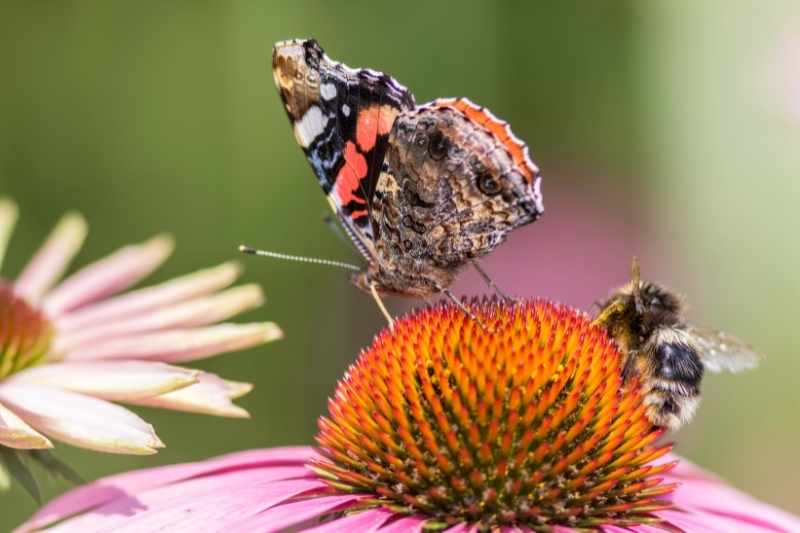
A widespread concern: research is ongoing
Scientists, including Charlotte Descamps (a PhD student at the Earth and Life Institute of UCLouvain), have been working for years to understand the impact that drought could have on pollination. To do this, they have chosen several model plants, such as borage (Borrago officinalis), and placed them in growth chambers under controlled conditions: different temperatures (21, 24, and 27 °C) and varying water supplies (watered or not at all). The idea is to recreate the conditions that the plant might experience in real cultivation. Several conclusions have already been drawn.
What are the consequences of drought on flowers?
- Decrease in the number of flowers: we, as simple gardeners, are already noticing this in our gardens. When it is very dry, the number of flowers in ornamental gardens as well as in vegetable gardens or orchards decreases. Moreover, the scant flowering is very fugacious. As soon as we turn our backs, the flower wilts;
- The morphology of flowers changes: this is the most surprising aspect; during drought episodes, flowers change. Some petals disappear, flowers become smaller... All of this could lead to the insect's inability to visit the plant;
- Reduced attractiveness of the flower for the insect: according to a study from Marseille, if it is too dry, the flower may exhibit changes in its usual scents. This can result in the insect suddenly losing interest in a flower it usually forages on;
- Reduction in nectar and pollen production: nectar is less abundant, making the flower less attractive to pollinators. Furthermore, pollen is produced in smaller quantities, which significantly reduces pollination.
- What about the quality of nectar and pollen?: research is still ongoing to determine whether the quality of nectar and pollen, and thus the attractiveness of flowers to insects, remains stable or decreases during drought episodes. Stay tuned...
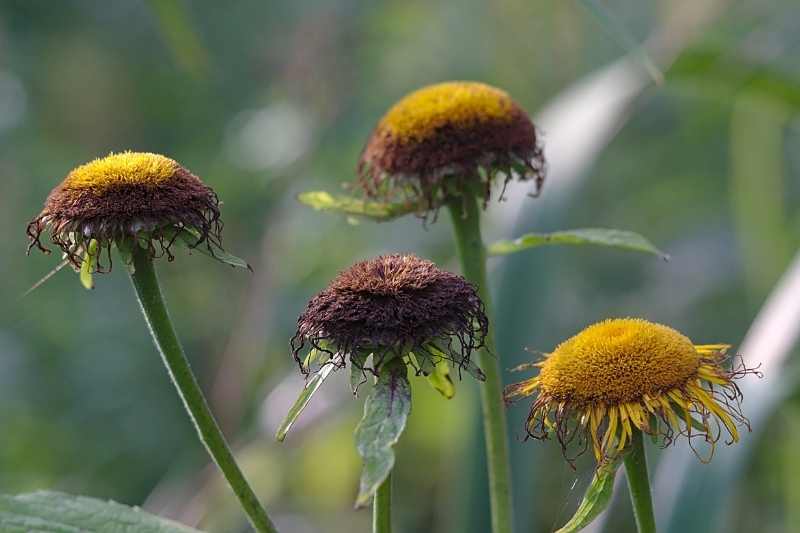
And what about the insects?
Insect populations have been suffering for decades for various reasons: use of pesticides, reduction of habitat and food sources, decline in floral biodiversity... and of course climate change. During high temperatures and drought episodes, insects are thirsty and can no longer move or feed normally. In short, drought impacts both parties in entomophilous pollination: the plant and the insect. Obviously, this could have serious repercussions in the medium term on certain food productions and risk causing famines, even in our regions. Even though, in some countries, producers are already turning to manual pollination or using nanorobots...
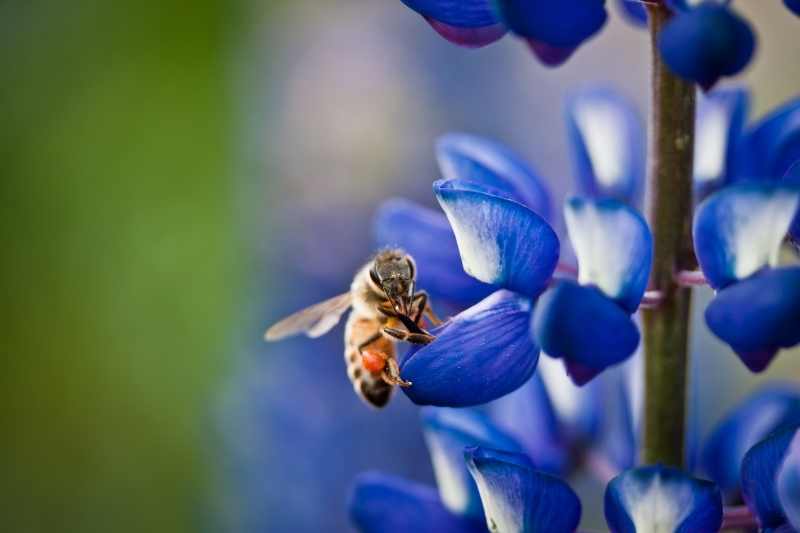
Summer droughts, once sporadic, are now commonplace in France and Belgium (and in much of the rest of the world). There is considerable concern about the survival of our plants in gardens as well as in nature. However, it is quickly forgotten that pollination, which ensures the longevity of plants through sexual reproduction and enables […]
Failing to design a garden can leave even the most skilled among us feeling perplexed. Style, plant selection, decoration... so many factors come into play that sometimes, we don't know where to start or which path to follow. So follow our step-by-step advice to, like some particularly tenacious gardeners, successfully fail at designing your little piece of nature!
Lesson 1: Embrace improvisation!
Meticulous minds first recommend planning the layout of their garden: taking measurements, defining different spaces with their various functions, organising pathways, considering orientation, etc.
To fail at designing your garden, don’t plan too much! Drawing a plan might give you a headache, requires knowing your garden's orientation, in short, it makes you think instead of act! When the urge strikes, rush out to buy plants, grab your spade, and plant without overthinking. The layout of the flowerbeds will happen naturally, as you progress. If you decide to install a few trees, follow the advice in our excellent article on how to fail at planting your trees in 5 lessons. And if you fancy flowers of all kinds, discover how to fail at planting your perennials in 6 lessons. You’ll see, it’s very easy!
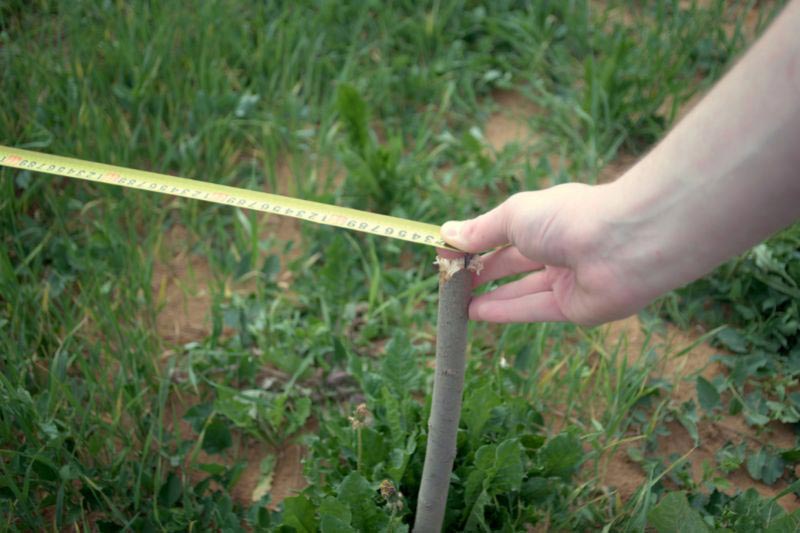
Lesson 2: Mix styles
The best landscapers advocate choosing a style for the garden, which should also be in harmony with the architectural style of the house. They might even say that a small Norman cottage in the middle of a Japanese garden would verge on bad taste!
But why choose between the English garden with its abundant mixed borders, the zen atmosphere of Japanese gardens, rockeries showcasing plants and stones, and the flowerbeds reminiscent of those from your grandmother, so vibrant and colourful? To fail beautifully at your garden, don’t hesitate: mix the atmospheres, even within the same flowerbed! Your eye will never get bored, and your neighbours will envy your creativity!
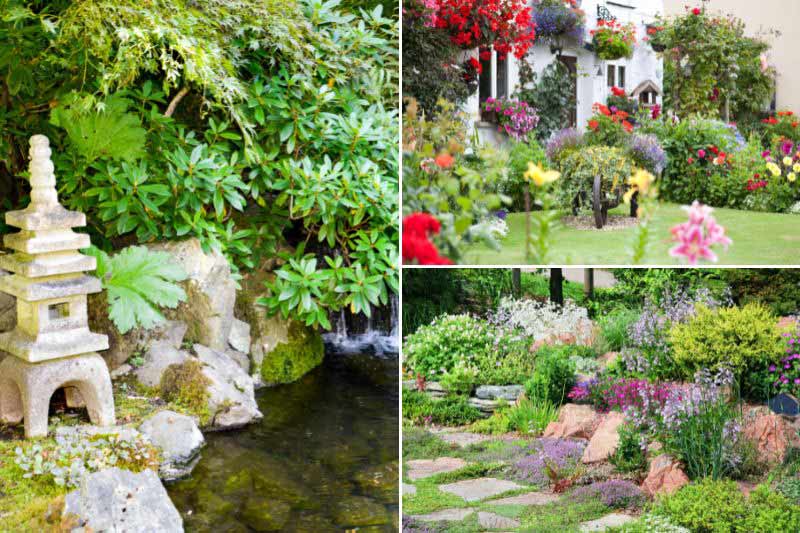
Lesson 3: Trust your instinct for plant selection and placement
Experts will tell you that you need to "organise" the plantings: the largest specimens at the back, the medium ones in the middle, and the smallest plants at the front. You might also read that evergreen plants help "structure" the space, punctuating the garden, and that you should play with volumes and textures.
To properly fail at your garden, choose plants that you like: all are welcome in your garden, big or small, evergreen or not, let’s not be picky! As a result, your lovingly planted hedge might consist of bushes - certainly very colourful - but all deciduous, and your neighbours always have an eye on your garden? No matter: lay down a plastic weed barrier, it will stay green all year round. Some artificial hedges even mimic foliage very well, so don’t bother.
Lesson 4: Choose plants without worrying about your region's climate or soil type
Yes, we sometimes stray into urging you to adapt the plants in your garden to your local climate or soil type... We even developed an app called Plantfit, allowing wise gardeners to meet a whole range of criteria for "suitable planting". What an idea!
Why couldn’t this lovely Bougainvillea be planted in your little garden in Haute-Savoie? It would remind you of your holidays in the South! And why couldn’t these magnificent rhododendrons find a place in your second home garden in Bormes-les-Mimosas, next to the palm tree planted last summer by the terrace? Again, the idea is to please yourself; if the plants don’t survive, you can always replace them.
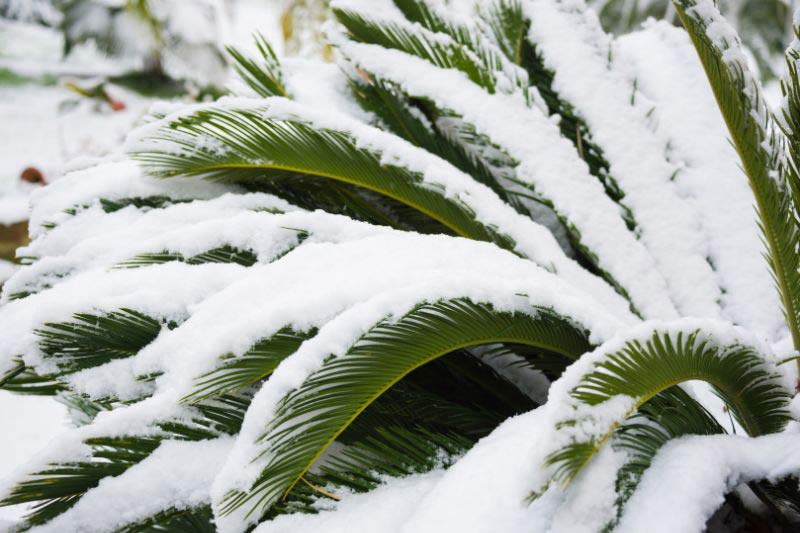
Lesson 5: Simplify your planting
Timing and planting distances, hole sizes, adding organic matter, drainage, watering, staking... so many parameters are considered by the gardening purists at the time of planting.
The best time for your plantings to be doomed to failure is whenever you choose, and good for you if you prefer to enjoy those lovely summer days to do it! As often happens at this time, the soil may be hard and dry: don’t hesitate to grab a pickaxe. Make a hole for each plant while conserving your energy and install them. If the hole isn’t big enough, you can force it a bit or cut part of the root ball. What’s underground won’t be seen in the end, and the main thing is that you are satisfied with the composition. Water with the equivalent of a glass of water and don’t bother with a stake; if the tree leans a bit later, it will add character.

Lesson 6: Don’t over-finesse the details
The saying goes: "the devil is in the details." So yes, we take care when laying the new tiles in the bathroom because we see them every day, and overly perfectionist gardeners apply the same attention to detail to their outdoor spaces, thinking that the elements structuring the garden must be well cared for.
Tell yourself that to beautifully fail at what you’ve undertaken, things can remain "as they are" and a few small imperfections will enhance the overall result! The beautiful coloured gravel in your latest flowerbed doesn’t completely hide the green tarp laid underneath? From the terrace, it will hardly be noticeable! Some fence posts aren’t completely level? The bushes will grow, and soon it won’t be visible (unless they all die...). In short, there’s no need to nitpick. If the wires holding your tree to the stake aren’t particularly aesthetic, you really have to look closely to see them.
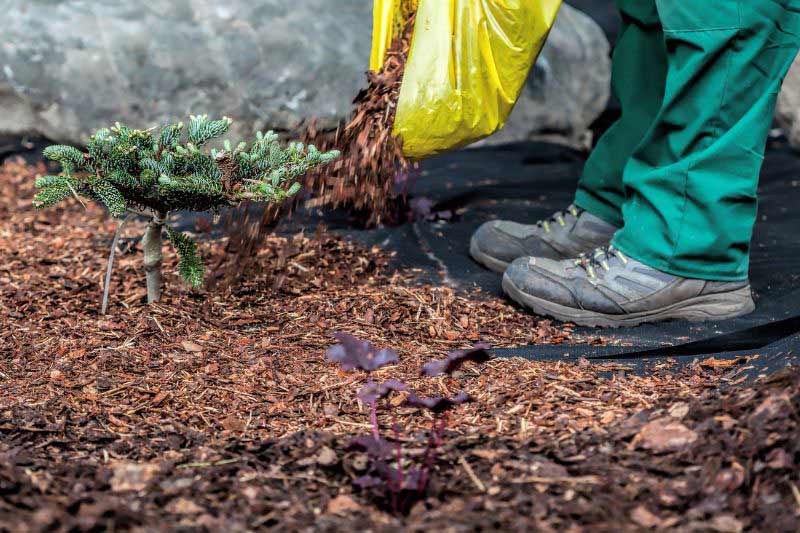
Lesson 7: Fountains, statues, and decorations of all kinds... Treat yourself!
Life is short, and the important thing is to enjoy it and treat yourself! In the garden, put this saying into practice, make your green oasis a place that reflects you, and forget the grumpy ones who will tell you that the most beautiful gardens are also the simplest.
A set of fabulous garden gnomes is at an unbeatable price during the sales? Why not splurge and scatter them around the garden to make it more attractive for your guests? A little romantic fountain is calling your name, and you can picture it on your terrace next to the recently installed Buddha head? It’s the perfect opportunity to create a unique and relaxing atmosphere! In short, don’t hesitate on the decoration, the little extra of your piece of nature, what will definitely set it apart from other gardens...
Failing to design a garden can leave even the most skilled among us feeling perplexed. Style, plant selection, decoration… so many factors come into play that sometimes, we don’t know where to start or which path to follow. So follow our step-by-step advice to, like some particularly tenacious gardeners, successfully fail at designing your little […]
It is a little-known fact that climate change could lead to an expansion of global forests. Even today, the phenomenon is quite tangible all around the Arctic polar circle, in Norway or in Alaska, to the extent that some areas now have four times more trees than in the 1980s, and the gains in tree cover in these regions would exceed the losses lamented in others, such as in the Amazon. At first glance, this seems like good news... yet researchers tell us otherwise.
For the past thirty years, areas that were usually frozen and snow-covered have experienced a warmer climate, allowing forests to expand and replace the traditional low shrub layer. This vegetation was covered in snow for long months, which reflected solar radiation. However, this is no longer the case for the trees that have succeeded it. Thus, dark forest covers replace the snow and reduce reflectivity - what is known as albedo - causing the absorption rather than the reflection of some solar radiation. And of course, this solar energy is released into the atmosphere as heat...

In some arid areas of subtropical regions, the same phenomenon of forest development is observed. It is the higher concentration of CO2 in the atmosphere that is to "blame". Indeed, trees in semi-arid forests need to open their stomata less to absorb this more available CO2. They therefore simultaneously reduce their water loss through evapotranspiration, leading to new and increased vegetation growth. However, in these arid regions, this natural vegetation, combined with reforestation campaigns, can also be very problematic, as trees again absorb solar heat and shade sandy or rocky soils that are naturally very reflective. This fact is scientifically measured notably through the Fluxnet network, which studies the processes of exchanges of CO2, water vapour, and energy between terrestrial ecosystems and the atmosphere.
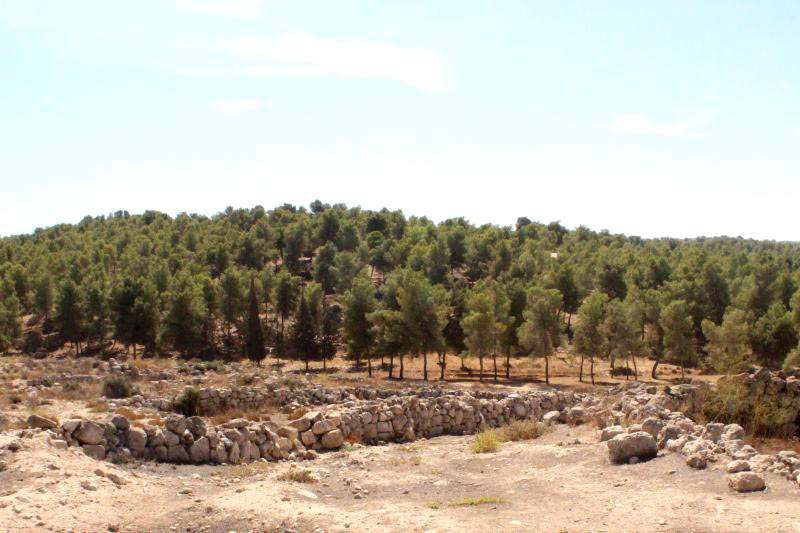
Thus, a more wooded world may not contribute to slowing climate change, as we now know that forests create conditions that, in some ways, cool the planet, but paradoxically also warm it.
In fact, if the forecasts promising a more wooded future turn out to be correct, we do not yet know how beneficial these trees could be in slowing climate change. This is because we must weigh the fact that forests also release water vapour, which promotes cloud formation, and these contribute to cooling. The canopies of forests also create surfaces that swirl air currents and help dissipate heat in the lower atmosphere. Moreover, the increase in carbon dioxide levels in the atmosphere aids tree growth. The biomass created in the form of leaves and wood can thus trap more carbon and therefore slow warming.
So, what about it, you may ask? Warming or cooling? The answer cannot be black and white, and researchers tell us that it will depend on several factors such as the altitude and latitude of the affected areas, the nature of the soils, the growth rate of the trees, the age of the forest, etc. A young forest, for example, might initially warm the atmosphere due to its albedo effect, but its impact could become more "cooling" for the atmosphere as the trees age and store more carbon.
Humanity is thus once again faced with uncertainty. How new forests will affect the climate poses a scientific but also political issue, as large-scale re-vegetation and greening projects - less complicated to implement than global decarbonisation - should in the future evaluate the potential downsides of a modified albedo... at the risk of having them turn against us and our planet!
It is a little-known fact that climate change could lead to an expansion of global forests. Even today, the phenomenon is quite tangible all around the Arctic polar circle, in Norway or in Alaska, to the extent that some areas now have four times more trees than in the 1980s, and the gains in tree […]
Hydrangeas are appreciated for their large spherical, flat, or conical inflorescences, often in shades of pink or blue. They have a beautiful presence in the garden, enlivening it with their colourful flowering, which generally lasts throughout the summer. However, despite the care you provide for your hydrangea, it may sometimes fail to bloom or bloom very little… even when it shows generous foliage and appears to be in good health. We explain why your hydrangea refuses to bloom and our tips to remedy the situation!
For everything you need to know about growing hydrangeas, feel free to check our complete guide “Hydrangeas: planting, pruning, and care”
1 - Because the exposure is not suitable
For it to thrive fully, it is important to grow hydrangeas in the right exposure! Too much shade or, conversely, too much sun can prevent them from blooming. Not all hydrangeas have the same sunlight requirements, and they can be divided into two groups:
- Hydrangea macrophylla and H. serrata, which prefer shade or partial shade
- Hydrangea paniculata and H. arborescens, which thrive in full sun
Thus, macrophylla and serrata hydrangeas should be sheltered from direct sunlight, at least during the hottest hours of the day. However, it is better to avoid dense and thick shade; a situation of partial shade or light shade, where they can enjoy morning sun and afternoon shade, will suit them perfectly. Paniculata hydrangeas, on the other hand, need sun: if you plant them in the shade, they will grow but will not bloom, or will bloom very little.
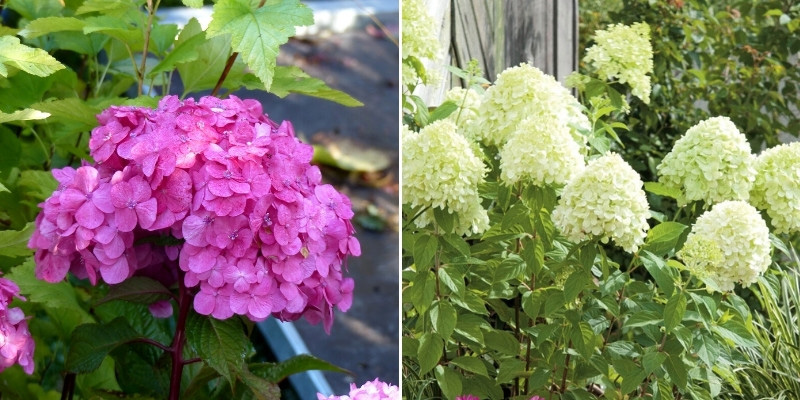
2 - Due to inappropriate pruning
Macrophylla hydrangeas bloom on the wood of the previous year. Therefore, it is best to avoid pruning them, or to carry out only very light pruning, as cutting too short may compromise flowering by removing the flower buds located at the tips of the stems.
In general, macrophylla hydrangeas fare better when not pruned, or pruned very little. If you do wish to intervene, you can perform very light pruning in March-April, removing only dead wood, damaged branches, and faded inflorescences. Every two years, feel free to aerate the centre of the shrub by removing a few old weakened branches, cutting them close to the ground. On the branches you keep, do not cut back more than 30 cm.
Hydrangea serrata, H. aspera, H. quercifolia, and climbing hydrangeas should also be pruned very lightly, removing only dead or damaged branches, and can easily do without pruning.
Paniculata and arborescens hydrangeas are pruned more severely. For paniculata hydrangeas, pruning involves structuring the shrub by retaining a few main framework branches and eliminating small, weak, or poorly positioned branches. Also remove branches that grow inward to aerate the centre of the shrub. On the framework branches, prune to retain only 2 to 3 pairs of buds. Arborescens hydrangeas benefit from being cut back to 30-40 cm from the ground. This will help regenerate the shrub and encourage it to produce fewer but larger and more impressive inflorescences!
To learn more, check out our advice sheets “When to prune hydrangeas?” and “How to prune hydrangeas?”
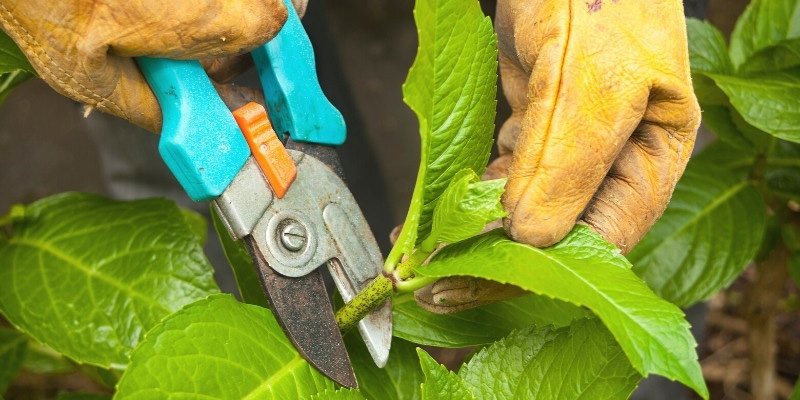
3 - Due to poor fertilisation
When grown in poor soil without amendments, hydrangeas may lack the mineral elements needed to support their flowering. They will appreciate it if you apply some well-decomposed compost at their base in spring, which you can incorporate into the soil with light scratching. Be careful, however, as excess organic matter or nitrogenous fertilisers may promote vegetative growth and foliage at the expense of flowering. In other words, your hydrangeas will look beautiful and appear to be in good health, with lovely green leaves, but may bloom very little. If you do apply fertiliser, choose one rich in phosphorus to encourage flowering.
Discover our range of fertilisers for hydrangeas
4 - Due to a late frost
In spring, when hydrangeas have formed their buds and begin to restart, a late frost can catch them by surprise and burn their buds, damaging young leaves and destroying part or all of the future flowers.
As a preventive measure, to avoid frost damage, we recommend monitoring the weather forecasts and covering your hydrangeas with fleece when there is a risk of frost.
If it is too late and the frost has already caused damage, prune the damaged parts to leave only healthy shoots and buds. The hydrangea can then concentrate its energy on these healthy parts.
5 - Due to lack of water
Hydrangeas do not tolerate drought well, and they must not lack water during the formation of flower buds; otherwise, these may dry out and never open. Hydrangeas need the soil to remain moist: do not hesitate to water them in summer and during any dry periods. Be particularly vigilant if you are growing them in a large pot or container: the substrate dries out much faster than in the ground. Feel free to apply a thick layer of organic mulch (straw, dead leaves, RCW…) at their base to help keep the soil moist for longer. The soil should not be waterlogged or remain constantly wet, as this could cause their roots to rot.

6 - Because it is too young
If your hydrangea was recently planted, it may need a few years to settle in. Rather than producing flowers, it invests its energy in developing its root system and adapting to its new growing conditions. Give it time, wait for it to form a nice leafy clump, and if the conditions suit it, your hydrangea will bloom without issue.
7 - Because it is sick
Diseases and pests impact flowering: a weakened hydrangea is likely to bloom little or not at all. Botrytis, in particular, can cause flowers and flower buds to rot. To prevent your hydrangea from getting sick, avoid excess moisture, water at the base of the plant without wetting the foliage, and ensure that air can circulate (by avoiding dense planting and lightly pruning the plant if necessary). If you notice it is affected by disease (presence of grey mould on the leaves), remove the damaged parts and spray a sulphur-based solution.
To learn how to identify and treat them, feel free to consult our advice sheet on diseases and pests of hydrangeas
Hydrangeas are appreciated for their large spherical, flat, or conical inflorescences, often in shades of pink or blue. They have a beautiful presence in the garden, enlivening it with their colourful flowering, which generally lasts throughout the summer. However, despite the care you provide for your hydrangea, it may sometimes fail to bloom or bloom […]
Floriferous, understated, and sturdy, this sums up the qualities of this essential shrub for summer gardens.
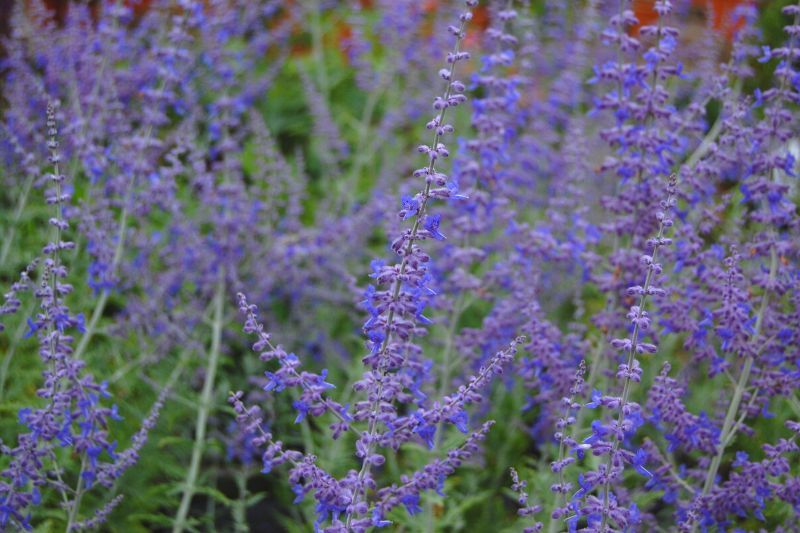
The 'Blue Spire' variety is one of the few plants that flowers continuously from June to September. It forms a large bushy clump of 1.20 m in height and produces fine stems adorned with slender spikes laden with lavender-blue flowers, exceptionally generous in number. Its small, dentate, grey-white foliage is highly aromatic, indicating excellent adaptation to dry, even arid summers. Airy and luminous, the Afghan sage fits seamlessly into sunny borders, thriving in well-drained, rather poor soils.
Planted in my garden near Aix-en-Provence, in a border for 7 years, this variety grows effortlessly, without watering, and thrives regardless of conditions. Resistant to wind, cold, and severe drought, indifferent to the presence of lime, it is for its incredible robustness that I selected this variety. It enlivens the garden with its steel-blue plumes alongside gauras, bushy sages, lavenders, and California fuchsias.
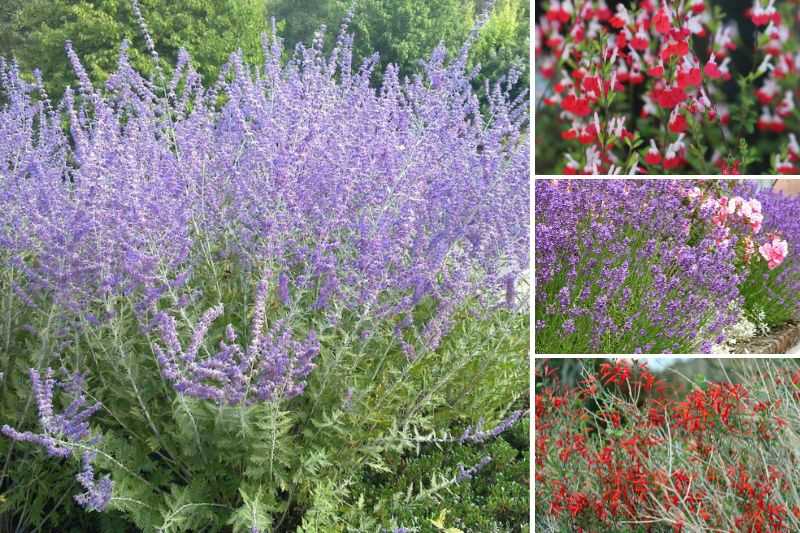
This is a plant that requires no maintenance other than a severe pruning with shears at the end of winter: I simply cut it back to 15 cm above the ground. One last piece of advice, overly fertile soil will lead to more vigorous growth but will harm the density of the plant, as the bush will tend to open up. Don’t hesitate to plant it in soil mixed with sand and gravel.
Its strengths:
- Grows in full sun
- Drought-resistant
- Robust against diseases
- Requires very little maintenance
- A plant of great simplicity
Floriferous, understated, and sturdy, this sums up the qualities of this essential shrub for summer gardens. The ‘Blue Spire’ variety is one of the few plants that flowers continuously from June to September. It forms a large bushy clump of 1.20 m in height and produces fine stems adorned with slender spikes laden with lavender-blue […]
The Cutie Pie rose is a brand new miniature rose with generous flowering reminiscent of the delicacy of apple blossom. Initially carmine pink with a white centre at the start of flowering, its petals lighten to pale pink in summer. Highly appreciated by pollinators, its flowers continuously renew until the first autumn frosts. Requiring little maintenance, it has a very healthy compact foliage and thornless branches.
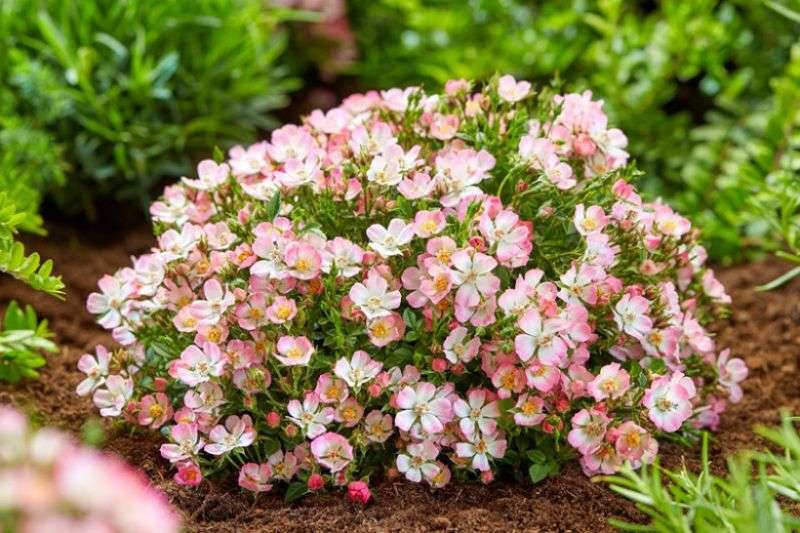
Whatever the style of your garden or terrace, this miniature rose is very easy to grow if you give it a lovely spot in the sun. Like a perennial plant, its small size, 15-20 cm high and 30 cm wide, allows you to tuck it in anywhere. At the edge of a path or to fill a space in the foreground of a border. Used as groundcover, three plants spaced 30 cm apart create a beautiful dense and flowering cushion in my rockery, accompanied by hardy geraniums, carnations, phlox, or nepeta.
On your terrace, it will thrive in a pot (30-40 cm) in dark grey tones that will enhance its beauty. By the second year, it will form an incredible dome of flowers.
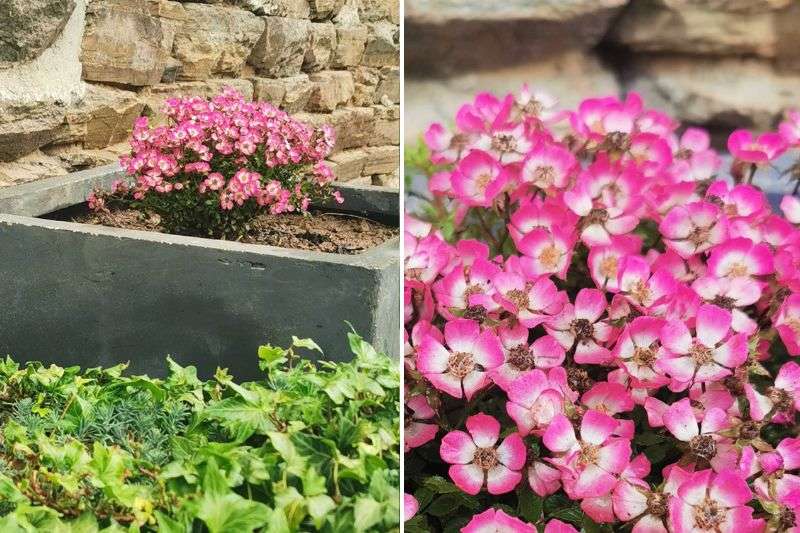
In terms of maintenance, regularly remove faded roses to encourage it to produce even more new flowering shoots. In the ground, it shows itself to be perfectly resistant to cold and drought. Water it once a week during the first year after planting, and it will manage very well on its own thereafter. In pots, protect it in regions with very harsh winters and ensure proper watering and fertilisation.
Don't miss out on this little gem; it will undoubtedly become a must-have!
The Cutie Pie rose is a brand new miniature rose with generous flowering reminiscent of the delicacy of apple blossom. Initially carmine pink with a white centre at the start of flowering, its petals lighten to pale pink in summer. Highly appreciated by pollinators, its flowers continuously renew until the first autumn frosts. Requiring little […]