The festive season often leaves its mark: a muddled complexion, an overloaded liver, and mysteriously shrunk clothes… It’s no wonder that Eating better is among the top 10 New Year’s resolutions. To achieve this, nothing beats "superfoods"! Here’s my little selection of "healthy" fruits and vegetables that are particularly good for your health, which you can grow in your garden; this will also allow you to get a bit of exercise 😉
1) Chia Seeds
Chia seeds come from an annual sage, Salvia hispanica, native to Mexico. Cultivated for thousands of years on the American continent, this tiny seed has only recently made its way onto our plates. Packed with numerous benefits, it is an excellent source of omega-3 and fibre. Additionally, it has the unique ability to thicken preparations by forming a mucilage when in contact with liquid, which increases the satiety effect of foods.
- How to use chia seeds?
Chia seeds have a mild flavour, although some find a pleasant nutty note. They can be sprinkled on salads, mixed into homemade bread, or added to yoghurts. Virginie makes an excellent pudding in the morning with almond milk and seasonal fruits. - How to grow chia seeds in the garden?
Chia grows easily in a mild climate, in good soil. Sowing takes place in spring, and the seeds are harvested in autumn. Be careful, this sage is not hardy!
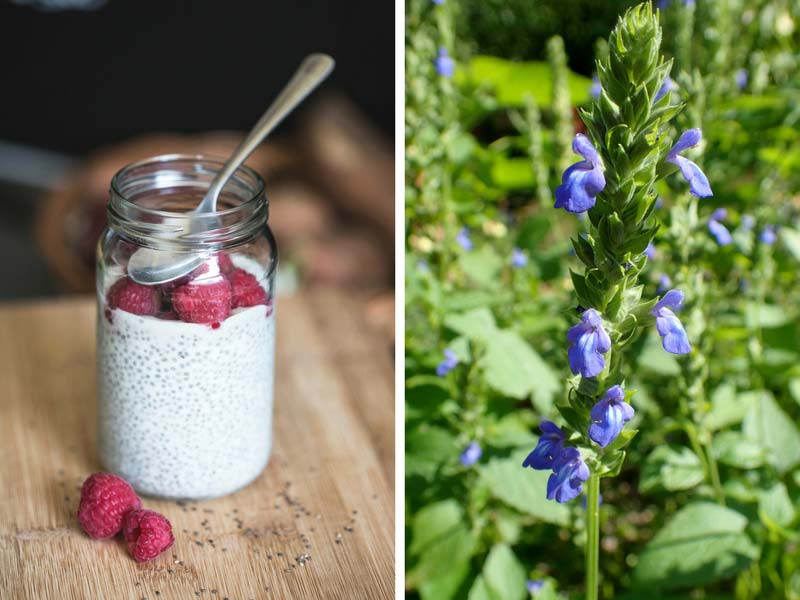 Chia seeds: a "superfood" from a sage, Salvia hispanica
2) Kale
A true trendy vegetable, kale has garnered a lot of attention in recent years. And if Americans are crazy about it, it’s because of its high content of fibre, iron, vitamins A, C, and K, as well as antioxidants. Excellent for eye health due to the lutein and zeaxanthin it contains. It is also a very good source of calcium.
- How to use kale?
Kale is best consumed raw to retain maximum vitamins. It can easily be juiced to "boost" a smoothie or juice. It can also be cooked, for example, in a gratin. But I won’t lie to you: kale leaves are quite tough! Before consuming, they should be softened after removing the central rib. To do this, look, it’s easy (it’s in English but you’ll understand quickly):
- Growing kale
This cabbage is grown like any curly cabbage. It requires rich soil but has the advantage of being very resistant to diseases and pests. To learn more, check out our advice sheet: "growing kale and curly cabbage in the vegetable garden."
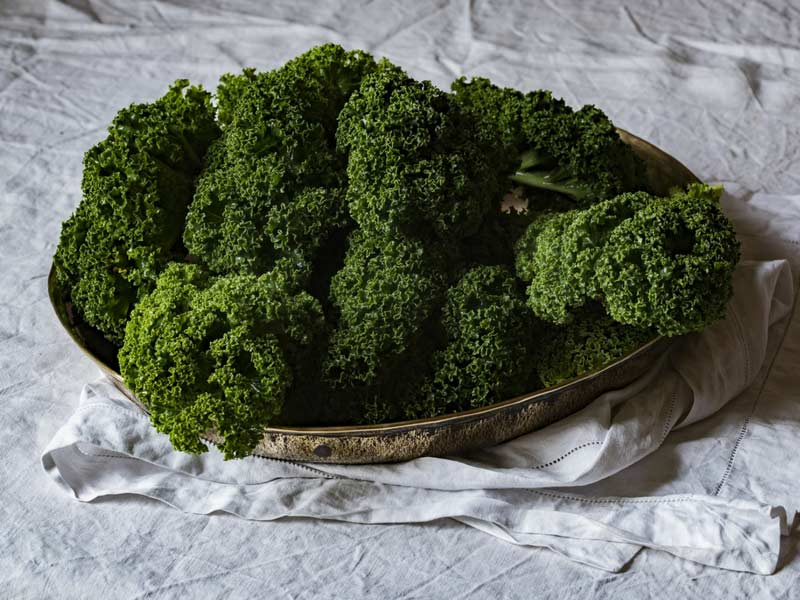 Kale, a "super cabbage" that loves massages
3) Flower Sprout
The Flower Sprout or Kalettes (BrusselKale for English speakers) is a promising newcomer. A hybrid of kale and Brussels sprouts, it produces, like Brussels sprouts, stems adorned with leaf buds. These mini-cabbages, serrated, dark green, and purple, are low in calories and very rich in vitamins C, K, and B6. The icing on the cake is that this cabbage also tastes good… Indeed, it is not bitter, and its sweet and mild flavour is accompanied by a pleasant nutty note. Original, it will also delight busy cooks as it cooks very quickly and retains a pleasant crunchy texture.
- Flower sprout in the kitchen
Quick to cook, it can be prepared in any way you like: steamed, quickly sautéed, or boiled in just 4 minutes… all with little to no smell. Versatile, it can serve as a side dish, but also as a base for many salads and, like kale, can be added to fruit juices. - Growing flower sprouts
In the vegetable garden, these small cabbages are grown just like Brussels sprouts. To learn more, follow our advice: "Growing Brussels sprouts"
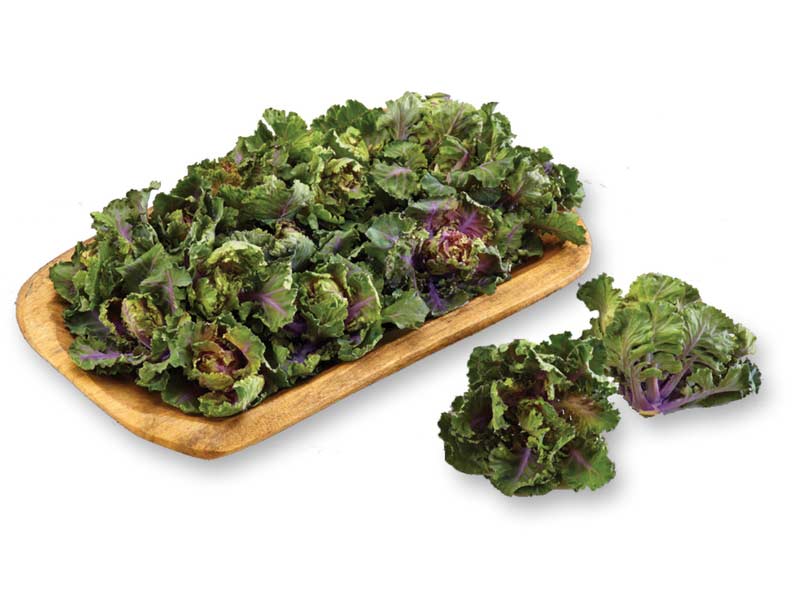 The Flower Sprout: half kale, half Brussels sprout - Photo: www.kalettes.com
4) Ginger
Exotic, ginger has long been known for its aphrodisiac effects. Popularised with the rise of sushi restaurants, it is now appreciated for its taste as well as its tonic, digestive, antibacterial, and antioxidant properties.
- Fresh ginger in the kitchen
The health benefits of ginger are numerous, but it is especially essential in Asian cuisine (in marinades, broths, or stir-fries to enhance a wok), as well as in traditional cooking. At home, I often use it in baking to add a kick to apple compotes. I also love it candied; its spicy flavour is perfect for a little boost during moments of fatigue. Finally, ginger can also be used in infusions with lemon as part of a detox cure. - Growing your own ginger:
Ginger is not complicated to grow, but it needs warmth. Unless you live in a tropical zone, it is best grown in a large pot, indoors or under a heated veranda.
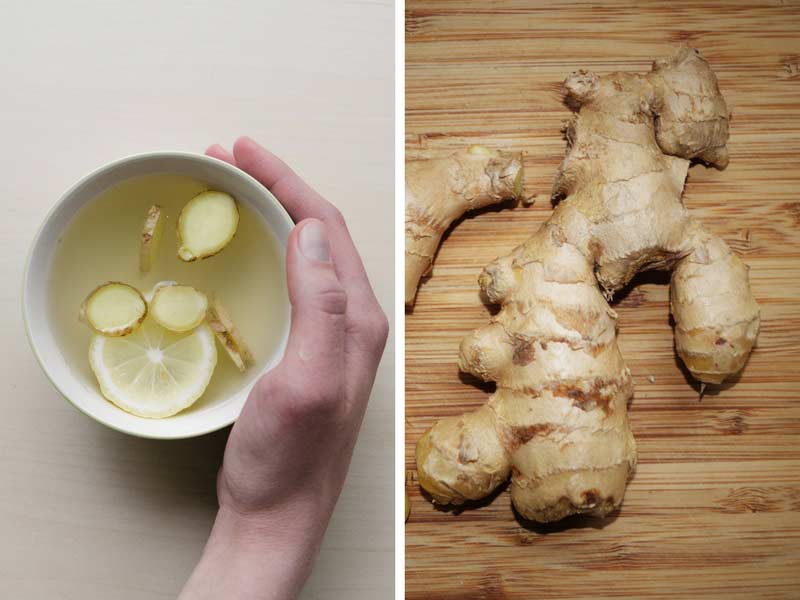 Ginger rhizome can be used in infusions as part of a detox cure
5) Goji
Goji berries come from an Asian bush, the Lycium. They are consumed fresh or dried. This small fruit has long been popular for its content of vitamins B, C, and E, but especially for its richness in antioxidants. However, its popularity has somewhat diminished following the discovery of batches, even certified organic, containing high levels of pesticides. All the more reason to grow them yourself!
- What to do with goji berries?
Fresh, goji berries can be added to homemade mueslis and granolas, yoghurts, fruit salads, or even juices. They can also add a sweet note to salads. Dried, they easily incorporate into cookies and other cakes. - Can you grow goji in your garden?
Yes, absolutely! Like many Asian shrubs, Lycium barbarum thrives in our climates. It is hardy and even tolerates lime. However, it is in the sunniest regions that it will fruit best. To learn all about growing these delicious berries, check out our advice sheet: "Cultivation, harvest, and drying of goji berries"
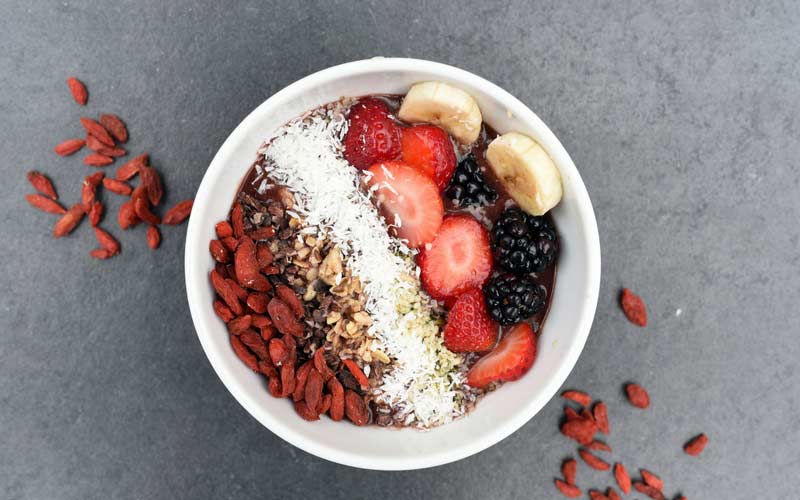 Goji berries lend themselves to many preparations. Add them to your mueslis daily
6) Black Radish
The black radish is one of those vegetables that can be a bit puzzling at first glance. Generally large, it has a black skin that covers a white, crunchy flesh, rich in potassium and magnesium. Slightly laxative and detoxifying, black radish aids digestion and "cleanses" the liver, but it is especially appreciated for its antibacterial properties. Rich in raphanine, it helps treat winter ailments like coughs.
- How to use black radish?
This radish is simply consumed raw, in thin slices or grated, in salads or on a slice of buttered bread. You can also choose to extract its juice, which, when mixed with sugar, makes an excellent syrup for a productive cough. The radish greens can also be prepared in soup. - How to grow black radish in the vegetable garden
This is a winter radish that is sown in summer. Its cultivation is not difficult, but due to its long root, it requires fairly deep and well-loosened soil.
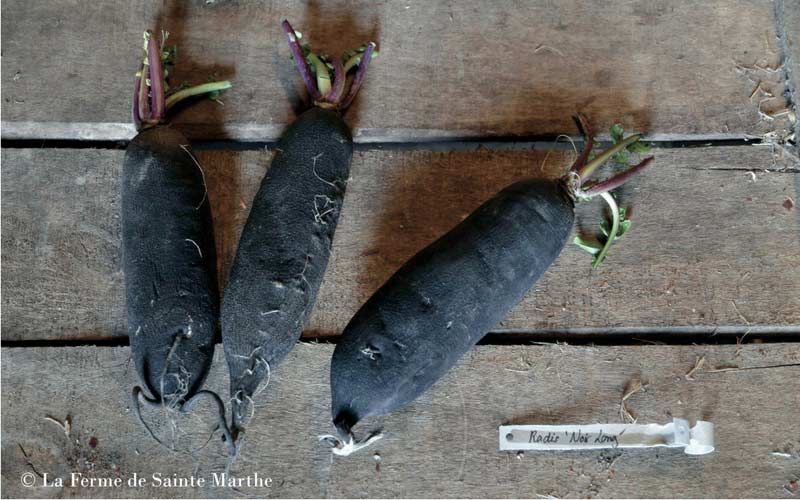 Long Winter Black Radish
7) Pumpkin Seeds
Pumpkin seeds are very rich in protein (between 20 and 25%), unsaturated fatty acids, vitamins, and minerals, including magnesium and iron. Often consumed as part of a vegetarian or vegan diet, they are also indicated for relieving urinary problems.
- How to incorporate pumpkin seeds into your diet?
Roasted, pumpkin seeds are perfect as a snack or nibble. Whole or crushed, they can be sprinkled on salads or incorporated into bread or cake mixtures. - How to produce your own pumpkin seeds:
All pumpkins are suitable, but to avoid the tedious peeling process, you should choose the Lady Godiva Pumpkin. This variety has the advantage of producing seeds without a shell. To succeed, proceed as with other pumpkins: give it a spacious area and plant it in rich soil or heavily enriched compost, even if it is not fully matured.
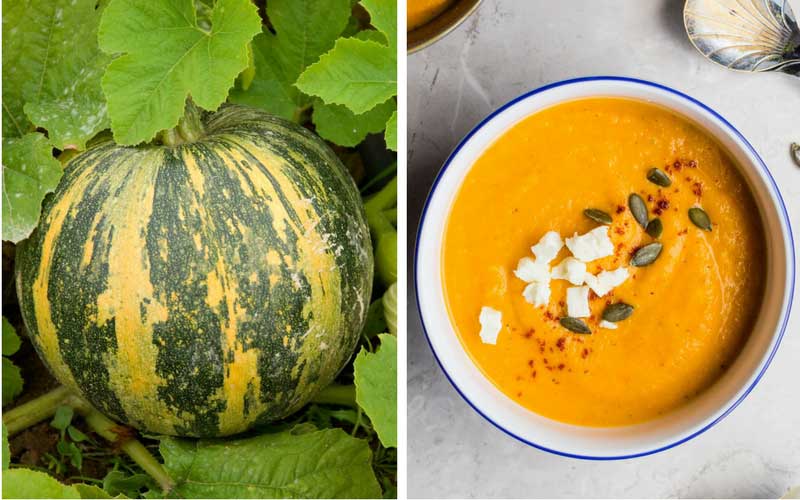 The Lady Godiva pumpkin (Photo: Ferme de Sainte Marthe), a perfect pumpkin for seed production. Its medium flesh is very suitable for soups.
And you, do you consume one or more of these "superfoods"? Let us know!
The festive season often leaves its mark: a muddled complexion, an overloaded liver, and mysteriously shrunk clothes… It’s no wonder that Eating better is among the top 10 New Year’s resolutions. To achieve this, nothing beats “superfoods”! Here’s my little selection of “healthy” fruits and vegetables that are particularly good for your health, which you […]
There are many good reasons to grow your own vegetable garden, and the ability to cultivate unique vegetables that are not easily found in shops is one of them. Among these are Asian vegetables as well as aromatic plants, which, unless you live in the 13th arrondissement of Paris, are a rare commodity at greengrocers!
However, these Chinese vegetables, as well as Japanese ones, sometimes curious, can thrive quite well in our latitudes... and here is a small list that will delight all lovers of exotic cuisine... as well as those who enjoy more traditional dishes.
1) Daikon or white radish
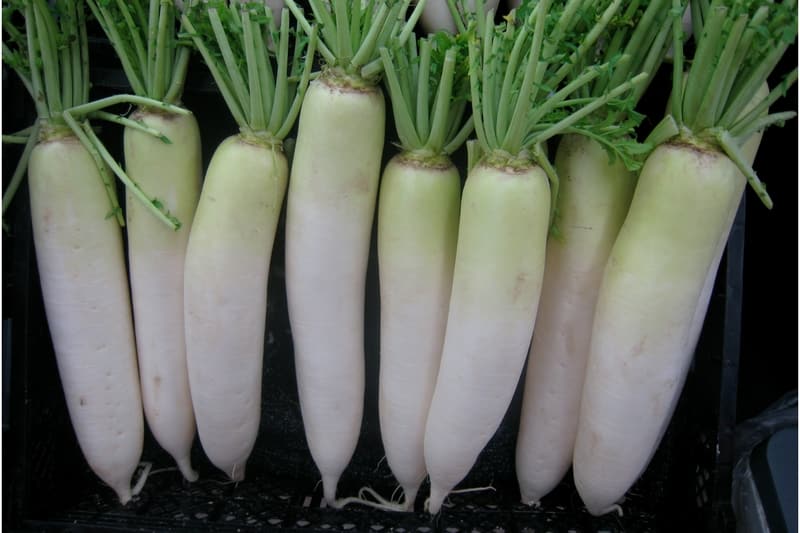
The Daikon (raphanus sativus longipinnatus) is a large winter white radish. A cousin of the black radish, it offers a sweet, juicy flesh and stores very well.
In Japanese cuisine, it is consumed raw, in salads, much like grated carrots. It is sometimes pickled or cooked by steaming or stir-frying. Diuretic and draining, it is often regarded as a true health food.
Its cultivation in the vegetable garden poses no difficulty if you ensure the soil is well loosened beforehand.
2) Pak choi or Bok choy
The Pak Choï, also known as Bok choy (Brassica rapa chinensis), is a Chinese cabbage with tender heads, composed of light green leaves with white bases. This cabbage offers a flavour that evokes both chicory, classic cabbage, and turnip.
You can prepare it raw or cooked, quickly stir-fried in a wok or braised. Its flavour pairs well with ginger, as well as with shiitake mushrooms, if you are lucky enough to find them near you (no need to search in the wild, these Japanese mushrooms do not grow spontaneously here!).
3) Pe-tsai or Napa cabbage
The Pé-Tsaï, also known as Napa cabbage (Brassica rapa pekinensis) is another type of Chinese cabbage, quite different from Pak choi. A bit closer to our traditional white cabbages, it produces beautiful dense, elongated heads. Its shiny green leaves are equipped with large midribs.
You will enjoy its sweet and delicate flavour by tasting it raw in salads, but also cooked in a wok with crunchy vegetables. This Chinese cabbage can also serve as a base for less exotic recipes, accompanying sausages and other charcuterie.
In the vegetable garden, these two cabbages are grown somewhat like classic cabbages but require a bit more warmth. For all you need to know about their cultivation, feel free to consult our advice sheet: Succeeding in growing Chinese cabbages.
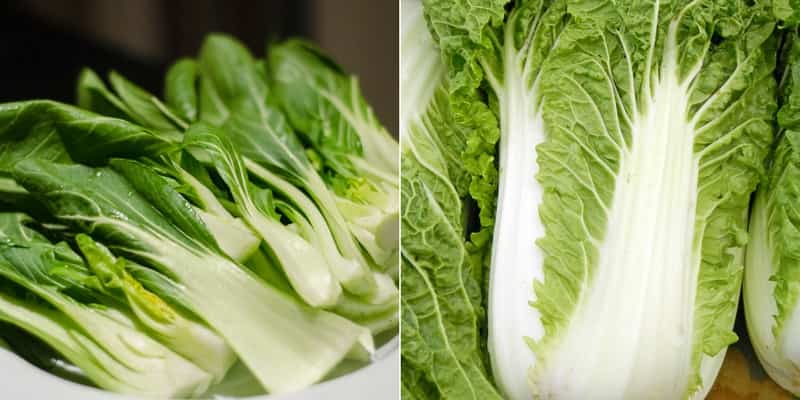 Pak choi and Pe-tsai: two very different Asian cabbages
4) Japanese crosnes
The Crosnes du Japon (Stachys affinis) belong to the category of perpetual vegetables. These are rhizomatous vegetable plants grown not for their aerial parts, but for their tubercles, which remind me of the roots of the oat with a necklace.
If crosnes are so renowned, it is for their fine flavour, somewhere between artichoke and Jerusalem artichoke, but also because they are sold at a premium price as their harvest cannot be mechanised.
In the garden, they thrive best in fairly rich and sandy soil. And since they need to be dug up with a fork, harvesting is made easier. Be careful, they look a bit like mint, so avoid planting them nearby to prevent having to "untangle" them before harvest!
Introduced to France in the 19th century, crosnes have already made their place in our kitchens where they are generally consumed, French-style, sautéed, fried, or mashed.
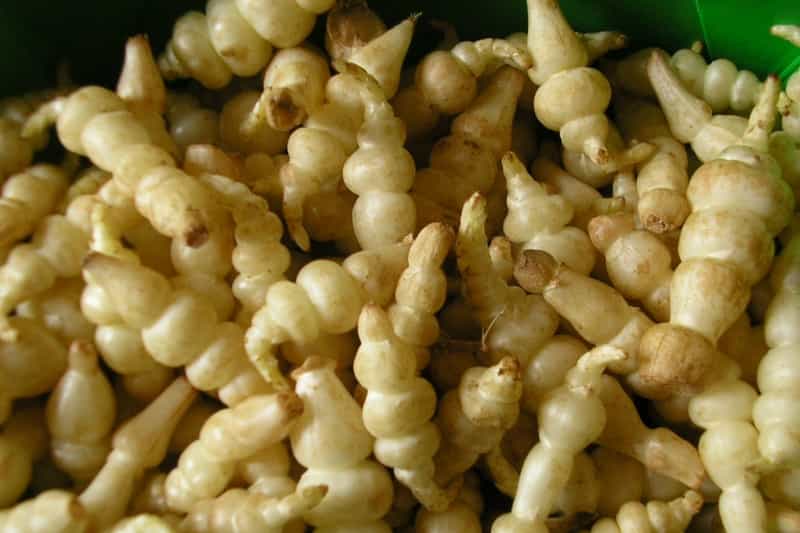 Japanese crosnes: a root vegetable of Asian origin
5) Mizuna or Japanese mustard
The Mizuna (Brassica rapa nipposinica), like rocket, belongs to the large family of brassicas. It is a pleasant little salad with fine laciniate leaves. This Japanese vegetable offers a rather mild flavour with a peppery note that works wonders in salads.
In the garden, mizuna cabbage is very easy to grow, it can be sown directly in the ground or under cover (greenhouse, frame) from May to September. It has the advantage of growing and regrowing quickly, offering its delicious leaves even in winter.
In the kitchen, it is highly appreciated in salads but can also serve as a base for pesto, decorating and accompanying all sorts of Asian dishes. Cooked, mizuna is consumed much like spinach: quickly sautéed or even in soup.
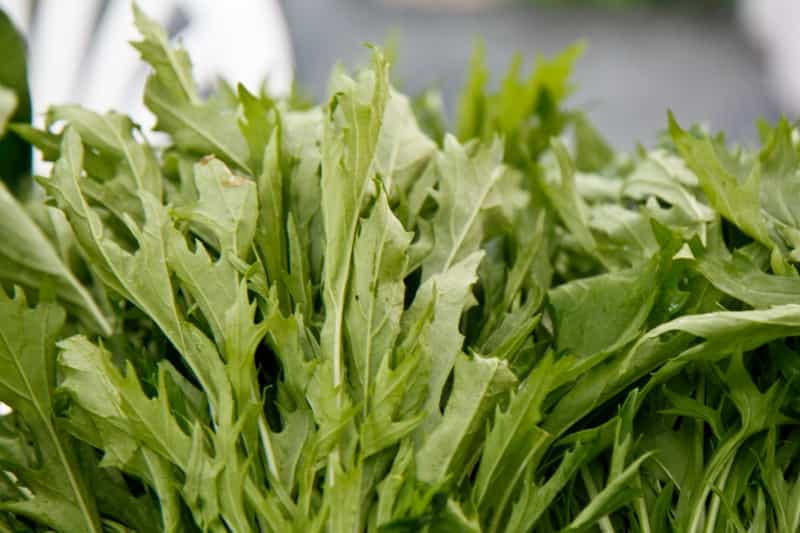 Mizuna: a Japanese salad to discover!
Discover all our tips for succeeding in growing Mizuna.
6) Japanese burdock or Gobo
The Japanese burdock (Arctium lappa) is a large plant cultivated for its long root, which resembles and tastes like salsify. It is a biennial, but you won’t have to wait long to harvest it as it can be extracted just 3 months after sowing.
The burdock root, rich in vitamins, is also known for its many properties (purifying, antiseptic, antifungal…).
I won’t sugarcoat it, burdock is not an easy plant to grow in the vegetable garden. It is quite demanding regarding soil, which it prefers to be loose and deep, as well as on watering, which must be regular and abundant throughout the growing period. If you have good soil... and a reliable automatic watering system, go for it!
Its long brown root can be consumed raw or cooked. Extremely rare in France, this root vegetable, a bit fibrous, is finely grated for salads or cut into julienne and then stir-fried.
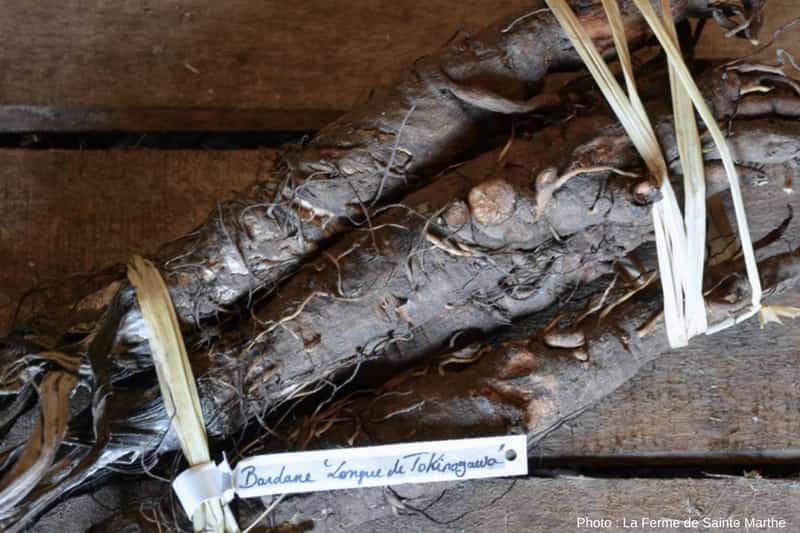 Japanese burdock, an Asian root vegetable almost impossible to find in France
7) Lemongrass
The lemongrass (Cymbopogon citratus), not to be confused with lemon balm or lemon verbena, is a herbaceous plant also known as Madagascan lemongrass. And if English speakers call it "lemongrass", it is because it is indeed a grass and exudes a delightful lemony fragrance. It is widely found throughout Southeast Asia, and all those who have discovered it during a trip to Vietnam or Thailand cherish wonderful memories.
In the garden, lemongrass prefers rich soils, warmth, and water, especially during its growing period. It is a tender plant, not hardy, often grown in pots and sheltered during winter. Its cultivation is possible in a cold greenhouse in regions with mild winters (successfully tested here in Brittany).
Note that lemongrass (both the plant and essential oil) is reputed to repel mosquitoes.
In the kitchen, the bases of its stalks are consumed. Once peeled, they are chopped to flavour sauces for white meats (the famous "chicken with lemongrass"), fish, broths, and marinades. It pairs very well with ginger, curry, and coconut milk.
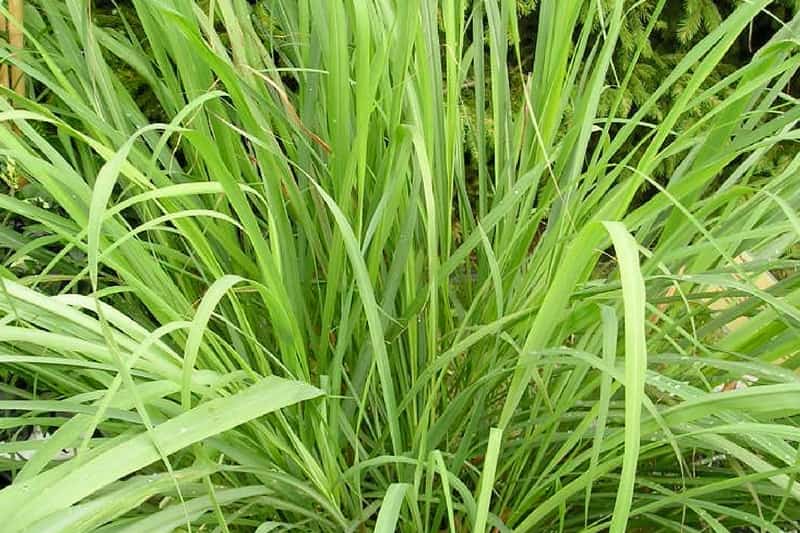 Lemongrass: an aromatic plant that will take you on a journey!
This list of Asian vegetables is, of course, not exhaustive. If you are curious, enjoy exotic flavours, and have a taste for travel, even just gastronomically, I invite you to discover our selection "World Flavours" which features a lovely range of fruits, vegetables, and herbs from all five continents... to cultivate in your garden!
There are many good reasons to grow your own vegetable garden, and the ability to cultivate unique vegetables that are not easily found in shops is one of them. Among these are Asian vegetables as well as aromatic plants, which, unless you live in the 13th arrondissement of Paris, are a rare commodity at greengrocers! […]
Radishes are often the first vegetables grown in the kitchen garden: early in the season, but also by beginner gardeners, as they are reputedly easy. We all know it, perhaps from sowing it as early as primary school, the famous 18-day radish… but far less the other varieties.
As we enter the peak season for sowing radishes, I invite you today to explore the range of possibilities offered by this irresistibly crisp little vegetable, which can be sown almost year round!
Forcing radishes
Forcing radishes are very early. They can be sown from January to February under protection (cold frame, frame or tunnel) or a little later, outdoors in the kitchen garden. Quick to mature, they grow quickly and brighten plates by Easter.
- The Fluo F1 radish: a F1 hybrid variety that stands out for its precocity. This radish yields semi-long roots, red with white tips. Sowing: from December to April
- The Gaudry 2 radish: very early, it produces beautiful round roots, bright pink with white tips. Sowing: from January under cover to September.
- The scarlet-round forcing radish : it grows quickly and produces pretty spherical roots, entirely red, with white, crisp flesh. Sowing: March to September
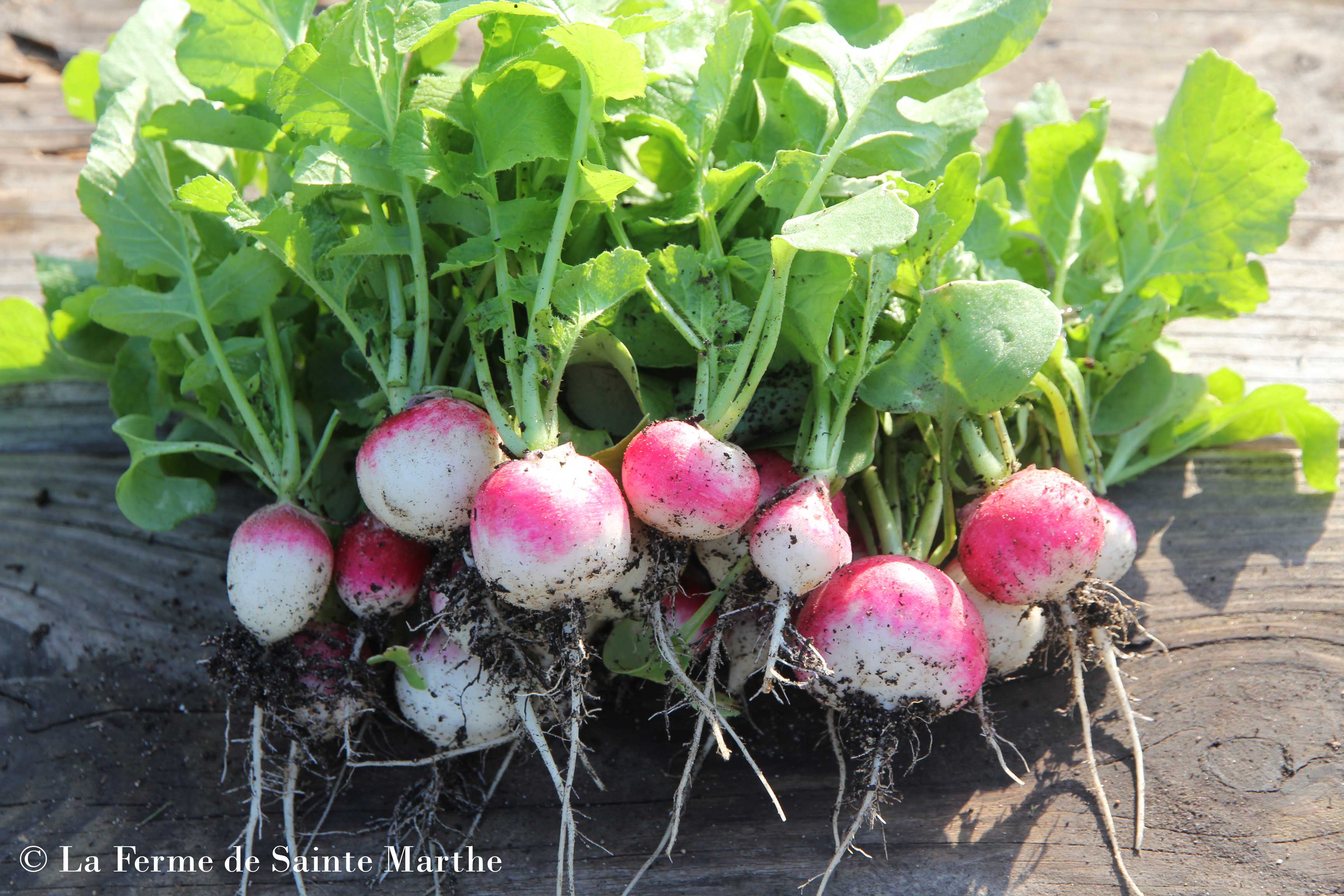
Gaudry 2 radish - La Ferme de Sainte-Marthe
Radishes all year round
The label "all year round" might suggest a certain blandness. It is far from it! If all these varieties share the flexibility of their broad sowing window (generally from mid-March to mid-September), they can be classic but also display original colours.
- The Flamboyant radish is one of the most popular varieties. Fast-growing, it yields cylindrical semi-long roots, red with a white tip. It is not spicy and stores very well. Sowing from March to August.
- The National 2 radish, semi-early, yields pretty pink roots with white tips. We like its pleasant flavour, a little peppery. Sowing from March to October.
- The Amethyst radish is a round radish distinguished by its colour: a pretty violet with metallic reflections. Very striking on the plate, it also offers a pleasant flavour and will only become sharp if you forget it in the garden. Sowing from March to August.
- The Pernot clair radish is versatile; it can be sown very early and offers elongated roots, bright red with white tips. Sowing from March to September.
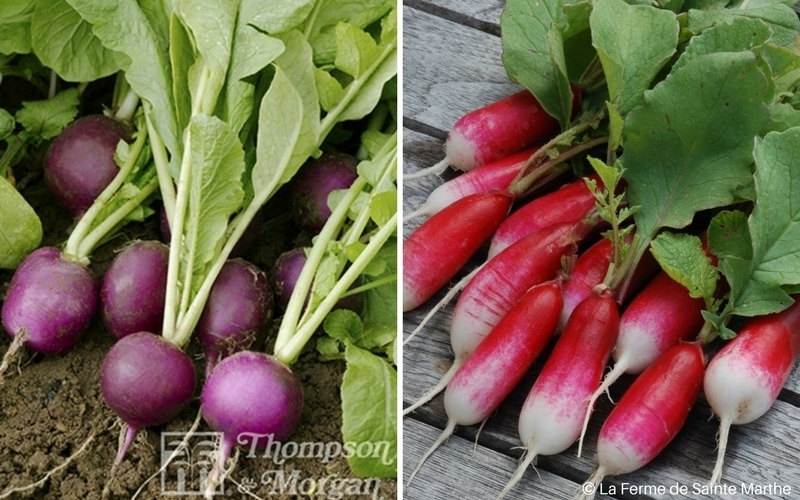
Amethyst and Pernot Clair radishes
Summer radishes and daikon radish
- The Ice Candle radish offers a long white root, almost translucent, shaped like a stalactite. Its crisp flesh is fine and offers a slightly biting flavour. Sowing: March–April to November.
- The Zlata daikon radish comes from Czechoslovakia. Round, it wears a yellow skin that covers white flesh with an original taste, a little lemony, peppery. It does not hollow and resists bolting. Sowing: March to August.
- The Giant scarlet round radish from Würzburg forms very large round roots. Its flavour remains mild. Sowing: April to August.
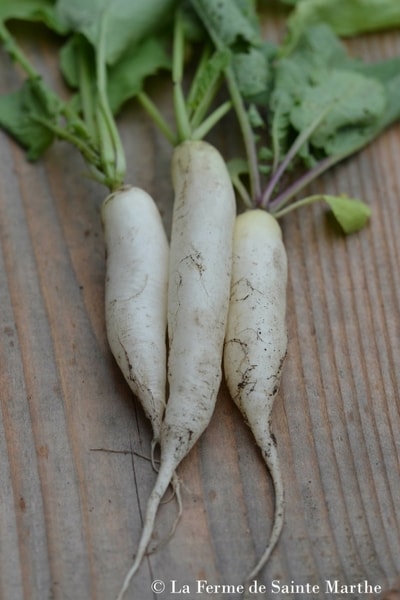
Ice Candle radish
What a choice, isn’t it? If you’re not sure how to decide, don’t hesitate to opt for seed mixes… It’s an economical and practical option when you enjoy growing several varieties in a small kitchen garden.
Finally, although radish sowing is reputedly easy (our tips: "Sowing radishes"), it can, for the less deft, lead to a tedious thinning job. To avoid this, think of seed tapes: simple and easy, they will save you a lot of time!
Radishes are often the first vegetables grown in the kitchen garden: early in the season, but also by beginner gardeners, as they are reputedly easy. We all know it, perhaps from sowing it as early as primary school, the famous 18-day radish… but far less the other varieties. As we enter the peak season for […]
In the vegetable garden, sow in late summer to harvest through to spring
7 vegetables to sow, from late August to the end of October, in the vegetable garden
1) Chicories, all chicories!
Chicories, raw or cooked (gratin-style or braised…), are essential winter salads. I won't go on — we've already discussed them here…
2) Turnips
The yellow turnip 'Boule d’Or', with its pretty amber colour and very mild flavour, is one of my favourite winter vegetables. It goes down well with children, in soup, mashed or stuffed. Varieties 'de Croissy' and 'Noir Long' are also well suited to autumn crops and can be sown until the end of September.
3) Lamb's lettuce
Very rich in vitamin C and iron, lamb's lettuce is one of winter's "boosting" vegetables. It makes lovely salads. Have you ever tried pairing it with kiwi, avocado and a few pine nuts? Delicious! 'Vit' is a variety known for its productivity, rapid growth and excellent flavour. Cold-hardy and early 'Verte de Louviers' is also of very good quality. A little later in autumn, sow 'Verte de Cambrai': later-maturing, it will provide harvests until March.
4) Spinach
Spinach, although not always loved by children, is both delicious and "practical". It can be eaten as a salad at the young-leaf stage from autumn or cooked at maturity, up to the end of April. Among winter varieties, you'll find 'Géant d’hiver' of course, but also 'Monstrueux de Viroflay' and 'Parys', an F1 hybrid particularly resistant to cold and disease.
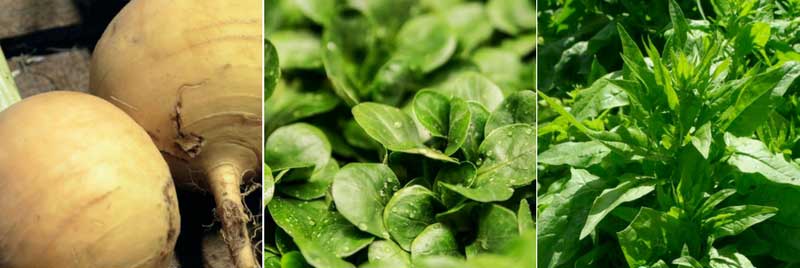
Turnip Boule d'Or, lamb's lettuce and spinach Géant d'Hiver
5) Long radishes
Long radishes are still little grown in the vegetable garden. Yet they are easy…and bring a range of colours! Why not try 'Rose d’Hiver de Chine'? Its name is a little dreamy, isn't it? Its flesh, white and crunchy, sliced very thin, is ideal in salad or simply on a slice of buttered bread. 'Chandelle de Glace' has a pretty ivory skin and is just as tasty… as are radishes 'Noir long d’hiver de Paris' and 'Violet de Gournay'. All keep very well.
6) Winter lettuces
As temperatures fall, it's possible again to sow lettuces. Don't miss out — wait a little, but it's a joy to harvest them from March. 'Merveille d’Hiver', 'Brune d'Hiver', 'Artic King', 'Bourguignonne' (also called 'Grosse Blonde d’Hiver') are all hardy and withstand winter cold admirably.
7) Early round cabbages for spring
Round cabbages 'Cœur de Bœuf des Vertus', 'Cœur de Bœuf moyen de la Halle', and 'Cabus express' (smaller) are three early cabbages known for producing, quickly, lovely conical heads with tender leaves in spring. Don’t miss them!
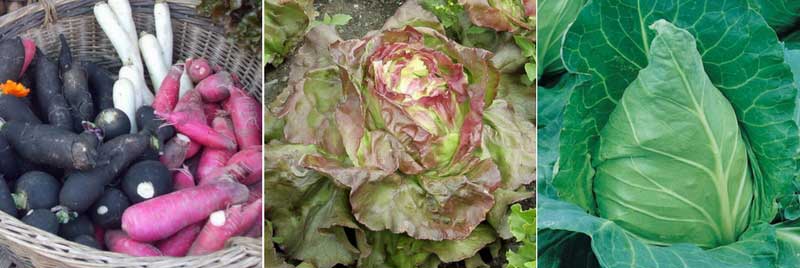
Long radish, Lettuce Brune d'Hiver and Cabbage Cœur de Bœuf Moyen de la Halle
There — you're briefed on late-summer sowings in the vegetable garden 🙂 You'll see, they're all easy and, if in doubt, consult our advice sheets.
Some of these crops may need a little protection if winter is severe; I will cover this in due course. So follow the blog or, better, sign up to the newsletter to be notified of new articles!
What to sow in late summer in the vegetable garden? At the end of August, buoyed by the joy of the harvest or overwhelmed by preparations for the return to school, gardeners often neglect the last seasonal sowings. I’m no exception. And when the holidays end, it’s already almost too late for some vegetables! In […]
June is well under way and here we are at the start of summer: fine weather is definitely here and the urge to harvest your own vegetables has been nagging you for a while. But let's face it: you've dawdled and, in the vegetable patch, no vegetables have been sown.
To be honest, although the situation is far from desperate, it may be a bit tricky for some vegetables such as tomatoes (take comfort, half the time they get blight), chillies, aubergines… But for the rest, almost everything is still possible!
First of all, let's see why sowing a little later than the "official calendar" can be a good thing:
Benefits of late sowing in the vegetable patch
Late sowing can prove preferable in cool regions, because sowing in well-warmed soil speeds up germination and promotes rapid plant growth.
I experimented with this last year by planting two rows of beetroot: the first from transplants and the second from seed. In less than a month, although both received the same care, the row sown from seed had caught up with the one from transplants.
Reassured? Let’s move on to our short selection of vegetables easy to sow in early summer:
7 easy vegetables to sow in early summer in the vegetable patch
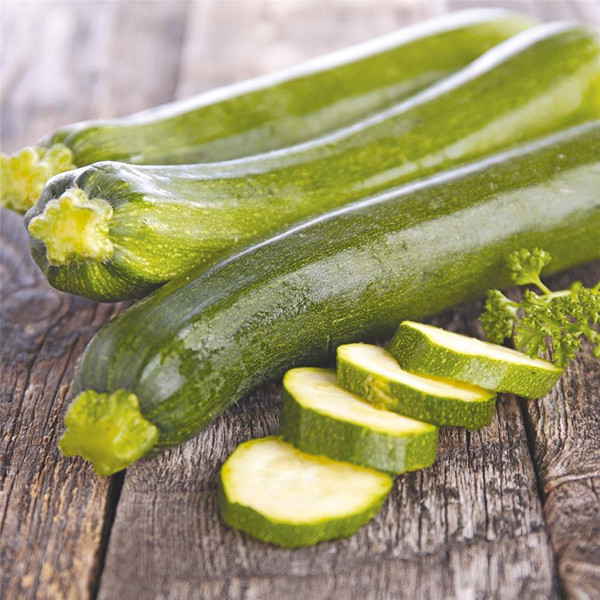
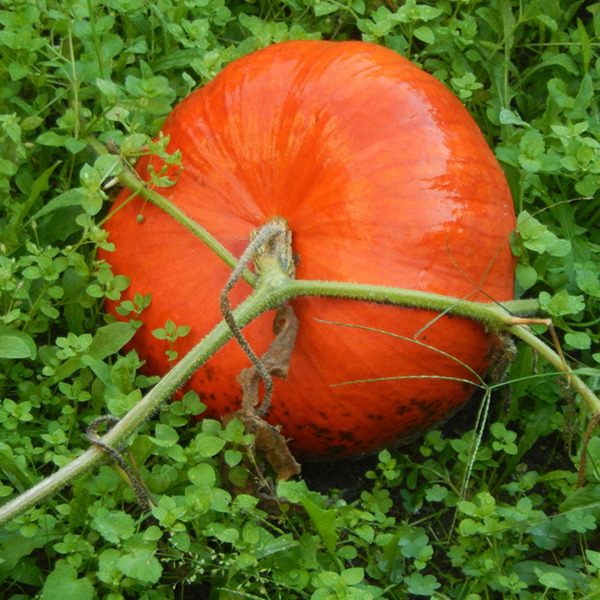
1) squash and courgettes
Although they are often recommended to be sown in April and started in pots, that is mainly to harvest them earlier, but direct sowing is perfectly feasible. Only drawback: harvest will be slightly delayed.
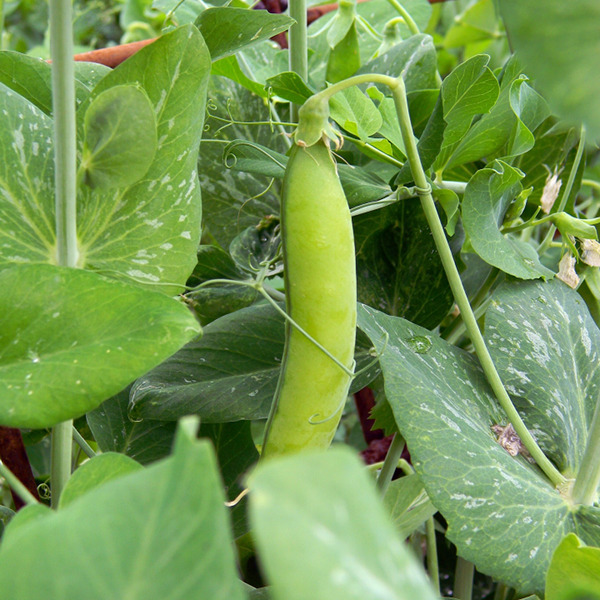
2) peas with wrinkled seeds
Usually sown until the end of May, wrinkled peas such as "Merveille de Kelvedon" or "Télévision à grain ridé" tolerate heat. A slightly late sowing, especially if you live in a temperate region, will not cause them any problem.
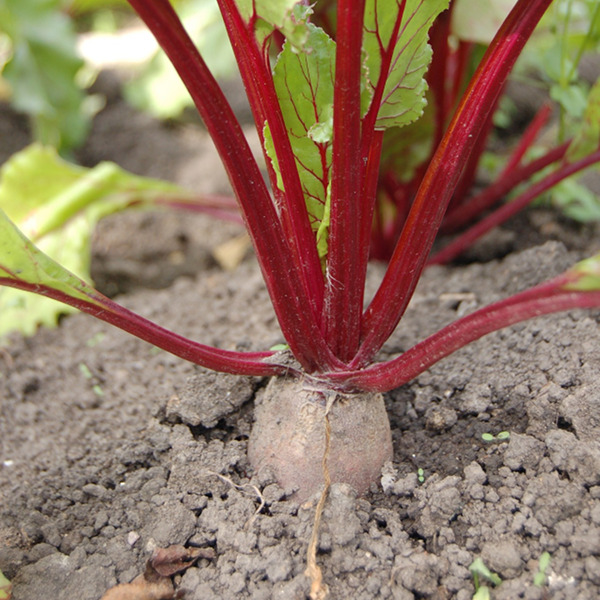
3) beetroot
Easy to get right, beetroot tolerate a slightly late sowing very well provided you watch watering or, better, mulch the patch. Warmth speeds up growth: I've never had to wait four months before enjoying them! We particularly like 'Chioggia'… and the beetroot 'de Détroit'.
4) lettuce
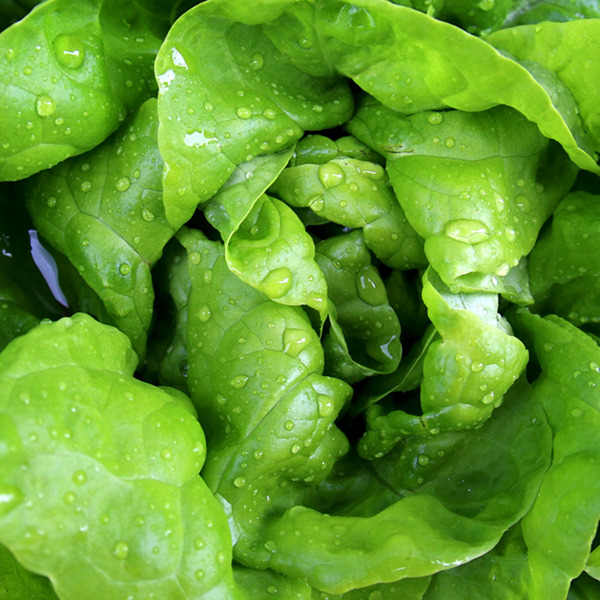
Summer lettuces grow at great speed… it's a real joy provided you choose the right variety, otherwise watch out for bolting! Aim for 'Kinemontepas' (of course!), 'Grosse Blonde paresseuse', 'Du bon jardinier' or, for cut-and-come-again lettuces, 'Lollo Rossa' or 'Red Salad Bowl'. All are well suited to heat, provided you give them some protection by situating them in partial shade.
5) beans
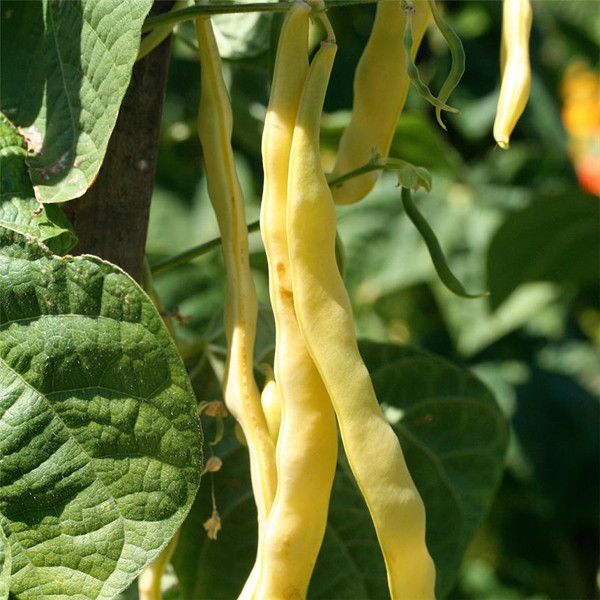
… all beans, including green beans! With them, it's simple: harvest comes 60 days after sowing. Very handy for timing pickings before you go on holiday or on your return, right? If your schedule isn't fixed, rather than a string-bean variety choose a mangetout which can wait a little longer without becoming stringy. And to vary things, consider butter beans, and also the stunning purple varieties such as 'Amethyst'…
6) radishes
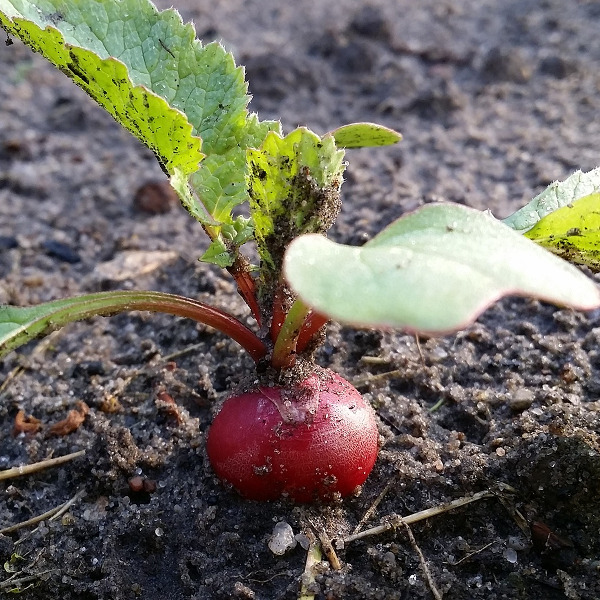
Radishes can be sown almost all year round… We covered this in this article on radishes. Summer is the perfect time to try new varieties especially well adapted, such as the radish 'Golden Yellow Oval' or 'Scarlet Globe'.
7) carrots
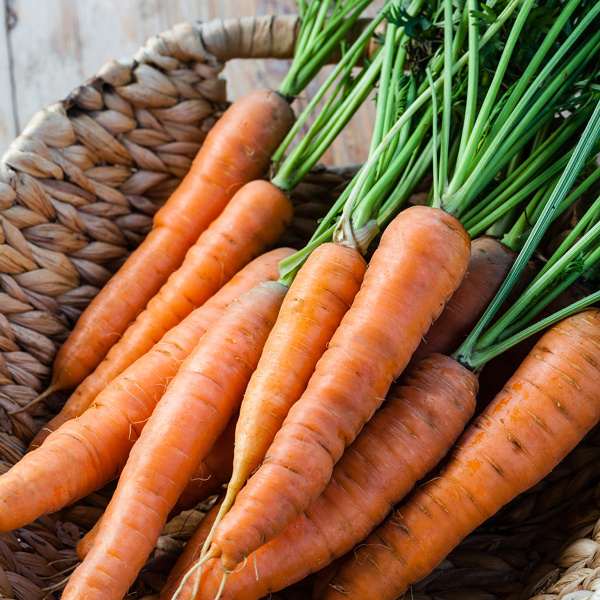
Sown in June–July, they'll be harvested in autumn. Consider sowing them with radishes to reduce the thinning chore. If this sowing worries you a little (it's delicate) and you don't have time to waste on a failure, go for seed tapes without hesitation: they're really handy, even if you're not a beginner!
Ready? Here are a few precautions to take to make sure everything goes well!
Precautions to take when sowing in hot weather
First, know that in the vegetable patch summer sowings are no more difficult than spring ones. However, they require closer monitoring, because for germination to proceed without mishap, soil must remain moist.
Which is not necessarily easy when the sun is beating down. If you cannot keep up with regular watering, consider shading the soil while waiting for emergence using crates, simple sheets of newspaper or a very thin layer of previously dried grass.
Finally, favour morning watering: it is less likely to attract slugs, which are fond of young seedlings in all seasons.
June is well under way and here we are at the start of summer: fine weather is definitely here and the urge to harvest your own vegetables has been nagging you for a while. But let’s face it: you’ve dawdled and, in the vegetable patch, no vegetables have been sown. To be honest, although the […]
Here, under Brittany’s mild climate, March is marked by ubiquity: it has to be everywhere at once—in the vegetable garden for early sowings of late-spring vegetables, but also, warm indoors, to prepare the summer harvest.
So, let’s be honest, we’re rushing around… but it’s a joyful bustle as it heralds the return of spring. The programme is simple and revolves around two 'culinary themes': the Jardinère of small vegetables and Ratatouille.
1) Under cover (unheated): the spring vegetable jardinière
Our shelter, a tunnel greenhouse, is a real luxury. Originally devoted to tomatoes and other frost-prone vegetables, it now serves all year round, especially for early sowings. It can, in your garden, be replaced with equal effectiveness by: a well-sited frame, a mini-market-garden tunnel (to be erected on hoops or moulded plastic) or, even more simply, by a forcing fleece.
To obtain early harvests, I sow there from the end of February and directly in the soil:
- the smooth-shelled peas (one row of ‘Très hâtif d’Annonay’ and one row of ‘Petit Provençal’),
- the spring turnips ('Rave d’Auvergne hâtif' and ‘de Milan Rouge Extra Hâtif’),
- the early carrots ('Marché de Paris' is early and ideal in our heavy soil),
- the first radishes ('Fluo F1' for the half-long types and ‘Gaudry 2’ for the round ones).
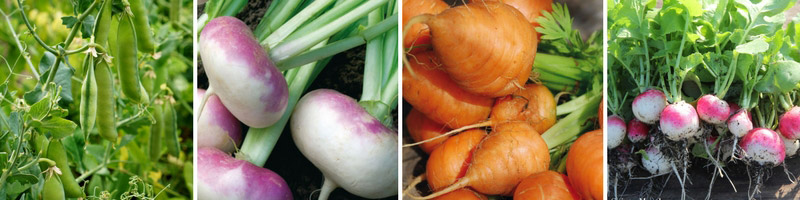
Peas, Turnip 'Rave d'Auvergne hâtif', Carrot 'Marché de Paris' and Radish 'Gaudry'
After seeing whole rows of young seedlings disappear, I resolved to start my lettuces ('Gotte Jaune d’Or', 'Batavia sanguine' and 'Reine de mai') in pots. They will grow under the greenhouse and will be planted three weeks later, once less vulnerable to slug damage.
2) Warm indoors: ratatouille… but also the flowers!
Early March, chillies and peppers get the season underway, as they develop fairly slowly. Then comes the turn of tomatoes and aubergines, and, at the very end of the month, of aromatic herbs that enjoy warmth such as basil and oregano. To these sowings, two or three courgette plants ('Précoce maraîchère') are added, which I sow a little early to enjoy a harvest at the start of summer.
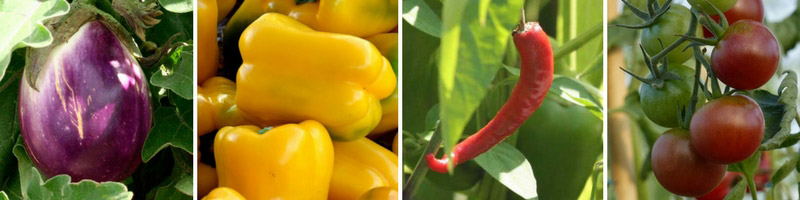
Aubergine 'Violetta di Firenza', Yellow pepper, Cayenne pepper and Tomato Black Cherry
And because I cannot imagine a kitchen garden without flowers, I take the opportunity to grow, still indoors, annual flowers: the marigolds that will accompany the tomatoes, but also the zinnias, which I pair with French beans, cosmos and annual Rudbeckias whose rustic charm delights me every year… not forgetting nasturtiums (very useful for distracting aphids), because even though they now reseed themselves, I never tire of discovering new varieties.
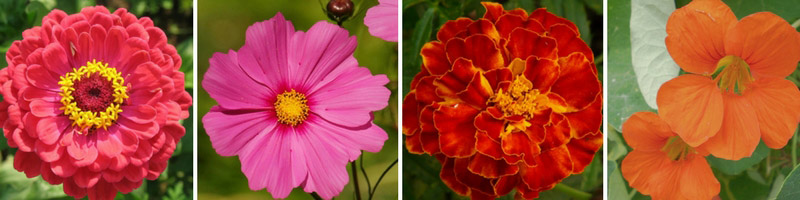
Zinnias, Cosmos, Marigolds and Nasturtiums: essential annual flowers for the vegetable garden
This list isn’t exhaustive; we invite you to add to it in the comments... and please don’t hesitate to ask us any questions, we’ll be very happy to reply.
Here, under Brittany’s mild climate, March is marked by ubiquity: it has to be everywhere at once—in the vegetable garden for early sowings of late-spring vegetables, but also, warm indoors, to prepare the summer harvest. So, let’s be honest, we’re rushing around… but it’s a joyful bustle as it heralds the return of spring. The […]