We are always on the lookout for THE perennial groundcover that blooms all summer long, the one whose flowering lasts for several months, the perennial that never stops blooming, the one that adorns and borders a path throughout the summer. The one that shines brightly on a sunny bank or simply the one that is adorned with flowers all summer in a pot on the terrace and blooms continuously until late autumn. Here are the 5 best long-flowering groundcover plants that you absolutely must have in your garden.
1) Delosperma 'Wow Hot Pink'
This is indeed a succulent similar to those that can be admired while strolling along the Atlantic coast, growing on dunes or at the foot of cliffs. The comparison stops there as Delosperma 'Hot Pink' is derived from a Japanese breeding called "Wheels of Wonder" and selected for its cold resistance and, of course, its long flowering. Are your perennials dying of thirst in summer? Plant Delosperma! Do your perennials wilt in summer due to drought? Plant Delosperma! This succulent groundcover has the merit of growing AND blooming throughout the summer. It flowers from June in warm regions and extends its flowering until the end of September. It doesn't care whether it rains or not to produce flowers; regardless of the weather, its flowering is uninterrupted for 4 months. If, like me, you have a sunny terrace and are not a fan of daily watering, plant Delosperma. If you have a sunny, stony, and dry bank, Delosperma is waiting for you.
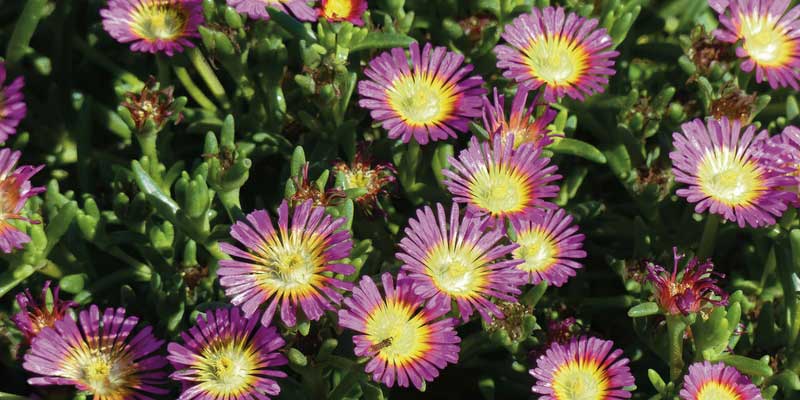 Delosperma Wheels of Wonder Hot Pink
2) Alchemilla mollis
This is THE classic of cool gardens, the essential and indestructible perennial that borders the most beautiful mixed borders with its round, plicate leaves that catch dew droplets in the early morning. It is this same perennial that blooms in an anise green mist that gracefully complements the precious flowers of bleeding hearts in spring or punctate campanulas in summer. Its flowering is long and its flowers succeed each other between spring and summer. They start in May and last until September-October. It will only be slowed down by the summer heat, but don't worry, a cut back of the flowers in summer gives it a boost and induces a resurgence of flowers in September.
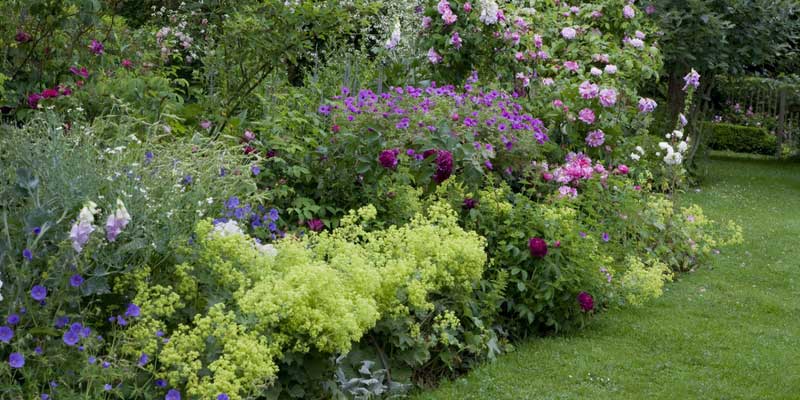 Alchemilla mollis at the edge of a classic mixed border with hardy geraniums, lychnis, and peonies in the background, along with Crambe cordifolia and roses (photo: Biosphoto / NouN)
3) Nepeta 'Walker's Low'
To be honest, it was difficult to choose between Nepeta 'Walker's Low', N. 'Six Hill Giant', and N. 'Purrsian Blue' as all three bloom for a long time. However, 'Walker's Low' wins by a narrow margin as it blooms continuously from May to October and does not need to be sheared like 'Six Hill Giant'. Is it worth mentioning that it is easy to grow and thrives in sunny, well-drained soils, whether rich or poor? The only thing one might reproach it for is its aromatic foliage. Not because it smells bad, quite the opposite, but because it has the unfortunate tendency to attract neighbourhood cats that come to roll in the clumps and ruin the flowers!
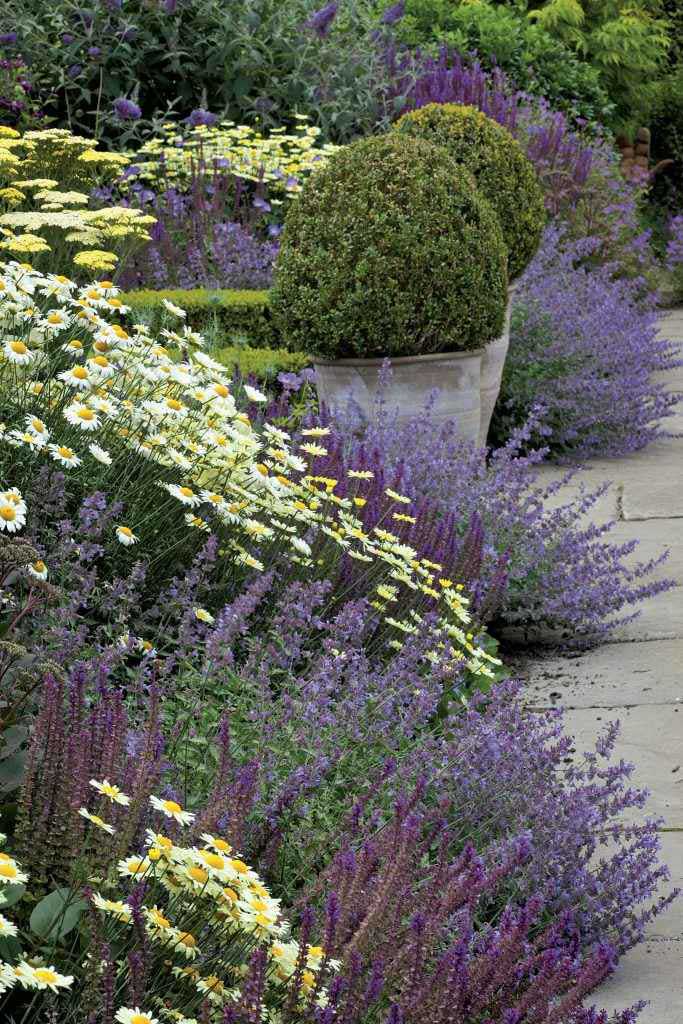 Nepeta racemosa 'Walker's Low' at the edge of a bed in duo with Anthemis 'Sauce Hollandaise' (photo: GAP/ Elke Borkowski)
4) Persicaria 'Needham's Form'
Beware, you might just become a fan of this groundcover perennial, which should not be confused with Persicaria affinis Darjeeling Red, which is also a groundcover and floriferous. That’s why I won’t tell you that it covers the ground so well that weeds don’t dare to touch it. I won’t mention that its Himalayan origins give it exceptional cold resistance. I won’t even tell you that it blooms for a good 6 months of the year and that it’s not uncommon (even in the north when it doesn’t freeze too hard) to see flowers until December. I will also refrain from saying that when planted in moist soil in a bright spot, it is adorned with countless little candy-pink beads that look wonderful with ferns, hostas, horsetails, or Hakonechloa. No, I won’t say any of that.
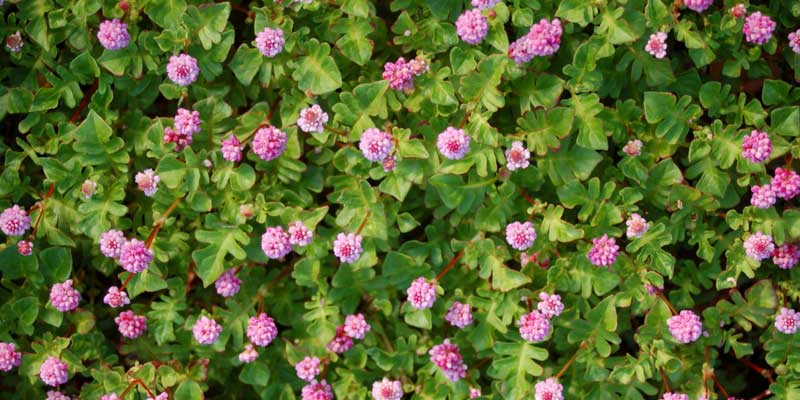 Persicaria Needham's Form, here it is grown too much in the shade and its flowering suffers. Planted more in the light, it blooms almost twice as much.
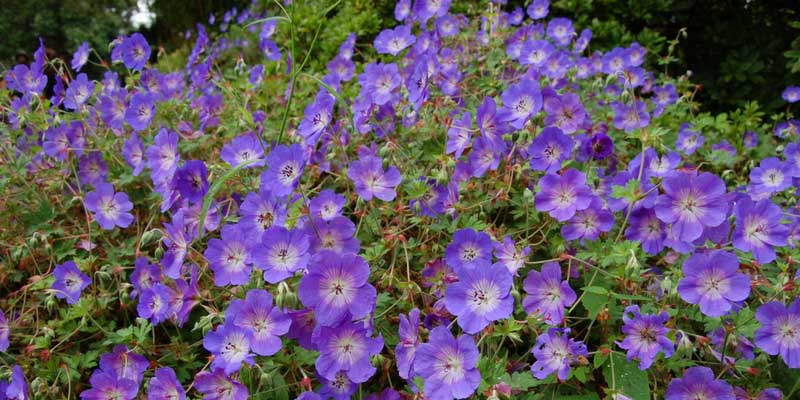
5) Geranium 'Rozanne'
It’s no surprise that hardy geranium Rozanne is by far the best long-flowering groundcover perennial of all time. Yes, it tolerates dry soils, yes, it grows in both sun and partial shade, and yes, it is hardy and content with little. How long does this wonder bloom? About 6 months! More or less, as in some regions, flowering can start as early as June and extend until December. In "normal" regions, it will bloom from July to November, and there's no need to cut off the flowers to improve its flowering; it is self-cleaning.
We are always on the lookout for THE perennial groundcover that blooms all summer long, the one whose flowering lasts for several months, the perennial that never stops blooming, the one that adorns and borders a path throughout the summer. The one that shines brightly on a sunny bank or simply the one that is […]
In its September issue, Gardens Illustrated dedicates several pages to hardy geraniums and presents the 21 best varieties.
Among this curated selection, there are many British cultivars, of course, but also excellent varieties available in our catalogue: the must-have 'Rozanne', my personal favourite: the hardy geranium 'Clos du Coudray', as well as 'Lilac Ice', 'Sirak', 'Dragon Heart', 'Tiny Monster', 'Carol', 'Orion', and 'Havana Blues'.
Here they are in pictures:
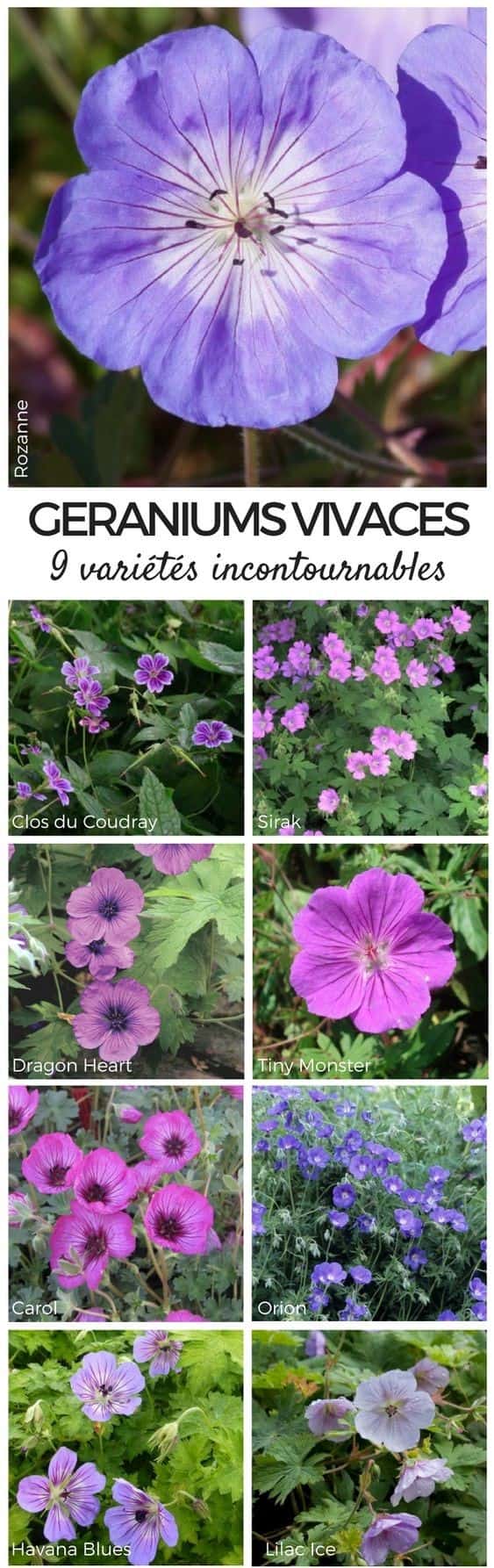
The ideal time to plant them in the garden will be here very soon. Which ones will you choose?
In its September issue, Gardens Illustrated dedicates several pages to hardy geraniums and presents the 21 best varieties. Among this curated selection, there are many British cultivars, of course, but also excellent varieties available in our catalogue: the must-have ‘Rozanne’, my personal favourite: the hardy geranium ‘Clos du Coudray’, as well as ‘Lilac Ice’, ‘Sirak’, […]
The Geranium Catherine Deneuve is a new variety that, contrary to appearances, is extraordinarily floriferous.
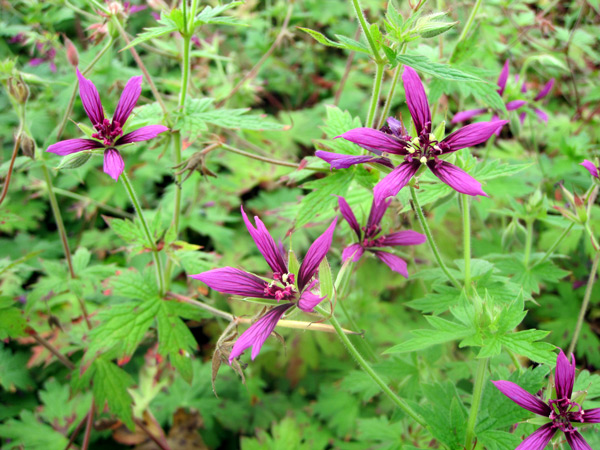
Geranium Catherine Deneuve
In flower since June, this hardy geranium continues to surprise me. With its star-shaped flowers, I initially thought, upon seeing it in a photo, that it was derived from a geranium (x) oxonianum, resembling the very classic Geranium oxonianum f. thurstonianum (a variety once widely used in the shady corners of mixed borders and gradually replaced by more floriferous hybrids).
However, upon examining it more closely, I was pleasantly surprised to discover that this selection is derived from geranium psilostemon, the parent of the famous Geranium 'Patricia' and G. 'Dragon Heart', a rather enticing detail considering the floribundity of these geraniums. Finally, while cultivating it, I find that this new geranium, perhaps slightly less floriferous than the previously mentioned varieties, has an astonishingly long flowering period. In flower since June, the inflorescences keep renewing, and last year it was still in bloom in November!
The small size of the flowers certainly explains this performance; its reduced petals require fewer resources, allowing the plant to exhaust itself less quickly and renew its flowers more rapidly. It strikes a perfect balance between flower size, abundance, and flowering duration—truly a wonderful new addition that deserves its place in our gardens.
The Geranium Catherine Deneuve is a new variety that, contrary to appearances, is extraordinarily floriferous. In flower since June, this hardy geranium continues to surprise me. With its star-shaped flowers, I initially thought, upon seeing it in a photo, that it was derived from a geranium (x) oxonianum, resembling the very classic Geranium oxonianum f. […]
We often talk about gentian blue or meconopsis blue, but hardy geraniums also boast a palette of blue that would make the most beautiful gentians blush. Here’s a small selection of the most stunning blue geraniums at the moment.
There are the all-rounders, suitable for all exposures and versatile in their uses. They thrive almost anywhere, flowering profusely for long periods; they are just as comfortable in a wild garden mixed with alliums and grasses as they are in a mixed border at the foot of an English rose or "arranged" among a selection of perennials in a gradient of blue with a hint of gold.
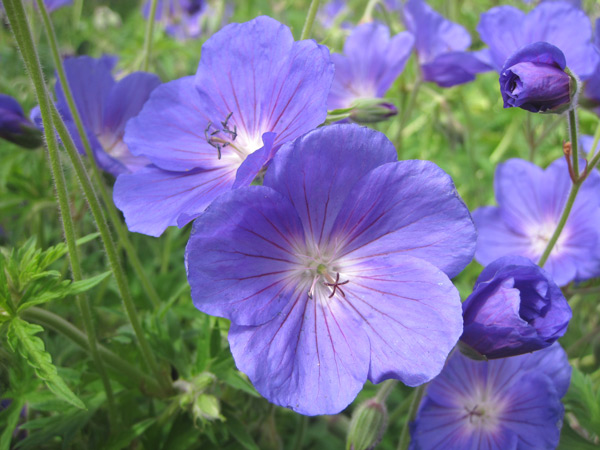
Geranium Orion
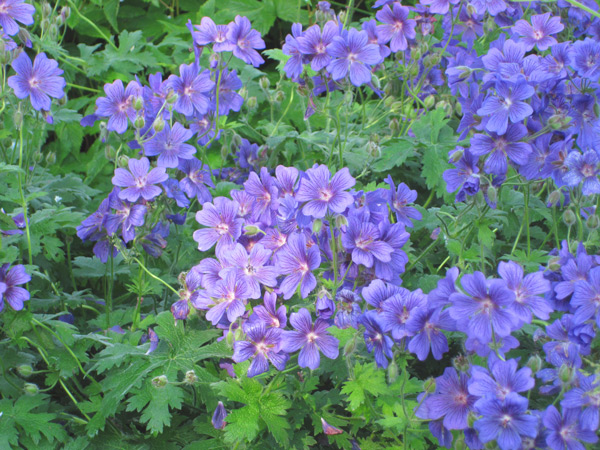
Geranium (x) magnificum
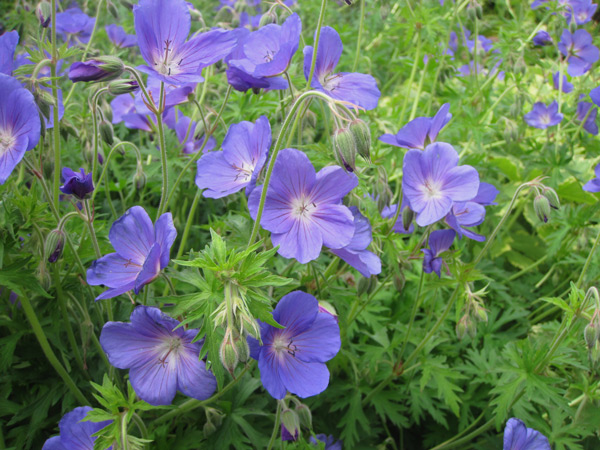
Geranium Johnson's Blue
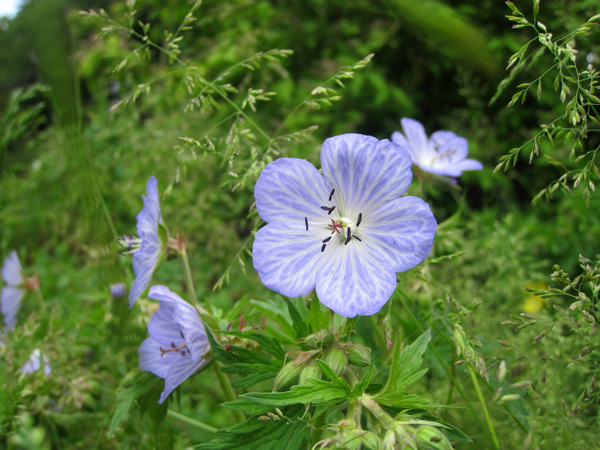
Geranium pratense Mrs Kendall Clark[/caption>
Then there are the hidden ones; carpeting under a tree in cool shade or cascading down a bank among periwinkles, elf flowers, and campanulate squills, they can even thrive in dry shade, flowering infrequently but for long periods and often self-seeding well to form beautiful colonies.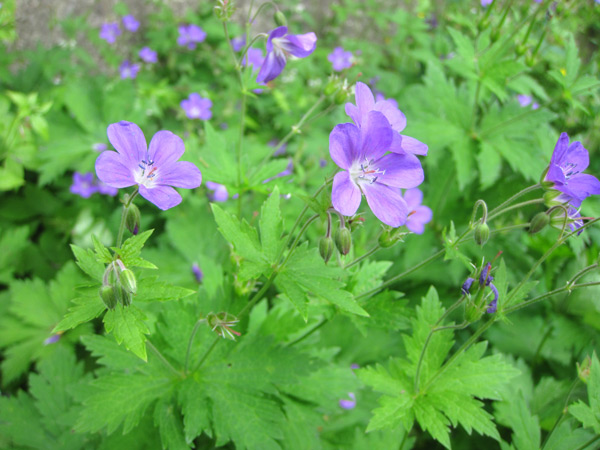 Geranium sylvaticum
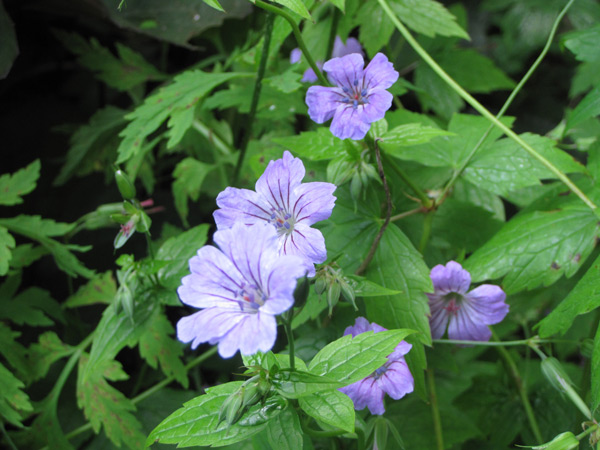
Geranium nodosum
And then there are the thrifty ones; they require little. Little water, little food, but plenty of sun. They thrive among yarrow, campanulas, and lavenders in a dry meadow garden or a scree garden, and they even grow in calcareous soils.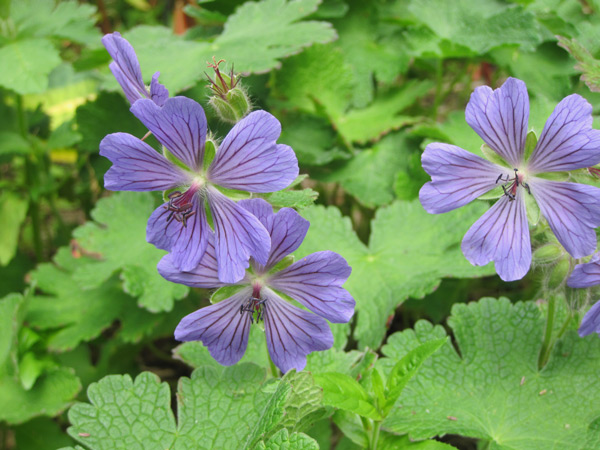 Geranium Philippe Vapelle
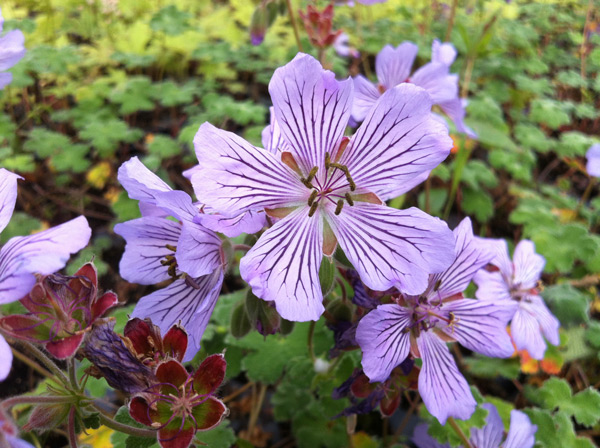 Geranium renardii Tcschelda, a new introduction with beautifully veined flowers
Among the cultivars, hybrids, and wild species, there is something for every taste and, above all, for every use—how can one resist? A tip to showcase them even more: plant them in masses, at about 5-6 plants per square metre, but with a touch of pale yellow plants; the best choices are Scabiosa ochroleuca, Phlomis russeliana, Alchemilla mollis, or the magnificent Nepeta govaniana; the contrast is striking!
We often talk about gentian blue or meconopsis blue, but hardy geraniums also boast a palette of blue that would make the most beautiful gentians blush. Here’s a small selection of the most stunning blue geraniums at the moment. There are the all-rounders, suitable for all exposures and versatile in their uses. They thrive almost […]