In the peaceful world of gardening, a new threat is emerging, sending shivers down the spines of agapanthus lovers across France. Indeed, the agapanthus gall midge, a small African insect that was previously harmless, is becoming a growing scourge for these majestic plants. With an increase in cases in France, the question is no longer whether, but rather when and how this pest can be stopped. What is the impact of the agapanthus gall midge on our agapanthuses? How can we identify the signs of this infestation? Are there effective control methods to protect agapanthuses across the country? The beauty of our gardens is at stake: it is time to act!
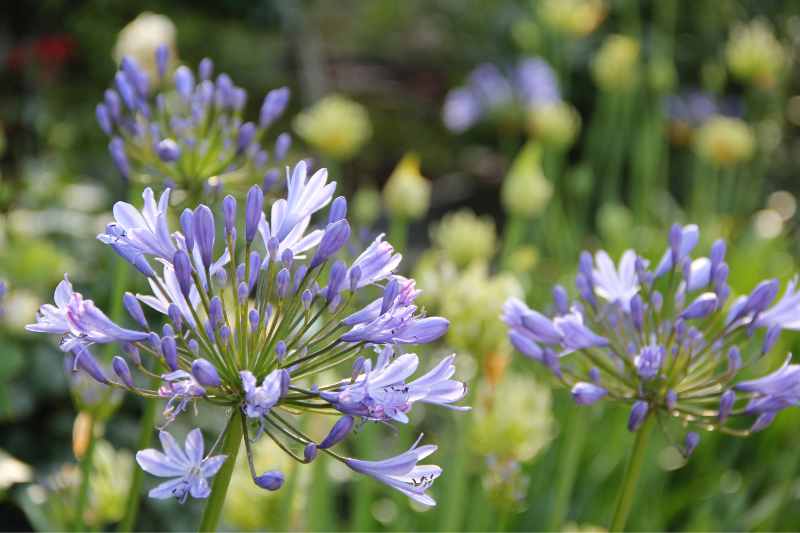
Agapanthus gall midge: what is this insect?
The agapanthus gall midge, or Enigmadiplosis agapanthi, is a particularly harmful pest for agapanthuses. This insect, which belongs to the Cecidomyiidae family, originates from South Africa, like the agapanthuses themselves, but has since migrated to other parts of the world, including Europe.
The agapanthus gall midge is a tiny midge whose larvae develop within the buds and stems of agapanthuses, causing deformities and often inhibiting flowering. The damage can be significant, potentially leading to the death of the plant in the most severe (but very rare) cases.
The insect is so minuscule that only symptoms can help us determine its presence rather than direct observation.
What are the symptoms of an infestation?
Signs of an infestation by the agapanthus gall midge may include deformed or unopened flower buds, stems that wilt or turn yellow or brown, and the presence of small white larvae or orange pupae inside the stems or buds. The larvae of the agapanthus gall midge develop within the flower buds themselves. In cases of heavy infestation, the entire flowering may be halted in agapanthus crops.
How to act?
Controlling this pest can be challenging, as there is no specifically approved control method for the agapanthus gall midge. Control methods include the removal and destruction of the infested parts of the plant. But there is no need to uproot or remove your agapanthuses! Research is ongoing to find other effective control methods against this pest. However, we remain hopeful that a natural predator will come to regulate the gall midges naturally. Fingers crossed!
What is the situation in France?
Let’s not panic just yet! In Europe, the first official observations were recorded in the UK in 2015, then in the south-west of France in 2017 and later in Brittany in 2019. Since then, the agapanthus gall midge has been steadily progressing without the situation being, for now at least, truly alarming. However, the national agapanthus conservatory on the island of Bréhat, in Côtes d'Armor, is sounding the alarm and urging gardeners to be vigilant. Be sure to check your agapanthuses at home, in your gardens, and act quickly by removing the parts of the plant suspected of being attacked by this gall midge.
In Belgium, for now, the agapanthus gall midge seems to be absent. (Note: yes, we assure you, certain agapanthuses more resistant to cold, such as Agapanthus 'Black Buddhist', can be grown in Belgium and northern France, but in well-drained soil or in pots!)
To learn more, here is the document from the French Ministry of Agriculture on the subject.
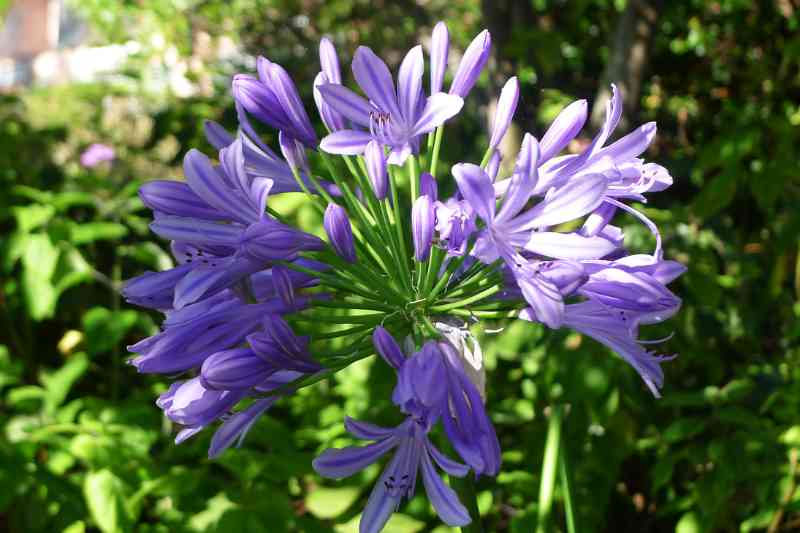
In the peaceful world of gardening, a new threat is emerging, sending shivers down the spines of agapanthus lovers across France. Indeed, the agapanthus gall midge, a small African insect that was previously harmless, is becoming a growing scourge for these majestic plants. With an increase in cases in France, the question is no longer […]
The Agapanthus 'Navy Blue', also known as ‘Midnight Star’, is a very popular variety of agapanthus in northern gardens and for good reason, it is one of the few that withstands the cold so well (it can survive down to about -10°C). It is also one of the few to provide a myriad of flowers in a deep navy blue that is intense.
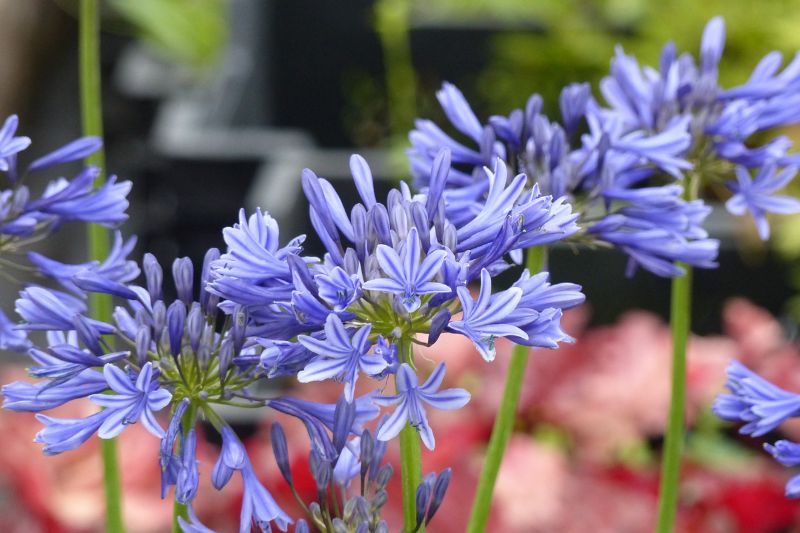
Particularly floriferous and vigorous, this medium-sized variety does not exceed 60 cm in height. It has a deciduous foliage of wide, bright green ribbons that elegantly covers the ground throughout the beautiful season. When its flowers appear, usually in July-August, it transforms into a bouquet of intense blue.
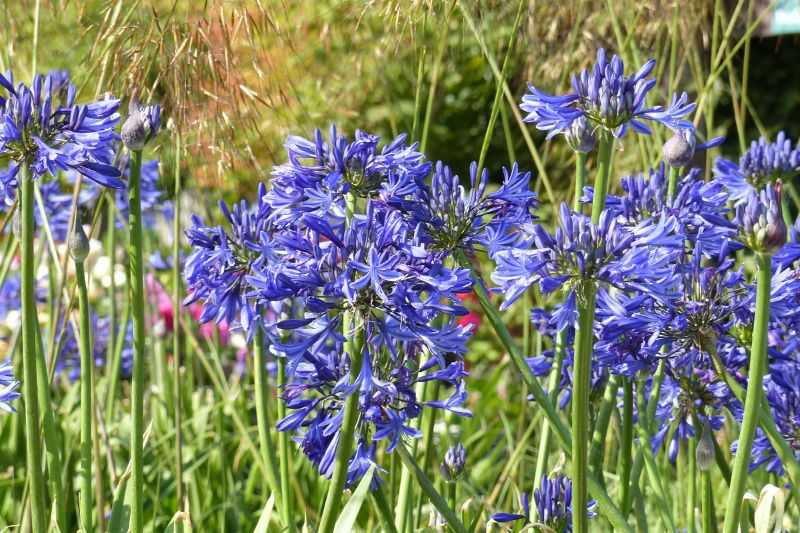
It is in a naturalistic garden, alongside Gaura, Stipa, Panicum, Crambe cordifolia and Silphium that this variety has thrived in my garden for nearly 20 years now. It has endured winters well below -10°C, scorching summer heat, and yet it is still here. From a single plant, which I divide every 4 years at the end of winter, I propagate it in my borders, and it now covers 5 m².
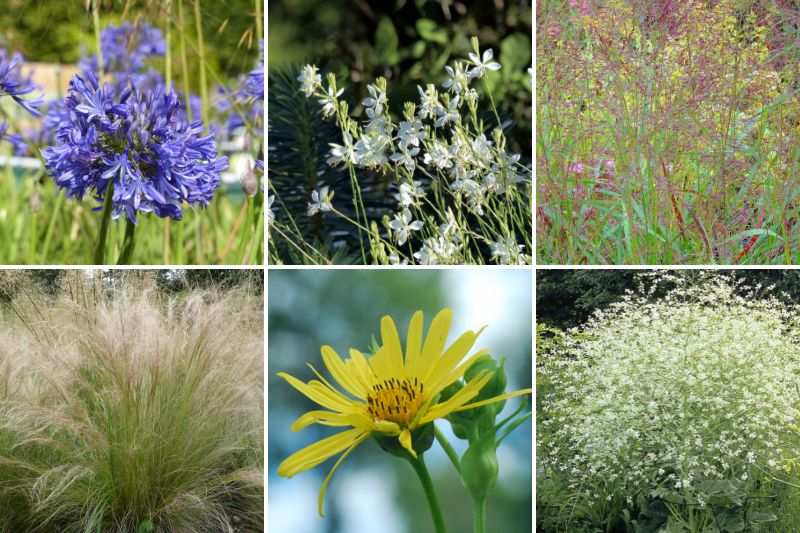
Final tip: To keep it thriving in my clay soil, at planting, I replace my sticky soil with pure sand (2 to 3 times the volume of the stump) so the stump is protected from excess water in winter.
The Agapanthus ‘Navy Blue’, also known as ‘Midnight Star’, is a very popular variety of agapanthus in northern gardens and for good reason, it is one of the few that withstands the cold so well (it can survive down to about -10°C). It is also one of the few to provide a myriad of flowers […]
Agapanthus are spectacular flowers often found in seaside gardens, particularly along the West Coast and in Brittany. In summer, they display beautiful blue, white, or mauve flowers in umbels that are both graphic and elegant.
As a worry-free perennial, the Agapanthus thrives in full sun in ordinary, well-drained soil that is not too dry in summer. Its lightness and ease of cultivation are real assets for creating a flowering bed or a pot.
Historically, their use in gardens was limited by their lack of hardiness and the small number of varieties... Today, Agapanthus now come in many varieties, and some even show good cold resistance, which presents another challenge: choice!
To help you, here is a selection of 7 reliable Agapanthus that will suit all gardens, regardless of their size, style, or climate.
Agapanthus Navy Blue (Midnight Star): the hardy one
The Agapanthus 'Navy Blue', also known as Agapanthus ‘Midnight Star’, is one of the most popular Agapanthus. This variety ranks at the top for best rating and best seller at Promesse de Fleurs, and you'll soon see why!
Its light umbels bear an intense navy blue. They appear abundantly from July to August. Its light green ribbon-like foliage is deciduous, but this variety is one of the hardiest Agapanthus, with a resistance down to -10°C in well-drained soil.
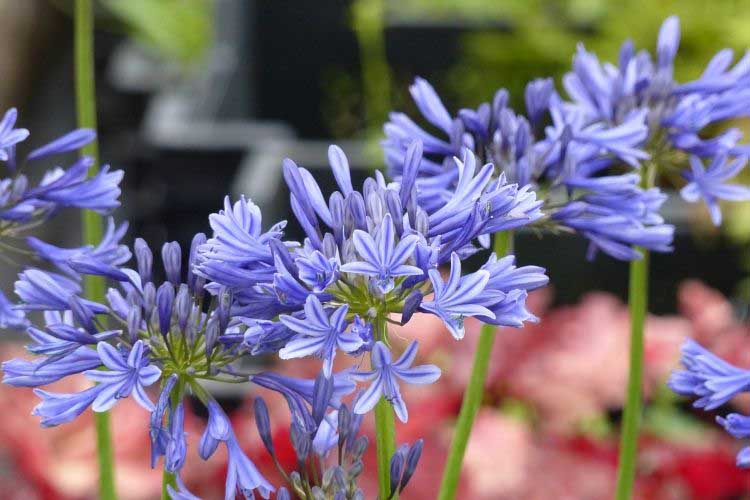
The hardy and popular Agapanthus Navy Blue
Vigorous and medium-sized, reaching 60 cm in height and 40 cm in spread, it adapts well both in pots and as a border plant.
→ To learn more about this variety, check out our article: "Agapanthus 'Navy Blue': a cold-resistant beauty"
Agapanthus Blue Giant: the iconic giant
The Agapanthus Blue Giant is a must-have perennial in Brittany! Often planted, it is valued for its very large dark blue flowers measuring 18 cm in diameter that can reach up to 1.5 meters in height. Its height makes it a remarkable plant for borders and backdrops. It creates significant, elegant vertical lines. You can also enjoy its beautiful large flowers as cut flowers.
Vigorous and robust with fleshy roots, it withstands temperatures down to -12°C.
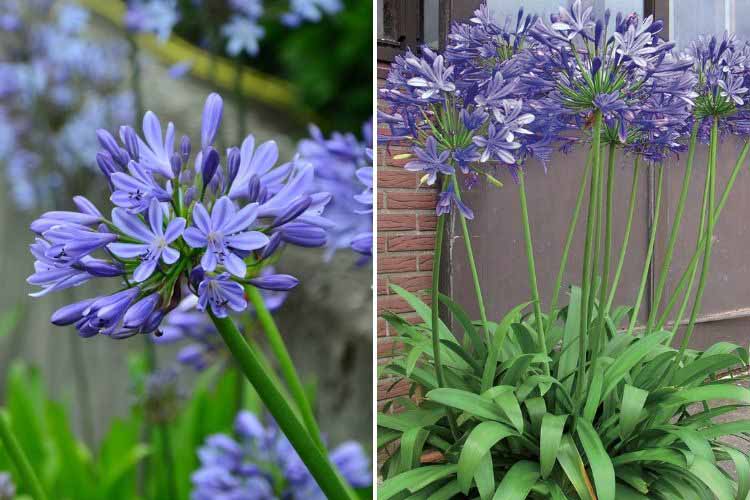
The Agapanthus Blue Giant reaches great heights
Agapanthus Albus: the essential one
Ideal for white gardens, the Agapanthus umbellatus Albus, also known as Agapanthus africanus albus, is distinguished by its white flowering. Its umbels of 15 cm in diameter rise to 1 meter above a ribbon-like semi-evergreen foliage. The umbels consist of snow-white flowers shaped like campanulas. Not very hardy, it tolerates temperatures down to -5°C, limiting its use to mild climates.
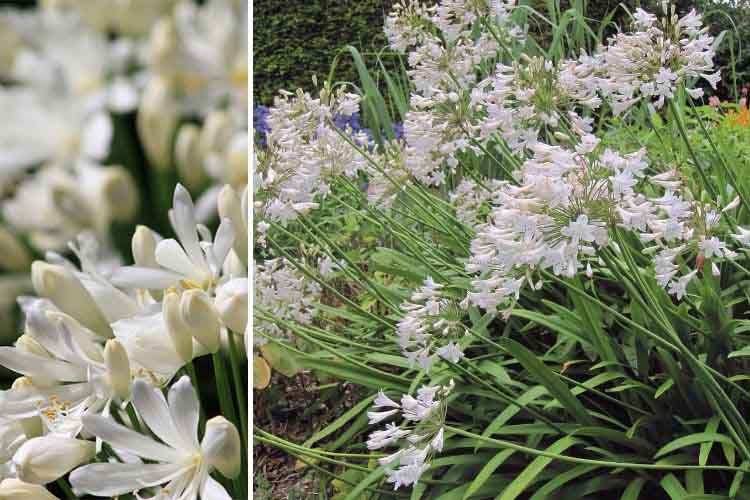
The white-flowered Agapanthus: Agapanthus albus
Agapanthus Royal Velvet: the new star
Original and recent, the Agapanthus Royal Velvet is a new star among Agapanthus due to its intense, trendy colour described as 'ultra violet'. It produces a stunning effect with its unique umbels of 10 to 12 cm in diameter, featuring a deep violet colour streaked with very dark blue-violet. The umbels rise to 80 cm above the ground, clearly above the (deciduous) foliage that forms a lovely clump. The elegance of the Agapanthus Royal Velvet is undeniable!
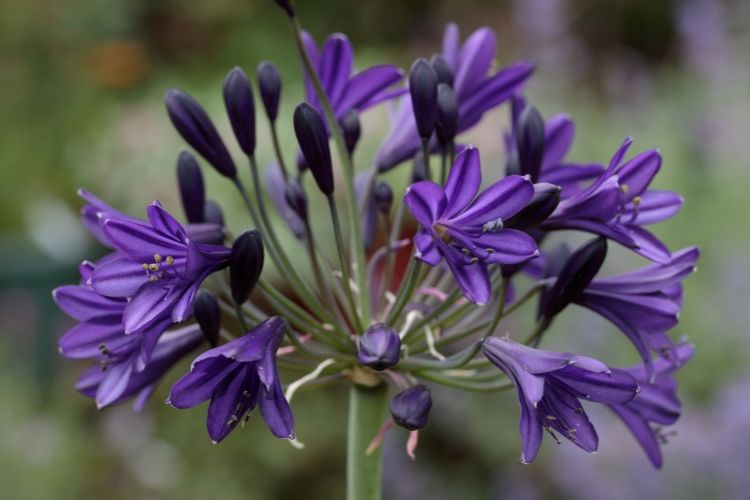
The Agapanthus Royal Velvet, a new variety with ultra violet flowers
Its intensely coloured flowers make it ideal for contemporary gardens as well as for exotic scenes featuring orange flowers like kniphofias, cannas, or hemerocallis.
In addition to its original colour, this variety boasts many advantages with its abundant flowering, robustness, and cold resistance down to -10°C.
Agapanthus Double Diamond: the compact one with double flowers
Recent, the Agapanthus Double Diamond is a variety that combines two qualities: a compact habit and generous flowering. Its main asset lies in its pure white double trumpet-shaped flowers. Grouped in umbels, they measure 10 cm in diameter and appear above a clump of persistent leaves in mild climates. Its compact habit (35 cm high and 30 cm wide) makes it ideal for pots, on terraces or balconies, as well as for borders in areas where winters are not too cold, as it does not tolerate temperatures below -5°C.
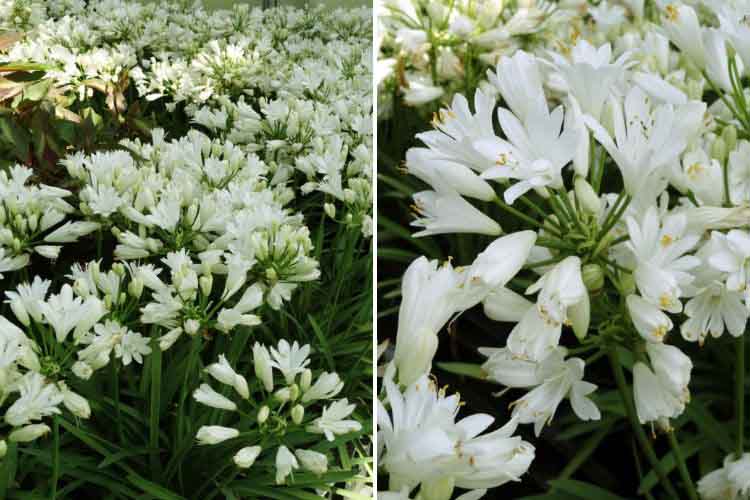 The Agapanthus Double Diamond, a small variety with generous double flowers
Agapanthus Twister: the bicolour
The Agapanthus Twister is an original variety appreciated for its bicoloured flowers. Large, up to 18 cm in diameter, its umbels consist of white flowers with a dark blue base. These two-coloured flowers provide a certain dynamism while blending the softness of the shades, accentuated by the green-grey foliage. Medium-sized, this Agapanthus reaches 60 cm in height and 50 cm in width, making it ideal for the middle of borders, behind ground-cover plants, and it can also be grown in large pots.
Finally, the Agapanthus Twister can be planted in many climates as it is one of the hardiest Agapanthus, tolerating temperatures down to -12°C.
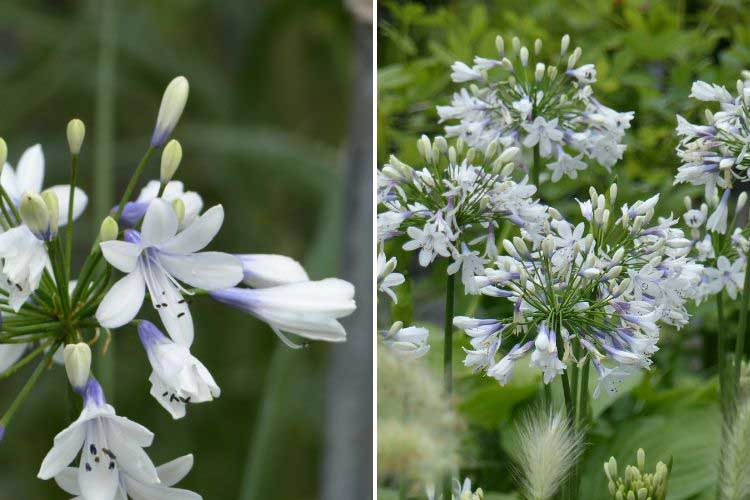
The Agapanthus Twister: bicoloured flowers, white and blue
Agapanthus Pitchoune Blue: the perfect cute pot plant
The Agapanthus Pitchoune Blue lives up to its name. All cute and small, this compact variety measures only 50 cm in height and 50 cm in width. Dwarf, it is perfect for border planting but also for pot cultivation, allowing it to be brought indoors for protection in winter, as it is not very hardy and only tolerates -5°C.
Although small, the Pitchoune Blue variety stands out for its abundant flowering. It pleasantly blooms in an overseas blue above persistent ribbon-like foliage. In the garden, it can be associated with or replaced by its "little sister" with white flowers, Pitchoune White, which offers the same qualities.
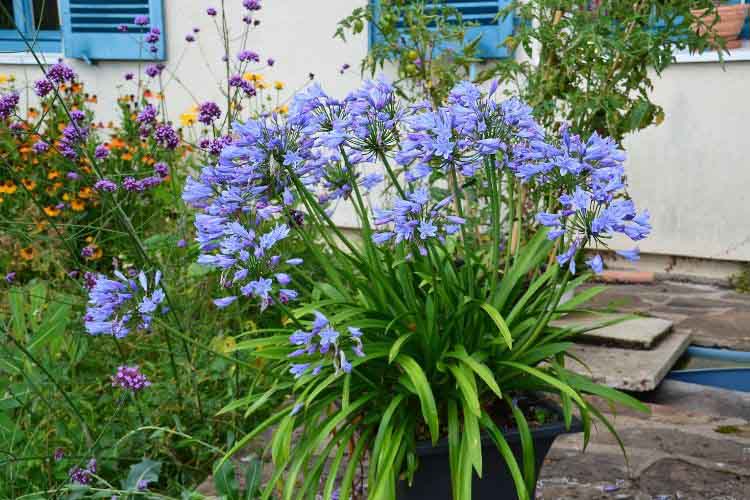
The Agapanthus Pitchoune Blue, a reliable choice, ideal for pots
Do you have other varieties to recommend? Feel free to share their names with us in the comments!
Agapanthus are spectacular flowers often found in seaside gardens, particularly along the West Coast and in Brittany. In summer, they display beautiful blue, white, or mauve flowers in umbels that are both graphic and elegant. As a worry-free perennial, the Agapanthus thrives in full sun in ordinary, well-drained soil that is not too dry in […]
Agapanthus in pots require regular and appropriate care: watering, fertilising, and pruning are essential actions to ensure their beautiful and long-lasting graphic flowering. However, after a few years, they can become cramped and start to languish. Symptoms include: flowers becoming smaller and stems shorter, yellowing foliage that regenerates more slowly, a hollowing out of the centre of the rootstock, and more frequent watering becoming less effective... Once the diagnosis is made, it's time for surgery! With a knife and some elbow grease, in just 10 minutes, your agapanthus will be revitalised for another four years. When and how should you divide your agapanthus? We’ll tell you everything.

Agapanthus 'Pitchoune Blue', a compact variety suitable for pot cultivation (photo credit: Sapho)
Division should be done at the end of winter
Whether your agapanthus is deciduous or evergreen, it should be divided at the end of winter or the beginning of spring (ideally from March to April). The temperatures are still cool, the days are short, and the growth of evergreen agapanthus is slowed down, making it the optimal time to intervene. You might say, "it also works at the end of summer, from mid-August to early October when the plant is no longer producing flower stems!" That’s true, but the rootstock will need to heal during autumn and winter, when its vegetative activity is at its lowest, and that’s not ideal.
Carefully remove the plant and clean the roots
First, remove the plant from its pot. If the rootstock is very old and roots are protruding from the top of the pot, cut as many roots as possible that are coming out of the bottom of the pot, turn it upside down, and tap it several times to release the root ball. Be careful with terracotta pots, as they are more fragile than plastic pots and roots adhere more easily to the porous wall, so proceed with care. You can slide a long knife blade between the root ball and the pot to detach the roots from the wall. Once the rootstock is extracted, untangle as many roots as possible by hand. Cut away any old black roots and scrape off the old compost.
Cut at the heart and slice into 2, 3, 4...
Equip yourself with a long knife (ideally a bread knife) whose blade has been cleaned and disinfected beforehand. Then, cut into 2, 3, 4, 5... But be careful, if you want a plant that will flower again this year, divide the rootstock into 2 to avoid any stress. If, on the other hand, you want to replant in several pots, in the garden, and share with your neighbour, you can divide it into as many pieces as possible. As long as you cut and keep a piece of rootstock with a root, a rhizome, and a bud, you can produce enough to replant throughout the neighbourhood.
Repot immediately and water generously
Once the rootstock is cut in two, apply wood ash to promote healing and prevent rot. Then repot it immediately in the same pot, adding rich compost mixed with some slow-release fertiliser. Water generously and store your agapanthus in a cool, well-lit room. New leaves will quickly develop, followed later in the season by flower stems.
If you have divided a lot, repot the fragments of rootstock in a pot or a cell, cut the roots in half, and also trim the foliage of the evergreen varieties by half. Water and then closely monitor daily watering during hot weather. Your "babies" can be replanted after 5 to 7 weeks.
What not to do!
If, like me, you had the great foresight to plant your agapanthus in a beautiful bulbous pot... then don’t even try to remove it: it’s impossible! The mass of roots formed prevents the plant from coming out. What to do? Break that beautiful pot or sacrifice the plant? That’s more akin to butchery than division, but the best option is to slice the plant into small pieces to extract it from its pot. The lesson to be learned? Don’t plant directly in a bulbous pot, but in a straight horticultural pot, inserted into a bulbous pot!
Agapanthus in pots require regular and appropriate care: watering, fertilising, and pruning are essential actions to ensure their beautiful and long-lasting graphic flowering. However, after a few years, they can become cramped and start to languish. Symptoms include: flowers becoming smaller and stems shorter, yellowing foliage that regenerates more slowly, a hollowing out of the […]
The first agapanthus are starting to flower now, like the beautiful Dr Brouwer Agapanthus, photographed yesterday in the greenhouses below.
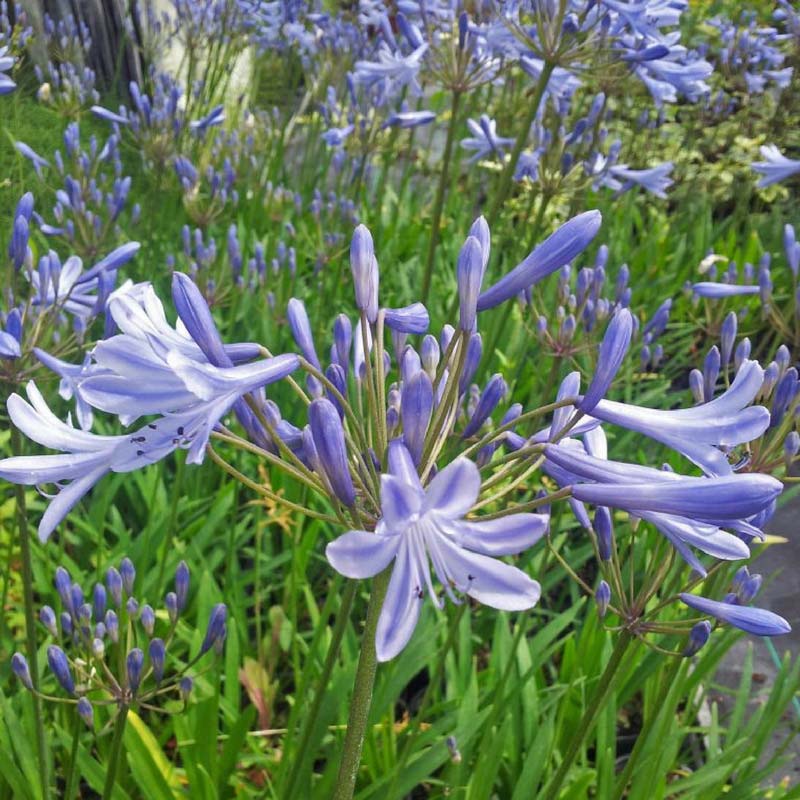
This is a great opportunity to revisit some classic questions about agapanthus...
When should agapanthus be planted?
Not now, in summer, but in spring: they have time to settle in before the heat. Ideally, plant just after the last frosts.
Autumn planting is possible (but in that case, buy them in pots), though tricky, as they are sensitive to winter cold. This is only for experienced gardeners!
Is it better to buy an agapanthus in a pot or bare roots?
There is an advantage to planting in pots: the plant is already established, which saves time in the growing cycle.
However, "bare roots" (actually stumps) are often much larger than what you can find in pots, so they tend to flower better... and are generally less expensive. Personally, I prefer bare roots: you know exactly what you're planting!
By the way, if you plant bare roots, bury the stump 5 to 10 cm deep.
Do agapanthus fear the cold?
Yes. But most can withstand a light frost: they can survive -5°C for one night, but not much more. So be careful, except in a narrow coastal strip (and yes, that's why the most beautiful agapanthus are by the sea...), they need winter protection!
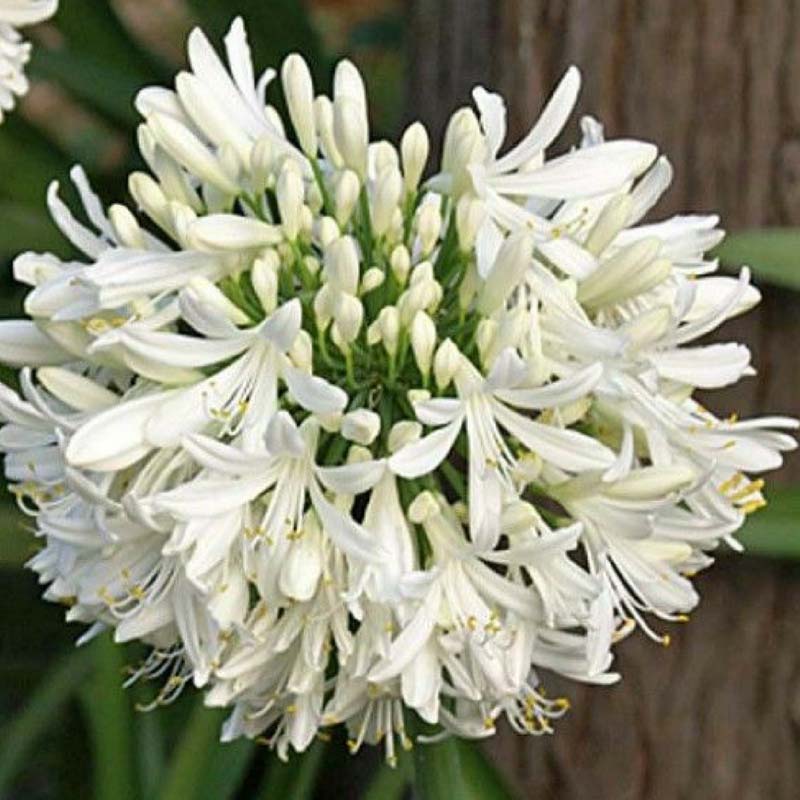
Agapanthus umbellatum album
As always, local conditions will play a role: an agapanthus in a sheltered south-facing position, in well-drained sandy soil, will withstand -10°C better than its counterpart planted in a windy spot in clay soil saturated with moisture at -3°C.
Note that there are some varieties that are quite hardy, like Headbourne, the most resistant, which can endure down to -8°C.
How to protect agapanthus in winter?
It's not complicated; there are two solutions:
1) A pot planting, which can be placed in a shed or unheated garage (or, if not possible, generously protected from the cold with cardboard, newspaper, etc.) when the first frosts arrive, to be brought out after the last frosts. Be careful not to bring them out too early, as young shoots are sensitive to frost....
2) A mulch, which will vary in thickness depending on the region and the chill... Generally, 10 cm is sufficient. We have successfully kept our agapanthus in the ground in our northern garden, even during the terrible winter of 2011, with a 25 cm layer of leaf mulch, covered with a tarp to hold it in place.
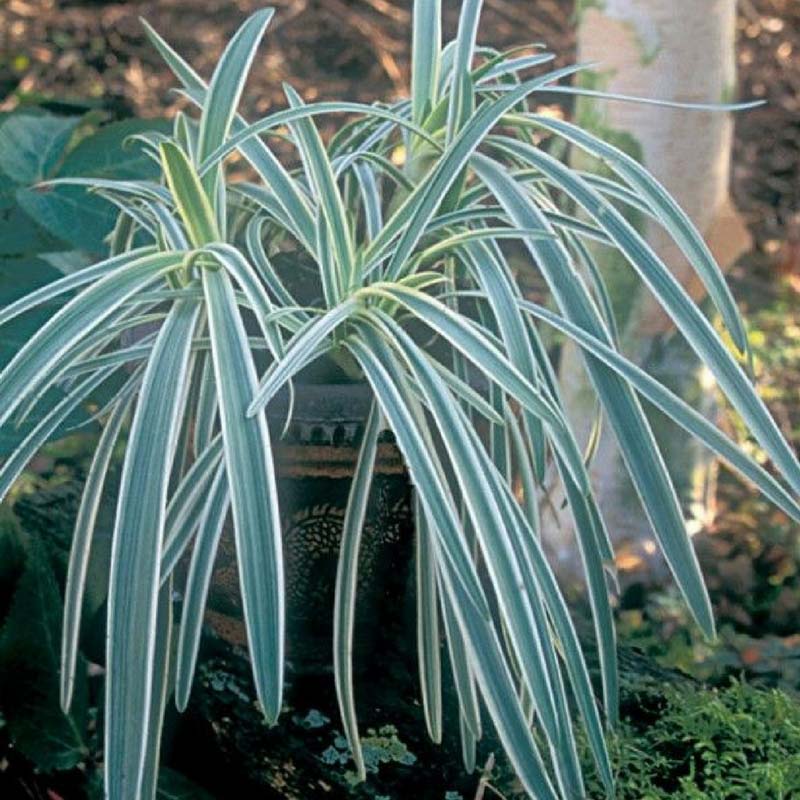
Agapanthus Tinkerbell
Why didn't my agapanthus flower last summer?
Young agapanthus do not flower well. Opt for quality 2/3 eyes - meaning 2 or 3 shoots emerging from the stump (this is the quality we practice....) - which are strong enough to flower in the first year.
Agapanthus need a lot of sun to flower. In "poor summers", flowering is compromised in the northern half of France... Even more so if the agapanthus are not planted in full sun!
They do not like excessive watering, but can tolerate drought if it doesn't last too long: in pots, water about once a week, twice in very hot weather.
Should I add fertiliser to my agapanthus?
Agapanthus prefer fairly rich, well-drained soil, but are not very greedy. In the ground, they do not need fertiliser. In pots, you can add a base fertiliser once a year, or a liquid fertiliser once a month in spring.
Why are my potted agapanthus more beautiful than those I planted in the garden?
Often, indeed, they are paradoxically more beautiful in pots.
Three factors:
- they like to be a bit crowded, which stimulates their flowering...
- Pots are often less humid than the ground, and agapanthus prefer fairly dry, well-drained soils (they are Mediterranean plants).
- In pots, you can better manage the planting location: clever gardeners will place their pots in the sunniest and most sheltered spot in the garden.... To bring them back to the semi-shaded terrace at flowering time!
It is said that agapanthus are evergreen, but mine lose their leaves in winter, why?
Most agapanthus found in commerce are from the Africanus varieties (due to their South African origin): the foliage is evergreen... unless frozen. In our climates, outside a narrow coastal strip, the foliage disappears in autumn and reappears in spring.
Are all agapanthus blue?
The most beautiful (in our opinion) is an electric blue: Blue Giant. But there are also white ones, and nearly all shades of lilac mauve, and even night blue varieties, like the sublime Black Magic. Note that there are also varieties with bright variegated foliage, like Tinkerbell or Silver Moon.
You will find a wide selection of varieties on our website!
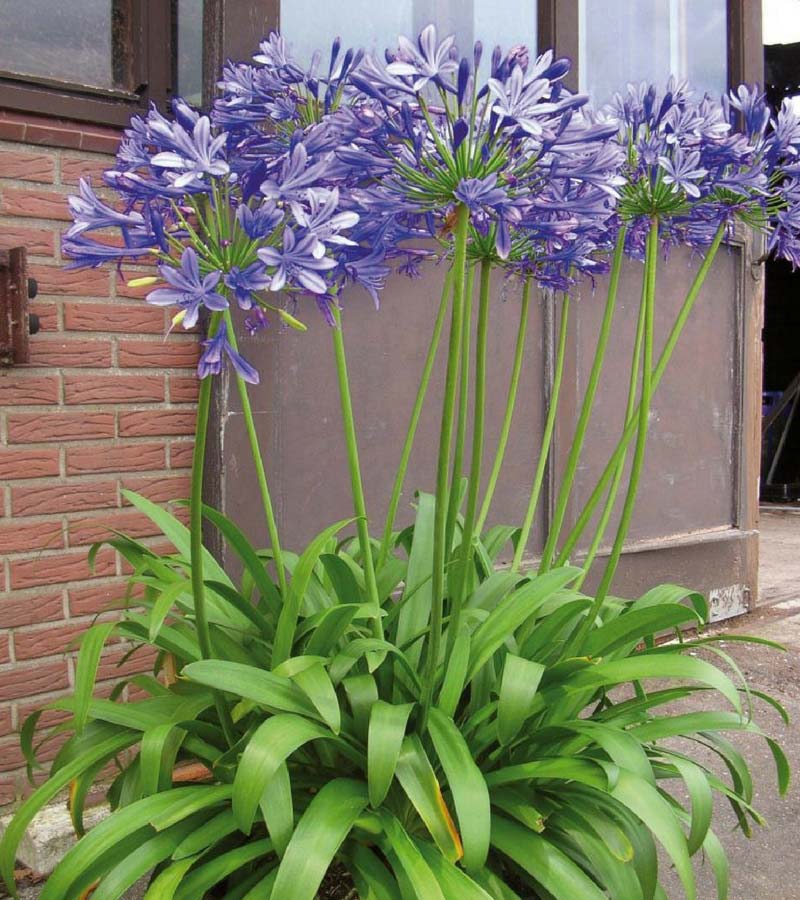
Agapanthus Blue Giant
The first agapanthus are starting to flower now, like the beautiful Dr Brouwer Agapanthus, photographed yesterday in the greenhouses below. This is a great opportunity to revisit some classic questions about agapanthus… When should agapanthus be planted? Not now, in summer, but in spring: they have time to settle in before the heat. Ideally, […]