Agapanthus Blue Giant
Agapanthus Blue Giant
Agapanthus Blue Giant
Agapanthus Blue Giant
Agapanthus Blue Giant
African Lily, Lily of the Nile
The young plant is really tiny. We'll see if it actually grows.
elisabeth, 24/03/2024
Back-to-school special offer!
Get €10 off for every €50 you spend! And get up to €40 off on a single order.
How does it work?
1. Shop your favourites
Add your favourite plants to your basket. For every €50 you spend (excluding delivery charges, store credit and the plastic-free option), you’ll receive a €10 voucher.
€50 spent = €10 voucher
€100 spent = €20 voucher
€150 spent = €30 voucher
€200 spent = €40 voucher
2. Place your order
Once your basket reaches one of the spending thresholds, place your order. You can even choose your delivery date!
3. Receive your voucher
As soon as your order has been shipped, you’ll receive an email containing your personal voucher code and its value.
4. Use it on your next order
Your voucher is valid for 90 days from the date you receive it. It can be used once only, on a new order worth at least the value of the voucher, excluding delivery charges.
Please note: Vouchers can be combined with other offers, but cannot be split or refunded.
Home or relay delivery (depending on size and destination)
Important: You may be charged customs duties by your country’s customs authorities upon delivery.
Schedule delivery date
and select date in basket
This plant carries a 12 months recovery warranty
More information
We guarantee the quality of our plants for a full growing cycle, and will replace at our expense any plant that fails to recover under normal climatic and planting conditions.
Does this plant fit my garden?
Set up your Plantfit profile →
Description
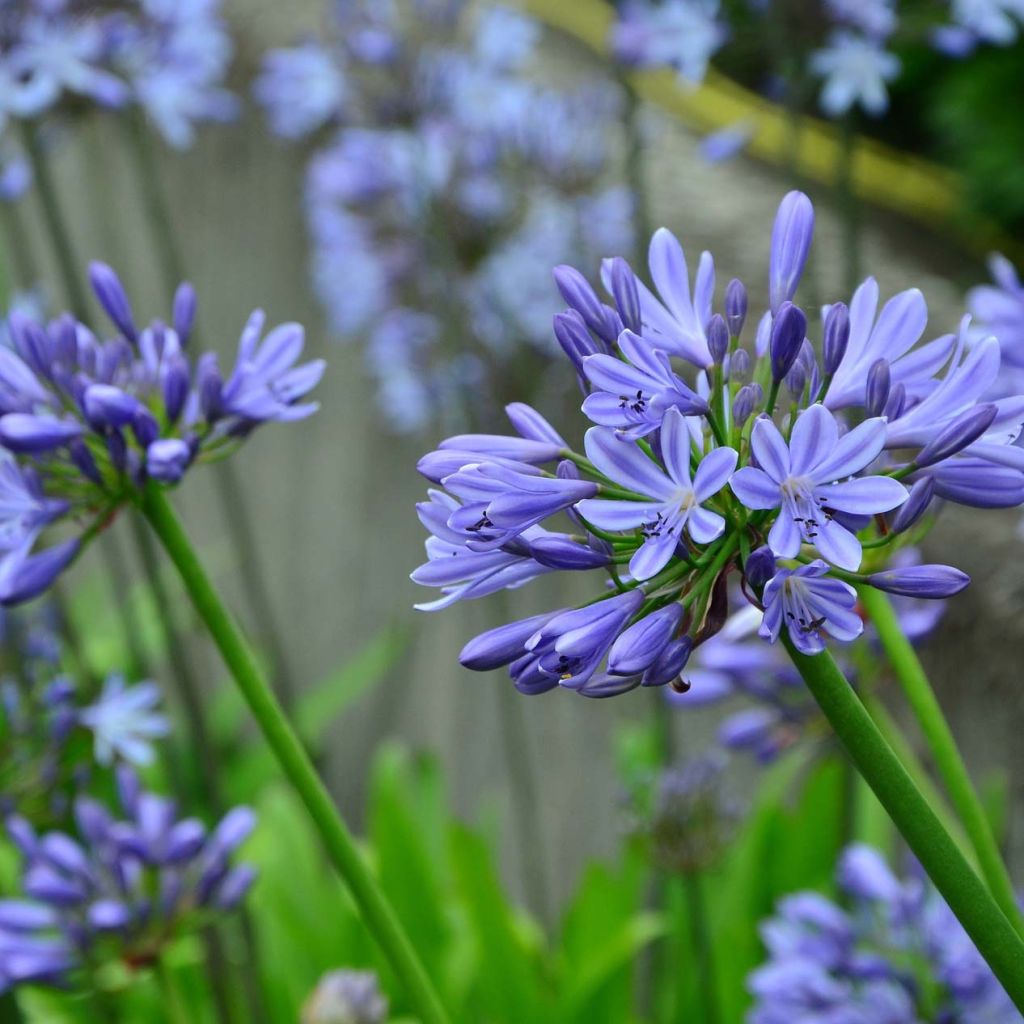
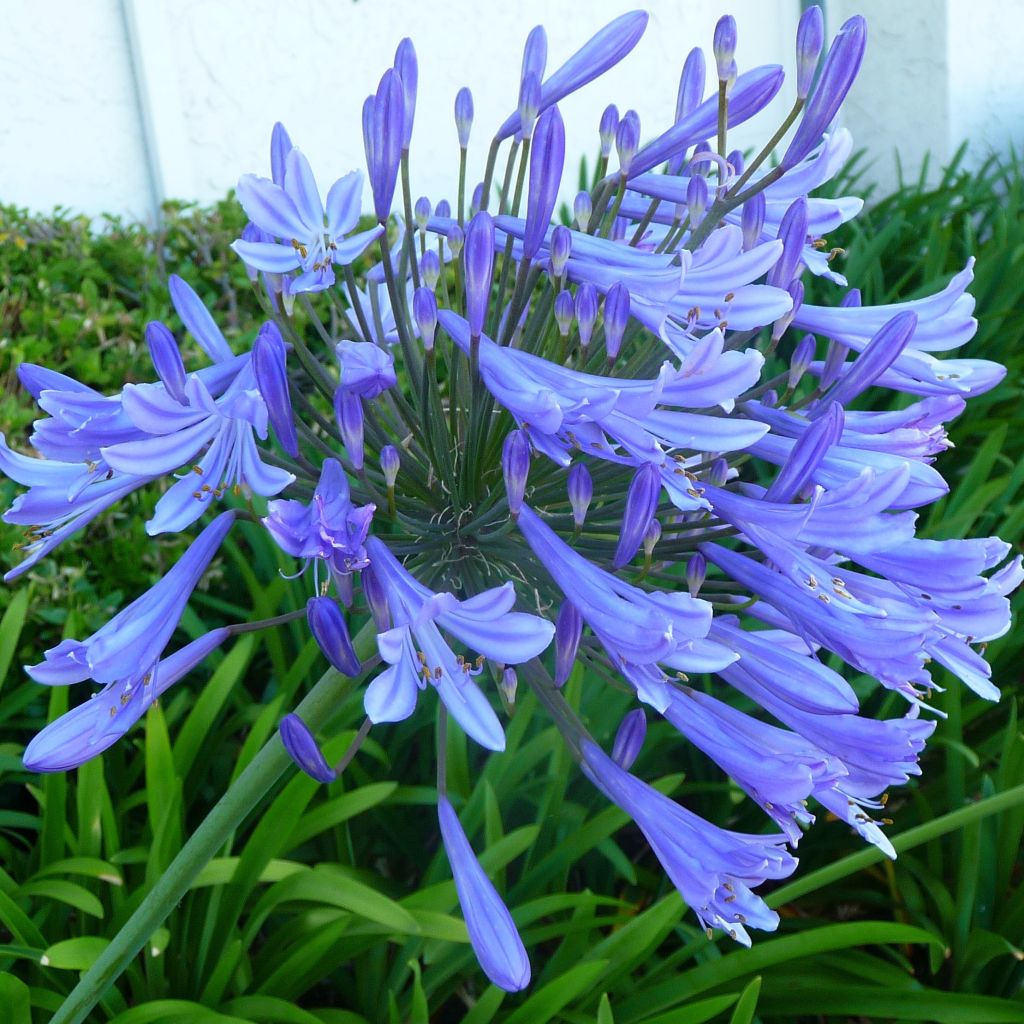
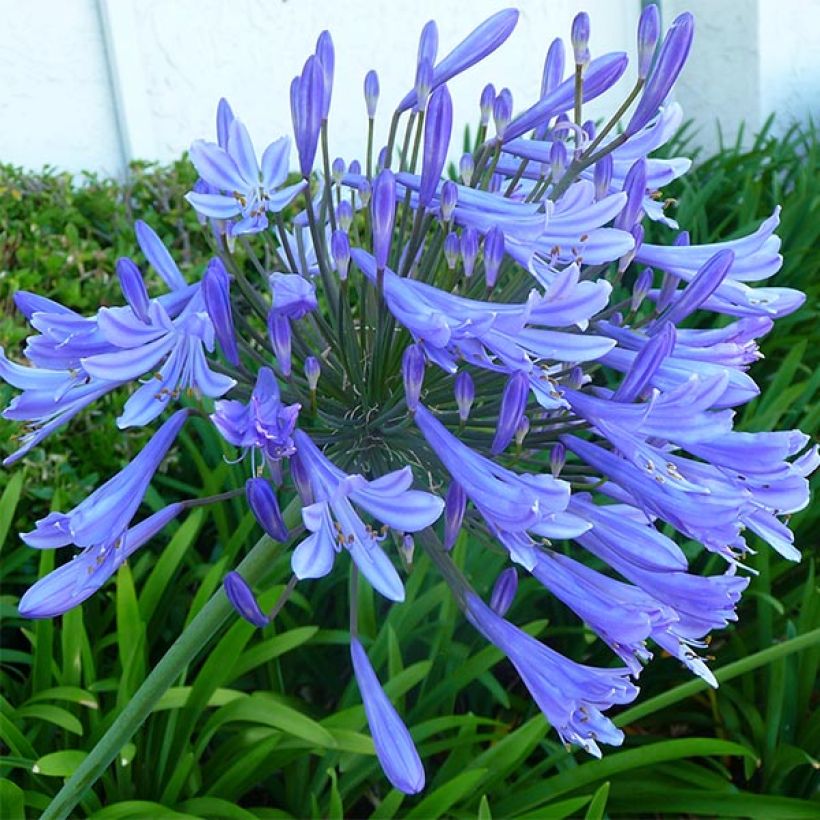
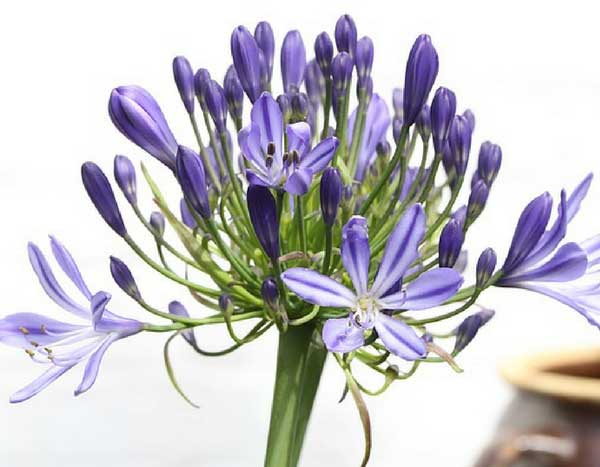
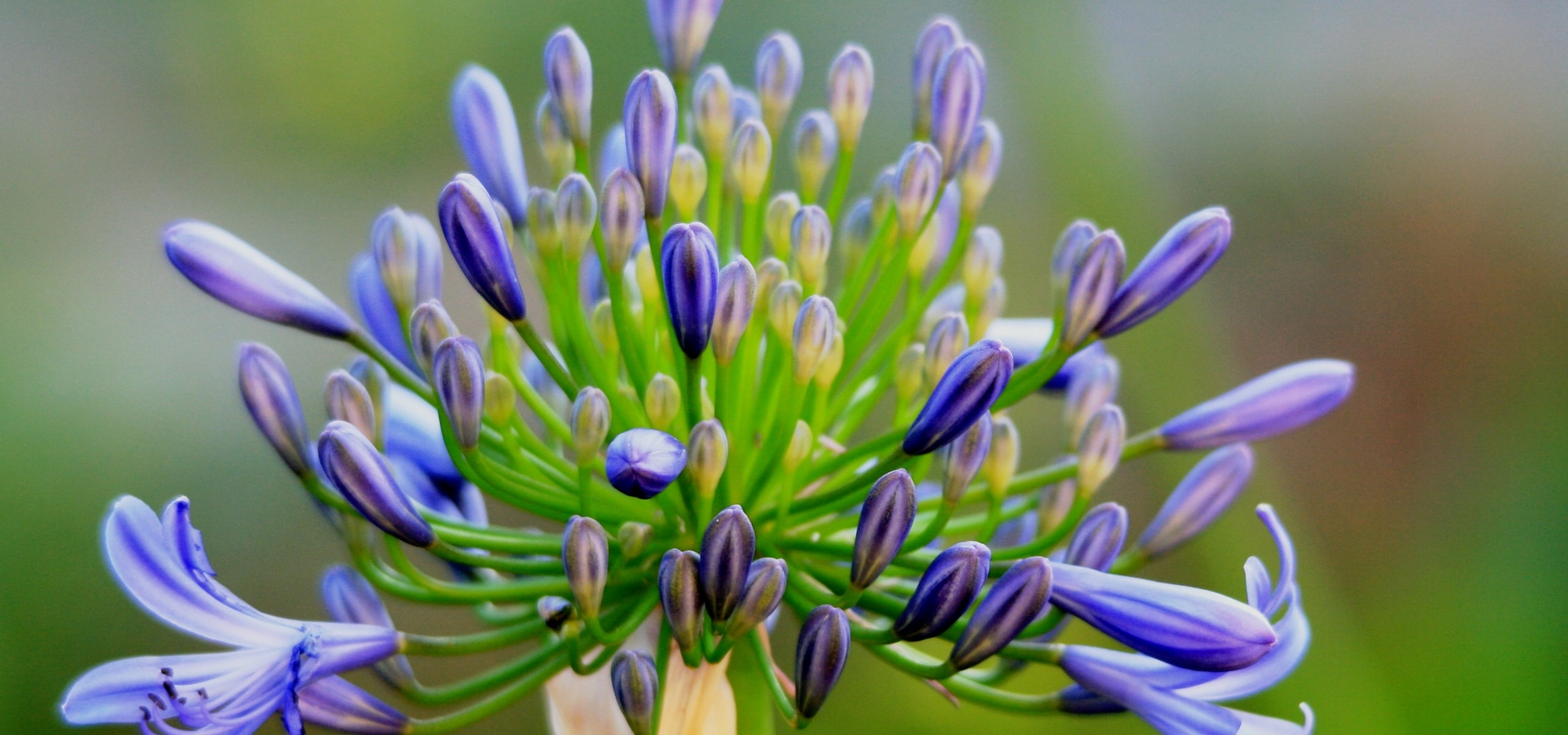
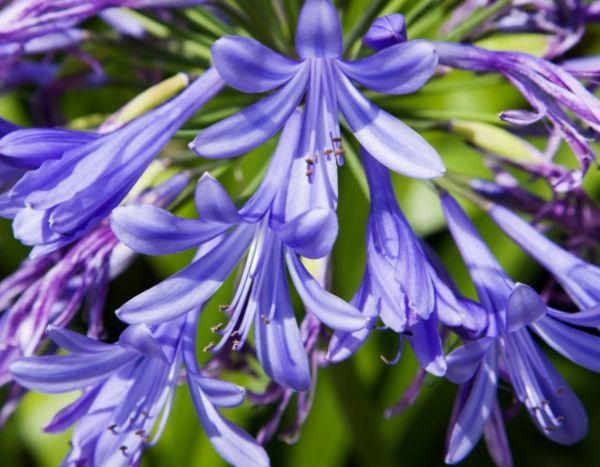
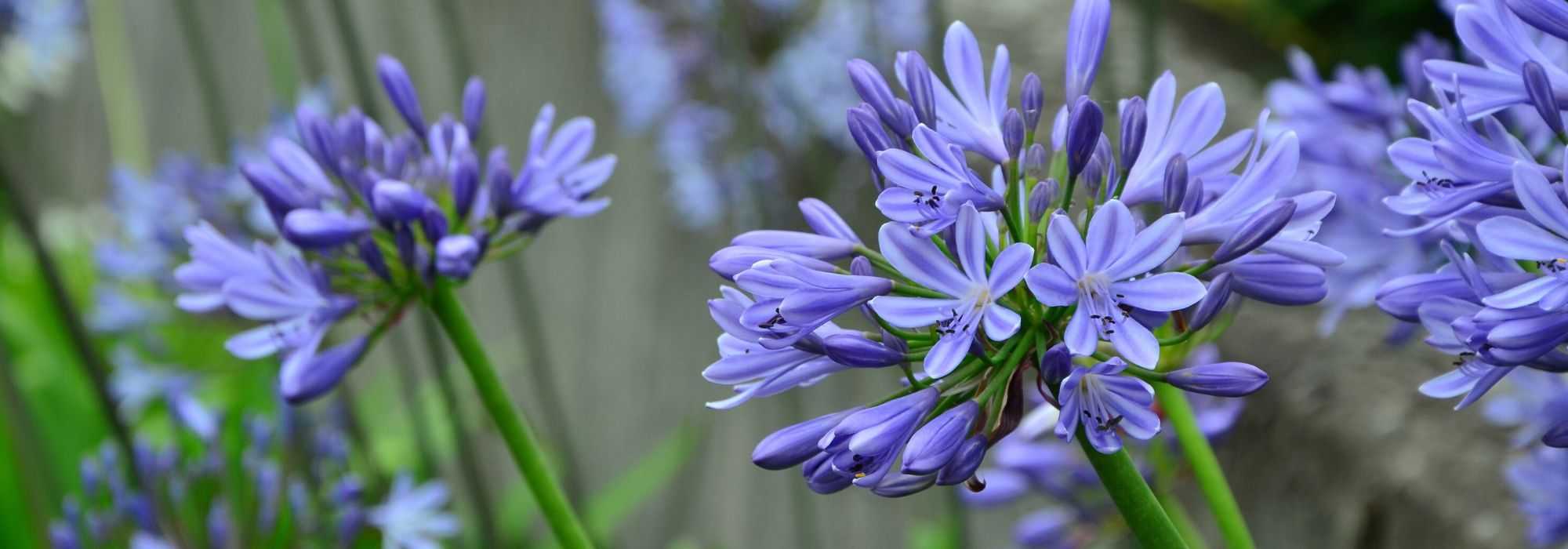
L'agapanthe ‘Blue Giant’ porte de grandes ombelles sphériques au sommet de hautes tiges solides. Ses nombreuses fleurs d'un bleu violacé assez vif s’épanouissent en été au-dessus d’un feuillage bien fourni. Cette ancienne variété donne de l’ampleur aux massifs ensoleillés et produit d’excellentes fleurs à couper. Semi-persistante et moyennement rustique, elle est particulièrement bien adaptée aux jardins côtiers et aux régions pas trop froides en hiver.
Cette variété se nomme officiellement Agapanthus ‘Blue Giant’. Agapanthus africanus ‘Blue Giant’, ‘Dutch Blue Giant’ et ‘Dutch Giant’ sont d’anciennes appellations horticoles. Classée dans le groupe des agapanthes à fleurs en trompette, elle est d’origine néerlandaise et était déjà cultivée en 1951 par les pépinières J.K. Zandberg, à Rijnsburg. Elle serait principalement issue d’Agapanthus praecox subsp. orientalis, avec une influence d’Agapanthus africanus. Comme toutes les agapanthes, elle appartient à la famille des Amaryllidacées et possède des ancêtres originaires d’Afrique du Sud.
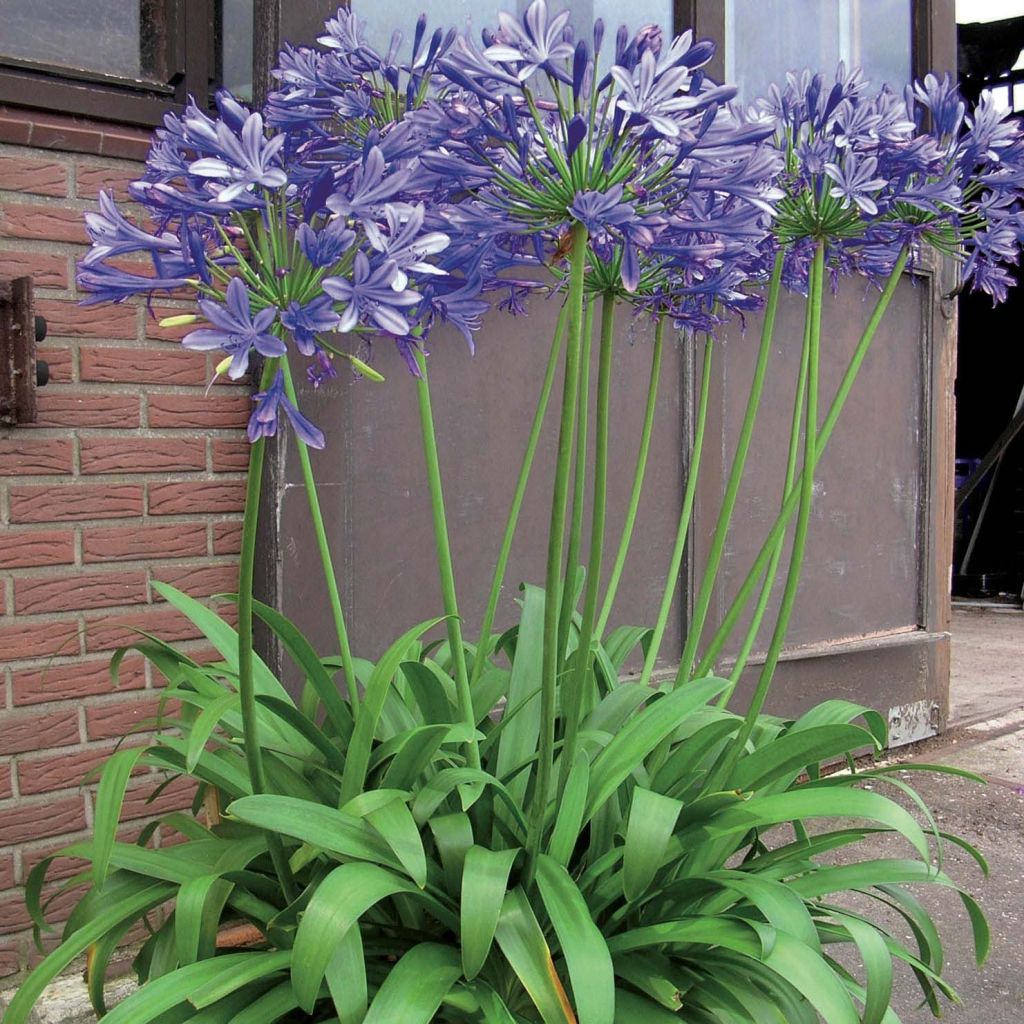
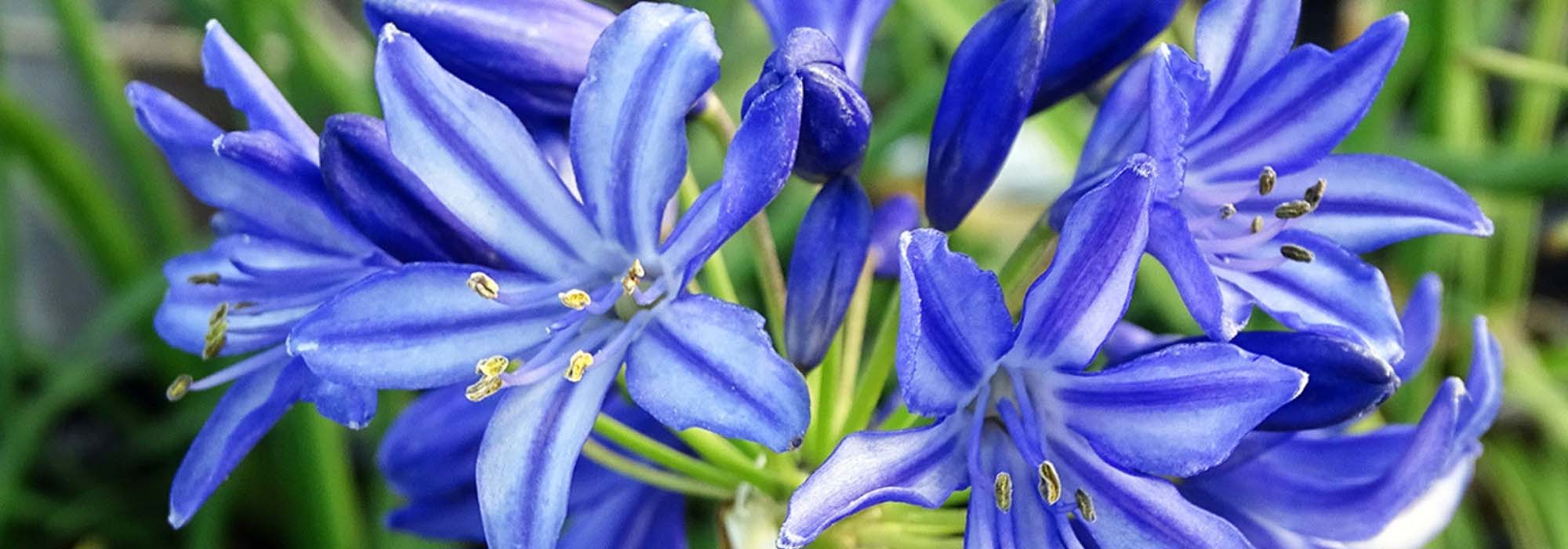
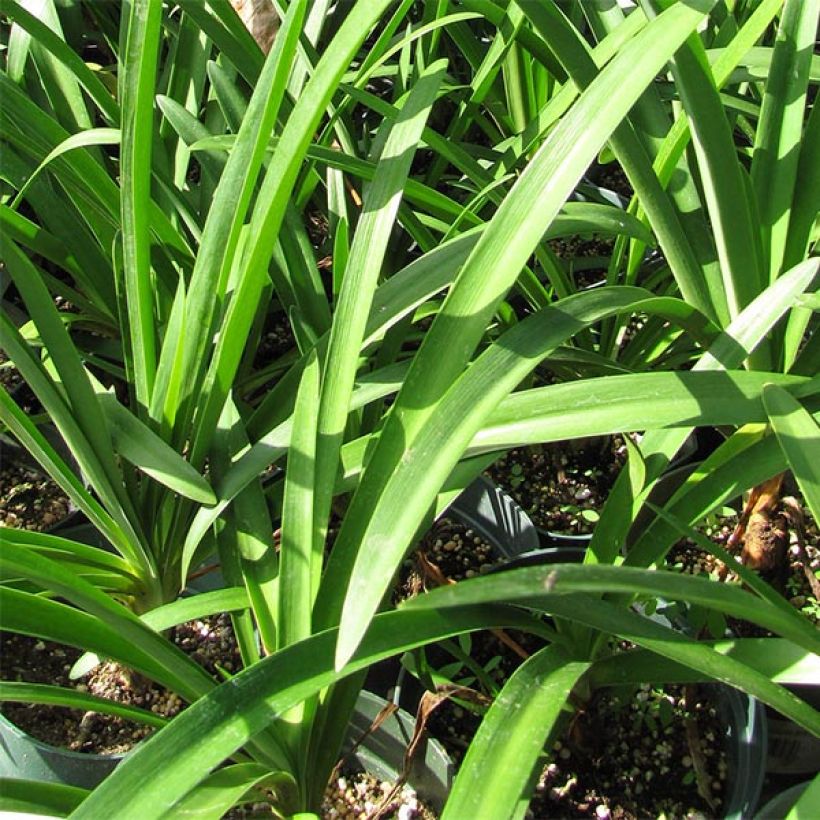
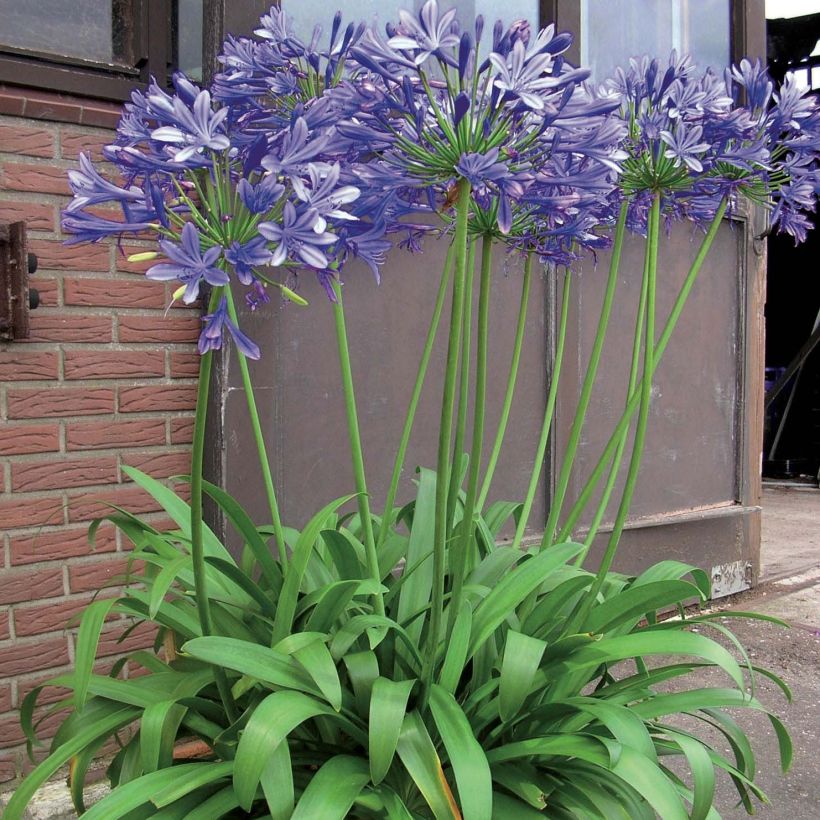
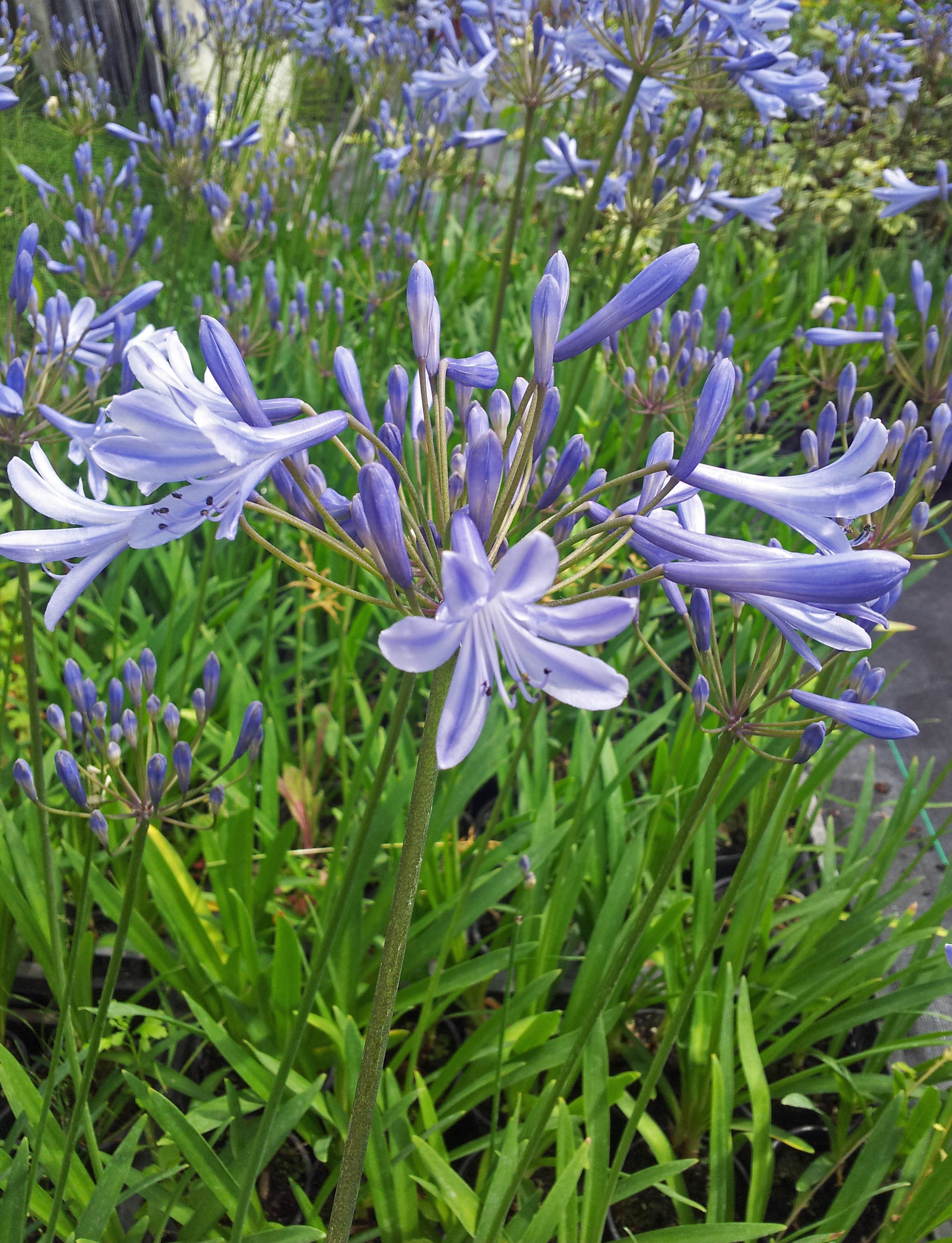
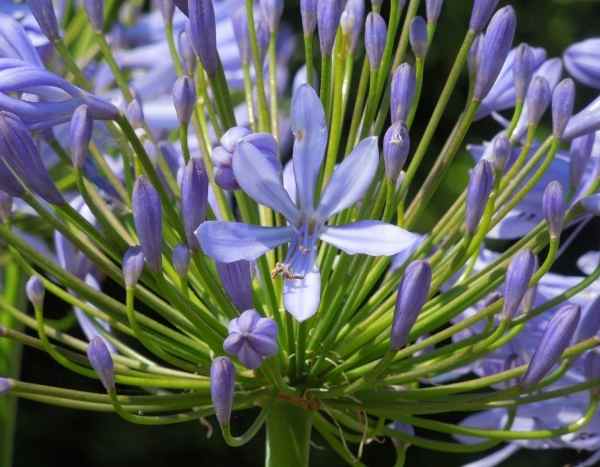
La plante se développe à partir de rhizomes courts munis de grosses racines charnues. Elle forme une touffe dense de 50 à 80 cm de largeur. Les feuilles rubanées, dressées puis arquées, mesurent 25 à 60 cm de longueur pour 2,5 à 3,5 cm de largeur. Elles sont d'un vert moyen, légèrement glauques et plus ou moins persistantes en hiver selon le climat. Dans les régions clémentes, une grande partie du feuillage se maintient pendant l’hiver ; il peut disparaître partiellement ou entièrement sous l’effet du froid. Les tiges florales, légèrement teintées de pourpre près de leur sommet, atteignent couramment 1,20 m et peuvent culminer à 1,50 m. Elles portent des ombelles globuleuses de 17 à 23 cm de diamètre, composées de 90 à 130 fleurs. Les boutons violet foncé s’ouvrent en longues trompettes bleu mauve, presque blanches à la base, traversées par une nervure médiane plus foncée. La floraison a lieu en juillet-août et peut se poursuivre en septembre sous un climat favorable. Les fleurs attirent les insectes pollinisateurs, puis laissent place à des capsules renfermant des graines noires. 'Blue Giant’ résiste à des températures comprises entre –8 et –10 °C, dans une terre parfaitement drainée et à l’abri de l’humidité hivernale.
Cette grande agapanthe s’utilise en groupe dans un massif ensoleillé ou dans un grand bac sur la terrasse. Elle s'associe bien à d'autres grandes vivaces d'été telles que l’hémérocalle ‘Gentle Shepherd’, le Kniphofia ‘Ice Queen’, le Crocosmia ‘Star of the East’ et l’Eryngium yuccifolium. Son graphisme convient aux jardins de style contemporain, exotique, italien ou méditerranéen. Sa tolérance aux embruns est précieuse dans les jardins côtiers, mais ses hautes tiges sont sensibles aux vents forts. Coupées au début de leur épanouissement, les ombelles s'utilisent dans de grands bouquets d'été avec des dahlias, des lis ou des feuillages.
Agapanthus Blue Giant in pictures
Flowering
Foliage
Plant habit
Botanical data
Agapanthus
Blue Giant
Amaryllidaceae
African Lily, Lily of the Nile
Agapanthus africanus ‘Blue Giant’, Agapanthus africanus ‘Dutch Blue Giant’, Agapanthus africanus ‘Dutch Giant’
Cultivar or hybrid
Planting and care
Agapanthus ‘Blue Giant’ should preferably be planted in spring, after the hard frosts. Planting in early autumn is possible in coastal and Mediterranean regions. The stump is set 5 to 10 cm below the soil surface, in full sun and in a position sheltered from strong winds. Space the young plants 50 to 60 cm apart. The soil must be fertile, deep and very well drained, slightly acidic, neutral or slightly calcareous, rich in compost. It must not retain too much water in winter. In heavy soil, adding gravel or coarse sand is useful. Regular watering from spring until the end of flowering encourages the formation of flower stems. A thick layer of dead leaves or straw protects stumps grown in open ground.
In regions subject to frosts below –8 or –10 °C, growing in a large pot allows the plant to be overwintered in a bright, cool, frost-free place. An application of fertiliser rich in potash in spring and early summer supports flowering. The stump is divided in spring, every four or five years, when the clump becomes too tight or less floriferous.
Planting period
Intended location
Care
Planting & care advice
-
-
-
-
-
-
-
-
-
, onOrder confirmed
Reply from on Promesse de fleurs
Recently viewed products
Haven't found what you were looking for?
Hardiness is the lowest winter temperature a plant can endure without suffering serious damage or even dying. However, hardiness is affected by location (a sheltered area, such as a patio), protection (winter cover) and soil type (hardiness is improved by well-drained soil).
In temperate climates, pruning of spring-flowering shrubs (forsythia, spireas, etc.) should be done just after flowering.
Pruning of summer-flowering shrubs (Indian Lilac, Perovskia, etc.) can be done in winter or spring.
In cold regions as well as with frost-sensitive plants, avoid pruning too early when severe frosts may still occur.
The harvesting period indicated on our website applies to countries and regions in USDA zone 8 (France, England, Ireland, the Netherlands).
In colder areas (Scandinavia, Poland, Austria...) fruit and vegetable harvests are likely to be delayed by 3-4 weeks.
In warmer areas (Italy, Spain, Greece, etc.), harvesting will probably take place earlier, depending on weather conditions.
The sowing periods indicated on our website apply to countries and regions within USDA Zone 8 (France, UK, Ireland, Netherlands).
In colder areas (Scandinavia, Poland, Austria...), delay any outdoor sowing by 3-4 weeks, or sow under glass.
In warmer climes (Italy, Spain, Greece, etc.), bring outdoor sowing forward by a few weeks.
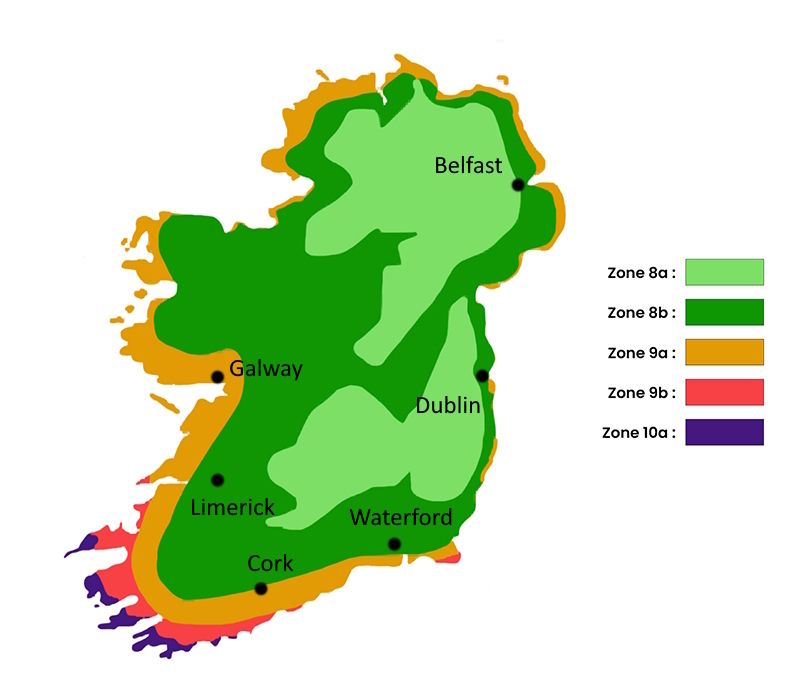
The planting period indicated on our website applies to regions in USDA Zone 9a (East Coast and Midlands: Dublin, Wexford, Waterford, Kilkenny, Portlaoise). It will vary depending on where you live:
- On the west coast and in the north-west (Galway, Limerick, Sligo, Donegal, Westport), delay planting by 1 to 2 weeks in spring and bring it forward by 1 to 2 weeks in autumn compared to the dates given, preferably choosing periods without strong winds.
- In the inland hills and plateaus (Wicklow Mountains, Macgillycuddy’s Reeks, Connemara, Killarney), it is best to plant in spring (April–May) or autumn (September–October), avoiding periods of waterlogged soil in winter and strong winds, which pose the main risk to newly planted trees in these areas.
The flowering period indicated on our website applies to regions in USDA Zone 9a, such as the East Coast and Midlands, including Dublin, Wexford, Waterford, Kilkenny and Portlaoise.
This will vary depending on where you live:
- On the west coast and in the northwest (Galway, Limerick, Sligo, Donegal and Westport), it will be delayed by one to two weeks compared to the given dates, due to stronger Atlantic winds and less spring sunshine.
- In the inland hills and plateaus (the Wicklow Mountains, the Macgillycuddy's Reeks, Connemara and Killarney), flowering will be delayed by two to three weeks. Flowering mainly occurs between May and July, with the limiting factors being less frost and more of the excessive humidity, strong winds and lack of sunshine that are characteristic of these areas.
Shipping country and language
Your country of residence may be:
Your country of residence is:
For a better user experience on our website, you can select:
Your shipping country:
-
 Austria
-
 Belgium
-
 Bosnia & Herzegovina
-
 Bulgaria
-
 Croatia
-
 Cyprus
-
 Czechia
-
 Denmark
-
 Estonia
-
 Finland
-
 France
-
 Germany
-
 Greece
-
 Hungary
-
 Iceland
-
 Ireland
-
 Italy
Italy
-
 Latvia
-
 Liechtenstein
-
 Lithuania
-
 Luxembourg
-
 Malta
Malta
-
 Netherlands
-
 Poland
-
 Portugal
-
 Romania
-
 Serbia
-
 Slovakia
-
 Slovenia
-
 Spain
Spain
-
 Sweden
-
 Switzerland
Language:
-
French
-
 English
-
Spanish
-
Italian
-
German
-
Portuguese
-
Dutch
-
Finnish
My Account
Hello
My wish lists
My cart
Log in / Register
Existing customer?
This form is protected by reCAPTCHA - the Google Privacy Policy and Terms of Service apply.
New customer?
Create an account to track your orders, access our customer service and, if you wish, make the most of our upcoming offers.