
Diospyros kaki Rojo Brillante - Persimmon
Diospyros kaki Rojo Brillante - Persimmon
Diospyros kaki Rojo Brillante
Persimmon, Kaki, Japanese Persimmon, Oriental Persimmon
Planted at the end of last summer (2025), the persimmon tree is thriving in my garden. It came through the winter beautifully and looks wonderful. I'm really looking forward to seeing its fruit next year!
Georges, 01/06/2026
Back-to-school special offer!
Get €10 off for every €50 you spend! And get up to €40 off on a single order.
How does it work?
1. Shop your favourites
Add your favourite plants to your basket. For every €50 you spend (excluding delivery charges, store credit and the plastic-free option), you’ll receive a €10 voucher.
€50 spent = €10 voucher
€100 spent = €20 voucher
€150 spent = €30 voucher
€200 spent = €40 voucher
2. Place your order
Once your basket reaches one of the spending thresholds, place your order. You can even choose your delivery date!
3. Receive your voucher
As soon as your order has been shipped, you’ll receive an email containing your personal voucher code and its value.
4. Use it on your next order
Your voucher is valid for 90 days from the date you receive it. It can be used once only, on a new order worth at least the value of the voucher, excluding delivery charges.
Please note: Vouchers can be combined with other offers, but cannot be split or refunded.
Home or relay delivery (depending on size and destination)
Important: You may be charged customs duties by your country’s customs authorities upon delivery.
Schedule delivery date,
and select date in basket
This plant carries a 12 months recovery warranty
More information
We guarantee the quality of our plants for a full growing cycle, and will replace at our expense any plant that fails to recover under normal climatic and planting conditions.
Description
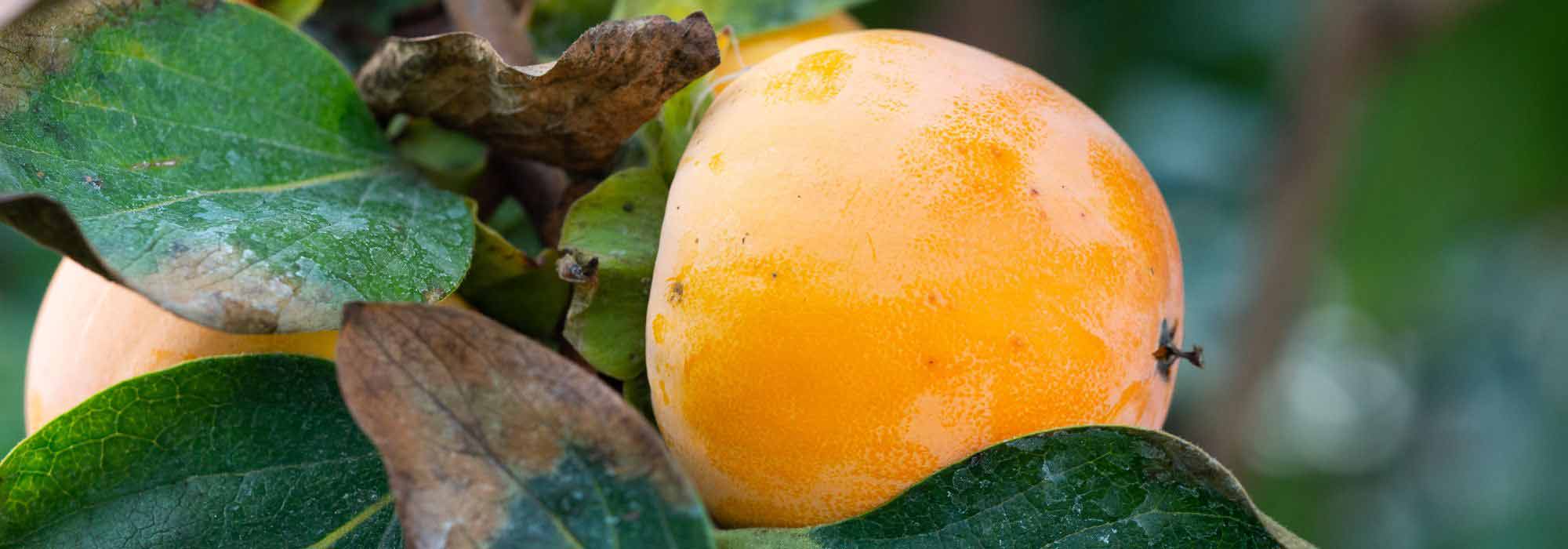
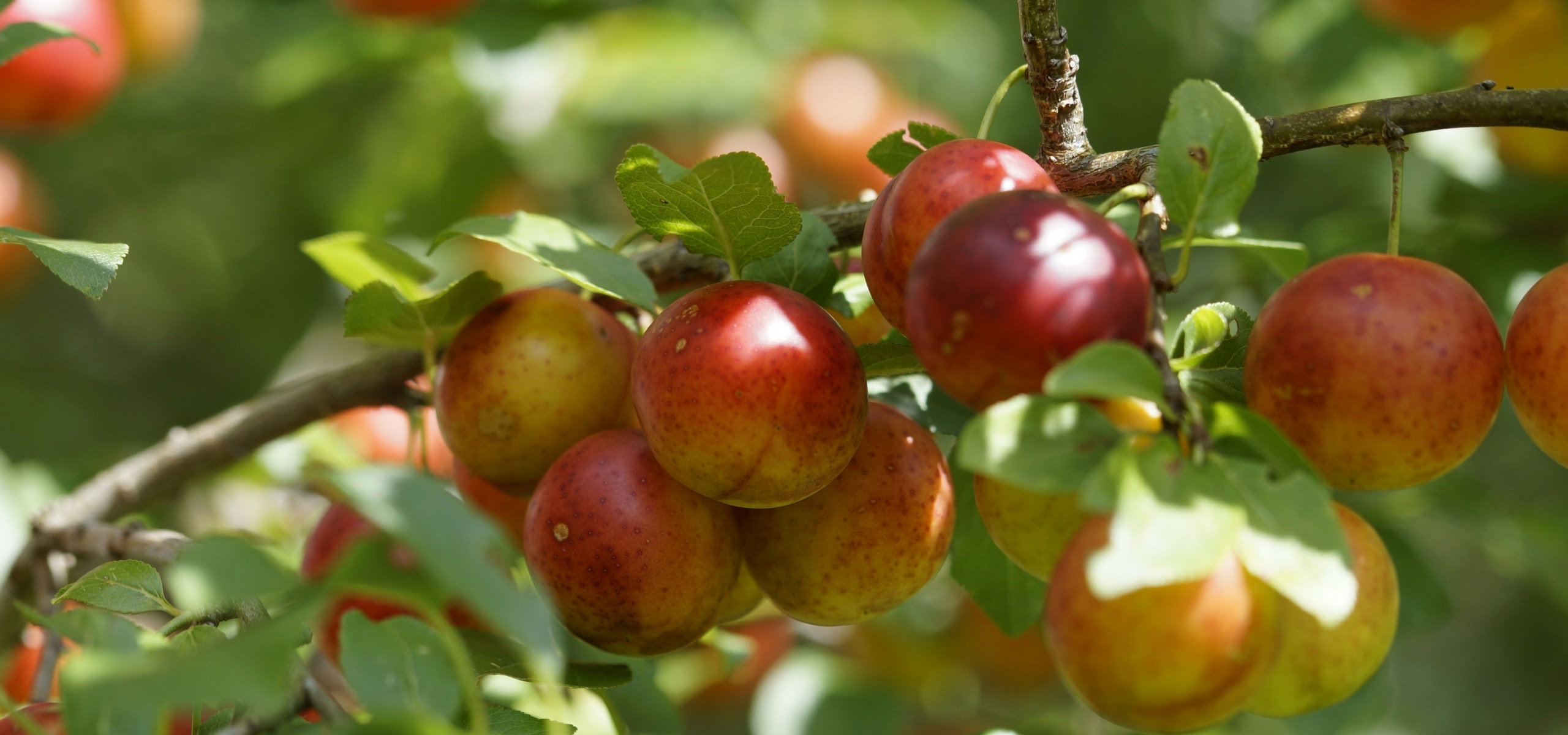
Diospyros kaki 'Rouge Brillant', also known as 'Rojo Brillante', is a large persimmon tree with particularly abundant and regular productivity. It is well-known to the general public through its large and delicious fruits found on stands in autumn and winter, sold under the name Persimmon. Its large, elongated, slightly ribbed fruit changes from yellow to dark red. When over-ripe, it contains a liquid, sweet, and slightly vanilla-flavoured pulp of excellent taste quality. It can be dried, sliced, and stored very well in a cool place. Late harvesting and ripening in December. This variety is to be reserved for the southern half of France or other hot regions.
The Kaki 'Rouge Brillant' is classified in the category of astringent persimmon trees, which means they can only be consumed when over-ripe, when they have a soft to mushy texture. To achieve this, they must have experienced the first frost. This variety produces very large fruits, averaging 270 grams, with a conical elongated shape and slightly ribbed, with moderately thin skin. They can be harvested and enjoyed when their colour is a reddish-orange, but are preferably consumed at physiological ripeness, when they have turned red. The pulp is then reddish-orange in colour, with a liquid texture, very little fibrous, and seedless. It is of very good taste quality and very sweet when fully over-ripe. The fruits can be cooked into marmalade or compote, eaten raw in salad with or without cream, or dried in the same way as figs. Explore all the different ways to discover their various flavors.
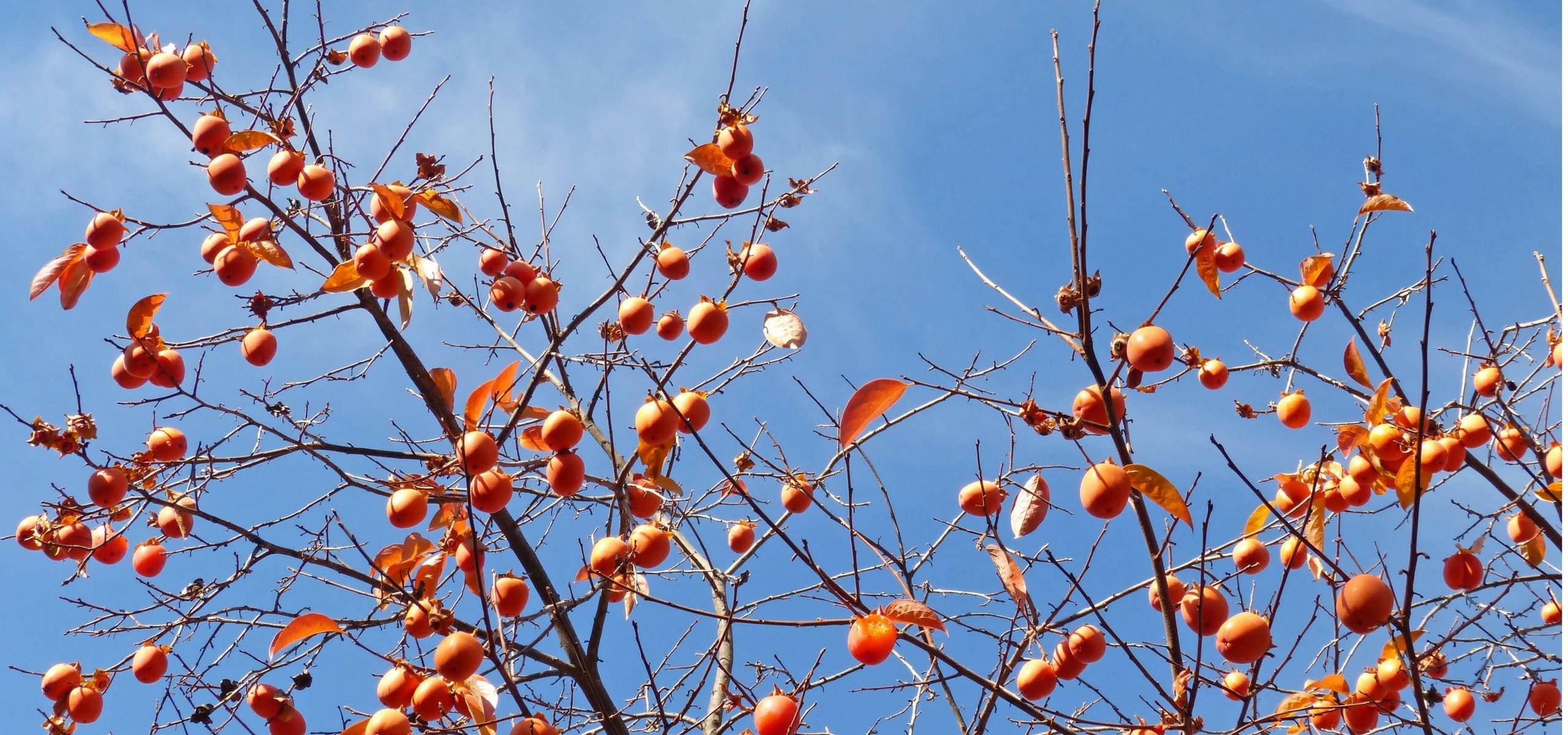
The Kaki (Dyospiros kaki) is a tree native to China, with a rounded habit, reaching 6 to 10 metres (20 to 33 feet) in height and 5 to 7 metres (16 to 23 feet) in width. Its growth is rather slow. Belonging to the family Ebenaceae, its wood is very hard. The leaves of the Persimmon tree are elongated, about fifteen centimetres long, and shiny green in colour. The 'Rojo Brillante' persimmon is adapted to the south of the Loire region, it needs warmth and sunlight for fruit ripening. Hardy down to -15°C, it is however sensitive to occasional severe frosts that can weaken it. Flowering occurs in May, with small insignificant yellowish flowers that attract pollinating insects.
Planting is done in frost-free autumn or winter, or alternatively in spring with regular watering. Choose a sunny and sheltered location. The Chinese Persimmon tree thrives in all types of soil, preferably with an acidic tendency. It prefers well-drained and rich soils. Once well-rooted in deep soil, it tolerates summer drought quite well. If you plant multiple trees, space them 5 to 7 metres (16 to 23 feet) apart in all directions.
This lovely genus name, Diospyros, comes from Greek and means "fruit of the gods"!
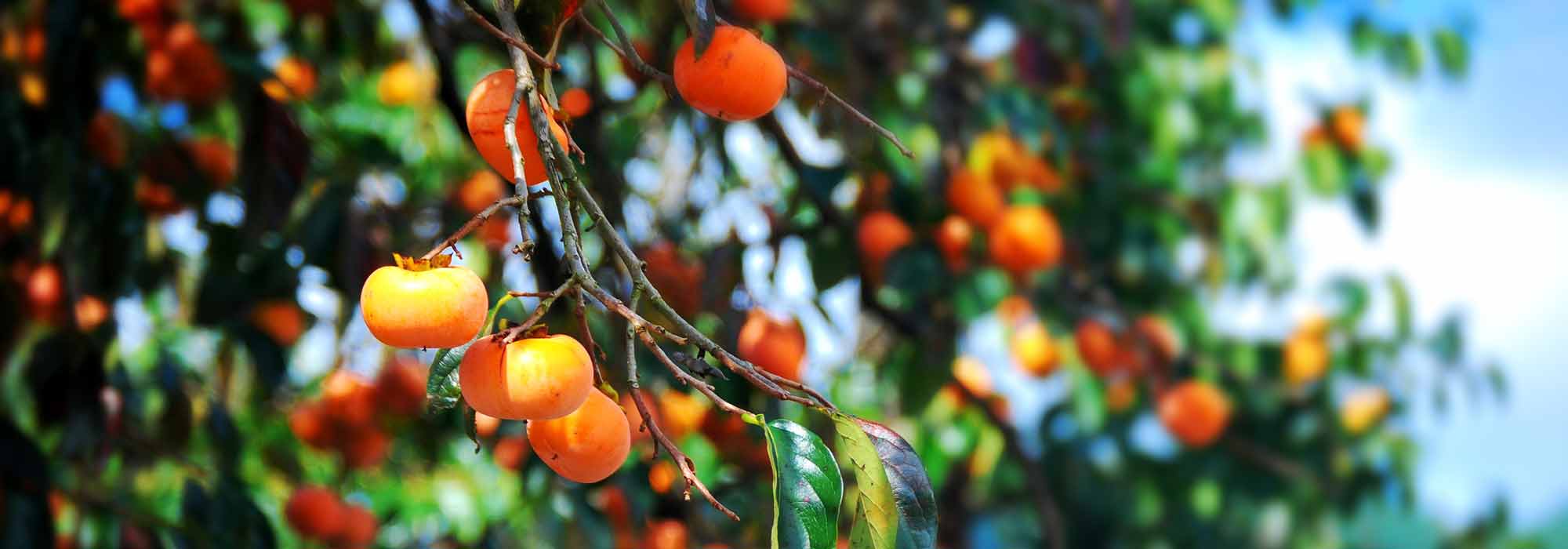
Diospyros kaki Rojo Brillante - Persimmon in pictures
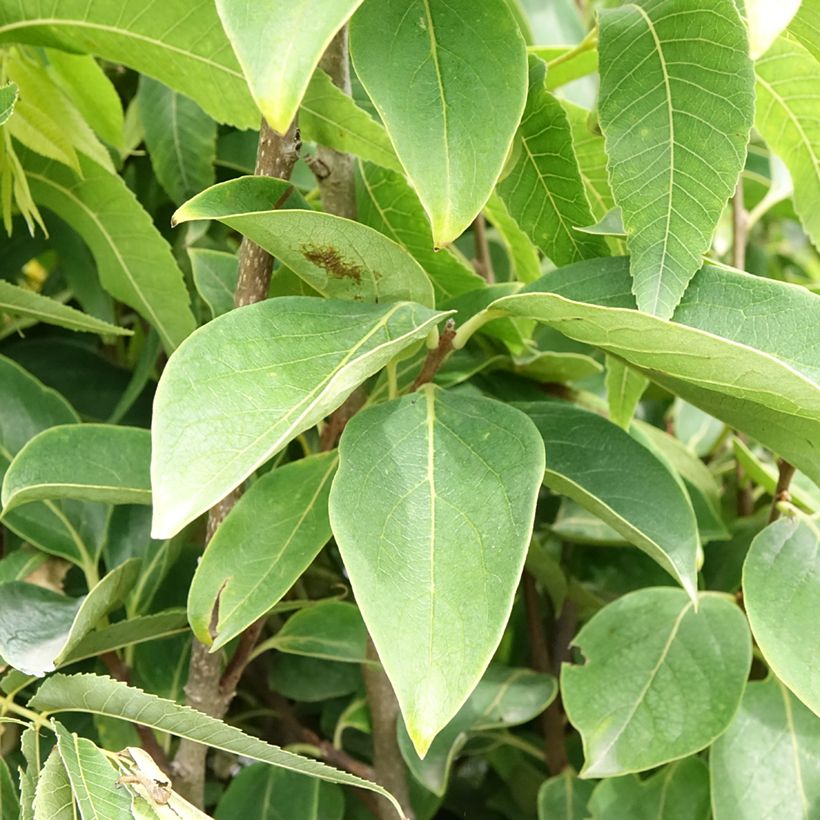
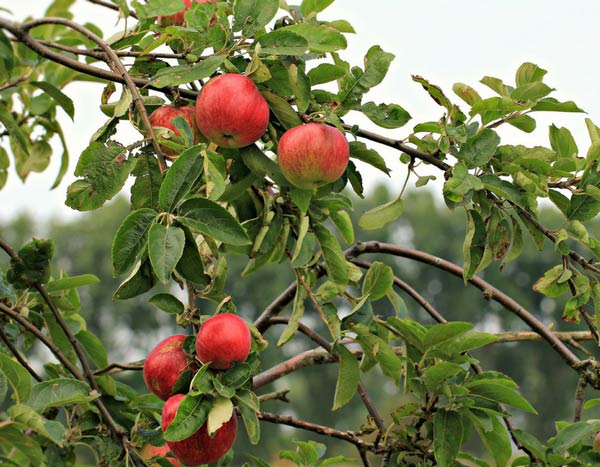
Plant habit
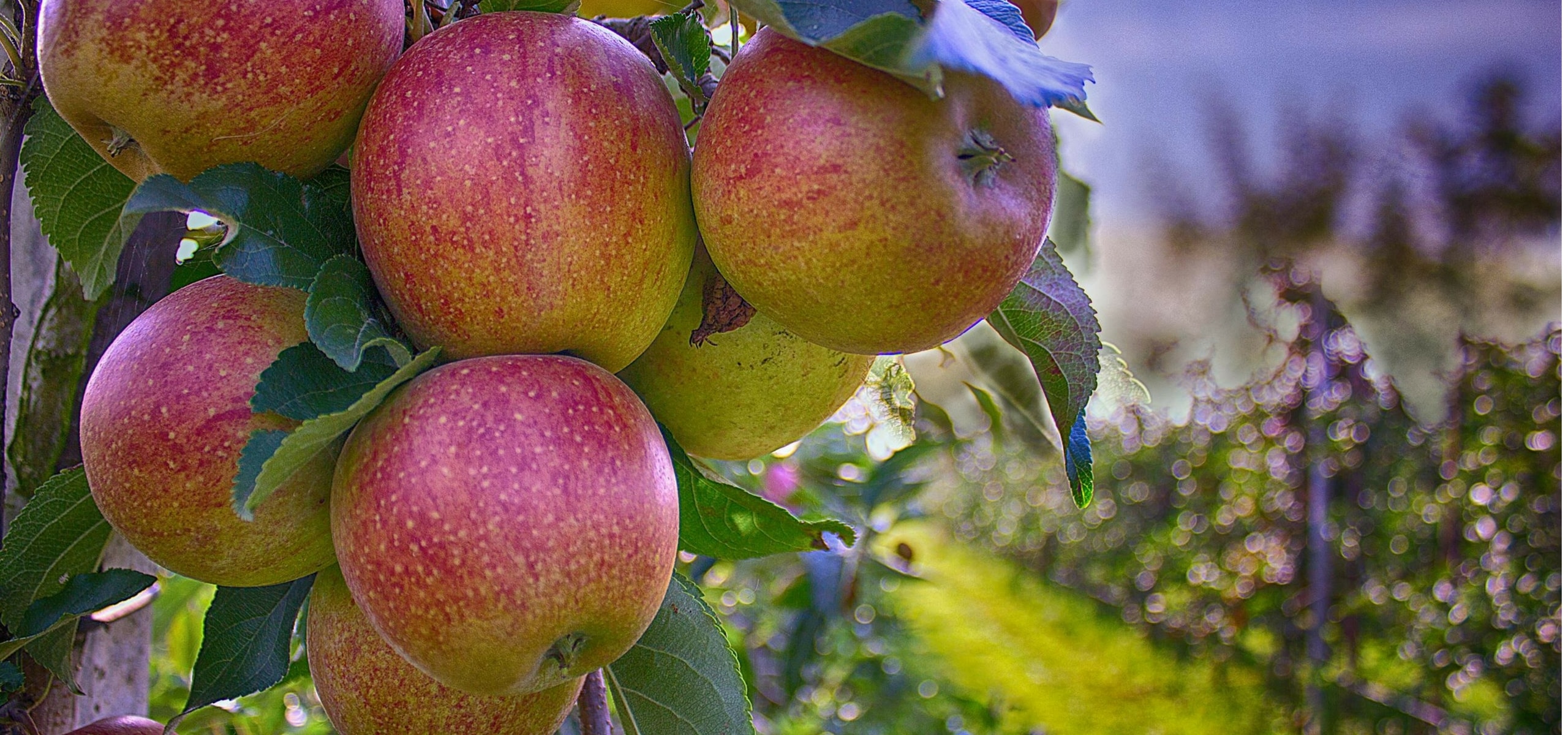
Fruit
Flowering
Foliage
Botanical data
Diospyros
kaki
Rojo Brillante
Ebenaceae
Persimmon, Kaki, Japanese Persimmon, Oriental Persimmon
Cultivar or hybrid
Diospyros lotus (4L/5L pot - Half standard)
Planting and care
Planting of the 'Rouge Brilliant' Persimmon is done in the frost-free autumn/winter, or alternatively in spring with regular watering. Choose a very sunny, warm, and sheltered location. The Chinese Persimmon tree likes hot and long summers, it thrives in preferably acidic soils. It flourishes in deep, well-drained, and rich soils. Once well rooted, it withstands summer drought quite well. If you plant multiple young plants, space them 5 to 7 metres (16 to 23 feet) apart in all directions.
Soak the root ball in water for a few moments before planting. Dig a hole 3 to 4 times the volume of the root ball, making sure to separate the bottom soil from the topsoil. Mix the bottom soil with crushed horn and well-rotted compost or potting soil, then pour this mixture into the planting hole. Install a stake. Place the root ball, without burying the collar, cover it with the topsoil and firm it down. Form a basin around the base and water generously. Attach the stake to the plant, crossing the tie in the shape of an 8, without touching the trunk. Watering will be regular in the first year and then as needed, mainly in case of high temperatures.
In spring, every year, apply well-rotted compost by surface scratching, taking care not to damage the roots.
The Persimmon tree is not very susceptible to diseases and pests.
Planting period
Intended location
Care
Planting & care advice
-
-

-
-
-
-
-
-
-
, onOrder confirmed
Reply from on Promesse de fleurs
Recently viewed products
Haven't found what you were looking for?
Hardiness is the lowest winter temperature a plant can endure without suffering serious damage or even dying. However, hardiness is affected by location (a sheltered area, such as a patio), protection (winter cover) and soil type (hardiness is improved by well-drained soil).
In temperate climates, pruning of spring-flowering shrubs (forsythia, spireas, etc.) should be done just after flowering.
Pruning of summer-flowering shrubs (Indian Lilac, Perovskia, etc.) can be done in winter or spring.
In cold regions as well as with frost-sensitive plants, avoid pruning too early when severe frosts may still occur.
The harvesting period indicated on our website applies to countries and regions in USDA zone 8 (France, England, Ireland, the Netherlands).
In colder areas (Scandinavia, Poland, Austria...) fruit and vegetable harvests are likely to be delayed by 3-4 weeks.
In warmer areas (Italy, Spain, Greece, etc.), harvesting will probably take place earlier, depending on weather conditions.
The sowing periods indicated on our website apply to countries and regions within USDA Zone 8 (France, UK, Ireland, Netherlands).
In colder areas (Scandinavia, Poland, Austria...), delay any outdoor sowing by 3-4 weeks, or sow under glass.
In warmer climes (Italy, Spain, Greece, etc.), bring outdoor sowing forward by a few weeks.
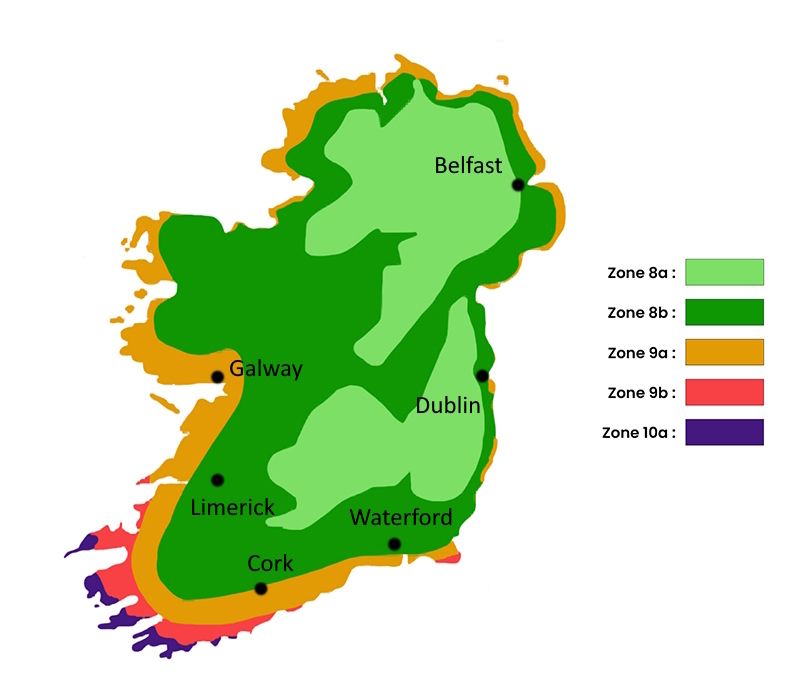
The planting period indicated on our website applies to regions in USDA Zone 9a (East Coast and Midlands: Dublin, Wexford, Waterford, Kilkenny, Portlaoise). It will vary depending on where you live:
- On the west coast and in the north-west (Galway, Limerick, Sligo, Donegal, Westport), delay planting by 1 to 2 weeks in spring and bring it forward by 1 to 2 weeks in autumn compared to the dates given, preferably choosing periods without strong winds.
- In the inland hills and plateaus (Wicklow Mountains, Macgillycuddy’s Reeks, Connemara, Killarney), it is best to plant in spring (April–May) or autumn (September–October), avoiding periods of waterlogged soil in winter and strong winds, which pose the main risk to newly planted trees in these areas.
The flowering period indicated on our website applies to regions in USDA Zone 9a, such as the East Coast and Midlands, including Dublin, Wexford, Waterford, Kilkenny and Portlaoise.
This will vary depending on where you live:
- On the west coast and in the northwest (Galway, Limerick, Sligo, Donegal and Westport), it will be delayed by one to two weeks compared to the given dates, due to stronger Atlantic winds and less spring sunshine.
- In the inland hills and plateaus (the Wicklow Mountains, the Macgillycuddy's Reeks, Connemara and Killarney), flowering will be delayed by two to three weeks. Flowering mainly occurs between May and July, with the limiting factors being less frost and more of the excessive humidity, strong winds and lack of sunshine that are characteristic of these areas.
Shipping country and language
Your country of residence may be:
Your country of residence is:
For a better user experience on our website, you can select:
Your shipping country:
-
 Austria
-
 Belgium
-
 Bosnia & Herzegovina
-
 Bulgaria
-
 Croatia
-
 Cyprus
-
 Czechia
-
 Denmark
-
 Estonia
-
 Finland
-
 France
-
 Germany
-
 Greece
-
 Hungary
-
 Iceland
-
 Ireland
-
 Italy
Italy
-
 Latvia
-
 Liechtenstein
-
 Lithuania
-
 Luxembourg
-
 Malta
Malta
-
 Netherlands
-
 Poland
-
 Portugal
-
 Romania
-
 Serbia
-
 Slovakia
-
 Slovenia
-
 Spain
Spain
-
 Sweden
-
 Switzerland
Language:
-
French
-
 English
-
Spanish
-
Italian
-
German
-
Portuguese
-
Dutch
-
Finnish
My Account
Hello
My wish lists
My cart
Log in / Register
Existing customer?
This form is protected by reCAPTCHA - the Google Privacy Policy and Terms of Service apply.
New customer?
Create an account to track your orders, access our customer service and, if you wish, make the most of our upcoming offers.