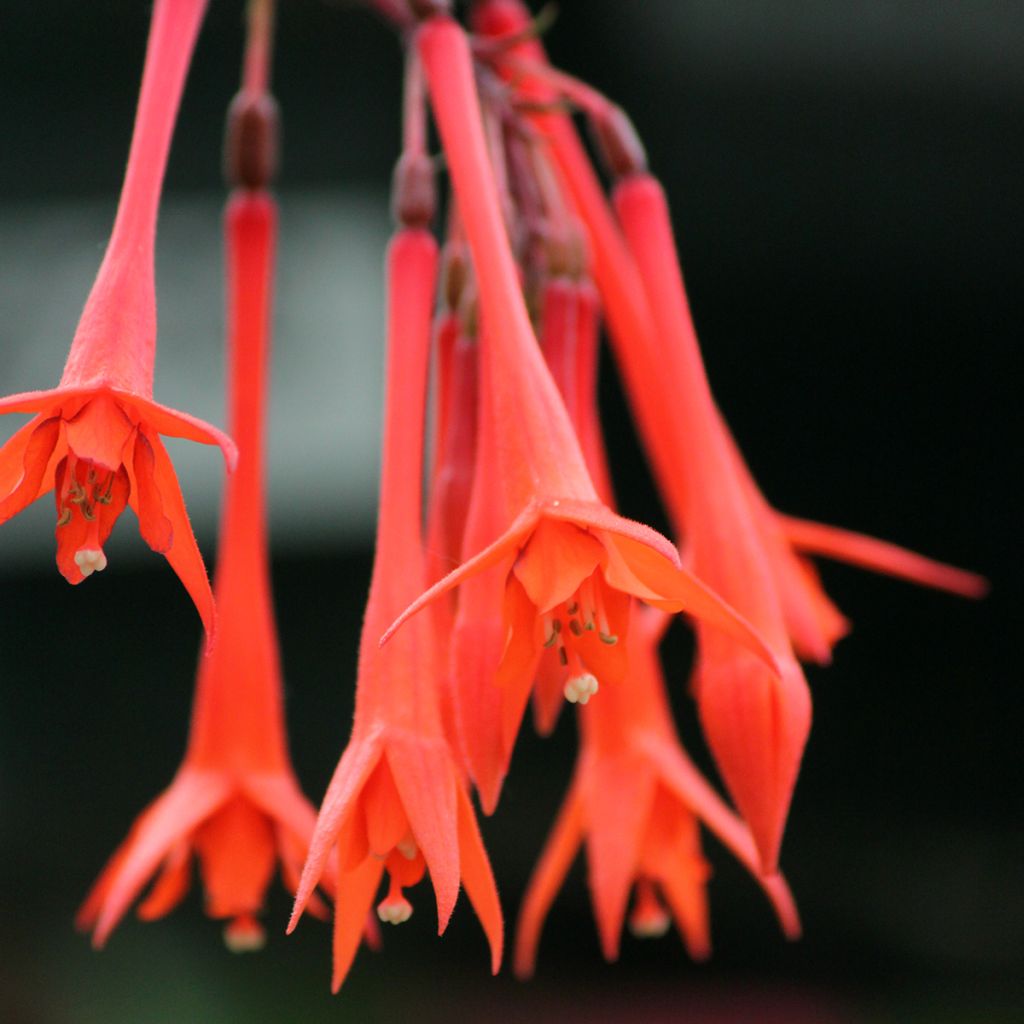
Fuchsia x triphylla Thalia
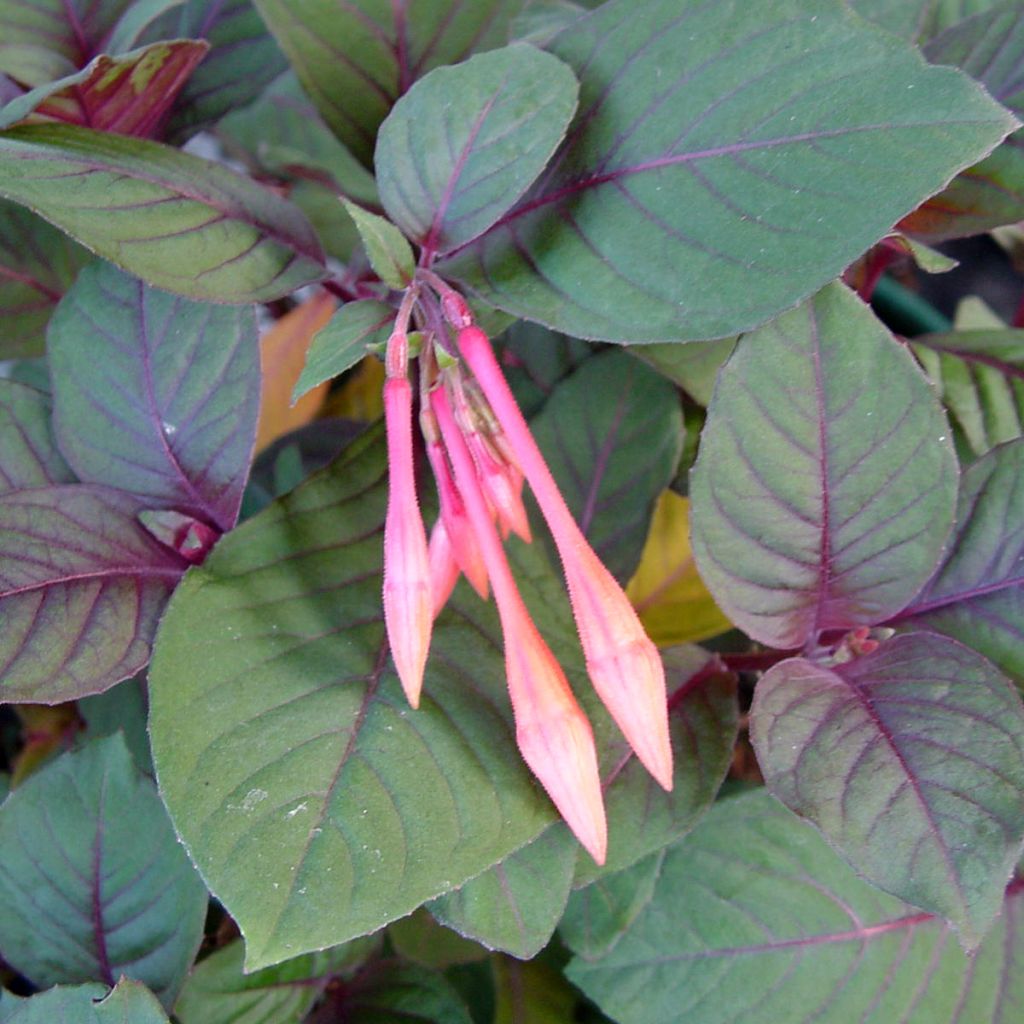
Fuchsia x triphylla Thalia
Fuchsia x triphylla Thalia
Fuchsia x triphylla Thalia
Hybrid Fuchsia
Back-to-school special offer!
Get €10 off for every €50 you spend! And get up to €40 off on a single order.
How does it work?
1. Shop your favourites
Add your favourite plants to your basket. For every €50 you spend (excluding delivery charges, store credit and the plastic-free option), you’ll receive a €10 voucher.
€50 spent = €10 voucher
€100 spent = €20 voucher
€150 spent = €30 voucher
€200 spent = €40 voucher
2. Place your order
Once your basket reaches one of the spending thresholds, place your order. You can even choose your delivery date!
3. Receive your voucher
As soon as your order has been shipped, you’ll receive an email containing your personal voucher code and its value.
4. Use it on your next order
Your voucher is valid for 90 days from the date you receive it. It can be used once only, on a new order worth at least the value of the voucher, excluding delivery charges.
Please note: Vouchers can be combined with other offers, but cannot be split or refunded.
Why not try an alternative variety in stock?
View all →
Available in 2 sizes
Available in 2 sizes
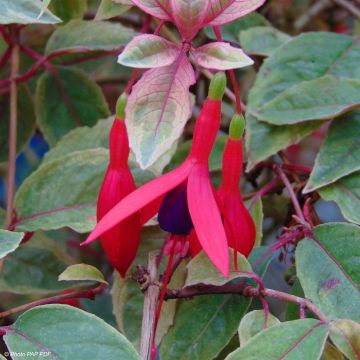
Available in 1 sizes
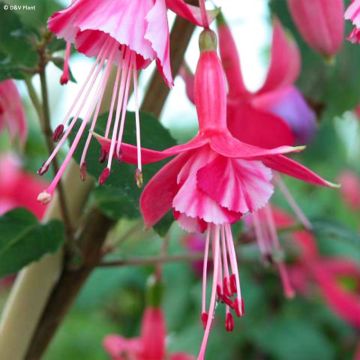
Available in 1 sizes
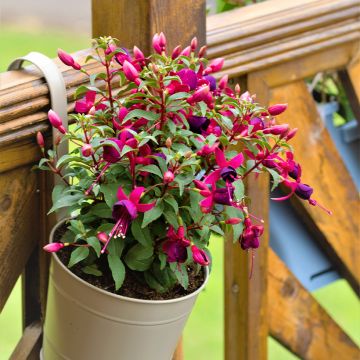
Available in 3 sizes
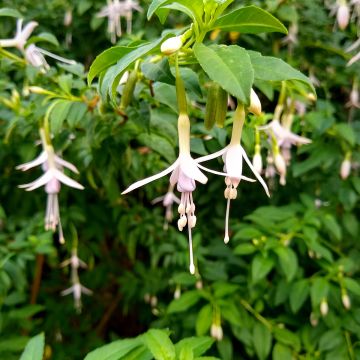
Available in 1 sizes
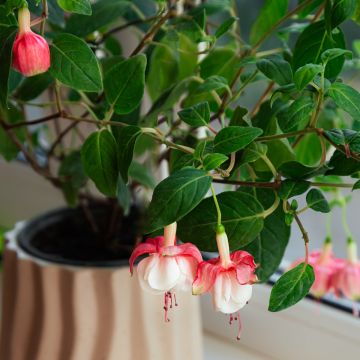
Available in 2 sizes
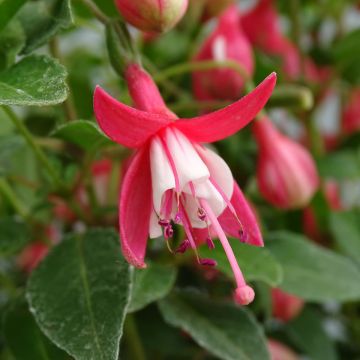
Available in 2 sizes
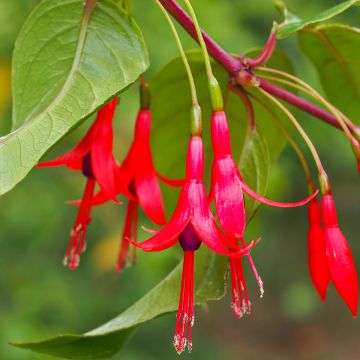
Available in 1 sizes
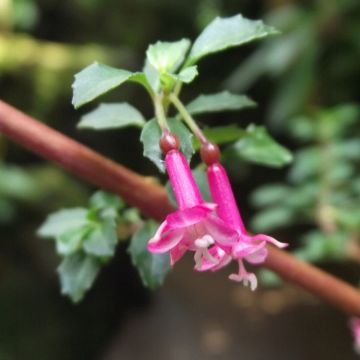
Available in 2 sizes
This plant carries a 6 months recovery warranty
More information
We guarantee the quality of our plants for a full growing cycle, and will replace at our expense any plant that fails to recover under normal climatic and planting conditions.

Does this plant fit my garden?
Set up your Plantfit profile →
Description
Fuchsia triphylla 'Thalia' is a botanical variety characterised by an upright habit, decorative dark foliage, and a delightful flowering of small coral flowers. From late spring to the end of summer, the plant produces an abundance of long, slender flowers with vibrant colours. Non-hardy fuchsias are easily grown in partial shade or morning sun, in fertile, moist, and well-drained soil.
There are thousands of hybrid fuchsias. For the most part, they are derived from Fuchsia magellanica and F. fulgens, with occasional contributions from F. triphylla, which adds length to the flowers, characterised by thin tubes and violet-hued undersides of the leaves. All these herbaceous to woody plants, varying in hardiness and growth habit, belong to the Onagraceae family.
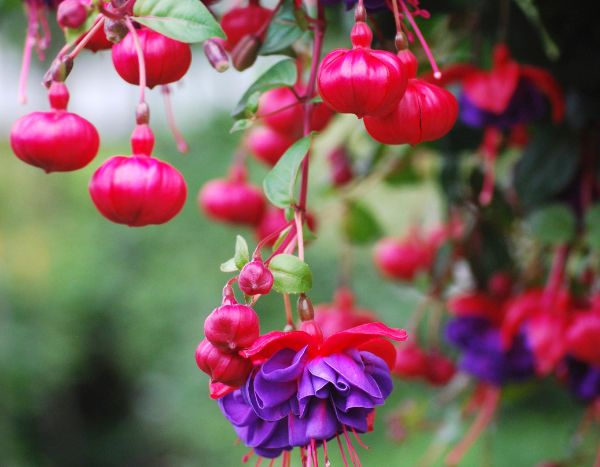
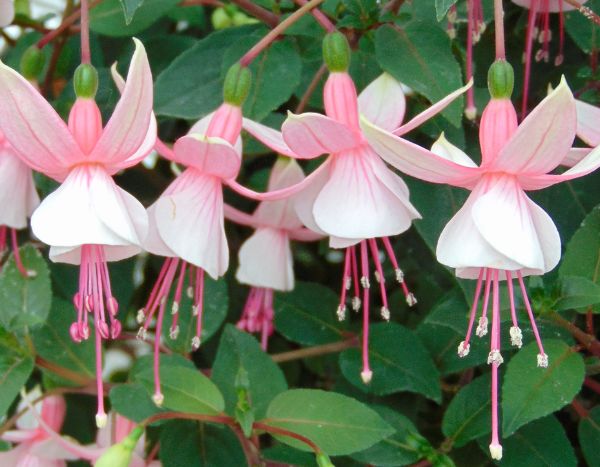
Fuchsia 'Thalia' is a superb German hybrid (Carl Bonstedt) dating back to 1905. The plant quickly forms a small, branching bush with an upright habit, reaching a height of 50 to 75cm (20 to 30in) and a width of 40 to 50cm (16 to 20in). Its flowering period extends from May-June to September. The single flowers, measuring 4cm (2in) in length, appear in trailing clusters. They consist of a long tube followed by 4 small sepals and a corolla of petals that barely protrude from the tube. The stamens are not visible. The initially herbaceous stems become somewhat woody and brown as the season progresses. They bear an abundance of foliage composed of deciduous, opposite, whorled leaves, 3 or 5 in number, with toothed margins, measuring 4 to 5cm (2in) in length. They are lanceolate in shape, with a beautiful glossy dark olive-green colour and dark veins running through them. The undersides of the leaves are tinged with purple-violet. Its hardiness does not exceed -1°C (30.2°F) in open ground.
Fuchsia 'Thalia' is a tender perennial shrub that can be grown in a large pot that should be brought indoors for winter protection from frost. It can also grow in open ground for one season. Fuchsias thrive in partial shade and pair well with ferns, bugbanes, orange or pink heucheras, and blue or light green hostas. In a mixed container, they can be planted with dwarf ivies, lobelias, or Madagascar periwinkles. Fuchsia 'Thalia' will form a beautiful combination with dark-coloured coleus such as 'Black Prince' or Flamethrower Salsa Roja.
Discovered in Santo Domingo in the 17th century and acclimatised in Europe, it was named Fuchsia (not Fuschia) in honour of a German botanist named Fuchs. Native to South America, botanical fuchsias have gradually multiplied. There are now believed to be tens of thousands of hybrids!

Fuchsia x triphylla Thalia in pictures
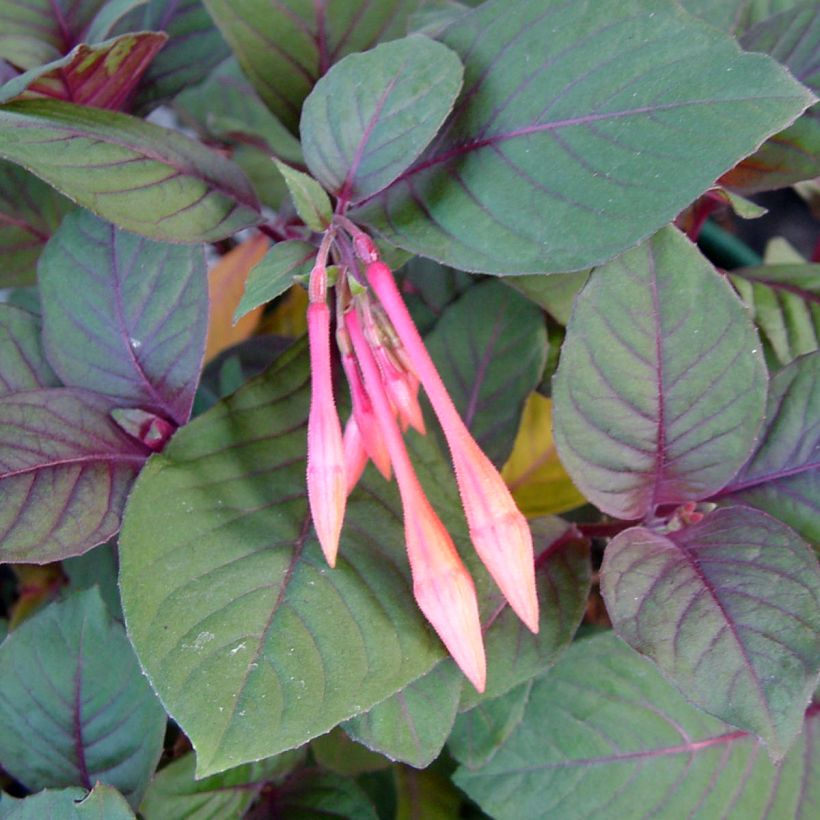
Flowering
Foliage
Plant habit
Botanical data
Fuchsia
x triphylla
Thalia
Onagraceae
Hybrid Fuchsia
Cultivar or hybrid
Planting and care
Plant your fuchsias in rich, moist, and well-drained substrate, in full sun or partial shade. Fuchsias need plenty of light to flower well, but they are sensitive to direct sunlight in the summer. Water regularly, as they are sensitive to drought. However, avoid overwatering. When grown in pots, do not leave water in the saucer, as it can cause the roots to rot and the leaves to fall off. Feed with a liquid fertiliser for fuchsias every 15 days during the growth period. Regularly remove faded flowers and dry leaves. Young shoots can be pinched to encourage the plant to branch out and produce more flowers, which are always borne on the current year's shoots. Prune back in autumn after flowering. Fuchsias can also be grown indoors, where they are perennial and evergreen.
Planting period
Intended location
Care
Planting & care advice
-
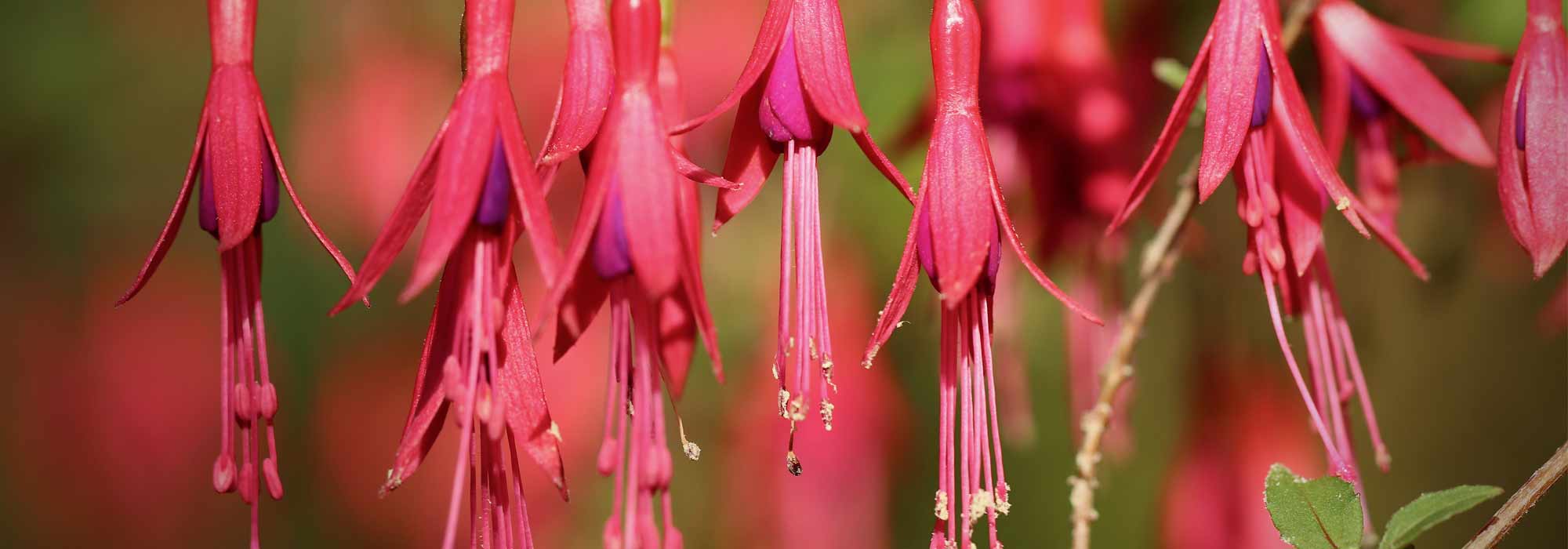
-
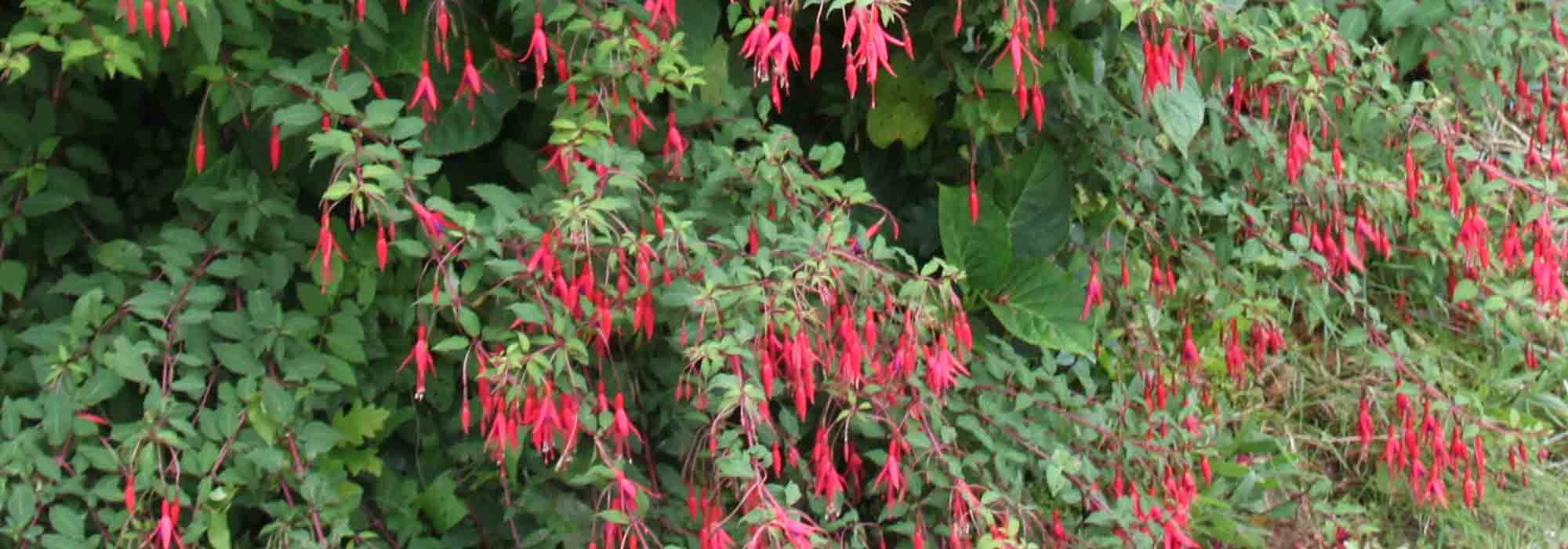
-
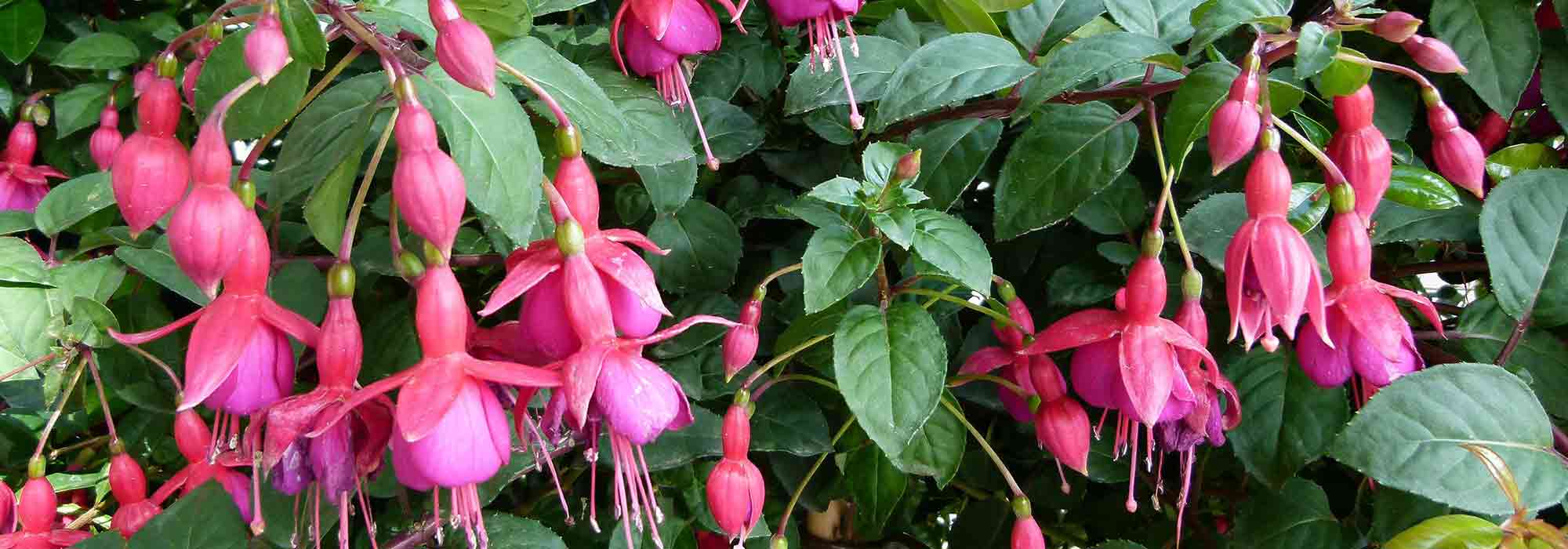
-

-

-
-
-

This item has not been reviewed yet - be the first to leave a review about it.
Recently viewed products
Haven't found what you were looking for?
Hardiness is the lowest winter temperature a plant can endure without suffering serious damage or even dying. However, hardiness is affected by location (a sheltered area, such as a patio), protection (winter cover) and soil type (hardiness is improved by well-drained soil).
In temperate climates, pruning of spring-flowering shrubs (forsythia, spireas, etc.) should be done just after flowering.
Pruning of summer-flowering shrubs (Indian Lilac, Perovskia, etc.) can be done in winter or spring.
In cold regions as well as with frost-sensitive plants, avoid pruning too early when severe frosts may still occur.
The harvesting period indicated on our website applies to countries and regions in USDA zone 8 (France, England, Ireland, the Netherlands).
In colder areas (Scandinavia, Poland, Austria...) fruit and vegetable harvests are likely to be delayed by 3-4 weeks.
In warmer areas (Italy, Spain, Greece, etc.), harvesting will probably take place earlier, depending on weather conditions.
The sowing periods indicated on our website apply to countries and regions within USDA Zone 8 (France, UK, Ireland, Netherlands).
In colder areas (Scandinavia, Poland, Austria...), delay any outdoor sowing by 3-4 weeks, or sow under glass.
In warmer climes (Italy, Spain, Greece, etc.), bring outdoor sowing forward by a few weeks.
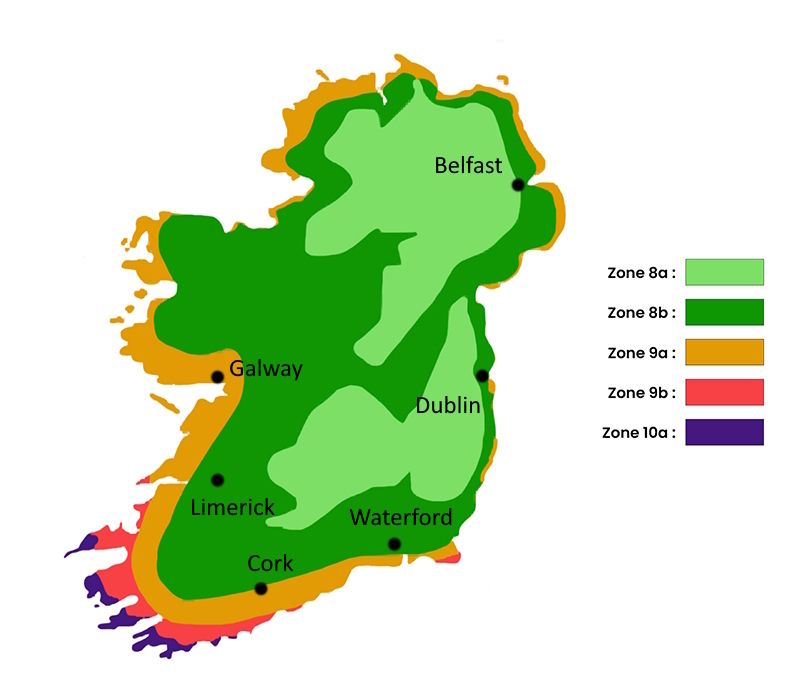
The planting period indicated on our website applies to regions in USDA Zone 9a (East Coast and Midlands: Dublin, Wexford, Waterford, Kilkenny, Portlaoise). It will vary depending on where you live:
- On the west coast and in the north-west (Galway, Limerick, Sligo, Donegal, Westport), delay planting by 1 to 2 weeks in spring and bring it forward by 1 to 2 weeks in autumn compared to the dates given, preferably choosing periods without strong winds.
- In the inland hills and plateaus (Wicklow Mountains, Macgillycuddy’s Reeks, Connemara, Killarney), it is best to plant in spring (April–May) or autumn (September–October), avoiding periods of waterlogged soil in winter and strong winds, which pose the main risk to newly planted trees in these areas.
The flowering period indicated on our website applies to regions in USDA Zone 9a, such as the East Coast and Midlands, including Dublin, Wexford, Waterford, Kilkenny and Portlaoise.
This will vary depending on where you live:
- On the west coast and in the northwest (Galway, Limerick, Sligo, Donegal and Westport), it will be delayed by one to two weeks compared to the given dates, due to stronger Atlantic winds and less spring sunshine.
- In the inland hills and plateaus (the Wicklow Mountains, the Macgillycuddy's Reeks, Connemara and Killarney), flowering will be delayed by two to three weeks. Flowering mainly occurs between May and July, with the limiting factors being less frost and more of the excessive humidity, strong winds and lack of sunshine that are characteristic of these areas.
Shipping country and language
Your country of residence may be:
Your country of residence is:
For a better user experience on our website, you can select:
Your shipping country:
-
 Austria
-
 Belgium
-
 Bosnia & Herzegovina
-
 Bulgaria
-
 Croatia
-
 Cyprus
-
 Czechia
-
 Denmark
-
 Estonia
-
 Finland
-
 France
-
 Germany
-
 Greece
-
 Hungary
-
 Iceland
-
 Ireland
-
 Italy
Italy
-
 Latvia
-
 Liechtenstein
-
 Lithuania
-
 Luxembourg
-
 Malta
Malta
-
 Netherlands
-
 Poland
-
 Portugal
-
 Romania
-
 Serbia
-
 Slovakia
-
 Slovenia
-
 Spain
Spain
-
 Sweden
-
 Switzerland
Language:
-
French
-
 English
-
Spanish
-
Italian
-
German
-
Portuguese
-
Dutch
-
Finnish
My Account
Hello
My wish lists
My cart
Log in / Register
Existing customer?
This form is protected by reCAPTCHA - the Google Privacy Policy and Terms of Service apply.
New customer?
Create an account to track your orders, access our customer service and, if you wish, make the most of our upcoming offers.