Erythrina crista-galli seeds - Cockspur coral tree
Erythrina crista-galli seeds - Cockspur coral tree
Erythrina crista-galli seeds - Cockspur coral tree
Erythrina crista-galli seeds - Cockspur coral tree
Erythrina crista-galli seeds - Cockspur coral tree
Erythrina crista-galli
Cockspur Coral Tree, Cry Baby Tree
Back-to-school special offer!
Get €10 off for every €50 you spend! And get up to €40 off on a single order.
How does it work?
1. Shop your favourites
Add your favourite plants to your basket. For every €50 you spend (excluding delivery charges, store credit and the plastic-free option), you’ll receive a €10 voucher.
€50 spent = €10 voucher
€100 spent = €20 voucher
€150 spent = €30 voucher
€200 spent = €40 voucher
2. Place your order
Once your basket reaches one of the spending thresholds, place your order. You can even choose your delivery date!
3. Receive your voucher
As soon as your order has been shipped, you’ll receive an email containing your personal voucher code and its value.
4. Use it on your next order
Your voucher is valid for 90 days from the date you receive it. It can be used once only, on a new order worth at least the value of the voucher, excluding delivery charges.
Please note: Vouchers can be combined with other offers, but cannot be split or refunded.
Why not try an alternative variety in stock?
View all →
Available in 1 sizes

Available in 1 sizes

Available in 1 sizes

Available in 1 sizes

Available in 1 sizes

Available in 1 sizes
Available in 1 sizes

Available in 1 sizes

Available in 1 sizes

Available in 1 sizes
This plant carries a 6 months recovery warranty
More information
We guarantee the quality of our plants for a full growing cycle, and will replace at our expense any plant that fails to recover under normal climatic and planting conditions.
Does this plant fit my garden?
Set up your Plantfit profile →
Description
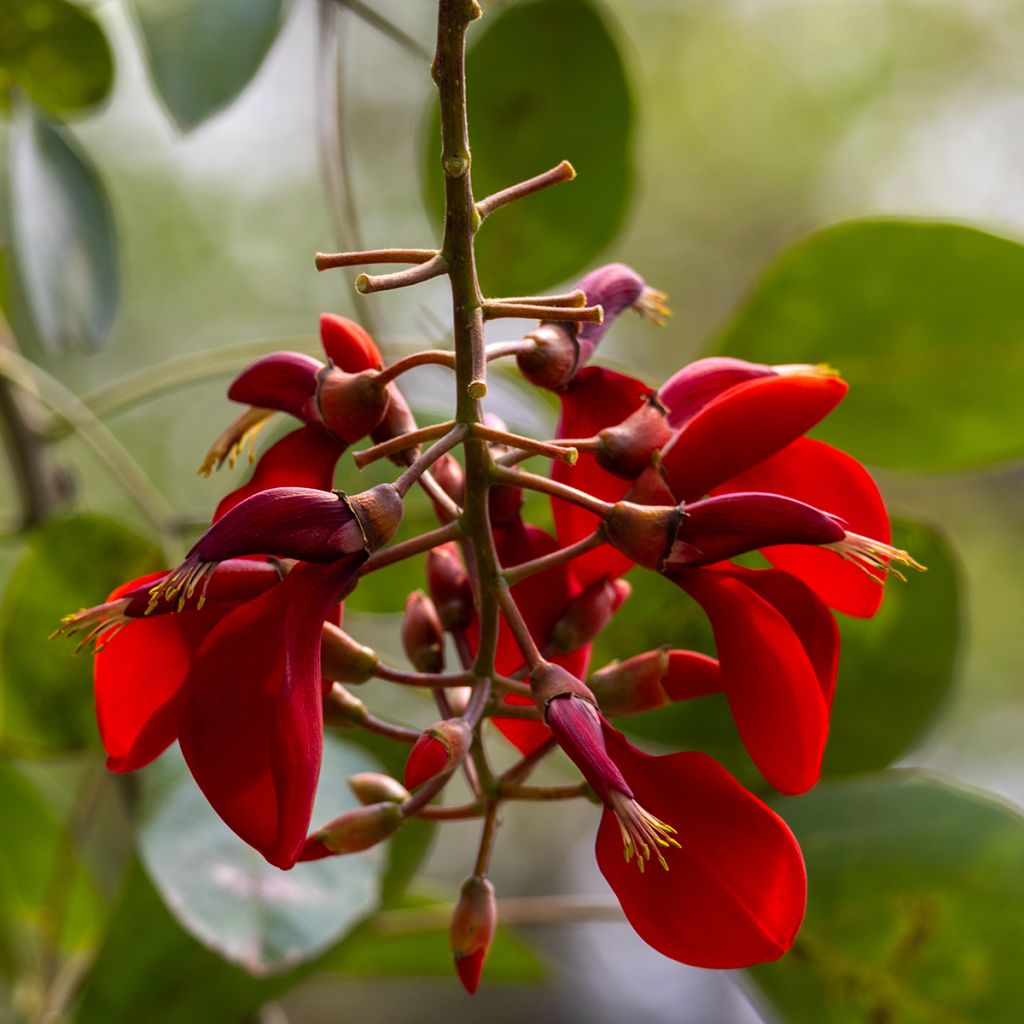
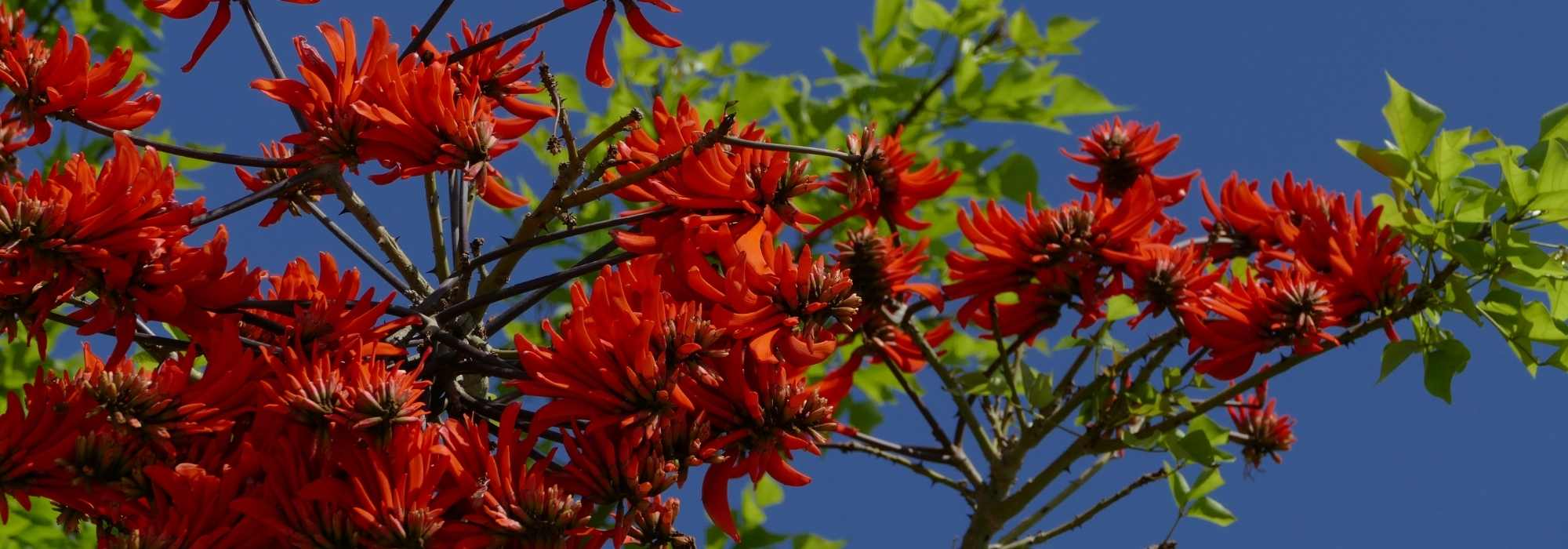
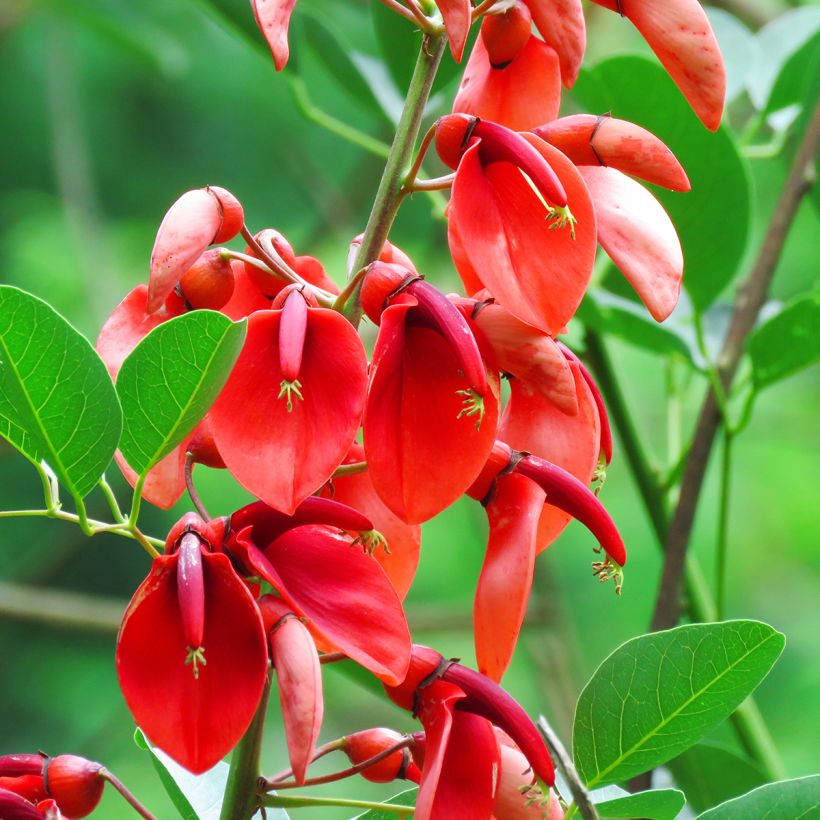
Erythrina crista-galli, commonly known as the Cockspur Coral Tree or Coral Tree, is instantly recognisable for its striking, vivid red flowering. This shrub has a twisted appearance, producing thorny branches and forming a widely spreading crown. Its foliage, divided into three leaflets and reminiscent of acacias, is a beautiful, intense green. This provides a lovely setting for the long, terminal clusters of orange-red butterfly-like flowers. The plant's highly exotic and particularly ornamental appearance, combined with the rootstock's good cold resistance, makes it an excellent choice for exotic planting schemes in open ground in regions with mild winters. In harsher climates, it can be grown as a conservatory plant. Seeds should be sown in the warmth, with good chances of success.
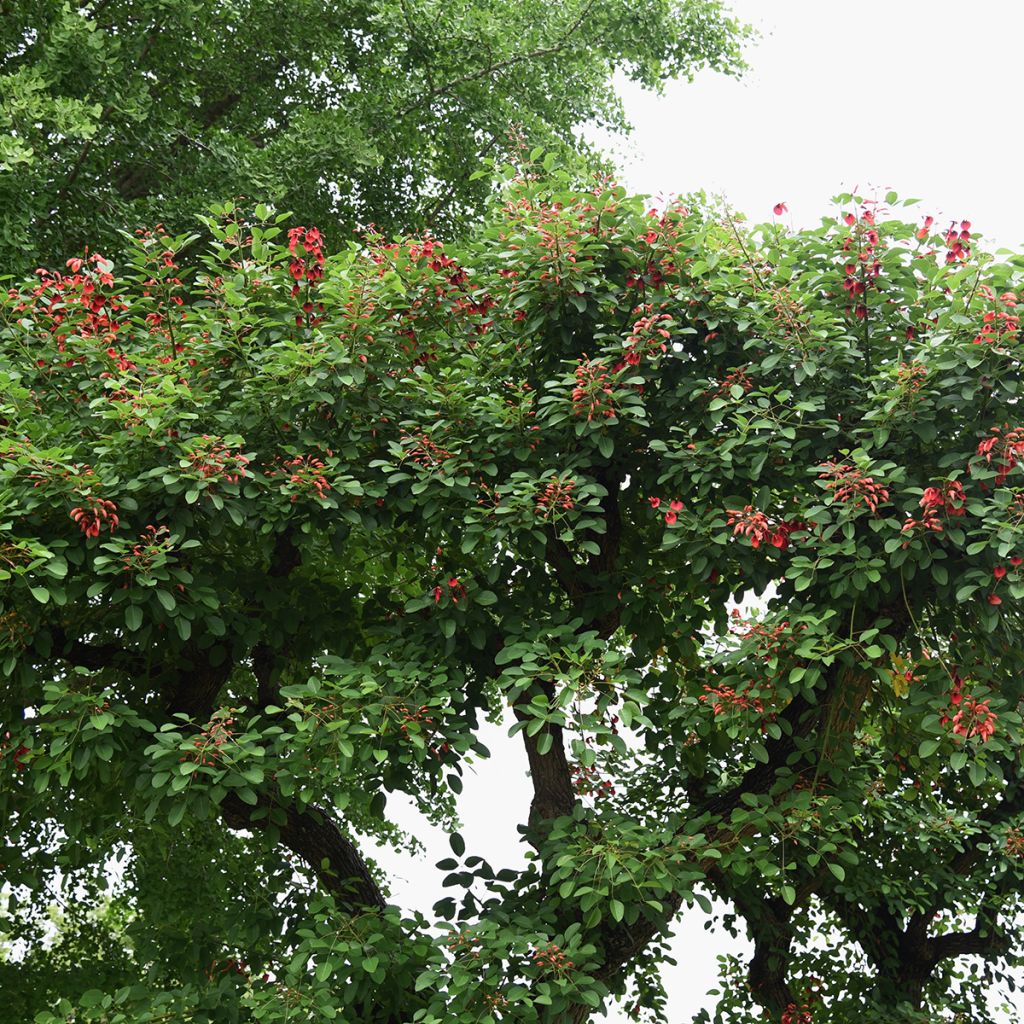
Erythrina crista-galli belongs to the large family of Fabaceae (formerly known as Leguminosae), which includes nearly 23,000 species of vegetables (beans, lentils...), wild plants and ornamental species, such as the Black Locust or the magnificent Wisterias. This Coral Tree is native to South America — particularly Bolivia, Argentina, Brazil, Paraguay and Uruguay — where in the wild it colonises wetlands, riverbanks and marshes. In its natural habitat, it can reach between 4 and 9 metres in height, forming a large shrub or small tree, and develops a robust, irregular trunk covered with deeply fissured bark. Its branching creates a widely spreading silhouette, and it loses its foliage during the dry season. In our temperate latitudes, it behaves more like a herbaceous plant in open ground or as a shrub grown under cover, adopting an increasingly spreading habit over time.
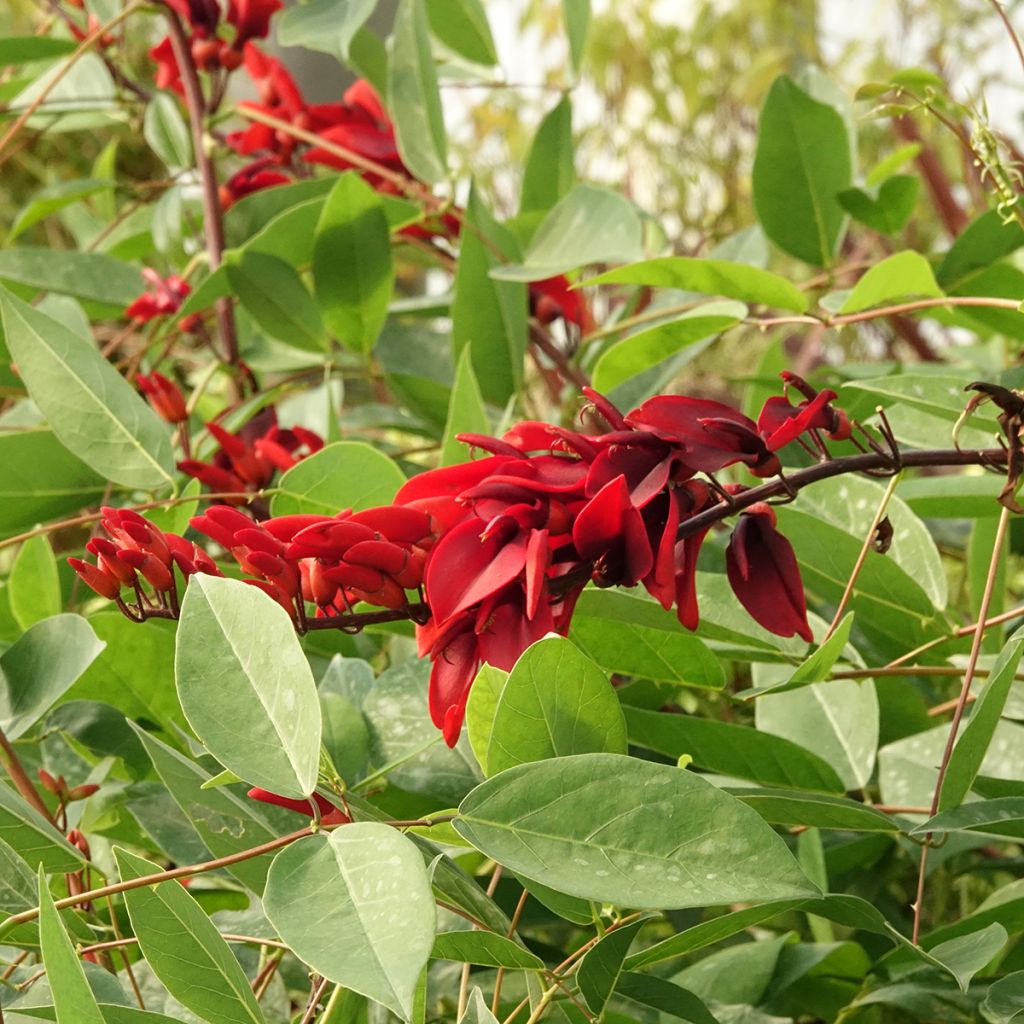
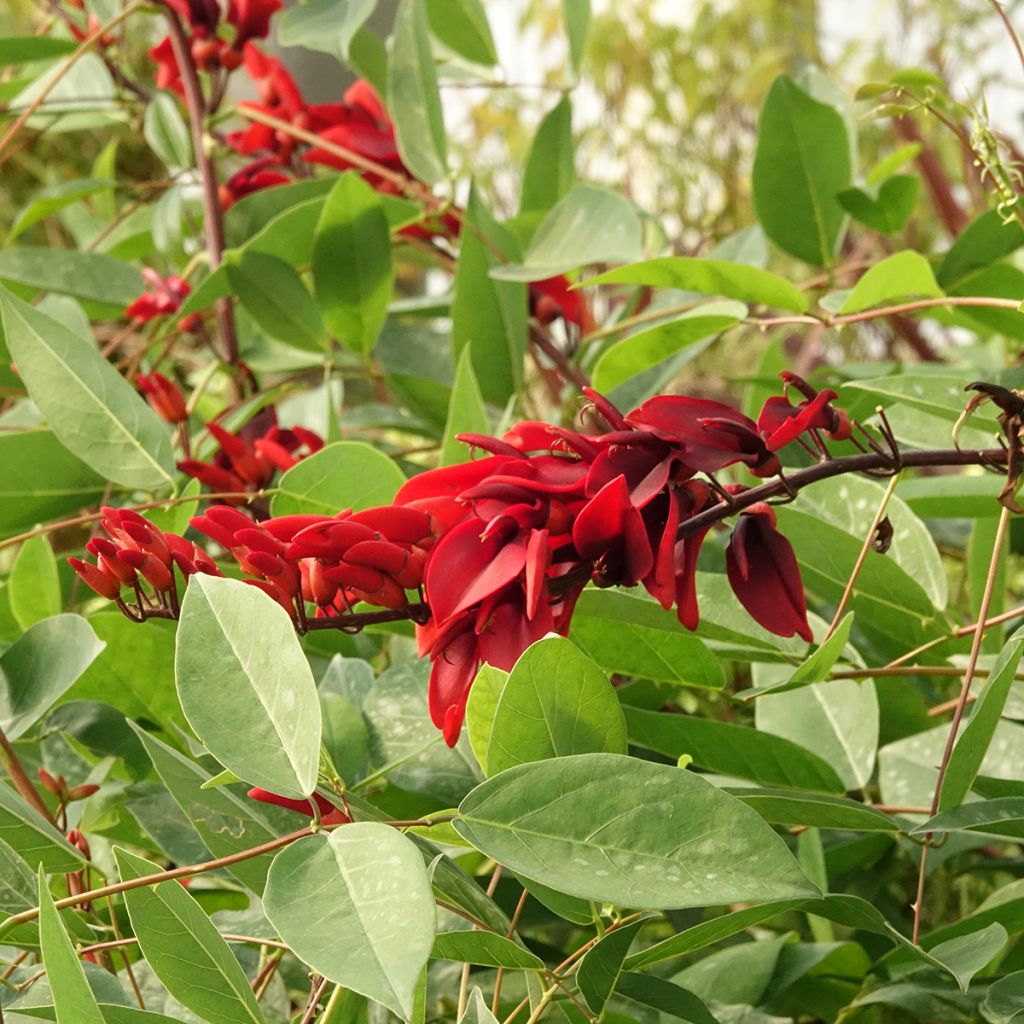
In Mediterranean regions, the Coral Tree generally reaches around 2.5 metres in height with a similar spread, dimensions that can be reduced if the aerial parts are regularly affected by frost. It produces long, slender stems with inconspicuous but definitely present thorns! The trunks are knotted and covered with pale bark dotted with a few curved prickles. The deciduous leaves consist of three large, thick, glossy leaflets of an intense green, sometimes subtly bluish. Flowering occurs in late spring in mild climates, or later in summer if the plant needs to regrow its branches. Long flower clusters, measuring 25 to 35cm, appear at the tips and occasionally along the young shoots. These nectar-rich flowers attract many pollinators. Like many Fabaceae, the Coral Tree has a powerful taproot capable of enriching the soil with nitrogen, which allows it to adapt to poor soils. Growing from seed is an economical method to obtain plants and gives good results when done in warmth.
Although it appreciates the warmth of southern regions, the Cockspur Coral Tree prefers soils that are not too dry, even moist. Its exotic appearance helps to create very distinctive borders. On the Mediterranean coast, pair it with Bauhinia variegata, nicknamed the Orchid Tree for its incredible pink flowers that evoke the tropics, as well as Cassia floribunda with its brilliant yellow flowering. One or two Palm trees will add height to your border, and to cover the ground, opt for Lantanas with their globular, often bicoloured or multicoloured flowers. In cold climates, grow your Coral Tree in a container alongside Citrus trees, and overwinter them together in a conservatory before the first frosts.
Erythrina crista-galli seeds - Cockspur coral tree in pictures
Flowering
Foliage
Plant habit
Botanical data
Erythrina
crista-galli
Fabaceae
Cockspur Coral Tree, Cry Baby Tree
Corallodendron crista-galli, Micropteryx crista-galli, Erythrina laurifolia, Erythrina fasciculata
South America
Planting and care
Seeds of the Cockspur Coral Tree must be sown in warm conditions. The success rate is then reasonable (around 50%) and can be improved by softening the particularly hard shell of the seeds. You can immerse them for 5 seconds in water at 60°C, or alternatively soak them for 24 to 48 hours in lukewarm to warm water (the difficulty being to maintain the water temperature over this period).
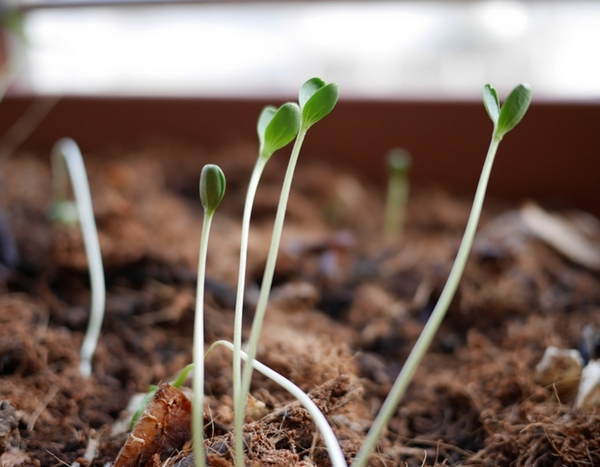
For sowing, use a seed tray or a shallow box filled with a mixture of seed compost and sand. Place the seeds at a depth of 1cm, then water moderately. The substrate should be kept moist, but without excess, which would be fatal. Place a transparent lid on the tray (or ideally, put it in a propagator), airing it from time to time to prevent condensation. Keep the tray at 20°C at night and, if possible, 30°C during the day, which are the ideal conditions for germination. Temperatures of 10°C or less are completely inadvisable. Under good conditions, germination occurs within 1 to 4 weeks. At this stage, gentle light is sufficient; after germination, stronger lighting will be preferable.
Wait until the seedlings have developed 4 or 5 true leaves before pricking them out into individual pots to grow them on. When the young plants are then strong enough, you can plant them outdoors (after the last frosts) or alternatively pot them on into a container, if your climate zone means they will need to be overwintered under cover.
This shrub withstands the mild winters of the south. In slightly cooler areas, where frosts are limited to -8/-10°C for short periods, it should be pruned low in November and the soil heavily mulched, so that the crown produces new shoots in spring. In any other climate, it must be treated as an orangery plant.
Sowing period
Intended location
Planting & care advice
-

-
-

-

-

-

-

-

This item has not been reviewed yet - be the first to leave a review about it.
Recently viewed products
Haven't found what you were looking for?
Hardiness is the lowest winter temperature a plant can endure without suffering serious damage or even dying. However, hardiness is affected by location (a sheltered area, such as a patio), protection (winter cover) and soil type (hardiness is improved by well-drained soil).
In temperate climates, pruning of spring-flowering shrubs (forsythia, spireas, etc.) should be done just after flowering.
Pruning of summer-flowering shrubs (Indian Lilac, Perovskia, etc.) can be done in winter or spring.
In cold regions as well as with frost-sensitive plants, avoid pruning too early when severe frosts may still occur.
The harvesting period indicated on our website applies to countries and regions in USDA zone 8 (France, England, Ireland, the Netherlands).
In colder areas (Scandinavia, Poland, Austria...) fruit and vegetable harvests are likely to be delayed by 3-4 weeks.
In warmer areas (Italy, Spain, Greece, etc.), harvesting will probably take place earlier, depending on weather conditions.
The sowing periods indicated on our website apply to countries and regions within USDA Zone 8 (France, UK, Ireland, Netherlands).
In colder areas (Scandinavia, Poland, Austria...), delay any outdoor sowing by 3-4 weeks, or sow under glass.
In warmer climes (Italy, Spain, Greece, etc.), bring outdoor sowing forward by a few weeks.
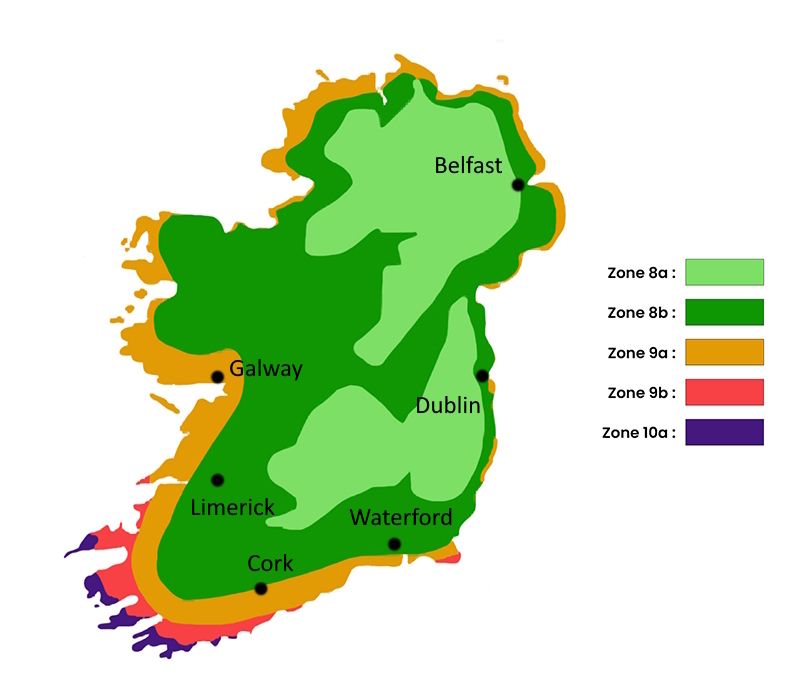
The planting period indicated on our website applies to regions in USDA Zone 9a (East Coast and Midlands: Dublin, Wexford, Waterford, Kilkenny, Portlaoise). It will vary depending on where you live:
- On the west coast and in the north-west (Galway, Limerick, Sligo, Donegal, Westport), delay planting by 1 to 2 weeks in spring and bring it forward by 1 to 2 weeks in autumn compared to the dates given, preferably choosing periods without strong winds.
- In the inland hills and plateaus (Wicklow Mountains, Macgillycuddy’s Reeks, Connemara, Killarney), it is best to plant in spring (April–May) or autumn (September–October), avoiding periods of waterlogged soil in winter and strong winds, which pose the main risk to newly planted trees in these areas.
The flowering period indicated on our website applies to regions in USDA Zone 9a, such as the East Coast and Midlands, including Dublin, Wexford, Waterford, Kilkenny and Portlaoise.
This will vary depending on where you live:
- On the west coast and in the northwest (Galway, Limerick, Sligo, Donegal and Westport), it will be delayed by one to two weeks compared to the given dates, due to stronger Atlantic winds and less spring sunshine.
- In the inland hills and plateaus (the Wicklow Mountains, the Macgillycuddy's Reeks, Connemara and Killarney), flowering will be delayed by two to three weeks. Flowering mainly occurs between May and July, with the limiting factors being less frost and more of the excessive humidity, strong winds and lack of sunshine that are characteristic of these areas.
Shipping country and language
Your country of residence may be:
Your country of residence is:
For a better user experience on our website, you can select:
Your shipping country:
-
 Austria
-
 Belgium
-
 Bosnia & Herzegovina
-
 Bulgaria
-
 Croatia
-
 Cyprus
-
 Czechia
-
 Denmark
-
 Estonia
-
 Finland
-
 France
-
 Germany
-
 Greece
-
 Hungary
-
 Iceland
-
 Ireland
-
 Italy
Italy
-
 Latvia
-
 Liechtenstein
-
 Lithuania
-
 Luxembourg
-
 Malta
Malta
-
 Netherlands
-
 Poland
-
 Portugal
-
 Romania
-
 Serbia
-
 Slovakia
-
 Slovenia
-
 Spain
Spain
-
 Sweden
-
 Switzerland
Language:
-
French
-
 English
-
Spanish
-
Italian
-
German
-
Portuguese
-
Dutch
-
Finnish
My Account
Hello
My wish lists
My cart
Log in / Register
Existing customer?
This form is protected by reCAPTCHA - the Google Privacy Policy and Terms of Service apply.
New customer?
Create an account to track your orders, access our customer service and, if you wish, make the most of our upcoming offers.