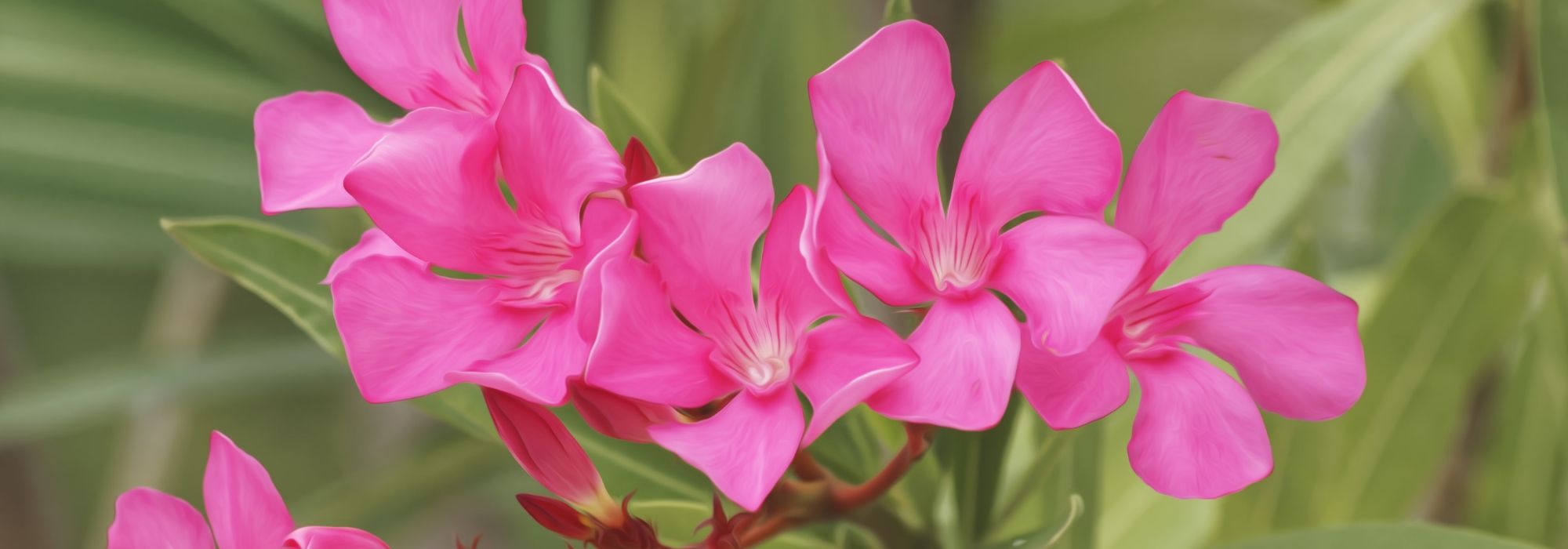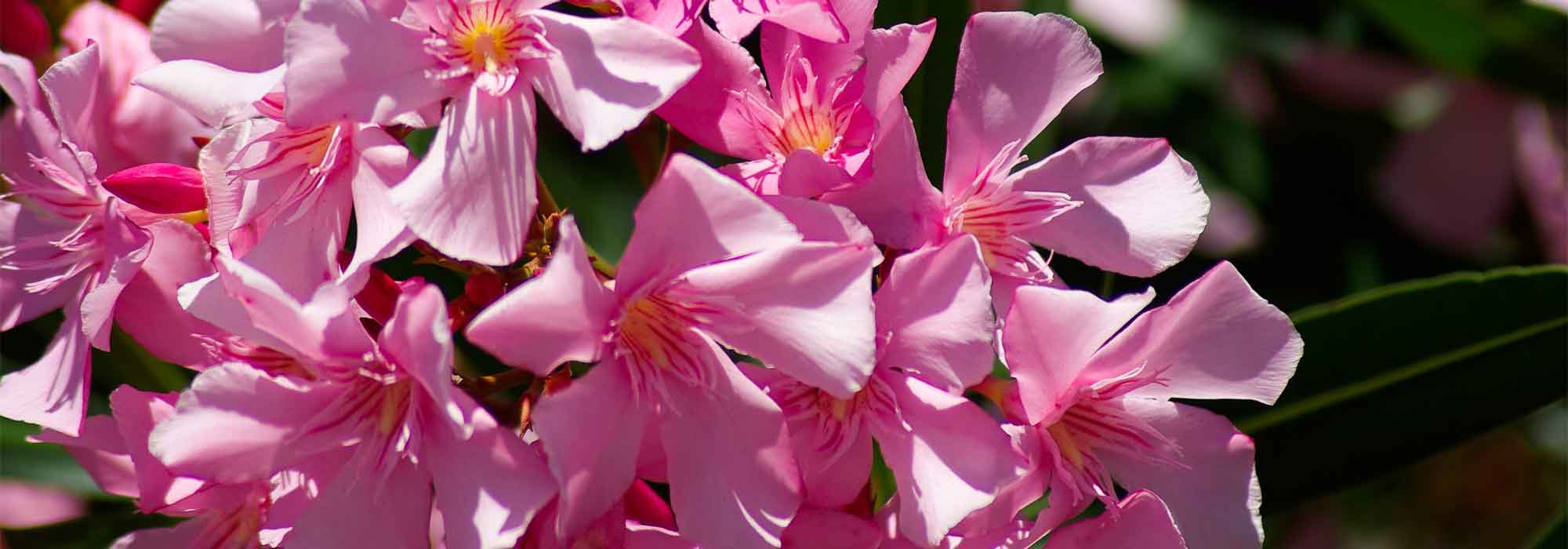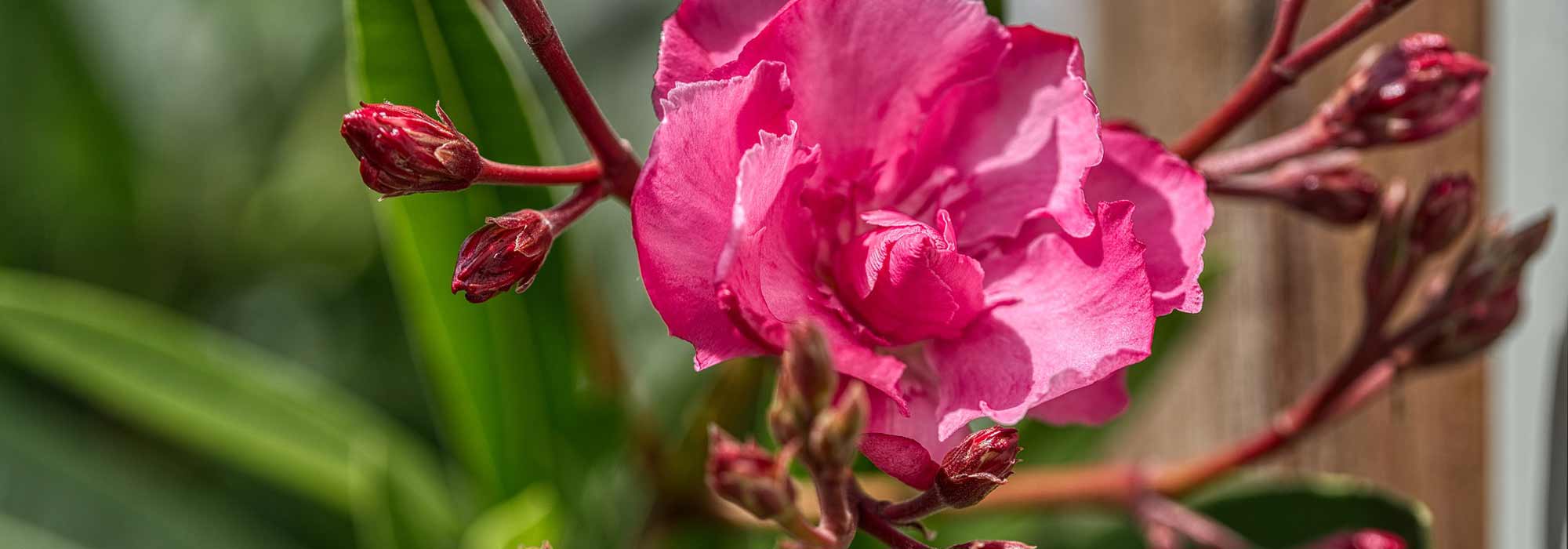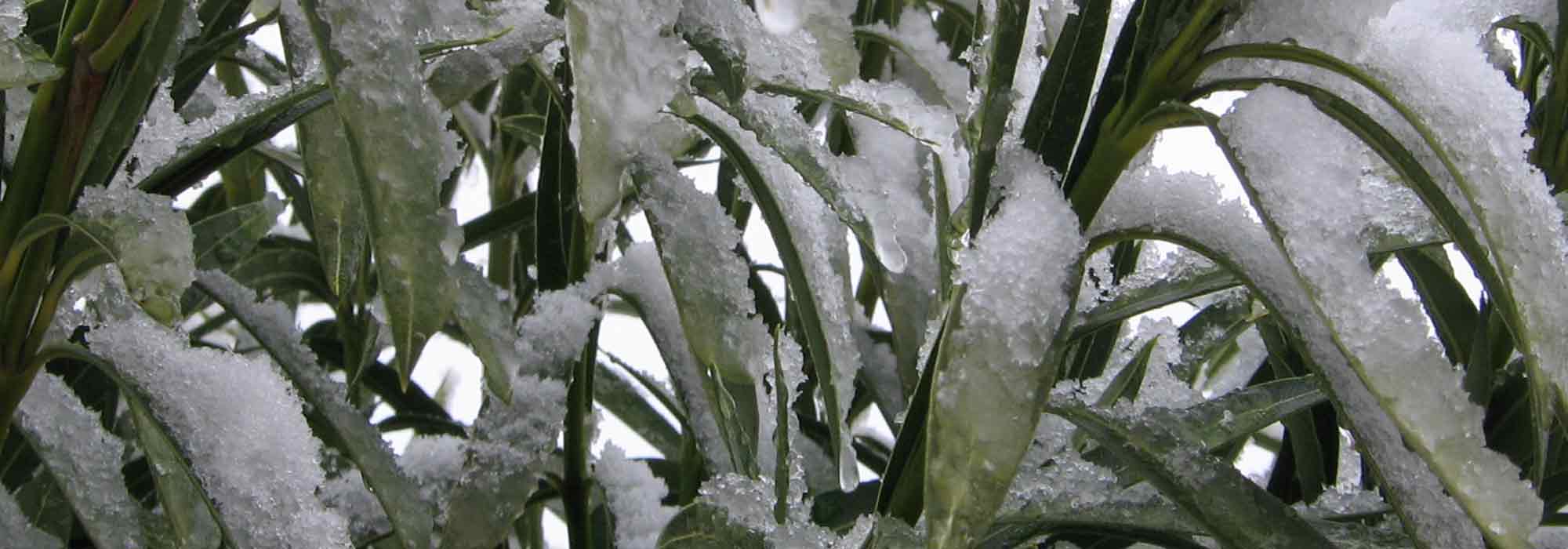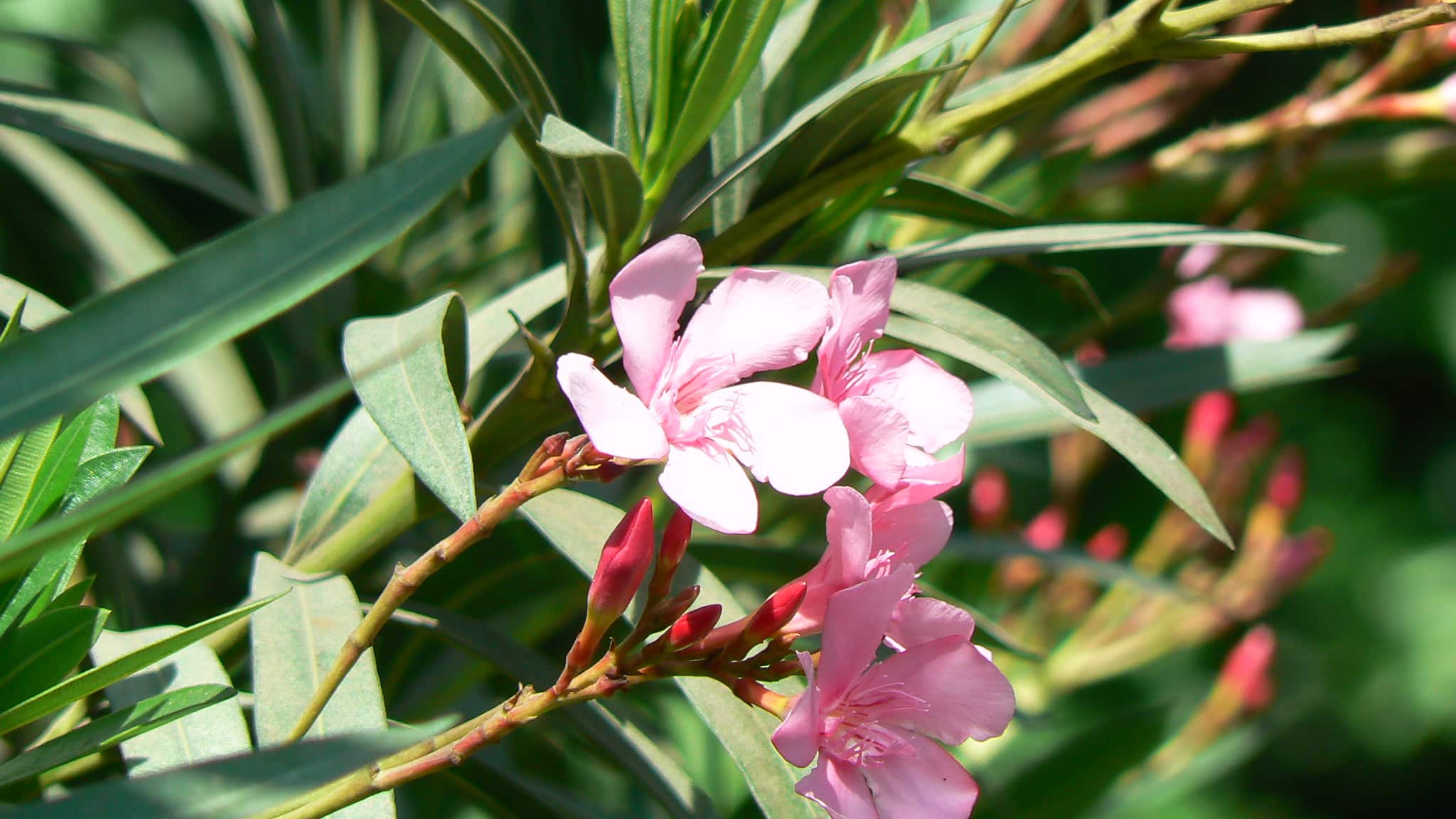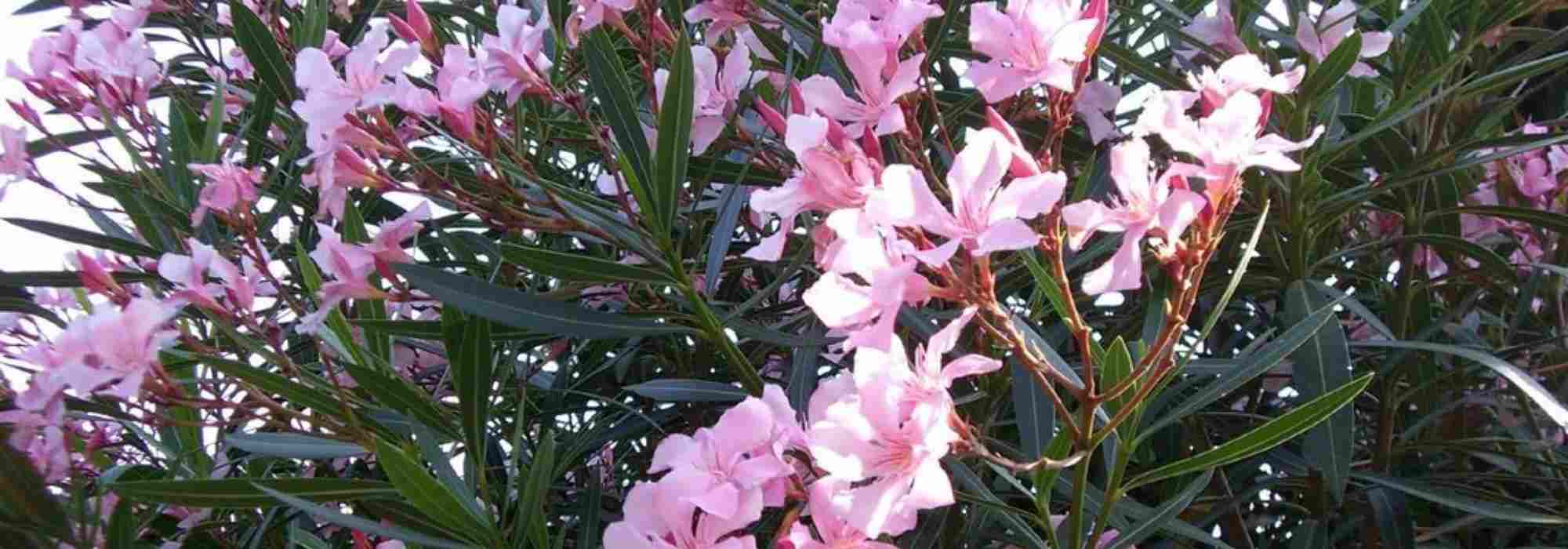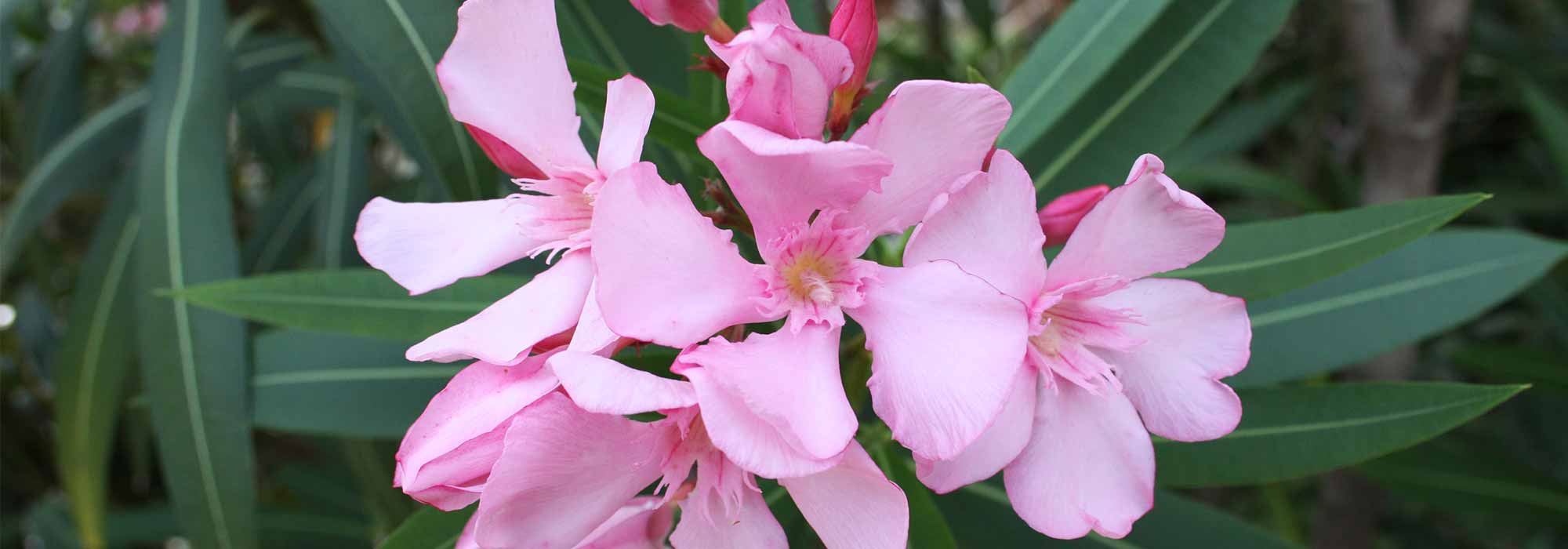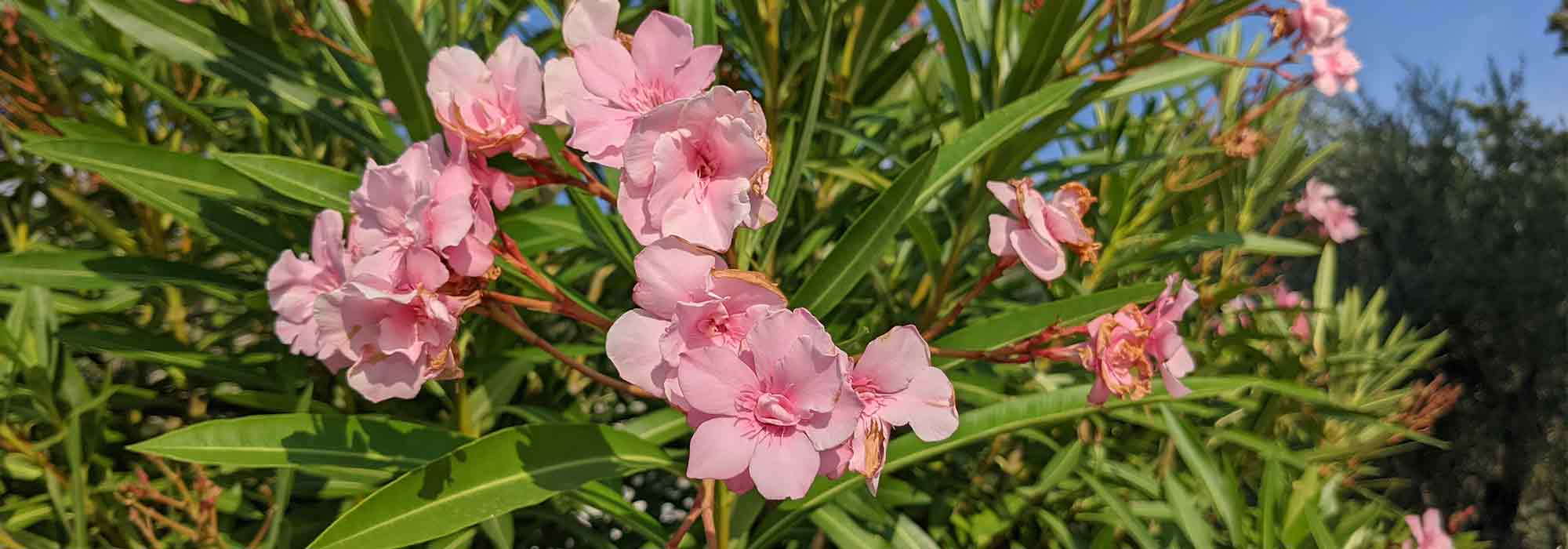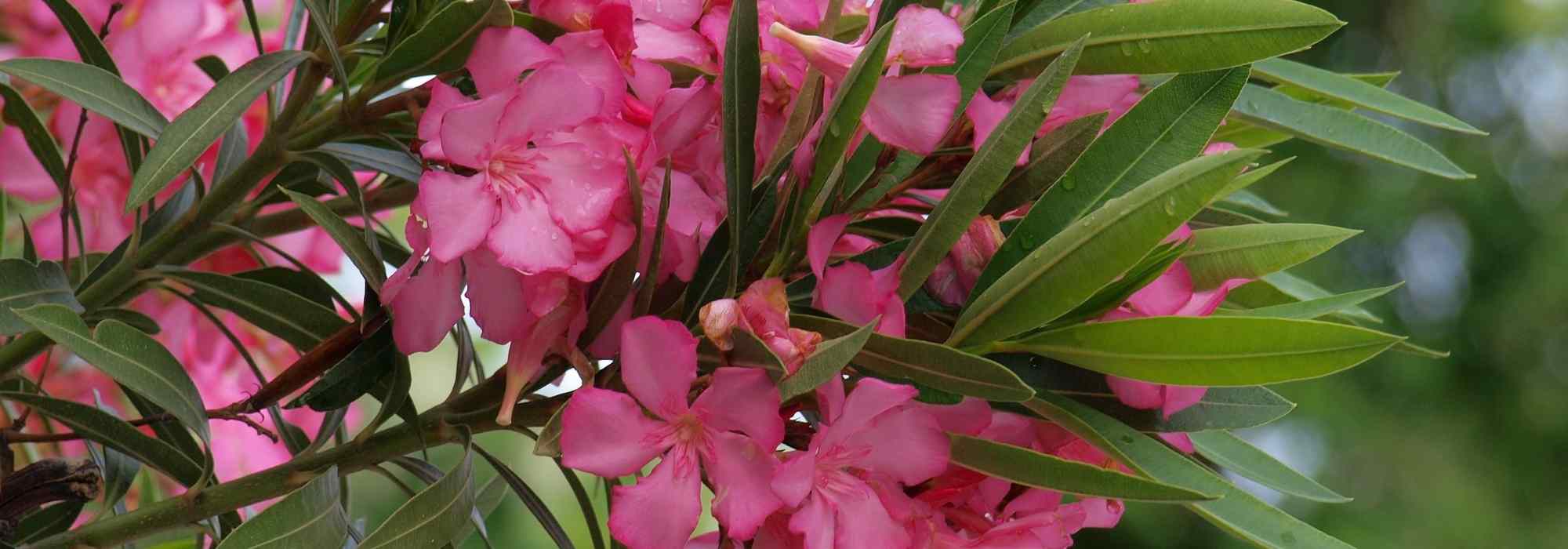

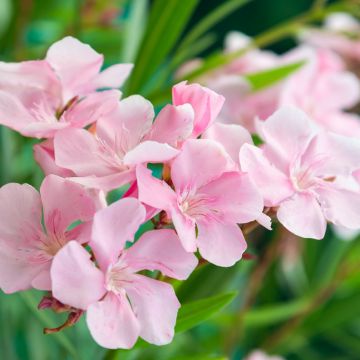
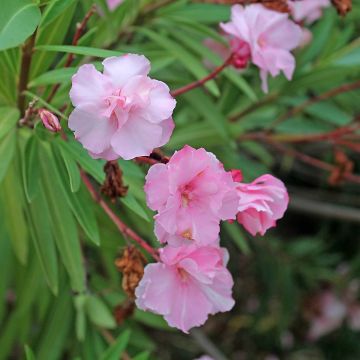
This oleander belongs to the Apocynaceae family, which includes many plants with white, milky sap. The species Nerium oleander is the only one in the genus Nerium. Native to a vast area ranging from Portugal, Spain, Mediterranean France and Italy to the Maghreb, the Near and Middle East, Pakistan, India and Myanmar, it grows spontaneously along rivers, wadis and seasonally flooded valleys, in warm climates with very mild winters. It is a shrub that tolerates summer drought and winter floods.
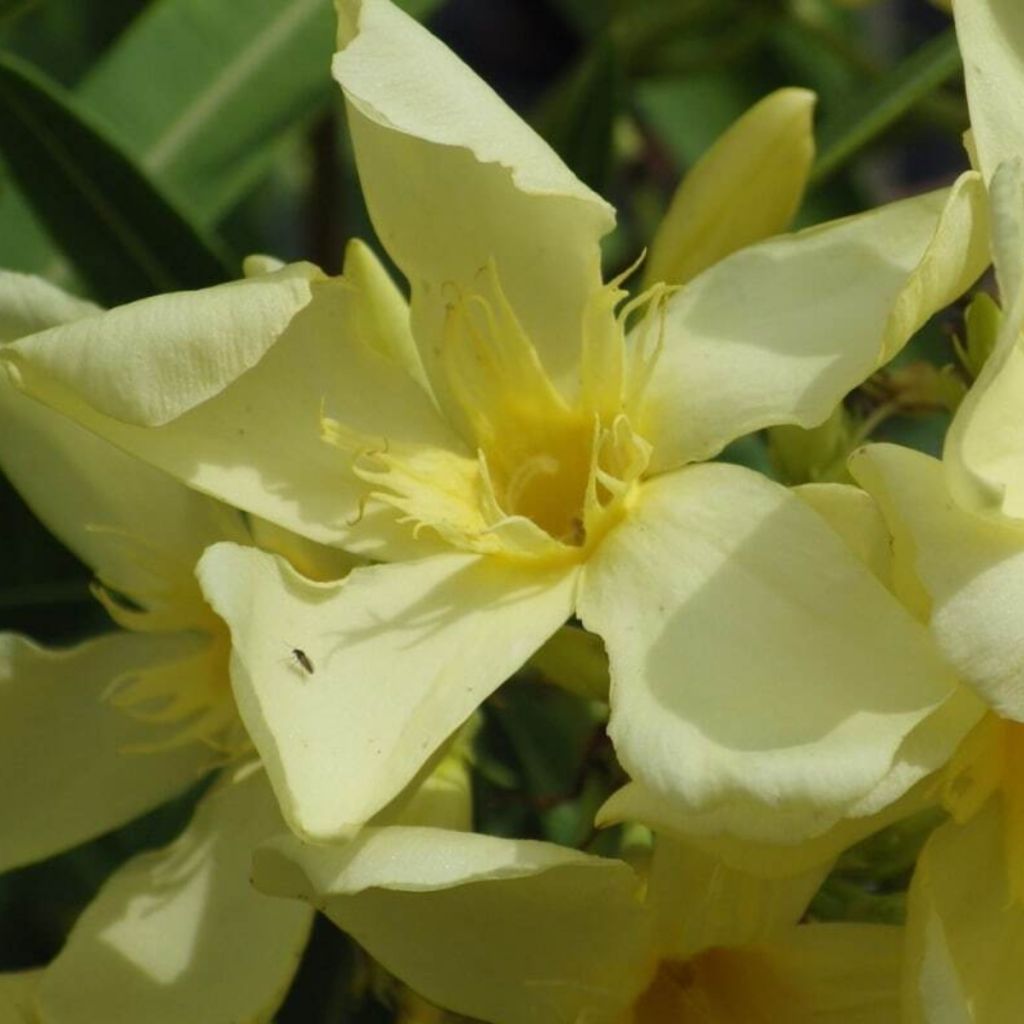
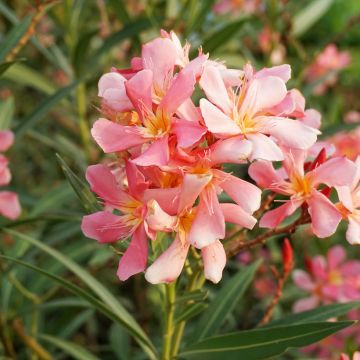
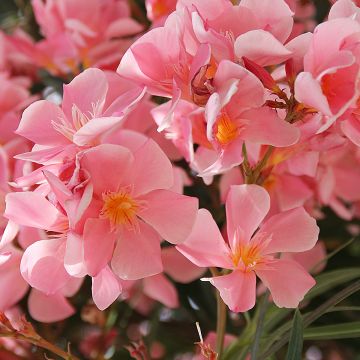
The cultivar ‘Souvenir des Îles Canaries’ is a horticultural selection registered in 1973 by the breeder Jean Rey, a French oleander specialist. The shrub has an upright then slightly spreading habit, well-branched from the base. Its evergreen leaves are narrow, leathery, lanceolate, 10 to 15 cm long and 1 to 2 cm wide, medium to dark green, paler on the reverse, with a prominent central midrib and fine parallel veins. Its growth is fairly rapid: in the ground, a well-established plant can reach 2 m in height in a few years, then 2.5 to 3 m tall by 1.50 m wide after about ten years; in a container, it reaches between 1.20 m and 2 m. Flowering appears as large terminal panicles of single, 3 to 4 cm diameter flowers. Their five petals are a pale yellow shaded with cream or pale apricot, around a darker throat of golden yellow to orange. Depending on the climate, flowering occurs in successive waves, from June to September, or even until October in the south. The fruits are long, narrow, brown pods containing feathery seeds, which appear only if some inflorescences are allowed to set seed.
Like all oleanders, the plant is toxic if ingested, and its sap can irritate the skin: wear gloves for pruning and avoid burning green waste.
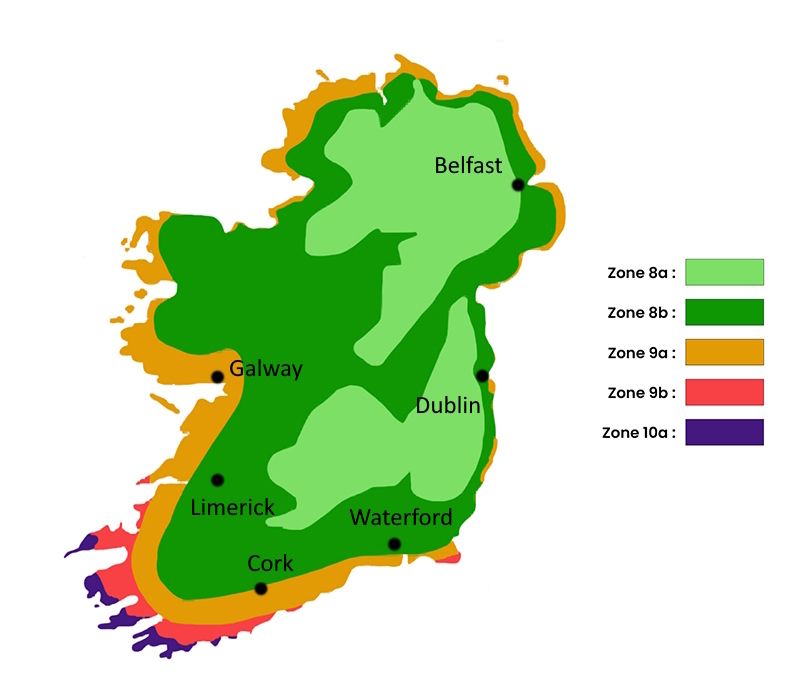
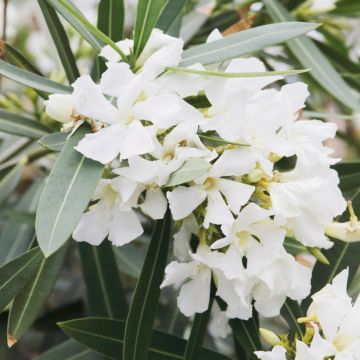
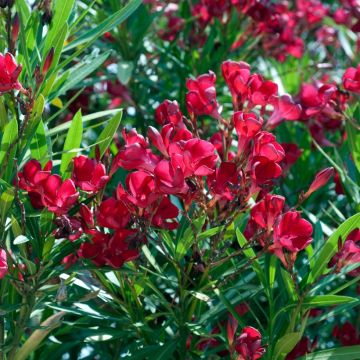
A nostalgic evocation of a distant journey, ‘Souvenir des Îles Canaries’ brings the golden light of the Atlantic shores into the garden. In favourable climates, it can be used at the back of a border or in an informal hedge, with white and red oleanders (Nerium oleander ‘Blanc’, Oleander ‘Rouge Simple’) and the variegated cultivar Nerium oleander ‘Variegata’. Add shrubs with silvery foliage such as Atriplex halimus or Anthyllis barba-jovis. As a standalone specimen near a terrace, it shines in summer evenings, paired with a wine palm Butia capitata and surrounded by some blue agapanthus. Further north, it should be planted in a large container and overwintered like a citrus tree.