I have boundless admiration for naturalistic landscapers such as Gilles Clément, Piet Oudolf and Noël Kingsbury. Beyond their sumptuous creations, they have also rehabilitated wild plants, long dismissed as “weeds”.
In my modest garden, for lack of great skill, natural gardening is built in a mathematical way:
- by subtraction: half of the plot is left as a natural meadow; I cut wide paths with a mower as inspiration strikes to form large islands of grass and wild flowers. Mostly oxeye daisy, dandelion and plenty of sorrel grow there. Let’s be positive: if not breathtakingly beautiful, it’s ecological and authentic!
- by addition, inviting my favourite wild plants into perennial beds, chosen for stature or flowering.
In my top 5 most remarkable wild plants are:
-
Wild teasel — Dipsacus fullonum
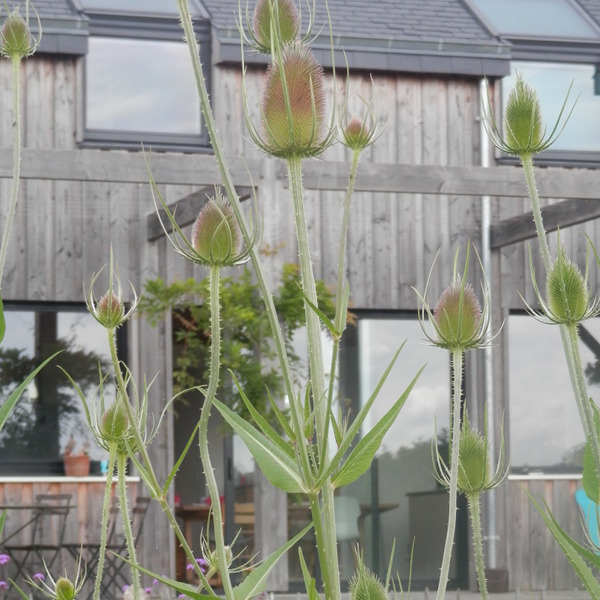
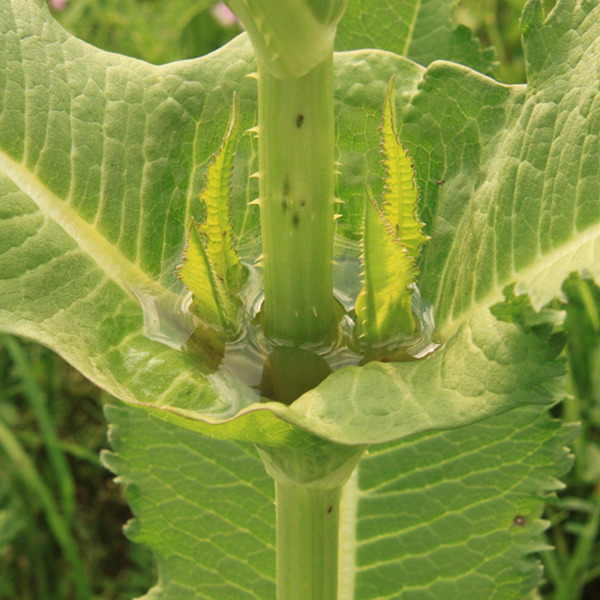
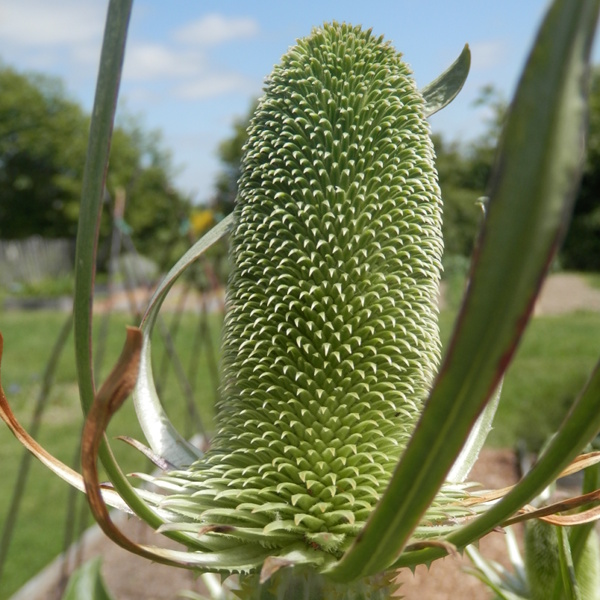
Be patient: this large biennial only offers its thistle-like flowers in second year after sowing. Plants can reach up to two metres, making them very architectural. Commonly called “Birds’ Cabaret” or Fuller's teasel, its large leaves hold water, creating welcome bird watering stations in mid-summer. In autumn, goldfinches feast on the seeds provided. I also grow its cousin, the "cultivated teasel" (Dipsacus sativus); I obtained seeds via the magazine "la Hulotte" which has helped conserve this variety. Once used in textile industry to card wool, it almost vanished.
Do not deprive yourself of these handsome plants: though similar to thistles, they are not invasive. They self-seed easily, of course, but young seedlings are easily removed with a hoe.
Wild chervil — Anthriscus sylvestris
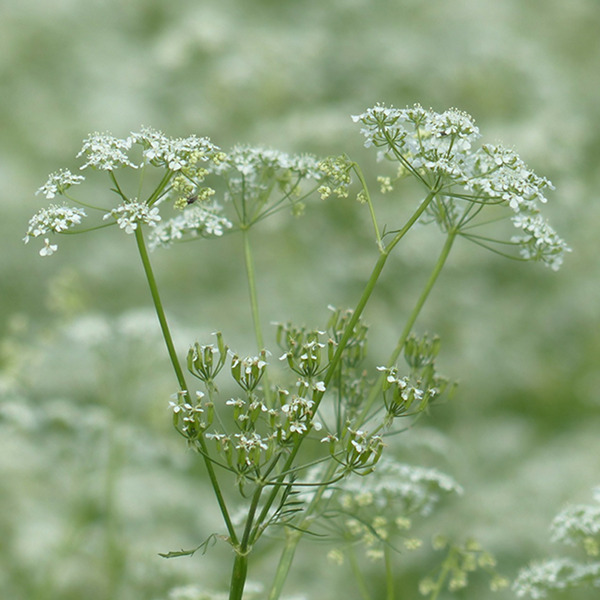
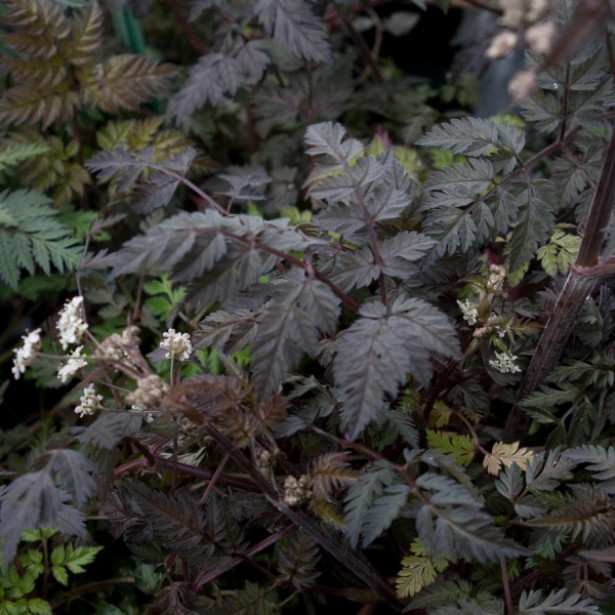
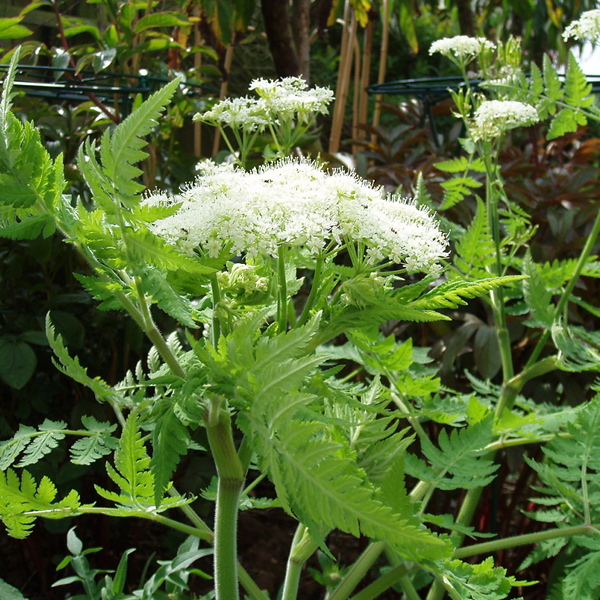
I love everything about it: its cut leaves, pretty stems and white umbels of flowers. I let it settle in beds while keeping it under control, because it can become a little invasive. If you do not have it, you will struggle to find it in trade, it is so common. Please consider replacing it with the horticultural variety 'Ravenswing', which is similar and offers magnificent dark purple foliage, or with sweet chervil (Myrrhis odorata), also very interesting for both ornamental aspect and aniseed flavour.
Mullein — Verbascum thapsus
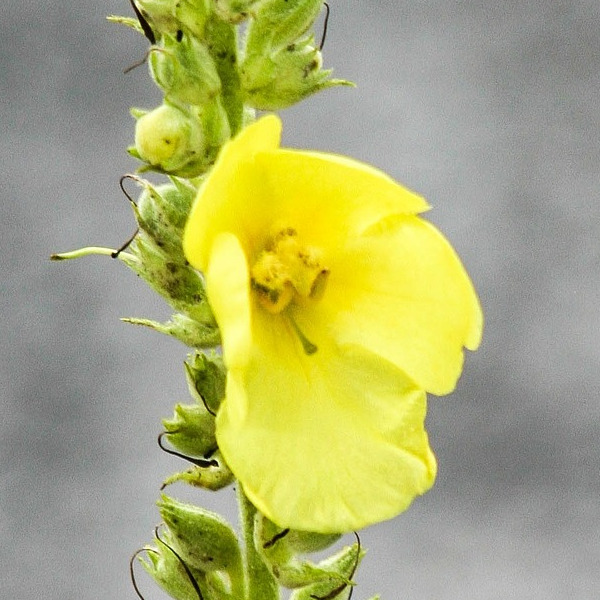
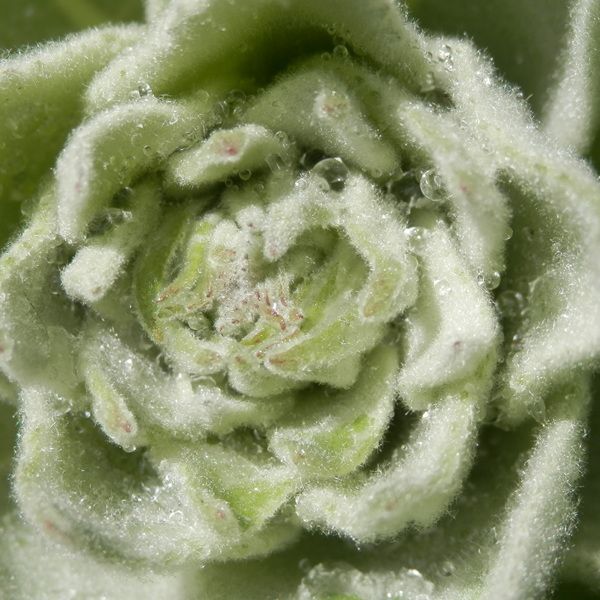
Also known as Candle of Our Lady or Saint-Fiacre's herb, mullein produces large rosettes of downy leaves from which tall flowering spikes bearing yellow flowers emerge. I have several plants descended from the single specimen I found in my meadow: when I discovered it I carefully transplanted it into a bed. Since then it has produced many offspring. If you cannot find one locally, I recommend silver mullein - Verbascum bombyciferum, a close relative that resembles it closely!
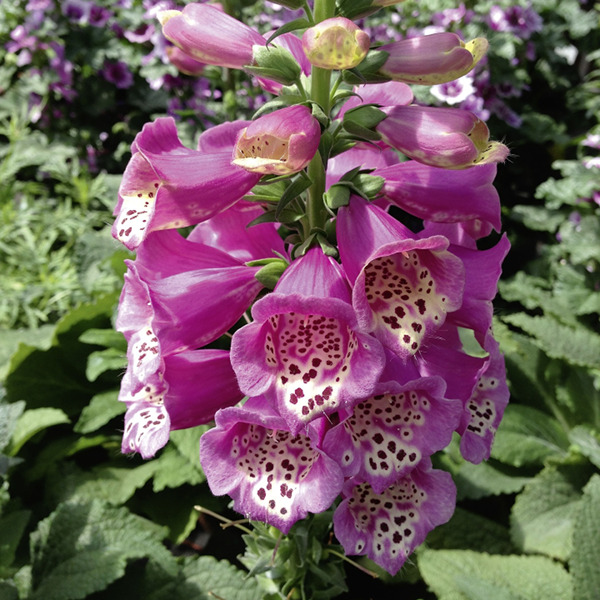
Foxglove — Digitalis purpurea
Called “Lady’s Glove”, this handsome Scrophulariaceae lines road and path edges with its generous pink, purple-tinged flowering. It grew on the bank beside our garden before we arrived and I naturally let it settle. Together with horticultural foxgloves, it makes a beautiful backdrop in a bed, perfect with roses. Beware: it is toxic; if you have children, it is wise to ask them not to touch it.
-
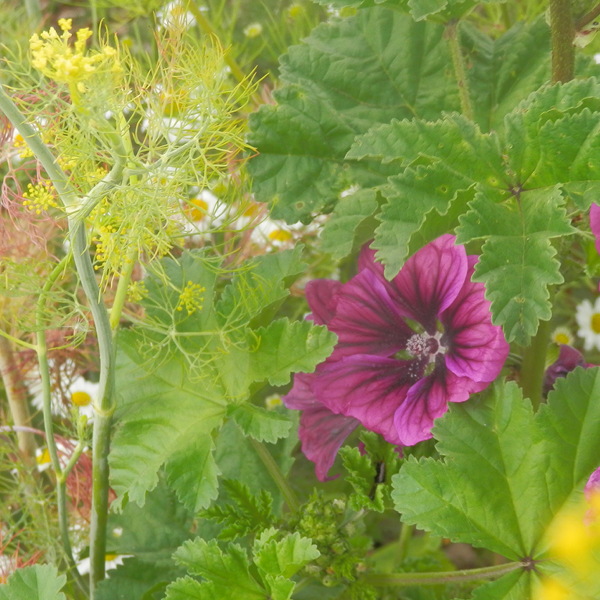
Common mallow — Malva sylvestris
My common mallow was given by a friend who grows edible and medicinal plants; it is actually a Mauritanian mallow but very close to the wild species. She promised that once established it would be faithful. The original plant is gone, but before it disappeared it produced plentiful offspring which I let grow wherever they do not bother me. It is a very floriferous plant with handsome purple flowers, really easy to grow and much loved by bees. A reliable choice!


































Comments