Long-flowering annuals: enjoy colourful flower beds until the first frosts
Easy-to-grow, generous plants for months of garden colour
Contents
Annual plants are essential for a beautiful garden in bloom. Yet they are sometimes neglected, some gardeners preferring longer-lived plants. But it would be a shame to write them off: they have many qualities. Fast-growing, they flower after just a few weeks and can keep flowering for many months. They often require no care to enliven borders and containers from late spring until the first frosts. Few plants can boast of flowering for so long! We therefore invite you to rediscover these long-flowering annuals and our advice for choosing them.
Why grow flowering annual plants in the garden?
Some plants are called “annuals” because their life cycle lasts only a few months. That’s what sets them apart from perennial plants (which live for several years) or biennials (whose life cycle logically spans two years).
Admittedly, they are short‑lived plants. But that’s also one reason for some of their strengths: they grow fast, very fast, and flower profusely. This is because they have little time for every stage of life: to germinate, develop foliage, flower, set seed to reproduce, then die. Fast and efficient: annuals have to be! Some can flower from late spring, around May or June, right through to the first frosts in October, or even November depending on region. That can mean a flowering period lasting almost half the year!
Beyond flowering, they also offer other aesthetic qualities: colourful or unusually shaped foliage, fragrance, attractive fruiting, variable habit, etc.
Also, many are very easy to grow, even from seed. In suitable conditions, sown seeds will germinate quickly. What satisfaction to sow a seed and watch the plant’s whole life cycle over the following weeks! Annuals are in fact ideal candidates for introducing beginners or children to the art of gardening.
They’re also plants that don’t require a large budget. Seed packets, plug plants or pots are generally cheaper to buy than perennial plants or shrubs, as they need less care. After fruiting, you can even collect your own seeds to grow new plants the following year for free.
Finally, even though short‑lived, many annuals will self‑seed in place and, over time, create beautiful flowering colonies.
These plants have a place everywhere: beds, containers, borders or rockeries. Whatever the garden style (exotic, romantic, English, French, bohemian, naturalistic…), there will always be annuals that fit in easily. They are ideal for filling gaps and allow the display to evolve each year.
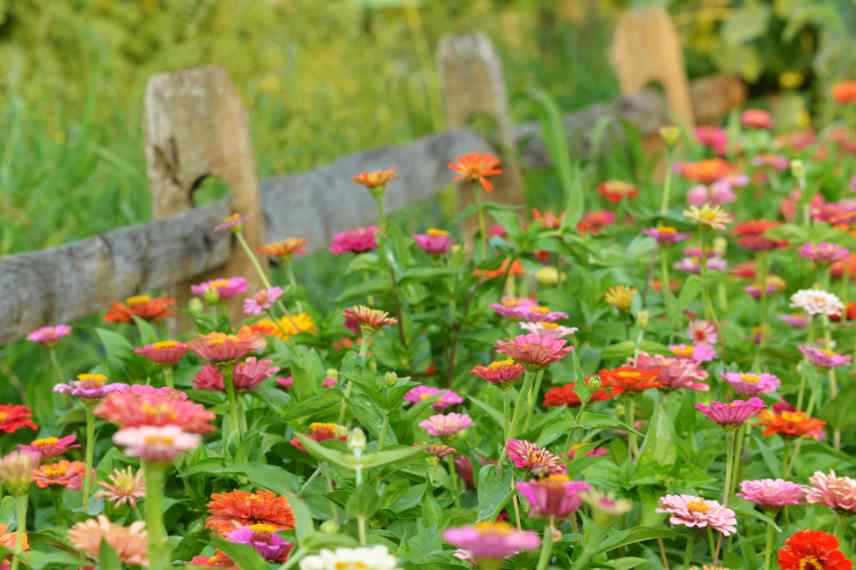
Zinnias, equally at ease in cottage gardens and in structured beds
How to choose your long-flowering annuals?
There is a wide variety of annual plants that flower for a long time, so choosing isn’t always easy. Of course, your own tastes will come into play, but it is also important not to overlook one essential factor: your own growing conditions. Every garden has its own, resulting from the combination of several elements:
- soil type (heavy, light, fertile, poor, calcareous, acidic…);
- moisture (moist, dry);
- climatic and environmental conditions (high heat, frequent rain, wind, sea spray, pollution…);
- exposure (sunny, dappled, shady…);
- available space (planter on a balcony, large container on the terrace, extensive border in the garden…).
Put simply, it would be a shame to choose an annual that needs sun and requires poor, free-draining soil in a north-facing garden that doesn’t receive much light and has very compact clay soil.
If you need help creating your garden profile, discover our Plantfit app.
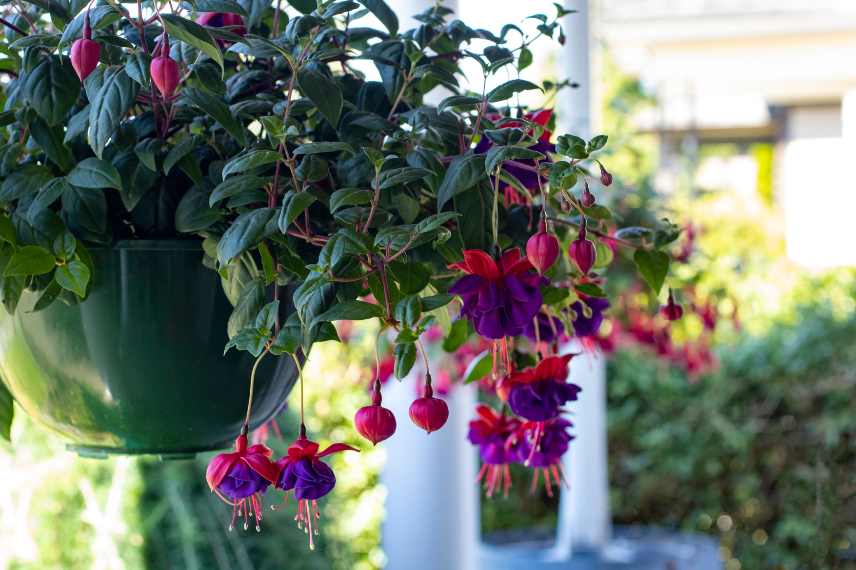
Each annual plant requires specific exposure or growing conditions: fuchsias will thrive in shade
Our favourite long-flowering annuals
For full sun
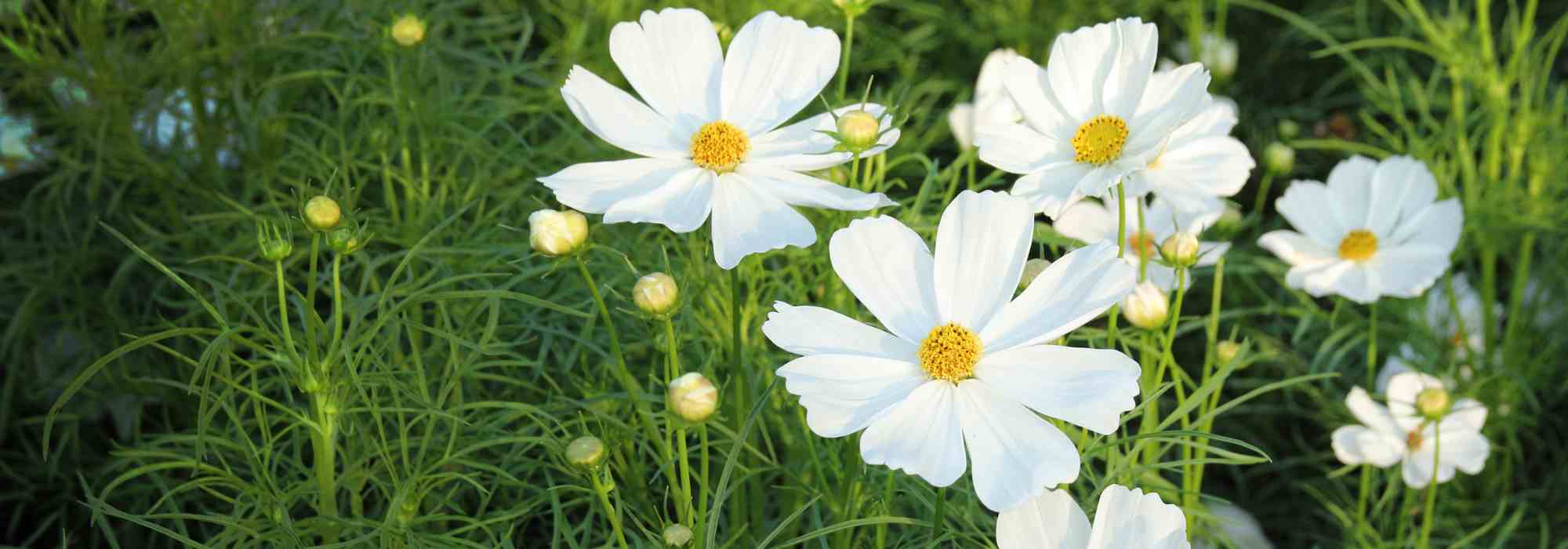
In a bright, sunny position with several hours’ sun each day, you’ll be spoilt for choice. Let’s start with the Cosmos, whose elegant, colourful blooms keep coming from June through September–October. They are available in many colours (white, yellow, pink, orange, bicolour…) and flower forms (single, double, pleated-cup shapes…).
Next, marigold or calendula brings a true touch of sunshine to the garden with its warm-toned blooms that liven up beds and containers. Flowering can start as early as May and continues until the first frosts. In milder southern regions it sometimes lasts until December, offering nearly eight months’ enjoyment. Again, flowers come in various forms, single or double, with either a country charm or a more sophisticated look.
Another sun-loving annual that seems never to stop flowering is the California poppy. Expect it from at least May–June through September–October, offering bright, vivid flowers that renew continuously.
Also in the same warm colour range, marigolds (Tagetes) are great companions in the vegetable garden but work equally well across the garden, especially in beds. You can enjoy them from June to October.
As for the bracteate everlastings, their name signals their longevity. These annuals have the quality of keeping their flowers and colour for a long time when dried, making them admirable in the garden for many months. They produce quite distinctive pearly capitula.
For simple yet elegant flowering, consider scabious. They bloom readily from spring to autumn without interruption.
Don’t forget zinnias, whose flowers recall daisies. Single, double or pompon-shaped, these annuals reward us with a lovely palette of colours that brighten the garden from June to October.
As for the four o’clock, they only reveal themselves in late afternoon when the sun no longer lights them, showing their beautiful trumpet-shaped coloured flowers. A display that repeats until the first frosts.
Let’s finish this non-exhaustive list with rudbeckias, which flower abundantly all summer. They always reveal that distinctive domed centre surrounded by colourful, drooping petals. Indispensable in beds, mixed borders and containers.
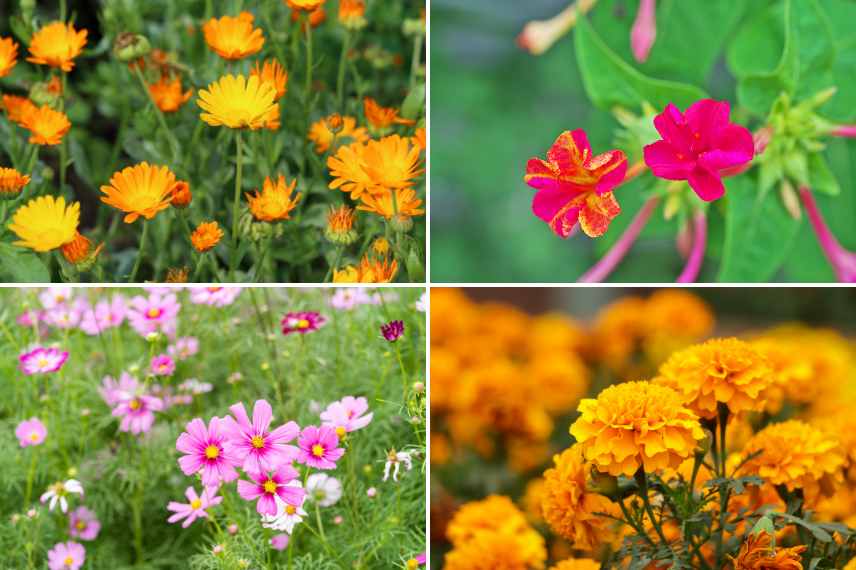
Marigolds, four o’clock, cosmos and marigolds
For partial shade and shade
In less bright positions you can enjoy the magnificent flower spikes of Digiplexis, a hybrid created from foxgloves. Not very hardy, this perennial is often grown as an annual. It flowers tirelessly from May to November in flamboyant shades.
Also treated like an annual, the fuchsia favours partially shaded to shaded sites. Enjoy its charming drooping bell flowers through summer and until the first frosts.
Mention must be made of pansies, even though they are biennial. Essential for containers and beds, they flower generously and for a long time, from autumn right through to the end of the following spring.
Meanwhile, baby blue eyes (Nemophila) produce bright, open cup-shaped flowers in shades from blue to white. They make perfect little groundcovers for the front of borders, flowering from summer into autumn.
As for impatiens or balsams, they will brighten and enliven shady or partially shaded spots for weeks. Flowers may be single or double and come in many colours.
And for flowering that lasts from early spring to the first frosts, opt for the Cape primrose. This tender perennial, grown as an annual, produces months of purplish-blue trumpet flowers.
Finally, consider bedding begonias, which offer spectacular flowering for several months. Colours range from white to red, bringing light to containers, borders and beds.
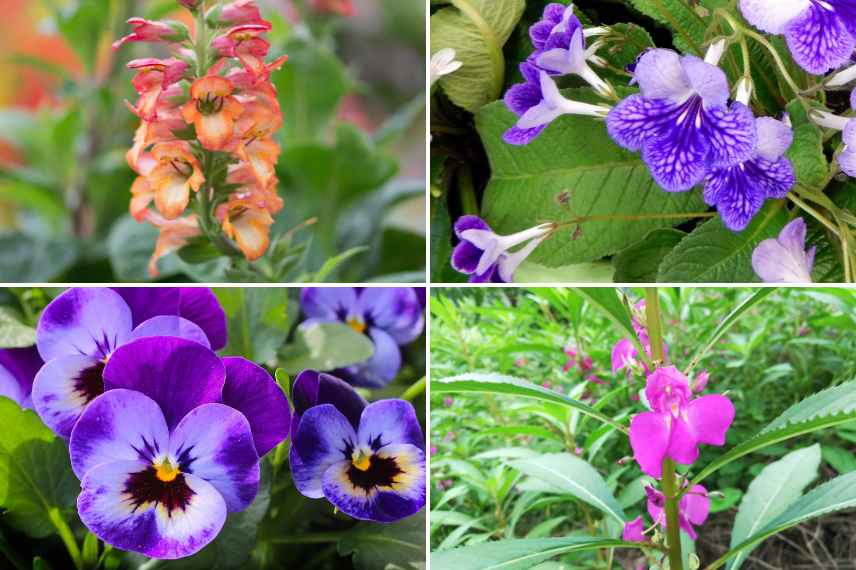
Digiplexis ‘Illumination Flame’, Cape primrose, pansies and impatiens
Climbers
Among annuals there are climbers capable of growing several metres in just a few months. They will quickly cover any available support: trellis, balcony railing, pergola, etc. This is the case with the nasturtium, which also has the advantage of flowering for a long time from June to September, producing pretty funnel-shaped flowers in yellow or orange. This plant also has charming rounded foliage and can even be used in the kitchen: flowers and leaves are edible.
Another vigorous twining climber is the ipomoea. Its funnel-shaped flowers follow one another for months, from July until the first cold spells. It quickly screens unsightly structures or provides light shade. A true flowering cascade that adds an exotic touch to the garden, terrace or balcony.
With their dark centres contrasted against coloured petals, Black-eyed Susans add a touch of originality. They flower from June–July to October and will clothe supports in just a few weeks. They can also be grown in hanging baskets for an elegant trailing display.
For a delicately scented display, adopt sweet peas, whose papilionaceous flowers are abundant from June to November.
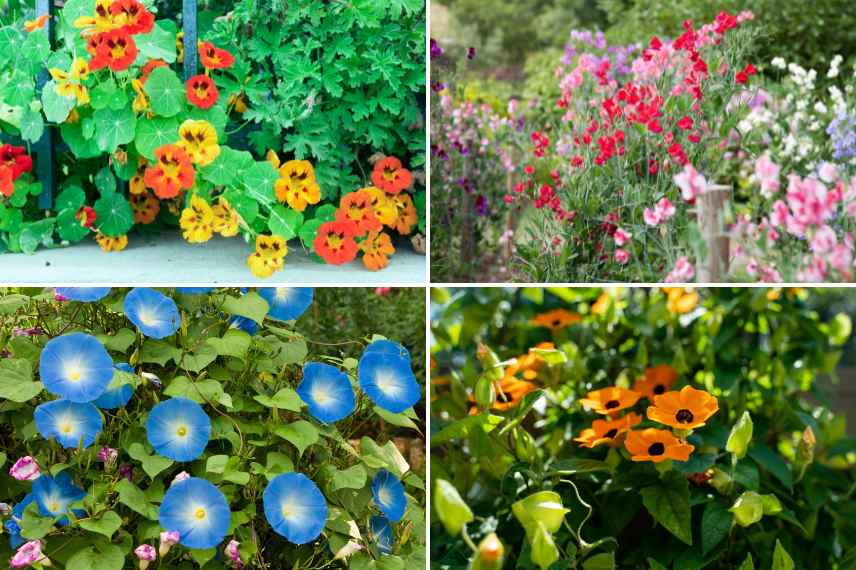
Nasturtium, sweet peas, ipomoeas and Black-eyed Susans
- Subscribe!
- Contents
This form is protected by reCAPTCHA - the Google Privacy Policy and Terms of Service apply.

































Comments