Lavender and health: to grow it and enjoy its benefits
Soothing, healing plant with Mediterranean charm
Contents
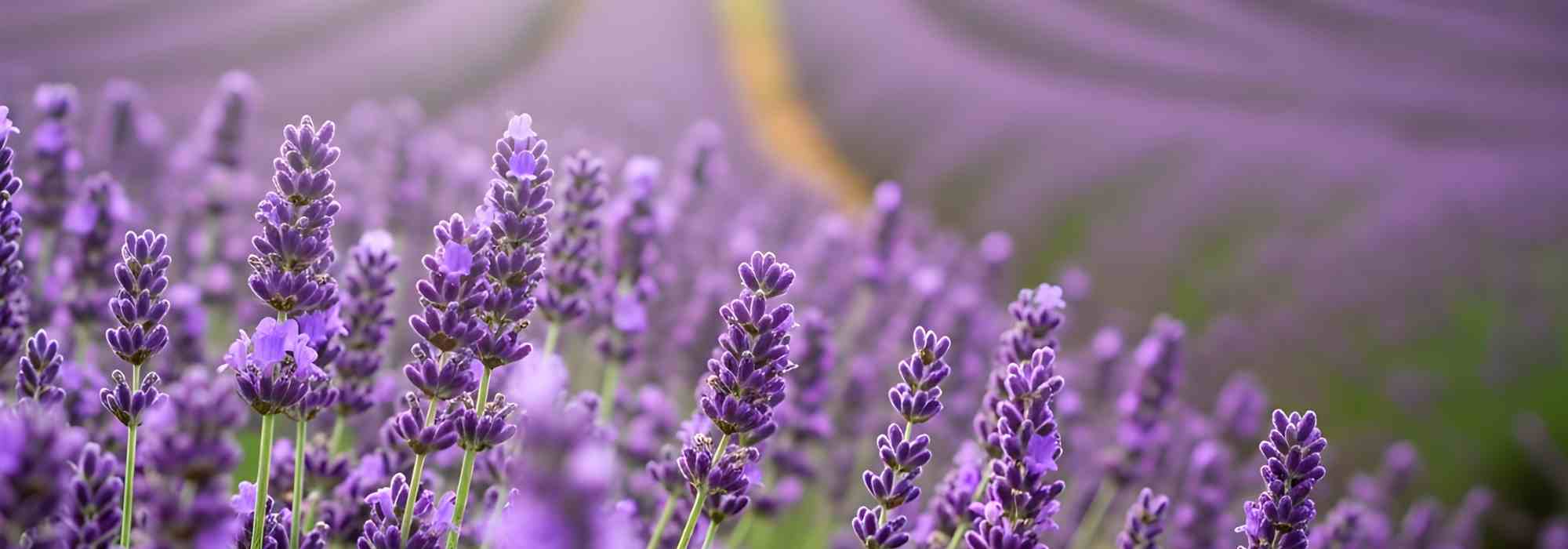
Lavender is a shrub you will surely know, producing beautiful flowering spikes with an unmistakable fragrance and aromatic foliage. Emblem of the Mediterranean, it is not confined to that region and has found a place in many gardens.
But it is not only for its aesthetic qualities that it is interesting: regarded as a genuine medicinal plant, it offers various health benefits. A perfect opportunity to combine the useful and the pleasant in the garden, but also simply on a balcony or terrace, since it can be grown in a pot.
Let’s look at how to care for lavender and use it for its many health benefits.
Lavender's many benefits
Growing lavender is first and foremost about enjoying a beautiful scented summer flowering in colourful spikes. While purple is the plant’s typical colour, the flowers actually come in other shades, such as white or pink. This very melliferous flowering delights precious pollinating insects. Its foliage is leathery, fine and highly aromatic. It has silvery tones and is evergreen, so lavender remains attractive in all seasons, even in winter.
But lavender is also prized in phytotherapy. Its active compounds are used to relieve certain ailments and it is often used alongside conventional allopathic medicine. It is considered:
- soothing ;
- sedative ;
- antiseptic ;
- antispasmodic ;
- wound-healing ;
- antiviral and antibacterial ;
- insecticidal.
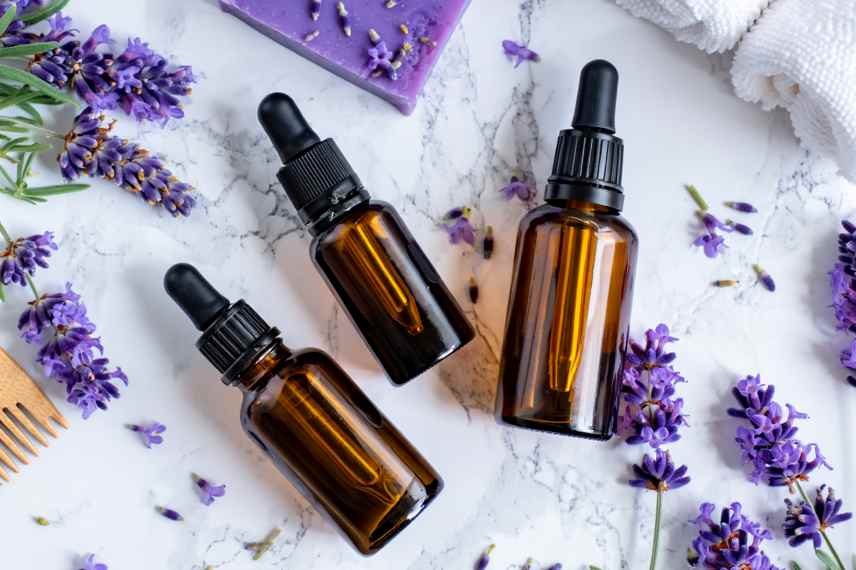
Lavender is prized in phytotherapy, used in many different forms
Read also
Lavender: planting, growing, pruningHow to grow lavender well in open ground or in a pot
Lavender is an undemanding, hardy and frugal plant. It tolerates drought, scorching sun and heat without flinching. Its main enemy? Excess water, whether from overwatering or from heavy soil.
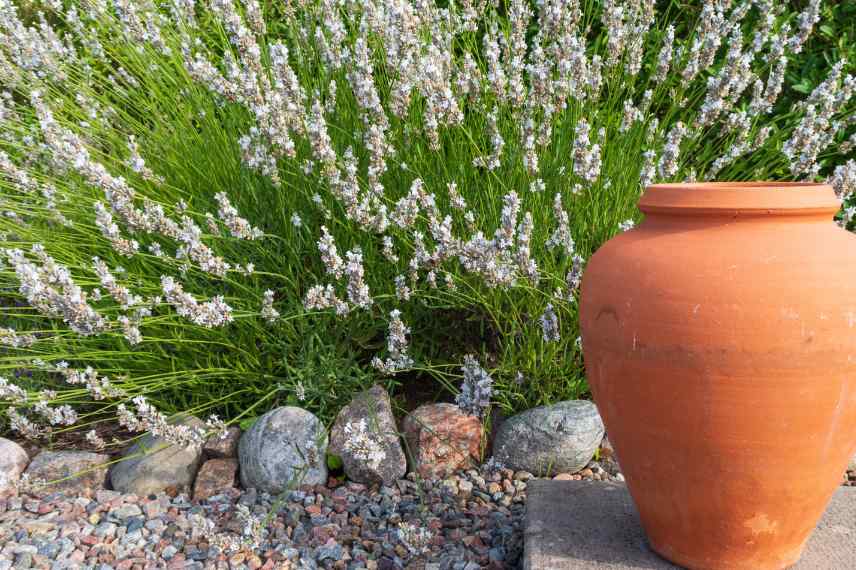
It can be established in many garden spaces: rockeries, borders, gravel beds, front of a hedge, etc. It is an essential plant for a dry garden. But it can also be grown in a pot, allowing you to enjoy its various benefits even without a garden.
Different varieties
In the garden, feel free to plant any variety you like: Lavandula angustifolia ‘Arctic Snow’ with white flowers, ‘Rosea’ with pink-lilac flower spikes, or ‘Ellagance Sky’ which carries a delicate sky blue. But if you prefer more classic colours, ‘Hidcote’ or ‘Munstead’ will be perfect. Note that true lavender or English lavender (lavande vraie or lavande officinale), which naturally grows at higher altitude, is considered the most interesting for the strength of its health benefits. But spike lavender, the lavandin (a hybrid between true lavender and spike lavender) and butterfly lavender (less hardy) also have virtues. You can keep to a monochrome garden, create a tonal range or vary flowering colours according to different garden areas.
In a pot, all varieties can theoretically be grown, provided the container is suitable. But the smaller varieties such as ‘Blue Jeans’ or ‘Bleu de Gien’ (40 cm overall) are especially good candidates.
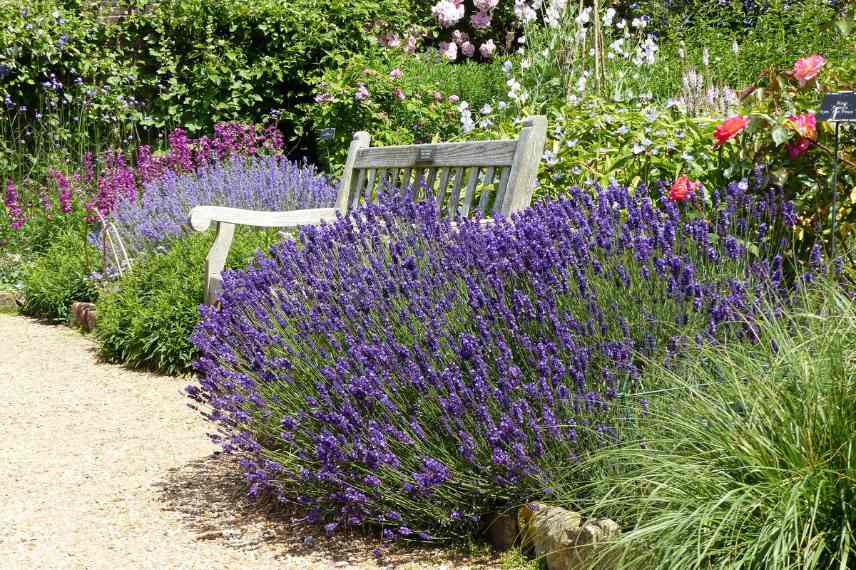
Lavandula angustifolia ‘Hidcote’
Planting
- Choose a sunny spot in well-drained soil (where water does not pool). Lavender thrives in poor, stony or limestone soils, but will not tolerate heavy clay. If your soil is heavy, it is essential to plant on a slope, in a rockery or on a raised bed so rainwater or irrigation can drain away. Take time to choose the right location because lavender does not tolerate being moved once established: its deep taproot tends to break during transplanting, which leads to decline.
- Prepare the area by removing weeds and loosening the soil with a spade. If necessary, add drainage materials (river sand, clay pebbles, gravel, etc.).
- Whether the lavender is in a pot or container, soak the container beforehand in water for about ten minutes. This helps rehydrate the rootball.
- Dig a planting hole about 2 to 3 times the size of the rootball.
- Place the rootball, then backfill with soil or potting compost.
- If planting several lavender plants, allow 40 to 60 cm between each plant (depending on the mature spread of the chosen variety).
- Water in, then optionally apply a mineral mulch of gravel or slate around the base of the plant.
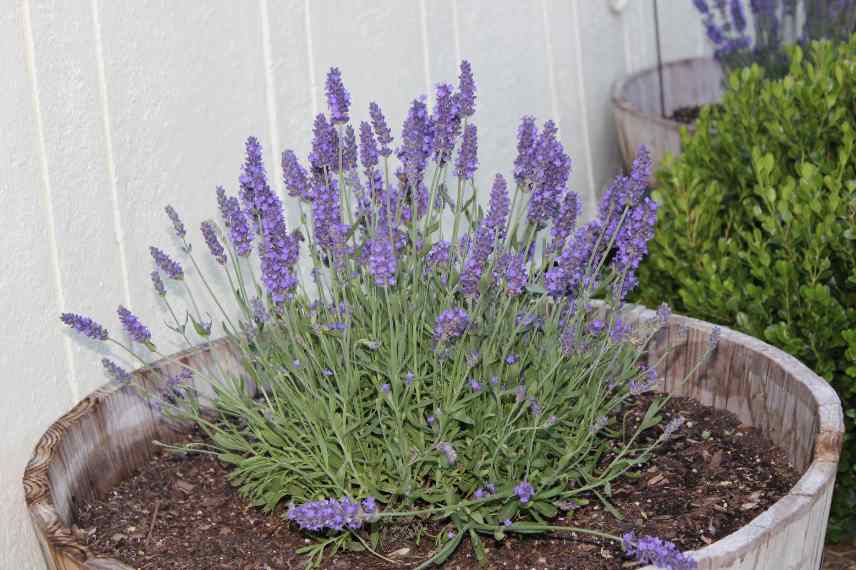
For container planting, choose a container at least 40 cm deep with drainage holes. Terracotta pots are preferred, as their material allows the substrate to breathe. Use light garden soil or opt for a potting compost for Mediterranean plants, both well drained. Place a 3 to 5 cm drainage layer at the bottom of the pot before planting.
Care
Lavender is not difficult to grow and requires little care. In the first two years, water during extended dry periods to encourage rooting. Once established, the plant will look after itself.
In pots, watering will be more frequent. But it is essential to wait until the substrate is dry right through before watering again. If you have placed a saucer or decorative outer pot, be sure to empty it after about twenty minutes so water does not stagnate. In winter, consider raising the pot off the ground using a brick or crate. Generally, no fertiliser application is necessary.
Lavender is not generally susceptible to pests and diseases. Only excess water really causes it harm.
At the end of flowering, you can trim the flower spikes and cut the branches back by half to keep a neat, compact shape (otherwise lavender tends to spread and thin out in the centre). A lavender plant grown under suitable conditions can live for more than ten years.
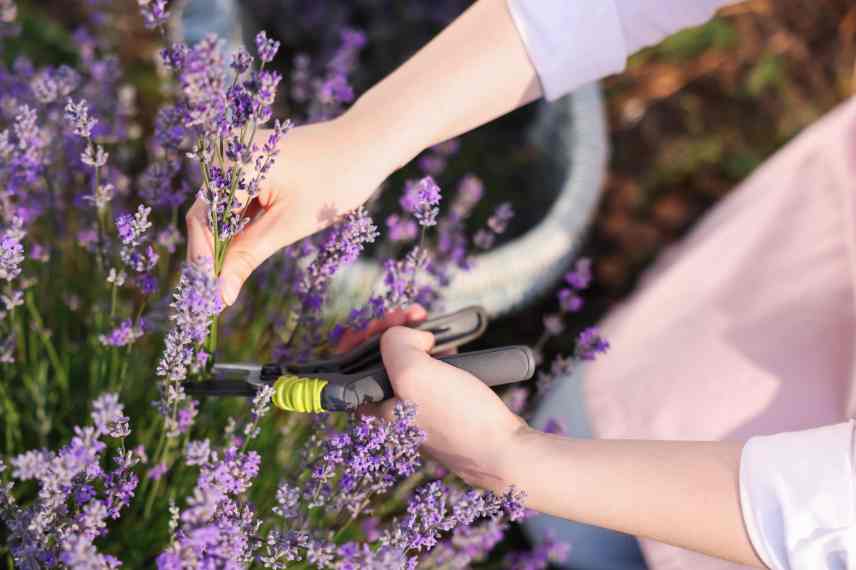
Lavender is pruned just after flowering
Using garden lavender for health benefits
If making your own lavender essential oil or hydrosol isn’t straightforward (it requires specific equipment and technique), it’s perfectly possible to use lavender in other ways to enjoy its health benefits.
Drying lavender
Lavender is often used dried, because fresh flowers deteriorate more quickly. On a dry day in early summer, ideally in the morning (in any case before midday), cut the flower heads, favouring those not yet fully open.
Lay them out to dry flat on a rack or a crate lined with newspaper or a simple sheet. You can also make bunches to hang upside down. Place them in a warm, ventilated spot, protected from direct sunlight. Turn the stems after a few days if necessary or rotate the bunches. Once flowers easily crumble between fingers, that’s the sign they are well dried.
For more information, discover our article How to dry lavender?
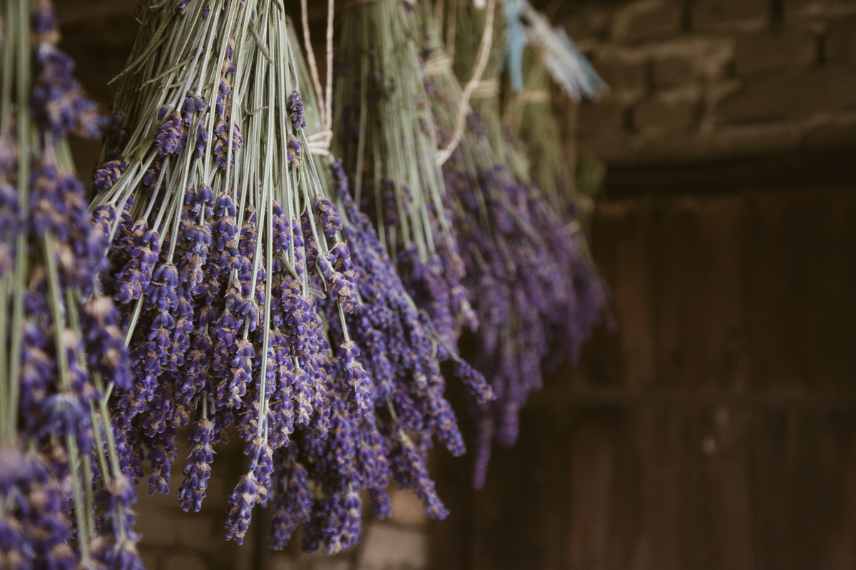
Best to dry lavender upside down
Lavender infusion
Simply place one tablespoon of dried flowers (per cup) in simmering water for about ten minutes. This drink has relaxing properties and helps fight early signs of illness (cold, sore throat, sinusitis…).
For more information, discover our article How to make lavender tea?
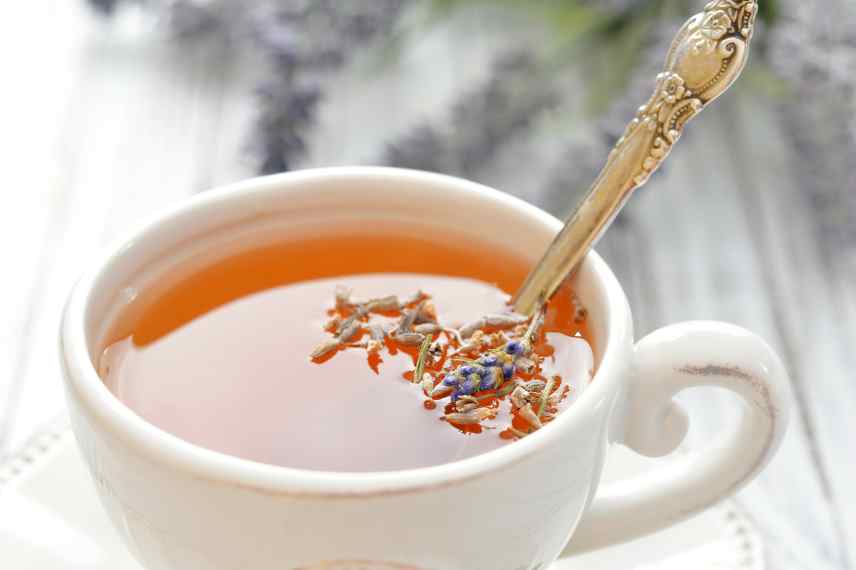
An infusion with relaxing properties!
Lavender decoction
This time, spikes (about 50 grams) are placed in 1 litre of boiling water and kept at the boil for 2 to 3 minutes. Once removed from the heat, leave to macerate for about ten minutes. This technique draws out more active compounds. Allow to cool and strain before using as a spray. This treatment can be used for soothing massages, cleansing the scalp or acting as an insecticide. Lavender scent is indeed known for its repellent properties against many pests: mosquitoes, fleas, ticks, etc.
Dried bunches
You surely know the small lavender sachets to place in wardrobes. They perfume linen and are also said to repel clothes moths.
Read Gwenaëlle’s advice in: Combating moths with garden herbs.
Precautions for use
Especially if you already have health issues, if you are pregnant or breastfeeding, or for young children, we recommend seeking advice from your doctor before using lavender. Even natural and although lavender is among the most well tolerated plants, any plant can interact with certain medications or have other contraindications.
- Subscribe!
- Contents
This form is protected by reCAPTCHA - the Google Privacy Policy and Terms of Service apply.

































Comments