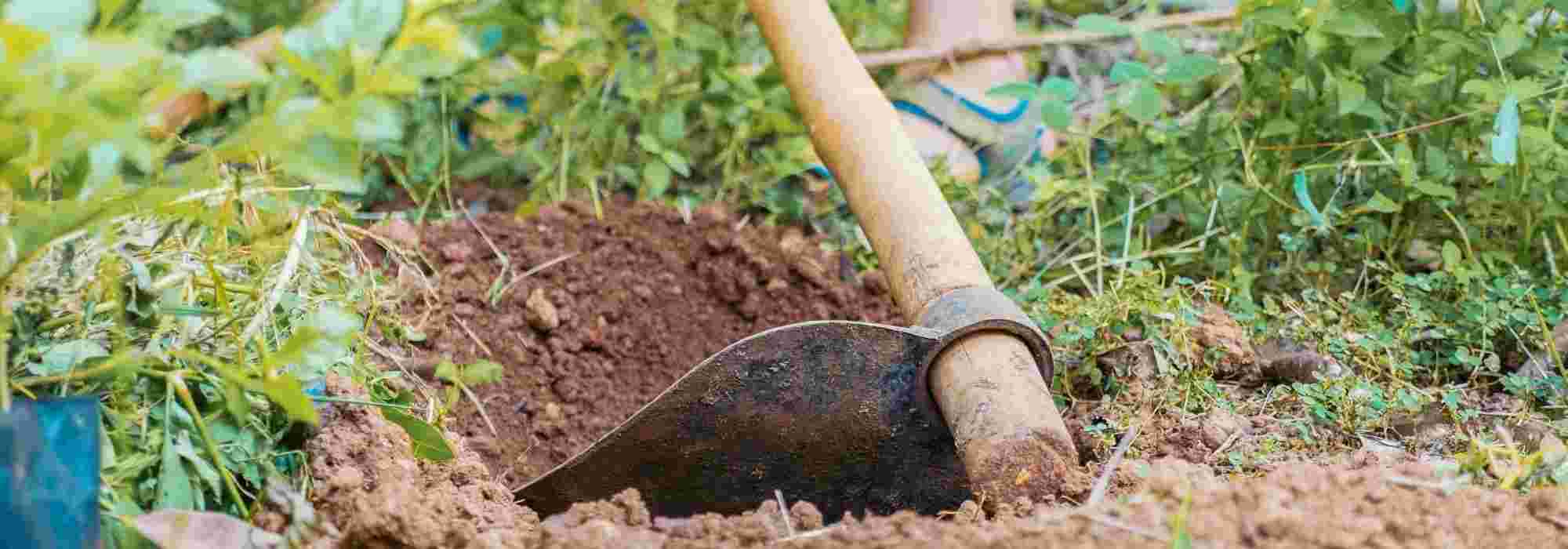
What is a hoe used for?
Hoe, where are you then?
Contents
Used since time immemorial and across the world, the hoe is a very versatile tool. The tool is simple but effective: a handle and a steel blade fixed to it. The conventional hoe, initially confined to agricultural work, gradually made its way into gardens around the 19th century. With a hoe, you can in turn: loosen soil, hoe between rows, weed, dig planting holes or trenches, earth up… In short, as a Provençal proverb says: “If you’re feeling down and listless, go to your field and take the hoe”. Whatever state of mind we’re in, let’s take our hoe and get to work in the garden!
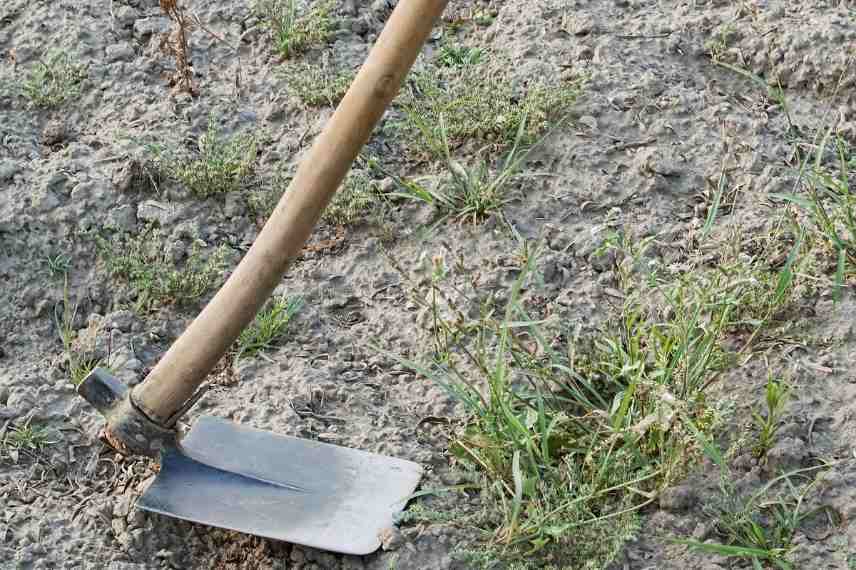

Une houe est un outil de jardinage composé d’une lame (plate, triangulaire ou en forme de fer de bêche) fixée à un long manche. Elle sert principalement à ameublir la surface du sol, enlever les mauvaises herbes (binage), briser la croûte de surface, tracer des sillons pour les semis et mêler des amendements superficiels. Types courants : - Houe plate : lame large pour binage et désherbage en surface. - Houe triangulaire ou à pointe : pour creuser des sillons et travailler entre rangs serrés. - Houe oscillante ou à lame courbe : facilite le travail en poussée/tirée, moins fatigante. Conseils d’utilisation : - Travailler en coupées peu profondes (2–5 cm) pour couper les racines des mauvaises herbes sans remonter trop de terre. - Penser à alterner mouvement de poussée et de traction selon la forme de la lame. - Adapter la hauteur du manche à votre taille pour préserver le dos. Entretien : - Nettoyer la lame après usage, sécher, affûter régulièrement et huiler pour prévenir la corrosion. - Vérifier et resserrer la fixation manche-lame ; remplacer le manche fissuré. La houe est un outil simple mais polyvalent, indispensable pour l’entretien écologique des potagers et massifs.
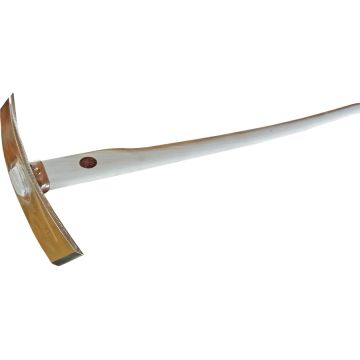
A hoe is a tool for agricultural and garden use fitted with a handle, usually made of wood, onto which a socket (a blade) of forged steel is fixed perpendicular to the handle.
The hoe may be equipped with a solid or toothed blade: traditional hoe with solid blade & hoe with toothed blade. The handle and blade can be of any dimensions (as is the case, for example, in Africa) depending on use: digging, hoeing, soil cultivation, planting… Most commonly, handles made of ash wood measure about 1.10–1.20 m. The correct handle height should fall between the soil and the bent elbow when standing upright. If the handle is not this length, the user may tire needlessly or injure their back.
Hoe blades can be heavy, light, wide, or narrow… A wide, heavy hoe head (about 20 cm) will cultivate soil more effectively than a narrow, light one (such as the Duopro hoe with a 12 cm-wide blade), but the gardener will tire more quickly. It is up to you to choose… In addition, narrow heads get into every gap while wider ones are used for heavy work.
For information: a “houe maraichère” is a type of wheel cultivator used in market gardening. This tool has a wheel at the front, a blade just behind it and two long handles for pushing. The term “houe hollandaise” is also used for manual tools whose blade is curved forwards: this tool is suitable only for hoeing and weeding.
Did you know? The hoe is a very ancient agricultural tool. Hoes have been used for cultivation since the Neolithic and are found worldwide. The tool itself has changed little in shape or use, even though, originally primarily agrarian, it began appearing in gardens from the 19th century. Only the materials and manufacturing have improved.
Furthermore, even in France this tool has countless names derived from regional dialects: “hoyau, bêchoir, féchou, écobue, bêchard, bessoche, déchaussoir, sarcle or essade” (and many more) for hoes with a solid blade, and “bigot” or “mègle” for hoes with a toothed (serrated) blade.
Read also
Hoe: how to choose?What is a hoe used for?
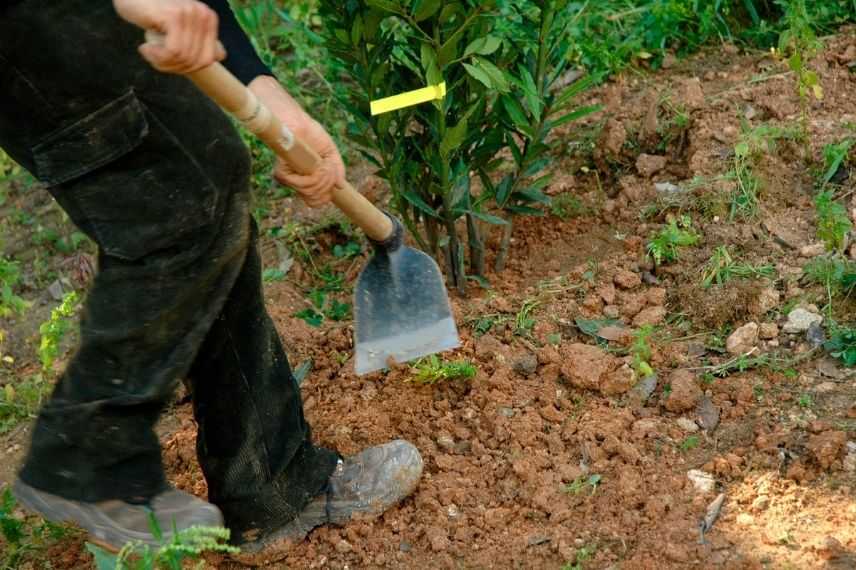
Depending on blade shape and size, and even handle length, a hoe can be used for a wide range of different jobs in the garden. This is particularly true in Africa, South America and South-East Asia, where most manual agricultural tools are essentially hoes of differing shapes and appearances. Here, unfortunately, such variety is not available. We will therefore focus only on a conventional hoe: a solid blade about 20 cm wide fitted to an ash handle about 1.20 m long. Here is what a hoe is used for in our gardens :
- To work soil to loosen and aerate it;
- To dig furrows, trenches, planting holes, or begin creating a pond;
- To hoe and weed out adventive weeds;
- To earth up certain plants and vegetables;
- To cut through large roots and even clear ground by severing young shoots of shrubs or perennials.
Like a pick, a hoe can work where other tools would barely manage to break the soil surface. This is largely thanks to its weight and the way it is used.
Discover other Hoes and pick axes
View all →
Available in 1 sizes
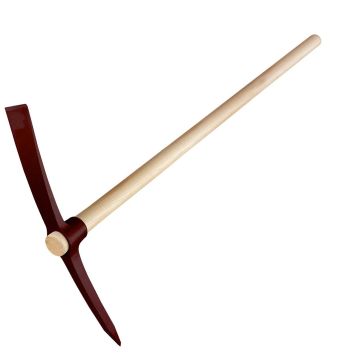
Available in 1 sizes
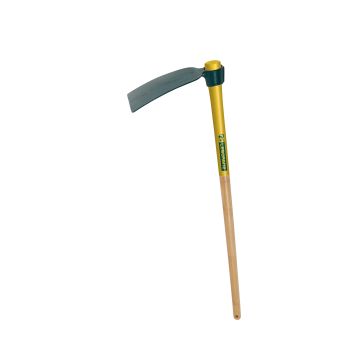
Available in 1 sizes
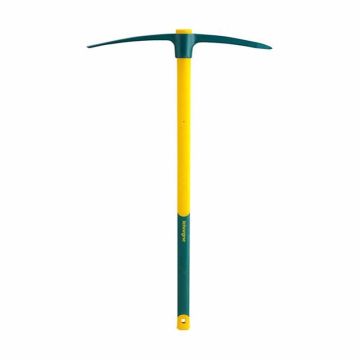
Available in 1 sizes
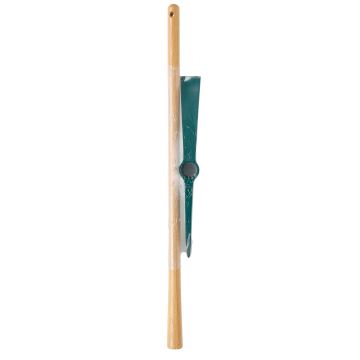
Available in 1 sizes
Available in 1 sizes
How to use a hoe?
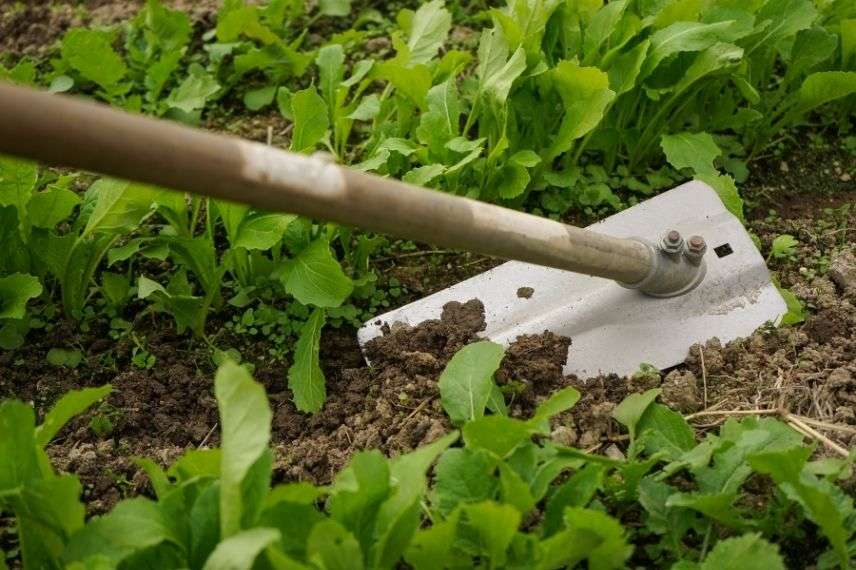
Put simply, using a hoe falls between using a pickaxe and a hand hoe.
- Grip handle with both hands
- Raise tool: above head for very light hoes, or to hip height for others, and if only for relatively light work.
- Then let it fall more or less forcefully onto ground: watch your back!
- Once on ground, tap soil with blade in short jerks if only to loosen it, or more forcefully to dig a hole or a trench.
- Subscribe!
- Contents
This form is protected by reCAPTCHA - the Google Privacy Policy and Terms of Service apply.


































Comments