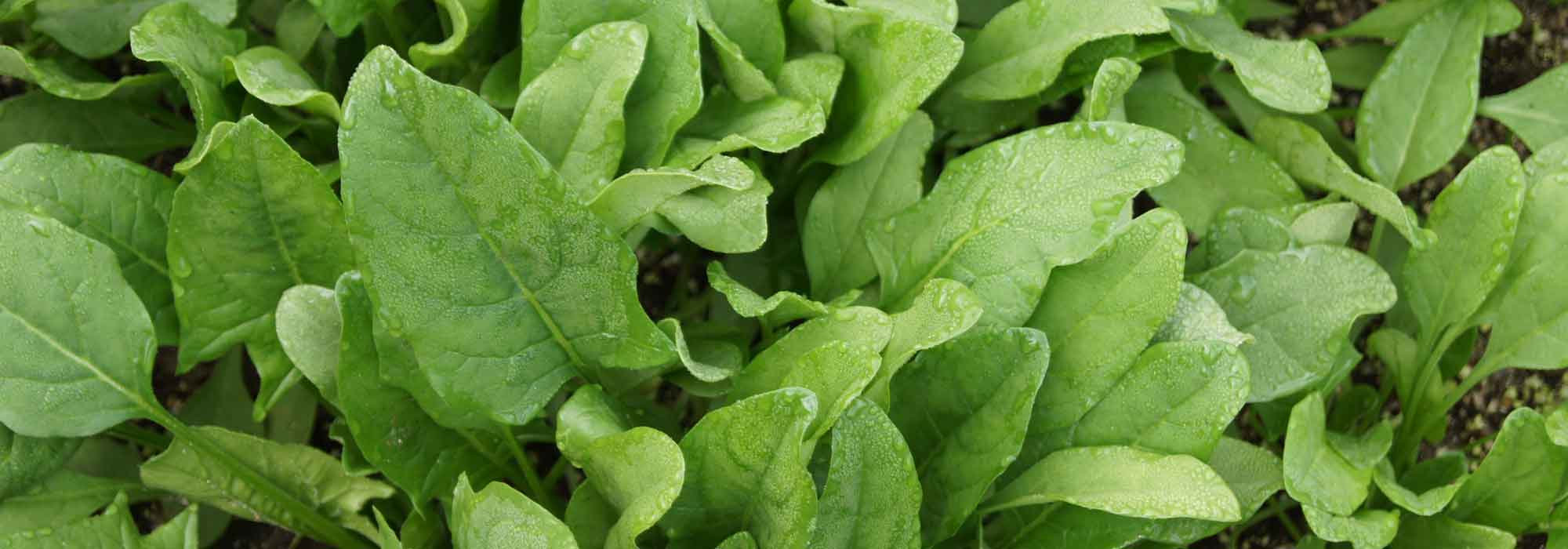
What diseases and pests affect spinach?
Our tips for natural treatment and prevention
Contents
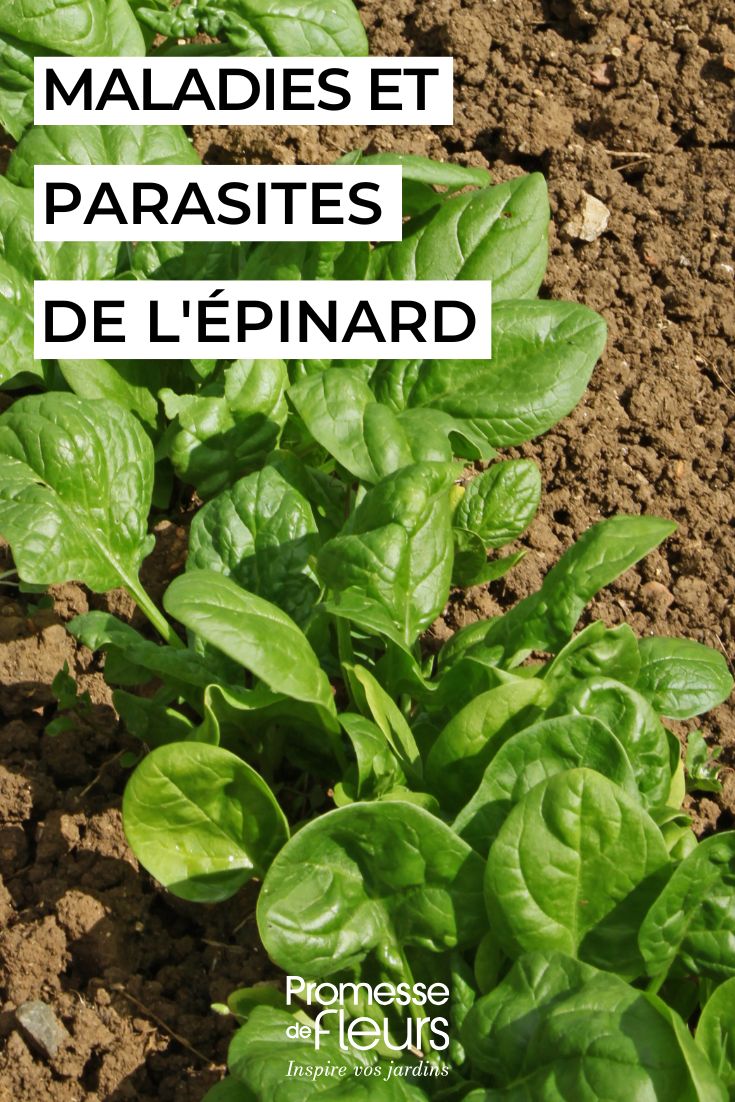
Undoubtedly, spinach (Spinacia oleracea) is a staple of the vegetable garden. Even if its handsome rosettes of bright green leaves, edible raw or cooked, are not always to everyone’s taste… Yet it is a very interesting vegetable plant for its richness in vitamins and iron. In the vegetable garden, it is relatively easy to grow, provided its needs are met: cool soil and an exposure suited to spring, summer or autumn varieties. However, its rapid growth and tender leaves make it a prime target for a multitude of fungi and pests.
Discover how to identify, treat naturally and prevent diseases and pests affecting spinach.

Voici les principales maladies fongiques (ou à oomycètes) de l’épinard, avec leurs symptômes typiques et des mesures culturales/pratiques pour les prévenir ou les limiter. 1. Mildiou (Peronospora effusa, oomycète) - Symptômes : taches jaunes ou chlorotiques anguleuses sur la face supérieure des feuilles, feutrage gris‑violacé poudreux sur la face inférieure en atmosphère humide ; feuillage qui jaunit et se flétrit. - Conditions favorables : temps frais et humide, rosée durable, mauvaises rotations. - Prévention/gestion : semis de variétés résistantes, bonne circulation d’air, espacement, éviter l’arrosage par aspersion (préférer goutte‑à‑goutte ou arroser le sol), éliminer résidus et plantes volontaires, rotation des cultures, recours uniquement aux traitements fongicides homologués en cas d’épidémie. 2. Rouille blanche / « white rust » (Albugo spp., oomycète) - Symptômes : petites pustules blanches crème sur le dessous des feuilles, taches chlorotiques sur la face supérieure, déformation foliaire possible. - Conditions : températures fraîches et forte hygrométrie. - Prévention/gestion : mêmes mesures culturales que pour le mildiou (hygiène, rotation, espacement), destruction des plantes infectées, semences et plants sains. 3. Fonte des semis et pourritures racinaires (Pythium spp., Rhizoctonia solani, Fusarium spp.) - Symptômes : éclatement ou affaissement des plantules au niveau du col, racines pourries, plantes rabougries, jaunissement. - Conditions : substrats détrempés, mauvaise ventilation, semis denses. - Prévention/gestion : semis dans un substrat bien drainant, éviter l’excès d’humidité, éclaircir les plants, rotation, antisepsie du matériel, utilisation de semences traitées si disponible. 4. Fusariose (Fusarium oxysporum f. sp. spinaciae) - Symptômes : dépérissement progressif, jaunissement d’un côté de la plante, nécroses et brunissement des faisceaux vasculaires si on coupe la base. - Conditions : sols contaminés, stress hydrique favorisant l’expression. - Prévention/gestion : rotation longue, éviter plantations successives d’épinards, utiliser variétés tolérantes, maintenir sol en bonne santé. 5. Taches foliaires (Alternaria, Cercospora et autres) - Symptômes : petites taches brunes ou noires sur les feuilles, parfois cerclées, agrandissement et confluence conduisant à perte de surface foliaire. - Conditions : humidité prolongée, températures modérées à chaudes. - Prévention/gestion : suppression des débris de culture, espacement, arrosage au sol, éliminer les feuilles gravement atteintes, traitements fongicides ponctuels si nécessaire et autorisés. 6. Pourriture grise (Botrytis cinerea) - Symptômes : taches molles et humides évoluant en moisissure grise duveteuse, surtout sur feuilles blessées ou en conditions très humides. - Prévention/gestion : ventilation, élimination des tissus malades, éviter la surdensité et l’excès d’humidité. 7. Sclérotiniose (Sclerotinia sclerotiorum) — plus rare - Symptômes : lésions humides suivies d’un feutrage blanc puis de petits corps noirs (scléroties) ; pourriture générale possible. - Prévention/gestion : rotation, élimination des plantes malades, bonnes pratiques culturales. Conseils pratiques généraux - Favoriser variétés résistantes, si disponibles. - Respecter la rotation (éviter épinards/signes de la même famille d’un cycle à l’autre). - Semer à des dates adaptées et éviter l’excès d’humidité (espacement, arrosage au sol). - Éliminer et détruire les résidus et plantes malades ; désinfecter matériel si nécessaire. - En cas d’infection grave, consulter fiches techniques locales ou services de conseil (ex. extension agricole) pour choix et emploi des produits fongicides autorisés et adaptés au potager. Si vous le souhaitez, je peux vous fournir : a) une fiche détaillée téléchargeable sur la lutte contre le mildiou de l’épinard ; b) une liste de variétés d’épinard résistantes recommandées pour le climat britannique/irlandais. Lequel préférez‑vous ?
Several cryptogamous diseases can affect spinach, to varying degrees.
Downy mildew
The downy mildew (Peronospora farinosa) is the most serious disease of spinach. This oomycete develops in cool, humid conditions, spreading via spores carried by wind or water.
What are the symptoms?
Irregular yellow spots appear on upper surface of leaves. On the underside a grey-violet felt is visible. Leaves eventually blister, yellow and die.
How to treat?
Simply spray a horsetail decoction to strengthen tissues, or a mixture of bicarbonate of soda (10 g/L) with a little black soap.
How to prevent?
- Observe a 3-year crop rotation
- Avoid wetting foliage when watering
Rust
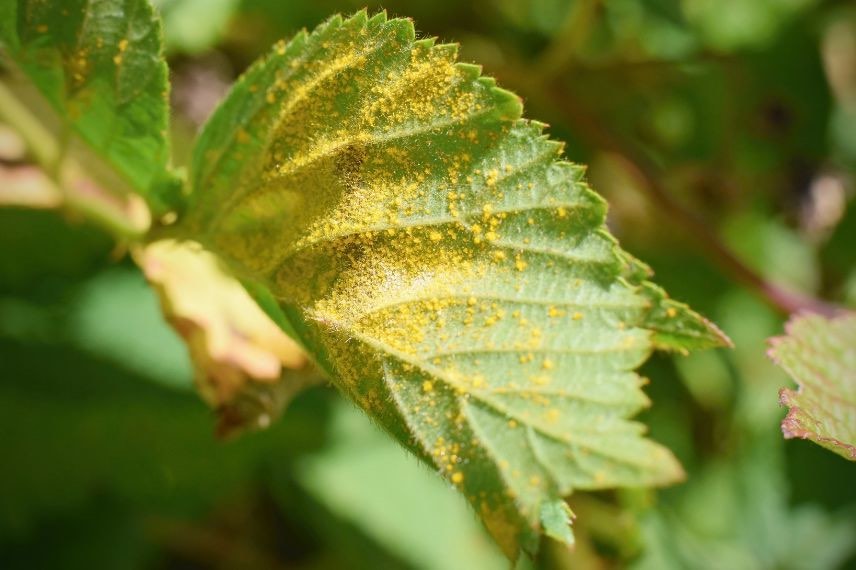
Rust symptom
Easy to recognise, rust (Puccinia aristidae) weakens spinach by disrupting photosynthesis.
What are the symptoms?
Small orange or brown pustules appear, mainly on the underside of leaves. Foliage may dry out prematurely.
How to treat?
- Remove affected leaves at first signs and take them to recycling centre
- Spray with nettle manure or a garlic macerate, which has strong antifungal properties
Cladosporiosis
Cladosporiosis (Cladosporium variabile) is caused by a fungus that favours temperate climates and high relative humidity. It is often confused with downy mildew at first.
What are the symptoms?
Small circular spots, initially pale then turning brown with a dark olive-green centre, appear. Spots are smaller and more regular than those of downy mildew.
How to treat?
- Maximise ventilation between rows by thinning seedlings
- Use wettable sulphur in case of severe attack. It is permitted in organic growing but use sparingly
Anthracnose
Anthracnose (Colletotrichum dematium) attacks leaf tissues, creating areas of necrosis.
What are the symptoms?
It starts with small water‑soaked spots that quickly become brown and dry. Centres of spots may fall out, leaving small holes in the lamina.
How to treat?
- Use certified disease-free seed
- Horsetail manure is excellent for prevention to protect the plant
Stemphylium
Stemphylium (Stemphylium botryosum) is an opportunistic fungus that often takes advantage of plant stress or a nutrient deficiency
What are the symptoms?
Circular grey or white spots are visible, paper‑dry in appearance, sometimes surrounded by a reddish-brown halo.
How to treat?
- Maintain balanced fertilisation, avoiding excess nitrogen
- Apply sprays of comfrey manure to strengthen general vigour of spinach.
What are the main pests of spinach?
Several insects and gastropods particularly favour spinach leaves.
Aphids
Is it necessary to introduce aphids, those small piercing–sucking insects that often cluster on young shoots?
What are the symptoms?
Leaves roll up, become sticky (honeydew) and ants tending aphids are often present.
How to treat?
- Spraying a solution of water and black soap (diluted to 5%).
- Releasing ladybird or hoverfly larvae.
Slugs
These nocturnal gastropods particularly relish tender tissue and are often active after rain.
What are the symptoms?
Large irregular holes appear in leaves and shiny mucus trails are visible. Young seedlings can be eaten overnight.
How to treat?
- Barriers of ashes, spent coffee grounds or crushed eggshells can be effective but must be renewed after any rain.
- Hand-picking in morning or evening, made easier by placing wooden boards or tiles under which slugs shelter by day.
- Providing hedgehog boxes and maintaining wild areas to encourage ground beetles.
- Spreading iron phosphate granules, an insecticide authorised in organic farming.
Defoliating moths (Noctuidae)
These are caterpillars of night-flying moths that hide in soil or under leaves by day and feed on foliage at night.
What are the symptoms?
Leaves are chewed into a lace-like pattern, with only veins remaining. Black droppings (frass) are also noticeable on leaves.
How to treat?
- Hand-picking at dusk.
- Spraying with Bacillus thuringiensis (Bt), a natural bacterium that kills caterpillars after ingestion.
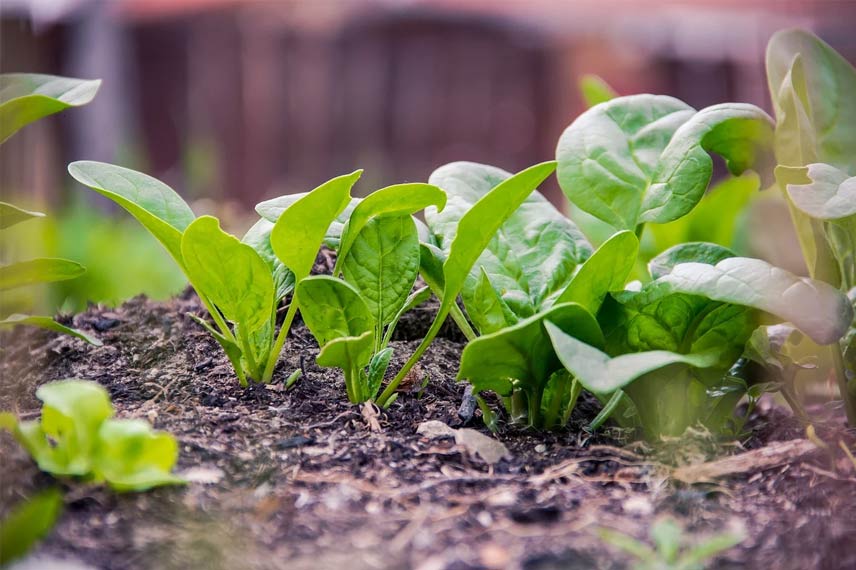
Young spinach shoots can attract many pests
Leaf-mining flies
These small flies have larvae that tunnel within the thickness of the leaf tissue.
What are the symptoms?
Main sign is appearance of whitish, translucent, winding “mines” or galleries within leaf tissue. Leaf eventually becomes necrotic at site of the mine.
How to treat?
-
Placing a fine-mesh insect net from sowing.
-
Crushing larvae by hand through the leaf or removing infested leaves.
Wireworms
These are beetle larvae, often called “wireworms”, that live in soil for several years.
What are the symptoms?
Spinach wilts suddenly. On digging up, the main root is found to be severed or riddled with holes.
How to treat?
- Trap wireworms by burying halved potatoes and collecting larvae every two days.
- Frequent soil cultivation to expose larvae to birds.
Craneflies
These are larvae of the large mosquito‑like insect known as the cranefly, which feed on roots and collar at soil level.
What are the symptoms?
Yellowing of outer leaves and reduced growth, due to damage to root system.
How to treat?
- Use beneficial nematodes (Steinernema feltiae) watered into moist soil.
- Avoid overly compacted or waterlogged soils, which craneflies favour for egg-laying.
Importance of prevention
Prevention is better than cure. For spinach, prevention rests on four pillars :
- Crop rotation : never grow spinach (or plants of the same family such as beetroot or chard) in the same place for 3 or 4 years. This breaks the life cycle of fungal spores and soil-dwelling larvae.
- Water management : spinach likes moisture but dislikes standing water on its foliage. Always water at the base, preferably in the morning, so excess moisture can evaporate during the day.
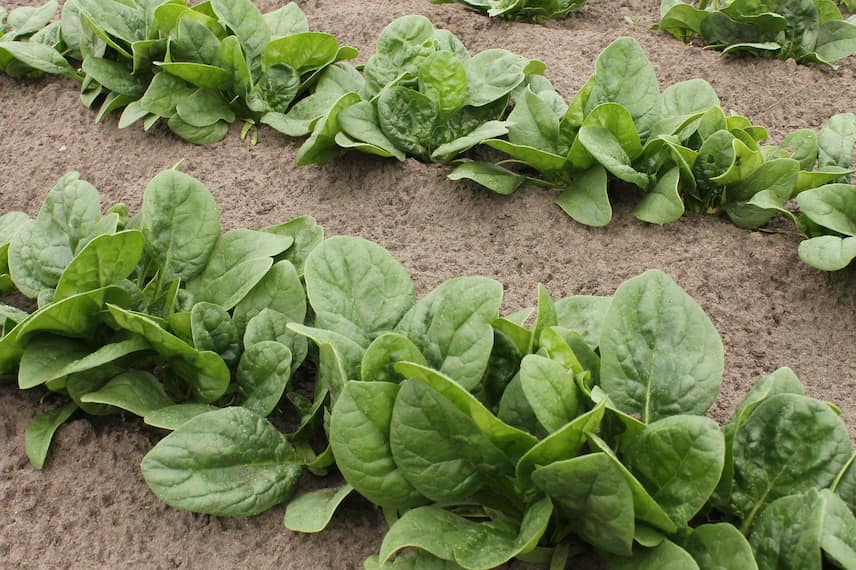
Spinach likes cool soil, but not waterlogged
- Spacing : overcrowded planting creates a humid microclimate favourable to fungi. Thin out rows to allow air to circulate.
- Soil health : soil rich in organic matter, such as well-rotted compost, strengthens the plant’s immune system. Avoid excess nitrogen, which produces soft tissues more vulnerable to aphids and downy mildew.
- Subscribe!
- Contents
This form is protected by reCAPTCHA - the Google Privacy Policy and Terms of Service apply.

































Comments