Cooking with flowers
Which edible flowers to choose and how to use them?
Contents
A plant-based trend on our plates for several years, flowers have earned a prominent place in our kitchens. They are no longer reserved for herbal teas, vegetarians or just top chefs’ tables! Indeed, they can be imagined in a multitude of flavourful versions, whether raw, cooked, prepared or candied.
Discover everything you can do with flowers from your garden in your kitchen, from the classic nasturtium to meadowsweet.

Fresh flowers in cooking
Many flowers darken when cooked, which prevents achieving a satisfactory appearance. They are therefore mainly used fresh, as with lilac, nasturtium and many others.
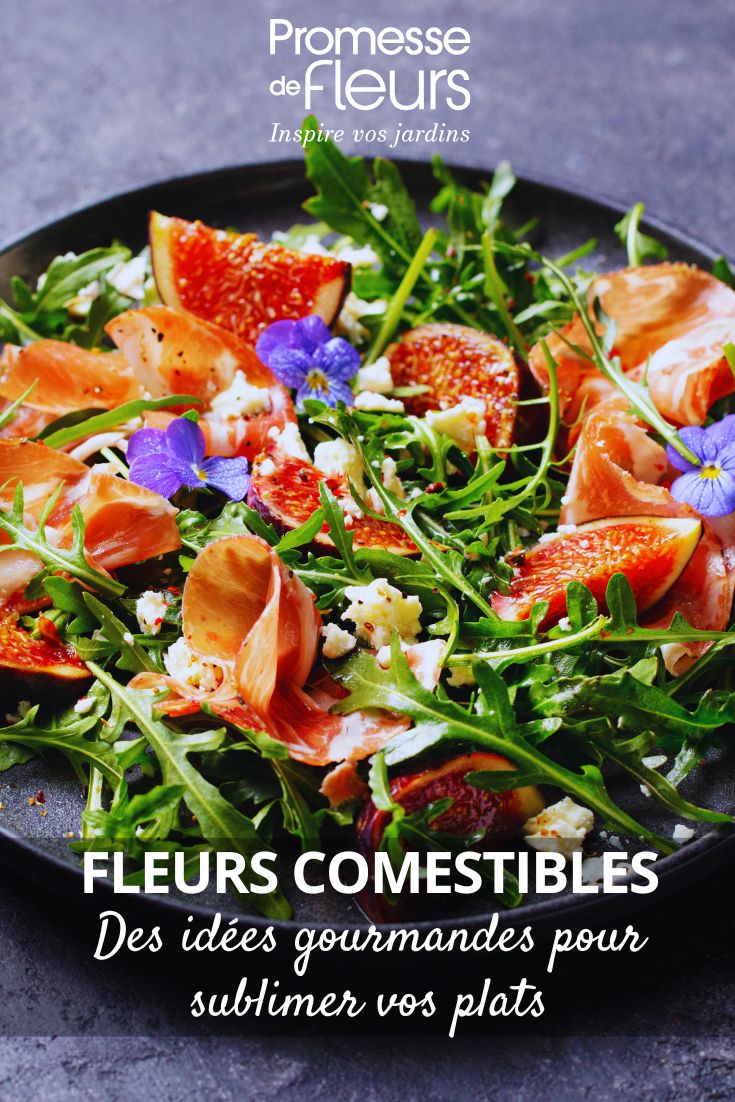
Using freshly picked flowers to decorate spring or summer plates is certainly one of a cook’s little pleasures not to be missed, especially when seeking a touch of creativity! Not only do they bring vivid colour and often-sought contrast to plating, but they also add fragrance, sometimes powerful and peppery, and a different texture in the mouth. They are not there just for decoration: salads also gain flavour, often with unusual notes.
Colourful presentations are not reserved for top chefs’ tables; you can easily take inspiration at home:
- Placed delicately with long plating tweezers on salads based on fish or shellfish.
- Scattered over a fruit salad.
- Mixed as a finishing touch into basmati rice with calendula, for a rice dish reminiscent of India, etc.
You can also cook fresh flowers raw:
- Crushed in a mortar, in a wild garlic or chive pesto using their flowers as well, with nasturtium.
- Marinated, as flower capers: How to make nasturtium capers? ; How to make dandelion capers?
- Incorporated into a risotto, as in this original recipe.
- To flavour butter: with chive flowers, rose geranium…
- To give a twist to an omelette with allium flowers.
- Infused into a milk-based dessert: ice cream, sorbets, creams or panna cotta are other little treats for sweetest palates! Simply infuse fresh petals (preferably) or dried petals in milk or cream before preparing recipe.
Here again many flowers can be chosen, starting with lavender, rose, magical in many Lebanese and Middle Eastern milk desserts, sweet woodruff with its delicious almond-and-vanilla flavour like meadowsweet (filipendula), etc. - With fresh cheeses: you can also cover a fresh goat or cow cheese with a small mix of flowers and dried herbs, which will lend herbal, woody and floral notes; be creative: sprinkle a roughly crushed flower mix over cheese, press slightly to adhere, and leave to mature for a day or two at room temperature, in a cool pantry.
Best flowers to eat raw: nasturtium, calendula (marigold), pansy, flower of borage for its briny notes, Californian poppy for its vibrant orange, flowers of sages (all of them!). Do not overlook blooms from many herbs in the kitchen bed; they are as interesting as the leaves, for example basil, mint, thyme, oregano, but also flowers of dahlias, Tulbaghia, etc.
Kitchen tip: use fresh flowers at last moment; they do not tolerate waiting, especially on a hot dish just decorated. Use specific plating tweezers.
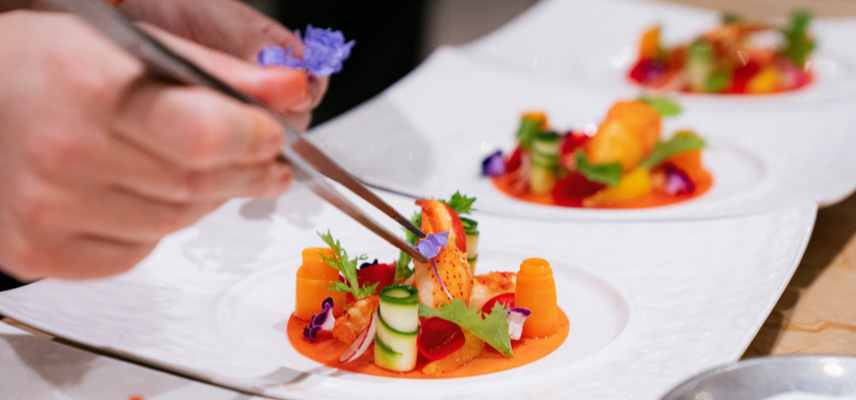
Delicate, fresh flowers must be handled with care
→ Also read: Edible flowers: pansies make their way into the kitchen! ; How to use nasturtium in cooking? ; How to use Tulbaghia in cooking? and How to use purslane in cooking?
Read also
Best edible flowers for the gardenFlowers "cooked
For cooking, it’s no longer petals but large flowers or compound flowers in umbels, corymbs or clusters that are ideal for a quick dip in oil or a spell in the oven.
Flowers for stuffing
Of course think of stuffed courgette flowers, iconic dish of southern France, which combines softness of whole courgette flower with a creamy stuffing based on ricotta or other fresh cheese such as brousse. They can be replaced by any squash flowers, for example pumpkin flowers, which will be a perfect size for individual stuffings and have a similar flavour. Early in season, pick male flowers so as not to compromise future courgette or squash harvest. Obviously harvest flowers large enough to prepare small stuffings. Daylilies are also widely used for stuffing, generally uncooked.
My tip: unstuffed, simply sautéed in oil with garlic, courgette flowers give simple pasta dish a twist — remember that!
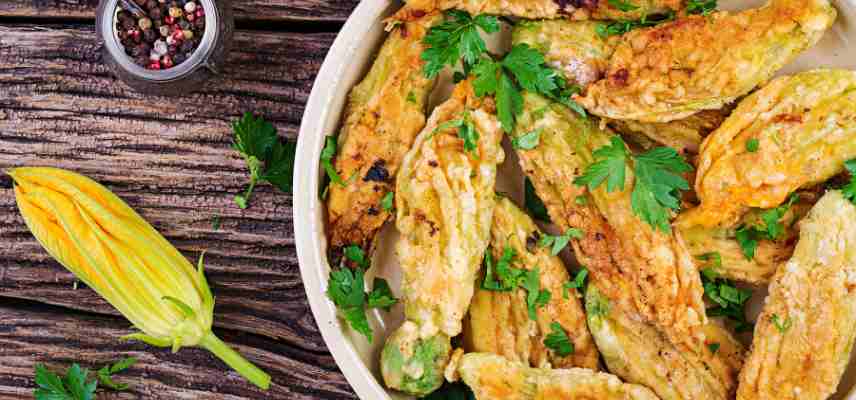
Stuffed courgette flowers
Flowers for tempura and fritters
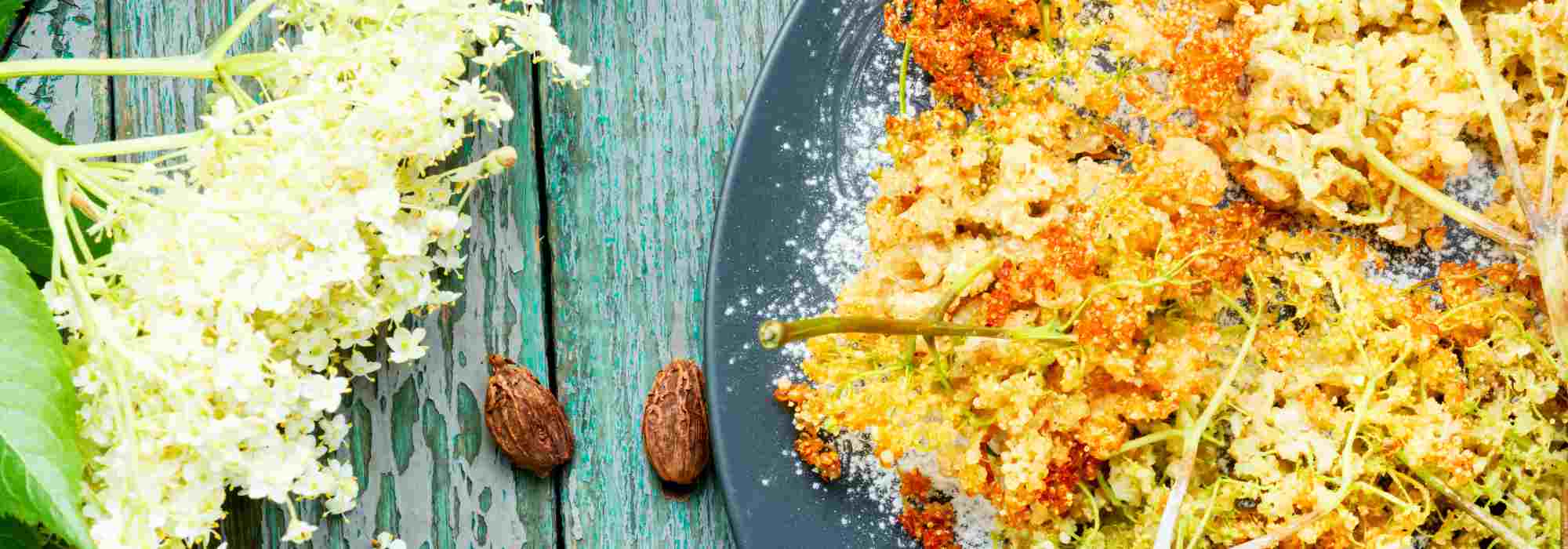
Courgette flowers are also cooked as savoury fritters. For sweet fritters, elderflowers and acacia flowers are best known here. Be careful with tempura batter cooking time, which must remain very short to preserve flowers’ aroma.
Practical: hold flowers by the stem you kept and dip in the batter. A light dusting of icing sugar and savour this treat… Try marigold flowers in tempura too!
Pascale gives her recipe in: How to make elderflower fritters?
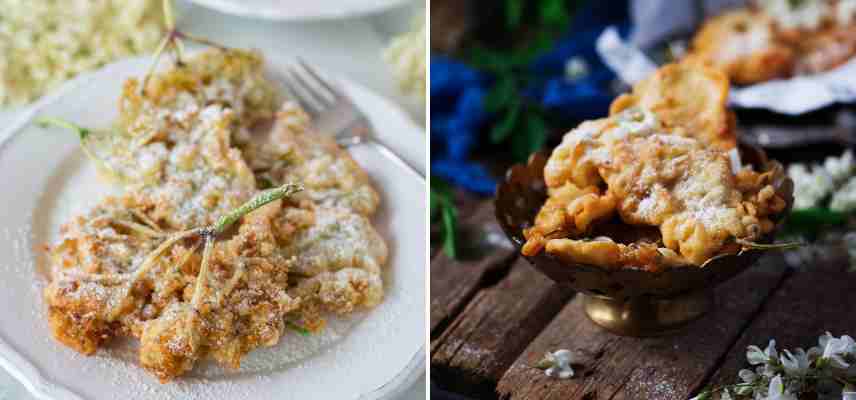
Elder and acacia
Flowers for jellies
Making use of their natural sweetness, many flowers are also used to prepare flower jellies or preserves. Use only petals, rich in sugars and minerals. Make a first infusion and leave to steep overnight before starting the jelly the next day. If rose is queen of flowers for making jelly, dandelion remains an original jelly to experiment with, a sort of golden honey slightly bitter, as do poppy, and again elder, jasmine, hibiscus, mock orange, and even mimosa.
Flower petals contain no pectin: it is therefore essential to use gelling sugar and lemon. Flower jellies pair well with seasonal fruits: elder and raspberry make a happy match, as do rose and strawberry or currant, etc.
Cooking tip: ideally use a mix of flowers and apples, naturally rich in pectin, to obtain a delicious jelly without resorting to industrial gelatine, for purists of course!
→ Ingrid tested for us dandelion jelly recipe and rose petal jelly.
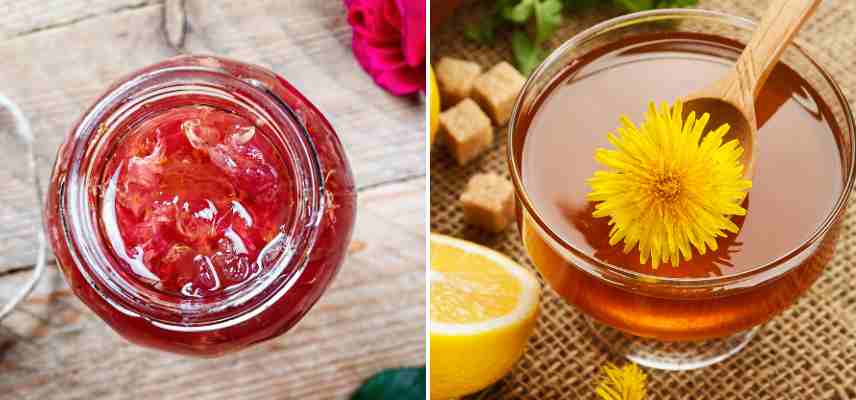
Rose jelly and dandelion preserve
Flowers for homemade syrups
What joy to make your own flower syrup at home! Far from artificial flavours of shop-bought syrups, homemade floral syrups are another way to cook tart or sweet notes of certain flowers.
Poppy is perhaps the most interesting flower, for its vivid red colour that remains visible after simple reduction in water and sugar. It is good for health, having soothing properties.
→ See our tutorials: How to make poppy syrup? ; How to make lavender syrup? ; Violet syrup recipe.
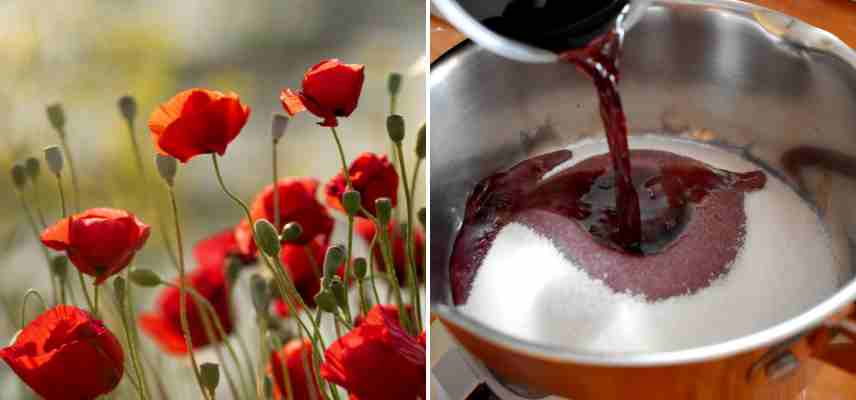
Poppy syrup
Dried flowers
Always harvest fully open flowers in the morning, and dry them indoors on a large cotton or linen cloth. If you have a well-ventilated attic, the ideal is to hang them in tied bunches, heads down. You can also dry them in a dehydrator. In any case, do not dry them in direct sunlight.
Flowers for infusions or homemade tea
As with leaves, flowers are used in a wide range of herbal infusions. Use only previously dried flowers. Infusions are usually drunk hot, but some flowers such as hibiscus are used to make bissap or karkade, which can be enjoyed hot in winter or iced in summer.
You can also have fun creating and testing your own blends for a homemade herbal tea by adding a few dried flowers to various aromatic herbs, or use them on their own, as with chamomile flowers.
Among flowers of interest for their flavour, colour or health benefits: the cornflower, useful in an unflavoured black tea, the maiden pink, hibiscus, yarrow, agastache, hollyhock, meadowsweet (Filipendula ulmaria) and even the rose geranium, to emulate the great chef Anne-Sophie Pic!
→ Ideas from our tutorials : How to dry chamomile flowers? ; How to dry hibiscus flowers? ; When and how to dry elderflower? ; How to dry roses? ; How to harvest and dry meadowsweet? ; How to dry chrysanthemum flowers? ; Drying carnations.
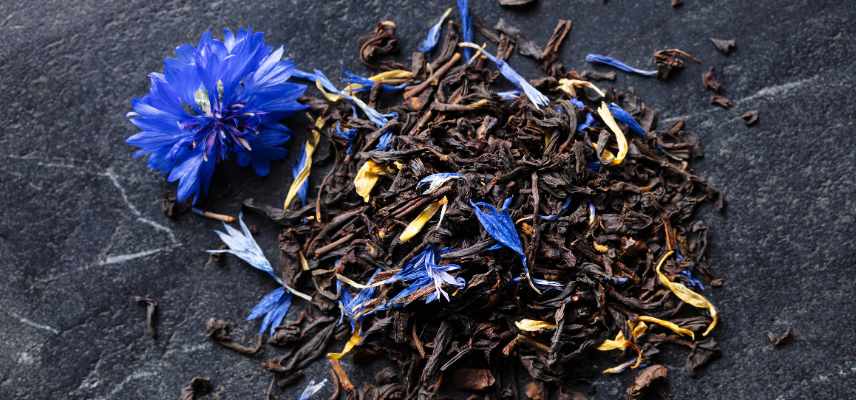
Cornflower blended with tea, for the flavour… and the colour
Read also
Cooking with rosesCrystallised flowers in confectionery
Making small floral sweets captures the flowers’ scent in a sugar shell, and preserves their colour.
Toulouse violets will no doubt speak to the older among us, a delicate little confection prepared from fresh petals crystallised in sugar. If these old‑fashioned sweets are a Proustian madeleine for some, crystallised flowers can be adapted to others such as roses, lilac, poppies, freesias, apple blossom or wild rose, or, if you are like me, your garden may be overrun with little violets in March (note, we are talking about Viola odorata, prized for its scent). These delicate confections look beautiful when placed on elaborate cakes or cupcakes.
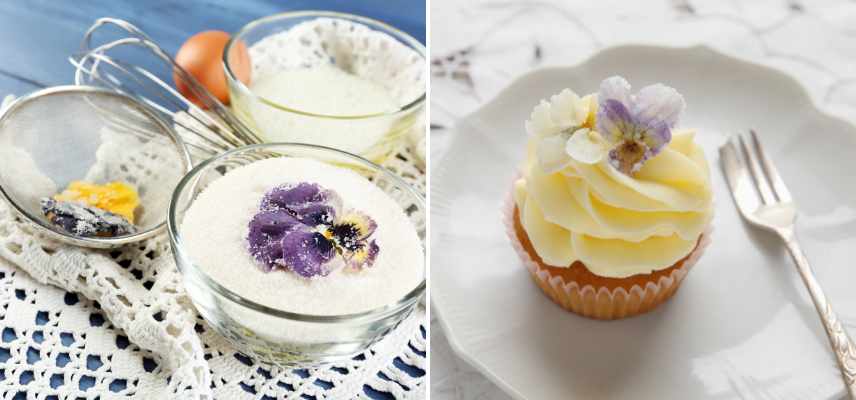
Violet is the quintessential crystallised flower for elegant desserts
Picking edible flowers for the table: our advice
One rule not to break: only wild or garden flowers, untreated! And only flowers you know — otherwise, as with mushrooms, ask a pharmacist (apps can be wrong).
Some recommendations to reduce fragility of flowers used in cooking :
- Pick in the cool of the morning, early, once dew has evaporated… Late risers beware!
- Harvest your flowers on a day when it hasn’t rained… nor been a scorcher (to aid drying and preserve aromas as much as possible).
- Pick flowers at full maturity, to release their scent (except rosebuds intended for drying for tea, for example).
- Use fresh flowers the same day.
- Remove green parts of flowers that cause bitterness in the mouth, as well as pistils and stamens.
- Beware of bitterness that can develop with certain flowers or with too-high cooking temperatures. Their delicate flavour does not tolerate long cooking or overcooking.
Further reading...
For fans of culinary floral pairings, I couldn’t recommend highly enough that you get a few books on the subject. Visit our books section: Books on the edible garden.
You will find: All the Beautiful and Edible Plants by Didier Willery and Pascal Garbe, Ulmer Editions, a bible covering virtually everything that can be eaten with surprising recipes; Cook Everything from the Garden by Pascal Gabre, also with Ulmer, 2023, and many other little treasures.
Also take inspiration from the many recipes we’ve tested in our recipes section!
Flowers have been used for much longer than we do in some tropical countries and in Japanese cuisine, where year-round richness of the flora allows all manner of culinary daring with lotus, tiare and jasmine. For even more culinary escapism, discover for example Cooking with Flowers and Tropical Plants by Wilfrid Kobylt (Au vent des îles Editions, 2025).
- Subscribe!
- Contents
This form is protected by reCAPTCHA - the Google Privacy Policy and Terms of Service apply.

































Comments