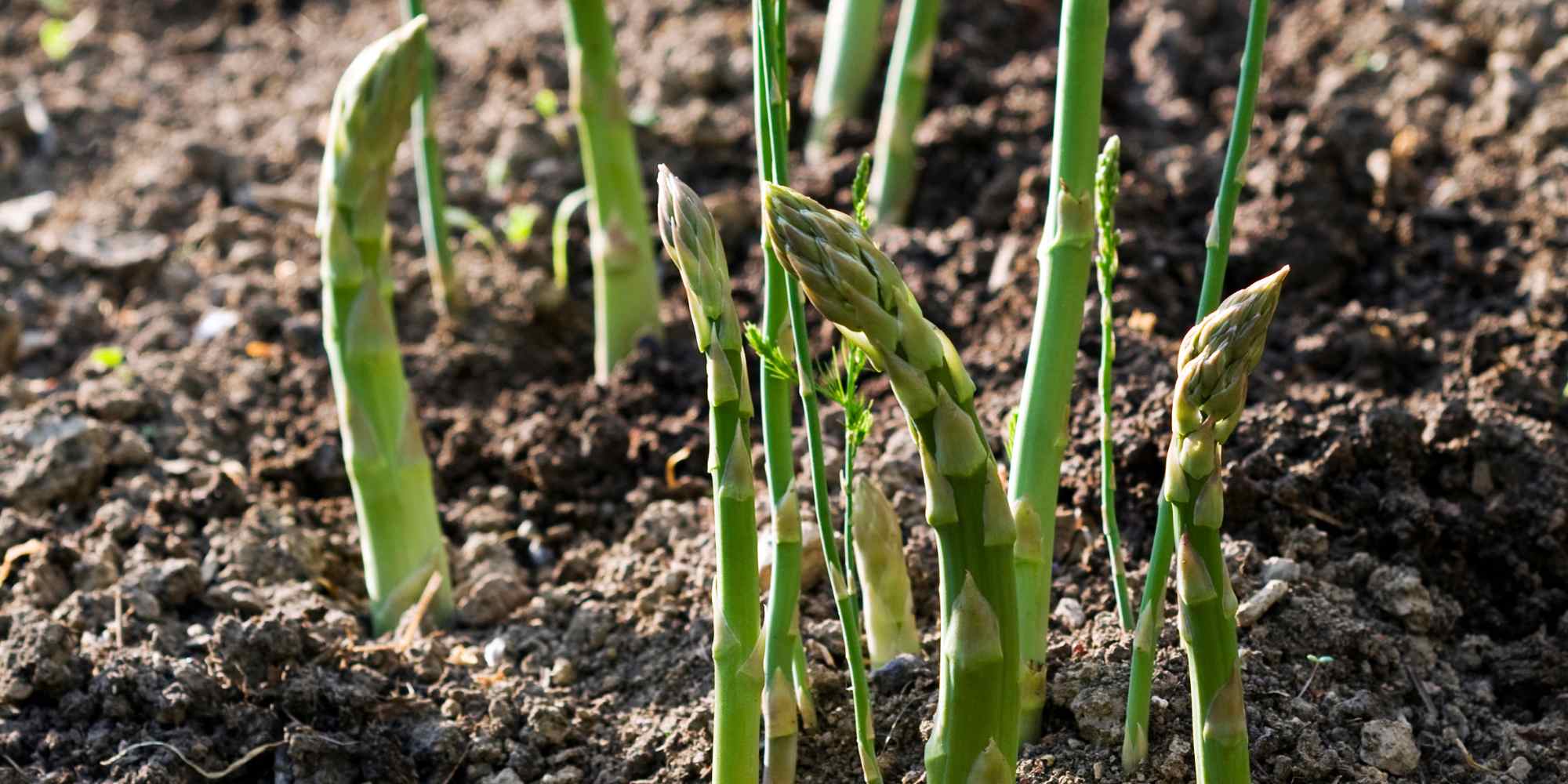
Choosing asparagus for your vegetable garden: our advice
Buying guide by various criteria
Contents
Asparagus (Asparagus officinalis) is undoubtedly the emblematic vegetable of spring. Cultivated since antiquity, it remains a symbol of gastronomy, refinement and renewal in the garden. But planting asparagus is not something to be improvised, and the first harvest takes time: you need at least three years before harvesting the first spears. Planting asparagus is therefore a long-term commitment that requires prior thought about the best varieties to choose according to soil type, culinary preferences or productivity.
Discover our complete buying guide to plant asparagus varieties best suited to your vegetable plot and preferences!

Why plant asparagus?
Planting asparagus in your own garden is one of the best investments a gardener can make. Unlike most annual vegetables, an asparagus bed is a perennial crop: once established, it can produce every year for 15 to 20 years. It therefore provides a stable, long-term food source. But be patient… the first harvests only arrive after three years.
In terms of flavour, there is no comparison between shop-bought asparagus and homegrown. From the moment it is cut, asparagus begins to lose its natural sugars, which turn into starch. By harvesting it minutes before cooking, you enjoy a melting texture, an incomparable crunch and a flavour no supermarket can match. Not to mention the profitability: a kilogram of asparagus in shops commands a price that makes growing them very worthwhile.
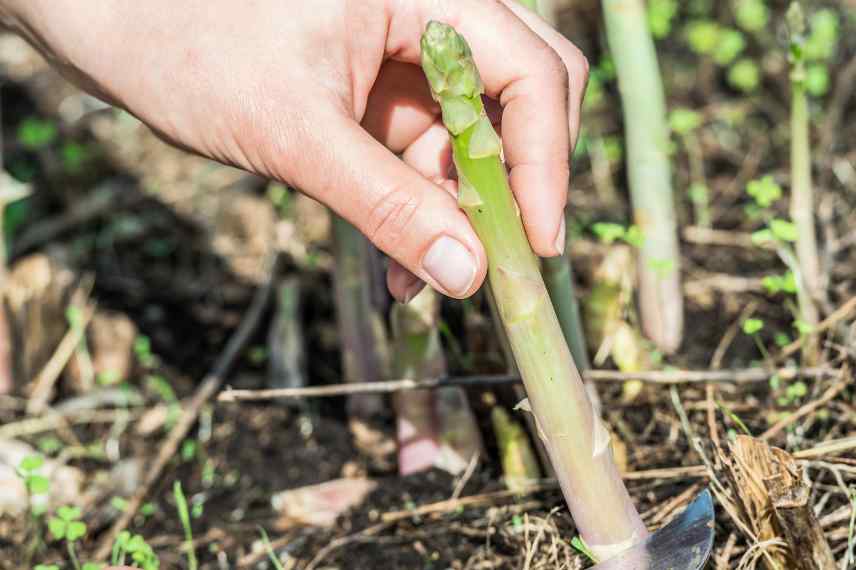
Asparagus is rich in fibre, vitamins (A, B9, C, K) and minerals
Moreover, asparagus is a major health asset: rich in fibre, vitamins (A, B9, C, K) and minerals, it has recognised diuretic and detoxifying properties. However, asparagus is not always recommended for people with kidney problems.
Finally, the aesthetic aspect should not be overlooked. Once harvesting finishes in June, the stems turn into beautiful feathery plumes of airy foliage over a metre tall, adding a touch of lightness and structure to your vegetable plot.
Read also
Asparagus: planting, growing, harvestFive essential criteria for choosing asparagus
Before ordering asparagus crowns, it is essential to understand differences between varieties offered. Five criteria are particularly decisive for making your choice.
Asparagus colour
It is logically the gardener’s first selection criterion. Contrary to popular belief, white and green asparagus are not necessarily different species, but the result of distinct growing methods, although some varieties are better suited to one or the other.
- White asparagus : It grows entirely underground, protected from light. To obtain it, form a mound of soil over the row of crowns. It is prized for exceptional tenderness and delicate flavour. Varieties like the ‘Lorella’ or ‘Emma’ are excellent for this purpose. But queen of white asparagus is undoubtedly the ‘Argenteuil asparagus’ with very delicate flavour
- Green asparagus : It grows in the open air and owes its colour to photosynthesis. It is richer in vitamins and has a stronger flavour. Its great advantage is that it does not require earthing up, which greatly eases the gardener’s work. The famous ‘Mary Washington’ is the absolute reference for growing green asparagus
- Purple or violet asparagus : Varieties such as ‘Rosalie’ or aptly named ‘Jacq ma Pourpre’ produce spears of deep violet. They are often sweeter and can be eaten raw in thin slices.
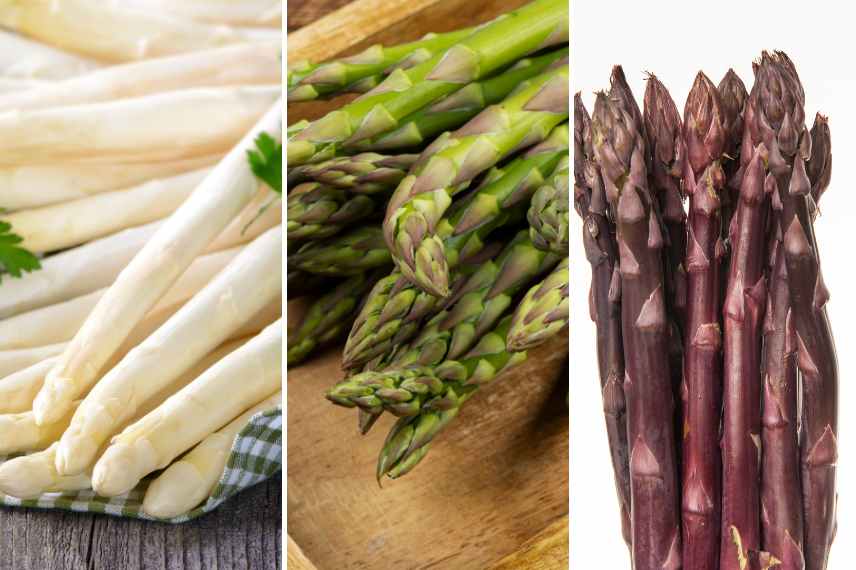
Asparagus come in three colours, depending on growing method
Earliness of harvest
Not all asparagus emerge at the same time. By choosing varieties with different earliness, you can spread harvests over several months, generally from April to June.
-
Early varieties : They allow season to begin with first warm spells in March or April. ‘Lima’, which is grown green, or occasionally white, for example, is known for its ability to start early in the season, offering first flavours of spring. ‘Voltaire’ is also known for earliness
-
Late varieties : They take over in May and June. The latest variety is certainly ‘Backlim’, an excellent example of a late-season variety that maintains good spear quality even when temperatures rise.
Productivity and spear size
Depending on needs, yield per crown is a selection criterion. Some F1 hybrid varieties stand out for exceptional vigour.
Those who prefer very thick, fleshy asparagus will choose a variety such as ‘Argenteuil’, known for large-calibre, tender and flavoursome spears. Variety ‘Rambo’ is also a good choice in terms of calibre and yield. It produces many large-calibre spears.
For productivity, the ‘Lima’ green variety is recommended. It offers straight spears of deep green with tightly closed scales, which is a sign of quality and good keeping.
Modern hybrids such as ‘Gijnlim‘ are extremely productive, producing a large number of spears per plant from the first years of harvest.
Disease resistance
Asparagus can be susceptible to certain cryptogamic diseases such as rust, fusarium or stemphylium. This is a vital criterion because an established disease can ruin 15 years of work. Old varieties like ‘Mary Washington’ were originally selected for natural resistance to rust.
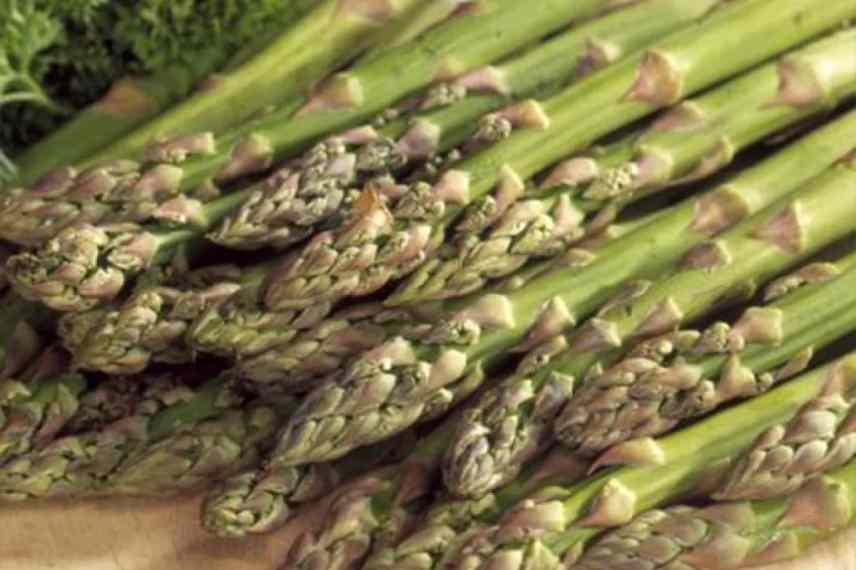
Variety ‘Mary Washington’ is easy to grow, hardy, vigorous and disease-resistant
Soil type
Asparagus dislikes waterlogged soil. However, some varieties are more tolerant than others to soil type.
-
Sandy soils : They are paradise for asparagus. All varieties thrive there.
-
Heavy or clay soils : If soil is more compact, favour green asparagus that do not require earthing up, because earthing up in clay is very difficult and can suffocate the spears. ‘Mary Washington’ adapts well to a wider range of soils, provided drainage is adequate. It is recognised as the ‘easy’ variety par excellence. Hardy, vigorous and resistant, it is ideal for beginners. It produces green spears with tips slightly tinged with purple. It is perfect for growing without earthing up.
How to successfully plant asparagus
Choosing the right asparagus variety is important. Planting the crowns is another step to tackle.
When to plant?
Asparagus crowns are generally available for sale from February to April. This is the ideal time to plant them in the ground, as soon as soil begins to warm but before buds on the crown start to develop too much.
How to plant?
Since asparagus will remain in place for 20 years, soil preparation is the most important step.
- Ground must be completely clear, as weeding will be harder once crowns are planted. Remove any stones.
- Asparagus is a heavy feeder. Incorporate plenty of well-rotted compost or manure in the autumn before planting.
- If your soil retains water, plant on raised ridges to avoid root rot.
Once soil is prepared, it’s time to plant. To plant crowns, dig trenches about 20–25 cm deep. Make a small mound of soil at the bottom of the trench and spread the crown’s roots all around, like a spider. Cover with a few centimetres of soil, then fill the trench gradually as the shoots grow during the first summer.
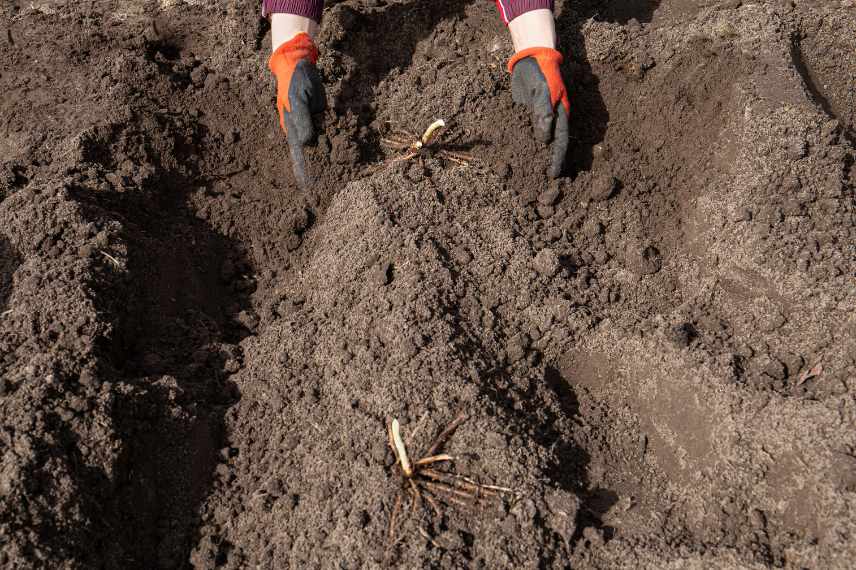
Planting asparagus crowns
How to care for them?
Annual care is limited to a spring fertilisation, careful hand-weeding and cutting back foliage once it has yellowed in autumn, usually after the first frosts.
When to harvest?
The hardest part with asparagus is the waiting. In the year of planting nothing is harvested. Allow foliage to develop so the crown can build up reserves. In the second year you can harvest one or two spears per plant to taste, but it is preferable to wait. And in the third year, it is the first real harvest, but it should be short, around 3 to 4 weeks. Thereafter, in following years, harvest will be full, lasting 6 to 8 weeks.
- Subscribe!
- Contents
This form is protected by reCAPTCHA - the Google Privacy Policy and Terms of Service apply.

































Comments