6 virtually indestructible trees: the hardiest for a trouble-free garden
Our selection of very hardy trees
Contents
Harsh climatic conditions are becoming increasingly common. Choosing trees capable of withstanding drought, disease and cold is essential for any gardener wishing to create a sustainable green space. Our selection of 6 virtually indestructible trees aims to introduce you to specimens of ornamental value and exceptional resilience. These trees have been selected for their ability to thrive in harsh conditions, reducing need for maintenance. Whether you live in an area prone to drought, your garden is exposed to disease or you face harsh winters, these trees offer a reliable and attractive solution.

Staghorn sumac or Rhus typhina
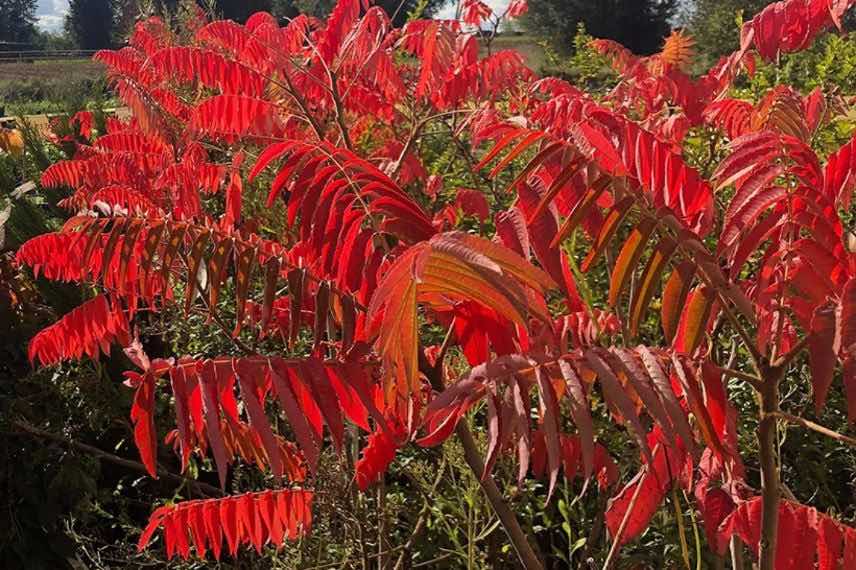
Stag’s-horn sumach (Stag’s-horn sumach) or Rhus typhina is a suckering shrub or small tree native to eastern North America and introduced to Europe in the early 17th century. Its hardiness allows it to live between 50 and 100 years. It flowers in yellow-green panicles from June and throughout summer. Male and female flowers occur on separate plants, the latter producing velvety red berries forming persistent clusters into winter, even after deciduous leaves have fallen.
Its foliage, borne on downy red stems, catches the eye with a green hue that turns orange-red in autumn. Leaves, measuring 20 to 60 cm, consist of 11 to 31 oblong, dentate and deeply divided leaflets, adding to its ornamental appeal.
Reaching up to 8 m at maturity, Rhus typhina is adaptable and can be planted as a specimen, in groups, as an informal hedge or even in a pot. It thrives in varied habitats such as dry rocky slopes, meadows, scrub and woodland edges, where it helps prevent soil erosion. Valued for being melliferous, it attracts pollinators and butterflies, contributing to garden biodiversity. Suckering, it can be very invasive.
Important to note that sap of Rhus Typhina can be toxic, causing severe skin reactions in some people.
Read also
10 easy-to-sow treesAcer pseudoplatanus or sycamore maple
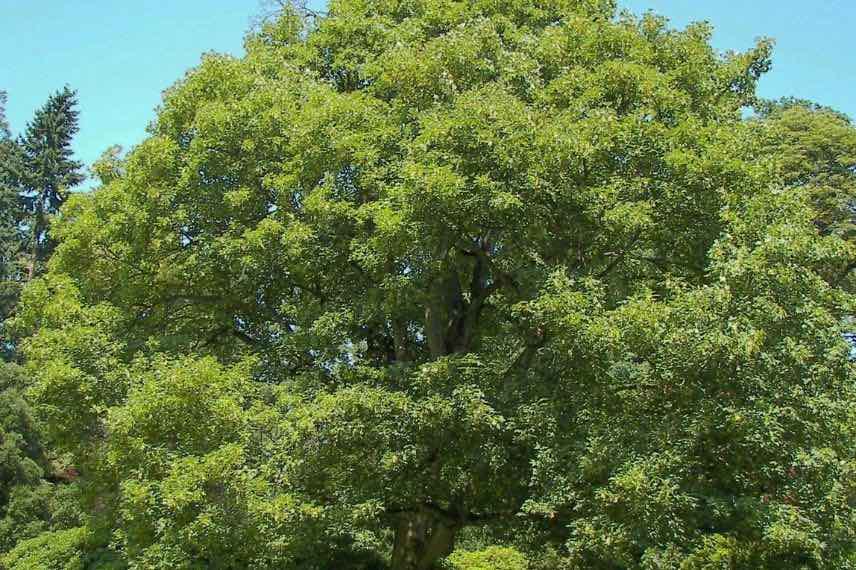
Acer pseudoplatanus or sycamore maple is a maple species commonly found in France, appreciated for its dark green palmate foliage that turns golden yellow in autumn. This large tree with a rounded, dense habit is well suited both as a specimen and in rows or as a windbreak, thanks to its rapid growth and robustness. Undemanding about soil, it needs plenty of room to develop.
Robinia pseudoacacia or false acacia
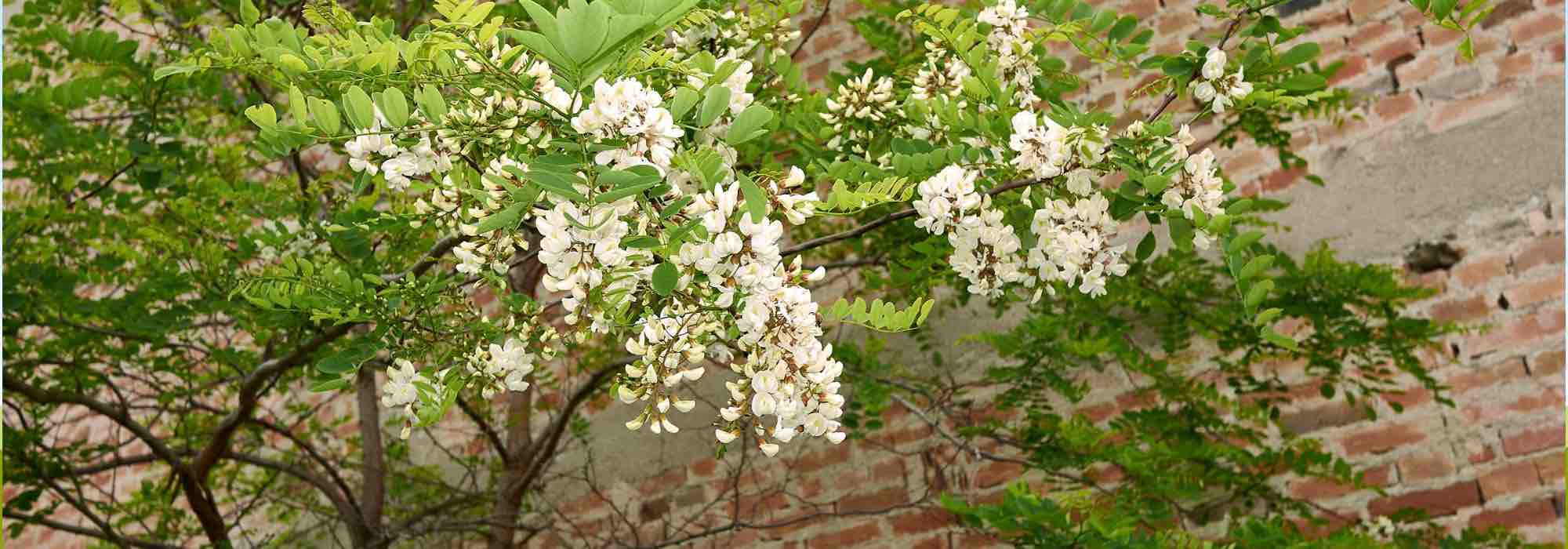
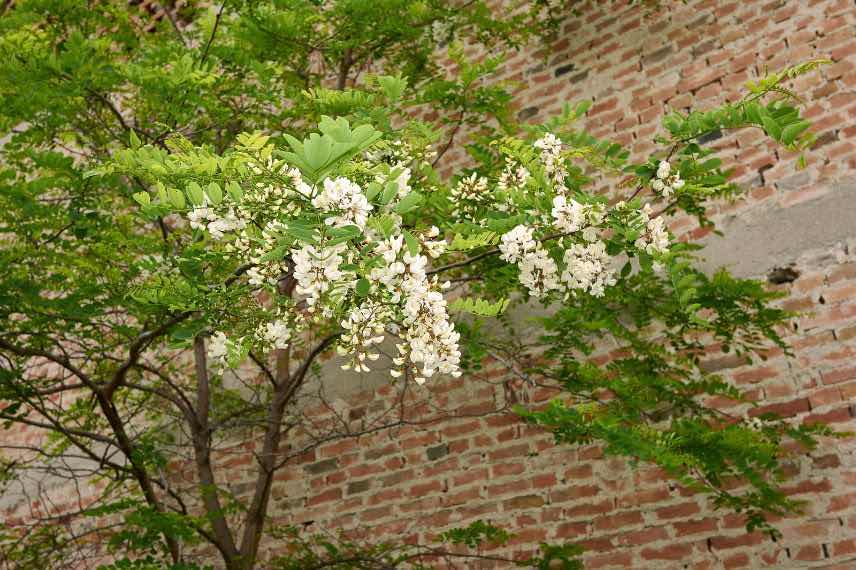
Robinia pseudoacacia or black locust is a small tree with an open habit and delicate foliage, providing light shade under which shrubs and perennials can flourish. It offers spectacular flowering from May to July, with pendulous clusters of white flowers 10 to 20 cm long, scented with orange blossom. The flowers, besides being edible and prized in fritters, attract bees, favouring production of an exquisite honey. Fast growth and ease of cultivation make it a preferred choice for gardens of all sizes, although it requires a sheltered position away from strong winds because of its brittle wood.
Native to eastern United States and a member of the family Fabaceae, Robinia pseudoacacia naturally enriches soils by fixing atmospheric nitrogen at root level. This characteristic, combined with its tolerance of cold and drought, makes it a valuable ally for regenerating degraded soils. With an initially columnar habit that becomes rounded with age, this tree can reach up to 15 m in height with a spread of 8 m. Its furrowed bark and strong but brittle branches, armed with thorns when young, add to its visual interest.
Foliage, turning from bright green to golden yellow in autumn, and fragrant white inflorescences make Robinia pseudoacacia a striking natural display. Pods that follow flowering, though toxic, are also decorative. This suckering tree requires careful management to prevent it becoming invasive.
Adaptable, Robinia pseudoacacia integrates harmoniously into a variety of landscape settings, whether as a lone specimen, an informal hedge or planted in rows along avenues.
Read also
10 trees for heavy, wet soilPersian ironwood or Parrotia persica
Ironwood or Parrotia persica, also known as Persian ironwood or Persian beech is a garden gem distinguished by its incredible palette of autumn colours. In autumn, its foliage transforms into a dazzling display of green, yellow, orange, crimson and purple, making it an essential specimen for lovers of vivid colours. Its summer foliage, green and undulating, recalls that of beech. In spring, it surprises with flowering clusters of red stamens emerging directly on the branches, even before leaves appear. Winter reveals exfoliate bark with subtle shades of grey, reddish-brown and greenish-grey, adding aesthetic interest year-round.
Native to northern Iran and the eastern Caucasus, Parrotia persica is a small tree with slow growth, generally not exceeding 8 metres in height and 10 metres in width. Its spreading habit and horizontal branches give it a majestic silhouette, often wider than tall. Branches of older specimens can arch down to the ground.
Adaptable to any soil type, including calcareous, dry or moist, provided it is well drained, Parrotia persica shows a preference for slightly acidic soils and sunny exposures to maximise intensity of its autumn colours. It is ideal as a solitary specimen or to provide shade for a bed, and can be paired with other shrubs and trees to create striking landscape compositions from September to November.
Introduced to Europe in 1841, Ironwood owes its nickname to the exceptional hardness of its wood, historically used for making tools. Its drought resistance and hardiness make it a versatile choice for many gardens.
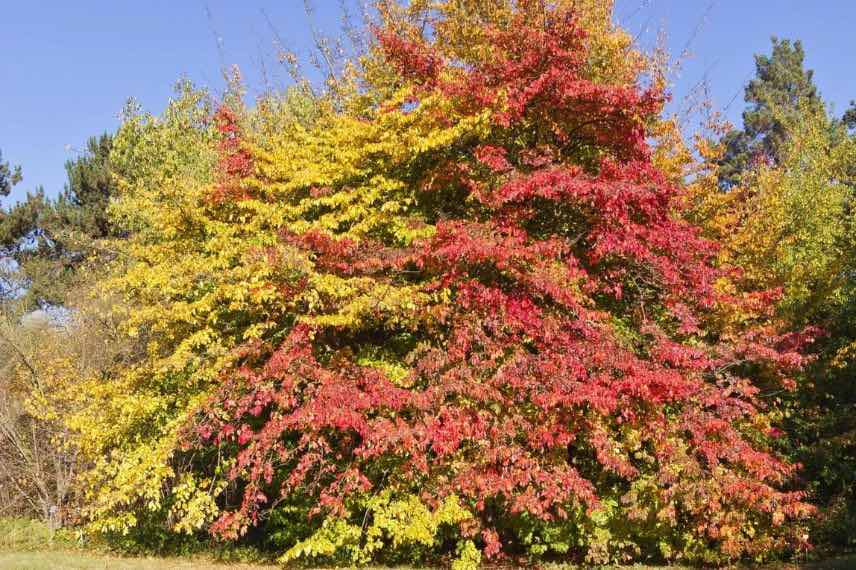
Common ash or Fraxinus excelsior
Common ash (Common ash) or Fraxinus excelsior is an iconic feature of French woodland landscapes, valued for its imposing stature and delicate foliage. Its velvety black flower buds and dark green, lanceolate leaves that turn yellow in autumn make it a striking natural spectacle. With rapid growth, ash develops over the years a distinguished habit, characterised by a sturdy, upright trunk topped by a light, elongated crown, providing welcome shade during summer months.
Belonging to family Oleaceae, which also includes olive and lilac, the common ash is native to Europe, Scandinavia and Russia. It thrives along riverbanks and stream edges as well as in forests, where its upright habit and rounded to elongated crown catch the eye. At maturity, its crown opens to reveal an airy structure and grey bark, deeply fissured and scaly, adding to its rustic charm.
Ash typically reaches 30 to 40 metres in height with a spread of 20 metres, with foliage composed of 9 to 13 narrow, lanceolate leaflets. Spring flowering, in the form of creamy-yellow panicles, precedes leaf emergence and is followed by formation of characteristic samaras.
Hardy and undemanding, the common ash adapts to a range of conditions, preferring fertile, deep, cool soils for optimal growth. It tolerates pruning well and can self-seed easily if conditions are favourable. Its free, elegant habit makes it a top ornamental choice for large gardens, where it creates pleasant shade and contributes to local biodiversity.
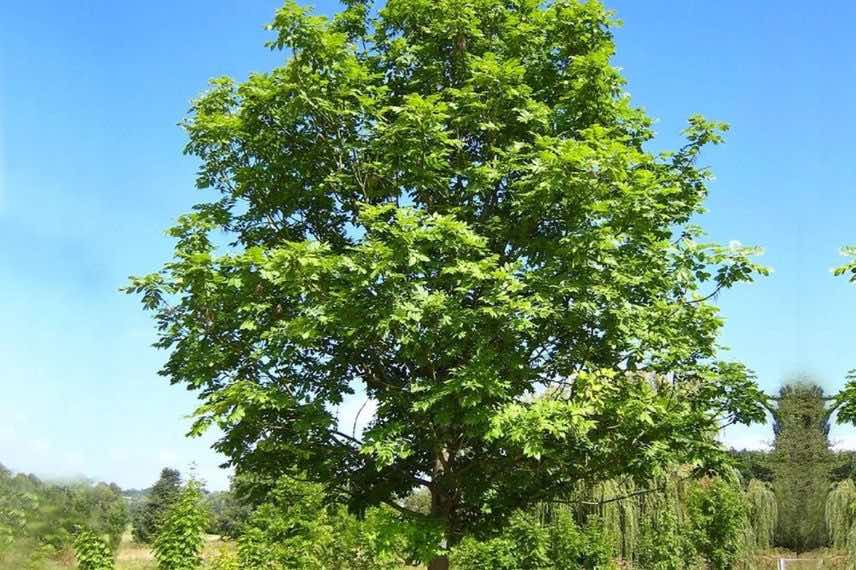
Leyland cypress or Cupressocyparis leylandii
Cupressocyparis leylandii, commonly called Leyland Cypress, is a large, majestic conifer that is undemanding, hardy and fast-growing, reaching up to 9 m in 10 years. As a result, it is often used for evergreen hedging. Adapted to most climates, including coastal ones, it nevertheless requires particular attention in very rocky soils or the very dry climates of the Mediterranean.
Leyland Cypress tolerates poor, calcareous or clay soils well, as well as pollution and saline conditions such as sea spray. With an annual growth rate of 80 cm to 1 m, it can reach 20 m in height if not regularly pruned. Its pyramidal, dense habit, deep green foliage and pivoting root system make it resistant to wind and harsh conditions.
Ideal for a large, non-boundary hedge, Leyland Cypress provides a protective screen and an effective privacy barrier, while requiring little maintenance if left to grow naturally. As a specimen, it becomes a magnificent focal point, integrating harmoniously into a variety of garden styles. However, note its pollen can be allergenic in early spring.
- Subscribe!
- Contents
This form is protected by reCAPTCHA - the Google Privacy Policy and Terms of Service apply.


































Comments