The reasons to discover gardens, parks, and arboretums in our country are numerous: besides a green escape often close to home, or much further away when travelling, gardens provide opportunities for often surprising encounters and inspire us as each garden is unique. A journey into the infinitely green, from which we emerge with valuable advice and ideas. The diverse typologies transport us from the French garden to the English landscape park or the Japanese and exotic gardens.
Why is it so important to visit gardens? I will elaborate in this short article and provide some tips on how to find and visit them at the right time.
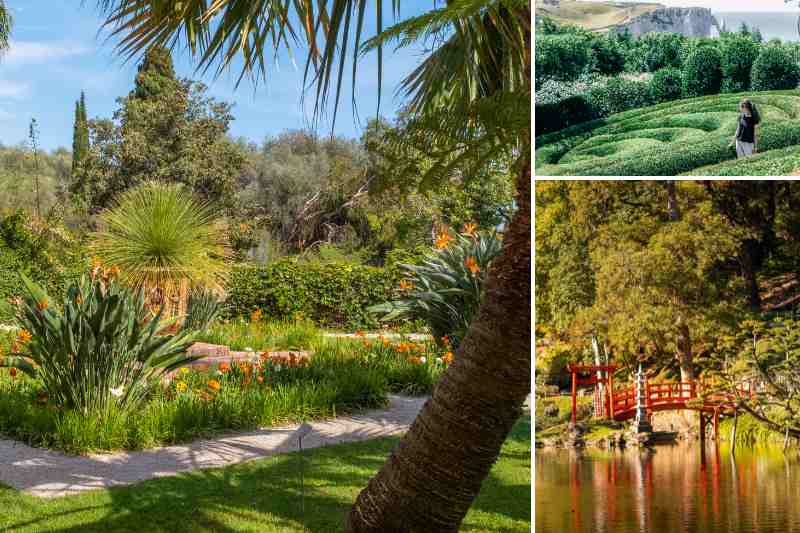
For the tranquillity they provide
Gardens, like forests, are places where we disconnect from our daily lives. The greenery, scents, and sounds allow us to escape and bring us peace. Their tranquillity offers immediate relaxation, which often lasts for the rest of the day!
For the beauty of gardens
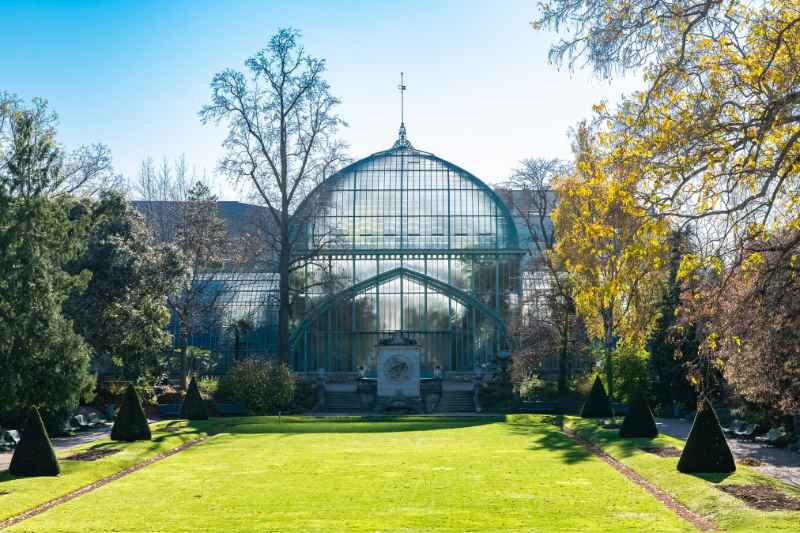
What could be more delightful than wandering through gardens where everything is designed for the pleasure of the eyes? Visiting gardens, whether they are parks, plant gardens, botanical gardens, arboretums, public gardens, or private gardens, allows us to see plants that we may not necessarily cultivate at home. It is an opportunity to learn more about the vast world of plants and to marvel at the interplay of colours and the art of combining them.
Even if our own gardens are often smaller, visiting gardens provides us with insights into creating our own little green paradises. Visiting gardens nearby also helps us better understand the plants that thrive locally in our regions and how to showcase them.
All the plants are lovingly cared for, expertly maintained by dedicated teams in public gardens and by passionate gardeners who often conduct the tours themselves.
Strolling through a harmony of greenery, blooms, and fragrances, awakens all our senses and allows us to leave after one, two, or three hours of visiting with images in our minds, having recharged our batteries…
If we visit gardens in a completely different region, or even another country, we discover a different flora, very refreshing, sometimes translatable to another climate.
For the encounters we make
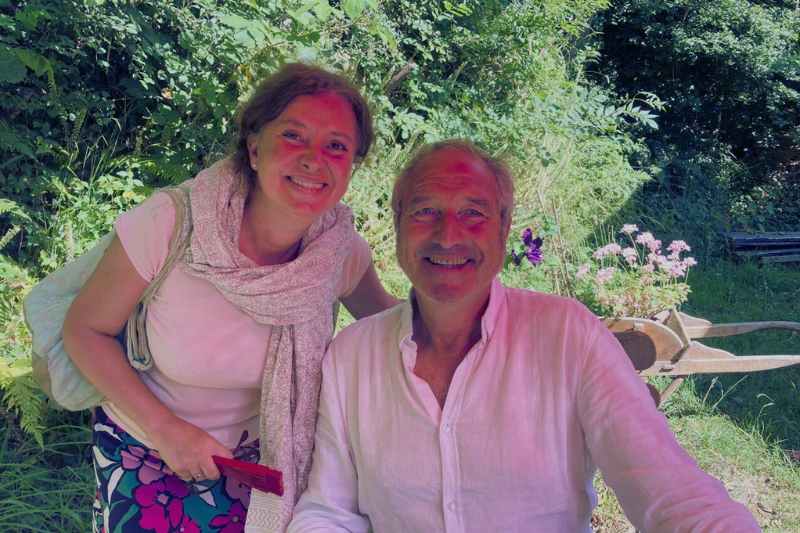
When visiting a private garden, you are not only exploring an extraordinary living space, but you also meet its owners who have often spent decades shaping their garden. It has thus become a place that reflects their personality, conducive to visits, but this process goes further, allowing for a moment of sharing with each visitor.
Some gardeners accompany you throughout the visit, explaining why they made certain choices of plants, how they have expanded the spaces over the years, while others prefer to step back and let you explore the garden freely, reuniting at the end for a friendly debrief.
Most of the gardens I have visited have sparked fascinating discussions… among passionate people! It is this human connection that I find, beyond the gardens themselves, admirable: in public gardens, gardeners are always available, pausing their work for a few minutes to enlighten you about a flower, tree, or bush you may not know, to talk about their work, or to explain the plantings the team is busy with.
In a private garden, we share tips about good nurseries in the area that we may not know, as they are a bit further from our usual circles, we discuss gardening associations we frequent, we talk about our cultivation issues with certain plants, we exchange ideas on current pruning… in short, we pass on a wealth of information and recreate the world around this environment that amazes us so much.
And when, as happened when I visited Mireille's garden, the visit stretches on, it can even lead to beautiful friendships between one-time visitors…
For inspiration
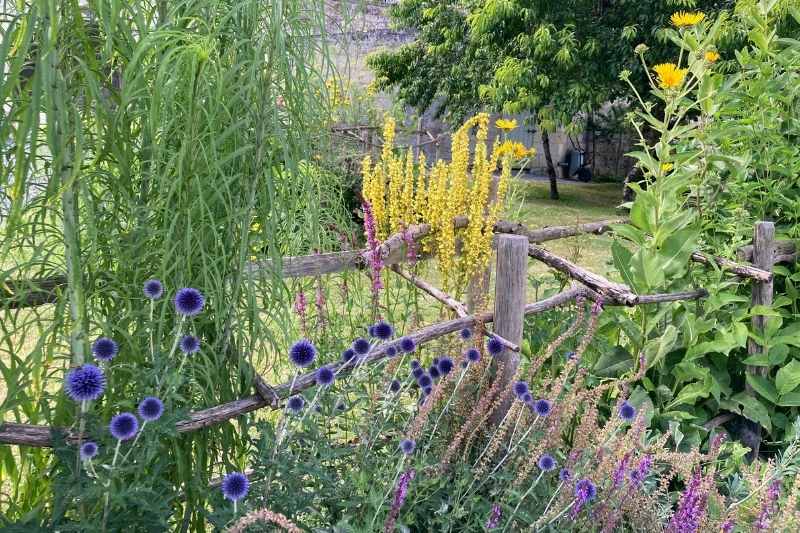
Visiting gardens is also stepping into worlds where creativity is often at play. Whether in a public or private garden, the arrangements are always a source of inspiration: the interplay of plant associations, of course, their colours, forms, and textures, the shape of the beds, the integration of a wet area, but also ideas to pick up along the way such as homemade path borders made of stones or wood, decorative ladders, cute tipis, treehouses, beautifully showcased vintage furniture, and much more.
Just for these delightful finds that enchant the DIY enthusiast within us, it is worthwhile to visit a garden!
The best times to visit gardens
Most gardens open for visits in France from April to October, a peak period for many plants, with some (rare) open all year round, particularly public gardens and plant gardens. January and February are generally months when gardens take a break from visits, but it is always advisable to check in advance on their websites to avoid disappointment (I experienced this myself this summer with a private garden that closed mid-July to reopen… next spring; my disappointment was great).
Of course, gardens featuring primarily acidic soil plants with azaleas and rhododendrons are best visited in April and May, while romantic gardens overflowing with roses are best between May and June, and grass gardens like Jardin Plume or gardens featuring many autumn foliage and maples are best visited at the end of the season, around October.
In France and Europe, do not miss the European Heritage Days, which provide an opportunity to discover certain gardens that open only for this occasion. They take place on the third weekend of September each year, for the past forty years! A filter with the word "garden" on the Ministry of Culture's website allows you to select only the gardens offering visits (free or guided, paid or free).
The other key moment, and certainly the most popular for visits, is June, a blessed month in our northern hemisphere for floral richness at this time of year. This is why the French Rendez-vous aux jardins!, the botanical counterpart of the heritage days, takes place over three days (with Friday traditionally reserved for schools), every first weekend of June. Initiated by the Ministry of Culture 21 years ago, the garden weekends propose a different theme each year and are promoted by the DRAC of each region. More than 2000 gardens now open their doors in France. After "the five senses in the garden" this year, the next edition in 2025 will take place from June 6 to 8 and will focus on the theme 'stone gardens - gardens of stone'.
Finally, a little earlier each year in May, do not miss the Open Gardens for Neurodon: the Federation for Brain Research organises a weekend to raise funds for research. This mainly concerns gardens in western France and Languedoc-Roussillon, but also a few others (more information and the map of gardens in this link), at a very accessible price.
How to find open gardens to visit in my department or region?
The advantage of gardens is that every city has at least one green space of interest. In the countryside, you often have access to gardens or vegetable patches just a few kilometres from home. Even if they are well-known, here are some useful sites to find beautiful gardens to visit near or far:
- The remarkable gardens: these are gardens labelled for their remarkable elements, particularly historical, botanical, and their plant heritage. There are many in most departments of France and overseas. There are nearly 480 in mainland France and overseas territories, and about thirty in Belgium (Wallonia). There is plenty to explore!
- Another option is the eco-garden labelled gardens committed to ecological management of green tourism.
- Gardening associations, park and garden associations, and horticultural societies are well-known and offer, for a modest membership fee, several garden visits throughout the year (in addition to a generally very interesting programme). Research online by typing "gardening associations" or "gardeners' associations" along with your department, and you will find gardens that may be unknown to you. Each region has gardening associations where many volunteers are active. Discover those in your department. For the Pays de la Loire, there is ASPEJA, which organises many activities including garden visits, as well as the JASPE association that brings together gardens from Sarthe and Mayenne, and other gardening associations in smaller municipalities (visit your town hall or its website to learn about all the associations!).
- The local press is a treasure trove for finding gardens to visit. Articles can help you discover more confidential gardens, often private gardens, true gems.
- Do not hesitate to visit tourist offices when you are travelling in France: they all have brochures and leaflets on the most beautiful gardens in the area.
- Some nurseries offer, in addition to their range of plants, beautiful trial or experimental gardens showcasing the plants they produce. Here in Anjou, I particularly like the one at Plantagenet nurseries, and in Morbihan, the nursery of Prahor. Inquire at nurseries in your region.
- It is worth noting that more and more gardens are accessible to people with reduced mobility, often with adapted paths, albeit a bit more restricted. Therapeutic gardens are beautiful places, particularly designed for people with disabilities.
At Promesse de fleurs, we provide you with monthly ideas for garden visits in our blog section: Garden visits, gardener portraits! It is constantly updated with visits conducted by our editorial team. We highlight beautiful gardens that are well-known in France and abroad, as well as more confidential gardens that also deserve a visit.
And you, what are you doing next weekend?
The reasons to discover gardens, parks, and arboretums in our country are numerous: besides a green escape often close to home, or much further away when travelling, gardens provide opportunities for often surprising encounters and inspire us as each garden is unique. A journey into the infinitely green, from which we emerge with valuable advice […]
I set off in early June for a trip to the north of England, where I hadn't returned for (too) many years. It was in this region bordering Scotland that, as a teenager, I met my English pen pal and her family, who instilled in me a love for the English language and guided my choice of studies towards fascinating linguistic studies. I wanted to combine this pilgrimage with visits to gardens, a passion now deeply rooted in my life.
Amidst the lakes and typical heaths of the north, hiking and garden visits filled the days. In early June, the gardens were abundant, much more than I had imagined, and several things caught my attention. If, like me, you have eyes only for the English garden, follow me to this country where the garden reigns supreme.
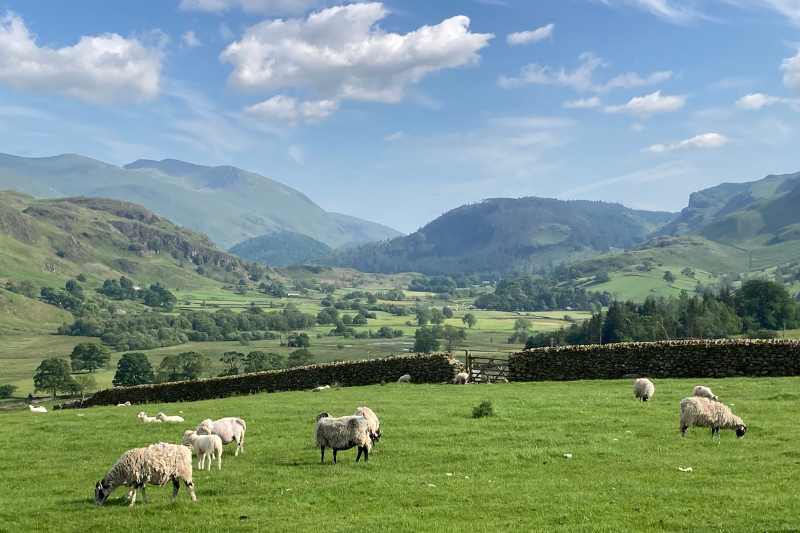
Yorkshire and its gardens: an absolute dream
In preparing for this trip, I had to make decisions about certain visits and forgo others. North England is indeed teeming with gardens, just like the rest of the country. Travelling from the west coast (the Lake District, a region of lakes in Cumbria) to the east coast (the York North Moors National Park) and down to Derbyshire, I had identified a few gardens with the help of beautiful books on the subject (The Gardens of England and Gardens of England) and by consulting various English websites listing all the beautiful places not to be missed, notably that of the RHS.
With a garden a day, the enchantment worked every time, as the gardens shared the English spirit but each had a different personality.
Notably, the Hall, this small castle or large manor typical of England, gives a unique spirit to each garden. Its architecture leaves its mark on the place, just like the Walled gardens (brick-walled gardens), where the most beautiful mixed-borders are gathered.
I preferred modest-sized gardens, as I have a taste for this type of garden. To name just a few, the gardens of Holker Hall, Burton Agnes Hall, and Newby Hall were true favourites, but the large estate of Chatsworth, a bit further down in Derbyshire, much appreciated by the English and tourists, also deserves a little detour, just like the famous Levens Hall and its topiaries in Cumbria.
The colour palette
At this end of spring, the English gardens display absolutely charming shades, all the nuances of white, blue, pink, mauve, and purple. It is this palette that acts everywhere, subtly enchanting us. The tonal variations are very well crafted, and the harmony that emerges is the result of a precise work of chromatic nuances of a distinctly British elegance.
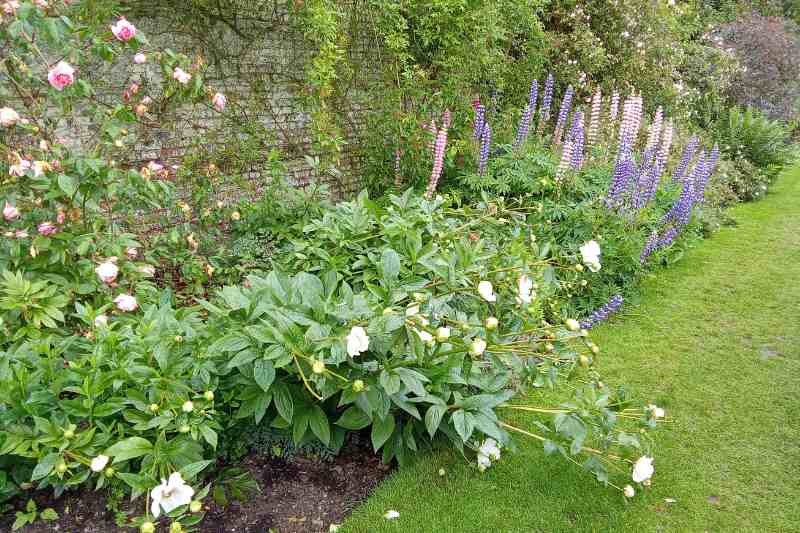
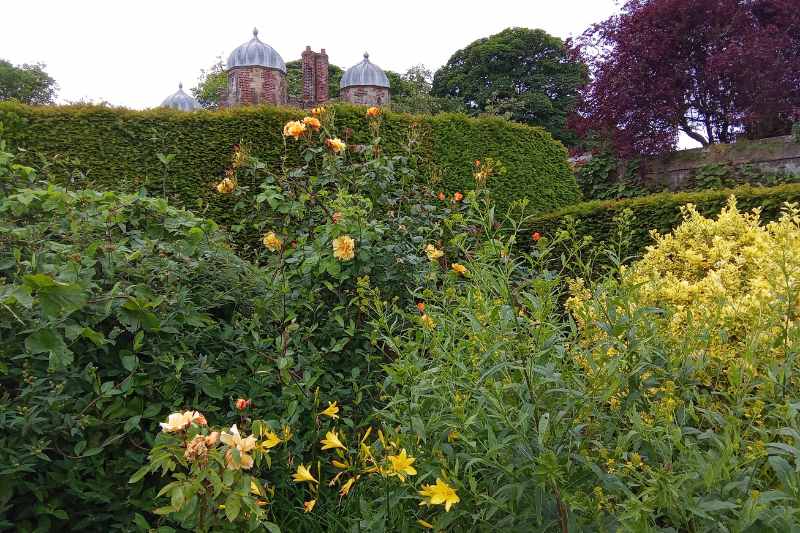
Many gardens also feature monochromatic subspaces, a great specialty across the Channel, as seen here at Burton Agnes Hall, which includes a very successful yellow garden, blending blooms in a range of soft to vibrant yellows, with golden foliage, and offering views of the stunning Elizabethan manor.
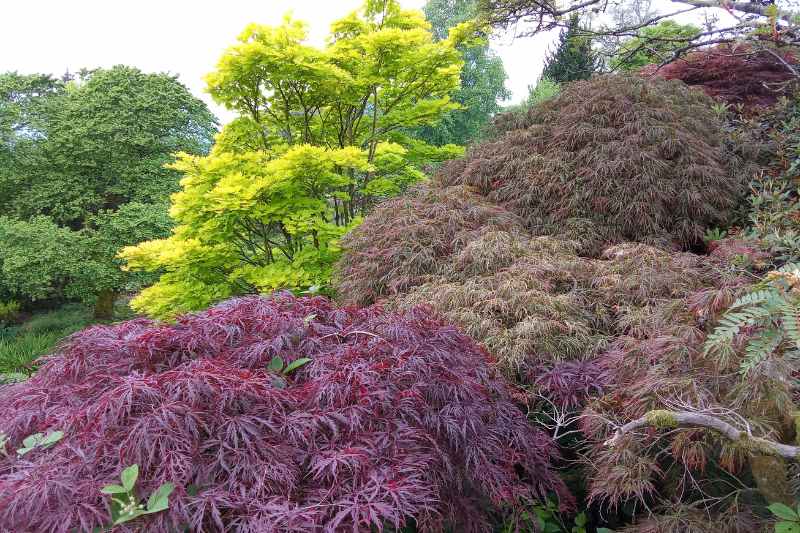
Finally, in the Lake District, we see many ericaceous plants, as the soil here is conducive to their establishment. They are still in full bloom, like rhododendrons and azaleas. This gives, for example, in the garden of Holehird gardens, a more pronounced range of colours, equally attractive.
Mixed borders and key plants of the English garden
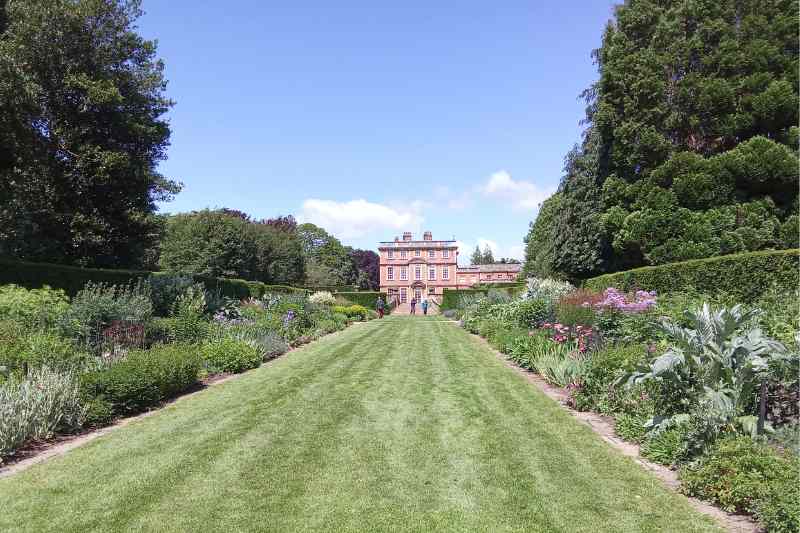
Throughout the gardens visited, certain perennial plants invariably reappear in the mixed borders and the walled gardens, absolutely stunning in their mastery and precision. The crambe, columbine, and astrantia, sanguisorba, cardoon, Oriental poppy, as well as Alliums, peonies still in bloom, roses, giant Thalictrums, and extravagant lupins!
The hostas that I see in most gardens are simply breathtaking here, enormous and in all colours, teasing you...
The ornaments of English gardens
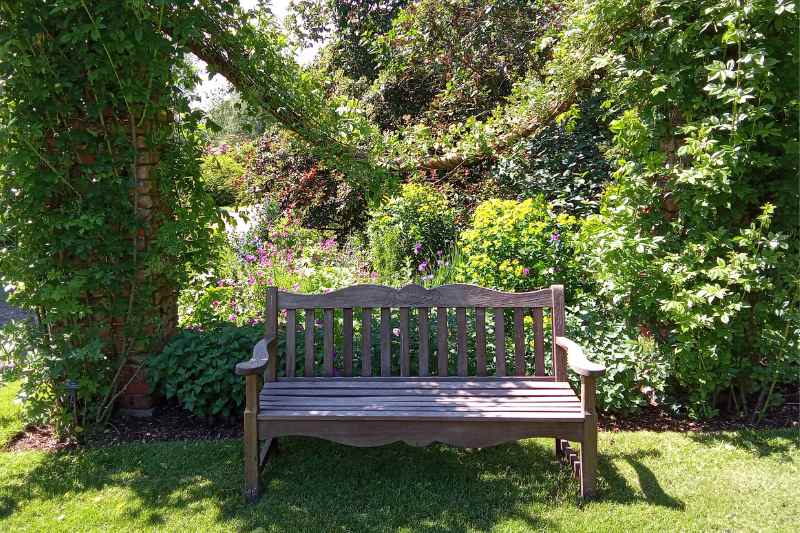
Strolling through English gardens also means discovering a thousand details to inspire beautiful arrangements back home. If the English are great lovers of benches and seats, they multiply them at will in their gardens, providing the perfect resting spot with views not to be missed. I love them all: wooden, wrought iron, painted, with a vintage look, often Victorian style or in the Arts & Crafts movement.
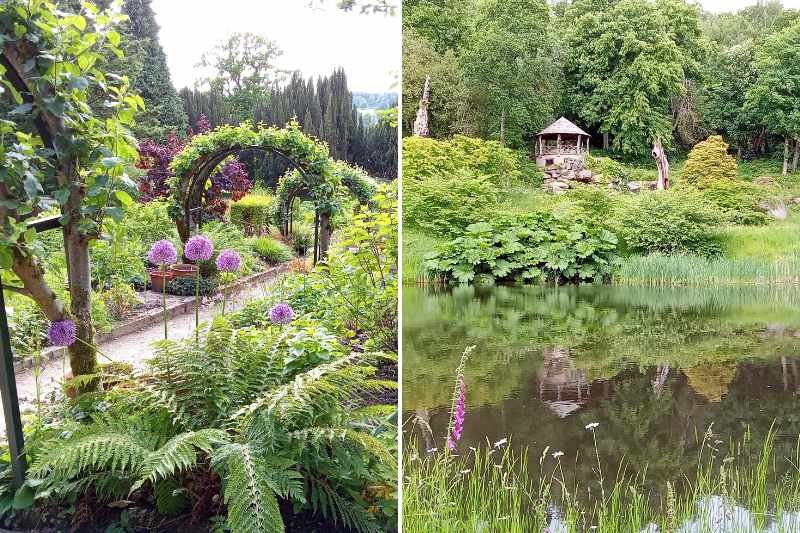
I also love the supports placed everywhere to help sweet peas and other wonders climb, as well as the obelisks that add incredible charm to all these gardens. The largest gardens willingly use structures, like in our country, these constructions designed to enhance the garden, such as kiosks. Below, at the estate of Chatsworth, you can find these follies in the wild garden, as well as divine arches leading up the hill to the vast vegetable garden.
Mulching, no mulching
Surprisingly, English flowerbeds are little or not mulched at all. Well… not like we do in France. The horde of gardeners in each garden partly explains this, as they do considerable work all year round, continuously weeding and tracking down every adventive. The black soil, rich in humus, results from a thick layer of decomposed mulch, which the plants love.
Close mowing… or differentiated mowing!
One of my biggest surprises was the treatment of the grassy areas. England has long been known for its passion for the famous English lawn, a true pride of gardeners in large estates or private gardens. The lawn holds great aesthetic value here, symbolising the opulence of the owners for centuries. It is one of the essential elements of the English garden, beautifully highlighting the planted scenes. During my visit to a first garden on the heights of Lake Windermere, I was astonished to hear a lawnmower buzzing while I was admiring the lush, perfectly manicured carpet of the walled garden. The gardener had just started mowing, even though the green and soft carpet looked like a billiard table!
Conversely, English gardens have evolved with the times and are also adopting more ecological methods applied to large spaces. In the vast gardens or parks, often found in all the beautiful estates visited, there are now large areas treated with differentiated management: tall grasses coexist with more manicured areas, and this no longer shocks anyone... and that's a good thing!
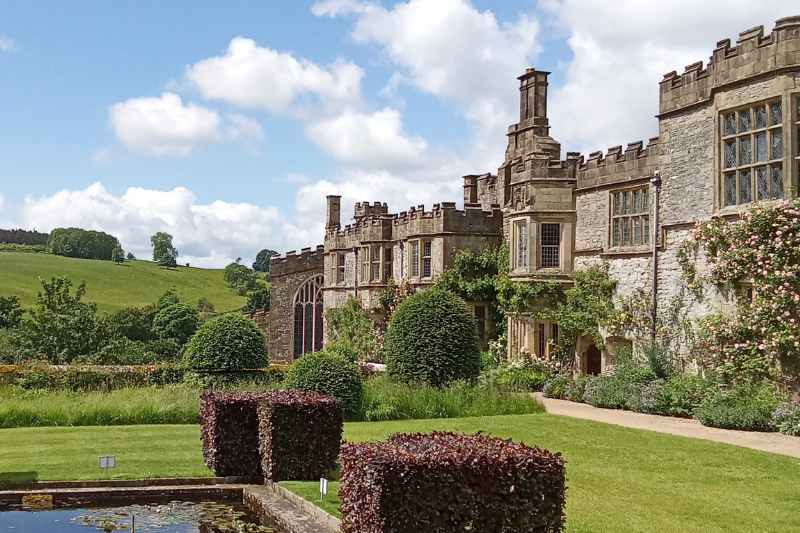
The garden of Haddon Hall surprised me the most, with, in an area I would call prestigious, just in front of the manor, two wide strips of unmown grass in the main driveway. Surprising, isn't it?
Borders with precision
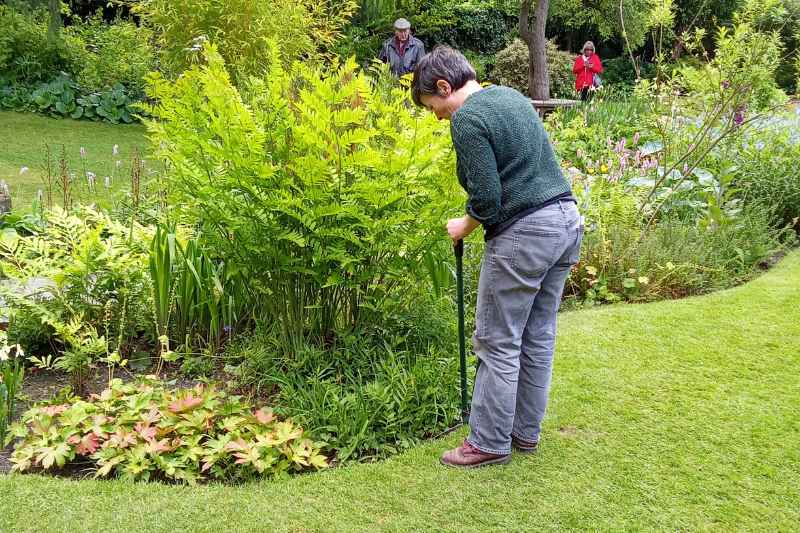
Where does this feeling of elegance, harmony, and order come from when visiting an English garden? Beyond the lawns, fine and regular carpets, maintained both by human hands and the frequent, beneficial rains, it must be said that the precise borders are a common denominator in all the gardens visited. They add this admirable precision, counterbalanced by the opulence of the plants. The edges of the flowerbeds are so neat that not a blade of grass protrudes onto the soil.
While discussing with a team of gardeners at the York Gate gardens, one of them confessed to me that the borders are redone every week! In such spaces where the flowerbeds abound, I thought they must do nothing else, since on 4000 m², they barely finish this laborious and meticulous task before having to start again! But this does not diminish the British calm, present here even in the gardens.
The rigor of these neat borders is sometimes balanced by the exuberance of a sprawling perennial, like a geranium that escapes, thereby softening an aspect that can sometimes seem almost unreal...
My advice: The Halls and castles are worth a visit in their own right, which does add a bit to the price of the garden, of course... If you have the time, don't hesitate to visit some private gardens as well. You can visit many during the summer period in England! And treat yourself to a lunch or an afternoon tea in all the tea rooms that are an integral part of the gardens in this country: the food is excellent, local, in a very British atmosphere, with superb decor...
I set off in early June for a trip to the north of England, where I hadn’t returned for (too) many years. It was in this region bordering Scotland that, as a teenager, I met my English pen pal and her family, who instilled in me a love for the English language and guided my […]
Flower Island, Atlantic Garden or the island of eternal spring… Madeira is beautifully named, and I have long wanted to explore this gem, known for its extraordinary richness of flora. Last year, I finally treated myself to a week of botanical relaxation on this enchanting island. After a three-hour flight from Nantes and a spectacular landing, Madeira is a wonderful destination for any plant enthusiast! With virtually no time difference, we are plunged into a completely tropical atmosphere.
At the beginning of spring, I invite you to soak up greenery and colour on these charming volcanic lands. My travel diary takes you on this first episode to the renowned gardens of the capital, Funchal!
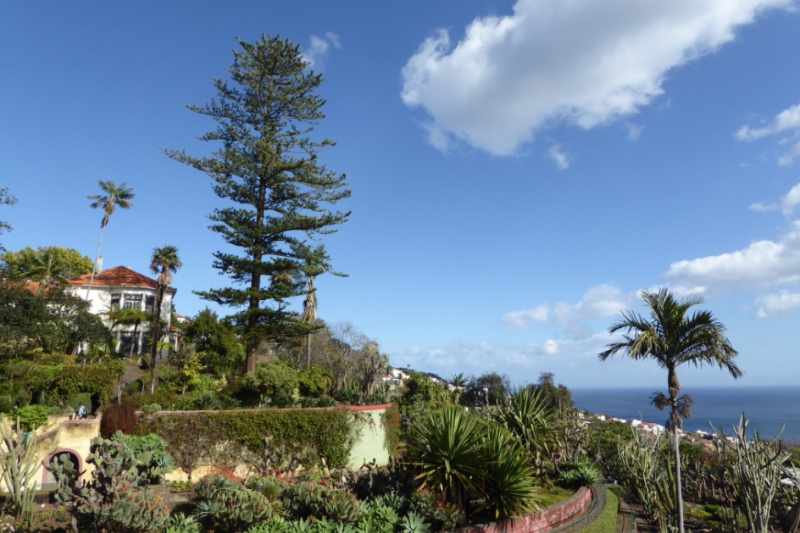
Madeira, who are you?
This floating garden stretches over a small volcanic rock of 60 km by 25, covering 750 km². Madeira is part of a Portuguese archipelago consisting of four main islands, located a few thousand kilometres from the Portuguese coast. Set in the middle of the Atlantic Ocean, the archipelago belongs more broadly to what is known as Macaronesia, which includes the Azores, the Canary Islands, and Cape Verde. It is situated at a latitude roughly level with Marrakech. It is the most densely populated island, as the other islands are practically uninhabited.
A dream island, renowned for the mildness of its climate, but especially for the incredible beauty of its lush vegetation, with grand gardens and flora growing along the roads. Knowing that a third of its area is situated above 1000 m, with Pico Ruivo reaching 1861 m, one immediately understands that this is a dream setting for hiking.
Its subtropical climate is characterised by a low thermal amplitude: as a result, plants grow all year round between 15 and 27°C, with these temperatures dropping as one ascends to the island's many peaks. Humidity is high, giving it a humid subtropical climate. Finally, winds are blocked in the centre by mountains, protecting the south and east, with the eastern tip being even arid. Depending on where you are on the island, the perception of heat and humidity will be quite different.
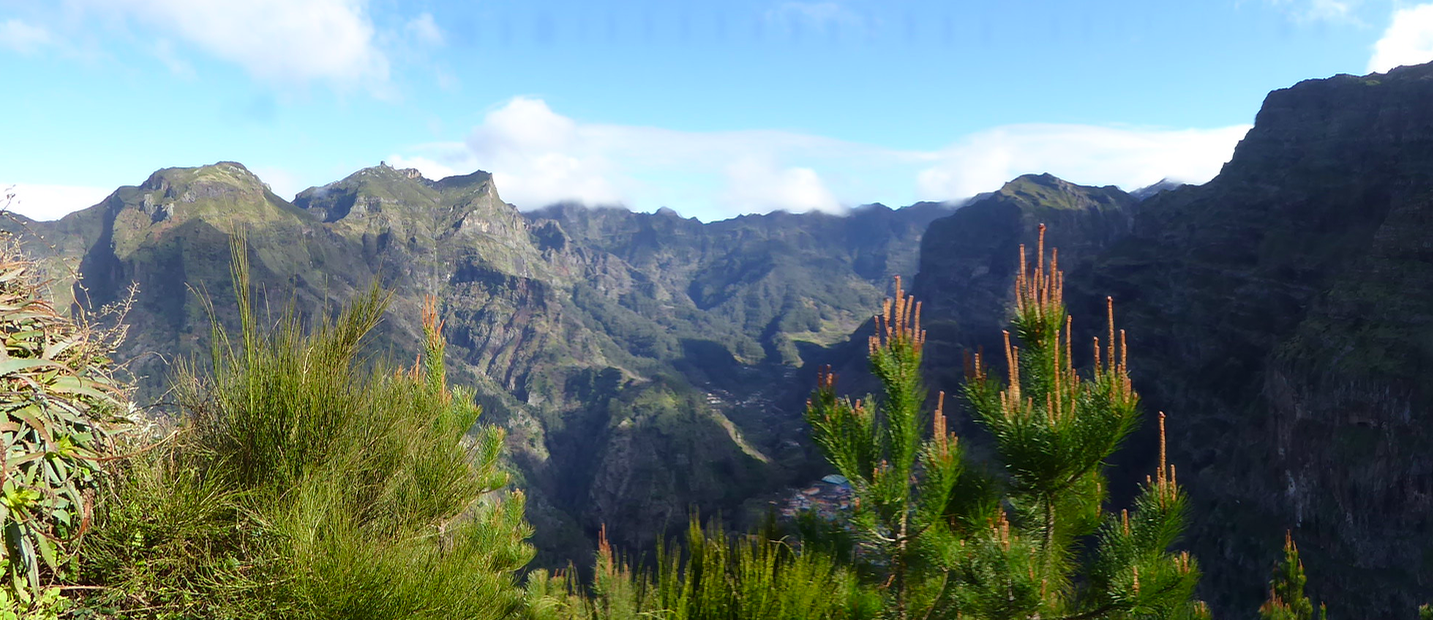
The city of Funchal, the island's capital, features numerous quintas, large mansions with sumptuous gardens, which can be visited from the outside, and two must-see gardens located on the heights of the city:
The Monte Palace tropical garden
Formerly a luxury hotel, Monte Palace is located between 475 and 570 m above sea level over the city of Funchal. It boasts no less than 10,000 species of plants across seven hectares, a must-visit for tourists who often access it via the cable car.
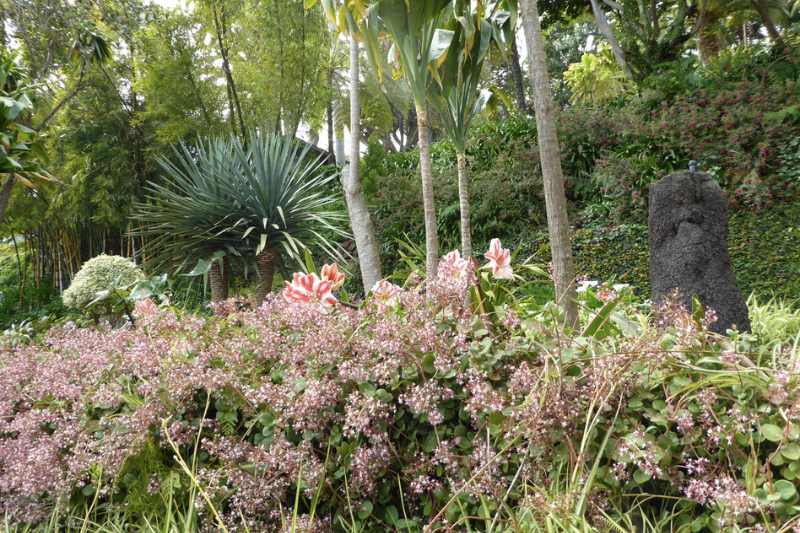
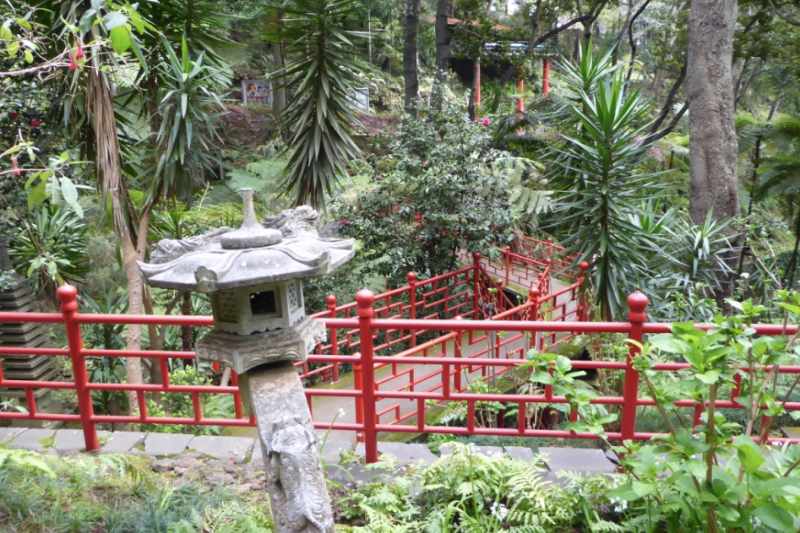
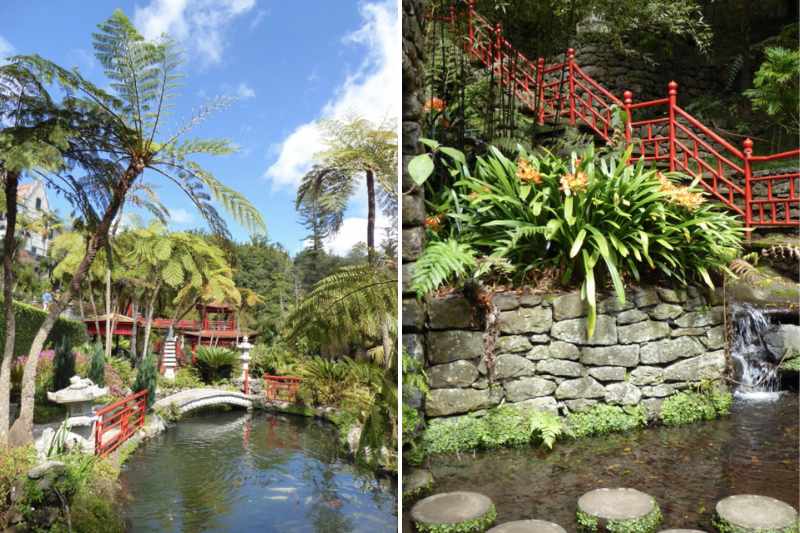
Here, an atmosphere is created with an Eastern influence thanks to the omnipresent red colour, with water appearing everywhere in the form of lakes, waterfalls emerging from caves, or ponds with koi carp, but the garden mixes styles, featuring fountains and Buddhist or very classical sculptures, while inviting ancient azulejos and Manueline-style doors. The overall effect is almost eclectic, but the profusion of plants and the tropical ambiance ensure an extraordinary change of scenery!
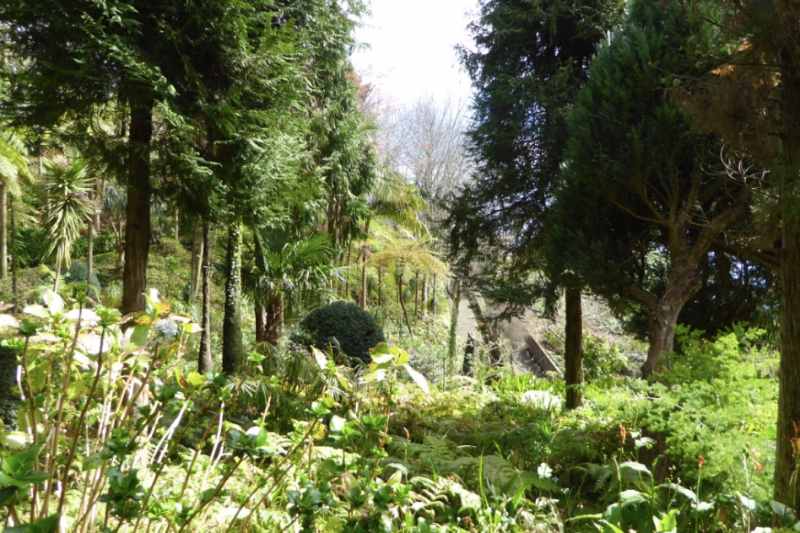
- The laurisilva: a large area at the entrance showcases the island's endemic flora. Descending a long avenue, one discovers the primary forest, the island's indigenous plants. This place is dense and wild, with few people wandering there, yet it immerses us in the island's interior, providing impressions of the many hikes Madeira has to offer.
- The oriental garden
It is impossible to overlook it, as it is at the heart of the incredible decor of Monte Palace. The red colour serves as a common thread, and the plants are not all those one might expect in a Japanese garden when hundreds of clivias catch the eye, but the exuberance is total, and the viewpoints are always different, as one descends the hill...
The collection of cycads
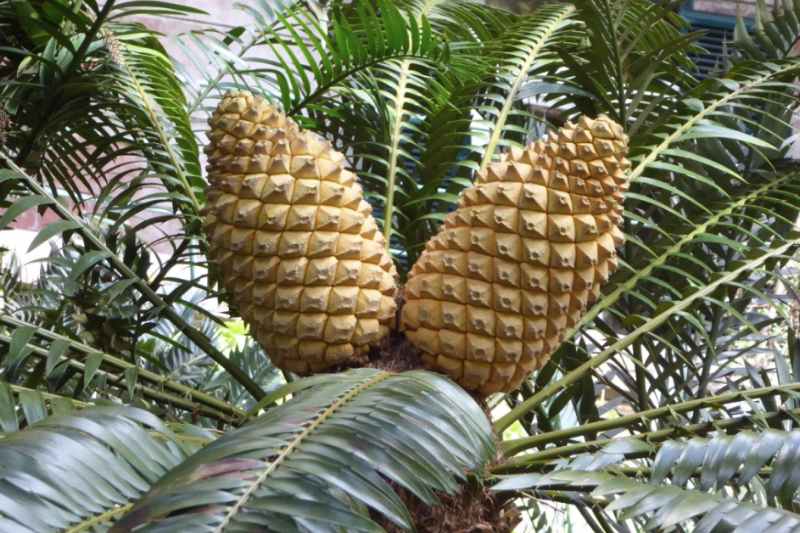
One of the areas features an exceptional collection of Cycadales, these plants that are halfway between ferns and palms, but belong to the gymnosperm family, like Ginkgo or conifers. They are true living fossils, with pinnate leaves, the most well-known among us being the Cycas revoluta. Here, one is left speechless in front of the enormous Encephalartos natalensis (part of the zamia family) and their prominent cones!
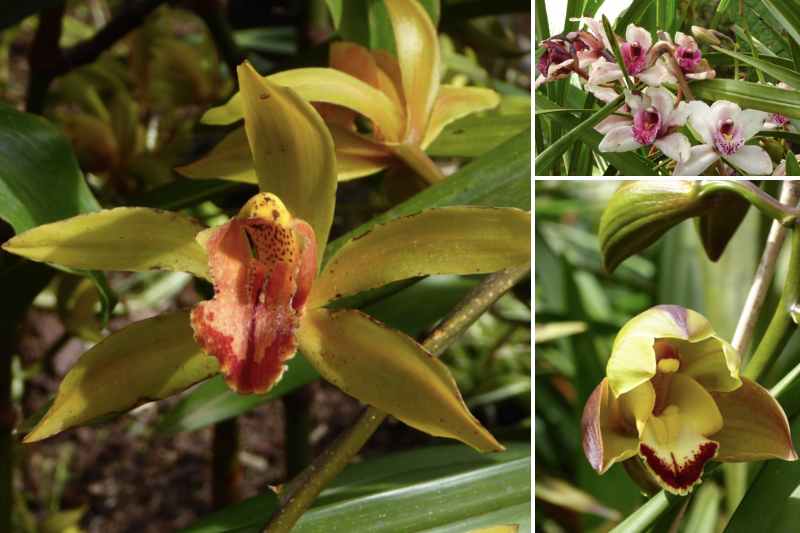
The orchids
An orchid nursery continues to amaze at the end of the path. They are countless, in shades of yellow, orange, white, or pink... Even without being an expert, one cannot help but be captivated by the extravagant shapes of their flowers and the exoticism they convey.
The botanical garden
A little lower than its illustrious neighbour, the Jardim Botânico is the other garden in Funchal not to be missed. Very different in atmosphere, it is like suspended at 300 m above sea level. In my opinion, the two gardens truly complement each other, and it would be a shame to favour one over the other.
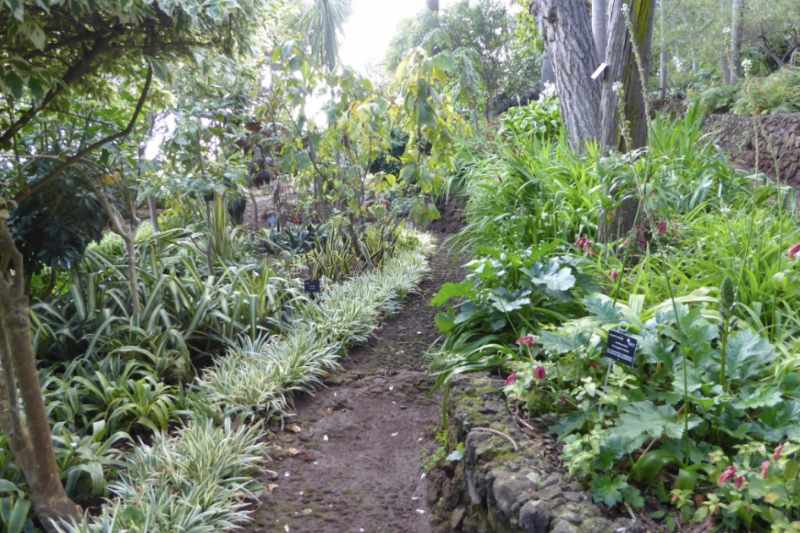
The property visible at the entrance belonged to the Reid family, a famous family that built its fortune on Madeira wine, the origin of Reid’s Palace in Funchal, one of the most luxurious hotels in the world. Here, 3.5 hectares await exploration, with 3,000 exotic plants to marvel at: here shade plants, there a garden of cacti and succulents, in the centre a choreographed display of plants, and lower down, elegant palms…
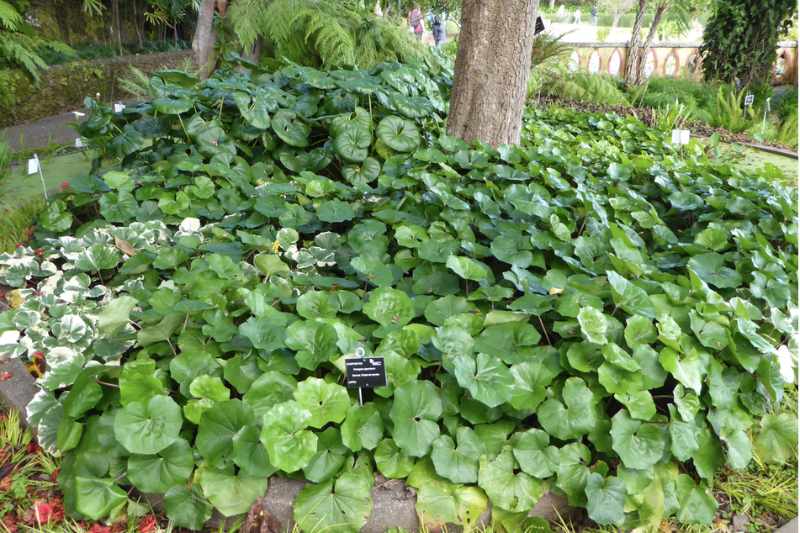
- The shade garden
For me, this area was a delight, a perfect tropical tableau with large leaves and a few grand blooms, even if it was a bit early in the season to enjoy it at its peak.
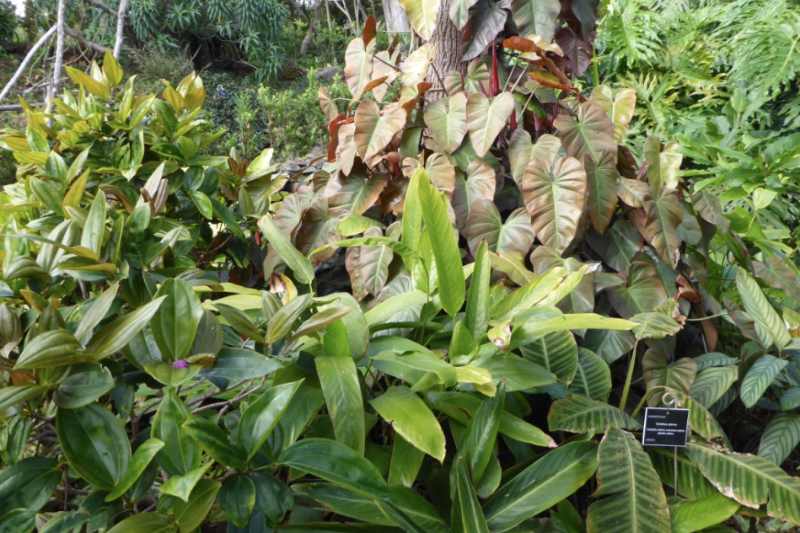
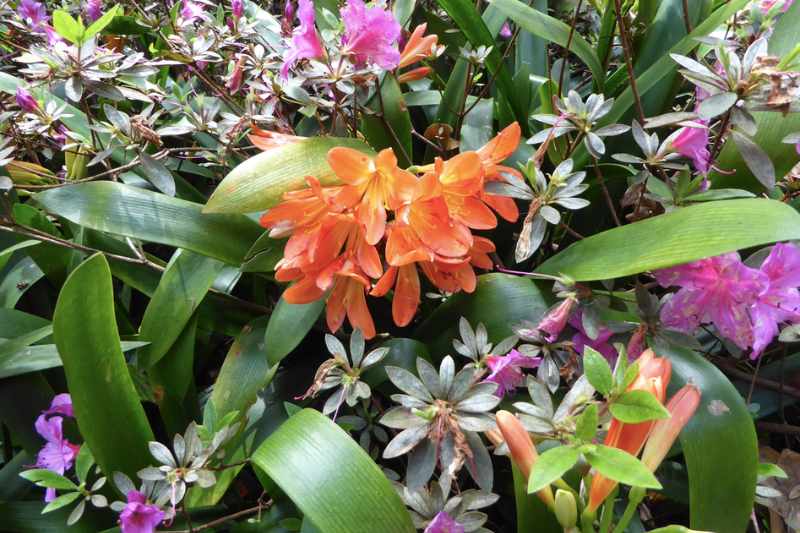
The garden reveals an extraordinary botanical diversity. One can see Crinums, clivias, amaryllis, and especially many beautiful foliage plants like tree ferns, Sphaeropteris cooperi (syn. Cyathea cooperi), graceful ferns (Niphidium crassifolium), epiphytic plants that colonise tree trunks, and colocasias! The plants find here the best conditions to grow: warmth and humidity, hence this profusion of vegetation.
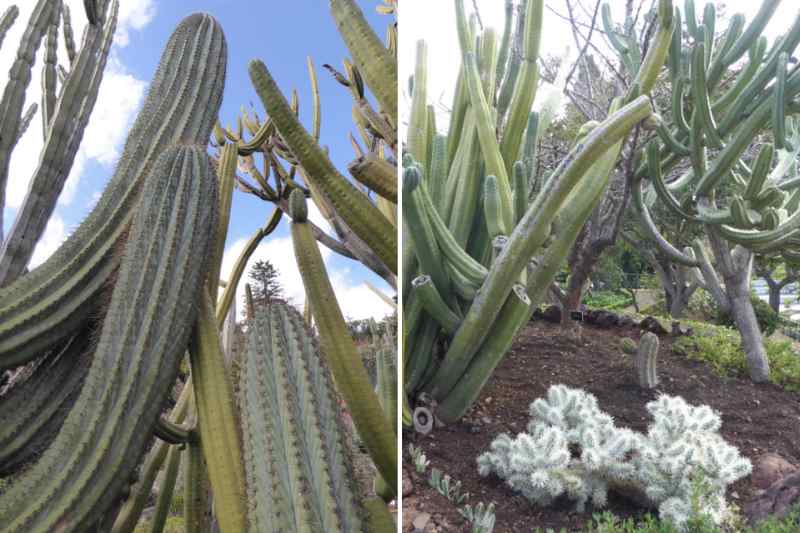
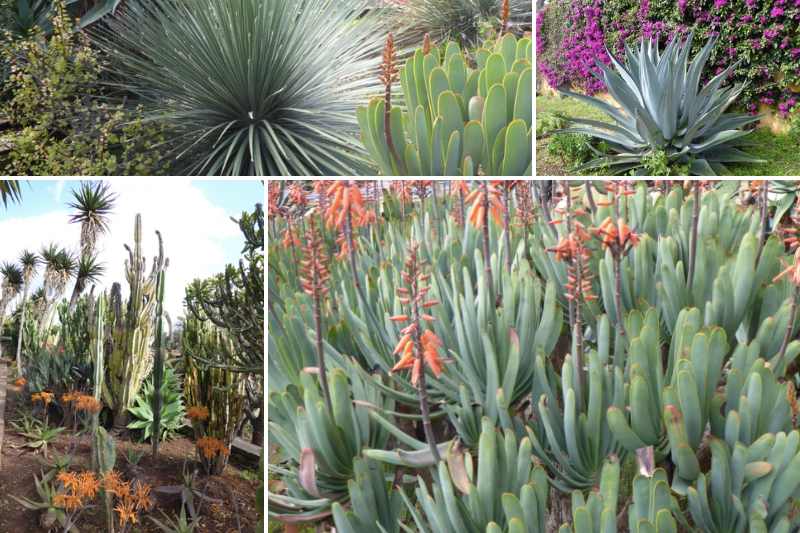
- The succulent garden
Certainly one of the places that amazed me the most, as the shapes, textures, and colours of this garden within a garden are fascinating!
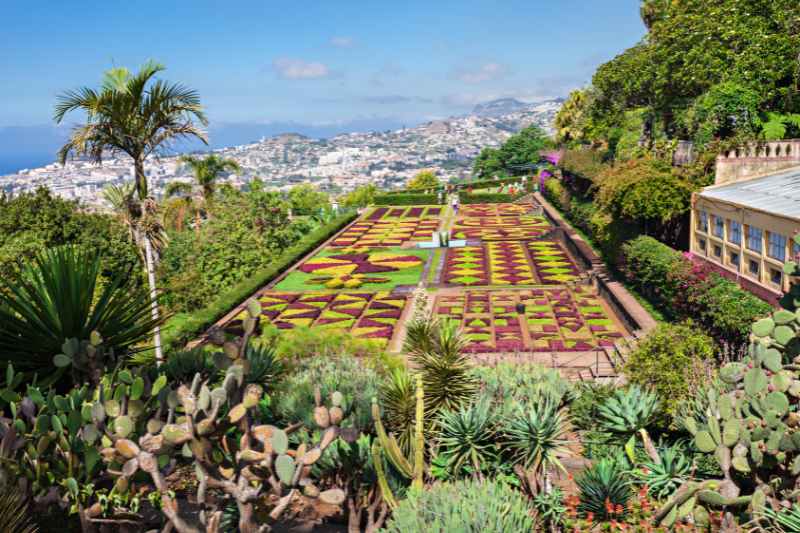
- The choreographed flowerbeds
This is one of the island's postcards: this large terrace offers a view of the bay of Funchal and an unobstructed view of the ocean, serving as the garden's belvedere. It consists of a large flowerbed in the shape of a rectangular checkerboard composed of several squares, where a series of green and purple plants are geometrically planted, resulting in a spectacular outcome. This is not the area I preferred, far from it. It even contrasts with the wild aspect of some areas of the garden, but one can admire the meticulous work of the gardeners.
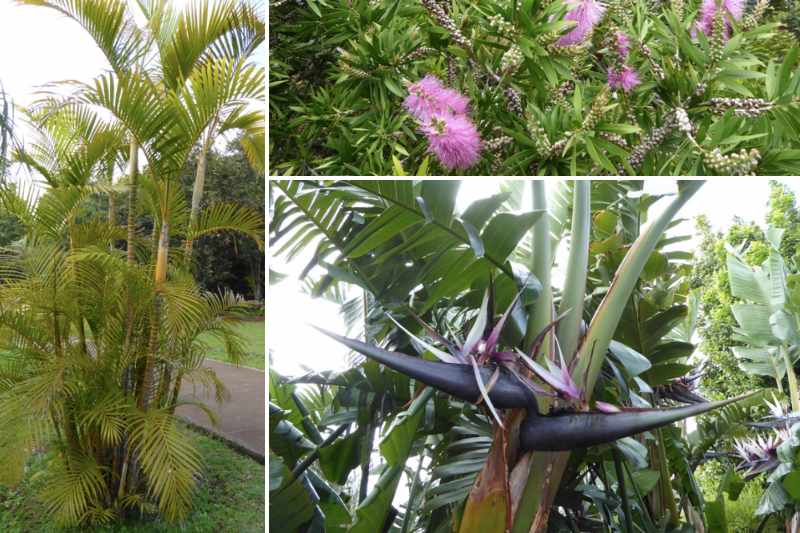
But the botanical garden of Funchal still holds many wonders, such as the palm section, to be discovered at leisure, or the strelitzia, the birds of paradise, which are also emblematic...
Learn more
Monte Palace Tropical Garden, open daily except 25 December from 9:30 am to 6 pm, entry 12.50 euros
Botanical Garden, open daily except 25 December, from 9 am to 6 pm, entry 6 euros
Flower Island, Atlantic Garden or the island of eternal spring… Madeira is beautifully named, and I have long wanted to explore this gem, known for its extraordinary richness of flora. Last year, I finally treated myself to a week of botanical relaxation on this enchanting island. After a three-hour flight from Nantes and a spectacular […]