Sowing beans is always fairly late for us and takes place in June. Partly because I time it so first harvests coincide with our return from holiday… (sowing date + about 60 days) and partly because I need time to build the structures that will support them.
In fact, I favour climbing beans (pole beans) over dwarf beans, which are quicker to sow and easy to grow. So why go to all that trouble? Because climbing beans have other advantages, of course!
Climbing beans: an ornamental crop
The first reason I grow pole beans is vanity! Our vegetable garden is visible from the terrace (very handy for giving the beds a quick hoe while chatting to those lounging on the sunloungers…) so it needs to be ornamental. Tall bamboo canes or steel reinforcing bars, set up as teepees or Canadian tents, immediately create beautiful vertical lines. Once the beans are well developed, the structure disappears under the luxuriant foliage, giving the garden a slightly jungle-like feel that I quite like. And that doesn’t even take into account their pretty flowering!
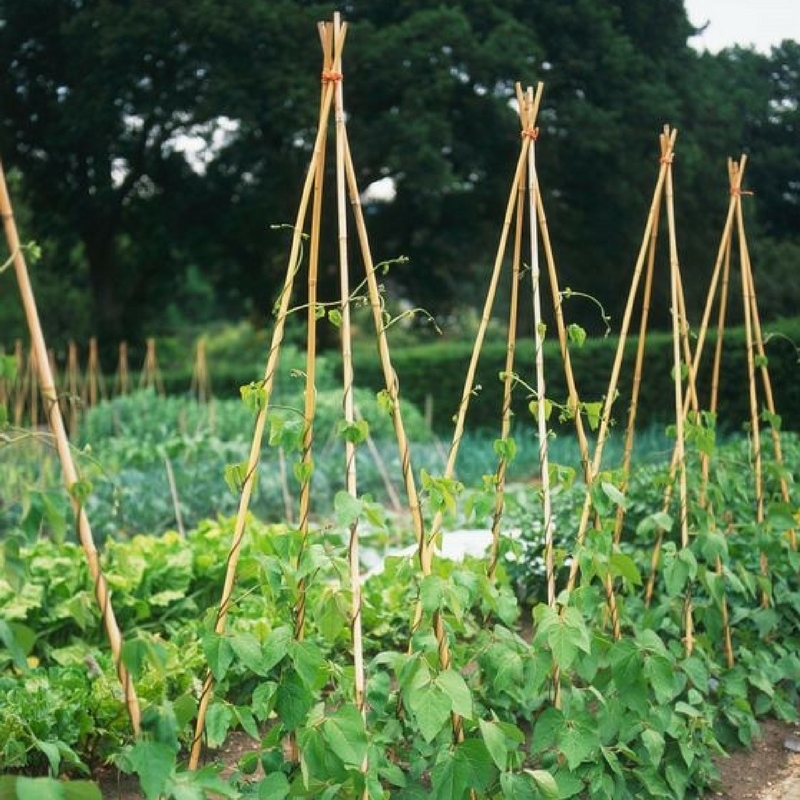
A teepee installation - Source: Pinterest
A space-saving crop
The second advantage is that this crop occupies very little ground space since the plants grow vertically. If you plant them in a single south-facing row, climbing beans also have the advantage of providing welcome shade to other vegetables, such as lettuces, which dislike high heat.
They are also very easy to grow in a small garden and even in a pot on a terrace or balcony, since the supports can be propped against a wall or a fence.
Abundant harvests
The third benefit is the high productivity of this type of bean. Indeed, relative to ground area they give good yields, around 2 to 2.5 kilos per m2 (compared with only 1 to 1.5 kilos per m2 for dwarf beans), on average.
Easier harvesting
Ease of harvesting is the fourth advantage: no more bending down and stooping along the row to pick them: they’re within reach. You may have to stretch occasionally but it’s nothing insurmountable, even if your supports reach three metres high, and here’s why:
Great flexibility!
The final asset of pole beans is their flexibility… not in climbing the supports but in being harvested late. As mentioned above, many varieties, such as Mélissa, Blauhilde, Phénomène, can be eaten both as mange-tout and as shelled beans.
Put away the stepladder because the principle is simple: pick young and eat whole whatever is within reach and leave the high-up pods to mature. At the end of the season, take down the structure and gather everything that remains to eat as shelled beans, fresh or dried.
Finally, note that climbing beans can be added to flower beds and even planted in the middle of the lawn, combining the useful with the pleasant by turning into a little den for children.
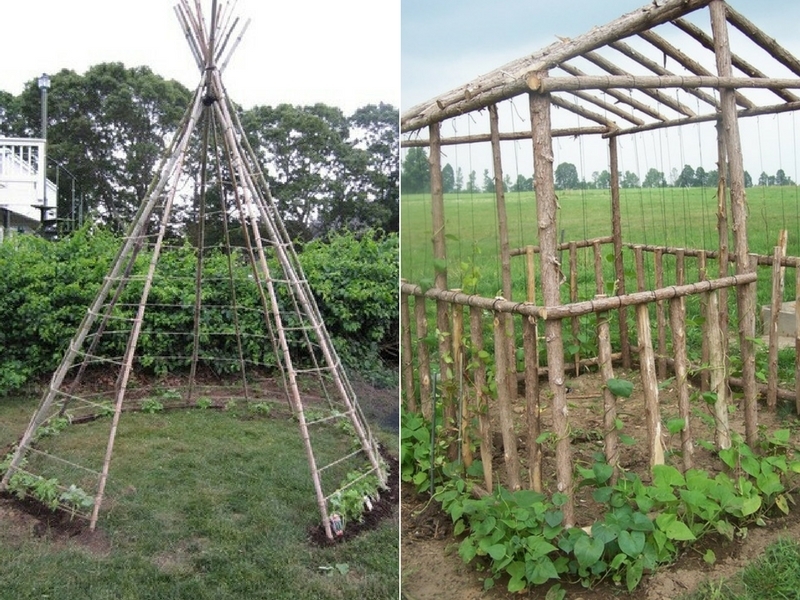
Two playful structures - Source: Pinterest
Sowing beans is always fairly late for us and takes place in June. Partly because I time it so first harvests coincide with our return from holiday… (sowing date + about 60 days) and partly because I need time to build the structures that will support them. In fact, I favour climbing beans (pole beans) […]
Installing a balcony vegetable garden and growing vegetables and herbs, even in town, is perfectly possible. In previous articles, we saw that there are many solutions for urban gardening even without a garden: grow bags, and also raised beds.
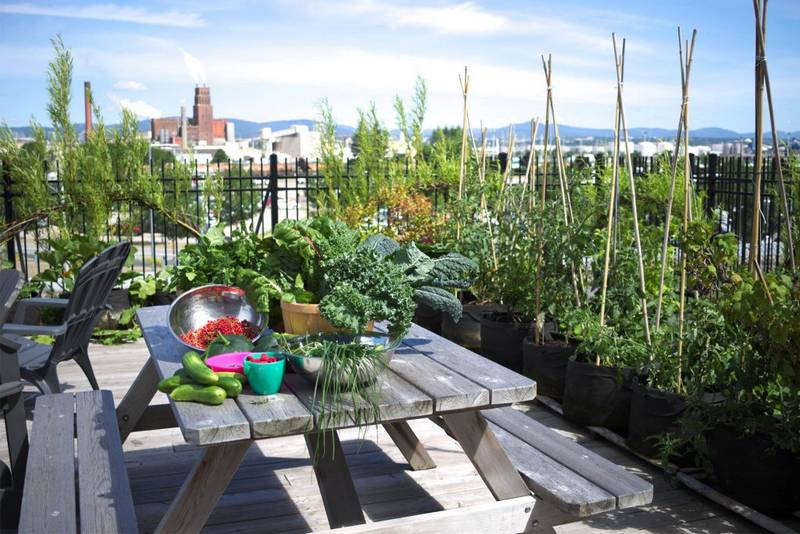
Still, you can’t make the walls any bigger! What other option is there? Choose vegetables and varieties suited to small spaces. These compact or dwarf vegetable plants are often productive. They yield full-size or small-scale vegetables, which is perfect when you don’t need to feed a large family or when you grow as much for enjoyment as for flavour!
To prevent you from restricting yourself to radishes, we have prepared on the site a wide selection of vegetables perfectly suited to small spaces and also ideal for mini vegetable gardens (including square beds); here is a sample:
1) Salads
Almost all lettuces can be grown in pots, but admit that a large heading lettuce, for example, takes up a lot of room. That’s why we recommend cut-and-come-again lettuces and mescluns. However, if you insist on harvesting neat heading lettuces, I recommend:
- Tom Thumb butterhead lettuce: a butterhead type that forms small heads about 15 cm across.
- Little Gem lettuce, the romaine cousin, produces small tender-headed lettuces with excellent flavour.
2) Tomatoes
Cherry tomato is queen of the balcony. If you have a large balcony, you can grow any variety. Otherwise, to avoid the plant taking over the space with its generosity, choose varieties that are productive but of moderate vigour. Some trailing types can even be grown in hanging pots.
- Cherry tomatoes Balconi Red and Balconi Yellow are two F1 hybrids. They produce small ruby-red and golden-yellow fruits about 3 cm in diameter. Their advantage is an ultra-compact habit, with bushy plants that only reach about 30 cm high and as wide.
- Pendulina Red and Pendulina Yellow are similar. From Sweden, they are well suited to hanging pots and will form cascades of pretty cherry fruits weighing 15–30 g, red or yellow depending on the variety.
3) Courgettes
Non-vining courgettes are also available in miniature forms and are easy to grow, such as:
- Courgette 'Patio Star' F1. Ideal for pots, it forms plants about 45 cm high and 60 cm wide and yields delicious small cylindrical dark-green fruits.
- Round 'Eight Ball' courgette stands out for its round fruits: excellent quality and harvestable once about 5 cm in diameter. This variety is repeat-bearing and produces over a long period.
4) Peppers and chillies
Still in the "sun veg" category, peppers and chillies love sunny small spaces. Among miniature varieties, you will probably fall for:
- the Mini Chocolate Bell pepper: productive, producing small red-brown fruits 3–5 cm across.
As for chillies, I invite you to discover:
- Red Cherry chilli (small) produces round fruits the size of a cherry tomato, bright red. Beware, it is very hot!
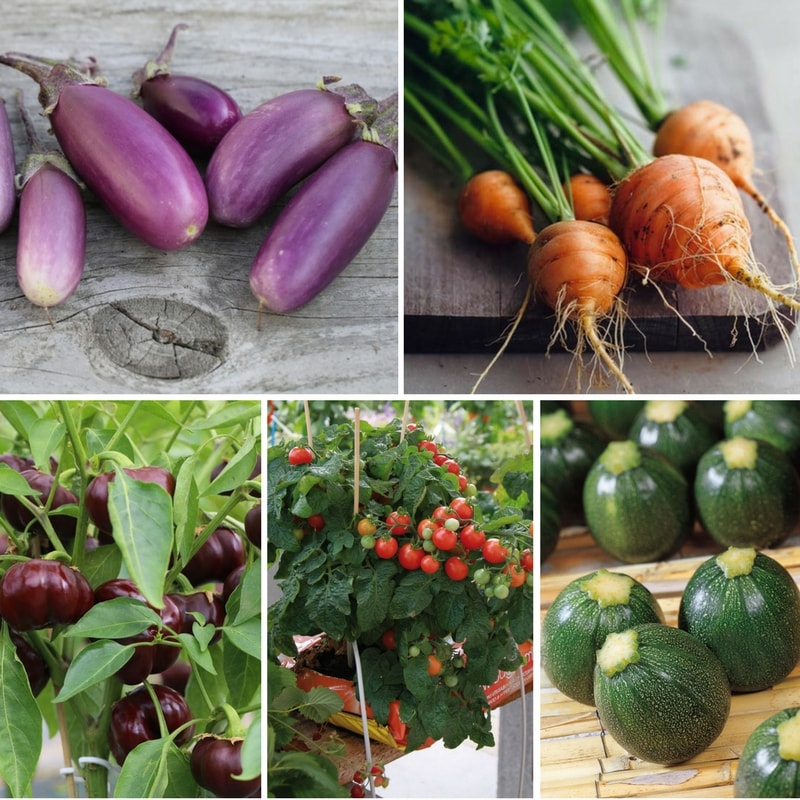
5) Aubergines
Aubergines love heat and will be perfectly happy on a balcony or terrace sheltered from draughts. Lack of space is a great opportunity to discover surprising varieties.
- 'Patio Baby' aubergine is a very early and productive variety that produces compact plants with small fruits, ideal for container growing or confined spaces. Plant in April–May for harvest from July to October.
- Pusa Purple Cluster aubergine has much to recommend it: originating from India, it is productive and forms clusters of small purple fruits on plants of normal size, very decorative and tasty.
- White Round Egg aubergine is a dwarf variety, producing pretty white, round fruits the size of an egg on plants about 30 cm high.
- If you prefer classic types, the Ophelia aubergine is perfect: the plant stays under 35 cm and its dark-purple fruits reach about the size of a golf ball.
6) Carrots
Growing carrots on a balcony is not difficult, but you must choose a container deep enough for root development. Half-long carrots (such as Carotte de Luc) are therefore well suited, but in pots or standard window boxes, peg-top varieties give the best results. I particularly recommend:
- Carrot 'Marché de Paris': an early variety with round, reddish-orange roots, tender and flavoursome. These small carrots are great glazed or as a snack.
7) Cucumbers
Cucumbers are often seen as space-hungry, but they trellis easily. In small gardens or containers, snack-type cucumbers such as 'Rocky', 'Broumana F1' or 'Iznik F1' are popular. They are just as crisp as standard types, but fruit size does not exceed 15 cm.
8) Beans, peas, broad beans
Dwarf beans and dwarf peas are not necessarily the best answer to limited space… Prefer pole varieties of beans and peas that use vertical space by climbing trellises. Plants occupy less ground area and provide abundant harvests. If you like broad beans, I especially recommend the variety Robin Hood, which yields nice short pods with green seeds on plants about 30 cm high.
The list is not exhaustive and for other vegetables, such as cabbages, leeks, sweetcorn... please consult our collection of balcony vegetables on our site.
To conclude, allow me to remind you of key success factors for growing beautiful vegetables on a balcony or terrace:
- use quality potting compost (avoid the cheapest bags that dry out very quickly)
- remember to fertilise regularly
- monitor watering, as container-grown crops are more vulnerable to dry spells.
Installing a balcony vegetable garden and growing vegetables and herbs, even in town, is perfectly possible. In previous articles, we saw that there are many solutions for urban gardening even without a garden: grow bags, and also raised beds. Still, you can’t make the walls any bigger! What other option is there? Choose vegetables and […]
Here in August, our vegetable garden becomes a veritable cornucopia: tomatoes, courgettes, beans, to name but a few, are harvested in such quantities you do not know what to do with them. And that is precisely the problem. So, if you too are buried under surplus produce, here are a few ideas to avoid wasting your vegetables.
Idea No. 1: Give away or swap surplus vegetables
Sharing harvests is a pleasure… provided it is done with restraint. Bringing your neighbours a full crate of courgettes is a kind gesture, certainly. But unless you live next door to an XXL family, it simply shifts the problem, because they too may not know what to do with them! Next time, they may well pretend to be out when they see you approaching with a basket, even when empty. So give, but first make sure your friends will have time to use the vegetables, and bear in mind that a small mixed basket (especially if it contains strawberries) is more popular.
Also consider contacting local charities and other community food shops; they will be able to tell you what they need.
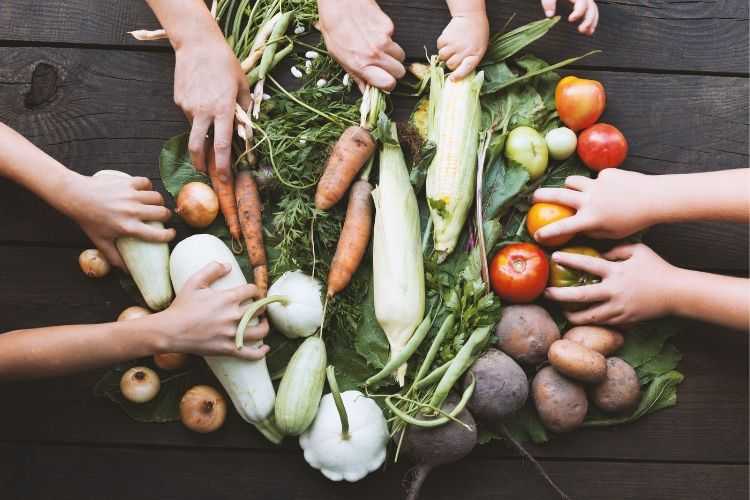
Idea No. 2: Sell your produce, at home or online
Selling your produce is also an option. It may seem mean, but the vegetables you grow have value; they did not grow by themselves. I have not found specific legislation on the subject; however, it appears tax authorities have no objection provided your vegetable garden is under 500 m² and is attached to your home. Out of fairness to professional market gardeners, do not set up on markets. Putting up a sign outside your house, advertising on Le Bon Coin or a local Facebook group is often enough to attract interested people. Another option is to register on a dedicated site, such as Le potiron.fr or cavientdujardin.fr
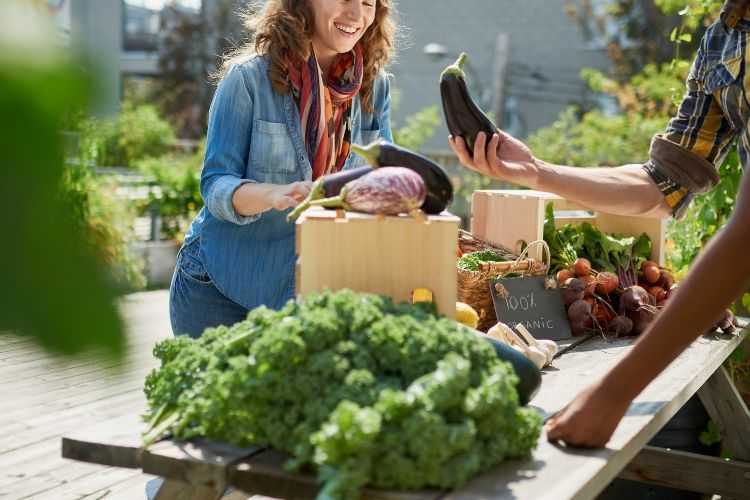
I have heard that in some English villages, surplus vegetables are sometimes left outside the house, accompanied by an honesty box where anyone can drop a coin. Clever, isn't it? Have you ever heard of this practice?
Idea No. 3: Transform them… but be inventive!
Let's think: what is the real problem with surplus harvests? Often, truth be told, it is the boredom ("More beans?") caused by the cook's lack of imagination, isn't it? Talent helps too, and time above all… Nonetheless, facing a glut of courgettes can lead to new taste experiences: ratatouille is not the only option! Why not try apple-and-courgette salad, courgette fritters or courgette cake? Perhaps a homemade gazpacho? 100% vegetable lasagne? Remember how lovely it is, in the depths of February, to rediscover the flavour of summer vegetables. That should give you a bit of courage to tackle the next point:
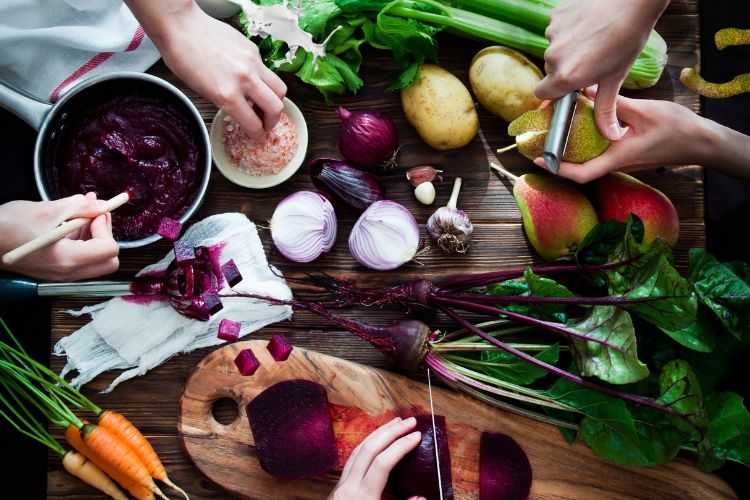
Idea No. 4: Preserve, yes, but with discernment
Ah, the memory of my grandmother's "Le Parfait" jars, meticulously lined up in the larder! Who has not wanted to take up the tradition of home preserves again? It is easy and economical.
On preserving fruits and vegetables, we have prepared two guides you can consult:
But it requires time, suitable equipment and, above all, enough space to store everything.
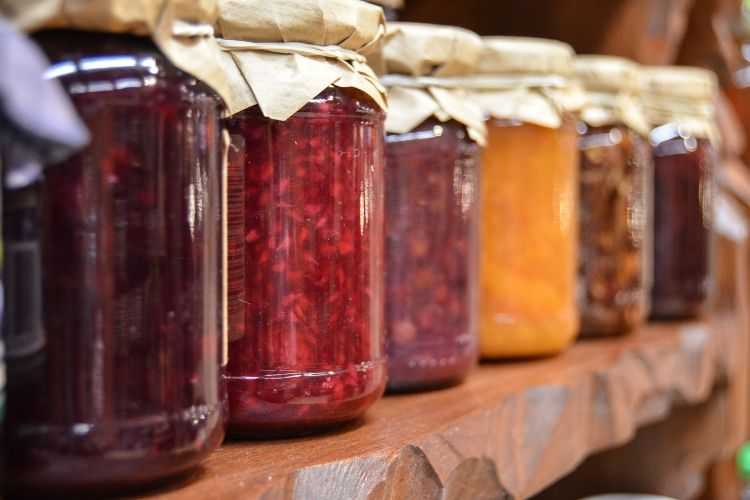
So take stock before you start:
- how much space you have, including freezer space?
- what are your eating habits? Do you regularly eat preserves or frozen meals, or are you a fan of 100% fresh, seasonal produce?
- are you more into jam, fruit in syrup or do you prefer chilled smoothies?
- do you have several weekends to dedicate to preparing preserves?
If the answers are: I have no space / I only eat fresh produce / I don't like jam / I'd rather read on the terrace or go to the beach... go back to ideas No. 1 and 2 🙂
And you? What are your tips for dealing with an overly generous harvest? Any recipes?
Here in August, our vegetable garden becomes a veritable cornucopia: tomatoes, courgettes, beans, to name but a few, are harvested in such quantities you do not know what to do with them. And that is precisely the problem. So, if you too are buried under surplus produce, here are a few ideas to avoid wasting […]
June is well under way and here we are at the start of summer: fine weather is definitely here and the urge to harvest your own vegetables has been nagging you for a while. But let's face it: you've dawdled and, in the vegetable patch, no vegetables have been sown.
To be honest, although the situation is far from desperate, it may be a bit tricky for some vegetables such as tomatoes (take comfort, half the time they get blight), chillies, aubergines… But for the rest, almost everything is still possible!
First of all, let's see why sowing a little later than the "official calendar" can be a good thing:
Benefits of late sowing in the vegetable patch
Late sowing can prove preferable in cool regions, because sowing in well-warmed soil speeds up germination and promotes rapid plant growth.
I experimented with this last year by planting two rows of beetroot: the first from transplants and the second from seed. In less than a month, although both received the same care, the row sown from seed had caught up with the one from transplants.
Reassured? Let’s move on to our short selection of vegetables easy to sow in early summer:
7 easy vegetables to sow in early summer in the vegetable patch
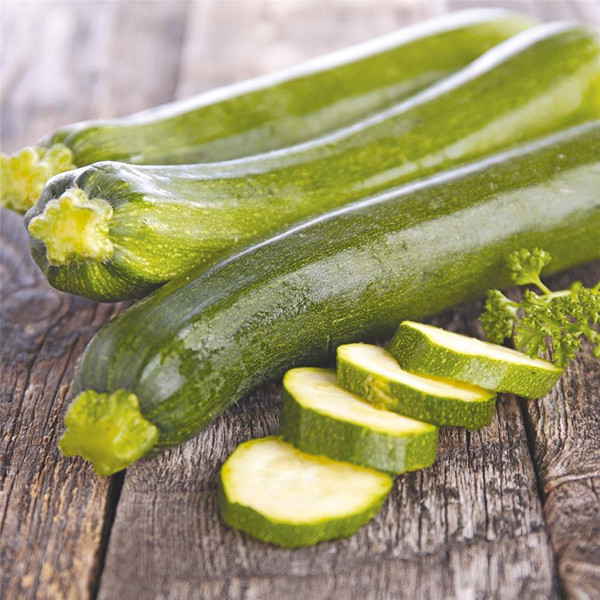
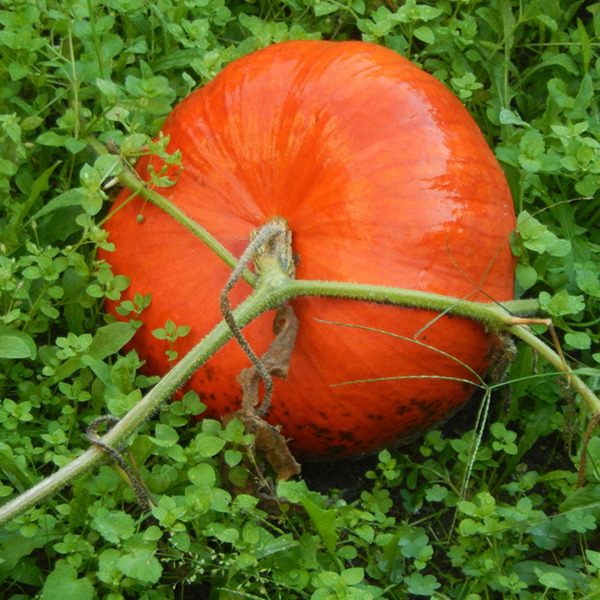
1) squash and courgettes
Although they are often recommended to be sown in April and started in pots, that is mainly to harvest them earlier, but direct sowing is perfectly feasible. Only drawback: harvest will be slightly delayed.
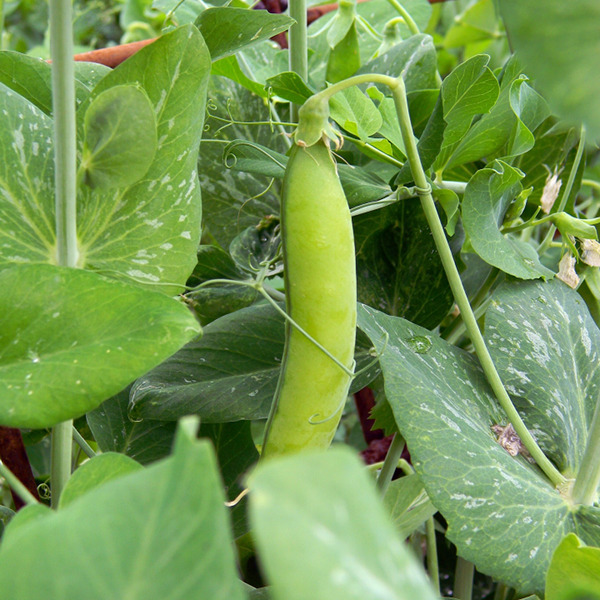
2) peas with wrinkled seeds
Usually sown until the end of May, wrinkled peas such as "Merveille de Kelvedon" or "Télévision à grain ridé" tolerate heat. A slightly late sowing, especially if you live in a temperate region, will not cause them any problem.
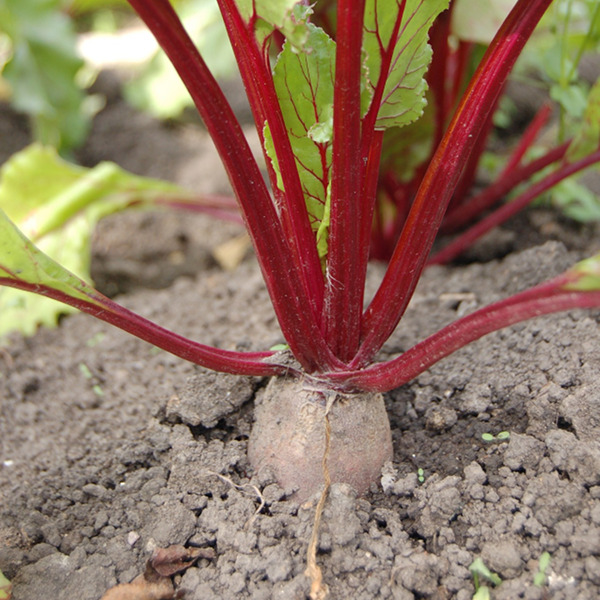
3) beetroot
Easy to get right, beetroot tolerate a slightly late sowing very well provided you watch watering or, better, mulch the patch. Warmth speeds up growth: I've never had to wait four months before enjoying them! We particularly like 'Chioggia'… and the beetroot 'de Détroit'.
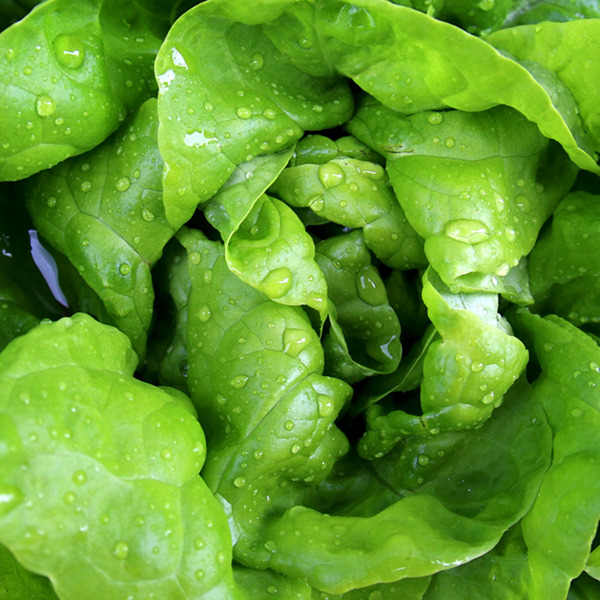
4) lettuce
Summer lettuces grow at great speed… it's a real joy provided you choose the right variety, otherwise watch out for bolting! Aim for 'Kinemontepas' (of course!), 'Grosse Blonde paresseuse', 'Du bon jardinier' or, for cut-and-come-again lettuces, 'Lollo Rossa' or 'Red Salad Bowl'. All are well suited to heat, provided you give them some protection by situating them in partial shade.
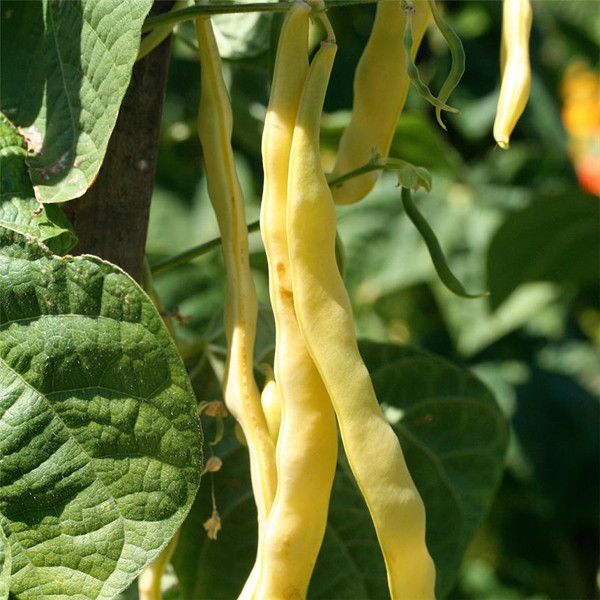
5) beans
… all beans, including green beans! With them, it's simple: harvest comes 60 days after sowing. Very handy for timing pickings before you go on holiday or on your return, right? If your schedule isn't fixed, rather than a string-bean variety choose a mangetout which can wait a little longer without becoming stringy. And to vary things, consider butter beans, and also the stunning purple varieties such as 'Amethyst'…
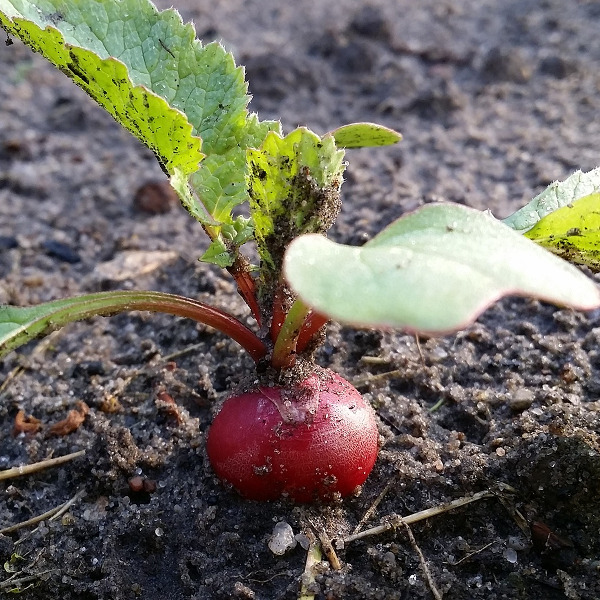
6) radishes
Radishes can be sown almost all year round… We covered this in this article on radishes. Summer is the perfect time to try new varieties especially well adapted, such as the radish 'Golden Yellow Oval' or 'Scarlet Globe'.
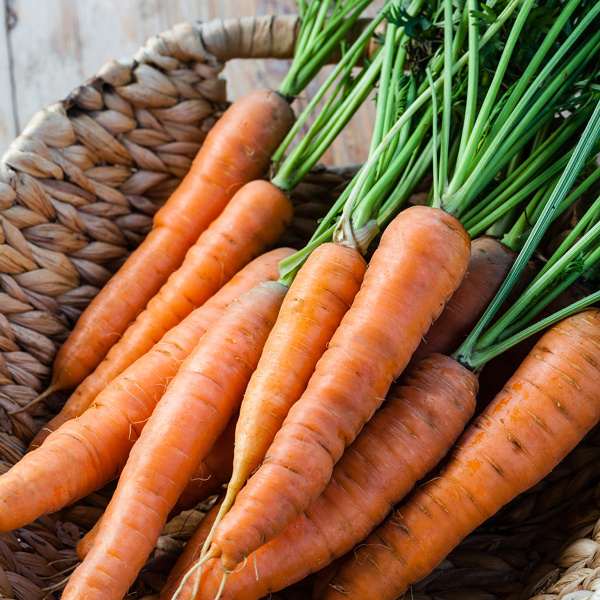
7) carrots
Sown in June–July, they'll be harvested in autumn. Consider sowing them with radishes to reduce the thinning chore. If this sowing worries you a little (it's delicate) and you don't have time to waste on a failure, go for seed tapes without hesitation: they're really handy, even if you're not a beginner!
Ready? Here are a few precautions to take to make sure everything goes well!
Precautions to take when sowing in hot weather
First, know that in the vegetable patch summer sowings are no more difficult than spring ones. However, they require closer monitoring, because for germination to proceed without mishap, soil must remain moist.
Which is not necessarily easy when the sun is beating down. If you cannot keep up with regular watering, consider shading the soil while waiting for emergence using crates, simple sheets of newspaper or a very thin layer of previously dried grass.
Finally, favour morning watering: it is less likely to attract slugs, which are fond of young seedlings in all seasons.
June is well under way and here we are at the start of summer: fine weather is definitely here and the urge to harvest your own vegetables has been nagging you for a while. But let’s face it: you’ve dawdled and, in the vegetable patch, no vegetables have been sown. To be honest, although the […]
Did you know that 2016 is the International Year of Pulses? This may seem a bit odd, but after visiting the United Nations Food and Agriculture Organization's website, you'll understand that it is not at all. But let's return to the garden scale...
What are pulses?
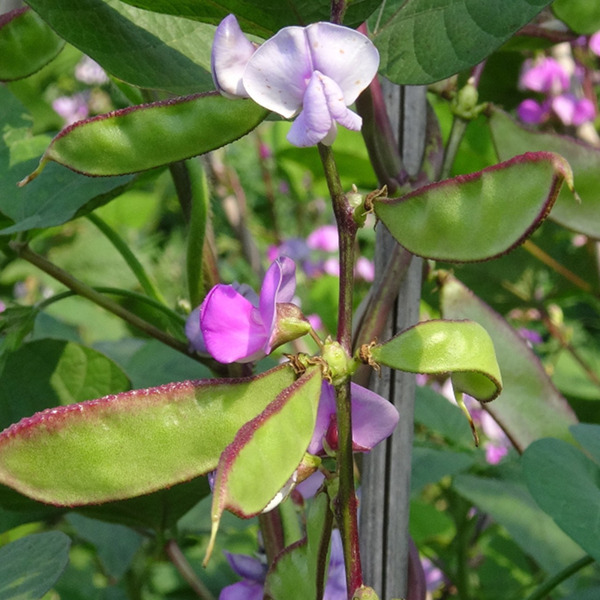 Typical inflorescence and pod of pulses
Well, it depends! In botany, in common language, it refers to all plants belonging to the Fabaceae family (formerly Papilionaceae), their common feature being that they bear fruits in pods, such as acacia, wisteria, broom, lupin, etc. In the vegetable garden, it includes all beans, peas, broad beans, as well as green manures like vetch, field pea, clover, etc. However, in cooking, the term pulse refers to dried vegetables, meaning: still the beans, but those that are shelled and can be dried and consumed later, broad beans, peas, whether whole or split, as well as lentils, peanuts, soybeans... I suggest, once is not customary, to adopt this perspective, because after all, it is also for eating that we cultivate our vegetable garden. So, why growing pulses?
Reason No. 1: They are easy to grow
With the exception of the lentil, which is quite tiny, all these plants have large seeds, which greatly facilitates sowing. Not very demanding, they adapt to a wide range of soils and climates. The harvest is also very simple.
Reason No. 2: They are good for the soil
Pulses share a characteristic that is sometimes overlooked: their roots have small swellings called nodosities that house bacteria of the genus Rhizobium. These are what give them their remarkable ability to fix atmospheric nitrogen in the soil.
This is very useful for enriching the soil, both in the context of crop rotation and for companion planting.
Reason No. 3: They store well and at room temperature
The advantage of dried vegetables also lies in the fact that… they can be stored in a simple cupboard. Properly dried, in a well-ventilated place, there is no need for sterilisation, blanching, jars, or freezers: simple airtight containers are sufficient. Their indicative shelf life is one year, but you won't get sick if you keep them a little longer.
Reason No. 4: They allow you to (re)discover new flavours and try new recipes
Somewhat forgotten, pulses are nevertheless interesting in cooking, whether the recipes are traditional (what would Cassoulet be without beans?) or exotic. In my personal ranking, I include: chili sin carne, hummus, split pea purée, Portuguese broad bean spread, and coral lentil soup with coconut milk... Enough to delight the taste buds, right?
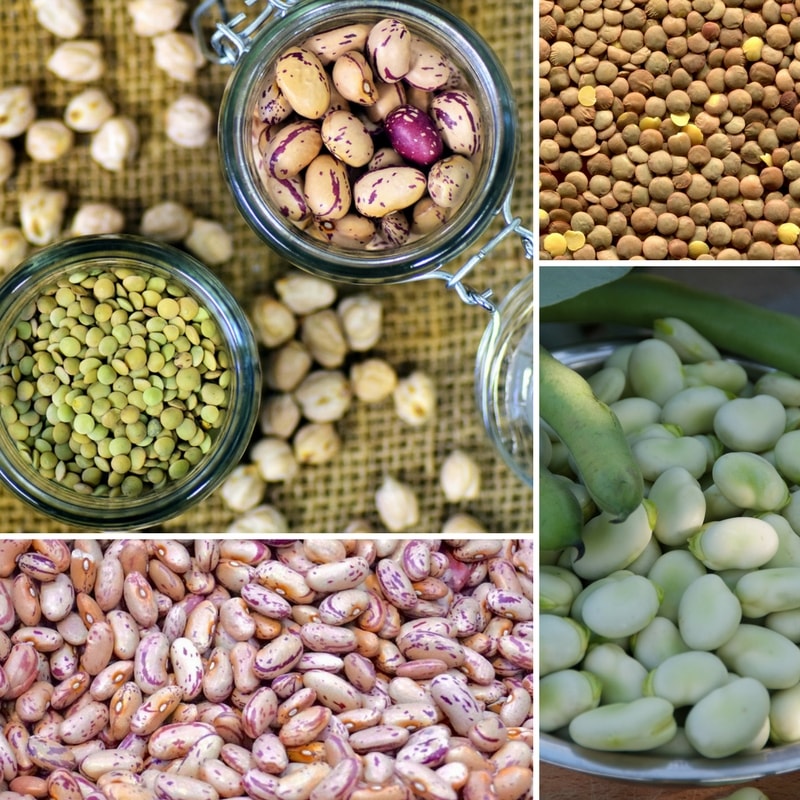
Reason No. 5: They are good for health... and for the planet!
From a dietary perspective, pulses have everything to please. Just consider:
- they are rich in slow carbohydrates and fibre,
- their energy value is significant, but they are low in fat,
- they are good sources of vitamins and minerals...
Finally, at a time when the ecological impact of livestock farming is being questioned and where making our plates more plant-based is becoming an emerging concern, pulses come at the right time. Indeed, dried vegetables, especially when combined with cereals, represent a promising alternative to animal proteins, the production of which requires, for the same quantity, up to 10 times more water.
So, convinced? Which pulses will you grow in your vegetable garden this year?
For broad beans, it's a bit late... but there is still time for flageolets, the magnificent Flambo bush shelling bean, Twist chickpeas, or lentils!
For further reading -in French:
- I grow peas, broad beans, beans... Protein in my vegetable garden - Blaise Leclerc - Editions Terre vivante
- Fabulous pulses - 140 traditional recipes - Claude Aubert - Editions Terre vivante
Did you know that 2016 is the International Year of Pulses? This may seem a bit odd, but after visiting the United Nations Food and Agriculture Organization’s website, you’ll understand that it is not at all. But let’s return to the garden scale… What are pulses? Typical inflorescence and pod of pulses Well, it depends! […]