Dwarf French Bean Fleuret
Dwarf French Bean Fleuret
Phaseolus vulgaris var. nanus Fleuret
Dwarf French Bean
Back-to-school special offer!
Get €10 off for every €50 you spend! And get up to €40 off on a single order.
How does it work?
1. Shop your favourites
Add your favourite plants to your basket. For every €50 you spend (excluding delivery charges, store credit and the plastic-free option), you’ll receive a €10 voucher.
€50 spent = €10 voucher
€100 spent = €20 voucher
€150 spent = €30 voucher
€200 spent = €40 voucher
2. Place your order
Once your basket reaches one of the spending thresholds, place your order. You can even choose your delivery date!
3. Receive your voucher
As soon as your order has been shipped, you’ll receive an email containing your personal voucher code and its value.
4. Use it on your next order
Your voucher is valid for 90 days from the date you receive it. It can be used once only, on a new order worth at least the value of the voucher, excluding delivery charges.
Please note: Vouchers can be combined with other offers, but cannot be split or refunded.
Home or relay delivery (depending on size and destination)
Important: You may be charged customs duties by your country’s customs authorities upon delivery.
Schedule delivery date
and select date in basket
This plant carries a 6 months recovery warranty
More information
We guarantee the quality of our plants for a full growing cycle, and will replace at our expense any plant that fails to recover under normal climatic and planting conditions.
Description
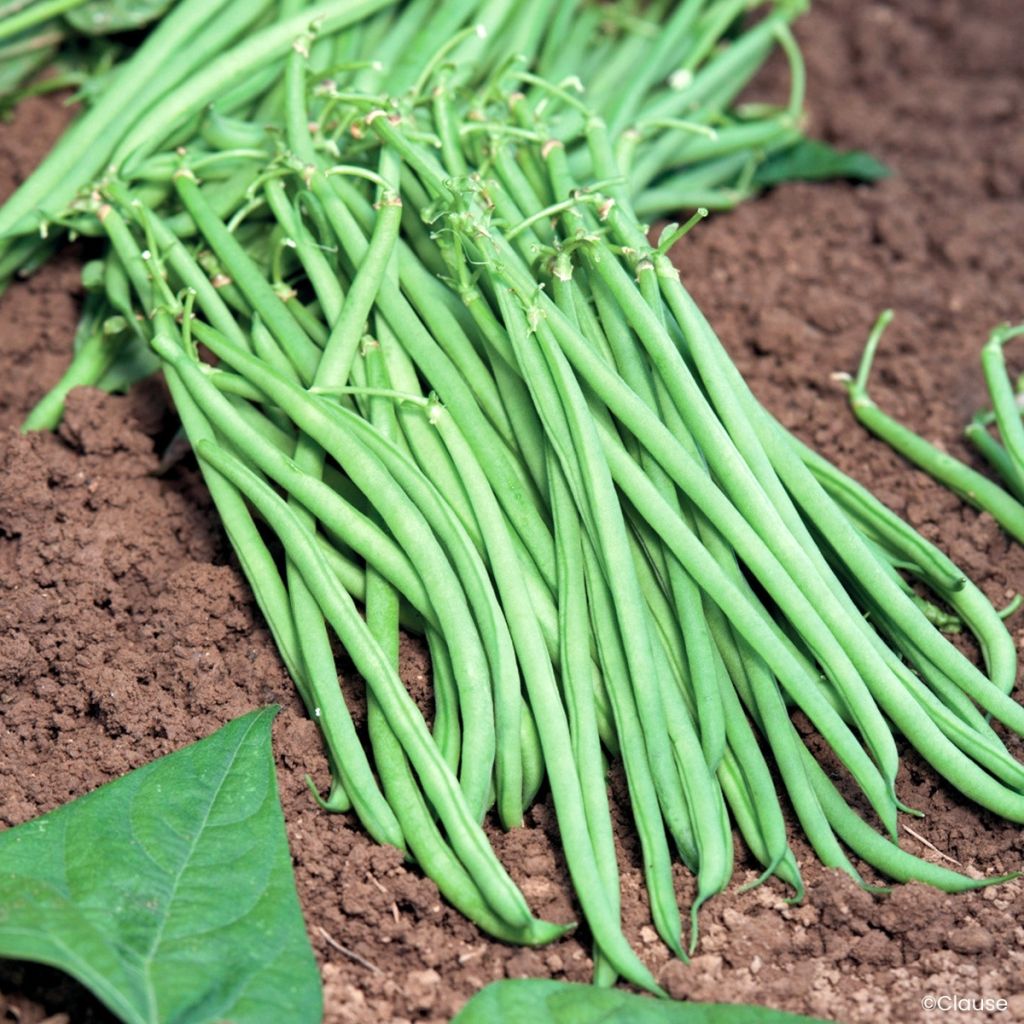
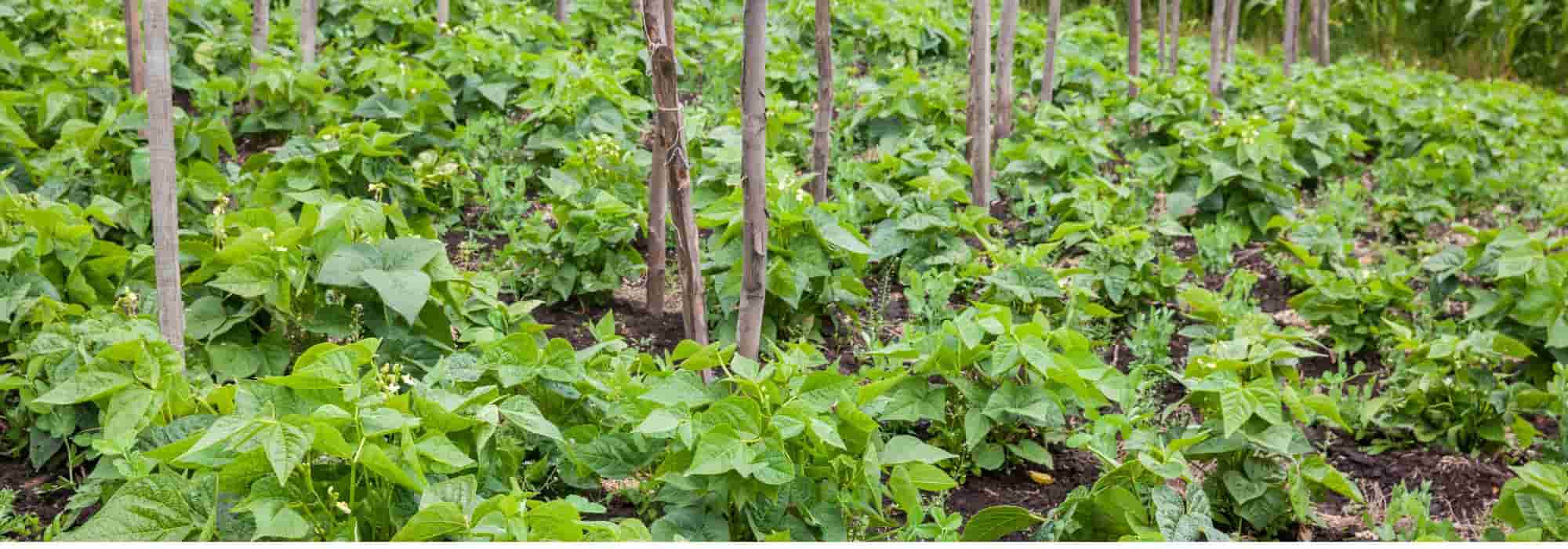
Dwarf French Bean 'Fleuret' is an extra-fine green bean, selected for its long, very slender, and perfectly stringless pods. This early variety is also characterised by an abundant and prolonged yield; its pods remain tender and flavoursome for several days on the plant. With good disease resistance and low sensitivity to wind, 'Fleuret' is a reliable variety. Its crunchy-melting mangetout beans can be cooked fresh or frozen.
The 'Fleuret' bean belongs to the species Phaseolus vulgaris, the common bean, an annual of the Fabaceae family. It is a dwarf mangetout bean: the entire pod is eaten, lacking parchment and string, at a stage when the seeds are still underdeveloped.
'Fleuret' shows good resistance to the main bean diseases, notably common mosaic virus and anthracnose.
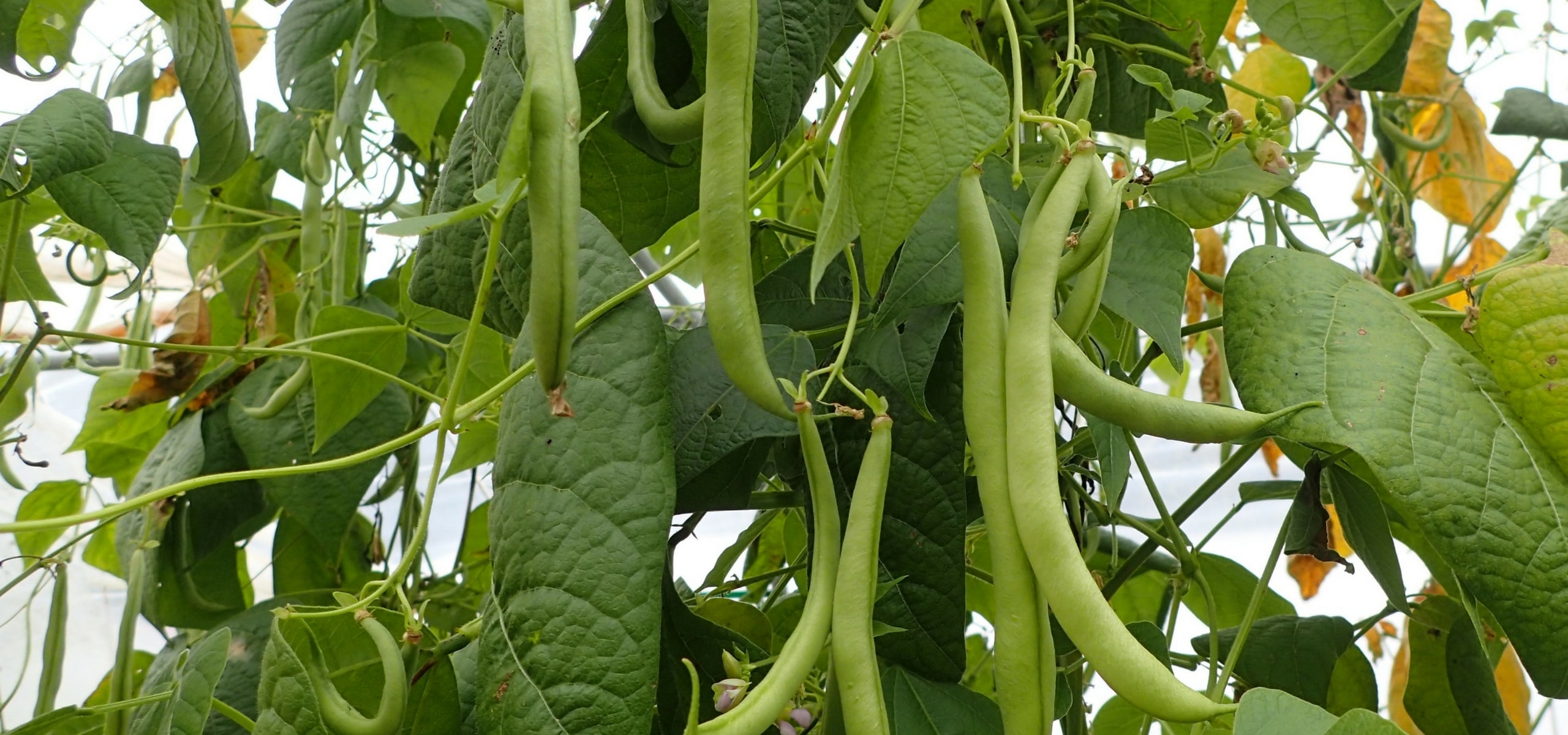
Each plant reaches about 40 cm in height with a spread of 25 to 30 cm, its short, sturdy stems do not require staking. The white to creamy white, slightly greenish flowers are grouped in small clusters borne in the leaf axils. They are hermaphrodite and predominantly self-fertile. After flowering, the pods that give 'Fleuret' its reputation develop. They are long (about 15 cm), very slender, entirely round in cross-section, very straight, of a clear dark green and smooth. The texture of the mangetout is tender, fleshy without being fibrous, with a mild, aromatic flavour; the variety is renowned for its very good eating quality. The pods are held above the foliage, which facilitates picking and keeps the pods clean.
'Fleuret' is a fast-growing bean: under favourable conditions, it takes about two and a half months from sowing to the first harvests. Flowering and production span from July to September, or even until October, depending on the sowing date. As with all beans, the pods should be eaten only when cooked to destroy the lectins present in the tissues. As it is a non-hybrid cultivar, you can save the seeds from one year to the next, resow them, and get roughly the same plants and the same beans.
The immature green pods are rich in vitamins A, B9 and C, trace elements and mineral salts. The dried beans are also very rich in vitamin C, trace elements and especially plant proteins.
Preservation: Freezing the pods is the most common method of preservation. Canning gives the beans particular flavour qualities that some appreciate.
The Gardener's Tip: Beans, like all legumes (Fabaceae), can fix nitrogen from the air into the soil thanks to a plant-bacterium symbiosis. They contribute to soil enrichment. You can sow a bean crop as part of a crop rotation after incorporating green manures.
The bean is a plant with low nutrient requirements. Traditionally, bean cultivation in Central and South America is associated with squash and maize, forming a triad whose companion planting is beneficial. This association is locally called Milpa. Beans also associate very well with aubergines, carrots, cabbages, potatoes, and radishes as they protect each other. However, avoid growing with alliums or fennel as their growth inhibits each other.
A spray of nettle manure provides effective control of aphid attacks and strengthens the young plants.

Harvest
Plant habit
Foliage
Botanical data
Phaseolus
vulgaris var. nanus
Fleuret
Fabaceae
Dwarf French Bean
Cultivar or hybrid
Annual
Planting and care
Soil Preparation: Fleuret dwarf French bean prefers light, moist but not waterlogged soils rich in nutrients. It does not, however, like overly chalky or acidic soils. Therefore, it is advisable to prepare the soil well by deep digging to a depth of 20 cm without turning the soil over. Then, add well-rotted compost or manure. Do not sow the bean in soil that has been limed recently, as this causes hardening and diminishes the flavour quality of the pod.
Sowing under cover: Under cold frames or polytunnels, you can begin sowing beans from mid-March. The bean is a tender vegetable; it requires the soil to have reached a minimum of 15°C. Position the frames facing due South or due West. Ventilate them only during the warmest hours of the day. Remove the protections only when frosts are no longer a concern.
Direct sowing: You can sow direct from April in southern regions or from May once the soil is sufficiently warmed and frosts are no longer a threat. Dig furrows 3 to 4 cm deep, spaced 40 cm apart. Sow your seeds, spacing them 5 to 7 cm apart, or in stations of 4 to 5 seeds spaced 40 cm apart in all directions. Cover the soil and firm it gently with a rake. When the young plants have reached a height of 20 cm, earth up the bases so they are well supported.
Make successive sowings of beans every 15 days for a prolonged harvest.
Seedlings
Care
Intended location
Planting & care advice
-
-
-

-

-
-
-

-

This item has not been reviewed yet - be the first to leave a review about it.
Recently viewed products
Haven't found what you were looking for?
Hardiness is the lowest winter temperature a plant can endure without suffering serious damage or even dying. However, hardiness is affected by location (a sheltered area, such as a patio), protection (winter cover) and soil type (hardiness is improved by well-drained soil).
In temperate climates, pruning of spring-flowering shrubs (forsythia, spireas, etc.) should be done just after flowering.
Pruning of summer-flowering shrubs (Indian Lilac, Perovskia, etc.) can be done in winter or spring.
In cold regions as well as with frost-sensitive plants, avoid pruning too early when severe frosts may still occur.
The harvesting period indicated on our website applies to countries and regions in USDA zone 8 (France, England, Ireland, the Netherlands).
In colder areas (Scandinavia, Poland, Austria...) fruit and vegetable harvests are likely to be delayed by 3-4 weeks.
In warmer areas (Italy, Spain, Greece, etc.), harvesting will probably take place earlier, depending on weather conditions.
The sowing periods indicated on our website apply to countries and regions within USDA Zone 8 (France, UK, Ireland, Netherlands).
In colder areas (Scandinavia, Poland, Austria...), delay any outdoor sowing by 3-4 weeks, or sow under glass.
In warmer climes (Italy, Spain, Greece, etc.), bring outdoor sowing forward by a few weeks.
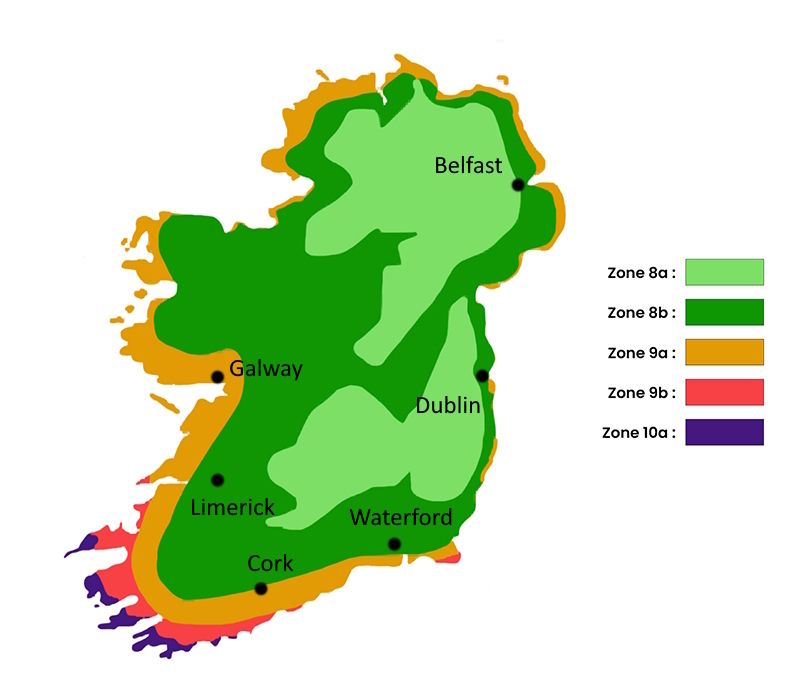
The planting period indicated on our website applies to regions in USDA Zone 9a (East Coast and Midlands: Dublin, Wexford, Waterford, Kilkenny, Portlaoise). It will vary depending on where you live:
- On the west coast and in the north-west (Galway, Limerick, Sligo, Donegal, Westport), delay planting by 1 to 2 weeks in spring and bring it forward by 1 to 2 weeks in autumn compared to the dates given, preferably choosing periods without strong winds.
- In the inland hills and plateaus (Wicklow Mountains, Macgillycuddy’s Reeks, Connemara, Killarney), it is best to plant in spring (April–May) or autumn (September–October), avoiding periods of waterlogged soil in winter and strong winds, which pose the main risk to newly planted trees in these areas.
The flowering period indicated on our website applies to regions in USDA Zone 9a, such as the East Coast and Midlands, including Dublin, Wexford, Waterford, Kilkenny and Portlaoise.
This will vary depending on where you live:
- On the west coast and in the northwest (Galway, Limerick, Sligo, Donegal and Westport), it will be delayed by one to two weeks compared to the given dates, due to stronger Atlantic winds and less spring sunshine.
- In the inland hills and plateaus (the Wicklow Mountains, the Macgillycuddy's Reeks, Connemara and Killarney), flowering will be delayed by two to three weeks. Flowering mainly occurs between May and July, with the limiting factors being less frost and more of the excessive humidity, strong winds and lack of sunshine that are characteristic of these areas.
Shipping country and language
Your country of residence may be:
Your country of residence is:
For a better user experience on our website, you can select:
Your shipping country:
-
 Austria
-
 Belgium
-
 Bosnia & Herzegovina
-
 Bulgaria
-
 Croatia
-
 Cyprus
-
 Czechia
-
 Denmark
-
 Estonia
-
 Finland
-
 France
-
 Germany
-
 Greece
-
 Hungary
-
 Iceland
-
 Ireland
-
 Italy
Italy
-
 Latvia
-
 Liechtenstein
-
 Lithuania
-
 Luxembourg
-
 Malta
Malta
-
 Netherlands
-
 Poland
-
 Portugal
-
 Romania
-
 Serbia
-
 Slovakia
-
 Slovenia
-
 Spain
Spain
-
 Sweden
-
 Switzerland
Language:
-
French
-
 English
-
Spanish
-
Italian
-
German
-
Portuguese
-
Dutch
-
Finnish
My Account
Hello
My wish lists
My cart
Log in / Register
Existing customer?
This form is protected by reCAPTCHA - the Google Privacy Policy and Terms of Service apply.
New customer?
Create an account to track your orders, access our customer service and, if you wish, make the most of our upcoming offers.