Potatoes potato are among the easiest and most rewarding vegetables to grow in a vegetable garden. Undemanding and productive, they adapt to different growing methods: in open ground, in containers, in grow-bags or towers, or under glass. But to succeed in growing potatoes, you need to know when and how to plant them! Discover our tips to succeed in planting potatoes and choose the right time.
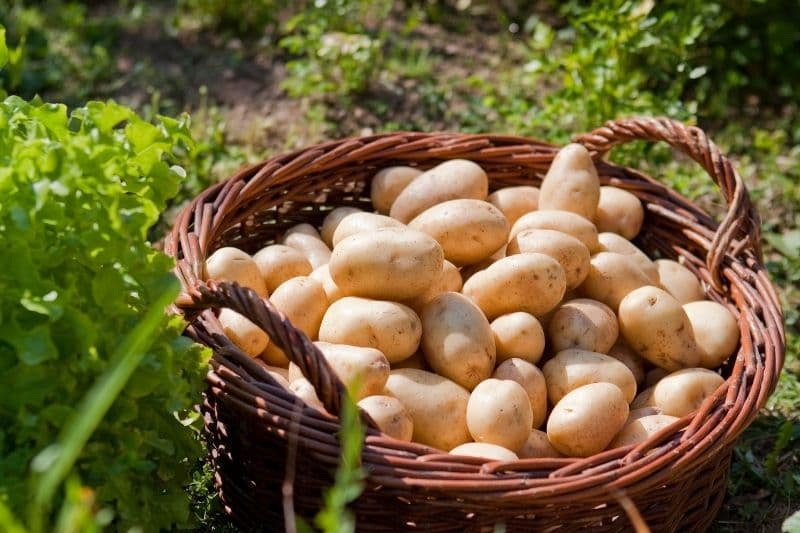
When to plant potatoes?
Best planting time for potatoes depends mainly on three factors:
- Type of variety (early, mid-season or late) you want to grow,
- climate of your region,
- and chosen growing method (under glass or outdoors).
In southern France or in mild climates, first plantings can begin late February under glass or in March outdoors, especially for early varieties.
In northern France, at altitude or in cooler climates, it is advisable to wait until April, or even early May, to plant outdoors, when soil has warmed to about 10 °C and frost risk has passed. In greenhouse culture or under cloches/cold frames, planting can be brought forward by 3 to 4 weeks, particularly for new potato harvests.
Late varieties, meanwhile, are planted slightly later, between mid-April and early May. They need a longer growing season, often until September, and suit regions where autumn remains mild and not overly wet.
Tip: check growing instructions on the packaging of seed potatoes.
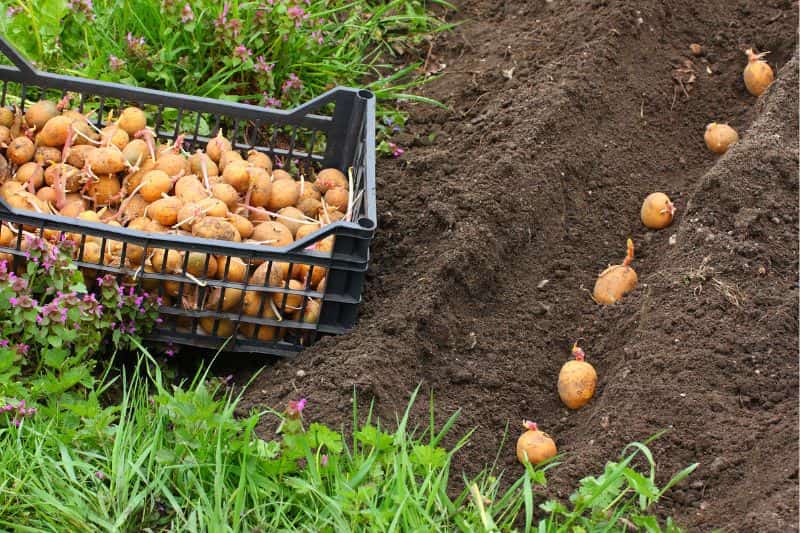
Preparing seed potatoes before planting
Before planting, it is recommended to chit the tubers for 3 to 5 weeks. Place them with shoots facing upwards in crates or egg trays, then keep them in a bright, well-ventilated and cool place, ideally between 10 and 12 °C. An unheated porch, a cold greenhouse or a light garage are suitable.
Shoots appear after a few weeks. When sprouts are 2 to 3 cm long, stocky and well coloured, potatoes are ready to be planted.
For more information, see also our article: How to chit potatoes?
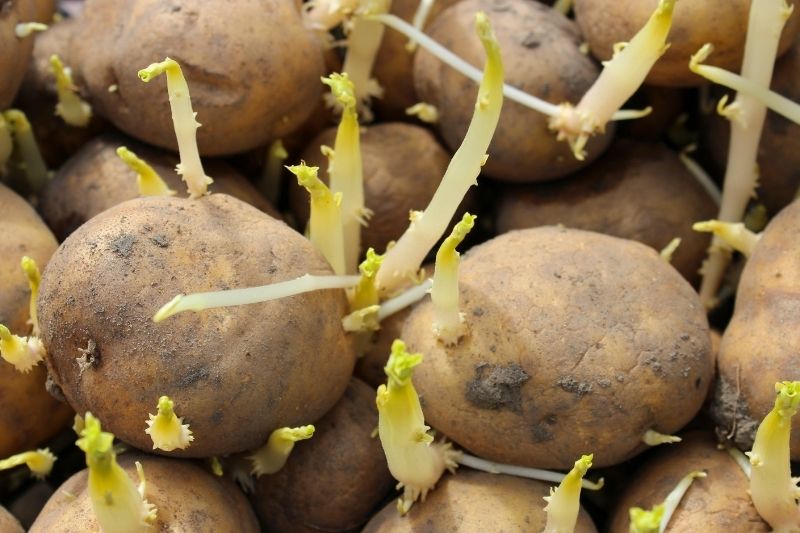
Where to plant potatoes?
Potatoes need full sun in a well-ventilated position, which limits excess moisture and reduces disease risk.
They prefer a light, loose, fertile and well-drained soil, with neutral to slightly acidic pH. In heavy soil, add well-rotted compost or some sand. In very sandy soil, improve structure with well-rotted manure, homemade compost or horticultural compost to retain moisture and feed young plants.
Avoid fertilisers too rich in nitrogen: they promote foliage at the expense of tubers. Well-rotted compost worked in during autumn or a few weeks before planting is usually sufficient.
How to plant potatoes in open ground?
1- Make drills 10 to 15 cm deep, spaced 60 to 70 cm apart.
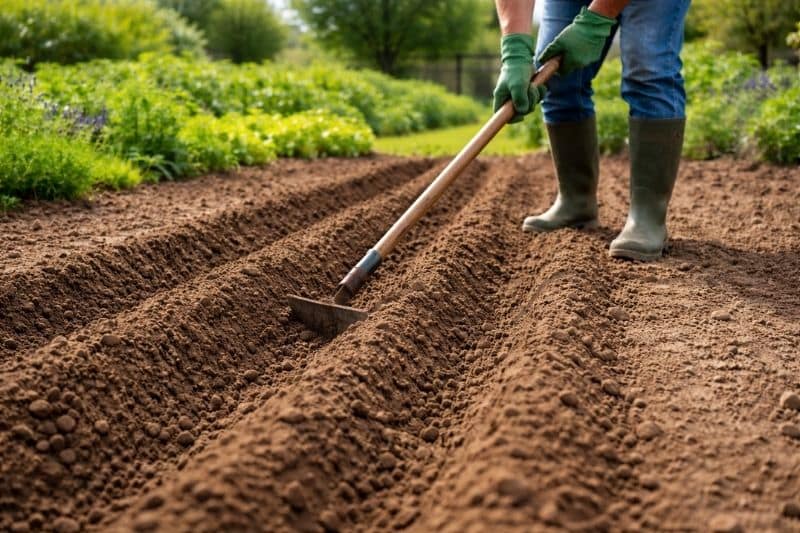
2- Place the tubers, shoots facing upwards, every 30 to 40 cm, according to variety vigour.
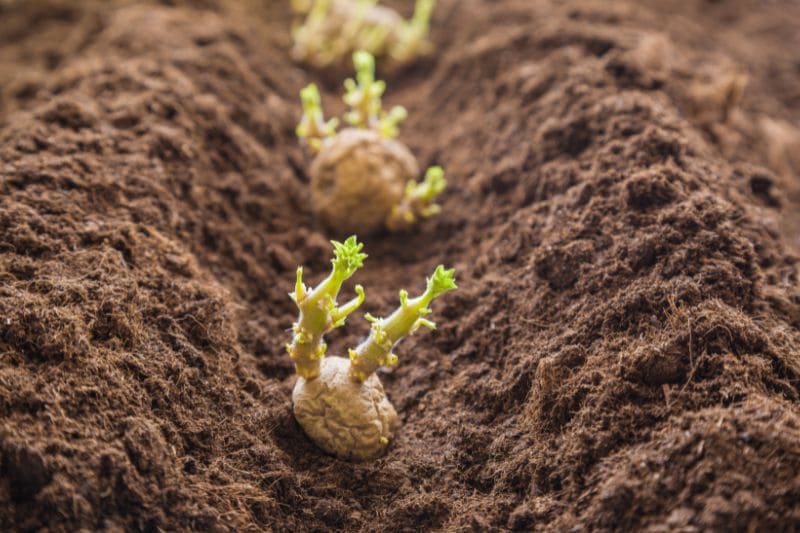
3- Cover potatoes without firming the soil, forming a mound above the tubers. Water lightly if soil is dry.
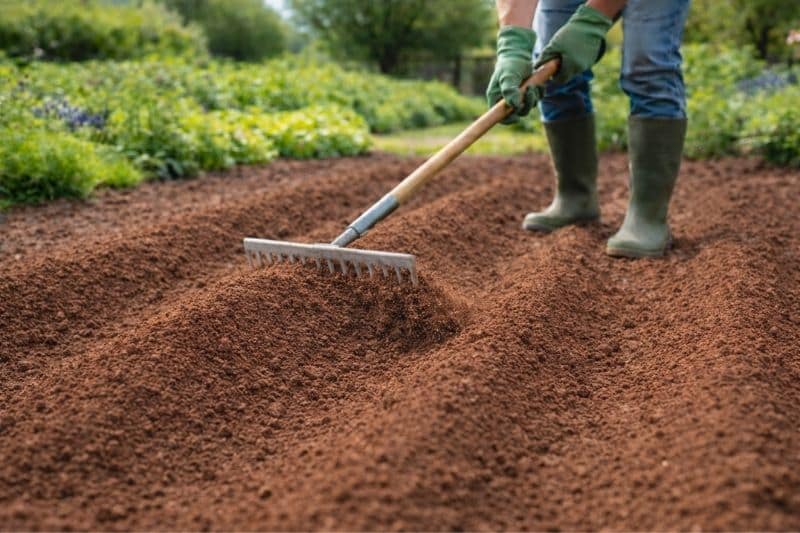
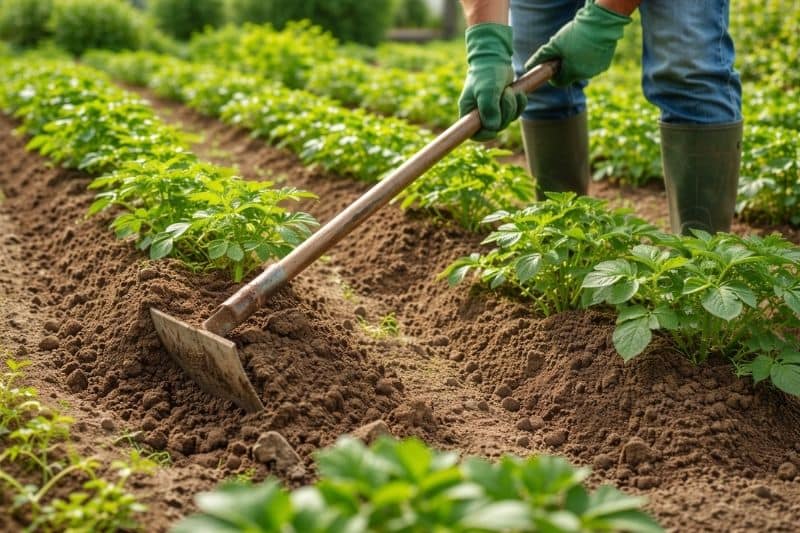
4- Once young shoots have emerged (15 to 20 cm), earth up: draw soil up around the plants to protect tubers from light and stimulate yield. It is advisable to repeat earthing up several times during the season. For more on this step, see our detailed article: How and when to earth up potatoes?
Can potatoes be grown in other ways?
Yes, potatoes also adapt to other methods:
- In a cold greenhouse or under cold frames: this allows an earlier start to the season, particularly for early varieties. Soil stays warmer and plants are protected from late frosts. It’s also a good way to gain a few weeks on the harvest.
- In containers, sacks or grow towers: ideal for balcony, terrace or small garden. Start with a layer of compost or potting compost, then add seed potatoes and top up with substrate as the plant grows.
- On no-dig soil with mulching: inspired by permaculture, this technique involves placing tubers directly on lawn or on loosened, weed-free soil, then covering with a thick layer of straw, hay or grass clippings. Maintenance is reduced and harvesting is easy, sometimes even without digging. For more, read: Planting potatoes on grass or watch our video :

































Comments