Phacelia (Phacelia tanacetifolia) is an annual plant much appreciated in the garden for its role as a green manure and its ability to attract pollinating insects. It is distinguished by clusters of mauve flowers and finely divided foliage. Used between crops or on a fallow patch, it helps improve soil structure, slow the growth of adventive weeds and promote biodiversity.
Sowing phacelia is also an economical and ecological choice: inexpensive, quick to grow and low-maintenance. If you are looking for a simple solution to improve your soil fertility, you are in the right place.
In this guide discover all the steps to succeed in sowing phacelia and make the most of its many advantages.
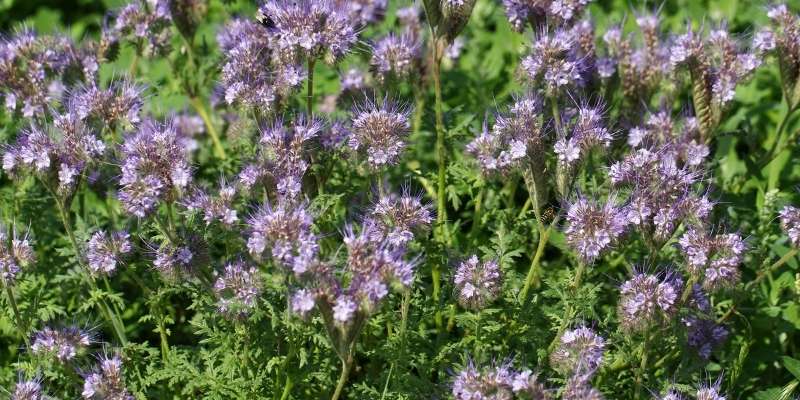
Why sow phacelia?
Sowing phacelia offers many benefits for the garden:
- More friable soil: its fine roots penetrate and aerate compacted soils.
- Natural fertility: it adds organic matter and enriches the soil once mown.
- Soil protection: it quickly covers the surface and slows the growth of adventive weeds.
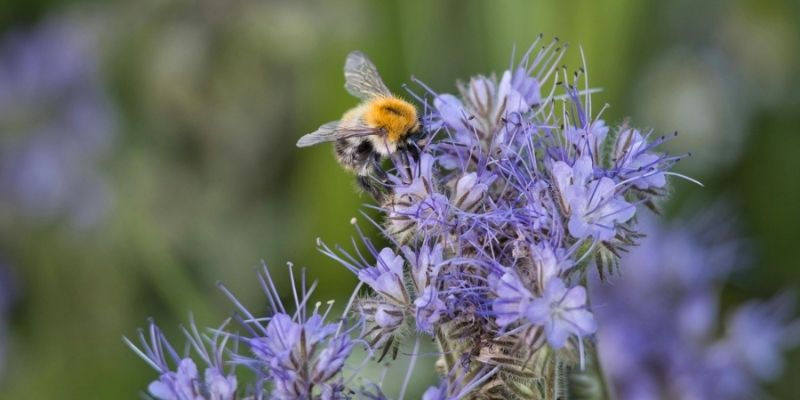
- Enhanced biodiversity: it attracts bees, hoverflies and other useful insects.
- Accessible crop: ideal for beginners with green manures.
- Fast-growing: it develops in just a few weeks.
It is ideal for preparing a patch before a vegetable crop or to protect the soil over winter.
When to sow phacelia?
Sowing period depends on the goal sought:
- Spring (March to May): to enrich the soil before a summer crop.
- Summer (June to August): to cover soil after a harvest.
- Autumn (September to October): to protect soil during winter while waiting for spring crops.
Good to know: phacelia should be sown directly in open ground, as it does not tolerate transplanting well. It germinates quickly when soil temperature is between 10 and 20 °C.
Where to sow phacelia?
Phacelia is undemanding, but a few conditions favour success:
- In open ground: this is its preferred setting.
- In a container or window box: useful for attracting pollinators in urban areas.
Ideal conditions:
- Exposure: full sun or light partial shade.
- Soil: light, well drained, even poor soils.
- Climate: tolerates variations well, including in humid regions.
It is particularly useful on tired soils or those left bare between crops.
Equipment needed to sow phacelia
To succeed with your sowing, equip yourself simply:
- A rake to break up and level the soil.
- A seed broadcaster or seed bed board for even distribution.
- phacelia seeds to ensure even germination.
- A watering can with a fine rose to water without displacing seeds.
- A roller or the back of the rake to press the soil lightly.
Practical steps to sow phacelia
Here is how to proceed practically, even if you are a beginner:
- Soil preparation: loosen soil to 5–10 cm and remove stones, roots and other debris.
- Level: break clods with a rake to obtain a fine, even tilth.
- Broadcast sowing: scatter seeds evenly over whole surface, avoiding sowing too densely.
- Light covering: cover seeds with a very fine layer of soil (a few millimetres is enough).
- Firming: press gently with the back of the rake or a roller to improve seed-to-soil contact.
- Watering after sowing: water with a fine spray to moisten surface without displacing seeds. Substrate should remain moist, never waterlogged.
- Moisture monitoring: keep soil slightly moist in days following sowing, especially in dry or windy conditions.
- Appearance of young shoots: emergence usually occurs in 7 to 10 days, sometimes longer depending on soil temperature and moisture.
Note: if sown densely, thinning is not necessary. Phacelia naturally develops to cover the soil effectively.

After sowing: care for young plants
Once seedlings appear, phacelia requires very little care.
- Watering: not necessary except during prolonged drought.
- Weeding: generally unnecessary thanks to the ground‑covering effect of phacelia.
- Rapid growth: it reaches 30–80 cm in a few weeks.
Using phacelia as a green manure:
- Mowing: cut phacelia before it sets seed.
- Incorporation: bury residues in the soil or leave them as mulch.
- Waiting time before cropping: wait about two to three weeks before sowing a new crop.
For more information, also see our guide: When and how to bury green manures?



































Comments