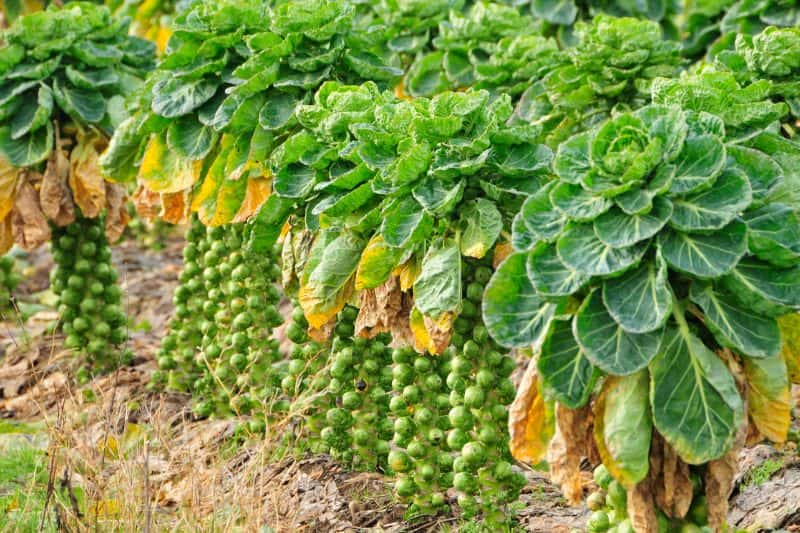
Brussels sprouts are autumn and winter vegetables appreciated for their small round buds formed along a sturdy stem. This vegetable plant is biennial, but grown as an annual to harvest its edible buds in the first year.
Sowing Brussels sprouts makes it possible to obtain a
Want to succeed with your Brussels sprouts sowing and obtain vigorous plants? Follow our guide, from germination to final planting in vegetable patch.
When to sow Brussels sprouts?
The sowing period for Brussels sprouts generally extends from March to May, depending on your region.
- In mild climates: sow from March under cover.
- In cooler climates: sow in April or May, in a cold frame or outdoors.
Sowing indoors or under cover
Sowing in pots or seed trays can start in March indoors, at an ideal temperature between 15 and 20 °C. This method allows faster germination and protects young plants from adverse weather.
Sowing outdoors
Outdoor sowing is done from April to May, when soil has warmed. This method produces naturally hardened plants but requires closer attention to slugs and flea beetles.
Where to sow Brussels sprouts?
Brussels sprouts prefer full sun and a deep, fertile, well-drained soil.
For sowing in pots or under cover
Place pots in a cold greenhouse, cold frame or a bright room without excess heat.
Tip: choose a light, free-draining growing medium, such as a special seed compost, to encourage germination.
For sowing outdoors
Choose a site:
- Sunny
- Sheltered from prevailing winds
- Soil enriched with organic matter (compost or manure)
Tip: Brussels sprouts are heavy feeders! Incorporate well-rotted compost before sowing or transplanting.
Equipment needed to sow Brussels sprouts
- Pots or a seed tray for indoor or under-cover sowing.
- A light growing medium: seed compost or a mix of quality compost and sand.
- Mini greenhouse or plastic film to retain heat and humidity.
- A spray bottle or a watering can with a fine rose to moisten without displacing seeds.
- Optional: a seed sower or a sowing board to distribute seeds evenly. Labels to identify variety and sowing date.
How to sow Brussels sprouts
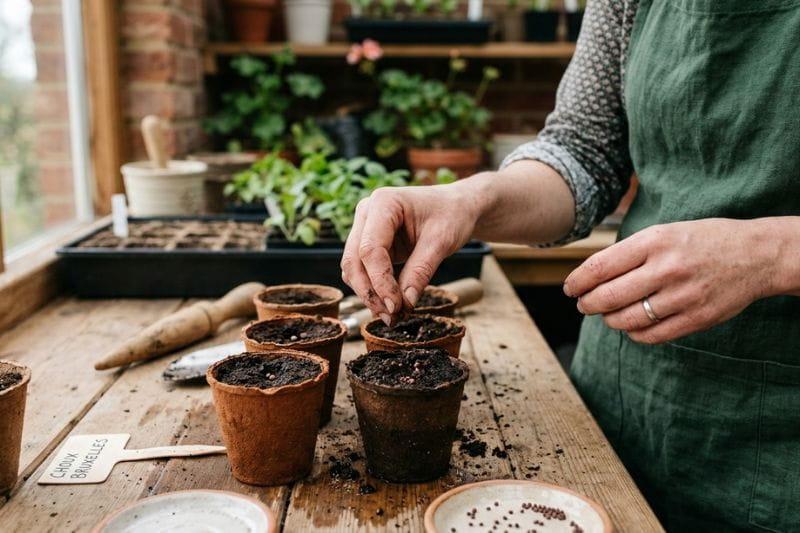
Sowing Brussels sprouts in pots or trays
- Fill containers with seed compost.
- Place 2 to 3 seeds per pot at about 1 cm depth.
- Cover with a thin layer of sieved compost.
- Moisten gently with a fine-rose watering can or spray bottle, without waterlogging the medium.
- Place seedlings in light at 15–20 °C, in a greenhouse, conservatory or indoors behind a window.
Tip: to retain moisture and heat, cover pots with a mini greenhouse or plastic film. - Keep medium slightly moist but not waterlogged until germination, which occurs in 5 to 10 days.
- When two true leaves are well formed, thin out to keep only the most vigorous plant per pot to encourage good root development.
Sowing Brussels sprouts outdoors
- Loosen soil to 15 cm and incorporate mature compost.
- Create shallow drills about 1 cm deep and space them 10 to 15 cm apart.
- Sow seeds in rows, spacing them about 2 to 3 cm apart, then cover with 1 cm of fine soil.
- Firm gently with the back of a rake.
- Water with a fine spray to keep soil slightly moist but not waterlogged.
Tip: you can install an insect-proof cover to limit flea beetle attacks on your brassicas. - Thin out when plants have 2 to 4 leaves, keeping the strongest every 5 to 8 cm.
Tip: this narrow spacing is temporary. Young plants will continue to develop and will be transplanted later to increase spacing.
After sowing: care and maintenance of young plants
Transplanting
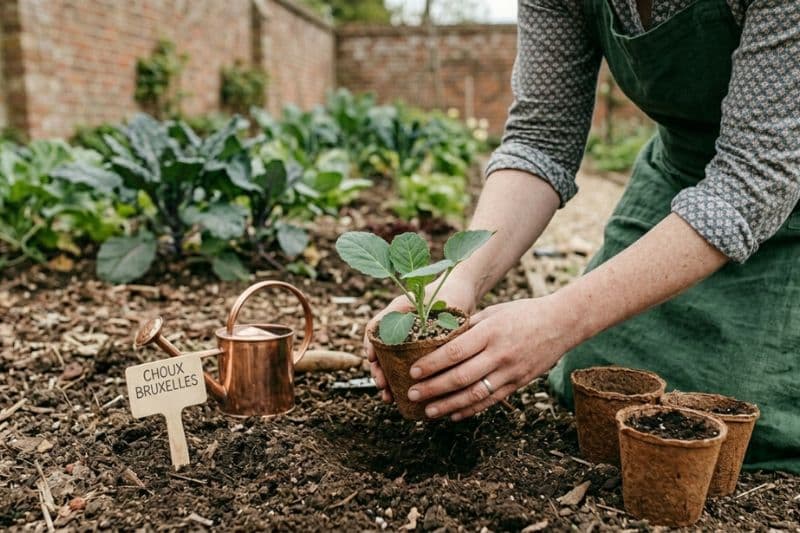
Transplanting Brussels sprouts into open ground takes place when plants reach about 15 cm in height, about 4 to 6 weeks after sowing.
- Space plants 50 to 60 cm apart in all directions. Brussels sprouts expand over months and need room to form good buds along the stem.
- Bury plants up to first leaves to encourage production of additional roots.
- Water well after planting to ensure good establishment.
- Light earthing up during the season helps stabilise the stem, especially in exposed sites.
Watering
During weeks following planting:
- Keep soil cool but well-drained.
- Water regularly in dry periods.
- Apply mulch to retain moisture and limit weeds.
Brussels sprouts are sensitive to fluctuations in soil moisture: overly dry soil can slow bud formation.
Pest and disease prevention
Also watch for caterpillars and flea beetles, common on brassicas. An insect-proof cover can be useful at the start of the season.
Harvesting Brussels sprouts
Harvest starts about 5 to 7 months after sowing, when small buds are firm. Pick progressively from bottom to top of the stem.


































Comments