Spring signals start to repot our houseplants as they enter growth phase after winter pause. Large, mature houseplants with broad foliage or tall stature such as Monstera or candelabra cacti are the trickiest to repot because of their size.
We explain how to carry out these XXL repottings correctly, stress-free for you… and without upsetting your plants.
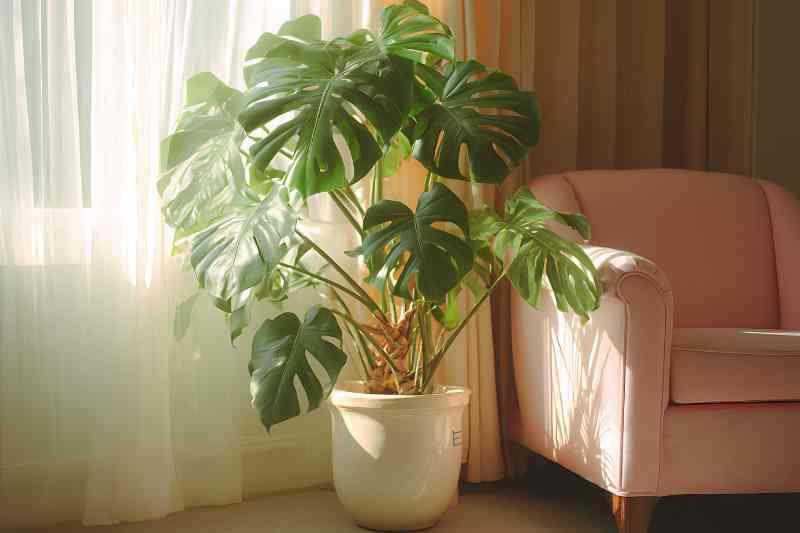
Large houseplants to repot
This tutorial focuses on the tallest or most imposing houseplants at maturity. These are plants growing over 1.50 m, mainly indoor palms (Areca, Dypsis…), Alocasia, Beaucarnea, banana plants, Dracaena, Euphorbia cacti, Ficus and rubber trees, Monstera, Pachira, Philodendron, Strelitzia, Yucca, etc.
Each of these plants has specific ideal repotting frequency, roughly every two to three years… Detailed sheets by plant type give precise guidance for houseplants that have reached generous proportions.
Why large houseplants also need repotting
Apart from plants that tolerate, or even prefer, a pot restricting their roots, most large houseplants will benefit from repotting. The bigger a plant, the larger its root system — obvious. It follows that it also needs more nutrients to support vigour, and therefore quality substrate in sufficient quantity. Moving to a larger-diameter pot is therefore necessary because nutrients available to the plant become depleted with successive waterings.
When to repot a large houseplant?
Best time is spring, between early March and April, when indoor daylength increases and plant resumes growth. For flowering plants such as Strelitzia, repot after flowering. Repotting can be done at other times if moving home or if timing was missed.
Do it especially when you see roots have filled the pot and the plant no longer benefits from each watering, water running straight through to the saucer and substrate drying out immediately. If root rot is suspected, repotting is also important.
Where to do it?
Ideally, when possible, work outdoors on a fine day, on a balcony, terrace or lawn if you have a garden. A potting bench is even better! In flat, a tiled room such as kitchen suits well for easier cleaning. Lay a tarpaulin whichever location, and choose a large clear space so you are not cramped.
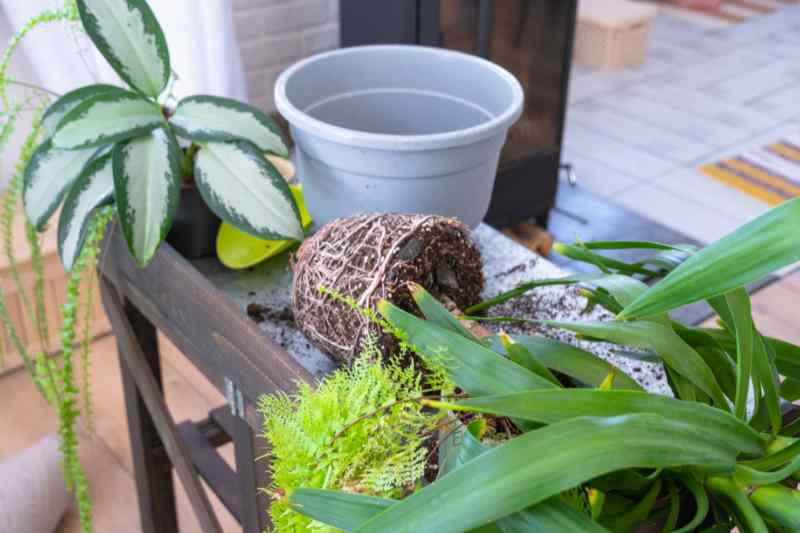
How to repot your houseplant
It is easier and less intimidating to repot a heavy large specimen with two people. While one handles pot and root ball, the other supports large root and foliage volume.
You will need:
- A tarpaulin or at least newspapers
- Gloves to handle plants with toxic latex
- A clean pot, slightly larger (5 to 8 cm extra maximum), with drainage hole (not too large either, which would inhibit growth and create excess moisture), heavy enough to support plant weight
- Clay pebbles or gravel (optional)
- A draining potting mix suited to the plant (a substrate for houseplants made of multi-purpose compost, more or less rich and filtering depending on species, for example one third multi-purpose compost, one third coconut coir, and one third perlite or sand)
- A small trowel or transplanter
- A rubber mallet, a blunt knife, a fork
- A pruning shear (optional)
Key steps from extraction to watering
- Have all equipment ready on the tarpaulin: pot, opened bags of compost to prepare mix, tools;
- Moisten root ball before handling, preferably day before or up to 48 hours prior, to avoid water stress. Roots will also be less brittle;
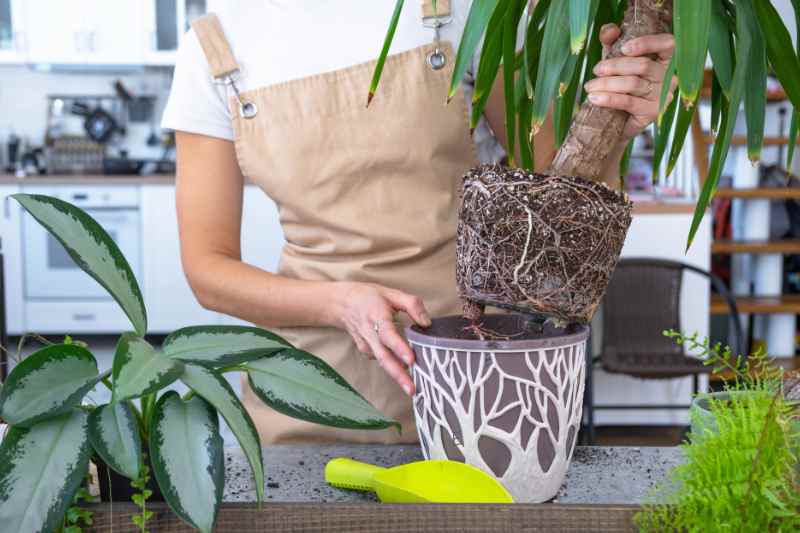
- Remove root ball from pot as gently as possible: tap pot sides lightly with rubber mallet to loosen root ball or use blunt knife to help release it. If unsuccessful, re-wet plant and wait a few hours or until next day to unpot your big specimen. If roots come out through drainage hole and trap the root ball, cut them. If pot still resists, cut plastic pot to free root ball or break terracotta pot. For very wide plants, lay pot on its side and roll gently to release root ball.
- Stand root ball on tarpaulin;
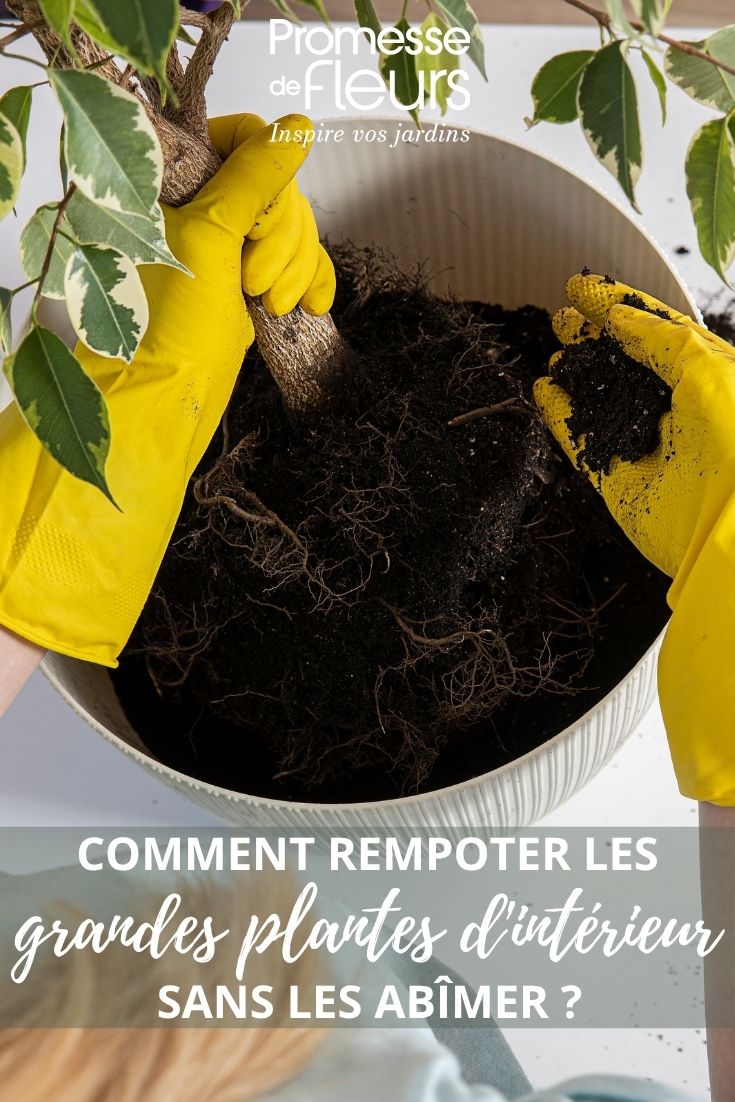
- Check root condition, and tease out if a root-bound mass has formed using a fork or blunt knife; avoid breaking large tangled roots and only cut black or soft roots with pruning shear, signs of rot. Remove some old substrate that is no longer nutritious (easy to scrape from around and above root ball);
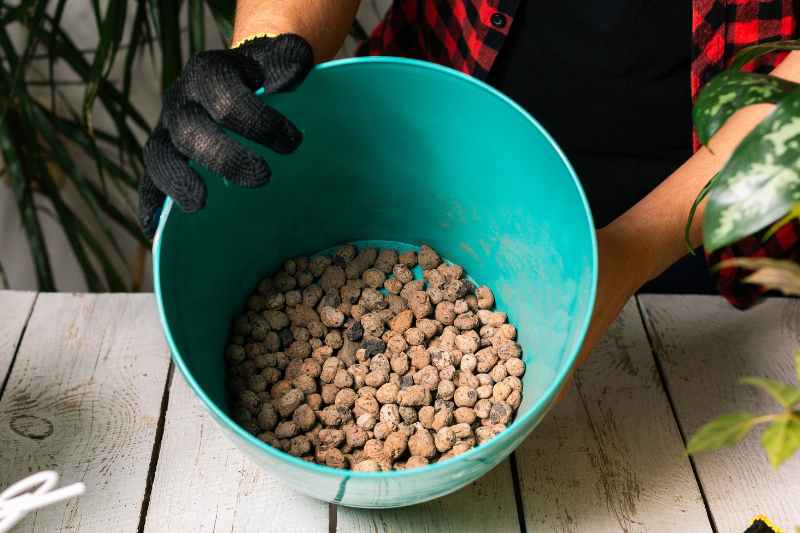
- Pour a drainage layer a few centimetres deep into new pot (at least 5 cm for a 50 cm diameter pot, 7–10 cm for a 60 cm pot, and more for cacti). That said, for very large pots and broad-leaved plants this step can be skipped, considering drainage layer takes up space while plant now mainly needs substrate to feed it;
- Add prepared potting mix to one third of pot;
- Place plant root ball so collar – base where leaves start – sits level with top of pot;
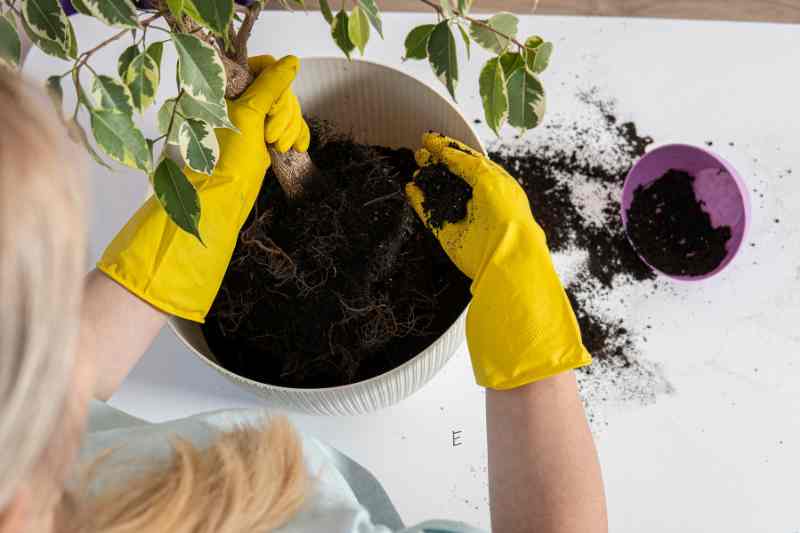
- Fill with potting mix, firming lightly around plant without compacting: level of soil should be about 2 cm below pot rim; always leave at least 1 cm between soil surface and top of pot; if two people, one helps hold root ball during filling;
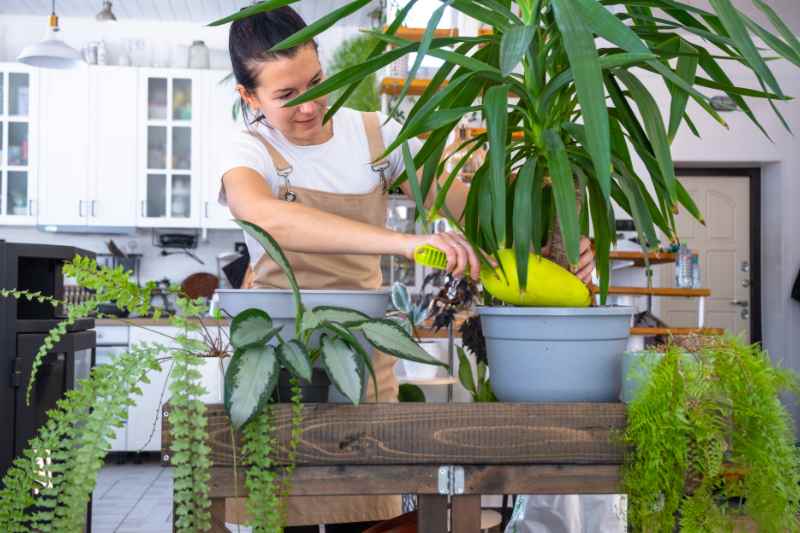
- Place plant on a saucer;
- Water thoroughly, using rainwater if possible, slowly and in two stages a few minutes apart to settle nutrients down to roots. Soil will compact with first waterings;
- Remove saucer after 30 minutes to let plant drain, then place pot in suitable new cachepot or on wheeled plant trolley;
- Return plant to same position (avoid direct sun), to avoid further shock* and rotate plant by a quarter turn;
- Wait at least fifteen days before any fertiliser application, preferably slow-release;
- Resume seasonal care of plant as usual.
* My tip: if plant will now live in another room or location, consider its footprint and move it where it will cause least obstruction. Prefer a heavy, stable pot (terracotta or reinforced plastic) and wide to avoid plant tipping over.
What if plant is really too large to repot?
Sometimes indoor plants become too awkward to handle because of breadth, height or pot weight, or simply because of age making the task difficult.
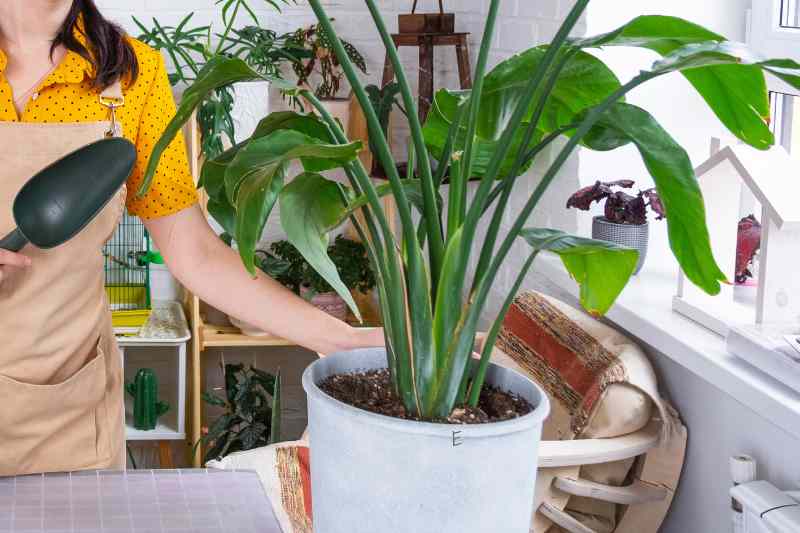
For old specimens or plants that have reached XXL dimensions, top-dressing is used — a technique consisting of replacing the top 3 to 5 cm of substrate with fresh, highly nutritious mix. Discard extracted soil, lightly tease fine roots of compacted specimens if needed, and incorporate a high-quality houseplant compost superficially: done annually, it provides the food the plant needs without disturbing root system.
My tip: annual top-dressing can postpone repotting so it is needed only every five years, so don’t hesitate to do it.

































Comments