Clematis is a climbing plant much appreciated in gardens for its generous flowering and wide variety. Some species produce spectacular flowers in spring, often from April, covering trellises, pergolas, fences or walls with an elegant floral veil. These spring-flowering clematis mainly belong to the Clematis montana, alpina or macropetala groups.
They flower on wood formed the previous year. In other words, flower buds develop on stems that grew last year. This characteristic directly affects how to prune a clematis of this type.
In this tutorial, discover when to prune a spring-flowering clematis and the precise steps to prune it correctly.
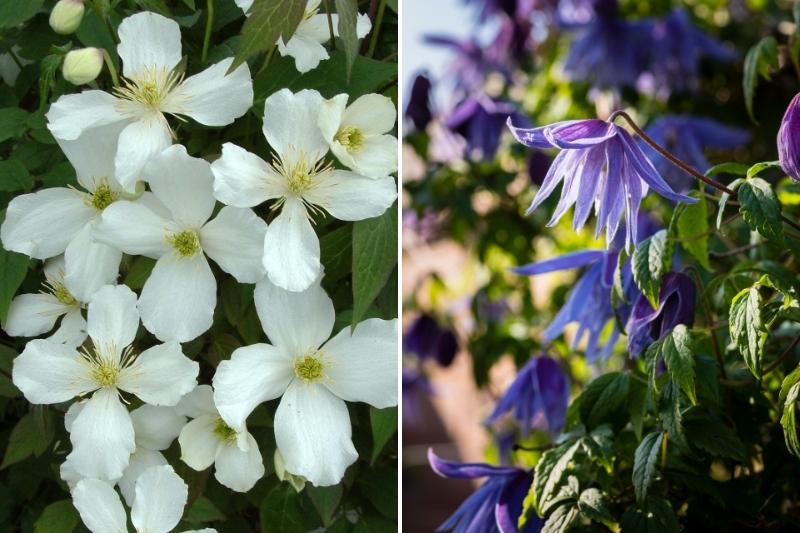
When to prune spring-flowering clematis?
Best time to prune a spring-flowering clematis is just after flowering, generally between May and June depending on region and variety.
This period is ideal for several reasons:
- The plant has just finished flowering.
- The stems that will bear next year’s flowers are beginning to develop.
- Pruning stimulates production of vigorous new shoots.
If clematis is young, pruning can remain very light. By contrast, an older or overgrown plant will benefit from a more marked maintenance pruning to keep a harmonious shape.
Why prune a spring-flowering clematis?
Pruning clematis is not always mandatory, but it helps keep plant balanced, encourage flowering and limit encroachment. Proper pruning also stimulates growth of new vigorous stems while preventing the plant becoming too dense or untidy.
Another benefit of pruning is disease prevention. Overly dense growth can restrict air circulation and favour the development of fungal diseases. By thinning the plant, air movement through the foliage is improved.
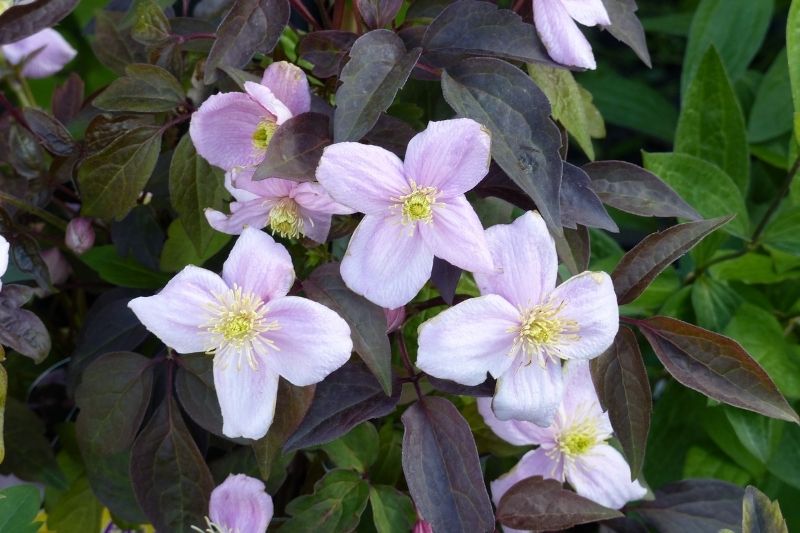
How to prune spring-flowering clematis?
Tools required
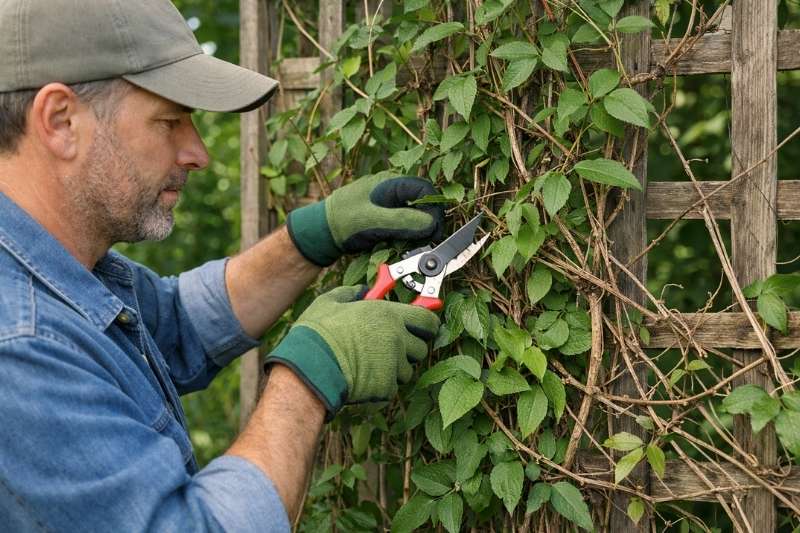
- A sharp pruning shear for clean cuts
- Loppers for thicker stems
- Gardening gloves to protect hands
Gardening tip: always disinfect cutting tools to avoid transmitting diseases from one plant to another.
Steps to prune spring-flowering clematis
1- Before pruning, take time to observe the plant and identify stems to remove. Aim is not to reduce plant drastically but to thin and structure its growth.
2- Cut dead, broken or damaged stems at their base to tidy plant.
3- Remove a few overly dense or crossing branches to improve air and light circulation.
Tip: cut just above a vigorous bud to encourage new shoot growth.
These simple actions allow effective pruning of a clematis while preserving its spring flowering.
Special case: rejuvenation pruning of a clematis
For a very old or overgrown clematis, it is possible to
After pruning: care and maintenance of clematis
After performing pruning of clematis, a few maintenance actions help plant regenerate.
- Moderate watering can be useful if period is dry, especially for plants grown in sun or in light soil.
- Adding a mulch at base of plant helps conserve soil moisture and protect roots. Clematis appreciate having roots in shade and top in sun, which can be achieved with mulch, a tile or by planting small perennials at the base, such as a geranium 'Rozanne'.
- Work a handful of ripe compost or organic fertiliser (eg bone meal or fertiliser for flowering plants) into the soil very lightly with a fork to avoid damaging roots.
- Adjust distribution of stems to guide plant on its support.



































Comments