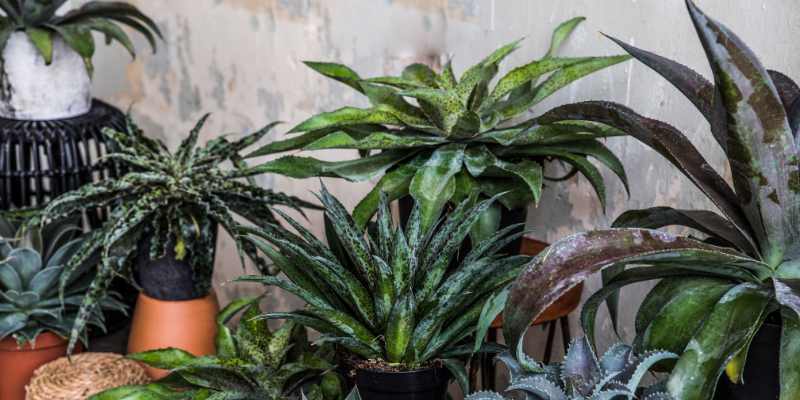
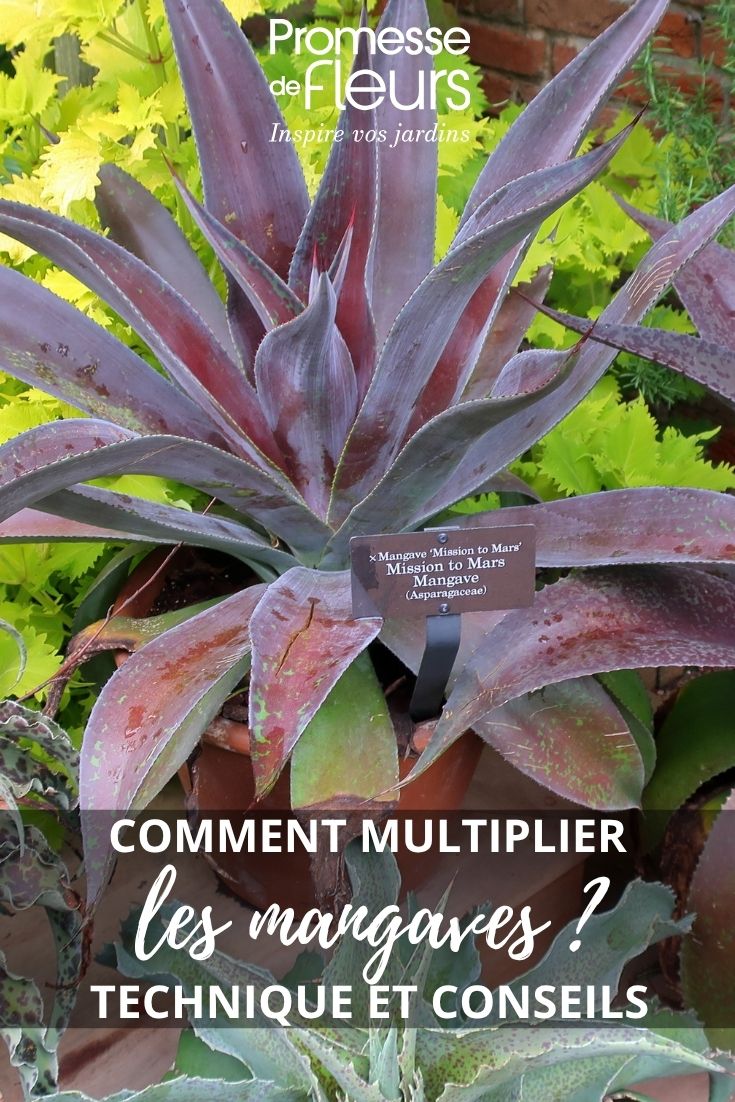
Propagating a mangave, this rosette-forming succulent resembling agaves but displaying striking dark, mottled colours, is fairly simple, as offshoots that arise at the base of the parent plant are used. In this tutorial we explain how to obtain new plants!
Why propagate a mangave?
As with agave, these are quite expensive to buy. Dividing your own mangave allows savings and the chance to give plants to friends, this plant often being much appreciated for its architectural appeal. They can also die over winter if not overwintered correctly.
They are mostly semelparous, dying after their single flowering, and thus naturally propagate by producing offshoots, their offspring!
You may also want several indoors or in a winter garden, simply for a very exotic look! And anyone living in warm climates can enjoy them both indoors and outdoors.
When to propagate a mangave?
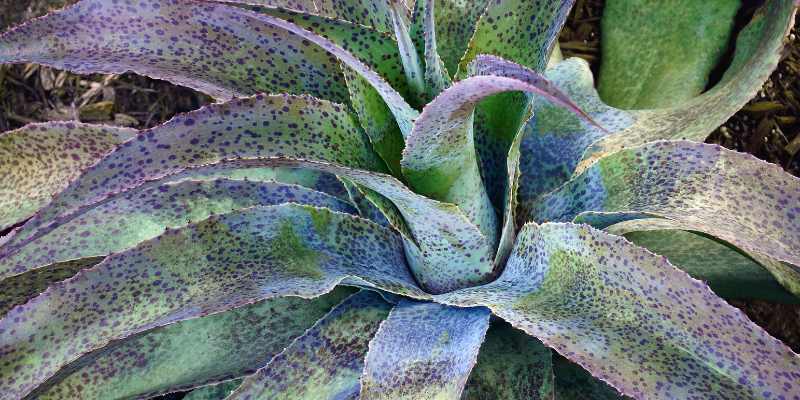
Propagation is generally done after several years: mangaves are often bought as plug plants or in small pots, and take time to produce side shoots. Indeed, it is after producing a long flowering stem that it sends out offshoots and when you can easily think about propagating. Mangave can also produce bulblets along the tall flower stalk, so this is a good moment too.
Carry out propagation all year when these conditions are met, since multiplication of this beautiful frost-tender plant is done in warmth, indoors.
How to propagate a mangave?
We therefore strongly recommend propagation by offshoots, separating them from the parent plant, seed sowing being possible only for specific species or cultivars that do not produce offshoots and die after flowering such as 'Kaleidoscope' or 'Blazzing Saddles'.
Steps
- Wait until offshoots are large enough before separating them: rosettes should be well formed, at least 1/4 to 1/3 of the parent plant's size, and have developed their own roots;
- Carefully remove the mangave from its pot;
- Gently detach the offshoot, as close to its base as possible, with a sterilised knife or by hand if the offshoot comes away easily, but do not pull forcefully, which could damage its roots. You will have an offshoot with fleshy roots;
- Allow a callus to form: 1 to 2 days in open air and shade is enough to avoid rot after repotting;
- Replant in a well-draining mix (cactus compost + perlite or pumice);
- Place the young plants in a bright spot but out of direct sun;
- Wait two to three weeks before watering.
- Place in indirect light (no direct sun during the first weeks).
Our tips
- The more roots an offshoot has, the greater its chances of survival after separation. But the offshoot does not need to be large: as long as it has its own roots (even small), it can be separated and replanted successfully. Conversely, avoid forcing separation if the offshoot resists: wait until it is more mature.
- Bulblets on the flower stalk, however, should be removed and planted directly into a draining mix, without allowing them to dry beforehand.

































Comments