Asparagus is a superb houseplant with finely divided, feathery and very airy foliage, reminiscent of fern fronds. The best-known cultivated species are Asparagus plumosus and Asparagus densiflorus, the foxtail fern. These plants thrive in pots in a bright interior, sheltered from direct sun. Propagating Asparagus lets you rejuvenate an over-dense specimen and obtain new plants to decorate home or give to friends and family. The simplest method is clump division, but it is also possible to propagate Asparagus from seed. We will guide you to propagate your Asparagus easily!
How to divide Asparagus?
When to divide Asparagus?
Division is ideally carried out in early spring, when the plant enters active growth, which favours good re-establishment. However, Asparagus is a hardy plant: division can succeed at almost any time of year. It is often convenient to divide clumps when repotting the plant.
Materials required
- garden knife or pruning shears, disinfected to avoid contamination.
- Pots with drainage holes to prevent excess moisture.
- well-draining substrate (light potting compost, optionally enriched with perlite or sand).
- Watering can to lightly moisten substrate after repotting.
Steps to divide Asparagus
- Water plant the day before to make removing it from its pot easier.
- Gently remove the plant from its pot and brush away excess soil from around the roots so they are clearly visible.
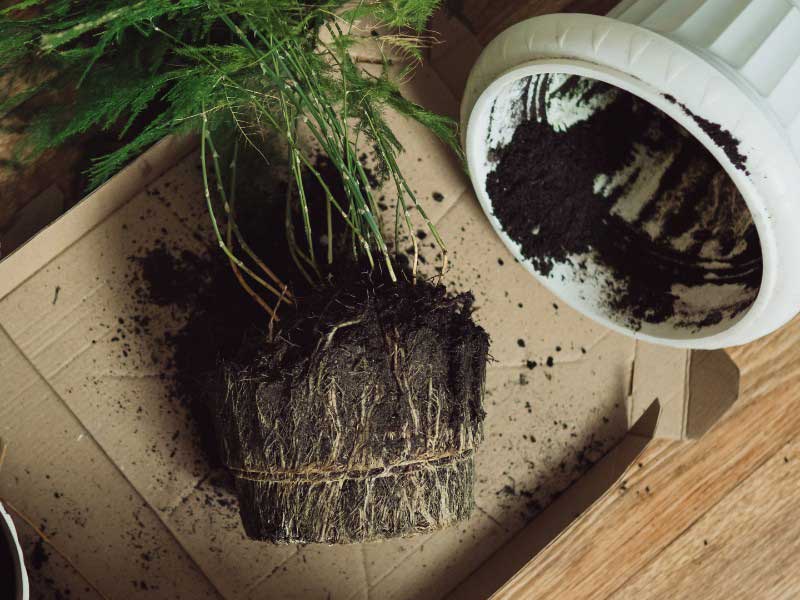
- Remove dead or damaged parts (roots or stems).
- Carefully separate the root ball into several sections, by hand or using a clean knife. Each section should retain healthy roots and stems.
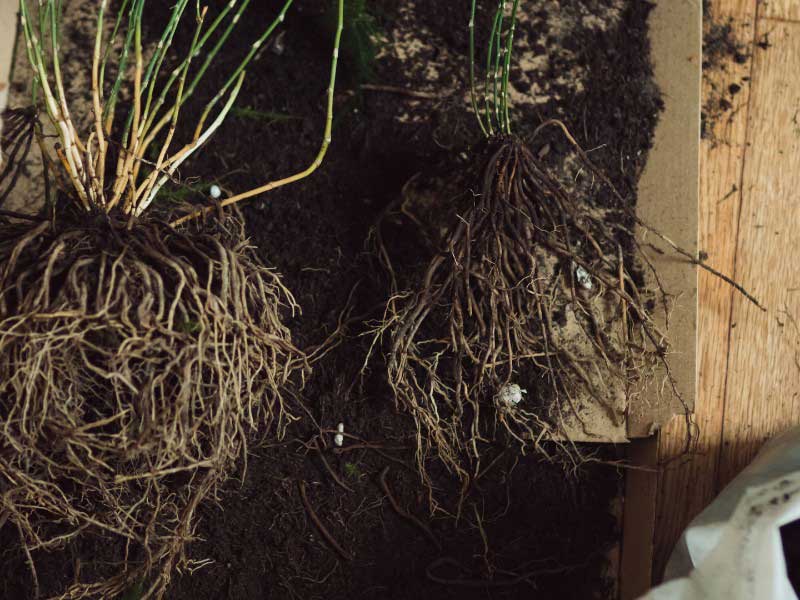
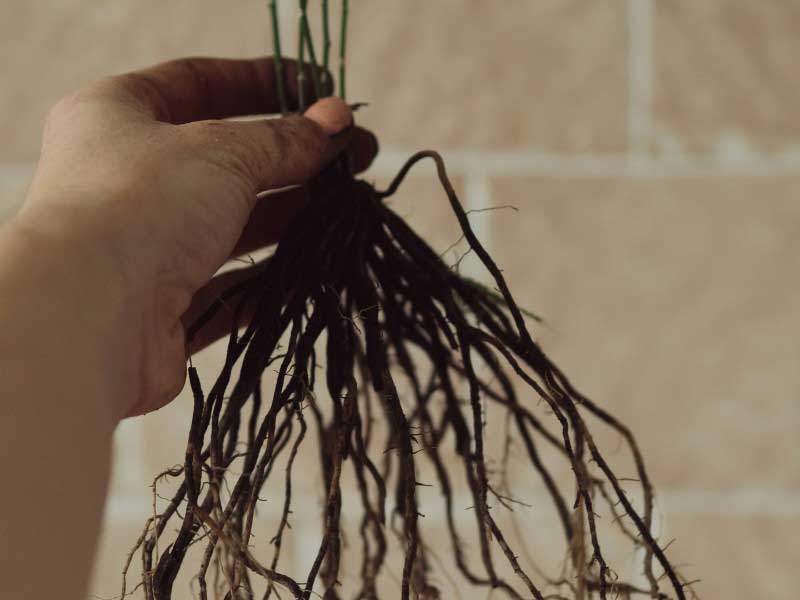
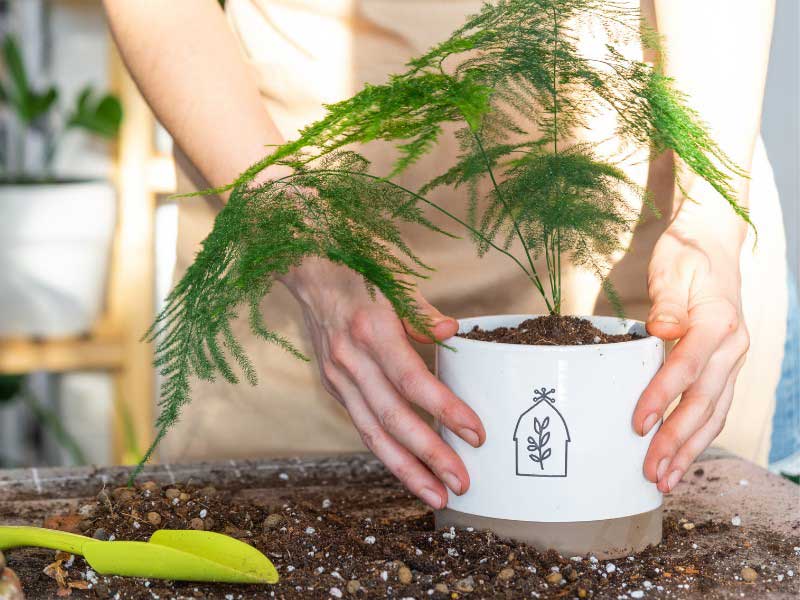
- Place each division in a new pot with a well-draining substrate, and firm lightly.
- Water to remove air pockets, ensure good root-to-soil contact and encourage re-establishment.
- Position each new plant in a bright spot out of direct sunlight to avoid leaf scorch.
How to sow Asparagus seeds?
When to sow Asparagus?
Sowing is less common, but it is possible to sow Asparagus in early spring (March–April). This period provides favourable temperature and light conditions for germination.
Materials required
- Asparagus seeds
- Pots or seed trays
- Light, fresh, well-draining substrate, ideally seed compost.
- Watering can with a rose, or a spray bottle, to water substrate gently.
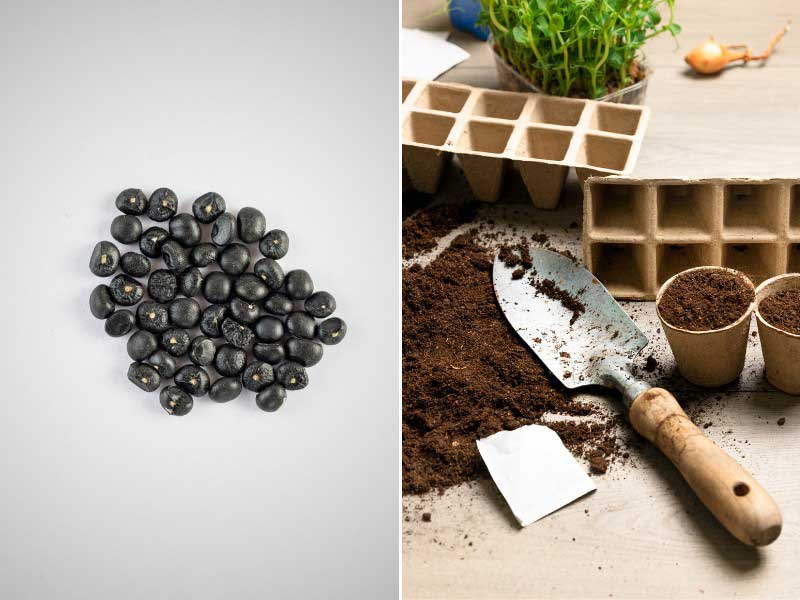
Steps to sow Asparagus
- To aid germination, lightly scarify seed surface (gently rub with fine sandpaper) and soak seeds in water for 24 hours.
- Fill pots with seed compost.
- Sow seeds on substrate surface (they need light to germinate), pressing them in lightly. Do not cover.
- Water with a fine spray, using a watering can or spray bottle.
- Keep substrate moist (avoid standing water). You can cover seedlings with plastic film to retain humidity, but ventilate regularly.
- Germination generally takes 3 to 4 weeks at room temperature (~20–25 °C).
- As soon as seedlings develop their first true leaves, prick out into individual pots to give them room to grow.
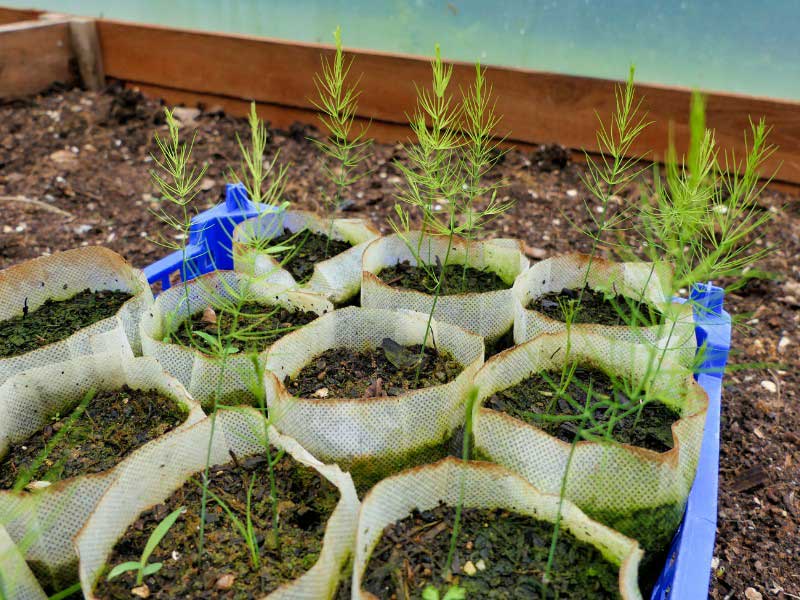
Care and maintenance of young Asparagus plants
After division or sowing, young Asparagus plants require particular attention. Substrate should be kept slightly moist, without excess water, to encourage rooting without causing rot.
Place young plants near a bright window but out of direct sunlight to avoid scorching of still-tender foliage. Asparagus prefers temperatures between 18 and 22 °C, with a slightly humid atmosphere. Feel free to mist foliage from time to time.
You can apply a light liquid feed about one month after propagation. Repeat every few weeks during the growing season to boost vigour of young plants.
Finally, regular monitoring helps prevent pest attacks such as scale insects or red spider mites, which sometimes appear in dry conditions. With these simple measures, young Asparagus plants will gradually fill out and become attractive ornamental plants, both robust and elegant.



































Comments