Essential summer culinary herb, basil appears fresh on our tomato-mozzarella and in pesto. When harvest is abundant, it’s wise to dry some so you can bring a little sunshine back to the table months later! We explain how to dry basil properly while preserving its aroma as much as possible.
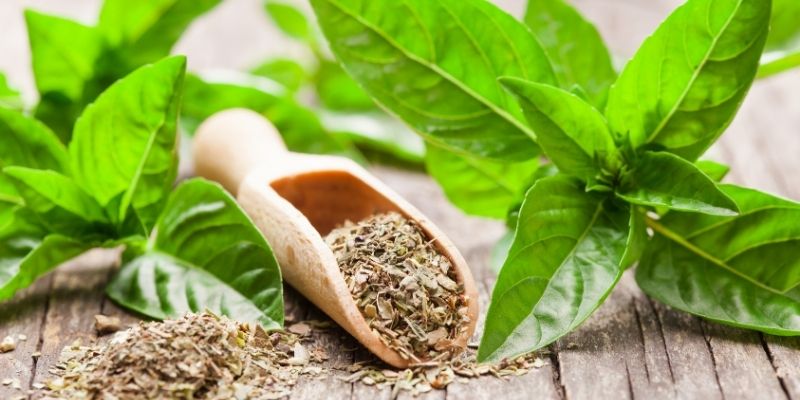
Why dry basil?
Basil is one of herbs that loses its aroma most when dried. It can only be kept in water for a few days. To avoid losing it — it softens quite quickly, especially during hot summers — dry part of the harvest, as you would with other summer herbs. Note that, when fresh, it keeps its scent better if stored in a container filled with olive oil.
Drying basil is mainly useful for cooked preparations. Fresh basil doesn’t stand up to cooking — it wilts, blackens and can even turn bitter. That’s why it is always added straight out of the oven to the famous pizza Margherita, in the colours of Italy.
Drying basil
The method is the same as for other garden herbs: prefer air-drying when possible. Summer, the harvest season, is ideal for this activity — very easy to do and using no energy.
- Cut several healthy stems in the cool of the morning. Rinse with a very fine spray if needed or shake the stems to remove any critters; leaves should be dry;
- Gather several stems together to form a bunch and tie with string. It should be airy enough so all leaves dry properly, so no more than 5-6 stems per bunch;
- Hang it upside down in a dry, ventilated place away from light until completely dry (this takes between 8 and 15 days depending on weather and can be done indoors or outdoors);
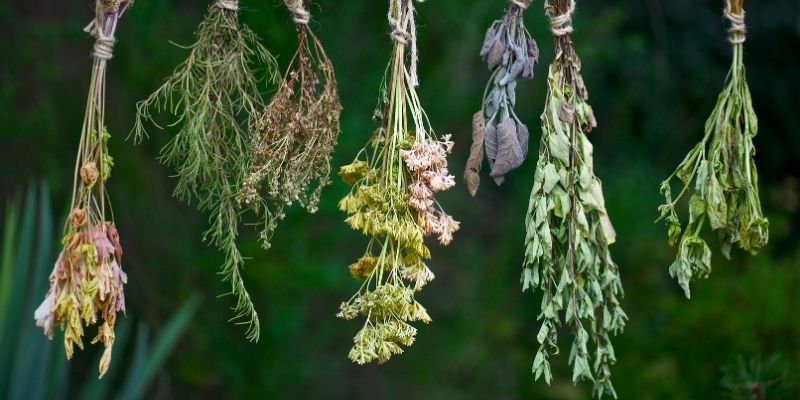
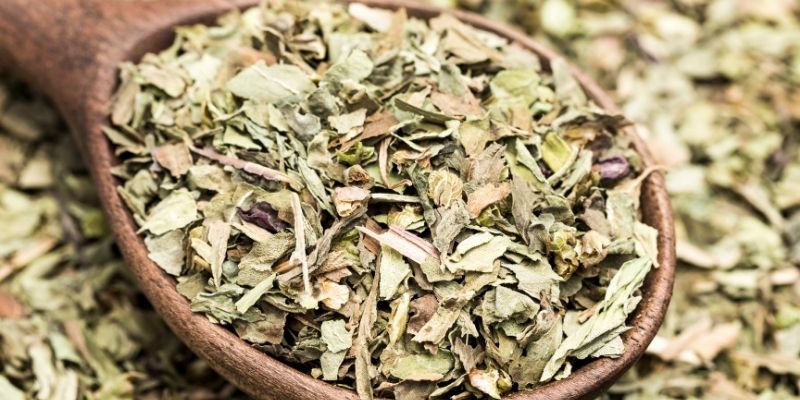
- Once the bunch is completely dry, take a large bowl: you can easily crumble the fully dry leaves and flowers between your fingers above it — they become very crumbly. If not, wait a few more days. Crush between your fingers more or less finely depending on taste or future use (see below).
- This technique works for green basil as well as purple or Thai basil.
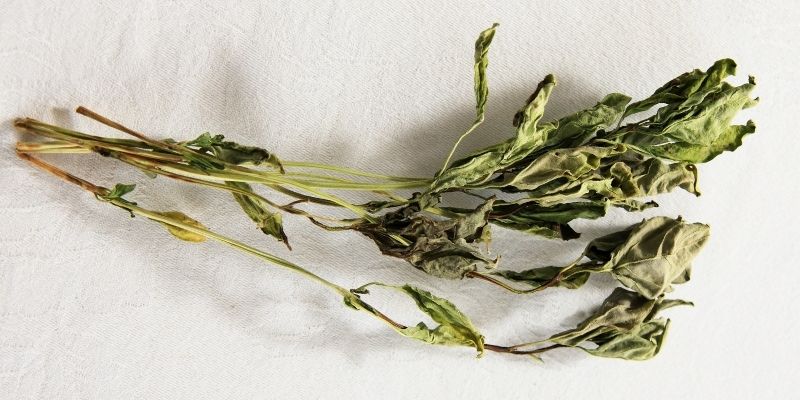
Note: if you have a small-leaved basil variety, you can also dry it flat by laying the leaves side by side on a clean cloth for the same length of time.
Storing dried basil
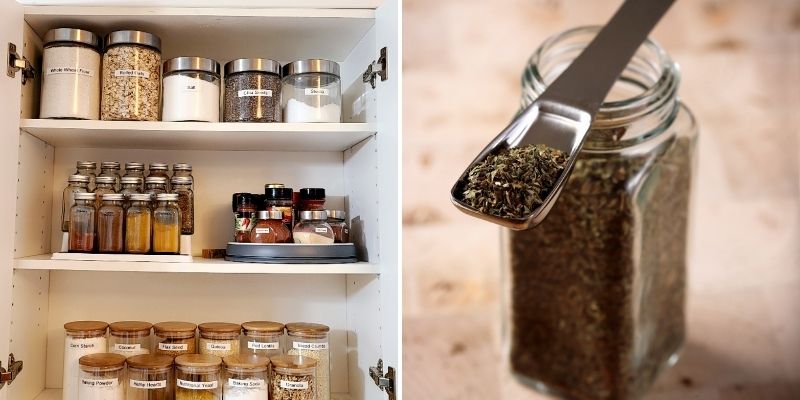
Once crumbled, transfer basil into a large airtight glass jar, which you should place in a larder or cupboard — away from light and moisture. Label with the date. If you have a large quantity, it’s best to decant regularly into a small jar, such as a spice jar, for use in the kitchen.
Use as required, closing the lid tightly (whether cork or sealed with a rubber band), and always keep in a cupboard or other dry place.
To retain as much aroma as possible, rely on its colour, and use dried basil within 10 months. After that, it yellows — a sign it will be much less aromatic.
How to use it?
Dried basil is therefore mainly useful for cooked dishes. For cooked dishes, add dried basil at the end of cooking, because although it tolerates heat better than fresh leaves, it remains delicate:
- in tomato sauces for pasta dishes, crushing it between your fingers to release more of its flavour
- crumbled over pizzas, fougasses with herbs and with onions or olives
- as a seasoning in marinades or for barbecues, suiting both meat and fish dishes
- to give a touch of Provence to summer stuffed vegetables and to many seasonal vegetables (sprinkled on courgette or tomato tarts, etc.)
- in a courgette soup (cold or hot)
- in a blend of dried herbs, or to prepare your own herb-flavoured salt!
But, if you lack fresh basil or dried oregano, dried basil can be used on raw dishes, summer salads or to flavour olive oil. Also consider it for infusions blended with other herbs like lavender or to prepare an iced lemon infusion for heatwave periods.
All about basil!
These articles will make you a pro at growing basil:


































Comments