Between the shimmering foliage and decorative fruiting bodies, autumn has treated us to exceptional colours this year. And the colours still linger, thanks to the very last flowering of the season, that of Isodon longituba, also known as Rabdosia longituba. If you are not familiar with it yet, here is an introduction and some tips on how to grow it well...
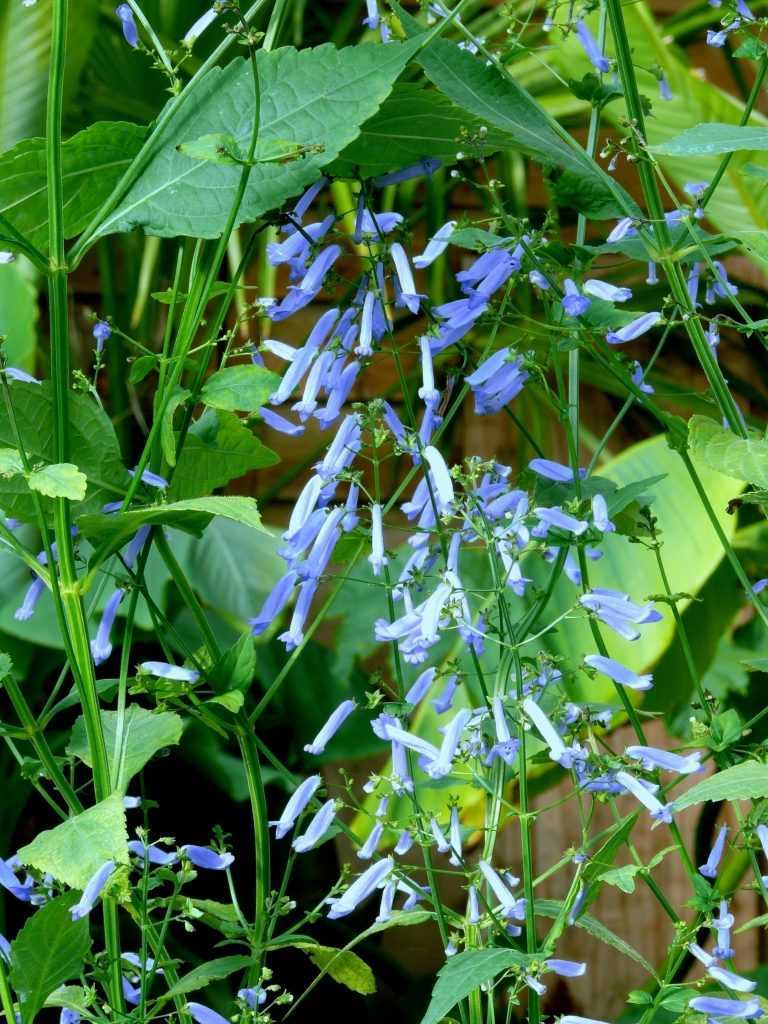
This large Japanese perennial, native to the island of Honshu, is the last perennial in the garden to flower. This attractive exotic, seldom seen in our gardens, belongs to the family of sages. Exotic in the way the bush forms, literally covered with a cloud of intensely electric-blue tubular flowers, an intensity rarely seen in other perennials, Isodon remains easy to use.
Although its exotic appearance contrasts with other plants in the garden, it is a perennial to use with sages or grasses in a naturalized garden or in a large pot on a terrace. Easy to grow, it likes bright situations and thrives in any good garden soil, as straightforward as a sage or a lobelia.
It does, however, require a warm, sheltered position — not because it is fragile, but so its flowers can reach maturity. Its late flowering occurs between late October and early November, by which time frost is already affecting many regions. And as with many herbaceous perennials, its flower buds are damaged from −2 to −3°C.
The planting site must therefore be chosen with great care: position it ideally facing south or west, in a spot sheltered from winds, among other plants, to give it the best thermal insulation. If, on the other hand, you live in a mild climate the issue will not arise and you can plant it wherever you wish.
Late to flower in autumn, it is also late to restart in spring. It is often one of the last to re-emerge... no need to worry! Nevertheless, as with many late perennials, its young leaves appear at the time when slugs are most active. So keep a close eye on it around April and do not hesitate to scatter some slug pellets around the stump as a preventive measure.

































Comments