Temperatures are cooling, light is turning golden and veiled by first autumn mists; in the distance, star-shaped flowers of autumn asters shine across beds, blooming in large clumps where summer flowers have faded. The genus Aster includes several hundred species and varieties, the range is such that choosing can often be difficult. Discover our short guide to help you choose, combine and grow them successfully.
1) Choosing: natural or sophisticated, a question of taste and style!
-
For naturalistic, wild scenes: Aster cordifolius and Aster ericoides
Aster cordifolius and Aster ericoides are meadow perennials par excellence: they withstand wind without collapsing, their foliage remains free from powdery mildew and their light but sturdy branching bears clouds of small flowers in mid-autumn. They form a shrub 80 cm to 1 m high to which large grasses such as Miscanthus or Pennisetum are traditionally paired.
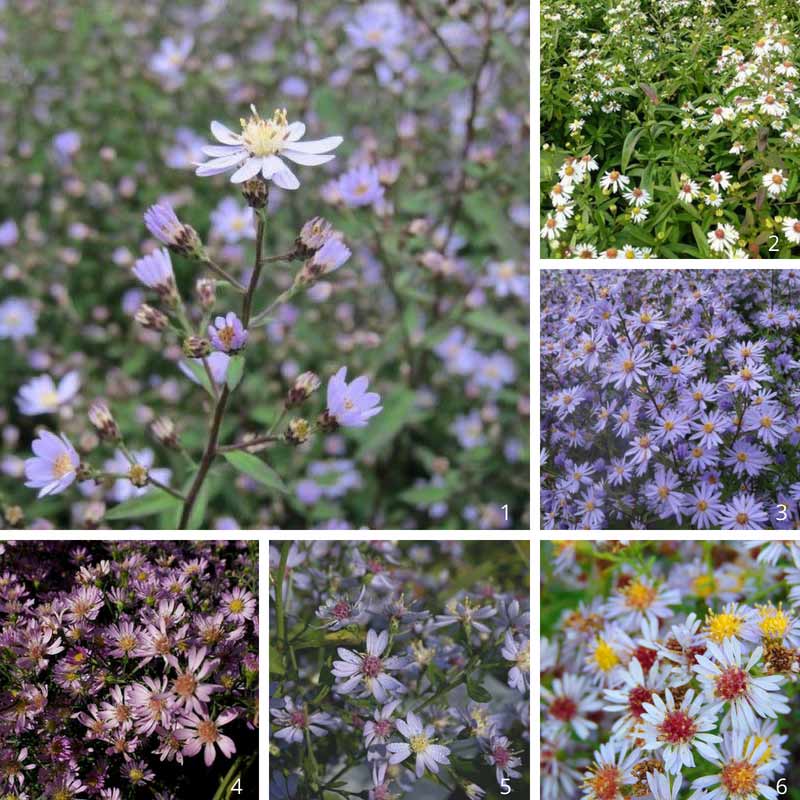
1) Aster cordifolius Blutenregen 2)Aster ericoides Herbstmyrte 3) Aster cordifolius Blue Heaven 4) Aster ericoides Blue Wonder 5) Aster cordifolius Ideal 6) Aster ericoides Lovely
-
For mixed borders: Aster novi-belgii and Aster novae-angliae
The most exuberant and colourful asters belong to the novi-belgii and novae-angliae groups, which form large, colourful clumps in mid-autumn. On average, their height ranges from 70 cm to 1.2 m, making them excellent candidates for the back of borders, but unfortunately vulnerable to wind. It is not uncommon to see them flop like cereal crops after heavy rain. Prevent this by inserting branched canes at least 50 cm tall into clumps in August. Later hidden by flower heads, this discreet framework will support the clumps more flexibly than traditional bamboo. You can also pinch them in May to keep them more compact and well-branched.
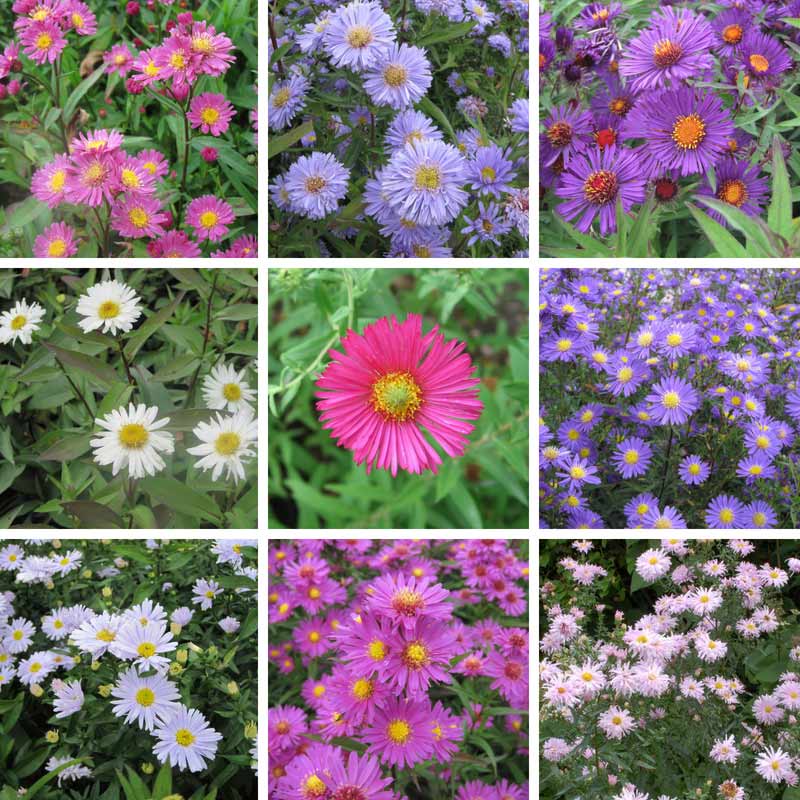
from top to bottom and from left to right: Aster novae angliae-Andenken an Paul Gerber - Aster novi-belgii Marie Ballard - Aster novae-angliae Violetta - Aster novi-belgii Weisses Wonder - Aster novae-angliae Alma Potschke - Aster novi-belgii Schone von Dietlikon - Aster novi-belgii Porzellan - Aster novi-belgi Karminkupel - Aster novi-belgii Fellowship
-
For neat, well-behaved borders: Aster dumosus
There are enough dwarf aster varieties that you need not look elsewhere to fill autumn borders. The best for compactness and abundant flowering are Aster dumosus. They do not exceed 40 cm in height (20 cm for the most compact) and their growth habit is relatively restrained. Plant them in borders or at the foot of shrubs and space them 20–25 cm apart at planting.
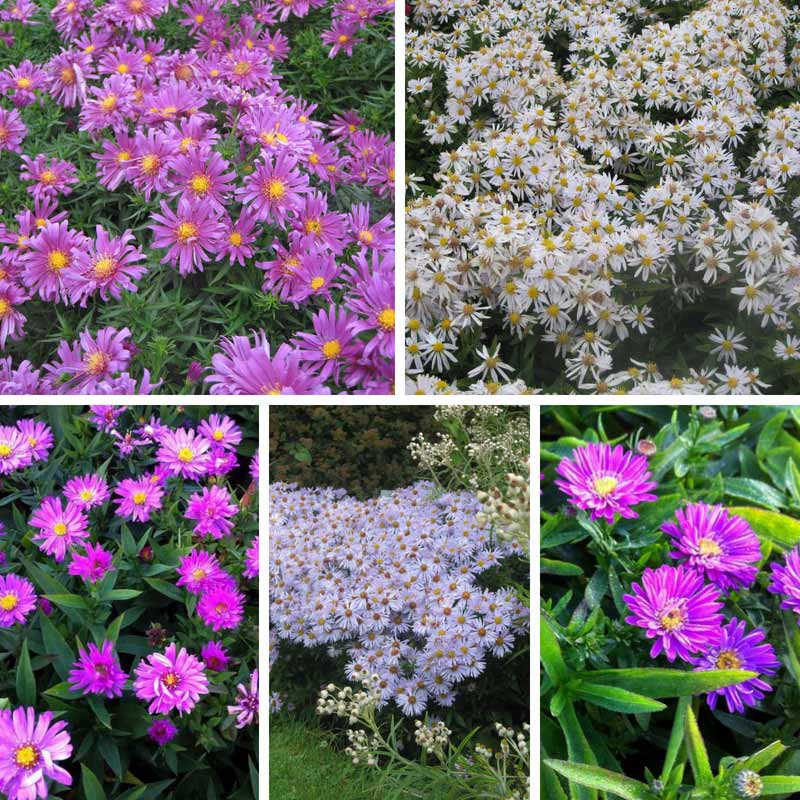
From top to bottom and from left to right: Aster dumosus Tonga, Kristina, Rosenwichtel, Silberblaukissen and Starlight
2) Combining asters: rules for good neighbourliness
Asters are perennials that are easy to combine, but while some are known to take over borders and overwhelm less vigorous companions, others are so large they collapse at the merest gust of wind.
-
Group the most vigorous together
Very vigorous varieties (Aster novi-belgii, novae-angliae and ageratoides) can occupy several square metres in a few years and smother surrounding plants. Grow them either in large, monochrome drifts where they can self-manage, or with small, colourful shrubs such as dogwoods (Cornus alba 'Siberian Pearls', Cornus alba 'Sibirica'...) or Physocarpus ('Lady in Red', 'Diable d'Or').
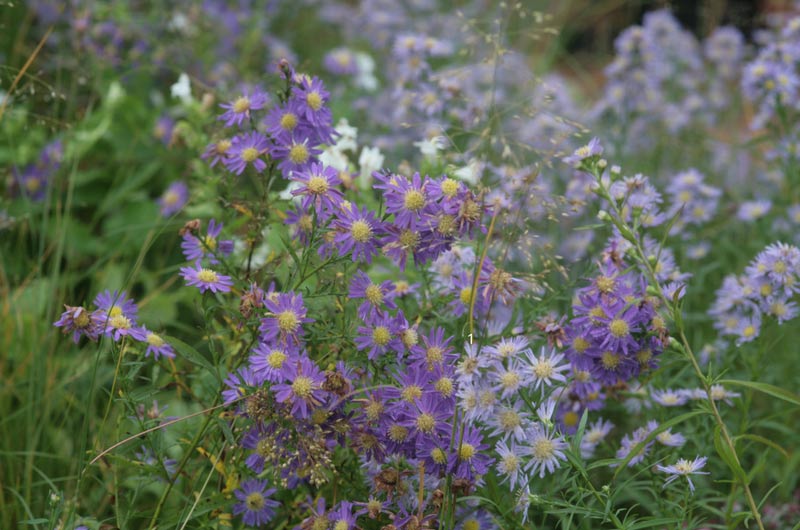
Aster novi-belgii in a mix
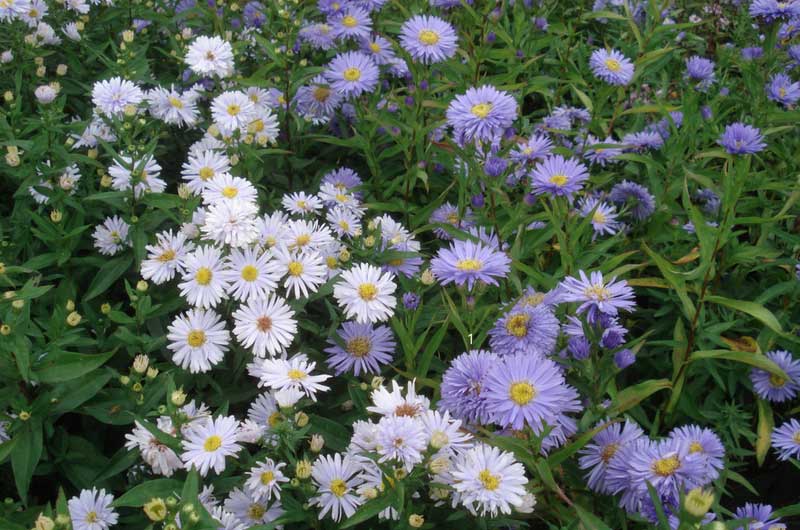
Lovely, soft pairing between the delicate, translucent flowers of Aster Porcelain and the large double mauve flowers of Aster Marie Ballard.
-
Charming duos with wild-looking perennials
Asters love the company of Japanese anemones, which naturally weave their roots into the clumps and mingle with the large, slightly stiff asters. Aster ericoides and Aster cordifolius also pair well with sedums, whose flowering they extend. They combine nicely with large structural perennials such as agastache, artemisias, persicarias or Cimicifuga. Finally, a happy autumn marriage is with grasses: mix a few Panicum, Miscanthus or Pennisetum into your aster clumps for a very sophisticated meadow effect.
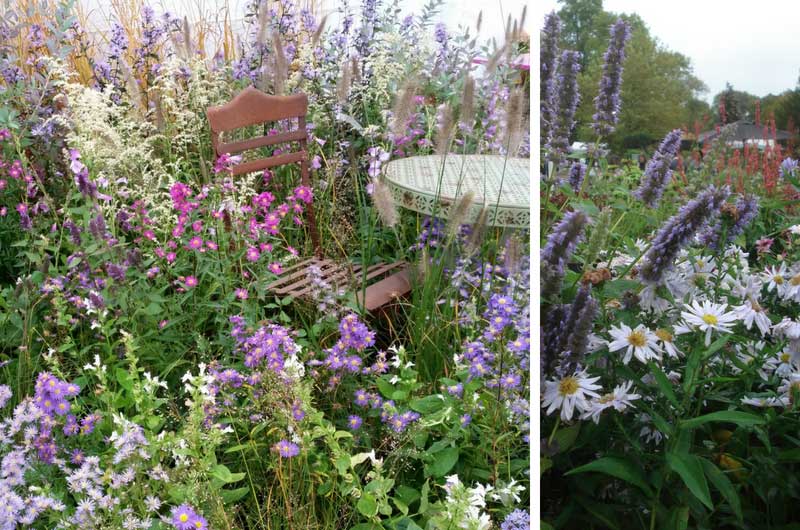
Asters mixed with artemisias and pennisetums - Pairing between agastache 'Blue Fortune' and Aster-novi-belgii 'Porcelaine'
3) How to succeed with asters? Sun and light soil
Large Aster novi-belgii and Aster novae-angliae prefer full sun. Good garden soil is all they need to be happy. They do not mind compact, clay soils provided the soil stays cool in summer. As they send out suckers relentlessly, they eventually become bare in the centre: it is then necessary to divide clumps every three years or so, in spring or in autumn after flowering.
Other asters prefer a light, cool but never waterlogged soil. All, however, like open, airy positions; avoid planting them in borders enclosed by trees or walls, where risk of powdery mildew will be greater, asters need air to flower abundantly and to keep foliage healthy. As you have probably understood, asters are easy perennials, very hardy and undemanding; like phlox or persicarias, they are indispensable perennials for late-season colour in the garden.
And you, what are your favourite varieties, your best combinations, your tips and tricks for keeping asters healthy all season long?
For more information, discover our complete guide to Asters


































Comments