Let's be clear: I'm not a fan of anglicisms, but one must admit that mixing languages can be a good thing! Indeed, talking about "seedheads" [pronounced siiid-h-aide-z] is much more elegant and poetic than talking about "infrutescences", or — worse yet! — "dead stems" for perennials and grasses, don't you think? I, for one, am campaigning to introduce this lovely word into vocabulary of French gardeners.
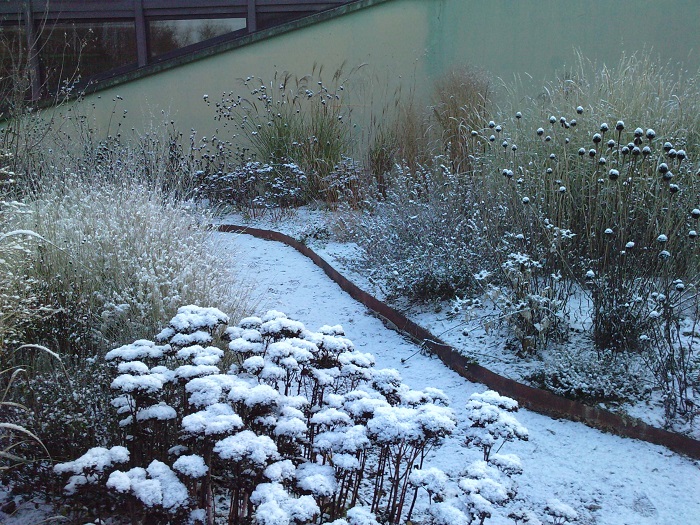
Perennial and grass bed in winter, made attractive by seedheads left standing and covered with fresh snow.
Popularised by vogue for so-called "prairie" gardens and by plantings of Piet Oudolf, "seedheads" refers to fruiting structures and winter architectural features of perennials and some shrubs which, when thoughtfully combined, create naturalistic tableaux in sepia tones, enhanced by low light, mist or hoar frost in autumn and winter: each day brings a different, unpredictable effect, which is part of garden's beauty at this time of year. Ingrid and Michael told me yesterday that their hellebores were already in flower at their place... here, not far from the north, that's not the case yet: never mind, I never tire of admiring subtle details of seedheads I left in place during autumn tidy-up.
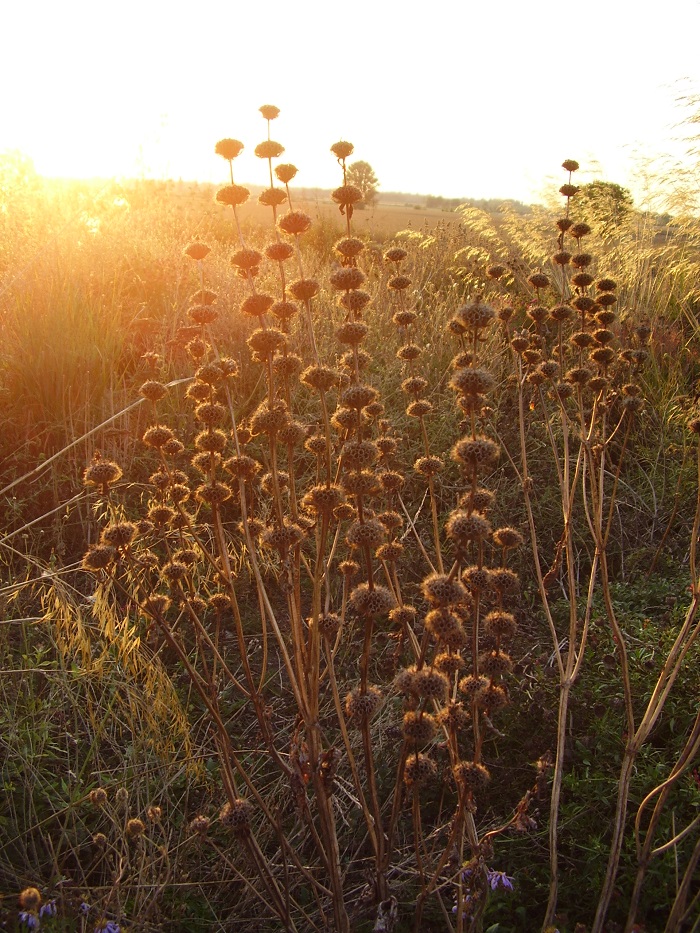
A superb specimen of Phlomis tuberosa, perfectly spent, seems literally to glow in late-afternoon autumn sun.
Inspired by books by Piet Oudolf and Noel Kingsbury such as Le Jardin de Vivaces et de Graminées (Bordas, out of print), then Jardins d'Avenir (éditions du Rouergue) and Jardins d'Automne et d'Hiver (original title: Seedheads, by Noel Kingsbury with photographs by Jo Whitworth, éditions du Rouergue), I experimented extensively in my garden on edge of Maritime Flanders, less than 20 km from North Sea coast, with varying success... Rain and especially wind really test sturdiness of stems that have lost their life, and my soil, less sandy and richer than typical Dutch gardens, makes stems less resilient. In hindsight, only handful of perennial varieties manage to retain decorative impact in my garden through whole winter, and it's mainly in November and December that seedheads look their best. Here is a gallery of portraits.
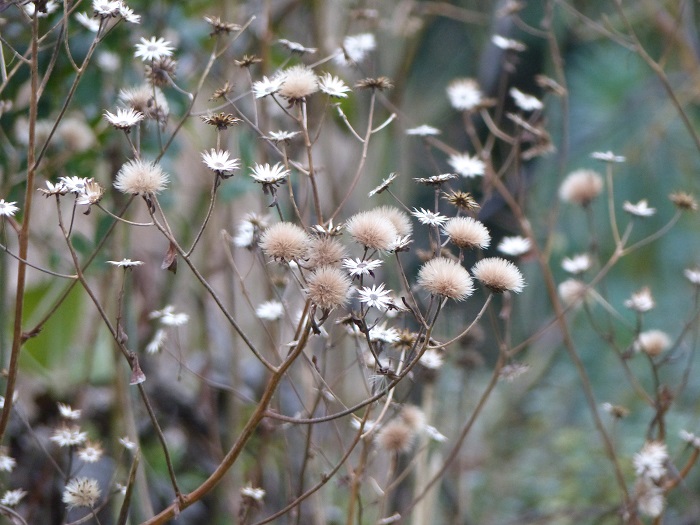
I particularly love seedheads of Aster macrophyllus 'Twilight', ever-changing: small tawny pom-poms disintegrate as seeds fly, leaving floral receptacles with silvery sheen. At about 60 cm tall, it withstands wind well.
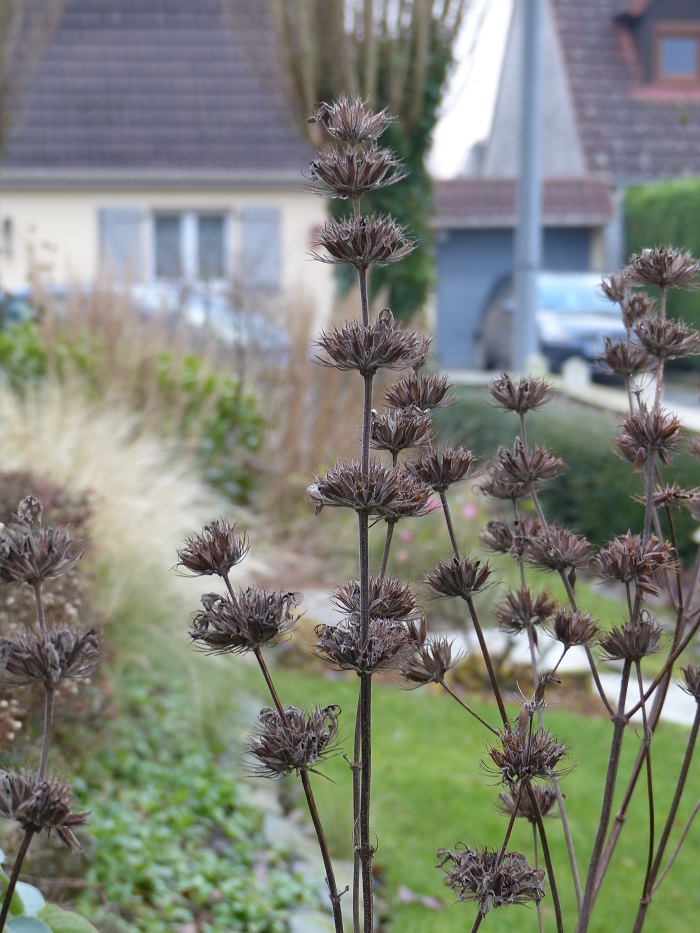
One of all-round champions: Phlomis! This is true Phlomis samia, with branched inflorescences finer than those of Phlomis russeliana, but with same graphic effect from regularly spaced verticillasters along stem. Phlomis seedheads are among most architectural and most durable.
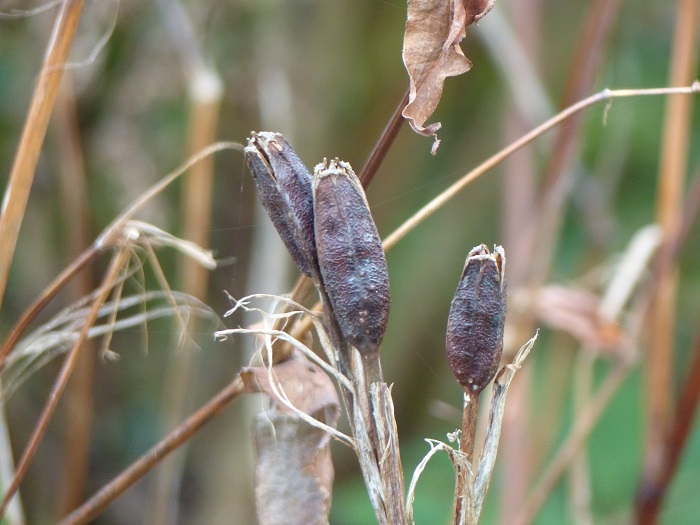
Not thought of often enough, but seed pods of Siberian iris, dark brown, are quite attractive and very long-lasting. A nice bonus to make up for fleeting June flowering!
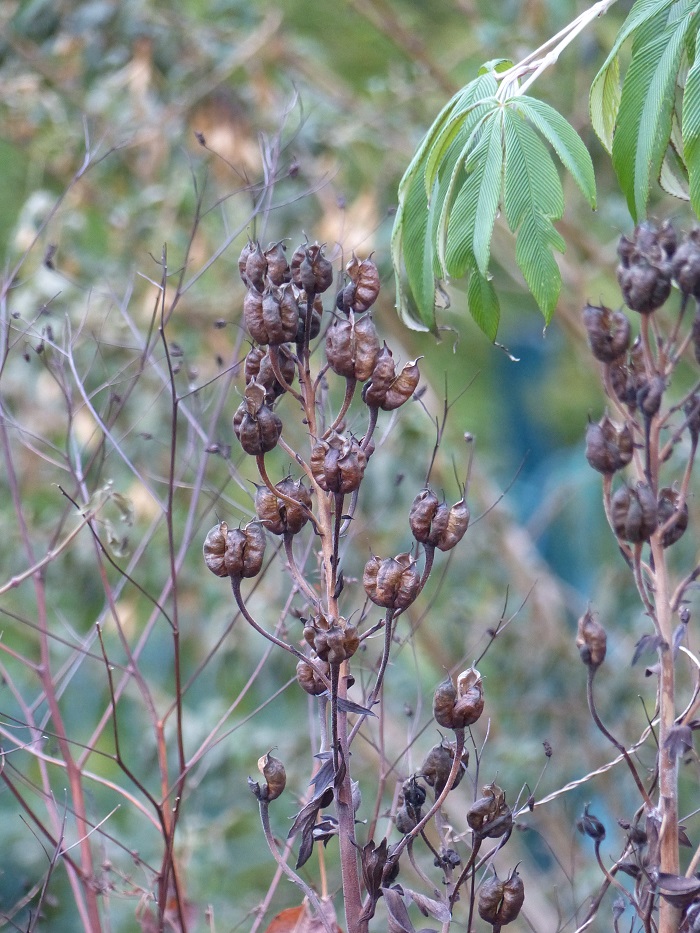
One of my more recent discoveries: dried inflorescences of autumn aconite seem sturdy and long-lived, another advantage over delphiniums!
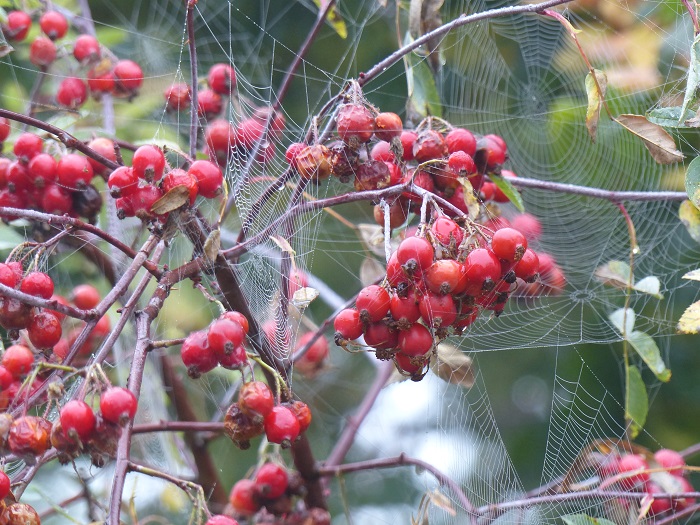
Not only "dry fruits" decorate autumn garden: there are also fleshy fruits such as rounded hips of Rosa glauca, or abundant fruit of ornamental apple trees.
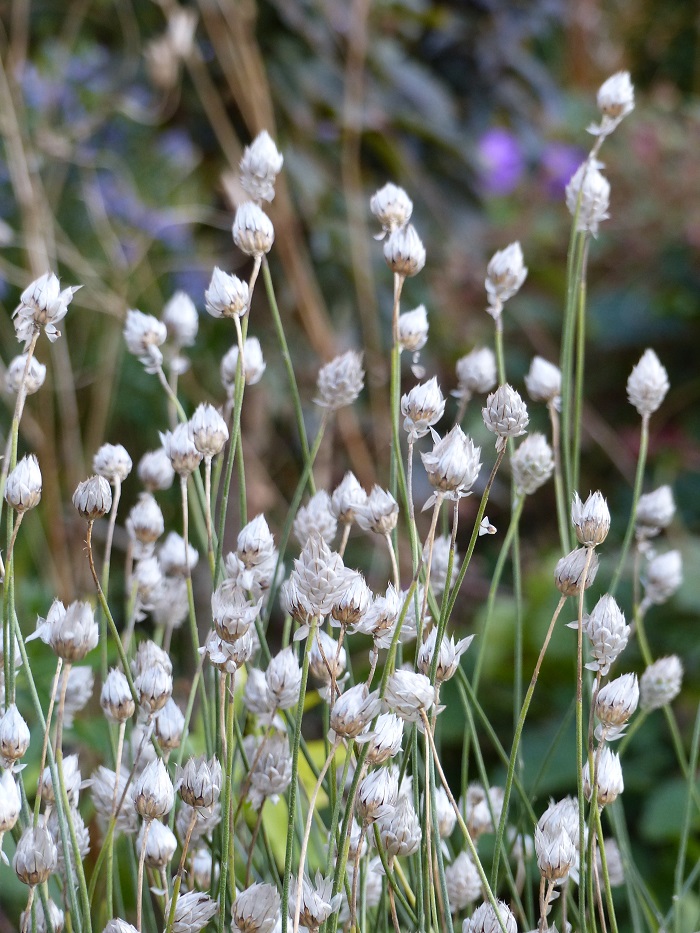
Fruits of Cupid's dart (Catananche caerulea), in silvery clusters, sit alongside its metallic-blue summer flowers in original, harmonious display. After flowering they extend plant's interest for a few weeks before dispersing in December winds.
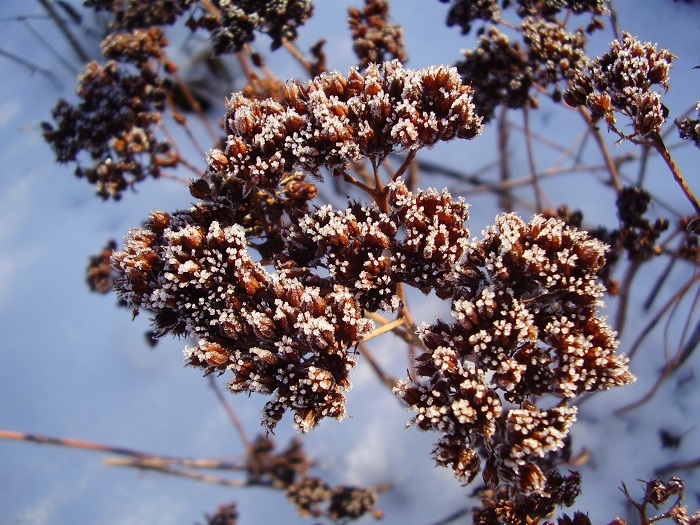
Large sedums like 'Matrona' are fail-safe. Their shape is impeccable year-round and their inflorescences pick up hoar frost beautifully in winter.
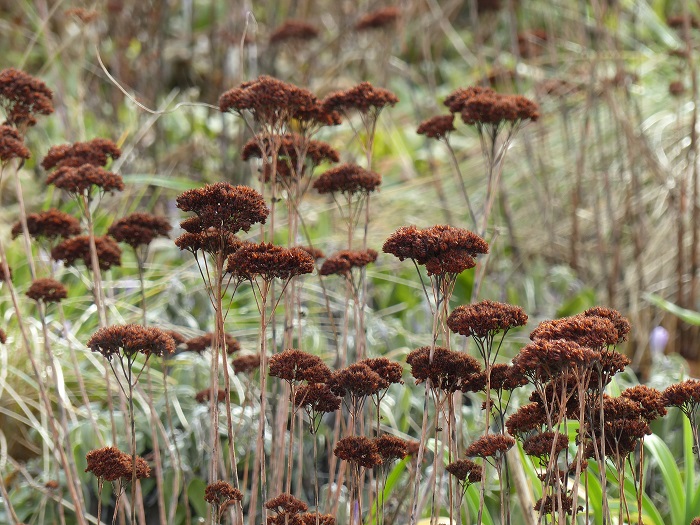
Sedum 'Herbstfreude' is simply indispensable.
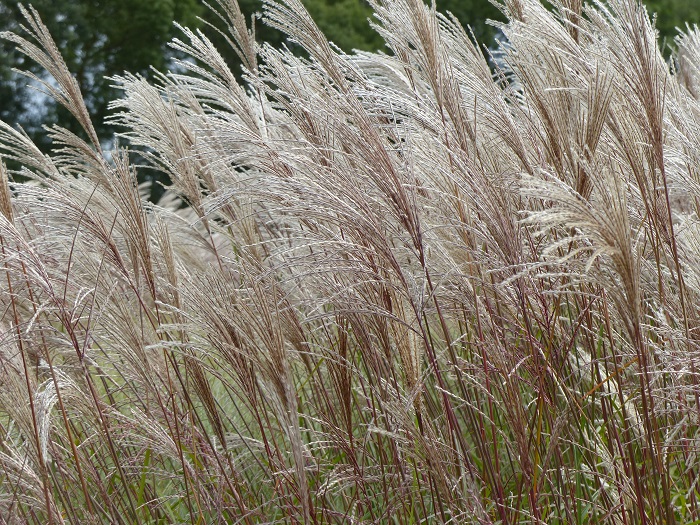
Of course, how could one not mention Miscanthus, here variety 'Malepartus'? Their plumes with diamond-like sheen remain attractive until I have to cut them back in January to make way for new growth.
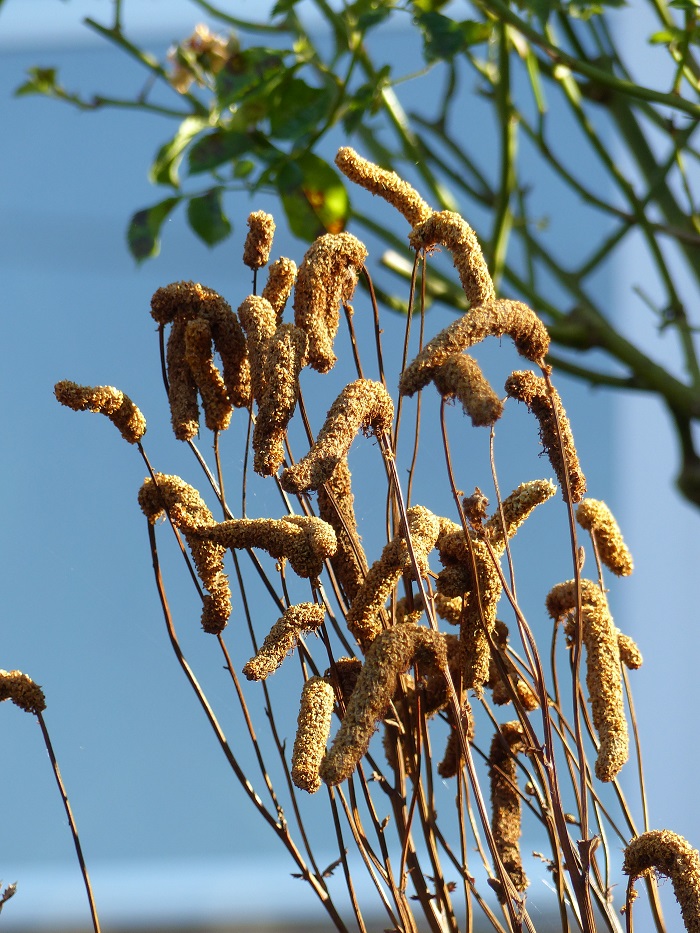
Spent flowers of large Asian burnet, Sanguisorba hakusanensis, suggest little caterpillars embarking on conquest of air! As pretty as they are, these seedheads are short-lived and last at most six weeks on plant, after which I cut plant back.
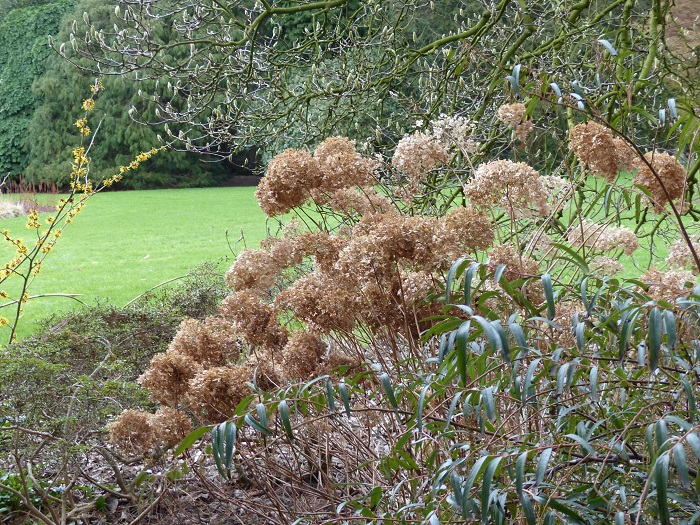
Dried inflorescences of hydrangeas are classic choices; they lose none of their roundness and opulence when spent, turning rich shades of green before browning. Here, Hydrangea arborescens 'Annabelle' photographed at Kalmthout Arboretum in Belgium.
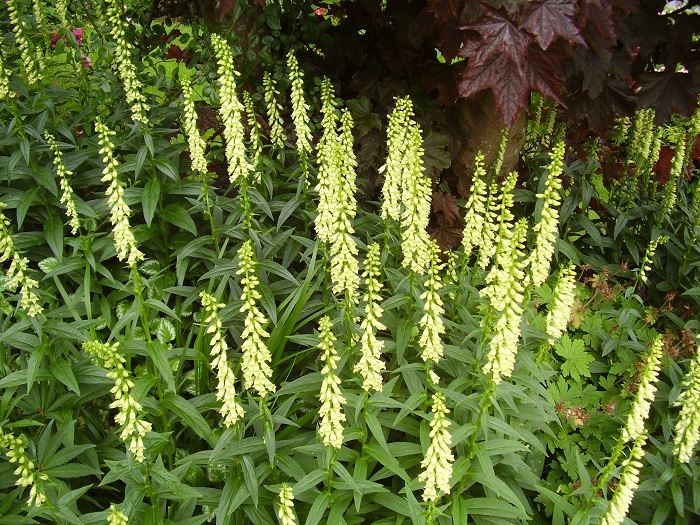
Yellow foxglove, Digitalis lutea, flowers in pale-yellow spikes in July. A true perennial living 5–10 years, easy to combine and happy everywhere except acidic soil. Given long ago by gardening friend, it quickly became one of my favourites, especially for quality of its seedheads.
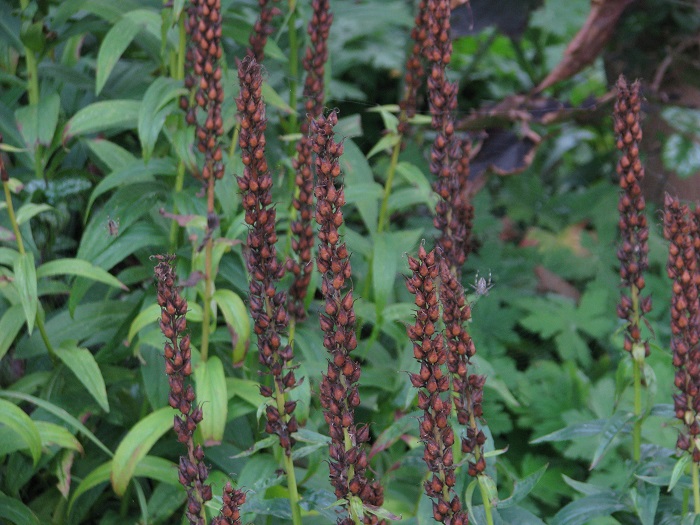
Spikes of Digitalis lutea are by far sturdiest of all. They stand upright from August through March. I tuck them in everywhere to give structure and movement to winter borders.
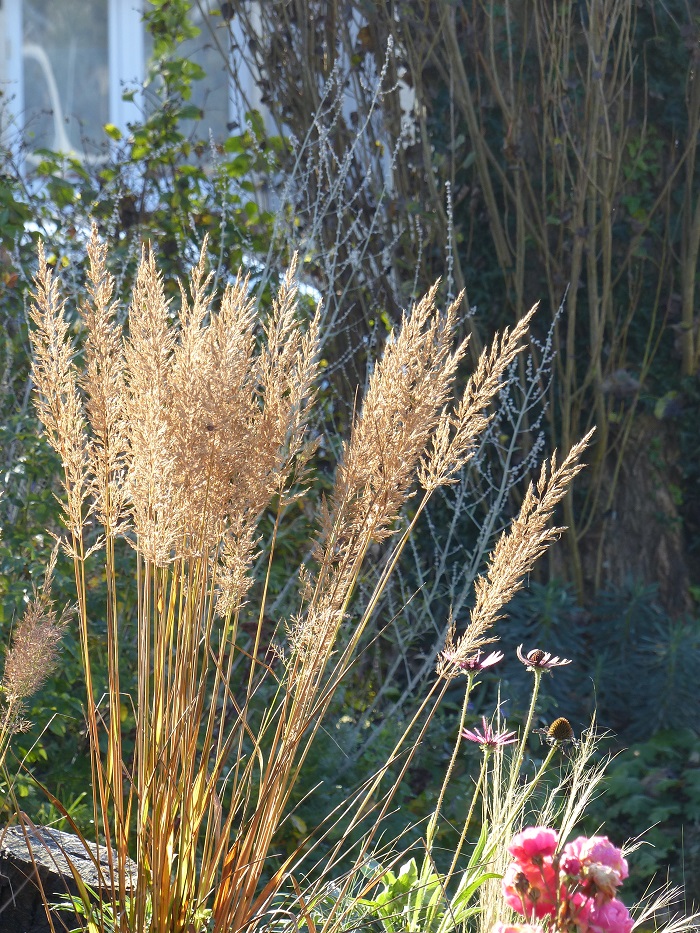
Calamagrostis brachytricha, the "diamond grass", is an excellent autumn and winter grass, with good habit and remarkable way of catching the light.
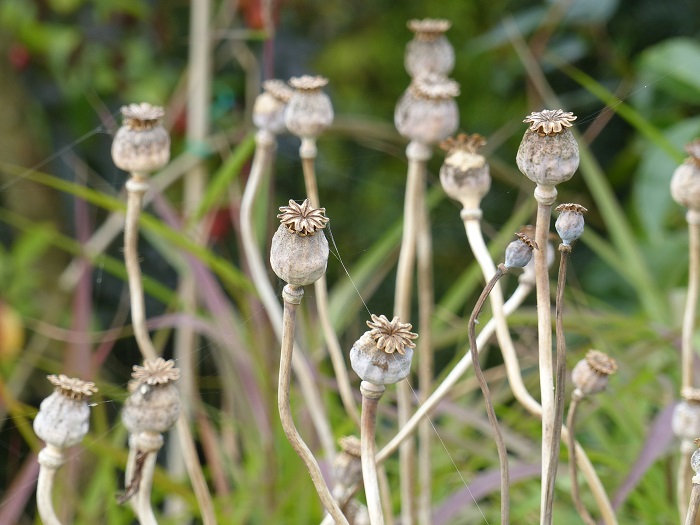
Poppy capsules are decorative from early August and last as long as wind and rain, which attack stem base, spare them. I sometimes "reinforce" them with small stake slipped into hollow stem.
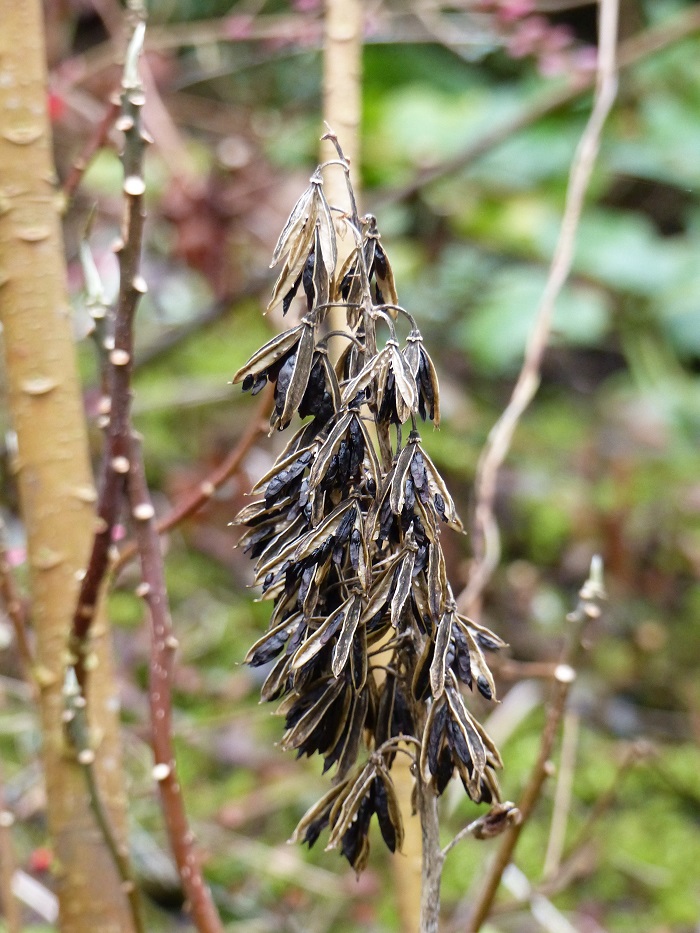
And finally... Can you guess which plant this inflorescence belongs to?

































Comments