Which green manures to choose for different soil types and crops?
Our advice
Contents
In a garden, soil is a living partner you need to understand and work with. Too clayey, too dry, impoverished or compacted… each soil type has its own limits. To improve your soil, whether in a vegetable garden or an orchard, green fertilisers are a simple, effective solution.
Green fertilisers are sown between two crops, or on a plot left fallow, with the aim of enriching, protecting and structuring soil. But not all are equal. The choice of green fertiliser depends on soil type, but also on what you plan to do with it afterwards.
Discover our tips to choose the right green fertiliser for your soil and needs.
→ Find all our green fertilisers on our website.

Do you have clayey soil and want to start a vegetable garden?
Does your soil feel heavy and stick to boots when wet? Does it become waterlogged in winter and crack in summer? That is typical of clay soil. This soil is fertile but often too compact, which hinders crop rooting (and can even smother roots in winter). To grow vegetables in it, it is best to first aerate and lighten soil with green manures that work deep down.
Green manures to favour:
- Fodder radish : its taproot penetrates deeply, helping to loosen soil without digging.
- Phacelia : its very dense root system improves surface structure and limits leaching.
- White mustard : grows quickly in autumn and smothers adventive plants; it leaves ground clear before planting.
- Alfalfa : a useful perennial for long-term use, it structures and enriches soil if left in place for several months.
Practical tip : Sow these green manures in late summer, mow before flowering around early spring, leave to dry on the ground for a few days, then incorporate superficially into soil or use as mulch.
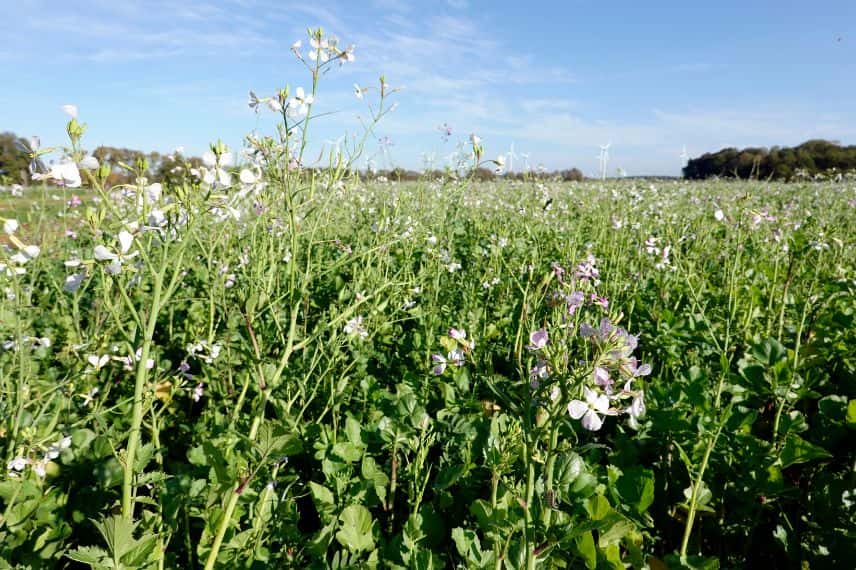
Fodder radish (Raphanus sativus var. oleiformis)
Do you have sandy soil and are you planning an orchard or vegetable garden?
Sandy soils are easy to work, but retain neither water nor nutrients. Before planting trees or vegetables, green manures help improve soil’s ability to retain moisture, stabilise its structure and enrich it.
Green manures to sow:
- Rye: It grows even on poor soil and forms a dense winter cover, useful for protecting young roots.
- Oats: It improves surface structure and produces a good biomass to incorporate.
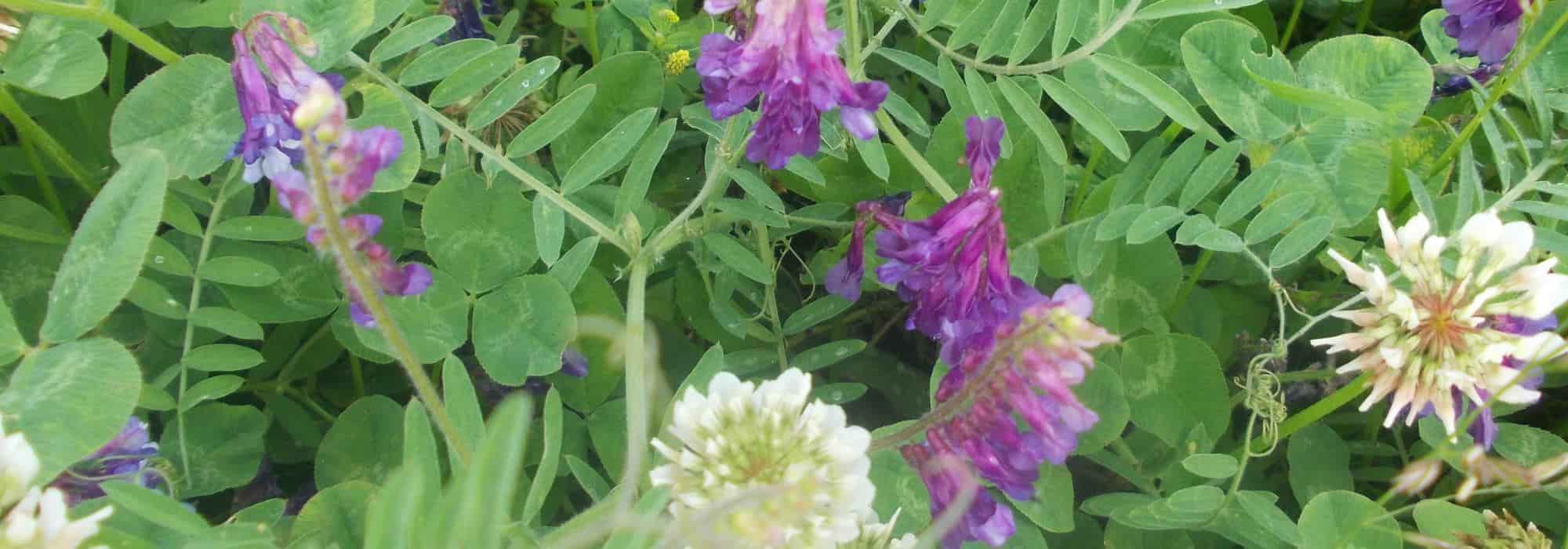
- Common vetch: When combined with rye, it supplies nitrogen while providing good groundcover.
- Crimson clover: Hardy groundcover, it adapts well to light soils and adds nitrogen to soil.
- Buckwheat: A good choice for summer, even in drought. It grows quickly, provides good cover and then decomposes easily.
Tips: Opt for grass/legume mixes to combine structural and fertilising effects. Let them grow for 2 to 3 months, then mow and lightly incorporate into soil.
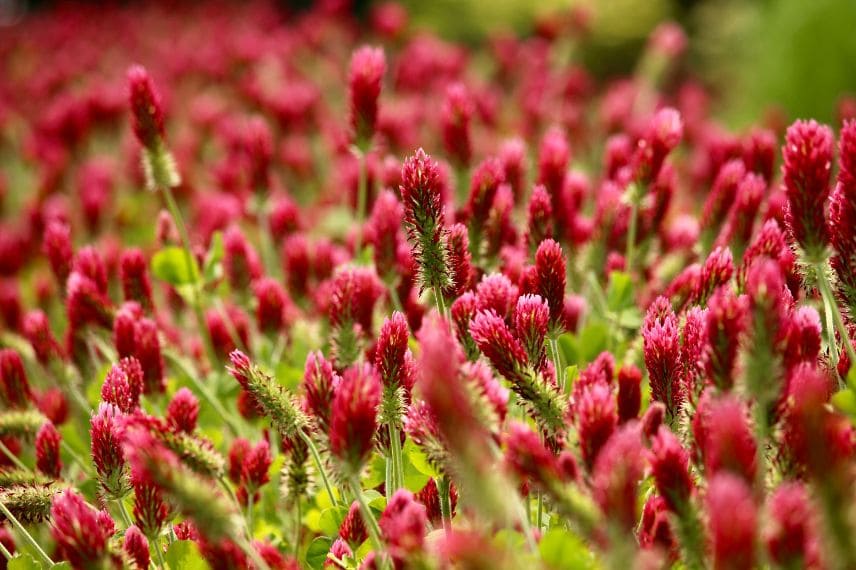
Crimson clover
Is your soil acidic and do you want to improve it?
Acidic soil limits availability of certain nutrients to your plants. It can also slow microbial activity and consequently hinder development of your crops. To grow soft fruit or vegetables, it is recommended to sow green manures compatible with low pH that will help gently revive soil life.
Suitable green manures:
- Field bean: very well tolerated on acidic soils, fixes nitrogen and provides good winter cover.
- Lucerne: develops a deep root system and stimulates microbial life, even in slightly acidic soil.
- Crimson clover: establishes quickly, enriches the soil and breaks down well once chopped.
Practical tip: Sow in late summer or spring. Cut and chop just before flowering to prevent seed set. After cutting, leave green manures in place or incorporate them into the soil. Wait 2 to 3 weeks before planting to allow the soil to begin breaking down the organic matter.
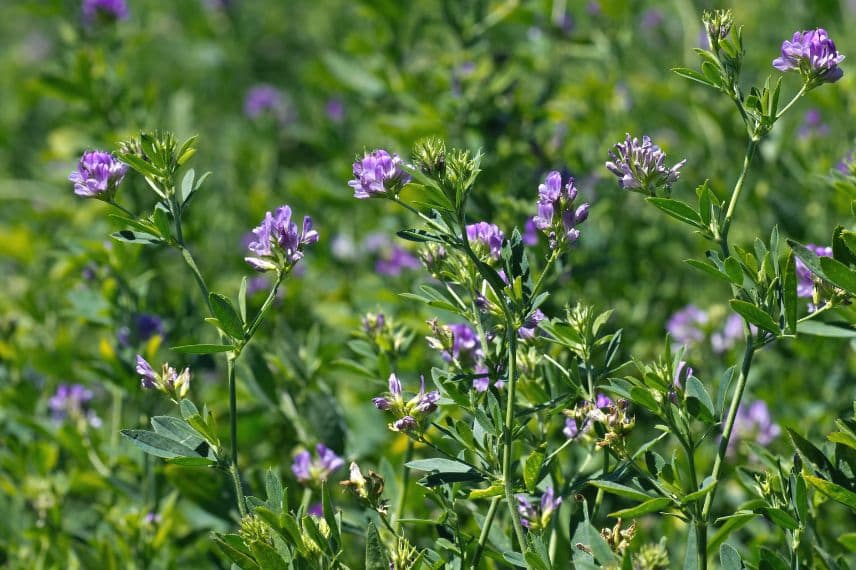
Lucerne
Read also
Green manures: why, how?Is your soil lime-bearing and are you looking to balance it?
Calcareous soils, often free-draining, are certainly easy to work but they can also cause imbalances (iron deficiencies, restricted availability of trace elements). They should be sown with green manures between crops to prevent drying out and to receive regular organic inputs.
Green manures to sow:
- Phacelia : easy to grow, rapid flowering, excellent melliferous and soil-structuring cover.
- Vetch : fixes nitrogen, useful before a vegetable or flower crop, particularly before leafy vegetables.
- White mustard : grows quickly, but beware rotation with crops of same family (cabbages, turnips…).
Good to know : Sow in late summer or in spring. Opt for an early cut, before seed set, to avoid difficult regrowth.
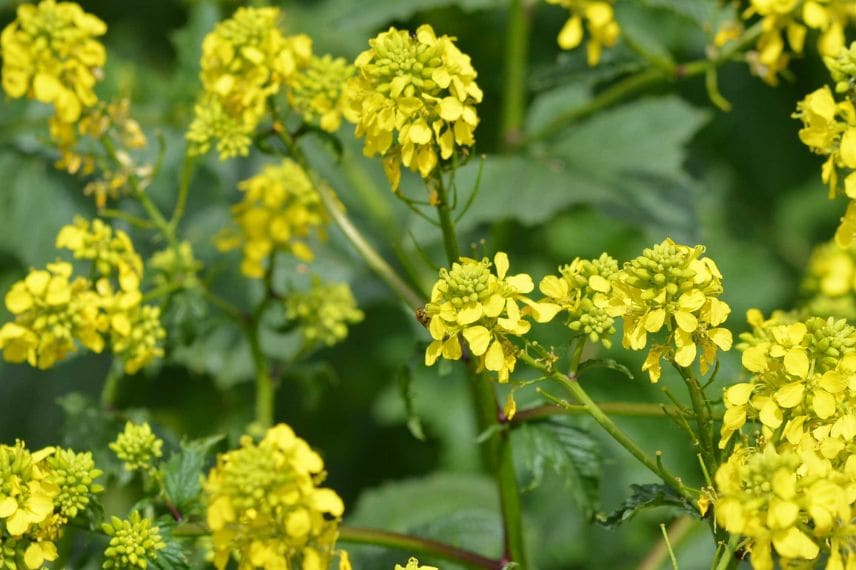
White mustard
Is your soil poor and do you want to enrich it for your vegetables?
Tired, depleted soil often lacks organic matter and has limited ability to feed plants. This may be due to soil type (light, stony, sandy or free-draining) or to a succession of demanding crops. Before sowing or planting anything, it is best to revitalise soil with nourishing green manures that will add organic matter.
Useful green manures:
- Common vetch: enriches soil with nitrogen, grows well even on poor soils.
- Clover: provides effective cover and nourishes soil.
- Lucerne: deep-rooting, useful in long-term cultivation.
- Oats: ideal for adding carbon and improving surface structure.
A good mix of clover + oats or common vetch + rye is often effective.
Cultivation advice: Sow in early autumn to take advantage of autumn rains, mow as soon as flowering begins to avoid exhausting soil.
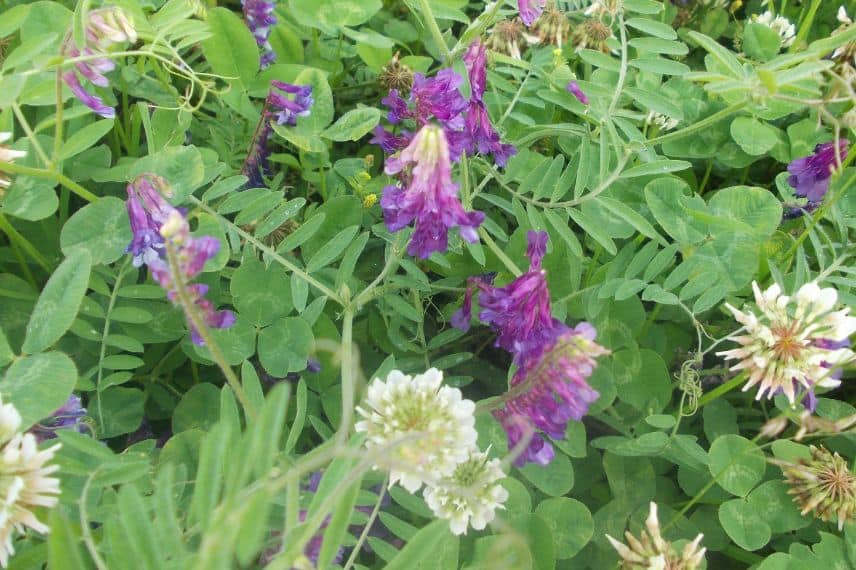
Mixture of vetch and clover
Is your soil compacted, lifeless and hard to work?
After crops have been grown too closely, trampling or soil left bare for too long, soil becomes compacted. In that case, green manures are a good solution to restore biological activity and aerate the soil naturally.
Suitable green manures:
- Fodder radish: its thick root opens the soil and loosens compaction without tools.
- Rye: covers soil throughout winter, limits surface compaction caused by rain.
- White mustard: stimulates soil life; use alone or mixed with rye, vetch or crimson clover.
Growing tip: leave roots in place after cutting, they will continue to decompose and feed soil at depth. Leave mown and shredded green manures in place. Wait 4 to 6 weeks before planting vegetables.
Is your soil stony and shallow?
A stony soil is often light, free-draining but poor, with little reserve of nutrients. It warms up quickly but dries out just as fast. Surface stones make soil work arduous and limit deep rooting of crops. On this type of ground, green manures are useful to structure the topsoil, protect soil from drying out and add organic matter, without intensive soil cultivation.
Green manures to sow:
- Phacelia: grows well even on poor, stony ground, easy to chop in, improves surface texture.
- Buckwheat: very suited to dry, shallow soils, quick to germinate and cover.
- Crimson clover: shallow-rooted, a good groundcover for light or stony soil.
- Oats: improves organic matter, even on infertile stony soils.
Practical tip: sow just after rain to benefit from rapid germination, and leave the residues of your green manures as mulch to stop the soil drying out too quickly.
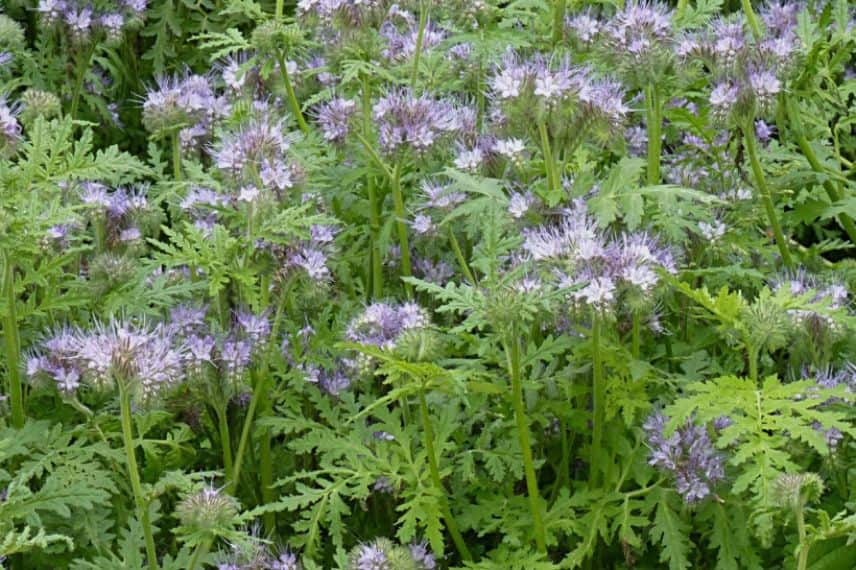
Phacélie
- Subscribe!
- Contents
This form is protected by reCAPTCHA - the Google Privacy Policy and Terms of Service apply.


































Comments